PART 2: He Was Left Beside a Park Too Weak to Stand—Then the Vet Told Me His Pain Had Started Long Before That Night
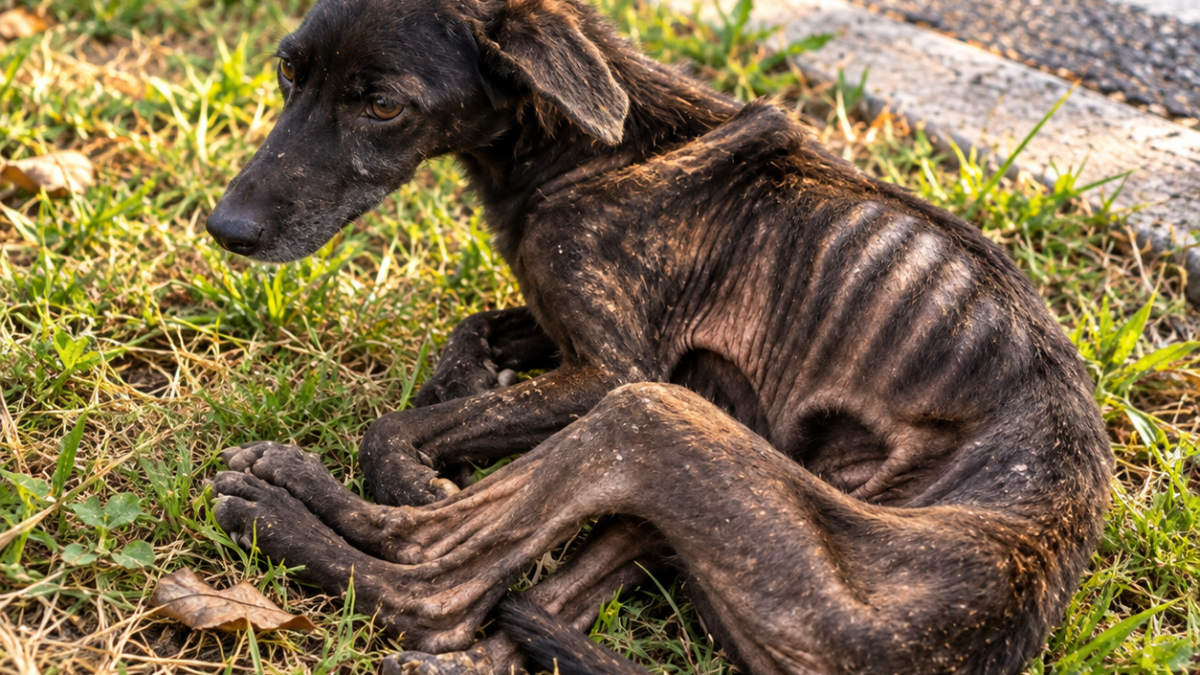
PART 2
Dr. Hannah Brooks lowered the X-ray and sat across from me.
I had known Hannah for several years.
She had treated dogs from our rescue before.
I had seen her calm during emergencies that made everyone else panic.
That night, she looked angry.
Not loud angry.
Hannah was rarely loud.
But there was a tightness around her mouth I recognized.
“What exactly is injured?” I asked.
“His pelvis took significant trauma. There’s also damage around the rear leg. The good news is that some healing has already started.”
“The good news?”
“It means his body has been trying to repair itself.”
“And the bad?”
“He’s been trying to heal without enough nutrition.”
I looked down.
“How bad is the malnutrition?”
“Bad enough that we need to be cautious.”
“Can we feed him?”
“Yes, but not aggressively.”
I knew what she meant.
A body deprived for too long could not simply be flooded with food.
“We’ll start carefully,” she continued. “Fluids. Pain control. Supportive feeding. We may need a feeding tube temporarily if he won’t take enough on his own.”
“Will he walk again?”
Hannah paused.
That was the question I was most afraid of.
“I think he has a chance.”
A chance.
Not a promise.
I nodded.
“Do whatever he needs.”
She gave me the look veterinarians give rescuers when money is about to become part of the conversation.
“Maya.”
“I’ll call the rescue board.”
“This could be expensive.”
“I know.”
“Imaging, hospitalization, nutrition support, repeat bloodwork—”
“I know.”
She leaned forward.
“Then I need you to understand something else.”
“What?”
“He may not recover the way you want him to.”
I looked through the glass again.
Sombra lay on a heated pad.
A technician had covered part of him with a blanket.
His head rested sideways.
“Then we help him recover the way he can.”
Hannah nodded once.
“All right.”
That was how Sombra officially became ours.
Not legally yet.
Not on paper.
But emotionally, yes.
He belonged to the part of our rescue that refused to leave an animal because the outcome was uncertain.
I called our director, Nina.
It was almost ten at night.
She answered on the first ring.
“What happened?”
I explained.
Silence.
Then:
“How much?”
“I don’t know yet.”
“Maya.”
“I know.”
“Our emergency fund is low.”
“I know.”
“We just paid for Luna’s surgery.”
“I know.”
“And the litter from Oak Street.”
“I know.”
She exhaled.
“What’s his name?”
I looked toward him.
He was almost entirely dark brown and black.
Quiet.
Small against the white hospital blankets.
“I don’t know.”
Nina waited.
I thought of the way he had looked on the roadside, barely visible in the falling darkness.
“Shadow.”
Then I corrected myself.
“Sombra.”
“Spanish?”
“Yeah.”
Nina became quiet.
“I like it.”
“So do I.”
“Okay.”
“Okay what?”
“We help Sombra.”
That was Nina.
She would argue about money until the moment a dog had a name.
After that, the argument was usually over.
The next morning, Sombra still wouldn’t eat enough.
Hannah called me before eight.
“We’re placing the feeding tube.”
My stomach tightened.
“Is that dangerous?”
“Everything has risk, but he needs calories.”
“Do it.”
When I arrived after work, Sombra looked smaller than the night before.
Maybe because the panic was gone.
Maybe because daylight made everything easier to see.
He had a thin tube secured carefully in place.
His eyes followed me.
“Hi, Sombra.”
One ear moved.
I sat beside him.
“You officially have a name.”
No response.
“It means Shadow.”
His eyes remained on mine.
“I know. Not very original.”
A technician named Ben walked by.
“I like it.”
“Thank you.”
“He doesn’t.”
Sombra blinked.
Ben smiled.
“That’s practically an endorsement.”
For the first three days, progress was measured in absurdly small units.
A little more hydration.
Slightly better blood values.
A little less trembling.
More alertness.
One morning, he lifted his head when Hannah entered.
We celebrated.
The next day, he licked a small amount of food from a spoon.
We celebrated that too.
Rescue teaches you to stop waiting for dramatic miracles.
Most healing is boring.
Slow.
Measured in ounces.
Degrees.
Blood counts.
Bowel movements.
Minutes spent sitting upright.
But boring is beautiful when the alternative is losing someone.
By the fourth day, Sombra began recognizing my footsteps.
I noticed it accidentally.
I entered through the back treatment area.
Before I spoke, his head lifted.
Ben saw it.
“He knows you.”
“I smell like coffee.”
“Maybe he likes coffee.”
“He has terrible judgment.”
Sombra’s tail moved.
Barely.
A tiny sweep against the blanket.
I froze.
“Did you see that?”
Ben looked.
“Do it again.”
“Do what?”
“Whatever you did.”
I crouched.
“Hi, Sombra.”
Nothing.
Ben laughed.
“You broke him.”
“Shut up.”
I reached through the kennel opening.
Sombra smelled my fingers.
His tail moved again.
Once.
Twice.
I covered my mouth.
Ben said, “There it is.”
It was ridiculous.
A tail wag.
Millions of dogs wag their tails every day.
But this dog had been unable to stand on the roadside less than a week earlier.
That movement felt like a declaration.
I’m still here.
We posted a short update through the rescue.
Nothing sensational.
Just Sombra’s photograph, taken from an angle that showed him resting comfortably, and a brief explanation that he had been found near Riverside Park with an old injury and severe malnutrition.
People responded.
A lot of people.
Some donated.
Some sent food for the rescue.
Others wrote messages.
Actual letters.
Children drew pictures.
One envelope came from a six-year-old named Olivia.
The front said:
**FOR THE SHADOW DOG**
Inside, in giant uneven handwriting:
**DEAR SOMBRA, YOU ARE STRONG EVEN IF YOU FEEL TIRED.**
I read it beside him.
Sombra stared at me.
“You have fan mail.”
His tail tapped the blanket.
“Don’t let it go to your head.”
More letters arrived.
One from a retired man who had lost his own dog.
One from a woman recovering from surgery who wrote that she understood how frustrating it was when your body wouldn’t do what you wanted.
One from a school class that had drawn twenty-three different versions of Sombra.
In one picture, he appeared to have wings.
In another, he looked like a bear.
I showed him both.
“I think your branding is getting confusing.”
For some reason, reading beside him became part of our routine.
At first, I did it because he was quiet and I didn’t know what else to say.
Later, I realized he relaxed when he heard voices.
Not loud ones.
Not excited ones.
Steady ones.
So I read.
Letters.
Emails.
Sometimes the newspaper.
Once an equipment catalog because I ran out of material.
Hannah walked in and stared at me.
“Are you reading him hydraulic specifications?”
“He likes machinery.”
Sombra closed his eyes.
“He’s asleep.”
“Deeply interested.”
After seven days, Hannah called me with news.
“He ate.”
I stood from my desk so fast my chair rolled backward.
“On his own?”
“Small amount.”
“How small?”
“Maya.”
“How small?”
“Enough that I’m calling you.”
I drove straight there after work.
Hannah handed me a small bowl.
“Try.”
Sombra smelled the food.
I held my breath.
He licked it.
Then again.
Then took a tiny bite.
My eyes filled.
“Oh, come on.”
Hannah smiled.
“What?”
“You know what.”
“I’ve seen you cry over poop.”
“That was important poop.”
“True.”
Sombra ate almost a quarter of the portion.
It wasn’t enough to remove the feeding tube yet.
But it was a beginning.
Three days later, he ate half.
Two days after that, nearly the whole thing.
The tube came out.
We took a picture.
I looked terrible.
Sombra looked mildly annoyed.
Nina posted it anyway.
The caption said:
**Sombra ate his own dinner tonight. Sometimes the smallest victories are the biggest ones.**
People loved him.
I worried about that.
Attention can be useful in rescue.
It raises funds.
Finds adopters.
Creates witnesses.
But it can also turn an animal into a story before the animal has time to become himself.
I didn’t want Sombra to become only “the dog from the road.”
He deserved a future larger than his worst day.
That became my goal.
Not merely survival.
Identity.
Who was Sombra when pain stopped making every decision for him?
We began finding out around week three.
He was stubborn.
That was first.
Hannah wanted him to practice standing with support.
Sombra disagreed.
He would push with his front legs, rise halfway, then dramatically lower himself and stare at us.
Ben said, “He’s negotiating.”
“He’s lazy.”
“He survived a month-old pelvic injury.”
“Still lazy.”
Sombra wagged.
Then we discovered food motivation.
Chicken.
Sombra believed chicken justified many unreasonable demands.
Hannah held a piece just ahead of him.
“Come on.”
Sombra pushed upward.
His legs trembled.
A sling supported his rear body.
I held my breath.
He stood.
Two seconds.
Then three.
Then five.
His back legs shook violently.
“Good,” Hannah whispered.
“Good boy.”
Sombra looked at the chicken.
“Pay him,” I said.
Hannah gave him the piece.
He collapsed onto the pad and chewed.
Ben applauded.
Sombra’s tail wagged.
That evening, I cried in my car.
Not because I was sad.
Because I suddenly understood how close we had come to never seeing that moment.
Somebody had left him beside a park.
They had looked at a dog who couldn’t properly use his rear body and decided the roadside was acceptable.
I had been trying not to think about that.
Healing Sombra was easier than thinking about whoever had failed him.
Then Officer Daniel Reeves called.
Daniel worked with county animal control investigations.
“We may have something.”
I sat up.
“What?”
“The park cameras.”
My pulse changed.
“Riverside has cameras?”
“Near the west entrance.”
“Why didn’t we know?”
“They belong to parks and recreation, not animal services.”
“Did they capture him?”
“Maybe.”
“When?”
“The evening before you found him.”
I stood.
“Can I see it?”
“Not yet.”
“Daniel.”
“It’s evidence.”
“I found him.”
“And I like you, which is why I’m telling you before I legally have to.”
I sat back down.
“What does it show?”
“A vehicle stopping near the road.”
My hands became cold.
“And?”
“A person appears to remove something from the rear passenger area.”
“Sombra.”
“Probably.”
“Can you see the plate?”
“Partial.”
I closed my eyes.
“Is it enough?”
“Maybe.”
That word again.
Maybe.
“Anything else?”
Daniel paused.
“We scanned Sombra for a microchip again.”
“We already did.”
“The first scan was difficult because of his condition. Different scanner picked up one yesterday.”
My entire body went still.
“He has a chip?”
“Yes.”
“Registered?”
“Old record.”
“To who?”
“I’m tracking it.”
I looked through the clinic window.
Sombra was doing supported standing with Hannah.
His tail moved whenever she brought chicken near him.
“Find them.”
Daniel’s voice softened.
“We will.”
The chip led to a woman named Evelyn Harper.
Seventy-six years old.
Different county.
When Daniel called her, she cried.
But not for the reason we expected.
Sombra had not been hers.
Not exactly.
The chip was registered to a dog named Bruno.
Evelyn had adopted Bruno eight years earlier for her son, Michael.
Bruno disappeared after Michael died unexpectedly three years later.
Evelyn had assumed the dog was lost.
“Is it him?” I asked Daniel.
“Age matches. Color matches. She’s sending old photos.”
“Why would the name be different?”
“Someone renamed him.”
The photographs arrived that afternoon.
I opened the first one on Daniel’s phone.
A younger Sombra stood beside a man in a baseball cap.
Same white spot beneath the chin.
Same narrow stripe on the chest.
Same bent tip on the left ear.
I swallowed.
“That’s him.”
“Yeah.”
The second photograph showed Sombra asleep on a couch.
The third showed him wearing a red bandanna.
The fourth showed Michael kneeling with both arms around him.
I looked toward Sombra.
He had a past.
A name.
Someone had loved him before the road.
That mattered.
We arranged a video call with Evelyn because she lived four hours away and had mobility problems.
Sombra was still too weak for a trip.
I sat beside his recovery pen.
Evelyn appeared on my phone screen.
White hair.
Glasses.
Hands trembling.
“Bruno?”
Sombra’s head lifted.
I stopped breathing.
Evelyn covered her mouth.
“Bruno.”
His ears moved.
Then his tail began wagging.
Not the small polite wag he gave staff.
A full, sweeping wag.
I started crying immediately.
“So much for professionalism,” Hannah whispered.
Evelyn cried too.
“Oh, sweetheart.”
Sombra pushed himself upward.
I supported him.
His eyes stayed fixed on the phone.
Evelyn repeated his old name.
“Bruno.”
He whined.
That sound broke everyone in the room.
We learned the rest slowly.
After Michael died, Sombra—Bruno then—had stayed with Michael’s girlfriend, Tara.
Evelyn believed Tara had kept him.
A year later, Evelyn lost contact with her.
She assumed both had moved.
Daniel tracked Tara down.
She had not kept Sombra permanently.
She said financial problems forced her to move into housing that didn’t allow large dogs.
She had given him to a man she knew named Curtis Dale.
According to Tara, Curtis lived on rural property and had promised to care for him.
That had been almost four years earlier.
Curtis became the center of the investigation.
He owned a dark SUV matching the partial image from the Riverside Park camera.
The plate matched several visible characters.
His address was twenty-two minutes from the park.
Daniel visited with another officer.
Curtis denied ever owning Sombra.
Then he was shown an old photograph Tara had sent investigators.
Sombra standing in Curtis’s yard.
Date-stamped.
Two years earlier.
Curtis changed his story.
He said he had cared for the dog temporarily.
Then rehomed him.
“To whom?” I asked when Daniel updated me.
“He doesn’t remember.”
“Convenient.”
“Very.”
“What about the camera?”
“We’re working on it.”
“Daniel.”
“Maya.”
“He left him.”
“Probably.”
“You know he did.”
“I know what the evidence suggests.”
I hated investigators.
Then I remembered that investigators were how people eventually got held accountable.
So I tried patience.
Sombra continued healing.
Week four brought his first unsupported steps.
Three.
That was all.
Three.
Hannah placed him on a nonslip mat.
I crouched several feet away with chicken.
“Come on, Shadow.”
He stood.
His rear legs wobbled.
One step.
His paw dragged slightly.
Second.
I held my breath.
Third.
Then he sat down hard.
I screamed.
Actually screamed.
Everyone in the treatment room turned.
“SORRY.”
Hannah laughed.
“You scared him.”
Sombra wagged.
I crawled forward.
“You walked.”
He ate the chicken.
“You walked!”
He tried to stand again.
“Okay, overachiever. Relax.”
That video became the most watched update the rescue had ever posted.
We didn’t show his worst condition.
I had never liked using suffering as spectacle.
We showed the progress.
Sombra standing.
Three steps.
Tail wagging.
People shared it everywhere.
More letters arrived.
Donations replenished the emergency fund.
One child sent him a medal made from cardboard.
**BEST WALKER**
I hung it above his pen.
By week six, Sombra could cross the treatment room with support nearby.
By week seven, he walked into the courtyard.
The first outdoor walk lasted less than five minutes.
He smelled everything.
Grass.
Fence posts.
A flower pot.
Hannah.
My shoe.
Then he stopped in the sunlight.
Just stood there.
Eyes half closed.
Face lifted.
I realized he had spent weeks looking at ceilings.
Clinic ceiling.
Recovery room ceiling.
My car ceiling.
Now he was under the sky.
“You missed that?”
His tail wagged.
He took three more steps.
That became our ritual.
Walk.
Rest.
Smell.
Chicken.
Repeat.
Then Daniel called again.
This time, his voice sounded different.
“We got the full plate.”
I stood.
“How?”
“Private business camera across from the park.”
“Curtis?”
“Yes.”
I closed my eyes.
“Tell me.”
“The SUV arrived at 6:42 p.m.”
“And?”
“Stopped for two minutes.”
My stomach twisted.
“Curtis is visible.”
“Clearly?”
“Clear enough.”
“What does he do?”
Daniel was silent for half a second too long.
“Daniel.”
“He removes Sombra from the vehicle.”
I gripped the phone.
“Does Sombra walk?”
“No.”
My eyes burned.
“How does he get him out?”
“Maya.”
“How?”
“He carries him.”
That was somehow worse.
Curtis had known Sombra couldn’t walk.
This wasn’t a dog jumping from a vehicle and getting lost.
He had carried him.
Placed him beside the road.
Then driven away.
I sat down.
“Why?”
“We asked.”
“What did he say?”
“He says Sombra was sick and he couldn’t afford veterinary care.”
I laughed once.
Bitter.
“He couldn’t call a shelter?”
“We asked that too.”
“Couldn’t call a rescue?”
“We asked.”
“Couldn’t call anyone?”
“Maya.”
“He left a dog who couldn’t stand beside a park.”
“I know.”
I looked across the courtyard.
Sombra was sleeping beneath a tree.
Safe.
Full.
His rear paw twitching in a dream.
“What happens now?”
“Charges are being reviewed.”
I wanted more.
Anger wanted more.
I wanted Curtis to feel what Sombra had felt.
Helpless.
Ignored.
Forgotten.
Then I looked at Sombra again.
He wasn’t asking for revenge.
He wanted dinner.
A walk.
Someone nearby.
Dogs are often better than we are at keeping their attention on what still exists.
I tried to learn from him.
But the investigation wasn’t over.
Curtis’s explanation contained another problem.
He said Sombra’s injury had happened only a day or two before he abandoned him.
Hannah’s medical findings contradicted that.
“The healing pattern is not consistent with forty-eight hours,” she told Daniel.
“How confident are you?”
“Very.”
“Could it be three weeks?”
“Yes.”
“Four?”
“Likely.”
Daniel took notes.
“So he had the dog with a serious injury for weeks.”
“Based on what I saw, yes.”
“Could Sombra have been moving during that time?”
“With pain. Limited movement. Possibly dragging or compensating.”
Daniel looked grim.
“What would adequate care have required?”
“Veterinary evaluation much earlier.”
“Could the malnutrition have developed in one or two days?”
“No.”
That was another piece.
Medical records don’t argue.
They don’t become embarrassed.
They don’t change stories.
They simply sit there.
Dates.
Values.
Images.
Evidence.
Curtis’s attorney later argued financial hardship.
I understood financial hardship.
Our rescue lived in financial hardship.
Half of animal welfare work is asking the universe to turn seventy dollars into three hundred.
But poverty and abandonment are not the same thing.
There were options.
County shelter.
Low-cost clinic.
Payment plans.
Rescue groups.
Surrender.
Even a phone call asking for help.
Curtis used none of them.
The case moved slowly.
Sombra did not.
By month three, he was ready for foster care.
That created a problem.
Everyone assumed I would take him.
Nina asked during a rescue meeting.
“So when is he moving into your house?”
“He isn’t.”
Silence.
Everyone looked at me.
“What?”
Nina blinked.
“You named him.”
“That is not legally binding.”
“You read him letters.”
“I read hydraulic specifications too.”
Ben laughed.
Nina folded her arms.
“You visit every day.”
“I am his case lead.”
“You bought him a blue blanket.”
“It was on sale.”
“Maya.”
I sighed.
“I have two dogs.”
“You have a yard.”
“I work.”
“You already bring your dogs to the rescue office.”
“That is irrelevant.”
“You love him.”
“That is emotionally manipulative.”
“Is it inaccurate?”
I looked through the clinic glass.
Sombra was walking slowly toward Hannah.
His gait would probably never be perfect.
But he was upright.
Moving.
Living.
“I’m not sure I’m his home.”
That was the truth.
Loving a dog and being the right permanent family are not always the same thing.
I had learned that the hard way in rescue.
“He deserves the best match,” I said.
Nina’s expression softened.
“Fair.”
So we opened foster applications.
Then something unexpected happened.
Evelyn Harper called.
“I want to see him.”
“In person?”
“Yes.”
“Evelyn, it’s four hours.”
“My niece will drive.”
I smiled.
“Then come.”
The reunion happened on a Saturday.
I was nervous.
More nervous than when Sombra took his first steps.
Would he remember her?
Would she be overwhelmed by how different he looked?
Would seeing him reopen grief over Michael?
Evelyn entered with a cane.
Her niece supported her arm.
Sombra stood across the room.
She whispered:
“Bruno.”
His head snapped toward her.
Then he walked.
Not fast.
Not gracefully.
But directly.
Evelyn lowered herself into a chair.
Sombra reached her.
He smelled her hands.
Then placed his head in her lap.
She bent over him.
For nearly a minute, nobody spoke.
Evelyn buried her face against his neck.
“My boy.”
Sombra’s tail hit the floor.
Again.
Again.
I cried quietly near the doorway.
Evelyn looked at me later.
“Michael would never forgive me.”
“For what?”
“I should have checked.”
“You thought he was safe.”
“I should have checked.”
I knew that sentence.
Rescuers hear versions of it constantly.
People searching backward for the moment they could have changed something.
“Evelyn.”
She looked at me.
“What happened after Tara gave him away wasn’t your decision.”
“But if I had called—”
“Maybe.”
I sat beside her.
“But guilt can invent a thousand doors we supposedly should have opened.”
She stared at Sombra.
“He loved Michael.”
“I can tell.”
“He slept beside his bed every night.”
“Still likes beds?”
“He stole half the mattress.”
I laughed.
Sombra opened one eye.
Evelyn smiled.
“He does that.”
She could not adopt him.
Her apartment did not allow his size, and her mobility made his rehabilitation needs difficult.
But she asked to remain part of his life.
I promised.
Then came the adoption application from David and Rachel Monroe.
They lived thirty minutes away.
Married.
No children at home.
One senior female dog.
Large fenced yard.
Rachel worked remotely.
David had experience with mobility-impaired dogs because their previous Labrador had developed spinal problems late in life.
On paper, they looked almost too perfect.
I distrusted them immediately.
That is a rescuer’s disease.
The better an application looks, the more you search for the hidden trap.
I interviewed them for ninety minutes.
“What happens if Sombra needs medication for life?”
“We give medication.”
“What if his mobility declines?”
“We adapt.”
“Can you afford follow-up care?”
David showed me pet insurance research and a savings plan.
Annoying.
“What if he has accidents indoors?”
Rachel shrugged.
“We clean them.”
“What if he never becomes completely normal?”
She looked confused.
“What does normal mean?”
I liked her less because I was starting to like her.
We introduced Sombra to their dog, Penny.
Penny was twelve.
Gray face.
Calm.
She smelled Sombra.
Sombra smelled her.
Then Penny walked away as if he were unimportant.
Excellent.
Sombra followed.
Penny turned.
Gave him a look.
Sombra stopped.
I laughed.
“She’s management.”
Rachel smiled.
“She’s always been management.”
We did a home visit.
Ramps.
Nonslip rugs.
Wide back door.
Quiet neighborhood.
Shaded yard.
Everything right.
I still couldn’t say yes.
Nina cornered me afterward.
“You know they’re good.”
“I know.”
“You’re stalling.”
“I know.”
“Why?”
I looked at Sombra.
He was asleep at my feet.
“Because if they adopt him, I don’t get to decide what happens every day.”
Nina nodded.
“There it is.”
“I found him.”
“Yes.”
“I carried him.”
“Yes.”
“I was there when he ate.”
“Yes.”
“When he walked.”
“Yes.”
“When he—”
“Maya.”
I stopped.
“He isn’t a project you lose when he gets adopted.”
I looked away.
“He becomes somebody’s family.”
That hurt.
Because it was true.
Good rescue means becoming unnecessary.
It is one of the strangest forms of love.
You fight to become important.
Then fight to let go.
Sombra went home with Rachel and David on a trial foster-to-adopt placement.
I packed his things.
Blanket.
Medication.
Harness.
Food.
The cardboard medal from Olivia.
Rachel stared at it.
“What is that?”
“Very prestigious award.”
She read it.
“Best Walker.”
“He earned it.”
She promised to hang it somewhere.
I acted normal when they drove away.
Then I cried in Nina’s office.
“I hate rescue.”
“I know.”
“I’m quitting.”
“See you tomorrow.”
“Probably.”
Sombra’s first night update arrived at 9:14 p.m.
Photo.
Sombra asleep beside Penny.
Second day:
Sombra standing in the yard.
Third:
Sombra following Rachel into the kitchen.
Fifth:
Sombra on the couch.
I called.
“He’s not supposed to jump.”
Rachel laughed.
“He didn’t. David built a ramp.”
Of course he did.
After two weeks, Sombra started waiting at the front window when David came home.
After three, he began carrying a soft toy from room to room.
After four, he barked at a squirrel.
That was new.
I watched the video six times.
He looked ridiculous.
Tail wagging.
Body leaning forward.
Voice deeper than expected.
Alive.
At the end of the thirty-day trial, Rachel called.
“I need to talk to you.”
My stomach dropped.
Rescuers develop trauma around that sentence.
“What happened?”
“Nothing happened.”
“Is he okay?”
“Yes.”
“Penny?”
“Yes.”
“Then what?”
She paused.
“We want to finalize.”
I sat down.
“Oh.”
“You sound surprised.”
“I’m professionally pessimistic.”
“We love him.”
My eyes filled.
“I know.”
“We want him forever.”
I looked at the empty blue blanket spot in our office.
“He already thinks you’re home.”
The adoption was finalized the following Saturday.
Evelyn came.
Hannah came.
Ben.
Nina.
Daniel.
Half the rescue staff.
Sombra wore a blue bandanna.
The paperwork took ten minutes.
The emotional aftermath took two hours.
Rachel signed.
David signed.
I signed as rescue representative.
Then Sombra placed one paw on the paper.
Ben said, “Legally binding.”
“Absolutely.”
We took a photograph.
Sombra in the middle.
Everyone smiling.
Penny looking bored.
It should have been the ending.
It wasn’t.
Three weeks later, Curtis Dale filed a claim stating that Sombra remained his property and had been taken without authorization.
I thought Daniel was joking when he called.
“He wants him back?”
“His attorney filed notice.”
I stood in my kitchen.
“He abandoned him on camera.”
“I know.”
“He said he didn’t own him.”
“I know.”
“He said he rehomed him.”
“I know.”
“And now?”
“Now he says he panicked.”
I laughed.
Hard.
Not because it was funny.
Because anger sometimes sounds like laughter when it has nowhere else to go.
“He wants the dog?”
“Possibly he wants leverage.”
“For what?”
“The criminal case.”
I became very still.
“What does Sombra have to do with his case?”
“Property issues can complicate restitution, surrender orders, ownership restrictions.”
“So he’s using him.”
“I’m not going to speculate.”
“I will.”
Daniel sighed.
“Of course you will.”
I called Rachel immediately.
She was terrified.
“Can they take him?”
“No.”
I said it too quickly.
Too confidently.
Then corrected myself.
“Daniel says the adoption is legally strong.”
“What does that mean?”
“The rescue took custody under county abandonment procedures. You adopted through us.”
“But he owned him before.”
“Maybe.”
That word again.
Rachel’s voice shook.
“Maya, he sleeps beside our bed.”
“I know.”
“Penny looks for him.”
“I know.”
“He trusts us.”
My throat tightened.
“I know.”
“I can’t let someone just—”
“No one is coming to your house.”
I forced my voice steady.
“We handle this through the process.”
I had spent months telling myself I didn’t want revenge.
Curtis changed my mind for about forty-eight hours.
Then our attorney, Leah Morgan, sat me down.
“You are not contacting him.”
“I wasn’t planning to.”
“You searched his business page.”
“How do you know that?”
“You told Nina.”
“Traitor.”
“You are not posting.”
“I haven’t.”
“You are not responding to reporters.”
“Fine.”
“And you are not showing up at his property.”
“I am not insane.”
Leah raised an eyebrow.
“Debatable.”
I folded my arms.
“What can we do?”
“Use the record.”
“That’s it?”
“That’s plenty.”
She was right.
Curtis had created a remarkable paper trail.
His first statement:
Never owned Sombra.
Second:
Temporary care only.
Third:
Rehomed him.
Fourth:
Sombra became sick suddenly.
Fifth:
Injury occurred days before abandonment.
Now:
He was the legal owner and wanted the dog returned.
Leah placed the statements side by side.
“People think revenge is dramatic.”
She tapped the papers.
“Contradictions are quieter.”
Daniel obtained veterinary records from a clinic Curtis had visited eight months earlier.
Sombra had been treated there for a minor ear infection.
Owner listed:
Curtis Dale.
So yes, Curtis had presented himself as owner before.
That could have strengthened his claim.
Instead, it strengthened the neglect timeline.
The clinic file included weight.
Sombra had weighed thirty-one pounds more eight months earlier.
The decline had happened while under Curtis’s care.
Then a neighbor came forward.
Mrs. Jenkins lived two houses away from Curtis.
She had seen Sombra limping weeks before he appeared at Riverside Park.
“He used to walk around the yard,” she told Daniel.
“Then one day I noticed he wasn’t coming to the fence.”
“How long before he disappeared?”
“Maybe three weeks.”
“Did you ask?”
“I saw Mr. Dale outside and asked if the dog was okay.”
“What did he say?”
“He said the dog was getting old.”
Sombra was not old.
Maybe seven.
Maybe eight.
Not a puppy.
Not elderly.
Daniel asked:
“Did you see the dog after that?”
“Once.”
“When?”
“About a week before the news story.”
“What did you observe?”
“He was lying near the porch.”
“Walking?”
“No.”
“Did Mr. Dale say anything?”
“He said he’d figure something out.”
That sentence entered evidence.
He’d figure something out.
Apparently, Riverside Park had been the answer.
The ownership hearing occurred before the larger criminal case was resolved.
Rachel and David attended.
So did I.
Curtis sat with his attorney.
He looked ordinary.
That always bothered me.
People want wrongdoing to have a face that warns you.
It usually doesn’t.
Curtis wore a clean shirt.
Gray slacks.
Trimmed beard.
He looked like someone who would hold a door open at a grocery store.
Leah presented the rescue’s position.
Sombra had been abandoned.
Found unable to stand.
Received emergency care.
Animal services followed statutory hold procedures.
No owner came forward during the required period.
The rescue acquired legal custody.
Then adoption occurred.
Curtis’s attorney argued that severe stress and financial hardship impaired his judgment.
He had not intended to surrender ownership permanently.
The hearing officer asked:
“Did your client notify animal services?”
“No.”
“Any shelter?”
“No.”
“Any veterinarian after leaving the dog?”
“No.”
“Did he return to the park?”
“No.”
“Did he report a lost animal?”
“No.”
“Then what action indicated an intention to maintain ownership?”
Silence.
His attorney talked for several minutes.
The question remained unanswered.
Then the park video played.
I had not seen the full footage before.
I wish I hadn’t.
Curtis’s SUV stopped.
Driver door opened.
He walked to the rear.
Opened it.
Reached inside.
Then carried Sombra out.
Sombra’s legs hung loosely.
Curtis placed him near the curb.
He stood there for several seconds.
Sombra tried to raise himself.
Failed.
Curtis looked down.
Then walked back to the vehicle.
The video had no sound.
That made it worse.
No explanation.
No argument.
Just actions.
Curtis got into the SUV.
Drove away.
Sombra remained in frame.
Small.
Dark.
Alone.
Rachel began crying quietly.
David held her hand.
I stared at the screen.
Every part of me wanted to hate Curtis forever.
Then Leah touched my arm.
“Stay with me.”
I looked at her.
“Records.”
Right.
Evidence.
Not rage.
Hannah testified.
She explained the age of the injury.
The malnutrition.
The low blood values.
The fact that Sombra’s condition required urgent care.
Curtis’s attorney asked:
“Could an owner reasonably believe the dog was simply tired?”
Hannah looked at him.
“No.”
“Could the mobility problem have worsened suddenly?”
“Symptoms can worsen. The underlying injury was not new.”
“Could financial limits affect treatment?”
“Of course.”
“Then you agree some owners may be unable to afford recommended care?”
“Yes.”
His attorney relaxed slightly.
Then Hannah continued.
“But inability to afford private veterinary treatment does not require abandoning an animal beside a road.”
I almost smiled.
That was Hannah.
Calm.
Precise.
Deadly with facts.
Evelyn testified by video.
She described Sombra’s history with Michael.
Her belief that Tara had kept him.
The discovery years later.
Curtis’s attorney asked whether she was claiming ownership.
“No.”
“Why not?”
“Because the dog has a family.”
She looked directly toward Rachel on the screen.
“A good one.”
That moment mattered.
The hearing officer ruled that Sombra would remain legally with Rachel and David.
Curtis’s ownership claim was denied.
The rescue adoption stood.
Rachel collapsed against David.
I cried.
Again.
By then, nobody expected otherwise.
Curtis left without looking at us.
I thought that was the end.
The criminal case continued.
Several months later, Curtis entered an agreement resolving the charges.
I won’t pretend the result looked like television justice.
There was no dramatic speech.
No decades-long sentence.
Real cases are usually less cinematic.
But the consequences were real.
He accepted responsibility for abandonment-related and neglect-related offenses.
He was ordered to reimburse a portion of Sombra’s emergency veterinary costs.
He paid fines.
He received probation conditions.
He could not own or keep dogs for a court-ordered period.
Animal control gained inspection authority connected to those restrictions.
He was required to complete community service and an approved responsible-animal-care program.
A related civil case resulted in additional costs.
His attempts to publicly claim that Sombra had simply wandered away collapsed once the park video and statements became part of the record.
That was the “revenge.”
Not humiliation.
Not violence.
Not me standing in front of Curtis’s house screaming.
Something better.
He had tried to leave Sombra where nobody would ask questions.
Instead, every question eventually came back to him.
The camera remembered.
The microchip remembered.
The veterinarian’s X-rays remembered.
The bloodwork remembered.
The neighbor remembered.
His own earlier statements remembered.
Sombra didn’t need to speak.
The evidence spoke for him.
And Sombra?
He moved on.
That was the part I loved most.
Rachel sent updates constantly.
Sombra became obsessed with their backyard.
Not running.
He still couldn’t run normally.
But sniffing.
He would spend twenty minutes examining one section of fence.
David built a low ramp to the porch.
Sombra used it proudly.
Penny taught him household rules.
Rule one:
Penny ate first.
Rule two:
Penny got the best bed.
Rule three:
Everything Sombra had belonged to Penny unless Penny temporarily chose not to want it.
Sombra accepted the government.
His favorite thing became evening walks.
Short ones.
Around the block.
The first video Rachel sent showed him wearing a blue harness.
His gait was uneven.
One rear leg swung slightly.
But he walked.
Head high.
Tail wagging.
I watched the clip at work.
Then again.
Then again.
Nina leaned over my shoulder.
“You know this video is thirty seconds.”
“I know.”
“You’ve been watching for ten minutes.”
“I know.”
“He looks good.”
“He looks incredible.”
He did.
Not perfect.
Better than that.
Happy.
A month later, Rachel invited me over.
When I pulled into the driveway, Sombra stood at the window.
His tail started immediately.
I entered.
He walked toward me.
Slowly.
Then pressed his head against my stomach.
I wrapped my arms around him.
“You remember me?”
Rachel laughed.
“Of course he remembers you.”
Penny barked from the couch.
“Hello to you too, management.”
We sat outside.
Sombra lay in the grass.
Rachel told me he had started dreaming.
“How do you know?”
“His feet move.”
“Normal.”
“And sometimes he makes little noises.”
I looked at him.
“What kind?”
“Not crying.”
She smiled.
“More like he’s chasing something.”
I watched his paws twitch.
Months earlier, those legs could barely support him.
Now they ran in dreams.
I carried that image with me.
A year after the rescue, we organized a reunion at Riverside Park.
I was unsure about the location.
Rachel asked the same thing.
“Will it bother him?”
Nobody knew.
Dogs remember places through scent and association.
We decided not to force anything.
If Sombra became anxious, we would leave.
Evelyn came.
Her niece drove her.
Hannah.
Daniel.
Nina.
Ben.
Olivia—the little girl who had sent the **BEST WALKER** medal—came with her mother.
She was seven now.
When she saw Sombra, she screamed.
“That’s him!”
Sombra looked alarmed.
I laughed.
“Indoor voice.”
Olivia crouched.
Sombra approached.
She touched his shoulder.
“Do you remember my letter?”
Sombra smelled her pocket.
She had treats.
“He remembers something.”
We walked toward the part of the park near where I had found him.
Sombra stopped.
My stomach tightened.
Rachel held the leash loose.
“No pressure.”
Sombra smelled the air.
Then the grass.
He walked forward.
Slowly.
We reached the roadside.
I recognized the curb.
The tree.
The place where my car had stopped.
Sombra stood there.
His tail was still.
I crouched several feet away.
“Want to go?”
Sombra looked toward me.
Then toward Rachel.
She held out her hand.
He walked to her.
Tail moving.
Then turned away from the road.
Toward the park path.
I felt something release inside me.
That was his answer.
The road no longer mattered.
So we followed him.
The gathering turned into something larger than we intended.
People who had written letters came.
Donors.
Volunteers.
Families with adopted dogs.
A local reporter asked if we wanted coverage.
I said yes, with rules.
No graphic old images.
No dramatic reenactments.
Focus on recovery.
They agreed.
The segment showed Sombra walking beneath trees.
Olivia giving him a new medal.
Evelyn scratching his ears.
Rachel beside him.
The reporter asked me:
“What do you think saved him?”
I looked at Sombra.
“People will say medicine.”
I glanced toward Hannah.
“That mattered.”
“Nutrition?”
“Absolutely.”
“Rescue?”
“Yes.”
I thought longer.
“But I think the turning point was simpler.”
“What?”
“Someone finally stayed.”
The reporter waited.
I continued.
“He had spent weeks with pain nobody properly treated. Then he was left alone. After we found him, every day somebody was there.”
I looked at Sombra.
“Sometimes recovery starts when an animal realizes the next person isn’t leaving.”
That line spread online afterward.
People quoted it.
I wish I could say I invented something profound.
I didn’t.
Sombra taught it.
Another year passed.
Then another.
His rear leg never became completely normal.
He had arthritis earlier than most dogs.
He needed periodic therapy.
Some days he was slower.
Cold mornings were harder.
But his life became beautifully ordinary.
That mattered more than anything.
Breakfast.
Backyard.
Penny stealing his bed.
Rachel working at the kitchen table.
David coming home.
Walk.
Dinner.
Couch.
Sleep.
Repeat.
No emergency.
No camera.
No strangers crying over him.
Just life.
Rescue stories often end at adoption.
I understand why.
Adoption photographs are satisfying.
Paperwork signed.
Dog in a car.
Everyone smiling.
But the real ending is ordinary.
It is six months later when someone is still buying food.
Three years later when medication gets expensive.
Five years later when the dog moves slower.
Home isn’t the day someone takes you.
Home is the thousand ordinary days afterward.
Sombra got those days.
Penny died when Sombra had been with the Monroes for almost three years.
She was fifteen.
Rachel called me.
“Sombra is looking for her.”
I drove over.
He walked from room to room.
Smelled Penny’s bed.
Waited near the back door.
Grief looked different in him than pain had.
Quieter.
He ate.
Walked.
Slept.
But kept searching.
Rachel asked:
“What do we do?”
“The same thing you did before.”
“What?”
“Stay.”
So they stayed.
Sombra eventually stopped checking every room.
Then he started sleeping on Penny’s bed.
The throne had passed to him.
I thought she would have hated that.
A year later, Rachel and David fostered an older female beagle named Molly.
Temporarily.
That was what they claimed.
Molly was ten.
Round.
Opinionated.
Loud.
Sombra liked her immediately.
Molly ignored him.
History repeated.
Two months later, they adopted her.
I told Rachel:
“You’ve become a problem.”
She smiled.
“I learned from you.”
I rejected responsibility.
Sombra aged.
His face became gray.
The dog I had carried from the roadside looked less and less like the dog in those early photographs.
That made me happy.
I wanted time to alter him.
I wanted years between him and that curb.
When Sombra turned an estimated twelve, Hannah examined him.
His heart sounded good.
Bloodwork stable.
Arthritis manageable.
He had gained healthy weight years earlier and maintained it.
Hannah looked at me.
“Remember his first blood panel?”
“I try not to.”
“I honestly wasn’t sure he’d make the week.”
I looked at Sombra.
He was trying to steal a treat from a jar.
“He had other plans.”
Hannah smiled.
“He usually does.”
The rescue kept the original letters.
We stored them in a box labeled:
**SOMBRA — RECOVERY MAIL**
One afternoon, Olivia visited as a teenager.
She was fourteen.
Tall.
Almost unrecognizable.
She asked if we still had her letter.
I found it.
**DEAR SOMBRA, YOU ARE STRONG EVEN IF YOU FEEL TIRED.**
She laughed.
“My handwriting was terrible.”
“It was excellent.”
“No.”
“Sombra approved.”
She asked:
“Can I see him?”
We arranged a visit.
When Olivia arrived at Rachel’s house, Sombra was old.
Slow.
Gray.
She sat on the floor.
He approached.
Smelled her.
Then rested his head on her knee.
Olivia cried.
“I don’t even know why I’m crying.”
I did.
Sometimes you meet your childhood compassion again years later and discover it still matters.
She became a rescue volunteer the following summer.
Sombra’s story kept moving through people.
That became another kind of justice.
Curtis had tried to reduce him to a problem left beside a park.
Instead, Sombra became the reason people donated.
Volunteered.
Fostered.
Adopted.
Asked for help instead of abandoning animals.
The rescue created an emergency surrender assistance program.
We called it **Sombra’s Bridge**.
Not because we wanted to glorify suffering.
Because one of the biggest lessons from his case was that people often wait until crisis.
Vet bills.
Housing problems.
Illness.
Behavior.
Then panic.
Sombra’s Bridge offered options before panic became abandonment.
Temporary food assistance.
Low-cost veterinary referrals.
Short-term foster care.
Surrender appointments.
Transportation.
Emergency boarding partnerships.
The rule was simple:
Ask before you run out of choices.
The first year, the program helped thirty-seven animals stay safely housed or enter rescue properly.
The second, eighty-two.
One man called because his dog needed surgery he couldn’t afford.
We helped him find a clinic payment program.
A woman going into the hospital needed temporary foster care for three weeks.
We arranged it.
An elderly owner needed help transporting two cats.
Volunteers handled it.
Nobody had to drive to a park and pretend there was no alternative.
That was Sombra’s legacy.
Not sadness.
Prevention.
Years later, a reporter asked me whether I felt Curtis had received enough punishment.
I thought carefully.
“I don’t measure justice by how much suffering happens on the other side.”
The reporter looked surprised.
“What do you measure it by?”
“Whether the behavior stops.”
I thought about the ownership restriction.
The fines.
The restitution.
The record.
The inspection conditions.
“And whether something better exists afterward.”
I looked toward the Sombra’s Bridge sign.
“I care more about fewer dogs being left than I care about someone else being miserable forever.”
That did not mean forgiveness.
I had never spoken to Curtis after the hearings.
I didn’t need to.
Then, eight years after I found Sombra, I saw him.
Curtis.
At a county office.
I was there renewing a rescue transport permit.
He stood near another counter.
Older.
Thinner.
He recognized me.
I knew immediately.
For several seconds, we both stayed still.
Then he approached.
I almost walked away.
Instead, I waited.
“Maya.”
“Yes.”
He looked nervous.
“I heard the dog’s still alive.”
“Sombra?”
He nodded.
“He’s old.”
“Yes.”
“How old?”
“Probably fourteen.”
Curtis looked down.
“I didn’t think he’d make it.”
The sentence angered me instantly.
I felt it rise.
Then settle.
“That’s why you left him?”
His face tightened.
“I didn’t know what to do.”
“You knew he needed help.”
“Yes.”
“Then you knew something.”
He nodded.
I expected excuses.
Instead, he said:
“I was ashamed.”
I didn’t answer.
“I didn’t have money. He’d been hurt. He stopped getting up. I kept thinking he’d improve.”
“Without treatment?”
“I know.”
“You waited a month.”
He looked away.
“I know.”
“Then you carried him to the park.”
“Yes.”
First time I had ever heard him say it plainly.
No attorney.
No changed story.
No technical language.
Just yes.
I crossed my arms.
“Why?”
His eyes reddened slightly.
“I thought someone would find him.”
That sentence made me angrier than almost anything else.
“You could have brought him to us.”
“I thought you’d judge me.”
“We might have.”
He looked at me.
“But he would have gotten help.”
Silence.
That was the truth.
Sometimes shame becomes more important to people than the suffering in front of them.
They protect themselves from embarrassment while someone else pays the price.
Curtis whispered:
“I know that now.”
I wanted to say something devastating.
For years, if I ever imagined meeting him, I had perfect lines.
Sharp.
Cruel.
Satisfying.
None came.
Instead, I thought of Sombra asleep on Rachel’s couch.
Molly probably beside him.
Olivia’s letter.
The bridge program.
Years.
Life.
I said:
“He forgave the world faster than I did.”
Curtis looked at me.
“I don’t expect forgiveness.”
“Good.”
He nodded.
“Can I ask something?”
“What?”
“Is he happy?”
My throat tightened unexpectedly.
“Yes.”
Curtis closed his eyes for a second.
“Good.”
I left.
That was the last time I saw him.
I never told Rachel until years later.
I didn’t want Curtis entering Sombra’s house even as a story.
Sombra belonged to the people who stayed.
By fourteen, his mobility declined again.
Different reason this time.
Age.
Arthritis.
The old injury.
His body had carried more than most.
David rebuilt the porch ramp at a gentler angle.
Rachel added rugs.
Molly slowed too.
The two senior dogs became a pair of moving furniture.
One would block the hallway.
The other would fall asleep behind a door.
Visitors learned to navigate carefully.
Sombra’s favorite place was still the yard.
He would stand in the sun.
Sometimes ten minutes without moving.
Just breathing.
Watching.
I visited as often as I could.
Every time, he greeted me.
Slower.
But he greeted me.
On one visit, I brought the original **BEST WALKER** medal.
Olivia had agreed it belonged with him.
Rachel laughed.
“You saved that?”
“Obviously.”
We tied it loosely around his neck for a photograph.
Sombra looked deeply unimpressed.
David took the picture.
Me kneeling beside him.
Sombra gray-faced.
Cardboard medal against his chest.
I framed it.
Six months later, Rachel called at six in the morning.
My phone woke me.
The moment I saw her name, I knew.
“Maya.”
Her voice broke.
“What happened?”
“He couldn’t get up.”
My chest tightened.
“Is he in pain?”
“He’s comfortable right now.”
“Did you call Hannah?”
“She’s coming.”
“I’m coming too.”
I drove the same route I had driven years earlier toward the emergency clinic.
Only this time, no hazard lights.
No panic.
Just grief arriving early.
Sombra lay in the living room.
Molly beside him.
Rachel on the floor.
David sitting against the couch.
I knelt.
“Sombra.”
His eyes opened.
Tail moved.
Once.
My vision blurred.
“There you are.”
I touched his head.
He smelled my hand.
Hannah arrived.
Examined him.
Listened.
Watched.
Then looked at us.
There are expressions veterinarians learn because words are too sharp.
Rachel asked anyway.
“Is it time?”
Hannah nodded.
“Yes.”
Rachel cried against David.
I closed my eyes.
Sombra had lived almost nine years after the road.
Nine years we once didn’t know he would get.
I should have felt grateful.
I did.
Gratitude does not cancel grief.
We did not take him to the clinic.
He had spent enough of his life in treatment rooms.
Hannah prepared everything at home.
Sombra lay on his favorite blanket.
Molly pressed against his side.
Rachel held his front paw.
David stroked his back.
I sat near his head.
I brought something from my bag.
Olivia’s original letter.
Rachel saw it.
“Oh.”
I unfolded the paper.
The handwriting was faded.
Large.
Uneven.
Childish.
I read:
“Dear Sombra, you are strong even if you feel tired.”
My voice cracked.
Sombra breathed slowly.
“You were.”
I touched his ear.
“You were so strong.”
Then I shook my head.
“No.”
Everyone looked at me.
“That isn’t right.”
I swallowed.
“You didn’t need to be strong forever.”
His eyes were half closed.
“You already did enough.”
That was something I had learned through rescue.
People romanticize strength.
Survival.
Fighting.
Sometimes the kindest thing you can say is:
You can stop now.
Rachel whispered:
“You’re home.”
David said:
“We love you.”
I leaned closer.
“You were never a shadow.”
His tail moved once against the blanket.
Then, with every person who mattered beside him, Sombra left quietly.
No roadside.
No strangers.
No hunger.
No fear.
Home.
Molly stayed next to him for a long time.
We allowed her.
Dogs understand absence differently, but they understand it.
Later, after Hannah left, we sat in the living room.
Nobody wanted to stand.
Rachel said:
“I keep thinking about the day we met him.”
I smiled through tears.
“You passed an aggressive interview.”
“You hated us.”
“I did not hate you.”
“You asked what we’d do if he had accidents four different ways.”
“Due diligence.”
David laughed.
Then cried again.
“He changed our whole house.”
I looked at Sombra’s ramp.
Food bowls.
Blankets.
Photos.
Yes.
He had.
But that wasn’t the end either.
The following spring, Sombra’s Bridge received its largest donation ever.
Not from a corporation.
Not a wealthy donor.
From hundreds of small gifts.
Five dollars.
Ten.
Twenty.
Some messages simply said:
**For Sombra.**
The fund expanded.
We partnered with two more clinics.
A transportation nonprofit.
Three emergency fosters.
One food pantry.
That year, more than two hundred animals received help before crisis became abandonment.
We placed Sombra’s framed cardboard medal in the rescue lobby.
Underneath, a small plaque:
**SOMBRA**
**Found unable to stand.**
**He spent the rest of his life showing us what can happen when someone chooses to help before walking away.**
I argued about the wording.
Nina won.
She usually did.
A few months later, a man came into the rescue carrying a thin dog.
Not as thin as Sombra had been.
But close.
The man was crying.
“I can’t afford the vet.”
My body tensed automatically.
Then I remembered the bridge.
“What happened?”
“Car hit her two days ago.”
“Why did you wait?”
He looked ashamed.
“I thought she’d be okay.”
There it was.
The moment.
The dangerous moment where shame could become abandonment.
I could have judged him.
Part of me did.
Instead, I said:
“Put her on the blanket.”
We helped.
Not because waiting was acceptable.
Because the dog mattered more than making the man feel terrible.
He surrendered her voluntarily.
She received treatment.
Months later, she was adopted.
That was Sombra’s revenge.
Not Curtis suffering.
Not a dramatic confrontation.
A system that existed because Curtis had once failed.
A system that made the next failure less likely.
A dog left beside a park became the reason another dog reached a veterinarian before it was too late.
That is the ending I prefer.
Today, when people ask me about Sombra, they usually remember the first photograph.
The dog on the roadside.
Thin.
Unable to stand.
I understand.
Before-and-after stories are powerful.
But that isn’t the picture I carry.
I remember his tail moving for the first time.
The feeding tube coming out.
Three shaky steps toward chicken.
Standing in sunlight.
The first walk.
His head in Evelyn’s lap when she called him Bruno.
Rachel signing the adoption paper.
Penny judging him.
Molly sleeping beside him.
The cardboard medal.
The porch ramp.
His gray face years later.
Home.
That is Sombra.
Not the road.
Not the man who left him.
Not the injury.
Not the hunger.
The life after.
I learned something through him that I now tell every new volunteer.
Rescue does not begin when you save an animal from the worst moment.
That is emergency response.
Rescue begins after.
When you show up the next morning.
And the next.
When you clean.
Feed.
Drive.
Pay bills.
Read letters.
Practice standing.
Celebrate three steps.
Find the right home.
Take the phone call years later.
Stay.
People loved Sombra because his story looked dramatic.
But Sombra recovered because people were willing to do undramatic things for months.
That distinction matters.
The road was one night.
Home was nine years.
And if I could go back to that evening beside Riverside Park, kneel next to the dog who could barely lift his head, and tell him only one thing, it would not be:
“Be strong.”
He had already been strong too long.
I would say:
“You don’t have to do this alone anymore.”
Because that was the moment his story truly changed.
Not when I lifted him.
Not when the vet treated him.
Not when investigators identified Curtis.
Not when the court ruled.
Not even when Rachel adopted him.
His life changed when suffering stopped being something he had to carry by himself.
That is why, even now, years after Sombra is gone, I still keep one copy of Olivia’s letter in my desk.
The original hangs with his medal.
Mine is photocopied.
The edges are worn.
Sometimes, after a hard rescue, I read it.
**YOU ARE STRONG EVEN IF YOU FEEL TIRED.**
Then I remember to add what Sombra taught me:
And if you are too tired to be strong, somebody should help carry you.
That is what we did for him.
And in ways none of us expected, Sombra spent the rest of his life carrying something back to us.
Hope.







