They Mocked the Marine When Grandpa Left Her Just $2—Then She Turned the Bill Over and Walked Into His Bank
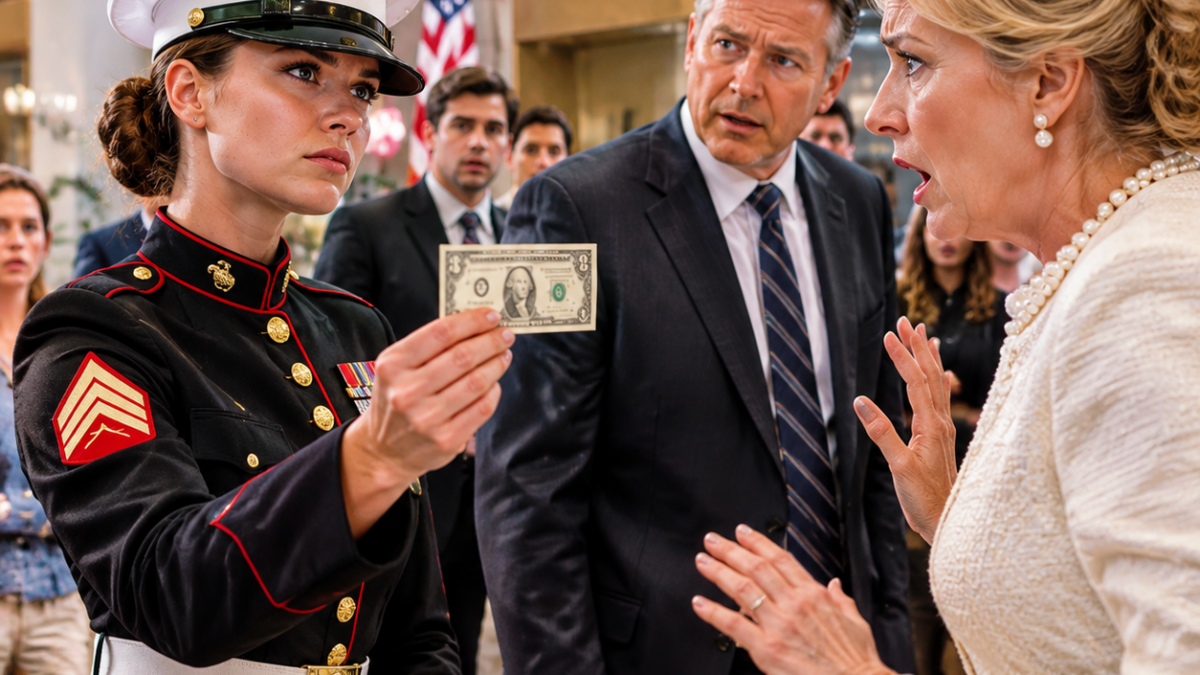
They Mocked the Marine When Grandpa Left Her Just $2—Then She Turned the Bill Over and Walked Into His Bank.
My brother laughed when our grandfather’s lawyer slid a two-dollar bill across the table and announced that it was my entire inheritance, because everyone in the room already knew August Kendrick had built a billion-dollar freight company from one used truck.
My father looked relieved, my brother told me the old man had finally decided what I was worth, and I walked out carrying less money than the parking meter outside would accept without knowing Grandpa had deliberately given them exactly what they wanted to see.
Then I turned the bill over, found a tiny mark from Carrington Bank, and learned that Grandpa had spent eight years building something far more important than an inheritance—and that my own family was already trying to sell the land beneath it before I discovered why he had chosen me to stop them.
My name is Rachel Kendrick.
Major Rachel Kendrick, United States Marine Corps.
Most people called me Rae.
My grandfather never did.
To him, I was always Rachel.
He said nicknames were for people who had not yet grown into the weight of their own names.
That sounded like one of his sayings.
August Kendrick had thousands.
He built a billion-dollar logistics and freight company, but his greatest talent was producing sentences that made people uncomfortable at exactly the right moment.
“Money is a tool.”
“Titles are rented.”
“Never trust a man who makes the waiter feel small.”
And my favorite:
“People read the big print. What matters is on the side nobody bothers to turn over.”
I did not understand that last one until the day he left me two dollars.
The reading of his will took place on a rainy Thursday morning in Richmond.
The Kendrick Freight headquarters occupied sixteen floors of a glass building my grandfather hated.
He had preferred the old brick depot near the rail yard.
My father, Conrad Kendrick, called the headquarters a symbol of what the company had become.
Grandpa called it an expensive fish tank.
The will was not read at the company.
Grandpa had insisted on his attorney’s office.
Judith Crane had represented him for thirty years.
PART2:
She was sixty-something, silver-haired, precise, and possessed the unnerving ability to stare at a room until people stopped lying.
I arrived in Marine dress blues because I had come straight from a command function.
That was a mistake.
My brother Preston noticed immediately.
“Seriously?”
I looked at him.
“What?”
“The uniform.”
“I was working.”
“At a will reading?”
“I didn’t dress for you.”
Preston smiled.
He had always been good-looking in the way men become good-looking after learning other people notice.
Expensive haircut.
Custom suit.
PART3:
Shoes that probably cost more than my monthly housing allowance during my first year as a lieutenant.
He was thirty-eight.
Four years older than me.
Chief development officer of Kendrick Freight.
The family heir apparent.
At least according to Preston.
Our father sat beside him.
Conrad Kendrick was sixty-three and looked tired even when rested.
He had inherited Grandpa’s broad shoulders but none of his roughness.
My father had spent his entire adult life inside the company August built.
Operations.
Regional expansion.
Acquisitions.
Eventually president.
He was competent.
More than competent.
But he had never escaped the gravitational pull of being August Kendrick’s son.
Preston embraced that gravity.
I ran from it.
Maybe that was where our family fracture began.
When I was eighteen, Dad expected me to study business.
Grandpa expected me to make up my own mind.
I chose the Naval Academy.
Then the Marine Corps.
Preston called it my rebellion phase.
Twenty years later, apparently the phase was still going.
Judith Crane entered carrying a thick file.
We stood.
She waved us down.
“Let’s not make this ceremonial.”
That sounded like Grandpa.
We sat.
My aunt Margaret was there.
Two cousins.
Dad.
Preston.
Me.
A representative from the company.
Judith read the standard language first.
Charitable gifts.
Household items.
Personal property.
Grandpa had left his watch collection to a historical society.
His restored 1948 Ford pickup to a longtime mechanic.
Books to the county library.
A fishing boat to a man named Ray Alvarez who had worked with him since 1983.
Then came the money.
“To my son, Conrad Kendrick, I leave my personal cash accounts and controlling interest in Kendrick Freight Corporation, subject to the restrictions and obligations described herein.”
Preston smiled.
Dad didn’t.
He stared at the table.
I already knew the company would go primarily through Dad.
That was never my concern.
I owned no expectation of Kendrick Freight.
Had never asked for shares.
Never worked there.
Had not attended a board meeting in my life.
Judith continued.
Several trusts for great-grandchildren.
Education funds.
Charitable commitments.
Then:
“To my granddaughter, Major Rachel Anne Kendrick, United States Marine Corps, I give and bequeath the sum of two dollars.”
Silence.
Not dramatic silence.
Confused silence.
I blinked.
Judith slid an envelope toward me.
Inside was a two-dollar bill.
Nothing else.
Preston laughed.
Actually laughed.
“Two dollars?”
Nobody stopped him.
He leaned back.
“Grandpa had jokes until the end.”
I looked at Judith.
“That’s it?”
Her face gave me nothing.
“That is everything I am instructed to provide you today.”
“Today?”
Preston noticed the word too.
But he was enjoying himself too much.
“Guess that’s what you’re worth, Major.”
I looked at him.
“Congratulations.”
“For what?”
“Getting the reaction you were hoping for.”
His smile tightened.
Dad finally spoke.
“Rae.”
I turned.
He would defend me.
For one second I thought he might.
Instead:
“Your grandfather knew what he was doing.”
I waited.
That was it.
Preston said:
“Exactly.”
Dad continued.
“We should respect his wishes.”
I looked at the two-dollar bill.
Then at him.
“You seem very comfortable with them.”
“Don’t make this ugly.”
“I haven’t said anything ugly.”
Preston laughed.
“You don’t have to.”
I folded the bill.
Placed it inside my wallet.
Judith watched me.
Very carefully.
Then the meeting continued.
That’s the thing about humiliation.
The person experiencing it believes everyone else can hear their heartbeat.
Usually they cannot.
They move on.
Paperwork continued.
Signatures.
Questions about company voting rights.
Taxes.
Estate administration.
I sat there for another forty-three minutes with two dollars in my wallet and a strange numbness spreading through me.
I did not care about the money.
I need that understood.
At thirty-four, I had a career.
Savings.
A small townhouse.
A retirement plan.
I did not need Grandpa’s millions.
But two dollars was not an amount.
It was a message.
And I could not understand the message.
August Kendrick had been difficult.
Demanding.
Sometimes infuriating.
But never careless.
When I joined the Marines, Dad refused to speak to me for two weeks.
Grandpa drove to Annapolis.
Sat in a diner across from me.
Ordered tomato soup.
Then asked:
“Are you running toward something or away from your father?”
I told him both.
He nodded.
“Bad reason.”
“To join?”
“To make a life decision.”
I expected him to tell me to quit.
Instead:
“But sometimes a bad reason puts you on the right road.”
Then he paid for lunch and left.
Through deployments, promotions, funerals, breakups, and too many Christmases missed, Grandpa was the family member who never asked when I was “coming home.”
He understood I already had.
So why two dollars?
After the meeting, Preston caught me near the elevator.
“Don’t spend it all in one place.”
I pushed the button.
“Original.”
“Come on, Rae.”
“What?”
“You can’t pretend it doesn’t bother you.”
“I don’t have to pretend anything for you.”
He leaned against the wall.
“Dad and I were here.”
“For what?”
“When Grandpa got old.”
There it was.
The family accusation.
“You visited twice a year.”
“I was deployed.”
“Always an excuse.”
“I spent three weeks with him in April.”
“After he was already dying.”
“I was serving.”
“So were we.”
“In Norfolk?”
He smiled.
“No. In the company he built.”
The elevator opened.
I stepped inside.
Preston said:
“You chose the Marines.”
“Yes.”
“He chose accordingly.”
The doors closed.
I stared at my reflection.
Blue uniform.
Ribbons.
Major’s oak leaves.
My grandfather’s two dollars in my pocket.
For the first time since I was twenty-two, I wanted to rip the uniform off.
Not because I regretted it.
Because I wondered whether my family had spent twenty years viewing every promotion as another rejection.
My phone rang.
Lieutenant Colonel Mason.
My executive officer.
I answered.
“Kendrick.”
“Major, you coming back?”
“Yes, sir.”
“You sound strange.”
“Family thing.”
“Say no more.”
Then:
“Briggs asked for you.”
My thoughts shifted instantly.
Staff Sergeant Thomas Briggs.
One of my Marines.
Thirty-one.
Three combat deployments.
Six weeks earlier, a training vehicle accident had crushed his lower leg.
Multiple surgeries.
Walter Reed.
His wife, Angela, had spent almost three weeks sleeping inside her car because temporary housing assistance had become tangled in paperwork and hotels near the hospital cost more than they could sustain.
I had found out on a Tuesday.
By Wednesday, we had a room.
Not through any elegant system.
Phone calls.
favors.
A retired gunnery sergeant.
A military spouse network.
A church with two furnished apartments.
Ugly solution.
It worked.
Grandpa had called me during those weeks.
“How’s your Marine?”
“Which one?”
“The injured one.”
“Briggs.”
“Yes.”
“Still at Walter Reed.”
“Family?”
“Wife’s there.”
“Where’s she staying?”
I told him.
He went quiet.
Then:
“No family should sleep in a car because somebody got hurt serving the country.”
“I know.”
“What are you doing?”
“Fixing it.”
He laughed softly.
“You always look after everybody.”
“It’s my job.”
Pause.
“Who’s looking after you?”
I hated that question.
“I’m fine.”
“That’s not an answer.”
It was one of our last conversations.
Now he was dead.
And apparently thought I was worth two dollars.
Back at my office that afternoon, I tried to work.
Failed.
At 5:20, I removed my jacket and hung it behind the door.
My wallet fell from the pocket.
The two-dollar bill slid onto the floor.
I stared at it.
Picked it up.
Thomas Jefferson.
Green.
Old but crisp.
Then Grandpa’s voice came back.
People read the big print.
What matters is on the side nobody bothers to turn over.
I turned it.
A tiny blue mark sat near the edge.
Barely visible.
A circular stamp.
CARRINGTON.
And beneath it:
R-17.
My heartbeat changed.
Carrington Bank.
Grandpa’s bank.
Private.
Old.
Family-owned before merging into a regional institution decades earlier.
He had banked there since before Kendrick Freight existed.
I called Judith.
She answered immediately.
“You turned it over.”
Not hello.
Not Rachel.
I stood.
“You knew?”
“Your grandfather made me promise.”
“What is this?”
“Go to Carrington.”
“Why?”
“Take the bill.”
“Judith.”
“Tomorrow morning.”
“You read that will yesterday in front of my father and brother and let Preston humiliate me.”
“Yes.”
Anger hit.
“Why?”
“One word from me in that room and Preston would have beaten you to the bank.”
I stopped.
“What?”
“Go alone.”
“What’s happening?”
“Rachel.”
Her voice softened.
“Trust your grandfather one more day.”
I barely slept.
At 8:03 the next morning, I entered Carrington Bank wearing civilian clothes.
Dark slacks.
White shirt.
Marine ID in my wallet because habit.
The lobby looked like money pretending not to be money.
Dark wood.
Brass.
Quiet carpet.
An older teller smiled.
“Good morning.”
I placed the bill on the counter.
“I need to speak with someone about this.”
She looked.
“Ma’am, a two-dollar bill is legal tender.”
“Turn it over.”
She did.
Her expression changed.
“Where did you get this?”
“My grandfather’s will.”
“Name?”
“August Kendrick.”
She looked at me.
Then my face.
“Your name?”
“Rachel Kendrick.”
Her posture changed.
Not dramatically.
Precisely.
“I’ll need identification.”
I gave her driver’s license.
Then military ID.
She read it.
“Major Kendrick?”
“Yes.”
“Please remain here.”
“Is something wrong?”
“No, ma’am.”
Then she picked up a phone.
Lowered her voice.
“Sir?”
Pause.
“She’s here.”
Another pause.
“Yes.”
“The mark.”
Pause.
“She has the bill.”
She listened.
“Yes, sir.”
Then to me:
“Someone will be down shortly.”
“Who?”
She hesitated.
“People who have been waiting eight years for you to walk through that door.”
Twenty minutes later I sat in a private conference room on the bank’s upper floor.
Three people entered.
David Carrington.
Chairman.
Seventy-something.
Judith Crane.
And a woman named Helen Park, senior trust officer.
I stared at Judith.
“You lied.”
“No.”
“You omitted aggressively.”
“That I’ll accept.”
David sat across from me.
“Major Kendrick.”
“Rachel.”
He nodded.
“Rachel.”
Helen placed a thick binder on the table.
“Eight years ago, your grandfather established a charitable trust with Carrington Bank.”
I waited.
“The purpose is direct support for wounded veterans and their immediate families.”
My chest tightened.
Helen continued.
“Short-term housing near major military hospitals.”
“Emergency financial grants.”
“Transportation.”
“Job retraining.”
“Transitional support after medical separation.”
“Childcare assistance in certain cases.”
I stared.
“How much?”
David answered.
“Initially forty million.”
I stopped breathing.
“Initially?”
“Your grandfather added assets over time.”
“How much now?”
Helen turned a page.
“Depending on valuation, approximately one hundred and eighty-six million in total committed assets.”
I leaned back.
“Why have I never heard of it?”
“Because it has not yet fully launched.”
“Why?”
“The trust structure was designed in phases.”
Helen looked at me.
“Your grandfather wanted the infrastructure prepared quietly before activation.”
“What does this have to do with me?”
David smiled slightly.
“He named you.”
“For what?”
“Trust overseer.”
I laughed.
Not because it was funny.
“No.”
Helen continued calmly.
“The bank is trustee.”
“You would not manage operations.”
“Professional staff handles administration.”
“You serve as the family-appointed oversight principal for mission decisions, major program changes, and beneficiary priorities.”
“I’m active duty.”
“We know.”
“I cannot run a charity.”
“You won’t.”
David leaned forward.
“You make the calls that matter.”
I stared at the binder.
“So Grandpa didn’t leave me an inheritance.”
David said:
“No.”
Pause.
“He left you a job.”
That sounded exactly like August Kendrick.
I almost laughed.
Then:
“Why the two-dollar bill?”
David looked at Judith.
Judith looked at me.
“Because almost nobody spends a two-dollar bill.”
I frowned.
“Your grandfather assumed you’d keep it.”
“And if I didn’t turn it over?”
Helen smiled.
“I had instructions to give you ninety days.”
“Then?”
“Come find you.”
I rubbed my forehead.
“Why make my family think I got nothing?”
Judith answered.
“Because he knew they were watching the estate.”
My hands stopped.
“Who?”
“Preston.”
The room changed.
Helen pulled another file forward.
“This is the part that concerns us.”
Aerial photograph.
Four hundred acres.
Fields.
Creek.
Old farmhouse.
“Hollow Creek.”
I knew the name.
Grandpa’s farm.
Virginia countryside.
He had bought it before Kendrick Freight became enormous.
I visited as a child.
Fishing.
Broken tractor.
Kitchen with yellow tile.
Grandpa making soup.
“What about it?”
“It is the physical base of the trust.”
Helen pointed.
“Existing farmhouse.”
“Barn structures.”
“Land designated for six small family residences in phase one.”
“Job-training workshop.”
“Administrative building.”
“Future expansion.”
My mind moved.
“On paper, Hollow Creek belongs to Kendrick Freight.”
“Yes.”
“But eight years ago your grandfather signed a transfer provision placing it into the trust effective at his death.”
I looked at Judith.
“Was that in the will?”
“Separate instrument.”
“Recorded?”
“With the county.”
“So what’s wrong?”
David slid a letter toward me.
“Your brother is selling it.”
Brightwater Development.
Proposed purchase.
Luxury residential project.
Golf component.
Commercial frontage.
My stomach tightened.
“How?”
“Preston claims your grandfather canceled the transfer.”
“Did he?”
“We have no valid cancellation.”
“Then stop the sale.”
Helen did not move.
“There is more.”
Another document.
Brightwater had paid a three-million-dollar deposit.
“When?”
“February.”
“Where is it?”
“Not Kendrick Freight.”
I looked up.
“Where?”
“A company Preston controls.”
“What company?”
“Norfolk Pier Holdings.”
I knew that name.
One of Preston’s development ventures.
Troubled.
Everyone in the family knew it was having problems, though no one discussed numbers.
“How do you know?”
Helen pulled an email.
From Brightwater counsel to Grandpa.
Preston assures us you will sign the cancellation at your convenience.
Please confirm.
Grandpa had not replied.
Another email.
Preston to a Kendrick Freight executive.
Close before the trust paperwork becomes an obstacle.
Grandpa doesn’t read anything closely anymore.
Bring it as routine renewal.
He’ll sign.
My hands went cold.
Then I saw another email.
Dad.
From Conrad Kendrick.
Do what you need to.
Don’t tell me the details.
Not mine to fix anymore.
Give it to Rae.
I read it twice.
“My father knew?”
Judith said:
“Not everything.”
“He knew enough.”
“Yes.”
“Why didn’t Grandpa stop Preston?”
David’s answer hurt.
“Because he was dying.”
I looked toward the window.
Then Helen said:
“Also because he wanted you to decide what happened after his death.”
I turned.
“You’ve had this since March.”
“Yes.”
“Why didn’t you stop the sale?”
“While your grandfather was alive, the property remained under his control.”
“And now?”
“Now the trust activates.”
“Then stop it.”
Helen slid a document toward me.
“As trust overseer, you can instruct the bank to place an administrative hold pending title review and seek judicial relief if necessary.”
“Will my signature stop the sale?”
“Temporarily.”
“And permanently?”
“We investigate.”
“If evidence supports the trust’s claim, we seek an injunction.”
“And if it doesn’t?”
Helen met my eyes.
“Then we prove it, or we don’t say it.”
Marine answer.
I liked her immediately.
“Where do I sign?”
My phone rang twenty-six minutes later.
Preston.
I let it ring twice.
Answered.
“Rae.”
“You’re at Carrington.”
Not a question.
“Yes.”
“Brightwater just received a hold notice.”
“Yes.”
“The morning after you got your two dollars.”
“Yes.”
“Where are you?”
“You know.”
His voice sharpened.
“Whatever Grandpa left you belongs to this family.”
Interesting.
Yesterday I was worth two dollars.
Today I apparently possessed family property.
“Does it?”
“Lift the hold.”
“No.”
“Come home.”
“No.”
“Rae.”
“Why are you so worried about what I’ll find?”
Silence.
Then:
“Unbelievable.”
He hung up.
Judith waited until I put the phone down.
“Your grandfather left a letter.”
I looked up.
“Why didn’t you give it to me yesterday?”
“He wanted you to read it after you saw the trust file.”
She handed me an envelope.
Grandpa’s handwriting.
RACHEL.
I opened it.
The letter began:
Don’t take this as a reward.
Of course it did.
Money only helps people as long as whoever’s holding it remembers who it’s for.
I could not tell you this to your face because your father and brother would have spent years trying to turn it into a family negotiation.
You don’t negotiate a promise made to people who already paid more than their share.
I remembered our conversation about Thomas Briggs.
His wife sleeping in a car at Walter Reed.
You were angry.
So was I.
Eleven years ago, I met another family like theirs.
I had been eating soup at Hollow Creek.
The man’s name was Thomas Briggs.
I looked up.
Same name?
Helen nodded.
“Different Briggs.”
I continued.
He had lost a leg.
His wife and children were staying in a motel they couldn’t afford.
He apologized for needing help.
That bothered me more than the injury.
Nobody who has already given that much should apologize for needing a bed.
So I started writing.
The trust grew from that bowl of soup.
Then Grandpa’s words:
If anyone has reached into this trust, don’t hunt for revenge.
Hunt for the truth.
Let it do the rest.
I read that line four times.
That evening, Dad called.
“Preston says you’ve frozen Hollow Creek.”
“I placed a hold.”
“Same thing.”
“No.”
“What are you doing?”
“What Grandpa asked.”
“He left the company to me.”
“Hollow Creek isn’t the company anymore.”
“That’s being disputed.”
“By Preston.”
My father’s breathing changed.
“Come to the house tonight.”
“Why?”
“We handle family matters privately.”
I almost laughed.
“That’s exactly how we got here.”
“Rachel.”
“I’ll come.”
“Good.”
“I’m not signing anything.”
Pause.
“You don’t understand what you’re walking into.”
“No.”
I looked at Grandpa’s letter.
“But I’m starting to.”
The Kendrick family house sat outside Richmond.
Eight bedrooms.
Stone.
Pool nobody used.
Dad bought it after becoming president.
Grandpa hated it.
Said the dining room looked like Congress should be arguing inside it.
I arrived at seven.
Preston had lawyers.
Two.
Dad had one.
There was a folder in front of my chair.
I remained standing.
Preston said:
“This can be simple.”
“Usually means it isn’t.”
He ignored me.
“Carrington told Brightwater the hold was placed at your instruction.”
“Yes.”
“You lift the hold.”
“No.”
“Listen first.”
“No.”
Dad said:
“Rae.”
I sat.
Fine.
Preston opened the folder.
“You confirm the trust has no claim on Hollow Creek.”
“False.”
“You confirm you have no claim on Kendrick Freight.”
“I have never claimed one.”
“The sale remains confidential until closing.”
“No.”
Preston pushed another page toward me.
“And on closing day, I pay you two million dollars.”
I stared.
Then laughed.
Dad looked away.
Preston said:
“What’s funny?”
“Yesterday you said Grandpa decided I was worth two dollars.”
“This isn’t inheritance.”
“No?”
“It’s compensation.”
“For lying?”
“For simplifying.”
I looked at Dad.
He said nothing.
Preston continued.
“Two million.”
“That is literally a million times what Grandpa left you.”
My laughter stopped.
“How much did you inherit?”
His face hardened.
“Not relevant.”
“How much?”
“Rae.”
I turned toward Dad.
“You walked out of Judith’s office yesterday with what?”
He answered quietly.
“About six million in liquid personal assets.”
“And controlling voting interest.”
“Yes.”
I looked at Preston.
“And you need Hollow Creek badly enough to offer me two million.”
“It’s unused land.”
“Four hundred acres.”
“Dead land.”
“Then why?”
He leaned forward.
“Because you don’t understand business.”
There it was.
The family religion.
I didn’t understand because I wore a uniform instead of a suit.
He continued.
“Brightwater is paying a premium.”
“The land has sat doing nothing for forty years.”
“The veterans program never launched.”
“It was an old man’s idea.”
“He spent eight years on it.”
“You weren’t here.”
“I was here in April.”
Preston stopped.
I looked at Dad.
“I sat beside Grandpa at hospice.”
Nobody spoke.
“He couldn’t lift a spoon.”
My father looked down.
“I fed him soup.”
Preston said:
“What does that have to do with anything?”
“I don’t know yet.”
But the thought stayed.
Dad finally spoke.
“Rachel.”
His voice was tired.
“Think about this family.”
“I am.”
“Think about your brother.”
“I am.”
“My name.”
“I have.”
“I paid for your school.”
I stared.
“The government paid for most of my education.”
“You know what I mean.”
“No.”
“Tell me.”
He stood.
“I supported you.”
“When you joined the Marines, I stood behind you.”
I laughed once.
“You told everyone I would come home in four years and join Kendrick Freight.”
“You were twenty-two.”
“You never accepted the possibility I meant it.”
“I accepted your career.”
“No.”
“You tolerated it.”
He looked wounded.
Good.
Some truths do that.
“You weren’t holding this family together, Dad.”
I picked up the folder.
“Grandpa already left me what I’m worth.”
Two dollars.
I slid the folder back.
“The answer is no.”
Preston stood.
“You’re throwing away two million dollars over an old man’s fantasy.”
I walked toward the door.
“Thank you for your time.”
The next morning, I was back at work.
Colonel Matthews chewed out our staff over a readiness report.
Badly formatted data.
Late maintenance submissions.
Everybody left the room looking emotionally concussed.
Lieutenant Briggs caught me afterward.
Not the wounded Briggs.
Different one.
Marine Corps loves repeating surnames.
“Ma’am?”
“Yes?”
“How do you never lose it?”
I almost laughed.
“What makes you think I don’t?”
“The colonel just removed everyone’s skin and you didn’t blink.”
I gathered my notes.
“Sort what you know from what you’re feeling.”
He waited.
“Then act on the first pile.”
I walked away.
And realized Grandpa had been teaching me the same thing my entire life.
Carrington hired an independent title team.
Forensic accountant.
Outside counsel.
Every document locked down.
No family employee.
No Kendrick Freight attorney.
No Preston-selected auditor.
A week later Helen called.
“Review supports the trust.”
“And my father?”
“One email.”
Do what you need to.
Don’t tell me the details.
Not mine to fix anymore.
Give it to Rae.
That was all.
Enough to hurt.
Not enough to prove he participated in the fraud.
Helen said:
“There’s something else.”
“Go.”
“Brightwater produced the document Preston gave them.”
A cancellation.
Supposedly signed by Grandpa.
April fourteenth.
My entire body went still.
“April fourteenth?”
“Yes.”
I knew that date.
I had taken emergency leave April 12 through 18.
Grandpa’s final decline.
I slept in a chair beside his hospice bed.
He hated the oxygen tube.
Refused pudding.
Wanted tomato soup.
April fourteenth had been the worst day.
His hands shook so badly he could not grip anything.
I fed him.
One spoonful at a time.
“Judith.”
She was already on the call.
“Yes?”
“Get his hospice chart.”
Silence.
Then:
“You’re thinking capacity?”
“Motor function.”
She understood.
Two hours later Judith called the hospice.
Requested nursing notes through proper estate authority.
April 14.
Patient increasingly weak.
Unable to grip utensils.
Fed by granddaughter.
Unable to sign standard medication acknowledgment; verbal confirmation witnessed by nurse.
My chest tightened.
“He couldn’t hold a spoon.”
Judith said:
“No.”
“So he couldn’t sign that cancellation.”
“Not normally.”
“Handwriting expert?”
“Already reviewing.”
The signature was questionable.
Not enough by itself.
But combined with medical notes?
Stronger.
Then Helen found the money.
Brightwater’s three-million-dollar deposit.
Every cent transferred into Preston’s Norfolk pier project.
The project was hemorrhaging money.
Dad did not know how badly.
If Hollow Creek sale failed, Brightwater could demand the deposit back.
Preston did not have three million.
The estate would not cover him personally.
Suddenly this was not about unused farmland.
It was about hiding a failed investment from our father.
Judith said:
“With this, I am asking a judge for temporary injunction.”
“Do it.”
“The expert report and medical notes go to the prosecutor.”
“Do it.”
“Rachel.”
“Yes?”
“This will become public.”
I thought about Grandpa.
Don’t hunt revenge.
Hunt truth.
“Then let it.”
Two weeks later, the sale was frozen under court order.
Preston requested a meeting.
Judith came with me.
His attorney came with him.
Dad did not attend.
Preston looked ten years older.
“Two weeks, Rae.”
I sat.
“The deal’s frozen.”
“Yes.”
“Brightwater is threatening suit.”
“I know.”
“Lawyers are everywhere.”
“Yes.”
“Dad won’t take my calls.”
“That sounds like a family problem.”
His eyes flashed.
“What more do you want?”
“The truth.”
“You have it.”
“No.”
He leaned forward.
“You could’ve taken two million and walked.”
“Yes.”
“Why didn’t you?”
I stared at him.
“If that sale closed, what would have happened to the trust?”
He looked away.
“Money can be replaced.”
“By who?”
Silence.
“The wounded Marines?”
“Families sleeping in cars?”
“Veterans trying to learn a new trade after losing a leg?”
He said nothing.
Judith opened her file.
“For the record, Preston.”
He looked at her.
“Hollow Creek is under a judicial injunction.”
“Nobody’s signature simply lifts it now.”
She slid another document forward.
“And the April fourteenth cancellation is with the Commonwealth’s attorney.”
His face changed.
“You cannot take that back either.”
Judith waited.
Then reached into her bag.
“One more thing.”
Preston looked exhausted.
“What?”
“August left instructions.”
She placed another envelope in front of me.
“Rachel, check your bill.”
I opened my wallet.
The two-dollar bill.
On the reverse, beneath the Carrington mark, a serial number.
Judith checked the envelope.
“Same number.”
I stared.
“What is this?”
“Your grandfather’s final conditional letter.”
“To be opened only if someone in the immediate family offered you money to abandon the trust.”
Preston went pale.
Judith opened it.
Grandpa had anticipated him.
Of course he had.
Rachel,
If you’re reading this, somebody offered you money to walk away.
If you took it, this envelope stayed closed.
Since it is open, you did what I hoped.
Not what I ordered.
What I hoped.
There is a difference.
I stopped reading.
Judith said:
“Keep going.”
The farmhouse at Hollow Creek and the five acres immediately surrounding it were separately designated within the trust documents.
They are not part of the charitable operating property.
They pass to you personally.
Not because you refused a bribe.
Either way, they were scheduled to become yours one year after my death.
I laughed.
Then cried.
Right there.
In front of Preston.
Because I saw Grandpa’s kitchen.
Yellow tile.
Old table.
Tomato soup.
Him asking:
Who’s looking after you?
The letter continued.
Your father and brother asked me for many things.
You never asked me for anything.
That is not always a virtue.
Sometimes it is pride wearing better clothes.
I asked you once who was looking after you.
You didn’t answer.
So I am answering.
The farmhouse is yours.
Keep it.
Sell it.
Burn the curtains.
I never liked them.
Just don’t confuse refusing help with being strong.
I covered my mouth.
Judith’s eyes were wet.
Preston stared at the table.
I looked at him.
“Brightwater planned to tear down the farmhouse.”
He did not answer.
I knew.
The development map.
Phase one.
Luxury homes.
My grandfather’s kitchen was directly inside the proposed access-road corridor.
“They were going to bulldoze it.”
Preston whispered:
“Rae.”
“I sat there in April.”
“I know.”
“I fed him soup in that kitchen when he could still leave hospice for an afternoon.”
“I didn’t know.”
“You didn’t look.”
That hurt him.
I saw it.
Good.
Not revenge.
Truth.
The criminal case did not become the dramatic spectacle people expected.
Preston eventually entered a plea on a lesser fraud-related charge after prosecutors evaluated the evidence and cooperation.
Probation.
Financial penalties.
No prison.
Some relatives called that unfair.
Others called it mercy.
I called it what the court decided.
Brightwater got its three million dollars back.
Preston sold his Charlottesville house and liquidated investments to cover the shortfall and legal costs.
Dad removed him from his executive role himself.
That mattered.
Kendrick Freight accepted an independent compliance monitor.
Internal controls changed.
Related-party transfers required outside review.
Dad remained president temporarily under board oversight.
For the first time in his career, Conrad Kendrick answered to people who were not family.
I think that saved him.
Hollow Creek survived.
The trust launched eleven months after Grandpa’s death.
Phase one began with the old structures.
Not luxury.
Functional.
Six family apartments near a regional veterans medical center shuttle route.
Training workshop.
Partnership with electrical, welding, diesel, and commercial-driving programs.
Emergency grants.
Childcare support.
Short-term lodging.
The first applicant who came into my office was Thomas Briggs.
My Marine.
The one whose wife had slept in her car.
He entered wearing jeans.
Prosthetic brace visible beneath one pant leg.
“Major.”
I pointed.
“Sit.”
“Sorry, ma’am.”
“For what?”
“I’m early.”
“You’re allowed.”
He sat.
Then saw the application.
“I’m starting an electrician program.”
“I know.”
“Eight months.”
“I know.”
“My wife found work nearby.”
“Good.”
“I just need somewhere close to the school until I finish.”
He looked embarrassed.
“Sorry.”
That word.
Again.
“I know there are guys worse off.”
I put my pen down.
“Briggs.”
“Yes, ma’am?”
“You do not have to apologize for asking for help.”
He stared at his hands.
“I’m used to being the guy people lean on.”
Grandpa’s voice came back.
Who’s looking after you?
I slid the form toward him.
“Fill it out.”
He became the first resident.
Six more families followed within months.
Nobody slept in a car.
That phrase became our unofficial metric.
Not dollars distributed.
Not occupancy.
Nobody sleeps in a car.
I spent one Saturday at Hollow Creek repairing the office printer.
It was older than some of my lieutenants.
Helen walked in.
“Major Kendrick.”
“If you call me Major while I’m inside a printer, we’re no longer friends.”
“Rachel.”
“Better.”
She placed coffee on the desk.
“News.”
“Good?”
“Depends.”
“Go.”
“Preston sold the Charlottesville house.”
“I heard.”
“Brightwater has full repayment.”
“Good.”
“His plea is final.”
“Probation?”
“Yes.”
“Dad?”
“Your father accepted the monitor formally.”
I wiped toner from my hand.
“Good.”
Helen smiled.
“You say good like you’re approving maintenance forms.”
“Emotional range is overrated.”
She sat.
Then:
“Your father wants to see you.”
I kept working.
“No.”
“He asked me to ask.”
“No.”
“Same answer?”
“Yes.”
Helen waited.
“You know refusing conversation can become its own form of control.”
I stared at her.
“That sounds suspiciously like something Grandpa would say.”
“He paid us very well.”
I finally agreed.
Dad came to Hollow Creek the following Saturday.
No driver.
No company attorney.
No suit.
He entered the old kitchen carrying nothing.
That kitchen had not changed much.
I kept the yellow tile.
Martha Stewart would have hated it.
Grandpa would have approved.
Dad sat at the same table where August once ate soup.
For a while neither of us spoke.
Then:
“I owe you an apology.”
I waited.
“Which part?”
He looked down.
“The will reading.”
I said nothing.
“I knew Preston had been trying to control the land.”
“How much?”
“Not enough.”
“That’s convenient.”
“I knew there was pressure.”
“Knew he wanted the sale.”
“Knew your grandfather had become suspicious.”
“Did you know about the forged cancellation?”
“No.”
“Deposit?”
“No.”
“Norfolk losses?”
“No.”
I believed him.
That was almost worse.
He continued.
“When Preston told me he’d take care of it, I said not to tell me details.”
“You wrote that.”
“Yes.”
“Why?”
Dad looked around the kitchen.
“Because I didn’t want to know.”
Truth.
Finally.
“I was tired.”
“Your grandfather was dying.”
“The company was unstable.”
“Preston was angry.”
“You were gone.”
I stiffened.
He saw it.
“Not accusation.”
“It sounded like one.”
“I know.”
He rubbed his hands together.
“I had spent years telling myself you didn’t want this family.”
“That was easier than admitting maybe this family didn’t know how to want you unless you came home.”
That hit harder than anything Preston said.
Dad continued.
“At the will reading, I knew Preston was enjoying what happened.”
“You did nothing.”
“I know.”
“You looked relieved.”
His face collapsed slightly.
“I was.”
I swallowed.
He said:
“I was relieved you got almost nothing.”
There it was.
“Why?”
“Because if your father left you nothing important, then I didn’t have to ask whether he’d trusted you more than me.”
I stared.
Dad looked older.
“I spent my life trying to prove to August that I could carry what he built.”
“You left.”
“Built your own career.”
“Never asked him for shares.”
“Never asked me for approval.”
“And he admired that.”
I said:
“You’re blaming Grandpa?”
“No.”
“I’m telling you why I failed you.”
He looked directly at me.
“Not excusing it.”
I waited.
Then said what I had needed to say since Judith’s office.
“You did not hurt me because I didn’t get money.”
“I know.”
“You hurt me because you watched Preston humiliate me and behaved like I deserved it.”
Dad nodded.
Tears in his eyes.
“I know.”
Silence.
He looked through the kitchen doorway toward the newly renovated barn.
“What happens here?”
I could have said:
You don’t get to ask.
Instead I explained.
Apartments.
Emergency grants.
Training.
Transportation.
Families.
Briggs.
Dad listened.
At the end:
“Can I see it?”
I took him around Hollow Creek.
Workshop.
Classroom.
Family housing.
Small playground.
Shuttle van.
Office.
Briggs was outside repairing a light fixture.
He saw me.
“Major.”
I pointed at Dad.
“Thomas Briggs.”
Dad shook his hand.
Briggs said:
“This place saved my marriage.”
I almost corrected him.
He continued.
“Not because we were falling apart.”
“Because my wife was working two jobs, I was angry all the time, and neither of us slept.”
“This place gave us room.”
Dad looked at me.
Grandpa’s words.
Room to breathe.
After Briggs walked away, Dad said:
“August would’ve liked this.”
“He designed most of it.”
“No.”
He looked around.
“He designed the trust.”
“You made it real.”
I did not know what to do with that compliment.
So I said:
“The printer is terrible.”
Dad laughed.
First time in months.
He asked:
“Can I come back?”
I looked at him.
“I’m not ready to forgive you.”
His face fell.
I continued:
“But same time next month?”
He nodded.
“I’ll be here.”
That became our relationship.
Monthly.
Not dramatic.
Sometimes lunch.
Sometimes walk.
Sometimes ten minutes.
Sometimes two hours.
He did not demand forgiveness.
I did not offer false peace.
We rebuilt something slower.
Preston wrote three letters.
First blamed stress.
Second blamed Dad.
Third finally said:
I forged the signature because I thought I could fix everything after the sale.
That sentence mattered.
Not because it excused him.
Because he used “I.”
No:
You forced me.
Grandpa trapped me.
Dad failed me.
The company needed it.
I.
I wrote back:
When you can own what you did without explaining why somebody else made it reasonable, we’ll talk.
He did not respond for six months.
Then:
I’m trying.
That was enough for now.
I remained active duty another four years.
The bank handled the trust.
Professional executive director.
Staff.
Counsel.
Auditors.
My role stayed oversight.
Major mission decisions.
Program priorities.
Ethics.
Beneficiary perspective.
I visited Hollow Creek whenever I could.
The two-dollar bill remained in my wallet.
Not framed.
Not displayed.
Folded carefully.
People asked why.
I never told most of them.
One afternoon a young Marine captain sat across from me.
Excellent officer.
Burning himself alive with responsibility.
His mother was sick.
He was sending money home.
Taking extra duties.
Covering for everyone.
He said:
“I can handle it.”
I asked:
“Who’s looking after you?”
He stared.
I smiled.
“Hate that question?”
“Yes, ma’am.”
“Good.”
I took out the bill.
Placed it on the desk.
He looked.
“Two dollars?”
“Turn it over.”
He did.
Saw Carrington’s faded blue stamp.
“What’s it mean?”
I thought about Grandpa.
The will.
Preston laughing.
Dad silent.
The bank.
Briggs.
Hollow Creek.
“It means the side people laugh at first isn’t always the side that matters.”
He frowned.
“That sounds like something an old person says.”
“My grandfather.”
“Was he old?”
“Extremely.”
“Did he know you carried this?”
“No.”
“Then why keep it?”
I took the bill back.
“Because he knew I would.”
Years later, after I retired from the Marine Corps, Hollow Creek became more of my daily life.
I refused the CEO role.
Of course.
Grandpa had anticipated that too.
The trust’s bylaws required professional management.
I chaired the mission committee.
Three meetings a month.
Sometimes four.
Enough bureaucracy to remind me I had not actually escaped military life.
The program expanded.
Not recklessly.
Housing near hospitals in three states.
Job-training partnerships.
Emergency family grants.
Bridge funding for disability claims.
Childcare.
Transportation.
And one rule I insisted remain.
Nobody apologized for applying.
Staff were trained to stop that language gently.
I know other people need it more.
We answered:
Need is not a competition.
I don’t want charity.
We answered:
Then think of it as a bridge.
I should be able to handle this.
We answered:
Maybe.
You shouldn’t have to handle everything alone.
Grandpa would have liked that.
The farmhouse remained mine.
I never moved into it permanently while active duty.
After retirement, I did.
Yellow tile.
Old table.
Front porch.
I repaired the roof.
Replaced wiring.
Kept the kitchen.
The first night there alone, I sat in Grandpa’s chair.
Found myself listening for him.
Ridiculous.
Then I opened the drawer beside the table.
Inside was an old soup spoon.
Probably meaningless.
Maybe not.
I cried anyway.
Inheritance is a strange word.
People assume it means property traveling from one generation to the next.
Money.
Land.
Company shares.
Jewelry.
Grandpa left those things.
Just not primarily to me.
What I inherited was harder.
Responsibility.
A question.
Who is this for?
He built Kendrick Freight from one used truck.
Everyone thought that was his life’s accomplishment.
Maybe it was financially.
But near the end, he seemed increasingly uninterested in the company.
He had watched money become identity inside our family.
Dad measured himself by carrying it.
Preston by growing it.
I measured myself by refusing to need it.
Grandpa understood all three were distortions.
Money was never supposed to tell us who we were.
Only what we could do.
That was why he did not leave me millions directly.
He knew exactly what would happen.
Preston would challenge it.
Dad would mediate.
Lawyers would swarm.
I would become the Marine daughter who “won.”
Instead he gave me two dollars.
Everyone relaxed.
Preston laughed.
Dad felt relieved.
They stopped watching.
And I turned the bill over.
That was all.
One small movement.
The side nobody bothered to look at.
My father died eleven years after Grandpa.
Peacefully.
We had rebuilt enough by then that I was holding his hand.
Not perfect reconciliation.
Real reconciliation.
Messy.
Sometimes old fights returned.
Sometimes he defended Preston when he shouldn’t.
Sometimes I punished him with silence because it was easier than explaining hurt.
But we kept showing up.
The day before he died, Dad asked:
“Do you still have it?”
“What?”
“The two dollars.”
I pulled it from my wallet.
More worn.
Still intact.
He laughed.
“Your grandfather knew you too well.”
“Yes.”
Dad looked at the reverse.
“He knew me too.”
I said nothing.
He continued.
“He knew I’d see the amount and stop asking questions.”
That admission still hurt.
But differently.
He handed it back.
“I’m sorry I didn’t turn it over.”
I knew he meant more than the bill.
“I know.”
He looked at me.
“You know what I envy?”
“What?”
“You figured out what his money was for.”
I shook my head.
“He told me.”
“No.”
Dad smiled weakly.
“He gave you the question.”
“You answered it.”
When he died, Preston attended the funeral.
We had spoken a few times by then.
His life was smaller.
Not poor.
Not destroyed.
Different.
He worked for a regional logistics company where nobody cared that his last name was Kendrick.
That may have been the best thing that ever happened to him.
At the funeral, he stood beside me.
“Do you hate me?”
I looked at him.
“Not anymore.”
His eyes closed briefly.
“That’s better than I deserve.”
“Don’t do that.”
“What?”
“Turn accountability into self-punishment.”
He looked surprised.
“Very Marine of you.”
“Grandpa.”
“Of course.”
He smiled.
Then:
“Can I visit Hollow Creek sometime?”
I hesitated.
“Why?”
“I want to see what I almost sold.”
Truth.
“Okay.”
He came the following spring.
No lawyers.
No offer.
He stood near the family apartments.
Children playing.
A veteran in work clothes heading toward the training barn.
Briggs, now a licensed electrician and one of our program instructors, was repairing exterior lighting.
Preston watched.
“That land was worth almost forty million after rezoning.”
“Yes.”
“I thought keeping it was insane.”
“I know.”
He looked at the buildings.
“Grandpa could’ve funded this anywhere.”
“Probably.”
“Why here?”
I looked toward the farmhouse.
“Because this was the first place he ever had enough to share.”
Preston became quiet.
Grandpa bought Hollow Creek after his first major company contract.
Still not rich.
But secure.
He had once told me:
“It was the first land I owned that wasn’t under a truck.”
The trust began there because place mattered.
Preston asked:
“Would you ever sell?”
“No.”
“Even if somebody offered a hundred million?”
“No.”
He nodded.
“I would’ve.”
“I know.”
He looked at me.
“That’s why he picked you.”
I shook my head.
“No.”
“Then why?”
“Because you would’ve treated the money like it belonged to us.”
“And you don’t?”
“It belongs to whoever needs the bridge next.”
Preston stared.
Then laughed softly.
“God, you’re annoying.”
“Family trait.”
We walked back toward the farmhouse.
Inside, I made soup.
Tomato.
Grandpa’s kind.
Too salty.
Preston took one bite.
“This is terrible.”
“Then don’t eat it.”
“He would’ve complained.”
“Constantly.”
We laughed.
That was the first meal we shared without our father or grandfather present where neither of us competed for a dead man’s approval.
It felt strange.
Good strange.
Years later, when the Pixie—no, wrong story, let’s fix that. Hollow Creek expanded into a national network, people occasionally wrote profiles about August Kendrick’s “secret veterans trust.”
I hated the word secret.
It had not been secret.
It had been private.
Documents existed.
Bank records.
County restrictions.
Attorneys.
Trustees.
The family simply had not looked.
That difference mattered.
People love hidden-fortune stories because they suggest life can turn on a dramatic reveal.
Mine did not.
My life turned on a piece of paper worth two dollars because somebody knew exactly which kind of insult would make the wrong people stop paying attention.
Grandpa’s brilliance was not hiding money.
It was understanding character.
Mine.
Preston’s.
Dad’s.
His own.
He knew Preston would laugh.
Knew Dad would avoid conflict.
Knew I would keep the bill.
Knew eventually I would turn it over.
Sometimes that still irritates me.
Manipulative old man.
I told Judith that once.
She laughed.
“He would be delighted you noticed.”
Judith lived long enough to see Hollow Creek’s tenth anniversary.
At the event, I found her sitting in Grandpa’s old kitchen.
“Why are you hiding?”
“Speeches.”
“You helped create this.”
“I helped draft documents.”
“Same thing.”
“No.”
She pointed toward the courtyard.
“You did that.”
I shook my head.
“Hundreds of people did.”
She smiled.
“Your grandfather would approve of that answer.”
I sat beside her.
“Did he really expect Preston to offer me money?”
“Yes.”
“That confidently?”
“Yes.”
“Why?”
Judith took a sip of tea.
“August understood that your brother believed everything had a price.”
“And me?”
“He believed you had the opposite problem.”
“What?”
“You believed needing nothing made you incorruptible.”
I stared.
“That sounds insulting.”
“It was.”
She smiled.
“He thought your pride was almost as dangerous as Preston’s greed.”
I laughed.
“That’s unfair.”
“Probably why he loved you.”
Then Judith said:
“The farmhouse was not a prize for refusing the two million.”
“I know.”
“He made that explicit because he worried you’d turn refusal into another medal.”
I hated how accurate that was.
Grandpa’s letter:
Not because you refused a bribe.
Either way, it was going to be yours.
He had wanted me to learn to receive something.
Not earn.
Not protect.
Not sacrifice for.
Receive.
That took longer than stopping the land sale.
The two-dollar bill lives in a small frame now.
Not because it is valuable.
Because the paper finally became too fragile for my wallet.
I had it mounted backward.
Visitors ask:
“Why is the money in there backwards?”
I always answer:
“It isn’t backwards.”
Then I point to the faded blue Carrington stamp.
“That’s the side that matters.”
Most people smile politely.
They think it is sentimental.
Maybe it is.
But when I look at it, I do not see the will reading.
Not Preston laughing.
Not Dad looking relieved.
I see Staff Sergeant Briggs sitting across from me, embarrassed because he needed somewhere to live.
I see his wife no longer sleeping in a car.
I see six families.
Then sixty.
Then hundreds.
I see apprentices learning electrical work.
Veterans studying for commercial driver’s licenses.
Children playing outside temporary apartments while a parent recovers from surgery.
I see Dad sitting in Grandpa’s kitchen admitting he had been relieved when I was humiliated because that pain protected him from examining himself.
I see Preston standing on land he once tried to sell and finally understanding why someone would refuse forty million dollars for it.
I see Grandpa with tomato soup.
Who’s looking after you?
And I finally have an answer.
People are.
Not always the people I expected.
Not perfectly.
But I let them now.
That may have been the real inheritance.
Not Hollow Creek.
Not oversight authority.
Not the farmhouse.
Permission to stop treating self-sufficiency as character.
Grandpa knew I would protect everybody.
He had watched me do it since I was a child.
Defend Preston when he got in trouble.
Help Dad when Mom died.
Carry Marines’ problems home in my head.
Take extra duty.
Solve.
Fix.
Move.
He knew exactly what I would do with a trust for wounded veterans.
The surprise was not that he trusted me with them.
The surprise was that he left me somewhere to belong too.
The farmhouse.
Five acres.
A kitchen.
A question.
Who’s looking after you?
For years, I thought leadership meant being the person with the answer.
The Marine Corps taught me better eventually.
So did Grandpa.
Sometimes leadership is protecting the mission from the person trying to own it.
Sometimes it is saying no to two million dollars.
Sometimes it is telling investigators:
Prove it or don’t say it.
Sometimes it is looking at your father and refusing to pretend silence did not hurt.
Sometimes it is letting him come back next month.
Sometimes it is telling a wounded Marine:
You do not have to apologize.
And sometimes it is simply turning the bill over.
That was the part Preston never understood at the will reading.
He saw two dollars.
He saw insult.
He saw proof that he had won something.
Grandpa knew people often stop searching once they find the answer they wanted.
Preston wanted to believe I mattered less.
Dad wanted to believe Grandpa had finally accepted the family structure.
I wanted to believe I did not care.
All three of us were wrong.
The big print said:
TWO DOLLARS.
The other side said:
Go to the bank.
Ask why.
Look closer.
That’s what changed everything.
Not because my grandfather secretly left me more money than everyone else.
He didn’t.
Dad inherited far more personal wealth.
The company remained enormously valuable.
I never became the richest Kendrick.
That was never the twist.
The twist was that Grandpa left the people who wanted ownership the assets they could fight over.
He left me responsibility for something nobody could own in the same way.
A promise.
Land set aside for people who had already sacrificed enough.
A trust designed to keep working after all of us were dead.
And one old farmhouse where the woman who spent her life looking after everyone else could finally put down her bags.
People laughed because Grandpa left the Marine two dollars.
They thought the amount told them what he thought of me.
Maybe that’s why I still smile when someone asks about the framed bill.
Because August Kendrick spent his whole life warning us not to confuse price with value.
In the end, he found a way to prove it using the cheapest inheritance in the room.
Two dollars.
One tiny bank mark.
One side nobody bothered to turn over.
And a question I am still trying to answer properly:
Who is this for?
As long as Hollow Creek keeps answering that question with somebody other than us, Grandpa’s money is doing exactly what he intended.



