The HOA Called the Cops When I Said, “I’m Not Under Your HOA”—Then I Put the Deed on the Table
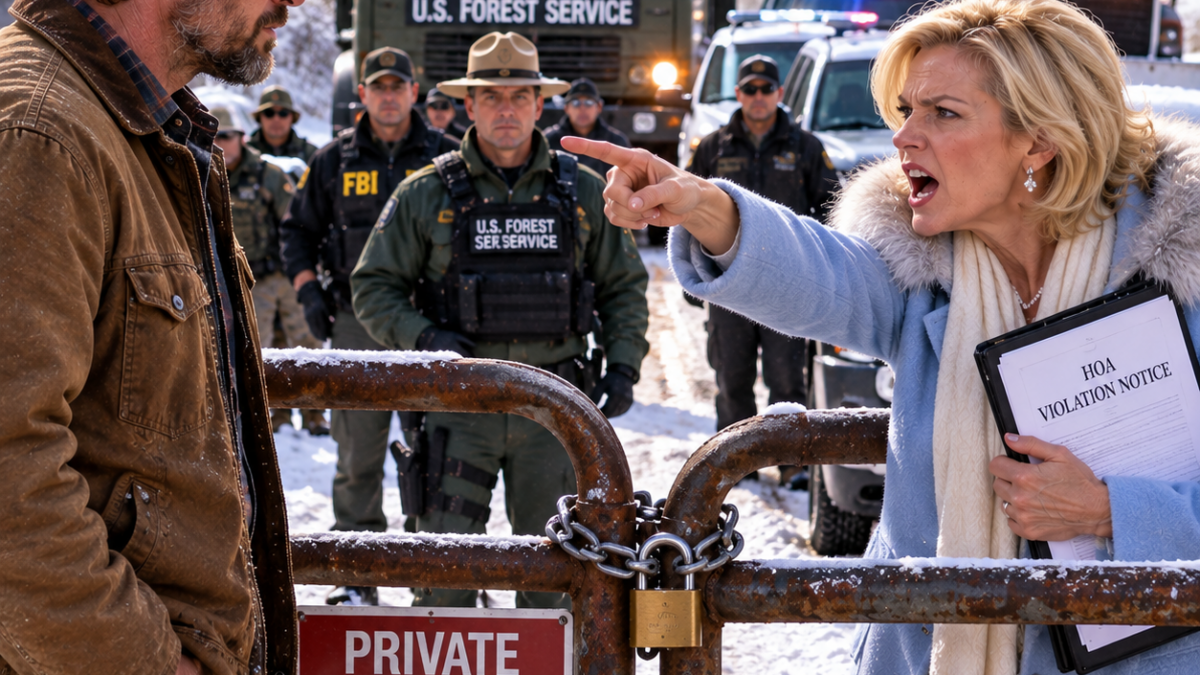
The HOA Called the Cops When I Said, “I’m Not Under Your HOA”—Then I Put the Deed on the Table.
The president of Brookhaven’s HOA stood on my lawn, pointed at the mailbox I had just set in fresh concrete, and called the police after I told her the twelve homes on Willow Court had never actually been brought under her association.
The officer refused to enforce her $400 fine, but when I started asking what document gave the HOA authority to collect hundreds of dollars every month from elderly tenants, threaten their future home purchases, and order contractors to cut down their personal property, I discovered the problem was much larger than my mailbox.
Then Celeste Whitaker brought the board, the police, and the same unfinished annexation papers to prove I had no right to resist—and I finally laid the recorded deed on the table showing that the company behind all twelve houses belonged to me.
My name is Andrew Reeves.
And the morning Celeste Whitaker called the police on me, I was not trying to start a war with a homeowners association.
I was installing a mailbox.
That is all.
A black metal box.
Red flag.
Pressure-treated post.
Concrete.
Nothing decorative.
Nothing political.
Nothing designed to offend anybody’s sense of neighborhood harmony.
I had been kneeling beside the curb on Willow Court for maybe twenty minutes when I heard heels crossing my lawn.
“That mailbox comes out today.”
I looked up.
Celeste Whitaker.
President of the Brookhaven Estates Homeowners Association.
Platinum-blond hair brushing her shoulders.
Light-blue jacket.
Clipboard.
Behind her stood Joyce Danner, the association secretary, holding a thick blue folder against her chest.
Concrete dust covered my gloves.
The post stood straight.
I checked it once more with the level before answering.
“I’m not under your HOA, Mrs. Whitaker.”
Across the street, Alma Reyes stopped watering her flowers.
Celeste stared at me.
Not confused.
Offended.
PART2:
As if I had challenged a law of physics.
“You live inside Brookhaven.”
“No.”
“You’re on Willow Court.”
“Yes.”
“Willow Court is administered by Brookhaven.”
“That’s not the same thing.”
Joyce shifted the blue folder.
For half a second, a page slid out.
An annexation form.
I noticed something immediately.
Most recorded documents I had already reviewed carried county stamps or recording references near the bottom.
This page had a blank corner.
Celeste pushed it back into the folder.
“You’ve been assessed a four-hundred-dollar architectural violation.”
“For installing my own mailbox?”
“For installing an unapproved mailbox.”
“Approved by whom?”
“The board.”
“That board does not govern this parcel.”
Celeste pulled out her phone.
PART3:
“Then I’ll call the police and let them explain it to you.”
I rested one hand on the new post.
“Go ahead.”
She did.
The patrol car arrived before the concrete finished setting.
Sergeant Lena Ortiz stepped out.
Maybe forty.
Calm face.
No visible interest in becoming part of anybody’s neighborhood drama.
Celeste went straight to her.
“This resident is refusing a direct order from the homeowners association.”
Ortiz looked at me.
Then the mailbox.
Then Celeste.
“Has anyone threatened you?”
“No.”
“Damaged your property?”
“No.”
“He is violating Brookhaven regulations.”
Ortiz waited.
Celeste seemed irritated by the silence.
“I want him cited.”
“For what offense?”
“Refusal to comply.”
Ortiz turned toward me.
“Sir?”
I handed her two documents.
My authorization to occupy and maintain the house.
And a company authorization naming Reeves Property Group as the entity responsible for the property.
She read them.
Celeste pointed toward the mailbox.
“That installation was never approved.”
Ortiz looked back at her.
“Ma’am, I cannot enforce private HOA architectural standards.”
Celeste’s face hardened.
“He owes a fine.”
“That is a civil matter.”
“He is claiming this house is outside Brookhaven.”
“If there’s a dispute over what properties are covered by the association, that also needs to be resolved through the proper civil process.”
“I’m asking you to issue a citation.”
“I’m declining.”
Across the street, Alma’s garden hose kept running.
Nobody was holding it anymore.
Water flowed down the sidewalk.
I asked Ortiz:
“Could you include in the report that Mrs. Whitaker stated the HOA controls this property?”
Celeste turned toward me.
Ortiz nodded.
“I can document what each party is claiming.”
She gave me an incident number.
Then left.
Celeste stayed beside my mailbox.
“This isn’t finished.”
I put my drill back in its case.
“I figured.”
She walked away.
Joyce followed.
Across the street, Alma finally shut off the hose.
She was seventy-four.
Small.
Gray hair.
Always wore cardigans even when it was warmer than necessary.
Her mailbox leaned slightly toward the road.
Wooden cedar post.
Hand-carved star near the bottom.
She had lived there six years.
Her husband, Miguel, died before they could complete the purchase of the house they intended to retire in.
I crossed the street.
“You okay?”
She looked toward the corner where Celeste had disappeared.
“You shouldn’t argue with her.”
“Does she normally call police?”
“No.”
Alma lowered her voice.
“Usually she sends letters.”
She invited me onto the porch.
Then brought out a cardboard box.
The box was full.
Violation notices.
Payment reminders.
Warnings.
Trash can left outside too long.
Shrubs too tall.
Outdoor decoration.
Mailbox condition.
Garden gnome.
I held that one up.
“This?”
Alma looked embarrassed.
“Miguel bought it.”
“Why did you pay these?”
She folded her hands.
“Because I don’t own the house yet.”
That sentence changed the conversation.
Willow Court was unusual.
Twelve houses arranged around a small cul-de-sac behind Brookhaven Estates.
Matching sidewalks.
Similar porches.
Same original developer.
But legally, their history had been different.
The main Brookhaven subdivision had been sold to individual owners and placed under a recorded HOA declaration.
Willow Court had remained in the developer’s rental portfolio.
Lease-to-own agreements.
Families rented.
Then expected to buy.
But Holbrook Homes collapsed financially before the sales were completed.
The portfolio entered bankruptcy.
I knew that because commercial property transactions had been my work for more than twenty years.
Distressed assets.
Title review.
Portfolio acquisitions.
Receiverships.
Bankruptcy sales.
That was how I first found Willow Court.
Alma showed me another notice.
“I pay around three hundred fifty dollars every month to Brookhaven.”
“Separate from rent?”
“Yes.”
“Who told you that was required?”
“The HOA.”
“What happens if you stop?”
She pointed to language near the bottom.
Possible collection action.
Possible effect on housing arrangements.
I read it twice.
“Did your landlord ever authorize the HOA to collect directly from you?”
“I don’t know.”
“Did the lease?”
“No.”
“You checked?”
“Miguel did.”
She went quiet.
Then touched the mailbox post.
“He made this.”
Her finger traced the carved star.
“He always said there was no point buying something if he could build it.”
“The post is leaning.”
“Celeste wants it replaced.”
“Do you?”
“I want it straight.”
I photographed the post with Alma’s permission.
Then said:
“I know a lawyer.”
“Miriam Feld.”
“She’s good with property agreements.”
“Would you let her look at these notices?”
Alma hesitated.
“Will Celeste know?”
“Eventually.”
Fear moved across her face.
That told me more than the letters.
“She says violations can affect whether they’ll let me buy.”
“Who is ‘they’?”
“Brookhaven.”
I sat back.
“Alma.”
“Yes?”
“Brookhaven doesn’t own this house.”
She looked at me.
“What?”
“I’m not saying yet that you owe nothing.”
“I’m saying the person claiming authority should be able to show where that authority comes from.”
She stared at the wooden star.
“I’ve been paying for six years.”
“I know.”
“And if I shouldn’t have?”
“We find out carefully.”
That mattered.
I did not want to become the man shouting:
Fraud.
Theft.
Scam.
Not without documents.
One bad assumption can destroy an otherwise good case.
The next morning, Celeste returned.
Joyce beside her.
Formal notice.
Same $400 fine.
“Your opportunity to cure.”
I read it.
Brookhaven architectural standards.
Resident account number.
No parcel number.
No recorded lot reference.
“Which recorded document puts this property under Brookhaven’s declaration?”
Celeste tapped the paper.
“It is all in the governing documents.”
“That is a rulebook.”
“I’m asking what gives Brookhaven jurisdiction over this parcel.”
“Brookhaven has maintained Willow Court for years.”
“That still isn’t annexation.”
“You don’t move into a neighborhood and declare yourself exempt.”
Joyce adjusted the blue folder.
I pointed to the account number.
“Where did this number come from?”
Joyce answered before Celeste could stop her.
“It’s the system we use for Willow Court residents.”
“Residents?”
She froze.
“Not owners?”
Celeste held out her hand.
“Joyce.”
Then to me:
“We’re finished.”
“No.”
I turned the notice over.
Payment instructions went directly to the Brookhaven association account.
“Is this the same account receiving Willow Court’s monthly charges?”
Joyce looked at Celeste.
“All association assessments are handled properly,” Celeste said.
Then they left.
I photographed the notice.
Added it to Alma’s records.
That afternoon, my kitchen table disappeared beneath documents.
Lease.
Receipts.
Violation letters.
Property-company records.
Brookhaven declaration.
Bankruptcy file excerpts.
I started with Alma’s payments.
Her rent ledger showed rent paid separately.
The Brookhaven charge was not rent.
Month after month:
COMMUNITY ASSESSMENT.
I initially thought one larger payment might have been transferred maintenance owed through Holbrook.
It wasn’t.
I crossed out that assumption.
That is the boring part of investigations people skip when telling stories.
Being willing to discover you were wrong before accusing someone else of being wrong.
Over the next week, I spoke with other Willow Court residents.
Only people willing to share documents.
One family had seven years of payment receipts.
Another had landscaping warnings.
Another had collection notices.
The language varied.
The account destination did not.
I built a spreadsheet.
Twelve households.
Verified periods only.
Blank cells wherever records were missing.
Separate columns:
Regular monthly charges.
Fines.
Late charges.
Unknown items.
Preliminary total:
Just under $450,000.
I stared at the number.
It was not proof Brookhaven owed $450,000 back.
Not yet.
Some portion might represent legitimate maintenance obligations.
But it was large enough to require an explanation.
I called the HOA office.
Joyce answered.
“Are Willow Court’s monthly payments collected through Holbrook’s lease accounts?”
“No.”
“They come directly to Brookhaven?”
“Yes.”
“Separate from rent?”
“Yes.”
“What recorded agreement authorizes collecting them from individual tenants?”
Silence.
“I’d need to check.”
I heard Celeste’s voice in the background.
Joyce lowered hers.
“I can’t discuss more right now.”
The call ended.
Later that day, I found a maintenance worker measuring around the mailbox row.
Celeste stood nearby.
Spray markings on pavement.
Some near Alma’s cedar post.
“What are you doing?”
“Bringing Willow Court into compliance.”
“Replacing mailboxes?”
“Anything not meeting Brookhaven standards.”
“Even privately installed posts?”
“The association maintains the street’s appearance.”
I asked the worker:
“Do you have written authorization to remove resident property?”
He looked at Celeste.
She held up a work order.
I could see:
MAILBOX STANDARDIZATION.
Not the underlying authorization.
“Work is scheduled,” she told me.
“You should prepare the residents.”
After they left, I photographed Alma’s post.
Every side.
The carving.
The base.
The lean.
Alma came outside.
“Are they taking it?”
“I don’t know.”
“But don’t touch it yet.”
“Why?”
“Because once somebody makes a claim of authority, the safest thing is to document exactly what existed before they act.”
The next morning, I sat across from Miriam Feld.
She reviewed the file silently.
Dark hair streaked with gray.
Reading glasses.
No interest in turning every disagreement into a lawsuit.
When she reached my spreadsheet, she tapped the total.
“Where did this come from?”
I showed her.
Verified receipts.
Estimated gaps clearly marked.
Separate fines.
“Good.”
“What?”
“You labeled estimates as estimates.”
“Do not call this four hundred fifty thousand dollars stolen.”
“I haven’t.”
“Good.”
Then:
“Show me what places Willow Court under the HOA declaration.”
I handed her the recorded Brookhaven declaration.
Main subdivision parcels listed.
Willow Court absent.
There was a proposed annexation in developer records.
But the copy I had found lacked completed county recording information.
Miriam shook her head.
“Not enough.”
“For them?”
“For us.”
“We need the full recording history.”
“And any separate maintenance agreements.”
“Why?”
“Because a property can be outside HOA membership but still subject to specific contractual obligations.”
“Maintenance easement.”
“Shared entrance.”
“Drainage.”
“Utilities.”
“Don’t confuse ‘not annexed’ with ‘nothing owed.’”
That was why I hired her.
Certified records arrived days later.
We compared parcel descriptions line by line.
Brookhaven declaration:
No Willow Court.
Recorded annexation:
None found.
But Miriam kept digging.
Meanwhile, Alma received a letter from her lender.
Her home-purchase application had been placed on hold.
Not denied.
Pending clarification of unresolved association charges.
She sat beside me on her porch.
“Does this mean I can’t buy my house?”
“It means the lender does not want to close while someone is claiming unpaid obligations against the address.”
“And Celeste made the claim?”
I checked the attached correspondence.
“Brookhaven reported disputed assessments.”
Alma’s hands began trembling.
“I’ve paid everything they sent me.”
“I know.”
“Then why?”
“Because once someone puts a financial claim into a transaction, a lender tends to stop until the claim is resolved.”
That changed our priority.
My $400 mailbox fine no longer mattered much.
Someone’s home purchase did.
Miriam found the maintenance agreement next.
Older document.
Between Holbrook Homes and Brookhaven Estates.
Real signatures.
Real obligations.
Holbrook had authorized Brookhaven to maintain certain shared landscaping and entrance improvements.
In exchange, Holbrook agreed to contribute to specified maintenance expenses.
I read it carefully.
Celeste had not invented every connection.
Brookhaven had actually been performing maintenance associated with Willow Court.
Potentially legitimately.
Miriam pointed to the property description.
“Here.”
“Specific entrance strip.”
“Landscape area.”
“Shared features.”
“This may bind the property owner to certain costs.”
“Does it make the tenants HOA members?”
“No.”
“Does it let the board fine Alma for a garden gnome?”
“Not from what I’m reading.”
“Mailbox?”
“Not automatically.”
“So?”
“We separate maintenance rights from enforcement rights.”
That became the entire case.
Celeste found me near the entrance the next afternoon.
She had her own copy.
“I assume your lawyer showed you.”
“She did.”
“Then you understand Brookhaven has rights here.”
“Maintenance responsibilities.”
“Rights.”
“Specific ones.”
“We’ve maintained this area for years.”
“And valid costs should be reviewed.”
Her eyebrows lifted.
“You’re admitting the obligation?”
“I’m admitting documents mean what they say.”
“The same principle applies to the limits.”
Her expression tightened.
“You don’t get to pick which obligations are convenient.”
“Neither do you.”
That was the first time she stopped talking like a queen issuing a ruling.
For a moment, she was a person defending a position.
Parts of that position were legitimate.
That made the rest more important to get right.
I rebuilt the spreadsheet.
Three categories.
Potentially valid property-owner maintenance contributions.
Unsupported individual HOA assessments.
Individual fines.
Then:
Claims affecting home purchases.
We were still working when Alma called one morning.
“There are men outside.”
I looked through my window.
Maintenance truck.
Two workers.
Celeste.
Tools coming out.
I walked across the street.
One worker had started removing my mailbox from its brackets.
Another stood beside Alma’s cedar post.
“Stop.”
The man nearest me showed the work order.
Referenced the maintenance agreement.
Directed replacement of non-standard mailboxes.
I read the described property.
“This agreement does not establish authority to destroy these posts.”
Celeste walked over.
“We’ve discussed this.”
“Yes.”
“And I’ve now read the agreement.”
“It doesn’t authorize what this work order says.”
“The contractor has instructions.”
“Instructions are not authority.”
Then I heard wood crack.
Sharp.
Final.
I turned.
The worker beside Alma had already cut through the lower cedar.
The post fell sideways.
Mailbox separated.
The carving split along one edge.
Alma came out.
Stopped at the bottom of her porch stairs.
Nobody moved.
The worker looked horrified.
I said:
“Put the tools down.”
He did.
The other worker stepped away from mine.
My mailbox had been loosened.
Still salvageable.
Alma’s was not.
She walked to the grass.
Kneeled.
Found the piece with the carved star.
Picked it up.
She did not cry.
That somehow made it worse.
Residents came onto their porches.
Celeste raised her voice.
“These residents have received repeated opportunities to comply.”
I turned.
“That was Alma’s property.”
“The association maintains community appearance.”
“Then show me where the maintenance agreement authorizes cutting it down.”
“Tenants do not dictate community policy.”
Alma still held the piece her dead husband had carved.
Every part of me wanted to shout.
Instead, I photographed.
The post.
Cut.
Truck.
Work order.
Worker.
Tools.
My partially dismantled mailbox.
Then I called Sergeant Ortiz.
Same incident number.
She returned.
Listened.
Reviewed the maintenance agreement.
The workers confirmed:
HOA instruction.
Celeste authorization.
Ortiz documented the damage.
Alma asked:
“Can you make them fix it?”
Ortiz looked at the broken cedar.
Her expression softened.
“I’m sorry, ma’am.”
“I can document what happened.”
“The scope of the agreement and civil responsibility will have to be resolved separately.”
That was the second lesson police taught us.
They would not enforce Celeste’s private rules.
They also could not restore something already destroyed.
Celeste asked me to step aside.
I stayed where Alma could see us.
“Mr. Reeves.”
“Yes?”
“The board can resolve your individual matter.”
“My fine?”
“Waived.”
“Mailbox?”
“We’ll pay for replacement.”
“And?”
She hesitated.
“In return, you stop interfering with Willow Court assessments and association administration.”
I looked across the street.
Alma held the wooden star against her chest.
Her lender was still waiting.
Twelve families had payment histories.
“No.”
Celeste stared.
“This is reasonable.”
“For me.”
“Yes.”
“What about them?”
“They are not parties to your dispute.”
“They’re the people paying you.”
Her mouth tightened.
“Then deal with the consequences.”
She left.
Afterward, I helped Alma gather the cedar pieces.
She wrapped the star in a handkerchief.
“I kept asking Miguel to make a new mailbox.”
“He said this one was good enough.”
I carried the larger wood into her garage.
There are things money can replace.
And things money can only compensate for badly.
That post belonged in the second category.
Back with Miriam, we studied Celeste’s work order.
Authorization:
C. WHITAKER.
Accounting code:
CAPITAL IMPROVEMENTS.
Miriam frowned.
“Why is mailbox enforcement charged to capital improvements?”
“Good question.”
“We follow that.”
Formal preservation request went out.
Invoices.
Registers.
Authorizations.
Contractor payments.
I also went to the HOA office.
Joyce was sorting invoices.
“How’s Alma?”
“She saved the carved section.”
Joyce looked down.
“I saw.”
I showed her the account code.
“Does this account cover Willow Court?”
“Yes.”
“Among other things.”
“What other things?”
“I can’t just release internal records.”
“Miriam’s already requested them.”
“I’m asking you to make sure nothing is discarded.”
She examined the reference number.
Then opened the payment register.
Her finger stopped.
“That doesn’t look right.”
“What?”
Another capital-improvements entry.
Different contractor.
Invoice behind it.
Pool resurfacing.
Replacement equipment.
Decorative stonework.
Billing address:
Celeste Whitaker.
I read it twice.
“This is her house?”
Joyce looked uncomfortable.
“That’s the address.”
“Did Brookhaven reimburse her?”
“I don’t know.”
“Could there be an explanation elsewhere?”
“Yes.”
Good.
We did not jump.
But it was a discrepancy.
Then Celeste appeared.
“What are you showing him?”
“Payment register.”
“That is association business.”
I held up the invoice.
“Does Brookhaven maintain your private pool?”
She reached for the page.
“That has nothing to do with your mailbox.”
“Then the accounting should prove that.”
She turned to Joyce.
“Every future request goes through counsel.”
I nodded.
“Already does.”
That evening, I organized the documents by date.
Maintenance agreement.
Resident charges.
Fines.
Work order.
Capital account.
But the annexation was still missing.
Then Joyce knocked on my door.
Envelope in hand.
“There’s another file.”
“What file?”
“Old development records.”
She came inside.
“The blue folder Celeste carries isn’t the whole history.”
She had found an older index.
The Willow Court annexation materials had been stored separately.
“Have you seen them?”
“Not all.”
“Then don’t guess.”
She blinked.
I softened my voice.
“Check them properly.”
“And don’t remove originals you aren’t authorized to remove.”
Joyce nodded.
“I think there’s something she doesn’t want discussed.”
“That is possible.”
“Not proven.”
She looked at Alma’s damaged mailbox photograph.
Then at me.
“I understand why you’re angry.”
I realized I had slammed one folder down harder than I intended.
“I shouldn’t have done that in front of you.”
Anger was useful when it told me something mattered.
Less useful when it started controlling the room.
When Joyce called again, she asked Miriam and me to come to the office.
The old folder sat open on the counter.
Original Willow Court annexation package.
All twelve lots listed.
Developer intended to bring them under Brookhaven.
That was real.
Then Miriam checked the recording block.
Blank.
No completed county information.
Clipped to the front:
Blue handwriting.
HOLD. DO NOT RECORD. CW
Celeste Whitaker.
The same page I had seen for half a second the morning she called police.
My pulse changed.
Miriam stayed calm.
“A handwritten instruction shows an instruction.”
“Not yet why.”
Joyce turned to the correspondence.
One message warned:
Annexation had not completed the recording process.
Do not establish Willow Court as fully incorporated assessment accounts until documentation resolved.
Distribution list:
Celeste Whitaker.
Date.
Then another administrative note.
After the warning.
Direction:
Continue processing Willow Court resident charges.
Signed:
CW.
I looked at Joyce.
“How many years?”
“Most of the time I’ve worked here.”
Miriam compared the file against our payment records.
“These need to be preserved together.”
No originals left the office.
Authenticated copies were requested through proper channels.
I had one question.
“Why stop the annexation and keep collecting like it happened?”
Miriam looked at me.
“We can identify benefit.”
“That is not the same as proving motive.”
Fair.
Leaving the annexation incomplete avoided some of the clarity that a recorded addition would have created.
Exact parcels.
Membership status.
Rights.
Obligations.
Voting.
Enforcement.
But unless we found evidence stating why, we would not invent motive.
What the documents did establish was enough.
Celeste knew the annexation had not been completed.
She directed charges to continue.
Later she used that incomplete annexation as the basis for fines and enforcement.
Meanwhile, the county recording history contained no completed instrument adding the twelve parcels to Brookhaven’s declaration.
The maintenance agreement remained valid separately.
Miriam placed the documents into four folders.
One:
Recorded HOA declaration and title history.
Two:
Incomplete annexation plus internal warnings.
Three:
Maintenance agreement and financial records.
Four:
Ownership.
She watched me rearrange papers.
“If it takes five minutes to explain the first page, use a different first page.”
I smiled.
“Surveyor rule too.”
“We aren’t giving a speech.”
“We’re making comparison obvious.”
Then Celeste scheduled a final inspection of Willow Court’s mailbox work.
I requested written confirmation.
Miriam would attend.
Joyce.
Two board representatives.
Sergeant Ortiz under the existing incident record.
Not because Ortiz could resolve title.
Because I did not want another police response where somebody had to start from zero.
Before the meeting, I stopped at Alma’s house.
She sat sanding the edge of the broken star.
“Are they taking anything else?”
“No one should touch your property while this is disputed.”
“What about my loan?”
“We finally have the documents needed to challenge the unsupported charges properly.”
“Do you think I’ll get the house?”
“I think the HOA claim will no longer be able to hide behind vague paperwork.”
She looked toward Brookhaven.
“I don’t want innocent homeowners over there punished.”
“Neither do I.”
That mattered.
Some maintenance costs were real.
Brookhaven residents had paid for landscaping too.
Association reserves belonged to families, not just Celeste.
If repayment came, it had to distinguish:
Valid maintenance.
Unsupported assessments.
Individual fines.
Personal expenditures.
No one should pay twice because a board president blurred categories.
The morning of the inspection, neighbors stood along Willow Court.
Alma near her driveway.
Star in hand.
Celeste arrived.
Joyce.
Two board members.
Ortiz.
Miriam.
Celeste began immediately.
“This started because Mr. Reeves installed an unapproved mailbox and refused compliance.”
I opened Folder One.
“Which recorded lot in Brookhaven’s declaration includes my house?”
Celeste looked at Joyce.
Joyce placed the annexation sheet on the folding table.
“The developer agreed to bring Willow Court into Brookhaven.”
Celeste tapped the proposed parcel list.
I placed the certified declaration beside it.
“Show us the completed recording.”
“The lots are right here.”
“That is a proposed annexation.”
“Where was it recorded?”
She reached for the maintenance agreement.
“Brookhaven has maintained the entrance for years.”
“Correct.”
Finally.
A valid argument.
“Holbrook authorized maintenance.”
“Correct.”
“Residents benefited.”
“Correct.”
She looked almost triumphant.
Then Miriam spoke.
“No one disputes the maintenance agreement exists.”
“It is limited to specified areas and specified expenses.”
“It does not replace the recorded declaration.”
“It does not make these twelve parcels HOA-member lots.”
“It does not create general authority to fine tenants or regulate private improvements.”
Celeste turned toward Sergeant Ortiz.
“You can see what he’s doing.”
Ortiz remained beside her patrol car.
“I’m here to document the materials presented.”
“I’m not adjudicating the private property issue.”
I opened the ownership folder.
“Then let’s establish who owns Willow Court.”
I removed the recorded deed.
County stamp.
Bankruptcy disposition.
Property descriptions.
Twelve lots.
Transferor:
Holbrook bankruptcy estate.
Transferee:
Reeves Property Group.
Celeste leaned closer.
I placed my occupancy authorization beside it.
Then the corporate control document.
She read.
First page.
Second.
Then looked at me.
“You’re connected to Reeves Property Group?”
I kept my hand on the deed.
“I am Reeves Property Group.”
Silence.
Across the street, Alma stepped closer.
I continued.
“I’m not a tenant you can threaten off this street.”
“That recorded deed covers every house on Willow Court.”
Celeste stared again.
“Holbrook owned these houses.”
“Yes.”
“Then Holbrook’s agreements still bind the successor owner.”
“Any valid obligations running with or assumed by the property will be honored.”
“That’s why we reviewed your maintenance agreement.”
I placed it beside the deed.
“But you have not shown a completed annexation giving Brookhaven the residential enforcement power you’ve exercised.”
Miriam placed the certified recording history beside Celeste’s form.
Nothing after the bankruptcy transfer.
Nothing later adding Reeves Property Group’s parcels.
No current-owner consent to annexation.
Celeste looked at me.
“You can’t simply refuse to join the neighborhood.”
“I’m not leaving something the public record does not show these properties ever joined.”
Joyce picked up the annexation copy.
Compared it to the certified recording history.
Then said:
“This is the draft.”
Celeste turned toward her.
“We have relied on this for years.”
“I know.”
Joyce’s voice shook.
“But it isn’t recorded.”
I asked Ortiz to note each document presented.
She did.
No grand ruling.
No arrest.
No announcement that Brookhaven was illegal.
Just documentation.
But the accusation that had started everything—
That I was a rogue resident refusing valid HOA rules—
collapsed in front of the same people Celeste had expected to enforce it.
Then Joyce reached into the blue folder.
Removed the older annexation package.
The handwritten page still clipped to front.
HOLD. DO NOT RECORD. CW
Celeste saw it.
Her face changed.
“Don’t put that in the record.”
Joyce kept it on the table.
“It’s part of the file.”
“Joyce.”
“I can’t leave it out.”
One board member asked:
“Can enforcement against Willow Court continue while this is under review?”
Joyce closed the violation register.
“I’m not signing another notice based on this file.”
The other board representatives agreed.
Immediate enforcement suspended.
No more contractor work.
No new fines.
No secretary willing to certify another violation.
No officer willing to pretend a missing recorded instrument existed.
Celeste looked toward Alma’s broken mailbox.
Then the note.
Said nothing.
The inspection ended.
The financial work took longer.
That was appropriate.
We reconciled actual payments.
Not assumptions.
Legitimate maintenance contributions were separated from unsupported individual assessments.
Fines were reviewed separately.
The preliminary $450,000 estimate from my kitchen table eventually became approximately $450,000 in unsupported charges requiring repayment after the records were fully reconciled.
That number mattered because it had documentation behind it now.
Not because it was dramatic.
The expenses connected to Celeste’s personal property were treated separately.
Further accounting confirmed charges from association accounts that could not properly be shifted into Willow Court maintenance.
The settlement required Celeste’s individual financial responsibility for those disputed personal-benefit expenditures to be addressed separately from the association’s repayment obligations.
Nobody got a magic check.
Association reserves could not simply absorb everything overnight without harming innocent Brookhaven homeowners.
So the agreement created a repayment schedule.
Documented.
Enforceable.
Unsupported Willow Court violations withdrawn.
Disputed assessments stopped.
Written acknowledgement:
The twelve Willow Court parcels were not subject to Brookhaven’s residential enforcement authority as previously claimed.
The valid maintenance arrangement remained.
Actual services would still be paid for by the property owner under the proper agreement.
That property owner was me.
Which meant I paid what was legitimately owed.
I had never wanted a free ride.
I wanted accurate boundaries.
Authority.
Money.
Responsibility.
All of them.
Alma brought her first repayment notice to my porch.
Read it twice.
“This really comes back?”
“Yes.”
“How much did I pay because I was scared?”
I looked at her.
“Too much.”
She folded the letter carefully.
“I kept all those receipts because Miguel told me never throw away anything with a number on it.”
“He was right.”
“The lender?”
“The unsupported HOA charges have been cleared from the dispute affecting your purchase.”
She stared.
“So they’ll look at it again?”
“Yes.”
“Not guaranteed approval.”
“But Brookhaven’s unsupported claim is no longer blocking you.”
She smiled.
Small.
Then cried.
Leadership consequences followed through Brookhaven’s own governance process.
Celeste was removed as president.
I attended the administrative handover.
No cheering.
No dramatic security escort.
Board members.
Joyce.
Signing authority.
Financial records.
Blue folder.
Celeste sat opposite us.
A representative explained:
She could no longer authorize spending.
Could no longer direct enforcement work.
Could no longer issue orders to contractors on behalf of the association.
She pushed the materials across the table.
Her hand rested on the blue folder for a moment.
Then released it.
She never apologized.
I never asked.
Some consequences speak clearly enough.
Then I had my own decision.
Reeves Property Group owned twelve houses.
Those houses came with people.
Families who had spent years believing lease-to-own agreements would eventually lead somewhere.
Bankruptcy had interrupted that.
Then the HOA’s unsupported claims had complicated it further.
I could have treated the properties like any other investment portfolio.
Raise rents where permitted.
Hold.
Sell later.
Capture appreciation.
That would have been legal.
It was not what I wanted.
So I calculated the acquisition cost allocated to each property.
Necessary transaction costs.
Required repairs.
Then prepared individual purchase offers without speculative profit markup.
Nobody received the same deal blindly.
Each house had its own records.
Each resident got written terms.
No one was required to buy.
No one lost tenancy because they wanted time.
Some needed lenders.
Some needed counseling.
Some were not ready.
I refused to turn one kind of pressure into another.
When I handed Alma her offer, she stared at the price.
“Is this correct?”
“Yes.”
“It’s lower than I expected.”
“It’s the number I’m prepared to accept.”
“What if I need time?”
“Take it.”
“You won’t give it to someone else?”
“Not while you’re evaluating your offer under the terms we wrote.”
She turned another page.
“You want me to have a lawyer read this?”
“Yes.”
“That costs money.”
“There are nonprofit housing counselors too.”
She smiled.
“Celeste used to tell me not signing immediately caused problems.”
“I’m telling you not to sign until you understand it.”
That mattered more to me than a dramatic signature.
Alma left with the paperwork.
Came back later.
After talking to her lender.
Reading every page.
Asking questions.
Then she signed.
The other families moved at their own pace.
For the first time, those decisions were not shaped by a letter implying an HOA fine might determine whether they got to keep their homes.
Willow Court did not suddenly become beautiful.
It had always been modest.
Lawns.
Porches.
Cars.
Children’s bikes.
Trash cans occasionally left outside too long.
Normal life.
But the violation letters stopped.
One Saturday, I carried a new mailbox post across to Alma’s yard.
She was waiting.
We had chosen a sturdy support.
Not decorative.
Not designed to imitate the old cedar.
Because pretending the new post was Miguel’s would have made the replacement dishonest.
“Straight?”
Alma asked.
I held the level against it.
“Yes.”
“My husband would check twice.”
I checked again.
“Still straight.”
That got a smile.
Once the mailbox was secure, Alma went inside.
She returned with the carved wooden star wrapped in the same handkerchief she had used the day the old post was cut.
Edges sanded smooth.
One corner damaged.
But the star remained.
“Can we put this somewhere?”
“Absolutely.”
We did not use it structurally.
Instead, we mounted it inside a small protective display beneath the new mailbox.
Visible.
Safe.
Separate from the load-bearing post.
Alma stepped back.
The new one did not replace what Miguel built.
It wasn’t supposed to.
It gave the piece she saved somewhere to live.
Joyce walked past later.
Stopped.
“That looks nice.”
Alma touched the star.
“Thank you.”
“How’s the purchase?”
“Moving.”
“One signature at a time.”
Joyce smiled.
Then continued down the sidewalk.
Near Alma’s steps sat the same garden gnome Brookhaven had once fined her for keeping.
Flowers around it.
Nobody asked her to move it.
Across the cul-de-sac, a man opened his mailbox.
Took out three envelopes.
Raised the red flag back down.
Walked inside.
No clipboard arrived.
No contractor truck.
No police officer because a private rule had been challenged.
I stood beside my own mailbox.
The one Celeste had wanted removed.
Fresh paint now.
Post still straight.
I thought about the first morning.
Her blue jacket.
Joyce’s folder.
The annexation page slipping out.
Sergeant Ortiz asking:
“Has anyone threatened you?”
Celeste thought the fight was about whether my mailbox matched Brookhaven’s standards.
It never was.
The deed did not magically make every HOA obligation disappear.
That would have been too simple.
Brookhaven had a valid maintenance agreement.
It had performed real work.
Those costs had to be honored properly.
What the deed did was force everyone to separate questions that Celeste had spent years blending together.
Who owned the land?
Which parcels were actually inside the declaration?
Which agreement governed maintenance?
Who owed those costs?
Who had the authority to fine a resident?
Who could dictate a mailbox?
Who could threaten a home purchase?
Where did collected money go?
Those questions had different answers.
That was the point.
Rules only matter as much as the authority behind them.
A thick binder cannot expand a recorded boundary.
A board vote cannot complete an annexation nobody recorded.
A maintenance contract cannot silently turn renters into HOA members.
And somebody being afraid to question an invoice does not make the invoice valid.
The deed had not shut Celeste up because it was a more powerful piece of paper.
It shut down one false assumption.
Then every other document had to stand on its own.
That is what changed Willow Court.
Not revenge.
Not one courtroom victory.
Not humiliating Celeste in front of neighbors.
Documentation.
Receipts.
Recorded instruments.
Specific agreements.
A secretary willing to preserve the file.
An attorney willing to say when my own assumptions were too broad.
A police sergeant willing to stay inside the limits of her authority.
Residents who had kept old letters because something in them said maybe one day the details would matter.
And Alma.
Holding one broken wooden star after somebody with a clipboard decided history was noncompliant.
A few months after she signed her purchase papers, Alma invited me onto her porch.
Same chair.
Same flowers.
Same little gnome.
She handed me coffee.
“This is mine now.”
She meant the house.
I smiled.
“Yes.”
“Actually mine.”
“Yes.”
She looked toward the mailbox.
“Miguel should have seen it.”
“I think he would have checked the paperwork twice.”
She laughed.
“Three times.”
We sat quietly.
Across Willow Court, children rode bicycles in a circle.
Brookhaven’s entrance landscaping was still maintained under the agreement.
Reeves Property Group paid its proper share until each home transferred.
Nothing collapsed because the HOA could no longer regulate Alma’s garden gnome.
No one’s property values vanished because residents had mailboxes that were not identical.
The neighborhood continued.
Just with fewer threats.
Eventually, all twelve residents received clear written statements showing what obligations existed and what did not.
Some bought.
Some waited.
One decided not to purchase at all.
That was his choice.
I honored it.
Choice had been missing from Willow Court for too long.
People had been told:
Pay.
Comply.
Replace.
Remove.
Sign.
Or risk your future.
I wanted the next chapter to use different words.
Read.
Ask.
Compare.
Decide.
When I first moved onto Willow Court, I knew exactly what Reeves Property Group owned.
What I did not understand was what the people living inside those houses had been made to believe.
That was the part no deed shows.
Fear does not appear in a legal description.
Neither does embarrassment.
Or the memory of a dead husband carved into a cedar star.
But those things are real too.
The law told me who owned the houses.
The records told us where Brookhaven’s authority stopped.
The accounting told us what money had to be repaid.
The rest required deciding what kind of owner I intended to be once I had the leverage Celeste thought belonged to her.
I could have used the deed the way she used the blue folder.
As a weapon.
I didn’t want that.
So Willow Court stayed what it had always looked like from the outside.
Twelve modest houses around a cul-de-sac.
But inside the paperwork, something fundamental changed.
People finally knew which rules were real.
Which costs were legitimate.
And who had the right to say no.
Sometimes I still see Sergeant Ortiz when she patrols nearby.
She slows.
Waves.
The mailbox remains.
So does Alma’s.
Under hers, the carved wooden star catches the morning light.
Every time I see it, I remember Celeste standing on my lawn and telling a police officer I had refused a direct order from the homeowners association.
She was right about one thing.
I had refused.
Not because I believed rules were beneath me.
Because before somebody can enforce a rule against your home, collect your money, or threaten the future you’ve spent years working toward, there ought to be one very simple question.
Where does your authority come from?
Celeste had a folder full of answers.
We had a deed.
Then we read everything underneath both.



