I Woke Up to a Biker Doing CPR on My 19-Year-Old Daughter at 3 A.M.—Then He Said, “She’s Been Calling Me Every Night for Six Months.
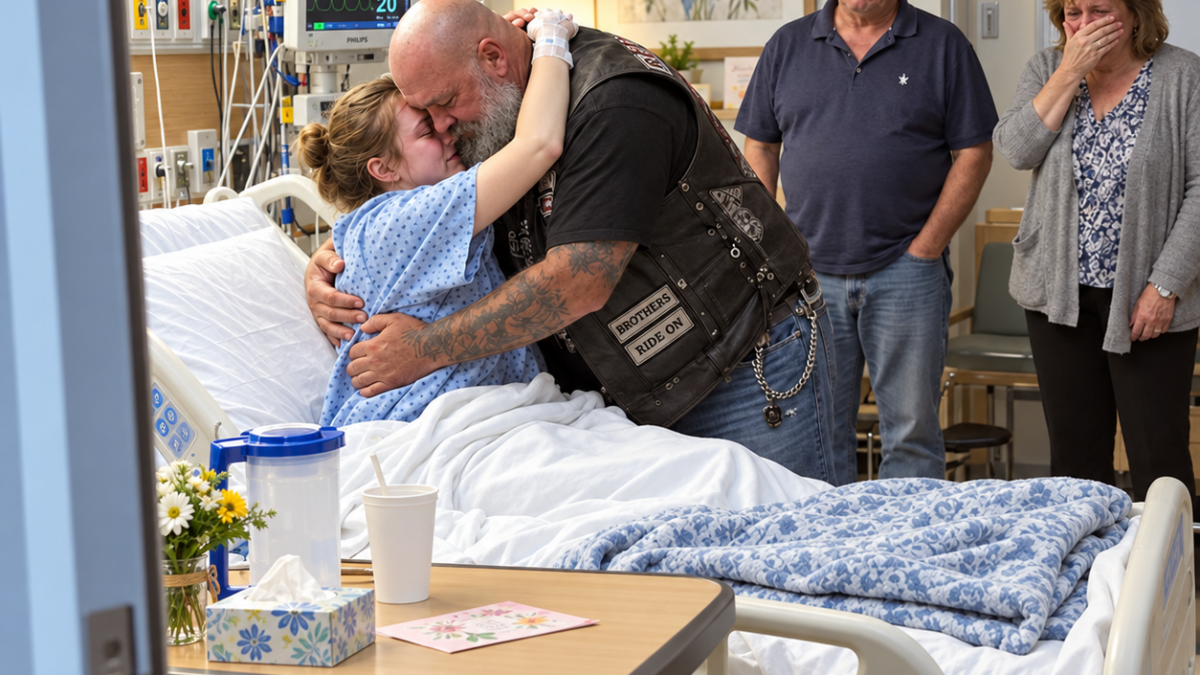
I Woke Up to a Biker Doing CPR on My 19-Year-Old Daughter at 3 A.M.—Then He Said, “She’s Been Calling Me Every Night for Six Months.
At 3:07 in the morning, I found a tattooed stranger kneeling over my nineteen-year-old daughter’s blue, motionless body—and I nearly killed the man who was keeping her alive.
Then he told me Emily had been hiding an addiction for almost a year, calling him in secret every night because she believed admitting the truth to her own parents would destroy everything we loved about her.
What I learned before sunrise was worse than any parent’s nightmare: my daughter had almost died three rooms away from me, and the person who knew her pain better than I did was a grieving biker who had already buried a daughter of his own.
The first sound I remember was counting.
“Twenty-seven. Twenty-eight. Twenty-nine. Thirty.”
A man’s voice.
Low.
Rough.
Urgent.
Then silence for half a second.
Then the sound of air being forced into somebody’s lungs.
I opened my eyes.
For a moment I didn’t know where I was.
The digital clock beside my bed glowed 3:07 A.M.
My wife, Karen, was asleep beside me.
The hallway light was on.
I knew I had turned it off before going to bed.
Then the counting started again.
“One. Two. Three. Four…”
I sat upright.
There are sounds a father learns to recognize without thinking.
A daughter laughing downstairs.
A car pulling into the driveway too fast.
A bedroom door closing after an argument.
Footsteps sneaking toward the kitchen after midnight.
This wasn’t any of those.
This was a stranger inside my house.
I slid out of bed without waking Karen and reached beneath the bed frame.
I kept an old Louisville Slugger there.
Not because I was paranoid.
Because fifteen years earlier somebody had broken into the home of a family two blocks away, and afterward every man on our street bought either a firearm, an alarm system, or a baseball bat.
I chose the bat.
I wrapped both hands around it and stepped into the hallway.
The bathroom door at the far end was open.
The light spilled across the carpet.
There was another sound now.
A man breathing hard.
Then:
“Come on, Emily. Come on. Stay with me.”
My blood turned cold.
Emily.
I ran.
I reached the bathroom doorway and saw something my mind refused to understand.
My daughter was lying on the tile floor.
My nineteen-year-old daughter.
My little girl.
PART2:
Her brown hair was spread across the white tile. Her pajama shirt had been cut down the center. Her face looked gray beneath the bathroom light.
Her lips were blue.
Empty prescription bottles lay near the toilet.
And kneeling over her was the biggest man I had ever seen in my house.
He was probably six-foot-three.
Maybe two hundred seventy pounds.
Gray beard to his chest.
Tattooed arms.
Black leather vest.
Heavy boots.
A skull patch across one shoulder.
His hands were on my daughter’s chest.
He was pressing down.
Hard.
Again.
Again.
Again.
I didn’t think.
I didn’t ask.
I lifted the bat and swung directly at his head.
The man looked up at the last second.
PART3:
One huge hand came off Emily’s chest.
He caught the bat.
Caught it.
One-handed.
Like I had tossed him a broomstick.
His other hand immediately returned to my daughter’s sternum.
“Sir,” he barked, “call 911.”
“What the hell are you doing?”
“Call 911!”
“GET AWAY FROM HER!”
“Your daughter overdosed. She has a pulse but she’s not breathing on her own. I’ve been working on her for four minutes. Call 911 right now.”
I yanked at the bat.
He released it.
I staggered backward.
“Who the hell are you? How did you get in my house?”
He didn’t stop compressions.
“Your daughter called me.”
“What?”
“Emily called me.”
“That doesn’t answer my question!”
“She’s been calling me every night for six months.”
My mind caught on the sentence and refused to move.
Every night?
Six months?
I stared at him.
“At meetings,” he said. “I’m her sponsor.”
Sponsor.
The word didn’t belong in our house.
Not with Emily.
Not with my daughter.
“What are you talking about?”
“Sir.”
“My daughter isn’t an addict.”
His eyes locked onto mine.
They were bloodshot.
Terrified.
And furious.
“CALL 911 OR YOUR DAUGHTER DIES!”
Something in his voice broke through whatever denial I was standing inside.
I dropped the bat.
Pulled my phone from my pajama pocket.
Dialed.
My fingers shook so badly I hit the wrong number the first time.
I tried again.
The dispatcher answered.
“911, what’s your emergency?”
“My daughter isn’t breathing.”
“What is your address?”
I screamed it.
I could hear myself talking too fast.
“She’s nineteen. There’s a man doing CPR. There are pill bottles. I don’t know what happened. She’s blue. Please hurry.”
The dispatcher asked questions.
Was she conscious?
No.
Was she breathing?
No.
Did she have a pulse?
The stranger answered without looking at me.
“Yes. Weak carotid pulse. Respiratory arrest after suspected opioid overdose.”
He knew the language.
That scared me almost as much as everything else.
“Who are you?” I demanded again.
“Later.”
He tilted Emily’s chin.
Gave her another breath.
Then resumed compressions.
“One. Two. Three. Four…”
The dispatcher was talking in my ear, but I barely heard her.
All I could see was Emily.
Five years old with a gap between her front teeth.
Eight years old wearing a soccer jersey three sizes too big.
Twelve years old crying because her best friend moved to Arizona.
Sixteen years old getting her learner’s permit.
Eighteen years old standing in our kitchen with an acceptance letter from the community college, pretending it wasn’t a big deal while Karen and I embarrassed her with balloons.
And now nineteen.
Blue lips.
Empty bottles.
A stranger’s hands forcing her heart to keep going.
“Come on, Emily,” the man said.
His voice changed when he spoke to her.
The anger disappeared.
The command remained, but underneath it was something else.
Love.
“You didn’t call me just to give up. You hear me? You’ve been fighting too damn hard for too damn long.”
My wife appeared behind me.
At first she didn’t scream.
She just stared.
Then her body seemed to understand before her mind did.
“Oh my God.”
She pushed past me.
“Emily?”
I caught her around the waist before she reached the floor.
“EMILY!”
The biker glanced up.
“Ma’am, paramedics are coming.”
“What happened to her?”
“She overdosed.”
“No.”
Karen shook her head violently.
“No. No. You’ve got the wrong girl.”
“This is our daughter,” I said, though I don’t know why.
Karen looked at the bottles.
One had rolled beneath the sink cabinet.
Another sat upside down beside Emily’s hand.
Karen stared at them like they were evidence from someone else’s house.
“Those aren’t hers.”
The biker kept working.
“She’s been struggling with opioids.”
“No.”
“Karen,” I whispered.
“No!”
She looked at the man.
“Who are you?”
“My name is Thomas.”
“How do you know my daughter?”
“I’m her sponsor.”
Karen stared at me.
I saw the same disbelief I knew was on my own face.
“Her what?”
Then Emily gasped.
It wasn’t a gentle breath.
Her whole body jerked.
Thomas moved instantly.
He rolled her onto her side.
She vomited across the tile.
Karen cried out.
Thomas held Emily’s hair away from her face with one hand while supporting her head with the other.
“That’s it,” he said softly. “Get it out. Come on, sweetheart. Breathe.”
Emily made a horrible choking sound.
Then she dragged in another breath.
I have heard newborn babies cry.
I have heard church choirs.
I have heard my wife say yes when I asked her to marry me.
Nothing has ever sounded as beautiful as my daughter choking on air.
“Emily?” I dropped beside her.
Thomas put his arm out.
“Give her room.”
“That’s my daughter.”
“And right now she needs room to breathe.”
I hated him for saying it.
I loved him for being right.
Sirens appeared in the distance.
Thomas kept Emily on her side.
Her eyes fluttered once but didn’t open.
“Stay here,” he whispered. “Stay with us.”
The sirens grew louder.
Red light flashed against the frosted bathroom window.
Our front door was still open.
Two paramedics and a firefighter rushed inside carrying equipment.
Thomas stood immediately and moved aside.
“Female, nineteen,” he said. “Suspected opioid overdose. Found unresponsive approximately eleven minutes ago. Estimated downtime before discovery was maybe two minutes. She had a weak pulse, no effective respirations. Rescue breathing and compressions for approximately eight minutes total. She vomited and resumed spontaneous respirations about two minutes ago.”
One paramedic looked at him.
“You medical?”
“No.”
“You carry Narcan?”
Thomas froze.
His expression changed.
“No.”
Just one word.
But there was guilt in it.
“I keep it on my bike. I forgot to grab it when I ran in.”
The paramedic shook his head.
“Doesn’t matter. You kept her alive.”
They put oxygen on Emily.
Attached leads.
Started an IV.
Administered medication.
Asked Karen and me what she had taken.
We didn’t know.
That was the first time it truly hit me.
We didn’t know anything.
The paramedic gathered the bottles.
“These look like oxycodone.”
I stared at him.
“She had wisdom teeth surgery last year.”
“Were these prescribed then?”
“I don’t know.”
The label had been peeled off one bottle.
Another belonged to somebody named Raymond Ortega.
I had never heard that name.
Karen sank against the wall.
The bathroom suddenly seemed tiny.
Too bright.
Too full of strangers.
Too full of truth.
They lifted Emily onto a stretcher.
Her hand fell over the side.
I grabbed it.
“Daddy?”
It was barely a sound.
I leaned close.
“I’m here.”
Her eyes opened halfway.
They were unfocused.
“Sorry.”
One word.
Sorry.
That nearly destroyed me.
“Don’t talk.”
“Sorry.”
“You have nothing to be sorry for.”
But even as I said it, I didn’t understand what I was forgiving.
Karen rode with her in the ambulance.
I should have gone too.
Instead I stood in the driveway barefoot in pajama pants, watching the ambulance disappear while half the neighborhood’s porch lights came on.
Mrs. Donnelly from across the street stood behind her curtains.
The Millers’ upstairs window opened.
Somebody two houses down was filming with a phone.
I remember seeing that phone and feeling anger rise inside me.
Even then.
My daughter had almost died, and some stupid part of me was thinking about what the neighbors would say.
That thought has ashamed me ever since.
I turned back toward the house.
Thomas was still inside.
He sat on the edge of our bathtub.
His elbows rested on his knees.
His hands were clasped so tightly his knuckles were white.
The giant biker who had caught my baseball bat with one hand was crying.
Not quietly.
His shoulders shook.
I stood in the doorway.
Neither of us spoke for a moment.
Then I asked, “Who are you?”
He wiped his face with both hands.
“Thomas Hale.”
“How do you know my daughter?”
“I told you.”
“I want all of it.”
He nodded.
I sat on the toilet lid.
My legs wouldn’t have held me anyway.
Thomas looked at the bottles scattered across the floor.
“Prescription pain pills.”
“I heard that.”
“It started after her wisdom teeth surgery.”
“How do you know?”
“Because she told me.”
That sentence hurt.
She told him.
“She had all four removed last spring,” I said.
“I know.”
“I drove her.”
“I know.”
“I picked up the prescription.”
Thomas looked at me.
“I know.”
Every answer felt like another cut.
“How much do you know about my daughter?”
“A lot.”
“More than me?”
He didn’t answer.
That was an answer.
I looked down.
For years I had described myself as an involved father.
I never missed parent-teacher conferences.
I attended every school concert.
I taught Emily how to ride a bike.
I helped with algebra homework.
I knew her favorite pizza toppings.
I knew she hated mushrooms.
I knew she wanted to transfer to State after community college.
I knew she wanted to become a social worker.
I knew she loved old Motown songs because Karen played them while cleaning.
I knew she still kept the stuffed rabbit she’d had since she was three.
But apparently I didn’t know she was addicted to pills.
“Tell me.”
Thomas took a breath.
“She got oxycodone after the surgery. At first she used it exactly how the dentist told her.”
I remembered.
Emily’s cheeks swollen.
Ice packs strapped around her head.
Me teasing her because she looked like a chipmunk.
Karen making soup.
The orange bottle on the kitchen counter.
Thomas continued.
“She said the pills made everything quiet.”
“What does that mean?”
“Exactly what it sounds like.”
“She wasn’t depressed.”
“You sure?”
I almost snapped at him.
Then I realized I no longer had the right to be sure of anything.
Thomas looked at the floor.
“She told me she’d been anxious for years. Felt like she had to be perfect. Perfect grades. Perfect daughter. Perfect church kid. Never cause trouble. Never disappoint anybody.”
My throat tightened.
“She never said that.”
“She didn’t know how.”
“She could have come to us.”
“She thought she couldn’t.”
“That’s not true.”
“To her, it was.”
I stood.
Anger came easier than grief.
“So this is our fault?”
“No.”
“That’s what you’re saying.”
“I’m saying addiction doesn’t need a villain.”
“She had a good home.”
“I believe you.”
“We never hit her. Never abused her. Never neglected her.”
“I didn’t say you did.”
“She had everything.”
Thomas finally looked up.
“Pain doesn’t check your mortgage before it moves in.”
I stared at him.
He wasn’t accusing me.
That somehow made it worse.
He continued.
“When her prescription ran out, she realized she wanted more. Then needed more. She started taking leftover pills from friends. She told herself she’d stop after finals. Then after summer. Then after her birthday.”
My daughter’s birthday.
We had taken her to an Italian restaurant.
She barely ate.
I had gotten annoyed because I thought she was on her phone too much.
Thomas said, “Eventually she started buying them.”
“From who?”
“She never told me names.”
“Some drug dealer?”
“Probably several.”
“She goes to church.”
Thomas gave me a long look.
“So do addicts.”
That sentence erased a wall in my head I hadn’t known was there.
“She’s a straight-A student.”
“So are addicts.”
“She works at the library.”
“So do addicts.”
“She volunteers.”
“So do addicts.”
“She’s a good kid.”
Thomas’s face softened.
“Yes,” he said. “She is.”
That stopped me.
Not was.
Is.
I sat down again.
“How long?”
“She said she’d been using about a year.”
“A year.”
“And trying to quit on her own for most of it.”
“How long have you known?”
“Six months.”
“Why didn’t you tell us?”
“Because she asked me not to.”
“She’s nineteen.”
“She’s an adult.”
“She’s my daughter.”
“I know.”
“If you knew she was in danger—”
“I knew she was addicted. I didn’t know she was planning to kill herself until tonight.”
The word landed hard.
Kill herself.
I flinched.
Thomas saw it.
“She called around two.”
“Tonight?”
“Yes.”
“You said she calls every night.”
“Nearly.”
“Why?”
“Cravings. Panic attacks. Sometimes because she was afraid she’d use. Sometimes because she already had and hated herself for it.”
I covered my face.
Three nights earlier I had heard Emily talking quietly in her bedroom.
I had walked past and smiled.
Boyfriend, I thought.
Probably some college kid she wasn’t ready to tell us about.
It had been Thomas.
“Sometimes she’d call at midnight,” he said. “Sometimes at two. Sometimes four. I’d talk until she felt safe.”
“For six months?”
“Yes.”
“Every night?”
“Almost every night.”
“Why?”
“Because somebody once did it for me.”
I looked at him.
“You’re an addict too?”
“Recovering addict.”
“How long?”
“Twenty-three years.”
I did the math.
Thomas looked mid-fifties.
“You started young.”
“Seventeen.”
“What?”
“Alcohol first. Pills. Cocaine. Heroin eventually. Spent almost fifteen years trying to kill myself slowly.”
“And now you sponsor college girls?”
A flicker of irritation crossed his face.
“I sponsor addicts who ask for help.”
I heard the ugliness in my own words.
He heard it too.
But he didn’t defend himself.
Instead he said, “Emily came to a meeting at Saint Michael’s.”
“Our church?”
“The recovery meeting is in the basement Tuesday and Friday nights.”
I had attended that church for eleven years.
I had walked above that basement hundreds of times.
I never knew.
“She sat in the parking lot the first three times,” Thomas said. “Couldn’t make herself come inside.”
“How do you know?”
“I saw her car.”
“You knew it was her?”
“No. I just noticed the same Honda sitting outside. Fourth time, she came in.”
I remembered that Honda.
My old Honda.
The one I gave her when she turned seventeen.
“She stayed near the door. Hood up. Didn’t say a word. When the meeting ended, everybody left except her.”
Thomas smiled sadly.
“She asked if addiction could happen to somebody who’d never been drunk.”
I swallowed.
“What did you say?”
“I said addiction doesn’t care about your résumé.”
That sounded like Thomas.
“She cried for twenty minutes.”
“Did you know who she was?”
“No. She introduced herself as Em.”
Of course.
We called her Emily.
Only her friends sometimes called her Em.
“She said she couldn’t tell her parents.”
“Why?”
“She thought you’d be ashamed.”
I felt the urge to deny it.
Then Thomas continued.
“She said her whole life people told you what a good daughter you had. Said you kept every report card. Put her academic awards on the refrigerator. Told everybody at church she was going to transfer to State.”
“I was proud of her.”
“I know.”
“She thought that was pressure?”
“She thought your love was tied to who she was when she was doing well.”
“That’s not true.”
“I know.”
“You don’t know that.”
“No,” he said calmly. “But she does now.”
“What?”
“I spent six months telling her she was wrong about you.”
I stared at him.
“You defended me?”
“Every damn night.”
My eyes filled.
Thomas rubbed his beard.
“She’d say, ‘My dad will never look at me the same.’ I’d say, ‘You don’t know that.’ She’d say, ‘My mom will think she failed.’ I’d say, ‘That’s your shame talking.’”
“What else did she say?”
He hesitated.
“Tell me.”
“She said she wished she could tell you.”
I began crying before I realized it.
Not dramatic crying.
No sobbing.
Just tears sliding down my face.
Thomas looked away, giving me the dignity of pretending not to notice.
I whispered, “Why didn’t she?”
“Because every day she waited made the truth feel bigger.”
He leaned back against the wall.
“First you’re hiding one pill. Then you’re hiding two weeks. Then a dealer. Then withdrawals. Then money you stole or lies you told. Pretty soon telling the truth means admitting six months of lies too. Shame compounds.”
“Did she steal from us?”
“Some money.”
I closed my eyes.
There had been cash missing from Karen’s purse.
We blamed ourselves.
We thought maybe we had spent it.
“Her grandmother gave her three hundred dollars for textbooks,” Thomas said. “She used most of it on pills.”
My stomach turned.
“She cried about that for weeks.”
“Why didn’t you make her tell us?”
“I’m a sponsor, not a jailer.”
“You could have saved us six months of this.”
“No,” Thomas said. “I might have scared her away from the one place she was asking for help.”
I wanted to hate that answer.
Instead I remembered my daughter gasping on the floor.
“What happened tonight?”
Thomas’s jaw tightened.
“At 2:03, my phone rang.”
“You were awake?”
“I sleep with it beside me.”
“Because of people like Emily?”
“Yes.”
“What did she say?”
He looked toward the bathroom door.
“First thing she said was, ‘Thank you.’”
A chill moved through me.
“For what?”
“That’s exactly what I asked.”
He swallowed.
“She said, ‘For answering.’”
I couldn’t breathe for a second.
Thomas continued.
“I asked if she had used. She said yes.”
“How much?”
“She wouldn’t say.”
“And you knew?”
“Something in her voice.”
“What?”
“Peace.”
I frowned.
“That sounds good.”
“No.”
He shook his head.
“When somebody’s been desperate for months and suddenly sounds peaceful at two in the morning, you listen closely.”
His eyes filled again.
“I asked where she was. She said home. I asked if her parents were there. She said yes. I told her to wake you.”
“She wouldn’t?”
“She said she couldn’t do that to you.”
“Do what?”
“Let you see what she’d become.”
My hands curled into fists.
Not at Thomas.
At every moment in the last year when I had somehow made perfection feel safer than honesty.
“She said she was tired,” Thomas continued. “Said she couldn’t keep fighting every day just to feel normal for ten minutes.”
He paused.
“Then she said, ‘If there’s something after this, tell Rebecca I’m sorry.’”
“Rebecca?”
Thomas stopped.
His face changed completely.
Whatever strength had held him upright seemed to disappear.
“That’s when I knew.”
“Who is Rebecca?”
He reached for the wallet in his back pocket.
It was thick, worn leather.
He opened it.
Inside was an old photograph protected beneath cloudy plastic.
A young woman smiled at the camera.
Maybe twenty-five.
Dark hair.
Blue eyes.
A crooked smile.
She looked like Thomas around the eyes.
“My daughter.”
I looked from the photo to him.
“Where is she?”
He took a breath.
“She died fifteen years ago.”
I understood before he said the next words.
“Overdose?”
“Yes.”
The room went quiet.
“Rebecca started using at sixteen. I was eight years clean by then.”
His voice became distant.
“I thought that meant I’d know what to do.”
He laughed once, bitterly.
“Turns out knowing addiction doesn’t make you good at watching your child have it.”
“What happened?”
“I got scared.”
He looked at the photograph.
“And when I get scared, I get controlling.”
I knew that feeling.
“I searched her room. Checked her phone. Followed her car. Threatened rehab. Threatened police. Threatened to throw every friend she had out of our lives.”
“You were trying to save her.”
“Sure.”
His mouth tightened.
“But Rebecca didn’t experience it as love. She experienced it as war.”
He rubbed his thumb across the photograph.
“We fought constantly. I told her things I’d give anything to take back.”
“Like what?”
Thomas took several seconds.
“I told her I didn’t recognize her.”
He looked at me.
“I told her the drugs had turned her into somebody I was ashamed of.”
The bathroom suddenly felt colder.
“One night she asked if I still loved her.”
He stopped speaking.
“What did you say?”
“I said, ‘I love my daughter, but I don’t know who you are anymore.’”
Thomas shut his eyes.
“I thought I was drawing a line between her and the addiction.”
His voice broke.
“All she heard was that the addict wasn’t my daughter.”
I couldn’t look at him.
“She disappeared for three days.”
“What happened?”
“They found her in a motel.”
He looked back at the photograph.
“Alone.”
I whispered, “I’m sorry.”
“So am I.”
“You couldn’t have known.”
Thomas stared at me.
“That sentence kept me alive for about a year. Then I realized it wasn’t useful.”
I didn’t understand.
He explained.
“Maybe I couldn’t have known exactly what would happen. But afterward, I had a choice. I could spend the rest of my life defending everything I did, or I could listen to what other addicts told me Rebecca might have needed.”
“What did she need?”
“Somebody she could call without being afraid.”
The answer hung between us.
Thomas slipped the photograph back into his wallet.
“So I started answering phones.”
I stared at him.
“That’s why you came tonight.”
“That’s why I always come.”
“Emily knew about Rebecca?”
“Yes.”
“Why would she mention her?”
“Because I told Emily about her.”
His eyes turned red again.
“Your daughter once asked me if I thought Rebecca would hate her for wasting a second chance Rebecca didn’t get.”
I wiped my face.
“What did you say?”
“I said Rebecca would probably tell her to stop talking like an idiot and stay alive.”
Despite everything, I laughed.
A broken little sound.
Thomas smiled.
“That’s what Rebecca would’ve said.”
We sat there in silence.
Eventually Thomas looked at the blood smear on my knuckles where I had gripped the bat.
“You need to go to the hospital.”
“So do you.”
“I’m not family.”
“Yes, you are.”
The words left my mouth before I considered them.
Thomas stared at me.
I stood.
“Come with me.”
He shook his head.
“She might not want me there.”
“She called you when she thought she was dying.”
“That doesn’t mean she wants me standing over her hospital bed.”
“Then we ask.”
Thomas hesitated.
I grabbed my keys.
We drove separately.
I don’t remember much of the drive.
I remember every red light feeling like an insult.
I remember thinking that somewhere ahead of me my daughter was inside an ambulance fighting for breath.
I remembered stupid things.
The argument we had over laundry two days earlier.
Emily rolling her eyes because I asked if she had filled her gas tank.
Her leaving breakfast untouched because she said she was running late.
The way she had hugged me Sunday morning before church.
It had lasted longer than usual.
I had joked, “What do you want?”
She pulled back and smiled.
“Nothing.”
That was three days ago.
Had she been trying to tell me something?
At the emergency room, Karen was waiting behind a set of double doors.
She rushed toward me.
“She’s stable.”
My knees nearly gave out.
Karen grabbed my shirt.
“She’s breathing. They gave her naloxone. The doctor says she’s going to live.”
I wrapped my arms around my wife.
We stood in that hallway and cried.
Then Karen saw Thomas behind me.
Her body stiffened.
“That’s him?”
“His name is Thomas.”
“I know what he said his name was.”
She looked at his leather vest.
The patches.
The tattoos.
The motorcycle boots.
Fear turned into suspicion.
“What exactly is your relationship with our daughter?”
Thomas didn’t react.
“I’m her recovery sponsor.”
“She’s nineteen.”
“I know.”
“You’ve been talking to her in the middle of the night?”
“Yes.”
“Without us knowing.”
“Yes.”
Karen stepped forward.
“Do you understand how that sounds?”
I touched her shoulder.
“Karen.”
“No, David.”
Her face was wet with tears.
“I wake up and there’s a strange grown man in our bathroom with our unconscious daughter. Now I’m supposed to accept he’s been talking to her secretly for six months?”
Thomas took a step backward.
“You have every right to be suspicious of me.”
“I do.”
“You can ask Emily. You can ask the program chair. You can ask Saint Michael’s. You can ask my wife. You can ask every person I sponsor.”
Karen looked at me.
I said softly, “He saved her.”
“That doesn’t answer everything.”
“No. But it answers the most important thing tonight.”
Karen stared at Thomas.
Then the emergency room doors opened.
A doctor stepped out.
“Mr. and Mrs. Carter?”
We both turned.
“I’m Dr. Levin.”
He was maybe forty.
Tired eyes.
Calm voice.
“Your daughter is stable. Her oxygen levels are improving and her cardiac rhythm is normal. She’s very fortunate.”
“How fortunate?” I asked.
He glanced at Thomas.
“Who performed the initial resuscitation?”
Thomas raised a hand slightly.
“I did.”
“How long?”
“Approximately eight minutes of assisted breathing and compressions before spontaneous respiration.”
Dr. Levin nodded slowly.
“You saved her life.”
Thomas looked down.
The doctor continued.
“Based on what paramedics reported, if she had remained hypoxic several more minutes, we could be discussing brain injury or death.”
Karen covered her mouth.
The doctor looked at Thomas.
“Any naloxone before EMS?”
“No.”
“You did all that without it?”
“Yes.”
“You have medical training?”
“CPR certification.”
“Good certification.”
Thomas almost smiled.
“I practice.”
“Why?”
Thomas didn’t answer.
The doctor seemed to sense there was more to the story.
He turned back to us.
“We also need to talk about intent.”
My stomach tightened.
“We believe she ingested a potentially lethal quantity. Given some statements she made after arrival, we have concerns this may have been an intentional overdose.”
Karen shook her head.
“No.”
“She’ll need psychiatric assessment once she’s medically cleared.”
“My daughter is not crazy.”
Dr. Levin didn’t flinch.
“I didn’t say she was.”
I heard the defensiveness in Karen’s voice because it had been in mine an hour earlier.
The doctor softened.
“She nearly died tonight. Whatever brought her to that point deserves the same medical seriousness as the overdose itself.”
That changed something in me.
I nodded.
“When can we see her?”
“One at a time initially.”
Karen went first.
Thomas sat across the waiting room.
I sat beside him.
For twenty minutes, neither of us talked.
Then a nurse came out.
“Mr. Carter?”
I stood.
As I passed Thomas, he said, “Don’t ask why tonight.”
I stopped.
“What?”
“Not yet.”
I stared at him.
“She’s ashamed. If the first thing she sees in your face is a demand for explanations, she’ll hear judgment even if you don’t mean it.”
“What should I say?”
Thomas thought for a second.
“Tell her what’s still true.”
The nurse waited.
I followed her.
Emily looked impossibly small in the hospital bed.
There were wires everywhere.
An IV ran into her left arm.
Oxygen tubing sat beneath her nose.
Her skin was pale.
A monitor blinked beside her.
When she saw me, tears immediately filled her eyes.
“Daddy.”
The word nearly broke me.
I went to the bed.
She turned her face away.
“I’m sorry.”
I sat beside her.
“Look at me.”
She shook her head.
“Please.”
“No.”
“Emily.”
“You shouldn’t have to see me like this.”
I remembered Thomas.
Tell her what’s still true.
I took her hand.
“You’re my daughter.”
She cried harder.
“I lied to you.”
“You’re my daughter.”
“For months.”
“You’re my daughter.”
“I stole money from Mom.”
“You’re my daughter.”
“I bought pills from people.”
“You’re my daughter.”
“I tried to—”
Her voice collapsed.
I squeezed her hand.
“You are my daughter.”
She finally looked at me.
The shame in her face was unbearable.
Not because I was ashamed.
Because she was.
“I love you.”
She shook her head.
“You don’t know everything.”
“I don’t need to know everything before I love you.”
Her mouth trembled.
“I’m an addict.”
“I know.”
She stared at me.
There it was.
The word she had spent a year avoiding.
The word she believed would change who she was to me.
I leaned closer.
“I love you exactly where you are.”
“Dad—”
“I love you sick. I love you healthy. I love you honest. I love you when you lie because you’re scared. I love you when you make me proud, and I love you when you’re lying in a hospital bed and neither of us knows what tomorrow looks like.”
I was crying now.
“You do not have to earn being my daughter.”
Emily made a sound I had not heard from her since she was little.
A child’s sob.
She reached for me.
I held her.
She buried her face against my chest and cried like she had been waiting a year to do it.
“I thought you’d hate me.”
“Never.”
“I thought you’d be disgusted.”
“Never.”
“You always tell people how proud you are of me.”
“I am proud of you.”
“Not now.”
“Especially now.”
She pulled back.
“How?”
“Because you called somebody.”
Her face changed.
“Thomas.”
“He’s here.”
“He came?”
“He’s sitting outside.”
Emily covered her face.
“Oh God.”
“What?”
“I called him.”
“I know.”
“I took everything, and then I called him.”
Her breathing quickened.
“I don’t even know why. I had decided. I was done. I just wanted to tell him thank you.”
I gripped her hand.
“But you called.”
She cried.
“I didn’t want him to stop me.”
“Maybe part of you did.”
She looked at me.
“Thomas says that.”
“He says a lot of things.”
A tiny smile appeared through her tears.
“He talks too much.”
“That I believe.”
She wiped her face.
“Is Mom mad?”
“No.”
“She’s going to be.”
“She’s terrified.”
“That’s worse.”
“Maybe.”
Emily looked at the ceiling.
“I ruined everything.”
“No.”
“Dad.”
“You almost died. That changes everything. It doesn’t ruin everything.”
“I’m not the person you think I am.”
“That goes both ways.”
She frowned.
“What?”
“You thought I was a father who could only love a perfect daughter.”
Her eyes filled again.
“I’m sorry.”
“I’m sorry too.”
“For what?”
“For ever making you believe that.”
“You didn’t.”
“Something did.”
She looked away.
I said, “We’ll figure it out.”
“You’re going to ask questions.”
“Eventually.”
“You’re going to want to know where I got the pills.”
“Yes.”
“How much money I spent.”
“Yes.”
“Whether I stole.”
“Yes.”
Her voice became tiny.
“I did.”
“We’ll deal with that.”
“You’re going to be disappointed.”
“Yes.”
She looked at me, surprised.
I continued.
“I can be disappointed in things you did and still love you so much it hurts.”
She stared at me for a long time.
“That’s allowed?”
“That’s parenting.”
Her laugh turned into another sob.
The door opened.
Karen stood there.
Emily immediately started crying again.
“Mom.”
Karen crossed the room.
Emily whispered, “I’m sorry.”
Karen put both hands around her daughter’s face.
“You scared twenty years off my life.”
“I know.”
“I want to scream at you.”
“I know.”
“I want to shake you.”
“I know.”
“I want to take you home and lock every door and never let you leave.”
Emily laughed weakly through tears.
“I know.”
Karen kissed her forehead.
“But mostly I want you alive.”
Emily wrapped her arms around her mother.
I stepped back.
A few minutes later Emily whispered, “Can Thomas come in?”
Karen stiffened.
Emily noticed.
“He really is my sponsor.”
“I know,” Karen said.
“He never did anything weird.”
“I didn’t say—”
“Mom.”
Karen sat down.
“I was scared.”
“So was I.”
“He came into our house.”
“I told him the door would be unlocked.”
Karen stared at her.
“You planned for him to find you?”
Emily’s face crumpled.
“No.”
She started shaking.
“I don’t know.”
I stepped in.
“Not tonight.”
Karen closed her eyes.
“You’re right.”
Emily whispered, “Can he come in?”
I went to get him.
Thomas stood when I approached.
“She asked for you.”
He stopped.
“You sure?”
“Yes.”
Thomas walked into the room like a man entering church.
The second Emily saw him, she broke.
“Thomas.”
His whole face changed.
“Hey, kid.”
She held out her arms.
He glanced at us first.
Almost asking permission.
Karen nodded.
He went to the bed.
Emily wrapped both arms around his neck.
“I’m sorry.”
“No.”
“I’m sorry.”
“Not that word.”
“You told me to call.”
“And you did.”
“I messed up.”
“You’re alive.”
“I almost—”
“You’re alive.”
She held him for almost five minutes.
Thomas didn’t say anything else.
He just stood there with one hand on the back of her head while my daughter cried into the leather vest I had been afraid of an hour earlier.
Eventually she pulled away.
“You drove all the way here?”
“Your house is twelve minutes from mine if you obey traffic laws.”
A weak smile.
“And tonight?”
“Six.”
“Thomas.”
“I may have committed several misdemeanors.”
For the first time that night, Karen laughed.
It came out involuntarily.
Thomas looked at her.
“Ma’am, I apologize for entering your home without permission.”
Karen stared at him.
Then at Emily.
Then back at him.
“You saved my child.”
Thomas lowered his eyes.
“Your daughter saved herself enough for me to get there.”
Emily frowned.
“I took enough pills to kill myself.”
“And then called me.”
“I said goodbye.”
“You told me where you were.”
“I didn’t mean—”
“Emily.”
His voice was firm.
“Recovery is going to require you to stop erasing every thing you do right.”
She looked at him.
“You reached out.”
“But—”
“No but.”
Her eyes watered.
“That tiny part of you that called me is the part we’re building from.”
The next fourteen days changed our family.
Emily was transferred from medical observation to inpatient psychiatric care.
At first she hated us for agreeing.
“I’m not crazy,” she said.
I gave her the same answer Dr. Levin had given us.
“No one said you were.”
“I can detox at home.”
“No.”
“Thomas said recovery has to be my choice.”
“Treatment can still be necessary.”
“You’re controlling me.”
“Yes.”
“Dad!”
“You almost died seventy-two hours ago. I’m willing to be unpopular.”
She looked at Thomas.
He was sitting near the window.
“Tell him.”
Thomas shrugged.
“Your dad’s right.”
Emily stared at him in betrayal.
“You’re supposed to be on my side.”
“I’m on the side where you keep breathing.”
That ended the argument.
Detox was ugly.
I had imagined detox as sweating and discomfort.
I didn’t understand.
Emily shook.
Vomited.
Cried.
Couldn’t sleep.
Her muscles cramped.
She begged nurses for something to make it stop.
She told us she hated the hospital.
She hated the doctors.
She hated me.
Then she would apologize ten minutes later.
“You don’t have to apologize every time you’re angry,” I told her.
“I called you a fascist.”
“I’ve been called worse.”
“By who?”
“Your mother.”
Karen, sitting beside the bed, said, “Correct.”
Emily smiled.
Those little moments mattered.
Because recovery wasn’t a movie montage.
It wasn’t one inspiring speech followed by sunshine.
It was watching your daughter scream because her skin felt wrong.
It was learning the language of tolerance, dependence, withdrawal, fentanyl contamination, relapse triggers, and dual diagnosis.
It was hearing a psychiatrist explain that the street pills Emily believed were oxycodone may have contained fentanyl.
It was realizing she hadn’t just been risking addiction.
She had been playing chemical roulette.
The fifth day, I found Thomas in the hospital cafeteria.
He had two coffees.
He slid one toward me.
“You look terrible.”
“So do you.”
“I always look terrible.”
“That beard isn’t helping.”
He grinned.
We had become friends without either of us deciding to.
I sat across from him.
“Can I ask you something?”
“Sure.”
“Why bikers?”
“What?”
“The vest. Motorcycle. Whole thing.”
He laughed.
“You think addiction recovery has a dress code?”
“No.”
“Yes, you do.”
I smiled despite myself.
“My brother taught me to ride when I was fifteen,” he said. “Been riding ever since.”
“What club?”
“Road Saints.”
“That sounds fake.”
“It was named in 1989 by men with questionable taste.”
I laughed.
“Are you guys…”
I searched for a polite word.
“Criminals?”
“I was going to say rough.”
“You were going to say criminals.”
“Fine.”
“Some members have records.”
“You?”
“Yes.”
“For what?”
“Possession. Burglary. Assault when I was younger.”
I stared.
He nodded.
“See? There it is.”
“What?”
“The moment you remember I wasn’t always the guy doing CPR.”
“I’m trying not to judge.”
“Judgment keeps lawyers employed.”
“You went to prison?”
“Eleven months.”
“And now?”
“I own a motorcycle repair shop.”
“Seriously?”
“Hale Custom Cycles.”
I knew the place.
Everyone in town knew it.
“You own that?”
“For twenty-one years.”
I had driven past it and locked my doors once when a group of riders stood outside.
I didn’t tell him that.
Maybe he knew anyway.
“What does your club actually do?”
“Ride motorcycles. Eat badly. Argue about engines. Raise money.”
“For what?”
“Mostly recovery programs. Veterans. Kids.”
“Because of Rebecca?”
“Partly.”
He sipped his coffee.
“Half the men in my club have buried somebody.”
That sentence stayed with me.
The following Sunday I attended my first recovery meeting.
Not because Emily asked me.
Because Thomas did.
“You need to understand the world she’s been living in.”
“I’m not an addict.”
“Family meeting.”
“Oh.”
“Unless you plan on recovering from the shock by yelling at your lawn mower.”
He had already noticed I was that kind of man.
Saint Michael’s basement smelled like coffee and old carpet.
Folding chairs formed a circle.
There were people I recognized.
That was the first shock.
A retired teacher.
A local contractor.
A young mother whose son had played baseball with Emily in middle school.
A banker.
A mechanic.
A college student.
An eighty-year-old woman.
Addiction, I learned, did not look like anything.
Neither did families.
During that first meeting, people talked about guilt.
Parents blamed themselves.
Spouses blamed themselves.
Children blamed themselves.
Everybody seemed to believe that if they had found the exact correct combination of love, discipline, suspicion, tenderness, money, rules, prayer, therapy, and vigilance, they could have controlled another person’s disease.
A woman named Marsha said, “You can support recovery. You cannot manufacture it.”
I wrote that sentence down.
The next week, Karen came.
She cried through half the meeting.
Afterward she told me something I had not known.
“My father drank.”
I stared at her.
“What?”
She looked embarrassed.
“Not like social drinking.”
“Why have you never told me?”
“Because he got sober before we met.”
“That’s still part of your life.”
“I didn’t want it to be.”
There was that same sentence again.
The family secret.
The shame.
Her father had been sober thirty-one years.
Karen had built her entire adult identity around being the daughter of a respectable man who no longer drank.
Emily never knew.
“I thought if we gave her a stable home,” Karen whispered, “she’d never have to deal with any of this.”
I took her hand.
“We thought stability was immunity.”
She cried.
“What if she got this from my family?”
“That’s not useful.”
She looked at me.
It was something Thomas would say.
By the end of the second week, Emily agreed to residential treatment.
Ninety days.
The facility was two hours away.
The morning we drove her there, she was furious.
“I could do outpatient.”
“Maybe,” I said.
“I’m going to miss a semester.”
“Yes.”
“My job.”
“Yes.”
“My friends.”
“Yes.”
“You don’t understand.”
“No,” I said. “But I understand funerals.”
She went quiet.
I regretted the words immediately.
Then she said, “Thomas says fear shouldn’t drive recovery.”
“Thomas also told me he supports residential treatment.”
“He tells everyone different things.”
“Apparently that’s called nuance.”
She rolled her eyes.
That eye roll gave me hope.
When we arrived, she refused to get out of the car.
Karen stood beside the passenger door.
Thomas had ridden his motorcycle behind us.
He took off his helmet and leaned against the car.
Emily said, “I can’t do ninety days.”
Thomas said, “Correct.”
She frowned.
“You can do today.”
“That’s cheesy.”
“Recovery is ninety percent cheesy sayings.”
“I hate you.”
“Take a number.”
She looked toward the building.
“What if everybody there is worse than me?”
Thomas shook his head.
“That sentence will get you in trouble.”
“What if I don’t belong?”
“You nearly died.”
She flinched.
He softened.
“You belong anywhere people are trying to live.”
She opened the car door.
Before walking inside, she hugged us.
Then Thomas.
“Answer?”
He knew what she meant.
“If I’m breathing.”
“Promise?”
“Always.”
She disappeared through the front doors carrying one suitcase.
I stood in the parking lot long after she was gone.
Thomas stood beside me.
“Hard part starts now.”
“I thought that was the hard part.”
“No.”
He looked at the building.
“Now she has to learn who she is without the secret.”
And she did.
Slowly.
Painfully.
Treatment stripped away a lot of things.
Emily admitted she had spent nearly seven thousand dollars on pills.
Some from her savings.
Some stolen.
Some borrowed.
She had pawned a necklace her grandmother gave her.
She had forged my signature on a check.
She had lied about textbooks.
Lied about car repairs.
Lied about working late.
Lied about study groups.
Each confession hurt.
But none killed us.
That realization seemed to surprise her.
One afternoon during family therapy, she looked at me.
“You’re still here.”
“Where would I go?”
“I keep telling you things.”
“I noticed.”
“You should hate me by now.”
“Stop deciding how I should feel.”
She smiled.
The therapist said, “Emily, what would happen if your father were angry?”
She looked confused.
“I don’t know.”
“Could he be angry and still love you?”
Emily looked at me.
I said, “I’m angry about the check.”
Her face fell.
“I know.”
“I’m angry about the money.”
“I know.”
“I’m angry that you drove while high.”
She started crying.
“I know.”
“I’m angry you lied to your mother’s face.”
“I know.”
I leaned forward.
“And I love you.”
Emily stared at me.
“Both can be true.”
The therapist let the silence sit.
That session changed us.
Not because everything became easy.
Because everything became honest.
Karen admitted she had always needed Emily to look successful because it reassured her she had escaped her own childhood.
I admitted I bragged about Emily partly because I liked being seen as the father who had done everything right.
“That wasn’t your job,” I told her. “You never owed me proof that I was a good father.”
Emily cried.
“So much of the pressure had been invisible because no one intended it.
That was one of the hardest lessons.
You can hurt people without cruelty.
You can love people and still teach them the wrong thing.
You can create silence while believing you are creating safety.
Two months into treatment, something happened that almost ended everything.
A man named Cody was arrested in our town for selling counterfeit pills.
Emily’s name was found in his phone.
A detective came to our house.
Karen panicked.
“Is she in trouble?”
The detective, Alvarez, shook his head.
“Not from us.”
He explained Cody had been selling pills pressed to resemble oxycodone.
Several contained fentanyl.
Two local overdoses had already been linked.
One person had died.
A seventeen-year-old boy named Tyler Nash.
I knew his father.
We had coached Little League together.
The detective asked whether Emily would be willing to speak with investigators.
When we called her treatment center, Emily refused.
“I’m not becoming some informant.”
“He may have sold you the pills that almost killed you.”
“He did.”
The room went silent.
It was a family conference call.
Karen asked, “You know that?”
“Yes.”
“How long?”
“Months.”
“Did you know there was fentanyl?”
“No.”
“Emily—”
“Mom, I didn’t care what was in them.”
That answer horrified me more than if she had known.
Thomas, on speakerphone from his shop, said quietly, “Tell them the rest.”
Emily became angry.
“Don’t.”
“Recovery means truth.”
“That’s not your truth to tell.”
“Correct. So tell it.”
She was silent.
Then she said, “Tyler asked me where I got them.”
My stomach dropped.
“The boy who died?”
“Yes.”
“Did you give him Cody’s number?”
Emily started sobbing.
“Yes.”
Karen covered her mouth.
I stood so fast my chair hit the wall.
“No.”
“Dad—”
“No.”
“I didn’t know.”
“You gave a seventeen-year-old a drug dealer’s number?”
“I was using. He asked me.”
“You were nineteen!”
“I know.”
“He died!”
“I know!”
Her scream came through the speaker.
Then she was crying uncontrollably.
“I know, Dad. I know every morning. I know every night. I know whenever I close my eyes.”
I couldn’t speak.
The therapist said, “David, breathe.”
I walked out of the room.
For the first time since the overdose, I didn’t know whether love was enough.
I wanted to break something.
I went into the parking lot and punched the side of my truck.
Once.
Twice.
Three times.
My knuckles split.
Thomas found me an hour later.
He had ridden all the way to the center.
“You going to keep hitting that truck?”
“Leave me alone.”
“No.”
“I said leave me alone.”
“Good thing I don’t work for you.”
I turned on him.
“A kid is dead.”
“I know.”
“My daughter helped him buy the pills.”
“I know.”
“Stop saying that!”
Thomas waited.
I shoved my hands into my pockets because I didn’t trust them.
“What am I supposed to do with that?”
“I don’t know.”
“You always have an answer.”
“No.”
“Tell me she’s not responsible.”
“I won’t.”
I stared at him.
“You’re supposed to help her.”
“I am.”
“You said addiction is a disease.”
“It is.”
“So nothing is her fault?”
“I never said that.”
The anger drained slightly.
Thomas stepped closer.
“Addiction explains behavior. It doesn’t erase consequences.”
I looked away.
“She gave him the number.”
“Yes.”
“She didn’t kill him.”
“No.”
“Then what?”
“She has to live honestly with what she did.”
“That’s cruel.”
“No. Pretending it didn’t happen would be crueler.”
I leaned against the truck.
“What about his parents?”
Thomas was silent.
Then he said, “They deserve the truth too.”
I looked at him.
“Emily will have to decide when she’s stable enough.”
“You think she should tell them?”
“Yes.”
“They’ll hate her.”
“Maybe.”
“She could relapse.”
“Yes.”
“Then why?”
“Because recovery built on hidden graves isn’t recovery.”
That sounded brutal.
It was also true.
Emily eventually agreed to speak with Detective Alvarez.
Her testimony helped establish Cody had knowingly sold counterfeit pills after another buyer warned him they were causing overdoses.
Cody tried to intimidate her through friends.
Messages appeared online.
Snitch.
Junkie.
Murderer.
Hope you overdose for real next time.
I wanted to find every person who wrote them.
Emily did something harder.
She read none of them.
For three weeks.
Then one afternoon she asked to see the message from Tyler’s mother.
I didn’t know there was one.
Karen had hidden it.
It read:
I know my son made his own choices. I also know you were sick. I am not ready to talk to you. Maybe I never will be. But if you stay alive, please do something good with the life both of you almost lost.
Emily read it three times.
Then she went to her room and cried.
At day ninety, we brought her home.
There were no balloons.
No giant celebration.
Thomas advised against it.
“Why?” Karen asked.
“Because she didn’t graduate from addiction.”
That was another thing we learned.
Recovery had no finish line.
We cleaned the house before she returned.
Removed old medications.
Bought a lockbox.
Established rules.
Emily would attend outpatient therapy.
Recovery meetings.
Random drug screens.
No cash borrowing without explanation.
No driving for the first month.
At first she resented almost everything.
Then she admitted boundaries made her feel safer.
She returned to school part-time six months later.
Not straight A’s.
For the first time in her life she got a C.
She came home holding the paper.
I looked at it.
She looked terrified.
Then I put it on the refrigerator.
She stared.
“You’re mocking me.”
“No.”
“You put my A’s there.”
“So?”
“You’re putting a C up?”
“Absolutely.”
“Why?”
“Because you earned it sober.”
She started crying.
Karen came into the kitchen.
“What happened?”
Emily pointed at the refrigerator.
“Dad’s being emotionally manipulative.”
Karen looked at the C.
“Oh.”
Then she grabbed a magnet.
She put the grade in the center of the fridge.
“Needs better placement.”
We laughed until all three of us cried.
Recovery was not clean.
At eleven months, Emily relapsed.
Three pills.
She told Thomas before she told us.
This time he didn’t keep the secret.
That had been agreed in advance.
She came home shaking.
“I used.”
My heart dropped.
Every nightmare returned.
“Today?”
“Last night.”
“What?”
“I bought three. Took one. Then flushed the other two.”
“Why didn’t you call?”
“I was ashamed.”
There it was again.
Shame.
The oldest enemy.
Karen started crying.
I wanted to yell.
I wanted to say, After everything?
Instead I asked, “Are you safe right now?”
“Yes.”
“Do we need the hospital?”
“No.”
“Thomas?”
He nodded.
“We called her treatment counselor.”
Emily stared at the floor.
“I ruined my clean date.”
Thomas said, “Dates are useful. Living is more useful.”
“I was almost at a year.”
“You’re not back at zero as a human being.”
She cried.
We increased treatment.
She went back to daily meetings.
For months she carried the relapse like proof she would never recover.
Then she told her story at a meeting.
Afterward a seventeen-year-old girl approached her and said, “I thought relapse meant treatment didn’t work.”
Emily asked, “Why?”
“My brother relapsed after rehab. My parents said he threw everything away.”
Emily told her, “He didn’t throw away what he learned.”
That was the moment I realized she was becoming the person she had once needed.
Two years after the night Thomas broke into our house, Emily finished her associate degree.
She didn’t graduate with honors.
That mattered to me.
Not because she couldn’t have.
Because by then honors had stopped meaning what they once meant to our family.
She walked across the stage sober.
Alive.
Her name was called.
Karen screamed loud enough to embarrass three rows.
I stood.
Thomas stood beside me wearing a clean black shirt instead of his leather vest because Karen had threatened him.
“You own one dress shirt?” she asked earlier.
“I own this dress shirt.”
“You’ve worn it three times.”
“It’s formal.”
“It has a motorcycle embroidered on the pocket.”
“That’s subtle.”
When Emily spotted us, she laughed from the stage.
That photograph hangs in our hallway now.
Not her high school valedictorian picture.
Not her scholarship certificate.
That one.
Because everyone in it knows what it cost.
Six months later, Emily accepted a job at a youth recovery center.
At first I worried.
“You sure that’s good for you?”
“Yes.”
“Being around addiction all day?”
“Dad.”
“I’m asking.”
“I know.”
She smiled.
“I have supervision. I have a sponsor. I still go to meetings.”
“Every day?”
“Three times a week.”
“You call Thomas every night.”
“Not every night.”
“Most nights.”
“Because he complains if I don’t.”
Thomas, sitting across our dinner table, said, “Correct.”
By then he had become part of our family.
So had his wife, Linda.
Linda was five-foot-three and somehow intimidated me more than Thomas.
The first time I met her, she shook my hand and said, “You’re the baseball bat guy.”
I stared at Thomas.
“You told her?”
“I tell my wife everything.”
Linda smiled.
“He said you almost took his head off.”
“He caught it.”
“He likes telling that part.”
Thomas shrugged.
“It was impressive.”
Karen asked Linda, “Were you angry he ran into a stranger’s house at three in the morning?”
Linda considered it.
“No.”
“Not at all?”
“I was angry he rode eighty miles an hour through a residential neighborhood.”
Thomas objected.
“It was sixty-eight.”
“You confessed to eighty-two.”
“That was on the highway.”
Linda stared at him.
He stopped talking.
We began having dinner together once a month.
At first because Emily liked it.
Then because we all did.
Sometimes the Road Saints joined us for cookouts.
The first time twelve motorcycles rolled into our suburban driveway, Mrs. Donnelly across the street nearly called the police.
Then she discovered the bikers had brought ribs.
By dessert she was flirting with a sixty-nine-year-old man named Bear.
People surprised you when you gave them the opportunity.
Two and a half years after the overdose, Cody Mercer—the dealer who had supplied Emily—was sentenced.
Emily attended.
So did Tyler Nash’s parents.
That morning was one of the hardest of her recovery.
“I don’t want to see them.”
“You don’t have to,” I said.
“Yes, I do.”
“No. You really don’t.”
“I need to.”
Thomas didn’t advise her.
He simply asked, “Why?”
Emily thought.
“Because I spent too long only seeing Tyler as the worst thing I did.”
Thomas nodded.
“And?”
“He was a person.”
That was enough.
The courtroom was packed.
Cody looked smaller than I remembered from photographs.
Twenty-four years old.
Clean haircut.
Plain shirt.
He didn’t look like a monster.
That made it harder.
The prosecutor described the counterfeit pills.
Messages proving Cody had known there was fentanyl.
Texts laughing about customers being “lightweights.”
One message read:
If they keep buying after somebody drops, that’s on them.
Emily closed her eyes.
I wanted to hate him completely.
Then Cody’s mother spoke at sentencing.
She cried.
“My son became somebody I don’t recognize.”
I watched Thomas react.
That sentence.
The one he had said to Rebecca.
After court, Thomas approached Cody’s mother.
I thought he would condemn her son.
Instead he gave her the address of a family recovery group.
She stared at him.
“My son killed people.”
Thomas said, “And you still have to wake up tomorrow.”
That was Thomas.
He never confused compassion with absolution.
Cody went to prison.
Tyler remained dead.
Emily remained alive.
Justice didn’t fix the past.
It only told the truth about it.
Outside the courthouse, Tyler’s mother approached us.
Emily froze.
Mrs. Nash had aged ten years in two.
She looked at my daughter for a long time.
Emily whispered, “I’m sorry.”
Mrs. Nash held up a hand.
Not angry.
Just unable to hear more yet.
Emily stopped.
Mrs. Nash said, “Did you know he wanted to be an EMT?”
Emily shook her head.
“He talked about it constantly.”
Her voice trembled.
“He wanted to save people.”
Emily started crying.
Mrs. Nash took a breath.
“I used to hate you.”
I felt Karen tense beside me.
Mrs. Nash continued.
“I still have days when I do.”
Emily nodded.
“I understand.”
“No, you don’t.”
“You’re right.”
Mrs. Nash looked surprised.
Emily didn’t defend herself.
“I’ll never understand what I took part in.”
Mrs. Nash looked down.
“He made the choice to take those pills.”
Emily whispered, “I gave him the number.”
“Yes.”
Neither woman looked away.
Mrs. Nash said, “Both things are true.”
I thought of family therapy.
Both things are true.
Then Mrs. Nash handed Emily a small envelope.
Inside was a photograph of Tyler.
Seventeen.
Baseball cap backward.
Huge grin.
“Don’t make him just a tragedy,” Mrs. Nash said.
Emily held the picture with both hands.
“I won’t.”
A year later, that photograph was pinned beside Emily’s desk at the recovery center.
Not because she wanted to punish herself.
Because she wanted to remember who she was speaking for.
The center eventually asked her to visit high schools.
Her first presentation terrified her.
“What am I supposed to say to two hundred teenagers?”
“The truth,” Thomas told her.
“That’s too much truth.”
“Pick the useful parts.”
I sat in the back of the auditorium.
Emily walked onto the stage wearing jeans and a blue blouse.
No slides.
No dramatic music.
She held a microphone.
“My name is Emily Carter,” she began. “When I was nineteen, I nearly died in my parents’ bathroom.”
The room went silent.
“I wasn’t the person adults think of when they hear the word addict.”
She looked around.
“I had good grades. A job. Parents who loved me. I went to church. I didn’t party much. I never thought drugs would be my problem.”
She told them about her wisdom teeth.
The prescription.
The first extra pill.
The first lie.
The first dealer.
She told them addiction didn’t begin with a needle in an alley.
For her, it began with a bottle carrying her own name.
Then she said something I will never forget.
“The worst part wasn’t the pills.”
I leaned forward.
“The worst part was becoming convinced that the truth would make me unlovable.”
I felt Karen’s hand find mine.
Emily continued.
“So I lied to people who would have helped me. I hid from people who loved me. And the longer I hid, the more certain I became that I had to keep hiding.”
She paused.
“The night I almost died, I called one person.”
She looked toward Thomas.
He sat three seats from me wearing his leather vest.
A teacher had tried to make him remove it at the door.
Emily refused to speak until they let him in wearing it.
“He looked like the last person my parents would have chosen to save their daughter.”
The students laughed.
Thomas raised one eyebrow.
Emily smiled.
“But he answered.”
Her voice broke slightly.
“That’s why I’m alive.”
After the presentation, eleven students stayed behind.
Eleven.
One said his older brother was using fentanyl.
One girl said she had been taking her mother’s anxiety medication.
One boy admitted his best friend had overdosed the previous month and he was afraid to tell anybody he had been using with him.
Emily stayed for three hours.
Thomas waited in the hallway.
So did I.
At one point I said, “She’s good at this.”
Thomas nodded.
“Yeah.”
“You knew she would be?”
“No.”
“You usually pretend to know everything.”
“That’s because you’re gullible.”
I smiled.
Then Thomas looked through the door.
“She’s not Rebecca.”
“I know.”
“For a long time, I had to remind myself.”
I looked at him.
He continued.
“When I first met her, same age Rebecca was when things got bad. Same stubbornness. Same shame.”
“Did that scare you?”
“Terrified me.”
“Why sponsor her?”
“Because I knew if I avoided every young woman who reminded me of Rebecca, then Rebecca’s death would still be deciding who I helped.”
I thought about that.
“You ever feel like you saved Emily because you couldn’t save her?”
“Every day.”
“Is that bad?”
“Only if I make Emily responsible for fixing my grief.”
He looked at me.
“She doesn’t owe me anything.”
“She loves you.”
“That’s different.”
We stood quietly.
Then I asked, “Does it ever stop hurting?”
“Rebecca?”
“Yes.”
“No.”
His answer was immediate.
I looked at him.
He smiled sadly.
“It changes shape.”
“How?”
“Used to feel like a knife.”
“And now?”
“More like carrying a stone.”
“That doesn’t sound better.”
“It is.”
He touched his chest.
“You learn where to put it.”
The following Thanksgiving was the first one that felt ordinary again.
That mattered more than any dramatic milestone.
Karen cooked too much food.
Linda brought pie.
Bear brought another pie even though he had not been invited.
Thomas carved the turkey terribly.
Emily’s boyfriend, Jacob, came for the first time.
He knew everything about her recovery.
That had been Emily’s rule about dating.
“I’m not hiding anymore.”
Jacob was kind, quiet, and terrified of Thomas.
Thomas enjoyed that far too much.
At dinner Karen asked everyone to say what they were grateful for.
I groaned.
“We’re doing this?”
“Yes.”
“Karen.”
“David.”
Marriage teaches you which battles are already lost.
We went around the table.
Linda was grateful for family.
Jacob was grateful Karen had not asked about grandchildren.
Karen immediately asked about grandchildren.
Bear was grateful for free turkey.
Then Emily stood.
She had been sober two years and three months since her relapse.
She held a glass of sparkling cider.
“I’m grateful for my parents.”
I looked down.
“Who learned how to love me without trying to fix every part of me.”
Karen wiped her eyes.
“I’m grateful for Mom, who stopped pretending strong people never fall apart.”
Karen laughed through tears.
“And Dad, who puts C’s on the refrigerator.”
Everyone looked confused.
Emily smiled.
“Long story.”
Then she looked at Thomas.
“And I’m grateful for one terrifying-looking biker who answered his phone at two in the morning when I had already decided I wasn’t worth saving.”
Thomas’s face crumpled.
“I hate these things,” he muttered.
Emily walked over and hugged him.
“Too bad.”
Thomas hugged her back.
She whispered something in his ear.
Later I asked what she had said.
She wouldn’t tell me.
Some things belonged to them.
After dinner, Thomas and I went onto the porch.
Cold air.
Quiet street.
His motorcycle sat at the curb.
I handed him coffee.
He took it.
“Your neighbor still hates me.”
“Mrs. Donnelly?”
“She keeps staring.”
“She dated Bear twice.”
Thomas nearly spit his coffee.
“What?”
“You didn’t know?”
“No.”
“Apparently recovery groups aren’t the only secret meetings happening around here.”
He laughed.
We sat on the porch steps.
After a while I said, “Thank you.”
He sighed.
“We doing this again?”
“Yes.”
“I told you. Thank Emily.”
“She called. You answered.”
“Correct.”
“You drove across town.”
“Correct.”
“You came through my door.”
“Unlocked.”
“You gave CPR to my daughter while I tried to hit you with a baseball bat.”
He smiled.
“That part remains my favorite.”
“I almost killed you.”
“No, you didn’t.”
“I was aiming for your head.”
“You swing like an accountant.”
“I’m not an accountant.”
“You swing like one.”
I laughed.
Then my voice caught.
“We were minutes away.”
Thomas stopped smiling.
“I know.”
“Minutes from a funeral.”
“Yes.”
“I think about that bathroom.”
“Me too.”
“I think about walking past her room that night.”
Thomas looked at me.
“You can’t live inside the ten minutes before something happened.”
“I know.”
“Do you?”
“No.”
He nodded.
“That’s more accurate.”
I stared across the yard.
“I used to think good parenting meant preventing bad things.”
Thomas drank his coffee.
“What do you think now?”
“I think maybe it means being there after they happen.”
“Sometimes.”
“Sometimes?”
“Sometimes it means letting them repair what they broke.”
“Sometimes it means saying no.”
“Definitely.”
“Sometimes it means answering at two in the morning.”
Thomas nodded.
“That helps.”
I looked at him.
“You ever get tired?”
“All the time.”
“How many people call you now?”
“Depends.”
“Five? Ten?”
“More.”
“You answer everybody?”
“If I can.”
“That’s impossible.”
“Yes.”
“So why keep doing it?”
He looked through our dining room window.
Emily was laughing with Karen.
Linda was telling Jacob something that made him turn red.
Bear was stealing turkey from a serving dish.
Thomas smiled.
“Because sometimes the phone rings before the funeral.”
Neither of us spoke for a long time.
Three months later, the phone rang too late.
A twenty-two-year-old man Thomas had sponsored for eight months died from fentanyl.
His name was Sean.
Thomas blamed himself.
For the first time, I saw the other side of being the man who always answered.
He stopped coming to dinner.
Stopped riding with the club.
His shop manager called Linda because Thomas was sleeping in his office.
Emily became worried.
“He thinks he failed.”
I heard the echo immediately.
The same way families blame themselves.
The same trap.
We went to his shop.
Thomas was sitting alone beside a half-disassembled motorcycle.
He looked exhausted.
Emily sat opposite him.
“You didn’t kill Sean.”
Thomas said nothing.
“You told me that about Tyler.”
“Different.”
“No.”
“I was his sponsor.”
“So?”
“I missed his call.”
Emily went silent.
I hadn’t known that.
Thomas stared at the floor.
“He called at 1:18.”
“Where were you?”
“Asleep.”
“That’s allowed,” Emily said.
“I woke at three.”
“You’re human.”
“He was dead by then.”
“Thomas—”
“He called twice.”
Emily sat beside him.
“You taught me something.”
He looked at her.
“You said the fact that I called didn’t make you responsible for what happened after.”
“That’s different.”
“It always is when the rules apply to you.”
He almost smiled.
She continued.
“You are not God.”
Thomas looked offended.
“Watch your mouth.”
“You’re not.”
“I have the beard.”
“Still no.”
He laughed once.
Then started crying.
Emily wrapped her arms around him.
For years Thomas had answered everyone else.
That night, my daughter answered him.
That was the moment I understood recovery wasn’t a line of rescuers and rescued people.
It was a circle.
Nobody stayed one thing forever.
The person who saved you might need saving later.
The father who thought he had failed could become somebody another father called.
The addict who nearly died could become the woman sitting beside another teenager saying, “Tell me the truth. I can handle it.”
Three years after Emily’s overdose, Saint Michael’s asked Thomas to speak at a community event about addiction.
He refused.
“I don’t speak.”
“You never shut up,” Emily said.
“Different.”
“They want your story.”
“My story is depressing.”
“So is mine.”
“You’re better-looking.”
“True.”
Eventually she convinced him.
More than four hundred people came.
Thomas stood behind a podium in his leather vest.
He looked deeply uncomfortable.
“I hate microphones,” he began.
Everyone laughed.
He told them about Rebecca.
Not dramatically.
No inspirational polish.
He told the ugly truth.
His addiction.
His arrests.
His sobriety.
His daughter’s addiction.
The cruel things he said because he was afraid.
The motel room.
The knock at the door.
The years afterward.
Then he said:
“I used to think the greatest failure of my life was that I couldn’t save my daughter.”
The room went silent.
“I was wrong.”
He looked at Linda.
“My greatest failure was believing saving her was entirely mine to do.”
I felt that sentence inside my ribs.
“We love people. We show up. We tell the truth. We set boundaries. We call ambulances. We go to meetings. We drive across town at three in the morning when necessary.”
A few people laughed softly.
“But we don’t control whether another person lives.”
He paused.
“And if we pretend we do, eventually we make their recovery about our fear.”
Emily reached for my hand.
Thomas continued.
“Rebecca died believing she had become unlovable.”
His voice broke.
“I can’t change that.”
He looked at Emily.
“But every time somebody tells the truth in a room like this and somebody else stays, maybe we prove that lie wrong one more time.”
He left the podium to a standing ovation.
Thomas hated every second of the applause.
Emily loved it.
Afterward, an older man approached me.
“You’re Emily’s father?”
“Yes.”
“My daughter just got out of rehab.”
He looked terrified.
“I don’t know what to say to her.”
I thought about 3:07 A.M.
Blue lips.
Pill bottles.
Baseball bat.
Tell her what’s still true.
I said, “Start with what hasn’t changed.”
He frowned.
“What do you mean?”
“Tell her she’s still your daughter.”
His face broke.
That was when I realized Thomas had changed me too.
Not into an expert.
I’ll never call myself that.
But into someone less afraid of the truth.
There is a photograph in our house now that visitors always ask about.
It sits beside Emily’s graduation picture.
Thomas is standing in our kitchen holding a birthday cake.
He is wearing his leather vest.
Emily is beside him laughing.
Karen is behind them.
I’m in the corner holding the same Louisville Slugger I swung at him that night.
The bat has writing across it.
Thomas wrote:
AIM HIGHER NEXT TIME.
Emily wrote underneath:
PLEASE DON’T.
I keep that bat above the fireplace.
Not because the night is funny.
It isn’t.
But because symbols can change.
For years, I thought of that bat as protection.
Something I would use against whoever came through my door to hurt my family.
Then the most dangerous-looking man I had ever seen came through that door and saved my family while I tried to stop him.
That taught me something I should have learned much earlier.
We are terrible at recognizing heroes.
We think heroes should look safe.
Polished.
Respectable.
We want them to arrive in uniforms.
We want goodness to announce itself.
Thomas never did.
He smelled like motor oil.
He swore too much.
His arms were covered in tattoos.
His criminal record was longer than mine.
He rode a motorcycle loud enough to wake half the neighborhood.
He had made terrible choices.
He had hurt people.
He carried grief he could never fix.
And when my daughter called him at 2:03 in the morning to say goodbye, he did not lecture her.
He did not judge her.
He did not tell her she had wasted everybody’s effort.
He asked where she was.
Then he came.
That is the part I remember most.
He came.
When Emily believed she was too broken for us to see, he came.
When she believed the truth had made her unlovable, he came.
When there was no applause, no camera, no guarantee she could be saved, he came.
He came because fifteen years earlier, nobody reached Rebecca in time.
People sometimes ask whether I wish Emily had told us sooner.
Of course I do.
I wish she had walked into our bedroom the first night she realized she wanted another pill.
I wish she had woken me at midnight and said, “Dad, something’s wrong.”
I wish she had let us into her fear before it became a locked room.
But I no longer waste much time imagining the daughter I wish she had been.
I love the daughter I have.
The one who lied.
The one who stole.
The one who used.
The one who nearly died.
The one who told the truth.
The one who relapsed.
The one who got back up.
The one who carries Tyler Nash’s picture beside her desk.
The one who answers calls from scared teenagers now.
The one who still phones Thomas when life gets heavy.
And the one who sometimes walks into my kitchen, steals food off my plate, and says, “You’re staring at me again.”
I always give the same answer.
“I like seeing you here.”
She rolls her eyes.
But she understands.
Last month, almost four years after that night, my phone rang at 1:42 A.M.
For one terrible second, my body went back to the bathroom.
Then I saw Emily’s name.
I answered immediately.
“Hey, Dad.”
Her voice sounded tired.
Not high.
Not panicked.
Just tired.
“What’s wrong?”
“Nothing.”
“Emily.”
She laughed.
“Okay. Something.”
I sat up.
Karen stirred beside me.
“What happened?”
“A girl from the center called me.”
“How old?”
“Eighteen.”
“What happened?”
“She relapsed.”
“Is she safe?”
“Yes. Her mother took her to the ER.”
I exhaled.
Emily was quiet.
Then she said, “She kept saying her parents would never forgive her.”
I closed my eyes.
“What did you tell her?”
“What you told me.”
My throat tightened.
“What was that?”
“That she doesn’t have to earn being their daughter.”
I couldn’t answer for a moment.
“Dad?”
“I’m here.”
“You okay?”
“Yeah.”
She laughed softly.
“You’re crying.”
“No.”
“You definitely are.”
“I have allergies.”
“At two in the morning?”
“Very aggressive allergies.”
She let me have the lie.
Then she became quiet.
“Thomas picked up too.”
“Of course he did.”
“He sounded half asleep.”
“He’s getting old.”
“Don’t tell him that.”
“I tell him constantly.”
She laughed again.
Then said, “You know what’s weird?”
“What?”
“I used to think needing people meant I was weak.”
I looked through the darkness toward the hallway.
The bathroom door was closed.
We remodeled it two years earlier.
New tile.
New vanity.
Different paint.
But sometimes I still see Emily on that floor.
“What do you think now?” I asked.
She considered.
“I think maybe people are the whole point.”
I smiled.
“That sounds like something Thomas would say.”
“Don’t ruin it.”
“Sorry.”
“Go back to sleep, Dad.”
“I will.”
“Love you.”
“Love you too.”
We hung up.
I didn’t go back to sleep right away.
I lay beside my wife and listened to the house.
The refrigerator humming downstairs.
The furnace clicking on.
A car passing outside.
Ordinary sounds.
Once, I took ordinary for granted.
Now I understand what a privilege it is.
There was no ambulance in the driveway.
No stranger counting compressions.
No blue lips.
No pill bottles scattered across tile.
My daughter was alive somewhere across town.
She had called because somebody else was hurting.
And somebody else was alive because a frightened young woman had learned to ask for help.
I thought about Thomas.
About Rebecca.
About Tyler.
About Sean.
About all the people whose names remain in recovery rooms after their chairs are empty.
We like stories where everybody is saved.
Real life doesn’t give us those.
Some people die.
Some relationships never heal.
Some apologies aren’t accepted.
Some consequences cannot be undone.
Recovery doesn’t erase graves.
Love doesn’t guarantee survival.
Forgiveness doesn’t cancel responsibility.
But none of that makes showing up meaningless.
It makes showing up sacred.
People still see Thomas riding through town and make assumptions.
I see it happen.
A mother pulls her child slightly closer.
A store employee watches him too carefully.
A man at a gas station looks at the Road Saints patch and decides he knows everything he needs to know.
I used to be that person.
Maybe worse.
Now I see a father carrying a photograph in his wallet.
A father who still visits his daughter’s grave every Sunday.
A recovering addict with twenty-seven years clean.
A shop owner who gives jobs to people coming out of treatment.
A sponsor who has answered thousands of late-night calls.
A man who once did CPR on my daughter while I tried to hit him with a baseball bat.
And whenever someone asks how we met, Thomas grins.
“His daughter introduced us.”
That is technically true.
Emily laughs every time.
I don’t.
Not immediately.
Because I still remember the version of that introduction nobody else can see.
The tile.
The pills.
My daughter’s unmoving chest.
Thomas counting.
Twenty-seven.
Twenty-eight.
Twenty-nine.
Thirty.
Then breathing for her when she couldn’t breathe for herself.
I once believed fatherhood meant being the person my daughter would always call first.
That belief almost made Thomas feel like my enemy.
Now I know better.
The goal was never for Emily to need only me.
The goal was for her to have enough people in her life that somebody would answer.
A mother.
A father.
A therapist.
A friend.
A sponsor.
A tattooed biker carrying grief in his wallet.
Anybody who could help her survive the moment she could not survive alone.
Heroes don’t always look like heroes.
Sometimes they have gray beards and criminal records.
Sometimes they wear leather.
Sometimes they ride motorcycles through sleeping neighborhoods at three in the morning.
Sometimes they enter your house without permission.
Sometimes they kneel on your bathroom floor.
Sometimes they catch the bat you’re swinging at their head and keep saving your child with the other hand.
And sometimes the greatest gift another human being can give you is nothing dramatic at all.
They simply answer the phone.
Because one night my daughter called.
And Thomas answered.
And because he answered, she is still here to answer for someone else.




