Hours Before His Execution, a Former K9 Officer Asked to See His Police Dog One Last Time—Then Ranger Started Barking at a Hidden Wound Nobody Had Ever Investigated.
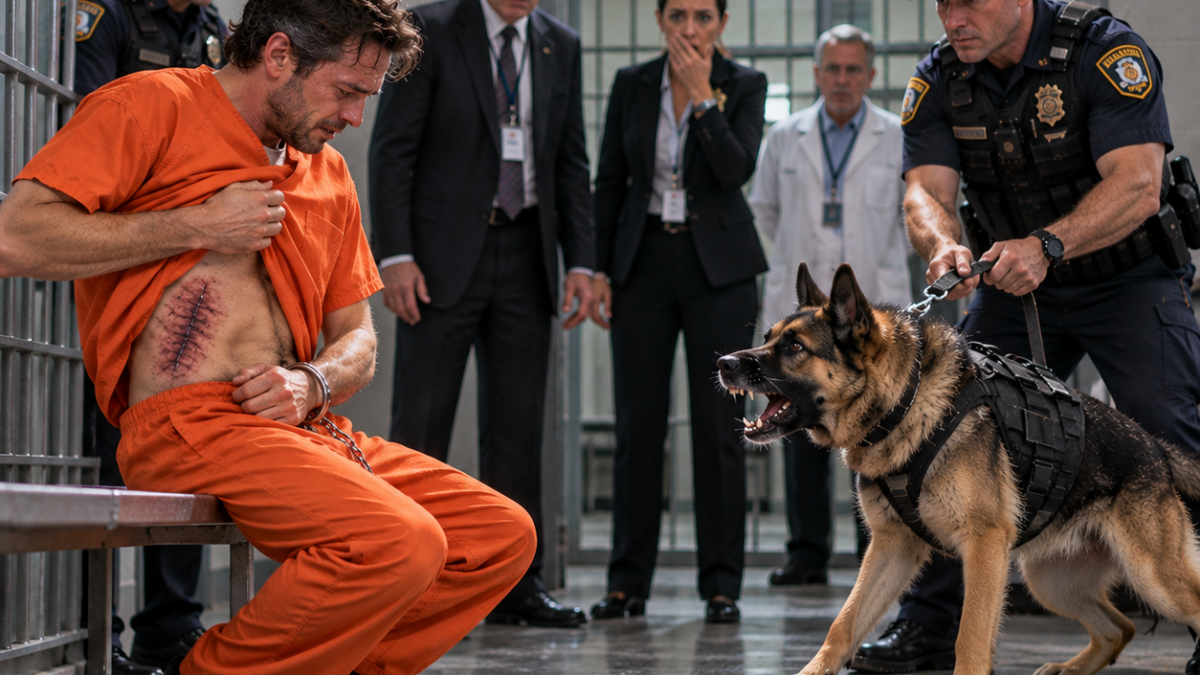
Hours Before His Execution, a Former K9 Officer Asked to See His Police Dog One Last Time—Then Ranger Started Barking at a Hidden Wound Nobody Had Ever Investigated.
Two hours before the state was supposed to execute me for murdering another police officer, I used my final request on the only living thing I still trusted—a retired German Shepherd named Ranger who had once been my K9 partner.
The guards expected him to run into my arms, but Ranger entered the room, froze ten feet away, and began growling so violently that one officer muttered, “Maybe the dog remembers what Ward did.”
Then Ranger stopped looking at me, turned toward a corrections lieutenant standing against the wall, and gave the same warning bark I had heard in an abandoned warehouse seven years earlier—seconds before somebody drove a knife into my shoulder and framed me for a murder I had spent every day since trying to prove I did not commit.
My name is Ethan Ward.
For seven years, the state called me murderer.
Cop killer.
Traitor.
Convicted felon.
Death-row inmate.
Inmate D-87421.
Those words followed me everywhere.
They were printed on forms.
Spoken during count.
Repeated by television anchors.
Typed beneath photographs of me wearing a badge I no longer owned.
Nobody called me Officer Ward anymore.
Nobody called me Sergeant.
Nobody called me Ranger’s handler.
And almost nobody called me Ethan.
Names become dangerous in prison because names remind people that the man behind the bars had a life before the number.
I had one.
Twelve years with the police department.
Nine years in K9.
A small brick house I never finished paying for.
A sister in Ohio who stopped answering reporters after the third year.
A garage full of tools.
A coffee mug that said WORLD’S OKAYEST COP.
And Ranger.
Ranger had been the center of everything.
German Shepherd.
Dark saddle coat.
Amber eyes.
Seventy-eight pounds when we were paired.
Too thin when he entered the academy.
Afraid of fast hands.
Afraid of metal bowls.
Afraid of men raising their voices.
PART2:
He came from a bad situation before the department acquired him.
Everybody saw the fear.
I saw the dog behind it.
Our first trainer told me:
“He may wash.”
I asked:
“Why?”
“Too cautious.”
“What happens if we slow down?”
The trainer shrugged.
“You can try.”
So I did.
Every morning before sunrise.
No shouting.
No dragging him through obstacles.
PART3:
No punishing hesitation simply because it inconvenienced the timetable.
One doorway.
One staircase.
One vehicle.
One stranger at a time.
Ranger learned that my hands did not hurt.
Then that my voice meant something.
Then that work could be predictable.
Six months later he was outperforming dogs people had considered safer bets.
Tracking.
Article searches.
Building clears.
Suspect apprehension.
Missing children.
Narcotics work early in his career.
Then patrol and tracking full time.
Ranger saved my life once.
Actually saved it.
Warehouse arrest.
A suspect dropped from a catwalk with a knife while I was looking toward the opposite corridor.
I never saw him.
Ranger did.
The dog hit him before the blade reached my throat.
Afterward I sat on the warehouse floor with Ranger’s head between my hands.
“You saved me, buddy.”
He panted.
No concern whatsoever for the magnitude of the occasion.
I whispered:
“I owe you.”
Turns out I did.
I just never imagined the debt would be collected when I was wearing an orange jumpsuit and waiting for the state to kill me.
Execution mornings have a particular silence.
I had heard that from another prisoner years before.
Thought he was being dramatic.
He wasn’t.
The prison woke early anyway.
Counts.
Doors.
Food carts.
Radios.
Keys.
But on an execution day, everybody moved as though noise itself might be disrespectful.
Boots echoed longer.
Doors seemed heavier.
People stopped joking.
Even officers who hated you avoided looking directly into your cell.
At 4:53 that morning I sat on the edge of my bunk.
Hands clasped.
Looking at the concrete floor.
I had not slept.
No point.
I knew the schedule almost minute by minute.
Medical check.
Chaplain.
Legal confirmation.
Final meal.
Transfer to holding.
Witness preparation.
Execution.
The state had chosen lethal injection.
Reporters had been outside since the previous afternoon.
The victim’s family would attend.
Some members of mine would not.
My sister had written:
I love you.
I believe you.
I cannot watch them do it.
I told her not to.
The first guard who spoke to me that morning was Officer Daniel Ruiz.
Forty-eight.
Worked death row six years.
Never friendly.
Never cruel.
Professional.
He stopped outside my cell.
“You okay, Ward?”
Strange question.
“No.”
He nodded.
Fair answer.
“Chaplain will be down in ten.”
“Okay.”
He lingered.
Then:
“Dog’s coming.”
My head lifted.
“Confirmed?”
“Yes.”
Ranger.
For the first time in days, my chest hurt for a reason that wasn’t fear.
“When?”
“Before transfer.”
I looked away because I did not want Ruiz watching my eyes fill.
“Thank you.”
“Wasn’t me.”
“I know.”
Still.
Thank you.
When the chaplain first asked if I wanted a final request, I didn’t hesitate.
Not steak.
Not bourbon.
Not family.
Not press.
“Ranger.”
He thought he misheard.
“Your former police dog?”
“Yes.”
“Ethan, Ranger was reassigned years ago.”
“I know.”
“He’s retired now.”
“I know.”
“You’re sure?”
“Yes.”
“Why?”
Because Ranger had been the last living witness to the night everything ended.
Because he had watched someone attack me.
Because he had barked at the officers pulling us apart while I bled on a warehouse floor.
Because prosecutors later told a jury that his barking proved even my own dog knew I had killed Officer Daniel Price.
Because that was nonsense.
And because despite knowing it was nonsense, part of me had carried the question for seven years.
What did Ranger see?
But that was not the biggest reason.
The truth was simpler.
“I want to tell him goodbye.”
The chaplain stopped asking.
The warden approved the visit under strict conditions.
Execution-wing consultation room.
I would be restrained.
Ranger leashed.
Current custodian present.
Security team inside.
Ten minutes.
That was fine.
I would have accepted ten seconds.
At 6:17, Warden Samuel Brooks arrived.
Clipboard.
Dark suit.
No tie.
He had been warden only eleven months.
Too late to know the politics of my conviction firsthand.
That turned out to matter.
“Mr. Ward.”
I looked up.
“Your execution remains scheduled for 8:30.”
“I understand.”
“Any additional request?”
“No.”
“Ranger will arrive shortly.”
My hands tightened.
Brooks noticed.
“You haven’t seen him since your arrest?”
“Seven years.”
He paused.
Then:
“I hope the visit gives you some peace.”
I almost laughed.
Peace.
People say peace when they do not know what else to offer the condemned.
But I nodded.
At 6:42, a black state vehicle came through the outer gate.
I could not see it.
I heard radio traffic.
K9 transport cleared.
Handler credential confirmed.
Veterinary documentation.
Then footsteps.
Collar tags.
A sound I had not heard in seven years.
Dog nails on polished concrete.
I stood before anybody told me to.
Ruiz opened my cell.
“Hands.”
I presented them.
Cuffs.
Waist chain.
Leg restraints.
Not because anyone expected me to escape two hours before execution.
Protocol does not care about irony.
They walked me down the corridor.
No other prisoners visible.
Doors closed.
The consultation room sat outside the execution chamber.
Gray walls.
Bolted table.
Three plastic chairs.
Camera in one upper corner.
Warden Brooks.
Ruiz.
Another guard.
Prison psychologist Dr. Lena Morris.
Lieutenant Curtis Hale, second-shift security supervisor.
I had seen Hale dozens of times over the years.
Never spoken to him much.
Tall.
Close-cropped gray hair.
Former city cop, I had heard.
That fact had never interested me.
Not until Ranger arrived.
The door opened.
A younger officer entered first.
Cole Mercer.
Ranger’s retirement custodian.
Former K9 officer.
He held the leash loosely.
Then Ranger walked through.
Older.
God.
So much older.
Gray over the muzzle.
Shoulders less full.
Slight stiffness in the left hip.
But him.
Absolutely him.
For seven years, I had wondered whether memory had exaggerated everything.
The eyes proved it hadn’t.
“Ranger.”
The name left me before I decided to speak.
His head snapped toward me.
My throat closed.
“Hey, buddy.”
I expected movement.
Tail.
Whine.
Anything.
Instead Ranger stopped.
Body rigid.
Ten feet away.
He stared.
Then growled.
Every guard in the room changed posture.
Cole shortened the leash slightly.
“Easy.”
Ranger did not move.
The growl deepened.
Ruiz looked at me.
I stayed still.
One of the guards whispered:
“Jesus.”
Another said:
“Maybe he remembers.”
I knew what he meant.
Maybe Ranger remembered me killing Price.
That story had survived seven years.
It had survived appeals.
Documentaries.
Podcasts.
Every prosecutor repeating the same emotional line:
Even Ward’s own K9 rejected him at the scene.
I swallowed.
“Ranger.”
His ears moved.
“It’s me.”
The dog took one step.
Stopped.
Nose moving.
Cole said:
“Don’t approach him.”
“I won’t.”
Ranger stared at my chest.
Then my shoulder.
His growl changed.
Less directed.
More uncertain.
He began circling.
Slowly.
Nose working.
Cole frowned.
“What?”
Warden Brooks asked:
“Is that aggression?”
“No.”
Cole watched.
“Not exactly.”
“What is it?”
“He’s searching.”
Ranger moved around my left side.
Stopped behind me.
Sniffed near my shoulder blade.
Then barked.
One explosive alert.
My entire body went cold.
Because I knew that bark.
Seven years disappeared.
Rain on corrugated metal.
Dark warehouse.
Ranger beside my leg.
A sound behind me.
Pain.
A hand pulling my collar.
Knife entering high behind my left shoulder.
Then gunfire.
I staggered.
Warden Brooks said:
“Ward?”
I realized I was breathing too fast.
Ranger barked again at my shoulder.
Cole approached cautiously.
“Sir, do you have an injury there?”
My mouth went dry.
“Scar.”
“From?”
“I don’t know.”
The room became silent.
Warden Brooks frowned.
“You don’t know?”
“I remember being hurt that night.”
My voice sounded distant.
“At the warehouse.”
“Your trial record mentioned no stabbing,” Dr. Morris said.
“I know.”
Cole looked at me.
“May I see it?”
I looked at Brooks.
He nodded.
A guard loosened the back of my prison shirt enough for Cole to examine the upper shoulder.
He stopped.
“What?”
Brooks asked.
Cole didn’t answer immediately.
Dr. Morris stepped closer.
There was an old scar.
Deep.
Round at one end.
Longer at the other.
Not surgical.
Not a bullet graze.
A healed puncture injury.
I had asked about it when I first entered prison.
Medical staff told me it came from the warehouse incident.
The prosecution claimed I probably cut myself falling into broken metal.
At the time, I couldn’t prove otherwise.
I barely remembered the attack.
Concussion.
Blood loss.
Sedatives.
Chaos.
Cole said:
“That looks like penetrating trauma.”
Dr. Morris nodded.
“It could be.”
Warden Brooks asked:
“Was this documented after arrest?”
I said:
“Hospital examined me.”
“Where?”
“St. Matthew’s.”
Brooks looked at Ruiz.
“Pull intake medical archive.”
Hale spoke for the first time.
“This is irrelevant.”
Ranger’s head snapped toward him.
I noticed.
So did Cole.
Hale continued:
“An old scar doesn’t undo a conviction.”
True.
Warden Brooks said:
“No one said it did.”
“We have an execution in less than two hours.”
“I am aware.”
Hale shifted.
Ranger stared at him.
Then growled.
Different growl.
Recognition.
His entire body moved forward.
Cole tightened the leash.
“Ranger.”
Hale stepped back.
“What the hell?”
Ranger barked.
Twice.
Not at me.
At Hale.
Every person in the room froze.
Cole looked at Hale.
Then Ranger.
“Do you know this dog?”
“No.”
Too fast.
I stared.
Hale’s face.
Something.
A shape behind rain.
A voice.
Stay quiet or the dog dies.
My pulse hammered.
“Were you city police before corrections?”
I asked.
Hale glared.
“That has nothing to do with you.”
“What unit?”
“Ward.”
“What unit?”
Warden Brooks turned.
“Lieutenant?”
Hale’s jaw tightened.
“Metro narcotics task force.”
The room tilted.
Daniel Price had been narcotics.
The warehouse operation had been narcotics.
I whispered:
“You were there.”
Hale’s eyes met mine.
Nothing obvious.
But Ranger knew him.
Maybe scent.
Maybe face.
Maybe voice.
Dogs remember people for reasons humans cannot reconstruct.
That was not evidence.
But Hale’s answer mattered.
He said:
“No.”
Ranger lunged against the leash.
Cole held him.
“Hale, step outside.”
Warden Brooks ordered.
“I have a job to do.”
“You’re being relieved from this room.”
“This is ridiculous.”
“Now.”
Hale stared at Ranger.
Then me.
His right hand moved toward his radio.
Ranger barked again.
And memory arrived.
Not complete.
One fragment.
Darkness.
A man behind me.
A voice near my ear.
Stay quiet or the dog dies.
Same cadence.
Same rough edge.
I said:
“You stabbed me.”
Nobody moved.
Hale laughed.
Small.
Ugly.
“You’re remembering things two hours before execution?”
“I know your voice.”
“You’ve heard me in this prison for years.”
True.
Doubt hit.
Then Ranger pulled forward again.
Cole said:
“Back.”
The dog obeyed.
Warden Brooks looked at Hale.
“Leave.”
Hale did.
But something about his face changed before the door closed.
Fear.
Real fear.
Brooks turned immediately.
“Stop the clock.”
Ruiz stared.
“Sir?”
“I said suspend movement toward the chamber.”
“Can you do that?”
“I can halt internal preparation pending emergency legal review.”
He picked up the phone.
“Get the attorney general’s duty counsel.”
That did not mean I was saved.
Nobody unlocks death row because a dog barks.
But executions require layers of certification.
If genuinely material evidence appears, attorneys can seek a judicial stay or executive reprieve.
Warden Brooks had enough uncertainty to force the question upward.
He did.
At 6:58, my execution preparation paused.
At 7:12, state counsel requested my original hospital records.
At 7:19, St. Matthew’s archive confirmed something no one in the room expected.
Emergency physician note.
Seven years earlier.
Ethan Ward.
Penetrating wound, posterior left shoulder.
Approximately three centimeters.
Probable narrow-blade injury.
Foreign material collected from wound.
Separate from gunshot or blunt-force trauma.
I sat down.
My knees stopped working.
Brooks listened to counsel over speaker.
“What happened to the collected material?”
The voice replied:
“Chain-of-custody notation indicates transfer to Metro Police evidence.”
My attorney had never seen it.
I knew that instantly.
Neither had trial counsel.
“If that’s true,” Brooks said, “why is it absent from the discovery index?”
Silence over speaker.
Then:
“We’re checking.”
The execution was forty-eight minutes away.
At 7:31, my appellate attorney, Laura Chen, called.
I had not heard her voice in months.
“Ethan.”
“Laura.”
“What the hell is happening?”
“Ranger came.”
“That doesn’t answer my question.”
I almost laughed.
“I have a stab wound.”
“I know about the scar.”
“No.”
“Hospital documented it as a knife wound.”
Silence.
“What?”
“They collected trace evidence.”
Another silence.
Then Laura’s voice changed completely.
Professional.
Fast.
“Who has the record?”
“State counsel.”
“Do not make any statement about the underlying incident without me present.”
“Laura—”
“Ethan.”
“I remember Hale.”
“Who?”
“Curtis Hale.”
“Corrections lieutenant.”
“He was Metro narcotics.”
“Stop.”
“I know his voice.”
“I said stop.”
She breathed.
“Memory matters.”
“It is not enough.”
“We need records.”
“Understood?”
“Yes.”
“Good.”
Then:
“I’m filing for emergency stay.”
At 7:46, prison medical confirmed my scar.
At 7:51, the attorney general’s office found an evidence-property entry from the warehouse investigation.
Item 47C.
Fibers and biological residue recovered from Ethan Ward shoulder wound.
Status:
TRANSFERRED FOR LAB ANALYSIS.
No lab result listed.
Item 47C did not appear in the evidence disclosure used at my trial.
That mattered.
At 8:02, Laura called again.
“We have a judge.”
My execution was scheduled for 8:30.
Twenty-eight minutes.
“Judge wants state response immediately.”
“Laura…”
“I know.”
Behind glass, Ranger lay near Cole’s feet.
Watching me.
I said:
“If it doesn’t happen—”
“Don’t.”
“Listen.”
“No.”
“Tell my sister—”
“Ethan, shut up.”
I did.
Best legal advice she ever gave me.
At 8:17, a federal magistrate did not appear.
No governor burst through a door.
No dog magically proved murder.
A state judge issued a temporary stay.
Seventy-two hours.
Based on potentially withheld medical and forensic evidence requiring review.
Seventy-two hours.
After seven years on death row, three days felt like immortality.
The witness area cleared.
Execution drugs remained sealed.
I returned to a secure cell.
Ranger stayed at the prison only long enough for investigators to document the interaction and his service history.
Before Cole took him away, the warden gave us five minutes.
No security crowd.
Just Ruiz outside the door.
My cuffs removed.
I knelt.
Ranger stood six feet away.
This time he came.
Slowly.
No growl.
No bark.
He placed his head against my chest.
I folded around him.
Seven years disappeared.
“Hey, buddy.”
His tail moved.
I buried my face against his neck.
“You got old.”
Tail again.
“So did I.”
I cried into his fur.
“I thought you hated me.”
Ranger breathed against my shirt.
“I thought you were accusing me that night.”
Of course he did not understand the sentence.
Dogs do not exist to resolve human symbolism.
But I needed to say it.
“You were warning them.”
His head lifted.
“I’m sorry.”
For what?
Leaving?
Getting arrested?
Not understanding?
Everything.
Cole gave us longer than five minutes.
Nobody complained.
The seventy-two-hour stay became thirty days.
Thirty became indefinite.
Because once investigators started pulling the old case apart, it came apart fast.
Item 47C still existed.
That was the first miracle.
Not divine.
Bureaucratic.
A property technician had transferred the sample to the state forensic laboratory, but the result was returned under an incorrect supplemental-case code.
The lab report had never been attached to the main prosecution file.
Or, according to investigators later, somebody made sure it wasn’t.
The material from my shoulder contained fibers from a dark tactical glove.
Mixed biological material.
Partial DNA profile.
At the time, insufficient for database identification.
Technology improved.
The profile was retested.
There was a probable association to Curtis Hale.
Not proof by itself.
But now there was a reason to subpoena Hale’s old employment records.
He had been a Metro narcotics detective seven years earlier.
Assigned to the same broader task force as Officer Daniel Price.
His name did not appear in the warehouse operational roster.
But cell-site records placed his department-issued phone within the warehouse sector that night.
An old vehicle GPS archive placed an unmarked task-force SUV near the rear entrance.
Signed out to Hale.
Then investigators reopened ballistics.
The prosecution had told the jury Daniel Price was killed by a round fired from my service weapon.
That statement had been based on a supplemental examiner conclusion.
Original bench notes told a more complicated story.
The bullet was badly deformed.
Class characteristics were consistent with my weapon type.
Individual identification was disputed by the first examiner.
A supervisor later signed the categorical match.
That supervisor had died years earlier.
But emails remained.
One from Lieutenant Marcus Marsh.
Metro narcotics commander.
To Hale.
Need this case clean before IA crawls through the unit.
Marsh.
That name mattered.
Because my original raid had not been what prosecutors claimed.
We had been sent to an abandoned warehouse on a tip involving stolen weapons.
Price arrived separately.
Why?
Nobody ever answered convincingly.
Now internal-affairs archives showed Price had contacted them two days earlier.
He wanted to report off-book seizures.
Unlogged informant payments.
Coercive tactics inside the narcotics task force.
Marsh was one of the officers he intended to name.
Hale another.
Price had scheduled an interview for the morning after he died.
My case suddenly looked less like:
Decorated K9 officer inexplicably kills colleague.
And more like:
Officer walks into a corrupt operation at the worst possible moment.
Laura sat across from me inside attorney visitation three weeks after the scheduled execution.
She had twelve binders.
I stared.
“You look happy.”
“I am a lawyer.”
“That isn’t an answer.”
“We found something.”
My stomach tightened.
“What?”
“Dispatch recording.”
The warehouse raid radio traffic had been archived separately from the criminal file.
Not all channels were included at trial.
A tactical side channel contained voices.
One was mine.
One Price.
One unidentified.
Digital cleanup improved it.
A male voice said:
Ward wasn’t supposed to be here.
Then:
Get the dog away.
Then a third voice.
Hale’s voice, according to a later comparison, saying:
He’s seen us.
My hands went cold.
Laura continued.
“There’s more.”
Another gunshot.
Then Price yelling:
“Marcus, don’t.”
Marcus.
Marsh.
Lieutenant Marcus Marsh had retired from Metro years after my conviction.
Where was he now?
Private security consultant.
Contracted periodically with the corrections department.
Including my prison.
The room started shrinking.
“Did he know I was here?”
“Everyone knew you were there.”
“Did he ever come inside?”
“We’re checking.”
Marsh was arrested six weeks later.
Not because Ranger barked.
Because search warrants recovered old encrypted drives.
Because Hail—Curtis Hale—finally talked.
He did not confess heroically.
People rarely do.
Investigators confronted him with DNA, vehicle data, suppressed lab evidence, side-channel audio, and financial records.
His attorney negotiated.
Then Hale started explaining.
The narcotics task force had been running illegal side operations.
Cash skimmed from seizures.
Unauthorized informant payments.
Weapons disappearing before inventory.
Threats against suspects.
Price discovered it.
He planned to go to internal affairs.
Marsh decided to scare him.
Not murder, Hale insisted.
Maybe true.
Maybe cowardice.
Price arrived at the warehouse expecting to meet an informant.
Marsh and two others were there.
I entered unexpectedly with Ranger after dispatch rerouted me toward suspicious activity nearby.
Ranger alerted before I understood why.
Hale attacked me from behind.
Knife into shoulder.
His job was to incapacitate me.
Marsh confronted Price.
Argument.
Weapon drawn.
Gunshot.
Price fell.
Ranger lunged.
Chaos.
Hale grabbed my service weapon after I lost consciousness briefly.
A round was fired from it into warehouse debris.
Later, during the scene confusion, Marsh’s people manipulated weapon placement and evidence handling.
The fatal bullet?
Later independent review concluded it could not reliably be identified as having come from my gun.
The original categorical match should never have been presented as certain.
More importantly, Hale admitted Marsh fired the shot that killed Price.
Why frame me?
Because I was there.
Because I had blood on me.
Because my weapon had been fired.
Because Ranger was reacting violently while officers approached.
Because the task force needed a story before internal affairs found the real one.
And because I had a reputation good enough that my fall would be spectacular.
Marsh understood public psychology.
People love heroes.
They love fallen heroes more.
The prosecution took the facts it had.
Some real.
Some manipulated.
Some hidden.
And built a case.
My trial lawyer missed things too.
We eventually admitted that.
Not every failure was conspiracy.
Some was pressure.
Some incompetence.
Some confirmation bias.
Some people saw what they expected to see.
The media certainly did.
My trial lasted longer than the story people later told.
But not long enough.
I was convicted.
Capital proceedings followed under the applicable state process.
Appeals failed.
One after another.
Every denial made innocence sound more impossible.
Surely somebody would have found the truth.
That sentence almost killed me more effectively than the execution protocol.
Surely.
Surely the system would catch it.
Surely twelve jurors couldn’t be wrong.
Surely the lab couldn’t be wrong.
Surely appeals courts would notice.
Surely the dog barking meant something.
Surely.
Systems do not become infallible because many people touch the file.
Sometimes each person inherits the assumptions of the one before.
The court vacated my conviction eleven months after Ranger entered that prison.
Eleven months.
People ask why it took so long after the evidence surfaced.
Because freedom is not a movie scene.
The state had to investigate.
Prosecutors had to reassess.
Hearings.
Experts.
Ballistics.
DNA.
Witness credibility.
Brady material.
Chain of custody.
Marsh’s attorneys.
Hale’s cooperation.
Daniel Price’s family.
Every fact mattered.
I wanted out.
Laura wanted it correct.
She was right.
The hearing lasted four days.
Daniel Price’s widow sat behind the prosecution.
Her name was Rebecca.
I had not seen her since trial.
At sentencing seven years earlier she told the court:
“You murdered the father of my children.”
I had carried that sentence too.
During the new hearing, she listened to Hale describe what happened.
Her face never moved.
When the original hospital record appeared on screen, she closed her eyes.
When the hidden lab report appeared, her oldest son left the room.
When audio played Price saying:
Marcus, don’t—
Rebecca began crying.
I could not look at her.
That man was her husband.
My exoneration required reopening the worst night of her life and telling her the person she had hated for seven years was another victim.
No victory exists inside that.
On the fourth afternoon, the judge returned.
The courtroom stood.
My knees shook harder than they had on execution morning.
The judge spoke carefully.
He did not declare me a hero.
Did not condemn every person involved.
He said the conviction could not stand.
Material evidence had been withheld.
Forensic testimony had been materially overstated.
New evidence fundamentally undermined the prosecution theory.
The state moved to dismiss pending further review.
My restraints came off.
I stared at my wrists.
Nothing dramatic happened.
No music.
No applause.
Laura whispered:
“Ethan.”
I looked at her.
“You can stand.”
I already was.
“No.”
Her eyes filled.
“I mean you can leave.”
Leave.
One syllable.
Seven years.
I turned.
Rebecca Price stood ten feet away.
Everybody around us stopped.
I did not know what to say.
Sorry sounded wrong.
Thank you was obscene.
So I said:
“Daniel tried to do the right thing.”
She cried harder.
I continued.
“He deserved better from all of us.”
Rebecca looked at me for a long time.
Then:
“You didn’t kill him.”
“No.”
Her mouth shook.
“I told my children you did.”
I had no answer.
She said:
“I asked them to kill you.”
“I know.”
“I’m sorry.”
There are apologies too large for the word carrying them.
I shook my head.
“You believed the case.”
“So did a jury.”
She looked down.
“That doesn’t help.”
“No.”
It didn’t.
Eventually she stepped closer.
Not hug close.
Human close.
“I hope you get some of your life back.”
I looked toward the courtroom door.
“I don’t know what that looks like.”
Neither did she.
Outside, hundreds of reporters waited.
Laura asked:
“Do you want another exit?”
“Yes.”
Then:
“No.”
I surprised myself.
For seven years, other people had told my story.
Maybe I could say something once.
We walked down the courthouse steps.
Cameras exploded.
Questions.
Mr. Ward!
Ethan!
How does freedom feel?
Will you sue?
Do you forgive the department?
Do you think the death penalty should be abolished?
Did Ranger really identify the killers?
That one stopped me.
I stepped toward the microphones.
“No.”
People quieted.
“Ranger did not solve a murder.”
Confusion.
“He is a dog.”
“He cannot testify.”
“He cannot explain what he remembers.”
“He cannot tell a court who pulled a trigger.”
Cameras clicked.
“But he reacted to things people had stopped questioning.”
“My scar.”
“A man he recognized.”
“A night everybody thought they already understood.”
“That reaction made somebody ask for the medical records again.”
“The records led to evidence.”
“The evidence led to people.”
“The people led to the truth.”
I looked at the reporters.
“Do not turn Ranger into magic.”
“What saved my life was that, finally, somebody listened when something didn’t fit.”
A reporter shouted:
“What’s the first thing you’re going to do?”
I knew.
“See my dog.”
Ranger lived with Cole Mercer outside the city.
Small house.
Fenced property.
Two acres.
I went there the next morning.
No cameras.
No lawyers.
No guards.
Cole opened the gate.
“You sure?”
“No.”
He smiled.
“Good answer.”
Ranger was lying beneath an oak tree.
He lifted his head.
Saw me.
This time no hesitation.
He stood.
Slow because of arthritis.
Then walked.
Then faster.
By the time I dropped to my knees, he was running badly.
Old-dog running.
Crooked.
Determined.
He hit me in the chest.
I fell backward.
Laughing.
Crying.
Ranger climbed halfway over me like the seven years had been administrative inconvenience.
“You idiot.”
He licked my face.
“You old idiot.”
Cole turned away.
Gave us privacy.
I held Ranger’s head.
For seven years I had imagined our reunion inside a prison execution room.
Now sunlight came through oak leaves.
Grass beneath my back.
No chains.
No gun.
No witnesses.
I whispered:
“Where you go…”
The rest caught.
That had been our phrase.
Every time we loaded into the patrol car.
Every call.
Every training day.
“Where you go, I go.”
Ranger’s tail struck grass.
I stayed at Cole’s house three hours.
Then six.
By the end, Cole said:
“He should go with you.”
I stared.
“No.”
“Yes.”
“He’s yours now.”
“No.”
Cole laughed.
“Ethan.”
“He’s been with you seven years.”
“Four.”
“What?”
“He spent three years with another handler first.”
“Oh.”
“He retired to me.”
I looked at Ranger.
“You kept him.”
“Somebody had to.”
“Why?”
Cole became quiet.
“Because I read your case.”
I looked at him.
“Before the new evidence?”
“Yes.”
“And?”
“I didn’t know if you were innocent.”
Fair.
“But I knew one thing.”
“What?”
“The story about Ranger accusing you was garbage.”
I smiled despite myself.
Cole continued.
“Working dogs bark under stress.”
“They guard.”
“They redirect.”
“They respond to handlers, chaos, scent, movement.”
“Turning that into a moral verdict was nonsense.”
“I thought somebody should make sure the dog didn’t get turned into a symbol for something he couldn’t say.”
That sentence made me trust Cole completely.
He said:
“He’s yours if you want him.”
I looked at Ranger.
Old dog.
Gray.
Left hip stiff.
Seven years.
I whispered:
“Do you want to come home?”
He sneezed.
Cole said:
“That’s legally binding.”
Ranger came with me.
Home was complicated.
My old house had been sold years earlier to cover legal costs.
The city returned some property eventually.
Other things were gone.
I rented a small cottage while civil litigation moved.
Two bedrooms.
One yard.
Not much furniture.
Ranger inspected every inch.
Kitchen.
Bedroom.
Bathroom.
Closet.
Back door.
Then he stood in the living room.
I put down his bed.
He ignored it.
Lay beside my chair.
Of course.
First night, I couldn’t sleep.
Freedom is noisy.
Prison had taught my body every sound in one environment.
Doors.
Counts.
Steps.
Keys.
Outside, a refrigerator motor clicking on made me sit upright.
Car headlights crossing the ceiling sent adrenaline through me.
At 2:14 a.m., I found myself standing at the front window.
Watching the street.
Ranger limped out.
Sat beside me.
I looked down.
“This is stupid.”
He yawned.
“I’m free.”
Nothing.
“So why does this feel worse?”
Ranger leaned against my leg.
I put my hand on his neck.
Seven years earlier, he grounded me after bad calls.
Apparently some jobs survive retirement.
Rebuilding life took longer than exoneration.
People assume freedom solves prison.
It solves bars.
Other things remain.
Crowds.
Closed doors.
People walking behind me.
Sleeping with lights off.
Choosing food.
That sounds ridiculous.
In prison you complain about no choice.
Then somebody puts a twenty-page restaurant menu in front of you and your brain shuts down.
My sister came.
Emily.
She stood in the doorway.
We stared.
Then she slapped me.
Hard.
I blinked.
“Ow.”
She started crying.
“You told me not to come to the execution.”
“I thought—”
She hugged me so hard I couldn’t breathe.
Ranger barked.
She laughed into my shoulder.
“Even the dog thinks you’re stupid.”
Fair.
Emily stayed a week.
Helped me buy furniture.
Threw away prison-issued habits when she could identify them.
“You don’t need to fold the blanket that way.”
“I know.”
“Then stop.”
“I can’t.”
“Fine.”
She stopped trying.
Therapy helped.
Slowly.
A veteran psychologist who also worked with wrongfully convicted people.
First session he asked:
“What do you want?”
“Normal.”
“Define it.”
I couldn’t.
That became our first problem.
The lawsuits eventually settled.
City.
State claims.
Wrongful-conviction compensation.
Lawyers took portions.
Taxes and rules made headlines misleading.
People reported numbers as though somebody had put a price tag on seven years.
You cannot.
Money bought a house.
Paid Emily’s mortgage.
Created a fund for Daniel Price’s children after Rebecca reluctantly agreed.
She refused at first.
“Ethan, you don’t owe us.”
“No.”
“Then why?”
“Because Daniel tried to expose the same people who destroyed me.”
She stared.
“You want my children taking money from you?”
“I want them taking money from the future their father was trying to protect.”
She finally agreed if the fund carried Daniel’s name, not mine.
Good.
Marsh went to trial.
Hale testified.
Other officers were charged with evidence tampering, conspiracy, civil-rights violations, financial crimes.
Not everyone accused was convicted.
Some allegations could not be proved.
Some charges were reduced.
Some people cooperated.
Marsh was convicted of Daniel Price’s murder along with obstruction-related offenses.
Hale received a lower sentence after cooperation but still went to prison.
Lieutenant Curtis Hale.
The corrections officer Ranger had barked at.
People asked how someone connected to my original case ended up supervising the prison where I sat on death row.
The answer was less cinematic than conspiracy.
After leaving the police department, Hale moved into corrections.
Background issues were missed or minimized because the narcotics unit had protected its own records.
When he realized years later that I was housed there, he kept his distance.
He later admitted that every time he passed my tier, he wondered whether I remembered his voice.
I hadn’t.
Not consciously.
Until Ranger did.
Or until Ranger’s reaction gave my brain permission to search differently.
I do not know.
Memory is messy.
That ambiguity matters.
I will never claim Ranger scientifically identified Hale.
He recognized something.
A person.
A scent.
A posture.
A voice.
I don’t know.
The dog knew more than I did.
That was enough to make humans ask questions.
Nothing more.
Ranger became famous after my release.
I hated it.
Magazine requests.
Television.
Documentaries.
Book deals.
One producer pitched:
THE DOG WHO STOPPED AN EXECUTION.
I said:
“No.”
“Why?”
“Because he didn’t.”
He looked confused.
“The judge stopped the execution.”
“Hospital records stopped it.”
“A lawyer filed the motion.”
“Forensic technicians retested evidence.”
“Investigators did their jobs.”
“Ranger started a question.”
“That is enough.”
He did not buy the project.
Good.
Ranger did appear publicly once.
Daniel Price Memorial Scholarship ceremony.
Rebecca invited us.
I almost declined.
Then she called personally.
“Daniel liked dogs.”
So we went.
Ranger wore a plain collar.
No police harness.
No medals.
Rebecca’s son Michael was nineteen.
Same age I remembered him from photographs as a child? Impossible.
Seven years changes children brutally.
He approached.
Ranger sniffed him.
Michael crouched.
“Did he know my dad?”
“Yes.”
“Were they friends?”
I smiled.
“Ranger didn’t really have human friends.”
“People were either useful, suspicious, or carrying food.”
Michael laughed.
Then became serious.
“Did my dad know you were innocent?”
The question hit.
“I don’t know.”
I thought about the warehouse.
“Your father probably knew something was wrong before either of us understood how bad.”
Michael touched Ranger’s shoulder.
“My mom hated you.”
“I know.”
“I did too.”
“I know.”
He looked at me.
“Sorry.”
“You were twelve.”
“Still.”
I shook my head.
“You loved your father.”
“So did I.”
Not the same love.
But respect.
Shared loss.
Enough.
Ranger rested his head briefly against Michael’s knee.
Rebecca saw.
She cried.
Quietly.
So did I.
Ranger’s health declined after two years with me.
Thirteen.
Then fourteen.
Hips.
Kidneys.
Hearing.
He became selective about commands.
I told people he was retired.
He told people nothing.
One morning I dropped a spoon in the kitchen.
He did not wake.
That frightened me more than gunfire used to.
I knelt beside him.
“Ranger.”
One amber eye opened.
Relief.
“You jerk.”
Tail moved once.
The veterinarian told me time was becoming something measured in months.
Maybe less.
I had spent seven years waiting to die.
Now I spent months watching a dog do it naturally.
Strange symmetry.
He did not seem afraid.
Humans are cursed with calendars.
Dogs get mornings.
Meals.
Sun.
Pain.
Relief.
Presence.
I learned from him.
We walked slowly.
Sat outside.
Sometimes I told him stories about patrol.
“Remember the idiot who hid in the dumpster?”
Ranger slept.
“You found him because he dropped a cheeseburger.”
Nothing.
“Your finest police work.”
Ear moved.
I laughed.
The final week, Ranger stopped eating much.
Drank less.
Could not stand without help.
I called Cole.
Then Emily.
Rebecca came too.
I hadn’t expected that.
She brought Michael.
We sat in my living room.
No ceremony.
Ranger on a blanket.
Sunlight across the floor.
I rested my hand against his chest.
The veterinarian explained what would happen.
I knew.
Still hated every word.
Before she gave the medication, I asked everyone for a minute.
They stepped outside.
Just me and Ranger.
I pulled an old photograph from my pocket.
Our first day together.
Me younger.
Ranger lean.
Both looking far too serious.
On the back, in my handwriting:
WHERE YOU GO, I GO.
I placed it beside him.
“Hey, buddy.”
His eyes opened.
“I owe you an apology.”
Tail barely moved.
“I promised where you go, I go.”
My throat closed.
“You went through seven years without me.”
I touched his ear.
“But I guess you came back.”
His breathing was slow.
“I thought my last wish was to say goodbye.”
Tears fell.
“Turns out you weren’t done.”
I pressed my forehead against his.
“You didn’t prove I was innocent.”
“You didn’t solve the case.”
“You did something harder.”
“You made everybody look again.”
Ranger exhaled.
“I’m going to be okay.”
I didn’t know if that was true.
He deserved to hear it anyway.
“Where you go…”
My voice broke.
“I can’t follow this time.”
I smiled through tears.
“You’re going to have to go first.”
The veterinarian returned.
I held him.
His breathing slowed.
Then stopped.
No prison room.
No chains.
No shouting.
No warehouse.
Home.
His final job ended in sunlight.
I buried his ashes beneath an oak tree behind my house.
The marker says:
RANGER
PARTNER
WITNESS
FRIEND
HE MADE US LOOK AGAIN.
I considered writing:
HE SAVED MY LIFE TWICE.
Too simple.
First time, yes.
He physically stopped a man from stabbing me.
Second time?
A hundred people saved me.
Ranger.
Warden Brooks for taking uncertainty seriously.
Ruiz for doing his job without cruelty.
The hospital clerk who preserved records.
Laura for refusing to let me speak when I was desperate.
The judge who stopped the execution.
Lab technicians.
Investigators.
Hale eventually telling the truth.
Rebecca accepting evidence even when it destroyed the story she had lived with for seven years.
Even Daniel Price, who tried to expose corruption before any of us understood the cost.
No one person gets the whole survival story.
Not even the dog.
That became important to me.
I now speak occasionally about wrongful convictions.
Mostly to law students.
Police academies.
Forensic conferences.
I do not give speeches about perfect villains and perfect victims.
Those stories are dangerous.
My case was not one mistake.
It was dozens.
A corrupt unit.
Hidden evidence.
Overstated forensics.
A rushed public narrative.
Defense failures.
Confirmation bias.
Media pressure.
Appellate assumptions.
People who lied.
People who did not ask enough.
All stacked together until a man could be twenty-eight minutes from execution while a medical report proving he had been stabbed sat under the wrong supplemental case code.
People ask:
“What should have prevented it?”
Everything.
That is the answer.
Evidence disclosure.
Independent labs.
Competent counsel.
Transparent chain of custody.
Internal affairs.
Prosecutorial skepticism.
Judicial review.
Police officers willing to report colleagues.
Administrators willing to stop a process even when stopping it is inconvenient.
And humility.
Especially humility.
The ability to say:
This fact does not fit.
Let’s look again.
That was Ranger’s contribution.
He did not know law.
Did not understand capital punishment.
Did not care about my appeals.
He entered a room expecting to see a man he had known.
Then encountered scent, scars, voices, and a person from one of the most traumatic nights of his life.
He reacted.
Humans nearly turned that reaction into another easy story.
Dog thinks Ethan is guilty.
Then somebody paused.
Looked again.
Asked why.
That question saved me.
Years later, I visited the prison after the execution wing was decommissioned.
Warden Brooks had retired.
Ruiz met me at the gate.
Older.
Same expression.
“You sure?”
“No.”
“Good answer.”
We walked to the consultation room.
Gray walls.
Bolted table gone.
Camera removed.
Room scheduled for renovation.
I stood where Ranger first stopped.
Ten feet away from where I had been chained.
Ruiz said:
“You know what I remember?”
“What?”
“Everybody watching the dog.”
I looked at him.
“And?”
“You watching Hale.”
Interesting.
“I didn’t remember him yet.”
“Maybe not.”
Ruiz leaned against the door.
“But something in your face changed before you said his name.”
I looked at the empty wall.
“Do you ever think about that morning?”
“More than I’d like.”
“You worked executions before mine.”
“Yes.”
“After?”
“One.”
Then he transferred.
“Why?”
Ruiz took time.
“Because I realized how much confidence the job requires.”
“What do you mean?”
“When you’re part of the process, you keep telling yourself other people handled the questions.”
“Court.”
“Appeals.”
“Governor.”
“Lawyers.”
“Your job is procedure.”
He looked at me.
“Then a dog walks in and suddenly there’s a question nobody asked.”
He shook his head.
“I didn’t want to rely on everybody else being right anymore.”
That was exactly it.
Systems need specialization.
But specialization can become moral distance.
Not my job.
Not my file.
Not my decision.
Not my question.
Until everybody is doing their piece correctly inside a story that is completely wrong.
I put my hand on the wall.
Cold.
Same as seven years earlier.
I did not feel haunted.
That surprised me.
The room was just a room.
Ranger was gone.
Hale in prison.
Marsh in prison.
Daniel still dead.
My years still gone.
Nothing inside those walls could return them.
So I left.
Outside, sunlight.
I stood near the parking lot.
Ruiz asked:
“What now?”
I smiled.
“Lunch.”
He laughed.
“That simple?”
“Yes.”
It took me a long time to appreciate simple.
Coffee I choose.
Doors I can open.
Driving without asking permission.
Buying dog food for a dog no longer there because I forget.
Calling my sister.
Sleeping badly in my own bed.
Walking outside at two in the morning because I can.
People imagine freedom as fireworks.
Mostly it is ordinary decisions nobody stops you from making.
Ranger knew that before me too.
After retirement, his favorite thing was lying in grass doing absolutely nothing useful.
Police dog.
Hundreds of arrests.
Tracks.
Searches.
Commendations.
Then:
Grass.
Sun.
Nap.
Maybe that is the final lesson.
Worth does not require constant usefulness.
For years, I thought Ranger loved me because we worked together.
Then I spent two years with him when neither of us had a job.
He still followed me from room to room.
Still rested beside my chair.
Still waited outside the bathroom.
Apparently dignity can survive unemployment.
Good to know.
I keep his old collar in a drawer.
Not displayed.
Sometimes I take it out.
The leather is cracked.
Brass tag worn.
RANGER.
K9.
ETHAN WARD.
The department returned it after my exoneration.
His later tags belonged to his other handlers.
Those mattered too.
I never asked for them.
Love does not become purer because you pretend the years apart did not exist.
Cole loved Ranger.
Another handler loved him.
People cared for him when I could not.
I am grateful.
That is another thing prison changed.
I used to think loyalty meant exclusivity.
Where you go, I go.
Now I understand it differently.
Sometimes loyalty means going with someone.
Sometimes it means keeping faith when they cannot come.
Ranger did both.
My last wish before execution was supposed to be goodbye.
Ten minutes.
One old dog.
One condemned man.
I expected to put my hands on his head, tell him he had been good, and walk into another room to die.
Instead Ranger entered, looked at me, and refused to behave the way everyone expected.
That was all.
He did not speak.
Did not reveal a secret code.
Did not point at a murderer.
He simply told us, in the only way he could, that something in that room did not match the story.
For seven years, everybody had been certain.
Jury.
Prosecutors.
Commentators.
Officers.
Courts.
Me, sometimes.
Ranger wasn’t certain.
He questioned.
And because one warden was willing to treat uncertainty as something worth examining instead of something to crush, the execution stopped long enough for paper to catch up with truth.
The hospital record existed.
The evidence existed.
The audio existed.
The corruption existed.
None of it appeared because of magic.
It appeared because somebody looked.
That is what I tell people now when they ask what Ranger did.
He made us look again.
Sometimes that is all justice needs to begin.
Not certainty.
Not a miracle.
One honest question asked before the door closes forever.



