HOA Tried to Burn My Pasture Without Permission—Then I Found My Signature on the Document They Misread
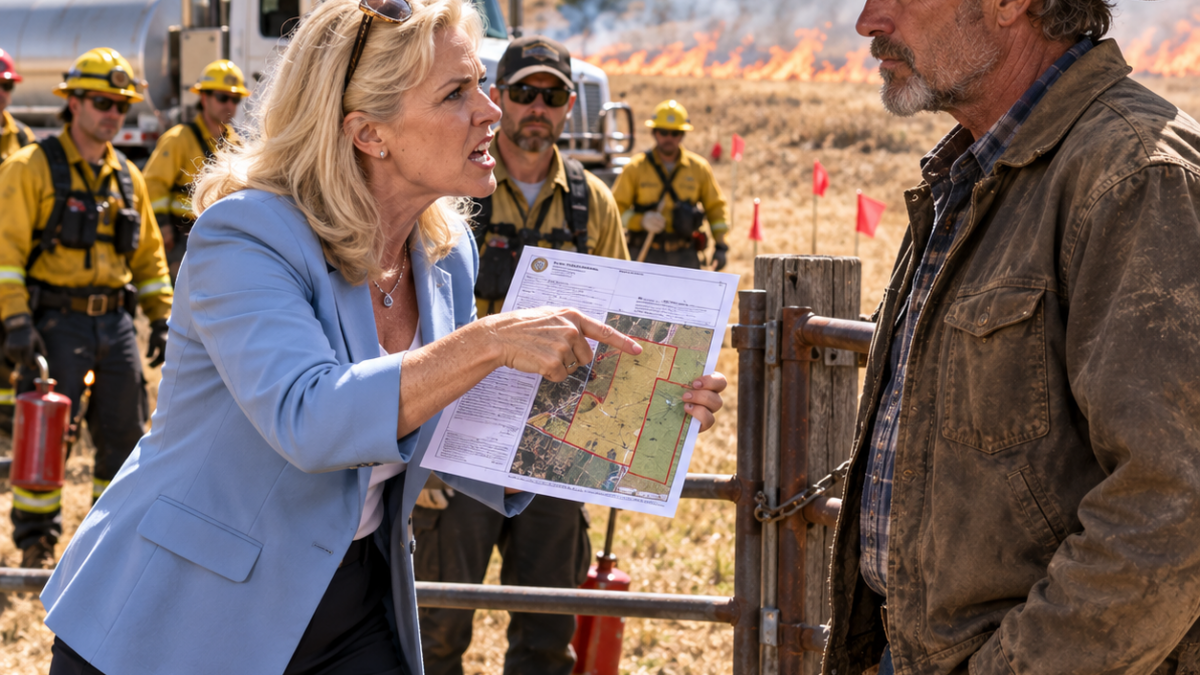
PART3:
Nobody had lit anything yet.
That mattered.
“Show me where I approved it.”
Lydia held up a county permit.
Not close enough for me to take.
Just enough for everyone to see an official seal.
“The county approved the treatment area.”
“That isn’t what I asked.”
She looked irritated already.
I stepped closer.
“Where is my authorization?”
“The association has addressed the access requirements.”
“With whom?”
“The board approved the project.”
“That board does not own this pasture.”
A man beside the water tender turned toward us.
Broad shoulders.
Gray work shirt.
Fire-resistant pants.
Travis Bell.
I knew him by sight.
He had supervised vegetation work along Sierra Hollow’s service road before.
Competent.
Careful.
Not somebody I wanted to make the villain just because he had equipment sitting on my land.
I walked to him instead of Lydia.
“Travis.”
He nodded.
“Mason.”
“Have you personally seen written permission from me allowing this crew to burn this parcel?”
He glanced toward Lydia.
Then at the map.
“We received an approved treatment map and work order from the association.”
“That’s not what I asked.”
Lydia moved between us.
“The association has already dealt with this.”
“We are not restarting the discussion.”
Travis held out his hand.
“Mrs. Crane, I need the packet.”
Her expression tightened.
“What for?”
“To verify site authorization before ignition.”
She handed him the folder.
Reluctantly.
That was when I saw it.
A small reference number.
Printed in one corner of the treatment map.
Old format.
Not the county permit number.
Something else.
A boundary exhibit reference.
I recognized the numbering style even though I could not immediately remember the document.
It was connected to the original Sierra Hollow development.
Twenty years earlier.
Maybe more.
I took my phone out.
Photographed the map.
The reference.
The open gate.
The red flags.
The equipment.
Everything.
Lydia watched.
“Are you finished?”
“No.”
Travis walked toward his truck and made a call.
Ten minutes later, he returned.
“Hold ignition.”
One of the crew members lowered the drip torch.
Lydia crossed her arms.
“For how long?”
“Until our office confirms site control.”
“Every hour this crew sits here costs the association money.”
I looked at her.
“Then somebody should have checked before sending them.”
Her face went cold.
The crew did not burn that morning.
But nobody canceled the permit either.
That distinction became important.
The next day, I walked the west fence.
Sierra Hollow sat on one side.
Manicured slopes.
Irrigation heads.
Stone retaining walls.
Expensive houses angled toward the valley.
My ranch sat on the other.
Wire.
Dry grass.
Cattle trails.
Dust.
Stock water.
A working landscape.
The red flags remained.
Some were several hundred yards inside my parcel.
This was not a fence-line disagreement.
No surveyor was arguing over six inches.
Someone had designed a treatment operation that assumed my property was available.
Eli drove up while I stood near the stock tank.
He worked with me on cattle moves, fencing, equipment repair, and every unpleasant job that seemed to appear when another job was already late.
He got out.
“Those flags staying?”
“Not if I can help it.”
“We still moving cattle next week?”
“That’s the plan.”
He looked across the dry grass.
“Won’t be much feed if they burn it first.”
Exactly.
I went home and searched old emails.
SIERRA HOLLOW.
FUEL REDUCTION.
ACCESS.
Three years earlier, I found one.
Sierra Hollow had been clearing brush along a northern service lane.
Their equipment needed to cross a narrow corner of my property.
They had asked.
Properly.
Map attached.
Dates.
Equipment type.
Access route.
My response was there.
Permission granted provided:
They stayed in the marked corridor.
Kept gates closed.
Started after 7 a.m.
Repaired any fence damage.
The job finished.
No issue.
I opened the old attachment.
There.
Same style of boundary reference number.
Not identical project.
Same development-record format.
My phone buzzed.
Lydia.
Her email described my refusal as:
OBSTRUCTION OF SCHEDULED WILDFIRE MITIGATION.
She wrote that the HOA intended to remobilize and document any additional costs caused by delay.
I read it twice.
Three years ago:
May we cross your land?
Now:
We are burning it Tuesday.
That change bothered me more than her tone.
I replied with one sentence.
Please provide the complete written authorization relied upon for entry and prescribed burning on West Pasture.
No argument.
No accusation.
Just the missing thing.
Then I called Eli.
“Keep the herd out of west.”
“For how long?”
“Until I know what they think gives them the right to burn it.”
Two days later, Lydia agreed to meet near the subdivision service entrance.
Travis came too.
No crew.
Lydia placed a formal HOA notice on the hood of her SUV.
“This is the board’s position.”
I read it.
Approved treatment plan.
County permit.
Fire mitigation.
Delay costs.
No landowner permission.
I looked up.
“Are you claiming Sierra Hollow owns West Pasture?”
“No.”
“Then what are you claiming?”
“That your parcel falls within the approved treatment area.”
“That is not the same thing.”
She opened the folder.
Shaded map.
“There.”
“The county reviewed it.”
“I understand.”
“Who authorized the association to put my land inside the shaded area?”
“The board approved the project.”
“Your board can approve anything it wants on property it controls.”
“It cannot vote my ownership away.”
Her jaw tightened.
“Dry vegetation does not care about property lines.”
That was the first true thing she said that morning.
Wildfire risk was real.
I had spent enough summers watching lightning hit dry hills to know it.
I cut brush too.
Maintained defensible space around buildings.
Moved cattle based partly on fuel conditions.
I was not anti-fire-safety.
That mattered.
Because Lydia kept trying to turn the disagreement into:
Safety versus selfish rancher.
It wasn’t.
It was:
Safety plus permission.
Both.
“I will cooperate with legitimate mitigation,” I said.
“I will not give up control of my land because it makes your schedule easier.”
She closed the folder.
“You’ll hear from our representatives.”
“I assumed I would.”
The legal letter arrived Friday.
A firm representing Sierra Hollow.
Careful language.
Much more careful than Lydia.
The association alleged I had interfered with a contracted wildfire-mitigation operation and reserved the right to seek:
Mobilization costs.
Delay costs.
Other documented losses.
No court order.
No judgment.
No statement that Sierra Hollow actually owned my pasture.
Still, lawyer letters deserve lawyers.
Mine was Rachel Moreno.
Rachel had helped me review a pipeline easement years earlier.
She was practical.
Patient.
And deeply suspicious of anyone who promised a legal result before reading the paperwork.
She read the HOA letter.
Then my photographs.
Then the old access email.
Finally, the map.
“You’re certain this shaded area is inside your parcel?”
“Yes.”
“Recorded survey?”
“I have a scan.”
“Title documents?”
“Most.”
She looked over her glasses.
“Mason.”
“I know.”
“I need more than ‘most.’”
I leaned back.
“You think they might actually have rights here?”
“I think memory is not title research.”
Fair.
“There could be an easement.”
“A limited access right.”
“Vegetation-management agreement.”
“Something recorded.”
“We need to know.”
I pointed to the demand letter.
“So they can send me a bill before they prove any of that?”
“They can send you a demand for almost anything.”
“That does not mean they can collect it.”
Then she tapped the map.
“We need the entire county permit file.”
“Not just what Lydia held up at your gate.”
“Application.”
“Revisions.”
“Supporting exhibits.”
“Certification pages.”
“And every document they claim establishes site control.”
That phrase stayed with me.
Site control.
Because county fire approval and property ownership are not the same question.
The contractor needed safe burn conditions.
The county needed operational compliance.
The landowner needed to have authorized entry.
Different things.
At home, Eli had already calculated the practical problem.
If we lost West Pasture for the rotation, the lower field could carry the herd temporarily.
After that:
Hay.
Truck it in.
Expensive.
“How expensive?”
“Enough to make you angry.”
“I’m already angry.”
“Then more.”
Useful answer.
Travis called that afternoon.
His company had been told to prepare for another burn window.
“But we are still asking Sierra Hollow for clarification on site control.”
“I appreciate that.”
“I can’t decide ownership.”
“I’m not asking you to.”
“What do you need?”
“What description of my land did they give you?”
He said he could not release the complete client file without authorization.
Reasonable.
But he told me the general scope.
The contractor did not create the original property boundary.
They worked from project information supplied by the client and the approved treatment plan.
That was important.
The crew had not looked across my fence and decided:
Let’s burn that.
Someone upstream had defined the treatment unit.
I started looking there.
Sierra Hollow had public planning packets for its wildfire program.
Insurance pressure explained the timing.
The community had an upcoming renewal review.
The board had been advised to demonstrate progress on fuel reduction.
Not doing so could:
Raise premiums.
Complicate renewal.
Reduce carrier options.
Real concerns.
Then I found the planning worksheet.
Two alternatives.
OPTION A: ASSOCIATION PROPERTY ONLY
Steep slopes.
Poor equipment access.
More hand labor.
Longer schedule.
Higher estimated cost.
Then:
OPTION B: EXPANDED TREATMENT WITH ADJACENT COOPERATIVE ACREAGE
Larger treatment footprint.
Better machine access.
Shorter operating window.
Lower cost per acre.
I stared at the phrase.
Adjacent cooperative acreage.
That was my pasture.
“Cooperative” sounded harmless.
Friendly.
Mutual.
Except nobody had asked me to cooperate.
A few days later, Travis showed me a general work-scope page.
Same term.
COOPERATIVE TREATMENT UNIT.
“What does that mean to your company?”
“Usually that there is some agreement allowing the work.”
“What kind?”
“Written permission.”
“Easement.”
“Access agreement.”
“Depends.”
“Which one do you have for West Pasture?”
He paused.
“That’s what our office is asking them to confirm.”
Good answer.
Honest uncertainty is more useful than false confidence.
I drove straight to Sierra Hollow and found Lydia near the service turnout.
“Have you decided to cooperate?” she asked.
“I’ve been reading your planning documents.”
“Then you understand the safety issue.”
“I understand your plan calls my pasture ‘cooperative acreage.’”
“Yes.”
“Cooperative with whom?”
“The association worked with consultants and the county.”
“Did anybody obtain signed burn authorization from me?”
Her expression tightened.
“We’ve gone over this.”
“No.”
“You’ve told me the map is approved.”
“You have never told me where the right to enter comes from.”
She looked toward the hills.
“Our common slopes are difficult.”
“I know.”
“The fuel hazard extends across property boundaries.”
“I know that too.”
“We cannot rebuild the entire program every time an adjacent landowner objects.”
There it was.
Not a boundary mistake.
A program.
Designed.
Budgeted.
Scheduled.
My agreement was apparently something they expected to deal with after the plan already depended on it.
Rachel told me:
“Do not jump from motive to proof.”
She was right.
The HOA saved money by using my pasture.
That did not yet prove who made what representation.
So we looked for earlier maps.
The complete permit file came from the county.
Preliminary exhibit.
Revised exhibit.
Same project.
Same scale.
Same boundary data.
First map:
Treatment stopped at Sierra Hollow property.
Second map:
Red shading crossed my fence and covered a large part of West Pasture.
No deed transfer in between.
No access agreement I had signed.
No burn permission.
Rachel lined the maps up.
“The first respects the boundary.”
“The second does not.”
I pointed to the budget worksheet.
“They found a cheaper option.”
“Looks that way.”
“Their steep slope takes longer.”
“Yes.”
“My pasture is open.”
“Yes.”
“So instead of solving the difficult part of their property, they made the easy part of mine part of their project.”
“That is the apparent financial incentive.”
Then she looked at me.
“But we still need to know how they justified it.”
Always the lawyer.
Annoying.
Useful.
At a Sierra Hollow wildfire presentation, Lydia publicly described my objection as an unresolved access issue holding up a coordinated safety program.
Homeowners looked at me.
I understood them.
If somebody tells you one rancher might cause your insurance premium to jump, you do not begin with sympathy for the rancher.
So I waited.
Then placed the two maps side by side.
“Can I show you something?”
Lydia said:
“This isn’t a property hearing.”
“I’m not asking for one.”
I pointed.
“Preliminary map.”
“Stops here.”
“Association boundary.”
“Revised map.”
“Crosses here.”
“My pasture.”
Residents leaned forward.
Lydia said:
“The revision reflects the coordinated treatment strategy necessary for the mitigation schedule.”
“Who gave permission for my parcel?”
“The board approved the program.”
“The county approved the treatment plan.”
“Neither answer is my authorization.”
Silence.
She pivoted to insurance.
“If we fail to demonstrate progress, the consequences affect everybody.”
A homeowner asked:
“Can the work be done entirely on HOA land?”
Lydia answered:
“Yes, but it costs more and takes longer.”
I looked at the room.
“So my pasture makes the project cheaper.”
“It makes the treatment more efficient.”
“On land I never agreed to provide.”
That changed the atmosphere.
Not everybody sided with me.
I did not expect them to.
But they understood the dispute now.
Not fire safety versus no fire safety.
Private land versus a plan that assumed access.
Outside, Rachel called.
“No agreement produced?”
“No.”
“Then we’re still at the missing authorization.”
“Except now I know why they want it.”
“Good.”
“But motive is not evidence.”
“I know.”
“Good.”
Four mornings later, I was repairing a float valve when I saw smoke.
Thin gray line above the western ridge.
At first, I thought Sierra Hollow had begun work on its own common slope.
Then the wind shifted.
The smoke was coming from West Pasture.
I dropped the wrench.
Drove.
Fast.
When I reached the gate, contractor trucks were inside.
Skid steer.
Water tender.
Control line scraped through my grass.
And a black strip of pasture.
Burned.
The fire itself was controlled.
That made me angrier.
No accident.
No ember crossing the fence.
No emergency.
They had deliberately mobilized onto disputed property and started ignition.
Travis walked toward me.
“Mason.”
“Our office was told the access issue was resolved.”
“By who?”
“The association.”
“Did they give you anything signed by me?”
He looked away for half a second.
“We received a mobilization notice confirming site clearance.”
“That is not permission.”
“I know.”
Lydia stood near the tender with a radio.
I walked toward her but stayed outside the active burn line.
“You knew I had not authorized this.”
“The board resolved the issue.”
“How?”
“The county permit remains active.”
“You have burned my grazing land.”
“We are completing necessary wildfire mitigation.”
Behind her, a crew member checked wind speed.
Everything professional.
Everything under control.
Everything wrong.
I pointed at the black ground.
“My pasture.”
“Not your common area.”
Lydia turned.
“Travis, continue.”
He did not.
“I’m holding additional ignition until I speak with my office again.”
Her face hardened.
Residents had gathered near the boundary.
Lydia raised her voice.
“Mr. Reed has been given multiple opportunities to cooperate.”
“His objections have already caused unnecessary expense.”
I could have argued.
Instead, I took photographs.
Burn line.
Trucks.
Fence damage.
Equipment.
Flags.
Control line.
Then I called county fire operations.
Carefully.
I did not report an uncontrolled wildfire.
That would have been false.
I said:
“An active prescribed burn is occurring on private land where site authorization is disputed.”
“I am requesting immediate review of authorization.”
Daniel Ruiz from county fire operations arrived.
He checked the permit.
Spoke with Travis.
Walked the burn edge.
Then came to me.
“Permit is active.”
“I know.”
“Treatment unit is on approved map.”
“I know.”
“Does the permit establish the HOA has landowner permission?”
He shook his head.
“I cannot make a final ownership determination here.”
“Can you stop additional ignition?”
“I can require a hold while site control is reviewed.”
That was all he could properly do.
And it mattered.
The county could stop the next flame.
It could not restore the grass already burned.
The burned section included the approach to my stock tank.
Fence posts were heat damaged.
Wire bracing compromised.
I could not turn cattle into a field with:
An active work zone.
Damaged fence.
Uncertain schedule.
I called Eli.
“Hold the herd low.”
“How long?”
“No idea.”
He exhaled.
“I’ll price hay.”
Travis came over while the crew secured the burn.
“There’s something in the work order you should see.”
On his tablet:
HOA COOPERATIVE TREATMENT UNIT
Same phrase.
“Who wrote that?”
“Client project materials.”
“Did your company verify I cooperated?”
“We asked for clarification.”
“And?”
“The association represented that the access issue was resolved.”
He showed me the remobilization notice.
I photographed it.
No signature from me.
No attached landowner consent.
Lydia walked over.
“Those are contractor records.”
“They describe work on my property.”
“Our counsel is handling this.”
“Good.”
I held up my phone.
“Then counsel can explain why your project file calls my private field cooperative.”
She shifted blame toward the contractor.
“The contractor is responsible for proper execution.”
Travis did not accept that quietly.
“Our crew followed the operating plan and remobilization instructions supplied by your office.”
Lydia countered with site-condition language.
Then she noticed Eli arriving with the cattle trailer.
“Your employee has complicated this with unnecessary animal movements.”
That got me.
I slapped my clipboard onto the truck hood.
“Leave Eli out of this.”
Everybody stopped.
“He is moving cattle because you burned the field they were scheduled to eat.”
My voice carried.
Too far.
I picked up the clipboard.
Took a breath.
Anger had accomplished nothing except making my hand hurt.
Rachel answered on the first ring.
“Document everything.”
“Do not sign any claim form that assumes responsibility before we establish it.”
Travis offered his company’s damage-claim process.
I could have taken the easiest route.
Blame contractor.
Their insurance.
Get money.
Done.
But that would not have matched what happened.
Travis questioned authorization before the first mobilization.
His company later accepted the HOA’s assurance that site clearance was resolved.
That decision deserved review.
But his crew did not invent the treatment boundary.
“I’m not signing anything that says the crew created this plan.”
Rachel said:
“Good.”
“Document each party’s actions separately.”
That evening, Eli and I moved cattle.
The lower pasture could carry them for a while.
Using it now meant stealing recovery time from later.
Hay prices were ugly.
Transportation worse.
I started a damage log.
Not because I expected some huge courtroom victory.
Because ranch losses become invisible if you do not write them down.
Hay.
Fence.
Labor.
Equipment.
Cattle movement.
Soil repair.
Every hour.
Every receipt.
Next morning, Rachel called.
“The work-order language gives us the next question.”
“What?”
“What exactly did the association certify about site control in the county application?”
The complete permit file arrived.
Maps.
Operating plan.
Supporting exhibits.
Certification pages.
One section required necessary site authorization to be available before work began.
No signed authorization from me.
Instead:
Reference to an older boundary exhibit.
The number.
The tiny number I had photographed that first morning.
Rachel traced it.
Sierra Hollow’s original development records.
Then she called.
“I found the recorded document.”
I drove to her office.
She placed a certified copy on the table.
I knew it immediately.
Twenty years earlier, before Sierra Hollow existed as an HOA, the developer needed a portion of my original ranch parcel.
They needed land for:
Subdivision entrance.
Access configuration.
Utility alignment.
I had agreed to a land exchange.
They received the tract needed for development.
I received West Pasture under a separate deed.
Recorded.
Clear.
The document also established a narrow service corridor for limited inspection and maintenance purposes.
Narrow.
Specific.
Not general control.
Not vegetation management.
Not burning.
Rachel pointed.
“Here.”
West Pasture identified separately.
Then:
“Here.”
Service corridor language.
Inspection.
Maintenance.
Specified access.
Nothing about prescribed fire.
Nothing granting the future HOA general land-management rights.
Nothing authorizing forty acres.
Then she turned to the signature page.
My name.
Mason Reed.
My signature.
I laughed.
Rachel raised an eyebrow.
“What?”
“That’s the detail.”
“What detail?”
“They’ve been relying on an agreement I signed.”
“Yes.”
“Without understanding what I agreed to.”
She smiled slightly.
“Now we can ask the right question.”
Not:
Is the county permit valid?
It was.
Not:
Is wildfire mitigation necessary?
It was.
Not:
Did the HOA board vote?
It had.
The question:
Where is the landowner authorization required to apply those things to West Pasture?
We checked title records too.
No later deed.
No recorded burn easement.
No vegetation-management grant.
No later agreement expanding HOA rights.
The older service right remained limited.
The three documents told the story together.
Original recorded exhibit.
Revised burn map.
Site-control certification.
If Sierra Hollow used the first to justify the second, it still had to explain how the limited agreement satisfied the third.
Lydia called before the formal county review.
“We can evaluate documented damages.”
“Are you withdrawing West Pasture?”
“No.”
“We can address compensation without abandoning necessary mitigation.”
I looked across the ranch.
Black strip visible.
“That isn’t my question.”
She warned about expense.
I did not argue.
There was nothing useful left to explain in a roadside conversation.
Rachel and I submitted:
Recorded ownership documents.
Original exchange.
Preliminary map.
Revised map.
Contractor work description.
HOA mobilization notice.
My written objections.
Photographs.
County scheduled a review.
Not a trial.
Not a property court.
A permit/site-control review.
Limited scope.
That mattered.
The county could decide whether continued ignition could proceed under the existing file.
It could not decide every civil claim.
Lydia arrived with an HOA board representative.
Travis represented the contractor.
Rachel sat beside me.
Daniel Ruiz chaired the county side.
Lydia gave her argument first.
Wildfire exposure.
Insurance deadline.
Fuel load.
Consultant recommendations.
Approved treatment plan.
Additional cost.
All real.
I did not interrupt.
Daniel did.
Politely.
“This review is not about whether wildfire mitigation is useful.”
“The issue is whether existing documentation supports continued work on the disputed parcel.”
Exactly.
Rachel handed me the maps.
I placed them side by side.
“Preliminary.”
I pointed.
“Treatment stops here.”
“HOA boundary.”
Then revised.
“Treatment crosses here.”
“West Pasture.”
Lydia said:
“Coordinated treatment strategy.”
I placed the cooperative acreage worksheet down.
Then the contractor’s work description.
Travis confirmed the phrase came through association project materials.
Then I unfolded the original recorded exhibit.
“This is the document referenced in the permit application.”
Lydia nodded.
“It establishes the longstanding property arrangement.”
“Yes.”
“It does.”
I pointed.
“Before Sierra Hollow existed, the developer and I exchanged land.”
“They received the entrance tract.”
“I received West Pasture under separate deed.”
I moved my finger to the corridor.
“This narrow strip is the service access right.”
I read the purposes.
Inspection.
Maintenance.
Specified development-related functions.
“No transfer of West Pasture.”
“No general vegetation-control right.”
“No prescribed-burn authority.”
Lydia looked down.
I continued.
“Three years ago, even with this recorded agreement already existing, Sierra Hollow asked me separately for permission to cross a small part of my property for brush work.”
Rachel placed the email beside the exhibit.
“Why ask then if this agreement already gave unlimited access?”
Nobody answered.
Lydia returned to the county map.
“The county approved the treatment unit.”
Daniel answered her.
“The permit regulates the proposed burn operation under its conditions.”
“It does not independently establish ownership or create a right of entry.”
That sentence ended the argument faster than anything I said.
I placed the site-control certification beside the old agreement.
“Your application represented that necessary authorization would exist before ignition.”
“Show me where this agreement authorizes this burn.”
Lydia searched the packet.
Board resolution.
Permit.
Map.
Consultant recommendation.
No permission.
I asked one last time.
“Not the board vote.”
“Not the fire permit.”
“Not the treatment map.”
“Where is the authorization from the owner of West Pasture?”
Silence.
Daniel reviewed the file.
Then said:
“Based on the documents presented, the current record does not demonstrate required site control for continued burning on West Pasture.”
He looked at the HOA representative.
“No additional ignition may proceed on the disputed acreage under the existing documentation.”
No dramatic gavel.
No courtroom applause.
Just the exact answer we needed.
The county permit had not created the missing property right.
The HOA representative turned toward Lydia.
“Is there another landowner authorization?”
She referred again to the old development agreement.
The representative read it.
Then closed the folder.
“Pending board review, I am suspending Mrs. Crane’s authority over contractor instructions for this project.”
She turned to Travis.
“The association is not authorizing further entry onto Mr. Reed’s parcel under the current work order.”
Travis wrote it down.
Then Lydia looked at me.
“You were one of the original parties?”
I tapped the signature.
“Yes.”
“And that pasture was never transferred to Sierra Hollow?”
“No.”
Her eyes stayed on the page.
For weeks, she had treated that old exhibit like proof of authority.
Now she was looking at the man who had signed it.
The signature did not give me some magical hidden power.
It did something simpler.
It proved what I had actually agreed to.
And what I had not.
That was enough.
Then came damages.
Less dramatic.
More work.
Invoices.
Feed records.
Grazing schedule.
Fence estimates.
Equipment logs.
I did not inflate anything.
Ordinary ranch expenses remained mine.
Only additional costs caused by the burn went in the claim.
Replacement hay and transport:
$7,400.
Fence restoration:
$4,900.
Emergency cattle handling, labor, and equipment:
$3,240.
Soil preparation and reseeding:
$3,100.
Total:
$18,640.
The HOA challenged parts.
Fairly.
Why full bracing repair instead of individual posts?
Because heat damage affected connected tension.
We showed photographs.
Repair description.
No double billing.
No ordinary costs disguised as damages.
Eventually:
Full documented settlement.
$18,640.
The HOA also withdrew its demand that I cover contractor standby costs.
Responsibility between Sierra Hollow and the contractor was handled separately.
I did not need to falsely blame Travis’s crew to settle my claim.
More importantly:
West Pasture came off the treatment map.
Sierra Hollow adopted a new verification rule.
Any future work involving property outside HOA control required documented access authority before contractor mobilization.
Lydia was removed from oversight of the wildfire project.
Not thrown off the entire HOA board.
Not arrested.
Not hauled away.
Reality is usually less theatrical.
The replacement mitigation plan cost Sierra Hollow more.
Mechanical thinning.
More work on the steep common slope.
Smaller prescribed burn footprint.
All inside land it controlled.
Exactly what should have happened in the first place.
The settlement paid the financial damage.
It did not return the grazing season.
That part was gone.
Eli and I repaired the fence.
Prepared soil.
Reseeded where needed.
Bought feed.
Managed the lower pasture carefully.
Then winter rain came.
Months later, small green shoots appeared through the black soil.
I stood there one morning with mud on my boots and watched the pasture begin again.
Not because the land had forgiven anyone.
Grass does not do symbolism.
It grows when conditions allow.
The next season, we opened West Pasture.
Cattle moved slowly through the gate.
Heads down.
Grazing near the repaired fence.
Then spreading toward the tank.
Across the boundary, another crew worked Sierra Hollow’s slope.
Their side.
Their equipment.
Their treatment area.
Nobody crossed my fence.
I took the new map from the truck.
Unfolded it over the top rail.
The shaded treatment line stopped at the property boundary.
Exactly where the preliminary map had stopped before somebody decided my pasture was more convenient.
Eli called from farther down.
“Far gate?”
I waved.
“Open it.”
He did.
The herd moved deeper into the recovered field.
I folded the map.
That little reference number from the first morning had not exposed some secret loophole.
It had led me back to a document the HOA relied on without understanding its limits.
That distinction mattered.
Sierra Hollow had a legitimate fire problem.
The county had issued a legitimate permit.
The homeowners had legitimate insurance concerns.
The contractor had a legitimate work order.
None of those facts created ownership.
None of them turned assumption into consent.
None of them erased the fence.
I leaned against the gate.
The same place Lydia had stood with her burn schedule.
For weeks, she had spoken as though urgency changed property rights.
It doesn’t.
Urgency may change how fast people need to cooperate.
It does not eliminate the need for cooperation.
That is what they overlooked.
Not some technical trick.
Not some obscure sentence nobody could understand.
Permission.
The oldest detail there was.
And this time, their map finally showed it.



