HOA Karen Used My Barn for Christmas Parking—So I Locked the Gate With 28 Cars Inside, Then Deputies Found Her Secret Land Deal
HOA Karen Used My Barn for Christmas Parking—So I Locked the Gate With 28 Cars Inside, Then Deputies Found Her Secret Land Deal
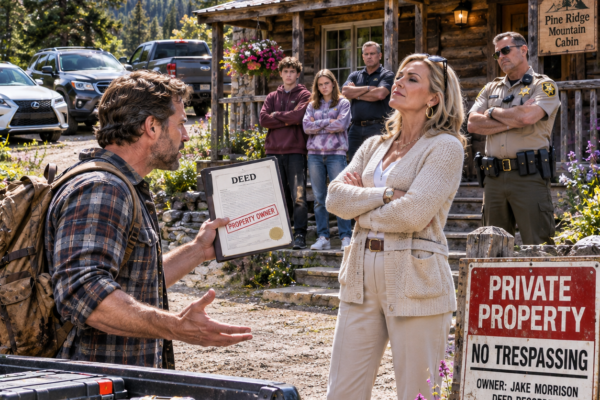
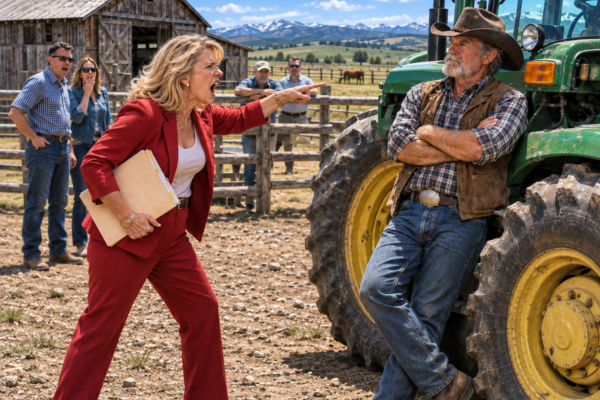
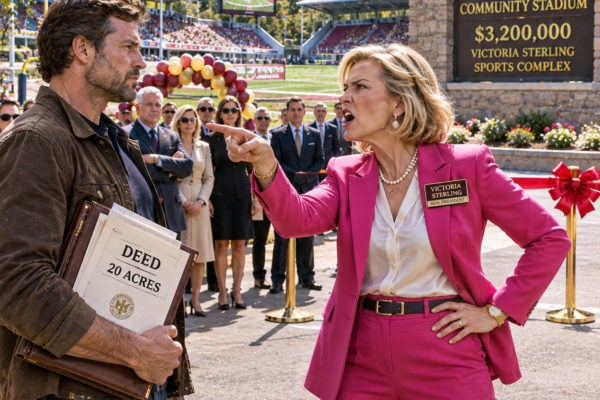
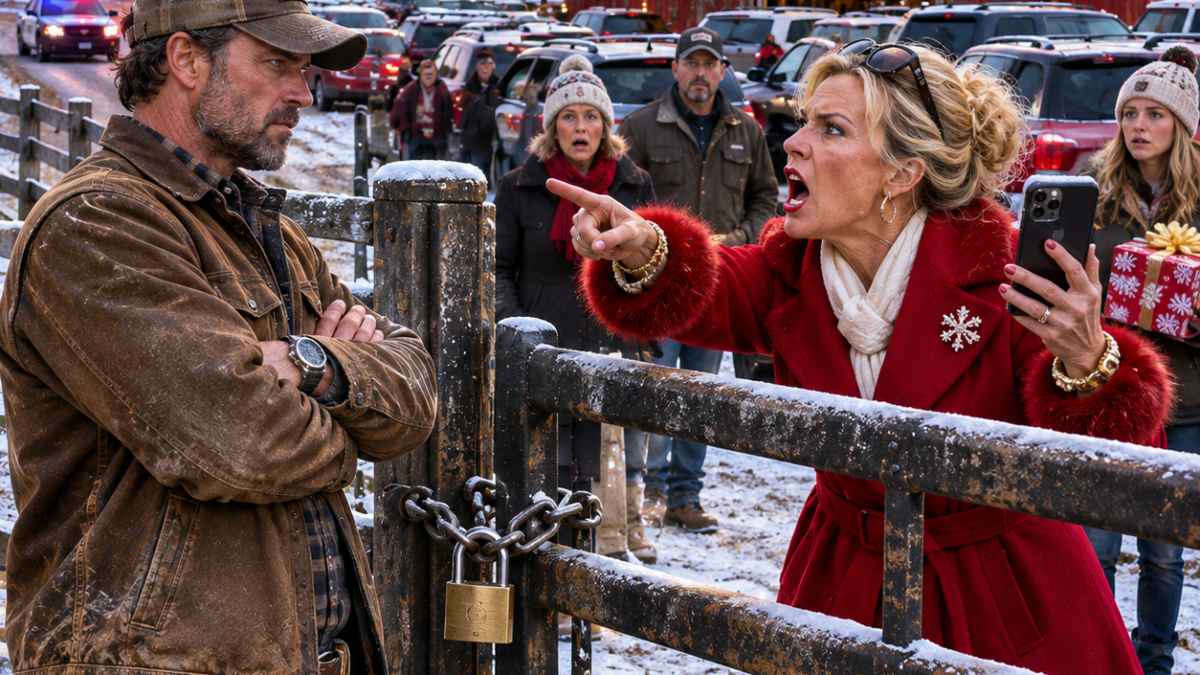
**“OPEN THAT DAMN GATE RIGHT NOW, DANIEL! TWENTY-EIGHT FAMILIES PAID TO PARK HERE, AND IF YOU THINK YOU CAN LOCK THEIR CARS INSIDE JUST BECAUSE THIS LAND HAS YOUR NAME ON IT, I’LL HAVE THE POLICE DRAG YOU AWAY IN HANDCUFFS!” HOA president Patricia Whitmore screamed on Christmas Eve, waving her phone beside the iron gate of my grandfather’s sixty-year-old Pennsylvania barn.**
**I had spent three weeks warning her that my eleven-acre property was not part of Evergreen Estates, but she ignored every letter, charged ahead with her Christmas event, and directed twenty-eight vehicles into my private gravel lot before I finally locked the gate to stop more cars from entering.**
**Then a police officer opened the brown envelope Patricia claimed gave her control of my barn, noticed that my grandfather had supposedly signed the agreement two years after his death, and asked a question that made her face turn white—because somebody had been using my family’s name to cover up a much larger property scheme.**
The lock clicked shut at exactly 4:23 on Christmas Eve.
I remember the sound.
Sharp.
Metal against metal.
Behind me sat twenty-eight cars, packed into a gravel clearing that had never been designed to accommodate that many vehicles.
Some were parked nose to nose.
Others stood beside my equipment shed.
A silver minivan had stopped so close to the barn doors that I couldn’t open them.
One driver had backed within inches of the two pine trees my grandfather and I planted when I was a boy.
Christmas music drifted from the Evergreen Estates clubhouse.
Children wearing Santa hats hurried along the sidewalk.
The sky was growing darker.
And Patricia Whitmore was screaming as though I’d personally canceled Christmas.
“YOU CAN’T DO THIS!”
I stepped away from the gate.
“I’m stopping more cars from coming onto my property.”
“YOU’VE TRAPPED EVERYBODY!”
“People can walk out, Patricia, and I’ll open the gate for any car leaving safely.”
She ignored that.
Instead, she lifted her phone and began recording.
“EVERYONE! LOOK WHAT THIS MAN HAS DONE!”
Several people turned toward us.
A father carrying a toddler stopped near the sidewalk.
Two women in Christmas sweaters approached the gate.
A man shouted that he needed to get home before dinner.
Patricia pointed at me.
“He agreed to provide parking, then changed his mind because he hates our neighborhood!”
I stared at her.
“I never agreed.”
“LIAR!”
“Patricia, you received my written refusal.”
“The HOA approved this arrangement!”
“Your HOA doesn’t own my barn.”
She stepped close enough that I could smell her expensive perfume.
“Daniel, you have no idea who you’re dealing with.”
I looked through the iron bars toward the cars.
PART2:
“Apparently, I’m dealing with somebody who thinks a neighborhood committee can take over private property by printing a parking map.”
Her face turned red.
Then she reached into her designer handbag.
For a moment, I thought she was looking for another phone.
Instead, she pulled out a thick brown envelope.
BROOKS PROPERTY AGREEMENT.
Those three words were printed across the front.
Patricia smiled.
“You should’ve cooperated while you had the chance.”
I looked at the envelope.
“What is that?”
“Proof.”
“Of what?”
“That your grandfather gave this community rights over the barn property.”
I felt something cold move through my chest.
“My grandfather died before Evergreen Estates existed.”
She shrugged.
“Old agreements don’t disappear just because somebody dies.”
“Let me see it.”
“No.”
“Then stop threatening me with it.”
Patricia leaned closer.
“By the time my lawyers finish with you, Daniel, that barn may not belong to you anymore.”
Before I could answer, a police cruiser turned onto the road.
Patricia immediately raised the envelope.
“OFFICER! HE’S HOLDING TWENTY-EIGHT CARS HOSTAGE!”
Officer James Sullivan stepped from the cruiser.
He was tall, gray-haired, and calm.
The kind of man who looked more interested in understanding a problem than winning an argument.
He examined the crowd.
Then the gate.
Then me.
“Who owns this property?”
“I do. Daniel Brooks.”
Patricia interrupted.
“The HOA has a recorded community access agreement!”
James raised one hand.
“Ma’am, I’ll speak with you in a moment.”
He turned back to me.
“Mr. Brooks, why is the gate locked?”
“To prevent additional vehicles from entering after I repeatedly refused permission for event parking.”
“Are you preventing anyone from leaving?”
“No. I’ll open it for an orderly exit.”
He nodded.
Then asked Patricia to show him her agreement.
She hesitated.
“They’re confidential HOA records.”
“Then I can’t evaluate what you’re claiming without seeing them.”
Patricia reluctantly opened the envelope.
She handed him several pages.
James studied the first one.
Then the second.
He frowned.
“When was this supposedly signed?”
“Years ago, when the original property arrangements were made.”
He looked up.
“By whom?”
“Walter J. Brooks.”
My grandfather.
James read the date.
Then asked whether Walter was still alive.
I answered.
“No, sir. He died March 22, 2007.”
Patricia immediately snapped.
“THAT DOESN’T CHANGE THE AGREEMENT!”
James examined the paper again.
“Mrs. Whitmore, this signature page is dated November 14, 2009.”
I looked at him.
“What?”
He turned the document slightly.
There it was.
My grandfather’s name.
A signature resembling his.
And a date more than two years after we buried him.
For several seconds, I couldn’t speak.
Then a woman approached holding a little boy’s hand.
The child was crying.
His cheeks were flushed.
“Sir, I’m sorry to interrupt,” she told me. “My son isn’t feeling well. I need to get him home.”
I looked from her to the gate.
Then at Patricia.
The mysterious agreement could wait.
The child couldn’t.
I pulled my keys from my pocket.
“Let’s get your car out.”
Patricia shouted something behind me.
I didn’t listen.
I unlocked the gate and swung both iron halves open.
Then I asked Brian Miller, a neighbor who had been helping me all afternoon, to assist with directing traffic.
Officer Sullivan helped keep the road clear.
The little boy’s mother had parked near the rear of the lot.
Other cars blocked her.
We asked drivers to move carefully.
One vehicle at a time.
No rushing.
No shouting.
No unnecessary risks.
Twenty minutes later, the mother was able to leave.
She lowered her window.
“Thank you.”
“Take care of your boy.”
She smiled weakly and drove away.
Then we continued moving the remaining vehicles.
Some drivers were angry.
Most were simply confused.
One man showed me the official Evergreen Estates parking map.
Another showed an email claiming I’d approved the arrangement.
An older couple apologized when they realized the lot belonged to me.
I told them they hadn’t done anything intentionally wrong.
They’d trusted what the HOA told them.
By the time the twenty-eighth car left, darkness had settled over Maple Hollow.
The barn lights glowed against the snow.
Christmas music still drifted across the road.
Officer Sullivan stood beside my open gate.
He looked toward Patricia.
“Mrs. Whitmore, this document needs to be verified through the proper records.”
She folded her arms.
“The HOA has every right to use that property.”
“That hasn’t been established here.”
He turned toward me.
“Mr. Brooks, keep your paperwork and any recordings.”
“I will.”
Then he told Patricia she should stop directing vehicles onto disputed private property without permission or established legal authority.
Her expression became dangerously calm.
When the officer walked toward his cruiser, she stepped close to me.
“You humiliated me in front of the entire neighborhood.”
“I spent three weeks asking you not to do this.”
She pointed toward my barn.
“Enjoy looking at that old building while you still can.”
Then she climbed into her black SUV and drove away.
I stood beside the gate watching her taillights disappear.
Twenty-eight cars were gone.
Nobody was trapped.
Nobody had been injured.
But a woman I’d never invited onto my property had just waved a document carrying my dead grandfather’s signature.
And I was beginning to understand that Christmas parking might have been the smallest part of what she wanted.
My name is Daniel Brooks.
I was forty-two when this happened.
I lived outside Maple Hollow, Pennsylvania, in the same farmhouse where I’d spent most of my childhood.
I wasn’t wealthy.
I repaired farm equipment for a living.
Tractors.
Mowers.
Generators.
Hydraulic systems.
Anything local farmers brought to my workshop because replacing it cost more than fixing it.
My grandfather, Walter Brooks, taught me the trade.
He also built the old red barn behind our house.
Nearly sixty years earlier, he raised most of it himself with help from neighbors.
Eleven acres surrounded the farmhouse.
A gravel driveway ran from the county road toward the barn.
Behind it stood an equipment shed, a few old fruit trees, and the small pine trees Grandpa and I planted together.
Every Christmas, he hung lights along the barn doors.
Then we’d sit inside drinking hot chocolate while he told stories about helping neighbors through hard winters.
One year, he brought a stranded family into the barn during a snowstorm and repaired their truck.
Another Christmas, he gave away nearly all the firewood he’d cut because several elderly neighbors couldn’t afford heating fuel.
Grandpa believed kindness was something you practiced.
Not something you announced.
But he had another rule.
“Daniel, being generous doesn’t mean allowing somebody to take what’s yours.”
I didn’t fully appreciate those words until Patricia Whitmore entered my life.
When Grandpa died in 2007, he left me the farmhouse, barn, and eleven acres.
Some people encouraged me to sell.
Developers were buying farmland.
Maple Hollow was growing.
But I couldn’t imagine handing strangers the place where my happiest childhood memories had been made.
I repaired the barn roof.
Repainted the doors red.
Replaced broken windows.
And kept his workshop much as he’d left it.
Across the road lived Linda Parker.
Most people called her Mrs. Parker.
She was a kind elderly widow who’d known Grandpa for decades.
She brought me apple pie every Thanksgiving.
I cleared snow from her driveway every winter.
After her husband died, we sometimes shared Christmas dinner.
She had become part of my family.
Then Evergreen Estates appeared.
Developers bought the open land east of my property.
Within two years, it was filled with large houses, manicured lawns, wide sidewalks, and decorative stone walls.
The neighborhood had its own homeowners association.
That didn’t bother me.
Most residents were friendly.
Brian and Sarah Miller lived near the clubhouse with their little daughter, Sophie.
Sophie loved the red barn.
She once drew it surrounded by horses, even though I hadn’t kept horses there in years.
I taped the drawing to my refrigerator.
Rachel Foster, another resident, had two young children.
One afternoon, I helped jump-start her car when her battery died.
She offered money.
I refused.
That was how neighbors were supposed to treat one another.
Then Patricia became HOA president.
She lived in the largest house in Evergreen Estates.
Tall white columns.
Three-car garage.
Perfect lawn.
Black luxury SUV.
She wore designer clothes and sunglasses even when the weather didn’t justify them.
The first time she visited, I was repairing a mower beside the barn.
She walked onto my driveway without introducing herself.
Then stared at the building.
“Why is that barn painted such an unpleasant color?”
I looked up.
“Red?”
“Our community prefers softer architectural colors.”
I smiled.
“Grandpa preferred red.”
She didn’t smile back.
“Your building affects the neighborhood’s appearance.”
“My property isn’t part of Evergreen Estates.”
“Nearby homeowners still have standards.”
“I’m sure they do.”
“Then you should respect them.”
“I respect my neighbors. But your HOA doesn’t control this barn.”
Her expression changed.
A week later, the letters began.
Paint violations.
Tractor complaints.
Gravel driveway complaints.
One notice warned me about noisy chickens.
I hadn’t owned chickens in five years.
I wrote polite replies explaining that my property wasn’t subject to Evergreen Estates covenants.
Patricia continued sending notices.
Then December arrived.
One morning, a white SUV stopped beside my fence.
Harold Bennett, an HOA board member, took pictures of my barn and driveway.
Later, a woman appeared measuring the width of my gravel entrance.
When I asked what she was doing, she said Patricia was preparing traffic arrangements for a neighborhood Christmas event.
I told her the property was private.
She left without answering.
Three days later, the invitation arrived.
EVERGREEN ESTATES CHRISTMAS CELEBRATION.
Christmas Eve.
Music.
Santa Claus.
Food.
Children’s games.
At the bottom:
ADDITIONAL PARKING AVAILABLE AT BROOKS BARN.
I read those words three times.
Nobody had asked me.
Nobody had offered to rent the lot.
Nobody had even called.
I contacted Janet, the HOA secretary.
She sounded surprised.
“Mr. Brooks, Patricia told us the arrangement was settled.”
“It isn’t.”
“I’ll let her know.”
Then I visited Patricia’s office.
She sat behind a desk decorated with miniature Christmas trees.
I placed the invitation in front of her.
“Remove my property from this.”
She barely looked at it.
“We’re expecting more than a hundred guests.”
“Then you’ll need another parking area.”
“Your gravel lot is perfect.”
“It’s private.”
“Only for a few hours, Daniel.”
“No.”
She leaned back.
“Why are you being so selfish?”
I stared at her.
“I’ve helped your neighbors with repairs, cleared snow, and offered assistance whenever I could.”
“Then help us now.”
“Ask me to help. Don’t announce that you’ve taken my parking lot.”
She waved one hand.
“The invitations are already printed.”
“Then send a correction.”
“That would be embarrassing.”
“More embarrassing than inviting people to park somewhere you don’t have permission?”
She looked furious.
I suggested the church lot.
The shopping center near the highway.
The public parking area by the library, if the town approved.
She rejected every option.
Then told me that people who refused to support their communities often regretted it.
I went home and installed two signs.
PRIVATE PROPERTY.
NO EVENT PARKING WITHOUT OWNER PERMISSION.
I also inspected the old iron gate.
Grandpa built it years earlier.
The hinges were still strong.
The lock worked.
I checked everything because I suspected Patricia wouldn’t accept my refusal.
Then Mrs. Parker came over with cookies.
When I explained the problem, she sighed.
“Patricia asked if people could park in my driveway too.”
“What did you say?”
“No. My knees are bad enough without strangers walking across icy concrete.”
“What did she say?”
“She called me unhelpful.”
I shook my head.
Mrs. Parker took a sip of tea.
“Some people confuse kindness with obedience.”
I laughed softly.
“Grandpa used to say something similar.”
“He learned it the hard way.”
I didn’t ask what she meant.
I wish I had.
A week before Christmas, Brian called.
Patricia had announced during an HOA meeting that barn parking was confirmed.
Residents were receiving maps.
Volunteers had been assigned.
Parking attendants had been hired.
I wrote another notice.
Delivered one copy to Janet.
Mailed another to Patricia.
Sent copies to the HOA board.
Janet signed to confirm receipt.
I wanted nobody to claim there had been a misunderstanding.
Then Rachel thanked me for providing Christmas parking when I helped restart her car.
I explained that I hadn’t approved it.
She looked shocked.
“Patricia said you had.”
“She’s wrong.”
Rachel promised to warn her friends.
I checked Evergreen Estates’ public website that evening.
There was a Christmas parking map.
My barn was marked with a large green letter P.
Arrows directed cars through my driveway.
The map even showed vehicles circling behind my equipment shed.
Someone had spent considerable time designing a parking system for property the HOA didn’t own.
I saved screenshots.
Sent one final refusal.
Patricia replied that changing the plan would cause confusion and that she expected me to behave like a responsible neighbor.
On December 23, someone placed a CHRISTMAS EVENT PARKING sign on my fence.
I removed it.
Then a delivery truck arrived carrying orange traffic cones and folding parking signs.
The driver showed me a work order listing my barn.
I explained that the HOA had no permission.
He apologized and left.
Later, Janet admitted Patricia had continued telling volunteers the agreement was settled.
“Have you seen a signed agreement?” I asked.
“No.”
“Then why is she saying that?”
Janet was quiet.
“Because nobody wants to argue with her.”
That evening, I walked through the barn.
White Christmas lights glowed along the red doors.
A wooden star Grandpa made years earlier hung above the entrance.
Snow covered the two pine trees.
I stood there thinking about the families expecting a happy Christmas celebration.
I didn’t want to disappoint them.
But I couldn’t let Patricia decide that private property became community property whenever she needed convenient parking.
Christmas Eve arrived cold and gray.
At three-fifteen, the first car turned into my driveway.
I stopped it politely.
The driver apologized and left.
Several others followed.
Brian came to help.
We explained the situation.
Directed people back toward the clubhouse.
Most understood.
Then Patricia arrived.
Red Christmas coat.
Black SUV.
Official-looking HOA badge.
She stepped out and began screaming that I was ruining the event.
I showed her the written notices.
She waved them away.
Then she turned toward a waiting car.
“PARKING IS OPEN!”
The driver hesitated.
I raised my hand.
“Sir, this is private property.”
Patricia stepped between us.
“I’M THE HOA PRESIDENT!”
The family looked confused.
Two children sat in the back wearing Christmas sweaters.
I didn’t want to frighten them.
I asked their father to wait.
Patricia ignored me.
She waved him toward the gravel lot.
Then another car.
And another.
Brian began recording.
I called the police non-emergency line.
The dispatcher advised me not to stand in front of moving vehicles.
I stayed clear.
But I continued telling drivers they didn’t have permission.
By four-twenty, twenty-eight vehicles filled my lot.
One minivan nearly struck a fence post.
Another driver backed toward the equipment shed.
Cars were squeezing past one another.
Children were walking between them.
I realized that if Patricia continued directing more cars inside, somebody could get hurt.
So I closed the entrance.
Not to hold people hostage.
Not to punish Christmas guests.
To stop more cars entering until the situation could be resolved safely.
Then Patricia began screaming.
Then the police arrived.
And then she produced the brown envelope containing a document my dead grandfather supposedly signed in 2009.
On Christmas morning, I sat alone in the kitchen staring at Grandpa’s photograph.
He stood outside the barn holding a wooden sled.
Snow covered his boots.
He looked happy.
I wanted to search every old document immediately.
But Mrs. Parker was coming for dinner.
I wasn’t going to let Patricia steal that holiday too.
We ate roast chicken, mashed potatoes, green beans, and apple pie.
Mrs. Parker told stories about Grandpa rescuing a raccoon during a snowstorm.
We laughed.
For a few hours, the dispute felt far away.
After she left, I opened Grandpa’s old filing boxes.
Receipts.
Tax records.
Letters.
Surveys.
Then I found a folder marked EAST FIELD.
Inside was correspondence about a proposed sale of a narrow strip beside the old farm road.
One handwritten note caught my attention.
NO PERMANENT ACCESS RIGHTS WITHOUT A SEPARATE SIGNED AGREEMENT.
It was Grandpa’s handwriting.
Then I found an old Christmas card.
Signed William J. Brooks.
A distant relative.
I didn’t understand its importance yet.
But I kept it.
The next morning, Brian called.
Patricia had published a long statement accusing me of deliberately trapping twenty-eight families’ cars.
She claimed elderly residents had been left freezing.
Children had been terrified.
And the HOA had needed to rescue people from my cruel behavior.
She left out the fact that I’d repeatedly refused permission.
Left out the official parking emails.
Left out the volunteers being told to ignore me.
And left out my helping every vehicle leave safely.
I wanted to respond angrily.
Instead, I wrote a short factual statement.
My property was private.
I never approved event parking.
I closed the gate to prevent additional vehicles from entering.
I reopened it for safe departures.
The police had helped everyone leave.
That was all.
Then the evidence began arriving.
Rachel sent the HOA email stating I’d approved parking.
It was dated after Janet received my written refusal.
A resident named Robert Hayes sent a video recorded by his teenage son.
The footage showed Patricia directing cars into my driveway while I clearly told her to stop.
Brian sent pictures of the overcrowded lot.
Janet supplied meeting notes and parking instructions.
For the first time, Patricia’s version of events could be compared with evidence instead of rumors.
I hired Rebecca Collins.
She was an experienced local property attorney.
She studied the records and asked one question.
“Daniel, did you ever sign a parking agreement?”
“No.”
“Did your grandfather grant Evergreen Estates access?”
“He died before it was built.”
Rebecca nodded.
“Then we need to examine exactly what Patricia is claiming.”
She obtained a copy of the document from the HOA attorney’s correspondence.
SHARED ACCESS AND COMMUNITY USE AGREEMENT.
It supposedly allowed limited use of land near the old farm road.
But it didn’t clearly mention my barn.
Didn’t identify the large gravel lot.
And didn’t authorize Christmas event parking.
Then Rebecca showed me the signature page.
Walter J. Brooks.
November 14, 2009.
My grandfather died March 22, 2007.
I brought his death certificate.
Rebecca compared the dates.
She didn’t immediately accuse anybody of forgery.
There could be clerical errors or improperly copied pages.
But the contradiction was serious.
Then she showed me the map attached to the agreement.
The shaded section covered a narrow strip near the road.
Not the barn.
Not the equipment shed.
Not the parking area.
“Even if a limited right existed here,” Rebecca explained, “it wouldn’t automatically authorize twenty-eight vehicles to occupy the rest of your property.”
I looked at the signature again.
It resembled Grandpa’s.
But the letter B looked wrong.
His signature usually began with a broad curve.
This one looked sharp and crowded.
I felt sick.
Somebody had put his name on a document he’d never told me about.
And Patricia was using it to threaten the place he’d trusted me to protect.
Then I met Frank Dawson.
Frank was a retired surveyor who’d worked in Maple Hollow for more than thirty years.
He recognized Grandpa’s name.
Years earlier, Walter hired him to mark the East Field boundary.
Frank remembered a disagreement about a narrow strip of land connecting two old farm roads.
A neighboring businessman wanted to purchase or gain access across it.
Grandpa refused permanent rights.
Frank helped locate an old survey map.
The original line ended well before my barn’s gravel lot.
Even if an old farm access agreement existed, it concerned a different area.
Then Mrs. Parker mentioned something strange.
Grandpa had once helped Patricia’s father, Charles Whitmore, during a snowstorm.
Charles had worked with local farmers and developers.
Mrs. Parker remembered him borrowing equipment.
But she didn’t explain the full connection.
At the time, I assumed it was an old family story.
Then a real estate consultant named Victor Lang approached me at a diner.
He’d been working with Patricia.
Victor offered to buy my barn and surrounding land for an unnamed investor.
The price was far below what I considered reasonable.
I refused.
He leaned forward.
“Property disputes can become very expensive, Daniel.”
“Then your client should stop manufacturing one.”
Victor smiled thinly.
“Sometimes selling an old building is easier than fighting over it.”
I stood.
“The barn isn’t for sale.”
He watched me leave.
That evening, I called Rebecca.
She told me not to meet Victor again without legal guidance.
Then Janet came to my house carrying a cardboard box.
Inside were HOA emails, parking plans, and meeting records.
One message caught Rebecca’s attention.
Patricia had asked Victor about using an old East Field access agreement to establish future community rights over the barn property.
The message was dated weeks before the Christmas celebration.
That changed everything.
Patricia hadn’t simply needed extra parking.
She had been researching how the HOA might claim access to my land.
Then Janet found a folder referencing an older Brooks signature page.
A handwritten note said it should be reused in preparing the final agreement.
She photographed the note.
Then called me.
“Daniel, I think somebody knew those documents weren’t right.”
Before she could explain more, I heard Patricia’s voice in the background.
Janet hung up.
An hour later, an unknown number sent me a photograph of the disputed signature page.
The image included a tiny ink stain shaped like a crooked star.
Then another message arrived.
CHARLES WHITMORE KEPT THE ORIGINAL SIGNATURE FROM A DIFFERENT DEAL.
THE AGREEMENT WAS CHANGED.
DON’T LET THEM DESTROY THE OLD PAPERS.
I forwarded everything to Rebecca.
Then my security camera sounded an alert.
A dark pickup had stopped beside my locked gate.
Two men climbed out.
One carried a long metal tool.
The other held a flashlight.
I called the police.
Then watched the camera feed.
The men broke the lock.
Opened the gate.
Drove toward the barn.
And forced the main door.
A white van stopped near the road.
I stayed inside as dispatch instructed.
On camera, the intruders went straight toward Grandpa’s workshop shelves.
Then one emerged carrying his old metal document box.
I recognized it immediately.
I’d always assumed it contained spare keys and outdated receipts.
Now two strangers were trying to steal it.
Before they reached their pickup, police lights appeared.
Officer Sullivan and another deputy entered the driveway.
One intruder surrendered.
Another ran behind the barn.
The white van escaped.
Sullivan asked whether I knew why anyone would want the box.
I told him about the land dispute.
He recovered a printed map showing my barn’s entrance, workshop, and document storage location.
This wasn’t a random burglary.
Somebody had marked exactly where to search.
Then Sullivan told me one detained man claimed Victor Lang had arranged the visit.
Investigators needed to verify the statement.
But Victor’s name was now connected to more than a low purchase offer.
The white van was later found abandoned behind an old warehouse.
That same night, police recovered a photograph showing Grandpa standing beside a younger Charles Whitmore.
Written on the back were Grandpa’s words:
CHARLES CAME BACK ABOUT THE PAPERS. I TOLD HIM NO.
The mystery was becoming clearer.
Charles had wanted the East Field.
Grandpa refused.
Somebody later used his signature to support a different story.
And now Victor was allegedly trying to recover the originals.
The following morning, county records specialist Susan Mitchell visited.
A legitimate building inspector, David Mercer, arrived around the same time after receiving a report about the damaged barn door.
Patricia appeared behind him.
She demanded that the barn be declared unsafe.
David checked the damage.
He explained he couldn’t determine ownership rights and had no reason to condemn the entire building based on what he saw.
Patricia became furious.
Then Susan showed me the county records.
The agreement Patricia relied on had been filed using a reference number originally assigned to an unfinished land transaction.
The original deal involved Charles Whitmore.
A purchase of a narrow East Field access strip.
Grandpa had refused to complete it.
The signature page in Patricia’s agreement closely matched an old acknowledgment form.
Even the tiny crooked-star ink stain appeared in the same place.
The original signature was dated 2006.
The supposed community agreement was dated 2009.
Someone appeared to have reused the earlier page.
Susan also showed me a handwritten letter Grandpa sent Charles before his death.
He refused to sell the East Field because the proposed access road would bring heavy traffic too close to the barn.
He offered an alternative route.
Charles rejected it because it cost more.
I read the letter with tears in my eyes.
For weeks, Patricia had used Grandpa’s name to frighten me.
Now his real words were telling the opposite story.
He hadn’t given the land away.
He’d tried to protect it.
Then another surprise arrived.
Janet found witness names attached to the old papers.
Frank Dawson.
Another local man.
And Linda Parker.
My elderly neighbor.
The woman who had eaten Christmas dinner at my table.
I called her.
For a long time, she said nothing.
Then she began crying.
“Daniel, your grandfather asked me to keep something safe.”
“What?”
“Papers about Charles Whitmore.”
“Why didn’t you tell me?”
“Because Walter hoped nobody would ever need them.”
I closed my eyes.
“What happened back then?”
She took a shaky breath.
“Charles tried to sell access he didn’t own.”
Before she could continue, someone knocked at her door.
A man’s voice shouted.
“OPEN UP! WE KNOW YOU HAVE THE ENVELOPE!”
Mrs. Parker gasped.
The phone fell.
I heard movement.
Then silence.
I called 911.
Within minutes, police cars arrived across the road.
An ambulance followed.
I watched from my kitchen window.
A tall figure appeared briefly at Mrs. Parker’s door.
Then the lights went out.
I heard a crash.
My heart pounded.
But I stayed inside as the dispatcher instructed.
Deputy Michael Harris eventually approached my house.
He told me Mrs. Parker was alive.
Conscious.
Frightened.
Receiving medical attention.
I nearly collapsed with relief.
Someone had searched her living room.
The intruder demanded a yellow envelope bearing Grandpa’s name.
Mrs. Parker had been protecting it for years.
Then an unknown number sent me a photograph.
A yellow envelope lay on the passenger seat of a car.
FOR DANIEL BROOKS.
The message said:
COME ALONE IF YOU WANT TO KNOW WHY PATRICIA REALLY WANTS YOUR BARN.
I forwarded it to the police and Rebecca.
I wasn’t going anywhere alone.
Then my phone rang.
Thomas Brooks.
Grandpa’s younger brother.
He’d moved to Ohio years earlier.
His voice sounded weak but urgent.
“Daniel, Walter left two sets of documents.”
I sat down.
“One concerned the original East Field refusal.”
“And the other?”
“Charles’s development business.”
Thomas explained that years earlier, Charles Whitmore had purchased land around an old warehouse outside Maple Hollow.
He planned a commercial development.
But the parcel lacked the direct access he wanted to the highway.
Grandpa’s East Field was the cheapest route.
Charles tried to buy it.
Walter refused.
Then Charles reportedly represented to investors that he had secured access anyway.
Grandpa discovered the problem and preserved evidence.
Thomas said the second set of papers was hidden somewhere inside the old barn.
Near Grandpa’s workbench.
I looked through the kitchen window.
The red barn stood dark beyond the snow.
Then my security camera sent another alert.
Someone was inside.
A figure wearing a dark coat moved toward Grandpa’s workbench.
I called the police.
Then watched the live video.
The figure searched the shelves.
Opened drawers.
Moved tools.
Then turned toward the camera.
For one second, the flashlight illuminated part of the person’s face.
Victor Lang.
I recognized him.
Then the screen went black.
A loud crash echoed across the yard.
Moments later, orange light appeared through a small barn window.
Smoke rose toward the roof.
Fire.
I shouted into the phone.
“MY BARN’S ON FIRE!”
The dispatcher sent firefighters.
Police were already nearby because of the incident at Mrs. Parker’s house.
I remained outside the danger area, watching flames spread through the building Grandpa had spent his life maintaining.
Then my phone rang.
Patricia.
Her voice sounded frightened.
“Daniel, listen to me.”
“What did you do?”
“Don’t let anyone open the old workbench.”
I stared toward the flames.
“What?”
“Victor found out where Walter kept the papers.”
“Why are you telling me this?”
“Because something dangerous is inside.”
Then came a deafening bang.
A window shattered.
Fire erupted through the roof.
And the phone slipped from my hand.
For one terrible moment, I thought the entire barn was going to disappear.
The wooden star above the doors fell.
Sparks shot into the winter air.
I could hear sirens approaching.
Officer Sullivan arrived first.
He ordered me away from the building.
I told him Victor might still be inside.
He radioed firefighters immediately.
Captain Robert Ellis arrived with the first engine.
His crew worked from safe positions to contain the flames and protect the nearby equipment shed.
Then a figure stumbled from the rear entrance.
Dark coat.
Face covered in soot.
Victor Lang.
He fell to his knees beside the snow-covered fence.
Firefighters and paramedics moved toward him once the area was safe.
Sullivan approached after medical personnel secured him.
Victor’s hands were burned.
His clothing was damaged.
He looked terrified.
But he was alive.
The fire spread through Grandpa’s workshop.
I stood behind the safety barrier watching the room where he’d taught me everything begin to burn.
I wanted to run inside.
Not for the tools.
For the photographs.
The workbench.
The old papers.
Everything that had belonged to him.
Captain Ellis stopped me.
“Daniel, nobody goes into that building until it’s safe.”
I nodded.
I knew he was right.
Then the second floor section collapsed.
A tremendous crash shook the yard.
For several minutes, I couldn’t speak.
Firefighters contained the fire before it reached the farmhouse.
But the workshop section suffered extensive damage.
The barn’s main frame remained standing.
Some walls survived.
The roof over the western stalls was badly damaged.
The old workbench disappeared beneath burned timber.
When the flames were finally controlled, I sat on the farmhouse steps staring at the wreckage.
Grandpa’s Christmas lights were gone.
The wooden star was gone.
And the place where he’d spent thousands of hours working had been torn apart by somebody else’s greed.
Then Officer Sullivan approached.
“Daniel, investigators need to speak with you.”
I looked up.
He told me Victor had been found carrying a small folder and several property maps.
Fire investigators believed the blaze had been intentionally started, but they needed a full examination before determining exactly what happened.
I told Sullivan about Patricia’s phone call.
Her warning concerning the workbench.
He wrote down every word.
Then asked whether I’d saved the call record.
I had.
Later, Patricia agreed to speak with investigators.
At first, she claimed she knew nothing about the fire.
Then phone records showed repeated calls between her and Victor that evening.
Her story changed.
She admitted Victor had told her he intended to retrieve documents from my barn.
She said she believed those papers could expose serious problems with the old access agreement.
But she insisted she hadn’t authorized him to start a fire.
Investigators would have to determine what was true.
I wasn’t going to invent certainty where evidence didn’t exist.
All I knew was that Victor had entered my barn without permission.
The building burned.
And Patricia knew enough about his plans to warn me.
Then Mrs. Parker asked to see me.
She was recovering at home with a relative staying beside her.
When I entered, she began crying.
“I’m sorry, Daniel.”
I sat beside her.
“For what?”
“For keeping Walter’s papers secret.”
“You were protecting them.”
She shook her head.
“I should’ve told you years ago.”
Then she explained the yellow envelope.
Years earlier, Charles Whitmore had been developing a warehouse property east of Maple Hollow.
He’d promised buyers and investors an access route across Grandpa’s East Field.
But Grandpa never agreed.
Charles received a signature on a preliminary acknowledgment form.
That form confirmed only that Walter had reviewed an offer.
Not that he’d accepted it.
Later, Charles’s company began using documents suggesting the sale had been completed.
Grandpa objected.
Mrs. Parker witnessed one of those meetings.
Frank Dawson had surveyed the land.
Charles eventually abandoned the development after financial problems.
But Walter feared the false access claim could return someday.
He kept originals.
Correspondence.
Maps.
Signed refusals.
And evidence showing the proposed transaction never closed.
He placed one set in safekeeping.
Another in the barn.
Then asked Mrs. Parker to preserve a yellow envelope for me if somebody ever tried to claim the land.
“Why didn’t he give it to me before he died?” I asked.
Mrs. Parker looked down.
“He didn’t think you’d need it. And he didn’t want you spending your life fighting an old dispute that seemed finished.”
I understood.
Grandpa had hoped the problem would disappear.
He hadn’t imagined Charles’s daughter would revive it years later.
Then Mrs. Parker showed me a copy she’d kept in a separate drawer.
Inside were letters from 2006.
Grandpa explicitly refused permanent access across the East Field.
One letter warned Charles not to advertise access rights he hadn’t purchased.
Another included a survey confirming the barn lot was outside the proposed transaction.
Then came a letter from Charles’s attorney acknowledging that the purchase had not been completed.
I stared at that page.
There it was.
The truth.
Clear.
Written.
Dated.
And completely inconsistent with the agreement Patricia claimed gave Evergreen Estates access.
Mrs. Parker took my hand.
“Walter wanted you to know he never gave away that land.”
I felt tears fill my eyes.
“Thank you.”
She squeezed my hand.
“Promise me something, Daniel.”
“What?”
“Don’t let what they’ve done make you stop being kind.”
I looked toward her window.
Across the road, the damaged barn stood beneath the winter sky.
“I won’t.”
Then I added:
“But I’m going to protect what Grandpa left me.”
She smiled.
“That’s exactly what he’d want.”
The investigation continued.
Victor’s burned clothing and the items recovered from the barn became evidence.
The property maps showed the workbench location.
Records linked him to the private company that had tried purchasing my land.
Investigators also recovered files from the abandoned warehouse.
The old building had been used to store documents connected to Whitmore Development Holdings.
Among those records were the original proposed East Field sale papers.
No completed sale.
No permanent access agreement signed by Grandpa.
No document conveying ownership of my barn.
Then investigators examined the 2009 agreement.
The signature page matched the preliminary 2006 acknowledgment.
The crooked-star ink stain appeared in the same place.
But the agreement’s other pages had been created later.
The signature had been reused.
And the filing reference number originally belonged to the unfinished transaction.
The evidence supported a deliberate effort to make an incomplete deal look completed.
The county’s records review and the court proceedings addressed the improper filing.
The supposed broad community-use agreement couldn’t establish the rights Patricia claimed.
And even the older proposed access strip didn’t include my barn’s parking lot.
Rebecca showed me the revised property record.
Then looked up.
“Daniel, your grandfather’s property wasn’t transferred.”
I closed my eyes.
For weeks, I’d feared losing the barn.
Now the truth was documented.
The parking dispute had exposed something far more serious.
Charles’s old development company had used a false appearance of access to support its business interests.
Years later, Patricia and Victor had tried to turn those questionable papers into control over the barn property.
Then Rebecca uncovered the financial motive.
Whitmore Development Holdings had been revived through a successor company.
Victor held an ownership interest.
Patricia had a financial connection through another business.
Together, they hoped to convert the old warehouse property and nearby land into an event and commercial development.
The project needed a convenient entrance.
My East Field was the cheapest route.
The barn stood near the area they wanted to control.
If they could establish community access through years of apparent use, they believed they would gain leverage over me.
The Christmas parking event had been part of that strategy.
A crowded lot.
Official HOA maps.
Parking attendants.
Community event records.
Photographs.
Twenty-eight vehicles.
One afternoon of use that could later be presented as evidence the association had long-standing access rights.
Patricia hadn’t merely wanted somewhere to park Christmas guests.
She wanted documentation showing the HOA operating my barn property.
Then she planned to use the disputed agreement to pressure me into selling.
Victor’s low offer at the diner had been part of the same effort.
The more expensive and frightening the property dispute became, the more attractive selling might seem.
That was their calculation.
They hadn’t considered that Grandpa’s original records would survive.
Or that residents would record Patricia ignoring my refusal.
Or that Janet would provide the HOA’s emails.
Or that the supposed signature date would expose the document’s impossible history.
The HOA board held an emergency meeting.
This time, Patricia didn’t control the room.
Janet presented the parking correspondence.
Brian showed the video from Christmas Eve.
Several residents confirmed they’d received emails claiming I had approved parking.
Rachel explained that I’d warned her days before the event.
Then Rebecca presented the relevant public records and explained why the claimed access rights were disputed.
People were furious.
Not because they’d had to park somewhere else.
Because they’d trusted Patricia.
She’d used their Christmas celebration as part of a private property strategy.
Some HOA funds had been spent on consultants and legal work connected to the disputed agreement.
Residents demanded a financial review.
Several board members said they hadn’t known about Patricia’s private interest in the proposed development.
Thomas Reed, a retired school principal who lived near the clubhouse, stood and addressed the room.
“An HOA exists to manage property the community actually owns.”
He looked toward Patricia.
“It does not exist to manufacture rights over somebody else’s barn.”
Several homeowners applauded.
Patricia tried interrupting.
But people kept asking questions.
Why had she sent parking invitations after Daniel refused?
Why had she hidden the agreement?
Why did the signature date come after Walter Brooks died?
Why had Victor tried purchasing the barn through an unnamed buyer?
And why were people connected to the disputed records involved in a nighttime break-in?
Patricia refused to answer some questions.
Others she blamed on Victor.
The board proceeded with the required steps to remove her from leadership.
An independent review followed.
The HOA stopped claiming access to my barn.
It also stopped spending association funds on Patricia’s private development dispute.
Victor’s legal troubles became far more serious.
Evidence connected him to the attempted document theft and the fire.
He eventually faced criminal proceedings.
He couldn’t explain away the late-night entry as an ordinary property inspection.
There was no valid authorization.
No reason to break my gate.
No reason to enter my grandfather’s workshop after midnight.
And no lawful basis for attempting to remove private records.
The fire investigation concluded that the blaze had been deliberately set.
Victor eventually admitted responsibility through a plea agreement.
He also provided information about the disputed access papers.
Patricia’s involvement was examined separately.
Investigators found evidence that she knowingly used the questionable agreement to pressure me and misrepresent access rights.
They also examined her communications with Victor and the attempts to obtain my grandfather’s records.
Not every allegation resulted in the same legal outcome.
But the civil proceedings, HOA review, and related enforcement actions made one fact unmistakable.
Patricia had no right to turn my barn into community parking.
And the documents she’d used to threaten me couldn’t lawfully transfer my property.
Rebecca helped me pursue compensation for the damage.
The broken gate.
Damaged fence.
Scratches to the barn.
The workshop fire.
Destroyed equipment.
Cleanup.
Repair costs.
I wasn’t interested in making innocent Evergreen residents pay for Patricia’s private ambitions.
The claims were addressed against the responsible parties and applicable coverage through the proper process.
The legal proceedings took time.
Not everything was resolved in one hearing.
Not every dollar arrived immediately.
But I had enough support to begin rebuilding.
Frank helped me confirm the boundary markers again.
The East Field remained mine.
The barn lot remained mine.
The farmhouse remained mine.
And the old iron gate was still where Grandpa built it.
We replaced its damaged lock.
The workshop required far more work.
Several old tools were beyond repair.
The roof over one section had to be rebuilt.
The main frame was inspected carefully.
Some original timbers survived.
Others had to be replaced.
Then, during cleanup, a worker discovered something beneath the burned workbench.
A small steel compartment.
Its exterior was damaged by heat.
But inside was a second protective container.
The contents weren’t perfectly preserved.
Several papers had suffered smoke and water damage.
Yet many remained readable.
Grandpa’s handwriting covered one envelope.
DANIEL — IF YOU EVER NEED THIS.
I stood in the workshop doorway holding it with trembling hands.
Rebecca was beside me.
We had waited until investigators cleared the area and the materials could be properly documented.
Inside were copies of the original access discussions.
A survey.
Letters from Charles’s attorney.
And a personal note from Grandpa.
I unfolded it carefully.
He wrote that he’d refused Charles Whitmore’s proposal because the road would bring unnecessary traffic close to the barn.
He believed the farm deserved peace.
He also believed that a man should never sell or give away something precious simply because somebody richer wanted it.
Then came a paragraph addressed to me.
He said he hoped I’d grow into a kind man who helped his neighbors.
But he also hoped I’d understand the difference between kindness and surrender.
I read that paragraph three times.
The same lesson he’d taught me when I was a little boy repairing gate hinges.
The same lesson I’d struggled to remember on Christmas Eve while Patricia screamed at me.
I sat on an old wooden stool and cried.
Not because of the money.
Not even because we’d won the property dispute.
Because after everything that had happened, Grandpa’s voice had reached me again.
The new workshop was completed before summer.
We preserved as much of the original barn as safely possible.
Replaced damaged sections with sturdy materials.
Updated the electrical system.
Improved fire protection.
Rebuilt the equipment storage area.
And restored the red doors.
Brian helped with the painting.
Thomas organized several neighbors who volunteered to repair the fence.
Rachel brought sandwiches for the workers.
Janet stopped by with lemonade and an apology for not speaking up earlier.
I thanked her for eventually telling the truth.
That mattered.
Then Sophie arrived with her parents.
She stood beside the barn staring at the repaired doors.
“Mr. Daniel?”
“Yes?”
“Is this still your grandpa’s barn?”
I smiled.
“Of course.”
“But some parts are new.”
“That’s true.”
She thought about it.
“Then it’s like when my dad fixes my bike.”
I laughed.
“Exactly.”
She looked toward the Christmas star, which I’d repaired and stored until December.
“Are you going to put the lights back up?”
“Every Christmas.”
She grinned.
“Good.”
Then she handed me another drawing.
A red barn.
Two pine trees.
A man standing beside a gate.
Above it, she’d written:
GOOD NEIGHBORS ASK FIRST.
I laughed.
Then nearly cried.
I put the drawing on my refrigerator beside the first one.
Life gradually returned to normal.
The new HOA board held meetings where residents could actually ask questions.
It hired independent professionals to review questionable development agreements.
It separated association business from private investments.
And it made clear that no future event could be scheduled on outside property without verified permission from the owner.
Those rules shouldn’t have been necessary.
But after what happened, everyone understood why they mattered.
Mrs. Parker recovered from her frightening experience.
She returned to baking pies.
I continued clearing her driveway every winter.
Sometimes she apologized for keeping Grandpa’s documents secret.
I always told her the same thing.
“You kept his promise.”
She’d protected the papers for years.
And when the time came, she’d helped protect the barn too.
As Christmas approached again, I received a letter from Patricia.
She no longer lived in the largest house in Evergreen Estates.
The HOA had removed her from leadership.
Her involvement in the property scheme had damaged her reputation and finances.
The letter was short.
She admitted she’d ignored my refusals.
She acknowledged that the parking event had been used to establish a record of community use.
And she apologized for the harm caused by the dispute.
I didn’t know whether she truly regretted what she’d done.
I hoped she did.
But I wasn’t interested in another argument.
The legal process had established what needed to be established.
The land belonged to me.
The barn belonged to me.
And nobody could claim otherwise simply because an HOA president said so.
I didn’t respond to the letter.
Instead, I went outside and checked the Christmas lights.
The wooden star was back above the barn entrance.
The two pine trees glowed softly against the snow.
The iron gate stood near the driveway.
New lock.
Fresh paint.
Same old hinges.
One evening, Brian came over carrying Christmas decorations.
Sarah followed with Sophie.
Rachel brought cookies.
Janet brought hot chocolate.
Thomas arrived with folding chairs.
Mrs. Parker came wrapped in a thick green coat.
We gathered inside the restored barn.
Not because Evergreen Estates had declared it a community amenity.
Not because somebody had printed a parking map.
Because I’d invited them.
We played Christmas music.
Shared food.
Told stories.
And watched Sophie carefully hang a paper ornament beside the old workbench.
Then Thomas approached me.
“Daniel, the new HOA board wants to know whether you might be willing to host a small neighborhood gathering here next year.”
I looked around the barn.
Families laughing.
Children drinking hot chocolate.
Mrs. Parker telling Brian about Grandpa.
The place felt alive.
I considered his question.
Then smiled.
“Maybe.”
Thomas nodded.
“Only if you want to.”
“Exactly.”
He laughed.
“I think we’ve finally learned how to ask.”
Later that evening, Sophie asked me why I’d locked the gate the previous Christmas.
Her parents became quiet.
I knelt beside her.
“Because too many cars were coming onto the property without permission, and it was getting unsafe.”
“Were you mad?”
“Yes.”
“Did you want to ruin Christmas?”
I shook my head.
“No.”
She thought about that.
“Then why did Patricia tell everyone you were mean?”
I looked toward the old wooden star.
“Sometimes people tell a different story because they don’t want to admit they made a mistake.”
Sophie nodded.
Then asked:
“But you let the cars leave?”
“Every one of them.”
She smiled.
“Then you weren’t keeping them.”
“No, sweetheart.”
I laughed softly.
“I was trying to keep more from coming in.”
She seemed satisfied.
Then ran back to her parents.
When the evening ended, everyone helped clean up.
Not one person left trash in the gravel lot.
Nobody blocked the equipment shed.
Nobody damaged the pine trees.
People parked only where we’d agreed.
The last guests drove away shortly before ten.
Mrs. Parker stayed behind to help me put away the mugs.
She looked around the restored barn.
“Walter would’ve loved this.”
I nodded.
“He would’ve.”
She smiled.
“He always said people were more important than property.”
“That’s true.”
Then she pointed toward the doors.
“But he also said you can’t build a good community by taking away what belongs to your neighbor.”
I looked at the old workbench.
The repaired walls.
The Christmas lights.
The new lock on the gate.
And the place where I’d found his letter after the fire.
For almost a year, I’d been fighting to protect eleven acres and a sixty-year-old barn.
But the most important thing I’d protected wasn’t the building itself.
It was the promise I’d made to the man who built it.
To be generous.
To help people.
To tell the truth.
And to understand that kindness only means something when it’s freely given.
Patricia Whitmore tried turning that kindness into permission.
She used her HOA title to fill my property with twenty-eight cars.
Then attempted to use an old agreement carrying my grandfather’s impossible signature to claim access rights over the barn.
The investigation exposed an unfinished land transaction, altered documents, a hidden financial interest, an attempted theft of original records, and a fire that nearly destroyed the building she wanted to control.
But the truth survived.
The original papers survived.
And the barn survived.
That night, after Mrs. Parker went home, I walked outside alone.
Snowflakes drifted through the cold air.
The barn lights glowed against the darkness.
I stood beside the iron gate.
For a moment, I remembered the previous Christmas Eve.
Patricia screaming.
Twenty-eight cars packed behind the barn.
Officer Sullivan examining the brown envelope.
Drivers demanding answers.
And the sharp click of the lock.
That one decision had started a fight far bigger than I ever imagined.
But it had also exposed a story somebody had been trying to hide for years.
I reached toward the latch.
Checked the lock.
Then looked back at the barn.
Grandpa’s wooden star shone above the red doors.
The same star we’d hung together when I was a boy.
I smiled.
And before returning to the house, I whispered something I wished I could tell him in person.
“I kept my promise, Grandpa.”
Because **Patricia Whitmore thought twenty-eight cars and an HOA parking map were enough to turn my grandfather’s barn into community property—but she learned that no amount of money, pressure, or official-looking paperwork could give her something my family had never agreed to surrender.**