HOA Karen Put a $14,380 Lien on My 100-Year-Old Farm and Towed My Tractors—Then the Judge Found the Secret Behind Her Fake HOA Papers
HOA Karen Put a $14,380 Lien on My 100-Year-Old Farm and Towed My Tractors—Then the Judge Found the Secret Behind Her Fake HOA Papers
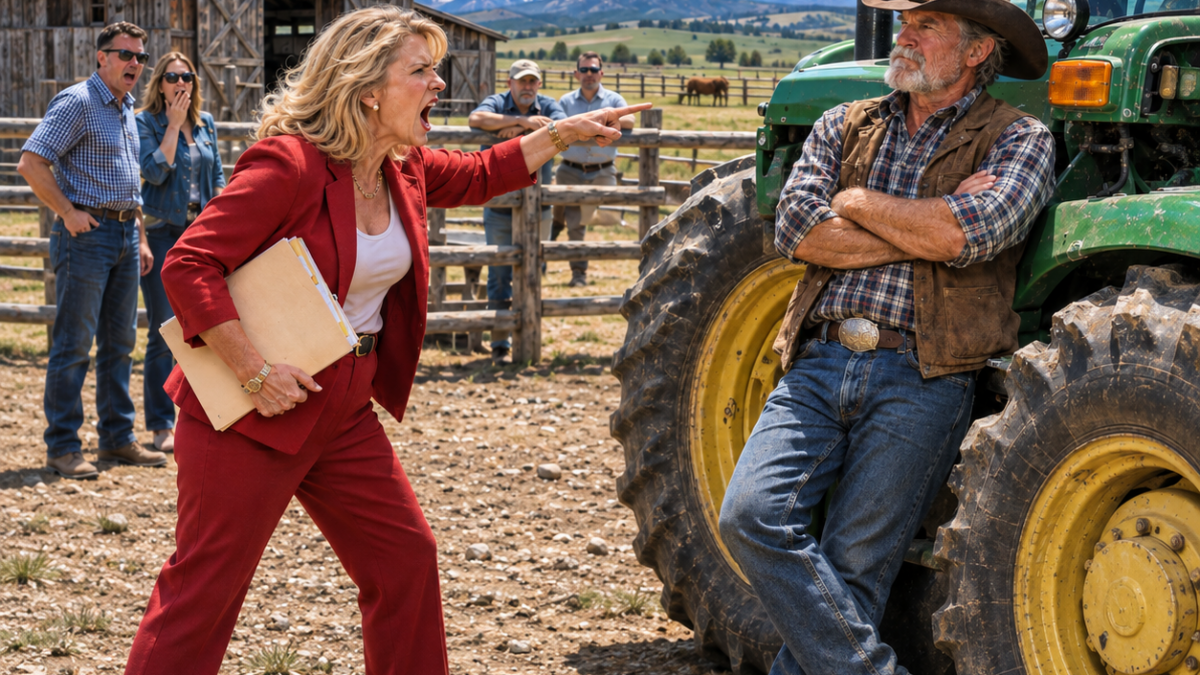
“GET THOSE FILTHY TRACTORS OFF HOA PROPERTY RIGHT NOW! YOU OWE US $14,380, AND IF YOU DON’T PAY, I’LL HAVE EVERY PIECE OF FARM EQUIPMENT SEIZED BEFORE THE END OF THE DAY!”
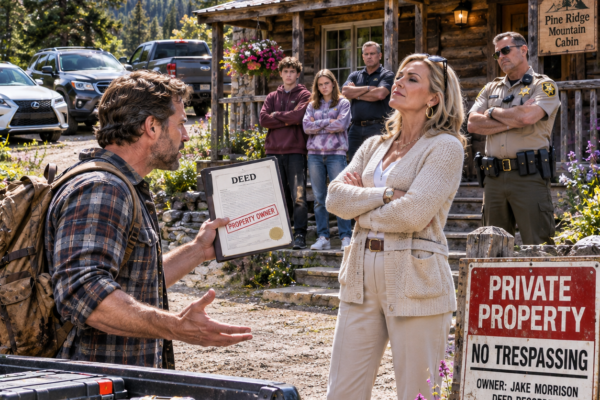
HOA president Diane Holloway stood beside two heavy-duty tow trucks on my Tennessee farm, watching strangers chain up the red Massey Ferguson my father had taught me to drive at twelve years old, while waving a lien against land my family had owned since 1924—even though nobody in our family had ever joined her homeowners association.
But when I noticed two surveyors digging beside my grandfather’s old boundary stone, I caught a glimpse of a secret road drawn across our eastern pasture, and suddenly I understood that Diane wasn’t really interested in collecting unpaid fines.
“STOP THAT TRUCK!”
I was running across the lower field when the first tow driver tightened the chains around my Massey Ferguson.
The tractor’s front wheels lifted off the ground.
Its red hood tilted toward the back of the truck.
For a moment, I couldn’t believe what I was seeing.
That tractor had belonged to my father for more than thirty years.
He had taught me to drive it when I was barely tall enough to reach the pedals.
I’d used it three days earlier to move hay.
Now two strangers were loading it onto a tow truck as though it were an abandoned car.
“WHAT THE HELL ARE YOU DOING?”
The driver stopped and looked toward a cream-colored SUV parked near the barn.
Diane Holloway stepped out.
She was wearing a navy blazer, white pants, and expensive sunglasses.
In one hand was a leather folder.
In the other was her phone.
“Jacob Bennett,” she said, almost smiling. “I warned you this would happen.”
“Get my tractor off that truck.”
“Not until your outstanding HOA violations are resolved.”
“My farm isn’t part of your HOA.”
She sighed like a teacher dealing with a particularly slow student.
“We’ve explained the boundary compliance requirements repeatedly.”
“Then explain why you’re stealing my equipment.”
Her expression hardened.
“I’m enforcing community regulations.”
I looked at the two drivers.
“Did either of you verify who owns this property?”
The older driver hesitated.
“We received an authorization from Silver Creek.”
“Silver Creek doesn’t own this land.”
Diane lifted her folder.
“They have a recorded financial interest.”
She handed me a document.
NOTICE OF LIEN.
BENNETT FARM.
CLAIMED AMOUNT: $14,380.
PART2:
I read it twice.
Then looked at her.
“You placed a lien on my farm?”
“You ignored the notices.”
“For rules that don’t apply to me.”
“That’s a matter for the courts.”
“Then why are you here taking my tractors before a court has decided anything?”
She smiled again.
“Because you clearly need to learn that ignoring this association has consequences.”
Behind us, the second tow truck began backing toward my green John Deere.
I held up my phone and started recording.
“Everybody stop. I’m calling my attorney.”
Diane waved toward the driver.
“Keep loading.”
That’s when my father came out of the barn.
Frank Bennett was seventy-one years old, with gray hair, arthritis in both hands, and a limp that grew worse when the weather turned cold.
He looked at the Massey Ferguson.
Then at Diane.
“Who gave you permission to touch my tractor?”
Diane adjusted her sunglasses.
“Mr. Bennett, this equipment violates Silver Creek community standards.”
Dad stared at her.
“Lady, that tractor was working these fields before your neighborhood was a drawing on somebody’s desk.”
“Age doesn’t exempt anyone from regulations.”
“Neither does wearing a fancy jacket make you the owner of my land.”
Diane’s smile disappeared.
Then I noticed something beyond the eastern fence.
A white pickup truck.
Two men wearing survey vests.
One held a metal detector near the old oak tree.
The other was unfolding a large map.
I recognized the location immediately.
Grandpa’s boundary marker.
The same stone that had separated Bennett Farm from the neighboring property for decades.
One surveyor shouted toward Diane.
“MS. HOLLOWAY! WE FOUND THE ORIGINAL EAST LINE!”
She turned so quickly that her sunglasses nearly fell off.
I started toward the fence.
Diane stepped into my path.
“That area is part of a separate development review.”
“On my property?”
“It’s not your concern.”
I walked past her.
The younger surveyor was kneeling beside a stone half buried in the grass.
He brushed away the dirt.
Four faded letters became visible.
BF EAST.
Bennett Farm East Line.
Then his partner opened the map.
A thick blue road crossed my eastern pasture.
It followed the abandoned farm lane.
Continued through the exact spot where my grandfather’s boundary marker stood.
And connected to a huge undeveloped tract behind Silver Creek Estates.
At the top were three words.
SILVER CREEK PHASE 3.
I stared at Diane.
“This was never about my tractors, was it?”
She didn’t answer.
Behind me, an engine roared.
The first tow truck pulled forward.
My Massey Ferguson began disappearing down the gravel road.
And Diane Holloway watched it leave with the satisfaction of somebody who believed she had finally won.
My name is Jacob Bennett.
Bennett Farm had been in my family for a hundred years when this nightmare began.
My great-grandfather, Samuel Bennett, purchased the original forty acres in 1924.
He was a lumber-mill worker who saved nearly every extra dollar he earned.
Over the following decades, he bought adjoining fields whenever other farmers wanted to sell.
By the time my grandfather, Samuel T. Bennett Jr., took over, the property had grown to almost ninety acres.
Rolling hills.
Cornfields.
Soybean fields.
Hay meadows.
A small cattle pasture.
Three barns.
And an old white farmhouse with a porch that leaned slightly to the left.
Nothing about the place was fancy.
But every piece of it meant something to my family.
My grandfather built the eastern equipment shed with his brothers.
My grandmother planted the pecan tree beside the driveway.
Dad repaired the southern barn after a tornado tore part of its roof off.
Mom planted roses along the farmhouse steps.
The farm wasn’t just where we lived.
It was where generations of Bennetts had spent their lives.
My father believed a child should learn how to work before learning how to complain about work.
By the time I was ten, I was feeding chickens and carrying small buckets of grain.
At twelve, he taught me to drive the red Massey Ferguson.
I remember the first lesson.
Dad climbed into the seat beside me, showed me the controls, and told me to keep my eyes ahead.
I was so nervous that I nearly drove through the south fence.
He laughed about that for years.
“Jacob,” he used to say, “there’s a difference between driving a tractor and pointing it in the general direction of a field.”
I heard that joke every Thanksgiving until Grandpa died.
My mother, Susan, believed the opposite lesson was equally important.
Working hard didn’t mean much if you weren’t willing to help somebody else.
When a neighbor lost a job, Mom brought groceries.
When Carolyn Price’s barn needed repairs, Dad showed up with tools.
When somebody needed hay during a bad winter, Grandpa found a few extra bales.
We weren’t wealthy.
But people knew they could count on us.
I left home in my twenties and became a diesel mechanic in Nashville.
I liked fixing engines.
I made decent money.
But every time I visited the farm, I felt something pulling me back.
Eventually, Dad’s arthritis made it difficult for him to handle the heavier work.
Mom was getting older, too.
So I came home full-time.
Farming was never going to make me rich.
There were mornings when I wondered whether we’d even make enough to cover repairs.
But I loved the life.
Watching the sunrise over the fields.
Hearing the equipment start before breakfast.
Selling pumpkins from the roadside stand every October.
And seeing Dad sitting on the porch after a long day, satisfied because the work had gotten done.
Then the woods east of our property disappeared.
A development company purchased several hundred acres.
Bulldozers cleared the trees.
Gravel roads became paved streets.
Large houses rose behind manicured lawns and decorative stone walls.
The neighborhood was called Silver Creek Estates.
Its advertising promised peaceful country living.
I remember finding that funny.
People were moving into the country and paying an HOA to make sure it didn’t look too much like the country.
Still, I didn’t hold that against them.
Most residents were friendly.
Some bought eggs from our farm stand.
Others ordered pumpkins.
One man named Andrew Lewis brought his little daughter Grace almost every Saturday during the fall.
Grace loved the chickens.
She also loved the John Deere.
The first time I let her sit in the driver’s seat while it was parked safely beside the barn, she acted as though I’d handed her the keys to a spaceship.
Andrew laughed.
“She’ll be talking about this for weeks.”
That was the relationship I wanted with Silver Creek.
Neighbors.
Different properties.
Different lifestyles.
But still neighbors.
Then Diane Holloway became HOA president.
The first time she came to my house officially, she carried a folder full of photographs.
She showed me my equipment shed.
Then a stack of hay.
Then my tractor.
Then our chicken coop.
“These conditions are unacceptable,” she announced.
I looked at the photographs.
“What conditions?”
“Visible heavy equipment. Agricultural storage. Livestock noise. Commercial signage.”
I stared at her.
“You bought houses beside a farm.”
Her mouth tightened.
“Silver Creek has community appearance standards.”
“Good for Silver Creek.”
“Your property affects our homeowners.”
“So does your neighborhood affect my farm. I don’t send you rules about the color of your mailboxes.”
She didn’t smile.
Instead, she handed me an official-looking violation notice.
I read the first paragraph.
Then handed it back.
“Wrong property.”
She refused to take it.
“Every neighboring parcel has a responsibility to protect our home values.”
“I’m not part of your association.”
“That distinction is more complicated than you understand.”
I shook my head.
“No, Diane. My family owned this land decades before Silver Creek existed.”
She placed the notice on my porch railing.
“You should read that carefully.”
Then she left.
That evening, I showed it to Dad.
He read the complaint about the tractors.
Then the complaint about hay bales.
Then the complaint about chickens.
He laughed so hard he started coughing.
When he reached the part about our rooster making noise before seven in the morning, he slapped the table.
“Somebody ought to explain chickens to that woman.”
Mom smiled.
But Dad didn’t throw the notice away.
Instead, he handed it back.
“Keep every letter, Jacob.”
“Why?”
“Because people who want money or land usually start with paper.”
I remembered those words later.
At the time, I thought he was being overly cautious.
Then the fines started arriving.
Three hundred dollars.
Six hundred.
One thousand fifty.
Nineteen hundred.
Every letter listed another supposed violation.
My tractors were visible from Silver Creek.
The barn roof needed painting.
The cattle made noise.
Our pumpkins were too close to the road.
The wooden Bennett Farm sign didn’t meet their design standards.
That sign had been painted by my grandfather nearly thirty years earlier.
It simply read:
BENNETT FARM
FRESH EGGS & PRODUCE
Apparently, ordinary farm signs offended people who had paid extra to live beside farmland.
I called the management office.
A woman named Cheryl answered.
When I gave her my address, she paused.
“That’s unusual.”
“What is?”
“Your property is listed as a boundary compliance parcel.”
“A what?”
“Boundary compliance.”
“Does that mean somebody thinks I’m an HOA member?”
“I can’t answer legal questions.”
“Do I have an HOA account?”
She hesitated.
“Yes.”
“Since when?”
She checked her computer.
“About eight months.”
I sat down.
Eight months earlier, I’d barely spoken to Diane.
Nobody in my family had signed a membership agreement.
We had never paid dues.
We had never voted in an HOA election.
And our deed contained no Silver Creek restrictions.
I asked Cheryl who created the account.
She said I’d need to speak with the board.
Diane called the following morning.
She claimed Silver Creek’s governing documents allowed enforcement against neighboring parcels affecting the community.
I asked her to send those documents.
She said they were internal.
I almost laughed.
“You’re fining me under rules I’m not allowed to see?”
“The board has already confirmed enforcement is appropriate.”
“Then the board should be willing to show me why.”
She hung up.
A week later, the claimed balance reached $5,740.
That’s when I called Melissa Grant.
Melissa was a local property attorney with a reputation for being careful and difficult to intimidate.
She listened while I explained the situation.
Then she asked three questions.
“Did you sign an HOA agreement?”
“No.”
“Did your father?”
“No.”
“Did your grandfather?”
“Silver Creek didn’t exist when Grandpa bought the property.”
She leaned back.
“Then let’s see what documents they’re relying on.”
She requested our deed history and the association’s claimed authority.
Silver Creek’s attorney responded with vague language about boundary obligations.
No signed membership agreement.
No recorded annexation document.
No clear explanation.
Melissa wrote back requesting the actual records.
Meanwhile, the fines kept increasing.
Seven thousand two hundred.
Eight thousand nine hundred.
Ten thousand four hundred fifty.
I stopped opening the letters at the kitchen table because Mom became upset whenever another one arrived.
Dad was furious.
But Melissa told us to document everything and avoid turning the dispute into a shouting match.
I photographed the property.
Saved every notice.
Recorded dates.
Kept copies of emails.
Then one afternoon I went to the county property office.
A clerk named Beverly Adams helped me review the recorded deed and survey history.
Nothing showed Bennett Farm joining Silver Creek.
No membership agreement.
No HOA covenant.
No properly recorded document extending their authority over our ninety acres.
Then Beverly pointed toward the eastern boundary.
A narrow strip of land followed an abandoned farm lane.
I knew it well.
Grandpa had used that road to reach the lower field.
We stopped using it after a small bridge washed out.
Beverly said a development company had recently requested old maps of that exact route.
“Which company?”
“Silver Creek Development Partners.”
I stared at the map.
“Why?”
“I don’t know. They requested historical access records.”
That was the first time I wondered whether the HOA dispute involved something larger than Diane’s obsession with our tractors.
Soon afterward, Andrew Lewis stopped by the farm stand.
Grace was choosing pumpkins when he asked whether I’d heard about improvements along Silver Creek’s eastern boundary.
I told him about the fines.
His expression changed.
“The HOA has been talking about a new entrance road.”
“Why would they need another entrance?”
“I’m not sure. Something about future development.”
I looked toward the old lane.
“Did they mention where it would go?”
“No.”
He promised to ask around.
I thanked him, but told him not to get himself in trouble.
He shrugged.
“Neighbors deserve to know what’s being done in their name.”
A few days later, I found bright orange survey flags beside our eastern fence.
Then more flags near the old lane.
Under the large oak tree stood a new metal stake.
Its yellow cap read:
SILVER CREEK PHASE 3 ACCESS.
I stared at it.
Phase Three?
Silver Creek hadn’t announced any Phase Three that I knew about.
I photographed the markers and called Melissa.
She told me not to remove them.
Then I called Dad.
He walked slowly toward the oak tree.
When he saw the stake, his expression changed.
“Grandpa turned down a road deal once,” he said.
“What road deal?”
“Some developer wanted to buy that old lane. Your grandpa told him no.”
“Did he put anything in writing?”
Dad thought for a moment.
“Maybe. We should check the barn office.”
The next morning, we searched through dusty boxes.
Old fertilizer receipts.
Equipment manuals.
Tax records.
Photographs.
Then Dad found a folder labeled LAND OFFERS.
Inside was a letter from twelve years earlier.
A company wanted permanent access across the eastern strip.
Grandpa had written across the bottom in thick black ink:
NOT FOR SALE.
I looked at Dad.
He nodded.
“That’s your grandpa.”
There were other letters discussing future residential development.
One proposed purchasing the lane.
Another suggested a long-term easement.
Grandpa rejected them all.
The old road had been valuable before Silver Creek existed.
Now it appeared someone wanted it again.
Then the certified lien notice arrived.
Fourteen thousand three hundred eighty dollars.
A claimed legal hold against our family’s property.
I was standing beside the farmhouse reading it when I heard heavy engines near the lower field.
Two tow trucks.
Diane’s cream SUV.
And workers moving toward our tractors.
That was the morning everything changed.
The first driver had already loaded the Massey Ferguson when I reached him.
The second was preparing to lift the John Deere.
I called Melissa.
She answered immediately.
“Jacob, what’s happening?”
“Diane is towing my tractors!”
“Does she have a court order?”
“She says the HOA authorized it.”
“Put me on speaker.”
I did.
Melissa asked Diane to identify the legal authority allowing her to seize farm machinery from property whose HOA membership was disputed.
Diane responded that the association’s collection procedures had been properly followed.
Melissa asked for the court order.
Diane didn’t provide one.
She asked the tow driver for his company name and work-order number.
Then she asked where the tractor would be stored.
The driver answered.
Melissa calmly explained that the landowner disputed both the HOA’s authority and the equipment removal.
She warned that continuing without valid authority could expose those involved to civil claims.
The second driver looked uncomfortable.
He called his supervisor.
Diane started shouting.
“You were hired to do a job!”
The driver shook his head.
“My supervisor wants confirmation before we take anything else.”
Diane threatened to withhold payment.
The man shrugged.
“I’d rather lose a tow than get caught in a lawsuit.”
He lowered the John Deere.
Removed the chains.
And drove away.
For a moment, I felt relieved.
Then I looked toward the road.
My Massey Ferguson was already gone.
Dad walked up beside me.
His breathing was heavy.
He stared at the empty place beside the barn.
“That tractor fed three generations of Bennetts,” he said.
I put a hand on his shoulder.
“We’re getting it back.”
He looked at Diane.
“Nobody takes a working farmer’s equipment because of a mailbox rule.”
She answered coldly.
“This isn’t personal.”
Dad laughed once.
“Taking a man’s tractor during harvest season is about as personal as something can get.”
Then I noticed the surveyors beside the old oak.
I walked toward them.
They had uncovered our original eastern boundary stone.
BF EAST LINE.
The map they were using showed a proposed road across our pasture.
It continued straight toward undeveloped land behind Silver Creek.
Diane tried to block my view.
But I’d seen enough.
“Who hired you?” I asked the surveyor.
He hesitated.
“Silver Creek Development Partners.”
Not the HOA.
The development company.
Diane ordered the crew to leave.
Before getting into her SUV, she told me I was making the situation unnecessarily difficult.
I looked at her.
“Then tell me what you really want.”
She adjusted her sunglasses.
“We need certainty along our eastern boundary.”
“Meaning a road through my farm?”
She didn’t answer.
Then she drove away.
Melissa called again.
She’d checked the recorded lien.
It contained something strange.
It claimed Bennett Farm had been subject to Silver Creek community covenants for nine years.
But Silver Creek’s HOA declaration had only existed for eight.
I stared toward the empty tractor parking space.
Something about the paperwork was seriously wrong.
At Melissa’s office that afternoon, she spread the records across her table.
The lien wasn’t merely a threat.
It had actually been recorded.
That meant anybody checking the property title would find the claim.
I asked whether Diane could force us to sell the farm.
Melissa shook her head.
“A recorded lien is serious, Jacob, but it doesn’t mean the HOA automatically owns your land or can sell it tomorrow.”
“Then what do we do?”
“We challenge it with evidence.”
She’d already requested the association’s annexation documents, maps, and records explaining why Bennett Farm was supposedly subject to its rules.
Then she called the towing company.
The owner was Gary Peterson.
He sounded surprised to learn the farm’s HOA status was disputed.
His work order identified my Massey Ferguson as abandoned commercial equipment.
I stared at Melissa.
“Abandoned?”
She nodded toward the phone.
Gary confirmed that Diane had signed the authorization.
There was no court order.
No proof the HOA owned the tractor.
No document establishing that Silver Creek could seize equipment from Bennett Farm.
Gary admitted his company had relied on the information supplied by the association.
He agreed not to move or dispose of the tractor while the dispute was reviewed.
The following morning, Melissa and I drove to his storage yard.
My Massey Ferguson sat behind a chain-link fence between damaged pickup trucks.
Seeing it there hurt more than I expected.
I walked toward the fence.
There was dried mud on the tires.
The same mud from our lower field.
The tractor looked like it had been taken from home and left somewhere it didn’t belong.
Gary came outside.
He apologized.
He said Diane had personally assured him the removal was authorized.
Melissa reviewed the release documents carefully.
She made sure nothing required me to acknowledge HOA jurisdiction.
Then Gary agreed to return the tractor.
That afternoon, the Massey Ferguson rolled back onto Bennett Farm.
Dad stood beside the barn.
He walked toward it slowly.
Placed one hand on the red hood.
And whispered, “Good to have you back.”
I looked away for a moment.
He wasn’t just talking about a machine.
He was remembering Grandpa.
The harvests.
The long summers.
And the years that tractor had helped keep our family going.
For a few days, we returned to ordinary farm work.
We harvested pumpkins.
Moved hay.
Repaired equipment.
Andrew brought Grace to visit.
She asked why cows always stared at people.
Dad told her they were secretly judging everyone.
She laughed so hard she nearly dropped the apple she was holding.
Mom invited Carolyn Price over for Sunday breakfast.
For one hour, nobody mentioned Silver Creek.
Then Melissa called with a discovery.
Nine years earlier, a company named Holloway Land Management had been involved in development planning east of our farm.
The manager was Richard Holloway.
Diane’s husband.
I sat down.
Melissa had found a development option agreement referring to future eastern access.
The proposed route stopped at our property boundary.
Exactly where Grandpa had refused to sell.
Now the same route was being examined again.
The question wasn’t merely why Silver Creek wanted my land.
It was whether Diane’s family stood to benefit financially from getting it.
A few days later, the HOA finally responded to Melissa’s records request.
A thick envelope arrived.
Maps.
Meeting minutes.
Violation records.
Billing statements.
And a document titled:
BOUNDARY ACCESS AND COMMUNITY MAINTENANCE AGREEMENT.
The agreement supposedly placed the eastern twenty acres of Bennett Farm under community appearance standards in exchange for road maintenance and drainage work.
The date was nine years earlier.
The owner was listed as Samuel Bennett Jr.
My grandfather.
At the bottom was his signature.
I stared at it.
For the first time, I felt genuine fear.
Grandpa had still been alive on that date.
What if he’d signed something without telling us?
What if the eastern field had been tied to Silver Creek before the neighborhood was built?
What if Diane was wrong about most things but right about this one?
Dad asked to see the paper.
He read it.
Then shook his head.
“That’s not his signature.”
“How can you be sure?”
“Your grandpa always used his middle initial.”
I looked again.
Samuel Bennett Jr.
No T.
Dad explained that Grandpa signed Samuel T. Bennett Jr. on checks, contracts, tax forms, and official papers.
Melissa didn’t declare victory.
A missing initial alone wouldn’t prove forgery.
Then Dad noticed something else.
The mailing address.
1843 Bennett Farm Road.
Dad tapped the page.
“That’s impossible.”
“Why?”
“We didn’t have that address nine years ago.”
Before the county’s emergency-service address update six years earlier, our mail had gone to Route 7, Box 112.
The document used our newer address.
Three years before it existed.
I looked toward Melissa.
She nodded slowly.
“Now that’s important.”
We brought old utility bills.
Tax statements.
Insurance records.
Everything showing the original mailing address.
Melissa requested the actual original agreement.
The HOA’s attorney said it was held in archived corporate records.
Ten days passed.
Then Diane arrived at our farm without warning.
This time, she didn’t bring a folder full of fines.
She brought an offer.
Forty thousand dollars.
In exchange, Silver Creek Development Partners wanted a permanent access easement across the old lane.
I stared at her.
“Why didn’t you start with that?”
She smiled thinly.
“Development negotiations are complicated.”
“Not complicated enough to explain towing my tractor.”
“Those are separate matters.”
“No, Diane. They’re not.”
She described a landscaped road.
Professional maintenance.
Improved emergency access.
Higher property values.
I shook my head.
“No.”
Her smile disappeared.
“Forty thousand dollars is a generous offer.”
“For a road across land my grandfather refused to sell?”
“The circumstances have changed.”
“My answer hasn’t.”
Then I asked about Holloway Land Management.
Diane’s face changed.
“How do you know about my husband’s company?”
I looked directly at her.
“Because this isn’t about community appearance standards. It’s about a road.”
She didn’t answer.
Instead, she warned me that rejecting the offer would become expensive.
I told her to leave.
She drove away furious.
Dad had watched from the barn doorway.
When she was gone, he walked toward me.
“Forty thousand dollars,” he repeated.
“Yeah.”
He looked toward the old lane.
“That road’s worth a lot more to them than they’re admitting.”
He was right.
Melissa discovered Phase Three would add nearly eighty houses behind Silver Creek.
The original entrance couldn’t serve the new development as conveniently as the developer wanted.
The preferred solution was a second road through Bennett Farm.
Without our lane, the company would need to build an alternative route involving a bridge and expensive drainage work.
The additional cost was estimated at more than two million dollars.
Suddenly, Diane’s forty-thousand-dollar offer seemed almost insulting.
Then Melissa found a consulting agreement involving Richard Holloway’s company.
If Phase Three secured the preferred eastern access, Holloway Land Management could receive more than $300,000 in fees.
I felt sick.
For months, Diane had been threatening our farm over tractors and hay bales.
Her husband stood to make a substantial payment if the developer got access to our road.
Melissa warned me not to accuse anyone publicly without establishing exactly what the agreements meant.
But the potential conflict was obvious.
The first court hearing was scheduled.
Two days before it, Silver Creek finally produced the supposed original agreement with Grandpa.
Melissa called me immediately.
I drove to her office.
The paper was yellowed.
The ink looked old.
The signature seemed close enough to Grandpa’s that I understood why someone might believe it.
Then Melissa pointed to the notary block.
The agreement had supposedly been notarized by Patricia Holloway.
Richard’s mother.
But Patricia’s notary commission had begun seven years earlier.
The document claimed she’d notarized Grandpa’s signature nine years earlier.
Two years before she was commissioned.
I stared at the seal.
“That’s impossible.”
Melissa nodded.
“The dates don’t reconcile.”
Then she showed me something else.
The commission number on the document matched the number issued when Patricia actually became a notary.
That number couldn’t have been on a valid notarization from two years earlier.
We now had multiple serious problems.
The wrong address.
The missing middle initial.
The impossible notary commission.
And the HOA declaration that hadn’t even existed on the date of the alleged agreement.
But before we could fully prepare for the hearing, Andrew called.
He was whispering.
“Jacob, they’re clearing land behind Silver Creek.”
“So?”
“There’s a huge sign. Phase Three. And the map shows a road across your farm.”
He sent me a photograph.
Nearly eighty proposed homes.
A new entrance.
And a thick blue line crossing our eastern pasture.
At the bottom were four words.
EAST ACCESS APPROVED ROUTE.
I stared at the image.
Then Dad shouted from outside.
Three county-looking trucks had stopped beside our eastern fence.
Workers were unloading orange barriers.
Diane stood with them.
She was holding a document that looked like a court order.
I hurried toward the fence with Dad following.
Diane raised the paper.
“It’s over, Jacob. We have legal permission to inspect and secure the access route.”
I stopped several feet away.
“Show me.”
She held it out but refused to let me take it.
The document had a court heading.
A case number.
And language about preserving access during a boundary dispute.
I called Melissa.
She checked the docket.
The order was real.
For one terrible moment, I thought Diane had found a way around us.
Then Melissa read the full order.
It allowed limited inspection of the disputed boundary for documentation purposes.
It did not authorize construction.
It did not allow fence removal.
It did not grant permanent access.
And it required forty-eight hours’ written notice before entry.
We had received no such notice.
I put Melissa on speaker.
She asked Diane when notice had been delivered.
“The office handled it.”
“Please provide proof.”
Diane refused.
One of the engineers introduced himself as Paul Dawson.
He said his firm had been hired to inspect soil and drainage.
He looked uncomfortable when he learned about the notice requirement.
Then he told his crew to stop unloading equipment.
Diane threatened to withhold payment.
Paul remained calm.
“I was hired to survey property, ma’am. Not violate a court order.”
He packed up his equipment.
The other workers followed.
Diane stood beside her SUV, furious.
Before leaving, she pointed toward my farm.
“You’re delaying the inevitable.”
I didn’t answer.
Dad watched her go.
Then looked at me.
“She’s scared.”
“Of what?”
“Of the truth catching up.”
The hearing began two days later.
Melissa presented the deed history.
Then the lien.
Then the date discrepancy.
Silver Creek claimed Bennett Farm had been part of the association for nine years.
But the HOA declaration was only eight years old.
She presented the supposed agreement bearing Grandpa’s signature.
Then the wrong mailing address.
Then Patricia Holloway’s notary records.
The judge studied the documents carefully.
Silver Creek’s attorney argued that the agreement might have been signed earlier and formally updated later.
Melissa asked for the earlier original.
There wasn’t one.
She asked whether Grandpa had ever paid HOA dues.
No.
Had Dad?
No.
Had I?
No.
Had Bennett Farm ever voted in a Silver Creek election?
No.
Had we received ordinary HOA membership statements before Diane became president?
No.
Then Melissa presented the old access proposal Grandpa had rejected.
NOT FOR SALE.
She explained that the development wanted a road across our land long before the HOA began sending violation notices.
Silver Creek’s attorney objected.
The judge allowed limited discussion because the land history was relevant.
Then Melissa questioned Diane about Holloway Land Management.
Diane admitted Richard was her husband.
She admitted his company worked with the developer.
And she acknowledged that his company could receive consulting compensation connected to Phase Three.
Melissa showed an email Diane had sent the survey company.
Subject:
BENNETT EAST ACCESS PRIORITY.
The message instructed the engineers to move quickly because Phase Three financing depended on route confirmation.
Diane’s expression changed.
Then Melissa turned to the towing incident.
She showed the work order describing my Massey Ferguson as abandoned commercial equipment.
Then she showed photographs of that same tractor working in our field days earlier.
She asked whether Diane had authorized the tow.
Yes.
Did she have a court order allowing seizure?
No.
Had she confirmed the tractor belonged to Silver Creek?
No.
Had she established that Bennett Farm was legally subject to the HOA’s equipment rules?
She claimed she’d relied on the association’s attorney.
The judge asked whether counsel had specifically authorized the seizure.
Silver Creek’s lawyer carefully explained that his office had discussed enforcement generally but had not instructed Diane to take possession of farm tractors.
That was the first time she looked genuinely worried.
After several hours, the judge temporarily suspended the lien and ordered Silver Creek to stop enforcement against Bennett Farm while the disputed membership documents were examined.
No new fines.
No towing.
No unauthorized construction.
Any entry had to comply strictly with valid court orders.
Outside the courthouse, Dad put one hand on my shoulder.
“Now we breathe.”
I smiled.
For the first time in months, I thought we might finally be getting somewhere.
Then a retired county employee named Henry Walsh contacted Melissa.
Henry was seventy-three.
He’d worked in the planning office when Silver Creek was first approved.
He remembered my grandfather.
And he remembered the eastern access dispute.
We met him at a diner.
He brought an old brown folder.
Inside was an early development map.
The proposed entrance road stopped at our boundary.
A large red X marked the old Bennett lane.
Beside it were handwritten words.
OWNER REFUSED. NO ACCESS RIGHTS.
Henry remembered the meeting.
Grandpa and Dad had attended.
The original developer wanted the road.
Grandpa refused.
The county made clear the developer would need a new agreement before relying on that route.
Dad remembered it immediately.
Then Henry showed us a later version of the same map.
The red X was gone.
The words OWNER REFUSED had disappeared.
Instead, the old lane was labeled:
FUTURE EAST ACCESS RIGHTS PENDING.
A cover letter accompanied the revised map.
It came from Holloway Land Management.
Signed by Richard Holloway.
I stared at it.
One version documented Grandpa’s refusal.
The next treated the route as though access might already exist.
Henry agreed to testify.
Then Mom discovered something none of us expected.
She was sorting old family photographs when she found a picture of Grandpa and Grandma at a county fair in Kentucky.
The date printed on the back was the exact date the supposed HOA agreement claimed Grandpa had signed papers in Tennessee.
Mom remembered the trip.
Grandpa and Grandma had traveled with friends.
They stayed for the entire weekend.
She had helped look after the cattle while they were away.
We found the motel receipt.
A gasoline receipt.
Another photograph bearing the same date.
Grandpa had been more than two hundred miles from the notary who supposedly witnessed his signature.
Melissa said the evidence was important but still wanted the document examined properly.
Then Cheryl called.
She’d worked in Silver Creek’s management office for years.
The court hearing had frightened her.
She wanted to tell the truth.
Cheryl said the supposed agreement with Grandpa’s signature hadn’t been part of the HOA files nine years earlier.
She first saw it less than a year ago.
Diane brought it into the office.
Ordered staff to scan it.
Then instructed Cheryl to create a boundary compliance account for Bennett Farm.
I felt cold listening to Melissa repeat the story.
That explained why the fines had started only eight months earlier.
Not because somebody suddenly discovered an old HOA obligation.
Because somebody had newly entered our farm into the system.
Cheryl said the office software might still preserve the scan date.
Melissa requested the records.
The logs showed the document had been uploaded eleven months earlier.
Through Diane’s user account.
An internal note attached to the file read:
USE FOR BENNETT ENFORCEMENT. EAST ACCESS MUST BE RESOLVED BEFORE PHASE 3 FINANCING.
Melissa printed the note.
Then looked at me.
“That’s the connection, Jacob.”
The fines.
The lien.
The tractors.
The road.
For months, Diane insisted those were separate matters.
Now the HOA’s own records connected enforcement against our farm directly to the developer’s access problem.
Silver Creek’s board held an emergency meeting.
Diane was suspended as president.
Residents demanded answers.
Andrew called afterward.
He said people were furious.
They wanted to know why HOA money had been spent targeting a farmer who wasn’t a member.
They wanted to know why the association was helping a private development company secure a road.
And they wanted to know whether Diane’s husband’s business stood to benefit.
The board halted new enforcement against Bennett Farm.
But the recorded lien still needed to be cleared through proper legal action.
Our tractor had still been taken.
We’d spent thousands defending ourselves.
And the farm had endured months of intimidation.
Then the emails arrived.
Melissa had obtained communications between Diane and Richard.
One message from Richard warned that Phase Three financing could be jeopardized unless eastern access was secured.
Diane replied:
I’M APPLYING PRESSURE THROUGH COMPLIANCE. THEY WILL EITHER COOPERATE OR SPEND ENOUGH FIGHTING US TO RECONSIDER.
I read it twice.
Then a third time.
For months, I’d wondered whether Diane truly believed our tractor violated HOA rules.
Now the truth was staring back at me.
She hadn’t been trying to fix a community appearance problem.
She’d been trying to make owning our farm so expensive and exhausting that we’d surrender the road.
I showed the email to Dad.
He read it silently.
Then looked toward the eastern pasture.
“Your grandpa said no,” he whispered.
I nodded.
“He did.”
“And she thought she could make us say yes by stealing our tractors?”
I didn’t answer.
There was nothing I could say that would make it less ugly.
The following evening, the barn office caught fire.
It happened shortly after midnight.
Andrew called first.
“JACOB! LOOK TOWARD THE EAST BARN!”
I stepped onto the porch.
An orange glow rose beyond the trees.
Then I saw flames breaking through the office roof.
I ran toward the barn while calling 911.
The building was old.
Dry timber.
Paper records.
Wooden shelves.
It burned quickly.
Dad came running from the farmhouse.
I stopped him before he could reach the flames.
“Stay back!”
“Your grandpa’s records are in there!”
“I know!”
He tried moving closer.
I caught his arm.
“Dad, we can’t save them this way.”
He stared at the burning building.
Then slowly stepped back.
Fire trucks arrived within minutes.
Crews stopped the flames from spreading into the main barn.
But the old office was nearly destroyed.
A firefighter approached.
“Did you store gasoline near the east wall?”
“No.”
He pointed toward a broken window.
A red plastic gasoline container lay in the grass.
It didn’t belong to us.
Fresh tire tracks led away from the building toward the abandoned eastern lane.
My stomach tightened.
The timing was terrible.
But I knew what Melissa would say.
Evidence first.
Accusations later.
She arrived before two in the morning wearing jeans and a sweatshirt.
We showed her the scene.
She warned us not to decide who had started the fire.
Investigators needed to determine the cause.
Dad stood beside the burned office until sunrise.
I expected him to shout.
Instead, he put a hand on my shoulder.
“Buildings can be rebuilt, Jacob.”
I looked toward the blackened walls.
“Grandpa’s papers were in there.”
“I know.”
“Everything he kept.”
Dad’s voice shook.
“But nobody was inside.”
I looked at him.
He continued.
“That’s what matters first.”
Mom made coffee for the firefighters.
Carolyn Price brought breakfast sandwiches.
Andrew arrived with several Silver Creek residents and helped move equipment away from the damaged building.
Nobody asked whether the people helping belonged to our side or Diane’s.
They saw a family standing beside a burned barn and decided to help.
That morning reminded me what a community was supposed to be.
Fire investigators later found evidence suggesting the blaze had been intentionally started.
But they couldn’t immediately identify who was responsible.
Diane denied involvement.
Richard denied involvement.
Melissa reminded us that our property case didn’t depend on proving who started the fire.
We already had extensive documentary evidence challenging the lien.
Then came the final hearing.
The courtroom was crowded.
My parents sat behind me.
Andrew and several Silver Creek homeowners attended.
Cheryl was there to testify.
Henry Walsh brought his old planning file.
Gary Peterson, the towing company owner, agreed to explain how the tractor had been taken.
Diane sat at the opposite table with her attorney.
She looked smaller than she had in our field.
The sunglasses were gone.
So was the confident smile.
Melissa began with the simplest fact.
Bennett Farm had existed since 1924.
Silver Creek’s HOA declaration was only eight years old.
No member of my family had signed the association’s membership papers.
We had never paid dues.
Never voted in its elections.
Never acknowledged its authority over our farm.
Then she produced the alleged agreement with Grandpa.
She showed the address that didn’t exist on the claimed signing date.
The notary commission that began two years later.
The signature missing Grandpa’s usual middle initial.
And the Kentucky fair photographs and receipts placing him out of state.
Henry testified about the original development meeting.
He showed the early map.
The red X.
The words:
OWNER REFUSED. NO ACCESS RIGHTS.
Then he showed the later version submitted with Holloway Land Management’s cover letter.
The refusal had disappeared.
The road had been relabeled as future access.
Cheryl testified next.
She explained that Bennett Farm had not appeared in the HOA’s enforcement system until Diane ordered its account created.
Melissa showed the computer logs.
The scan date.
Diane’s user account.
And the internal note tying Bennett enforcement to Phase Three financing.
Then Gary testified.
He confirmed that Diane personally authorized towing the Massey Ferguson.
He had received no court order establishing authority to seize the tractor.
He hadn’t been shown proof Silver Creek owned it.
He believed the paperwork supplied by the association.
Gary looked toward me.
“I’m sorry, Mr. Bennett. I never should’ve taken your tractor without confirming the authority.”
I nodded.
He’d already returned it and cooperated with the investigation.
I didn’t need him to suffer forever for trusting the wrong person’s paperwork.
Finally, Melissa questioned Diane.
Did she upload the disputed agreement?
Yes.
Where had it come from?
Old development archives.
Which archives?
She couldn’t identify them.
Who gave her the document?
She didn’t remember.
Why did it contain a mailing address that didn’t exist on the date shown?
She didn’t know.
Why was it notarized using a commission number issued two years later?
She had no explanation.
Why had Bennett Farm never received ordinary HOA statements until she created the account?
She claimed earlier boards had neglected enforcement.
Melissa then showed the emails between Diane and Richard.
The message about Phase Three financing.
The response about applying pressure through compliance.
The statement that we’d eventually spend enough fighting to reconsider.
The courtroom became quiet.
Melissa asked what Diane meant by pressure.
She claimed it referred to ordinary HOA enforcement.
Then Melissa placed the towing authorization beside the email.
The judge examined them.
Diane looked toward her attorney.
He whispered something to her.
She said she couldn’t remember the context.
Melissa didn’t argue.
The documents spoke for themselves.
The judge took a recess.
Dad and I waited in the hallway.
He sat beside me on a wooden bench.
For a while, neither of us spoke.
Then he asked whether I remembered learning to drive the Massey Ferguson.
I smiled.
“Dad, I nearly destroyed the south fence.”
He laughed.
“Your grandpa thought it was the funniest thing he’d ever seen.”
“I was terrified.”
“You should’ve been. You were a terrible driver.”
I laughed with him.
Then he became quiet.
“Your grandpa worked his whole life for that land, Jacob.”
“I know.”
“He never asked anybody for special treatment.”
“I know.”
“He just wanted to keep his farm.”
I looked at my father.
“We’re going to keep it.”
He nodded.
But I could see tears in his eyes.
Then the courtroom doors opened.
We returned to our seats.
The judge began explaining the decision.
Silver Creek had failed to establish that Bennett Farm was ever legally subject to its homeowners association.
The purported agreement did not provide a reliable basis for HOA membership or enforcement.
The lien was invalid.
The fines were void.
Silver Creek was ordered to release the recorded lien and stop enforcing its private residential rules against our farm.
The association had no authority to fine us for operating farm tractors, storing hay, keeping livestock, maintaining barns, or displaying the Bennett Farm sign.
The court also addressed the improper use of enforcement to pressure a landowner into providing access for a private development.
I barely heard the next few sentences.
I was looking at Dad.
His eyes were wet.
Mine were too.
The recorded lien that had threatened our family’s land was finally going away.
The judge also awarded reasonable legal costs related to challenging the improper lien and enforcement as permitted in the case.
Claims arising from the towing and property damage were addressed separately.
After further negotiations, the HOA’s insurer and other responsible parties reached a settlement covering documented towing costs, related damages, legal expenses, and certain repairs.
No amount of money could give us back the months of worry.
But the farm was ours.
Legally.
Clearly.
Without the false HOA claim hanging over it.
Several weeks later, Melissa handed me the recorded release.
RELEASE OF LIEN.
I brought it home.
Dad read it.
Then smiled.
“Frame that one.”
So I did.
We hung it in the farmhouse beside Grandpa’s photograph.
The Phase Three road was changed.
Without access across Bennett Farm, Silver Creek Development Partners had to pursue the longer alternative route.
That involved expensive bridge and drainage work.
The developer wasn’t happy.
But the cost of its own project wasn’t a reason to take somebody else’s land.
The old lane stayed where Grandpa had left it.
The boundary stone remained beneath the oak tree.
BF EAST LINE.
Diane was removed from HOA leadership.
Richard’s development-related agreement was canceled when the new board refused to support the eastern access scheme.
The association adopted stricter conflict-of-interest rules.
Major spending needed proper review.
Enforcement decisions could no longer be used to help a board member’s family business.
The fire investigation continued separately.
Months later, investigators identified a former subcontractor who had worked on Phase Three site preparation.
Phone records and security footage placed his truck near the farm on the night of the fire.
He eventually admitted entering the property intending to destroy records he believed could delay the development.
He faced criminal consequences for his actions.
Investigators did not establish that Diane had ordered the fire.
I never claimed she had.
I had plenty of reasons to be angry with her.
But I wasn’t going to accuse somebody of a crime the evidence couldn’t prove.
That would have made me no better than the people who used false accusations against my family.
The barn office was rebuilt the following spring.
Andrew organized a volunteer day.
More than thirty people showed up.
Some came from Silver Creek.
Others were farmers we’d known for years.
They brought tools.
Lumber.
Gloves.
Food.
And enough determination to rebuild most of the exterior framing in a single weekend.
One Silver Creek homeowner approached me while we were working.
He looked embarrassed.
“I owe you an apology.”
“For what?”
“I complained about tractor noise once.”
I smiled.
“Tractors are noisy.”
He laughed.
“I know that now.”
Then he spent six hours helping replace the east wall.
Grace brought a small wooden sign she’d painted.
BENNETT FARM
100 YEARS AND STILL GROWING
She’d drawn a red tractor beside the words.
And a green tractor.
And a bright yellow sun.
We hung it above the office door.
Mom cried.
Dad claimed dust had gotten into his eyes.
I didn’t correct him.
A year after the worst of the dispute, we held a celebration for the farm’s hundredth anniversary.
The date honored the land purchase my great-grandfather made in 1924.
We invited neighbors.
Friends.
Local farmers.
Families who had bought produce from us for decades.
Andrew grilled burgers.
Carolyn brought peach preserves.
Mom made enough food to feed a football team.
Grace climbed into the John Deere again.
She was older now.
Taller.
Still just as excited about tractors.
Dad stood beside the Massey Ferguson telling anyone who would listen about the year I nearly drove it through the fence.
I threatened to take away his microphone.
He laughed.
For the first time in a long while, the farm felt like home again.
Not a legal battleground.
Not a place with surveyors and tow trucks arriving without permission.
Just a farm.
Children running between picnic tables.
Cattle grazing behind the fence.
The smell of grilled food in the evening air.
And the sound of people laughing.
Later that afternoon, Dad asked me to walk with him toward the eastern pasture.
We moved slowly.
His arthritis had been worse lately.
The sun was beginning to sink behind the hills.
We stopped beneath the old oak tree.
Grandpa’s boundary stone was still there.
BF EAST LINE.
Dad bent slightly and brushed a few leaves from it.
“You know what your grandpa would say about all this?”
I smiled.
“What?”
“He’d say people spend too much money trying to take shortcuts.”
I laughed.
He was right.
Silver Creek wanted a cheaper road.
Diane wanted control.
Richard’s company wanted a large consulting payment.
The developer wanted to avoid expensive construction.
And somehow, in their minds, the simplest solution was to pressure a farming family into giving up something it had already refused to sell.
They sent fines.
They recorded a lien.
They towed our tractor.
They used questionable documents.
And they tried to make a hundred years of property history disappear beneath a stack of official-looking paperwork.
But the history was still there.
The original deeds.
The old planning maps.
The rejected land offer.
The county records.
The witnesses who remembered.
Even the worn boundary stone beneath our feet.
Dad placed one hand on it.
“Your grandpa said no.”
I nodded.
“He did.”
“And after everything they put us through?”
I looked toward the eastern field.
The sun was shining across the corn.
The old lane disappeared into the trees.
Both tractors were safely parked beside the barn.
The new office stood where the burned one had been.
Children were laughing near the farmhouse.
“Our answer’s still no.”
Dad smiled.
Then we started walking back.
For months, I had been angry enough to imagine all kinds of revenge.
I wanted Diane to feel the humiliation of watching her property taken away.
I wanted her to understand what it was like to stand helplessly while strangers chained up something your family loved.
But by the time the case ended, I understood something better.
I didn’t need revenge.
I needed the lien gone.
My tractors returned.
My family’s ownership recognized.
The damage repaired.
And the freedom to work our land without somebody pretending we belonged to an HOA we’d never joined.
We got those things.
And we got something I hadn’t expected.
Neighbors who had been afraid to question Diane finally spoke up.
Silver Creek homeowners learned that living beside a farm didn’t give their association control over it.
People who barely knew us came to help rebuild.
And the community became stronger after discovering how badly its trust had been misused.
One evening, I started the Massey Ferguson and drove toward the lower field.
The engine sounded exactly as it had when I was twelve.
Rough.
Reliable.
Familiar.
I passed the eastern fence.
Then the oak tree.
Then Grandpa’s boundary stone.
I thought about great-grandfather Samuel buying the first forty acres with lumber-mill wages.
Grandpa adding land whenever he could afford it.
Dad teaching me to drive.
Mom bringing food to neighbors.
All the years our family had spent working those fields.
Diane Holloway thought fourteen thousand dollars in invented HOA fines could give her power over a century of family history.
She believed towing our tractors would frighten us into surrendering the old lane.
She believed a questionable agreement and enough legal pressure could turn somebody else’s property into the road her family wanted.
She was wrong.
The lien was released.
The fines were voided.
The tractors came home.
And Bennett Farm remained whole.
As the sun dropped behind the Tennessee hills, I brought the Massey Ferguson to a stop near the barn.
Dad was sitting on the porch.
Mom stood beside him holding two glasses of iced tea.
The farmhouse windows glowed in the evening light.
Everything looked ordinary.
And after all we’d been through, ordinary was exactly what I wanted.
I switched off the engine.
The yard became quiet.
Then Dad called out.
“Hey, Jacob!”
“Yeah?”
“Try not to drive through the fence this time!”
I laughed.
Some things never changed.
And looking across the fields my family had protected for a hundred years, I knew something else never would.
Bennett Farm had survived droughts, storms, bad harvests, economic trouble, and generations of hard work before Silver Creek Estates ever existed.
It had survived Diane Holloway’s false fines, an improper lien, the towing of our tractors, and a scheme to turn our private lane into a shortcut for a multimillion-dollar development.
And as long as I had anything to say about it, that old farm would remain exactly what my great-grandfather intended it to be.
Ours.