HOA Karen Called 911 to Remove Me From My $5.2 Million Estate—Then the Deputy Walked In and Said, “Good to See You, Marshal.
HOA Karen Called 911 to Remove Me From My $5.2 Million Estate—Then the Deputy Walked In and Said, “Good to See You, Marshal.
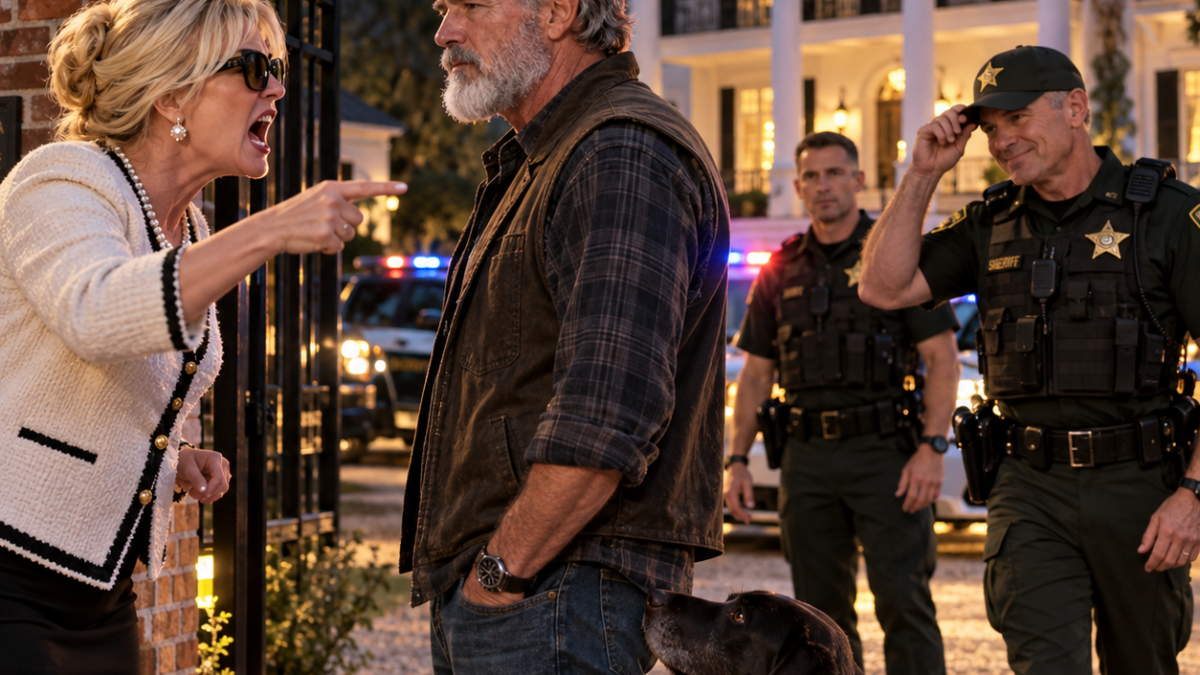
Patricia Davenport told 911 there was an armed trespasser occupying a vacant $5.2 million estate, but she left out one important fact: I had owned the property for three years, and she had spent months sending violation notices to me by name.
Two deputies came up my live-oak driveway expecting a potentially dangerous squatter, and the younger one still had his hand near his duty belt when the second deputy looked at my face, lowered his flashlight, and said, “Good to see you, sir.”
Patricia thought she had finally found a way to humiliate me in front of the entire neighborhood, but she had no idea that the deputy standing on my porch had worked under me for eighteen months—or that I had already spent half a year quietly documenting the scheme that was about to destroy her career.
My name is James Beaumont.
For twenty-eight years, I worked for the United States Marshals Service.
Not the television version.
I never kicked a door open while shouting my own name.
I never walked slowly away from explosions.
I never carried a revolver in a shoulder holster while delivering speeches about justice.
Mostly, I waited.
People underestimate how much law enforcement is waiting.
Waiting outside cheap motels while a fugitive decides whether hunger is stronger than paranoia.
Waiting in courthouse hallways.
Waiting in hospital rooms.
Waiting beside interstate exits.
Waiting while somebody who has lied to everyone around him finally makes the one small mistake that lets the truth catch up.
You learn patience.
Or you burn out.
By the time I retired at fifty-six, patience was probably the most useful thing I owned.
More useful than my pension.
More useful than the commendations sitting in a cardboard box.
More useful than the old service weapon I rarely carried anymore.
I had served under four administrations.
Worked fugitive operations from Charleston to Atlanta.
Helped transport witnesses who had testified against men capable of putting a price on their heads.
I had stood outside courtrooms for twelve hours without moving because somebody inside had promised revenge on the judge.
I had been spit on.
Threatened.
Followed.
Sued.
Once shot at.
PART2:
Twice mistaken for somebody who was willing to negotiate with a shotgun pointed at his face.
The job teaches you something about authority.
People who really have it rarely need to announce it.
People obsessed with appearing powerful usually announce it before breakfast.
Patricia Davenport announced hers the first day I met her.
But I am getting ahead of myself.
When I retired, I bought Whitfield.
Thirty-eight acres on the south bank of the Broad River in Beaufort County.
The main house was a Georgian Revival built in 1927.
White brick.
Black shutters.
Three stories.
Twelve-foot ceilings downstairs.
A wraparound veranda that faced the river.
Live oaks on both sides of the driveway, their branches meeting overhead so completely that sunlight arrived on the gravel in pieces.
Spanish moss hung like gray curtains.
There was a six-stall barn with a copper cupola gone green with age.
A spring-fed pond.
A guest cottage.
Two fenced pastures.
PART3:
A row of pecan trees nobody had properly cared for in twenty years.
The place needed work.
I loved it immediately.
I paid $5.2 million in cash.
People always focus on that number.
Five point two million.
They imagine I was rich.
I was comfortable, yes.
But I had spent three decades saving.
I invested.
I never had children.
My wife, Catherine, died from ovarian cancer nine years before I retired.
We had planned to grow old somewhere quiet.
When she got sick, the plan became mine alone.
Whitfield was not a trophy.
It was unfinished grief with a roof.
I bought the estate because Catherine used to say that if we ever stopped moving from government rentals and city houses, she wanted live oaks.
“Not little ones,” she would say.
“Old ones.”
“The kind that have already seen people make every possible mistake.”
Whitfield had those.
So I moved in.
One truck.
A dozen boxes.
A bird dog named Captain.
Two years later I added two horses.
Duke was a chestnut quarter horse who believed every person entering the barn existed to feed him.
Pearl was an older gray mare who distrusted everyone equally and therefore had excellent judgment.
My days became simple.
Coffee at five-thirty.
Feed horses.
Walk Captain.
Read.
Repair something.
Fish sometimes.
Drive into town once or twice a week.
Cook dinner.
Sit on the veranda while the river turned black.
For two years, the loudest argument on my property was usually between mockingbirds.
Then bulldozers arrived east of my tree line.
Palmetto Crest Estates.
A Charleston development company bought an old soybean tract adjoining my eastern boundary and put up one hundred twenty-two houses in eighteen months.
Big houses.
Stucco.
Tile roofs.
Three-car garages.
Decorative fountains.
The kind of subdivision where every mailbox matched and somebody had spent six months deciding whether the approved beige should lean warm or cool.
I didn’t mind.
People need houses.
The developer had every legal right to build.
The houses were separated from me by woods, field, and the old surveyed line.
I figured people would move in, wave when we crossed paths, and live their lives.
That assumption survived eleven months.
Then Patricia Davenport showed up at my gate.
I was coming back from the feed store when I saw a white BMW parked half across the entrance.
A woman in cream slacks and a navy blazer stood outside my locked gate peering down the driveway.
Platinum-blond hair.
Large sunglasses.
Leather planner tucked under one arm.
I stopped my truck.
Got out.
“Can I help you?”
She turned.
Immediately smiled.
It was a professional smile.
I’ve seen a lot of those.
Politicians.
Attorneys.
People about to tell you something untrue politely.
“Patricia Davenport.”
She extended one hand through the gate.
“President of the Palmetto Crest Homeowners Association.”
I shook it once.
“James Beaumont.”
“We haven’t officially met.”
“No.”
“I thought I’d welcome you.”
I looked at my house in the distance.
Then at subdivision barely visible through trees.
“I was here first.”
She laughed.
Short.
Bright.
Cold.
“Well then, I suppose you’re welcoming us.”
I didn’t smile.
She noticed.
People like Patricia always notice when charm fails.
She looked down the live-oak alley.
“Beautiful property.”
“Thank you.”
“Very old.”
“That’s generally how history works.”
She removed business card.
PATRICIA DAVENPORT
PALMETTO COAST REALTY
LUXURY RESIDENTIAL SPECIALIST
Below that:
President, Palmetto Crest Estates HOA.
“If you ever consider selling, I’d love to discuss representation.”
“I’m not.”
“Everyone says that until they see the number.”
“I saw the number when I bought it.”
Her smile tightened.
She slid card through gate.
I took it.
Didn’t throw it away.
Old habit.
You do not discard documents from people who are interested in your property before you understand why.
Three weeks later, first letter arrived.
Cream envelope.
Gold logo.
Heavy paper.
Dear Property Owner.
Not James.
Not Mr. Beaumont.
Property Owner.
The HOA informed me that my property was allegedly in violation of community standards in three ways.
Unmaintained vegetation.
Agricultural structures inconsistent with residential aesthetics.
Inadequate fencing.
The vegetation was my live oaks.
The agricultural structure was a horse barn that predated Patricia by several decades.
The fence was mine and legal.
They demanded corrections within thirty days.
Otherwise $250 per day fines.
I read letter twice.
Then walked into my study and pulled deed.
Whitfield had never been part of Palmetto Crest.
Not now.
Not ever.
No restrictive covenant.
No annexation.
No declaration.
No HOA membership.
No contractual obligation.
The subdivision did not exist when most of my trees were already mature.
I called no one.
I put letter in folder.
Wrote date on tab.
A Marshal’s work teaches you something else.
The first unreasonable act may be stupidity.
The second may be arrogance.
The third starts becoming evidence.
Second letter arrived two weeks later.
Unauthorized commercial livestock activity.
Two horses.
Duke and Pearl.
Neither commercially useful unless somebody had discovered a market for demanding snacks.
Third letter alleged inadequate perimeter lighting.
Fourth letter was different.
Six pages.
VOLUNTARY ANNEXATION AGREEMENT.
There it was.
The point.
They wanted Whitfield incorporated into Palmetto Crest.
$5,760 annual dues.
Architectural approval.
Fence restrictions.
Lighting standards.
Landscaping regulations.
And buried on page four:
a permanent pedestrian easement along approximately 1,100 feet of my eastern boundary for what the HOA called “community recreational connectivity.”
A trail.
Across my property.
They wanted residents walking beside my pond and through a section of pasture.
Patricia had already signed.
My signature line was waiting.
That evening I sat on veranda with document on my knee.
Captain slept beneath my chair.
Catherine used to say silence makes dishonest paperwork easier to read.
She was right.
I called Harlan Griggs.
Harlan was a property attorney in Charleston and one of the least pleasant men I knew.
That was why I liked him.
He didn’t waste kindness where precision worked better.
He listened.
Asked three questions.
“Are you inside declaration?”
“No.”
“Any recorded easement in their favor?”
“No.”
“Did you sign anything with developer?”
“No.”
He grunted.
“Then their annexation agreement is an invitation.”
“Not an obligation.”
“And the violation letters?”
“Nonsense.”
“What should I do?”
“Nothing.”
I smiled.
“I already did that.”
“Good.”
Then Harlan added:
“But start keeping everything.”
“I already am.”
“Of course you are.”
He sent formal response the following week.
Professional.
Dry.
Four pages.
The legal version of a locked door.
Whitfield was not subject to Palmetto Crest HOA jurisdiction.
No fines were valid.
No authority existed over livestock, vegetation, fencing, lighting, or any other aspect of the estate.
Further attempts to enforce covenants would be documented as harassment.
Patricia did not respond.
She changed direction.
Three days later county code enforcement called.
Anonymous complaint about runoff from my horse barn.
Officer Ray Toombs arrived.
Good man.
Sun-darkened arms.
Hat permanently bent at brim.
He spent ninety minutes walking property.
Inspected compost.
Drainage.
Barn.
Pond.
Pastures.
Feed storage.
Veterinary records.
At end he stood beside county truck.
“Mr. Beaumont.”
“Yes?”
“You running agricultural school out here?”
“No.”
“This is cleaner than some facilities we use as examples.”
I laughed.
“So complaint?”
“Unfounded.”
He hesitated.
“Can I ask something off record?”
“Sure.”
“You got a neighbor mad at you?”
I looked toward Palmetto Crest roofs.
“Apparently.”
Ray followed gaze.
“Right.”
He filed clean report.
I added copy to folder.
Then odor complaint.
Noise complaint.
Fire safety complaint.
Unpermitted structure complaint.
Every one required county response.
Every one closed.
Inspectors began apologizing before they finished walking.
I never blamed them.
Government offices cannot ignore formal complaints just because they suspect pettiness.
That is one way harassment works.
You make institutions do your dirty work by feeding them paperwork.
Patricia understood that.
Eventually I filed public-records request for complaints tied to Whitfield.
Seven in three months.
All submitted electronically.
Every one traced to Palmetto Crest HOA office network.
I printed records.
File became two folders.
Then three.
Harlan called.
“You’re enjoying this.”
“No.”
“You sound like you are.”
“I enjoy patterns.”
“Same thing.”
The neighborhood campaign began shortly after.
One of my pasture cameras caught groups walking along subdivision trail pointing toward my land.
Later Harlan sent screenshots from a public Palmetto Crest page.
Protect Palmetto Crest.
Patricia posted photographs.
My horses.
My barn.
Tree line.
Captions:
HOW MUCH AGRICULTURAL ENCROACHMENT IS TOO MUCH?
IS THIS APPROPRIATE BESIDE A FAMILY COMMUNITY?
WHAT HAPPENS TO YOUR PROPERTY VALUES IF THIS EXPANDS?
Expands.
As if Duke planned annexation.
I didn’t have Facebook.
I created no response.
That frustrated Harlan.
“You could correct record.”
“People who want facts can find deed.”
“That’s not how social media works.”
“Then social media and I are incompatible.”
Patricia held HOA meeting.
Gave presentation.
She called Whitfield “nonconforming agricultural holdout.”
The language impressed me.
I had been called armed fugitive by better people.
Twenty-eight residents voted to escalate concerns to county planning.
Eleven opposed.
The rest didn’t attend.
Then houses started listing.
Three in one month.
Each listing handled by Patricia Davenport.
Harlan noticed first.
“James.”
“What?”
“You know she sold three houses?”
“No.”
“Guess what those listings say.”
He emailed.
“Estate-adjacent setting.”
“Pastoral views.”
“Mature tree canopy.”
I stared.
She was using Whitfield to sell Palmetto Crest.
Same pasture she publicly called threat.
Same live oaks she called unmaintained.
Same pond edge she wanted trail through.
Harlan dug deeper.
Eleven of fourteen listings Patricia handled used variations of “pastoral views” and “estate-adjacent privacy.”
Meanwhile her HOA posts suggested those exact views were depressing values.
Then Harlan found commissions.
Families scared by campaign sold through her.
She made money when residents panicked.
Then new buyers paid premiums because listings advertised my property as visual amenity.
Harlan said:
“You’re not her enemy.”
“What am I?”
“Inventory.”
That word stayed.
You’re her inventory.
I spent career studying motive.
Money is not always motive.
Sometimes ego.
Control.
Fear.
But money simplifies.
Patricia wasn’t only trying to expand HOA.
She had created commercial loop.
Turn Whitfield into threat when persuading owners to sell.
Turn Whitfield into amenity when marketing houses.
Collect commission either way.
I sat in study with documents spread.
Dates.
Listings.
Complaints.
HOA letters.
Inspection reports.
Photos.
I hadn’t built case board in years.
Old part of my brain woke up.
I called Harlan.
“File.”
He surprised me.
“Wait.”
“For what?”
“One more mistake.”
“She has already made twenty.”
“Not one public enough.”
I leaned back.
“What are you thinking?”
“I’m thinking people like Patricia don’t stop when resistance appears.”
“They escalate.”
“And?”
“If we sue now, she’ll call this neighbor dispute.”
“She’ll deny motive.”
“Blame board.”
“Blame contractors.”
“Claim misunderstanding.”
“What do you want?”
“Something she can’t delegate.”
“Something in her own voice.”
I understood.
“Patience.”
“Yes.”
I hated that he was right.
We waited.
Next move involved survey stakes.
I found crew forty feet inside eastern pasture.
They had map placing my property line west of recorded boundary.
That would have given Palmetto Crest strip containing edge of pond and pasture.
Crewman nervous.
Work order signed by Patricia.
Survey contractor linked to original developer.
I photographed everything.
“Pull stakes.”
“Sir, we’ve got work order.”
“You have permission from me?”
“No.”
“Then you’re trespassing.”
He looked at paper.
“HOA says this is common property.”
“County records disagree.”
I remained calm.
“Remove stakes.”
“Leave.”
“And tell licensed surveyor responsible I will file professional complaint if false plat is recorded.”
They left.
Harlan nearly sounded happy when I called.
“Now?”
“Not yet.”
“I’m starting to dislike you.”
“You hired me.”
A licensed independent surveyor named Martha Haynes surveyed entire eastern boundary.
Sixty-two.
Brutally exact.
She found original deed line exactly where expected.
Patricia’s version was forty feet wrong.
We filed certified plat.
Then I built fence.
Six-foot welded steel agricultural fence.
Legal.
Surveyed line.
Concrete posts.
Black.
No decoration.
No hostility.
Just undeniable boundary.
I added cameras.
Not hidden.
Signs.
PRIVATE PROPERTY
VIDEO RECORDING IN USE
Patricia watched construction.
Said nothing.
Online she called it prison wall.
People complained.
Fence remained.
Then she tried rezoning petition.
Rejected.
Then planters.
Three massive concrete planters placed across my recorded access easement.
I called sheriff.
Deputy Cole Mitchell responded.
Cole and I had history.
Six years earlier he had been assigned county deputy to federal fugitive task force.
Young.
Strong.
Too eager.
First week he nearly ruined warrant service because he shouted at suspect through door.
Afterward I told him:
“Authority isn’t a volume knob.”
He remembered.
For eighteen months I trained him.
Room clearing.
Warrant planning.
De-escalation.
Paperwork.
Most important:
Slow down.
Fast police work looks impressive until it becomes evidence problem.
When he applied full-time Beaufort County Sheriff’s Office, I wrote recommendation.
He got job.
Now he stood beside concrete planters.
Measured.
Photographed.
Checked easement.
Then looked at me.
“Marshal Beaumont.”
He still called me that.
“Cole.”
“These aren’t staying.”
“Thought so.”
“Who placed?”
“HOA contractor.”
“Patricia?”
“Who else?”
He sighed.
“Seventy-two hours.”
“Then county removal.”
Planters disappeared overnight.
That should have warned her.
Instead it embarrassed her.
Embarrassment is dangerous fuel for people whose identity depends on authority.
Two weeks later, on Saturday evening, I sat on veranda.
Sweet tea.
Book.
Captain under chair.
Horses in pasture.
Sun lowering river.
For first time in months, no paperwork on table.
Then I heard gravel.
Not contractor.
Not neighbor.
Police cruisers.
Two.
Light bars.
No siren.
I closed book.
Captain raised head.
Blue and red lights moved through moss.
I felt old instincts engage.
Do nothing sudden.
Hands visible.
Stand slowly.
Observe.
Two deputies exited.
Young one first.
Maybe twenty-five.
Hand near belt.
Eyes scanning.
Second driver door opened.
Cole Mitchell stepped out.
Flashlight beam crossed veranda.
Chair.
Tea.
Dog.
Me.
He stopped.
Lowered light.
His shoulders dropped maybe an inch.
Then he smiled.
“Good to see you, sir.”
The young deputy looked at him.
Then me.
Confused.
Cole made small hand gesture.
Stand down.
“Marshal Beaumont.”
He walked up steps.
“You having a quiet evening?”
“I was.”
He almost laughed.
Then professionalism returned.
“We got a call.”
“What kind?”
“Possible armed trespasser.”
I looked around my porch.
“Where?”
Cole’s mouth twitched.
“This address.”
I stared.
“Caller says property vacant.”
“Occupant unauthorized.”
“Potentially armed.”
“Of course.”
Young deputy stepped closer.
“Sir, we do need to verify ownership.”
“Absolutely.”
I respected him instantly.
Not because he believed me.
Because he didn’t skip procedure after senior recognized me.
I moved slowly.
“Deed copy in breast pocket.”
“May I?”
“Yes.”
I reached.
Pulled folded copy I’d carried for months.
That is what long government service teaches.
Best argument is document produced calmly.
Young deputy read.
Address.
Parcel.
Owner.
James Allen Beaumont.
Recorded three years earlier.
He looked at house.
Then me.
Then Cole.
“Sir.”
His face reddened.
“I apologize.”
“No.”
I folded deed.
“Don’t.”
“You responded to a priority call.”
“You verified facts.”
“That’s job.”
He nodded.
Still embarrassed.
Cole looked toward driveway.
“Caller wouldn’t happen to have blond hair and white BMW?”
I asked.
He remained professional.
“I can’t identify complainant at this stage.”
“Good answer.”
“But.”
He paused.
“I need statement.”
“Why?”
“Because information provided appears knowingly false.”
That was moment Harlan wanted.
Not my word.
Law enforcement determination.
Patricia hadn’t said:
I think.
She told dispatcher estate vacant.
Previous owner dead.
Man unauthorized.
All demonstrably false.
She had met me.
Sent letters.
Filed complaints naming me.
Tried to annex my deeded property.
Signed survey work order.
She knew exactly who I was.
Yet she represented me to emergency dispatch as potentially armed trespasser.
Cole wrote.
I requested report number.
Then:
“Can I get audio through FOIA?”
“You know answer.”
“Yes.”
He looked at me.
“You building something?”
“Built six months ago.”
“Then why wait?”
“For this.”
Cole slowly nodded.
He understood.
Before leaving:
“Marshal.”
“Yes?”
“Be careful.”
“With?”
“She crossed into calling armed response on you.”
“I noticed.”
“If you’re armed…”
“Locked safe.”
“Good.”
“Captain’s dangerous.”
Dog thumped tail.
Cole smiled.
“Always suspected.”
Next morning I called Harlan.
“She did it.”
Silence.
“Tell me everything.”
I did.
When finished, he was quiet eight seconds.
Then:
“That’s the last page.”
He already had complaint drafted.
Monday morning:
forty-seven pages.
Patricia individually.
HOA where applicable.
Additional parties depending financial involvement.
Claims concerning harassment.
Trespass.
Defamation.
Interference.
Abuse of process theories.
Unauthorized boundary activity.
We separately submitted materials to real estate regulators regarding misleading marketing.
Financial questions had grown too.
Because during dispute Harlan had requested HOA records available to members through residents who had begun questioning Patricia.
A quiet secretary named Nora Pemberton contacted him.
Nora had served board three years.
Never liked Patricia.
But liking wasn’t evidence.
Records were.
Nora had copies.
Invoices.
Checks.
“Boundary maintenance assessments.”
$150 per household.
Collected annually.
Supposedly for shared perimeter upkeep.
But no shared perimeter infrastructure existed.
My natural tree line was mine.
The subdivision’s side was its responsibility.
Money moved into discretionary accounts.
Payments labeled administrative consulting.
Some to Patricia.
Some to her husband Todd.
Some to company owned by her sister.
Not every payment was automatically illegal.
Boards can pay contractors.
But board authorization was inconsistent.
Conflict disclosures missing.
Invoices vague.
Then one check lacked supporting contract entirely.
Then another.
And another.
Harlan brought forensic accountant.
The accountant did what accountants do.
Made criminal conduct boring.
Spreadsheets are frightening when they are correct.
$61,000 in questionable related-party payments.
Potentially more.
We did not call it embezzlement publicly until investigators did.
That distinction matters.
Accusation isn’t conviction.
Harlan forwarded records through proper channels.
County solicitor and state investigators took over.
Patricia’s first public response:
“This is harassment by a disgruntled neighboring landowner who refuses to cooperate with community standards.”
She gave local television interview outside clubhouse.
I watched thirty seconds.
Turned it off.
Reporter called me.
I declined.
“Mr. Beaumont, she says you are using federal law-enforcement connections.”
“I am retired.”
“Are you calling in favors?”
“No.”
“Deputy involved used to work under you.”
“Yes.”
“Doesn’t that compromise—”
“No.”
“He followed normal procedure and documented call.”
“Would you go on camera?”
“No.”
“Why?”
“Because lawsuit is filed.”
Then hung up.
Patricia expected war in public.
I gave her silence.
That drove her harder.
At emergency HOA meeting, residents demanded records.
Patricia refused.
Said attorney advised.
Nora stood up.
She had copies.
She placed binders on folding table.
One resident read check aloud.
“Community Liaison Services.”
Payee:
Davenport Consulting LLC.
Patricia’s own company.
$7,800.
Another.
$5,200.
Another.
Todd Davenport’s landscaping advisory firm.
People began shouting.
Patricia tried gavel.
Nora took microphone.
“No.”
The room went quiet because Nora almost never raised voice.
“We have let one person convince us that questions equal disloyalty.”
She looked around.
“We accused Mr. Beaumont of damaging our neighborhood.”
“Meanwhile we didn’t read our own bank statements.”
That sentence ended Patricia socially before any court did.
The board suspended her authority that night pending review.
Residents formed independent committee.
Then ugly truths spread.
Some supported her genuinely.
They had believed horses caused odor.
Traffic.
Property concerns.
Not everyone was corrupt.
Not everyone malicious.
People had trusted elected board.
That’s normal.
Patricia weaponized trust.
A week later she drove to my gate.
First time in months.
White BMW stopped.
She got out.
I was trimming fallen branch near entrance.
Captain beside me.
She stood outside gate.
“James.”
I set saw down.
“Patricia.”
“We need to talk.”
“We are.”
“Privately.”
“This is private enough.”
Her face looked different.
No makeup maybe.
Or less.
Hair not perfect.
For first time she appeared fifty-three instead of role.
“This has gone too far.”
I almost laughed.
“You called 911 and said I was armed trespasser.”
“I was concerned.”
“No.”
“You lied.”
“You don’t know what I believed.”
“I have seven letters from you addressed to me at property you called vacant.”
She looked away.
“I made mistake.”
“One?”
Her jaw tightened.
“Do you really want to destroy an entire community over personal feud?”
There.
Reversal.
Suddenly I was threat to neighborhood.
“I sued people and entities based on documented conduct.”
“You’ve cost residents money.”
“You billed them for boundary maintenance on land you don’t own.”
“That is accounting matter.”
“You called police on me.”
“You intimidated neighborhood.”
“How?”
“Fence.”
“On my land.”
“Horses.”
“On my land.”
“Refusal to cooperate.”
“With your authority over my land.”
She stepped closer to gate.
“You think because you were a Marshal you can scare people.”
I shook head.
“Patricia.”
“What?”
“I haven’t threatened you once.”
She opened mouth.
I continued:
“You’ve spent months waiting for me to act like man you told people I was.”
“Angry.”
“Aggressive.”
“Dangerous.”
“I didn’t.”
“That must be exhausting.”
Her face flushed.
“Go to hell.”
She turned.
Then stopped.
“People like you always think rules don’t apply.”
I almost smiled.
Twenty-eight years.
Fugitives.
Corrupt officials.
Men who shouted Constitution while hiding meth behind toilet.
That sentence.
People like you.
I said:
“No.”
“Rules are the only reason you’re losing.”
She left.
Everything accelerated.
Real estate commission temporarily suspended her license pending investigation.
Not permanent yet.
Due process.
Her attorney issued statement denying wrongdoing.
Civil litigation entered discovery.
Insurance counsel became involved.
HOA directors and officers carrier questioned coverage where intentional acts alleged.
Residents hired separate counsel.
Developer distanced itself.
Patricia’s husband stopped attending meetings.
Nora became interim president.
She called me.
“Mr. Beaumont.”
“Yes?”
“I owe apology.”
“You personally?”
“Yes.”
“For voting for those complaints.”
“You knew facts?”
“No.”
“Then learn from it.”
“I still owe apology.”
“Accepted.”
She paused.
“Can we discuss fence?”
I laughed.
“Already?”
“Not removal.”
“Some residents want landscaping on our side.”
“Your side.”
“Yes.”
“Do whatever you want on yours.”
“That simple?”
“Always was.”
Silence.
Then Nora laughed softly.
“Patricia made everything feel complicated.”
“Power does that when somebody wants you tired.”
The neighborhood changed after that.
Not magically.
Some residents still disliked me.
Fine.
A retired accountant named Eugene Price brought me pie because he’d voted for rezoning and felt guilty.
I accepted pie.
Told him guilt wasn’t necessary.
He said:
“It’s pecan.”
I said:
“Then guilt is forgiven.”
A couple with two children asked whether kids could see horses from subdivision side.
I told them no crossing fence but yes.
They brought carrots.
Duke approved.
Pearl did not.
The white-SUV crowd from HOA safety walk slowly disappeared.
People stopped talking about agricultural threat.
They discovered actual problems.
Pool pump failing.
Road reserve underfunded.
Landscaping contract overpriced.
Things HOAs are supposed to manage.
Patricia’s civil deposition happened four months later.
I was there.
Harlan was delighted in the way only litigators enjoy depositions.
He sat across from Patricia.
Her lawyer beside.
Court reporter.
Cameras.
He started simple.
“Ms. Davenport, did you know James Beaumont owned Whitfield estate on date of 911 call?”
Her attorney:
“Objection to form.”
Patricia:
“I believed ownership was disputed.”
Harlan placed exhibit.
Her first letter.
Addressed Whitfield property owner.
Second.
Third.
Annexation agreement naming James Beaumont.
Survey work order.
Code complaints naming James.
MLS descriptions.
Then 911 transcript.
“Estate vacant.”
“Previous owner passed away.”
“Man has no right to be there.”
Harlan asked:
“Which of those statements was true?”
Long silence.
Attorney:
“Answer if you can.”
She said:
“I had concerns.”
“That wasn’t question.”
Another objection.
Harlan stayed gentle.
He never raised voice.
That is how you know he’s dangerous.
“Ms. Davenport, which statement was true?”
She finally whispered:
“I may have been mistaken.”
Harlan:
“About whether a man you’d corresponded with for months lived in the house?”
No answer.
Then finances.
Checks.
Related entities.
Disclosures.
Approvals.
Her composure cracked.
She blamed treasurer.
Then management company.
Then husband.
Then informal board practices.
The more she moved responsibility, the smaller she looked.
When deposition ended, she walked past me.
No eye contact.
Harlan whispered:
“That was expensive.”
“For whom?”
“Everybody except court reporter.”
Seven months after filing, civil case settled.
Not the dramatic trial Patricia feared.
Most cases settle.
The total recovery across insurers and individual contributions was substantial.
High six figures.
Enough to cover fees, damages, and corrective costs.
I did not become richer in any meaningful way.
I used part to restore storm damage along riverbank.
Part funded trust for maintenance.
And I donated a portion to Beaufort County Sheriff’s Benevolent Association and local land conservation organization.
Harlan objected.
“You know you’re allowed to keep money.”
“I know.”
“Then why hire me if you’re going to become charitable afterward?”
“To annoy you.”
“Successful.”
Regulatory proceedings ended Patricia’s real estate career for practical purposes.
License suspension became lengthy disciplinary sanction tied to misrepresentation and related conduct.
Criminal case took longer.
False report was simplest.
Financial allegations more complicated.
Some payments were improper enough to support charges.
Others became civil repayment.
She eventually entered plea on reduced set that included false reporting and financial misconduct involving association funds.
Probation.
Community service.
Restitution.
Criminal record.
No cinematic prison gates.
Some neighbors complained punishment too light.
I didn’t.
Justice isn’t entertainment.
She lost board position.
License.
Reputation.
Money.
Control.
She sold house.
The BMW appeared online before property did.
I noticed because Harlan sent link.
“Your favorite car.”
“I don’t care.”
“You clicked?”
“No.”
“I can see read receipt.”
“I hate you.”
Patricia moved.
No goodbye.
No final confrontation.
That was appropriate.
The gate stayed closed.
One morning, maybe a month after her house sold, I rode Duke along eastern fence.
New HOA landscaping looked good.
Native grasses.
Low shrubs.
No fake survey stakes.
Nora stood on their side with coffee.
“Morning.”
“Morning.”
She pointed at fence.
“Still ugly.”
“Good.”
She laughed.
“Kids call it the James Line.”
“That’s terrible.”
“You earned it.”
“I hired contractor.”
She raised cup.
Then grew serious.
“I keep thinking about police call.”
“So do I.”
“What if Cole hadn’t known you?”
I looked at her.
That question mattered.
Because everybody loves story where deputy recognizes retired Marshal and humiliation reverses instantly.
But what if he hadn’t?
Young deputy responded to “armed trespasser.”
Night.
Unknown estate.
False information.
One wrong movement.
One misunderstanding.
One frightened officer.
Patricia had not merely tried embarrass me.
She had introduced risk.
That was why false report mattered more to me than fines.
I told Nora:
“He didn’t need to know me.”
“What?”
“The young deputy did exactly what he should.”
“Verified ownership.”
“Stayed professional.”
“Cole recognizing me made it easier.”
“But deed made it true.”
She nodded.
I added:
“That’s point.”
“Truth shouldn’t depend on knowing right person.”
Months later Sheriff invited me speak at training.
I almost declined.
Cole insisted.
I stood in classroom with twenty-seven deputies.
Young deputy from that night, Evan Brooks, sat second row.
I said:
“I want to talk about information contamination.”
They expected tactical lecture.
I played Patricia’s 911 audio.
Then showed deed.
Complaint history.
Letters.
Asked:
“What did dispatch tell you?”
Armed trespasser.
Vacant property.
Unknown male.
“What was reality?”
Owner.
Home.
Dog.
Book.
Tea.
The room laughed lightly.
Then I said:
“The most dangerous thing in law enforcement isn’t bad information.”
“You’ll get bad information every shift.”
“It’s forgetting information can be bad.”
No one laughed.
I pointed at Evan.
“Deputy Brooks.”
He looked uncomfortable.
“You did one thing exactly right.”
“What?”
“You asked me to verify ownership.”
“You didn’t let Cole’s familiarity replace your own responsibility.”
He sat straighter.
“That protects everyone.”
Afterward Evan approached.
“Marshal.”
“James.”
“Can I ask something?”
“Yes.”
“Were you armed that night?”
“No.”
“Do you usually carry?”
“Sometimes.”
He swallowed.
“That could’ve gone different.”
“Yes.”
“I’ve thought about it.”
“So have I.”
“I was nervous.”
“I know.”
“Could you tell?”
“From the moon.”
He laughed despite himself.
I put hand on shoulder.
“Fear isn’t failure.”
“What you do with it matters.”
A year after everything ended, Whitfield looked the same.
That pleased me.
River didn’t care.
Live oaks didn’t care.
Duke grew fat.
Pearl older and meaner.
Captain slept more.
The house remained too large for one man.
I kept saying I’d use guest rooms.
Never did.
Cole stopped by every couple months.
Sometimes coffee.
Sometimes no official reason.
He parked gate and walked up because patrol car on veranda felt unnecessary.
We talked cases rarely.
Mostly horses.
Weather.
Fishing.
One morning he brought son.
Eight years old.
Kid stared at Duke.
“Can I ride?”
Cole said:
“No.”
I said:
“Maybe.”
Cole glared.
“Marshal.”
“Relax.”
We started with grooming.
Parenting through delegation.
Catherine would’ve laughed.
On third anniversary of lawsuit settlement, Harlan visited.
He hated country.
Mosquitoes treated him as buffet.
We sat veranda.
He drank bourbon.
I had coffee.
He looked east.
“You know what bothers me?”
“Everything.”
“True.”
“Patricia almost won.”
I frowned.
“No.”
“Yes.”
“Not legally.”
“Socially.”
I understood.
“For months people believed her.”
“Inspections.”
“Posts.”
“Realtor language.”
“Petitions.”
“She built reality faster than evidence could correct.”
I nodded.
Harlan continued:
“That’s modern version of power.”
“Make claim expensive to disprove.”
I looked at river.
“Old version too.”
He smiled.
“You miss service?”
“No.”
“Liar.”
“Sometimes.”
“What part?”
“Cases.”
“You just spent two years building one.”
“Against HOA president.”
“Crime evolves.”
I laughed.
He raised glass.
“To patience.”
“To invoices.”
“Those too.”
People ask if I regret waiting before suing.
Sometimes.
Because escalation created risks.
I would not advise ordinary homeowner to intentionally let harassment continue just to build stronger case.
I had attorney.
Cameras.
Experience.
Resources.
Different circumstances.
Harlan’s “one more move” worked.
But there is line between documenting misconduct and inviting danger.
The 911 call crossed it.
If I had known she’d weaponize emergency response, I would have filed sooner.
That truth matters.
Retired law enforcement does not make me invulnerable.
Money does not make me invulnerable.
A deed doesn’t stop bullet.
I understood that.
Patricia didn’t.
Maybe she never thought beyond humiliation.
Maybe she assumed officers would arrive, embarrass me, force me off porch while neighbors watched.
Maybe she wanted video.
Maybe she wanted pressure.
I never claimed she intended physical harm.
Intent and consequence differ.
But power used recklessly can hurt without intending.
That was her central failure.
She believed every institution was tool she could point.
HOA.
Code office.
Planning.
Surveyors.
Police.
Neighbors.
Social media.
Real estate market.
Eventually institutions compared notes.
That is when tool became evidence.
The first time I met her, I recognized something.
People who believe authority has no ceiling.
I was right.
But I also learned something about myself.
Retirement had made me too comfortable believing competence could insulate me.
For years, if someone lied to law enforcement about me, I knew exactly who to call.
What paperwork.
What questions.
Most people don’t.
Most homeowners receiving fake fines panic.
Most elderly people seeing survey stakes don’t have property lawyer on speed dial.
Most families targeted by malicious complaints cannot spend thousands gathering records.
That bothered me.
So I did something Catherine would approve.
I funded small legal-aid grant through county nonprofit for seniors facing property fraud, deed disputes, coercive HOA practices.
Harlan became volunteer adviser after complaining for twenty minutes.
“You tricked me.”
“You love it.”
“I hate people.”
“You love billing people.”
“Exactly.”
He did it anyway.
Nora’s HOA became boring.
That is highest compliment I can give HOA.
Budgets.
Road repair.
Pool schedule.
Fence rules only on property actually subject to rules.
They even amended governance to require conflict disclosures and competitive vendor bids.
Nora emailed me copy.
I replied:
Congratulations on discovering civilization.
She wrote back:
Fence still ugly.
Good neighbor relationship.
Patricia’s old house sold to family named Garcias.
Two kids.
One dog.
They never mentioned previous owner.
First week Mrs. Garcia walked to my gate.
“Mr. Beaumont?”
“Yes.”
“My son kicked soccer ball over fence.”
I looked.
Red ball in pasture.
Duke suspicious.
“Stay there.”
I retrieved.
Returned through gate.
She said:
“Thank you.”
Then hesitated.
“We’ve heard stories.”
“About?”
“You.”
I smiled.
“I’m sure.”
“And previous HOA.”
“Yes.”
“I just wanted to say we don’t want trouble.”
I almost felt sorry.
“Mrs. Garcia.”
“Yes?”
“You don’t need permission to live next door.”
She relaxed.
“Okay.”
“Just don’t move my property line.”
She laughed so hard she had to wipe eyes.
Months later their kids left carrots at fence for Duke with note asking permission.
I said yes with rules.
Pearl remained uninterested.
Captain died at fourteen.
That nearly broke me more than Patricia ever could.
Cole came when I buried him beneath pecan tree.
Didn’t say much.
Good officer.
Good friend.
Afterward veranda felt empty.
I waited six months.
Adopted another bird dog.
Female.
Named Catherine.
Harlan said that was sentimental.
I told him to leave property.
He asked if I’d call 911.
I almost threw coffee.
Age softened edges.
Not boundaries.
The gate remained closed.
Not because I hated neighbors.
Because gates are useful when people remember what they mean.
Mine was not symbolic.
It was simple.
Everything beyond belongs to someone.
Ask before entering.
Ask before regulating.
Ask before surveying.
Ask before deciding that unfamiliar means unauthorized.
Patricia never learned to ask.
She assumed.
The subdivision belonged to her.
The views belonged to her.
The boundary should move because she wanted it.
Residents should believe because she spoke confidently.
Police should remove me because she used emergency language.
Confidence is not title.
Volume is not jurisdiction.
Office is not ownership.
I spent twenty-eight years enforcing federal warrants.
Every one began with authority written somewhere.
Court.
Statute.
Order.
You did not get to invent power because a person annoyed you.
That lesson apparently needed repeating outside courthouse.
Years later, Cole became lieutenant.
He still calls me Marshal.
I still tell him stop.
He doesn’t.
One misty morning he sat veranda with coffee.
Catherine the dog asleep where Captain once had.
Duke gone now.
Pearl gone before him.
Two new horses younger and far more expensive.
Cole looked at river.
“Remember call?”
“Which one?”
“You know.”
“Armed trespasser.”
“Vaguely.”
He laughed.
“Evan tells it at academy now.”
“Shouldn’t.”
“He anonymizes.”
“Good.”
“Calls it Beaumont scenario.”
“Terrible.”
Cole smiled.
Then:
“You ever think what would’ve happened if I wasn’t on shift?”
“All time.”
“You would’ve been fine.”
“Probably.”
He looked at me.
“Probably?”
I sipped coffee.
“Nothing is certain when strangers arrive believing a lie.”
He nodded.
That was why story lasted for us.
Not punchline.
Not:
Good to see you, sir.
That line was satisfying.
I admit.
Patricia expected cops to remove me.
Instead deputy recognized me.
The reversal was clean enough to make people smile.
But the deeper thing was young deputy.
Evan didn’t know me.
He asked for deed.
He corrected posture when evidence changed.
He apologized.
I told him not to.
That’s how system should work.
Patricia wanted identity to decide truth.
“You don’t look like you belong here.”
She had said that first day.
That sentence hid everything.
What does ownership look like?
What does wealth look like?
What does retired federal officer look like?
What does resident look like?
Apparently not flannel shirt, muddy truck, horses, no interest in country club luncheons.
Patricia looked at me and invented vacancy because I didn’t fit her picture.
Then she turned that invention into weapon.
But paper does not care how somebody looks.
Deed had my name.
Survey had coordinates.
Bank records had signatures.
911 audio had her voice.
Evidence is wonderfully unimpressed by social confidence.
That may be why I still trust it.
These days mornings start same as before Palmetto Crest existed.
Coffee.
Dog.
Horses.
River.
Mist.
Mockingbirds.
Sometimes school bus turns into subdivision and kids wave if I’m by fence.
I wave back.
Nora retired as HOA president.
New president is accountant named Miguel Santos.
First thing he did was introduce himself at gate.
From outside.
“Mr. Beaumont.”
“Yes?”
“I’m Miguel.”
“New HOA president.”
“My condolences.”
He laughed.
“I wanted you to have my number in case we create any issues.”
I took card.
“Thank you.”
He looked at gate.
“I’m not going to ask you to join.”
“Then we’re already doing well.”
We get along fine.
That is the unremarkable ending.
No war forever.
No revenge.
No dramatic enemies lurking.
Patricia left.
HOA corrected.
Whitfield remained.
Life resumed.
That is what justice should make possible.
Not permanent victory pose.
Normal life.
Once, years later, I received letter.
No return address.
Inside one page.
James,
I do not expect forgiveness. I convinced myself I was protecting my community and then I began protecting my position instead. By the end, I could not tell the difference between being challenged and being attacked. I hurt people. I lied. I took money I had no right to take. I called the police because I wanted to frighten you.
I am sorry.
Patricia.
I read twice.
Then put it in file.
Last document.
Harlan asked what I’d do.
“Nothing.”
“You believe her?”
“Maybe.”
“You forgive?”
“I don’t know.”
“Will you answer?”
“No.”
“Why keep letter?”
I looked toward old file drawer.
“Evidence.”
He laughed.
But it wasn’t only that.
People can change.
Maybe she did.
Maybe consequences taught what warnings didn’t.
Her growth wasn’t my responsibility.
Neither was her redemption.
I did not need to hate her to keep distance.
I did not need reconciliation to heal.
The estate was quiet.
That was enough.
I still have original cream-colored violation letter.
First one.
Gold logo.
Three demands from an HOA that had no jurisdiction.
I keep it because it reminds me how these things begin.
Not with police.
Not lawsuits.
Not fraud.
A letter.
A person assuming you will comply because official-looking paper arrived.
Power often grows by testing resistance.
If first lie works, second gets easier.
Then third.
Then institutions.
Then police.
Until somebody says:
Show me authority.
Show me deed.
Show me vote.
Show me accounting.
Show me evidence.
Patricia hated those questions.
Because her power depended on people not asking.
That is why the deputy’s greeting became famous around Palmetto Crest.
“Good to see you, sir.”
Residents still joke.
But when I remember that night, that isn’t line I value most.
It was what happened thirty seconds later.
Young deputy asked:
“Sir, can you verify you’re the property owner?”
And I said:
“Yes.”
Then handed him the deed.
No shouting.
No threats.
No badge from my old career.
No demand that he know who I was.
Just evidence.
He read it.
Everything changed.
That was the entire battle in miniature.
Patricia believed authority came from confidence.
I had spent my life learning authority comes from legitimacy.
She thought calling police made her right.
The deputy checked.
She wasn’t.
And in the end, that was what cost her everything.
Not because I was a retired United States Marshal.
Not because Whitfield was worth $5.2 million.
Not because Cole Mitchell once worked under me.
Those things made the story more dramatic.
They were not why I won.
I won because the land was mine.
The records were real.
The complaints were documented.
The money left a trail.
The lies were recorded.
And I was patient enough to let every fact arrive before I raised my voice.
People sometimes ask what twenty-eight years in federal service taught me.
I tell them:
Everybody eventually tells you who they are.
Sometimes with actions.
Sometimes with paperwork.
Sometimes on a recorded 911 line.
Your job is to listen long enough.
Patricia Davenport spent nearly two years trying to force me off land she never owned.
In the end, nobody had to force her out of Palmetto Crest.
She sold her house herself.
And Whitfield stayed exactly where it had been since 1927.
The barn.
The pond.
The live oaks.
The river.
The gravel lane.
And the gate.
Especially the gate.
Closed.
Not angry.
Not dramatic.
Just closed.
Exactly where the deed says it belongs.


