He Bought 3,170 Acres With Every Mineral Right Included—Then Learned the Bank Had Been Leasing His Gas Behind His Back
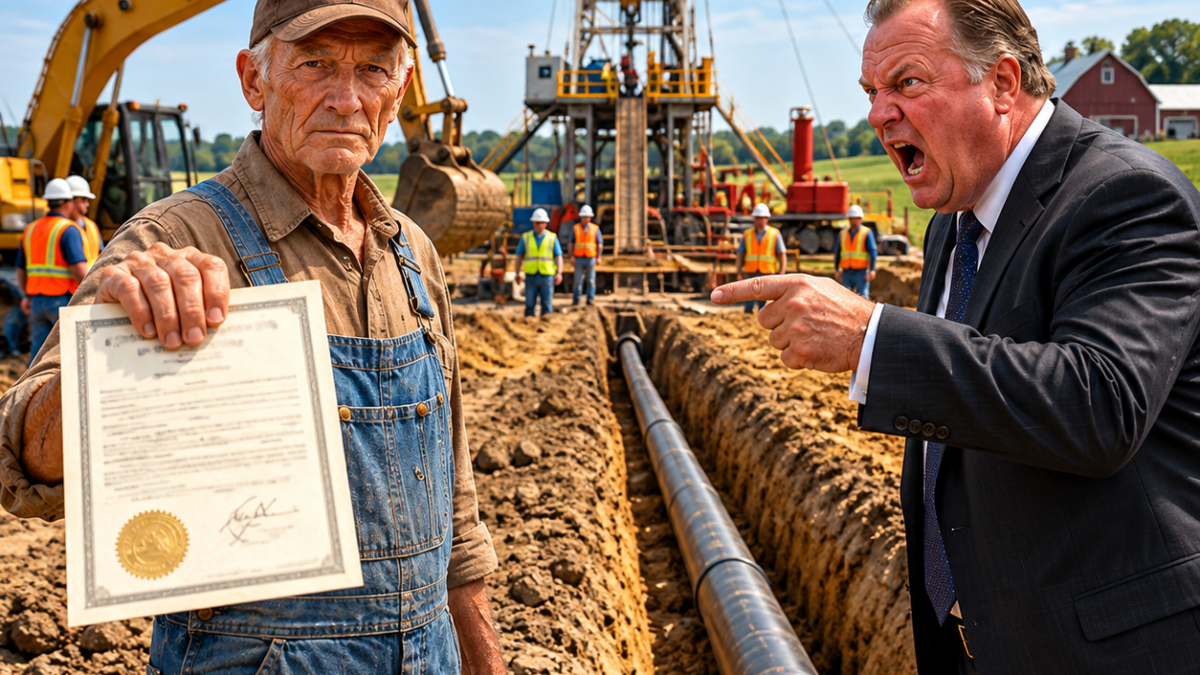
He Bought 3,170 Acres With Every Mineral Right Included—Then Learned the Bank Had Been Leasing His Gas Behind His Back.
The bank thought a $640 road penalty would keep a sixty-nine-year-old Kansas farmer busy arguing over gravel, but when he opened the steel safe where his father had kept every deed for forty years, he discovered the bank was hiding a fight worth far more than a dirt road.
Four years earlier he had bought 3,170 acres with every mineral right included, yet a company owned by the same bank had quietly signed a gas-production agreement over nearly 1,900 acres of his land, collected a $515,000 payment, and started taking a percentage of gas that the recorded deed said belonged to him.
Then his attorney carried the old easement into court, placed it in front of three bank lawyers, and asked one question none of them could answer: “Show me the sentence that says permission to use a road somehow gave your bank ownership of the gas beneath his farm.”
My name is Samuel Mercer.
I was sixty-nine years old when Harvest State Bank sent a man in a black SUV down the road my grandfather built with a tractor in 1964 and told me I had twelve days to make it suitable for bank traffic.
I remember the morning because the first cold front of September had come through western Kansas.
The wind had changed overnight.
You could smell fall in the dry grass.
I was checking fence along the south quarter when I saw the SUV coming toward me.
Black Chevrolet Tahoe.
Clean enough that the dust looked offended touching it.
It stopped in the middle of the lane.
The driver’s door opened.
A man about forty stepped out wearing a navy quarter-zip with HARVEST STATE BANK embroidered over the chest.
He carried a leather portfolio.
Did not introduce himself until he was close enough to hand me an envelope.
“Mr. Mercer?”
“Yes.”
“Daniel Pryor. Asset management.”
He looked down the road behind me.
Three miles of packed dirt, ruts, cattle crossings, and dust.
“This access road is currently out of compliance.”
“With what?”
“The Willow Creek shared-access standards.”
I looked at him.
“What shared access?”
Daniel opened his portfolio as though he had expected the question.
“The bank controls the Willow Creek Reserve development immediately east of your property.”
“I’m aware.”
“This roadway serves the western access corridor.”
“No.”
He looked up.
“Excuse me?”
“It serves my wheat fields.”
Daniel gave me the patient expression people use when they believe old age is responsible for disagreement.
“Mr. Mercer, I have the compliance notice here.”
He handed me the envelope.
“Twelve days.”
“For?”
“Road grading.”
“Shoulder widening.”
“Vegetation clearance.”
“Access for authorized Harvest vehicles.”
I opened the letter.
The amount at bottom was highlighted.
$640 ADMINISTRATIVE PENALTY.
PART2:
“If you decline,” Daniel continued, “Harvest will arrange the work and add all costs, associated legal fees, and the penalty to your outstanding agricultural credit facility.”
I read that line again.
Then looked at him.
“My farm loan?”
“Yes, sir.”
“You’re going to add charges to my farm loan because you don’t like my private road?”
“It isn’t being treated as exclusively private.”
“It is.”
“We have documentation indicating shared access rights.”
“Then send me the documentation.”
Daniel smiled.
“It’s referenced in the notice.”
“I said send me the document.”
“Your attorney can request it.”
“I already have an attorney.”
That bothered him slightly.
He recovered.
“Then I suggest you consult her promptly.”
He looked at the road again.
“Twelve days goes quickly.”
So does seventy years.
You learn not to waste time arguing with the messenger.
I folded the notice.
Put it into my shirt pocket.
Daniel expected more.
Maybe anger.
PART3:
Maybe a threat.
I gave him neither.
“That all?”
“Yes.”
“Gate’s wide enough to turn around.”
He stared at me.
Then walked back to the Tahoe.
I watched him reverse near the old cattle guard and drive away.
Only after the dust settled did I read the letter a second time.
The $640 did not bother me.
Not really.
I had spent more than that repairing a combine tire.
What bothered me was the tone.
Not request.
Authority.
Harvest State Bank had bought a failed development next to me three years earlier.
Now a bank employee had driven onto my property and spoken as though the bank already controlled a road my grandfather had cut sixty years ago.
That kind of confidence usually comes from one of two places.
Good paperwork.
Or bad assumptions.
I had learned from my father never to guess which.
The Mercer farm had begun in 1952 with 360 acres.
My grandfather, Walter Mercer, repaired farm machinery during the day and worked neighboring wheat fields during harvest.
He saved.
Slowly.
No land speculation.
No big development dreams.
A quarter section here.
Eighty acres there.
A neighboring family moved to Colorado.
He bought their pasture.
A widow sold one field after her husband died.
He bought that too.
By the time Granddad died in 1986, my father inherited almost fifteen hundred acres.
Debt free.
My father, Frank, believed land should grow only as fast as you could understand the paperwork attached to it.
He kept everything.
Deeds.
Surveys.
Oil correspondence.
Old leases.
Tax records.
Pipeline agreements.
Fence settlements.
Even letters that had become irrelevant decades earlier.
All inside a gray steel safe in the office off our mudroom.
When I was young, I used to laugh.
“Dad, why do you have a gas lease from 1974 that expired before Reagan was president?”
He would answer:
“Because people forget.”
“Paper doesn’t.”
He was right.
I inherited the farm in 2011.
By then I was already farming with him full time.
I kept buying acreage from neighbors who retired.
Not aggressively.
If land touched ours and price made sense, I looked.
The biggest purchase of my life came in 2020.
Prairie Crest Holdings owned 3,170 acres directly east and southeast of our original ground.
They had assembled it years earlier for some kind of agricultural investment project.
The company ran into financial trouble.
Needed cash.
The parcel came available.
Three thousand one hundred seventy acres is not something you buy on a handshake.
I hired my family attorney, Elizabeth Shaw, to review everything.
Elizabeth had represented farm families in Cedar Ridge County for almost twenty-five years.
She did not trust summaries.
Or brochures.
Or seller assurances.
She pulled every recorded document.
Surface ownership.
Mineral title.
Pipeline rights.
Access rights.
Prior leases.
Royalty reservations.
Water rights.
Every encumbrance anybody had ever attached to the property.
The review took almost seven weeks.
The seller became impatient.
I did not care.
One clause can make cheap land expensive for generations.
The final report was clean.
I would receive full surface ownership.
And full mineral ownership.
Oil.
Gas.
Anything else legally included.
No mineral reservation.
No severed mineral estate.
No active production lease.
There was one old document.
A 2013 easement granted to Basin Trail Energy.
Basin Trail had once looked at the property for possible gas development.
The easement gave it a defined corridor for access.
Nothing more.
Elizabeth sat across from me with the document open.
“Samuel, understand this.”
“I’m listening.”
“This is an access easement.”
“If Basin Trail or its lawful successor ever holds valid mineral rights that require access, they can use this specific corridor under these terms.”
“They don’t own the gas?”
“No.”
“Not from this document.”
“Could they drill?”
“Not unless they obtain a separate valid mineral lease or some other legal mineral interest.”
She drew a line on a yellow pad.
“Road on one side.”
“Mineral ownership on the other.”
“Different rights.”
“You can have permission to reach something without owning the thing you’re reaching.”
I nodded.
“Seems obvious.”
Elizabeth smiled.
“You would be amazed.”
I bought the property.
The 3,170 acres brought our family operation to 5,480.
I placed the deed, survey, title opinion, and easement analysis in Dad’s steel safe.
Then I went back to farming.
For four years, the Basin Trail document meant nothing.
No drilling.
No access requests.
No checks.
No gas trucks.
Just paper.
Then Harvest State Bank foreclosed on Willow Creek.
Willow Creek had started as a speculative real estate development east of us.
Four hundred ten acres.
The original developer borrowed heavily.
Roads.
Utilities.
A clubhouse foundation.
Marketing.
Then lot sales slowed.
Interest kept moving.
Eventually Harvest State Bank took the property.
I expected them to sell it.
Instead they finished it.
Renamed it Willow Creek Reserve.
“Private country living.”
“Estate lots.”
“Executive retreat community.”
All the usual language people use when selling a view of land they do not intend buyers to work.
I did not mind.
Their ground.
Their business.
What I noticed was traffic.
Survey pickups.
Geology vehicles.
Equipment.
Most came from the east.
Never crossed my place.
That mattered later.
At the time, I assumed they were doing site work.
Then Harvest sent the road notice.
The same evening Daniel Pryor left, my neighbor Howard Keene pulled into the yard.
Howard farmed west of Willow Creek.
Seventy-three.
Still refused to admit he needed hearing aids.
He got out carrying his own envelope.
“Harvest?”
I asked.
He held it up.
“Six hundred forty dollars.”
I looked.
Same letter.
Different road.
Howard said:
“Tom Willis got one.”
“Ellen Markham too.”
“What’d they say?”
“Tom already moved fence.”
My stomach tightened.
“Why?”
“Bank told him there was a development access standard.”
“His land isn’t in Willow Creek.”
“I know.”
“Does Tom?”
“He says it’s not worth fighting.”
That night I opened the steel safe.
The hinges squeaked.
Same sound they made when Dad was alive.
I laid Harvest’s notice beside the original property files.
The letter cited:
SECTION 6.4 — WILLOW CREEK INFRASTRUCTURE AND ACCESS AGREEMENT.
No recording number.
No deed reference tied to me.
No legal description showing my road inside the development.
Just authority written in bold type.
I called Elizabeth the next morning.
“I have homework for you.”
“Good morning to you too.”
“Harvest State Bank says Willow Creek section 6.4 controls my south road.”
“Does it?”
“That’s what I’m paying you to tell me.”
She laughed.
“Send it.”
“I want more than the letter.”
“What?”
“Everything Harvest recorded when it took Willow Creek.”
“Subdivision plats.”
“Foreclosure file.”
“Access agreements.”
“Easements.”
“Development documents.”
“Anything that touches our boundary.”
Elizabeth paused.
“You think they’re overreaching.”
“I think somebody drove onto my road and spoke with a lot of certainty.”
“That’s not illegal.”
“No.”
“But it makes me curious.”
Five days later, Elizabeth came to the farm.
She had nearly sixty pages.
We spread them across our dining table.
My wife had died eight years earlier.
Since then, the table had mostly been a place for tax folders and newspapers.
That day it disappeared beneath survey maps.
Elizabeth pointed.
“Here is Willow Creek’s recorded boundary.”
I followed the line.
East of my road.
Entirely.
The road did not sit inside Willow Creek.
Not one foot.
Then she opened the infrastructure agreement.
“Section 6.4 exists.”
“So they didn’t invent everything.”
“No.”
“What does it do?”
“Controls roads serving lots within the development.”
She flipped pages.
“The agreement binds owners participating in Willow Creek.”
“Are you one?”
“No.”
“Is any part of your 5,480 acres listed?”
“No.”
“Then the development agreement does not magically annex your farm.”
I wrote beside the paragraph:
NO AUTHORITY HERE.
Elizabeth smiled.
“Concise.”
“So we respond?”
“Not yet.”
“Why?”
“I’m still reading.”
That decision mattered.
Because Harvest moved again before we did.
A second letter arrived.
This one signed by Martin Vale.
President.
Harvest State Bank.
Penalty:
$1,950.
Language more aggressive.
INTERFERENCE WITH PROPERTY ACCESS.
Failure to open and improve the road could lead to legal action.
Elizabeth read the letter twice.
Then a third time.
“What?”
I asked.
She pointed.
“They’ve changed the phrase.”
“From?”
“Shared-road compliance.”
“Now property access.”
“So?”
She leaned back.
“If this were only about Willow Creek’s development standards, why keep emphasizing access?”
I understood.
“The old easement.”
“Maybe.”
We went back to the 2013 Basin Trail document.
Elizabeth traced corporate records.
Basin Trail Energy had been acquired in 2018 by Harvest Resource Partners.
Harvest Resource Partners was owned by Harvest State Bank.
I sat in her office two days later.
“So Harvest inherited the easement.”
“Yes.”
“Does that change anything?”
“No.”
“They inherit what Basin Trail had.”
“Not what Harvest wishes Basin Trail had.”
She tapped the paper.
“This corridor remains limited.”
“But now we have a reason the bank might care about your road.”
“What reason?”
“That’s what I’m looking for.”
A week passed.
I cut wheat.
Checked cattle.
Repaired a hydraulic line.
Tried not to think about the bank.
Then Elizabeth called at 7:12 one morning.
“Can you come in?”
“Now?”
“Yes.”
“Bad?”
“Interesting.”
Attorneys use interesting the way doctors use concerning.
I drove.
On her desk sat a contract dated May 2024.
HARVEST RESOURCE PARTNERS.
BLUE MESA GAS, LLC.
MINERAL DEVELOPMENT AND PRODUCTION AGREEMENT.
I read the first pages.
Then the map.
I stopped.
The shaded area extended across almost 1,900 acres of the 3,170 acres I had bought in 2020.
“What am I looking at?”
Elizabeth said:
“Harvest Resource Partners gave Blue Mesa Gas the right to explore and produce gas from this area.”
“My area.”
“Yes.”
“How?”
“That is the question.”
I kept reading.
Signing payment:
$515,000.
Revenue interest to Harvest:
12.5 percent.
I looked up.
“They sold a lease on my gas?”
“That is what the agreement appears to claim they had authority to do.”
“They don’t own my gas.”
“According to your deed, no.”
“Maybe I missed something.”
“You didn’t.”
“Check again.”
“I already did.”
“Check again.”
She did.
We pulled the original 2020 deed from my safe that afternoon.
Not copy.
Original.
Elizabeth read the granting language aloud.
“All surface estate and all mineral estate…”
No reservation.
No exception.
No active lease carried forward.
Nothing.
I sat at Dad’s old desk.
He had died before the purchase.
Still, I heard him.
Paper doesn’t forget.
“Could Harvest believe the easement gave them minerals?”
Elizabeth frowned.
“They can argue interpretation.”
“But access is not ownership.”
“No.”
“Then why would Blue Mesa sign this?”
“Maybe they relied on Harvest’s representations.”
“Maybe they did their own title work and reached a different conclusion.”
“Maybe something is missing.”
“We don’t assume fraud just because we don’t understand something yet.”
That is one reason I trusted Elizabeth.
Anger wanted a villain immediately.
Law wanted a record.
“Find the gas.”
She looked at me.
“What?”
“If they signed a production agreement, find out whether anyone drilled.”
She did.
State energy records were public enough if you knew where to look.
Blue Mesa had filed drilling information.
Two wells.
Permits.
Production reports.
The locations were behind Willow Creek, accessed from the bank-controlled side.
That explained why I had not seen drilling traffic across my fields.
The wells were already producing.
Not testing.
Producing.
For months.
I remember reading the first production report.
Numbers.
Volumes.
Dates.
Revenue estimates.
The gas was being drawn from formations extending beneath acreage my deed said I owned.
You cannot see somebody taking natural gas from thousands of feet below ground.
No missing pile.
No empty grain bin.
No broken lock.
The land looks exactly the same.
That was the strangest part.
I drove across the 2020 parcel that evening.
Stopped on a hill.
Wheat stubble.
Windmill.
Cattle near a tank.
Nothing looked stolen.
Yet somewhere far beneath my boots, gas had been pulled into a wellbore, metered, sold, and turned into checks paid to people who could not show me a deed saying it belonged to them.
That kind of theft—if theft was what the court ultimately called it—felt colder than somebody climbing a fence.
It required paperwork.
Lawyers.
Corporate approvals.
Invoices.
A system.
Elizabeth obtained more reports.
The agreement’s financial trail was clear.
Harvest Resource Partners had collected the $515,000 signing payment.
Then revenue participation after production began.
I asked:
“Why the road now?”
She did not answer immediately.
Then:
“Maybe because current access works.”
“Maybe they want redundancy.”
“Maybe Blue Mesa wants heavier equipment.”
“Maybe the bank wants your road widened for development reasons unrelated to drilling.”
“Maybe they realized their legal position was weak and wanted you to acknowledge broader access.”
“Which?”
“We don’t know.”
That answer frustrated me.
I wanted:
They did X because Y.
Elizabeth kept saying:
We can prove X.
We cannot yet prove Y.
That distinction later saved us from sounding reckless.
I did not call Martin Vale.
Did not drive tractor across the corridor.
Did not chain gates.
Did not confront Blue Mesa employees.
Instead Elizabeth drafted a formal demand.
Twenty-five days.
Harvest State Bank.
Harvest Resource Partners.
Copies to Blue Mesa.
The letter laid out the documents.
2020 deed.
Full mineral ownership.
2013 limited easement.
2024 Harvest-Blue Mesa agreement.
Production data.
Then demands.
Stop claiming mineral authority over my property.
Produce all revenue statements.
Account for every dollar received.
Suspend disputed production.
Provide legal basis for Harvest’s claim.
Withdraw road penalties.
I read every sentence before it went out.
No “fraud.”
No “theft.”
No “conspiracy.”
Only what documents could support.
Three days later, I found survey stakes on the south road.
New.
Bright orange.
Some fifteen or twenty feet inside the line shown on my old map.
A survey crew was farther east.
I drove over.
One man approached.
“Can I help you?”
“Who hired you?”
“Harvest.”
“What are you staking?”
“Access corridor.”
“Based on which legal description?”
He hesitated.
“I’d need to refer you to project manager.”
“Are you aware you’re on Mercer property?”
“We’re surveying boundary-related infrastructure.”
“I asked if you’re aware.”
He looked uncomfortable.
“Yes.”
I did not pull stakes.
Did not tell him to leave.
I photographed.
GPS coordinates.
Wide shots.
Close shots.
Every marker.
Then hired my own licensed surveyor.
That cost money.
Worth every cent.
They went back to original monuments and recorded descriptions.
No reliance on Harvest’s fresh stakes.
A week later, their survey matched mine.
Harvest’s contractor stakes widened the practical corridor beyond the recorded easement.
Elizabeth added the survey to our file.
Now there were three questions.
Who owned minerals?
How broad was access?
Why was the bank pushing both at same time?
Harvest responded on day twenty-two.
Forty-six pages.
Their position:
The 2013 easement remained valid.
The easement’s purpose had always been energy development.
Harvest Resource Partners, as successor, held associated rights necessary to fulfill that purpose.
The Blue Mesa agreement was therefore valid.
As for the road, Harvest maintained broader access was reasonably necessary.
Elizabeth read the response.
Then looked at me.
“They are not backing down.”
“Are they right?”
“No.”
“You sound certain.”
“Because they keep blending two things.”
“Access.”
“And ownership.”
I nodded.
“What now?”
“Court.”
I did not want court.
That needs saying.
People enjoy stories about landowners humiliating banks in courtrooms.
Court is expensive.
Slow.
Stressful.
Nobody wins back the months.
I asked Elizabeth:
“Can we settle?”
“We can try.”
We did.
Three weeks of letters.
Calls.
No agreement.
Harvest would not return revenue.
Would not acknowledge mineral ownership.
Would not cancel access demands.
Eventually, I signed the complaint.
Quiet-title issues.
Declaratory relief.
Accounting.
Revenue recovery.
Road penalties.
Easement interpretation.
The documents became a timeline.
Granddad buys first land.
Road constructed.
Basin Trail access easement.
Harvest acquires Basin Trail through its subsidiary.
I purchase 3,170 acres with full mineral rights.
Harvest Resource Partners signs Blue Mesa agreement.
Late 2024.
Commercial gas production begins.
Afterward.
Harvest sends road notices.
That timeline did not automatically prove intent.
Elizabeth emphasized that.
But it told a story the court needed to understand.
Harvest arrived at trial with three attorneys.
I arrived with Elizabeth and two banker boxes.
I wore my church suit.
Had not fit comfortably in years.
Harvest’s lead lawyer, Charles Denning, was good.
Calm.
Prepared.
He did not argue I lacked the 2020 deed.
Instead he argued the 2013 easement had been created specifically to facilitate resource development and should be interpreted broadly enough to include operational rights necessary for that development.
Elizabeth did something that surprised me.
She agreed with him about one part.
“The easement is valid.”
Harvest’s table shifted.
I looked at her.
She had told me she would do it.
Still felt strange.
She continued.
“My client has never asked this court to erase the 2013 easement.”
“It grants a defined access corridor under stated conditions.”
“Mr. Mercer bought his land subject to that.”
“Correct?”
Charles said:
“Yes.”
Elizabeth lifted the easement.
“Good.”
Then she walked toward Harvest’s table.
Placed a copy in front of them.
“Please show the court the sentence in this document that conveys ownership of natural gas to Harvest Resource Partners.”
Silence.
Charles began:
“The document must be read in context—”
“I understand.”
“Show me the mineral conveyance.”
Judge looked over glasses.
Charles flipped pages.
Second lawyer leaned in.
Third opened another binder.
Elizabeth waited.
Thirty seconds feels longer in a courtroom.
Charles finally said:
“The easement does not use those specific words.”
“Does it use any words conveying title to the mineral estate?”
“It creates rights necessary to—”
“Yes or no?”
Harvest objected.
Judge allowed answer.
Charles said:
“No explicit conveyance.”
Elizabeth nodded.
Then returned to table.
That was not the end.
But it changed the case.
Next came my 2020 deed.
Clear.
Surface and mineral.
No reservation.
Judge asked Harvest directly:
“Do you have any document showing the mineral estate was severed from Prairie Crest’s surface estate before the 2020 sale?”
Attorneys conferred.
They produced old exploration materials.
Corporate documents.
Nothing conveying mineral ownership away from seller.
Judge asked again.
“Any mineral deed?”
No.
“Any recorded reservation?”
No.
“Any active lease binding the purchaser at closing?”
No.
Then money.
Harvest received $515,000 when Blue Mesa signed.
After production began, Harvest Resource Partners received another $286,000 from its 12.5 percent share.
Total:
$801,000.
Some early summaries later misreported it as $81,000 because somebody dropped a zero.
Court records did not.
Eight hundred one thousand dollars.
From an agreement covering gas under land for which Harvest could not produce a mineral deed.
Martin Vale testified.
The bank president looked smaller in witness chair than he had in his signature block.
Elizabeth asked:
“Did Harvest’s legal department review Mr. Mercer’s 2020 deed before the May 2024 Blue Mesa agreement?”
Martin paused.
“I cannot personally recall.”
“Was the deed difficult to obtain?”
“No.”
“Was it recorded?”
“Yes.”
“Was Harvest aware Prairie Crest sold the acreage in 2020?”
“I believe so.”
“You are asking this court to accept that Harvest Resource Partners entered a mineral-development agreement worth hundreds of thousands of dollars without anyone confirming who owned the minerals?”
“Objection.”
Judge narrowed question.
Martin answered carefully.
“The bank relied on its understanding of inherited rights.”
Elizabeth held up easement.
“An understanding not expressed in a mineral deed.”
Martin said nothing.
Then road letters.
$640.
$1,950.
The timing.
The widened survey stakes.
Harvest objected when Elizabeth suggested the road pressure might relate to gas development.
Judge agreed motive could not be assumed.
Elizabeth nodded.
“I am not asking the court to infer motive.”
“I am establishing sequence.”
That was all she needed.
Documents.
Sequence.
Ownership.
Money.
Trial ended.
Then waiting.
Nineteen days.
Farm work helped.
Cattle do not care about litigation.
A waterer froze.
A tractor needed bearings.
Life continued.
On day nineteen, Elizabeth called.
“We won.”
I was standing beside a feed truck.
“What does that mean?”
“Come in.”
“Elizabeth.”
She laughed.
“The court confirmed you own the disputed mineral estate.”
I leaned against truck.
“Harvest?”
“Their Blue Mesa agreement is invalid to the extent it claims rights over your minerals.”
“Road?”
“Bank has no right to impose Willow Creek standards on your farm.”
“Penalties?”
“Gone.”
“Survey?”
“Original easement controls.”
I closed my eyes.
“And money?”
“Accounting and restitution ordered.”
I sat on truck step.
The final judgment said access was not ownership.
A corridor could not transform itself into a mineral deed just because somebody used it as though it did.
Harvest Resource Partners had to return the $801,000 it had received through the unauthorized portion of the deal.
With interest, legal fees, survey expenses, and recoverable costs, Harvest’s total obligation exceeded $940,000.
People later called that my “million-dollar win.”
It did not feel like winning a lottery.
Much of that money represented gas that was already gone and expenses I never should have had.
Still, I kept reading one paragraph.
SOLE OWNER OF THE DISPUTED MINERAL RIGHTS.
That mattered.
Not because I wanted to become a gas baron at sixty-nine.
Because my deed meant what it said.
Dad’s steel safe had been right.
Harvest State Bank announced an internal review.
Martin Vale stepped down before it ended.
The Willow Creek unit was reorganized.
Threatening letters to Howard, Tom, Ellen, and other surrounding landowners were withdrawn.
Tom moved his fence back.
I paid for his survey.
He tried refusing.
I told him:
“Consider it interest.”
Blue Mesa stopped production under the invalid agreement.
Then something unexpected happened.
Their vice president called me directly.
Not Harvest.
Me.
“Mr. Mercer, we’d like to discuss a new lease.”
I laughed.
“Now you found my number.”
He accepted that.
“We relied on Harvest’s claimed title position.”
“Your title people had access to county records.”
“Yes.”
“That bother you?”
“Yes.”
“Good.”
I could have told them no.
Shut it all down.
Emotion wanted that for about a week.
Then I drove past a Blue Mesa crew waiting offsite.
Roughnecks.
Truck drivers.
Equipment operators.
Men and women whose paychecks had nothing to do with a bank’s title mistake.
My fight had never been with them.
So I told Elizabeth:
“Let them make an offer.”
She raised eyebrow.
“You sure?”
“No.”
“Good.”
Blue Mesa came to my kitchen table.
This time, nobody assumed anything.
My conditions were written before money.
Groundwater baseline testing.
Monitoring wells.
Cattle-water protections.
Road repair.
Defined access.
No widening without written consent.
Production reports directly to me.
Inspection rights.
Environmental bonding.
Spill response.
Clear royalty calculations.
Defined drilling area.
No assignment without notice.
And one sentence Elizabeth insisted on putting near top:
LANDOWNER’S MINERAL OWNERSHIP ACKNOWLEDGED.
I liked that sentence.
Blue Mesa accepted most.
Negotiated others.
That is what negotiation looks like when people agree on who owns what.
Eventually we signed.
A real lease.
The gas continued.
Workers returned.
This time checks went to the true mineral owner.
I did not keep everything.
Before you decide I am some saint, understand I had enough.
The farm was debt manageable.
No children at home.
My daughter lived in Wichita.
My son farmed part time with me.
I used part of the recovered money and future royalties to repair county gravel roads used by farmers and energy traffic.
Not because the county demanded it.
Because roads needed it.
I set aside a fund through the local agricultural association for elderly landowners who received complicated notices and could not afford title review.
Howard called it the “Samuel Mercer Bank Defense Fund.”
I made him change the name.
We settled on:
Cedar Ridge Land Records Assistance.
Boring.
Elizabeth approved.
Tom Willis was first person to use it.
Turned out his property had no issue at all.
But now he knew.
That was worth something.
I also bought a new grain drill.
I am not pretending every dollar became charity.
The old one was terrible.
The south road stayed almost exactly where Granddad built it.
I graded two potholes.
Added gravel near washout.
That was it.
No widened shoulders.
No Harvest signs.
No development-standard nonsense.
The original easement remained legally valid along its actual corridor.
I honored it.
Because winning did not mean pretending Harvest had no rights at all.
That distinction became important to me.
They had some rights.
They claimed more.
I defended mine.
Law is often not about one side owning everything.
It is about boundaries.
A road easement is a road easement.
A mineral deed is a mineral deed.
A bank contract is a bank contract.
A farmer’s property remains his until a valid document says otherwise.
Simple in principle.
Expensive when people ignore it.
A year after the ruling, I was checking fence on the same stretch where Daniel Pryor had first stopped.
Another Harvest vehicle came down road.
This one slowed well before me.
Young woman rolled window down.
“Mr. Mercer?”
“Yes.”
“Harvest compliance.”
I laughed.
Her face changed.
“Sorry.”
“Not you.”
She held up folder.
“We’re confirming the easement markers under the court-approved survey.”
“Survey crew scheduled Tuesday.”
“Need access through south gate.”
She handed me written request.
Correct parcel number.
Correct easement description.
Correct contact.
No penalty.
No threat.
I read it.
“Tuesday’s fine.”
She blinked.
“That’s it?”
“That’s how asking works.”
She smiled.
“I’ve heard a lot about you.”
“I’m sorry.”
She drove off.
That small moment gave me more satisfaction than I expected.
Institutions can learn.
Sometimes only after paying tuition.
My father’s steel safe still sits in the office.
Inside now:
1952 deed.
1964 road map.
2013 easement.
2020 deed.
Harvest’s original $640 penalty letter.
Court ruling.
New Blue Mesa lease.
I kept the penalty notice deliberately.
My son asked:
“Why that?”
“Because that was the cheap part.”
He laughed.
But I meant it.
Six hundred forty dollars looked like the dispute.
It was not.
It was noise at the front door while $801,000 worth of gas money moved somewhere else.
The lesson is not that every annoying bank letter hides a mineral conspiracy.
Usually an annoying letter is just an annoying letter.
The lesson is narrower.
When somebody claims authority over your property, ask them to show it.
Not explain it.
Not summarize it.
Not say their legal department approved it.
Show the document.
Which deed?
Which easement?
Which legal description?
Which signature?
Which mineral conveyance?
The entire case turned on the gap between two sentences.
“We have access.”
And:
“We own the gas.”
Harvest kept speaking as though they meant the same thing.
They did not.
Three bank lawyers eventually had to admit that in front of a judge.
My grandfather understood that without law school.
He used to say:
“If you borrow a neighbor’s gate, you didn’t buy his cattle.”
Same principle.
Elizabeth preferred more formal language.
I prefer Granddad’s.
People also ask whether I think Harvest intentionally tried to distract me with the road penalties.
I do not know.
The timeline bothered the judge.
It bothered me.
But suspicion is not proof.
I learned enough through the case to stop inventing motives when documents already proved conduct.
Harvest signed an agreement claiming authority it could not establish.
Gas was produced.
Money was received.
They pushed broader access afterward.
Those are facts.
Why every executive made every decision?
I cannot see into another man’s head.
I did not need to.
Ownership was enough.
That attitude probably kept me sane.
Anger wants every opponent to be evil.
Property law only asks what they had the right to do.
They didn’t have this right.
That ended the matter.
Martin Vale never called me.
I did not expect him to.
Daniel Pryor did.
Almost two years after first notice.
He had left Harvest.
Took job with another bank.
He asked whether he could stop by.
We sat on porch.
He looked embarrassed.
“I delivered that first letter.”
“I remember.”
“I didn’t know anything about the gas agreement.”
“I figured.”
“You did?”
“You were asset management.”
“Not energy.”
He looked relieved.
“I thought you hated me.”
“I didn’t know you well enough.”
He laughed.
“I believed what our system said.”
“That the road was shared.”
“Yes.”
“Did you check the deed?”
“No.”
“Would’ve saved gas money.”
He nodded.
Then said:
“I use your case when training people now.”
“For?”
“Never describe a right more broadly than the document.”
I liked that.
“Good lesson.”
He looked across fields.
“You ever think of selling?”
“No.”
“Even with mineral money?”
“No.”
“Why?”
I looked toward road.
Because land meant something different to me after the fight.
Not more valuable.
Clearer.
Ownership is stewardship mixed with responsibility.
My grandfather bought 360 acres because he wanted ground his family could work without asking another man’s permission.
My father protected the papers because he knew memory disappears.
I bought 3,170 acres because it connected the farm.
None of us did it so a bank could quietly turn access language into ownership.
“No.”
I said again.
Daniel nodded.
“Fair.”
The gas wells remain.
Under my lease now.
Blue Mesa sends production statements monthly.
I read every one.
Not because I distrust them automatically.
Because trust works better when somebody checks.
Groundwater samples are tested.
Cattle wells monitored.
Road damage repaired.
When Blue Mesa needs equipment wider than the defined corridor, they call.
Sometimes I say yes.
Sometimes no.
The first time their field manager asked for temporary access across a hay field, he sounded nervous.
“We can go around if needed.”
“How long?”
“Two days.”
“Ground dry?”
“Yes.”
“Any heavy haul?”
“One crane.”
“Pay crop damage if you rut?”
“Yes.”
“All right.”
He paused.
“That easy?”
“That easy.”
Again:
That is how asking works.
The court did not make me anti-development.
Or anti-bank.
Or anti-energy.
It made me anti-assumption.
There is a difference.
Harvest still finances farms.
Blue Mesa still drills gas.
Willow Creek still sells expensive lots.
My cattle still break fence.
America did not collapse.
The only thing that changed was the line everyone had to respect.
Mine.
One Saturday my granddaughter, Emma, came out from Wichita.
She was fourteen.
Smart.
Impatient.
The kind of kid who thinks old documents are boring until they become stories.
She saw the gray steel safe.
“What’s in there?”
“Your inheritance.”
Her eyes widened.
“Money?”
“Paper.”
She looked disappointed.
I opened it.
Showed original 1952 deed.
Granddad’s signature.
Then Dad’s maps.
Then my 2020 purchase.
The court order.
Emma flipped through.
“You keep all this?”
“Yes.”
“It’s online.”
“Some.”
“You’re very old.”
“I’ve been told.”
She picked up $640 letter.
“This started the lawsuit?”
“Yes.”
“For six hundred dollars?”
“No.”
“That’s what it says.”
“It started a question.”
“What question?”
“Who gets to tell you what is yours?”
She looked at me.
“That sounds dramatic.”
“It cost $940,000 to answer.”
Her expression changed.
I showed her the easement.
Then deed.
Explained access versus ownership.
She understood faster than Harvest’s lawyers, though I did not tell them that.
Emma said:
“So they had permission to use the road, but not permission to take the gas.”
“Exactly.”
“That’s obvious.”
“Yes.”
“Then why’d it go to trial?”
I closed the safe.
“Because obvious things become expensive when enough people are paid to argue they aren’t obvious.”
She laughed.
Then asked:
“Are mineral rights going to be mine someday?”
“Partly.”
“What do I do with them?”
“First thing?”
“What?”
“Know you have them.”
That is why I am telling this story.
Not because everybody owns gas.
Most people do not.
Some properties have severed mineral estates.
Some deeds reserve rights.
Some leases survive sales.
Some legal systems differ.
You do not assume.
You read.
The title report I paid for in 2020 seemed overly cautious to Prairie Crest.
That caution saved me years later.
If Elizabeth had not verified the mineral estate before closing, Harvest’s argument would have been harder to unwind.
If Dad had not taught me to keep originals, slower.
If I had moved fence when the first letter arrived because fighting felt inconvenient, maybe Harvest would later point at my compliance as evidence I accepted their interpretation.
Maybe not.
But I am glad I never gave them the chance.
Patience is not passive.
That is another lesson age taught me.
I did not yell at Daniel.
Did not rip stakes out.
Did not block drillers.
Did not trespass into Willow Creek.
I gathered documents.
Hired surveyor.
Sent notice.
Waited twenty-five days.
Filed suit only after letters failed.
That looked slow.
It was faster than cleaning up one angry mistake.
A tractor across an access corridor would have given Harvest photographs of obstruction.
Pulling survey stakes might have turned evidence into an argument about me.
Threatening Blue Mesa workers would have shifted attention.
So I did nothing dramatic.
Then I won.
People sometimes dislike that version because it is less exciting than farmer chains gate and bank panics.
Real victories are often boring until judge signs them.
Elizabeth says same.
The bank’s internal investigation never became fully public.
I know management changed.
Some lending policies changed.
Outside title review became mandatory for certain Harvest resource agreements.
Martin left.
I did not celebrate his leaving.
I had wanted my gas, not his career.
That distinction surprised some neighbors.
Howard wanted me to “finish them.”
“What does that mean?”
I asked.
“Go after everybody.”
“Everybody who?”
“The bank.”
“That’s a building full of tellers and loan officers.”
“You know what I mean.”
“No.”
“I don’t.”
The people responsible should answer.
People who processed checking accounts did not steal my gas.
Anger spreads if you let it.
I had spent enough money defining boundaries.
I was not going to forget them emotionally.
Blue Mesa workers returned under new contract.
First month, foreman stopped by with a box of steaks.
“Company gift.”
I refused.
“Why?”
“Your contract says no unreported gifts above nominal value to landowner representatives.”
He stared.
Then laughed.
“You actually read it.”
“I read everything now.”
He took steaks back.
Next day brought a baseball cap.
I accepted.
Nominal.
Elizabeth approved.
The first royalty check under my own lease was strange.
I sat at table with it.
Not enormous.
Production fluctuates.
But it had my name.
That mattered.
I thought about $515,000 Harvest had received for signing away something it did not own.
Then about $286,000 more.
Money has a way of making ownership arguments sound abstract.
They are not.
Somebody receives the check.
That is where abstraction ends.
I deposited mine.
Used part for road gravel.
Part into farm operating account.
Part into land-record fund.
And, yes, I bought the grain drill.
Best purchase in story.
Nobody writes headlines about grain drills.
They should.
Two summers later, drought hit.
Gas checks helped carry cattle feed costs.
That gave the mineral fight another meaning.
Granddad bought land for stability.
Dad expanded carefully.
I bought 3,170 acres because it connected what generations had built.
Mineral income ended up helping preserve surface farming during a bad year.
That felt right.
Not wealth detached from land.
Land supporting land.
I imagine Harvest would call that inefficient.
Fine.
One evening, I took Emma down the south road.
She was learning to drive pickup.
I told her:
“Stay right.”
“I am.”
“You’re in middle.”
“There’s no one coming.”
“That is not how roads work.”
“You’re annoying.”
“Family tradition.”
We stopped near where Daniel’s SUV had first parked.
The road still looked rough.
Granddad would recognize it.
Emma asked:
“This is the famous road?”
“No road is famous.”
“Dad says it is.”
“Your father exaggerates.”
“Did bank really want you to widen it?”
“Yes.”
“Did you ever?”
“No.”
She looked.
“It kind of needs it.”
I stared at her.
“Get out.”
She laughed so hard she almost stalled.
We kept driving.
At the far end, a Blue Mesa sign marked their authorized turnoff.
Small.
Professional.
On my side, a gate.
On the post, laminated map showing easement boundaries.
Clear.
No confusion.
That is what expensive disputes buy if people learn anything.
Clarity.
When I get too proud about the case, I remember something Elizabeth said after judgment.
“You didn’t win because you’re a farmer.”
“You didn’t win because Harvest is a bank.”
“You won because your deed said one thing and their easement did not say the other.”
I liked that.
No mythology.
No little guy versus giant corporation.
Just evidence.
That matters because the opposite can also be true.
A bank can be right.
A farmer can be wrong.
An old family belief can be contradicted by recorded documents.
Ownership is not awarded to whoever tells the better story.
That is why we keep deeds.
I could have lost.
If mineral rights had been reserved.
If Basin Trail held a valid surviving lease.
If the 2020 purchase excluded the gas.
If another recorded instrument existed.
History alone would not save me.
Granddad farming for seventy years does not create rights the deed never conveyed.
Fortunately, the paperwork matched the family history.
That is the real reason I slept after ruling.
Not because a bank lost.
Because uncertainty ended.
Three words:
It is yours.
That was all I had ever asked the records to confirm.
Harvest’s original letter now sits beside ruling.
Sometimes I show visitors.
Two pages.
One says pay $640 and widen road.
Other says the bank had no authority to impose development rules and I owned the disputed minerals.
People laugh at contrast.
I don’t.
It reminds me how easy it is to obey official-looking paper without asking what stands behind it.
A logo is not authority.
A penalty amount is not authority.
An attorney’s signature is not authority.
Authority comes from law and valid rights.
Sometimes the person sending the letter has both.
Sometimes they do not.
You have to look.
Years after everything, I saw Martin Vale once at a farm-equipment auction.
He had retired or been retired.
I do not know which.
He recognized me.
We stood beside a row of combines.
“Mr. Mercer.”
“Mr. Vale.”
He looked older.
“I wanted to tell you something.”
I waited.
“The bank should have resolved title before Blue Mesa.”
“Yes.”
He nodded.
“I believed people under me had.”
“I understand.”
“That’s not an excuse.”
“No.”
He looked toward auctioneer.
“I lost my job over it.”
I said nothing.
“I was angry at you for a while.”
“I figured.”
“That doesn’t make sense.”
“Anger rarely checks title.”
He laughed despite himself.
Then:
“Do you hate Harvest?”
“No.”
He seemed surprised.
“Why not?”
“My granddaughter has savings account there.”
That genuinely made him laugh.
“Seriously?”
“Yes.”
“After all that?”
“Different branch.”
“Different people.”
“And their rate was good.”
He shook his head.
“You’re something.”
“No.”
“I’m a farmer.”
We shook hands.
That was it.
I did not forgive an institution.
Institutions do not need emotional forgiveness.
They need controls.
Audits.
Consequences.
Correction.
People are different.
Martin admitted error.
That was enough for one conversation.
I bought no combine that day.
Prices were ridiculous.
The farm is still 5,480 acres.
I have not bought more.
At some point enough is enough.
My son keeps asking whether we should acquire a neighboring quarter if it comes up.
I tell him:
“Bring me the deed.”
He says:
“You’ve become obsessed.”
Maybe.
Dad would approve.
The gas continues under limited agreement.
Blue Mesa has proposed third well.
Not approved yet.
We are reviewing groundwater studies.
Nobody rushes me anymore.
Funny what one court judgment does to meeting etiquette.
Harvest vehicles call before entering.
Blue Mesa sends maps.
Survey stakes do not appear unexpectedly.
If someone says “shared access,” they attach legal description.
That may be my favorite consequence.
Vocabulary improved.
The neighbors improved too.
Howard had his deeds reviewed.
Tom.
Ellen.
Several families discovered old easements they had forgotten.
One discovered mineral rights had actually been severed in 1978.
He was disappointed.
But knowing truth is better than discovering it after somebody drills.
The land-record assistance fund helped with those reviews.
That might be the part I am proudest of.
Not $940,000.
Not winning.
Making sure other old farmers did not stare at official envelope and assume resistance was unaffordable.
Sometimes resistance is expensive.
Ignorance can cost more.
I keep thinking of the day Daniel handed me that first envelope.
If I had looked only at $640, I might have written check.
If I had widened road because it felt easier, maybe nothing else changed legally.
Maybe still discover gas.
Maybe not.
But the letter made me open the safe.
The safe made me read the deed.
The deed made Elizabeth check the easement.
The easement led to Harvest Resource Partners.
Harvest led to Blue Mesa.
Blue Mesa led to production reports.
One small inconsistency pulled entire chain into daylight.
That is how investigations work.
Rarely one dramatic clue.
More often:
This does not fit.
Follow it.
The bank said road.
Document said minerals.
Bank said access.
Deed said ownership.
Somebody was blending categories.
Once you separate them, truth becomes less complicated.
My grandfather never studied law.
But he knew boundary.
My father never worked energy title.
But he knew records.
I spent my life farming.
Still, all three generations contributed to that courtroom.
Granddad built road.
Dad kept paper.
I asked question.
Sometimes inheritance is not land.
It is habit.
The habit of not signing until you understand.
The habit of saving documents.
The habit of asking someone to show you where your obligation is written.
Those habits are why 3,170 acres remained what I bought.
Surface.
And everything legally conveyed beneath it.
When I die, that steel safe goes to my children.
Not because safe matters.
Most records are digitized now.
But I want them to see it.
Heavy.
Gray.
Scratched.
A little rust near bottom.
Inside it, three generations of proof.
Maybe Emma will roll her eyes.
Probably.
Then one day someone may send her a letter saying:
We have the right.
I want her first question to be the same one Elizabeth asked in court.
Show me where.
Not:
Who are you?
Not:
How powerful is your company?
Not:
How much will fighting cost?
Show me the document.
That question forced three bank attorneys to flip through an easement they had been using as if it were a mineral deed.
They could not find the sentence.
Because it did not exist.
Everything after that was accounting.
Eight hundred one thousand dollars already paid to the wrong rights-holder.
Interest.
Fees.
Costs.
More than $940,000 by the end.
People call that expensive lesson.
I think cheapest lesson would have been reading the deed before signing a gas contract.
But corporations, like farmers, sometimes pay tuition.
My greatest victory remains what happened afterward.
The road stayed.
Not upgraded into some bank boulevard.
Not blocked out of spite.
Still useful.
Still dusty.
Still mine, subject only to the narrow rights actually recorded.
Blue Mesa workers still use lawful access when needed.
Cattle still cross.
My pickup still bounces through same potholes.
Granddad would complain I need more gravel.
He would be right.
At sunset, that road looks exactly like what it is.
Not a development amenity.
Not an energy company asset.
Not a bank corridor.
A farm road.
Built in 1964 by a man with an old tractor.
Protected six decades later by paper his son taught his grandson never to throw away.
And beneath that road, deep under wheat and cattle and dry Kansas soil, there is natural gas.
For a while, Harvest State Bank acted as if owning the path meant owning what lay beneath it.
A judge reminded them otherwise.
A road gets you somewhere.
It does not make the destination yours.
That principle cost the bank nearly a million dollars to relearn.
My grandfather would have explained it for free.




