PART 2: She Called Me Senile and Tried to Take My House, Certain the Court Would See Only a Helpless Old Teacher
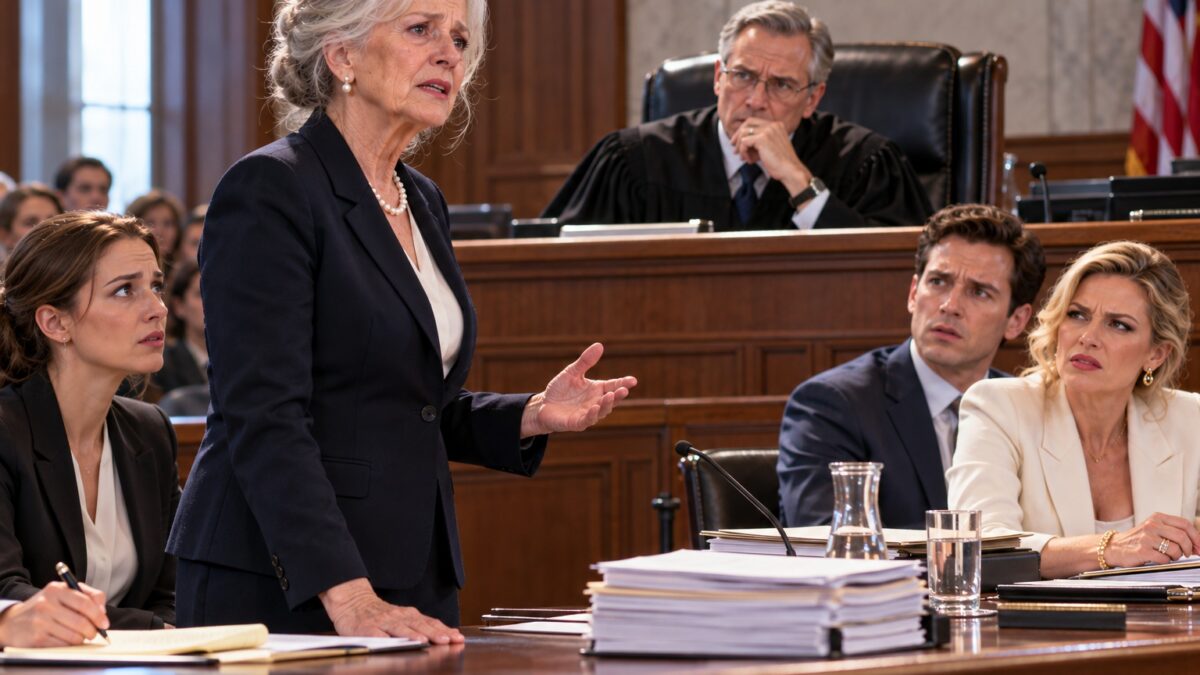
PART 2 and FULL ENDING  Thank you

If you had asked me two years earlier what I wanted from the rest of my life, I would have given you a very boring answer.
Peace.
That was all.
At sixty-eight, boring sounded wonderful.
My name was Amalia Harrington.
At least, that was the name everyone in my town knew.
I had spent thirty-five years teaching fourth grade at Pinewood Elementary.
Children had called me Mrs. Harrington.
Parents had sent me Christmas cards.
Former students occasionally stopped me in grocery stores twenty years later and said things like, “You’re the reason I learned long division,” which I considered both a compliment and an accusation.
I loved teaching.
People often assume you choose a modest profession because you never had access to anything grander.
That was not true in my case.
But nobody knew it.
My classroom had been my kingdom.
Not because I ruled it.
Because everything important happened there.
Children discovered books.
Learned fractions.
Had their first serious arguments with friends.
Cried over dead pets.
Became proud of handwriting.
Learned that being wrong was survivable.
I used to tell them, “If you disagree with me, bring evidence.”
They thought I was teaching critical thinking.
In truth, some habits never leave you.
I had one son.
Harry.
My husband John died when Harry was twelve.
That was the version of the story everyone knew.
And it was true.
Just incomplete.
After John’s death, Harry and I moved across the country and settled in a modest three-bedroom house my parents had left me.
There was an oak tree in the front yard, a narrow vegetable garden in back, and a kitchen that had needed remodeling since the first Bush administration.
I loved every inch of it.
Harry grew up there.
He studied at the dining table.
Broke a window throwing a baseball indoors after I had specifically told him not to throw a baseball indoors.
Learned to drive in the cracked driveway.
Graduated high school under the oak tree because I insisted on taking too many photographs before the ceremony.
He became a lawyer.
Of course he did.
For reasons I will explain later, there were days when that terrified me.
But Harry had John’s conscience.
He could have taken a corporate job.
Instead, he became a public defender.
“Everyone deserves justice, Mom,” he told me after graduating.
“Not only people who can afford it.”
I looked at him that day and saw so much of his father that I had to excuse myself to the bathroom.
Then he met Catherine.
He called one Sunday evening sounding younger than he had in years.
“Mom, I met someone.”
“Oh?”
“That ‘oh’ sounded judgmental.”
“I said one syllable.”
“You can judge people with one syllable.”
“Teacher skill.”
He laughed.
“Her name is Catherine.”
Catherine worked as a paralegal at Bryson and Fields, one of the most prestigious law firms downtown.
They had crossed paths during a case.
Harry represented a young man accused of shoplifting.
Catherine was assisting opposing counsel.
“We disagree about everything professionally,” Harry said.
“That sounds restful.”
“But we just click.”
Over the next few months, Catherine became a regular character in my son’s stories.
Jazz concerts.
Mountain hikes.
Late-night cafés.
Arguments about criminal justice.
Movies.
Restaurants I considered absurdly expensive.
Harry sounded happy.
After losing his father so young, I had always feared part of him carried grief the way some people carry an old injury.
Quietly.
Always there.
Catherine made him laugh.
I wanted to love her for that before I even met her.
The first time Harry brought her to dinner, I understood the attraction.
Catherine was tall, elegant, and composed in a way that made other people straighten instinctively around her.
Piercing blue eyes.
Dark hair.
Confident smile.
She complimented my pot roast.
Asked intelligent questions about my teaching career.
Stopped in front of our family photographs and actually listened while I explained who everyone was.
“Harry talks about you constantly,” she said.
“Only flattering things, I assume.”
“Mostly.”
Harry groaned.
Catherine squeezed my hand.
“I feel like I already know you.”
I remember how happy that made me.
I had never had a daughter.
For one evening, I allowed myself to imagine what that might feel like.
Their wedding was small.
Historic inn.
Garden ceremony.
Catherine looked like a movie star in a sleek white gown.
Harry cried during the vows.
So did I.
At the reception, Catherine’s father approached me.
“You raised an extraordinary man.”
“Thank you.”
“Catherine is ambitious.”
He smiled.
“Harry grounds her.”
At the time, I considered that sweet.
Later, I wondered if it had been a warning.
Catherine was ambitious.
She talked openly about law school.
Europe.
Lakeside Heights, the expensive neighborhood where professionals bought homes with columns they did not need.
I admired ambition.
Women of my generation had been told too often that wanting more made us unfeminine.
I liked that Catherine knew what she wanted.
I simply did not realize how much of what she wanted already belonged to other people.
After the honeymoon, Catherine suggested that she and Harry move in with me temporarily.
“To save for a down payment.”
Harry looked embarrassed.
“Mom, you can say no.”
“Nonsense.”
My house had felt too quiet for years.
The arrangement sounded wonderful.
One year.
Company.
Sunday breakfasts.
Maybe grandchildren someday.
For the first three months, it was everything I imagined.
Catherine cooked Tuesdays and Thursdays.
Harry handled the lawn.
We watched movies.
Played Scrabble.
Debated politics late into the night.
Some evenings I would stand in the kitchen and simply listen to them laughing.
After John died, that house had become so silent.
Now it felt alive again.
I thought I had gained a daughter.
Then small things began happening.
Catherine picked up my mother’s antique silver picture frames.
“These must be worth something.”
“Mostly sentimental value.”
“You should have them appraised.”
Another day she stood in the living room with her hands on her hips.
“If we knocked down this wall, the house would feel twice as large.”
“I like the wall.”
She laughed.
“You and your walls.”
Her friends came over.
Polished people from the firm.
Wine drinkers.
Property watchers.
People who discussed neighborhoods the way other people discussed stocks.
One evening, a woman named Tara looked around my living room.
“Catherine says you’ve been here forever.”
“Long enough.”
“The Johnson house sold for seven hundred thousand.”
“Good for the Johnsons.”
“This place is larger.”
I smiled.
“I hope it’s worth a fortune when I’m dead.”
Everyone laughed.
Catherine did not.
Later that night, I passed the kitchen and heard her on the phone.
“Yes, we’re still at her place.”
Silence.
“I know.”
Another pause.
“The market is changing fast. We need to be positioned correctly.”
I stopped.
Then forced myself to continue upstairs.
It could have meant anything.
Investments.
Their future house.
Work.
I did not want to become suspicious over one conversation.
But her questions changed.
“Do you have a will?”
“Yes.”
“Updated?”
“Yes.”
“Who handles your estate?”
“Why?”
“Just curious.”
“Do I look like I’m dying?”
“Amalia.”
She laughed.
“I’m planning ahead.”
“Whose future?”
That silenced her.
Six months after moving in, warmth vanished almost entirely when Harry was not home.
Catherine stopped having coffee with me.
Stopped asking about school friends.
Stopped pretending she enjoyed my stories.
Our conversations became transactional.
“Will you be home?”
“Do you need the kitchen?”
“Can you move your car?”
Then retirement community brochures began appearing on the counter.
Sunshine Meadows.
Golden Oaks.
River View Senior Living.
I held one up.
“Should I be concerned?”
Catherine smiled thinly.
“They’re beautiful.”
“So are hotels.”
“You should think about the future.”
“I do.”
“This house is a lot.”
“I manage.”
“The bathroom fixtures are ancient.”
“They function.”
“Carpeting needs replacement.”
“My feet have not complained.”
“The kitchen is outdated.”
“So am I. We match.”
That usually ended the conversation.
Then she began redecorating.
Without asking.
My photographs disappeared from the mantel.
Modern art replaced them.
My reading chair ended up in the basement.
A horrible black leather thing appeared in its place.
My mother’s china cabinet got moved into a corner.
I confronted Catherine.
“Where is my chair?”
“Downstairs.”
“Why?”
“It made the room look dated.”
“I am dated.”
“Amalia, don’t be difficult.”
I stared at her.
“This is my house.”
“Of course.”
“Then put my chair back.”
She sighed.
“We’re trying to increase appeal.”
“To whom?”
Her expression changed.
Only slightly.
Then she smiled.
“Forget it.”
“I am not selling.”
“Nobody said you were.”
“You keep talking about marketability.”
“I’m thinking long term.”
“My long term involves dying in this house.”
“Things change.”
The way she said it made my skin go cold.
One Saturday, I came downstairs and found Catherine’s friends in the living room.
They fell quiet when they saw me.
I made coffee.
Retreated to the sunroom.
Then heard a whisper.
“How much longer?”
Catherine answered.
“Not much.”
Another whisper.
“These things take time if you want them done right.”
Later, I heard her in the backyard on the phone.
“The old woman is getting suspicious.”
I stopped behind the screen door.
“I need to accelerate the timeline.”
Old woman.
I was sixty-seven.
I had survived fourth graders on field-trip days.
I was not dead yet.
That evening, I almost told Harry.
But he came home exhausted.
Three court appearances.
One jailed client threatening suicide.
Catherine kissed him.
He relaxed.
I watched my son look at his wife with complete trust.
And I said nothing.
That silence almost cost me everything.
In early spring, I got sick.
It began as flu symptoms.
Then fever.
One hundred three degrees.
I could barely leave bed.
Harry was in trial.
Catherine was supposed to check on me.
She left water and medication each morning.
That was it.
No food.
No doctor.
No temperature check.
By the third day, I had eaten almost nothing.
My cough had worsened.
I called Martha, a retired teacher who had worked down the hall from me for twenty-five years.
She answered immediately.
“You sound terrible.”
“I look worse.”
“I’m coming.”
“You don’t need—”
The line went dead.
Martha arrived with groceries, took one look at me, and called my physician.
Pneumonia.
Antibiotics.
Strict rest.
Martha stayed two nights.
When Catherine discovered her there, she seemed annoyed rather than relieved.
“We could have handled this.”
Martha stared at her.
“Then why didn’t you?”
“Excuse me?”
“Amalia was alone with a fever above one hundred three.”
“I was working.”
“So was I for forty years. I still know how soup works.”
I nearly laughed and coughed instead.
Catherine’s jaw tightened.
“There was no need to insert yourself into a private family matter.”
Martha folded her arms.
“When someone I love is sick, I insert myself.”
That night Catherine barely spoke to me.
After I recovered, I noticed my home office had been disturbed.
My will was not where I kept it.
The deed to the house sat on my desk.
Tax records had been rearranged.
I began paying attention.
Really paying attention.
My bank statements had stopped arriving regularly.
I assumed digital delivery.
Then one morning, when both Catherine and Harry were gone, I logged into my accounts.
My heart nearly stopped.
Transfers.
Five thousand dollars.
Three thousand.
Four thousand.
More.
All labeled with variations of estate planning services.
Almost twenty thousand dollars.
I had never hired estate planners.
I called the bank.
The representative confirmed the transfers had been authorized using my online credentials.
From my home IP address.
Someone in my house.
Someone with my password.
When Catherine came home, I put the statements on the table.
“Have you been accessing my accounts?”
She stopped.
Just one second.
Then concern appeared.
“What?”
“Money is missing.”
She glanced at the papers.
“Oh.”
“Oh?”
“Amalia, we discussed this.”
“No, we did not.”
“The trust.”
“What trust?”
She stared at me.
Then her face softened in a way that frightened me more than anger would have.
“You don’t remember?”
“I remember everything.”
“After you got sick, you were worried about what would happen if something happened to you.”
“No.”
“You asked me for help.”
“No.”
“You did.”
“I did not.”
She reached for her phone.
“What are you doing?”
“Calling Harry.”
“Why?”
“Because I’m worried about you.”
That sentence was the beginning of her most dangerous lie.
By the time Harry came home, Catherine had already told him I was showing memory problems.
She described conversations that had never occurred.
Claims I had never made.
Plans I had never approved.
Harry sat beside me.
“Mom, Catherine has been helping with estate planning.”
“No, she hasn’t.”
“We talked about this.”
“You and I?”
“You, me, Catherine.”
“Never happened.”
His expression fell.
I saw concern.
Not belief.
Concern.
“Maybe we should have Dr. Preston check you.”
“I do not need a doctor.”
“Just to be safe.”
“Harry, almost twenty thousand dollars is missing.”
He looked at Catherine.
She looked wounded.
My own son believed her expression over my words.
I knew then that arguing would not help.
So I investigated.
Quietly.
I took a taxi to the bank.
Requested a year of records.
Small withdrawals had begun months before.
Gradually increasing.
My mailing address had been changed to a post-office box I did not recognize.
Then I went to the county records office.
That was where I found the deed.
Catherine’s name had been added.
My signature appeared beneath the transfer.
It was not my signature.
Close.
Very close.
But wrong.
A forged deed.
I sat in the records office holding a copy and felt something inside me wake up.
Something that had been sleeping for twenty-five years.
Not fear.
Analysis.
Pattern.
Intent.
Evidence.
At the public library, away from my home computer, I started digging.
Catherine’s lifestyle did not fit her income.
Luxury purchases.
Trips.
Vehicle payments.
Credit accounts.
Eventually, through public records and information Jasmine later helped confirm, I learned the scale.
More than one hundred thousand dollars in credit-card debt.
Harry and Catherine were not saving for Lakeside Heights.
They were drowning.
And my mortgage-free house had become Catherine’s answer.
When I returned home that evening, Catherine and Harry were waiting.
“Where have you been?” Harry asked.
“Library.”
“We were worried.”
“I’m sixty-eight, not eight.”
Catherine smiled.
“Amalia, we need to talk.”
The words sounded rehearsed.
“About?”
“Your living situation.”
I almost laughed.
“My living situation is that I live in my house.”
“We’re moving.”
Harry looked down.
That was new.
“We found a condo.”
“When?”
“Recently.”
“And?”
Catherine slid a brochure across the table.
Sunshine Meadows.
Assisted living.
I stared at it.
“No.”
“Please be reasonable.”
“No.”
“After the pneumonia—”
“No.”
“You’re having memory issues.”
“No.”
“You could fall.”
“I could also be struck by lightning.”
“Amalia.”
“I am not moving.”
Her jaw tightened.
“This house is too much for you.”
“It has belonged to my family longer than you’ve been alive.”
“That doesn’t make it safe.”
“It makes it mine.”
Harry finally spoke.
“Mom.”
I turned.
His eyes were red.
“I think Catherine may be right.”
The words broke something.
“About what?”
“Maybe you need support.”
“I need you to listen.”
“I am listening.”
“No. You are waiting for me to finish.”
He flinched.
“Catherine says you’ve forgotten conversations.”
“Catherine is lying.”
His face hardened.
“Why would she do that?”
I almost told him.
The debt.
The forged deed.
The money.
Everything.
But I saw it.
He had already accepted the possibility that I was cognitively impaired.
Anything I said about Catherine would become another symptom.
Paranoia.
Accusation.
Confusion.
So I said only:
“I am staying.”
Two weeks later, a process server knocked on my door.
Catherine had filed a petition seeking conservatorship over me and my estate.
She wanted legal authority over my money.
My decisions.
My property.
My home.
Attached were medical statements from doctors I had never seen.
They described cognitive decline.
Moderate dementia.
Inability to manage finances.
Safety concerns.
Harry supported the petition.
I sat at the dining table holding those pages for an hour.
Then I called him.
Voicemail.
Again.
Voicemail.
Three more times.
Nothing.
I went to his office.
“He’s in court,” the receptionist said.
I knew avoidance when I saw it.
Friends became distant.
Catherine had been preparing everyone.
My neighbor Susan approached me in a grocery aisle.
“I heard you may be moving to that lovely place near Oak Street.”
“Who told you?”
She looked uncomfortable.
“Catherine mentioned…”
I stopped listening.
By the time the hearing was three weeks away, Catherine had accomplished something almost as important as stealing money.
She had made my truth socially inconvenient.
I was the elderly woman insisting everyone else was wrong.
She was the polished legal professional explaining she was trying to help.
I could not access much of my own money.
Hiring a strong attorney seemed impossible.
Then I called Jasmine.
She had been in my fourth-grade class twenty years earlier.
Bright.
Serious.
Terrible at fractions.
Excellent at arguing.
Now she worked in legal aid at a small downtown firm.
When I explained what was happening, she said:
“Miss Harrington, I’m coming over.”
Two hours later, she sat at my kitchen table surrounded by papers.
“This is serious.”
“I noticed.”
“If the court grants the conservatorship, Catherine could get broad authority.”
“I know.”
Jasmine looked up.
“How?”
I caught myself.
“Research.”
She nodded.
“We need evidence.”
“I have bank statements.”
“Good.”
“Forged deed.”
Her eyebrows rose.
“Very good.”
“Public records.”
“Better.”
Then she looked around.
“Do they live here now?”
“Yes.”
“You shouldn’t.”
“What?”
“Stay.”
“This is my house.”
“I know.”
“If I leave—”
“You aren’t surrendering it.”
She softened.
“You’re protecting yourself.”
That night, I packed one suitcase.
Leaving my house felt like defeat.
Jasmine gave me her bedroom.
Took the couch herself.
“You’re not sleeping there.”
“You taught me fractions.”
“I apparently failed.”
“You taught me that adults can be wrong and still deserve another chance.”
I stared at her.
She smiled.
“Let me help you.”
We worked for two weeks.
Jasmine pulled records from Catherine’s previous employment.
And the case became much larger.
Before meeting Harry, Catherine had worked at an elder-law firm.
At least three older clients connected to that firm had complained about suspicious asset transfers.
Two complaints disappeared.
In each situation, medical incompetence became part of the story.
Jasmine spread the files across the table one night.
“Look at the doctors.”
I compared names.
My stomach tightened.
The same two.
One of them had supposedly evaluated me.
“He’s never seen me.”
“I know.”
“He signed this.”
“Yes.”
I whispered, “She has help.”
Jasmine nodded.
“We can attack the medical evidence.”
“Attack?”
She smiled.
“Sorry. Legal word.”
“No, it isn’t.”
“You’re right.”
I stared at her.
“Sometimes you talk like you’ve done this before.”
I looked away.
For days, I had been thinking about the same thing.
My hidden life.
The one I buried after John died.
The one I had intentionally separated from Harry’s childhood.
The court date approached.
One evening, Jasmine found me staring at the papers.
“What if we lose?”
“We have evidence.”
“What if the judge believes the doctors?”
“We challenge them.”
“What if he sees an elderly widow and assumes the safest choice is control?”
Jasmine squeezed my hand.
“You aren’t alone.”
That sentence unlocked a door.
I stood.
Went to my suitcase.
Pulled out an old leather album.
I had grabbed it almost unconsciously when leaving home.
I placed it in front of Jasmine.
“There’s something you don’t know about me.”
She smiled.
“You were secretly a bank robber?”
“Close.”
I opened the album.
A newspaper clipping.
Yellowed.
Photograph of a woman in black judicial robes.
Me.
Twenty-five years younger.
Headline:
JUDGE AMALIA HARLO MAKES HISTORY WITH FEDERAL APPOINTMENT.
Jasmine stopped breathing.
She looked at the photograph.
Then me.
Then back.
“You were a judge?”
“A federal judge.”
Her mouth opened.
“Miss Harrington.”
“My name wasn’t Harrington then.”
I sat.
“My name was Amalia Harlo.”
I told her everything.
Columbia Law School.
Prosecutor.
Defense attorney.
Federal bench.
High-profile cases.
The elder-fraud matter.
A businessman with political influence.
Threats.
FBI involvement.
John.
My voice broke when I reached him.
John had been a professor of ethics.
Gentle.
Brilliant.
Infuriatingly calm.
One night, someone attacked him in a parking garage.
Police initially called it a robbery.
I never believed that.
Not after the threats.
Still, I stayed on the bench.
I told myself quitting meant they had won.
Then someone entered our home.
Harry was twelve.
They reached his bedroom.
Left a note on his pillow.
Your mother needs to learn when to stop.
I resigned within days.
Friends in the Justice Department helped me disappear quietly.
Not formal witness protection.
Something more private.
Relocation.
Records.
A new surname.
Harlo became Harrington.
I kept Amalia because I could not bear to erase everything.
Harry had been told we needed a fresh start after his father’s death.
He never knew his life had been threatened.
I became a teacher because I loved children and because nothing could have looked further from federal jurisprudence.
Jasmine stared at me.
“You never told Harry?”
“No.”
“Why?”
“Protection at first.”
“And later?”
I looked at the album.
“Fear.”
“Of what?”
“That he would feel his childhood was built on a lie.”
She was quiet.
Then asked:
“How does this help the case?”
I turned another page.
An opinion I wrote decades earlier.
Harlo v. Warner Elder Services.
A landmark elder-protection case.
“I spent years handling exactly this kind of legal abuse.”
Jasmine looked stunned.
Then she suddenly grabbed the court papers.
“Who’s our judge?”
“Thomas Wilson.”
Her fingers flew across her laptop.
Then stopped.
“Oh my God.”
“What?”
She turned the screen.
Judge Thomas Wilson.
County court.
Former clerk to Federal Judge Amalia Harlo.
Memory struck me.
Thomas.
Young.
Serious.
Always overprepared.
Passionate about elder law.
He had clerked for me for two years.
“I wrote his recommendation.”
Jasmine almost laughed.
“He’s going to know you.”
“It’s been decades.”
“Nobody forgets their federal judge.”
“I look different.”
“Not that different.”
“Jasmine.”
“You still terrify me when I misuse percentages.”
I called one more person.
Justice Eleanor Blackwell.
Former colleague.
Now on the state supreme court.
When her chambers answered, I gave my old name.
I expected questions.
Instead, within minutes:
“Amalia?”
My eyes filled.
“Hello, Eleanor.”
“My God.”
She sounded older.
So did I.
“Where have you been?”
“Teaching fourth grade.”
Silence.
Then laughter.
“Of course you have.”
I explained.
Every ugly detail.
When I finished, Eleanor said:
“I’ll testify.”
“You don’t even need—”
“I’ll testify.”
Her voice hardened.
“And if someone forged medical reports to strip you of your rights, I want names.”
After the call, I stood in Jasmine’s bathroom mirror.
Silver hair.
Wrinkles.
Teacher’s face.
Grandmother’s face.
Widow’s face.
Underneath it, I saw someone else.
The woman I had spent twenty-five years pretending no longer existed.
I lifted my chin.
“Hello, Judge Harlo.”
The hearing arrived.
Catherine wore cream.
Harry wore shame.
I wore navy.
Judge Wilson did not recognize me immediately.
That was almost a relief.
I wanted the case won on evidence.
Not nostalgia.
Catherine’s lawyer opened by describing me as cognitively impaired.
Jasmine responded with the truth.
Unauthorized transfers.
Forged deed.
Pattern.
Then Dr. Peterson testified.
He said he had evaluated me April fifteenth.
“Where?” Jasmine asked.
“My office.”
“You’re certain?”
“Yes.”
“And Mrs. Harrington attended?”
“Yes.”
“With Catherine?”
“Yes.”
Jasmine picked up a folder.
“Mrs. Harrington was in Phoenix on April fifteenth.”
Dr. Peterson blinked.
“We have airline records.”
Silence.
“Hotel receipts.”
More silence.
“Credit-card transactions.”
He looked toward Catherine’s lawyer.
“I may have the date wrong.”
“Perhaps.”
Jasmine smiled politely.
“Were you in your office that week?”
“Yes.”
She produced another document.
“Your office records say you were attending a medical conference in Chicago.”
A murmur went through the courtroom.
Judge Wilson leaned forward.
“Doctor?”
“There must be a clerical issue.”
Jasmine continued.
“No appointment record exists for Mrs. Harrington at any time.”
Catherine’s confidence began to crack.
Then Catherine testified.
She performed beautifully.
Concern.
Sadness.
Patience.
“Amalia changed after the pneumonia.”
“She became paranoid.”
“She forgot things.”
“She accused me of theft.”
Jasmine stood.
“Did you access her account?”
“With permission.”
“Did you transfer funds?”
“For estate planning.”
“Did you add yourself to her deed?”
“She agreed.”
Jasmine held up the deed.
“Our handwriting expert says the signature is forged.”
Catherine’s lips tightened.
“She forgot signing it.”
“When did she sign?”
“I don’t remember.”
“How convenient.”
“Objection.”
“Sustained.”
Then Harry testified.
That was worse.
“I love my mother.”
His voice broke.
“But she needs help.”
I stared at my hands.
“She changed.”
Jasmine approached.
“When was the last time you had a meaningful conversation with your mother?”
Harry frowned.
“We talk.”
“About her life.”
Silence.
“Her friends?”
Silence.
“Her thoughts?”
“I’ve been busy.”
“How many hours a week do you work?”
“Sometimes sixty.”
“Who told you your mother was declining?”
“Catherine.”
“Who arranged the doctors?”
“Catherine.”
“Who managed the finances?”
“Catherine.”
“Who changed the bank statement address?”
Harry looked confused.
“What?”
That mattered.
Catherine had not told him everything.
He looked toward her.
She avoided his eyes.
Then I took the stand.
Being sworn in felt surreal.
For decades, I had administered oaths.
Now I raised my hand.
Jasmine began simply.
“Did you authorize Catherine to transfer money?”
“No.”
“Add herself to your deed?”
“No.”
“Request estate planning?”
“No.”
“Meet Dr. Peterson?”
“Never.”
Catherine’s lawyer cross-examined.
Rapid questions.
Dates.
Names.
Little traps intended to make me stumble.
I did not.
Then he changed tactics.
Slow.
Patronizing.
“Mrs. Harrington, isn’t it true that people experiencing cognitive decline often do not realize it?”
“That is generally possible.”
“So your confidence proves nothing.”
“My confidence alone? Correct.”
“You fled your home.”
“I left for safety.”
“You became convinced your daughter-in-law was stealing from you.”
“Because bank records showed she was.”
“You believe doctors are lying.”
“One testified to examining me while we were in different states.”
A few people smiled.
The lawyer flushed.
“You occasionally misplace things?”
“My reading glasses, frequently.”
“Forget dates?”
“Sometimes.”
“Repeat stories?”
“My son would say yes.”
Harry looked at me.
For one second, the old relationship flickered between us.
Then the lawyer leaned closer.
“Isn’t it possible, Mrs. Harrington, that you authorized these arrangements and simply no longer remember doing so?”
I looked at him.
Then Judge Wilson.
His eyes narrowed.
I knew that expression.
Recognition searching.
I straightened.
“Your Honor, may I address the court?”
He hesitated.
“You may.”
“For twenty-five years, I have lived here as Amalia Harrington.”
Judge Wilson stopped writing.
“Fourth-grade teacher.”
Catherine shifted impatiently.
“I chose that life.”
I looked at Harry.
“But before I was Amalia Harrington, I was someone else.”
Harry stared.
“My name was Amalia Harlo.”
Judge Wilson’s face changed.
“I graduated from Columbia Law School.”
He leaned forward.
“I served as a federal prosecutor.”
His eyes widened.
“A defense attorney.”
He removed his glasses.
“And later…”
The courtroom became utterly silent.
“…as Judge Amalia Harlo of the United States Court of Appeals.”
Judge Wilson whispered:
“My God.”
Catherine’s lawyer looked confused.
Judge Wilson stared at me.
“Judge Harlo?”
I smiled faintly.
“Hello, Thomas.”
His mouth opened.
Catherine turned sharply toward him.
Harry looked as though someone had struck him.
Judge Wilson stood halfway from his chair, then seemed to remember where he was and sat back down.
“Is it really you?”
“It is.”
He stared.
“The Warner opinion.”
“Yes.”
“You wrote—”
“Yes.”
“I clerked—”
“For two years.”
The room buzzed.
Judge Wilson lifted one hand.
“Order.”
Harry whispered:
“Mom?”
I looked at him.
“You were a federal judge?”
“Yes.”
“Why didn’t you tell me?”
Catherine’s attorney recovered.
“Your Honor, anyone could claim—”
Judge Wilson turned on him.
“Counselor.”
His voice became ice.
“I spent two years working twelve-hour days for this woman.”
Silence.
“I know her voice.”
The lawyer stopped.
“I know her manner.”
Judge Wilson looked at me.
“And I know the legal mind currently sitting in front of me.”
Then professionalism returned.
He addressed me formally.
“Mrs. Harrington, can you explain why you are living under a different surname?”
I did.
John.
Threats.
His death.
The note beside twelve-year-old Harry.
Resignation.
Relocation.
I watched my son unravel.
“You left because of me?”
“To protect you.”
“You gave up being a judge?”
“You were twelve.”
Harry’s eyes filled.
“Mom…”
I continued.
“I never intended to deceive you forever.”
Catherine suddenly whispered:
“This is absurd.”
Everyone heard.
She stood.
“She was a teacher.”
“She was both,” Jasmine said.
Catherine pointed at me.
“You expect us to believe she hid this for twenty-five years?”
I answered.
“Yes.”
“Why?”
“Because some secrets begin as protection.”
I looked at Harry.
“And then become fear.”
Catherine’s lawyer tried another argument.
“Even if this extraordinary story is true, prior judicial service does not establish present capacity.”
He was right.
I appreciated that.
Before I could answer, Jasmine stood.
“Agreed.”
The lawyer looked surprised.
“Our case does not depend on Mrs. Harrington’s résumé.”
Jasmine lifted the bank records.
“It depends on evidence.”
Then the courtroom doors opened.
Three elderly people entered with Jasmine’s colleague.
A man with a walker.
Two women.
One in a wheelchair.
Jasmine addressed Judge Wilson.
“These individuals were connected to the elder-law firm where Catherine previously worked.”
Catherine went white.
“They have each described similar attempts to transfer assets.”
“They’re lying!”
One woman flinched.
Catherine stood.
“They’re confused!”
The words came faster.
“Senile people accuse everyone.”
I felt the room change.
Judge Wilson’s expression hardened.
Catherine pointed toward me.
“She’s exactly the same.”
Jasmine said:
“Three independent witnesses.”
Catherine turned toward Harry.
“Tell them.”
Harry did not move.
“Harry!”
He stared at his wife.
“What did you do?”
Catherine stopped.
“What?”
“What did you do?”
“I was helping your mother.”
“Did you take her money?”
“We needed—”
She stopped.
Everyone heard it.
We needed.
Not she needed.
Harry went pale.
“How much?”
“Harry.”
“Did you forge the deed?”
“No.”
Jasmine looked toward the handwriting report.
Catherine’s face twisted.
“This house was supposed to solve everything.”
Silence.
Catherine realized.
Too late.
She had just told the truth.
Judge Wilson spoke.
“Mrs. Harrington.”
Catherine stared at him.
“Sit down.”
She did.
He looked over the record.
Then at both attorneys.
“The conservatorship petition is dismissed.”
I closed my eyes.
Not triumph.
Relief.
Raw.
Physical.
My house.
My rights.
My name.
Still mine.
Judge Wilson continued.
“The evidence presented raises substantial concerns regarding fraud, forgery, financial exploitation, and possible conspiracy involving falsified medical records.”
Catherine’s attorney stood.
“Your Honor—”
“I am not making criminal findings today.”
He turned toward the bailiff.
“However, ensure Mrs. Catherine Harrington remains available in the courthouse.”
Catherine shot upright.
“What?”
“I am ordering surrender of her passport pending further review.”
“You can’t.”
“I can.”
“That house is mine!”
Harry recoiled.
Catherine was breathing hard.
“I worked too hard to set this up.”
There.
Her final confession.
Not legal.
Human.
Every mask gone.
Harry stared at her.
“You set this up?”
She closed her eyes.
I wanted satisfaction.
Instead, I felt exhausted.
Court adjourned.
People moved.
Papers shuffled.
Jasmine hugged me.
Harry approached.
“Mom.”
I looked at him.
His face was broken.
“I believed her.”
“I know.”
“I thought I was helping.”
“I know.”
“I don’t know what to say.”
Neither did I.
He opened his arms.
My instinct was to step into them.
I did not.
That surprised us both.
“I need time.”
His eyes filled.
“Okay.”
“We will talk.”
“I understand.”
That was the beginning of forgiveness.
Not an embrace.
A boundary.
Judge Wilson invited me into chambers.
When the door closed, he stared at me.
“I thought you were dead.”
“I’m surprisingly persistent.”
He laughed.
Then tears appeared.
“You disappeared.”
“I had to.”
“The Warner case…”
“You remember?”
“Judge.”
He shook his head.
“It shaped my career.”
I smiled.
“All these years I imagined you somewhere far away.”
“I was teaching fractions.”
He stared.
Then laughed harder.
“Of course you were.”
In the weeks afterward, my life became strange.
Local newspaper.
Former Federal Judge Found Teaching Elementary School.
Calls.
Television requests.
Legal magazines.
I declined almost all of them.
I had hidden for twenty-five years.
I was not interested in becoming a curiosity.
Catherine’s problems grew.
Fraud.
Forgery.
Attempted elder abuse.
Investigators found older cases.
Patterns going back years.
The doctors were investigated.
Records seized.
Money traced.
One of the hardest discoveries was that Harry truly had not known the extent of it.
He had been guilty of something else.
Trust.
Avoidance.
Willful blindness.
Three weeks after court, he came to my home.
My home again.
Catherine’s things were gone.
My chair was back upstairs.
Family photographs returned to the mantel.
Harry sat where he had sat as a boy.
“I don’t know how to apologize.”
I waited.
“I should have trusted you.”
“Yes.”
He looked surprised by my answer.
I was done making difficult truths comfortable.
“You should have.”
Tears filled his eyes.
“You were my mother.”
“I am.”
“And I let someone convince me you were losing your mind.”
“Yes.”
He looked down.
“Why didn’t you tell me who you were?”
There it was.
The question I had feared for twenty-five years.
“I was protecting you.”
“When I was twelve.”
“Yes.”
“I’m forty now.”
“I know.”
“So why later?”
I sat opposite him.
“Because the lie became our life.”
He wiped his face.
“My dad.”
I closed my eyes.
“What really happened?”
I told him.
Everything.
Threats.
The corruption case.
John’s death.
My belief that the attack was connected.
The note.
His bedroom.
Harry began crying.
“You found a threat beside me?”
“Yes.”
“And you never told me?”
“You were twelve.”
“You lost everything.”
“No.”
“You lost your career.”
“I changed careers.”
“Your name.”
“I gained another.”
“Your whole life.”
I leaned toward him.
“I kept you.”
He broke.
That was the moment I finally held him.
Not because betrayal vanished.
Because he was still my son.
We cried together.
Healing took longer.
As it should.
Harry filed for divorce.
He admitted that part of him had noticed problems in Catherine long before my case.
“I think I always knew something was wrong.”
“Why ignore it?”
“Because admitting it meant admitting my marriage wasn’t what I thought.”
That answer taught me something.
People do not always believe lies because the liar is brilliant.
Sometimes they believe because truth is expensive.
Harry’s truth cost him a marriage.
Mine had cost me an identity.
Meanwhile, Jasmine introduced me to elderly people facing conservatorship battles.
People frightened by paperwork.
Adult children fighting over assets.
Caregivers exerting control.
Suspicious powers of attorney.
I began helping.
Not practicing law.
I had been away too long.
But consulting.
Reading documents.
Connecting people to lawyers.
Explaining court processes.
Judge Wilson encouraged it.
Soon we had a small advocacy group meeting weekly in the community center.
For twenty-five years, I had treated Judge Harlo as a ghost.
Now that ghost became useful.
Lawyers returned my calls.
Judges knew my old opinions.
People listened.
More importantly, frightened seniors listened because I could say:
“I know what it feels like when someone tells the world you cannot be trusted with your own mind.”
Former students contacted me too.
Doctors.
Engineers.
Business owners.
Parents.
One wrote:
Now I understand why you always made us bring evidence when we disagreed with you.
I laughed until I cried.
Six months after the hearing, Eleanor Blackwell visited.
We sat beneath my oak tree.
Two older women drinking tea and remembering when we had been young judges walking into courtrooms full of men who assumed we were secretaries.
“When you disappeared,” Eleanor said, “we thought they had silenced you.”
“They did.”
She frowned.
“For a while.”
I looked toward my garden.
“I spent decades thinking teaching was the life I settled for.”
“Was it?”
“No.”
Hundreds of children.
Thousands of lessons.
Lives touched in ways courts never measure.
Maybe I had not stepped down.
Maybe I had simply stepped sideways.
“The hardest part,” I told Eleanor, “is Harry.”
“Of course.”
“I love him.”
“Of course.”
“But he betrayed me.”
“Yes.”
I appreciated that she did not soften it.
“He believed someone else over me.”
“Yes.”
“How do you forgive that?”
Eleanor looked toward the oak tree.
“Forgiveness is not pretending the wound did not happen.”
I waited.
“It is deciding the wound does not own your future.”
A year after the court hearing, Harry changed jobs.
He left the public defender’s office.
Joined a nonprofit providing legal services to seniors.
I asked why.
He answered plainly.
“Because I owe something.”
“To me?”
“To myself.”
Then:
“And maybe to people like you.”
He became good at it.
Very good.
Sometimes he called me about a legal principle.
The first time, I laughed.
“What?”
“Nothing.”
“Mom.”
“You spent twenty-five years believing I barely understood legal terminology.”
He groaned.
“You intentionally misused terms.”
“Yes.”
“That was cruel.”
“It was hilarious.”
“You once called a deposition a disposition.”
“I nearly injured myself.”
We laughed.
That laughter repaired something.
Catherine eventually accepted a plea deal.
The evidence was overwhelming.
Five years in prison.
Probation afterward.
Permanent prohibition from working in elder care or financial services.
I did not attend sentencing.
Harry asked whether I wanted to.
“No.”
“Are you sure?”
“Yes.”
“Don’t you want to see it end?”
“It already ended.”
The day Judge Wilson dismissed the conservatorship was enough.
Watching Catherine punished would not return trust.
Would not erase the forged deed.
Would not give Harry back his marriage.
Would not undo what she did to other older people.
Justice mattered.
But I no longer needed punishment as entertainment.
At seventy, Harry and Jasmine organized a birthday party for me.
I thought we were having dinner.
Instead, I opened the community-center doors and found my two lives standing together.
Former judicial colleagues.
Former students.
Teachers from Pinewood.
Lawyers.
Advocacy volunteers.
Harry.
Jasmine.
Martha.
Judge Wilson.
Eleanor.
For the first time, nobody in the room knew only half of me.
One former student told a former prosecutor about the time I dressed as a pilgrim for a history lesson.
A retired judge told one of my fellow teachers how terrifying I had been during oral argument.
Harry laughed harder than anyone.
Judge Wilson raised a glass.
“To Amalia Harlo Harrington.”
The room quieted.
“The judge who taught me that justice requires discipline.”
He smiled.
“And the teacher who apparently taught several hundred children the same lesson using fractions.”
Laughter.
He continued.
“Whether she stood behind a federal bench or beside a fourth-grade chalkboard, she demanded evidence, compassion, courage, and honesty.”
My eyes filled.
“We are better for having known every version of her.”
I looked around.
Every version.
That was what Catherine had accidentally given back to me.
Not because I was grateful to her.
I was not.
Cruelty does not become a gift merely because we survive it well.
But her attempt to reduce me to a helpless old woman had forced me to reclaim the woman I had buried.
For decades, I believed safety required division.
Judge Harlo belonged to the past.
Mrs. Harrington belonged to the present.
Mother.
Widow.
Teacher.
Judge.
Separate rooms.
Locked doors.
Now they were all me.
Harry found me after the toast.
“You okay?”
“Yes.”
“You’re crying.”
“I’m seventy. We do that.”
“You said sixty-eight-year-olds weren’t old.”
“Seventy changed everything.”
He smiled.
Then became serious.
“I’m proud of you.”
I looked at him.
“I’m proud of you too.”
“Even after…”
“Yes.”
He nodded.
“I still hate that I didn’t believe you.”
“I know.”
“I don’t know if I’ll ever stop.”
“You should.”
He looked surprised.
“Guilt is useful only if it teaches you.”
I touched his arm.
“After that, it becomes vanity.”
He laughed softly.
“That sounds like something Judge Harlo would say.”
“Teacher Harrington too.”
He hugged me.
This time, I hugged him immediately.
Later that evening, after everyone left, I went home.
Same house.
Same oak tree.
Same vegetable garden.
My mother’s picture frames were back where they belonged.
My old reading chair sat near the window.
The forged deed had been legally corrected.
The stolen funds recovered as much as possible.
I made tea.
Sat down.
Looked around.
For years, I had thought my peaceful retirement would be the simplest chapter of my life.
Instead, it became the chapter that forced me to confront nearly every fear I had spent decades avoiding.
Aging.
Betrayal.
Identity.
Forgiveness.
The danger of being underestimated.
The danger of silence.
Catherine had believed age made me vulnerable.
In one sense, she was right.
Older people are often treated differently.
Concern can become control very quickly.
Assistance can become authority.
People stop asking what you want and begin explaining what is “best for you.”
A missed appointment becomes evidence.
A forgotten name becomes diagnosis.
A disagreement becomes confusion.
If enough people repeat that you are helpless, sometimes the world begins helping you disappear.
That frightened me more than the stolen money.
Money can be replaced.
A home can be defended.
But once someone convinces others that your voice no longer counts, every truth you speak can be turned against you.
She’s confused.
She doesn’t remember.
She’s paranoid.
She needs protection.
That is why I continued the advocacy work.
Not because everyone facing conservatorship is being exploited.
Many families genuinely protect people they love.
Dementia is real.
Cognitive decline is real.
Care is sometimes necessary.
But protection without evidence can become imprisonment.
Love without listening can become control.
The older I became, the more strongly I believed dignity should not expire simply because hair turns silver.
One afternoon, a seventy-six-year-old woman named Ruth came to our advocacy meeting.
Her nephew wanted access to her accounts.
“He says I’m becoming forgetful.”
“Are you?”
She shrugged.
“I forgot where I parked at the grocery store.”
“I did that at forty.”
She laughed.
Then cried.
“He says that proves I shouldn’t handle my investments.”
“Does your doctor agree?”
“He won’t let me go alone.”
My blood ran cold.
I looked toward Harry, who was volunteering that afternoon.
He understood immediately.
Not proof of abuse.
But a warning.
“Would you like to speak with an attorney privately?”
Ruth nodded.
That word privately mattered.
Catherine had taught me that isolation is often disguised as assistance.
Years earlier, I would have imagined justice as something dramatic.
A verdict.
A gavel.
A courtroom turning silent when the truth emerged.
Those moments exist.
I lived one.
But most justice is quieter.
A woman getting a private consultation.
A bank freezing a suspicious transfer.
A doctor refusing to sign a false statement.
A son deciding to listen before assuming.
A senior citizen learning that “help” does not mean surrender.
That became my work.
Not full-time.
I still liked gardening.
Still liked morning coffee.
Still hated meetings scheduled before nine.
But once a week, I sat with people who were frightened.
And I reminded them:
“Your age does not make your voice irrelevant.”
Sometimes, when I said it, I was speaking to myself too.
Years after Catherine entered my home, I found one of her old retirement-community brochures behind a drawer.
Sunshine Meadows.
The photograph showed silver-haired people smiling beside an artificial pond.
I almost threw it away.
Instead, I laughed.
Not because assisted living was funny.
For some people it is exactly the right choice.
I laughed because Catherine had mistaken a possible future for an inevitable surrender.
She thought old age meant someone else would eventually decide for me.
Where I lived.
What I owned.
What I remembered.
Who I was.
She was wrong.
The greatest surprise of my seventies was not that I remained independent.
It was that I finally stopped hiding.
For twenty-five years, I had believed disappearing saved Harry.
Maybe it did at first.
But hiding became habit.
I shrank an entire life into a locked album.
I watched my son attend law school while pretending I did not understand his textbooks.
I listened to him discuss cases while deliberately asking foolish questions.
I missed chances to tell him about his father.
About courage.
About fear.
About why justice had once cost our family so much.
I thought secrets were protection.
Sometimes they are.
Sometimes they become walls.
Harry and I spent years after the hearing taking those walls apart.
One conversation at a time.
He asked about John constantly.
“What was Dad like as a professor?”
“Annoyingly ethical.”
“What does that mean?”
“He once returned twenty dollars to a restaurant because they undercharged him.”
“That sounds normal.”
“We lived thirty miles away.”
Harry laughed.
“Did he support your career?”
“More than anyone.”
“Was he afraid?”
“Yes.”
“Did he ask you to stop the case?”
“Once.”
“And?”
“I refused.”
Harry became quiet.
“Do you regret that?”
That question haunted me.
“For years.”
“And now?”
I looked at my son.
“I regret believing courage meant never retreating.”
He listened.
“Your father was killed.”
My voice broke.
“I stayed because I wanted to prove threats could not control me.”
“Then they threatened me.”
“Yes.”
“And you quit.”
“I finally understood that courage and pride can look very similar from the inside.”
Harry reached across the table.
“Mom.”
“I chose you.”
“I know.”
“No career has ever mattered more.”
He squeezed my hand.
That conversation did something no courtroom could.
It allowed Harry to understand his childhood not as a lie, but as a sacrifice.
It allowed me to admit that sacrifice had consequences.
By hiding everything, I had denied him part of his own history.
We both had something to forgive.
That realization made forgiveness easier.
Not automatic.
Easier.
A year after Catherine’s sentencing, I received a letter from prison.
I recognized her handwriting.
For two days, I did not open it.
Then I did.
She apologized.
Not perfectly.
She explained debt.
Fear.
Ambition.
Shame.
How one dishonest decision became another.
How easy it became to see my house as an asset instead of my home.
She wrote that prison had forced her to confront how long she had been using older people as opportunities.
At the bottom:
I know you owe me nothing.
That was the truest sentence.
I folded the letter.
Did not answer.
Forgiveness does not always require contact.
Sometimes peace means closing a door without hatred.
I no longer hated Catherine.
Hatred requires attention.
I preferred to spend mine elsewhere.
On Harry.
On Jasmine.
On former students.
On seniors who needed help.
On Eleanor’s ridiculous stories about old judges.
On my garden.
On myself.
That was enough.
One spring morning, Judge Wilson came to a community meeting.
No robe.
No courtroom.
Just Thomas.
He watched me explain conservatorship standards to a room full of families.
Afterward, he smiled.
“You haven’t changed.”
“I’ve changed enormously.”
“You still terrify people into taking notes.”
“Good teaching.”
He laughed.
“You know, when you appeared in my courtroom…”
“Yes?”
“I thought I was seeing a ghost.”
“Rude.”
“I mean professionally.”
“Still rude.”
His smile faded.
“I almost didn’t recognize you.”
“I know.”
“Then you looked at opposing counsel.”
“What?”
“That expression.”
I knew exactly which one.
“You used it when lawyers said something stupid.”
“I had many expressions.”
“No.”
He laughed.
“That one was famous.”
I shook my head.
“You’re ruining my reputation as a gentle retired teacher.”
“Too late.”
He became quiet.
“I’m glad you came back.”
I looked around the community center.
“I didn’t.”
He frowned.
“To law?”
“No.”
I smiled.
“I brought that part of me forward.”
That was different.
I would never return to the bench.
Never rebuild the career I left.
Never become forty again.
Never recover twenty-five hidden years.
But I did not need to.
Life does not always restore what was lost.
Sometimes it creates another use for what remains.
When I turned seventy-one, Harry gave me a framed photograph.
Two pictures side by side.
On the left:
Judge Amalia Harlo.
Black robe.
Dark hair.
Forty-something.
Serious.
On the right:
Mrs. Amalia Harrington.
Standing in front of a fourth-grade classroom.
Silver beginning at my temples.
Surrounded by children holding science projects.
Below the pictures, Harry had engraved one sentence.
Same woman. Same courage. Different courtroom.
I cried for twenty minutes.
Then complained that the engraving was sentimental.
Harry said:
“You taught me.”
Fair.
The frame now sits beside my mother’s silver picture frames.
The same ones Catherine once asked me to appraise.
I never did.
Their monetary value still does not interest me.
I learned that lesson the hard way.
Not everything valuable should be converted into a number.
A house can be equity.
Or it can be where your son grew up.
A career can be status.
Or it can be service.
A photograph can be silver and glass.
Or it can hold someone who died thirty years ago.
A woman can be described as “elderly.”
Or she can contain entire lives nobody bothered to ask about.
That last one matters to me most.
Catherine looked at me and saw assets.
House.
Savings.
Age.
Vulnerability.
She never asked who I had been before she met me.
In fairness, Harry never asked enough either.
Neither did many people.
But the strangest truth was that I had helped them underestimate me.
I had worked very hard to look ordinary.
For safety.
For peace.
For years, being underestimated felt like success.
Then it became dangerous.
So now, when someone in our advocacy group says:
“I don’t want to make trouble.”
I ask:
“Are you in trouble already?”
Usually, silence follows.
Because that was my mistake.
I thought speaking up would create conflict.
The conflict already existed.
I simply was the last person willing to name it.
That is something both Judge Harlo and Mrs. Harrington agree on.
Truth does not create the damage it exposes.
It only turns on the light.
My life now is peaceful again.
Not the peace I imagined at sixty-eight.
Better.
Harry visits Sundays.
Sometimes brings case files he is allowed to discuss.
Jasmine became one of the strongest elder-law advocates in the city.
I still correct her grammar.
She still reminds me she is no longer ten.
Martha continues to make chicken soup whenever anyone sneezes.
Eleanor calls monthly and complains retirement is boring while refusing to actually retire.
Judge Wilson occasionally sends me opinions he thinks I will find interesting.
I send back comments.
He claims this is unethical psychological abuse of a sitting judge.
I tell him to improve his footnotes.
My oak tree is still standing.
The vegetable garden is worse because my knees object to gardening more than they used to.
I hired someone to replace the ancient bathroom fixtures.
Not because Catherine was right.
Because the faucet started leaking.
I also replaced the carpet.
That was truly awful.
The kitchen remains outdated.
I like it that way.
And every morning, I wake in my own house.
By choice.
That word means more to me now.
Choice.
The right to decide.
The right to be wrong.
The right to refuse.
The right to ask for help without surrendering authority.
The right to age without becoming invisible.
Catherine tried to convince a court that growing older had erased me.
Instead, her scheme forced me to remember everything I had buried.
The prosecutor.
The attorney.
The judge.
The wife.
The widow.
The teacher.
The mother.
The woman who ran because her child had been threatened.
The woman who spent decades believing survival required silence.
The woman who finally walked back into a courtroom and discovered that age had not taken her voice.
It had only changed its tone.
Sometimes I still think about that exact moment.
Catherine’s lawyer standing near me.
Harry watching.
Judge Wilson trying to recognize the woman before him.
I remember saying my old name.
Amalia Harlo.
How strange it felt.
Like opening a door to a house I once owned.
For years, I thought revealing that name would destroy the peaceful life I built.
Instead, it completed it.
I was never only Judge Harlo.
Never only Mrs. Harrington.
Never only Harry’s mother.
Never only John’s widow.
Never only an old woman Catherine thought she could outmaneuver.
People are larger than the roles others assign them.
That is the real reason Catherine lost.
Not because I had once worn a robe.
Not because the judge had clerked for me.
Not because a supreme court justice knew my name.
Those things helped.
But Jasmine had already gathered the evidence.
Bank records.
The forged deed.
False medical evaluations.
Prior victims.
Facts.
Catherine lost because facts eventually caught up with the story she had built.
My hidden career simply made it impossible for her to keep pretending I was incapable of understanding them.
And that distinction matters.
I would hate for anyone hearing my story to think justice depends on having powerful friends.
It should not.
Most victims do not have former clerks sitting on the bench.
Most do not know supreme court justices.
They deserve protection anyway.
That is exactly why I continue doing this work.
Every person deserves to be heard before their voice is legally taken from them.
Every allegation of incapacity deserves careful evidence.
Every financial transfer deserves scrutiny when coercion is possible.
Every family deserves systems strong enough that love cannot be used as camouflage for exploitation.
I learned those principles as a judge.
I learned their human cost as a victim.
The second education was far more painful.
It may also have made me more useful.
On my seventy-second birthday, Harry came early.
He found me in the kitchen making coffee.
“Happy birthday.”
“You’re early.”
“You always say that.”
“Because you are.”
He put a small gift on the table.
I eyed it suspiciously.
“What?”
“Nothing.”
“You have the Judge Harlo face.”
“I do not.”
“You do.”
I opened the box.
Inside was a brass nameplate.
JUDGE AMALIA HARLO HARRINGTON.
I stared.
Harry smiled nervously.
“For your desk at the advocacy center.”
I touched the letters.
Both names.
Not one replacing the other.
Together.
“Too much?”
“No.”
“You hate it?”
“No.”
“Mom?”
I looked at him.
“I love it.”
He exhaled.
“Good.”
I set it on the table.
Then he said:
“I wish Dad could see you now.”
The room went quiet.
“So do I.”
“He would be proud.”
“I hope.”
Harry smiled.
“He’d probably ask why your office is so messy.”
“That too.”
We drank coffee.
Sunlight came through the old kitchen windows.
The same windows Catherine once wanted replaced.
The same kitchen where she had first begun asking about my money.
The same house she believed was worth destroying a family to possess.
Harry looked toward the oak tree outside.
“Do you ever think about selling?”
I turned slowly.
His eyes widened.
“Not because you’re old.”
“Good recovery.”
“I meant someday.”
I smiled.
“Maybe.”
“Really?”
“Maybe I’ll buy a condo in Lakeside Heights.”
He stared.
I held the expression for three seconds.
Then laughed.
“You’re cruel.”
“Judge skill.”
“No. Teacher skill.”
We argued about it until breakfast.
That is my family now.
Not perfect.
Not untouched by betrayal.
But honest.
Harry knows who I was.
Who I am.
I know the places where he failed me and the work he has done since.
Neither of us needs to pretend.
That is worth more than the house.
More than the money Catherine stole.
More, in some ways, than the career I lost.
Peace did come back.
But I learned that peace is not the absence of conflict.
It is the absence of fear.
I no longer fear losing my home because I speak.
I no longer fear telling Harry difficult truths.
I no longer fear that revealing my past will erase my present.
I no longer fear Catherine.
Most importantly, I no longer fear being fully known.
For twenty-five years, I protected my life by becoming smaller in public.
At seventy-two, I finally understood I did not need to shrink anymore.
So when I walk into our advocacy center and see that brass nameplate on my desk, I sometimes run my fingers across both names.
Harlo.
Harrington.
Judge.
Teacher.
Past.
Present.
Neither cancels the other.
And every once in a while, when someone sits across from me frightened that their family has stopped listening, I tell them the same thing I once told children in my classroom.
“Start with what you know.”
Then:
“Write it down.”
Then:
“Keep your evidence.”
And finally:
“Do not let someone else’s confidence make you doubt your own truth.”
Because I learned something Catherine never understood.
A quiet life is not the same thing as a powerless one.
An elderly woman is not an empty page.
And sometimes the person everyone has already dismissed is the only one in the room who remembers exactly how justice is supposed to work.





