PART 2: My Daughter-in-Law Slapped Me Across the Face Because My Grandson Loved the Gift She Wanted Buried
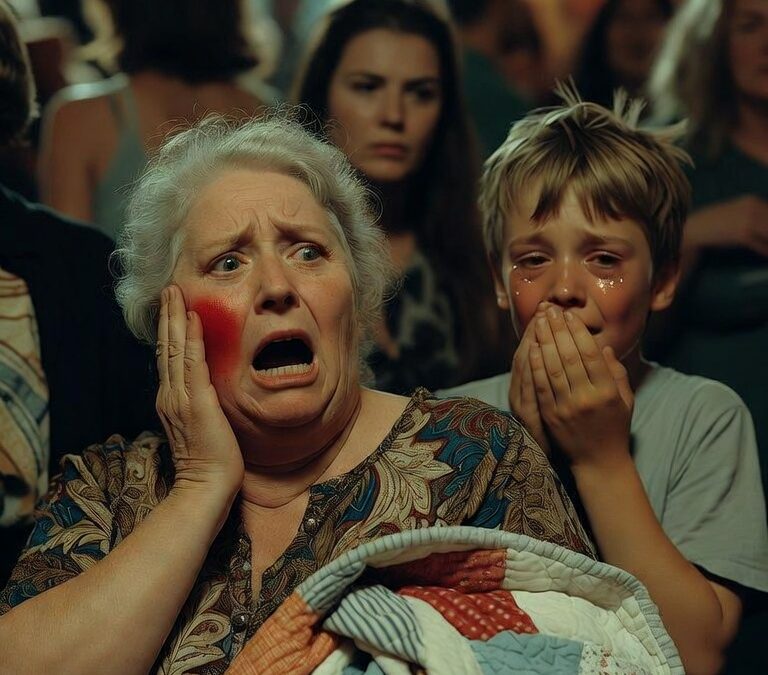
PART 2 and FULL ENDING  Thank you

Six months earlier, I would have called Barbara dramatic if she had told me that my daughter-in-law was deliberately trying to remove me from my grandson’s life.
Actually, I did call her dramatic.
Not in those exact words.
Barbara and I had been friends since tenth-grade chemistry, which meant she had spent nearly sixty years saying things I did not want to hear and being irritatingly correct about a large percentage of them.
She knew me before Thomas.
Before Michael.
Before I became Mrs. Miller to hundreds of second graders.
Before gray hair.
Before retirement.
Before widowhood.
Thomas used to say marrying me meant accepting Barbara as part of the package.
“I married two women,” he would joke.
Barbara always answered, “And you’re lucky either one of us agreed.”
Thomas died five years before Kyle’s eighth birthday.
Heart attack.
Sudden.
No goodbye.
No long illness during which we could pretend we were preparing.
One morning he complained that his chest felt strange.
That evening I was sitting beneath fluorescent hospital lights while a doctor explained that the man who had slept beside me for forty-two years was gone.
There are losses you understand intellectually before your heart catches up.
For months, I kept expecting Thomas to come home.
I would hear a car in the driveway and look toward the window.
I would roll over in bed and reach for him.
Once, I bought his favorite cereal automatically and did not realize what I had done until I was unloading groceries.
I stood in my kitchen holding that box and cried harder than I had at the funeral.
Grief is strange that way.
It hides inside grocery aisles.
Laundry baskets.
An empty recliner.
The first person who truly kept me moving afterward was Barbara.
The second was my son.
Michael had always been a good boy.
Quiet.
Thoughtful.
Not perfect.
No child is.
But kind.
Even during college, when most young men considered calling their mothers a violation of constitutional rights, Michael called me every Sunday.
Sometimes five minutes.
Sometimes an hour.
When he met Amanda during his final year, I was thrilled.
She seemed like exactly the kind of woman who could pull my reserved son into the world a little more.
Amanda was confident where Michael was cautious.
Social where he was quiet.
Stylish.
Quick-witted.
Ambitious.
She worked in marketing and seemed capable of entering any room and knowing immediately whom to speak to.
Their wedding twelve years before Kyle’s birthday was beautiful.
Amanda included me in planning.
Asked my opinion about flowers.
Invited me dress shopping with her mother.
She thanked me in her reception speech for “raising the man of her dreams.”
I believed her.
Four years later, Kyle was born.
From the moment I held him, I felt an entirely new chamber open inside my heart.
I had loved Michael fiercely.
But grandparent love is different.
You have all the tenderness with less panic.
You know how quickly childhood disappears.
You understand that muddy shoes do not matter.
That spilled juice dries.
That bedtime can occasionally survive an extra inning of baseball.
Amanda did not appreciate that philosophy.
At first, I thought we were simply different.
She was a new mother.
New mothers receive enough unwanted advice to fill libraries.
I tried to be careful.
If she asked, I answered.
If she did not, I tried to keep my mouth shut.
I did not always succeed.
Once, when Kyle was a newborn, he cried for nearly an hour.
Amanda looked exhausted.
“May I?”
She handed him to me.
I shifted him against my shoulder and rocked gently.
Within minutes, he settled.
Amanda’s expression was not relief.
It was hurt.
“You make it look easy.”
“It isn’t.”
“He stops for you.”
“He stopped because eventually babies stop.”
That was partly a lie.
After forty years teaching children and raising my own, I knew certain rhythms.
Certain ways to hold them.
Certain sounds.
But I did not want Amanda to think I was demonstrating superior motherhood.
Still, something changed.
Suggestions I made were met with tighter smiles.
“That was thirty years ago, Jeanie.”
Or:
“Things have changed since the dark ages.”
She always laughed afterward.
So did I.
At first.
When Kyle turned three, I began noticing a pattern.
If he and I were playing happily, Amanda suddenly needed him.
Bath.
Snack.
Nap.
Shoes.
Anything.
If I bought him a toy, it was too loud.
Too messy.
Too cheap.
Too expensive.
Too distracting.
If I bought clothing, it disappeared.
“He had a reaction to that fabric.”
“What kind?”
“A rash.”
“Oh. Is he okay?”
“Fine.”
I never saw a rash.
At five, Kyle became old enough to tell me things accidentally.
“Grandma, where’s the dinosaur book?”
“What dinosaur book?”
“The one you gave me.”
“I thought you had it.”
“Mom said it got lost.”
Another time:
“Grandma, why didn’t you come to the barbecue?”
“What barbecue?”
“The one yesterday.”
My heart sank.
“I wasn’t invited.”
Kyle frowned.
“Mom said you were busy.”
I mentioned it to Michael.
He looked genuinely confused.
“Amanda said she told you.”
“She didn’t.”
“Probably a miscommunication.”
Perhaps once.
Perhaps twice.
Eventually, repeated coincidences become a pattern.
Family photographs were another thing.
Amanda loved photographs.
Every holiday required coordinated clothing and carefully planned group shots.
Somehow I always ended up near the edge.
“Jeanie, could you move slightly left?”
A little more.
More.
Sometimes Amanda handed me the camera.
“Would you mind getting one of the immediate family?”
The first time, I understood.
The fifth time, I understood differently.
Then printed photographs appeared in frames.
I had been cropped from several.
Not dramatically.
Just enough.
Half a shoulder disappearing.
Then all of me.
The few times I tried discussing it with Michael, he became uncomfortable.
“Mom, Amanda is particular.”
“I know.”
“She has a demanding job.”
“I know.”
“She gets stressed.”
“I know.”
“What exactly do you want me to do?”
That question always stopped me.
I did not want him confronting his wife and saying, My mother thinks you don’t like her.
I did not want Kyle caught between adults.
I did not want to become the stereotypical mother-in-law who criticized everything.
So I told him nothing.
“Forget I mentioned it.”
Barbara hated that.
One Tuesday morning, six months before Kyle’s birthday, she stirred her coffee so aggressively I thought she might drill through the mug.
“She is doing this deliberately.”
“Amanda?”
“No, the barista. Yes, Amanda.”
“Barbara.”
“I’m serious.”
“She’s protective.”
“She’s territorial.”
“He’s her son.”
“And Michael is yours. Do you throw Amanda’s Christmas presents in the garbage?”
I frowned.
“What are you talking about?”
“Your gifts keep disappearing.”
“Children lose things.”
“Every gift from one grandmother?”
“Not every gift.”
“Enough.”
I looked away.
Barbara leaned across the table.
“Jeanie, she is trying to make you less important.”
“That sounds ridiculous.”
“Does it?”
“Yes.”
“You were cropped out of Christmas photos.”
“One photo.”
“Three.”
“You counted?”
“I have eyes.”
I laughed despite myself.
She did not.
“I’m serious.”
“So am I. Families have rough patches.”
“You’ve been saying that for years.”
“Amanda and I are different.”
“Different does not mean cruel.”
“She’s not cruel.”
Barbara gave me the look.
The look she had been perfecting since 1966.
“You don’t believe that.”
I wrapped both hands around my coffee.
“I don’t want trouble.”
“There already is trouble.”
“I want access to Kyle.”
Her expression softened.
There it was.
The real reason.
“If I push too hard, Amanda could make visits difficult.”
“She already does.”
“It could get worse.”
Barbara sat back.
“That is exactly why she gets away with it.”
I looked at her.
“Fear.”
“I’m not afraid.”
“You are terrified she will use your grandson as leverage.”
The truth hurt.
Barbara reached across the table.
“I’m not telling you to start a war.”
“Good.”
“I’m telling you to stop surrendering.”
I promised to think about it.
Then I did exactly what I had always done.
I stayed quiet.
Four months before Kyle’s birthday, I finally cleaned Thomas’s closet.
Not all of it.
Grief has layers.
Five years after his death, there were still things I had never touched.
At the back of the top shelf was a cardboard box.
BASEBALL, Thomas had written across the top.
I smiled.
That man saved everything.
Ticket stubs.
Programs.
Pins.
Patches.
Old scorecards.
Inside were embroidered patches from teams he had followed over the years.
Yankees.
Dodgers.
Cubs.
Cardinals.
Red Sox.
More.
Kyle had inherited Thomas’s love of baseball with almost supernatural precision.
He could recite batting averages before mastering long division.
That night I called Michael.
“What teams does Kyle follow?”
“All of them.”
“That is not helpful.”
Michael laughed.
“Yankees first.”
“Obviously.”
“He likes learning the history too.”
I looked at Thomas’s old patches.
An idea formed.
The next morning, I went to a fabric store.
I bought baseball-themed cotton.
Blue and white fabric.
Backing.
Batting.
Thread.
Then I ordered additional licensed-style team patches to complete the design.
I had quilted for years, though never anything that complicated.
I planned thirty squares around a central Yankees panel.
Thomas’s old patches would be incorporated among the newer ones.
Every evening, I sat in his recliner and worked.
The empty chair stopped feeling entirely empty.
I could almost hear him.
Too much red.
Yankees need more room.
Make sure the boy knows Boston is the enemy.
I laughed alone more than once.
The quilt became more than a present.
It became a bridge between a boy and the grandfather whose stories he loved but whose memory he barely had.
When Barbara first saw it, she went quiet.
That was rare enough to concern me.
“Well?”
She touched one of Thomas’s old patches.
“Oh, Jeanie.”
“Too much?”
“No.”
“Too sentimental?”
“No.”
“Kyle won’t think it’s old-fashioned?”
She looked at me.
“If that child has one ounce of sense, he will keep this forever.”
A week before the birthday, we went shopping.
I bought Kyle two books about famous baseball players and a new glove Michael had hinted he needed.
At lunch, I looked at the bags.
“Three presents feels excessive.”
“You’re his grandmother.”
“That is not a legal defense.”
“It should be.”
“I don’t want Amanda thinking I’m trying to outdo anyone.”
Barbara set down her fork.
“Please stop planning your kindness around Amanda’s insecurity.”
“I am being considerate.”
“You are making yourself smaller.”
“There’s a difference.”
“Not lately.”
Two days before the party, Michael called.
“Saturday at two.”
“I remember.”
“Amanda ordered a baseball cake.”
“Sounds perfect.”
“And we found a retired minor leaguer who gives kids batting clinics.”
“Kyle is going to lose his mind.”
“He already knows.”
“Of course he does.”
Michael laughed.
“Mom?”
“Yes?”
“He’s been talking about seeing you all week.”
My throat tightened.
“He has?”
“Constantly.”
That sentence carried me through every doubt.
Maybe Barbara was wrong.
Maybe Amanda was finally relaxing.
Maybe I had exaggerated things because widowhood made me sensitive.
Maybe this birthday could reset everything.
On Saturday morning, I dressed carefully.
Blue blouse.
Slacks.
A little makeup.
I fixed my hair twice.
Thomas used to say that blouse matched my eyes.
I almost changed it because remembering him hurt.
Then I wore it because remembering him also felt good.
I wrapped the books.
Wrapped the glove.
Folded the quilt into a large Yankees-blue-and-white gift bag.
On the card I wrote:
For my all-star grandson.
Love always,
Grandma Jeanie.
Barbara called as I loaded the car.
“You leaving?”
“Now.”
“Party starts at two.”
“I’m going early.”
“Why?”
“To help.”
“You were not hired as staff.”
“Barbara.”
“Fine.”
She sighed.
“My garden club meeting should end by three-thirty. I’ll stop by afterward with his Yankees cap.”
“You don’t have to.”
“I know.”
Then her voice changed.
“Jeanie.”
“What?”
“Remember what we talked about.”
“I’m sure everything will be fine.”
“That isn’t what I said.”
“I know.”
“Stand your ground.”
I promised.
I arrived thirty minutes early.
Several cars were already there.
That surprised me.
Amanda opened the door.
Beautiful white blouse.
Designer jeans.
Hair pulled into a sleek ponytail.
Her smile faltered when she saw me.
“Jeanie.”
“Happy party day.”
“You’re early.”
“I thought I might help.”
“Everything is handled.”
“Oh.”
She looked at the packages.
“That’s… a lot.”
“Just a few things.”
She stepped aside.
“Put them with the others.”
Her parents, Frank and Diana, were inside arranging food.
They nodded politely.
Amanda’s sister Stephanie was decorating with her husband.
I set down the presents.
Then I heard footsteps.
“Grandma Jeanie!”
Kyle came flying into the room.
Nothing Amanda had done mattered for the next ten seconds.
He wrapped himself around me.
I hugged him.
“There’s my birthday boy.”
“I’m eight.”
“I heard.”
“Do I look eight?”
“Almost nine.”
He grinned.
Then noticed the gifts.
“Are those mine?”
“Kyle.”
Amanda’s voice cut across the room.
He straightened.
“Sorry.”
“It’s okay,” I said.
Amanda gave me a look.
I corrected myself.
“Your mom is right. You’ll open them later.”
Kyle leaned toward me conspiratorially.
“Mom said you made something.”
Amanda’s jaw tightened.
“How do you know that?”
“Dad told me.”
Kyle bounced.
“Is it baseball?”
“Maybe.”
Amanda stepped forward.
“Kyle, your instructor is outside.”
His eyes widened.
He ran away.
Amanda immediately rearranged the gift table.
My quilt moved from the front to behind several other packages.
I noticed.
I said nothing.
The party began.
Amanda had divided the gathering into zones.
Children and baseball activities in the backyard.
Adults mostly in front.
Technically reasonable.
In practice, it put me on the patio with Amanda’s Aunt Gertrude while Kyle played fifty feet away.
Gertrude told me about Alaska.
Every port.
Every buffet.
Every towel arrangement on the cruise ship.
I smiled and nodded while listening to Kyle laugh through an open window.
When Gertrude finally left for another drink, I went inside.
Passing the kitchen, I heard Amanda.
“Can you believe she came thirty minutes early?”
Stephanie answered.
“She probably wanted to help.”
“With three presents.”
I stopped.
“So?”
“It’s obvious.”
“What’s obvious?”
“She always has to outdo everyone.”
Stephanie sounded uncomfortable.
“She’s his grandmother.”
“She spoils him enough already.”
My cheeks burned.
Amanda continued.
“Michael insists on those visits, then Kyle comes home talking about Grandma Jeanie for two days.”
I walked away before hearing more.
In the bathroom, I texted Barbara.
Wish you were here.
Her answer came almost immediately.
Hang in there. Trying to escape the meeting early.
Then another message.
Today is about Kyle. Don’t let her take that away.
Lunch was worse.
I tried sitting near Michael.
Amanda intercepted.
“Jeanie, I put you with Mom and Dad.”
“Oh.”
“I thought you’d enjoy catching up.”
She guided me toward a corner table.
Frank and Diana were not unkind.
They simply had little interest in me.
We discussed Frank’s promotion.
Their Florida home.
Diana’s fundraiser.
Meanwhile, Michael sat across the room.
Kyle laughed with friends.
Amanda floated between guests looking like the perfect hostess.
I felt like someone watching a family through glass.
Then came presents.
Everyone gathered in the living room.
Kyle sat in a decorated chair beneath balloons.
Amanda organized the gifts by size.
The quilt went last.
I tried not to interpret that.
Kyle opened video games.
Action figures.
Clothing.
Sports equipment.
My books came.
“Whoa.”
He immediately began flipping pages.
“Babe Ruth.”
“You know him?”
“Grandma.”
He gave me a deeply offended eight-year-old look.
Everyone laughed.
Then the glove.
Kyle slid it on.
Punched his fist into the pocket.
“It’s perfect!”
“A little bird told me your old one was too small.”
He looked at Michael.
“Dad.”
Michael raised both hands.
“Guilty.”
For a while, I relaxed.
Then only two gifts remained.
Stephanie’s science kit.
And mine.
Kyle loved the microscope.
Then Amanda handed him the quilt bag.
“Last one.”
Kyle dug beneath the tissue paper.
Pulled out the folded quilt.
It unfurled.
He stopped.
I will remember that expression until I die.
His eyes widened.
Not polite gratitude.
Wonder.
“Grandma.”
He spread it across the floor.
“Are these all baseball teams?”
“Most of the major ones.”
“The Yankees are in the middle!”
“Of course.”
He found the Red Sox patch.
“You even put the enemy on it.”
Michael laughed.
“Your grandmother is very open-minded.”
Kyle touched the stitching.
“You made this?”
“Every stitch.”
“How long?”
“About four months.”
He looked at me.
“Four months?”
I nodded.
Then he did something I had never imagined.
He wrapped the quilt around his shoulders like a cape.
“This is amazing.”
Michael raised his camera.
“Kyle, look at Grandma.”
Kyle grinned.
Flash.
“This might be my favorite present.”
There was a tiny silence.
Then Amanda spoke.
“That’s very… colorful.”
Her voice was too bright.
Kyle did not notice.
“I’m putting it on my bed.”
Amanda laughed.
“No, honey.”
Kyle turned.
“What?”
“It doesn’t match your room.”
He frowned.
“It’s a blanket.”
“We just redid your room.”
“I know.”
“In space.”
“I can have baseball and space.”
Some adults laughed gently.
Amanda did not.
“The colors clash.”
Kyle wrapped it tighter around himself.
“I like it.”
“I know, but maybe we keep it in the closet and use it for baseball games.”
His face fell.
“I want it on my bed.”
Amanda’s smile disappeared.
“Kyle.”
Michael stepped forward.
“It’s fine.”
Amanda looked at him.
“What?”
“We can make it work.”
“We spent thousands redecorating.”
“It’s his room.”
“And this ruins the entire aesthetic.”
Michael looked at the quilt.
“It’s a blanket, Amanda.”
“It is not just a blanket.”
She gestured toward it.
“It’s this huge craft project dominating the room.”
Craft project.
Four months.
Thomas’s patches.
My hands.
My grandson’s joy.
Reduced to two dismissive words.
Still, I tried to help.
“It doesn’t have to stay out.”
Everyone looked at me.
“Kyle can keep it folded and use it whenever he wants.”
Amanda nodded immediately.
“Exactly.”
But Kyle’s shoulders lowered.
“It’s okay.”
He took off the quilt.
“I can just use it sometimes.”
I hated that.
An eight-year-old protecting adults from their own tension.
Amanda redirected everyone toward cake.
Kyle approached me before leaving.
“I really love it.”
“I know.”
“It’s my favorite.”
My heart hurt.
“I’m glad.”
“I’m going to use it.”
“Whenever your parents say it’s okay.”
He hugged me quickly.
Then ran off.
Amanda picked up the quilt with two fingers.
As though dirty.
She shoved it into the bag.
That gesture did what years of little comments had not.
It made me angry.
Not because of the fabric.
Because I finally saw what Barbara had been saying.
Amanda did not merely dislike me.
She disliked evidence that Kyle loved me.
We sang happy birthday.
Kyle blew out candles.
I barely tasted cake.
Then Amanda approached.
“Jeanie, can I speak to you?”
The smile was for anyone watching.
I followed her into the kitchen.
The moment we were alone, it disappeared.
“What exactly were you trying to prove?”
I stared.
“With what?”
“The quilt.”
“Nothing.”
“Don’t insult me.”
“I don’t understand.”
“You knew we redecorated his room.”
“No.”
“Michael didn’t tell you?”
“No.”
She laughed.
“Of course not.”
“What does that mean?”
“You have him wrapped around your finger too.”
“Amanda.”
“You deliberately brought something huge and sentimental so Kyle would make a scene over it.”
“Kyle liked his birthday present.”
“You needed him to love yours most.”
“That never crossed my mind.”
“Right.”
I felt my pulse rise.
“I made it because he loves baseball.”
“You make everything about your relationship with him.”
“He is my grandson.”
“And I am his mother.”
“I know.”
“Do you?”
Her voice sharpened.
“Because sometimes I don’t think you do.”
I stared.
“I have never tried to replace you.”
“You undermine me constantly.”
“How?”
“Gifts I didn’t approve.”
“Birthday gifts?”
“Ice cream after I said vegetables first.”
“That happened once.”
“Baseball past bedtime.”
“On a Saturday.”
“Stories about how you raised Michael.”
“You ask about Michael.”
“You always have an answer.”
Something clicked.
“This isn’t about rules.”
Her face changed.
“What?”
“This is about you feeling compared to me.”
“Don’t psychoanalyze me.”
“I’m not.”
“You think because you raised one child and taught school for forty years, you’re the world’s authority on children.”
“No.”
“You walk into my house and judge everything.”
“I don’t.”
“I see your face.”
“What face?”
“When Kyle misbehaves.”
“I’ve never criticized you.”
“You don’t have to.”
She stepped closer.
“You make me feel like I’m failing just by standing there.”
For one second, I felt sympathy.
Then she said:
“And I’m tired of letting you interfere.”
I took a breath.
“Amanda, if I have made you feel judged, we should talk about that. But Kyle loves that quilt.”
Her eyes hardened.
“He doesn’t need it.”
“He wants it.”
“I decide.”
“And I think he should be allowed to enjoy something made with love by his grandmother.”
“You think I’m unreasonable?”
“Right now?”
I hesitated.
“Yes.”
That was the match.
She exploded.
Eight years of accusations.
Eight years of supposed interference.
Eight years of me turning Kyle against her.
I tried correcting her.
That made it worse.
I tried leaving.
She grabbed my arm.
“We’re not finished.”
I removed her hand.
“Yes, we are for today.”
“You do not walk away from me in my house.”
I looked at her.
“I’m trying not to ruin Kyle’s birthday.”
“You already did.”
“How?”
“With that stupid quilt!”
I flinched.
Then she attacked Thomas.
Said I was trying to turn Kyle into a miniature version of my “precious husband.”
My grief turned instantly into anger.
“Do not use Thomas like that.”
“Why? Everything is Thomas. Thomas loved baseball. Thomas did this. Thomas believed that. You act like your family existed perfectly before I got here.”
“That is not what I do.”
“You made Michael into someone who avoids conflict because you never dealt with anything directly.”
“Do not criticize a marriage you did not live inside.”
“Michael told me.”
“Thomas and I had different strengths.”
“Exactly. He disciplined while you got to be adored.”
“That is not true.”
“You always needed to be the favorite.”
There it was.
Favorite.
Not grandmother.
Not mother-in-law.
Competitor.
I should have stopped.
Instead, I said something true and badly timed.
“Choosing your battles is not the same as avoiding conflict. It may be something worth learning.”
Her eyes widened.
“How dare you?”
“I did not mean—”
“You’re giving me parenting lessons now?”
“No.”
“Eight years.”
Her voice rose.
“Eight years of your interference.”
“Amanda, lower your voice.”
“Don’t tell me what to do.”
Footsteps approached.
Michael appeared.
“What is going on?”
Kyle squeezed past him.
“Mom?”
My heart sank.
Amanda pointed at me.
“Ask your grandmother.”
“It’s nothing.”
Kyle looked toward the living room.
“Is it about my quilt?”
Amanda inhaled.
“Kyle, this is an adult issue.”
“You don’t want me to keep it.”
“This is about boundaries.”
Michael stepped in.
“Enough.”
Amanda spun toward him.
“Of course.”
“What?”
“You take her side.”
“I’m trying to stop this happening in front of our son.”
More guests appeared.
Amanda saw them.
Instead of calming down, she became more furious.
“This is all her fault.”
I whispered, “Amanda.”
“She comes here with her perfect-grandma act and makes everything about herself.”
I could feel people watching.
I wanted to disappear.
“You could not let me have one day.”
“It’s Kyle’s day.”
“Exactly!”
Her voice cracked.
“And you had to make yourself the hero with your precious handmade gift.”
I felt strangely calm.
“It was made for him.”
“You knew what you were doing.”
“No.”
“You always know.”
“Amanda, you are upset.”
“Don’t condescend to me.”
“I’m not.”
Then her hand moved.
The slap landed.
Sharp.
Hot.
Humiliating.
Kyle screamed.
“Mom!”
Michael caught my elbow.
“Mom, are you okay?”
I could not answer.
Amanda stared at her own hand.
For one instant, horror.
Then defense.
“She pushed me too far.”
Michael slowly looked at his wife.
“That is your explanation?”
“She did.”
“She is sixty-seven years old.”
“I don’t care if she’s ninety-seven.”
Amanda’s mother gasped.
“Amanda!”
Kyle cried harder.
I knelt.
“It’s okay.”
“No, it’s not.”
He wrapped himself around me.
“Don’t go.”
That broke my heart more than the slap.
Then came the doorbell.
Then Barbara.
Then the tablet.
“I recorded everything she did.”
Amanda stared at her.
“What are you talking about?”
Barbara ignored her.
She came to me first.
“Let me see.”
“It’s fine.”
“It is not fine.”
She examined my cheek.
Then stood.
The woman I knew as funny, stubborn, occasionally impossible Barbara disappeared.
In her place was someone coldly focused.
“For months,” she said, “I’ve watched you try to push Jeanie out.”
Amanda scoffed.
“You have no idea what happens in this family.”
“Actually, I know more than you think.”
She unlocked the tablet.
“Barbara,” I whispered.
She looked at me.
“You kept asking yourself whether you were imagining it.”
My stomach tightened.
“So I started documenting it.”
Amanda’s face paled.
“What exactly did you document?”
Barbara turned the screen toward Michael.
“Let’s start with social media.”
She opened screenshots.
A private post from Amanda.
Another day, another battle with the monster-in-law.
Michael read silently.
Amanda moved forward.
“That’s private.”
Another screenshot.
Had to throw away another inappropriate gift from Michael’s mom. If she can’t respect our parenting, it goes in the trash.
Kyle spoke behind us.
“You threw away Grandma’s presents?”
Everyone looked at him.
His face changed.
“My telescope.”
Amanda froze.
“What?”
“You said Grandma forgot my birthday present.”
I looked at Amanda.
Two months earlier I had bought Kyle a small telescope.
Barbara drove with me to drop it off.
Nobody answered.
We left it on the porch.
Kyle never mentioned it afterward.
I assumed he had simply forgotten to thank me.
Barbara swiped.
A video.
Amanda opening the door.
Seeing the gift.
Reading my name.
Then dropping the unopened package directly into the trash bin.
Michael watched it twice.
“Amanda.”
She shook her head.
“That isn’t what it looks like.”
“What does it look like?”
“I was angry.”
“You threw away our son’s birthday gift.”
“She never asked me before buying it.”
“So you told him Mom forgot him?”
Amanda said nothing.
Michael’s face changed.
Barbara continued.
“There are messages.”
“To whom?”
“Her friend Tanya.”
Amanda lunged toward the tablet.
Barbara pulled it away.
Michael stepped between them.
“Let her finish.”
Barbara read.
If I schedule enough things during Jeanie’s usual visit times, Michael will eventually get tired of rearranging everything for his mother.
Michael closed his eyes.
I felt sick.
Those soccer clinics.
Playdates.
Museum days.
Birthday parties.
All the canceled Sundays.
Not coincidence.
Plan.
“You did that?”
Amanda’s voice broke.
“I needed space.”
“So you lied.”
“I felt suffocated.”
“To me?”
“To everyone!”
Michael stared.
“You could have talked to me.”
“You always defend her.”
Barbara swiped again.
“Today.”
Amanda looked up sharply.
“What about today?”
“A recording from earlier.”
Stephanie suddenly spoke.
“Barbara, how could you have a recording from today before you got here?”
Barbara looked at her.
“You called me.”
Stephanie’s mouth opened.
That surprised everyone.
Barbara continued.
“Last month Stephanie told me she was worried about how Amanda talked about Jeanie.”
Amanda turned toward her sister.
“You contacted her?”
Stephanie looked ashamed.
“I thought things were getting out of control.”
“You betrayed me?”
“I was worried.”
Barbara tapped the screen.
A voice recording.
Amanda.
Make sure Jeanie’s big bag goes last.
Another voice—Stephanie.
Why?
Because by then Kyle will be tired and maybe he won’t make such a production over whatever homemade thing she brought.
The room went silent.
I looked at the quilt bag.
Last.
Not accidental.
Michael looked physically ill.
“You planned that?”
Amanda started crying.
“I just wanted one event where your mother didn’t dominate.”
“She sat on the front porch with Aunt Gertrude for two hours.”
“I didn’t ask her to come early.”
“Thirty minutes?”
“She always inserts herself.”
Kyle was watching.
I hated that.
“Michael.”
He looked at me.
“Kyle should not hear more.”
That brought him back.
“You’re right.”
He turned toward the guests.
“I’m sorry. The party is over.”
Nobody moved.
“Please.”
Amanda’s mother stepped forward.
“Michael, maybe we can—”
“Not now.”
His voice was exhausted.
“I need everyone to leave.”
Slowly, coats were collected.
Children whispered.
Parents avoided our eyes.
Some touched my shoulder as they passed.
Others said nothing.
I preferred nothing.
When the door finally closed behind the last guest, the house felt destroyed.
Not physically.
The decorations still hung.
Cake remained.
Balloons floated.
But celebration had left.
Kyle held my hand.
“Dad?”
“Yes?”
“Is Mom in trouble?”
Michael crouched.
“This is grown-up stuff.”
“But she hit Grandma.”
“Yes.”
“And threw her stuff away.”
“Yes.”
“Is she going to jail?”
Amanda sobbed.
Michael rubbed his forehead.
“No one is talking about that right now.”
Kyle looked at his mother.
“You lied to me.”
Amanda covered her mouth.
“Honey.”
“You said Grandma forgot.”
“I know.”
“Why?”
Amanda’s entire face collapsed.
I wanted to protect Kyle.
I also knew another comforting lie would make things worse.
Barbara stood quietly beside me.
Michael pulled out a chair.
“Amanda, sit down.”
She did.
“I want the truth.”
“I told you—”
“No.”
His voice sharpened.
“The truth without blaming Mom.”
Amanda looked at me.
Then at Kyle.
Then down.
“It started after he was born.”
No one spoke.
She twisted her wedding ring.
“I was terrified.”
“Of what?” Michael asked.
“Everything.”
Her voice became small.
“Being a bad mother.”
I felt my anger shift slightly.
Not disappear.
Shift.
“Kyle cried constantly.”
“He was a baby,” Michael said.
“I know that now.”
She wiped her face.
“But back then I felt like I was failing.”
She looked at me.
“And Jeanie would walk in and know exactly what to do.”
“Amanda…”
“You did.”
Her voice was not angry now.
“That first week. He cried for me for an hour. You held him and he stopped.”
I remembered.
“I thought you were relieved.”
“I was humiliated.”
My heart sank.
“Why?”
“Because you made motherhood look effortless.”
“It wasn’t.”
“I didn’t know that.”
“You could have asked me.”
She laughed bitterly.
“You were Michael’s perfect mother.”
Michael frowned.
“She wasn’t perfect.”
“Thank you,” I muttered.
Nobody laughed.
Amanda continued.
“You had a forty-year teaching career. A happy marriage. A successful son. Everybody loved you.”
“That doesn’t mean—”
“I know.”
Tears fell.
“But I felt like I was constantly being graded.”
“I never graded you.”
“You didn’t have to.”
She looked at me.
“Every suggestion felt like proof you knew better.”
I thought back.
Maybe I had offered too much.
Maybe experience had sounded like authority even when I meant help.
That possibility mattered.
But it did not excuse years of deception.
Amanda knew that too.
“As Kyle grew,” she continued, “it got worse.”
“What did?” Michael asked.
“He adored her.”
Kyle frowned.
“I still do.”
Amanda gave him a sad smile.
“I know.”
“He would count down to her visits. Then he’d come home talking about what Grandma did. Grandma said. Grandma showed him.”
She looked at Michael.
“And you never seemed bothered.”
“Why would I be bothered that our son loves my mother?”
“Because I was.”
Michael stared.
“You were jealous of an eight-year-old loving his grandmother.”
“When you say it like that, it sounds insane.”
“How should I say it?”
Amanda lowered her head.
“I started feeling like I was competing.”
Kyle spoke softly.
“You weren’t.”
Every adult turned.
He hugged my arm.
“I love Mom different than Grandma.”
Amanda started crying again.
“You’re right.”
“It’s not a contest.”
“No.”
“I have enough love.”
His simplicity destroyed every complicated justification in the room.
Amanda looked at me.
“I’m sorry.”
I waited.
“I’m sorry for excluding you.”
She inhaled.
“For lying.”
Another breath.
“For the gifts.”
Then she looked at my cheek.
“And for hitting you.”
I did not rescue her from the discomfort.
“I’m ashamed.”
“You should be.”
She flinched.
Michael glanced at me.
I continued.
“I accept that you are apologizing.”
Amanda nodded.
“But I cannot tell you I forgive everything because you apologized once.”
“I understand.”
“I hope you do.”
“I do.”
Michael stood.
“Amanda, I want you to stay with your parents.”
Her head lifted.
“For how long?”
“I don’t know.”
“Michael.”
“I need space.”
“What about Kyle?”
“He stays here.”
She stared.
“You’re taking my son?”
“No.”
His voice hardened.
“I am not doing what you did to Mom. I am not erasing anyone.”
That landed.
“But after today, I am not pretending everything is normal.”
Amanda nodded slowly.
“We’ll work out visits.”
“Are you divorcing me?”
Kyle’s voice.
Everyone froze.
Michael crouched beside him.
“I don’t know.”
Kyle’s eyes filled.
“Are you?”
“I honestly don’t know.”
Amanda covered her face.
Michael held Kyle’s shoulders.
“But listen to me.”
Kyle looked at him.
“Your mother loves you.”
Kyle glanced at Amanda.
“I love you too.”
“And I love you.”
Michael touched his chest.
“And Grandma loves you.”
Kyle nodded.
“Whatever happens between grown-ups, none of that changes.”
“Promise?”
“Promise.”
Kyle looked at me.
“Can Grandma stay?”
I smiled through tears.
“If your dad wants me.”
Michael looked at me.
“Please stay.”
Kyle brightened slightly.
“I want to put my quilt on my bed.”
That one sentence almost undid me.
Amanda went upstairs.
Barbara touched my arm.
“Want me to leave?”
“No.”
She stayed.
Twenty minutes later Amanda returned carrying an overnight bag.
She knelt before Kyle.
“I love you.”
He hugged her, but differently than before.
Cautiously.
That hurt everyone.
“I’ll call tomorrow.”
“Okay.”
She stood.
Then Kyle asked:
“Mom?”
“Yes?”
“You won’t throw away Grandma’s presents anymore, right?”
Amanda closed her eyes.
“No.”
She opened them.
“Never again.”
She looked directly at me.
“I promise.”
Then she left.
The front door closed.
We stood in silence.
Barbara finally cleared her throat.
“Well.”
Michael looked at her.
She lifted the Yankees cap.
“I did technically come for a birthday.”
Kyle managed a smile.
“Can I see it?”
Barbara put it on his head.
It was slightly too large.
Perfect.
Kyle ran upstairs and returned wrapped in my quilt.
Yankees cap tilted sideways.
Barbara raised her tablet.
“Hold it.”
Kyle struck a ridiculous baseball pose.
Click.
For the first time in hours, Michael laughed.
Then we ate cake.
Four people.
One half-destroyed birthday.
I watched Kyle smear frosting on his face while the quilt slipped from his shoulders.
Strangely, that small moment felt more like family than the entire elaborate party had.
Three days later, Michael and I sat in the same kitchen where Amanda had slapped me.
The house was quiet.
Kyle asleep.
Amanda still at her parents’.
Michael held his tea without drinking.
“I called a therapist.”
“That’s good.”
“Several.”
I raised an eyebrow.
“One for me.”
“Probably still good.”
“One who works with children for Kyle.”
“Definitely good.”
“And a family counselor.”
I nodded.
“Also a lawyer.”
My stomach tightened.
“Divorce?”
“Not yet.”
He stared into the cup.
“I need to understand custody.”
“Oh, Michael.”
“Mom.”
“I am so sorry.”
His head snapped up.
“For what?”
“For all of this.”
“You did not do this.”
“If I had stayed quiet—”
“No.”
The force in his voice surprised me.
“Do not say that.”
“But—”
“I need you to hear me.”
He leaned forward.
“Amanda made choices.”
I listened.
“Not one mistake.”
His eyes filled.
“Years of choices.”
I thought of the deleted invitations.
The telescope.
The photos.
The visits.
“She lied to me.”
“Yes.”
“She lied to Kyle.”
“Yes.”
“She engineered situations to make you feel unwanted.”
I nodded.
“And I let myself not see it.”
“That is different.”
“Is it?”
“Yes.”
He looked away.
“You tried telling me.”
“I hinted.”
“And I dismissed it.”
“You wanted peace.”
“That’s the problem.”
I waited.
“I have spent my whole marriage avoiding conflict.”
My heart tightened.
Amanda’s accusation echoed.
Michael continued.
“If something bothered her, I smoothed it over.”
He gave a humorless laugh.
“If something bothered you, I smoothed that over too.”
“Your father and I taught you to choose battles.”
“Maybe I turned that into never choosing one.”
That hurt.
Because there was truth in it.
“I’m sorry.”
He smiled faintly.
“You didn’t make my adult choices.”
“Parents help build the tools.”
“And adults decide how to use them.”
Fair.
He took my hand.
“Whatever happens with Amanda, something is changing.”
“What?”
“No more missed visits.”
My throat tightened.
“No more disappearing gifts.”
Tears came.
“No more putting you at the edge of pictures because I’m too uncomfortable to ask why.”
“Michael.”
“You have a place here.”
He squeezed my hand.
“In Kyle’s life.”
Another squeeze.
“In mine.”
I started crying.
“Thank you.”
“I should have said it years ago.”
The next morning Amanda came for clothes and to see Kyle.
I went walking.
Not because she asked.
Because I believed mother and son deserved privacy.
When I returned, she was near the door.
We looked at each other.
Her face seemed different.
Less polished.
Tired.
“Jeanie.”
“Yes?”
“I started therapy.”
“That’s good.”
“One session.”
“Everybody starts with one.”
She almost smiled.
Then looked away.
“I know saying sorry again doesn’t change anything.”
“No.”
“I’m still sorry.”
“I know.”
“I have a lot to work through.”
“Yes.”
She nodded.
Not offended.
That mattered.
Over the next several months, the family rearranged itself.
Michael and Amanda formally separated.
She rented an apartment nearby.
During the transition, Michael had primary custody, while Amanda spent three days each week with Kyle.
The arrangement was not framed as punishment.
It was structure.
Predictability.
Kyle needed both.
Counseling started with Michael and Kyle.
Then Amanda joined.
Eventually, I did too.
Dr. Rivera was patient and direct.
She did not allow anyone to rewrite what happened.
That mattered.
Understanding Amanda did not require pretending she had not hurt us.
During one session, Dr. Rivera asked:
“When did you first learn that love could be competitive?”
Amanda went completely still.
I watched her.
Finally she said, “Childhood.”
Her older sister had been the brilliant one.
The pretty one.
The outgoing one.
Amanda had spent years feeling second.
“When I married Michael,” she said, “I finally felt like I was somebody’s first choice.”
Michael looked wounded.
“You were.”
“I know.”
“What changed?”
“Kyle.”
I felt uncomfortable.
Amanda continued.
“I became a mother, and suddenly everybody had access to the most important person in my life.”
Dr. Rivera asked, “Everybody?”
Amanda looked at me.
“Mostly Jeanie.”
I waited.
“She was better at things.”
“I was more experienced.”
“I know that intellectually.”
“And emotionally?”
Amanda breathed out.
“I thought if Kyle preferred her, that meant I was failing.”
I said quietly, “You saw me as competition.”
“Yes.”
The honesty shocked me.
Amanda wiped her eyes.
“I saw every bond between you and Kyle as something taken from me.”
“It wasn’t.”
“I know.”
“Do you?”
“Yes.”
She looked at me directly.
“That’s one of the biggest things therapy has forced me to understand.”
She paused.
“Love is not a limited supply.”
Michael’s shoulders relaxed slightly.
Amanda continued.
“Kyle loving you never meant he loved me less.”
“No.”
“And you being good at comforting him didn’t make me a bad mother.”
“No.”
“And you having raised Michael did not mean every comment was criticism.”
I hesitated.
“Not every comment.”
Amanda almost laughed.
I did too.
Then I became serious.
“I probably gave advice when I should not have.”
She looked surprised.
“I spent forty years answering children’s questions for a living.”
“That’s true.”
“Retirement did not remove the habit.”
Michael smiled.
“I can confirm.”
I looked at Amanda.
“If I made you feel judged, I’m sorry.”
Tears returned to her eyes.
“Thank you.”
“But…”
“I know.”
She nodded.
“It doesn’t excuse what I did.”
“No.”
That was progress.
Real progress does not erase accountability.
It allows accountability to exist without destroying the possibility of growth.
Barbara remained skeptical.
Naturally.
Six months after the birthday, we sat at our Tuesday coffee shop.
“She’s behaving.”
“Barbara.”
“What?”
“She is not a parolee.”
“I’m keeping the evidence.”
“I know.”
“In three places.”
“Why three?”
“Redundancy.”
I stared.
“You enjoy this.”
“A little.”
I laughed.
Then she became serious.
“People don’t change easily.”
“No.”
“Jealousy like that doesn’t disappear.”
“No.”
“So protect yourself.”
“I am.”
“How?”
“By not pretending anymore.”
She considered that.
“I can work with that.”
Amanda’s change did not arrive through grand gestures.
That helped me trust it.
She sent me pictures when Kyle won his first Little League game.
Not through Michael.
Directly.
Grandma needs to see this.
When Kyle caught a bad cold and Amanda had a major work presentation, she asked whether I would help.
She asked.
Not assumed.
Not controlled.
“I understand if you’re busy.”
I went.
Kyle slept wrapped in the quilt while I read beside him.
Amanda came home late.
She paused in his doorway.
For one second, the old tension flickered across her face.
Then she exhaled.
“How was he?”
“Fever dropped.”
“Medicine?”
“At seven.”
“Thank you.”
“You’re welcome.”
She looked at the quilt.
“He really does sleep with that every night.”
I smiled.
“So I’ve heard.”
She nodded.
No bitterness.
Small things.
But families are mostly built from small things.
Six months almost to the day after the birthday, Amanda texted.
Could we meet alone?
I stared at the message.
Then called Barbara.
“No.”
I laughed.
“You don’t even know what I’m asking.”
“You’re going to meet Amanda alone.”
“How do you know?”
“Because you called me with that tone.”
“What tone?”
“The ‘I’ve made a decision you will dislike’ tone.”
“I am meeting her.”
“Public place?”
“Yes.”
“Phone charged?”
“Barbara.”
“I watch crime documentaries.”
“I know. It has ruined you.”
We met at a café halfway between our homes.
Amanda was already seated.
She looked different.
Not physically, exactly.
Less constructed.
Her hair was pulled back casually.
Minimal makeup.
No armor.
“Thank you for coming.”
“You’re welcome.”
We ordered.
Then she put both hands around her coffee.
“These have been the hardest six months of my life.”
I stayed quiet.
“And probably the most necessary.”
Still quiet.
“I’ve apologized to you before.”
“Yes.”
“I don’t think those apologies were fully honest.”
That caught my attention.
“What do you mean?”
“I was sorry I got caught.”
I appreciated the bluntness.
She continued.
“I was sorry Michael was angry.”
A pause.
“Sorry Kyle saw me hit you.”
Another.
“But I was still telling myself you caused my behavior.”
I listened.
“I don’t believe that anymore.”
My throat tightened.
“No one made me throw away gifts.”
She looked at me.
“No one made me cancel visits.”
My eyes filled.
“No one made me tell friends horrible things about you.”
She swallowed.
“And nobody made me hit you.”
I said nothing.
“I chose those things.”
Her voice shook.
“Because I felt threatened and instead of dealing with that feeling, I tried to remove the person I blamed for causing it.”
“That person was me.”
“Yes.”
We sat with that.
Then Amanda said something I had never expected.
“You deserve an apology that doesn’t ask you to comfort me.”
My eyes filled further.
“So I am not asking you to say it’s okay.”
“It wasn’t.”
“I know.”
“I’m not saying I trust you completely.”
“I know.”
“And I will never accept being cut out of Kyle’s life quietly again.”
She nodded.
“You shouldn’t.”
That mattered more than tears.
“I want to do better,” she said. “Even if Michael and I never reconcile.”
I watched her.
“You mean that?”
“Yes.”
“I hope so.”
“I know I have to prove it.”
Then she reached into her purse.
“I brought something.”
A small wrapped package.
I tensed despite myself.
“For me?”
“Yes.”
I opened it.
Inside was a framed photograph.
Kyle.
Standing in his bedroom.
Yankees cap tilted backward.
My quilt wrapped around him.
Huge smile.
Behind him I could see parts of the space-themed room Amanda had once insisted the quilt would destroy.
The planets still hung from the ceiling.
Stars still covered one wall.
My baseball quilt lay across the bed.
Somehow both belonged.
“He sleeps with it every night,” Amanda said.
I touched the frame.
“He told me.”
“It’s probably his most prized possession.”
Tears blurred the photograph.
“I was wrong.”
I looked at her.
“That quilt was not you trying to compete with me.”
“No.”
“It was you loving him.”
“Yes.”
Amanda wiped her eyes.
“I was so afraid love was a zero-sum game.”
“That if he gave me more…”
“There would be less for me.”
I nodded.
“Kyle never thought that way.”
“No.”
“Children often understand love better than adults.”
That made her smile.
“I can’t promise I’ll never feel insecure again.”
“I wouldn’t believe you if you did.”
She laughed softly.
“But I can promise I won’t make my insecurity somebody else’s punishment.”
That was the first day I truly believed Amanda might change.
Not because she became perfect.
Because she stopped promising perfection.
When I told Barbara, she listened suspiciously.
“You believe her?”
“I think I do.”
“Think?”
“That’s enough for now.”
Barbara stirred her coffee.
“She lost a lot.”
“Yes.”
“House.”
“Yes.”
“Daily time with Kyle.”
“Yes.”
“Possibly her marriage.”
“Yes.”
“That can make a person act reformed.”
“It can.”
She looked at me.
“And?”
“And only time tells the difference.”
Barbara finally nodded.
“Good answer.”
“Thank you.”
“I’m still keeping the files.”
“I know.”
“Forever.”
“I know.”
A few weeks later, I went to Michael’s for Sunday dinner.
Those dinners had become regular.
No mysterious cancellations.
No last-minute scheduling conflicts.
Kyle met me at the door.
“Grandma!”
“Why are you shouting? I’m three feet away.”
“I got a trophy.”
He dragged me upstairs.
Little League.
Most improved hitter.
He showed me where the trophy sat.
Then climbed onto his bed.
The quilt was there.
Used.
Wrinkled.
Perfect.
No longer the pristine thing I had finished months before.
One corner showed wear.
That made me happier than if it had been framed behind glass.
Objects made with love should be used.
“Read with me.”
He pulled out one of the baseball books I had given him at the birthday.
His reading had improved dramatically.
He stumbled over one player’s name.
I helped.
Then he tucked the quilt around both of us.
Michael appeared in the doorway.
He did not interrupt.
He simply watched.
For a moment, I could almost feel Thomas beside him.
Later, after Kyle went to bed, Michael and I had tea.
“I need to tell you something.”
“That sentence never introduces anything relaxing.”
He smiled.
“Amanda and I are talking about trying again.”
I remained carefully neutral.
“What does trying again mean?”
“Not moving back together.”
“Good.”
He laughed.
“Dating.”
I raised an eyebrow.
“Each other.”
“I assumed.”
“Slowly.”
“How do you feel?”
He thought before answering.
“Hopeful.”
“That sounds dangerous.”
“Cautiously hopeful.”
“Better.”
He looked into his cup.
“She has done real work.”
“Yes.”
“So have I.”
“That matters.”
“I had to look at my part.”
I started to protest.
He lifted a hand.
“Not her behavior.”
I stopped.
“My part in the marriage.”
I listened.
“I avoided anything uncomfortable.”
“Yes.”
“I thought keeping peace was the same as solving problems.”
I thought of Thomas.
Of our marriage.
Of my own habits.
“It isn’t.”
“No.”
Michael continued.
“Amanda’s insecurity and my conflict avoidance fed each other.”
“That sounds accurate.”
“But there is one thing she knows is non-negotiable.”
“What?”
“You.”
My throat tightened.
“Your relationship with Kyle.”
He looked straight at me.
“And with me.”
“Michael.”
“I mean it.”
He leaned forward.
“I love my wife.”
I nodded.
“If we rebuild our marriage, it will not be at the price of shrinking my family around her comfort.”
My eyes filled.
“She understands?”
“She says she does.”
“And you believe her?”
“I believe her actions for the last six months.”
Fair answer.
“I’m glad.”
He looked relieved.
“You are?”
“If you want to try, yes.”
“You’re not angry?”
“I was angry.”
“Were?”
“I still have some anger.”
He smiled faintly.
“That sounds healthier.”
“Therapy.”
“Expensive, but apparently effective.”
We laughed.
Then I said:
“Kyle deserves adults who do the work.”
Michael nodded.
“All of us.”
“Yes.”
A week later, Kyle called me.
“Grandma, I have homework.”
“Congratulations.”
“No.”
He laughed.
“I need help.”
“With?”
“Family tree.”
My heart warmed.
“Okay.”
“I put Dad.”
“Good start.”
“And Mom.”
“Excellent.”
“And me.”
“Important.”
“And you.”
“I’m honored.”
“And Grandpa Thomas even though he’s in heaven.”
My eyes immediately filled.
“That’s perfect.”
“And Barbara.”
I laughed.
“Barbara?”
“She’s family.”
“She will be very pleased.”
“She’s not blood family.”
“No.”
“But family can be people who stay, right?”
I swallowed.
“Yes.”
“That’s what Dad said.”
“He’s right.”
Kyle became quiet for a second.
“Grandma?”
“Yes?”
“Mom says I can put your quilt in my family-tree presentation.”
“How?”
“I’m taking a picture.”
“Why?”
“Because some of Grandpa’s baseball things are in it.”
“Yes.”
“So it has family history.”
I closed my eyes.
Four months of stitching.
A birthday.
A slap.
A marriage nearly breaking.
Months of therapy.
Apologies.
Boundaries.
And an eight-year-old had reduced all of it to the simplest truth.
Family history.
“Yes, sweetheart.”
“What?”
“It does.”
On Kyle’s ninth birthday, nearly a year after everything happened, the party was different.
Smaller.
No caterers.
No carefully divided social zones.
Baseball in the backyard.
Pizza.
Cake.
Kids running through rooms Amanda would once have protected from crumbs.
Barbara came early.
Of course.
Amanda opened the door for me.
For one second, we both remembered the year before.
I saw it in her face.
She saw it in mine.
“Hi, Jeanie.”
“Hi.”
Then she smiled.
Not the hostess smile.
Not the tight one.
A normal smile.
“Kyle’s been waiting.”
He came running.
“Grandma!”
I hugged him.
Amanda did not call him away.
That detail nearly made me cry.
Michael appeared behind him carrying paper plates.
Amanda touched his arm.
Their relationship was still rebuilding.
They had begun seeing each other regularly again.
Amanda had not moved home yet.
Nobody was rushing.
That was probably why it had a chance.
During presents, I gave Kyle one gift.
A framed photograph of Thomas at a baseball game when Michael was a boy.
Kyle stared.
“Is that Grandpa?”
“Yes.”
“And Dad?”
Michael leaned over.
“Oh my God.”
He laughed.
“I forgot that picture.”
Thomas had one arm around ten-year-old Michael.
Both wearing Yankees caps.
Kyle touched the glass.
“I look like Dad.”
“You do.”
He looked at me.
“Can I put it next to my bed?”
I glanced toward Amanda without meaning to.
She noticed.
A small sadness crossed her face.
Then she said:
“I think that would be perfect.”
Our eyes met.
That was her apology too.
Not the first.
Not the last.
But one expressed through changed behavior rather than words.
Later, Barbara and I sat on the patio while children played.
“You’re watching Amanda,” I said.
“I observe.”
“You monitor.”
“Someone has to.”
“She’s doing well.”
“So far.”
“You are impossible.”
She sipped lemonade.
“You love me.”
“Unfortunately.”
We watched Kyle race across the yard.
My quilt was not outside.
It did not need to be.
It belonged upstairs.
On his bed.
Where he had chosen to keep it.
I thought about the woman I had been the year before.
Trying desperately to be agreeable enough to deserve access to her own family.
Afraid any boundary would make me the difficult mother-in-law.
Afraid speaking honestly would cost me my grandson.
I had confused peace with silence.
Michael had too.
Perhaps that was one thing I had taught him without meaning to.
But peace built on one person swallowing every hurt is not peace.
It is delay.
Eventually, something breaks.
In our family, it had broken in a kitchen with one slap.
I would never call that slap a gift.
Pain does not become good merely because something useful grows after it.
Amanda should never have hit me.
She should never have thrown away gifts.
Never lied.
Never manipulated visits.
Never made a child believe his grandmother forgot him.
Understanding the insecurity behind cruelty does not excuse cruelty.
That was another lesson therapy gave all of us.
Compassion and accountability can exist in the same room.
I could understand why Amanda became jealous without pretending her choices were acceptable.
I could forgive without forgetting.
Michael could love his wife without denying what she had done.
Kyle could love his mother and his grandmother without choosing sides.
And Amanda could feel threatened without turning that feeling into somebody else’s punishment.
That was growth.
Messy.
Incomplete.
Real.
A few weeks after Kyle’s ninth birthday, Amanda asked me to lunch.
Not because something was wrong.
No major apology.
No crisis.
Lunch.
We talked about Kyle’s school.
Her work.
Michael.
My volunteering.
At one point she smiled.
“You know what’s funny?”
“What?”
“I used to rehearse before seeing you.”
I blinked.
“Rehearse what?”
“How not to let you get under my skin.”
I laughed.
“I had no idea I was so powerful.”
“You weren’t.”
She smiled.
“That was the problem.”
I waited.
“You could walk into a room and I’d assign motives to things you didn’t even know you were doing.”
“That sounds exhausting.”
“It was.”
“For both of us.”
“Yes.”
She became serious.
“I wasted years.”
“Maybe.”
“I did.”
“You also have years ahead.”
She looked at me.
“You really believe people can change.”
“I spent forty years teaching seven-year-olds.”
“That’s different.”
“Not as different as you think.”
She laughed.
Then said:
“Thank you for giving me room to try.”
I shook my head.
“I gave you room because Kyle needed healthy adults.”
“I know.”
“I did not owe you instant forgiveness.”
“I know that too.”
“And if this behavior ever returns…”
“It won’t.”
I raised an eyebrow.
She corrected herself.
“If I ever start slipping into old patterns, I need to speak up instead.”
“Better.”
She smiled.
“Barbara would approve of that answer.”
“Barbara approves of almost nothing.”
“Especially me.”
“She has softened.”
“No, she hasn’t.”
“No.”
We laughed.
That was the first time Amanda and I laughed together without Michael or Kyle in the room.
It did not make us best friends.
We did not need to become best friends.
That was another fantasy families sometimes hurt themselves trying to create.
Every mother-in-law and daughter-in-law does not need to share secrets.
Every relative does not need to become someone you would independently choose as a friend.
Respect can be enough.
Honesty can be enough.
Shared love can be enough.
What mattered was that neither of us needed the other to disappear anymore.
Months later, I found myself cleaning my sewing room.
On a shelf sat extra scraps from Kyle’s quilt.
Yankees blue.
Baseball print.
One small unused patch.
I held it.
Then smiled.
I made a pillow.
Nothing dramatic.
Small.
Simple.
I gave it to Kyle the next Sunday.
Amanda looked at it.
Then at me.
“Did you make that?”
“I did.”
She examined it.
“It matches the quilt.”
“That was the idea.”
Kyle grabbed it.
“Awesome.”
Amanda smiled.
“You should put it on your bed.”
I looked at her.
She knew exactly what she had said.
I smiled back.
“I think that would work.”
That night, back at home, I sat in Thomas’s old recliner.
The house was quiet.
His photograph rested nearby.
“Can you believe all this?” I whispered.
Of course, there was no answer.
But forty-two years gives you enough memories to predict one.
Thomas would have hated the conflict.
He would have loved the quilt.
He would have worried about Michael.
He would have adored Kyle’s family tree.
He would have distrusted Barbara’s technological surveillance skills while secretly being impressed.
And eventually, after everyone had exhausted themselves arguing, Thomas would have said something maddeningly simple.
Probably:
There’s enough love. Stop fighting over who owns it.
That had been the entire problem.
Amanda thought love created rankings.
First.
Second.
Favorite.
Less important.
Threat.
Replacement.
I had contributed in my own quieter way by believing my place could be taken from me if I defended it.
But love is not a chair at a crowded table.
Someone else does not have to stand for you to sit.
Kyle knew that before any of us.
He loved his mother.
His father.
Me.
The grandfather he knew mainly through stories.
And Barbara, whom he simply placed on a family tree because family, to him, meant people who showed up.
I thought about the birthday when he turned eight.
The slap no longer felt hot on my cheek.
The bruise disappeared within days.
What remained was clarity.
The handmade quilt Amanda once wanted hidden in a closet had become the thing Kyle slept under every night.
But that was not the victory.
The victory was not proving that he loved my gift more.
There never should have been a competition.
The victory was that I no longer measured my place in my grandson’s life by whether another adult approved of me.
I loved him.
He loved me.
His parents were responsible for setting reasonable boundaries.
I was responsible for respecting them.
And everyone was responsible for treating one another with basic dignity.
Simple.
Not always easy.
But simple.
One Sunday evening, I arrived for dinner and found the family-tree project hanging on the refrigerator.
Kyle had received an A.
Across the construction paper were photographs connected by carefully drawn lines.
Michael.
Amanda.
Kyle.
Me.
Thomas.
Barbara.
Near the bottom, his teacher had written:
Wonderful explanation of how families can include people connected by love, history, and choice.
I stood reading it longer than necessary.
Kyle appeared beside me.
“Grandma?”
“Yes?”
“You’re crying.”
“Teachers cry over good projects.”
“You were a teacher.”
“Exactly.”
He studied me.
“Are you sad?”
“No.”
“Happy?”
“Very.”
He looked at the project.
“I put you close to Dad.”
“I noticed.”
“And Grandpa Thomas near you.”
“That makes sense.”
“And Barbara here.”
“She will complain she should be bigger.”
Kyle laughed.
Then he took my hand.
“Mom helped me pick the picture of you.”
I looked toward the kitchen.
Amanda was talking with Michael.
She caught my eye.
Smiled.
I smiled back.
No grand declaration.
No dramatic music.
No perfect ending where everybody forgot what happened.
Just a family still choosing what happened next.
And perhaps that is the clearest lesson I carried from that year.
People sometimes imagine forgiveness as reopening the door and pretending nobody ever slammed it.
I learned something different.
Forgiveness can mean reopening the door with stronger hinges.
Clearer rules.
Better locks.
And the understanding that anyone who enters must respect the home they are being welcomed into.
Amanda and I did not return to our old relationship.
Thank God.
The old relationship required me to stay silent and Amanda to pretend she was fine.
We built another one.
Slower.
More honest.
Less polished.
Michael learned that avoiding conflict does not protect a family from conflict.
It merely allows resentment to grow where nobody can see it.
Amanda learned that insecurity deserves attention, not obedience.
I learned that boundaries are not acts of aggression.
Kyle learned something too, though I wish he had never needed the lesson.
He learned that adults can make terrible mistakes.
That apologies matter.
That behavior afterward matters more.
And that loving two people does not require choosing which one deserves more.
A few months later, he spent the night at my house.
We made popcorn and watched a Yankees game far past what would once have been Amanda’s approved bedtime.
The difference was that this time I had asked.
Amanda had laughed on the phone.
“It’s Saturday.”
“That’s exactly what I used to say.”
“I know.”
“Are you sure?”
“Jeanie.”
“Yes?”
“Enjoy your grandson.”
So I did.
Near the seventh inning, Kyle fell asleep in Thomas’s recliner.
I covered him with the baseball quilt he had insisted on bringing from home.
For a moment, looking at him beneath that patchwork of teams and memories, I saw Thomas everywhere.
In the Yankees logo.
In Kyle’s nose.
In the way one hand hung over the armrest.
I sat beside him.
Not grieving exactly.
Not only grieving.
Loving.
There was room for both.
My phone buzzed.
A message from Amanda.
How’s he doing?
I took a photograph.
Sent it.
Her reply came quickly.
Of course he brought the quilt.
I smiled.
Then another message appeared.
I’m glad he has it.
I stared at those words for several seconds.
A year earlier, the same quilt had become evidence, in Amanda’s mind, that I was invading her family.
Now it was simply what it had always been.
A grandmother’s gift.
Nothing more.
Nothing less.
I looked at Kyle.
“Your mother finally figured it out,” I whispered.
He slept.
Thomas’s old clock ticked.
Outside, the neighborhood was quiet.
I thought of Barbara saying I needed to stand up for myself before Amanda succeeded in cutting me out.
Barbara had been right.
Annoyingly, spectacularly right.
But standing up for myself had not meant destroying Amanda.
It meant refusing to disappear.
There is a difference.
I did not need Amanda humiliated forever.
I did not need Michael to punish her to prove his loyalty.
I did not need Kyle choosing me.
What I needed was room to exist.
And once I stopped apologizing for needing that room, something changed.
Not just in Amanda.
In me.
I had spent decades teaching children that kindness and weakness were not the same thing.
Somehow, in my own family, I had forgotten.
Kindness does not require accepting cruelty.
Patience does not require endless silence.
Forgiveness does not require abandoning boundaries.
And love does not become more valuable simply because someone makes you fight for it.
The next morning, Kyle woke beneath the quilt.
He rubbed his eyes.
“Did we win?”
“You slept through the ending.”
“Grandma.”
“Yes.”
“Did the Yankees win?”
I smiled.
“Yes.”
He threw one fist in the air.
Then noticed me looking at him.
“What?”
“Nothing.”
“You’re doing the grandma stare.”
“What is the grandma stare?”
“Like you’re thinking something emotional.”
I laughed.
“Go brush your teeth.”
He stood.
The quilt fell to the floor.
He immediately picked it up.
Folded it badly.
Carried it upstairs.
I watched him go.
The gift Amanda had once wanted hidden was no longer a symbol of conflict.
It was wrinkled.
Used.
Loved.
Exactly what I had hoped for when I placed the first stitch four months before his eighth birthday.
And that was enough.
More than enough.
Because in the end, the thing that saved our family was never Barbara’s tablet.
It was never the screenshots.
Or the recordings.
Or even the terrible moment when Amanda struck me in front of everyone.
Those things forced the truth into the open.
But exposure alone does not heal people.
What saved us was what happened afterward.
Michael finally looked directly at conflict instead of around it.
Amanda stopped treating fear as permission to control.
I stopped confusing silence with grace.
Barbara kept showing up, exactly as she had for almost sixty years.
And Kyle kept loving all of us with the uncomplicated wisdom of a child who had understood from the beginning what the adults took a year to learn.
There was room.
Room for his mother.
Room for his father.
Room for his grandmother.
Room for his grandfather’s memory.
Room for Barbara.
Room for mistakes.
Room for consequences.
Room for change.
No one needed to be erased for somebody else to matter.
The family photograph on my mantel now proves it.
Michael stands behind Kyle.
Amanda beside him.
I stand on the other side.
Barbara squeezed herself into the frame without being invited, naturally.
And Kyle is in the middle wearing his Yankees cap.
For once, nobody cropped me out.
Nobody needed to.
I finally understood that I had never been fighting for a place at the edge of someone else’s family.
I had been part of it all along.





