FULL STORY: Get Out of Our Lives and Keep That Old Ranch! — My Daughter-in-Law Said at My Husband’s Will Reading
𝗣𝗔𝗥𝗧𝟮 𝗔𝗡𝗗 𝗙𝗨𝗟𝗟 𝗦𝗧𝗢𝗥𝗬 𝗜𝗦 𝗜𝗡 𝗧𝗛𝗘 𝗙𝗜𝗥𝗦𝗧 𝗖𝗢𝗠𝗠𝗘𝗡𝗧


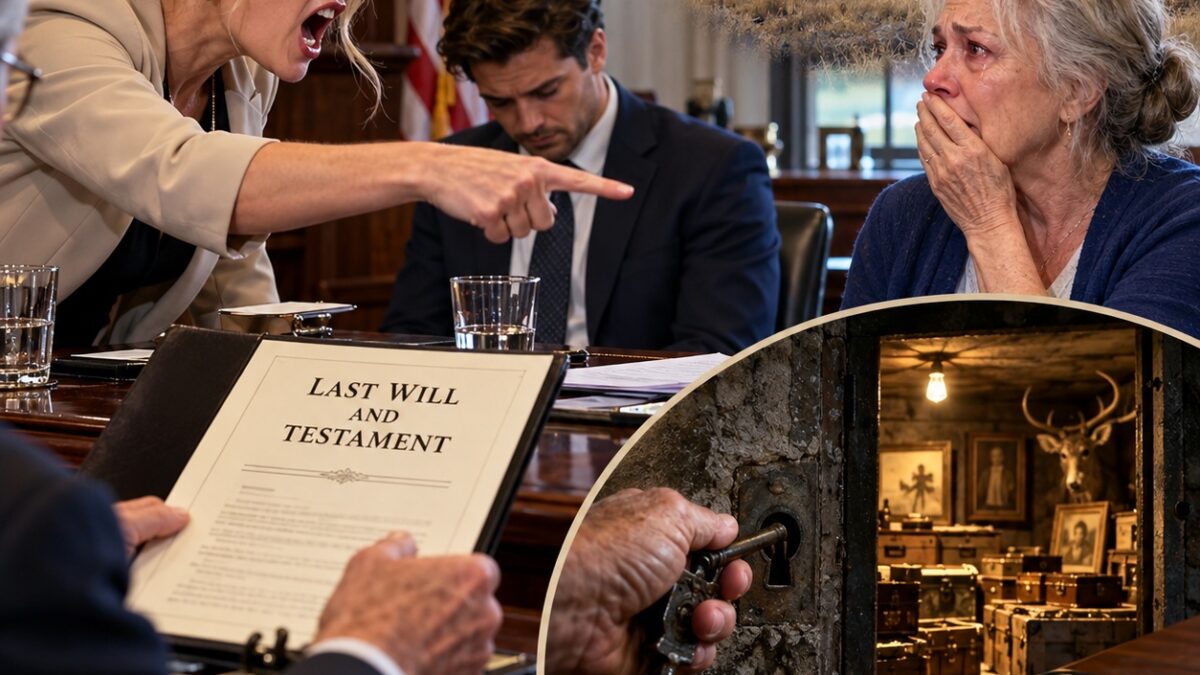
Three weeks later, I sat inside Harold Wilson’s law office while my daughter-in-law insulted the last thing Frank had left entirely to me.
She thought she was handing me a burden.
She had no idea Frank had spent the final year of his life preparing that burden to become something none of us could have imagined.
Frank and I met in high school.
Andrews County High.
I was sixteen.
He was seventeen.
I dropped half my books in the hallway because somebody bumped my shoulder between classes.
Frank knelt to help.
We both reached for the same battered copy of To Kill a Mockingbird.
Our hands touched.
He looked up.
Smiled.
“Good book?”
“I haven’t started it.”
“Then how do you know?”
“I don’t.”
“That seems dishonest.”
I stared at him.
“You’re criticizing me while helping pick up my books?”
“Yes.”
“Interesting strategy.”
He laughed.
That was the beginning.
By graduation, we were already talking about marriage.
Everyone said we were too young.
They were probably right.
We married anyway.
Twenty and twenty-one.
A little church wedding.
Potluck reception.
My mother cried.
Frank’s father pretended he had something in his eye.
We did not have much.
But we had each other.
Frank became a veterinarian.
Not the polished city kind with a marble waiting room and gourmet dog treats.
He treated cattle.
Horses.
Barn cats.
Farm dogs.
Anything people brought through his door.
Sometimes people could not pay.
Frank treated the animal anyway.
“You’re running a business.”
I would remind him.
“And they’re running a farm.”
He would answer.
“Everyone has a bad year.”
I became the school librarian.
That suited me.
Books.
Children.
Quiet corners.
For thirty-eight years, I watched generations of students discover that the right book at the right time could change a life.
We were never rich.
Comfortable.
That was enough.
Then there was Andrews Hill Ranch.
One hundred twenty acres.
Rolling pasture.
Forested slopes.
A stream cutting through the eastern side.
Victorian farmhouse built in 1875.
Frank’s great-grandfather, Samuel Andrews, had constructed the original home.
Every generation added something.
Porch.
Barn.
Stone wall.
Root cellar.
Equipment shed.
Orchard.
Frank loved that property in a way I never fully understood.
“It’s not dirt.”
He would say when developers called.
“It’s memory.”
Over the years, plenty of people wanted it.
Golf resort.
Vacation community.
Luxury cabins.
One developer offered enough money that I nearly dropped the letter.
“Frank.”
I said.
“We could retire tomorrow.”
He looked over the pasture.
“No.”
“That is a lot of money.”
“I know.”
“Then why?”
He turned to me.
“Because some things become more valuable when you refuse to sell them.”
I rolled my eyes.
“You sound like a fortune cookie.”
He kissed my forehead.
“An attractive fortune cookie.”
Our son James grew up at the ranch.
He loved it as a boy.
Followed Frank through the barn.
Learned crops.
Fixing fences.
Riding tractors.
Fishing in the creek.
When James chose agricultural business in college, Frank believed that eventually our son would return.
Modernize operations.
Keep the property alive.
Then James met Lydia Turner.
Lydia came from money.
Not comfortable money.
Money that announced itself.
Her parents belonged to clubs with waiting lists.
She drove expensive cars before she could really afford them because, according to her, image created opportunity.
She sold luxury real estate.
She was good at it.
Beautiful.
Sharp.
Controlled.
Everything about Lydia appeared polished.
At first, I genuinely tried to like her.
I wanted James happy.
But from the beginning, there was a faint condescension beneath her manners.
The first time she visited our home, she slowly looked around our living room.
“Cozy.”
She said.
That word again.
Then:
“You’ve done very well with what you have.”
Frank caught my eye from across the room.
Later, in bed, he whispered:
“What exactly does that mean?”
“It means she thinks our couch is ugly.”
“It is ugly.”
“Not the point.”
After she and James married, they bought a modern house in the wealthiest neighborhood outside town.
Glass walls.
Stone kitchen.
Swimming pool.
Furniture nobody sat on comfortably.
James joined an agricultural investment company instead of coming back to the ranch.
Suits replaced boots.
Luxury cars replaced the old pickup he used to love.
He still cared about us.
I know that.
But gradually, Lydia controlled the calendar.
Thanksgiving with her parents.
Christmas in Aspen.
Easter brunch at a resort.
Our Sunday dinners became occasional visits.
When they did come, Lydia checked her watch.
Frank noticed.
He always noticed more than he admitted.
“She’ll either grow into the family…”
He said once.
“Or James will grow away from it.”
I hated that sentence.
“Don’t say that.”
“I hope I’m wrong.”
He wasn’t.
During the final year of Frank’s life, something changed.
He became obsessed with ranch history.
Not sentimental curiosity.
Real research.
County archives.
Old property maps.
Civil War records.
Genealogy.
He spent entire weekends at Andrews Hill alone.
Installed locks on the basement.
Upgraded electrical wiring.
Added security.
Bought equipment.
When I asked:
“What are you doing?”
He smiled.
“Following a hunch.”
“What hunch?”
“If it turns into something, you’ll be the first to know.”
“That sounds suspicious.”
“Good.”
He kissed me.
“Suspicion keeps the mind young.”
I never learned what he was doing.
Not while he was alive.
The morning he died, he left after breakfast.
Eggs.
Toast.
Coffee.
He wore his old brown jacket.
I reminded him we had dinner plans.
“Six o’clock.”
“I know.”
“You always say that.”
“And yet, somehow, I always show up.”
He kissed me.
“Love you, Cassie girl.”
Those were the last words he said to me.
By seven that evening, I knew something was wrong.
Frank always called.
I phoned Daniel Green, who lived down the road from the ranch.
“Can you check?”
Twenty minutes later, Daniel called.
His voice told me everything before the words did.
“Cassie…”
“No.”
“Daniel.”
“I’m sorry.”
Frank was gone.
The next days became black clothing, flowers, casseroles, condolence cards.
James stood beside me at the funeral.
He looked destroyed.
Lydia looked beautiful.
Perfect black dress.
Perfect hair.
Perfect makeup.
Phone in her hand far too often.
As people were still leaving our house after the funeral reception, Lydia squeezed James’s arm and said:
“We should meet with Harold about the will.”
I stared at her.
Frank had been buried that morning.
James looked uncomfortable.
“Maybe next week.”
“The sooner things are organized, the sooner everyone can move forward.”
Move forward.
I wanted to scream.
Instead, I nodded.
My friend Maggie helped clean dishes after everyone left.
She had taught history at the same school where I ran the library.
We had been friends thirty years.
“That woman is circling.”
Maggie said.
“Don’t.”
“I’m serious.”
“She’s grieving too.”
Maggie gave me a look.
“She’s grieving an estate.”
I wanted her to be wrong.
One week later, we sat in Harold Wilson’s office.
Harold had been Frank’s friend since grade school.
Tall.
Thin.
White hair.
He looked almost as sad as I felt.
“Frank spent significant time revising this will.”
He told us.
“He was very deliberate.”
Lydia immediately sat straighter.
Harold began.
Savings.
Investments.
Insurance.
Fifty percent to me.
Fifty percent to James.
Lydia looked satisfied.
Frank’s veterinary partnership went to Dr. Robert Taylor with instructions to maintain affordable rural services.
Exactly what I expected.
Then Harold reached the real estate.
“To my beloved wife, Cassie Andrews, I leave Andrews Hill Ranch in its entirety, including all land, structures, equipment, and contents therein.”
Silence.
James stiffened.
Lydia’s expression changed completely.
Harold continued.
“A maintenance trust will cover property taxes and necessary upkeep for five years, after which Cassie may retain or sell the property at her sole discretion.”
“What?”
Lydia snapped.
Harold looked up.
“That worthless old ranch?”
My heart tightened.
“What about the house in town?”
“The residence is to be sold.”
Harold explained.
“Proceeds divided equally between Cassie and James.”
“That’s it?”
She demanded.
Harold calmly confirmed that he had described the estate.
Lydia looked at me.
“What did you do?”
“Excuse me?”
“You manipulated him.”
“Lydia.”
James murmured.
She ignored him.
“That ranch is a money pit.”
“The maintenance will burn through everything.”
She stood.
“James, we’re getting another lawyer.”
Harold removed his glasses.
“Frank was of sound mind.”
“I personally discussed these terms with him numerous times.”
Lydia grabbed her handbag.
Then looked directly at me.
“Fine.”
Her voice was venomous.
“Get out of our lives and keep that old ranch.”
She laughed.
“At least we got the money that matters.”
James looked at me.
And that was the part that hurt.
He did not challenge her.
He squeezed my hand.
“I’m sorry, Mom.”
Then he followed his wife.
The door closed.
I stared at it.
Forty-five years with Frank.
One son.
And suddenly, I felt completely alone.
Harold sighed.
“Cassie.”
“I’m fine.”
“No, you’re not.”
“No.”
I admitted.
“I’m not.”
He reached into his desk.
“Frank left something else.”
An envelope.
And a small leather pouch.
Inside the pouch were several keys.
Heavy.
Old.
Intricate.
Not house keys.
Not modern locks.
“What are these?”
“Frank told me you would understand when the time was right.”
“I definitely do not.”
Harold almost smiled.
“He knew what he was doing with the ranch.”
“What does that mean?”
“He asked me not to explain.”
I stared.
“Even now?”
“Even now.”
That night, I opened Frank’s letter.
My dearest Cassie,
If you’re reading this, I didn’t get to show you my discovery myself.
My hands began shaking.
What began as family-history research turned into something extraordinary.
The ranch basement contains our legacy.
Something worth more than gold.
Follow my journal.
Trust yourself.
And remember:
True wealth is not always what it seems.
All my love,
Frank.
I pressed the paper against my chest.
“Frank.”
I whispered.
“What did you do?”
The following weeks were brutal.
Our house had to be sold.
Lydia moved aggressively.
Three-week closing.
Quick-sale agent.
Forty-five years of marriage packed into boxes.
Books.
Photos.
Kitchenware.
Christmas ornaments.
Frank’s clothes.
I could barely touch his jackets.
James came occasionally.
Never stayed long.
Lydia appeared constantly.
Watching.
Judging.
“You don’t need all these books.”
She said.
“These older houses attract mold.”
I wrapped my first edition of Pride and Prejudice.
Frank gave it to me on our tenth anniversary.
“They’re not just books.”
“They’re chapters of my life.”
Lydia rolled her eyes.
“This is why older people struggle to downsize.”
I was sixty-eight.
Not senile.
Not helpless.
But she spoke as if age itself had made me incompetent.
Then one afternoon, while packing the study, I heard her on the phone.
“Give her six months.”
She said.
“The ranch will bleed money.”
“She’ll sell.”
Pause.
“Then we approach her with Henderson Development.”
My hands stopped moving.
“The commission alone on 120 acres will set us up.”
So that was the plan.
Let me fail.
Then profit.
Something hardened inside me.
Not hatred.
Resolve.
Whatever Frank had discovered, I was going to find it.
A week later, I drove through the gates of Andrews Hill Ranch.
My car packed.
My orange cat Ginger screaming from her carrier like I had personally betrayed her.
The farmhouse looked terrible.
White paint peeling.
Shutters crooked.
Porch sagging.
Roof leaking.
Inside:
Dust.
Old furniture.
Ancient appliances.
Groaning pipes.
Lydia would have been delighted.
But beyond the house, autumn covered the hills in red and gold.
The land rolled toward distant mountains.
Frank’s land.
My land now.
I walked through the rooms.
And noticed something strange.
The house was old.
The electrical system was new.
Not patched.
Completely upgraded.
Security sensors on every door.
Modern panel.
Basement wiring.
Why would Frank spend money on electrical work when the roof leaked?
That evening, Daniel Green knocked.
Frank’s old friend.
Retired engineer.
Weathered face.
Gentle eyes.
“Thought you might need help.”
He helped fix the water.
Patch the roof.
Wake the furnace.
As we worked, I asked:
“Did Frank ever tell you what he was doing here?”
Daniel shook his head.
“He had me run industrial electrical lines to the basement.”
“When?”
“Last year.”
“What for?”
“Wouldn’t say.”
“Dehumidifiers.”
“Climate control.”
“Special locks.”
My pulse quickened.
“He also had me reinforce some stone walls.”
“Did that not seem strange?”
Daniel smiled.
“Frank was strange.”
Fair point.
I found Frank’s office on the second day.
Maps covered the walls.
Old ones.
New printouts.
Notes everywhere.
Family records dating to the 1800s.
Books on slavery.
Abolitionists.
The Civil War.
Local history.
Inside a locked desk drawer, one of Harold’s keys worked.
There was Frank’s journal.
I sat at the desk.
Started reading.
“Conductor’s path.”
“Station 7.”
“Samuel.”
“1859 foundation.”
“Secondary wall.”
There were photographs.
Old metal fragments.
Letters.
Hidden mechanisms.
Then the final entry.
Three days before Frank died.
Found confirmation in Samuel’s journals.
The family stories were true.
Tomorrow, I finish the security system for the collection room.
I read the line over and over.
Collection room.
That night, I cried harder than I had since the funeral.
Because Frank had been three days away from showing me.
Maybe one day.
Maybe hours.
He died with the secret still inside him.
The next morning, Lydia called.
No hello.
“James needs you to sign the house-sale release today.”
“I’ll review it.”
“Don’t be difficult.”
“I’m not being difficult.”
“You’re delaying everyone.”
I looked at Frank’s journal.
“I’ll sign after my attorney reviews it.”
Silence.
Then:
“You’ve changed.”
“No.”
I said.
“I’m paying attention.”
She hung up.
Maggie arrived that afternoon carrying groceries.
“Show me.”
“What?”
“Frank’s mystery.”
We spent hours with his notes.
Then Maggie tapped one phrase.
“Conductor.”
“Yes.”
“Station.”
“Yes.”
“Cassie.”
She looked at me.
“The Underground Railroad.”
I stared.
She pointed toward old dates.
Names.
Routes.
“Andrews Hill may have been a safe station.”
My skin prickled.
Frank’s great-grandfather Samuel had built the farmhouse in 1875.
But sections of the foundation were older.
Possibly from a previous structure.
According to Frank’s notes, the property had been used before the current farmhouse existed.
We followed the journal into the basement.
Newly renovated sections beside raw stone walls.
Concrete reinforcement.
Ventilation.
Frank’s diagram showed a path.
We followed it.
Past storage.
Past old jars.
Past broken tools.
Then:
“Entrance designed to disappear into the ordinary.”
We examined shelving.
One unit had a gap.
I pressed where Frank’s sketch indicated.
Click.
My hands trembled.
The shelving unit swung outward.
Behind it:
A steel security door.
Old-style keyhole integrated into a modern locking system.
One of Harold’s keys fit.
I turned it.
The door opened.
Lights came on automatically.
And I stopped breathing.
Frank had built a museum beneath the ranch.
Climate-controlled.
Glass cases.
Archival boxes.
Framed documents.
Shelves.
Objects.
Journals.
Letters.
Period clothing.
A wooden doll.
A tarnished wedding ring.
Old fabric.
And a small chest.
Gold coins.
Maggie whispered:
“Oh my God.”
At the center sat several leather journals.
Samuel Andrews.
Frank’s ancestor.
I opened one.
August 15, 1862.
Three souls arrived tonight guided by the North Star and Jackson’s signal.
The woman Mary is fevered but refuses delay.
Her children are already in Canada.
We hide them below until patrol passes.
My eyes filled.
These were not business records.
They were witness.
Samuel had helped freedom seekers escaping slavery.
The property had been Station 7.
Hidden rooms.
Routes.
Signals.
Names.
Dates.
Personal objects left behind by people passing through.
Letters from abolitionists.
Correspondence mentioning Frederick Douglass.
Harriet Tubman.
Government figures.
The gold had apparently been contributed by wealthy supporters to finance the network and hidden when local sympathizers threatened raids.
Frank had discovered it.
Protected it.
Documented it.
And left the entire ranch and everything inside it to me.
Lydia had said:
Keep that old ranch.
I sank onto a chair.
Not because I suddenly thought I was rich.
Because Frank’s letter made sense.
Worth more than gold.
History.
Courage.
Lives saved.
Maggie squeezed my hand.
“Cassie.”
“What do I do?”
“We call professionals.”
We contacted Professor Thomas Reynolds from the historical society.
He arrived within an hour.
He entered the room.
Stopped.
Removed his glasses.
Put them back on.
Then whispered:
“This may be one of the most significant Underground Railroad discoveries in decades.”
He handled Samuel’s journal carefully.
“The documentation alone…”
His voice trailed off.
“Names.”
“Dates.”
“Routes.”
“Primary sources.”
Then:
“You understand this is priceless.”
“I’m beginning to.”
“Historically.”
He clarified.
“And financially.”
That evening, everything exploded.
I still don’t know exactly how the story leaked so quickly.
Perhaps somebody at the historical society.
Perhaps county records.
Perhaps a volunteer.
By sunset:
Museums.
Collectors.
Universities.
Reporters.
Historians.
My phone rang sixty-two times.
Sixty-two.
I counted because at a certain point, the absurdity became funny.
News vans appeared outside the gate.
Sheriff Parker arrived to manage traffic.
People tried trespassing through the woods.
One private collector left a voicemail offering seven figures for unspecified items he had not even seen.
I deleted it.
Then my phone rang again.
James.
“Mom.”
His voice was tense.
“What is happening?”
“I found what your father was working on.”
“Lydia’s getting calls.”
Of course.
“She says if something valuable was hidden on the property, it belongs to the estate.”
I closed my eyes.
“The ranch and everything inside it were left to me.”
Silence.
“We’re coming tomorrow.”
“James—”
“She wants to see it.”
Not:
I want to understand Dad.
Lydia wanted to see value.
By morning, the property looked like a siege.
News vans.
Helicopters.
Deputies.
Historical society experts.
Dr. Eleanor Washington arrived with a conservation team.
She specialized in African-American history.
Her reaction when she saw Samuel’s journals told me how serious this was.
“Your husband preserved these beautifully.”
She said.
“He installed professional climate controls.”
“Archival storage.”
“Humidity monitoring.”
“He knew exactly what he was doing.”
That sentence made me cry.
Frank always knew exactly what he was doing.
Even when I had no idea.
Then Lydia’s SUV arrived.
She stormed inside.
“Where is it?”
No hello.
James followed.
“Good morning.”
I said.
“Cassie.”
She snapped.
“Half the state is talking about millions of dollars of artifacts.”
“Show us.”
I considered refusing.
Then looked at James.
Maybe this could bring him back to the family history he once loved.
I led them downstairs.
Through the hidden door.
Lydia stopped.
Her eyes moved from case to case.
Not awe.
Calculation.
“Gold.”
She whispered.
“These documents…”
She turned.
“This must be worth millions.”
James barely heard her.
He was reading Samuel’s journal.
His face changed.
“Dad knew?”
“Yes.”
“When he wrote the will?”
“Yes.”
Lydia spun.
“Then this changes everything.”
“No.”
James said quietly.
She stared.
“What?”
“Dad left the ranch and its contents to Mom.”
“James.”
“He knew.”
“That’s exactly why this should be divided.”
She snapped.
“It’s Andrews family property.”
I looked at her.
“The historical society believes most should be preserved.”
“Preserved?”
She almost laughed.
“Private collectors will pay fortunes.”
“These are not decorations.”
I said.
“They tell the story of people risking their lives for freedom.”
“Frank wanted them protected.”
“You don’t get to decide that alone.”
“Actually.”
Sheriff Parker said from the doorway.
“She does.”
None of us had heard him approach.
“Mrs. Andrews owns the property.”
“And right now, this is a secured conservation area.”
Lydia turned to James.
“Say something.”
James looked up from the journal.
“Dad left it to Mom for a reason.”
“Whose side are you on?”
“There shouldn’t be sides.”
He said.
“This is our history.”
For the first time in months, I saw my son.
Not Lydia’s husband.
My son.
The boy who once followed Frank through the pasture.
Sheriff Parker escorted them upstairs.
Lydia glared back.
“This isn’t over.”
She was right.
By afternoon, Harold called.
“They hired an estate-litigation attorney.”
“Can they win?”
“Frank’s will is extremely clear.”
“They can create problems.”
That became Lydia’s specialty.
Problems.
She filed for an emergency injunction.
Claimed hidden assets had been concealed.
Claimed Frank intended family property to benefit the next generation.
Two days later, we went to court.
Her attorney spoke for nearly an hour.
Hidden wealth.
Fiduciary responsibility.
Unfair distribution.
Potential estate fraud.
Then Harold stood.
Read the exact clause.
Andrews Hill Ranch in its entirety, including all structures, land, equipment, and contents therein.
The judge barely hesitated.
“No evidence of concealment.”
“The decedent clearly knew the property and its contents.”
“Injunction denied.”
Outside, reporters waited.
Lydia exploded.
“This is theft!”
Cameras turned.
“That collection belongs to the Andrews family.”
I looked at her.
“You called it a worthless old ranch.”
She froze.
“You told me to get out of your lives and keep it.”
Her face twisted.
“You smug old woman.”
“You manipulated Frank.”
James stood nearby.
Silent.
Again.
That hurt.
But differently now.
Because I no longer needed his silence to decide my worth.
Lydia stormed away.
James remained.
“I don’t know what to do.”
He whispered.
I touched his arm.
“You do.”
“What?”
“Decide what matters to you.”
He walked away.
I watched him go.
And for the first time since Frank’s death, I did not feel abandoned.
Frank trusted me.
That had to be enough.
Two weeks after the discovery, I gathered experts around the ranch dining table.
Dr. Washington.
Thomas Reynolds.
Museum representatives.
Preservation architects.
Historians.
They proposed something extraordinary.
The Andrews Underground Railroad Museum.
Not removing history from the land.
Preserving the actual station.
Farmhouse.
Hidden spaces.
Artifacts.
Educational center.
Digitized archives.
Research access.
I imagined schoolchildren walking through the rooms.
Learning names.
Stories.
Courage.
It felt right.
Certain gold coins and less historically essential high-value objects could establish an endowment.
The core collection would remain together.
“What do you think?”
Dr. Washington asked.
I looked toward Frank’s old chair.
“I think that’s what he wanted.”
We began planning.
That same week, Henderson Development called.
Eight-figure offer.
Entire property.
They proposed a luxury historical resort.
Boutique cabins.
Golf.
Fine dining.
“Celebrating the Underground Railroad experience.”
I nearly hung up before the attorney finished.
“No.”
“Mrs. Andrews, perhaps you don’t understand the valuation.”
“I understand perfectly.”
“This is generational money.”
“History is also generational.”
Silence.
Then:
“Are you refusing?”
“Yes.”
I announced the museum publicly.
Standing on the porch.
Reporters below.
“This is not simply Andrews family history.”
I said.
“This is American history.”
“People came through this land seeking freedom.”
“Others risked their lives helping them.”
“My husband spent his final year uncovering that truth.”
“I will not turn their courage into a luxury resort.”
The community response overwhelmed me.
Donations.
Volunteers.
Schools.
Researchers.
Local businesses.
And at the back of the crowd stood James.
Afterward, he approached.
“I want to help.”
I searched his face.
“Lydia?”
“She’s furious.”
“Of course.”
“I told her I wouldn’t challenge Dad’s will.”
My throat tightened.
“She said I betrayed her.”
“And?”
“She left.”
He looked exhausted.
“I don’t know if she’s coming back.”
I hugged him.
Not because he had chosen me.
Because perhaps he had chosen himself.
Then we learned Lydia had been quietly contacting collectors.
Trying to arrange future sales if she gained control.
She had approached county officials about blocking historic designation.
Instead, her interference accelerated everything.
Emergency landmark status.
Stronger protections.
Legal barriers against development.
Every attempt she made to monetize the property made it harder to monetize.
Frank would have appreciated the irony.
James moved temporarily into the caretaker’s cottage.
He spent days reading Samuel’s journals.
Cataloging photographs.
Helping design museum operations.
One evening, he sat beside me in Frank’s office.
“Dad tried to tell me.”
“What?”
“Last Christmas.”
“He showed me one of these maps.”
James looked ashamed.
“I took a business call.”
“Lydia and I had dinner plans.”
“I told him we’d talk later.”
He stared at the journal.
“We never did.”
I covered his hand.
“Your father knew you loved him.”
“I didn’t show it.”
“You still can.”
“How?”
“Help finish what he started.”
James did.
Six weeks after the discovery, we hosted a donor preview.
The main floor had been restored closer to its nineteenth-century appearance.
Displays explained Station 7.
The hidden room remained climate-controlled.
Researchers could view fragile materials safely.
The house looked alive again.
Then shouting came from the entrance.
Lydia.
Uninvited.
“This should be mine!”
She yelled.
“My husband is an Andrews!”
Sheriff Parker escorted her out.
Threats.
Lawsuits.
Humiliation.
The guests stood awkwardly silent.
Dr. Washington, who had become very good at handling chaos, immediately announced:
“We have just confirmed a second hidden compartment near the original parlor fireplace.”
Everyone turned.
History was more interesting than Lydia.
That evening, James and I sat on the porch.
He stared across the field.
“I got divorce papers yesterday.”
I turned.
“James.”
“She wants everything.”
“Claims I abandoned her for old junk.”
“I’m sorry.”
“Don’t be.”
He sighed.
“It’s been over longer than I admitted.”
Then:
“All she ever wanted was status.”
“Money.”
“When Dad left the ranch to you, she saw lost profit.”
“When we discovered the collection, she lost control.”
I said nothing.
Some realizations have to finish forming inside the person who resisted them.
Winter came.
Restoration continued.
The ranch became my life.
Morning meetings.
Conservation reports.
Grant applications.
Historical research.
I had been a librarian for decades.
Now, strangely, those skills mattered more than ever.
Cataloging.
Preservation.
Context.
Narrative.
I understood how easily facts become dead information if you do not tell the human story behind them.
Daniel remained nearby.
Helping with infrastructure.
Locks.
Heating.
Safety systems.
He also started staying for dinner.
At first, because it was late.
Then because neither of us minded.
He never tried to replace Frank.
That mattered.
He spoke about him.
Remembered him.
Let me cry when memory ambushed me.
One evening, Daniel repaired a porch step.
I brought coffee.
“You know.”
He said.
“Frank used to talk about you constantly.”
“He complained about me constantly.”
“Same thing at our age.”
I laughed.
That laugh startled me.
It felt good.
My sister Amanda returned too.
We had drifted apart.
Years of small misunderstandings.
Travel.
Family tension.
Lydia had not helped.
Amanda saw the news.
Drove from Arizona.
Stood on my porch awkwardly.
“I thought maybe you need family.”
I cried.
“So did I.”
She moved into a little house down the road months later.
Became museum volunteer coordinator.
Slowly, my life rebuilt itself around the thing Lydia had called worthless.
Six months after the will reading, Andrews Hill Ranch opened officially as the Andrews Underground Railroad Museum.
The farmhouse gleamed.
Restored white clapboard.
Repaired porch.
Period rooms.
Interactive educational exhibits.
Samuel’s journals were digitized.
Visitors could read his entries without damaging originals.
Frank’s own research journals became part of the museum story.
In the main hall, we installed a plaque:
FRANK ANDREWS
His curiosity uncovered the past.
His wisdom preserved it for the future.
The first time I saw it mounted, I had to walk outside.
I sat alone on the porch steps and cried.
“Cassie girl.”
I imagined him saying.
“Stop making a fuss.”
I whispered:
“You started it.”
James became site manager.
He was good.
Very good.
Agricultural business finally returned to the ranch in a way none of us predicted.
He handled operations.
Vendor contracts.
Tour systems.
Budgets.
Fundraising.
He also gave tours sometimes.
Schoolchildren loved him.
One afternoon, I watched him stand beside Samuel’s journal.
“This property was once Station 7.”
He told a group.
“My ancestor helped people escaping slavery move north.”
A little girl raised her hand.
“Were they scared?”
James paused.
“Yes.”
“Then why did they keep going?”
“Because sometimes being afraid and being brave happen at the same time.”
I looked away.
That sounded like Frank.
The divorce finalized.
Lydia received far less than she expected.
Her real-estate business suffered after the public court fight.
Not because I attacked her.
I never needed to.
People had watched.
She moved away.
A month after the museum opened, she sent me a letter.
No apology.
Not really.
That would have required too much humility.
She wrote:
I still believe James should have inherited the property.
But I recognize now that my plans would have destroyed something irreplaceable.
Since leaving, things have not gone as I expected.
Perhaps there is a lesson in that.
I folded the letter.
Placed it in a drawer.
No satisfaction.
No revenge.
Just closure.
James eventually began dating again.
Her name was Catherine.
Elementary-school teacher.
She first came with a fourth-grade class.
Stayed afterward asking questions about the museum.
Real questions.
Not:
How much is this worth?
But:
How do we teach children about courage without oversimplifying the danger?
When James introduced her to me, I liked her immediately.
Then reminded myself to be careful.
I had liked Lydia once too.
But Catherine never performed affection.
She simply showed up.
Helped.
Listened.
One Sunday, I made dinner.
She brought homemade bread.
Nothing expensive.
Nothing polished.
James laughed more than I had heard in years.
That was enough.
Daniel and I also changed.
Slowly.
Very slowly.
He was seventy-two.
I was sixty-eight.
One night, sitting on the porch, he said:
“We’re probably too old for this.”
“For what?”
He gestured between us.
I smiled.
“Probably.”
“So?”
“So maybe being too old means we stop wasting time worrying what people think.”
He laughed.
“Frank would haunt me.”
“No.”
“He’d interview you.”
“That’s worse.”
We never rushed.
Frank remained part of my life.
Daniel respected that.
Affection after grief did not erase marriage.
It proved the heart could become larger than one chapter.
The museum changed the town.
Hotels filled.
Restaurants grew busier.
Schools built curriculum around Station 7.
Researchers came.
Descendants of people named in Samuel’s journals began visiting.
That was the most meaningful part.
One family arrived from Ontario.
Their ancestor Mary may have been the injured woman Samuel described in 1862.
A descendant stood in the basement.
Touched the stone wall.
Cried.
“She made it.”
He whispered.
“She reached Canada.”
I cried too.
Suddenly, the collection was no longer history behind glass.
It was family restored to family.
That evening, after everyone left, I sat alone in the preservation room.
The wooden doll.
Wedding band.
Letters.
Samuel’s careful handwriting.
Frank had been right.
Worth more than gold.
Not because collectors would pay millions.
Because people could recover pieces of themselves from these objects.
That is wealth no appraisal captures.
We did sell a limited portion of the gold and certain redundant artifacts after extensive review.
Not to enrich me.
To fund the museum permanently.
The endowment meant future generations would not have to beg wealthy donors to keep history alive.
Frank would have approved.
James said:
“Dad would probably complain about the investment strategy.”
“Absolutely.”
“Then secretly be proud.”
“Also absolutely.”
Sometimes I think about the will reading.
The oak table.
Lydia’s diamond watch.
Her expression when Harold said ranch.
Get out of our lives.
Keep that old ranch.
At the time, those words devastated me.
Because I thought she was taking James too.
And for a while, she did.
Not completely.
But enough.
I felt discarded.
Old.
Inconvenient.
Left holding failing land while the younger generation walked away with liquid assets.
But Frank understood something none of us did.
He knew what was under the ranch.
Yes.
But more importantly, he knew me.
If he had left the collection directly to James, Lydia might have liquidated it.
If he had announced its value in the will, lawyers and collectors would have descended before preservation was secure.
If he had sold it himself, history would have scattered into private collections.
So he left the land to the person he trusted to ask:
What does this mean?
Before asking:
What is it worth?
That person was me.
I used to think Frank left me the ranch because he believed I loved it most.
Now I know it was because he believed I would understand responsibility.
That trust mattered more than any appraisal.
I had spent thirty-eight years putting books into children’s hands and saying:
Stories matter.
Frank handed me 120 acres and said the same thing.
Preserve this story.
So I did.
The ranch gave James back too.
Not the boy he had been.
We cannot reverse time.
But it gave him a second chance to become someone he respected.
He apologized eventually.
Properly.
Not:
Sorry Lydia was upset.
Not:
Sorry things got complicated.
He sat across from me in the kitchen.
“Mom.”
“Yes?”
“I failed you after Dad died.”
I stopped stirring soup.
“I let Lydia talk to you like that.”
“Yes.”
“I followed her out.”
“Yes.”
“I left you alone to pack the house.”
“Yes.”
Tears filled his eyes.
“I’m sorry.”
I walked around the table.
He stood.
I hugged him.
Forgiveness came easily.
Trust returned slower.
That was healthy.
You can love someone before everything is repaired.
One day, he asked:
“Why didn’t you tell me about Lydia’s phone call?”
“What call?”
“The one about waiting for you to fail so she could sell the ranch to Henderson.”
I looked at him.
“Because you needed to see her yourself.”
“I would’ve believed you.”
“No.”
He thought.
Then smiled sadly.
“Probably not.”
“No.”
“I would’ve said you misunderstood.”
“Yes.”
“Dad knew that too, didn’t he?”
“Probably.”
“He really was annoying.”
“The worst.”
We laughed.
That became our family again.
Not pretending nothing happened.
Being able to speak truth without fearing it would destroy us.
Amanda and I healed too.
Years of distance.
So much wasted time.
One evening, while organizing volunteers, she said:
“Lydia made me think you didn’t want me around.”
I looked up.
“What?”
“She always said you were overwhelmed.”
“That you preferred keeping gatherings small.”
“She told me you thought I was too dramatic.”
I stared.
“I never said that.”
“I know now.”
“How did we let someone do that?”
“Because she didn’t create the cracks.”
Amanda said.
“She just knew how to widen them.”
That stayed with me.
Relationships rarely collapse because one outsider creates everything.
Usually, existing silences make space.
We stopped leaving space.
Now we call.
We show up.
We ask directly.
That is one of the quieter gifts the ranch gave us.
Frank’s inheritance was not simply historical.
It forced living people to confront the stories we were telling ourselves.
Lydia believed worth equaled market value.
James believed success meant moving forward and upward.
I believed keeping peace meant swallowing hurt.
Amanda believed distance meant rejection.
All of us were wrong.
Even Frank had flaws.
He should have told me more.
I still get angry thinking about that.
Sometimes I look at his photograph.
“You could have said basement.”
I tell him.
“You didn’t need a treasure hunt.”
Daniel once overheard.
“He enjoyed drama.”
“Frank?”
“Absolutely.”
“That man complained about television dramas.”
“Because he preferred creating his own.”
Fair.
At sixty-eight, my life became something I never expected.
Historian.
Museum director.
Public speaker.
Preservation advocate.
Occasional television interview.
I hated cameras initially.
Then a documentary producer asked:
“What did you feel when you first saw the hidden room?”
I thought.
“Responsibility.”
“Not excitement?”
“Later.”
“Not the value?”
“No.”
“What then?”
“My husband had died trying to protect something.”
“I knew immediately that if I handled it badly, I could betray him.”
That became the line they used in the documentary trailer.
James teased me endlessly.
“Celebrity.”
“Stop.”
“Should I get your autograph?”
“I’ll disinherit you.”
“You can’t.”
“I have lawyers.”
We laughed.
The first anniversary of Frank’s death arrived quietly.
I woke before sunrise.
Made coffee.
Walked to the barn.
The place Daniel found him.
For months, I avoided it.
That morning, I entered.
Dust in morning light.
Old tools.
Frank’s veterinary bag still on a shelf.
I sat on a hay bale.
“Everything worked.”
I whispered.
“Mostly.”
“James is back.”
“The museum is open.”
“Amanda’s here.”
“Ginger still hates everyone.”
I paused.
“And Daniel…”
I smiled.
“You probably know.”
Tears came.
“I wish you were here.”
That sentence will always be true.
No museum fixes it.
No love after loss erases it.
No purpose replaces a husband of forty-five years.
But grief changed.
At first, it felt like drowning.
Now it felt like carrying water inside me.
Heavy some days.
Quiet on others.
Always there.
I went to the hidden room.
Placed my hand on the glass above Samuel’s journal.
One entry had become my favorite.
He wrote about a winter night when six freedom seekers arrived after midnight.
Snow.
Cold.
One man had frostbite.
Samuel wrote:
Fear traveled with them, but did not stop them.
I understood that differently now.
Courage is not the opposite of fear.
It is movement despite fear.
Frank had been afraid his discovery would be lost.
He kept working.
I was afraid of losing my son.
I moved to the ranch anyway.
James was afraid to leave his marriage.
Eventually, he did.
Amanda was afraid I would reject her.
She returned.
Daniel was afraid caring for me would disrespect Frank.
He stayed.
Maybe bravery looks less dramatic in ordinary life.
A phone call.
A boundary.
A locked basement door opened.
A mother saying no.
A son saying I was wrong.
One morning, a busload of middle-school students arrived.
I gave part of the tour.
A boy raised his hand.
“Were your ancestors heroes?”
The question startled me.
I looked at Samuel’s journal.
“No.”
I said.
The teacher looked surprised.
“They were people who made brave choices.”
“That matters more.”
“Why?”
“Because if we call everyone who does something courageous a hero…”
I said.
“We can pretend ordinary people aren’t responsible for making courageous choices too.”
The boy thought.
“So they were scared?”
“Very.”
“And helped anyway?”
“Yes.”
He nodded.
“That’s better.”
I smiled.
I agreed.
Frank would have loved that child.
Years later, I suspect people will remember the famous documents.
The abolitionist letters.
The gold.
The historical names.
But I hope they remember the smaller objects too.
The wooden doll.
The wedding band.
The fabric with initials.
They belonged to people whose names may never be known.
People who carried one tiny piece of home while risking everything for freedom.
Those objects changed my understanding of inheritance.
Inheritance is not only what someone gives you after death.
It is what you decide to carry forward.
Frank inherited land.
He preserved it.
I inherited his discovery.
I shared it.
James inherited mistakes.
He chose not to repeat them.
That is legacy.
Lydia eventually wrote one more time.
Not to me.
To James.
He did not show me the whole letter.
Only said:
“She apologized.”
“Do you believe her?”
“I believe she regrets what happened.”
“That isn’t what I asked.”
He smiled.
“You taught me too well.”
“What will you do?”
“Wish her well.”
“From a distance.”
Healthy.
I learned that too.
Forgiveness does not require reopening every door.
Sometimes peace is locking one gently.
James and Catherine eventually became serious.
Very slowly.
The opposite of his marriage to Lydia.
Catherine spent holidays at the ranch.
Helped with school programs.
Never asked what anything was worth.
One evening, she and I shelved new children’s books in the museum education room.
She held up To Kill a Mockingbird.
“Didn’t you say this was how you met Frank?”
I stared.
“Yes.”
“Then we should display a copy.”
“No.”
“Why?”
“Because teenagers will think romance begins with dropped books and tolerate terrible pickup lines.”
She laughed.
“Maybe put up a warning.”
We did.
A small exhibit about Frank and me.
The book.
Wedding photograph.
Veterinary bag.
His research notebook.
Nothing grand.
But visitors often lingered there.
People like love stories.
So do I.
Daniel and I never married.
We did not need to.
Our companionship was enough.
He lived nearby.
Stayed over sometimes.
Had his own house.
I had mine.
At our age, independence can be romantic.
He joked:
“The secret to our relationship is separate thermostats.”
He was right.
Amanda insisted we were ridiculous.
She probably was right too.
Life became full.
Not the same fullness I had with Frank.
Different.
Still real.
One evening during the museum’s second year, I sat on the porch after closing.
School buses gone.
Parking lot empty.
Sun sinking behind the hills.
James sat beside me.
“Mom.”
“Yes?”
“Do you think Dad knew all of this would happen?”
“What?”
“The museum.”
“Me coming back.”
“You rebuilding your life.”
“Lydia leaving.”
I thought.
“No.”
James seemed surprised.
“I think he hoped.”
“He planned carefully.”
“But no one controls people from the grave.”
“He trusted us with choices.”
James looked toward the fields.
“I almost chose wrong.”
“You did choose wrong.”
“Thanks.”
“You changed it.”
He smiled.
Then:
“What do you think he’d say?”
I looked at the restored farmhouse.
Visitors had come from twenty-three states that month.
Researchers from three countries.
Local teenagers worked summer internships.
Descendants added family histories.
Frank’s ranch was alive in a way it had not been for decades.
“He’d complain the barn paint is the wrong color.”
James laughed.
Then grew quiet.
“I miss him.”
“So do I.”
We sat there together.
That was everything I wanted after the will reading.
Not money.
Not victory.
My son beside me.
Remembering his father.
The old ranch beneath us.
Still in the family.
Still telling stories.
Lydia had said:
Get out of our lives and keep that old ranch.
For months, I remembered it as cruelty.
Now, strangely, I sometimes think of it as a gift she never intended.
She told me to keep it.
So I did.
I kept the land.
The farmhouse.
The journals.
The hidden rooms.
The stories.
The responsibility.
And in keeping them, I recovered things I had nearly lost.
James.
Amanda.
Purpose.
Community.
Even the possibility of love after widowhood.
Lydia walked away thinking she had kept the valuable half of Frank’s estate.
Cash.
Investments.
House proceeds.
Things with clear numbers.
Frank understood value differently.
The ranch had land value.
Yes.
The artifacts had enormous financial value.
Yes.
But that was never the point.
Its real value was what money could not recreate once destroyed.
Original documents.
Untouched spaces.
Human testimony.
Family history.
Evidence of courage.
A place where people once moved through darkness toward freedom.
Frank had spent his life treating animals nobody else wanted to pay for.
Maybe I should not have been surprised that his final project was protecting stories that could easily have been lost because no one saw immediate profit.
That was him.
He saw value where other people saw inconvenience.
Maybe that is why he married me.
I tell myself that.
Daniel says:
“Very humble.”
I tell him to mind his business.
Today, I am seventy.
The porch does not sag anymore.
The roof does not leak.
The basement security system is better than some banks.
Ginger is older and still furious about tourists.
She sits in the upstairs window judging everyone.
The museum operates independently through its endowment.
James is still director.
Amanda coordinates volunteers.
Catherine has developed educational programs with local schools.
Daniel fixes things that supposedly do not need fixing.
And I tell stories.
Visitors sometimes recognize me from the documentary.
“Are you Cassie?”
“Yes.”
“The woman whose daughter-in-law called the ranch worthless?”
I sigh.
“Apparently that is my historical contribution.”
They laugh.
Then I take them downstairs.
Into the preservation room.
I show Samuel’s journal.
Mary’s entry.
The doll.
The ring.
The letters.
And inevitably, everyone becomes quiet.
That silence matters.
It is the moment they understand.
This was never a treasure story.
Not really.
It was a freedom story.
Frank knew.
Eventually, I knew.
Even James knew.
Lydia never fully did.
That was her loss.
Not losing millions.
Losing the ability to recognize something priceless before a price tag appeared.
There is a poverty far worse than having no money.
It is looking at everything through money and missing meaning entirely.
Frank died wealthy in ways our bank account never measured.
He left love.
Service.
History.
Trust.
A problem for me to solve.
Very Frank.
Some nights, when the museum is closed and everyone has gone home, I sit alone in the parlor.
The house creaks.
Wind moves around the porch.
I can almost hear generations.
Samuel.
Frank’s father.
Frank.
James as a child.
Maybe memory is another kind of haunting.
The gentle kind.
I keep Frank’s letter in a small box beside my bed.
True wealth isn’t always what it seems.
I thought I understood that before.
I did not.
Now I do.
True wealth is a son coming back before it is too late.
A sister returning after years of distance.
A friend who repairs your leaking roof without asking what you can pay.
A late-life companion who understands that loving you does not require erasing the person you lost.
A schoolchild reading an ancestor’s handwritten words.
A descendant discovering that her great-great-grandmother survived.
A property protected because someone refused eight figures.
A husband trusting you with something larger than yourself.
That is wealth.
The ranch gave me that.
The “worthless old ranch.”
The money pit.
The burden Lydia mocked.
Every spring, visitors fill the porch.
Wildflowers bloom along the path.
Children run toward the barn.
Researchers arrive carrying laptops.
The museum café serves terrible coffee that James swears is improving.
And whenever I stand at the top of the basement stairs, I think of the day Frank left for the ranch and never came home.
For a long time, that memory ended with loss.
Now it continues.
He came here.
Worked.
Researched.
Built the preservation room.
Wrote instructions.
Prepared the keys.
Left me a trail.
Frank did not know exactly what I would do.
He simply believed I would do the right thing.
That kind of trust changes a person.
Lydia wanted me gone from her life.
Fine.
She is gone from mine.
But she never got to decide what remained.
Frank did.
I did.
James did.
And every person who walks through Andrews Hill now becomes part of the decision to preserve what mattered.
A reporter once asked whether I considered the museum my revenge.
I answered immediately.
“No.”
“Why not?”
“Because revenge is about the person who hurt you.”
“This is about people who deserve to be remembered.”
That remains true.
Lydia is a footnote.
Frank is not.
Samuel is not.
Mary is not.
The nameless people represented by those small objects are not.
And I refuse to spend the final chapters of my life centering a woman whose greatest mistake was believing everything could be reduced to a transaction.
I have better stories to tell.
Sometimes visitors ask:
“What happened to the daughter-in-law?”
I say:
“She moved on.”
“What about your son?”
“He came home.”
Those four words still make my throat tighten.
He came home.
Not back to childhood.
Not back to Frank.
Back to himself.
That was enough.
On what would have been Frank’s seventy-third birthday, James and I walked to the hill overlooking the ranch.
We carried two cups of coffee.
Frank’s favorite terrible blend.
James raised his cup.
“To Dad.”
“To Dad.”
We looked down.
Museum lights.
Farmhouse.
Barn.
Fields.
Cars in the parking lot.
A group of students leaving after an evening program.
James shook his head.
“All because Dad got curious.”
“All because he refused to mind his business.”
“He got that from you.”
“I will push you down this hill.”
He laughed.
Then became quiet.
“Mom?”
“Yes?”
“Thank you for keeping it.”
I looked at him.
“The ranch?”
“Everything.”
His eyes filled.
“Dad.”
“The history.”
“Us.”
I could not speak for a moment.
Then:
“That was always worth keeping.”
We stood there until the sun disappeared.
When darkness came, lights along the museum path turned on one by one.
A trail through the night.
I thought of people following the North Star.
Signals.
Hidden doors.
Safe rooms.
One step toward freedom.
Then another.
My life had felt like that after Frank died.
Dark.
Uncertain.
Then a key.
A clue.
A door.
A path.
Not toward the life I had before.
Toward a life I could not yet see.
Frank’s final gift was never wealth.
It was direction.
And maybe that is what inheritance should be.
Not simply assets.
A direction.
A reminder of who you are.
A responsibility to carry something good forward.
Lydia said:
“Get out of our lives and keep that old ranch.”
She thought she had dismissed me.
She thought she had left an old widow buried under 120 acres of debt, leaking roofs, and family nostalgia.
She thought the money was somewhere else.
She was wrong about all of it.
But the part she was most wrong about was me.
I was grieving.
I was not finished.
I was lonely.
I was not helpless.
I was older.
I was not obsolete.
And the ranch?
It was old.
It was damaged.
It was expensive.
It needed work.
So did I.
Maybe that is why we fit each other.
Frank gave us both one more chance.
The farmhouse was restored.
So was I.
The hidden room opened.
So did my life.
And the son I thought I had lost eventually walked back through the gate.
Today, when I sit on the porch swing Frank built, I can hear visitors inside the museum.
Children asking questions.
Guides telling stories.
Footsteps crossing floors that have held generations.
Sometimes Daniel sits beside me.
Sometimes James.
Sometimes Amanda.
Sometimes I prefer being alone.
I look across the hills.
And I say:
“You were right, Frank.”
True wealth was never what it seemed.
Then I smile.
Because somewhere, I can still imagine his answer.
“Took you long enough, Cassie girl.”
And every time I hear that voice in my memory, I look at the ranch Lydia told me to keep and think:
I did.
I kept every inch of it.
And in the end, it was the one inheritance that gave all of us something money never could.







