FULL ENDING: “Now Pack Your Bags and Learn to Survive,” My Daughter-in-Law Said After My Son’s Death… Without Knowing What He Had Left Me
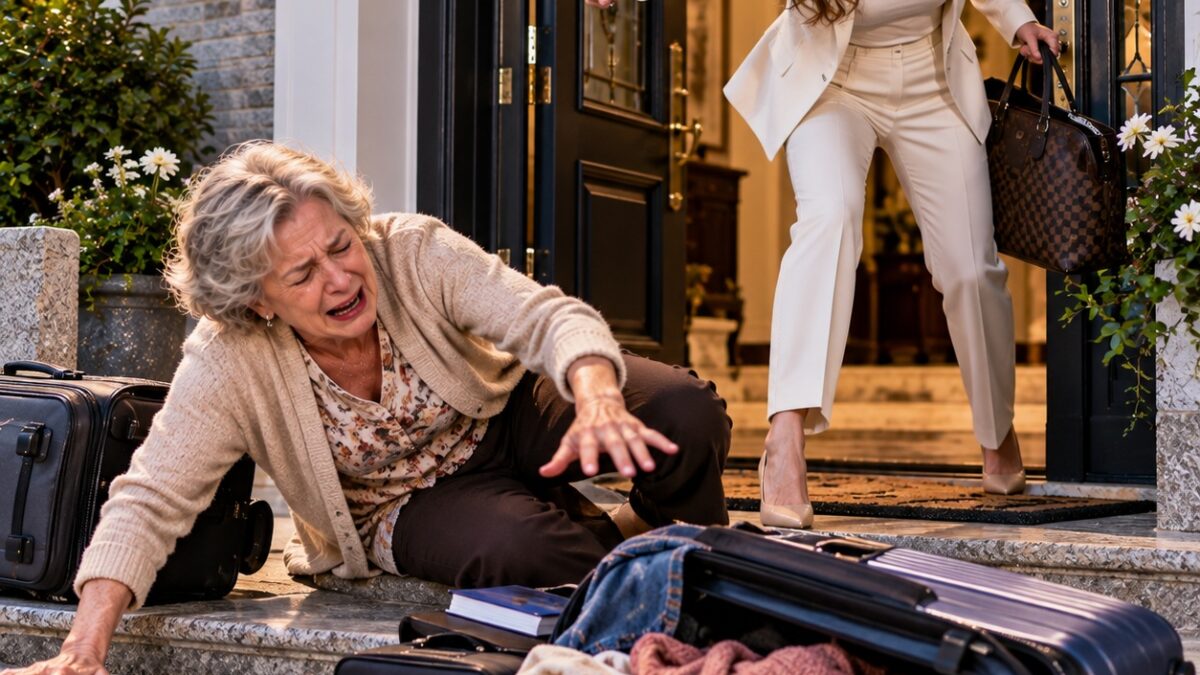
PART 2 and FULL ENDING  Thank you

For forty years, I taught English at Roosevelt High School in Portland.
I was never wealthy.
Never glamorous.
Never powerful.
But I loved my work.
I loved watching teenagers discover that words mattered.
That stories mattered.
That people mattered.
I raised my son alone while teaching those lessons.
James was seven when his father left.
His name was Richard.
One Tuesday afternoon, Richard packed two suitcases, stood in our apartment kitchen, and told me he did not believe he was “built for family life.”
I remember staring at him.
“What does that mean?”
He looked toward the living room where James was doing homework.
“It means I can’t do this anymore.”
“This?”
“Marriage.”
“Parenthood.”
“Responsibility.”
He said the words calmly.
Almost clinically.
As though we were a subscription he wanted to cancel.
James heard part of it.
Children always hear more than adults think.
That night, he cried into my chest.
“Why doesn’t Daddy want me?”
I held him until he fell asleep.
Then I sat alone on the edge of his bed and made a promise.
“You will never wonder whether you are loved again.”
I could not control whether his father returned.
He never did.
But I could give James enough love for both of us.
So I did.
I taught during the day.
Graded papers after dinner.
Picked up tutoring work when money was tight.
We lived in a small Portland apartment for years.
Nothing fancy.
Secondhand furniture.
A kitchen table that wobbled if you leaned on the wrong corner.
One television.
One old car.
But James never complained.
He was curious.
Bright.
Kind.
The type of child who took apart radios to understand them.
At twelve, he built a crude website for his school science club.
At fourteen, he was teaching himself programming from library books.
At sixteen, he repaired our ancient desktop computer when a technician told me it was beyond saving.
“Mom.”
He said proudly.
“I fixed it.”
“You always do.”
He smiled.
That smile stayed with him.
Slight gap between his front teeth.
Warm.
Boyish even when he became a grown man wearing expensive suits.
He went to college on scholarships.
Studied computer science.
Then cybersecurity.
After graduation, he worked for several companies before deciding he wanted to build something himself.
His startup began with four people and two borrowed offices.
I did not understand half the technical vocabulary.
But every Sunday, he called.
“Mom, listen to this.”
Then ten minutes of encryption protocols and threat architecture.
I understood maybe thirty percent.
But I understood excitement.
I understood my son building something he believed in.
By forty-three, James’s company had become valuable enough that a major technology conglomerate acquired it.
The sale changed his life overnight.
Suddenly, the little boy from our Portland apartment was worth more money than I knew how to imagine.
He bought a beautiful house outside Seattle overlooking Puget Sound.
Five bedrooms.
Glass walls.
Home theater.
Landscaped gardens.
And a detached guest house.
The first time he showed it to me, he handed me a key.
“What is this?”
“Yours.”
“For what?”
“The guest house.”
I laughed.
“I visit three times a year.”
“Then visit more.”
“James.”
“Mom.”
He put both hands on my shoulders.
“You spent your whole life worrying about me.”
“You paid for school.”
“Gave up things I didn’t even know you gave up until I got older.”
“You never have to worry about anything again.”
My throat tightened.
“I can take care of myself.”
“I know.”
He smiled.
“Let me take care of you sometimes anyway.”
That was James.
Successful enough to buy a multimillion-dollar home.
Still the boy who called every day.
Even when he had five minutes.
Sometimes all he said was:
“You okay?”
“Yes.”
“You eating?”
“Yes.”
“You lying?”
“Possibly.”
Then he laughed.
Those calls became the rhythm of my retirement.
At sixty-five, I finally left teaching.
James threw me a party.
Nearly three hundred former students came.
I expected maybe forty.
Instead, one after another walked into the community center.
Doctors.
Mechanics.
Lawyers.
Parents.
Teachers.
One woman hugged me and said:
“You were the first adult who told me I could write.”
A man I had taught twenty-five years earlier said:
“You made me read To Kill a Mockingbird when I hated books.”
“Now my daughter is named Scout.”
James stood in the corner watching.
Afterward, he wrapped his arms around me.
“See?”
“What?”
“You always act like your life was small.”
“It wasn’t.”
I never forgot that.
Especially later when I was sleeping in my car feeling invisible.
But before everything fell apart, there was Minerva.
James met her at a technology conference in San Francisco.
He called me that night.
“Mom.”
“What?”
“I met someone.”
I sat up in bed.
That voice.
I knew it.
“Someone?”
“Her name is Minerva.”
“What does she do?”
“Software developer.”
“Security protocols.”
“She’s brilliant.”
Then he laughed.
“And gorgeous.”
I teased him.
He sent a photo.
She was beautiful.
Tall.
Dark hair.
Perfect skin.
Sharp eyes.
In those early months, she seemed kind.
She remembered my birthday.
Sent flowers after a minor surgery.
Asked about my health.
When James and I talked, he sounded happier than I had heard him in years.
Their romance moved fast.
Six months after meeting, he proposed in Paris.
I expressed concern.
Not because I disliked Minerva.
Because six months felt like six weeks when discussing marriage.
“Maybe give yourselves time.”
I suggested.
James laughed.
“When you know, you know.”
I had heard that sentence before.
Usually from former students.
Sometimes it worked.
Sometimes it did not.
But James was forty.
Successful.
Thoughtful.
His life belonged to him.
So I supported him.
The wedding was elegant.
Modern.
Mostly tech people.
Minerva called me Mom that day.
I cried.
For the first two years, they appeared happy.
Travel.
Tokyo.
Cape Town.
Rome.
Singapore.
Parties.
Industry conferences.
James sent me photographs.
Minerva planned everything.
That seemed normal at first.
She was organized.
He was busy.
Then small things began bothering me.
James would be talking at dinner.
Minerva interrupted to correct him.
Not facts.
Stories.
“No, that’s not exactly what happened.”
Or:
“You’re exaggerating.”
Or:
“That story isn’t relevant.”
James would stop.
Smile.
Let her take over.
Once, he suggested a mother-son trip to London.
I had always wanted to see the West End.
Museums.
Historic neighborhoods.
Before I could answer, Minerva said:
“That conflicts with Singapore.”
James blinked.
“What?”
“The summit.”
“That’s months later.”
“You said you’d help with preparation.”
Then she looked at me.
“And America would struggle with all that walking anyway.”
I was sixty-seven.
I walked four miles most mornings.
James immediately backed down.
“You’re right.”
“We’ll do it another time, Mom.”
I smiled.
“Of course.”
But something stayed with me.
Not that the trip was canceled.
That James asked permission after making the suggestion.
Later, I called him privately.
“Everything okay?”
“Perfect.”
“Really?”
“Minerva likes things organized.”
He laughed.
“It’s part of what makes her brilliant.”
So I let it go.
I trusted him.
That became one of my deepest regrets.
And one of the things I eventually forgave myself for.
Because there is a line between respecting your adult child’s marriage and ignoring warning signs.
I did not understand where that line was until it was too late.
The call came at 3:14 in the morning.
I remember the exact red digits on my clock.
3:14.
My phone rang.
Unknown international number.
I answered.
“Mrs. Wilson?”
A male voice.
British accent.
“Yes?”
“I’m calling from London.”
My heart started racing before he said anything else.
Middle-of-the-night calls do not bring good news.
“Your son James Wilson suffered a massive cardiac event at his hotel.”
I sat up.
“What?”
“I’m very sorry.”
“No.”
“Mrs. Wilson—”
“No.”
“He was found unresponsive.”
“No.”
“The hotel staff called emergency services—”
“No.”
I kept saying it.
As though repetition could become a legal objection to reality.
“No.”
James was forty-five.
Healthy.
Runner.
Marathons.
Careful diet.
Annual physicals.
Heart attacks belonged to other people.
Older people.
Not my son.
Not the boy who called me every day.
I do not remember ending the call.
I remember dialing Minerva.
She answered.
I could barely speak.
“James.”
“What happened?”
“He…”
My voice broke.
“They said his heart.”
Silence.
Then:
“I see.”
I stopped crying for one second.
“I see?”
“I’ll need to contact the lawyer.”
Her voice was calm.
Businesslike.
“And the funeral home.”
I remember thinking:
People grieve differently.
I defended her even in my own mind.
Shock.
That was shock.
Everyone expresses grief differently.
Maybe she would collapse later.
Maybe she needed action to function.
I gave her every possible explanation.
The next days were a blur.
James’s body returned from London.
Minerva handled almost everything.
When I suggested hymns he loved as a child:
“No.”
When I suggested his favorite poem:
“We already have readings.”
When I brought childhood photographs:
“The memorial should focus on the man he became.”
I stared.
“The boy he was became that man.”
She sighed.
“America.”
“As his wife, I know what James would want.”
The funeral felt like a corporate event.
Business associates.
A few friends.
Minimal family stories.
No baseball photos.
No science-fair picture.
No memory of the twelve-year-old who once slept beside a broken computer because he was determined to repair it in the morning.
I sat in the first row.
My hands shook.
I kept waiting for James to walk through a side door and say:
“Mom, this is ridiculous.”
He did not.
After the burial, I asked Minerva if I could take a few of his childhood things from the house.
His Little League glove.
Some science-fiction novels I had bought him.
Maybe his college letters.
“No.”
She said.
“Everything needs to be inventoried.”
“The baseball glove?”
“Everything.”
“Minerva, those things have no financial value.”
Her face hardened.
“James is gone.”
“They’re objects.”
The sentence cut through me.
Objects.
To her, perhaps.
To me, each thing contained time.
That night, I returned to the guest house.
Sympathy cards covered the table.
Former students had sent flowers.
I sat alone.
Then, through the open kitchen window, I heard Minerva speaking outside on the phone.
Low voice.
Clear enough.
“Yes.”
Pause.
“I know.”
Another pause.
“But first I need to get rid of the old lady.”
My entire body went still.
“She’s becoming a problem.”
Then she laughed.
“Trust me.”
“By next week, everything will be sorted.”
“We can move forward with our plans.”
I sat frozen.
Old lady.
There was no other old woman living on the property.
She meant me.
Still, I told myself:
Maybe context.
Maybe something else.
Grief makes us cling to explanations because truth sometimes hurts more than confusion.
The next morning, she knocked.
Less than twenty-four hours after my only son’s burial.
I opened the door.
Minerva stood there in a cream sweater.
Perfect hair.
Expensive watch.
No grief visible.
“America.”
“Yes?”
“I think it’s time for you to leave.”
I stared.
“What?”
“James is gone.”
Her voice was flat.
“There’s no reason for you to remain on the property.”
My hand gripped the doorframe.
“This is my home.”
“No.”
“It was James’s guest house.”
“He told me I could live here permanently.”
“He isn’t here anymore.”
The room seemed to tilt.
“Where am I supposed to go?”
Her expression did not change.
“That’s not really my concern.”
Then she said it.
The sentence I would hear in my head for months.
“Pack your bags and learn to survive.”
I stared.
“Please.”
I hated how weak my voice sounded.
“I have nowhere.”
My savings had been devastated by pneumonia the previous year.
Three weeks hospitalized.
Rehabilitation.
Costs Medicare did not cover.
James had started helping me rebuild financially.
But most of my remaining money was still limited.
Minerva checked her watch.
“You have three hours.”
“Anything left gets disposed of.”
I thought:
She cannot legally do this.
Then another thought:
I have no strength to fight today.
That was the state I was in.
My son had been buried yesterday.
Law.
Property rights.
Estate documents.
Nothing felt real.
I packed.
Two suitcases.
A box of books.
Medicine.
Photo albums.
Coats.
Toiletries.
Everything I could fit into my ten-year-old Honda Civic.
Minerva sat on the patio checking her phone while I carried bags.
At one point, I stopped.
“You cannot believe James wanted this.”
She did not look up.
“James isn’t here anymore.”
Then:
“And neither should you be.”
That was the last thing she said before I drove away.
The first night, I parked at Walmart.
Far corner.
Under a light.
I reclined the driver’s seat.
My arthritis protested immediately.
I pulled a coat across my body.
Seattle nights in spring are colder than people imagine.
Every unfamiliar sound woke me.
Shopping carts.
Trucks.
Voices.
Once someone knocked on a nearby car.
I sat awake holding my keys between my fingers.
At dawn, I used the public restroom.
Brushed my teeth.
Washed under my arms with paper towels.
Applied lipstick.
Why lipstick?
I still do not know.
Maybe dignity sometimes reduces itself to one familiar ritual.
Day two, I called friends.
Many were gone.
Moved.
Dead.
Living with children.
One had grandchildren staying for a month.
Another had downsized to a one-bedroom condo.
Everyone was kind.
Nobody could take me in.
I did not blame them.
But sympathy does not become a mattress.
I checked my bank account.
$2,800.
That was it.
Not enough for long-term lodging.
Not enough for first month, deposit, fees, moving.
I began rationing.
Two meals a day.
Cold sandwiches.
Bananas.
Granola bars.
No restaurant coffee.
No unnecessary driving.
I called Minerva.
Voicemail.
Again.
Again.
Again.
On day five, my number stopped going through.
Blocked.
Ten days after the funeral, I drove past James’s house.
I do not know why.
Maybe I wanted to see the guest house.
Maybe I wanted proof he existed.
Cars filled the driveway.
Mercedes.
Tesla.
BMW.
Music poured through open windows.
People in cocktail clothes entered carrying wine.
Minerva was hosting a party.
Less than two weeks after James died.
Not memorial.
Celebration.
I sat across the street.
Watched strangers enter my son’s home.
Then drove away because tears made the road disappear.
Homelessness did something else to me.
It made me invisible.
At gas stations, people looked away.
In parks, nobody sat near me.
One coffee-shop manager told me there was a thirty-minute seating limit even though younger customers had been using laptops for hours.
Perhaps he saw my wrinkled clothes.
Perhaps he smelled that I had been bathing in restrooms.
I had taught thousands of teenagers about dignity.
Now strangers treated me like an inconvenience.
The thirteenth night brought heavy rain.
My Honda’s sunroof leaked.
Water dripped onto my shoulder.
The seat became wet.
My cough worsened.
At midnight, I surrendered and paid almost a hundred dollars for a cheap motel.
One night.
Hot shower.
Real mattress.
Clean sheets.
I slept ten hours.
The next morning, returning to my car felt worse because my body remembered comfort.
By the fifteenth day, I barely recognized myself.
Hair dirty.
Eyes hollow.
Shoulders curved inward.
I sat in a neighborhood park watching families.
A little boy ran toward his mother.
She caught him.
Lifted him.
I thought about James.
The child I had carried.
The man I had buried.
Then a grief unlike anything before hit me.
I would never see his children.
Never become the grandmother I imagined.
Never hear him call.
I put my face in my hands.
Sobbing.
People walked past.
Nobody stopped.
The next morning, I decided to go to a shelter.
Pride had become dangerous.
My cough was worse.
Dizziness.
Money disappearing.
I sat in the Honda holding a resource guide from the library.
Then my phone rang.
Seattle number.
I almost ignored it.
“Mrs. Wilson?”
“Yes?”
“America Wilson?”
“Yes.”
“My name is Thomas Reynolds.”
“I was your son James’s personal attorney.”
I stiffened.
“I’ve been trying to locate you for two weeks.”
Scam.
That was my first thought.
“Tell me something only his attorney would know.”
Silence.
Then:
“Two years ago, James created a trust to restore your childhood home in Missouri.”
My breath caught.
“The Victorian with the wraparound porch.”
“Blue shutters.”
“It was damaged in the flood.”
“He planned to restore it for your seventieth birthday.”
I closed my eyes.
I had told James about that house once.
Only once.
I showed him an old photograph.
Thomas Reynolds continued.
“Where are you?”
Shame flooded me.
“I’ve been staying…”
I stopped.
“Various places.”
“I went to the guest house.”
He said.
“Several times.”
“Mrs. Wilson refused to tell me where you were.”
The way he said Mrs. Wilson sounded strange.
Formal.
Then:
“Minerva asked me to leave.”
Silence.
“She what?”
“After the funeral.”
“She said I had no right to stay.”
Another silence.
Longer.
“America.”
His voice changed.
“This is extremely serious.”
“Can you come to my office?”
“Today?”
“I have information about James’s estate you need immediately.”
Two hours later, I sat in a leather chair inside one of Seattle’s most expensive law firms.
I had washed in a gas station restroom.
Changed my blouse in the back seat.
Combed my hair.
Still, I knew how I looked.
Thomas Reynolds showed no reaction.
Late fifties.
Wire-rimmed glasses.
Kind eyes.
He placed a thick folder between us.
“James changed his estate plan six months ago.”
I stared.
“Minerva does not know the full extent.”
He opened a document.
“Your son moved approximately eleven million euros into a trust.”
“For whom?”
Thomas looked at me.
“You.”
I laughed.
Not because it was funny.
Because impossible information sometimes produces laughter.
“Eleven million?”
“Yes.”
“Euros?”
“Yes.”
“Why?”
“He diversified internationally after the acquisition.”
“He named you sole beneficiary.”
My hands went numb.
“Thomas…”
“Mrs. Wilson.”
“America.”
“America.”
He leaned forward.
“You are not homeless.”
Tears came instantly.
Not joy.
Not exactly.
Relief so violent it hurt.
Then anger.
Then grief.
James.
Even now.
Still taking care of me.
Thomas’s face darkened.
“There’s more.”
Of course there was.
“In the months before his death, James became concerned about Minerva.”
“What kind of concerns?”
“Fidelity.”
My stomach dropped.
“And financial motives.”
He explained.
James installed security cameras.
Hidden.
Legal within property he owned and common areas, according to Thomas.
The footage showed Minerva with other men.
At least two affairs.
But the more damaging recordings were conversations.
Minerva discussing James’s finances.
Prenuptial agreement.
Ways to access assets.
Timing.
Waiting.
Planning.
James had contacted Thomas about divorce.
I covered my mouth.
“He was leaving her?”
“Yes.”
“When?”
“He planned to file after returning from London.”
A fresh wave of grief.
My son had flown to London believing he was coming home to end his marriage.
Instead, he died alone in a hotel room.
Thomas slid another paper toward me.
“The trust was part of his protection plan.”
“He wanted to make sure you were secure regardless of divorce litigation.”
Then:
“You also have a legal right to the guest house.”
I stared.
“What?”
“James’s estate documents specifically grant you continued residence.”
“Minerva had no authority to remove you.”
My hands shook.
“And the main house?”
Thomas looked at the folder.
“Under the current estate terms…”
He paused.
“Ultimately, ownership transfers to you.”
I stopped breathing.
“Me?”
“Yes.”
“Not her?”
“Not under the circumstances James documented.”
My mind could barely hold one fact before another arrived.
“Where am I supposed to go today?”
Thomas looked horrified.
“You have been sleeping in your car?”
I nodded.
He removed his glasses.
Rubbed his eyes.
Then:
“I reserved a suite at the Fairmont Olympic.”
“No.”
“Yes.”
“I can’t—”
“The trust can.”
“Clothing will be delivered.”
“Meals.”
“Transportation.”
“You need rest.”
Then he leaned toward me.
“After that, we begin making sure James’s wishes are carried out.”
That afternoon, I entered a hotel suite larger than the Portland apartment where I raised James.
Marble bathroom.
White towels.
Soft bed.
Flowers.
I stood beneath hot water until my skin turned pink.
Then put on a robe.
Sat by the window.
For the first time in sixteen days, I was warm.
Safe.
Fed.
I should have felt victorious.
Instead, I cried for James.
Because every new protection reminded me how much thought he had spent preparing for a future he would never see.
Part of me wanted to drive straight to his house.
Knock on the door.
Hold those trust papers in Minerva’s face.
Say:
Remember me?
But I had spent forty years teaching literature.
One lesson appears in every good tragedy.
Impulsive revenge usually helps the wrong person.
So I waited.
The next morning, I told Thomas:
“I want everything documented.”
He nodded.
“No screaming.”
“No surprise theatrics.”
“No mistakes.”
“That’s wise.”
“I want her unable to twist this.”
“Exactly.”
We began methodically.
Private investigator.
Financial records.
Estate inventory.
Bank communication.
Asset tracking.
And the truth became uglier.
Minerva had already begun selling James’s possessions.
Rare books.
Vintage watches.
Artwork.
Even a painting James commissioned for my birthday.
She had moved another man into the house.
Marcus.
Personal trainer.
He had visited even while James was alive.
Now he was driving James’s car.
Wearing James’s clothing.
I stared at the investigator’s photographs.
For several minutes, I could not speak.
Then:
“What else?”
Thomas showed me attempted liquidations.
Accounts frozen during probate.
Unauthorized asset movements.
Everything documented.
James had also left an inventory.
Meticulous.
Books.
Watches.
Art.
Personal objects.
Family items.
Minerva was selling things she had no legal right to sell.
Then Thomas called one afternoon.
“We found James’s journal.”
My heart stopped.
“Where?”
“Safe-deposit box.”
“You need to read it.”
The leather cover looked familiar.
I had bought James journals as a teenager because I believed writing clarified the mind.
He mocked me.
Apparently, he kept the habit.
His handwriting filled page after page.
Four months before his death:
I’m beginning to think my marriage was built on calculation rather than love.
Then:
Yesterday I heard Minerva discussing the prenup with someone. She was asking about “creative ways” around it.
Another entry:
Mom keeps asking if everything is okay. I hate lying to her. She likes Minerva and I don’t want to drag her into this until I understand what I’m dealing with.
Then the final entry.
Days before London.
Meeting with Thomas completed.
Trust for Mom finalized.
No matter what happens with the divorce, she’ll be secure.
It’s the least I can do after everything she sacrificed for me.
After London, I’ll file.
Then maybe Mom and I can finally take that England trip.
I stopped.
Could not continue.
Thomas gave me privacy.
I pressed my hand against the page.
That trip.
James had remembered.
Theaters.
London.
Museums.
The trip Minerva canceled years earlier.
He was planning it.
After the divorce.
A new beginning.
We never got it.
That changed something in me.
Until then, my fight with Minerva had been about survival.
Now it became about intention.
James had been preparing to reclaim his own life.
He had left legal instructions.
Evidence.
Protection.
I would not let his last careful decisions be erased.
The following day, Thomas filed.
Court petitions.
Estate enforcement.
Asset preservation.
Property possession.
Evidence attached.
Photos.
Financial records.
Security footage.
Statements from staff.
One housekeeper remembered hearing Minerva say shortly after the funeral:
“We need the old lady gone immediately.”
Everything connected.
The order came quickly.
Thomas called.
“We’re ready.”
“For what?”
“To take back what belongs to you.”
The morning we returned to James’s house was bright.
Almost offensively beautiful.
Blue sky.
Sunlight across Puget Sound.
Three weeks earlier, I had driven away from this property with two suitcases and nowhere to sleep.
Now I arrived in a tailored black suit.
Thomas beside me.
His paralegal Rachel.
Two King County sheriff’s deputies.
Not revenge.
Procedure.
That distinction mattered.
Thomas rang the bell.
Minerva opened the door wearing yoga clothes.
At first, confusion.
Then she saw me.
Shock.
“What is this?”
Thomas spoke formally.
“Mrs. Wilson, we are serving you with court documents regarding the estate of James Wilson.”
She looked at me.
“She is mentally unstable.”
I almost laughed.
“Grief has made her irrational.”
Thomas handed over the papers.
“The documents establish that America Wilson is the legal owner of this property under the applicable estate provisions.”
Minerva’s face changed.
“No.”
“You have been occupying it while violating restrictions on estate assets.”
“No.”
“You also had no authority to evict Mrs. Wilson from the guest house.”
“I’m his wife.”
I spoke.
“You were his wife.”
Her eyes narrowed.
I continued.
“The wife who was sleeping with other men.”
Color disappeared from her face.
“The wife who discussed how to access his money.”
“Stop.”
“The wife who told his mother to sleep on the street.”
“You have no proof.”
Thomas opened a tablet.
Pressed play.
James’s kitchen appeared.
Minerva.
Marcus.
An intimate embrace.
Then her voice.
Once we figure out how to move the money, we can stop pretending.
James is suspicious, but he can’t prove anything.
The clip ended.
Minerva stared.
“There are hours.”
Thomas said.
“James documented the situation thoroughly.”
“He consulted me regarding divorce.”
“He intended to file after London.”
For the first time, I saw fear.
Not embarrassment.
Not anger.
Fear.
Then a shirtless man appeared behind her.
Marcus.
Wearing James’s lounge pants.
“What’s going on, babe?”
Minerva spun.
“Go upstairs.”
One deputy looked away.
Probably suppressing an expression.
Marcus understood faster.
He disappeared.
Returned minutes later fully dressed with a duffel bag.
“I’m leaving.”
Minerva stared.
“What?”
“This isn’t what you told me.”
“Marcus.”
“No.”
He walked past us.
Just like that.
The man for whom she betrayed my son abandoned her the moment consequences arrived.
Thomas continued.
“You have twenty-four hours to remove your personal property.”
“Only items clearly belonging to you.”
“Everything else remains pending estate inventory.”
She looked at me.
“This house is too large for you.”
That almost impressed me.
The speed of manipulation.
“We can work something out.”
“No.”
“I could buy you out.”
“No.”
“James would want us to get along.”
I looked directly at her.
“James wanted to divorce you.”
That ended that argument.
We entered.
The guest house was mostly untouched.
Thank God.
The main house was not.
James’s office had gaps.
Books missing.
Artwork gone.
Closet spaces empty.
I stood before the shelves where his first-edition science-fiction collection had been.
“Where are the books?”
“Donated.”
Minerva said.
Thomas checked his notes.
“Powell’s Books has purchase records.”
Silence.
“Sold individually.”
Her jaw tightened.
We continued.
Chess set from James’s grandfather.
Missing.
Fountain pens I gave him at college graduation.
Missing.
Small bronze sculpture from our one trip to Italy.
Missing.
“I don’t know.”
She said.
A deputy spoke.
“Concealing assets under court order may create criminal exposure.”
Minerva finally cracked.
“Fine.”
“Some items are in storage.”
“Why?”
“I was going to auction them.”
Everything documented.
By late afternoon, security arrived to monitor the property.
Minerva stood near the staircase.
“This is ridiculous.”
She said.
“You’re treating me like a criminal.”
I looked at her.
“No.”
My voice was calm.
“I am treating you like someone who evicted a grieving sixty-eight-year-old woman after her only child died.”
Her eyes hardened.
“You told me to pack my bags and learn to survive.”
I stepped closer.
“Well.”
“I survived.”
Then:
“And now I’m taking back what my son intended me to have.”
That night, I stayed at the hotel.
I could not sleep inside James’s main house yet.
Winning a legal fight does not erase grief.
The following afternoon, I returned while movers removed Minerva’s belongings under supervision.
When the final box left, she approached me on the front steps.
“You ruined everything.”
I looked at her.
“What exactly did I ruin?”
“My life.”
“No.”
“You did that.”
Her face twisted.
“Do you know what marriage to James was like?”
“Business dinners.”
“Constant calls to you.”
“Every expense questioned.”
I could barely believe her.
“You were married to a man who loved you.”
“He controlled everything.”
“Because he realized you were trying to access his assets.”
“You think he was perfect?”
“No.”
I said.
“I think he was my son.”
“And I think whatever difficulties existed in your marriage did not require you to betray him, sell his possessions, or make his grieving mother homeless.”
She looked away.
I continued.
“You know what marriage to James cost you?”
“What?”
“Comfort.”
“You know what losing James cost me?”
She said nothing.
“My child.”
I felt tears rising but did not hide them.
“And then you took my home.”
“I slept in a Honda.”
“I ate sandwiches because I couldn’t afford hot meals.”
“I washed in store bathrooms.”
“I spent nights wondering whether I would die in a parking lot and nobody would know my name.”
Her face remained hard.
“So yes.”
I said quietly.
“We both learned about survival.”
Then I walked inside.
She left.
No dramatic final speech.
No apology.
Her car disappeared down the driveway.
That was enough.
Thomas stood beside me.
“The house is yours.”
He said.
“Legally and completely.”
I smiled sadly.
“Please stop calling me Mrs. Wilson.”
He smiled.
“America?”
“America.”
That night, I slept in the guest house.
Exactly where James wanted me.
Grief came in waves.
Justice did not replace him.
€11 million did not replace him.
The main house did not replace him.
Nothing would.
But beneath grief was something new.
Security.
Purpose.
Evidence that James knew me.
Loved me.
Protected me.
The next months became both beautiful and terrible.
I sorted his belongings.
Some days, I could do an hour.
Some days, five minutes.
His business suits went to a nonprofit providing interview clothes to young people.
James would have liked that.
His childhood teddy bear stayed with me.
So did letters I wrote him in college.
Photo albums.
Some books.
The baseball glove.
Anything carrying memory more important than money.
I recovered many objects Minerva had sold.
Not all.
Eventually, I stopped chasing every item.
James was not inside the objects.
They mattered.
But he was larger than them.
I used part of the trust to create the James Wilson Scholarship Fund.
Ethical technology.
That was important to me.
And would have been important to him.
Ten students received full scholarships the first year.
At the ceremony, I told them:
“My son believed technology should protect people.”
“So if you build powerful systems someday, remember that ethics matters as much as innovation.”
One student came to me afterward.
“Did your son teach?”
“No.”
“He should have.”
I smiled.
“He taught me.”
After three months, I sold the large Seattle house.
Not because Minerva had contaminated it.
Because it had become too full of ghosts.
James belonged everywhere inside it.
Kitchen.
Fireplace.
Office.
Stairs.
I heard him in every room.
I bought a smaller home in a lively neighborhood.
Puget Sound view.
Garden.
Warm kitchen.
Enough space for guests.
Not enough empty rooms to echo.
I began therapy.
Dr. Rivera specialized in grief among older adults.
First session, she said:
“You are experiencing compound trauma.”
“I’m simply grieving.”
“No.”
She shook her head.
“You lost your only child.”
“You were betrayed immediately afterward.”
“You became homeless.”
“You experienced financial fear.”
“Social invisibility.”
“Physical hardship.”
“Then legal upheaval.”
“Your body has been surviving several catastrophes at once.”
That made me cry.
Because for months, I had expected myself to be grateful.
Rich now.
Safe now.
Justice served.
Therefore fine.
But grief does not understand bank balances.
Dr. Rivera gave me permission not to be fine.
Healing became uneven.
Good mornings.
Terrible afternoons.
Sometimes laughter.
Then guilt for laughing.
Sometimes I smelled coffee and remembered James.
Sometimes I woke reaching for my phone because it was the hour he used to call.
The phone stayed silent.
I joined a group for parents who had lost adult children.
There, I met Eleanor.
Retired nurse.
Her son died of cancer.
We became friends because neither of us needed to explain the particular wrongness of burying a child.
One day she said:
“People say losing a child is unimaginable.”
I nodded.
“It isn’t.”
“What do you mean?”
“You imagine it constantly after it happens.”
She understood.
Six months after Minerva left, Thomas called.
“She contested the will.”
My stomach tightened.
“On what grounds?”
“Lack of capacity.”
“Undue influence by you.”
I laughed bitterly.
“I barely knew any of this existed.”
“Exactly.”
“How bad?”
“Not bad.”
He explained the evidence.
Journal.
Timeline.
Video.
Legal consultations.
James’s repeated independent decisions.
Minerva’s behavior afterward.
The challenge died quickly.
Dismissed.
“She’s done?”
“Legally, yes.”
I could have pursued more.
Emotional distress.
Property sales.
Additional damages.
Thomas laid out options.
I declined.
“Why?”
He asked.
“Because I’m tired.”
“That’s fair.”
“And because James would hate spending five years of his legacy in court.”
Thomas nodded.
“He wanted forward motion.”
“So do I.”
The relationship between Thomas and me changed too.
He became more than attorney.
Friend.
He checked on me.
Dropped off books.
Invited me to Thanksgiving with his family.
His wife was warm.
His grandchildren asked me questions about teaching.
No one looked at me like poor America.
Just America.
That mattered.
Eight months after James died, I read a newspaper article about elderly women becoming homeless.
Widowhood.
Medical bills.
Family estrangement.
Rent increases.
Retirement shortages.
I recognized the faces even though I did not know the women.
The fear.
The shame.
The constant calculation.
Can I afford gas?
Can I afford food?
Where do I sleep?
Where do I wash?
Where can I exist without being told to leave?
I thought about Walmart.
The rain.
The coffee shop.
That park bench.
I called a shelter.
“I want to volunteer.”
Then:
“And I want to fund something.”
That became the Silver Sisters Safe Harbor Program.
Emergency housing for women over sixty.
Legal help.
Financial counseling.
Short-term transportation.
Medication assistance.
Most importantly:
A door that stayed open.
We launched three months later.
The first woman we housed was seventy-two.
Her nephew had taken over her finances.
She arrived carrying one grocery bag.
She kept apologizing.
“I’m sorry.”
“For what?”
“For being trouble.”
I recognized the sentence.
I touched her hand.
“You are not trouble.”
She cried.
So did I.
Every woman helped through that program became part of James’s legacy.
Not because he had known them.
Because his protection of me gave me the ability to protect someone else.
That was how grief slowly became purpose.
I occasionally heard about Minerva.
Phoenix.
Mid-level technology job.
Marcus gone.
No fortune.
No mansion.
I felt no joy.
But no pity.
Her life was hers now.
Mine was mine.
One year after James died, I flew to London.
Alone.
The trip we had planned.
Not the way we planned.
I stayed at the hotel where he spent his final night.
That was harder than I expected.
I visited the hospital.
Thanked the staff.
One nurse remembered the case.
“Your son was treated with dignity.”
She told me.
I cried.
Then I walked.
Theaters.
Bookshops.
Historic streets.
I bought two tickets for a West End show.
Only needed one.
The second seat remained empty beside me.
I do not know why I bought it.
Maybe grief is allowed occasional irrational rituals.
Afterward, I walked through Regent’s Park.
Spring flowers.
Soft wind.
I sat on a bench.
“James.”
I said quietly.
People passed.
Nobody cared that an older woman was talking to someone who was not there.
“I survived.”
I almost laughed.
“Just like she told me to.”
Then tears came.
“But I did it because of you.”
I looked at the trees.
“I wish you were sitting here.”
“I wish you could complain about the overpriced tickets.”
“I wish we could argue about where to eat.”
“I wish I could hug you.”
My voice broke.
“But I promise something.”
“I’m going to use what you left me well.”
“Not just the money.”
“The love.”
“The fact that you thought ahead.”
“The fact that you cared.”
“I’m going to keep passing it forward.”
Wind moved through the branches.
For one irrational second, I felt peace.
Not closure.
I dislike that word.
A mother does not close a child.
But peace.
Enough.
Over time, I learned that survival has several meanings.
Minerva meant:
Figure it out alone.
Suffer.
Disappear.
Prove you are nothing without my son.
But survival became something else.
It meant accepting help without shame.
It meant legal documents.
Hot meals.
Therapy.
Friendship.
Purpose.
Boundaries.
It meant understanding that becoming temporarily powerless does not mean you are permanently helpless.
For sixteen days, I believed the world had no place for me.
I was wrong.
It simply took one phone call to show me I had been erased from one house, not from life.
There were still students who remembered me.
Friends I had not yet met.
Women who would one day enter Silver Sisters carrying grocery bags.
Thomas and his family.
London.
Gardens.
Books.
Morning coffee.
A future.
Grief did not end my life.
It altered the landscape.
Some roads disappeared.
Others emerged.
There are mornings even now when I wake and expect James’s call.
For half a second, my hand reaches toward the phone.
Then memory arrives.
Those moments still hurt.
Probably always will.
But they no longer destroy the whole day.
Sometimes I make coffee.
Walk into my garden.
Read one of James’s journal entries.
Not the painful ones.
The funny ones.
He wrote once:
Mom still thinks I don’t know she checks whether I ate vegetables when we talk. I’m forty-four.
I laughed for ten minutes the first time I found that.
Then cried.
Healing became both at once.
Laughter and tears.
Presence and absence.
Love and loss.
The house Minerva threw me out of is gone from my life now.
The trust still exists.
Carefully managed.
I live comfortably.
More comfortably than I ever expected.
But wealth means something different to me after sleeping in a car.
A warm bathroom is wealth.
A bed.
Soup.
A door that locks.
A friend who answers the phone.
Enough gas.
Medication without cutting pills.
Someone looking at you instead of through you.
Dignity.
Those things became precious.
I sometimes visit the Safe Harbor apartments.
No cameras.
No speeches.
Just coffee.
Women tell stories.
A former accountant whose daughter emptied her savings.
A widow priced out of her apartment.
A retired nurse recovering from cancer.
A woman whose husband died leaving debts she never knew existed.
Different stories.
Same terror.
“What happens to me now?”
I know that question.
So I answer:
“We figure out the next part.”
Not:
Everything will be easy.
Not:
Everything happens for a reason.
I hate that phrase too.
James did not die for a reason.
I did not become homeless for a reason.
Cruelty is not secretly kindness.
Loss is not a gift.
But what we build afterward can have meaning.
That is different.
The program grew.
Scholarships grew.
I began speaking occasionally at schools and nonprofit events.
The first time someone introduced me as philanthropist America Wilson, I almost looked behind me.
Philanthropist.
I still felt like Mrs. Wilson from Room 214 at Roosevelt High.
The teacher who wrote too many comments in red ink.
The mother who clipped coupons.
The woman sleeping in Walmart.
All of those versions existed together.
Money did not replace them.
One evening after a Safe Harbor fundraiser, Thomas sat beside me.
“You know James would be proud.”
I stared at my tea.
“I hope so.”
“He talked about you constantly.”
“You knew?”
Thomas smiled.
“Every estate meeting.”
“Mom this.”
“Mom that.”
“Make sure Mom…”
My eyes filled.
“He was worried about Minerva hurting you.”
“I wish he had told me.”
“I know.”
“Maybe I could’ve helped him.”
“Maybe.”
Thomas paused.
“But James was like you.”
“What does that mean?”
“He protected people by carrying things alone.”
I laughed softly.
“That sounds unhealthy.”
“Very.”
We both smiled.
Then he said:
“You taught him strength.”
“Maybe you both could’ve learned sooner that strong people still need help.”
That stayed with me.
I had spent my life believing independence meant not burdening others.
James inherited that.
When his marriage was failing, he hid it.
When Minerva betrayed him, he handled it privately.
When he worried about me, he built legal protections instead of telling me.
His love was extraordinary.
But I wish we had been more honest with each other.
That became another lesson.
Protection without communication can still leave loneliness.
So now, when I love people, I try to say more.
I tell Eleanor:
“I need you.”
I tell Thomas:
“I’m having a bad day.”
I tell scholarship students:
“Call if you’re struggling.”
Not because weakness is dangerous.
Because isolation is.
Minerva understood isolation.
She had begun separating James from emotional supports.
And after his death, she removed me physically.
Get rid of the old lady.
Her words from that phone call remained one of the pieces of evidence Thomas kept.
For a long time, hearing them in my memory made me angry.
Now they mostly make me sad.
Imagine seeing relationships only in terms of usefulness.
James saw people differently.
That is the legacy I chose to preserve.
On what would have been his forty-seventh birthday, I invited ten scholarship recipients to dinner.
We ate outside.
One student asked how James became interested in cybersecurity.
I told the broken-computer story.
“He slept beside it?”
“Yes.”
“Why?”
“Apparently he believed the computer might escape during the night.”
They laughed.
I laughed.
Then I looked around the table.
Ten young people going to college because James’s money was helping them.
He had no children.
For a while, that devastated me.
No grandchildren.
No next generation carrying his name.
Then I realized legacy does not require biology.
Maybe his name continues through every ethical engineer we help train.
Every older woman who sleeps safely because of Safe Harbor.
Every person who receives protection because one man planned carefully before boarding a flight he never returned from.
That is enough.
More than enough.
Two years after his death, I finally opened the last box of belongings I had not touched.
Inside was his Little League glove.
Small.
Worn.
I put my hand inside.
Too large now.
I remembered James at nine.
Running toward me.
“Mom!”
Holding up the ball.
“I caught it!”
“You’re supposed to.”
“No, but this one was really hard.”
Everything was really hard when you were nine.
And exciting.
I sat on the floor holding the glove.
“I survived.”
I told him again.
Then smiled.
“But honestly, you could’ve made the paperwork easier.”
I could almost hear his laugh.
That is where I am now.
Still a mother.
Even without a living son.
Still grieving.
Still living.
Still learning.
Minerva told me to learn how to survive.
She said it like a curse.
A humiliation.
A prediction that without James, I would fail.
For sixteen days, I thought she might be right.
Then I learned something she never understood.
My son’s money helped.
Of course it did.
We should not pretend otherwise.
Eleven million euros can solve housing problems quickly.
But money was not the only reason I survived.
I survived because one attorney kept looking for me.
Because I answered an unknown call.
Because I accepted help.
Because I chose patience over revenge.
Because I let grief counseling help.
Because I found other parents.
Because I turned shame into a story I was willing to tell.
Because I eventually stopped measuring my value by whether one cruel woman thought I belonged.
That mattered most.
The trust gave me security.
James’s love gave me courage.
But I still had to get out of the car.
I still had to walk into Thomas’s office.
I still had to return to the house.
Still had to face Minerva.
Still had to sleep the first night alone.
Still had to build something afterward.
James prepared the bridge.
I crossed it.
That is how I think of him now.
Not the man lying alone in a London hotel.
Not the body at the funeral.
Not the name on legal documents.
I remember the boy with the broken computer.
The teenager with too many books.
The man calling me from Tokyo just to say goodnight.
The son planning a London trip we never took together.
I remember love.
Not death.
And sometimes, when I stand in front of a group of women at Safe Harbor, I tell them:
“There was a night when I slept in my car with rain dripping onto my shoulder.”
“I believed my life had ended.”
“Nothing about that night told me I would someday be standing here.”
“So I won’t tell you I know exactly what your future holds.”
“I don’t.”
“But I know this.”
“The worst day of your life does not automatically get to write the last page.”
Maybe that is the English teacher in me.
Still believing in endings.
Still believing sentences can turn.
Still believing chapters change.
My chapter changed with one phone call.
Mrs. Wilson, I was your son’s attorney.
And everything after that became a story Minerva never saw coming.
The woman who threw me out eventually left my son’s house under sheriff supervision.
The woman who told me to survive discovered James had left me the home she believed would be hers.
The woman who laughed about getting rid of the old lady learned that old women can hire lawyers, read trust documents, rebuild lives, fund scholarships, and create safe housing for other old women.
But that was never the sweetest part.
The sweetest part happened one year after James died.
Regent’s Park.
London.
Spring flowers.
An empty space beside me.
I closed my eyes and said:
“I made it, sweetheart.”
And for the first time since losing him, I did not feel abandoned.
I felt loved.
Because James was gone.
But what he had given me was still moving through the world.
Safety.
Education.
Dignity.
Second chances.
And every time another woman walks into Silver Sisters terrified that she has nowhere left to go, I think of Minerva standing in that doorway.
“Pack your bags.”
“Learn to survive.”
She meant to reduce me.
Instead, those words became the dividing line between two versions of my life.
Before them, I was a grieving mother who believed security came from belonging to her son’s world.
After them, I became a woman who learned that survival is not simply remaining alive.
It is keeping your dignity after someone tries to strip it away.
Keeping compassion after someone gives you every reason to become bitter.
Keeping enough hope to open the next door.
And using whatever strength you find to hold that door open for somebody coming behind you.
Minerva told me to learn to survive.
I did.
Just not the way she expected.







