𝗙𝗨𝗟𝗟 𝗦𝗧𝗢𝗥𝗬: My Daughter-in-Law Whispered That She Only Tolerated Me for My Son, and the Secret Behind Her Smile Was Sitting Inside the House My Husband Built
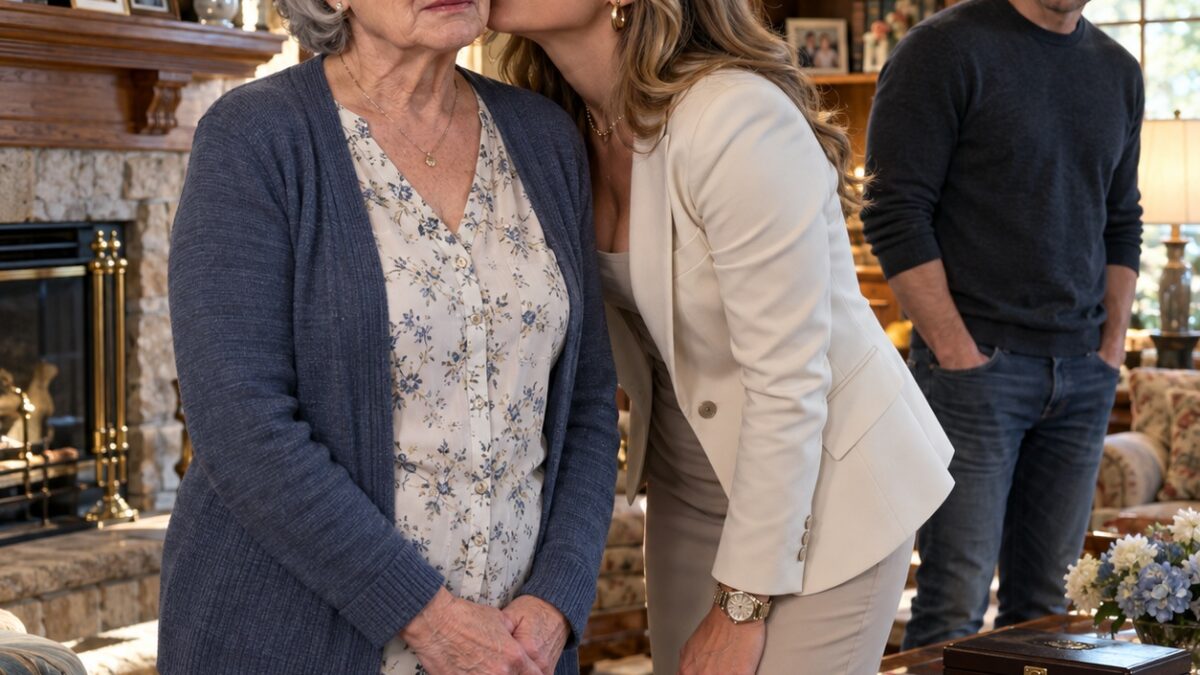
𝗙𝗨𝗟𝗟 𝗦𝗧𝗢𝗥𝗬 𝗜𝗦 𝗜𝗡 𝗧𝗛𝗘 𝗙𝗜𝗥𝗦𝗧 𝗖𝗢𝗠𝗠𝗘𝗡𝗧


Highlighted blonde hair.
Perfect clothes.
Easy smile.
Pharmaceutical sales.
Confident.
Quick.
Within six months, Thomas proposed.
At first, I liked her.
More than liked her.
I wanted her to become the daughter I never had.
After the wedding, Thomas suggested they move into my house.
“Why should you be alone while we throw money at rent?”
He asked.
“Amanda thinks a multigenerational home would be wonderful.”
Amanda told me she had never been close to her own mother.
“I’d love to learn from you.”
She said.
I believed her.
That is important.
Because later, when people asked why I tolerated so much, they imagined Amanda arrived with horns.
She did not.
She arrived with flowers.
For the first months, she was considerate.
Then my things started moving.
Kitchen utensils.
Family pictures.
Holiday decorations.
Frank’s handmade ornaments.
My old china.
My reading chair.
When I objected, Thomas always seemed to have the same answer.
“Mom, she’s trying to feel at home.”
So I compromised.
Again.
Again.
Again.
Then Amanda started helping with my bills.
Soon she had access to my accounts.
She questioned my garden-club dues.
My hair appointments.
Small purchases.
While spending thousands from household funds on renovations she wanted.
When I challenged anything, Thomas would say Amanda had told him I agreed.
Then she started telling stories about my memory.
At dinner with friends, she laughed:
“You should have seen Dileia. She put her glasses in the freezer.”
I had done no such thing.
But Thomas looked at me.
Not laughing.
Concerned.
That look frightened me more than Amanda’s joke.
Because a lie becomes dangerous when the person you love starts wondering whether it might be true.
Then jewelry disappeared.
My mother’s pearls.
A diamond brooch Frank gave me on our fortieth anniversary.
Amanda suggested I misplaced them.
“Maybe we should mention your memory to the doctor.”
She said.
And each time Thomas heard another story, another doubt entered his face.
Then one evening, after I spent all day cooking a special dinner in a desperate attempt to make peace, Amanda followed me into the kitchen.
Dinner had been pleasant.
For the first time in months I thought perhaps I had misjudged everything.
Then her face changed.
She leaned close.
“Old witch.”
I froze.
“I only put up with you because of my husband.”
My hand tightened around the dish towel.
Amanda smiled.
“This is my house now.”
“No.”
I whispered.
“It isn’t.”
“Frank is dead.”
The words hit me like a slap.
“And soon you’ll be gone too.”
She told me she planned to convince Thomas to sell.
She had already planted assisted-living brochures.
Already told him I was becoming forgetful.
Already created incidents I could not explain.
“The missing jewelry.”
She said.
“The appointments.”
She smiled.
“It’s amazing what you can accomplish with a little planning.”
My blood went cold.
Then she told me the truth.
She did not hate me.
She wanted the property.
The neighborhood had become valuable.
The lot alone was worth a fortune.
They could sell my house, build something modern, and still have money left for the life she believed they deserved.
“And me?”
I asked.
Amanda shrugged.
“There’s a very nice facility ten miles away.”
“Memory care included.”
I stared at her.
Then laughed.
She looked confused.
“You know what, Amanda?”
“What?”
“You can relax.”
Her smile returned.
“You’ll never have to put up with me again.”
She thought I was surrendering.
She had no idea I had finally stopped trying to keep the peace.
[END OF FACEBOOK CAPTION]
That night I did not sleep.
I sat in my bedroom with Frank’s photograph in my lap.
Wedding day.
His dark hair.
My ridiculous veil.
The expression on his face that always made me feel like I was the only woman in the room.
“What would you do?”
I whispered.
Of course, photographs do not answer.
But after forty-five years, you know the rhythm of someone’s thinking.
Frank never liked unnecessary drama.
He also never tolerated a bully.
I could almost hear him.
It’s wood and nails, Dileia. You are the one who makes it home.
That helped.
Because Amanda had confused my kindness with surrender.
For most of my life, I was the woman who kept peace.
At holidays.
Between relatives.
Between Thomas and Frank when they argued.
Between friends.
I compromised first.
Apologized first.
Made myself smaller first.
My generation of women was trained in that skill.
Smile.
Smooth it over.
Do not make things uncomfortable.
Amanda had weaponized that instinct.
Every time I backed down, she moved another boundary.
Every time I tried to preserve harmony, she treated the silence as permission.
By dawn, I had made a decision.
No more.
At six-thirty, I called Barbara.
My oldest friend.
She answered sounding irritated until she heard my voice.
“Dileia?”
“I need help.”
Instantly awake.
“What happened?”
“Can you come over?”
“Ten minutes.”
“And Barbara?”
“Yes?”
“Does Michael still work for that security company?”
Pause.
“Yes.”
“Good.”
At nine, Amanda came downstairs dressed for her weekly spa appointment.
She barely looked at me.
“I’ll be back around four.”
She grabbed her handbag.
“Try not to burn the place down while I’m gone.”
I smiled.
“I’ll do my best.”
The door closed.
I watched her car disappear.
Then I called the locksmith.
Rick arrived within an hour.
Middle-aged.
Tool belt.
Practical manner that reminded me painfully of Frank.
“You want every exterior lock changed?”
“Every one.”
“Any security concern I need to know about?”
“Yes.”
I did not elaborate.
Barbara arrived with coffee.
She looked at me over the rim of her cup.
“You’re really doing it.”
“Yes.”
“Good.”
The locks were only the beginning.
While Rick worked, Barbara and I packed Amanda’s belongings.
Carefully.
That mattered to me.
I was not becoming her.
Her expensive dresses were folded.
Shoes boxed.
Cosmetics wrapped so nothing spilled.
Jewelry placed into a small container.
Every item moved to the guest house behind the property.
Frank built that little cottage years earlier when his mother became ill.
One bedroom.
Bathroom.
Kitchenette.
Clean.
Comfortable.
Perfectly habitable.
Amanda was not being put on the street.
She was simply being removed from my private home.
By early afternoon, the main bedroom was mine again.
I stood in the doorway.
My room.
I had let Thomas and Amanda take it when they moved in because they said the attached bathroom would be useful.
I had moved into the smaller downstairs bedroom.
Another compromise.
Now the room looked empty.
Peaceful.
I wrote Amanda a letter.
Not angry.
Not insulting.
Facts.
The main house belonged solely to me.
Her belongings were in the guest house.
She could stay there temporarily.
Thomas remained welcome.
I would not sell.
I would not enter assisted living because she preferred the real estate.
And I would no longer live under manipulation, humiliation, or threats.
Then I called Mr. Jacobson.
He had handled Frank’s will.
“I need you to confirm something.”
“Of course.”
“The house.”
“Yes?”
“Only my name?”
I could hear keyboard clicks.
“427 Maple Street?”
“Yes.”
“Title is solely in your name.”
Relief came so strongly I had to sit.
“Thomas has no ownership?”
“None.”
“Amanda?”
“Absolutely none.”
“And I can determine who lives here?”
“Legally, yes.”
“Thank you.”
“Dileia?”
“Yes?”
“Is something wrong?”
I hesitated.
“Yes.”
He offered help.
I told him I might need it soon.
Barbara’s son Michael came next.
Doorbell camera.
Front security camera.
Back patio camera.
Motion alerts.
Audio.
Everything connected to my phone.
At four, Barbara offered to stay.
“No.”
“You sure?”
“Yes.”
“This is mine to handle.”
She hugged me.
“Call.”
“I will.”
At 4:30, my phone chimed.
Amanda.
Front porch.
She inserted her key.
Turned.
Nothing.
Again.
Nothing.
She shook the handle.
Then rang.
I sat in the living room.
In Frank’s old reading chair.
Actually, my reading chair—the one Amanda had moved to the basement.
Michael brought it up for me.
She rang again.
Pounded.
“Dileia!”
I watched through the app.
“Open the door.”
No response.
She circled the house.
Back entrance.
Side door.
All locked.
Then she called Thomas.
Her hands flew while she talked.
Face changing from rage to wounded disbelief.
The performance.
Even without sound I recognized it.
Then she spotted the guest house.
Ten minutes later she returned carrying my letter.
She marched straight to the doorbell camera.
“You cannot do this.”
I pressed the intercom.
“The house is mine.”
“You’re insane.”
“You told me you only tolerate me because of Thomas.”
Silence.
“Now you don’t have to.”
“This is my home too!”
“No.”
“You’ve lived here as my guest.”
“Thomas will never allow this.”
“Thomas doesn’t own the house.”
“You’ll regret this.”
“The guest house is available.”
“I’m calling police.”
“That is your right.”
She did.
Twenty minutes later, two officers arrived.
Amanda transformed.
Tears.
Trembling.
Concern.
“My elderly mother-in-law is having some kind of breakdown.”
I opened the door.
“Officers.”
Amanda tried to enter behind them.
I raised one hand.
“I’m inviting the officers.”
“Not Amanda.”
The older officer looked at me.
Then at her.
“Ma’am, remain outside for a moment.”
Inside, I handed him a folder.
Deed.
Will.
Attorney confirmation.
“My daughter-in-law has been living here with my permission.”
I explained.
“I revoked that permission for the main residence after threatening and manipulative behavior.”
“She has access to the guest cottage.”
“Her possessions are there.”
“I have not damaged anything.”
The officer read.
“These documents appear clear.”
“Yes.”
“Property is solely yours.”
“Yes.”
Outside, he explained the situation.
Amanda exploded.
“I’m married to her son!”
“That does not convey property rights.”
“We live here!”
“She has provided temporary accommodation.”
“That shed?”
Amanda snapped.
“That is a fully furnished one-bedroom cottage.”
The officer remained calm.
“You cannot force entry into the primary residence.”
“If you attempt to do so, you could face charges.”
Her face became red.
The charming woman Thomas married vanished.
For a moment, the police saw the same Amanda I saw when Thomas was absent.
She threatened lawyers.
Called me unstable.
Said Thomas would handle me.
Then stormed to the guest house.
I closed my door.
Locked it.
Sat in my chair.
And shook for almost ten minutes.
Power does not always feel powerful.
Sometimes it feels like nausea.
Sweaty palms.
A heart beating too quickly.
But underneath the fear was relief.
My house was quiet.
No Amanda walking around rearranging.
No whispered insults.
No doors opening.
No belongings disappearing.
I slept better that night than I had in months.
Thomas called from California.
“Mom?”
“Yes?”
“Amanda says there’s some kind of problem.”
“Yes.”
“She says the locks were changed.”
“They were.”
“Why?”
“We need to talk in person.”
“She says you locked her out.”
“She has the guest house.”
“Mom.”
“Thomas.”
“I’m in the middle of a major project.”
“I know.”
“Can you just fix this until I get home?”
“No.”
Silence.
That was new.
“No?”
“No.”
“Why not?”
“Because some things cannot be smoothed over.”
He sounded frustrated.
“Amanda is my wife.”
“I know.”
“And?”
“And I am your mother.”
“That isn’t what I meant.”
“I know exactly what you meant.”
He exhaled.
“I’ll be home in three days.”
“Good.”
Until then, Amanda stayed in the cottage.
Mostly.
She came and went.
Paced the property.
Made phone calls.
I ignored dozens of messages.
Some angry.
Some pleading.
Some accusing me of ruining Thomas’s life.
Then the camera captured something I had not expected.
Amanda stood near the front walkway on the phone.
She did not see the small security camera above the porch.
Her voice was clear.
“I don’t care what it takes.”
Pause.
“That old bag is not going to win.”
I stopped breathing.
“The house is worth over a million.”
Another pause.
“Once we get her declared incompetent, we can sell it as her legal guardians.”
My blood went cold.
“I’ve already talked to a lawyer.”
There it was.
Proof.
Not feelings.
Not my journal.
Not my interpretation.
Her voice.
Her plan.
I saved the clip.
Michael helped me recover messages from the family iPad.
Amanda thought she deleted them.
She had not.
Group chats with friends.
Get rid of the old lady.
The house is wasted on her.
Once Thomas agrees she’s slipping, everything gets easier.
Sunny Pines has a memory wing.
She won’t last forever anyway.
I printed everything.
Then waited for my son.
Thomas came home at 12:30 in the morning.
Amanda ran from the guest house.
Threw herself into his arms.
Sobbing.
I watched through the camera.
Then opened the door.
“Come inside.”
Both.
Thomas looked exhausted.
Amanda clung to him.
We sat.
“What is happening?”
He demanded.
“Amanda says you’ve become paranoid.”
“I understand why she said that.”
“Mom—”
“Let me speak.”
My tone stopped him.
I told him everything.
Not only the locks.
Months.
Chair.
Photographs.
Money.
Isolation.
Lies about memory.
Jewelry.
Sunny Pines.
The conversation behind the roses.
The whispered threat in the kitchen.
Amanda interrupted.
“She is lying.”
I kept talking.
“She called me an old witch.”
Thomas closed his eyes.
“She said she only tolerated me because of you.”
“This is absurd.”
Amanda snapped.
“She said Frank was dead and I would be gone soon.”
Thomas looked at her.
“Did you say that?”
“No.”
“Did you?”
“Of course not!”
“I have proof.”
Amanda laughed.
“A journal isn’t proof.”
I handed Thomas the journal anyway.
Dated entries.
Months of them.
Mrs. Peterson’s suggestion.
He read.
“Mom…”
Then I handed him my phone.
The recording played.
Amanda’s voice filled the living room.
That old bag is not going to win.
Thomas froze.
The house is worth over a million.
Amanda stood.
“That is taken out of context.”
Once we get her declared incompetent, we can sell it as her legal guardians.
Thomas’s face drained.
He looked at Amanda.
“You said this?”
She lunged toward the phone.
I moved it away.
“There’s more.”
Printed messages.
Amanda’s friends.
Her own words.
Old lady.
Money pit.
Property value.
Assisted living.
Thomas read.
Slowly.
His breathing changed.
“Amanda.”
She crossed her arms.
“Fine.”
The tears disappeared.
“Yes.”
“I said things.”
Thomas looked devastated.
“Why?”
“Because living here is suffocating.”
She gestured at the room.
“This place is a museum.”
“This is my mother’s home.”
“And it looks like it.”
He stared.
“What does that mean?”
“Old.”
“Outdated.”
“Embarrassing.”
I stayed silent.
The truth was finally doing the work.
Thomas lifted the printed texts.
“And the memory stories?”
“I was worried.”
“You made them up.”
“I exaggerated.”
“The jewelry?”
Amanda hesitated.
Thomas stared.
“You took it?”
“I moved it.”
“To where?”
She said nothing.
My heart kicked.
Thomas stood.
“Where is my grandmother’s necklace?”
“Safe.”
“Where?”
She rolled her eyes.
“Storage box in the guest house.”
I almost laughed from disbelief.
“You stole it.”
I said.
“I moved it.”
“Without permission.”
Thomas looked sick.
“What about Sunny Pines?”
“Your mother is seventy-two.”
“She is healthy.”
“Now.”
“She manages her own life.”
“She shouldn’t have to.”
“She wants to.”
Amanda’s voice sharpened.
“She’s holding us back.”
There.
Thomas heard it.
“Us?”
“Yes.”
“We could sell this property.”
“Buy something modern.”
“Have children.”
“Build a future.”
He stared.
“This is Mom’s property.”
“Eventually it’ll be yours.”
Amanda said.
“So what?”
My son physically recoiled.
That mattered.
Maybe because he finally heard the ugly logic without her translating it into concern.
“She’s alive.”
He said.
Amanda laughed.
“Obviously.”
“So her house belongs to her.”
“For now.”
Silence.
Thomas looked toward me.
Then back at his wife.
“I think you should sleep in the guest house.”
Amanda’s mouth fell open.
“You’re choosing her.”
“No.”
“I need time.”
“I’m your wife.”
“I know.”
“Then act like it.”
“Amanda.”
His voice was exhausted.
“I just heard you discuss declaring my mother incompetent so we can sell her house.”
“You’re overreacting.”
“Guest house.”
She stared at him.
Then grabbed her purse.
“Fine.”
She stormed out.
Thomas collapsed onto the sofa.
Head in his hands.
“I don’t know what to say.”
I sat beside him.
“You don’t need to say anything tonight.”
“I should have listened.”
“She was careful.”
“I still should have.”
“You loved her.”
He looked at me.
“So I punished you for telling me the truth?”
“Yes.”
He flinched.
I did not soften it.
Not because I wanted to hurt him.
Because healing built on another lie would not last.
We talked until almost dawn.
Small incidents Thomas remembered.
Amanda discouraging visits.
Changing plans.
Complaining when he helped me.
Telling him I resented her.
Suggesting I forgot conversations.
He began reconstructing his own marriage in real time.
By morning, he looked older.
“I’m moving into the guest house too.”
I hesitated.
“With her?”
“For now.”
He raised a hand.
“I need to understand what happened.”
“I took vows.”
“I can’t pretend they meant nothing overnight.”
I respected that.
Strangely, it reassured me.
He was not simply switching sides because the evidence became uncomfortable.
He wanted to think.
Over the next weeks, he moved between the cottage and my house.
We talked.
Amanda tried kindness.
Anger.
Tears.
Silence.
Thomas investigated.
Then he found financial records.
“She’s been transferring money.”
We sat at my kitchen table.
“How much?”
“Thousands.”
“From your account?”
“Our joint account to an account in her name.”
“For what?”
“I don’t know.”
“She also searched property values here for months.”
I was not surprised.
Thomas was.
He stared at the papers.
“I feel stupid.”
“Don’t.”
“I was living with her.”
“You were trusting your wife.”
“I ignored you.”
“That is different.”
“Yes.”
He looked at me.
“I should have listened.”
That was the apology I needed more than:
I’m sorry.
Not because it erased anything.
Because he finally understood what he did.
Three weeks after he returned, Amanda arrived carrying flowers.
Elegant dress.
Soft expression.
She stood inside my living room like the woman I met years earlier.
“I’ve been thinking.”
She began.
“I behaved terribly.”
Thomas looked at her.
She turned to me.
“Dileia, I’m sorry.”
I said nothing.
“I hope someday you can forgive me.”
She looked at Thomas.
“I love you.”
“I want to save our marriage.”
He shifted.
The old Thomas.
Conflict-avoidant.
Hopeful.
Wanting a path where nobody had to lose.
Amanda saw it too.
“Maybe we should move.”
She said.
“Get our own place.”
“Give Dileia her space.”
“Start over.”
For a moment, I thought she might actually succeed.
Then she made the mistake that ended everything.
“I’ve already found a few houses.”
She pulled out her phone.
“This one is perfect.”
Thomas glanced.
“And if we move quickly, we can use your Westridge bonus for the down payment.”
Thomas became still.
“What bonus?”
Amanda faltered.
“The one from the client installation.”
“I never told you about a bonus.”
Her smile flickered.
“Of course you did.”
“No.”
“You mentioned it from California.”
“I did not.”
“Amanda.”
He leaned forward.
“I found out yesterday.”
Silence.
“The only person who knew before that was my boss.”
Amanda started talking faster.
“Maybe I saw something—”
“My work email?”
“No.”
“You’ve been reading my email?”
“Thomas—”
He stood.
“Were you reading my private work account?”
She did not answer.
Thomas laughed once.
It sounded broken.
“Of course.”
He looked at me.
Then back at Amanda.
“How long?”
“Don’t be dramatic.”
“How long?”
“I was making sure you weren’t hiding anything.”
“From you?”
“We’re married.”
“So privacy means nothing?”
“That isn’t what I said.”
“You stole money.”
“I moved household funds.”
“You lied about my mother.”
“I was thinking about our future.”
“You searched her property value.”
“It affects us.”
“No.”
His voice changed.
“It never affected us.”
“Amanda…”
He took off his wedding ring.
“I want a divorce.”
She froze.
I did too.
“Thomas.”
“No.”
She laughed.
“You’re upset.”
“I’ve never been clearer.”
“You’re throwing away your marriage for your mother.”
“No.”
He shook his head.
“I’m ending a marriage because my wife lied to me, stole money, tried to take my mother’s home, tampered with her belongings, manipulated me into doubting her mind, and read my private work email.”
He placed the ring on the table.
“This isn’t about choosing Mom.”
“It’s about finally choosing reality.”
Amanda’s face hardened.
“You’ll regret this.”
“Maybe.”
He said.
“But I’ll regret staying more.”
She left.
One week later, the guest-house key appeared in the mailbox.
No note.
The divorce took months.
Amanda alternated between remorse and threats.
Thomas discovered more transfers.
More lies.
More hidden accounts.
By autumn, the marriage was over.
One evening, he and I sat on Frank’s porch swing.
Leaves fell across the yard.
“I feel like such a fool.”
He said.
“How did I not see it?”
I thought of Frank.
“Love makes us want to believe the best.”
“That isn’t foolishness.”
“It feels foolish.”
“It’s human.”
Thomas looked at me.
“You believed her too at first.”
“Yes.”
“That helps.”
“Good.”
“But I stopped believing her sooner.”
He groaned.
“Thanks, Mom.”
I laughed.
It felt wonderful.
He stayed in the guest cottage.
Not because I asked.
Because we both liked the arrangement.
Close.
Independent.
Dinner a few nights a week.
Sometimes breakfast.
Sometimes days when neither of us saw the other.
The house gradually became mine again.
Frank’s photographs returned.
My reading chair went back beside the window.
Needlepoint pillows.
Old ornaments.
The china Amanda hated.
My mother’s pearls returned to the jewelry box.
At first, I still flinched when I heard footsteps.
Sometimes I woke expecting to find a room rearranged.
Healing was not immediate.
Barbara pushed me to attend a support group for older adults dealing with family conflict and financial manipulation.
I resisted.
Then went.
Twelve people.
Tea.
Folding chairs.
Stories.
Children controlling money.
Relatives pressuring home sales.
Caregivers isolating people from friends.
One elegant woman named Gloria said:
“The worst part isn’t what they take.”
Everyone waited.
“It’s how they make you question whether you’re allowed to object.”
I felt tears rise.
Exactly.
Amanda’s deepest damage was not moving furniture.
It was teaching me to doubt whether defending myself made me unreasonable.
That took longer to undo than changing locks.
I rebuilt my routines.
Garden club.
Bridge.
Book circle.
Library volunteering.
Friends returned.
Some apologized for not realizing how isolated I had become.
I accepted most apologies.
With boundaries.
Mrs. Peterson became a regular coffee guest.
“So.”
She said one morning.
“You really changed every lock.”
“Yes.”
She laughed.
“I didn’t know you had it in you.”
“Neither did I.”
That became important.
Sometimes strength appears only after softer options are exhausted.
Six months after the whisper in the kitchen, I baked Frank’s apple cake.
Sunlight filled the room.
Thomas walked in from the cottage.
“That smells like Dad.”
“Your father did not smell like cinnamon.”
“You know what I mean.”
He took a piece too early.
Burned his tongue.
Frank used to do the same.
I laughed until I cried.
Thomas stopped.
“Mom?”
“I’m fine.”
He waited.
Then understood.
“Dad.”
I nodded.
He sat beside me.
For a while, neither spoke.
Then he said:
“I’ve been thinking.”
“Dangerous.”
He smiled.
“I should have protected you.”
I looked at him.
“From Amanda?”
“Yes.”
“No.”
He frowned.
“What?”
“You should have listened.”
“That too.”
“But I don’t need a protector.”
His face changed.
I continued.
“I need a son who trusts me enough to hear me.”
He nodded slowly.
“I can do that.”
“That is more important.”
I did not want the aftermath of Amanda to turn Thomas into another person controlling my choices “for my own good.”
He understood.
When he offered to change something in the house, he asked.
When we discussed finances, I kept my own accounts.
Amanda no longer managed anything.
Neither did Thomas.
I hired an independent accountant for some tasks.
Updated powers of attorney with my lawyer.
Clear instructions.
Safeguards.
Not because I distrusted everyone.
Because trust works better with structure.
That was another lesson.
Frank and I belonged to a generation that handled family finances with handshakes.
Promises.
“Of course my son would…”
“Of course my daughter would…”
“Of course family would never…”
Sometimes family does.
Sometimes they do not.
Protection is not accusation.
It is preparation.
Thomas eventually started dating again.
Not quickly.
Two years later.
Her name was Emily.
Teacher.
Divorced.
Two grown daughters.
The first time Thomas brought her over, I expected myself to be suspicious.
I was.
Quietly.
Emily did something unexpected.
She asked before sitting in Frank’s chair.
“Is anyone using this?”
I almost laughed.
“No.”
Later she admired the crown molding.
“Your husband did this?”
“Yes.”
“Beautiful.”
No discussion of how old the house was.
No renovation suggestions.
No property values.
I liked her immediately.
Then distrusted myself for liking her immediately.
Barbara laughed when I told her.
“You don’t have to interrogate every blonde woman who enters your house.”
“Emily is brunette.”
“Even safer.”
I laughed.
Healing includes learning not to punish new people for old wounds.
Thomas moved from the guest house eventually.
Got a small townhouse.
He did not ask for money.
That mattered more than he knew.
One afternoon, he showed me the closing documents.
“Want to look?”
“Why?”
“Dad always said you were better with details.”
I reviewed them.
Then stopped.
“Thomas.”
“Yes?”
“You read all of this yourself?”
“Twice.”
I smiled.
“Good.”
He understood why.
Years passed.
The house changed.
I changed.
Thomas changed.
Frank’s craftsmanship aged but remained beautiful.
Some cabinets needed repair.
We repainted the kitchen.
My choice.
Not because Amanda called it old.
Because I wanted yellow.
Thomas helped.
Halfway through, he held up two paint samples.
“Modern gray?”
I glared.
He laughed.
“Too soon?”
“Forever too soon.”
Yellow won.
My support group became part of my life.
Eventually I started helping facilitate meetings.
Not as an expert.
As someone who survived.
We talked about warning signs.
Isolation.
Financial access.
Gaslighting.
Using age as evidence.
Fake concern.
Private humiliation paired with public sweetness.
That pattern mattered.
Amanda rarely showed Thomas the woman I lived with.
That gave her power.
Abusers often rely on different audiences receiving different versions.
If everyone sees only the charming version, the victim sounds unreasonable describing the cruel one.
Documentation helped me.
Journal.
Camera.
Texts.
Without those, Thomas might have spent years doubting.
I wished I had started sooner.
But regret is useful only if it teaches.
One afternoon, a seventy-six-year-old man named Walter stayed after group.
“My daughter tells everyone I’m forgetful.”
“Are you?”
“Sometimes.”
“So am I.”
He smiled.
“She wants access to my bank account.”
“Do you want her to have it?”
“No.”
“Then why would you give it?”
“She says refusing proves I’m paranoid.”
I felt anger.
Not at his daughter specifically.
At the tactic.
“Get independent advice.”
I told him.
“Your refusal does not diagnose you.”
Two weeks later, he returned.
His lawyer discovered proposed paperwork granting far broader control than Walter understood.
He did not sign.
That night, I went home and sat in Frank’s chair.
Sometimes suffering becomes less senseless when it gives you language to help another person.
I would never call what happened a blessing.
It wasn’t.
But I refused to let Amanda take the meaning too.
On my seventy-fifth birthday, Thomas held dinner at my house.
My house.
Those words still pleased me.
Barbara.
Mrs. Peterson.
Emily.
Thomas.
A few support-group friends.
Frank’s apple cake.
My old china.
Amanda once called the house a museum.
Maybe it was.
Museums preserve things worth remembering.
I no longer felt insulted.
After dinner, Thomas gave me a gift.
A small wooden box.
Inside was an old brass key.
One of the original front-door keys from before I changed the locks.
Mounted beneath glass.
A tiny plaque:
YOUR HOUSE. YOUR KEY. YOUR CHOICE.
I stared at him.
“Where did you find this?”
“In one of Dad’s tool drawers.”
I laughed.
“Frank never threw anything away.”
“I noticed.”
My eyes filled.
Thomas looked nervous.
“Too much?”
“No.”
I touched the glass.
“Perfect.”
Later, after everyone left, I carried the box upstairs.
Placed it beside Frank’s photograph.
For years, I thought home meant walls.
Furniture.
Deed.
Memories.
Now I understood it also meant authority.
The right to say:
This stays.
This goes.
You may enter.
You may not.
I want help.
I do not want help.
I am seventy-five.
I am still deciding.
That mattered.
Amanda contacted Thomas once after the divorce.
An email.
Long apology.
She claimed therapy changed her.
Claimed she finally understood.
Wanted closure.
Thomas asked my opinion.
I surprised him.
“Do you want to respond?”
“I don’t know.”
“Then don’t ask me what to do.”
He smiled.
“Fair.”
“What do you want?”
“I think nothing.”
“Then nothing is an answer.”
He never responded.
I did not hate Amanda anymore.
Hatred takes energy.
But forgiveness?
I still did not know.
I forgave myself first.
For tolerating too much.
For wanting a daughter.
For believing charm.
For staying quiet.
For not fighting earlier.
That was harder than forgiving Amanda.
Because older women are often ruthless with ourselves.
We think experience should make us immune to manipulation.
It doesn’t.
Loneliness is vulnerability.
Love is vulnerability.
Hope is vulnerability.
Those things do not make someone weak.
They make someone human.
The goal is not to stop trusting.
It is to trust without abandoning yourself.
That became my rule.
One autumn morning, I stood in the kitchen.
The same place Amanda whispered:
Old witch. I only put up with you because of my husband.
The light was soft.
Yellow walls.
Frank’s cabinets.
Apple cake cooling.
My life.
Thomas arrived carrying groceries.
“Need help?”
“With what?”
“Anything.”
I smiled.
“No.”
He set the bags down.
“Okay.”
No offense.
No insistence.
No assumption.
A small moment.
A beautiful one.
Then I said:
“Actually, yes.”
He looked up.
“Could you reach the flour?”
“Top shelf?”
“Yes.”
“You’re admitting you need help?”
“Don’t ruin it.”
He laughed.
I laughed too.
That is the difference between support and control.
Help offered.
Choice preserved.
No weapon made from the need.
I wish I had understood that earlier.
Amanda always described takeover as assistance.
She wanted my accounts because she was helping.
Changed my home because she was improving it.
Talked to Thomas about memory because she was worried.
Suggested assisted living because she cared.
Wanted guardianship because she planned to protect me.
Every act of control came wrapped in the language of love.
Real care does not require erasing the person receiving it.
That is what I tell people now.
Thomas eventually married Emily.
Small wedding.
Nothing lavish.
I wore blue.
Barbara cried.
Emily’s daughters stood beside her.
At the reception, Thomas asked me to dance.
“I should warn you.”
I said.
“Your father stepped on my feet for forty-five years.”
“I inherited that.”
He did.
Halfway through, Thomas whispered:
“Thank you.”
“For?”
“Not giving up on me.”
I looked at my son.
He had Frank’s kind eyes.
Still.
“I almost did.”
“I know.”
“You made it difficult.”
“I know.”
“But you listened eventually.”
“Too late.”
“Late and never are different.”
His eyes filled.
I continued.
“You believed Amanda because you loved her.”
“That hurt me.”
“But you accepted the truth when you saw it.”
“That saved us.”
He nodded.
“I love you, Mom.”
“I love you too.”
Love.
Not obedience.
Not property.
Not control.
Love.
After the wedding, I drove home alone.
I did not feel lonely.
That surprised me.
Frank had been gone nearly eight years.
Amanda gone longer than that whisper now felt.
The house stood quiet beneath the porch light.
My key turned smoothly.
New lock.
My lock.
I entered.
Closed the door.
And paused.
No tension.
No fear.
No wondering whether something had moved.
That peace was invisible.
Yet more valuable than the million-dollar appraisal Amanda once coveted.
People think a house is worth what the market says.
Square footage.
Location.
Lot.
Comparable sales.
Mine was worth more than any appraisal because it became the place where I learned to stop disappearing.
The reading chair was back beside the window.
My mother’s pearls were locked in my jewelry box.
The old ornaments waited for Christmas.
Frank’s mantel remained exactly where his hands built it.
Some things changed.
Some did not.
Both were my decisions.
At seventy-seven, I finally replaced the guest bathroom Amanda renovated years earlier.
Funny.
She had chosen cold gray tile.
I hated it.
I picked warm cream.
Thomas helped.
Emily chose towels but only after asking.
Barbara declared the entire process “proof of spiritual recovery.”
I told her she was ridiculous.
She said:
“Perhaps.”
Then handed me wine.
I sometimes think about Amanda’s statement.
This is my house now.
It never was.
Not legally.
Not emotionally.
Not morally.
The only reason she seemed powerful was because I temporarily forgot I had permission to say no.
That sounds strange.
Permission from whom?
Myself.
That was the missing piece.
I had spent so long prioritizing family harmony that I began acting as though my own discomfort needed approval before it mattered.
Amanda insulted me privately.
I waited.
Moved furniture.
I waited.
Controlled money.
I waited.
Invented memory problems.
I waited.
Took jewelry.
I waited.
Talked about institutionalizing me.
I still tried making dinner.
That dinner was not stupidity.
It was the last attempt of a woman who desperately wanted peace.
Then Amanda whispered the truth.
And ironically, that cruelty gave me clarity.
If she had remained subtle, perhaps I would have tolerated another year.
Maybe two.
Maybe until Thomas truly believed I was incapable.
Her arrogance saved me.
She believed I was too old.
Too lonely.
Too accommodating.
Too afraid of losing Thomas.
She was wrong about the last one.
I was afraid.
Terrified.
But fear does not always make us surrender.
Sometimes it shows us what we cannot afford to lose.
I could survive Thomas being angry.
I could survive Amanda hating me.
I could survive conflict.
What I could not survive was surrendering myself piece by piece because I wanted everyone else comfortable.
That ended in the kitchen.
One sentence.
One whisper.
Old witch.
She meant to diminish me.
Instead, she woke me up.
Now, when I sit on Frank’s porch swing in the evening, I think about the woman I was before.
A widow trying not to be difficult.
Trying to be grateful that her son visited.
Trying to welcome a daughter-in-law no matter the cost.
I feel tenderness for her.
Not embarrassment.
She loved deeply.
She made mistakes.
Then she learned.
That is enough.
Thomas visits every Sunday.
Sometimes Emily.
Sometimes her daughters.
The house is noisy again.
Not invaded.
Alive.
There is a difference.
People ask before moving things.
They knock.
They respect closed doors.
My opinions do not require proof of competence.
If I forget something, we laugh.
Nobody turns it into evidence.
If I need help, I ask.
Nobody converts help into ownership.
That is family.
The kind I wanted all along.
Last Christmas, Thomas found me arranging Frank’s handmade ornaments.
One wooden star had lost a point.
“Throw it away?”
He asked.
I stared at him.
He grinned.
“Testing.”
“Careful.”
“I learned.”
We hung it anyway.
Broken point.
Forty years old.
Still beautiful.
Like many things.
Maybe like me.
I stood back from the tree.
Thomas put one arm around my shoulder.
“Looks good.”
“It looks like us.”
He laughed.
“What does that mean?”
“Old.”
“Imperfect.”
“Still standing.”
He kissed my forehead.
“Dad would approve.”
“Yes.”
“He would.”
Then I noticed the tiny brass-key shadow box on the mantel.
YOUR HOUSE. YOUR KEY. YOUR CHOICE.
I smiled.
Amanda once promised I would disappear.
She was wrong.
I did change the locks.
But that was only the physical part.
The real lock I changed was inside myself.
I stopped giving access to people who treated kindness as weakness.
I stopped apologizing for boundaries.
I stopped assuming peace was worth any price.
I stopped letting age be used as an argument against my own voice.
I did not become cruel.
I became clear.
There is a difference.
And if I could stand again in that kitchen on the night Amanda leaned close and whispered that she only tolerated me because of Thomas, I would not argue.
I would not cry.
I would not ask why.
I already know what I would say.
“Then you don’t have to tolerate me anymore.”
And this time, I would know exactly how powerful those words were.







