𝗙𝗨𝗟𝗟 𝗦𝗧𝗢𝗥𝗬 With Thirty-Two Minutes Left Before Retirement, One Last Call Sent Me Into an Abandoned Warehouse I Had Every Reason to Ignore
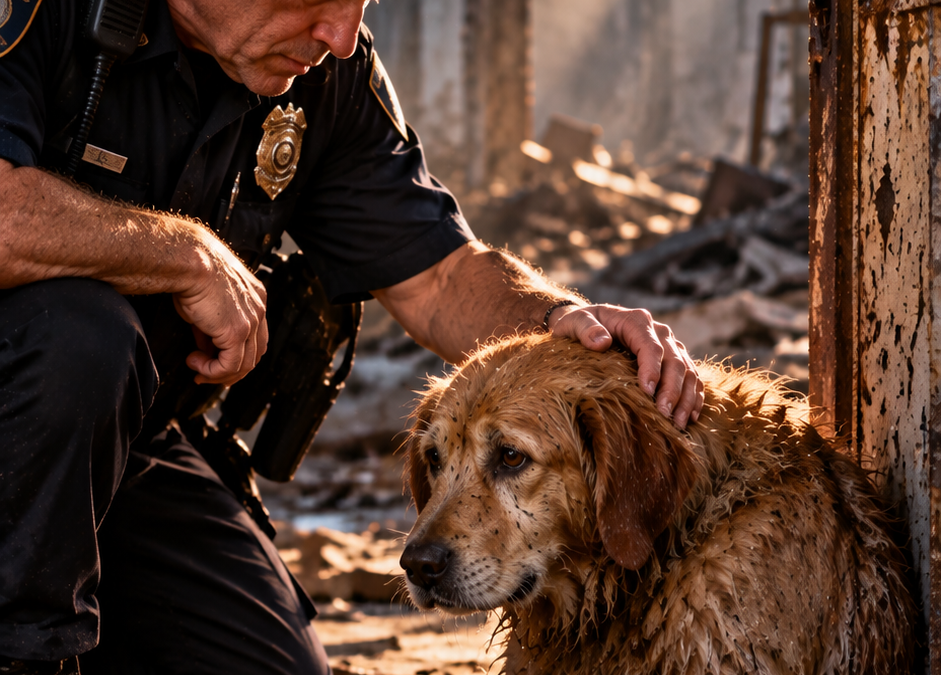
𝗙𝗨𝗟𝗟 𝗦𝗧𝗢𝗥𝗬
The radio hummed.
Outside, two younger officers walked across the lot arguing about lunch.
For a moment, I saw myself at twenty-three.
New uniform.
New badge.
Too much confidence.
Not enough understanding.
Back then, I thought police work was mostly about stopping bad people.
It took years to understand that most calls weren’t that simple.
Sometimes we arrived because two frightened people had no idea how to speak to each other anymore.
Sometimes because someone was sick.
Lonely.
Drunk.
Lost.
Desperate.
Sometimes we solved something.
Sometimes we just stood there until the worst minute passed.
That morning, I started the engine.
“7-12 available.”
Dispatch replied.
“Copy, 7-12.”
My last patrol began.
I drove the same streets I had driven thousands of times.
Brown Avenue.
Jefferson.
Westfield.
Past the high school.
Past the grocery store where Susan always complained I bought the wrong coffee.
Past the small park where I’d once spent four freezing hours searching for a six-year-old boy who had hidden beneath a slide because he was angry with his mother.
We found him asleep.
His mother nearly collapsed when I carried him back.
That had been twenty-two years ago.
The boy was probably almost thirty now.
Life had a way of continuing without asking whether you were ready.
Around ten-thirty, I stopped for coffee.
The woman behind the counter knew.
“Last one on duty?”
“Last one.”
She handed me the cup.
“No charge.”
“That’s corruption.”
“Arrest me.”
“Thirty years ago, maybe.”
“Twenty-nine.”
“Close enough.”
I left money on the counter anyway.
At eleven, I checked an abandoned vehicle.
At eleven-fifteen, I helped an elderly man who had locked his keys inside his car.
At eleven-thirty, I began heading back toward the station.
My retirement ceremony was scheduled for twelve-fifteen.
Susan would be there.
My daughter.
A few retired officers.
The chief was apparently planning a speech long enough to violate several constitutional rights.
I glanced at the clock.
11:43.
Seventeen minutes.
I turned onto Miller Road.
11:46.
Almost done.
At 11:47, the radio crackled.
“Patrol 7-12.”
I stared at it.
I swear I considered pretending I hadn’t heard.
“7-12, go ahead.”
“Animal distress call near the old warehouse on Brown Street. Caller reports repeated whining or crying from inside. Initial report approximately twenty minutes old. You’re closest.”
I looked at the clock.
11:47.
My shift officially ended at 12:19 because payroll had adjusted my final hours around the ceremony.
Thirty-two minutes.
I could have said unavailable.
Nobody would have questioned it.
There were other officers.
Animal control existed.
The old Brown Street warehouse wasn’t high priority.
No gun.
No assault.
No injured person confirmed.
Just an animal noise in an abandoned building.
I picked up the microphone.
My thumb hovered over the button.
I imagined cake at the station.
Susan waiting.
The chief checking his watch.
Twenty-nine years.
Surely I’d done enough.
Then dispatch repeated:
“7-12, copy?”
I pressed the button.
“7-12 copies. I’m responding.”
“Copy. Brown Street warehouse.”
I sighed.
“Of course.”
I turned the car around.
The Brown Street warehouse had been abandoned for almost a decade.
It used to house agricultural machinery before the company moved operations out of town.
Since then, the building had become everything abandoned buildings become.
Shelter for teenagers who wanted somewhere to drink.
Occasional refuge for homeless people.
A place where stray cats nested.
And, apparently, a place where people abandoned unwanted animals.
We had been called there before.
Usually nothing.
Sometimes graffiti.
Once copper theft.
Once a raccoon trapped in an office.
I pulled into the cracked lot at 11:54.
Seven minutes already gone.
The warehouse looked worse than I remembered.
Broken windows.
Rust along the metal siding.
Weeds pushing through asphalt.
One large sliding door stood partly open.
I got out.
Wind moved through the opening.
Then I heard it.
A weak sound.
Whine.
Silence.
Whine.
So faint I might have missed it if a car had passed.
I stopped.
Dispatch had described animal distress.
The caller hadn’t exaggerated.
There was something different about that sound.
Not frantic barking.
Not pain exactly.
It sounded exhausted.
As though whoever was making it had been calling for so long that even desperation had become tired.
I radioed in.
“7-12 on scene. Entering warehouse to locate animal.”
“Copy.”
I took my flashlight.
The sensible thing would’ve been to wait for animal control.
I knew that.
Animal control was eighteen minutes away.
The sound came again.
I entered.
The temperature dropped immediately.
Outside, the late morning was cool but bright.
Inside, damp concrete held the cold.
My flashlight cut through dust.
The place was enormous.
Broken wooden crates formed uneven stacks.
Old machine parts rusted along walls.
A torn couch sat near what had once been a loading area.
Pigeons moved somewhere in the rafters.
“Hello?”
Ridiculous thing to say to a dog.
Habit, I suppose.
Another whine.
Farther inside.
“Where are you?”
I followed.
My boots crunched across glass.
I checked behind crates.
Nothing.
Under a metal workbench.
Nothing.
The sound came again.
Closer.
I passed an old forklift with no wheels.
Then I saw the couch.
Not the one near the entrance.
Another one deep in a shadowed corner.
It had collapsed on one side.
Something white lay beneath it.
At first I thought it was fabric.
Then it moved.
I stopped.
“Oh, buddy.”
The dog lifted his head.
Medium-sized.
White.
Or what should have been white beneath dirt.
His coat was badly tangled.
One eye was crusted nearly shut.
His ribs showed.
His body trembled.
Not the sharp trembling of cold.
The deep tremor of weakness.
I approached slowly.
“It’s okay.”
The dog watched me.
No growl.
No bark.
No attempt to escape.
That worried me more than aggression would have.
A healthy frightened dog usually has an opinion about strangers.
This animal looked like he’d run out of opinions.
I crouched several feet away.
“Hey.”
His visible eye stayed on me.
“My name’s Robert.”
Again, ridiculous.
But voice matters.
Tone matters.
I had used the same voice with frightened children.
People holding knives.
Drunk drivers crying beside wrecked cars.
Soft.
Predictable.
No sudden movement.
“I’m not going to hurt you.”
The dog tried to move his front paw.
It slid.
His body barely followed.
“Easy.”
I held out my hand.
He sniffed from a distance.
Didn’t move.
I waited.
My knees complained.
At fifty-two, crouching had become a negotiation.
“Come on.”
A minute passed.
Maybe two.
The dog stretched his neck.
His nose touched my fingertips.
Warm.
Dry.
He inhaled.
Then something extraordinary happened.
He moved his head forward another inch and rested his forehead against my palm.
Not much.
Just weight.
Trust measured in ounces.
My throat tightened.
“Yeah.”
I stroked his head.
His eye closed.
He leaned harder.
“Okay.”
For twenty-nine years, I had received commendations.
A lifesaving medal after pulling a man from a flooded car.
Letters from mayors.
Department citations.
Thank-you notes.
Most ended up in a drawer.
That dog leaning into my hand inside a cold warehouse felt heavier than all of them.
I checked his collar.
There was one.
Old leather.
No visible tag.
“Can you stand?”
I slid one hand beneath his chest.
The moment I tried to help him rise, he whimpered.
I stopped.
“All right.”
I checked his legs.
Front limbs seemed responsive.
Back legs barely moved.
My heart sank.
“Are you hurt?”
I couldn’t see an obvious wound.
No fresh blood.
No unnatural angle suggesting a fracture.
His hindquarters simply seemed useless.
I glanced at my watch.
12:02.
Seventeen minutes of official service left.
The ceremony would start soon.
I stared at the dog.
For the first time that morning, retirement vanished from my mind.
There was no ceremony.
No badge.
No clock.
Just an animal on concrete that could not stand.
I radioed dispatch.
“7-12. Located one dog. Severe malnourishment, unable to stand, possible hind-leg injury. I’m transporting to Bennett Veterinary Clinic.”
There was a pause.
“Animal control is approximately nine minutes out.”
“He needs medical evaluation now.”
“Copy.”
I put the radio away.
The dog watched me.
“You’re ruining my retirement party.”
His tail moved.
Barely.
I laughed.
“Was that a wag?”
Another tiny movement.
“Now you’re manipulating me.”
I took off my uniform jacket.
The warehouse was cold, but carrying him directly might hurt.
I spread the jacket on the floor.
Then slowly rolled and lifted him onto it.
He cried softly.
“I know.”
I positioned one arm beneath his chest.
The other supported his hindquarters.
“Easy.”
He was lighter than he should’ve been.
Much lighter.
I felt ribs through cloth.
His body stiffened as I lifted.
Then relaxed against my chest.
I stood.
My lower back immediately objected.
“Don’t tell Susan.”
The dog rested his head against my forearm.
Getting out became harder than entering.
I’d barely noticed the debris when my hands were free.
Now every shard of glass seemed enormous.
Every loose board dangerous.
I moved slowly.
One step.
Check footing.
Another.
My flashlight was tucked awkwardly beneath my arm.
Sunlight from the door seemed very far away.
The dog made no sound.
Once, I looked down.
His eye was open.
Watching my face.
“Still with me?”
He blinked.
“Good.”
Halfway out, my boot caught a metal rod.
I stumbled.
My heart slammed against my chest.
I shifted the dog’s weight and recovered before falling.
“Sorry.”
He pressed closer.
“I said sorry.”
His head stayed against me.
“Apparently forgiveness comes cheap today.”
Eventually, daylight reached us.
I stepped outside.
The dog squinted.
For several seconds, he stared upward.
Blue sky.
Thin clouds.
Sunlight.
Maybe he’d been inside hours.
Maybe days.
Maybe longer.
There was no way to know.
Then he looked at me.
The expression on his face changed.
Or maybe mine did.
I had spent twenty-nine years believing the best part of police work was stopping bad outcomes.
Catching someone before they hurt another person.
Finding a missing child.
Arriving before violence became irreversible.
But sometimes the job was simpler.
Someone had been waiting in the dark.
You showed up.
That was enough.
I placed the dog carefully across the rear seat.
“No arrests today.”
His eye closed.
“Good choice.”
I drove to Bennett Veterinary Clinic.
Three neighborhoods away.
I had known Dr. Suzanne Bennett for years.
Mostly because police work and stray animals overlap more often than people realize.
I parked partly crooked.
Ran inside.
Suzanne looked up from the front desk.
“Robert?”
“Need help.”
Two technicians followed me out.
When they saw the dog, every joke disappeared.
They brought a stretcher.
We moved him inside.
“What happened?” Suzanne asked.
“Found beneath a couch in the Brown Street warehouse.”
“How long?”
“No idea.”
She listened to his heart.
Checked gums.
Eyes.
Abdomen.
Then hind legs.
“Neurological response is there.”
“What does that mean?”
“Means I don’t think he’s paralyzed.”
I exhaled.
“Then why can’t he stand?”
She looked at his body.
“Because he’s starving.”
The word landed harder than expected.
“That alone?”
“Severe muscle weakness. Dehydration. Probably electrolyte imbalance.”
She continued examining.
“Could be infection. We need bloodwork.”
“Will he walk?”
“If there’s nothing else going on and we can stabilize him?”
She looked at me.
“Probably.”
“How long?”
“Weeks.”
I nodded.
“Do it.”
Suzanne stared at me.
“You volunteering to pay?”
I froze.
Retirement apparently came with financial surprises.
“If nobody else can.”
She smiled.
“We’ll worry about money later.”
A technician passed a scanner over the dog’s shoulders.
Beep.
We all stopped.
“Chip.”
Suzanne read the number.
“You have an owner, buddy.”
The dog didn’t react.
Of course he didn’t.
But my pulse quickened.
“Can you trace it?”
“We can try.”
I finally looked at my watch.
1:06.
My shift had officially ended forty-seven minutes earlier.
My retirement ceremony had started fifty-one minutes earlier.
Suzanne followed my eyes.
“Weren’t you retiring today?”
“Technically.”
She smiled.
“Then overtime doesn’t count.”
“My lieutenant may disagree.”
My phone buzzed.
Nine missed calls.
Susan.
Lieutenant Harris.
Ramirez.
The station.
I called Susan first.
She answered immediately.
“Where are you?”
“Veterinary clinic.”
Silence.
“Robert.”
“Last call.”
“Of course.”
“There was a dog.”
“Of course there was.”
“He couldn’t walk.”
Her tone softened.
“Is he okay?”
“I think he will be.”
“Then come to the station when you’re done.”
“You’re not angry?”
“Twenty-nine years, Robert.”
She sighed.
“I stopped scheduling anything around you in 2004.”
I smiled.
“Love you.”
“Bring cake home.”
I hung up.
Suzanne’s receptionist called from the computer.
“We’ve got registration.”
Suzanne moved over.
“What?”
“Dog’s name is Buddy.”
I looked toward the exam table.
Buddy.
“Owner information?”
The receptionist’s expression changed.
“James and Elizabeth Miller.”
“Local?”
“North side.”
She clicked again.
“Chip was reported missing eight months ago.”
Eight months.
I looked at Buddy’s ribs.
Eight months wandering.
Eight months of roads.
Cold.
Heat.
Hunger.
Whatever had happened between a garden gate and that warehouse.
“Are they still at the number?”
“Calling.”
She dialed.
Put the phone to her ear.
We waited.
One ring.
Two.
Three.
Someone answered.
“Hello?”
The receptionist glanced at us.
“Is this Elizabeth Miller?”
Pause.
“Yes.”
“Mrs. Miller, I’m calling from Bennett Veterinary Clinic. We scanned a microchip on a dog brought in today.”
Long silence.
The receptionist’s eyes filled.
“Yes, ma’am.”
Another pause.
“His chip matches a dog registered as Buddy.”
Even standing several feet away, I heard the sound from the phone.
A woman’s cry.
Not a scream of fear.
Something deeper.
The kind of sound people make when hope they have spent months controlling suddenly becomes real.
The receptionist covered the receiver.
“She’s crying.”
Suzanne asked, “Can they come?”
The receptionist listened.
Then shook her head.
“Her husband doesn’t drive much anymore. She’s asking where he was found.”
I stepped closer.
“Tell her I’ll bring him.”
Suzanne looked at me.
“Robert, he needs treatment.”
“When he’s stable.”
She nodded.
“Not today immediately. He needs fluids, food carefully introduced, eye treatment.”
I understood.
The receptionist relayed that.
Elizabeth’s disappointment was obvious even through the phone.
Then I heard:
“Is he alive?”
The receptionist swallowed.
“Yes, ma’am.”
“Does he know his name?”
I walked to the exam table.
The dog lay beneath a blanket while fluids entered through an IV.
I touched his head.
“Buddy.”
One ear moved.
I looked at Suzanne.
“Buddy.”
His eye opened.
His tail made one weak movement against the towel.
From the phone came another sob.
The receptionist smiled.
“He knows.”
That was the moment I stopped thinking of him as an abandoned dog.
He was lost.
There is a difference.
Somewhere, two people had been waiting eight months.
Buddy hadn’t lost his family.
He had lost the road home.
I finally reached the station around two.
My ceremony had effectively become lunch.
When I walked in, everyone applauded sarcastically.
Ramirez shouted:
“Nice of you to retire!”
Lieutenant Harris pointed at the clock.
“Forty-seven minutes overtime on your final shift. That’s impressive even for you.”
Susan walked toward me.
“Dog?”
“Stable.”
“Owner?”
“Found.”
Her face softened.
“Oh.”
“Missing eight months.”
“You’re kidding.”
“No.”
“Are they coming?”
“He needs a few days at the clinic.”
I looked at everyone.
“Then I’m taking him home.”
The room became quiet.
Ramirez lowered his coffee.
“You’re doing what?”
“To the owners.”
“Of course you are.”
The chief cleared his throat.
“Can we perform the retirement ceremony before Hol accepts another assignment?”
Everyone laughed.
They gave speeches.
Too many.
Some embarrassing.
Some kind.
One officer talked about a domestic call from fifteen years earlier when I sat for two hours with a frightened boy while his mother was taken to the hospital.
I didn’t remember the boy’s name.
That bothered me.
Twenty-nine years creates a strange imbalance.
People remember you from the worst night of their lives.
For you, it may have been Tuesday.
Then Ramirez walked forward carrying a small box.
“This wasn’t the original gift.”
I frowned.
“What happened to the original?”
“We’re keeping it.”
“Why?”
“Because this is better.”
He opened the box.
Inside was a small silver pendant shaped like a dog.
On the back, engraved in tiny letters:
THE BEST THING YOU DID ON YOUR LAST SHIFT.
I stared at it.
“Who made this in two hours?”
“None of your business.”
Susan smiled.
“They called a jewelry shop.”
I looked around the room.
Twenty-nine years.
Men and women I had trained.
People who had covered me.
Argued with me.
Saved me from mistakes.
I felt my throat tighten.
“This is ridiculous.”
Ramirez nodded.
“We know.”
“I found a dog.”
“Exactly.”
“That’s not exactly the highlight of police history.”
Lieutenant Harris spoke from behind him.
“No.”
He smiled.
“But maybe it’s a decent way to end yours.”
I couldn’t answer.
I put the pendant around my neck.
I still wear it.
Buddy spent four days at Bennett Veterinary Clinic.
The diagnosis was better than we feared.
Severe malnutrition.
Dehydration.
Muscle wasting.
A minor eye infection.
A small healed injury near one hip, possibly from being struck by something weeks earlier.
No spinal damage.
No permanent paralysis.
Suzanne believed that with six weeks of careful nutrition, rest, physical rehabilitation, and patience, he could walk normally again.
“Maybe run eventually,” she said.
“How old?”
“About seven.”
“So not young.”
“Not old either.”
I visited every day.
Retirement, it turned out, left me with time.
The first morning, Buddy lifted his head when I entered.
“Morning.”
Tail.
Weak.
But there.
“Your people know.”
His ears moved.
“I talked to them.”
I pulled up a chair.
“They’ve been looking for you.”
He watched me.
“Eight months.”
His eye had begun opening more.
“You caused a lot of trouble.”
Tail.
“Don’t be proud.”
I sat with him for nearly an hour.
On the second day, he ate from Suzanne’s hand.
On the third, he tried to stand.
His front legs worked.
Back legs trembled violently.
He collapsed.
I moved forward.
Suzanne stopped me.
“Let him try.”
Buddy looked at us.
Tried again.
Up.
Shake.
Down.
Third attempt.
He stayed upright for maybe two seconds.
Then fell onto the blanket.
I started clapping before realizing how ridiculous that was.
Suzanne laughed.
“Officer Hol, he’s standing, not graduating.”
“Retired officer.”
“Clearly adjusting well.”
By day four, Suzanne approved the trip to the Millers’ house as long as Buddy continued treatment locally.
I called Elizabeth.
“We can bring him this afternoon.”
Silence.
“Mrs. Miller?”
“Sorry.”
Her voice shook.
“I’ve been waiting eight months to hear that sentence.”
I understood.
“I’ll see you around four.”
“Officer?”
“Yes?”
“Thank you.”
I looked at Buddy.
“Save it until you see him.”
The drive north took twenty minutes.
Buddy lay on a thick blanket in the rear seat of my personal car.
Not the patrol unit.
That chapter was over.
It felt strange.
No radio.
No equipment.
No badge on my shirt.
Just jeans.
A jacket.
A silver dog pendant.
And Buddy.
“First civilian assignment.”
His tail moved.
As we drove farther north, he became alert.
At first, I assumed he just liked the car.
Then we turned onto Greenfield Road.
His head rose.
I looked in the mirror.
“You know this?”
Buddy sniffed.
We turned again.
His body shifted.
Tail.
Once.
Twice.
Then continuously.
My chest tightened.
“Buddy?”
He tried to stand.
“Easy.”
His back legs couldn’t manage it properly.
But he pushed himself upward anyway.
I pulled over.
“Stay down.”
He whined.
It was the strongest sound I’d heard from him.
We were three streets away.
He knew.
Smell.
Memory.
Something.
I drove slowly.
When we turned onto the Millers’ street, Buddy began shaking.
Not weakness.
Excitement.
The address was number 38.
Small white house.
Green trim.
A tidy front garden.
An old wooden doghouse still stood in the yard.
Then I saw the poster taped inside the front window.
LOST DOG.
BUDDY.
The photograph showed a healthy white dog with bright eyes and a red collar.
Below:
PLEASE HELP US BRING HIM HOME.
Eight months old.
Sun faded.
Still there.
I parked.
The front door opened before I reached the walkway.
An elderly woman stepped out.
Elizabeth.
She was small.
White hair.
Blue cardigan.
Both hands covering her mouth.
Behind her stood James Miller.
Tall but stooped.
One hand gripping the doorframe.
For several seconds, none of us moved.
Then Buddy whined.
Elizabeth heard him.
Her knees seemed to weaken.
“Buddy?”
The dog’s tail struck the seat.
“Buddy!”
I opened the rear door.
He tried to jump.
I caught him.
“No.”
Elizabeth was already coming down the path.
“Buddy!”
Her voice broke.
I lifted him carefully.
“He’s weak.”
She didn’t seem to hear me.
When I lowered him onto the grass, Buddy’s legs folded.
He didn’t care.
He dragged himself forward using his front paws.
Elizabeth dropped to her knees.
“Oh, my baby.”
Buddy reached her.
His head pressed into her chest.
Elizabeth wrapped both arms around him.
The sound she made was the same sound I had heard faintly through the veterinary clinic phone.
Only now there was no distance.
She cried into his fur.
“You came home.”
Buddy licked her chin.
Her hands.
Her face.
His tail moved weakly against the grass.
“You came home.”
James remained near the door.
Tears ran down his cheeks.
He looked like a man afraid to approach because doing so might break the moment.
Buddy saw him.
His ears lifted.
Another whine.
James covered his mouth.
“Hey, old friend.”
Buddy tried to stand.
Failed.
James came quickly.
As quickly as his age allowed.
He knelt beside Elizabeth.
Buddy put his head across James’s knees.
For several minutes, I was irrelevant.
Exactly as I should have been.
I stepped away.
Looked at the garden.
The doghouse.
A water bowl still near the porch.
A faded tennis ball under a chair.
They hadn’t removed him from the house.
Not emotionally.
His things remained in place because some part of them had refused to accept that he was gone forever.
Eventually Elizabeth looked up.
“You found him?”
“Yes.”
“Where?”
I told them.
The warehouse.
Under the couch.
Weak.
Unable to stand.
Elizabeth’s face changed.
“Eight months.”
She touched his ribs.
“Oh, Buddy.”
James closed his eyes.
“I left the gate open.”
Elizabeth immediately looked at him.
“It was a storm.”
“I left it open.”
“James.”
“I went out to move the trash bins.”
He stared at Buddy.
“Wind caught the gate.”
“We’ve talked about this.”
“Eight months I’ve thought about that gate.”
Buddy licked his hand.
James laughed through tears.
“He’s forgiving me faster than I have.”
I knew that feeling.
People carry guilt far longer than animals sometimes require them to.
“What happened after he disappeared?” I asked.
Elizabeth wiped her face.
“We searched everywhere.”
Animal shelters.
Veterinarians.
Neighborhood streets.
Posters.
Social media.
A local radio station.
They drove rural roads.
Checked ditches.
Called highway crews.
For months, every white dog seen near town became a possibility.
“Someone called us once from sixty miles away,” Elizabeth said.
“We drove there at midnight.”
James nodded.
“Wrong dog.”
Another time, a shelter called about a similar dog.
Wrong dog.
A woman claimed she had Buddy but demanded money before giving an address.
Scam.
Each false lead reopened the wound.
“After six months,” Elizabeth said, “people began telling us…”
She stopped.
“Telling you what?”
“To accept it.”
James’s jaw tightened.
“They meant well.”
“What did you say?”
Elizabeth looked at Buddy.
“Nothing.”
Then smiled through tears.
“I kept the poster up.”
I understood.
Hope doesn’t always look dramatic.
Sometimes it looks like refusing to remove an old piece of paper from a window.
We carried Buddy inside.
His bed was still beside the fireplace.
Not a similar bed.
His bed.
Red fabric.
Name embroidered across the front.
BUDDY.
He sniffed it.
Then collapsed onto it.
His entire body relaxed.
Elizabeth sat beside him.
James lowered himself into a chair.
I stood.
“You’ll need to continue the feeding schedule exactly.”
Elizabeth immediately grabbed a notebook.
I smiled.
“Suzanne will give you everything in writing.”
“I want to hear it.”
So I explained.
Small meals.
Medication.
Eye drops.
Assisted standing.
Physical rehabilitation.
No overfeeding even though every instinct would tell them to give him everything at once.
James frowned.
“He always loved roast chicken.”
“Later.”
Buddy’s ear moved at the word chicken.
Elizabeth laughed.
“He heard that.”
“Apparently severe malnutrition hasn’t affected selective hearing.”
For the first time since I arrived, the room filled with laughter.
Not much.
But enough.
Before leaving, I knelt beside Buddy.
He opened his eye.
“Well.”
His tail moved.
“You don’t need me anymore.”
Elizabeth said, “That’s not true.”
I looked up.
She was standing in the doorway.
“You brought him back.”
“I drove him.”
“You went into that warehouse.”
“Someone would’ve.”
“But you did.”
I looked at Buddy.
Twenty-nine years of service had taught me to distrust sentences that made ordinary choices sound heroic.
I had answered a call.
Walked inside.
Carried an animal.
Any officer I respected would’ve done the same.
But then I remembered the clock.
Thirty-two minutes.
I could have declined.
No discipline.
No criticism.
No consequence.
I touched Buddy’s head.
“Take care of them.”
His tail moved.
“I mean it.”
He licked my hand.
Then, with visible effort, turned back toward Elizabeth.
That was goodbye.
Not sad.
Correct.
Buddy was home.
My retirement officially began the next morning.
At 5:30, I woke automatically.
I stared at the ceiling.
Susan slept beside me.
Normally I would have been halfway dressed.
Instead, I lay there.
At 5:37, Susan opened one eye.
“You’re retired.”
“I know.”
“Then stop making retired noises.”
“What noise am I making?”
“Thinking.”
I laughed.
“Go back to sleep.”
I couldn’t.
I made coffee.
Sat at the kitchen table.
For the first time in twenty-nine years, there was nowhere I was required to be.
That freedom felt suspicious.
At seven, I checked my phone.
A message from Elizabeth.
Photograph.
Buddy asleep in his red bed.
Caption:
First night home. He woke three times to make sure we were still here.
I stared at it.
Then replied:
You’d better be there when he wakes again.
She answered:
Always.
Something about that word stayed with me.
Always.
Dogs believe in it more easily than humans.
We promise forever knowing bodies fail, doors open, storms happen.
Maybe that’s why their trust feels so serious.
Over the next six weeks, Buddy improved.
Elizabeth sent updates.
Week one: standing for five seconds.
Week two: ten steps with a support sling.
Week three: crossed the living room.
Week four: reached the garden.
Week five: walked from the porch to the apple tree.
Week six: chased a ball three feet and immediately regretted it.
The video of that one made me laugh.
Buddy took four stiff steps toward the tennis ball.
Picked it up.
Turned.
Sat down as though deciding retirement was also appropriate for him.
James appeared in the video.
“That’s enough exercise for both of us.”
Elizabeth answered from behind the camera.
“You didn’t do anything.”
“I supervised.”
I watched it three times.
Meanwhile, I struggled with my own rehabilitation.
Nobody calls retirement that.
Maybe they should.
I had to relearn time.
Monday became different only because the trash trucks came.
I discovered grocery stores were quieter at ten in the morning.
I fixed the garage door.
Susan celebrated as if I’d rebuilt the house.
I went fishing twice and realized I didn’t actually like fishing as much as I liked talking about fishing while working.
I cleaned the basement.
Huge mistake.
Then one morning, three weeks after retirement, I drove past the local animal shelter.
I’d passed it hundreds of times.
That day, I turned around.
The shelter director, Karen, recognized me.
“Officer Hol.”
“Not anymore.”
“Right. Retired.”
“Trying.”
She laughed.
“What brings you here?”
I looked toward the kennels.
“Do you need volunteers?”
Within twenty minutes, I had filled out paperwork.
Within a week, I was walking dogs three mornings a week.
Susan called it predictable.
“You spent twenty-nine years answering calls from people who couldn’t tell you what they needed,” she said.
“So?”
“Now you’re doing the same thing with dogs.”
I couldn’t argue.
Shelter work surprised me.
Police work teaches you to look at behavior and ask what caused it.
Why is this person shouting?
Why is that child silent?
Why did the driver run?
Dogs were no different.
The one barking at the front of the kennel wasn’t necessarily aggressive.
Sometimes terrified.
The dog pressed into the corner wasn’t unfriendly.
Sometimes overwhelmed.
The animal refusing food wasn’t stubborn.
Sometimes grieving.
I began understanding the warehouse differently.
Buddy hadn’t been waiting for death.
He had been waiting for contact.
Some part of him still believed the world might answer.
One Thursday afternoon, Elizabeth brought Buddy to the shelter.
I was cleaning bowls.
Someone called:
“Robert, visitor.”
I stepped into the lobby.
Buddy stood beside Elizabeth.
Standing.
On all four legs.
Thin still.
But dramatically healthier.
White fur brushed clean.
Both eyes open.
Red collar.
I froze.
“Look at you.”
His tail began moving.
Then he walked toward me.
Slowly.
A little stiff.
But walking.
“Come here.”
He reached me.
I crouched.
He put both front paws against my knees.
Almost knocked me over.
Elizabeth laughed.
“I told him not to jump.”
“I’ll allow it.”
I buried my hands in his fur.
The coat felt completely different.
Soft.
Fuller.
Warm.
“You remember me?”
Buddy licked my face.
“Okay. Apparently.”
James entered behind them.
He carried the old LOST poster.
I recognized it immediately.
“What are you doing with that?”
He handed it to me.
“We took it down.”
I looked at the photograph.
Healthy Buddy before eight months on the road.
“Good.”
Elizabeth said, “We thought you should have it.”
“Why?”
“So you remember what you returned to us.”
My throat tightened.
“I don’t need this.”
James smiled.
“Neither do we anymore.”
I accepted it.
That poster hangs in my home office now.
Not the station.
Mine.
Because sometimes I need to remember that a missing thing is not always a lost thing.
There is a difference.
Months passed.
Buddy gained weight.
His gait improved.
He never became as fast as he had apparently been before disappearing.
Eight months of hardship and the hip injury left consequences.
But he walked.
Then trotted.
Eventually ran short distances.
Elizabeth sent a video one spring afternoon.
Buddy in the backyard.
James threw a ball.
Buddy ran after it.
Not quickly.
Not gracefully.
But unmistakably running.
The camera shook because Elizabeth was crying.
I cried too.
I didn’t tell anyone.
Susan knew anyway.
“Buddy video?”
“No.”
“Robert.”
“Maybe.”
She handed me tissues without comment.
A year after retirement, the department invited me back for an anniversary dinner.
I almost declined.
Then Ramirez called.
“If you don’t come, I’m telling everyone you miss us too much.”
“That makes no sense.”
“Come anyway.”
At the station, younger officers occupied lockers once used by people I had worked beside.
New patrol cars.
New software.
Same terrible coffee.
My old desk belonged to a twenty-four-year-old officer named Patel.
He apologized for that.
“Why?”
“I don’t know, sir.”
“Don’t call me sir. You’re making me feel ancient.”
During dinner, someone asked about my last call.
The dog.
Of course.
Stories become simplified over time.
Officer had thirty minutes left before retirement.
Could have ignored call.
Rescued starving dog.
Found owners after eight months.
Perfect ending.
But what stayed with me wasn’t the reunion.
It was the warehouse.
Buddy’s forehead entering my palm.
That almost weightless surrender.
I told them that.
One young officer asked, “Why’d you take it? The call, I mean.”
I thought about the answer.
“I don’t know.”
“Really?”
“Really.”
“You must’ve felt something.”
“No.”
I remembered the radio.
The clock.
My hand on the microphone.
“I almost didn’t.”
Everyone became quieter.
“If dispatch had called five minutes later, maybe I would’ve been inside the station.”
“But you answered.”
“Yes.”
“Why?”
I looked around.
“Because I was still on duty.”
That sounded too simple.
So I added:
“And because endings don’t excuse you from the last thing you’re responsible for.”
Nobody spoke for a moment.
Then Ramirez said, “That sounds annoyingly like something we’d put on a plaque.”
“Don’t.”
They laughed.
But I meant it.
We spend so much time anticipating endings that we begin emotionally leaving before the actual moment arrives.
Last week of school.
Last month at a job.
Final year before retirement.
We begin packing ourselves away.
I had done that too.
At 11:47, mentally, I was already retired.
Buddy didn’t care.
He needed someone at 11:47.
Not at 9:00 the next morning.
Not when animal control arrived.
Not after my cake.
Then.
That call reminded me that the final minute still counts.
Maybe especially then.
I began visiting James and Elizabeth occasionally.
Not constantly.
I didn’t want to become the retired officer who appeared uninvited and asked for updates on a dog.
But they invited Susan and me for coffee.
The first time we went, Buddy greeted us at the gate.
The same gate.
Now fitted with an absurdly elaborate double-latch system.
I pointed.
“Security upgrade?”
James looked embarrassed.
“I check it six times a day.”
Elizabeth said, “Ten.”
“Six.”
“Twelve when there’s wind.”
I smiled.
“Understandable.”
Buddy moved between us.
No hesitation.
No fear of the yard.
Whatever memories he carried from the day he disappeared, they no longer controlled everything.
We sat in the garden.
Buddy rested his head on Elizabeth’s lap.
Sunset colored the clouds.
James came out holding three plates.
“Ladies, dinner.”
Elizabeth frowned.
“We have company.”
“Fine.”
He looked at me.
“Lady and gentleman, dinner.”
Susan laughed.
That became a routine.
Not every week.
But often enough that they became friends instead of people connected to one incident.
I learned Buddy loved carrots.
Hated baths.
Refused to go outside during heavy storms.
That last detail mattered.
When rain began, he stood near the back door and looked at the garden.
But he would not cross the threshold.
Elizabeth never forced him.
“Eight months is enough weather for one lifetime,” she said.
On stormy evenings, James lit the fireplace.
Buddy lay between them.
Safe.
One night, during particularly hard rain, I happened to be there.
Wind struck the windows.
The gate rattled.
Buddy stood immediately.
His ears flattened.
Elizabeth put down her knitting.
“Buddy.”
He began pacing.
James moved toward the back door.
“Gate’s locked.”
“Don’t open it.”
“I won’t.”
He checked through the window.
Then returned.
Buddy pressed himself against Elizabeth.
She put both arms around him.
“You’re home.”
The words were quiet.
“You’re home.”
Buddy trembled.
I watched them.
Eight months of searching had wounded all three of them.
Not only the dog.
James feared the gate.
Elizabeth feared phone calls.
Buddy feared storms.
They healed together.
That’s what people miss in reunion stories.
Finding each other doesn’t erase the missing.
It gives everyone a place to heal from it.
Another year passed.
I was sixty—no, not yet; we should preserve age trajectory. I was fifty-four.
Retirement no longer felt like a condition.
It felt like life.
Three mornings a week at the animal shelter became four.
Eventually Karen asked whether I would help with difficult intake cases.
“You’re good with people,” she said.
“That’s not what twenty-nine years of complaints suggested.”
“You’re good with scared people.”
Different.
She was right.
One afternoon, an elderly man brought in a German shepherd because he was entering assisted living.
He couldn’t stop crying.
The shelter staff was busy.
I sat with him.
He told me about fourteen years with the dog.
His wife’s death.
The empty house.
How the shepherd had slept beside his chair every night.
“Everyone says he’ll find a good home.”
“He might.”
“That’s supposed to make me feel better.”
“I know.”
“You don’t.”
I looked at him.
“Actually, I know a couple who searched eight months for a white dog.”
He stared.
So I told him Buddy’s story.
Not to promise the impossible.
Just to say separation wasn’t proof that love had failed.
We found a foster through a senior-pet organization that allowed visits.
The shepherd eventually moved with a family nearby.
The old man saw him every Sunday.
I realized then that the last call of my career had changed my retirement more than any retirement seminar could have.
I had worried about no longer being useful.
Buddy solved that problem in thirty minutes.
Not by needing a police officer specifically.
By reminding me that usefulness doesn’t retire with a badge.
You can still answer something.
A phone.
A door.
A frightened person.
A dog whining from a kennel.
The uniform was only one way of showing up.
Years after finding Buddy, I asked Suzanne something.
“How close was he?”
“To what?”
“You know.”
She understood.
“Hard to say.”
“Would another day have mattered?”
“Possibly.”
“Another week?”
She shook her head.
“I wouldn’t bet on it.”
I looked away.
“So thirty-two minutes really mattered.”
“Robert.”
She put down her chart.
“Don’t do that.”
“Do what?”
“Turn timing into destiny.”
I smiled.
“You don’t believe in destiny?”
“I’m a veterinarian. I believe in hydration.”
I laughed.
Then she softened.
“He was in trouble.”
“Yes.”
“You went.”
“Yes.”
“That’s enough.”
Maybe she was right.
People often want life to mean something more complicated than it does.
Sometimes meaning is simply in the action.
You hear.
You go.
You find.
You carry.
Years after the reunion, Buddy slowed again.
Not from starvation now.
Age.
His face became grayer.
Hips stiff.
Elizabeth sent fewer videos of running and more photographs of sleeping.
He liked the garden bench.
Every evening near sunset, Elizabeth sat there.
Buddy placed his head on her lap.
James usually appeared eventually.
“Dinner.”
Elizabeth always answered, “Five minutes.”
Five minutes became twenty.
James pretended to complain.
He usually sat down too.
One summer evening, I joined them.
Buddy was ten then.
Maybe eleven.
His exact age had always been estimated.
He lay beneath the bench.
“I’ve been thinking,” James said.
“Never a good sign.”
Elizabeth smiled.
James ignored us.
“Eight months.”
He looked at Buddy.
“I spent eight months asking where he was.”
I waited.
“Now sometimes I wonder where he went.”
“What do you mean?”
“What happened during all that time?”
We never knew.
The chip told us where Buddy belonged.
Not where he’d been.
Had someone taken him in temporarily?
Had he traveled with another stray?
Been injured early?
Late?
How did he reach the warehouse?
Why that warehouse?
No answers.
Elizabeth looked down.
“I used to want to know.”
“You don’t now?”
“No.”
“Why?”
She stroked Buddy’s head.
“Because he’s here.”
James thought about that.
“I suppose.”
She looked at him.
“You would torture yourself with whatever answer you got.”
If Buddy had suffered, James would blame himself.
If someone had helped Buddy but lost him again, James would wonder why.
If Buddy had been close to home for months, the guilt would be worse.
Some mysteries are not solved because the solution doesn’t improve the life you have.
Buddy sighed.
Elizabeth smiled.
“He doesn’t care where he was.”
Maybe dogs do carry stories we never hear.
But they don’t narrate themselves endlessly the way humans do.
Buddy lived here now.
That was enough for him.
I tried to learn from that.
On the fifth anniversary of my retirement, the station invited me to speak to new recruits.
I didn’t want to.
Harris had retired too.
Ramirez was now a sergeant, which should concern the public.
He called.
“Tell the dog story.”
“No.”
“Everyone likes it.”
“That’s why I’m not telling it.”
“Robert.”
“I’ll talk about report writing.”
“You’re a terrible person.”
I went.
I told the dog story.
But not the sentimental version.
I told them I almost declined the call.
That part mattered.
I told them about looking at the clock.
Thinking I had earned the right to let someone else handle it.
Then I told them:
“You will spend your careers learning what calls matter.”
The room was quiet.
“Sometimes that’s obvious. Gun. Fire. Child missing. Person hurt.”
I paused.
“Sometimes it’s a vague report about an animal in an empty warehouse.”
A few recruits smiled.
“Don’t confuse low priority with no importance.”
I told them something else.
“One of the dangers of doing this work for a long time is that you begin predicting the ending before you arrive.”
Another domestic dispute.
Another false alarm.
Another homeless person sleeping where they shouldn’t.
Another lost dog.
“You get efficient.”
I looked at them.
“Efficiency can save your life.”
Then:
“But don’t let it erase curiosity.”
What is actually happening?
Who is actually there?
What have I not seen yet?
Buddy was only one dog.
But that call had contained a missing-pet case.
An elderly couple’s eight months of grief.
An animal close to death.
A medical emergency.
A reunion.
And the direction of my retirement.
All inside one dispatch line.
Animal distress.
People are always larger than the code assigned to their call.
Sometimes animals are too.
After the talk, one recruit approached.
“My dad retired last year.”
“Police?”
“Firefighter.”
“How’s he doing?”
“Bad.”
I waited.
“He says he doesn’t know who he is anymore.”
There it was.
I gave the recruit my number.
“Tell him to call me.”
He did.
His father and I eventually volunteered together at the shelter for six months.
Then he began working with a fire-safety education program.
We didn’t talk much about retirement after that.
We were too busy.
Maybe that’s another thing Buddy gave me.
Permission to stop treating retirement as an ending.
It wasn’t.
It was a handoff.
One identity loosened enough for another to fit.
The silver dog pendant became scratched over the years.
I wear it under my shirt most days.
Sometimes someone notices.
“What’s that?”
“A retirement gift.”
“Why a dog?”
“Long story.”
Sometimes I tell it.
Sometimes I don’t.
One afternoon, a little girl at the shelter saw it.
“Is that your dog?”
“No.”
“Did he die?”
Children are efficient.
“No.”
“Where is he?”
“Home.”
“Your home?”
“No.”
I pointed toward the north side of town even though she had no idea where I meant.
“His home.”
She thought.
“Then why do you have the necklace?”
“Because I helped him get there.”
That answer felt right.
I didn’t save Buddy in the grand sense.
Suzanne stabilized him.
The Millers rehabilitated him.
Volunteers helped.
Buddy himself kept trying.
I carried him out.
Sometimes that’s your role.
Not destination.
Transportation.
Not hero.
Bridge.
There is dignity in being a bridge.
Buddy lived several good years after coming home.
When he was older, Elizabeth called me one morning.
I recognized her voice immediately.
“Robert.”
“What’s wrong?”
“It’s Buddy.”
I sat down.
“What happened?”
“He didn’t get up this morning.”
My chest tightened.
“Is he at Suzanne’s?”
“Yes.”
I drove there.
No badge.
No siren.
Just an old retired officer going to see an old dog.
Buddy lay in an examination room.
Elizabeth sat near his head.
James beside her.
Suzanne stood quietly.
His kidneys were failing.
Age.
Not the warehouse.
Not starvation.
Not anything we could fight.
Just time.
I hated how peaceful he looked.
“Hey, buddy.”
One eye opened.
Both worked now.
Had for years.
His tail moved once.
Elizabeth laughed through tears.
“He remembers.”
“Of course.”
I sat on the floor.
My knees were even worse than on retirement day.
Buddy sniffed my hand.
Then rested his head against it.
The same gesture.
The warehouse came back instantly.
Dust.
Cold concrete.
One tired eye.
His forehead against my palm.
Only now his fur was clean.
His body well-fed.
He smelled like home.
I stroked his head.
“Long road.”
His eyes closed.
James said, “We got more years than we thought we’d have.”
Elizabeth looked at him.
“Not enough.”
“No.”
Never enough.
Suzanne explained options.
Comfort.
Pain.
Time.
James and Elizabeth decided together.
They would not let Buddy suffer because they were afraid of losing him again.
That mattered.
Their eight-month separation had taught them one kind of fear.
Love demanded they not let fear make the last decision.
I stayed.
Not because they needed me.
Because I wanted Buddy’s story, at least from the moment I entered it, to contain one final constant.
He had not been alone in the warehouse.
He would not be alone now.
Elizabeth held him.
James touched his paw.
I rested a hand on his shoulder.
Suzanne administered the medication.
Buddy relaxed.
His breathing slowed.
Before the final moment, Elizabeth whispered:
“We looked for you every day.”
James added:
“And you came home.”
Buddy’s tail moved once.
Just once.
Then became still.
No dramatic sound.
No struggle.
He died in the arms of the people who had spent eight months refusing to forget him.
Afterward, James cried with his forehead pressed against the table.
Elizabeth didn’t move for a long time.
I sat.
Police work had taught me that presence after loss is often awkward.
People try to fill silence.
Don’t.
Silence sometimes deserves room.
Eventually Elizabeth looked at me.
“If you hadn’t taken that call…”
I shook my head.
“No.”
“But—”
“No what-ifs.”
She understood.
We had all learned that.
She squeezed my hand.
“Thank you for going.”
That I accepted.
“You’re welcome.”
A few weeks later, James and Elizabeth came to the shelter.
They brought Buddy’s red collar.
“We want another dog to use his things,” Elizabeth said.
“You sure?”
“No.”
Then she smiled.
“But yes.”
They weren’t ready to adopt.
Not yet.
But donating the bed, bowls, blankets, and toys mattered to them.
The collar they kept.
The LOST poster remained with me.
About a year later, they adopted a senior beagle.
Twelve years old.
Half deaf.
Overweight.
Named Walter.
I laughed when they told me.
“You chose a twelve-year-old dog?”
Elizabeth looked offended.
“No one else wanted him.”
James added, “He snores.”
“That was the selling point?”
“He sounds like a lawn mower.”
Walter had nothing in common with Buddy.
Exactly as it should be.
No one replaced anyone.
Love simply made more room.
By then, I had been retired long enough that people stopped introducing me as former Officer Hol.
I became Robert again.
Susan liked that.
The shelter dogs didn’t care either way.
I kept volunteering.
Three mornings became whatever days Karen needed.
The first time a reporter asked to write about my “famous last call,” I refused.
Eventually, years later, I changed my mind.
Not because I wanted the attention.
Because the story had stopped feeling like mine.
It belonged to that moment.
A man thinking everything important was behind him.
A dog lying beneath a ruined couch.
A couple who hadn’t taken down a missing poster.
An ending that turned out to contain a beginning.
I told the reporter one thing repeatedly.
“Don’t make me a hero.”
He laughed.
“People like heroes.”
“Then write about Buddy.”
“He was lying under a couch.”
“Exactly.”
He had survived eight months.
Whatever happened out there, he survived.
Then when someone finally approached, he still found enough trust to place his head in a stranger’s hand.
That is its own kind of courage.
The reporter asked me:
“What did that last call teach you?”
I had heard versions of that question dozens of times.
I finally had an answer.
“That being finished and being done aren’t always the same thing.”
He waited.
“I was finished with police work.”
I touched the pendant.
“But apparently I wasn’t done answering things.”
That line ended up in his article.
Susan said it made me sound wiser than I am.
She’s probably right.
Today, when I think of my last shift, I barely remember the retirement ceremony.
I remember the warehouse.
The narrow beam of my flashlight.
The sound from the dark.
That exhausted dog beneath the broken couch.
I remember putting my hand out.
Waiting.
And feeling his forehead rest against my palm.
I remember lifting him.
The way his body relaxed when he realized I wasn’t going to drop him.
I remember stepping back into sunlight.
I remember the Millers’ front door opening.
Elizabeth crying his name.
Buddy’s tail moving when he recognized home.
Those are the images that stayed.
Twenty-nine years gave me many stories.
Some ended badly.
Some I still wish had ended differently.
Some taught me things I’d rather not have learned.
You don’t work that long in law enforcement without collecting ghosts.
Buddy is not one of them.
He is the opposite.
He is the memory I use when the darker ones become too loud.
Proof that occasionally, arriving in time really does mean arriving in time.
Proof that a small decision can travel much farther than the person making it can see.
At 11:47 that morning, all I knew was that I had thirty-two minutes left.
I nearly measured the call against the clock.
I’m glad I didn’t.
Time is a terrible way to measure whether something matters.
Buddy didn’t need twenty-nine years from me.
He needed one response.
One walk into a dark building.
One pair of arms strong enough to carry him outside.
James and Elizabeth didn’t need my entire career.
They needed that final forty-seven minutes I technically didn’t owe the department anymore.
And I needed Buddy in ways I didn’t understand until much later.
I thought retirement meant I was leaving service behind.
Instead, a starving white dog showed me service had never belonged entirely to the badge.
The badge only gave it a uniform.
The instinct to respond was mine to keep.
So was the responsibility to notice.
Years have passed since Buddy died.
The warehouse on Brown Street is gone now.
The city demolished it.
A small commercial building stands there.
Sometimes I drive past.
Nothing marks the place.
No sign.
No plaque.
No reason anyone would know that once, beneath a broken couch in a dark corner, a dog waited there at the end of an eight-month journey.
That’s fine.
Important places don’t always need monuments.
I know where it was.
Sometimes that’s enough.
The police station still has photographs from my retirement ceremony.
In one, I’m holding the little jewelry box.
Everyone around me is laughing.
I look tired.
Happy.
Confused.
Susan says it’s the first photograph of retired Robert.
I disagree.
The first moment I became retired Robert happened earlier.
Inside the warehouse.
When I stopped checking the clock.
When I took off my uniform jacket and wrapped it around Buddy.
Maybe retirement began not when I surrendered my badge, but when the uniform itself stopped being the important part.
The jacket was just something warm to carry a dog in.
That’s how I like to remember it.
Not Officer Hol.
Not twenty-nine years.
Not awards.
Just Robert.
A man in a dark building.
A dog who needed help.
A decision to stay a little longer.
My career officially ended forty-seven minutes late.
For years, everyone teased me about that.
Typical Robert.
Couldn’t leave on time.
Had to answer one more call.
They’re right.
But if I could go back to 11:47 that morning, knowing everything I know now, knowing the cake was waiting, knowing my family was sitting at the station, knowing I had already served twenty-nine years and owed nobody another minute—
I would still pick up the radio.
I would still say:
“7-12 responding.”
I would still drive to Brown Street.
I would still step inside.
Because somewhere in the dark, Buddy was waiting.
And sometimes the last call isn’t there to close the story you’ve been living.
Sometimes it is there to show you where the next one begins.

