The Smile on My Husband’s Face Told Me He Thought I Had Already Surrendered
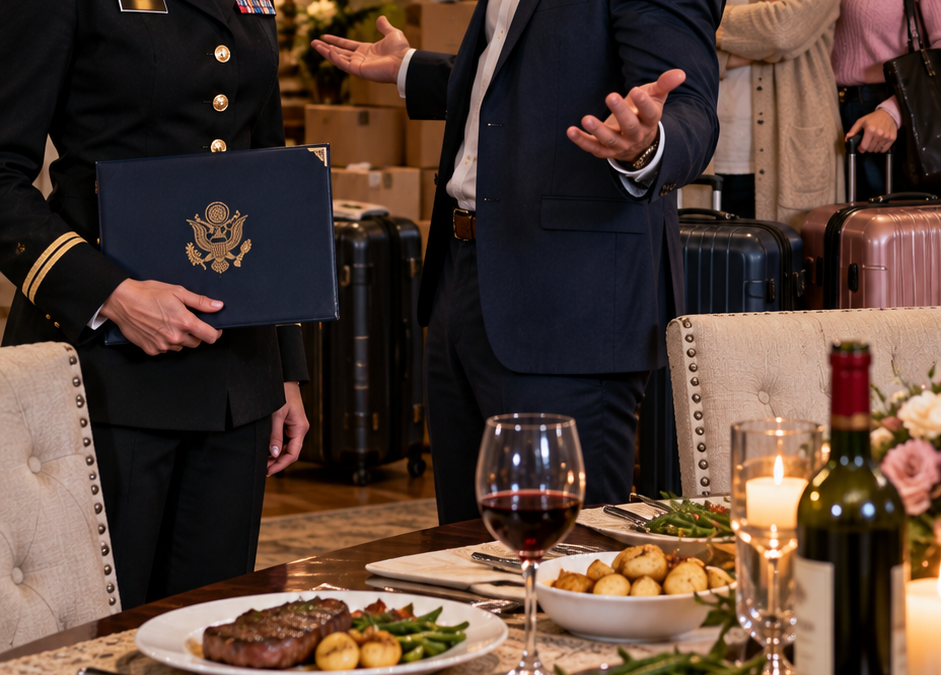
The Smile on My Husband’s Face Told Me He Thought I Had Already Surrendered
The day I earned one of the biggest promotions of my military career, my husband told me my rank meant nothing inside our home.
Then he calmly explained that his mother and sister were moving in the next morning and that my real responsibility was to rearrange my life around them.
When he smiled at my silence, I realized he had mistaken patience for permission for far longer than I wanted to admit.
My name is Andrea Miller.
I was thirty-six years old when my marriage finally became impossible to misunderstand.
By then, I had spent fifteen years in the United States Army.
Fifteen years of early formations, long nights, field exercises, deployments, emergency assignments, missed holidays, difficult decisions, and promotions earned one evaluation at a time.
Nothing had come quickly.
Nothing had been handed to me.
I had failed things.
Learned.
Recovered.
Led soldiers older than me and younger than me.
Buried people I respected.
Called families when the news was bad.
Walked into rooms knowing that the moment I spoke, people were going to make decisions based on whether they trusted me.
So when the promotion finally came through, I should have been exhausted.
Instead, I was excited.
Ridiculously excited.
I read the notification twice.
Then a third time.
My commander shook my hand.
“You earned this.”
“Thank you, sir.”
“I mean it, Miller. Don’t do that thing you do where you immediately start talking about everyone who helped you.”
I smiled.
“I wasn’t going to.”
“You were.”
He knew me too well.
The promotion placed me in a senior leadership position I had been working toward for years.
It meant more responsibility.
More pressure.
More visibility.
But also proof that all those years of showing up had meant something.
My first thought was my husband.
Wesley.
We had been married eight years.
I wanted him to be proud.
That should not have felt like such a childish desire at thirty-six.
But it did.
I stopped on the way home and bought a good bottle of wine.
Then I made his favorite dinner.
Steak.
Garlic potatoes.
Green beans cooked the way he liked them.
I even set the table properly instead of leaving everything on the stove the way we usually did on weeknights.
The whole time, I kept imagining his reaction.
Maybe he would lift me off the ground.
Maybe he would laugh.
Maybe he would say, “I knew you’d get it.”
Maybe, for one night, the years of sacrifice would feel shared.
Wesley came home just after seven.
He dropped his keys in the bowl by the door.
Removed his jacket.
I was standing near the dining table.
“Hey.”
“Hey.”
He glanced at the food.
“Smells good.”
“I have news.”
He loosened his tie.
“What?”
I smiled.
“I got the position.”
He looked at me.
For half a second, I thought he had not understood.
“The senior billet?”
“Yes.”
I waited.
He shrugged.
“So what?”
The smile stayed on my face because my brain had not yet caught up.
“What?”
“Your rank doesn’t matter to me.”
His tone was casual.
Almost bored.
I stared.
He continued removing his watch.
“Actually, this is probably a good time to tell you. Mom and Gwen are moving in tomorrow.”
I thought the two statements could not possibly belong together.
“My promotion doesn’t matter, and your mother and sister are doing what?”
“Moving in.”
“Tomorrow?”
“Yes.”
“For how long?”
He shrugged.
“We’ll see.”
I looked at him.
“Wesley.”
“What?”
“Why am I hearing about this now?”
“My mom’s having money problems. Gwen’s divorce has been rough. They need somewhere stable.”
“And you invited them here.”
“Yes.”
“Without asking me.”
His expression changed slightly.
Not guilt.
Annoyance.
“Andrea, they’re family.”
“That isn’t an answer.”
He sighed.
“Can we not do this tonight?”
I almost laughed.
I had cooked dinner to celebrate the promotion I had spent years earning, and somehow I was the one creating an inconvenience.
“How long have you known?”
“A couple weeks.”
I stared.
“Two weeks?”
“It wasn’t definite.”
“When did it become definite?”
“Yesterday.”
“And you waited until tonight.”
“I knew you’d overthink it.”
There are sentences that sound ordinary until you understand what they reveal.
I knew you’d overthink it.
Not:
I should have asked.
Not:
I’m sorry.
He had withheld the decision because he expected my answer to create difficulty.
Then he continued.
And that was the moment the floor beneath our marriage began to crack.
“You’ll need to make some changes.”
I folded my arms.
“What changes?”
“Mom shouldn’t be cooking all the time. Her knees are bad. Gwen’s emotionally exhausted.”
“What does that have to do with me?”
“You’re going to need to help.”
“How?”
He looked surprised that I needed it explained.
“Meals. Cleaning. Laundry. That kind of thing.”
I waited.
He continued.
“And you may need to adjust your schedule for a while.”
“My Army schedule.”
“Yes.”
“You think I can simply rearrange a senior leadership position?”
“You rearrange things when they matter.”
Something cold moved through me.
“I see.”
“You’ve got leave. You’ve got people working under you.”
“That is not how command works.”
He waved one hand.
“Whatever. If they offer you one of those temporary assignments, just say no until things settle down.”
I stared at my husband.
“Turn down assignments?”
“If necessary.”
“For your mother and sister.”
“For our family.”
The word our landed harder than it should have.
Because when Wesley said our family, he almost always meant his.
“What about your schedule?”
He frowned.
“What about it?”
“Are you reducing your hours?”
“I can’t.”
“Why?”
“You know how my office is.”
“But my work can move.”
“You have more flexibility.”
“No.”
He laughed.
“What?”
“I don’t.”
“Come on, Andrea. You’re the one always talking about leadership.”
“I am.”
“So delegate.”
I stood very still.
Wesley picked up his wine glass.
Then he smiled.
Not cruelly.
That almost made it worse.
It was the relaxed smile of a man who believed the conversation was over.
He believed I would resist briefly.
Then adjust.
The way I always had.
I quietly cleared the dinner plates.
He watched me.
“Are you mad?”
“No.”
“You’re quiet.”
“I’m thinking.”
“About what?”
I looked him in the eye.
“What time are you leaving tomorrow?”
He smiled.
“Probably around six. Olympia traffic gets bad.”
“To pick them up.”
“Right.”
I nodded.
“Okay.”
His shoulders relaxed.
He thought I had surrendered.
I went to bed beside him that night and barely slept.
Not because I was deciding whether his mother and sister could live with us.
That decision was already clear.
No.
What kept me awake was everything surrounding that no.
All the smaller moments that suddenly connected.
Three years earlier, Beulah had knee surgery.
Wesley asked me to decline a weekend training requirement because his mother needed help.
I did.
Two years earlier, Gwen went through the first major crisis in her marriage.
I almost withdrew from a leadership course because Wesley said family needed us.
A year later, he volunteered our Christmas leave to host relatives before asking whether I had duty obligations.
Whenever I pushed back, the language was always soft.
Why are you making this difficult?
It’s only a few days.
Family should matter.
Your Army will still be there.
The Army.
Not your career.
Not your command.
Not your responsibilities.
Your Army.
Like it was a hobby I had stubbornly refused to outgrow.
I had softened my responses for years because I never wanted to bring command habits into my marriage.
At work, I could say no clearly.
At home, I said:
Maybe.
We’ll see.
I’ll try.
Let me think about it.
I had believed that made me a better partner.
Softer.
More flexible.
But sometime before dawn, I understood something.
Clarity is not domination.
A boundary is not an order.
And saying no does not become abusive simply because the other person dislikes hearing it.
Wesley left at 5:48 the next morning.
I stood in the kitchen with coffee while he grabbed his keys.
“I’ll text you when we’re on our way back.”
“Okay.”
“We’ll probably get here around eight.”
“Okay.”
“Can you clear the second bedroom?”
I looked at him.
“We’ll deal with everything.”
He smiled.
“Thanks, babe.”
Then he kissed my forehead and left.
I watched his car disappear.
My first phone call was not to a friend.
It was to an attorney.
Dana Hargrove.
I had spoken with her once six months earlier after a recommendation from another military spouse.
Not because I had planned to divorce Wesley then.
Because I had started to sense that our marriage had problems I could no longer explain away.
She answered just after seven.
“Andrea?”
“Dana, I need legal advice today.”
Her voice changed immediately.
“What happened?”
“My husband told me last night that his mother and sister are moving into our apartment today whether I agree or not.”
“Okay.”
“He also told me I’m expected to alter military assignments and take over cooking, cleaning, and laundry for them.”
A pause.
“Do you want them living there?”
“No.”
“Do you want him living there?”
That question took longer.
“No.”
“All right.”
I closed my eyes.
Saying it aloud changed something.
“I want to separate.”
“Then the next question is what you can legally do today without creating a bigger problem for yourself.”
Exactly.
I did not want revenge.
I did not want to throw Wesley into the street.
I did not want some dramatic stunt that looked satisfying for an hour and became a legal nightmare afterward.
I wanted structure.
Dana asked about the lease.
Both names were on it.
Mine first.
Wesley second.
My military income had paid most of the rent over the previous three years, but that did not magically erase his occupancy rights.
Dana made that clear.
“Do not assume paying more means you can simply remove him.”
“I understand.”
“We need the landlord involved.”
My second call was to Mr. Hanley, our landlord.
He did not sound thrilled.
Landlords rarely enjoy being recruited into marriages.
But after reviewing the lease and speaking with Dana, he agreed to meet us and discuss a temporary arrangement while the separation was formalized.
My third call was to a moving company that specialized in military relocations.
I told them exactly what I needed.
Careful packing.
Full inventory.
Photographs.
Nothing discarded.
Nothing damaged.
Nothing mixed up.
I did not touch Wesley’s belongings personally.
By noon, the apartment was full of cardboard boxes.
Golf clubs.
Suits.
Shoes.
Electronics.
Books.
Personal documents.
Family photographs.
Everything labeled.
Everything photographed.
Everything boring.
I wanted boring.
Anger is exciting.
Documentation survives.
Dana found a short-term furnished apartment twelve minutes away.
Thirty days.
Paid.
In Wesley’s name.
I was not legally obligated to select his future home.
He could stay there or not.
But providing a reasonable temporary option while the lawyers sorted occupancy questions reduced the chance that our separation became a reckless lockout.
The landlord approved a re-key as part of the temporary arrangement.
The movers would take Wesley’s property directly to the furnished unit after he acknowledged receipt.
By late afternoon, the home looked strangely empty.
I sat alone at the table where, less than twenty-four hours earlier, I had placed a bottle of wine to celebrate my promotion.
I laughed once.
Quietly.
That dinner felt like it had happened to another woman.
On the entry table, I placed a blue folder.
Inside:
The lease.
The temporary housing information.
An inventory of property.
Rent records.
Bank statements showing household contributions.
Dana’s contact information.
And one handwritten line.
What isn’t handled with respect will be handled through action.
I almost removed it.
It sounded more dramatic than the paperwork surrounding it.
Then I left it.
At 8:20 that evening, I heard the elevator.
Beulah first.
Loud enough that I could hear her before the doors fully opened.
“My back is killing me. I told you we should have stopped.”
Then Gwen laughed.
Then Wesley’s key entered the lock.
It did not turn.
Silence.
He tried again.
Harder.
Then the doorbell.
Once.
Twice.
Three times.
I opened the door.
Wesley stood in front.
Behind him, Beulah and Gwen stared at the boxes stacked neatly in the corridor near the movers.
The locksmith was finishing his paperwork.
Mr. Hanley stood by the elevator.
The color drained from Wesley’s face.
“What the hell did you do?”
I looked at all three of them.
“Nothing.”
Then I glanced at the boxes.
“Except put everyone’s things back where they belong.”
For several seconds, nobody moved.
Then Wesley laughed.
Not because it was funny.
Because his mind had not found another response.
“You packed my things?”
“Yes.”
“You changed the locks?”
“With the landlord present and after the lease arrangement was reviewed.”
That stopped him.
He had expected emotion.
Something messy.
Something he could describe later as his unstable military wife overreacting.
Instead, there were documents.
Receipts.
Photographs.
Inventory numbers.
A landlord.
A locksmith.
Movers.
And Dana available by phone.
Wesley pointed past me.
“This is my home.”
“It was our home.”
“Was?”
“Yes.”
Beulah stepped forward.
“What does that mean?”
“It means you won’t be moving in tonight.”
Her mouth opened.
Gwen gave a short laugh.
“You can’t be serious.”
“I am.”
“But Wesley said—”
“I know what Wesley said.”
She stopped.
Wesley grabbed the blue folder.
“You think papers mean I don’t live here?”
“No.”
I kept my voice level.
“The papers explain what happens next.”
He opened the folder.
First page.
Lease.
His eyes moved down.
Then relief appeared.
“My name is on it.”
“Yes.”
“So unlock the door.”
“No.”
His face hardened.
He turned toward Mr. Hanley.
“Tell her.”
The landlord shifted awkwardly.
“Mr. Miller, you should speak to your own attorney about your rights and the temporary arrangement discussed with your wife’s counsel.”
“Temporary arrangement?”
Wesley looked at me.
“What arrangement?”
I handed him the next page.
The furnished apartment.
Thirty days.
Paid.
He read the address.
“You rented me an apartment?”
“For thirty days.”
“You don’t decide where I live.”
“Correct.”
That confused him.
“You can choose somewhere else.”
Nothing.
“I am not telling you where to live.”
I pointed toward Beulah and Gwen.
“I’m telling you they are not moving into this apartment.”
Beulah crossed her arms.
“Your apartment?”
“Yes.”
Wesley snapped, “Our apartment.”
I nodded.
“For the moment, legally, there are still issues to resolve.”
He hated that answer.
Because I was not pretending marriage law disappeared because I was angry.
I was simply no longer cooperating with his plan.
Gwen looked at the boxes.
“We drove all the way from Olympia for this.”
“That was Wesley’s decision.”
“He told us you agreed.”
I looked at him.
Beulah did too.
For the first time, I saw discomfort in Wesley’s face.
“I said we had room.”
Gwen frowned.
“No. You said Andrea was excited.”
That hurt.
Not because I cared whether Gwen thought I was excited.
Because Wesley had created an entirely fictional version of me and sent that woman into conversations I never knew existed.
Beulah added, “You told me Andrea said family should support family.”
“I never agreed to permanent houseguests.”
Wesley threw up his hands.
“Oh, come on.”
I looked at him.
“No.”
One syllable.
He actually stepped back.
I had given direct orders in foreign countries with less difficulty than I had spent years saying that word inside my own marriage.
Beulah looked around.
“Where are we supposed to go?”
“Where were you living yesterday?”
She stared.
“My lease ended.”
“Did you arrange another place?”
“Wesley said we could stay here.”
“I’m sorry he told you that.”
She looked at her son.
That was new.
Gwen asked, “What about me?”
“You said you were staying with a friend after the divorce.”
“I was.”
“Is that no longer available?”
“It’s complicated.”
“I believe you.”
I paused.
“But neither of your situations gives Wesley authority to volunteer my home or my labor.”
Wesley laughed sharply.
“Your labor?”
“Yes.”
“Oh my God, Andrea.”
“You told me I would cook.”
“I was making a point.”
“You told me I would clean.”
He said nothing.
“You told me I would do their laundry.”
“My mother is sixty-eight.”
“Then she has successfully managed laundry before.”
Beulah gasped.
I looked at her.
“That wasn’t an insult.”
“It sounded like one.”
“It was an observation.”
Wesley stepped toward me.
The locksmith stopped packing.
Mr. Hanley straightened.
I did not move.
Wesley stopped.
Good decision.
“You embarrassed me,” he said.
There it was.
Not:
I hurt you.
Not:
I should have asked.
Not:
I lied to my mother and sister.
He was embarrassed.
“You promised housing that wasn’t yours alone to promise.”
“It’s my home too.”
“Exactly.”
He stared.
“That is exactly why you should have discussed it with me.”
His face reddened.
Then he pointed at me.
“You think your promotion makes you better than everyone now.”
I laughed.
Actually laughed.
“Wesley, you brought up my rank first.”
He went quiet.
“You told me it meant nothing.”
“It doesn’t matter at home.”
“I agree.”
He blinked.
“I don’t outrank you inside a marriage.”
Silence.
“And you don’t command me inside one.”
Beulah looked at him.
“What exactly did you tell Andrea?”
He did not answer.
So I did.
“You were moving in indefinitely.”
Nothing.
“I would rearrange my Army schedule.”
Beulah’s face changed.
“I would cook every meal.”
Gwen slowly turned toward Wesley.
“I would clean.”
Nothing.
“Do laundry.”
Gwen frowned.
“And refuse temporary assignments if your presence interfered with my job.”
Gwen stared at her brother.
“You said what?”
“That’s not how I meant it.”
“Then explain.”
He could not.
That was the first moment Beulah seemed to understand she had not been invited into a warm family arrangement.
She had been used as evidence in Wesley’s argument about what a wife was supposed to be.
She was not innocent.
She had arrived with multiple suitcases.
But she had been lied to.
Mr. Hanley cleared his throat.
“I think I’m going to let everyone finish this privately.”
The locksmith left with him.
Then there were four of us.
And twenty-seven labeled boxes.
Wesley lowered his voice.
“You’re sending me away because of one argument?”
“No.”
“How long have you planned this?”
“Since this morning.”
“That’s insane.”
“No.”
I shook my head.
“The argument gave me enough information.”
“What does that even mean?”
I went back inside.
Then returned carrying a gray folder.
His expression changed.
“What is that?”
“My notes.”
“Notes?”
“Dates. Messages. Expenses.”
He opened it.
The temporary duty assignment I declined because Beulah needed help after surgery.
The leadership course I nearly abandoned because Gwen was having marital problems.
The holiday leave Wesley promised to relatives before asking me.
Texts.
Emails.
The exact language he used when I raised concerns.
Nothing criminal.
Nothing sensational.
Just years of a pattern.
One person’s career was treated as fixed.
The other person’s career was treated as flexible.
One person’s family crises became household emergencies.
The other person was expected to adapt.
Wesley closed the folder.
“You’ve been keeping score.”
“No.”
“That is exactly what this is.”
“I started writing it down six months ago.”
“Why?”
“Because every time I told you there was a pattern, you said I remembered it wrong.”
His face changed.
“I never said that.”
I opened the folder.
“April seventeenth.”
I read from a text.
“You’re exaggerating. I never ask you to put my family before work.”
Next.
“May second. Gwen only needs us for a few days. Stop making it into a pattern.”
Next.
“June eleventh. My mom has never interfered with your career.”
I handed him the folder.
“You said all of it.”
He stared.
Beulah looked uncomfortable.
Gwen looked angry.
At Wesley.
That surprised me.
Then he asked the question I knew was coming.
“So what? You’re divorcing me?”
I looked at my husband.
“Yes.”
Silence.
Even though I had said the word to Dana that morning, saying it to Wesley felt different.
Some sentences carry legal meaning.
Some carry history.
That one carried both.
Beulah whispered my name.
I looked at her.
“This is between Wesley and me.”
She nodded.
For once, she respected the line.
Wesley’s face had gone pale.
“Because I wanted my family here?”
“No.”
“Then what?”
“Because you did not want a partner.”
His eyes narrowed.
“You wanted a structure.”
He said nothing.
“One where your family’s needs entered our marriage automatically.”
Nothing.
“And mine needed approval.”
“That’s bullshit.”
“You wanted my paycheck to matter.”
Nothing.
“My time to be available.”
Nothing.
“And my career to be optional whenever your family became inconvenient.”
His jaw tightened.
“Your lawyer can help you describe it differently.”
That ended the argument.
The movers transported Wesley’s belongings to the temporary apartment.
Beulah and Gwen stayed in a hotel.
Nobody was homeless.
Nobody slept in a car.
Nobody lost their property.
The thing Wesley lost that night was certainty.
He had left that morning believing he could return with two people and change the structure of our household by announcement.
He returned to boundaries.
The divorce took eleven months.
Not eleven dramatic months.
Eleven administrative months.
Bank records.
Disclosure.
Retirement accounts.
Furniture.
Debt.
Insurance.
Lease issues.
Property division.
The things nobody includes in revenge fantasies because legal separation is mostly paperwork.
And boring protected me again.
One uncomfortable fact was that the apartment had never simply been mine.
Yes, I paid most of the rent.
Yes, my name appeared first on the lease.
But Wesley had rights too.
Dana made sure I respected them.
We handled the temporary arrangement.
Then the lease ended.
I moved.
Not because Wesley won.
Because I no longer wanted the place.
Too many conversations lived inside those walls.
I rented a smaller apartment near base.
The first morning there, my alarm went off at 4:45.
Nobody complained.
I lay in bed for a few seconds listening to the quiet.
Then I smiled.
The financial disclosures uncovered something I had not expected.
I had assumed Wesley and I contributed roughly equally apart from rent.
We did not.
My income covered around seventy percent of our household expenses.
That fact alone did not make Wesley a bad husband.
Marriage is not a business partnership requiring equal salaries.
But Dana found another pattern.
For almost three years, Wesley had been sending money to Beulah.
About eleven hundred dollars a month.
Thirty-four months.
Plus several larger transfers.
Just over forty-seven thousand dollars.
From our joint account.
I knew about perhaps ten thousand.
Dana turned the records toward me.
I stared.
“Can he just do that?”
She gave me the look lawyers give clients right before saying something deeply unsatisfying.
“It depends.”
I laughed bitterly.
“Of course it does.”
“Account structure, marital property law, intent, consent, context.”
“He hid it.”
“That may matter.”
“He told me we couldn’t afford to replace my car.”
Dana raised one eyebrow.
“That is certainly relevant to your understanding of the marriage.”
Not necessarily a crime.
Not necessarily legally recoverable dollar for dollar.
But relevant.
Then we found the credit card.
Wesley’s.
Nineteen thousand dollars.
Much of it related to Gwen’s divorce.
Hotels.
Storage.
Flights.
Legal fees.
Furniture.
Again, helping family was not evil.
That was not the problem.
Secrecy was.
He had quietly moved tens of thousands of dollars toward his family while criticizing me for spending two hundred eighty dollars on dress boots after my last promotion.
I started laughing in Dana’s office.
“What?”
“I canceled those boots.”
She looked confused.
“He told me we needed financial discipline.”
The word sounded absurd now.
Discipline.
I had allowed a man hiding nineteen thousand dollars in credit card debt to make me feel irresponsible over boots required for professional events.
Dana would not let me turn resentment into fantasy accounting.
That helped.
Some spending was legal.
Some money was marital.
Some choices were selfish but not actionable.
Some issues had to be negotiated.
We handled what could actually be handled.
Not what anger wished could be handled.
The military side frightened me more than the money.
Not because Wesley could damage my rank directly.
He could not simply take my promotion away.
But I had spent years believing personal problems made officers look weak.
Younger Andrea would have hidden everything.
Instead, I told my chain of command.
Not details.
Not accusations.
Just facts.
“I’m going through a divorce. There may be occasional administrative issues requiring limited flexibility.”
My commander looked at me.
“Understood.”
That was it.
No ruined reputation.
No whisper campaign.
No one decided I was unstable.
No one told me I had failed because my marriage ended.
The promotion remained.
The assignment remained.
My work continued.
Nobody expected me to wash their laundry.
Months later, Wesley tried using the promotion against me during mediation.
“Everything changed when she got that position.”
I looked at him.
Maybe part of that was true.
Not because rank had corrupted me.
Because the achievement made the contradiction impossible to ignore.
At work, strangers trusted me with decisions affecting lives.
At home, I was still asking permission to treat my own time as valuable.
The gap had grown too wide.
Three months into the separation, Beulah called.
I almost ignored it.
Then answered.
“Hello?”
“Andrea.”
“Yes?”
“I owe you an apology.”
I sat down.
I had not expected that.
“I should never have shown up with suitcases.”
I waited.
“Wesley told me you offered.”
Nothing.
“He said you wanted more family around.”
I closed my eyes.
Once, years earlier, I had said holidays sometimes felt lonely after deployments.
Apparently Wesley had transformed that sentence into permanent consent.
“He also said your promotion meant you’d be home more.”
I laughed.
Beulah paused.
“That’s not true, is it?”
“No.”
“Gwen said it sounded strange.”
I said nothing.
Beulah sighed.
“I think Wesley told every person whatever they needed to hear.”
Then she added something important.
“But I believed him because it was convenient.”
That got my attention.
“I should have called you.”
“Yes.”
“I didn’t because I was afraid you would say no.”
There it was.
The entire problem reduced to one sentence.
She avoided asking because asking meant risking an answer.
“I’m sorry.”
“Thank you.”
A pause.
“Are you going to forgive Wesley?”
“That isn’t something I’m discussing.”
Another pause.
“Fair.”
Gwen apologized later.
By text.
I made fun of you for taking your career too seriously because mine was falling apart and I was angry. That was ugly. I’m sorry.
I stared at it for a while.
Then replied:
Thank you.
Nothing else.
Not every apology requires a reunion.
Wesley took much longer.
Throughout most of the divorce, he said I overreacted.
He called the move a stunt.
Told mutual friends I had used Army tactics against my family.
I did not respond publicly.
That annoyed him more than any argument could have.
Then, about nine months after the hallway, he asked to meet.
Dana recommended somewhere public.
We chose a coffee shop halfway between our neighborhoods.
Wesley looked tired.
Not ruined.
Not destroyed.
Just less certain.
He sat across from me.
“I’ve been seeing a counselor.”
“I’m glad.”
He turned his coffee cup slowly between his hands.
“I kept telling him you left because I wanted Mom and Gwen to stay.”
I waited.
“He asked how long I expected them to stay.”
“What did you say?”
“Indefinitely.”
I said nothing.
“Then he asked whether you agreed.”
His eyes stayed on the coffee.
“I realized something.”
“What?”
“I always start the story after you say no.”
That made me still.
“I never tell people I made the decision before asking you.”
Nothing.
“Or that I told Mom you agreed.”
Nothing.
“Or that I told you to change your schedule.”
Nothing.
“Or what I said about being a wife.”
He rubbed one hand over his face.
“I was angry about your promotion.”
That surprised me.
“Why?”
He looked toward the window.
“Because you were moving forward.”
Silence.
“And I felt stuck.”
For the first time, I understood something I had not seen clearly during the marriage.
Wesley had changed jobs twice in four years.
Neither move became what he hoped.
His income had plateaued.
His confidence had shrunk.
Meanwhile, he had increasingly involved himself in solving Beulah’s and Gwen’s problems.
There, he felt useful.
Needed.
My promotion confronted him with his own dissatisfaction.
If my achievement mattered, then he had to confront the fact that I was moving forward while he felt still.
So he minimized it.
If my rank meant nothing, he did not have to feel behind.
If my real job was taking care of his family, then years of achievement could be demoted into a side activity.
Understanding that did not excuse what he had done.
But it made the cruelty less mysterious.
“I wanted you to need me,” he said.
“I did.”
He looked at me.
“I needed a husband.”
Silence.
“Not a supervisor.”
He closed his eyes.
“I know.”
Then he apologized.
Not the vague kind.
Not:
Sorry you were hurt.
Not:
Sorry things got out of hand.
He said:
“I’m sorry I told you your rank meant nothing.”
I waited.
“I’m sorry I treated your schedule like it existed around mine.”
Better.
“And I’m sorry I promised your labor to my family.”
There.
That mattered.
I believed him.
And I still divorced him.
People confuse forgiveness and reconciliation because they like clean endings.
But they are separate decisions.
You can believe someone is changing and still know you should not be married to them.
You can accept an apology without volunteering to test whether the lesson lasts.
You can stop hating someone without returning to the structure that hurt you.
Our divorce became final on a Thursday morning.
There was no dramatic speech.
A judge asked routine questions.
Lawyers handled documents.
We signed.
Done.
Fifteen years in the Army had taught me ceremonies could mark enormous transitions.
Promotions had flags.
Commands changed hands in formation.
People stood at attention.
Divorce felt almost disappointingly quiet.
I walked outside.
Called my best friend, Captain Lena Brooks.
She answered immediately.
“You okay?”
“Yes.”
“You want me to come over?”
“No.”
A pause.
“You sure?”
I thought about it.
Then smiled.
“Actually, bring Thai food.”
“There she is.”
A year after the divorce, I accepted a temporary assignment Wesley once would have pressured me to reject.
Three months.
Long days.
Challenging work.
Exactly what I wanted.
Nobody at home complained.
There was nobody waiting to tell me that my professional obligations mattered only until someone in their family needed a favor.
I missed having a partner sometimes.
That surprised me.
Freedom does not eliminate loneliness.
But loneliness and erasure are not the same thing.
I would rather miss companionship than spend another decade proving my time belonged to me.
Eventually, I bought a townhouse.
Nothing extravagant.
Two bedrooms.
Small patio.
Good natural light.
My name on the paperwork.
The first night, my furniture had not arrived.
I sat on the floor eating takeout from a cardboard box.
The house was completely silent.
For a moment, I expected sadness.
Instead, the silence felt different.
Not empty.
Unassigned.
No one had already decided what that room was for.
No one had volunteered the second bedroom.
No one had promised my kitchen.
No one had assigned my weekend.
The quiet belonged to no one.
Including me.
Beulah sent a housewarming card.
Inside, she wrote:
I promise not to move in.
I laughed so hard I had to sit down.
Then I took a picture and sent it to her.
Our relationship never returned to what it had been.
Technically, we were no longer family.
But we became civil.
Sometimes civil is enough.
Wesley remarried years later.
I heard through mutual friends.
I hope he learned from us.
I mean that.
Anger is not a responsibility you owe someone forever.
Whether Wesley became a better husband to another woman is no longer my job to verify.
I stayed in the Army.
The promotion that began that night was not my last.
But it may always be the one I remember most clearly.
Not because of the insignia.
Because it was the day I finally understood the difference between responsibility and servitude.
The Army gave me responsibility.
Responsibility meant authority paired with accountability.
It meant if I made a decision, I owned its consequences.
It meant leadership was not ordering people around because you could.
It meant understanding the boundary of your authority.
My marriage had slowly taught me something else.
Servitude disguised as love.
Be flexible.
You’re better at handling things.
My mother needs you.
My sister needs you.
The Army can wait.
Don’t be selfish.
Why are you making this difficult?
I had accepted pieces of that language because sacrifice is part of partnership.
That is true.
But sacrifice chosen by two people is partnership.
Sacrifice assigned by one person is something else.
People who hear the story always focus on the boxes.
They love that part.
Wesley leaves for Olympia.
Returns with Beulah and Gwen.
Key does not work.
Twenty-seven labeled boxes in the hallway.
Locksmith packing his tools.
His face changes.
It is a satisfying image.
But that was never the real victory.
Nothing he owned disappeared.
His property was preserved.
His legal rights did not disappear.
His family did not disappear.
What disappeared was the assumption that I would keep making his decisions possible.
That was enough.
The most important call I made that morning was not to the movers.
It was to Dana.
I did not ask:
How do I destroy him?
I did not ask:
How do I make him suffer?
I said:
“My husband told me his mother and sister are moving into our home whether I agree or not, and he expects me to change my military responsibilities to care for them. I want to separate. Tell me what I can legally do today.”
Dana gave me a sentence I remembered for the rest of my career.
“Control loves urgency. Law loves documentation.”
So I documented.
Even though the change happened in one day, I did not improvise.
I asked.
Verified.
Separated what belonged to Wesley from what belonged to me.
Separated legal occupancy from emotional betrayal.
Separated my military authority from my private conflict.
Then acted only where I actually had authority.
That was why Wesley could not stop what happened.
Not because I was a senior officer.
Not because I earned more money.
Because I had finally become clear.
Years later, a young officer asked me for advice about difficult people.
We were talking about a personnel problem.
A subordinate kept interpreting her calm tone as weakness.
She asked, “How do you stop people from thinking you agree just because you’re not yelling?”
I thought of Wesley standing in our old kitchen.
His smile.
The way his shoulders relaxed when I asked what time he planned to leave.
He had believed silence meant surrender.
I told the officer:
“Never confuse being calm with agreeing.”
She wrote it down immediately.
I nearly told her not to.
Some lessons do not become real until they cost you something.
Wesley thought my calmness meant he had won.
For years, he had mistaken my willingness to compromise for an unlimited source of permission.
He had mistaken patience for consent.
Quiet for agreement.
Love for availability.
And the night he told me what a wife’s real job was, something inside me finally became simple.
I did not need him to understand my boundary before I was allowed to honor it.
I did not need him to approve of my career before it counted.
I did not need his family to agree that their needs had limits.
I did not need a promotion to make me worthy of respect.
And I certainly did not need to turn my marriage into another chain of command just to prove I had a voice.
The day Wesley returned from Olympia, everything he owned was still there.
His clothes.
His furniture.
His golf clubs.
His documents.
His rights.
His choices.
I took none of those things away.
Something else had disappeared.
The belief that my silence belonged to him.
And once that was gone, there was nothing left in the marriage I was willing to surrender myself to save.
What do you think of this story? Please leave a like and share your thoughts in the comments. Your support means a lot to us and inspires us to keep writing more meaningful and powerful stories. Thank you! 👍
𝗧𝗛𝗘 𝗘𝗡𝗗
The Smile on My Husband’s Face Told Me He Thought I Had Already Surrendered
The day I earned one of the biggest promotions of my military career, my husband told me my rank meant nothing inside our home.
Then he calmly explained that his mother and sister were moving in the next morning and that my real responsibility was to rearrange my life around them.
When he smiled at my silence, I realized he had mistaken patience for permission for far longer than I wanted to admit.
My name is Andrea Miller.
I was thirty-six years old when my marriage finally became impossible to misunderstand.
By then, I had spent fifteen years in the United States Army.
Fifteen years of early formations, long nights, field exercises, deployments, emergency assignments, missed holidays, difficult decisions, and promotions earned one evaluation at a time.
Nothing had come quickly.
Nothing had been handed to me.
I had failed things.
Learned.
Recovered.
Led soldiers older than me and younger than me.
Buried people I respected.
Called families when the news was bad.
Walked into rooms knowing that the moment I spoke, people were going to make decisions based on whether they trusted me.
So when the promotion finally came through, I should have been exhausted.
Instead, I was excited.
Ridiculously excited.
I read the notification twice.
Then a third time.
My commander shook my hand.
“You earned this.”
“Thank you, sir.”
“I mean it, Miller. Don’t do that thing you do where you immediately start talking about everyone who helped you.”
I smiled.
“I wasn’t going to.”
“You were.”
He knew me too well.
The promotion placed me in a senior leadership position I had been working toward for years.
It meant more responsibility.
More pressure.
More visibility.
But also proof that all those years of showing up had meant something.
My first thought was my husband.
Wesley.
We had been married eight years.
I wanted him to be proud.
That should not have felt like such a childish desire at thirty-six.
But it did.
I stopped on the way home and bought a good bottle of wine.
Then I made his favorite dinner.
Steak.
Garlic potatoes.
Green beans cooked the way he liked them.
I even set the table properly instead of leaving everything on the stove the way we usually did on weeknights.
The whole time, I kept imagining his reaction.
Maybe he would lift me off the ground.
Maybe he would laugh.
Maybe he would say, “I knew you’d get it.”
Maybe, for one night, the years of sacrifice would feel shared.
Wesley came home just after seven.
He dropped his keys in the bowl by the door.
Removed his jacket.
I was standing near the dining table.
“Hey.”
“Hey.”
He glanced at the food.
“Smells good.”
“I have news.”
He loosened his tie.
“What?”
I smiled.
“I got the position.”
He looked at me.
For half a second, I thought he had not understood.
“The senior billet?”
“Yes.”
I waited.
He shrugged.
“So what?”
The smile stayed on my face because my brain had not yet caught up.
“What?”
“Your rank doesn’t matter to me.”
His tone was casual.
Almost bored.
I stared.
He continued removing his watch.
“Actually, this is probably a good time to tell you. Mom and Gwen are moving in tomorrow.”
I thought the two statements could not possibly belong together.
“My promotion doesn’t matter, and your mother and sister are doing what?”
“Moving in.”
“Tomorrow?”
“Yes.”
“For how long?”
He shrugged.
“We’ll see.”
I looked at him.
“Wesley.”
“What?”
“Why am I hearing about this now?”
“My mom’s having money problems. Gwen’s divorce has been rough. They need somewhere stable.”
“And you invited them here.”
“Yes.”
“Without asking me.”
His expression changed slightly.
Not guilt.
Annoyance.
“Andrea, they’re family.”
“That isn’t an answer.”
He sighed.
“Can we not do this tonight?”
I almost laughed.
I had cooked dinner to celebrate the promotion I had spent years earning, and somehow I was the one creating an inconvenience.
“How long have you known?”
“A couple weeks.”
I stared.
“Two weeks?”
“It wasn’t definite.”
“When did it become definite?”
“Yesterday.”
“And you waited until tonight.”
“I knew you’d overthink it.”
There are sentences that sound ordinary until you understand what they reveal.
I knew you’d overthink it.
Not:
I should have asked.
Not:
I’m sorry.
He had withheld the decision because he expected my answer to create difficulty.
Then he continued.
And that was the moment the floor beneath our marriage began to crack.
“You’ll need to make some changes.”
I folded my arms.
“What changes?”
“Mom shouldn’t be cooking all the time. Her knees are bad. Gwen’s emotionally exhausted.”
“What does that have to do with me?”
“You’re going to need to help.”
“How?”
He looked surprised that I needed it explained.
“Meals. Cleaning. Laundry. That kind of thing.”
I waited.
He continued.
“And you may need to adjust your schedule for a while.”
“My Army schedule.”
“Yes.”
“You think I can simply rearrange a senior leadership position?”
“You rearrange things when they matter.”
Something cold moved through me.
“I see.”
“You’ve got leave. You’ve got people working under you.”
“That is not how command works.”
He waved one hand.
“Whatever. If they offer you one of those temporary assignments, just say no until things settle down.”
I stared at my husband.
“Turn down assignments?”
“If necessary.”
“For your mother and sister.”
“For our family.”
The word our landed harder than it should have.
Because when Wesley said our family, he almost always meant his.
“What about your schedule?”
He frowned.
“What about it?”
“Are you reducing your hours?”
“I can’t.”
“Why?”
“You know how my office is.”
“But my work can move.”
“You have more flexibility.”
“No.”
He laughed.
“What?”
“I don’t.”
“Come on, Andrea. You’re the one always talking about leadership.”
“I am.”
“So delegate.”
I stood very still.
Wesley picked up his wine glass.
Then he smiled.
Not cruelly.
That almost made it worse.
It was the relaxed smile of a man who believed the conversation was over.
He believed I would resist briefly.
Then adjust.
The way I always had.
I quietly cleared the dinner plates.
He watched me.
“Are you mad?”
“No.”
“You’re quiet.”
“I’m thinking.”
“About what?”
I looked him in the eye.
“What time are you leaving tomorrow?”
He smiled.
“Probably around six. Olympia traffic gets bad.”
“To pick them up.”
“Right.”
I nodded.
“Okay.”
His shoulders relaxed.
He thought I had surrendered.
I went to bed beside him that night and barely slept.
Not because I was deciding whether his mother and sister could live with us.
That decision was already clear.
No.
What kept me awake was everything surrounding that no.
All the smaller moments that suddenly connected.
Three years earlier, Beulah had knee surgery.
Wesley asked me to decline a weekend training requirement because his mother needed help.
I did.
Two years earlier, Gwen went through the first major crisis in her marriage.
I almost withdrew from a leadership course because Wesley said family needed us.
A year later, he volunteered our Christmas leave to host relatives before asking whether I had duty obligations.
Whenever I pushed back, the language was always soft.
Why are you making this difficult?
It’s only a few days.
Family should matter.
Your Army will still be there.
The Army.
Not your career.
Not your command.
Not your responsibilities.
Your Army.
Like it was a hobby I had stubbornly refused to outgrow.
I had softened my responses for years because I never wanted to bring command habits into my marriage.
At work, I could say no clearly.
At home, I said:
Maybe.
We’ll see.
I’ll try.
Let me think about it.
I had believed that made me a better partner.
Softer.
More flexible.
But sometime before dawn, I understood something.
Clarity is not domination.
A boundary is not an order.
And saying no does not become abusive simply because the other person dislikes hearing it.
Wesley left at 5:48 the next morning.
I stood in the kitchen with coffee while he grabbed his keys.
“I’ll text you when we’re on our way back.”
“Okay.”
“We’ll probably get here around eight.”
“Okay.”
“Can you clear the second bedroom?”
I looked at him.
“We’ll deal with everything.”
He smiled.
“Thanks, babe.”
Then he kissed my forehead and left.
I watched his car disappear.
My first phone call was not to a friend.
It was to an attorney.
Dana Hargrove.
I had spoken with her once six months earlier after a recommendation from another military spouse.
Not because I had planned to divorce Wesley then.
Because I had started to sense that our marriage had problems I could no longer explain away.
She answered just after seven.
“Andrea?”
“Dana, I need legal advice today.”
Her voice changed immediately.
“What happened?”
“My husband told me last night that his mother and sister are moving into our apartment today whether I agree or not.”
“Okay.”
“He also told me I’m expected to alter military assignments and take over cooking, cleaning, and laundry for them.”
A pause.
“Do you want them living there?”
“No.”
“Do you want him living there?”
That question took longer.
“No.”
“All right.”
I closed my eyes.
Saying it aloud changed something.
“I want to separate.”
“Then the next question is what you can legally do today without creating a bigger problem for yourself.”
Exactly.
I did not want revenge.
I did not want to throw Wesley into the street.
I did not want some dramatic stunt that looked satisfying for an hour and became a legal nightmare afterward.
I wanted structure.
Dana asked about the lease.
Both names were on it.
Mine first.
Wesley second.
My military income had paid most of the rent over the previous three years, but that did not magically erase his occupancy rights.
Dana made that clear.
“Do not assume paying more means you can simply remove him.”
“I understand.”
“We need the landlord involved.”
My second call was to Mr. Hanley, our landlord.
He did not sound thrilled.
Landlords rarely enjoy being recruited into marriages.
But after reviewing the lease and speaking with Dana, he agreed to meet us and discuss a temporary arrangement while the separation was formalized.
My third call was to a moving company that specialized in military relocations.
I told them exactly what I needed.
Careful packing.
Full inventory.
Photographs.
Nothing discarded.
Nothing damaged.
Nothing mixed up.
I did not touch Wesley’s belongings personally.
By noon, the apartment was full of cardboard boxes.
Golf clubs.
Suits.
Shoes.
Electronics.
Books.
Personal documents.
Family photographs.
Everything labeled.
Everything photographed.
Everything boring.
I wanted boring.
Anger is exciting.
Documentation survives.
Dana found a short-term furnished apartment twelve minutes away.
Thirty days.
Paid.
In Wesley’s name.
I was not legally obligated to select his future home.
He could stay there or not.
But providing a reasonable temporary option while the lawyers sorted occupancy questions reduced the chance that our separation became a reckless lockout.
The landlord approved a re-key as part of the temporary arrangement.
The movers would take Wesley’s property directly to the furnished unit after he acknowledged receipt.
By late afternoon, the home looked strangely empty.
I sat alone at the table where, less than twenty-four hours earlier, I had placed a bottle of wine to celebrate my promotion.
I laughed once.
Quietly.
That dinner felt like it had happened to another woman.
On the entry table, I placed a blue folder.
Inside:
The lease.
The temporary housing information.
An inventory of property.
Rent records.
Bank statements showing household contributions.
Dana’s contact information.
And one handwritten line.
What isn’t handled with respect will be handled through action.
I almost removed it.
It sounded more dramatic than the paperwork surrounding it.
Then I left it.
At 8:20 that evening, I heard the elevator.
Beulah first.
Loud enough that I could hear her before the doors fully opened.
“My back is killing me. I told you we should have stopped.”
Then Gwen laughed.
Then Wesley’s key entered the lock.
It did not turn.
Silence.
He tried again.
Harder.
Then the doorbell.
Once.
Twice.
Three times.
I opened the door.
Wesley stood in front.
Behind him, Beulah and Gwen stared at the boxes stacked neatly in the corridor near the movers.
The locksmith was finishing his paperwork.
Mr. Hanley stood by the elevator.
The color drained from Wesley’s face.
“What the hell did you do?”
I looked at all three of them.
“Nothing.”
Then I glanced at the boxes.
“Except put everyone’s things back where they belong.”
For several seconds, nobody moved.
Then Wesley laughed.
Not because it was funny.
Because his mind had not found another response.
“You packed my things?”
“Yes.”
“You changed the locks?”
“With the landlord present and after the lease arrangement was reviewed.”
That stopped him.
He had expected emotion.
Something messy.
Something he could describe later as his unstable military wife overreacting.
Instead, there were documents.
Receipts.
Photographs.
Inventory numbers.
A landlord.
A locksmith.
Movers.
And Dana available by phone.
Wesley pointed past me.
“This is my home.”
“It was our home.”
“Was?”
“Yes.”
Beulah stepped forward.
“What does that mean?”
“It means you won’t be moving in tonight.”
Her mouth opened.
Gwen gave a short laugh.
“You can’t be serious.”
“I am.”
“But Wesley said—”
“I know what Wesley said.”
She stopped.
Wesley grabbed the blue folder.
“You think papers mean I don’t live here?”
“No.”
I kept my voice level.
“The papers explain what happens next.”
He opened the folder.
First page.
Lease.
His eyes moved down.
Then relief appeared.
“My name is on it.”
“Yes.”
“So unlock the door.”
“No.”
His face hardened.
He turned toward Mr. Hanley.
“Tell her.”
The landlord shifted awkwardly.
“Mr. Miller, you should speak to your own attorney about your rights and the temporary arrangement discussed with your wife’s counsel.”
“Temporary arrangement?”
Wesley looked at me.
“What arrangement?”
I handed him the next page.
The furnished apartment.
Thirty days.
Paid.
He read the address.
“You rented me an apartment?”
“For thirty days.”
“You don’t decide where I live.”
“Correct.”
That confused him.
“You can choose somewhere else.”
Nothing.
“I am not telling you where to live.”
I pointed toward Beulah and Gwen.
“I’m telling you they are not moving into this apartment.”
Beulah crossed her arms.
“Your apartment?”
“Yes.”
Wesley snapped, “Our apartment.”
I nodded.
“For the moment, legally, there are still issues to resolve.”
He hated that answer.
Because I was not pretending marriage law disappeared because I was angry.
I was simply no longer cooperating with his plan.
Gwen looked at the boxes.
“We drove all the way from Olympia for this.”
“That was Wesley’s decision.”
“He told us you agreed.”
I looked at him.
Beulah did too.
For the first time, I saw discomfort in Wesley’s face.
“I said we had room.”
Gwen frowned.
“No. You said Andrea was excited.”
That hurt.
Not because I cared whether Gwen thought I was excited.
Because Wesley had created an entirely fictional version of me and sent that woman into conversations I never knew existed.
Beulah added, “You told me Andrea said family should support family.”
“I never agreed to permanent houseguests.”
Wesley threw up his hands.
“Oh, come on.”
I looked at him.
“No.”
One syllable.
He actually stepped back.
I had given direct orders in foreign countries with less difficulty than I had spent years saying that word inside my own marriage.
Beulah looked around.
“Where are we supposed to go?”
“Where were you living yesterday?”
She stared.
“My lease ended.”
“Did you arrange another place?”
“Wesley said we could stay here.”
“I’m sorry he told you that.”
She looked at her son.
That was new.
Gwen asked, “What about me?”
“You said you were staying with a friend after the divorce.”
“I was.”
“Is that no longer available?”
“It’s complicated.”
“I believe you.”
I paused.
“But neither of your situations gives Wesley authority to volunteer my home or my labor.”
Wesley laughed sharply.
“Your labor?”
“Yes.”
“Oh my God, Andrea.”
“You told me I would cook.”
“I was making a point.”
“You told me I would clean.”
He said nothing.
“You told me I would do their laundry.”
“My mother is sixty-eight.”
“Then she has successfully managed laundry before.”
Beulah gasped.
I looked at her.
“That wasn’t an insult.”
“It sounded like one.”
“It was an observation.”
Wesley stepped toward me.
The locksmith stopped packing.
Mr. Hanley straightened.
I did not move.
Wesley stopped.
Good decision.
“You embarrassed me,” he said.
There it was.
Not:
I hurt you.
Not:
I should have asked.
Not:
I lied to my mother and sister.
He was embarrassed.
“You promised housing that wasn’t yours alone to promise.”
“It’s my home too.”
“Exactly.”
He stared.
“That is exactly why you should have discussed it with me.”
His face reddened.
Then he pointed at me.
“You think your promotion makes you better than everyone now.”
I laughed.
Actually laughed.
“Wesley, you brought up my rank first.”
He went quiet.
“You told me it meant nothing.”
“It doesn’t matter at home.”
“I agree.”
He blinked.
“I don’t outrank you inside a marriage.”
Silence.
“And you don’t command me inside one.”
Beulah looked at him.
“What exactly did you tell Andrea?”
He did not answer.
So I did.
“You were moving in indefinitely.”
Nothing.
“I would rearrange my Army schedule.”
Beulah’s face changed.
“I would cook every meal.”
Gwen slowly turned toward Wesley.
“I would clean.”
Nothing.
“Do laundry.”
Gwen frowned.
“And refuse temporary assignments if your presence interfered with my job.”
Gwen stared at her brother.
“You said what?”
“That’s not how I meant it.”
“Then explain.”
He could not.
That was the first moment Beulah seemed to understand she had not been invited into a warm family arrangement.
She had been used as evidence in Wesley’s argument about what a wife was supposed to be.
She was not innocent.
She had arrived with multiple suitcases.
But she had been lied to.
Mr. Hanley cleared his throat.
“I think I’m going to let everyone finish this privately.”
The locksmith left with him.
Then there were four of us.
And twenty-seven labeled boxes.
Wesley lowered his voice.
“You’re sending me away because of one argument?”
“No.”
“How long have you planned this?”
“Since this morning.”
“That’s insane.”
“No.”
I shook my head.
“The argument gave me enough information.”
“What does that even mean?”
I went back inside.
Then returned carrying a gray folder.
His expression changed.
“What is that?”
“My notes.”
“Notes?”
“Dates. Messages. Expenses.”
He opened it.
The temporary duty assignment I declined because Beulah needed help after surgery.
The leadership course I nearly abandoned because Gwen was having marital problems.
The holiday leave Wesley promised to relatives before asking me.
Texts.
Emails.
The exact language he used when I raised concerns.
Nothing criminal.
Nothing sensational.
Just years of a pattern.
One person’s career was treated as fixed.
The other person’s career was treated as flexible.
One person’s family crises became household emergencies.
The other person was expected to adapt.
Wesley closed the folder.
“You’ve been keeping score.”
“No.”
“That is exactly what this is.”
“I started writing it down six months ago.”
“Why?”
“Because every time I told you there was a pattern, you said I remembered it wrong.”
His face changed.
“I never said that.”
I opened the folder.
“April seventeenth.”
I read from a text.
“You’re exaggerating. I never ask you to put my family before work.”
Next.
“May second. Gwen only needs us for a few days. Stop making it into a pattern.”
Next.
“June eleventh. My mom has never interfered with your career.”
I handed him the folder.
“You said all of it.”
He stared.
Beulah looked uncomfortable.
Gwen looked angry.
At Wesley.
That surprised me.
Then he asked the question I knew was coming.
“So what? You’re divorcing me?”
I looked at my husband.
“Yes.”
Silence.
Even though I had said the word to Dana that morning, saying it to Wesley felt different.
Some sentences carry legal meaning.
Some carry history.
That one carried both.
Beulah whispered my name.
I looked at her.
“This is between Wesley and me.”
She nodded.
For once, she respected the line.
Wesley’s face had gone pale.
“Because I wanted my family here?”
“No.”
“Then what?”
“Because you did not want a partner.”
His eyes narrowed.
“You wanted a structure.”
He said nothing.
“One where your family’s needs entered our marriage automatically.”
Nothing.
“And mine needed approval.”
“That’s bullshit.”
“You wanted my paycheck to matter.”
Nothing.
“My time to be available.”
Nothing.
“And my career to be optional whenever your family became inconvenient.”
His jaw tightened.
“Your lawyer can help you describe it differently.”
That ended the argument.
The movers transported Wesley’s belongings to the temporary apartment.
Beulah and Gwen stayed in a hotel.
Nobody was homeless.
Nobody slept in a car.
Nobody lost their property.
The thing Wesley lost that night was certainty.
He had left that morning believing he could return with two people and change the structure of our household by announcement.
He returned to boundaries.
The divorce took eleven months.
Not eleven dramatic months.
Eleven administrative months.
Bank records.
Disclosure.
Retirement accounts.
Furniture.
Debt.
Insurance.
Lease issues.
Property division.
The things nobody includes in revenge fantasies because legal separation is mostly paperwork.
And boring protected me again.
One uncomfortable fact was that the apartment had never simply been mine.
Yes, I paid most of the rent.
Yes, my name appeared first on the lease.
But Wesley had rights too.
Dana made sure I respected them.
We handled the temporary arrangement.
Then the lease ended.
I moved.
Not because Wesley won.
Because I no longer wanted the place.
Too many conversations lived inside those walls.
I rented a smaller apartment near base.
The first morning there, my alarm went off at 4:45.
Nobody complained.
I lay in bed for a few seconds listening to the quiet.
Then I smiled.
The financial disclosures uncovered something I had not expected.
I had assumed Wesley and I contributed roughly equally apart from rent.
We did not.
My income covered around seventy percent of our household expenses.
That fact alone did not make Wesley a bad husband.
Marriage is not a business partnership requiring equal salaries.
But Dana found another pattern.
For almost three years, Wesley had been sending money to Beulah.
About eleven hundred dollars a month.
Thirty-four months.
Plus several larger transfers.
Just over forty-seven thousand dollars.
From our joint account.
I knew about perhaps ten thousand.
Dana turned the records toward me.
I stared.
“Can he just do that?”
She gave me the look lawyers give clients right before saying something deeply unsatisfying.
“It depends.”
I laughed bitterly.
“Of course it does.”
“Account structure, marital property law, intent, consent, context.”
“He hid it.”
“That may matter.”
“He told me we couldn’t afford to replace my car.”
Dana raised one eyebrow.
“That is certainly relevant to your understanding of the marriage.”
Not necessarily a crime.
Not necessarily legally recoverable dollar for dollar.
But relevant.
Then we found the credit card.
Wesley’s.
Nineteen thousand dollars.
Much of it related to Gwen’s divorce.
Hotels.
Storage.
Flights.
Legal fees.
Furniture.
Again, helping family was not evil.
That was not the problem.
Secrecy was.
He had quietly moved tens of thousands of dollars toward his family while criticizing me for spending two hundred eighty dollars on dress boots after my last promotion.
I started laughing in Dana’s office.
“What?”
“I canceled those boots.”
She looked confused.
“He told me we needed financial discipline.”
The word sounded absurd now.
Discipline.
I had allowed a man hiding nineteen thousand dollars in credit card debt to make me feel irresponsible over boots required for professional events.
Dana would not let me turn resentment into fantasy accounting.
That helped.
Some spending was legal.
Some money was marital.
Some choices were selfish but not actionable.
Some issues had to be negotiated.
We handled what could actually be handled.
Not what anger wished could be handled.
The military side frightened me more than the money.
Not because Wesley could damage my rank directly.
He could not simply take my promotion away.
But I had spent years believing personal problems made officers look weak.
Younger Andrea would have hidden everything.
Instead, I told my chain of command.
Not details.
Not accusations.
Just facts.
“I’m going through a divorce. There may be occasional administrative issues requiring limited flexibility.”
My commander looked at me.
“Understood.”
That was it.
No ruined reputation.
No whisper campaign.
No one decided I was unstable.
No one told me I had failed because my marriage ended.
The promotion remained.
The assignment remained.
My work continued.
Nobody expected me to wash their laundry.
Months later, Wesley tried using the promotion against me during mediation.
“Everything changed when she got that position.”
I looked at him.
Maybe part of that was true.
Not because rank had corrupted me.
Because the achievement made the contradiction impossible to ignore.
At work, strangers trusted me with decisions affecting lives.
At home, I was still asking permission to treat my own time as valuable.
The gap had grown too wide.
Three months into the separation, Beulah called.
I almost ignored it.
Then answered.
“Hello?”
“Andrea.”
“Yes?”
“I owe you an apology.”
I sat down.
I had not expected that.
“I should never have shown up with suitcases.”
I waited.
“Wesley told me you offered.”
Nothing.
“He said you wanted more family around.”
I closed my eyes.
Once, years earlier, I had said holidays sometimes felt lonely after deployments.
Apparently Wesley had transformed that sentence into permanent consent.
“He also said your promotion meant you’d be home more.”
I laughed.
Beulah paused.
“That’s not true, is it?”
“No.”
“Gwen said it sounded strange.”
I said nothing.
Beulah sighed.
“I think Wesley told every person whatever they needed to hear.”
Then she added something important.
“But I believed him because it was convenient.”
That got my attention.
“I should have called you.”
“Yes.”
“I didn’t because I was afraid you would say no.”
There it was.
The entire problem reduced to one sentence.
She avoided asking because asking meant risking an answer.
“I’m sorry.”
“Thank you.”
A pause.
“Are you going to forgive Wesley?”
“That isn’t something I’m discussing.”
Another pause.
“Fair.”
Gwen apologized later.
By text.
I made fun of you for taking your career too seriously because mine was falling apart and I was angry. That was ugly. I’m sorry.
I stared at it for a while.
Then replied:
Thank you.
Nothing else.
Not every apology requires a reunion.
Wesley took much longer.
Throughout most of the divorce, he said I overreacted.
He called the move a stunt.
Told mutual friends I had used Army tactics against my family.
I did not respond publicly.
That annoyed him more than any argument could have.
Then, about nine months after the hallway, he asked to meet.
Dana recommended somewhere public.
We chose a coffee shop halfway between our neighborhoods.
Wesley looked tired.
Not ruined.
Not destroyed.
Just less certain.
He sat across from me.
“I’ve been seeing a counselor.”
“I’m glad.”
He turned his coffee cup slowly between his hands.
“I kept telling him you left because I wanted Mom and Gwen to stay.”
I waited.
“He asked how long I expected them to stay.”
“What did you say?”
“Indefinitely.”
I said nothing.
“Then he asked whether you agreed.”
His eyes stayed on the coffee.
“I realized something.”
“What?”
“I always start the story after you say no.”
That made me still.
“I never tell people I made the decision before asking you.”
Nothing.
“Or that I told Mom you agreed.”
Nothing.
“Or that I told you to change your schedule.”
Nothing.
“Or what I said about being a wife.”
He rubbed one hand over his face.
“I was angry about your promotion.”
That surprised me.
“Why?”
He looked toward the window.
“Because you were moving forward.”
Silence.
“And I felt stuck.”
For the first time, I understood something I had not seen clearly during the marriage.
Wesley had changed jobs twice in four years.
Neither move became what he hoped.
His income had plateaued.
His confidence had shrunk.
Meanwhile, he had increasingly involved himself in solving Beulah’s and Gwen’s problems.
There, he felt useful.
Needed.
My promotion confronted him with his own dissatisfaction.
If my achievement mattered, then he had to confront the fact that I was moving forward while he felt still.
So he minimized it.
If my rank meant nothing, he did not have to feel behind.
If my real job was taking care of his family, then years of achievement could be demoted into a side activity.
Understanding that did not excuse what he had done.
But it made the cruelty less mysterious.
“I wanted you to need me,” he said.
“I did.”
He looked at me.
“I needed a husband.”
Silence.
“Not a supervisor.”
He closed his eyes.
“I know.”
Then he apologized.
Not the vague kind.
Not:
Sorry you were hurt.
Not:
Sorry things got out of hand.
He said:
“I’m sorry I told you your rank meant nothing.”
I waited.
“I’m sorry I treated your schedule like it existed around mine.”
Better.
“And I’m sorry I promised your labor to my family.”
There.
That mattered.
I believed him.
And I still divorced him.
People confuse forgiveness and reconciliation because they like clean endings.
But they are separate decisions.
You can believe someone is changing and still know you should not be married to them.
You can accept an apology without volunteering to test whether the lesson lasts.
You can stop hating someone without returning to the structure that hurt you.
Our divorce became final on a Thursday morning.
There was no dramatic speech.
A judge asked routine questions.
Lawyers handled documents.
We signed.
Done.
Fifteen years in the Army had taught me ceremonies could mark enormous transitions.
Promotions had flags.
Commands changed hands in formation.
People stood at attention.
Divorce felt almost disappointingly quiet.
I walked outside.
Called my best friend, Captain Lena Brooks.
She answered immediately.
“You okay?”
“Yes.”
“You want me to come over?”
“No.”
A pause.
“You sure?”
I thought about it.
Then smiled.
“Actually, bring Thai food.”
“There she is.”
A year after the divorce, I accepted a temporary assignment Wesley once would have pressured me to reject.
Three months.
Long days.
Challenging work.
Exactly what I wanted.
Nobody at home complained.
There was nobody waiting to tell me that my professional obligations mattered only until someone in their family needed a favor.
I missed having a partner sometimes.
That surprised me.
Freedom does not eliminate loneliness.
But loneliness and erasure are not the same thing.
I would rather miss companionship than spend another decade proving my time belonged to me.
Eventually, I bought a townhouse.
Nothing extravagant.
Two bedrooms.
Small patio.
Good natural light.
My name on the paperwork.
The first night, my furniture had not arrived.
I sat on the floor eating takeout from a cardboard box.
The house was completely silent.
For a moment, I expected sadness.
Instead, the silence felt different.
Not empty.
Unassigned.
No one had already decided what that room was for.
No one had volunteered the second bedroom.
No one had promised my kitchen.
No one had assigned my weekend.
The quiet belonged to no one.
Including me.
Beulah sent a housewarming card.
Inside, she wrote:
I promise not to move in.
I laughed so hard I had to sit down.
Then I took a picture and sent it to her.
Our relationship never returned to what it had been.
Technically, we were no longer family.
But we became civil.
Sometimes civil is enough.
Wesley remarried years later.
I heard through mutual friends.
I hope he learned from us.
I mean that.
Anger is not a responsibility you owe someone forever.
Whether Wesley became a better husband to another woman is no longer my job to verify.
I stayed in the Army.
The promotion that began that night was not my last.
But it may always be the one I remember most clearly.
Not because of the insignia.
Because it was the day I finally understood the difference between responsibility and servitude.
The Army gave me responsibility.
Responsibility meant authority paired with accountability.
It meant if I made a decision, I owned its consequences.
It meant leadership was not ordering people around because you could.
It meant understanding the boundary of your authority.
My marriage had slowly taught me something else.
Servitude disguised as love.
Be flexible.
You’re better at handling things.
My mother needs you.
My sister needs you.
The Army can wait.
Don’t be selfish.
Why are you making this difficult?
I had accepted pieces of that language because sacrifice is part of partnership.
That is true.
But sacrifice chosen by two people is partnership.
Sacrifice assigned by one person is something else.
People who hear the story always focus on the boxes.
They love that part.
Wesley leaves for Olympia.
Returns with Beulah and Gwen.
Key does not work.
Twenty-seven labeled boxes in the hallway.
Locksmith packing his tools.
His face changes.
It is a satisfying image.
But that was never the real victory.
Nothing he owned disappeared.
His property was preserved.
His legal rights did not disappear.
His family did not disappear.
What disappeared was the assumption that I would keep making his decisions possible.
That was enough.
The most important call I made that morning was not to the movers.
It was to Dana.
I did not ask:
How do I destroy him?
I did not ask:
How do I make him suffer?
I said:
“My husband told me his mother and sister are moving into our home whether I agree or not, and he expects me to change my military responsibilities to care for them. I want to separate. Tell me what I can legally do today.”
Dana gave me a sentence I remembered for the rest of my career.
“Control loves urgency. Law loves documentation.”
So I documented.
Even though the change happened in one day, I did not improvise.
I asked.
Verified.
Separated what belonged to Wesley from what belonged to me.
Separated legal occupancy from emotional betrayal.
Separated my military authority from my private conflict.
Then acted only where I actually had authority.
That was why Wesley could not stop what happened.
Not because I was a senior officer.
Not because I earned more money.
Because I had finally become clear.
Years later, a young officer asked me for advice about difficult people.
We were talking about a personnel problem.
A subordinate kept interpreting her calm tone as weakness.
She asked, “How do you stop people from thinking you agree just because you’re not yelling?”
I thought of Wesley standing in our old kitchen.
His smile.
The way his shoulders relaxed when I asked what time he planned to leave.
He had believed silence meant surrender.
I told the officer:
“Never confuse being calm with agreeing.”
She wrote it down immediately.
I nearly told her not to.
Some lessons do not become real until they cost you something.
Wesley thought my calmness meant he had won.
For years, he had mistaken my willingness to compromise for an unlimited source of permission.
He had mistaken patience for consent.
Quiet for agreement.
Love for availability.
And the night he told me what a wife’s real job was, something inside me finally became simple.
I did not need him to understand my boundary before I was allowed to honor it.
I did not need him to approve of my career before it counted.
I did not need his family to agree that their needs had limits.
I did not need a promotion to make me worthy of respect.
And I certainly did not need to turn my marriage into another chain of command just to prove I had a voice.
The day Wesley returned from Olympia, everything he owned was still there.
His clothes.
His furniture.
His golf clubs.
His documents.
His rights.
His choices.
I took none of those things away.
Something else had disappeared.
The belief that my silence belonged to him.
And once that was gone, there was nothing left in the marriage I was willing to surrender myself to save.

