The Moment My Mother Held Me Back From My Daughter, I Knew Our Family Would Never Be the Same
The Moment My Mother Held Me Back From My Daughter, I Knew Our Family Would Never Be the Same
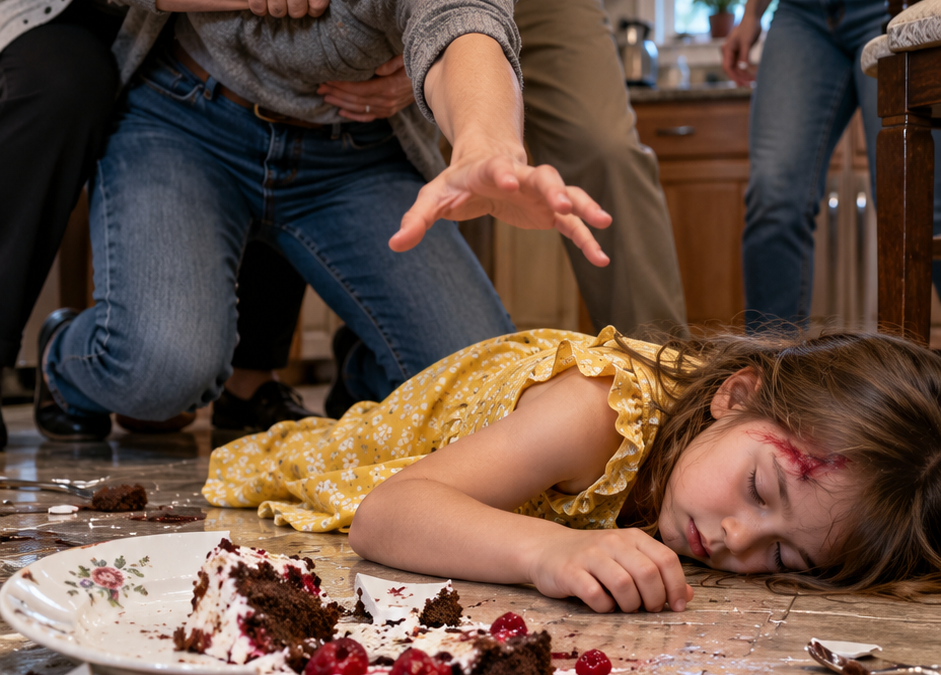
My six-year-old daughter was lying unconscious on my parents’ kitchen floor, and my mother was holding me back from reaching her.
My sister stood a few feet away insisting it had been an accident, while my father told me I was making everything worse.
In that moment, I understood that the most dangerous thing in that room was not Vanessa’s temper—it was the silence my family had spent thirty years teaching the rest of us to protect.
My name is Emma Carter.
At the time, I was a colonel in the United States Army.
I had spent almost twenty years in uniform.
I had commanded soldiers overseas, stood inside operations centers where decisions had to be made before fear had time to catch up, signed orders that affected hundreds of people, and learned how to keep my voice steady when everyone around me needed someone who could think clearly.
But none of that mattered when I walked into my parents’ kitchen that Saturday afternoon.
There, I was not Colonel Carter.
I was Ruby’s mother.
And Ruby was six.
We had driven almost five hours to spend the weekend with my parents in North Carolina.
I had just returned from a demanding assignment and had three days of leave before I was expected in Washington for a senior command conference.
Normally, I traveled in uniform if timing required it.
That weekend, I deliberately wore jeans and a gray sweater.
Around my family, I had spent most of my life being simply Emma.
My parents knew I was in the Army.
That was how they described it.
Emma is in the Army.
They never asked much more.
They knew I had deployed.
They knew I had been promoted over the years.
They occasionally saw photographs.
But they had never understood what my career had become.
They did not know senior officers called me directly.
They did not know I had command authority.
They did not know how many soldiers operated under orders carrying my signature.
Part of that was because I never bragged.
Part of it was because they never asked.
Ruby knew.
She understood only in a child’s way, but she was proud of me.
Whenever she saw my uniform, she would touch the eagle on my shoulder and ask, “Does this mean you’re the boss?”
I always told her, “It means I’m responsible.”
She never liked that answer.
“Being the boss sounds better.”
That Saturday began normally.
Mom made coffee.
Dad complained about the weather.
Ruby ran through the house in a yellow dress she had insisted on wearing because she said it made her look like sunshine.
Vanessa was not there when we arrived.
My younger sister lived about twenty minutes away.
She came and went whenever she wanted.
That had always been true.
Vanessa entered every room as if the room belonged to her mood.
If she was happy, everyone relaxed.
If she was irritated, everyone adjusted.
If she was angry, everybody learned to get out of the way.
That afternoon, Ruby opened the refrigerator while Mom and I were talking.
She found a slice of chocolate raspberry cake.
“Grandma?”
Mom looked over.
“What, sweetheart?”
“Can I have this?”
Mom glanced at the plate.
“Of course.”
Ruby carried it to the table with both hands as carefully as if it were fine china.
She ate slowly because she had inherited my habit of saving the best bite for last.
Twenty minutes later, the back door opened.
Vanessa came inside.
I heard her purse hit the counter.
She opened the refrigerator.
Then everything changed.
“Where is it?”
Mom turned.
“Where’s what?”
“My cake.”
Vanessa’s voice had already changed.
I knew that tone.
I had heard it when we were children.
Ruby froze.
Vanessa saw the plate.
Only a small piece remained.
“That was mine.”
Ruby looked at Grandma.
Mom waved one hand.
“I told her she could have it. I didn’t realize you were saving it.”
That should have ended the matter.
For a normal adult, it would have.
Vanessa stared at Ruby.
“You ate my cake?”
Ruby’s fork stopped halfway to her mouth.
“Grandma said—”
Vanessa crossed the kitchen.
Fast.
Too fast.
I stood.
“Vanessa.”
She reached Ruby before I did.
She grabbed my daughter by the hair.
Then drove her face downward into the edge of the kitchen table.
The sound is something I still hear sometimes.
A plate shattered.
Ruby dropped.
For half a second, nobody moved.
My mind refused to accept what my eyes had just seen.
Then training disappeared.
Rank disappeared.
Everything disappeared except my child lying on the floor.
“RUBY!”
I lunged forward.
My mother grabbed me from behind.
Both arms around my chest.
“Don’t touch Vanessa!”
I fought to get free.
“LET ME GO!”
“Let her calm down!”
My father grabbed my shoulder.
“You’re making this worse!”
I twisted toward him.
“My daughter isn’t moving!”
“Vanessa barely touched her.”
Those words did something to me.
Not because they were stupid.
Because I had heard different versions of them my entire life.
She barely touched you.
She didn’t mean it.
You know how Vanessa gets.
You shouldn’t have provoked her.
Be the bigger person.
Don’t make this a family issue.
My daughter was unconscious on the floor.
And they were already rewriting the story.
I tore free.
I dropped beside Ruby.
Her eyes were closed.
There was blood near her face.
“Ruby?”
Nothing.
“Baby, can you hear me?”
Mom was crying behind me.
Vanessa kept repeating, “I didn’t mean to do that.”
I pulled out my phone.
Dad said, “Emma, wait.”
I called 911.
Vanessa stared at me.
“You’re calling the police?”
“I’m calling an ambulance.”
“It was an accident.”
I ignored her.
The dispatcher asked whether Ruby was breathing.
“Yes.”
Was she conscious?
“No.”
Was there bleeding?
“Yes.”
What happened?
I looked directly at Vanessa.
“My sister grabbed my six-year-old daughter by the hair and slammed her face into the edge of a table.”
Mom made a sound.
“Emma.”
I continued answering questions.
I did not soften anything.
The paramedics arrived quickly.
Two came through the kitchen with equipment while another spoke to me.
One paramedic knelt beside Ruby.
The other examined her face.
Their expressions changed.
“Possible facial fracture,” one said.
“Altered consciousness.”
Then the second paramedic reached for his radio.
“Child assault. Request law enforcement.”
Vanessa went white.
Dad stepped forward immediately.
“It was an accident.”
Mom nodded.
“She slipped.”
I turned toward them.
I remember how calm my voice became.
“No.”
Both looked at me.
I pointed toward the paramedic.
“She did not slip. Vanessa grabbed Ruby by the hair and slammed her into the table. Both of my parents witnessed it.”
Silence.
The paramedic looked from me to Vanessa.
Then back to Ruby.
That was the moment the family version stopped controlling the room.
Professionals had arrived.
People whose job was not preserving Sunday dinner.
People who did not care whether Vanessa became upset.
Ruby was loaded into the ambulance.
I rode with her.
The drive to the hospital felt longer than any deployment flight I had ever taken.
I held her hand while the paramedic monitored her.
Every few minutes, I asked the same question.
“Is she stable?”
“Yes.”
“What does stable mean?”
“It means her breathing and circulation are okay right now.”
Right now.
I hated those words.
At the emergency department, a trauma team took her from me.
I stood in a hallway still wearing the same gray sweater.
There was chocolate frosting on one sleeve.
I did not know how it got there.
My phone began ringing.
Mom.
Dad.
Vanessa.
I ignored all of them.
Then a message appeared.
From Vanessa.
Tell them Ruby fell.
I stared at the screen.
A second message came.
Or don’t bother coming back into this family.
For several seconds, I could not breathe.
Then a detective approached.
“Ma’am?”
He introduced himself as Michael Alvarez.
I held out my phone.
“My sister just sent me this.”
He read the message.
His face remained neutral.
“May I photograph the screen?”
“Yes.”
“May I document the sender information?”
“Yes.”
He took photographs.
Then my phone rang again.
This time, the name on the screen was different.
BRIGADIER GENERAL MATTHEW REEVES.
I answered.
“Carter.”
His voice came immediately.
“Colonel, I heard there was an emergency involving your daughter.”
“Yes, sir.”
“Is she alive?”
My throat tightened.
“Yes, sir.”
“Then listen carefully. You stay with her.”
“Sir, the conference—”
“Covered.”
“My briefing package—”
“Covered.”
“I can still—”
“Carter.”
I stopped.
“Your only responsibility right now is your daughter.”
“Yes, sir.”
“Whatever you need from command, you have it.”
I closed my eyes.
“Thank you, sir.”
When I opened them, my father was walking toward me.
He had heard enough of the conversation.
“Who was that?”
“My commanding general.”
Something shifted in his face.
Not compassion.
Surprise.
As though for the first time he realized that the daughter he still treated like a teenager had a life beyond the walls of his house.
Before either of us could say more, a doctor approached carrying scans.
Dr. Hannah Cole.
Pediatric trauma.
She showed me fractures around Ruby’s cheek and orbital area.
My stomach turned.
“Can you repair it?”
“We can treat much of the injury.”
“Her eye?”
“Ophthalmology is evaluating her.”
“Her brain?”
“The initial imaging does not show catastrophic intracranial injury.”
I nearly folded.
Not catastrophic.
Those words became the most beautiful phrase I had ever heard.
Dr. Cole continued.
“She will need observation. Possibly a procedure once the swelling is better understood.”
Then she placed another report beside the scans.
“I also documented that these injuries are not consistent with a simple fall.”
Behind me, the elevator opened.
Two detectives stepped out.
Then Vanessa.
Mom.
Dad.
My mother was already talking.
“It was just a terrible accident.”
Detective Alvarez raised his hand.
“Before anyone says anything else, you should know the kitchen recorded the incident.”
Vanessa stopped moving.
I looked at Dad.
The security cameras.
He had installed them the previous year because of several neighborhood burglaries.
One camera covered the kitchen.
Audio and video.
Cloud storage.
For once, my father’s obsession with security worked against the lie.
Vanessa’s face lost all color.
Then another elevator opened.
Three Army officers stepped out.
The man in front was General Reeves.
Behind him came Lieutenant Colonel Sarah Whitmore, my executive officer, and Major Daniel Price from our legal section.
My parents stared.
General Reeves walked directly toward me.
“Colonel Carter.”
“Sir.”
“How is Ruby?”
“Stable.”
He nodded.
“Then your only mission right now is your daughter.”
My father looked at me differently.
So did Vanessa.
My mother whispered, “Emma?”
I turned toward her.
She looked at General Reeves.
Then back at me.
“You never told us…”
“Not now.”
She stopped.
For the first time in my life, those two words were enough.
General Reeves was not there to intimidate anyone.
He did not speak to the detectives about the case.
He did not threaten Vanessa.
He did not call anyone at the police department.
He was there because one of his officers had a critically injured child and command responsibilities that needed to be covered.
That distinction mattered to me.
My rank was not a weapon.
Ruby did not deserve protection because her mother was a colonel.
She deserved protection because she was a child.
Detective Alvarez asked my parents and Vanessa to separate.
Dad protested.
“There’s no need for all of this.”
“A six-year-old has facial fractures and a documented head injury.”
“It was an accident.”
“The video will help establish that.”
Dad went quiet.
Vanessa looked toward Mom.
Mom looked toward Dad.
I knew those looks.
They were coordinating.
We had done this dance for thirty years.
Vanessa did something.
Mom minimized it.
Dad reframed it.
Everyone else was instructed to calm down.
Time passed.
Then whoever had been hurt became the problem because they could not “let things go.”
I had lived inside that machine since childhood.
Ruby would not.
Alvarez looked at me.
“Did you know the kitchen camera had audio?”
“Yes.”
Dad interrupted.
“It was installed for security.”
Alvarez nodded.
“Cloud backup?”
Dad hesitated.
“Yes.”
Vanessa looked physically ill.
She knew what the camera contained.
Mom reached for my wrist.
“Emma, please.”
I looked down.
She let go.
“Please what?”
“This is your sister.”
I stared at her.
“Ruby is my daughter.”
“I know.”
“No.”
My voice stayed low.
“I don’t think you do.”
Mom’s eyes filled.
“Vanessa has problems.”
“Yes.”
“She loses control.”
“Yes.”
“She didn’t mean—”
“You held me back while my daughter was unconscious.”
“You were going after Vanessa.”
“I was trying to reach Ruby.”
“You were out of control.”
There it was.
The oldest trick in my family.
Vanessa acts.
I react.
My reaction becomes the crisis.
I turned toward Alvarez.
“Did the video capture my mother holding me?”
“Yes.”
“My father?”
“Yes.”
“Vanessa?”
“Yes.”
“Good.”
Mom whispered my name.
I looked at her.
“No more rewriting what happened.”
Then Dr. Cole returned.
“Colonel Carter?”
“Yes.”
“Ruby is awake.”
My knees almost failed.
“Can I see her?”
“Yes.”
I entered the room.
Ruby looked impossibly small.
Her yellow dress had been cut away.
It sat inside a plastic hospital bag.
There was dried chocolate on the fabric.
For some reason, that detail nearly destroyed me.
Cake should not become evidence.
Children should not have to remember dessert as the beginning of trauma.
Ruby’s face was swollen.
Her left hand moved when I approached.
“Mommy?”
I crossed the room.
“I’m here.”
She looked at me.
Then she asked the question that shattered what discipline I had left.
“Did I do something bad?”
I sat beside her.
“No.”
“Aunt Vanessa was mad.”
“I know.”
“I ate her cake.”
“Grandma said you could.”
“I can say sorry.”
“No.”
Ruby stared at me.
I took her hand carefully.
“You do not apologize because someone hurt you.”
Her eyes filled.
“Is Aunt Vanessa still mad?”
I swallowed.
“Aunt Vanessa is responsible for her own feelings.”
Ruby became quiet.
Then she said, “Grandma said you were making it worse.”
I froze.
She had heard everything.
Children always hear more than adults want to believe.
“What did you want?” I asked.
Ruby’s lip trembled.
“You.”
One word.
That was all.
I leaned over carefully and kissed the top of her head.
“I’m sorry I couldn’t get to you faster.”
“You came.”
I closed my eyes.
“Yes.”
A hospital social worker came later.
Then a child-advocacy specialist.
They explained that Ruby should not be asked repeatedly to retell what happened.
Trained interviewers would handle anything necessary once her doctors felt she was medically ready.
I agreed.
That mattered.
Being protective did not mean turning myself into a detective.
It meant making sure professionals could do their work without family interference.
Outside Ruby’s room, General Reeves was still waiting.
“You don’t have to stay, sir.”
“I know.”
“Then why are you?”
He looked toward the door.
“Because nobody should have to sit through this alone if they don’t need to.”
I could not answer.
He continued.
“The Washington conference is covered.”
“Sir—”
“Colonel.”
“Yes?”
“If you mention that conference again tonight, I will consider it a lapse in professional judgment.”
Despite everything, I almost laughed.
“Yes, sir.”
My father approached a few minutes later.
He stopped several feet away.
“Emma.”
“What?”
“Can I speak with you?”
“No.”
His face tightened.
“I’m your father.”
“Yes.”
“I’m trying to fix this.”
“You had thirty years.”
He stopped.
That sentence did not belong only to the kitchen.
It belonged to my childhood.
Vanessa had always been difficult.
That was the polite word.
Sensitive.
Emotional.
Intense.
Never violent.
Never cruel.
Never dangerous.
At ten, she smashed my model airplane because I would not let her use my markers.
Mom told me, “She was jealous. Be the bigger sister.”
At fourteen, Vanessa threw a drinking glass at me during dinner.
Dad told me, “Stop provoking her.”
At sixteen, she scratched my face deeply enough that a teacher noticed.
Mom told the school I had fallen into a rosebush.
Then she cried before we left the house.
“Please, Emma. Don’t destroy your sister’s future.”
So I confirmed the lie.
At sixteen years old, I had already learned that Vanessa’s future was more valuable than my truth.
There were other incidents.
A drunk-driving accident involving my car.
A cousin she punched during a family argument.
Property she broke.
Friends she threatened.
Always the same rhythm afterward.
Vanessa cried.
Mom defended.
Dad negotiated.
Everyone else adapted.
At nineteen, I left home.
My parents told people joining the Army was my rebellion.
Maybe part of it was.
But the Army gave me something I had never experienced consistently at home.
Standards.
Responsibility.
Consequences.
It was not perfect.
No institution is.
But if you made a decision, you were expected to account for it.
If you failed someone, “I was upset” was not a complete defense.
I learned that your emotions could explain your behavior without erasing responsibility for it.
That lesson saved me more than once.
My father looked toward Ruby’s room.
“Vanessa needs help.”
“I agree.”
His shoulders relaxed.
Then I finished.
“Professional help.”
His face changed.
“Not a family conspiracy protecting her from consequences.”
“She could go to jail.”
“That is not my decision.”
“You know what I mean.”
“No.”
I shook my head.
“I really don’t anymore.”
He lowered his voice.
“Does your general know everything?”
There it was.
Not concern about Ruby.
Concern about exposure.
“Everything?”
“About us.”
I understood.
Does your important world know what this family is like?
“He knows my daughter was assaulted.”
Dad looked away.
“This could become public.”
“My child may need surgery.”
“That’s not what I meant.”
“It is what matters.”
“Emma—”
“You’re worried about embarrassment.”
“That’s unfair.”
“No. It’s precise.”
Vanessa was taken downstairs for a formal interview.
I did not follow.
My parents were interviewed separately.
I did not interfere.
The kitchen recording existed.
Vanessa’s text existed.
Ruby’s medical findings existed.
My responsibility was not to prosecute anyone.
My responsibility was to sit beside my daughter.
That became my anchor.
Around midnight, Alvarez came back.
“The video is clear.”
“How clear?”
He hesitated.
“Clear enough that I’m not going to ask you to repeat the incident again tonight.”
I appreciated that.
“Your parents’ first statements conflict with the recording.”
I almost laughed.
Of course they did.
“Will that matter?”
“It will be documented.”
“Vanessa?”
“She has counsel.”
“Good.”
He looked mildly surprised.
“You’re not upset about that?”
“No.”
“She should have counsel.”
I looked through the window toward Ruby.
“Due process matters.”
Alvarez studied me.
“That’s easier to say when the defendant isn’t your sister.”
“I’ve spent twenty years telling soldiers that standards matter most when emotions are high.”
I looked at him.
“I don’t get to abandon that because I’m angry.”
And I was angry.
I wanted Vanessa to understand fear.
I wanted my mother to hear herself saying let her calm down for the rest of her life.
I wanted my father to see what barely touched her looked like on a CT scan.
But feelings are not instructions.
Rage is real.
That does not mean rage gets command authority.
By morning, Vanessa had been arrested on charges connected to the assault.
My mother collapsed into a chair.
Dad stared at the floor.
Then Mom looked at me.
“You did this.”
I put down my coffee.
“No.”
“You showed them the message.”
“Yes.”
“You told them Vanessa hurt Ruby.”
“Yes.”
“You let them arrest your sister.”
That phrase caught my attention.
Let them.
As though I had some private veto over consequences.
“Vanessa did this.”
Mom shook her head.
“No. This family is being destroyed because you refuse to forgive one mistake.”
I stared at her.
“One mistake?”
She went quiet.
“What about the model airplane?”
Her eyes widened.
“The glass?”
“Emma—”
“The rosebush lie?”
Dad looked at Mom.
“The car accident you made me claim responsibility for?”
Dad’s face changed.
“The time Vanessa punched Rachel and you told everyone Rachel started it?”
Mom began crying.
I kept going.
“You have spent decades converting Vanessa’s choices into everybody else’s responsibility.”
Silence.
“And now she hurt Ruby.”
Dad whispered, “We were trying to keep the family together.”
I looked at him.
“No.”
His face tightened.
“You were trying to keep the family quiet.”
Neither answered.
“That is not the same thing.”
Mom wiped her face.
“We loved both of you.”
“I believe that.”
She looked up quickly.
“Then you understand—”
“No.”
I shook my head.
“Love is not the question.”
She stared.
“You protected Vanessa from consequences and expected me to absorb the impact.”
Nothing.
“You called that fairness because I was stronger.”
Dad looked away.
“Children who behave well are not supposed to become shock absorbers for children who don’t.”
I had waited thirty years to say that.
It did not feel victorious.
It felt exhausting.
Ruby stayed in the hospital for three days.
She needed a procedure for part of the facial injury.
The ophthalmologist remained cautiously optimistic.
There was no catastrophic brain injury.
Her vision was preserved.
When she was finally discharged, she carried a stuffed fox one of the nurses had given her.
Lieutenant Colonel Whitmore drove us because I had gone almost three days without real sleep.
No convoy.
No military spectacle.
Just a friend and subordinate making sure I did not fall asleep behind the wheel.
Leadership often looks far less dramatic than people imagine.
My parents asked where we were going.
I did not tell them.
I needed distance.
I had a home.
Friends.
A support network.
I filed for a civilian protective order against Vanessa.
My military rank had nothing to do with it.
Later, after Mom repeatedly tried to pass messages to Ruby through extended family, I established boundaries with my parents too.
No unannounced visits.
No discussion of Vanessa with Ruby.
No messages through relatives.
No efforts to influence what Ruby remembered.
No surprise apologies.
Everything written down.
Mom called it cruel.
I called it clear.
The extended family divided almost immediately.
That happens when truth disrupts an old system.
People who had benefited from silence called boundaries dramatic.
Aunt Linda phoned me.
“Your mother is devastated.”
“So is Ruby.”
“That’s different.”
“How?”
Silence.
“Your mom says Vanessa didn’t mean to hurt her that badly.”
I closed my eyes.
“Listen to what you just said.”
“What?”
“You accepted that she intended to hurt her some amount.”
Aunt Linda stopped talking.
Others surprised me.
My cousin Rachel called.
The same cousin Vanessa had once punched.
“I believe you.”
That was all.
I cried after we hung up.
Then another cousin contacted me.
Then a family friend.
Then someone I barely remembered.
Stories came out.
Vanessa throwing objects.
Slapping people.
Threatening boyfriends.
Breaking property.
Destroying holidays.
My parents always smoothing things over afterward.
Not every story mattered legally.
Nor should it have.
But emotionally, they showed me something I had never understood.
The family had not been protecting Vanessa from isolated mistakes.
They had been protecting a pattern.
Families can normalize almost anything if they repeat the same excuse long enough.
Vanessa’s case moved slowly.
There was no instant courtroom scene.
No dramatic sentence delivered the following day.
Her attorney challenged the evidence where appropriate.
The prosecution reviewed the kitchen recording.
Medical experts documented Ruby’s injuries.
Ruby participated in a carefully managed forensic interview when the specialists decided she was ready.
My parents’ conflicting initial accounts were preserved.
Eventually, Vanessa stopped claiming Ruby simply fell.
The video made that impossible.
Her defense shifted toward loss of control.
Emotional instability.
Lack of intent to cause such severe injury.
Those distinctions mattered legally.
They did not erase the act.
I went to court when required.
I wore civilian clothes.
No dress uniform.
No medals.
No rank displayed.
It was State versus Vanessa Carter.
Not Colonel Carter versus her sister.
That boundary mattered deeply to me.
Eventually the press learned who I was.
Someone had taken a photograph in the hospital hallway when General Reeves arrived.
It circulated.
Headlines appeared.
ARMY COLONEL’S CHILD INJURED IN FAMILY ASSAULT.
I hated them.
Ruby was six years old.
Her pain was not a story people were entitled to consume.
Through counsel, I made one statement.
My daughter was recovering.
Civilian authorities were handling the matter.
We requested privacy.
Nothing about revenge.
Nothing about rank.
Nothing about Vanessa’s history.
Then I stopped speaking publicly.
Back at work, people did not treat me like glass.
I appreciated that more than I could explain.
General Reeves called me into his office when I returned.
“Ready?”
“Yes, sir.”
He stared at me.
“Actually ready?”
I thought.
“No.”
He nodded.
“Better answer.”
I resumed gradually.
Some mornings I briefed senior leaders after spending half the night beside Ruby because she had nightmares.
Some afternoons I signed training directives while keeping my phone close enough to see a message from her therapist.
Command did not make me less of a mother.
Motherhood did not make me less of an officer.
Both required presence.
Ruby healed physically faster than she healed emotionally.
She became afraid of chocolate cake.
That devastated me.
Especially chocolate raspberry.
For months, a bakery box could make her shoulders tighten.
We did not force anything.
Her therapist told me trauma often steals a sense of control.
Recovery requires giving some of it back.
That made sense.
It was a principle I already understood in another language.
So Ruby received choices.
Where she sat.
Who she visited.
Whether she talked.
What dessert she wanted.
Whether she wanted family photographs in her room.
Nobody surprised her with Vanessa.
Nobody told her she had to forgive.
Nobody was allowed to say, “But she’s family.”
One night, months later, Ruby asked me, “Is Aunt Vanessa bad?”
I put down the book we were reading.
“That’s a hard question.”
“She hurt me.”
“Yes.”
“So is she bad?”
I chose my words carefully.
“She did something very bad.”
Ruby frowned.
“Is that different?”
“Yes.”
“How?”
“People are responsible for what they do. But one terrible thing doesn’t always tell us everything a person will ever be.”
She thought about that.
“Do I have to love her?”
“No.”
“Do I have to see her?”
“No.”
“Do I have to forgive her?”
“No.”
She looked surprised.
“Grandma says family has to forgive.”
Anger rose inside me.
Then I let it pass before answering.
“Forgiveness is something you choose.”
I touched her hand.
“Safety comes first.”
She nodded.
Then returned to the book.
Children often tolerate honest truth better than adults do.
My parents struggled with the boundaries.
Dad sent letters.
Mom called from different numbers.
Eventually, I told them if either tried to contact Ruby without permission again, communication would stop completely.
That finally worked.
Three months passed.
Then Dad asked to meet me.
Alone.
No Mom.
No Vanessa.
We met at a public park.
He looked older.
Not slightly.
Ten years older.
We sat on a bench.
For several minutes, he said nothing.
Then:
“I watched the video again.”
I waited.
“All of it.”
“What did you see?”
He stared down at his hands.
“You.”
I said nothing.
“Trying to get to Ruby.”
Nothing.
“Your mother holding you.”
His voice cracked.
“And me grabbing your shoulder.”
Still nothing.
“I heard myself say Vanessa barely touched her.”
Tears filled his eyes.
“I don’t know why I said that.”
“Yes, you do.”
He looked at me.
Then nodded.
“Because that’s what I always did.”
There it was.
Not an excuse.
The beginning of honesty.
“I thought if I could get everybody calm, whatever happened would become smaller.”
I looked toward the playground.
Children were running between swings.
“But it never became smaller.”
“No.”
“It just made the person who was hurt carry it alone.”
Dad nodded.
“Yes.”
We sat quietly.
Then he whispered, “I failed you.”
I did not rush to rescue him.
“You did.”
His face twisted.
It hurt to say.
But truth loses its value if you soften it until nobody has to feel anything.
“Can I see Ruby?”
“Not yet.”
He nodded.
No argument.
That mattered.
“What do I need to do?”
“Nothing to earn access.”
He looked confused.
“You respect the boundary.”
I continued.
“You work on yourself because it needs doing. Not because you’re trying to buy time with Ruby.”
He swallowed.
“And someday?”
“If she feels safe, and I believe contact is appropriate, we discuss it.”
“Okay.”
That was not forgiveness.
It was not restoration.
It was a beginning.
Mom took much longer.
She remained convinced Vanessa needed family support because she was facing criminal consequences.
Eventually, I told her, “You are free to support your daughter.”
Mom looked relieved.
Then I continued.
“You are not free to force my daughter to participate in that support.”
Her expression hardened.
“You’re making me choose between my daughters.”
“No.”
I shook my head.
“I am refusing to let your choice control us.”
She hated that distinction.
But it was true.
Eventually, after the evidence and medical findings were fully litigated, Vanessa entered a plea agreement.
There were criminal consequences.
Court conditions.
Mandatory treatment.
Restrictions involving Ruby.
I did not celebrate.
Consequences are not entertainment.
What mattered was simpler.
For the first time in Vanessa’s life, someone outside our family looked at what she had done and refused to rename it temperament.
A court did what my parents had failed to do.
It attached responsibility to behavior.
Months later, Vanessa sent me a letter from treatment.
I gave it to my attorney before opening it.
Ruby’s therapist recommended that Ruby not receive any communication from Vanessa yet.
I agreed.
I read the letter alone.
The first page made me furious.
Stress.
Pressure.
Feeling disrespected.
Ruby taking something Vanessa had been saving.
All the familiar language people use when they are circling responsibility without touching it.
Then halfway through, something changed.
Vanessa wrote:
A six-year-old ate cake. I responded as if being angry gave me the right to frighten and hurt her. There is no version of that sentence where I am the victim.
I stopped.
Read it again.
Then continued.
She apologized to Ruby.
She apologized to me.
She admitted Mom and Dad had shielded her for years.
Then came the line I could not forget.
You were always required to be reasonable because I was the one willing to explode. I think I learned that exploding was power.
She was right.
In our family, the person willing to destroy the evening controlled the evening.
Everyone else surrendered before the explosion.
Vanessa had not invented that structure alone.
But she had benefited from it.
I did not answer immediately.
Six months later, I sent three sentences.
I received your letter.
Ruby is recovering.
Any future relationship will depend on long-term accountability and what is safe for her.
No promise of forgiveness.
No hatred.
No reunion.
Truth did not need decoration.
Almost a year after the kitchen incident, Ruby surprised me.
“Can I see Grandma?”
I stared at her.
“Why?”
She shrugged.
“I miss her pancakes.”
I almost laughed.
A year of therapy.
Protective orders.
Boundaries.
And pancakes nearly won.
We arranged a supervised visit.
Rules were clear.
No Vanessa.
No pressure.
No discussion of forgiveness.
No questions about the incident.
No guilt.
Mom arrived early.
For the first twenty minutes, she seemed terrified to say anything wrong.
Then Ruby asked, “Can we make pancakes?”
Mom started crying.
Quietly.
“Yes.”
They went into the kitchen.
I stayed nearby.
At one point, Ruby spilled flour.
Mom instinctively said, “Oh, sweetheart, you’re fine.”
Then she stopped.
She looked at Ruby.
“Would you like help cleaning it?”
Ruby nodded.
It was a tiny moment.
Nobody else would have understood why it mattered.
I did.
Mom was learning to ask instead of control.
Late.
Far too late.
But learning.
Dad’s relationship with Ruby improved more easily.
He never defended Vanessa again.
One afternoon Ruby asked him directly, “Why didn’t you help Mom?”
He froze.
I almost stepped in.
Then stopped.
His answer needed to be his.
“Because I was scared of making Aunt Vanessa angrier.”
Ruby thought about it.
“That was dumb.”
Dad laughed through tears.
“Yes.”
Then he added, “And it was wrong.”
I watched him carefully.
No explanation disguised as an excuse.
Good.
Two years after the assault, Ruby turned eight.
I asked what cake she wanted.
“Chocolate.”
I stared at her.
“Chocolate?”
“Yes.”
“Raspberry?”
She hesitated.
Then made a face.
“No.”
I smiled.
“Good. I hate raspberries.”
She knew I was lying.
She laughed.
We ordered chocolate cake with strawberries.
When the box arrived, Ruby opened it herself.
That mattered.
She cut the first slice.
That mattered more.
Then she raised the fork.
Took a bite.
I had to look away because my eyes filled.
Trauma steals ordinary things.
Healing sometimes means taking them back.
One bite at a time.
Vanessa was not there.
My parents were.
Under boundaries that had existed long enough they no longer needed to be announced.
General Reeves mailed Ruby a birthday card.
Nothing about the Army.
Nothing dramatic.
Just:
Happy Birthday, Ruby. Keep being brave enough to be yourself.
She kept it above her desk for months.
People later asked whether my rank saved my daughter.
No.
Paramedics helped Ruby.
Doctors treated her.
Detectives preserved evidence.
Prosecutors handled the case.
Therapists helped her recover.
My rank did none of those things.
The law should not care whether I wear an eagle on my uniform.
Ruby deserved protection because she was six.
Not because her mother happened to command soldiers.
What my rank changed was me.
The frightened girl my parents trained to surrender had spent twenty years learning a different way to live.
I had made decisions while exhausted.
Told powerful people no.
Admitted mistakes.
Held others accountable.
Been held accountable myself.
Over time, those habits became stronger than the rules I grew up under.
That was why the moment in my parents’ kitchen mattered more than General Reeves walking out of the elevator.
My family remembered the hospital as the moment they discovered who I had become.
Colonel Emma Carter.
A senior officer.
A commander.
Someone important enough that a brigadier general knew my daughter’s name.
But that was not the real revelation.
They could have known about my career years earlier if they had cared enough to ask.
What frightened them was something else.
I no longer needed their permission to tell the truth.
For most of my childhood, family peace meant Vanessa was calm.
If Vanessa screamed, someone apologized.
If Vanessa broke something, someone replaced it.
If Vanessa hurt someone, somebody explained her feelings.
The rest of us absorbed the impact.
Then we called the absence of conflict peace.
It was not peace.
It was organized surrender.
I did not understand that fully until Ruby was lying on the floor.
I wish I had learned earlier.
But I learned in time to keep my daughter from inheriting it.
That matters.
Ruby is older now.
There is a faint difference around one side of her face if you know exactly where to look.
Most people never notice.
She does.
Sometimes it bothers her.
Sometimes she calls it her battle dent.
I tell her not everything has to sound like a military operation.
She rolls her eyes.
She plays soccer.
Reads fantasy novels.
Hates cleaning her room.
Still loves cake.
Vanilla most of the time.
Chocolate when she feels brave.
My relationship with my parents exists.
That is the most accurate word.
Exists.
Not restored.
Not destroyed.
Bounded.
Dad changed more than Mom.
Mom still slips sometimes.
“But Vanessa was going through—”
I stop her.
These days, she sometimes stops herself.
Progress can be awkward.
It still counts.
Vanessa remains outside Ruby’s life.
That may change someday.
It may not.
Ruby will have a voice in that decision as she grows.
Safety gets the first vote.
Accountability gets the second.
Family tradition gets none.
I stayed in command.
Years later, I was promoted again.
My parents attended one ceremony.
They sat near the back.
Afterward, Mom watched soldiers waiting to speak with me.
She looked around the room.
“I didn’t know.”
“Know what?”
She gestured around us.
“All this.”
Then, quietly:
“How many people trust you.”
I looked at her.
“You never asked.”
She cried.
I did not say it to be cruel.
It was simply true.
My parents had spent so long defining me inside the family that they never noticed who I had become outside it.
Even now, when people hear the story, they focus on the general.
They like the image.
The elevator opens.
General Reeves steps out.
My parents see the star.
He walks toward me.
“Colonel Carter.”
Their faces change.
Power reversal.
I understand why people find it satisfying.
But they misunderstand the story.
If I had worked as a cashier, Ruby would still have deserved protection.
If I had been unemployed, she would still have deserved protection.
If I had never put on a uniform, Vanessa would still have had no right to hurt her.
Authority did not make what happened wrong.
It was wrong before anyone knew my rank.
The real reversal happened earlier.
In the kitchen.
My mother’s arms around me.
My father’s hand on my shoulder.
Ruby motionless near my feet.
And the same command I had obeyed since childhood surrounding me one more time.
Protect Vanessa.
Calm down.
Do not make things worse.
Keep the family together.
Only that time, I did not obey.
I said no.
That was the moment my family changed.
Not when the detectives reviewed the video.
Not when General Reeves arrived.
Not when Vanessa was arrested.
Not when the court finally imposed consequences.
It changed when I refused to inherit silence one more time.
My sister hurt my child over a piece of chocolate cake.
My parents tried to turn the violence into an accident because that was what they had always done.
They thought I would cooperate because the Emma they remembered always had.
But that Emma had left home at nineteen.
She spent the next twenty years learning that discipline is not submission.
That loyalty does not require dishonesty.
That protecting a family does not mean protecting the person who keeps damaging it.
That peace bought by forcing victims into silence is not peace at all.
I could not change what happened to Ruby.
I could not erase the hospital room.
The scans.
The yellow dress folded inside a plastic bag.
The nights she woke crying.
The months she was afraid of chocolate cake.
But I could decide what happened afterward.
I told the truth.
I preserved the evidence.
I let the detectives do their jobs.
I let the doctors do theirs.
I refused to turn my rank into a weapon.
I established boundaries my parents should have taught me decades earlier.
And most importantly, I gave Ruby something I never had when I was six.
Certainty.
The certainty that if someone hurt her, the adults who loved her would not ask her to stay quiet so everybody else could remain comfortable.
Ruby did not need Colonel Carter that afternoon.
She did not need my medals.
She did not need a general standing beside me.
She needed her mother.
And for the first time in my family’s history, that was enough.
What do you think of this story? Please leave a like and share your thoughts in the comments. Your support means a lot to us and inspires us to keep writing more meaningful and powerful stories. Thank you! 👍
𝗧𝗛𝗘 𝗘𝗡𝗗
The Moment My Mother Held Me Back From My Daughter, I Knew Our Family Would Never Be the Same
My six-year-old daughter was lying unconscious on my parents’ kitchen floor, and my mother was holding me back from reaching her.
My sister stood a few feet away insisting it had been an accident, while my father told me I was making everything worse.
In that moment, I understood that the most dangerous thing in that room was not Vanessa’s temper—it was the silence my family had spent thirty years teaching the rest of us to protect.
My name is Emma Carter.
At the time, I was a colonel in the United States Army.
I had spent almost twenty years in uniform.
I had commanded soldiers overseas, stood inside operations centers where decisions had to be made before fear had time to catch up, signed orders that affected hundreds of people, and learned how to keep my voice steady when everyone around me needed someone who could think clearly.
But none of that mattered when I walked into my parents’ kitchen that Saturday afternoon.
There, I was not Colonel Carter.
I was Ruby’s mother.
And Ruby was six.
We had driven almost five hours to spend the weekend with my parents in North Carolina.
I had just returned from a demanding assignment and had three days of leave before I was expected in Washington for a senior command conference.
Normally, I traveled in uniform if timing required it.
That weekend, I deliberately wore jeans and a gray sweater.
Around my family, I had spent most of my life being simply Emma.
My parents knew I was in the Army.
That was how they described it.
Emma is in the Army.
They never asked much more.
They knew I had deployed.
They knew I had been promoted over the years.
They occasionally saw photographs.
But they had never understood what my career had become.
They did not know senior officers called me directly.
They did not know I had command authority.
They did not know how many soldiers operated under orders carrying my signature.
Part of that was because I never bragged.
Part of it was because they never asked.
Ruby knew.
She understood only in a child’s way, but she was proud of me.
Whenever she saw my uniform, she would touch the eagle on my shoulder and ask, “Does this mean you’re the boss?”
I always told her, “It means I’m responsible.”
She never liked that answer.
“Being the boss sounds better.”
That Saturday began normally.
Mom made coffee.
Dad complained about the weather.
Ruby ran through the house in a yellow dress she had insisted on wearing because she said it made her look like sunshine.
Vanessa was not there when we arrived.
My younger sister lived about twenty minutes away.
She came and went whenever she wanted.
That had always been true.
Vanessa entered every room as if the room belonged to her mood.
If she was happy, everyone relaxed.
If she was irritated, everyone adjusted.
If she was angry, everybody learned to get out of the way.
That afternoon, Ruby opened the refrigerator while Mom and I were talking.
She found a slice of chocolate raspberry cake.
“Grandma?”
Mom looked over.
“What, sweetheart?”
“Can I have this?”
Mom glanced at the plate.
“Of course.”
Ruby carried it to the table with both hands as carefully as if it were fine china.
She ate slowly because she had inherited my habit of saving the best bite for last.
Twenty minutes later, the back door opened.
Vanessa came inside.
I heard her purse hit the counter.
She opened the refrigerator.
Then everything changed.
“Where is it?”
Mom turned.
“Where’s what?”
“My cake.”
Vanessa’s voice had already changed.
I knew that tone.
I had heard it when we were children.
Ruby froze.
Vanessa saw the plate.
Only a small piece remained.
“That was mine.”
Ruby looked at Grandma.
Mom waved one hand.
“I told her she could have it. I didn’t realize you were saving it.”
That should have ended the matter.
For a normal adult, it would have.
Vanessa stared at Ruby.
“You ate my cake?”
Ruby’s fork stopped halfway to her mouth.
“Grandma said—”
Vanessa crossed the kitchen.
Fast.
Too fast.
I stood.
“Vanessa.”
She reached Ruby before I did.
She grabbed my daughter by the hair.
Then drove her face downward into the edge of the kitchen table.
The sound is something I still hear sometimes.
A plate shattered.
Ruby dropped.
For half a second, nobody moved.
My mind refused to accept what my eyes had just seen.
Then training disappeared.
Rank disappeared.
Everything disappeared except my child lying on the floor.
“RUBY!”
I lunged forward.
My mother grabbed me from behind.
Both arms around my chest.
“Don’t touch Vanessa!”
I fought to get free.
“LET ME GO!”
“Let her calm down!”
My father grabbed my shoulder.
“You’re making this worse!”
I twisted toward him.
“My daughter isn’t moving!”
“Vanessa barely touched her.”
Those words did something to me.
Not because they were stupid.
Because I had heard different versions of them my entire life.
She barely touched you.
She didn’t mean it.
You know how Vanessa gets.
You shouldn’t have provoked her.
Be the bigger person.
Don’t make this a family issue.
My daughter was unconscious on the floor.
And they were already rewriting the story.
I tore free.
I dropped beside Ruby.
Her eyes were closed.
There was blood near her face.
“Ruby?”
Nothing.
“Baby, can you hear me?”
Mom was crying behind me.
Vanessa kept repeating, “I didn’t mean to do that.”
I pulled out my phone.
Dad said, “Emma, wait.”
I called 911.
Vanessa stared at me.
“You’re calling the police?”
“I’m calling an ambulance.”
“It was an accident.”
I ignored her.
The dispatcher asked whether Ruby was breathing.
“Yes.”
Was she conscious?
“No.”
Was there bleeding?
“Yes.”
What happened?
I looked directly at Vanessa.
“My sister grabbed my six-year-old daughter by the hair and slammed her face into the edge of a table.”
Mom made a sound.
“Emma.”
I continued answering questions.
I did not soften anything.
The paramedics arrived quickly.
Two came through the kitchen with equipment while another spoke to me.
One paramedic knelt beside Ruby.
The other examined her face.
Their expressions changed.
“Possible facial fracture,” one said.
“Altered consciousness.”
Then the second paramedic reached for his radio.
“Child assault. Request law enforcement.”
Vanessa went white.
Dad stepped forward immediately.
“It was an accident.”
Mom nodded.
“She slipped.”
I turned toward them.
I remember how calm my voice became.
“No.”
Both looked at me.
I pointed toward the paramedic.
“She did not slip. Vanessa grabbed Ruby by the hair and slammed her into the table. Both of my parents witnessed it.”
Silence.
The paramedic looked from me to Vanessa.
Then back to Ruby.
That was the moment the family version stopped controlling the room.
Professionals had arrived.
People whose job was not preserving Sunday dinner.
People who did not care whether Vanessa became upset.
Ruby was loaded into the ambulance.
I rode with her.
The drive to the hospital felt longer than any deployment flight I had ever taken.
I held her hand while the paramedic monitored her.
Every few minutes, I asked the same question.
“Is she stable?”
“Yes.”
“What does stable mean?”
“It means her breathing and circulation are okay right now.”
Right now.
I hated those words.
At the emergency department, a trauma team took her from me.
I stood in a hallway still wearing the same gray sweater.
There was chocolate frosting on one sleeve.
I did not know how it got there.
My phone began ringing.
Mom.
Dad.
Vanessa.
I ignored all of them.
Then a message appeared.
From Vanessa.
Tell them Ruby fell.
I stared at the screen.
A second message came.
Or don’t bother coming back into this family.
For several seconds, I could not breathe.
Then a detective approached.
“Ma’am?”
He introduced himself as Michael Alvarez.
I held out my phone.
“My sister just sent me this.”
He read the message.
His face remained neutral.
“May I photograph the screen?”
“Yes.”
“May I document the sender information?”
“Yes.”
He took photographs.
Then my phone rang again.
This time, the name on the screen was different.
BRIGADIER GENERAL MATTHEW REEVES.
I answered.
“Carter.”
His voice came immediately.
“Colonel, I heard there was an emergency involving your daughter.”
“Yes, sir.”
“Is she alive?”
My throat tightened.
“Yes, sir.”
“Then listen carefully. You stay with her.”
“Sir, the conference—”
“Covered.”
“My briefing package—”
“Covered.”
“I can still—”
“Carter.”
I stopped.
“Your only responsibility right now is your daughter.”
“Yes, sir.”
“Whatever you need from command, you have it.”
I closed my eyes.
“Thank you, sir.”
When I opened them, my father was walking toward me.
He had heard enough of the conversation.
“Who was that?”
“My commanding general.”
Something shifted in his face.
Not compassion.
Surprise.
As though for the first time he realized that the daughter he still treated like a teenager had a life beyond the walls of his house.
Before either of us could say more, a doctor approached carrying scans.
Dr. Hannah Cole.
Pediatric trauma.
She showed me fractures around Ruby’s cheek and orbital area.
My stomach turned.
“Can you repair it?”
“We can treat much of the injury.”
“Her eye?”
“Ophthalmology is evaluating her.”
“Her brain?”
“The initial imaging does not show catastrophic intracranial injury.”
I nearly folded.
Not catastrophic.
Those words became the most beautiful phrase I had ever heard.
Dr. Cole continued.
“She will need observation. Possibly a procedure once the swelling is better understood.”
Then she placed another report beside the scans.
“I also documented that these injuries are not consistent with a simple fall.”
Behind me, the elevator opened.
Two detectives stepped out.
Then Vanessa.
Mom.
Dad.
My mother was already talking.
“It was just a terrible accident.”
Detective Alvarez raised his hand.
“Before anyone says anything else, you should know the kitchen recorded the incident.”
Vanessa stopped moving.
I looked at Dad.
The security cameras.
He had installed them the previous year because of several neighborhood burglaries.
One camera covered the kitchen.
Audio and video.
Cloud storage.
For once, my father’s obsession with security worked against the lie.
Vanessa’s face lost all color.
Then another elevator opened.
Three Army officers stepped out.
The man in front was General Reeves.
Behind him came Lieutenant Colonel Sarah Whitmore, my executive officer, and Major Daniel Price from our legal section.
My parents stared.
General Reeves walked directly toward me.
“Colonel Carter.”
“Sir.”
“How is Ruby?”
“Stable.”
He nodded.
“Then your only mission right now is your daughter.”
My father looked at me differently.
So did Vanessa.
My mother whispered, “Emma?”
I turned toward her.
She looked at General Reeves.
Then back at me.
“You never told us…”
“Not now.”
She stopped.
For the first time in my life, those two words were enough.
General Reeves was not there to intimidate anyone.
He did not speak to the detectives about the case.
He did not threaten Vanessa.
He did not call anyone at the police department.
He was there because one of his officers had a critically injured child and command responsibilities that needed to be covered.
That distinction mattered to me.
My rank was not a weapon.
Ruby did not deserve protection because her mother was a colonel.
She deserved protection because she was a child.
Detective Alvarez asked my parents and Vanessa to separate.
Dad protested.
“There’s no need for all of this.”
“A six-year-old has facial fractures and a documented head injury.”
“It was an accident.”
“The video will help establish that.”
Dad went quiet.
Vanessa looked toward Mom.
Mom looked toward Dad.
I knew those looks.
They were coordinating.
We had done this dance for thirty years.
Vanessa did something.
Mom minimized it.
Dad reframed it.
Everyone else was instructed to calm down.
Time passed.
Then whoever had been hurt became the problem because they could not “let things go.”
I had lived inside that machine since childhood.
Ruby would not.
Alvarez looked at me.
“Did you know the kitchen camera had audio?”
“Yes.”
Dad interrupted.
“It was installed for security.”
Alvarez nodded.
“Cloud backup?”
Dad hesitated.
“Yes.”
Vanessa looked physically ill.
She knew what the camera contained.
Mom reached for my wrist.
“Emma, please.”
I looked down.
She let go.
“Please what?”
“This is your sister.”
I stared at her.
“Ruby is my daughter.”
“I know.”
“No.”
My voice stayed low.
“I don’t think you do.”
Mom’s eyes filled.
“Vanessa has problems.”
“Yes.”
“She loses control.”
“Yes.”
“She didn’t mean—”
“You held me back while my daughter was unconscious.”
“You were going after Vanessa.”
“I was trying to reach Ruby.”
“You were out of control.”
There it was.
The oldest trick in my family.
Vanessa acts.
I react.
My reaction becomes the crisis.
I turned toward Alvarez.
“Did the video capture my mother holding me?”
“Yes.”
“My father?”
“Yes.”
“Vanessa?”
“Yes.”
“Good.”
Mom whispered my name.
I looked at her.
“No more rewriting what happened.”
Then Dr. Cole returned.
“Colonel Carter?”
“Yes.”
“Ruby is awake.”
My knees almost failed.
“Can I see her?”
“Yes.”
I entered the room.
Ruby looked impossibly small.
Her yellow dress had been cut away.
It sat inside a plastic hospital bag.
There was dried chocolate on the fabric.
For some reason, that detail nearly destroyed me.
Cake should not become evidence.
Children should not have to remember dessert as the beginning of trauma.
Ruby’s face was swollen.
Her left hand moved when I approached.
“Mommy?”
I crossed the room.
“I’m here.”
She looked at me.
Then she asked the question that shattered what discipline I had left.
“Did I do something bad?”
I sat beside her.
“No.”
“Aunt Vanessa was mad.”
“I know.”
“I ate her cake.”
“Grandma said you could.”
“I can say sorry.”
“No.”
Ruby stared at me.
I took her hand carefully.
“You do not apologize because someone hurt you.”
Her eyes filled.
“Is Aunt Vanessa still mad?”
I swallowed.
“Aunt Vanessa is responsible for her own feelings.”
Ruby became quiet.
Then she said, “Grandma said you were making it worse.”
I froze.
She had heard everything.
Children always hear more than adults want to believe.
“What did you want?” I asked.
Ruby’s lip trembled.
“You.”
One word.
That was all.
I leaned over carefully and kissed the top of her head.
“I’m sorry I couldn’t get to you faster.”
“You came.”
I closed my eyes.
“Yes.”
A hospital social worker came later.
Then a child-advocacy specialist.
They explained that Ruby should not be asked repeatedly to retell what happened.
Trained interviewers would handle anything necessary once her doctors felt she was medically ready.
I agreed.
That mattered.
Being protective did not mean turning myself into a detective.
It meant making sure professionals could do their work without family interference.
Outside Ruby’s room, General Reeves was still waiting.
“You don’t have to stay, sir.”
“I know.”
“Then why are you?”
He looked toward the door.
“Because nobody should have to sit through this alone if they don’t need to.”
I could not answer.
He continued.
“The Washington conference is covered.”
“Sir—”
“Colonel.”
“Yes?”
“If you mention that conference again tonight, I will consider it a lapse in professional judgment.”
Despite everything, I almost laughed.
“Yes, sir.”
My father approached a few minutes later.
He stopped several feet away.
“Emma.”
“What?”
“Can I speak with you?”
“No.”
His face tightened.
“I’m your father.”
“Yes.”
“I’m trying to fix this.”
“You had thirty years.”
He stopped.
That sentence did not belong only to the kitchen.
It belonged to my childhood.
Vanessa had always been difficult.
That was the polite word.
Sensitive.
Emotional.
Intense.
Never violent.
Never cruel.
Never dangerous.
At ten, she smashed my model airplane because I would not let her use my markers.
Mom told me, “She was jealous. Be the bigger sister.”
At fourteen, Vanessa threw a drinking glass at me during dinner.
Dad told me, “Stop provoking her.”
At sixteen, she scratched my face deeply enough that a teacher noticed.
Mom told the school I had fallen into a rosebush.
Then she cried before we left the house.
“Please, Emma. Don’t destroy your sister’s future.”
So I confirmed the lie.
At sixteen years old, I had already learned that Vanessa’s future was more valuable than my truth.
There were other incidents.
A drunk-driving accident involving my car.
A cousin she punched during a family argument.
Property she broke.
Friends she threatened.
Always the same rhythm afterward.
Vanessa cried.
Mom defended.
Dad negotiated.
Everyone else adapted.
At nineteen, I left home.
My parents told people joining the Army was my rebellion.
Maybe part of it was.
But the Army gave me something I had never experienced consistently at home.
Standards.
Responsibility.
Consequences.
It was not perfect.
No institution is.
But if you made a decision, you were expected to account for it.
If you failed someone, “I was upset” was not a complete defense.
I learned that your emotions could explain your behavior without erasing responsibility for it.
That lesson saved me more than once.
My father looked toward Ruby’s room.
“Vanessa needs help.”
“I agree.”
His shoulders relaxed.
Then I finished.
“Professional help.”
His face changed.
“Not a family conspiracy protecting her from consequences.”
“She could go to jail.”
“That is not my decision.”
“You know what I mean.”
“No.”
I shook my head.
“I really don’t anymore.”
He lowered his voice.
“Does your general know everything?”
There it was.
Not concern about Ruby.
Concern about exposure.
“Everything?”
“About us.”
I understood.
Does your important world know what this family is like?
“He knows my daughter was assaulted.”
Dad looked away.
“This could become public.”
“My child may need surgery.”
“That’s not what I meant.”
“It is what matters.”
“Emma—”
“You’re worried about embarrassment.”
“That’s unfair.”
“No. It’s precise.”
Vanessa was taken downstairs for a formal interview.
I did not follow.
My parents were interviewed separately.
I did not interfere.
The kitchen recording existed.
Vanessa’s text existed.
Ruby’s medical findings existed.
My responsibility was not to prosecute anyone.
My responsibility was to sit beside my daughter.
That became my anchor.
Around midnight, Alvarez came back.
“The video is clear.”
“How clear?”
He hesitated.
“Clear enough that I’m not going to ask you to repeat the incident again tonight.”
I appreciated that.
“Your parents’ first statements conflict with the recording.”
I almost laughed.
Of course they did.
“Will that matter?”
“It will be documented.”
“Vanessa?”
“She has counsel.”
“Good.”
He looked mildly surprised.
“You’re not upset about that?”
“No.”
“She should have counsel.”
I looked through the window toward Ruby.
“Due process matters.”
Alvarez studied me.
“That’s easier to say when the defendant isn’t your sister.”
“I’ve spent twenty years telling soldiers that standards matter most when emotions are high.”
I looked at him.
“I don’t get to abandon that because I’m angry.”
And I was angry.
I wanted Vanessa to understand fear.
I wanted my mother to hear herself saying let her calm down for the rest of her life.
I wanted my father to see what barely touched her looked like on a CT scan.
But feelings are not instructions.
Rage is real.
That does not mean rage gets command authority.
By morning, Vanessa had been arrested on charges connected to the assault.
My mother collapsed into a chair.
Dad stared at the floor.
Then Mom looked at me.
“You did this.”
I put down my coffee.
“No.”
“You showed them the message.”
“Yes.”
“You told them Vanessa hurt Ruby.”
“Yes.”
“You let them arrest your sister.”
That phrase caught my attention.
Let them.
As though I had some private veto over consequences.
“Vanessa did this.”
Mom shook her head.
“No. This family is being destroyed because you refuse to forgive one mistake.”
I stared at her.
“One mistake?”
She went quiet.
“What about the model airplane?”
Her eyes widened.
“The glass?”
“Emma—”
“The rosebush lie?”
Dad looked at Mom.
“The car accident you made me claim responsibility for?”
Dad’s face changed.
“The time Vanessa punched Rachel and you told everyone Rachel started it?”
Mom began crying.
I kept going.
“You have spent decades converting Vanessa’s choices into everybody else’s responsibility.”
Silence.
“And now she hurt Ruby.”
Dad whispered, “We were trying to keep the family together.”
I looked at him.
“No.”
His face tightened.
“You were trying to keep the family quiet.”
Neither answered.
“That is not the same thing.”
Mom wiped her face.
“We loved both of you.”
“I believe that.”
She looked up quickly.
“Then you understand—”
“No.”
I shook my head.
“Love is not the question.”
She stared.
“You protected Vanessa from consequences and expected me to absorb the impact.”
Nothing.
“You called that fairness because I was stronger.”
Dad looked away.
“Children who behave well are not supposed to become shock absorbers for children who don’t.”
I had waited thirty years to say that.
It did not feel victorious.
It felt exhausting.
Ruby stayed in the hospital for three days.
She needed a procedure for part of the facial injury.
The ophthalmologist remained cautiously optimistic.
There was no catastrophic brain injury.
Her vision was preserved.
When she was finally discharged, she carried a stuffed fox one of the nurses had given her.
Lieutenant Colonel Whitmore drove us because I had gone almost three days without real sleep.
No convoy.
No military spectacle.
Just a friend and subordinate making sure I did not fall asleep behind the wheel.
Leadership often looks far less dramatic than people imagine.
My parents asked where we were going.
I did not tell them.
I needed distance.
I had a home.
Friends.
A support network.
I filed for a civilian protective order against Vanessa.
My military rank had nothing to do with it.
Later, after Mom repeatedly tried to pass messages to Ruby through extended family, I established boundaries with my parents too.
No unannounced visits.
No discussion of Vanessa with Ruby.
No messages through relatives.
No efforts to influence what Ruby remembered.
No surprise apologies.
Everything written down.
Mom called it cruel.
I called it clear.
The extended family divided almost immediately.
That happens when truth disrupts an old system.
People who had benefited from silence called boundaries dramatic.
Aunt Linda phoned me.
“Your mother is devastated.”
“So is Ruby.”
“That’s different.”
“How?”
Silence.
“Your mom says Vanessa didn’t mean to hurt her that badly.”
I closed my eyes.
“Listen to what you just said.”
“What?”
“You accepted that she intended to hurt her some amount.”
Aunt Linda stopped talking.
Others surprised me.
My cousin Rachel called.
The same cousin Vanessa had once punched.
“I believe you.”
That was all.
I cried after we hung up.
Then another cousin contacted me.
Then a family friend.
Then someone I barely remembered.
Stories came out.
Vanessa throwing objects.
Slapping people.
Threatening boyfriends.
Breaking property.
Destroying holidays.
My parents always smoothing things over afterward.
Not every story mattered legally.
Nor should it have.
But emotionally, they showed me something I had never understood.
The family had not been protecting Vanessa from isolated mistakes.
They had been protecting a pattern.
Families can normalize almost anything if they repeat the same excuse long enough.
Vanessa’s case moved slowly.
There was no instant courtroom scene.
No dramatic sentence delivered the following day.
Her attorney challenged the evidence where appropriate.
The prosecution reviewed the kitchen recording.
Medical experts documented Ruby’s injuries.
Ruby participated in a carefully managed forensic interview when the specialists decided she was ready.
My parents’ conflicting initial accounts were preserved.
Eventually, Vanessa stopped claiming Ruby simply fell.
The video made that impossible.
Her defense shifted toward loss of control.
Emotional instability.
Lack of intent to cause such severe injury.
Those distinctions mattered legally.
They did not erase the act.
I went to court when required.
I wore civilian clothes.
No dress uniform.
No medals.
No rank displayed.
It was State versus Vanessa Carter.
Not Colonel Carter versus her sister.
That boundary mattered deeply to me.
Eventually the press learned who I was.
Someone had taken a photograph in the hospital hallway when General Reeves arrived.
It circulated.
Headlines appeared.
ARMY COLONEL’S CHILD INJURED IN FAMILY ASSAULT.
I hated them.
Ruby was six years old.
Her pain was not a story people were entitled to consume.
Through counsel, I made one statement.
My daughter was recovering.
Civilian authorities were handling the matter.
We requested privacy.
Nothing about revenge.
Nothing about rank.
Nothing about Vanessa’s history.
Then I stopped speaking publicly.
Back at work, people did not treat me like glass.
I appreciated that more than I could explain.
General Reeves called me into his office when I returned.
“Ready?”
“Yes, sir.”
He stared at me.
“Actually ready?”
I thought.
“No.”
He nodded.
“Better answer.”
I resumed gradually.
Some mornings I briefed senior leaders after spending half the night beside Ruby because she had nightmares.
Some afternoons I signed training directives while keeping my phone close enough to see a message from her therapist.
Command did not make me less of a mother.
Motherhood did not make me less of an officer.
Both required presence.
Ruby healed physically faster than she healed emotionally.
She became afraid of chocolate cake.
That devastated me.
Especially chocolate raspberry.
For months, a bakery box could make her shoulders tighten.
We did not force anything.
Her therapist told me trauma often steals a sense of control.
Recovery requires giving some of it back.
That made sense.
It was a principle I already understood in another language.
So Ruby received choices.
Where she sat.
Who she visited.
Whether she talked.
What dessert she wanted.
Whether she wanted family photographs in her room.
Nobody surprised her with Vanessa.
Nobody told her she had to forgive.
Nobody was allowed to say, “But she’s family.”
One night, months later, Ruby asked me, “Is Aunt Vanessa bad?”
I put down the book we were reading.
“That’s a hard question.”
“She hurt me.”
“Yes.”
“So is she bad?”
I chose my words carefully.
“She did something very bad.”
Ruby frowned.
“Is that different?”
“Yes.”
“How?”
“People are responsible for what they do. But one terrible thing doesn’t always tell us everything a person will ever be.”
She thought about that.
“Do I have to love her?”
“No.”
“Do I have to see her?”
“No.”
“Do I have to forgive her?”
“No.”
She looked surprised.
“Grandma says family has to forgive.”
Anger rose inside me.
Then I let it pass before answering.
“Forgiveness is something you choose.”
I touched her hand.
“Safety comes first.”
She nodded.
Then returned to the book.
Children often tolerate honest truth better than adults do.
My parents struggled with the boundaries.
Dad sent letters.
Mom called from different numbers.
Eventually, I told them if either tried to contact Ruby without permission again, communication would stop completely.
That finally worked.
Three months passed.
Then Dad asked to meet me.
Alone.
No Mom.
No Vanessa.
We met at a public park.
He looked older.
Not slightly.
Ten years older.
We sat on a bench.
For several minutes, he said nothing.
Then:
“I watched the video again.”
I waited.
“All of it.”
“What did you see?”
He stared down at his hands.
“You.”
I said nothing.
“Trying to get to Ruby.”
Nothing.
“Your mother holding you.”
His voice cracked.
“And me grabbing your shoulder.”
Still nothing.
“I heard myself say Vanessa barely touched her.”
Tears filled his eyes.
“I don’t know why I said that.”
“Yes, you do.”
He looked at me.
Then nodded.
“Because that’s what I always did.”
There it was.
Not an excuse.
The beginning of honesty.
“I thought if I could get everybody calm, whatever happened would become smaller.”
I looked toward the playground.
Children were running between swings.
“But it never became smaller.”
“No.”
“It just made the person who was hurt carry it alone.”
Dad nodded.
“Yes.”
We sat quietly.
Then he whispered, “I failed you.”
I did not rush to rescue him.
“You did.”
His face twisted.
It hurt to say.
But truth loses its value if you soften it until nobody has to feel anything.
“Can I see Ruby?”
“Not yet.”
He nodded.
No argument.
That mattered.
“What do I need to do?”
“Nothing to earn access.”
He looked confused.
“You respect the boundary.”
I continued.
“You work on yourself because it needs doing. Not because you’re trying to buy time with Ruby.”
He swallowed.
“And someday?”
“If she feels safe, and I believe contact is appropriate, we discuss it.”
“Okay.”
That was not forgiveness.
It was not restoration.
It was a beginning.
Mom took much longer.
She remained convinced Vanessa needed family support because she was facing criminal consequences.
Eventually, I told her, “You are free to support your daughter.”
Mom looked relieved.
Then I continued.
“You are not free to force my daughter to participate in that support.”
Her expression hardened.
“You’re making me choose between my daughters.”
“No.”
I shook my head.
“I am refusing to let your choice control us.”
She hated that distinction.
But it was true.
Eventually, after the evidence and medical findings were fully litigated, Vanessa entered a plea agreement.
There were criminal consequences.
Court conditions.
Mandatory treatment.
Restrictions involving Ruby.
I did not celebrate.
Consequences are not entertainment.
What mattered was simpler.
For the first time in Vanessa’s life, someone outside our family looked at what she had done and refused to rename it temperament.
A court did what my parents had failed to do.
It attached responsibility to behavior.
Months later, Vanessa sent me a letter from treatment.
I gave it to my attorney before opening it.
Ruby’s therapist recommended that Ruby not receive any communication from Vanessa yet.
I agreed.
I read the letter alone.
The first page made me furious.
Stress.
Pressure.
Feeling disrespected.
Ruby taking something Vanessa had been saving.
All the familiar language people use when they are circling responsibility without touching it.
Then halfway through, something changed.
Vanessa wrote:
A six-year-old ate cake. I responded as if being angry gave me the right to frighten and hurt her. There is no version of that sentence where I am the victim.
I stopped.
Read it again.
Then continued.
She apologized to Ruby.
She apologized to me.
She admitted Mom and Dad had shielded her for years.
Then came the line I could not forget.
You were always required to be reasonable because I was the one willing to explode. I think I learned that exploding was power.
She was right.
In our family, the person willing to destroy the evening controlled the evening.
Everyone else surrendered before the explosion.
Vanessa had not invented that structure alone.
But she had benefited from it.
I did not answer immediately.
Six months later, I sent three sentences.
I received your letter.
Ruby is recovering.
Any future relationship will depend on long-term accountability and what is safe for her.
No promise of forgiveness.
No hatred.
No reunion.
Truth did not need decoration.
Almost a year after the kitchen incident, Ruby surprised me.
“Can I see Grandma?”
I stared at her.
“Why?”
She shrugged.
“I miss her pancakes.”
I almost laughed.
A year of therapy.
Protective orders.
Boundaries.
And pancakes nearly won.
We arranged a supervised visit.
Rules were clear.
No Vanessa.
No pressure.
No discussion of forgiveness.
No questions about the incident.
No guilt.
Mom arrived early.
For the first twenty minutes, she seemed terrified to say anything wrong.
Then Ruby asked, “Can we make pancakes?”
Mom started crying.
Quietly.
“Yes.”
They went into the kitchen.
I stayed nearby.
At one point, Ruby spilled flour.
Mom instinctively said, “Oh, sweetheart, you’re fine.”
Then she stopped.
She looked at Ruby.
“Would you like help cleaning it?”
Ruby nodded.
It was a tiny moment.
Nobody else would have understood why it mattered.
I did.
Mom was learning to ask instead of control.
Late.
Far too late.
But learning.
Dad’s relationship with Ruby improved more easily.
He never defended Vanessa again.
One afternoon Ruby asked him directly, “Why didn’t you help Mom?”
He froze.
I almost stepped in.
Then stopped.
His answer needed to be his.
“Because I was scared of making Aunt Vanessa angrier.”
Ruby thought about it.
“That was dumb.”
Dad laughed through tears.
“Yes.”
Then he added, “And it was wrong.”
I watched him carefully.
No explanation disguised as an excuse.
Good.
Two years after the assault, Ruby turned eight.
I asked what cake she wanted.
“Chocolate.”
I stared at her.
“Chocolate?”
“Yes.”
“Raspberry?”
She hesitated.
Then made a face.
“No.”
I smiled.
“Good. I hate raspberries.”
She knew I was lying.
She laughed.
We ordered chocolate cake with strawberries.
When the box arrived, Ruby opened it herself.
That mattered.
She cut the first slice.
That mattered more.
Then she raised the fork.
Took a bite.
I had to look away because my eyes filled.
Trauma steals ordinary things.
Healing sometimes means taking them back.
One bite at a time.
Vanessa was not there.
My parents were.
Under boundaries that had existed long enough they no longer needed to be announced.
General Reeves mailed Ruby a birthday card.
Nothing about the Army.
Nothing dramatic.
Just:
Happy Birthday, Ruby. Keep being brave enough to be yourself.
She kept it above her desk for months.
People later asked whether my rank saved my daughter.
No.
Paramedics helped Ruby.
Doctors treated her.
Detectives preserved evidence.
Prosecutors handled the case.
Therapists helped her recover.
My rank did none of those things.
The law should not care whether I wear an eagle on my uniform.
Ruby deserved protection because she was six.
Not because her mother happened to command soldiers.
What my rank changed was me.
The frightened girl my parents trained to surrender had spent twenty years learning a different way to live.
I had made decisions while exhausted.
Told powerful people no.
Admitted mistakes.
Held others accountable.
Been held accountable myself.
Over time, those habits became stronger than the rules I grew up under.
That was why the moment in my parents’ kitchen mattered more than General Reeves walking out of the elevator.
My family remembered the hospital as the moment they discovered who I had become.
Colonel Emma Carter.
A senior officer.
A commander.
Someone important enough that a brigadier general knew my daughter’s name.
But that was not the real revelation.
They could have known about my career years earlier if they had cared enough to ask.
What frightened them was something else.
I no longer needed their permission to tell the truth.
For most of my childhood, family peace meant Vanessa was calm.
If Vanessa screamed, someone apologized.
If Vanessa broke something, someone replaced it.
If Vanessa hurt someone, somebody explained her feelings.
The rest of us absorbed the impact.
Then we called the absence of conflict peace.
It was not peace.
It was organized surrender.
I did not understand that fully until Ruby was lying on the floor.
I wish I had learned earlier.
But I learned in time to keep my daughter from inheriting it.
That matters.
Ruby is older now.
There is a faint difference around one side of her face if you know exactly where to look.
Most people never notice.
She does.
Sometimes it bothers her.
Sometimes she calls it her battle dent.
I tell her not everything has to sound like a military operation.
She rolls her eyes.
She plays soccer.
Reads fantasy novels.
Hates cleaning her room.
Still loves cake.
Vanilla most of the time.
Chocolate when she feels brave.
My relationship with my parents exists.
That is the most accurate word.
Exists.
Not restored.
Not destroyed.
Bounded.
Dad changed more than Mom.
Mom still slips sometimes.
“But Vanessa was going through—”
I stop her.
These days, she sometimes stops herself.
Progress can be awkward.
It still counts.
Vanessa remains outside Ruby’s life.
That may change someday.
It may not.
Ruby will have a voice in that decision as she grows.
Safety gets the first vote.
Accountability gets the second.
Family tradition gets none.
I stayed in command.
Years later, I was promoted again.
My parents attended one ceremony.
They sat near the back.
Afterward, Mom watched soldiers waiting to speak with me.
She looked around the room.
“I didn’t know.”
“Know what?”
She gestured around us.
“All this.”
Then, quietly:
“How many people trust you.”
I looked at her.
“You never asked.”
She cried.
I did not say it to be cruel.
It was simply true.
My parents had spent so long defining me inside the family that they never noticed who I had become outside it.
Even now, when people hear the story, they focus on the general.
They like the image.
The elevator opens.
General Reeves steps out.
My parents see the star.
He walks toward me.
“Colonel Carter.”
Their faces change.
Power reversal.
I understand why people find it satisfying.
But they misunderstand the story.
If I had worked as a cashier, Ruby would still have deserved protection.
If I had been unemployed, she would still have deserved protection.
If I had never put on a uniform, Vanessa would still have had no right to hurt her.
Authority did not make what happened wrong.
It was wrong before anyone knew my rank.
The real reversal happened earlier.
In the kitchen.
My mother’s arms around me.
My father’s hand on my shoulder.
Ruby motionless near my feet.
And the same command I had obeyed since childhood surrounding me one more time.
Protect Vanessa.
Calm down.
Do not make things worse.
Keep the family together.
Only that time, I did not obey.
I said no.
That was the moment my family changed.
Not when the detectives reviewed the video.
Not when General Reeves arrived.
Not when Vanessa was arrested.
Not when the court finally imposed consequences.
It changed when I refused to inherit silence one more time.
My sister hurt my child over a piece of chocolate cake.
My parents tried to turn the violence into an accident because that was what they had always done.
They thought I would cooperate because the Emma they remembered always had.
But that Emma had left home at nineteen.
She spent the next twenty years learning that discipline is not submission.
That loyalty does not require dishonesty.
That protecting a family does not mean protecting the person who keeps damaging it.
That peace bought by forcing victims into silence is not peace at all.
I could not change what happened to Ruby.
I could not erase the hospital room.
The scans.
The yellow dress folded inside a plastic bag.
The nights she woke crying.
The months she was afraid of chocolate cake.
But I could decide what happened afterward.
I told the truth.
I preserved the evidence.
I let the detectives do their jobs.
I let the doctors do theirs.
I refused to turn my rank into a weapon.
I established boundaries my parents should have taught me decades earlier.
And most importantly, I gave Ruby something I never had when I was six.
Certainty.
The certainty that if someone hurt her, the adults who loved her would not ask her to stay quiet so everybody else could remain comfortable.
Ruby did not need Colonel Carter that afternoon.
She did not need my medals.
She did not need a general standing beside me.
She needed her mother.
And for the first time in my family’s history, that was enough.

