𝗙𝗨𝗟𝗟 𝗦𝗧𝗢𝗥𝗬 The HOA Sued Me for Control of My 1,900-Acre Ranch and Kept Pointing to a Road My Family Had Used Since Before Their Subdivision Existed
𝗙𝗨𝗟𝗟 𝗦𝗧𝗢𝗥𝗬
Then the HOA elected Linda Mercer president.
Linda was one of those people who could make the word neighbor sound like a legal classification.
She was probably in her early sixties, with silver-blonde hair, expensive sunglasses, and a habit of dressing for HOA meetings like she was heading into a corporate merger.
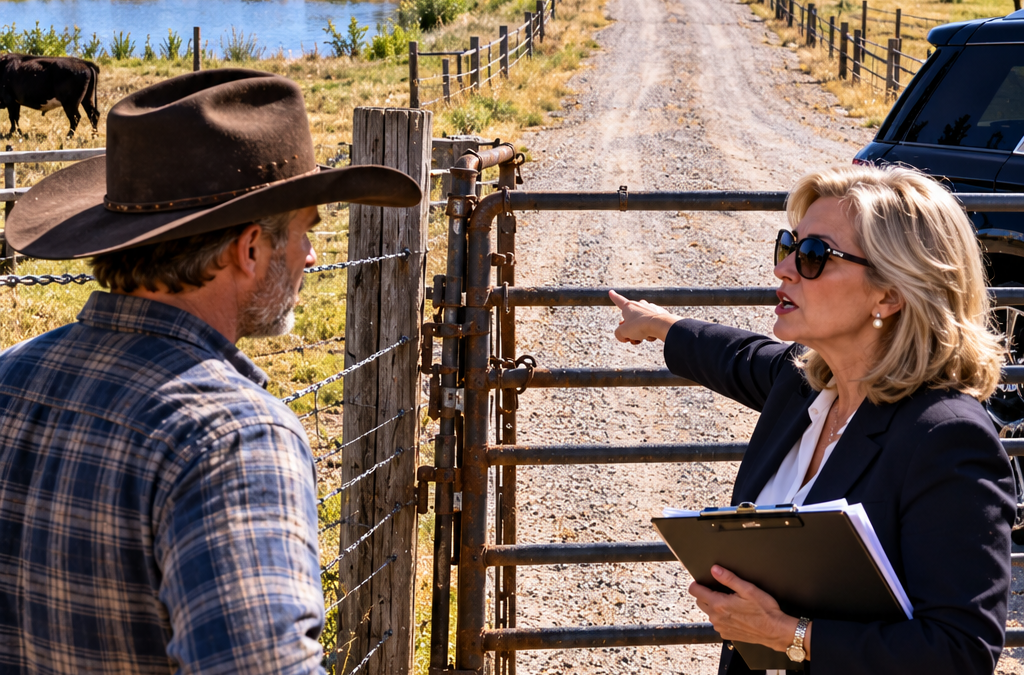
I met her for the first time when she drove onto my property in a black SUV and parked beside one of my gates.
No call.
No appointment.
Nothing.
I was replacing a broken hinge when she stepped out.
“Are you the property owner?”
I looked at the SUV.
Then at her.
“Yes.”
“I’m Linda Mercer. President of the Maple Ridge HOA.”
She said president as though I should recognize the title.
I wiped my hands on my jeans.
“What can I do for you?”
She pointed toward the gravel road.
“We’ve had some concerns about access.”
“What concerns?”
“Your equipment has been obstructing the community road.”
I looked at her.
“The what?”
“The community access road.”
“That isn’t a community road.”
She smiled.
Not warmly.
“It has been treated as shared infrastructure for years.”
“Treated by who?”
“The association. The developer. The residents.”
I leaned against the fence post.
“My family has used that road since before there was an association.”
“That may be true historically.”
“It’s true legally too.”
Linda’s expression tightened.
“The road serves Maple Ridge.”
“That doesn’t make it yours.”
“It makes it essential infrastructure.”
“For your neighborhood.”
“Exactly.”
I almost laughed.
“That still doesn’t make it yours.”
Her posture changed.
Very slightly.
Until then, she had been speaking to me the way someone speaks when they expect agreement.
My refusal seemed to offend her personally.
“The board’s position is that the road is subject to shared access rights.”
“Show me the easement.”
She blinked.
“The what?”
“The easement.”
“I’m sure the association has the documents.”
“Good.”
I nodded toward the subdivision.
“Then bring them.”
She smiled again.
That same tight smile.
“I don’t think this needs to become adversarial.”
“It isn’t.”
“You seem defensive.”
“You drove onto my ranch and called my road community property.”
“Shared infrastructure.”
“Same problem.”
She slipped her sunglasses back on.
“I’ll have the association send you our position in writing.”
“Please do.”
She turned toward her SUV.
Then stopped.
“One more thing.”
“What?”
“The board would appreciate it if you stopped blocking access with agricultural equipment.”
“I move cattle through there.”
“That’s becoming a problem.”
“It’s a ranch.”
“Maple Ridge has over one hundred homes.”
“And I have 1,900 acres.”
Her jaw tightened.
“Population matters too.”
“Not to a deed.”
She got into the SUV.
I watched her leave.
At the time, I thought it was annoying.
Nothing more.
I had dealt with difficult neighbors before.
Property disagreements happen in rural areas.
Fences get built in the wrong place.
Gates get left open.
Roads shift.
People argue.
Usually, somebody pulls out a survey and everybody calms down.
That was what I expected.
Three days later, I received a certified letter.
The envelope carried Maple Ridge HOA letterhead.
Inside was a two-page notice stating that the association claimed historical maintenance and access rights over the gravel road.
The letter demanded that I:
Keep the roadway unobstructed.
Stop using gates that interfered with community access.
Allow the HOA to perform maintenance.
And acknowledge the road as shared community infrastructure.
I read the letter twice.
Then I called the number listed at the bottom.
Linda answered.
Not the management company.
Linda herself.
“Maple Ridge Association.”
“This is the ranch owner.”
There was a pause.
Then her voice cooled.
“Yes.”
“I got your letter.”
“Good.”
“It says you have historical rights to my road.”
“That is correct.”
“Based on what?”
“Decades of established use.”
“Your subdivision is twenty years old.”
“The road predates the subdivision.”
“Yes.”
“My family used it.”
“So did others.”
“Permission is not ownership.”
“That’s your interpretation.”
“No. That’s basic property law.”
She exhaled.
“Look, I don’t think either of us wants this to become expensive.”
That sentence irritated me more than anything else she had said.
“Is that a threat?”
“No.”
“It sounds like one.”
“It’s practical advice.”
“Then here’s mine. Send me the recorded easement.”
“The association’s attorney is reviewing the file.”
“When they find it, send it.”
“You’re being unnecessarily difficult.”
“And you’re claiming rights over land you haven’t proven you have.”
Silence.
Then Linda said:
“We’ll handle this formally.”
She hung up.
The next week, I found orange signs stapled to my fence posts.
COMMUNITY ACCESS ROAD
DO NOT OBSTRUCT
I stood there looking at them.
Stapled to my fence.
On my land.
Without permission.
I felt something inside me harden.
I pulled every sign down.
Then I photographed the staple holes.
That afternoon, Linda called.
“Did you remove association signage?”
“Yes.”
“You had no authority to do that.”
“They were on my fence.”
“The signs concerned a shared road.”
“My fence.”
“You’re escalating this.”
“No, Linda. You stapled signs to someone else’s property.”
“We are trying to protect access for residents.”
“Then prove the access.”
Her voice sharpened.
“This community has used that road for two decades.”
“That does not answer the question.”
“It may be enough.”
That line stayed with me.
It may be enough.
I understood what she meant a few days later.
The lawsuit arrived on my porch.
I had just come in from checking a broken water line when a process server handed me the documents.
Maple Ridge Homeowners Association versus me.
Wrongful denial of established access rights.
Declaratory relief.
Recognition of an easement.
Injunction against interference.
I stood in my kitchen holding the complaint.
My hands were dirty.
My boots were muddy.
There was dried cattle feed on my jacket.
Somewhere in those pages, an HOA board whose subdivision had existed for twenty years was arguing that it had permanent rights over land my family had held for more than sixty.
That was when the situation stopped being irritating.
It became frightening.
Not because I thought they were right.
Because lawsuits do not need to be right to become dangerous.
They need money.
Lawyers.
Time.
And enough uncertainty to make you wonder whether defending yourself will cost more than surrendering.
I hired Denise Harper.
She had handled agricultural land disputes, easements, and development conflicts across the county for years.
She came to the ranch on a rainy Thursday afternoon.
I spread everything across my dining-room table.
The HOA letter.
Pictures of the signs.
The complaint.
My deed.
County maps.
Denise read silently for almost twenty minutes.
Then she looked up.
“What exactly has the road been used for?”
“Ranch traffic mostly. Then Maple Ridge traffic after the development.”
“Did your father ever object?”
“To residents?”
“I don’t know.”
“Did your grandfather?”
“No idea.”
“Did the family ever lock the road?”
“Sometimes.”
“When?”
“Cattle moves. Repairs. Weather.”
“Could subdivision residents still get through?”
“Not always.”
That got her attention.
“Do you have records?”
“What kind?”
“Letters. Complaints. Gate logs. Anything showing interrupted use.”
I shook my head.
“My father didn’t keep a diary every time he shut a gate.”
Denise leaned back.
“The HOA is arguing prescriptive easement.”
“I know the phrase. Explain it anyway.”
“In simple terms, they’re claiming use over time became a legal right.”
“Even without permission?”
“Sometimes especially without formal permission. But the requirements are strict.”
She pulled a legal pad closer.
“Generally, they need to establish use that was open, continuous, and adverse or under a claim of right for the required statutory period.”
“How long?”
“That depends on the claim and specific law, but time is not their only problem.”
“What is?”
“Continuity.”
She tapped the complaint.
“If the use was interrupted, permissive, revoked, or otherwise inconsistent with an adverse claim, their argument weakens significantly.”
“So we need history.”
“We need evidence.”
“How far back?”
“As far as we can find.”
I looked out the window toward the barn.
“My father kept paperwork.”
“Good.”
“My grandfather kept more.”
“Better.”
“I have no idea where any of it is.”
Denise closed the complaint.
“Then we start looking.”
The HOA’s attorney was named Philip Grant.
He was aggressive from the first hearing.
He wore dark suits, spoke with the confidence of a man who believed volume could substitute for uncertainty, and referred to my ranch as “the burdened parcel” so often that I wanted to ask whether he remembered a family actually lived there.
At the preliminary hearing, he told the judge:
“For more than two decades, Maple Ridge residents have relied openly and continuously upon this roadway as the primary means of ingress and egress.”
Primary.
That word caught my attention.
Denise wrote it down.
Philip continued.
“The defendant has tolerated that use for years and only recently attempted to obstruct access.”
I whispered to Denise:
“Tolerated?”
She nodded for me to stay quiet.
Philip went on.
“The HOA seeks merely to preserve the status quo.”
Status quo.
Another phrase I hated.
Their status quo depended on crossing my land.
And somehow I had become the unreasonable one for asking where the legal right came from.
Outside the courthouse, Linda was waiting.
She stood beside Philip.
I tried to walk past.
“Could we speak?”
I stopped.
“What?”
Linda folded her arms.
“This does not need to continue.”
“You sued me.”
“Because you left us no alternative.”
“I asked you for a recorded easement.”
“We have historical use.”
“That is not the same thing.”
“Our attorney disagrees.”
“Of course he does. You’re paying him.”
Philip stepped forward.
“I would suggest you direct legal communications through counsel.”
I looked at him.
“Then tell your client to stop talking to me.”
Linda’s face flushed.
“You could save everyone a great deal of money by signing an access acknowledgment.”
“I could save myself a great deal of land by not signing it.”
“This road does not affect your ranching operation.”
That sentence hit me harder than I expected.
I turned toward her.
“You don’t get to decide what affects my ranch.”
“It crosses one corner.”
“It crosses my corner.”
“Do you understand that families rely on this road?”
“Do you understand that my family owned it before those families bought houses?”
Her expression became cold.
“There are more of us than there are of you.”
I stared at her.
There it was.
The real argument.
Not deed.
Not law.
Numbers.
She believed one rancher could be overwhelmed because one subdivision had more people.
I spoke slowly.
“Ownership is not a vote.”
Then I walked away.
For the next two months, Denise and I searched.
County records.
Plat maps.
Development documents.
Old highway records.
Planning files.
The subdivision’s original approvals.
The HOA’s complaint referenced an old access agreement.
But there was a problem.
Nobody could produce it.
There was no recorded easement in favor of Maple Ridge.
No filing number.
No permanent access grant.
No signed agreement between my family and the developer.
Nothing.
All we found was a road drawn on later development maps.
It entered the subdivision from my property as if someone had simply assumed the legal right already existed.
Denise found that strange.
“Developers usually lock this down.”
“What does that mean?”
“If this were truly the only dependable route they intended to use, I would expect a recorded easement.”
“They never filed one?”
“Not that I can find.”
“Then how did they get the subdivision approved?”
“That is the question.”
She traced the road with her finger.
“Somebody relied on something.”
“What?”
“I don’t know yet.”
The HOA seemed to know more than we did.
That bothered me.
Philip Grant smiled through every hearing.
Linda began acting as if the lawsuit had already been won.
One morning, an HOA maintenance crew appeared near the road with grading equipment.
I drove out.
Linda was standing beside a pickup truck.
“What are they doing?”
“Routine maintenance.”
“Get them off my land.”
She looked at me calmly.
“The road needs grading.”
“You don’t have permission.”
“The association is preserving access during litigation.”
“No.”
A worker shut down the machine.
Linda stepped closer.
“You are under active legal challenge concerning this road.”
“That does not give you ownership while the case is pending.”
“You are interfering with essential infrastructure.”
“Leave.”
Her face tightened.
“Be reasonable.”
“I am.”
I pointed toward the subdivision.
“Leave.”
She stared at me.
Then waved the crew away.
As they pulled out, she said:
“You are going to regret making this harder.”
I looked at her.
“You keep saying things like that.”
“Because you don’t seem to understand the consequences.”
“No, Linda. I understand them very clearly.”
That night I wrote down every word.
The stress was starting to reach me.
I stopped sleeping well.
Every engine near the east pasture made me think the HOA had sent someone else.
Every certified letter made my stomach tighten.
I worried about legal fees.
I worried about losing.
And I hated myself for worrying because the land had been in my family for generations.
Surely that had to matter.
But courts do not decide based on emotion.
They decide on evidence.
And we still did not have enough.
Then my aunt saved the case over dinner.
It was a Sunday.
We were at her house for my cousin’s birthday.
I had been talking to Denise earlier that afternoon, so the lawsuit was on my mind.
My aunt asked:
“Any progress?”
“Not enough.”
“What are you looking for?”
“Anything showing Dad or Grandpa interrupted public use of that road.”
She frowned.
“Your grandfather kept everything.”
“I know.”
“No. I mean everything.”
“I’ve looked through the house.”
“Not the house.”
She pointed at me with her fork.
“The old filing cabinet.”
“What filing cabinet?”
“In the barn office.”
I stared at her.
“That rusted gray thing?”
“Yes.”
“Nobody has opened that in years.”
“Your grandfather used it.”
“For cattle records.”
“For everything.”
She leaned back.
“I remember him complaining that your father wanted to throw papers away.”
I smiled despite myself.
“That sounds like Grandpa.”
“He labeled folders by hand.”
A memory surfaced.
Gray cabinet.
Bottom drawer that stuck in humid weather.
My grandfather cursing at it.
I left dinner early.
The barn office smelled exactly the way I remembered.
Dust.
Old paper.
Machine oil.
Dry wood.
The cabinet sat behind a broken chair and two boxes of veterinary supplies.
Gray metal.
Dented corner.
Rust around the base.
The top drawer opened.
Tax receipts.
Cattle sale records.
Feed invoices.
The second drawer stuck.
I pulled harder.
It groaned open.
Old contracts.
Insurance.
Letters.
Nothing obvious.
The bottom drawer barely moved.
I kicked the side.
Pulled again.
Finally it opened three inches.
I reached inside and started removing files.
1950s.
1960s.
1970s.
Most were things nobody would ever need again.
Then I saw my grandfather’s handwriting.
RIGHT OF WAY – REVOCABLE – 1952.
I froze.
My grandfather had not owned the entire ranch yet in 1952, but his father had, and he had later retained the family records when title passed down.
I pulled the folder out.
The paper inside was yellowed.
The first document was an agreement.
Signed.
County seal.
Dated 1952.
It granted temporary and revocable permission for county and local agricultural traffic to cross what would later become the disputed road.
I read the word revocable three times.
Then I called Denise.
It was after nine.
She answered on the fourth ring.
“This better be good.”
“I found something.”
“How good?”
“1952 right-of-way agreement.”
Silence.
“Say that again.”
“Temporary. Revocable.”
“What exactly does it say?”
I read the critical language.
Denise became completely quiet.
Then she asked:
“What else is in the folder?”
I kept digging.
Maintenance correspondence.
A county notice.
A map.
Then a letter dated 1978.
From my father.
Addressed to the county.
Formal notice revoking permission for outside traffic following a dispute with a neighboring rancher.
Requesting closure to nonauthorized use.
There was a county receipt stamped on the copy.
I stopped breathing.
“Denise.”
“What?”
“There’s a revocation.”
“What year?”
“1978.”
Another silence.
“Do not lose that paper.”
“I’m holding it.”
“Put it somewhere safe.”
“Denise.”
“Yes?”
“Does this kill their claim?”
“I need to read everything.”
“Does it?”
Her voice changed.
For the first time since the lawsuit started, she sounded excited.
“If it says what you’re telling me it says, this could be the whole case.”
She came to the ranch the next morning.
We spread the folder across the dining-room table.
She read the 1952 agreement carefully.
Then the 1978 letter.
Then the county receipt.
Then she looked at me.
“This is enormous.”
“Why?”
“The HOA has been presenting the road as if its use developed independently over time.”
“It didn’t.”
“No.”
She tapped the 1952 agreement.
“The original use was permissive.”
“Revocable permission.”
“Exactly.”
Then the 1978 letter.
“And permission was revoked.”
“Twenty-five years before Maple Ridge was built.”
She nodded.
“Their continuity argument just got very complicated.”
I felt relief rise.
Then Denise held up a hand.
“Do not celebrate yet.”
“Why?”
“They’ll argue later use created a new prescriptive period.”
“Can they?”
“They can argue anything. The issue becomes whether post-1978 use met every requirement.”
“But the developer thought the old agreement was active.”
Denise stopped.
“What?”
“The subdivision maps reference old access.”
She stared at the file.
Then at me.
“If the developer relied on the 1952 permission, that matters.”
“Because?”
“Because their own theory may be based on permission, not adverse use.”
She smiled.
Not a big smile.
A dangerous one.
“Now I want the developer’s records.”
Discovery changed after that.
We subpoenaed old development files.
Engineering reports.
County infrastructure correspondence.
Planning documents.
And that was where we found the second problem.
A much bigger one.
The old gravel road was not merely convenient access.
It was the subdivision’s only legally recognized practical route connecting directly to the county road network at the time of development.
There were secondary dirt routes through neighboring areas, but no comparable permanent access.
Some had never been dedicated for normal subdivision traffic.
Others were narrow service roads.
The developer had built Maple Ridge assuming the ranch road would remain available.
Assuming.
That word appeared again and again.
Assumed existing right-of-way.
Assumed continuing access.
Assumed historical route.
No recorded permanent easement.
No new agreement with my father.
No agreement with me.
They had built an entire neighborhood around an assumption.
When Denise showed me the development memo, I thought she was joking.
“They never verified it?”
“Apparently not.”
“How does somebody build a subdivision without verifying access?”
“Usually they do.”
“And nobody caught this?”
“Apparently they thought the 1952 document solved it.”
“The one Dad revoked in 1978.”
“Yes.”
I sat back.
“What happens if we win?”
Denise gave me a long look.
“You understand what this road means now?”
“It’s their entrance.”
“It’s more than that.”
She pointed at the infrastructure map.
“It is the access their entire internal road plan depends on.”
“So if there is no easement—”
“They may have a serious problem.”
That was the moment the balance shifted.
Linda did not know yet.
At least I do not think she did.
She was still sending aggressive letters.
Still talking about community rights.
Still telling residents that I was trying to “cut off a neighborhood.”
Word had spread by then.
A man from Maple Ridge stopped me at a gas station.
“You the rancher fighting the HOA?”
“I guess.”
“My wife says you’re trying to gate the road.”
“Your HOA sued me.”
“That doesn’t answer the question.”
“No, I wasn’t trying to gate anything before they sued me.”
“Before?”
He looked nervous.
I said nothing else.
I did not want residents to suffer.
That mattered.
Those homeowners had bought houses believing access was secure.
Most had nothing to do with Linda’s lawsuit.
They went to work.
Raised kids.
Paid mortgages.
They were not my enemy.
But their board had made my land the subject of litigation.
And there is a point where being kind does not mean surrendering legal rights.
Trial arrived almost nine months after the lawsuit had been filed.
I barely slept the night before.
I went to the barn around four in the morning.
The ranch was dark.
Cold.
Quiet.
I stood outside the office holding a cup of coffee.
That filing cabinet sat behind the wall.
I thought about my grandfather.
He had probably placed that folder there without imagining anyone would need it seventy years later.
Maybe he kept it because he kept everything.
Maybe he understood exactly how important revocable meant.
I wished I could ask him.
My father too.
I had spent months feeling alone against an HOA, a law firm, a development history, and a neighborhood full of people using that road.
But standing there, I realized I was not alone.
My family had been documenting ownership for generations.
I was just the one alive when someone finally challenged it.
At court, the HOA arrived with Linda, three other board members, Philip Grant, another attorney, and boxes of exhibits.
Linda wore a dark blue suit.
She looked confident.
She saw me in the hallway and smiled.
“Last chance.”
I almost laughed.
“For what?”
“To resolve this reasonably.”
“You sued me.”
“You can still sign the access agreement.”
“On your terms.”
“On community terms.”
“There’s no such thing.”
Her smile faded.
“One family should not be able to disrupt more than a hundred.”
I looked at her.
“This case was never about one family versus a hundred.”
“That is exactly what it is.”
“No.”
I nodded toward the courtroom.
“It’s about whether you own a right you never bought.”
Philip approached.
“We’re starting.”
Linda walked away.
Denise leaned toward me.
“Do not engage with her anymore.”
“Gladly.”
The HOA presented first.
Philip was good.
I will give him that.
He described the history of the road.
Residents using it for twenty years.
School buses.
Emergency services.
Delivery vehicles.
Utility contractors.
He described Maple Ridge as a stable residential community that had relied continuously on access.
Then he described me.
The tone changed.
I became the unreasonable ranch owner.
The man who suddenly decided to challenge a long-established arrangement.
The man threatening to inconvenience families.
He used the phrase “historical community reliance” repeatedly.
Then he called Linda.
She testified that the HOA had maintained portions of the road.
That residents had always treated it as shared infrastructure.
That the association had believed access rights were well established.
Philip asked:
“Before this dispute, had the defendant ever informed the HOA that community access was unlawful?”
Linda looked toward me.
“No.”
That sounded damaging.
Then Denise cross-examined her.
“Mrs. Mercer, when did Maple Ridge acquire a recorded easement across my client’s ranch?”
Linda paused.
“My understanding is that the right predates the subdivision.”
“That was not my question.”
Philip objected.
The judge allowed the question.
Denise repeated it.
“When did Maple Ridge acquire a recorded easement?”
Linda looked at Philip.
“I don’t know the filing date.”
“Have you ever seen a recorded easement naming Maple Ridge HOA?”
“I’ve seen historical access documents.”
“That wasn’t my question.”
Linda’s confidence began to weaken.
“I don’t recall.”
“So the answer is no?”
“I wouldn’t characterize it that way.”
Denise held up the original complaint.
“Your HOA sued my client claiming established access rights.”
“Yes.”
“You personally signed the board authorization for that lawsuit?”
“Yes.”
“Before voting to sue, did you verify that a permanent easement existed?”
“We relied on counsel and historical records.”
“Which recorded document?”
Linda’s jaw tightened.
“I’m not a title attorney.”
“No. But you are the board president who told my client the road belonged to the community.”
“I said it was shared infrastructure.”
“Based on what?”
“Decades of use.”
Denise nodded.
“Thank you.”
Then came the 1952 agreement.
Denise put the scanned document on the courtroom display.
Even from my seat, I could see my grandfather’s family name.
The paper looked fragile.
The words were not.
TEMPORARY.
REVOCABLE.
PERMISSION.
Denise walked the judge through the history.
The road had not begun as adverse community use.
It began under explicit permission.
Then she displayed the 1978 revocation letter.
Formal notice.
Receipt.
County acknowledgment.
“The permission was cancelled,” Denise said.
Philip objected to her characterization.
The judge read the letter herself.
Then Denise called a county records custodian.
The custodian verified the documents.
The HOA’s narrative began to come apart.
Philip argued that even if the original permission had been revoked, later open use by subdivision residents created a separate prescriptive right.
Denise was ready.
She introduced development records.
Old planning correspondence.
Engineering notes.
The developer’s own files repeatedly referenced historical road access.
Not hostile use.
Not new adverse possession.
Existing access assumed to remain valid.
Then she called the developer.
His name was Thomas Baird.
He was older now.
Retired.
He looked uncomfortable from the moment he sat down.
Denise asked:
“When Maple Ridge was designed in 2002 and 2003, what document did your company rely upon for access across the ranch?”
Thomas shifted.
“The historical right-of-way.”
“Which historical right-of-way?”
“The county access document.”
“From 1952?”
“Yes.”
“Did your company obtain a new permanent easement from the landowner?”
“I believed one already existed.”
“That was not my question.”
“No.”
“Did you negotiate an access agreement with my client’s father?”
“No.”
“With my client?”
“No.”
“Did you record a permanent easement in favor of Maple Ridge?”
“No.”
The courtroom felt completely different from how it had an hour earlier.
Denise placed the 1978 letter in front of him.
“Had you seen this when you developed Maple Ridge?”
Thomas stared at it.
“No.”
“Were you aware the 1952 permission had been revoked twenty-five years before your subdivision was built?”
“No.”
“Would that information have affected the project’s access planning?”
Philip objected.
The judge allowed an answer within Thomas’s expertise.
He swallowed.
“Yes.”
That single word changed everything.
Denise was not finished.
She displayed the original infrastructure plan.
The road across my ranch.
The Maple Ridge entrance.
The secondary service routes.
“Was this ranch road the primary legal access your company relied upon for the subdivision?”
“Yes.”
“Did you verify the underlying right-of-way was still valid?”
Thomas looked miserable.
“I believed our consultants had.”
“Did you personally verify it?”
“No.”
“Do you know of any permanent easement ever recorded after the 1978 revocation?”
“No.”
Denise sat down.
Philip spent nearly an hour trying to repair the damage.
He argued long-term reliance.
Equitable considerations.
Modern use.
The burden on residents.
Community necessity.
Some of what he said mattered.
I understood that.
Courts do not ignore decades of real-world reliance casually.
But necessity does not magically create a deed.
And inconvenience does not automatically erase revoked permission.
Then Denise gave our final argument.
She did not make it emotional.
That surprised me.
She barely mentioned my grandfather.
Barely mentioned my father.
She focused on documents.
Permission existed in 1952.
That permission was explicitly revocable.
It was revoked in 1978.
The developer later assumed it remained active.
No permanent easement was recorded.
The HOA inherited the assumption.
Then, decades later, instead of verifying that assumption, it sued the owner and demanded permanent control.
She finished with a sentence I will never forget.
“Reliance upon a mistake does not transform that mistake into title.”
The judge called a recess.
Linda stood immediately.
Her face was tight.
Philip pulled her toward a corner.
The other board members gathered around.
I remained seated.
Denise looked at me.
“How are you feeling?”
“Like I’m about to be sick.”
“That’s normal.”
“Did it go well?”
“Yes.”
“Are we winning?”
She gave me a look.
“I don’t answer that question before a ruling.”
“Worth trying.”
She smiled.
“Drink some water.”
When the judge returned, the room went silent.
She started with the history.
The court found the 1952 right-of-way to have been permissive and revocable.
The 1978 letter effectively terminated that permission.
The HOA had not produced a valid permanent recorded easement created afterward.
Its prescriptive claim failed based on the evidence presented concerning the nature and interruption of the asserted use.
The association’s lawsuit was dismissed.
I closed my eyes for one second.
Then the judge addressed our counterclaim.
Unauthorized access across the ranch was not automatically guaranteed merely because Maple Ridge had relied on it.
Any continued use required lawful permission or another legally established right.
The road remained on my property.
The HOA could not force me to keep it open under the theory they had sued upon.
Philip stopped writing.
Linda’s face went completely blank.
I looked at Denise.
She did not smile.
Not yet.
The judge finished.
Court adjourned.
People began moving.
I stayed seated.
Months of tension were still sitting in my body.
Denise touched my shoulder.
“You can breathe.”
I laughed once.
“I forgot.”
Outside, Linda came toward us.
Philip tried to stop her.
She ignored him.
“You can’t close that road.”
I looked at her.
“The judge just said I can control access.”
“You’ll strand families.”
“No.”
“You heard the testimony.”
“I did.”
“Emergency vehicles use that road.”
“Then maybe your board should have checked whether you owned the access before suing the man who did.”
Her face reddened.
“This is vindictive.”
“What was suing me?”
“We were protecting the community.”
“You were trying to take a property right without proving you had one.”
“We had twenty years of reliance.”
“You had twenty years of assumption.”
She stepped closer.
“You think this makes you powerful?”
“No.”
I looked back toward the courthouse.
“I think it makes the deed accurate.”
For once, Linda had nothing to say.
A week later, I installed a gate.
I did not do it because I wanted residents trapped.
I did it because if the court had just confirmed I controlled access and I immediately allowed unrestricted use exactly as before, I risked recreating the same problem.
Denise agreed.
“Control needs to be clear.”
So we installed a heavy ranch gate entirely within my property line.
We posted:
PRIVATE PROPERTY
NO PUBLIC ACCESS WITHOUT PERMISSION
The reaction was immediate.
Maple Ridge residents woke up to a road they had used for twenty years suddenly closed.
School commutes became longer.
Delivery vehicles rerouted.
Residents used secondary roads that added as much as forty-five minutes depending on destination and conditions.
Emergency services had to coordinate alternate access while the legal situation was addressed.
I hated that part.
I genuinely did.
The people living there had not caused the original title error.
Most had never even heard of the 1952 agreement.
They bought homes assuming roads were roads.
But the HOA had made the issue impossible to ignore.
The next board meeting was packed.
I did not attend.
A neighbor recorded it and sent me part of the audio.
Residents were furious.
One man demanded:
“How do you build a hundred homes without securing an easement?”
Linda answered:
“The board relied on historical representations.”
A woman yelled back:
“Why didn’t you verify them before spending our dues suing the owner?”
Someone else shouted:
“You told us he was stealing community property.”
Another:
“Now I need forty-five extra minutes to get to work.”
Linda tried to restore order.
It did not work.
Her authority had always depended on certainty.
Now everyone knew the certainty had been false.
Two days later, Philip called Denise.
“They want to negotiate.”
I was standing near the barn when Denise told me.
“Of course they do.”
“What do you want?”
I looked toward the road.
Part of me wanted to say nothing.
Let them solve it themselves.
They had sued me.
Called me unreasonable.
Stapled signs to my fence.
Sent workers onto my land.
Tried to turn decades of convenience into permanent legal control.
Why should I help them?
Then I thought about the families.
Kids going to school.
Ambulances.
Older residents.
People whose biggest mistake had been trusting the documents that came with their homes.
“I’ll negotiate.”
Denise nodded.
“Terms?”
“Paid access.”
“How much?”
“Fair amount. Not punitive.”
“What else?”
“Written agreement.”
“Obviously.”
“Recorded.”
“Yes.”
“Road stays mine.”
“Absolutely.”
“HOA acknowledges no ownership.”
“Yes.”
“They maintain it at their expense.”
“Reasonable.”
“Damage from their use gets repaired.”
“Good.”
“And the agreement can’t quietly become permanent ownership later.”
“That’s my job.”
Negotiations took six weeks.
Linda hated every meeting.
The first time we sat across from each other, she pushed the proposed agreement away.
“Annual payment is unnecessary.”
“Then don’t use the road.”
Her face tightened.
“The neighborhood has no practical alternative.”
“That sounds like value.”
“It sounds like coercion.”
I leaned back.
“Linda, you sued me asking a court to give you permanent rights for nothing.”
“We believed those rights already existed.”
“You were wrong.”
“You don’t need the road exclusively.”
“That isn’t relevant.”
“Residents have relied on it for decades.”
“And I’m offering access.”
“For money.”
“Yes.”
She laughed sharply.
“You’ve been waiting for this.”
“No.”
I looked at Denise.
Then back at Linda.
“I was waiting to be left alone.”
She went quiet.
I continued.
“If your board had come to me five years ago and said, ‘We discovered a title problem. Can we negotiate an easement?’ we probably would have solved it over coffee.”
Linda said nothing.
“Instead, you told me it was already yours.”
Still nothing.
“You stapled signs to my fence.”
She looked away.
“You sent maintenance crews without permission.”
Her lawyer shifted in his chair.
“And then you sued me.”
I slid the agreement back toward her.
“So no, Linda. You do not get free permanent access now because asking politely suddenly became convenient.”
The final agreement gave Maple Ridge limited access across the road.
The HOA paid an annual fee.
They assumed maintenance responsibilities subject to standards protecting the ranch.
They could not widen the road without permission.
Could not install new utilities.
Could not expand use.
Could not claim ownership.
Could not transfer the access beyond defined community purposes.
Emergency provisions were included.
So were insurance and indemnification clauses.
Most importantly, the agreement said in language even Linda could not reinterpret:
The underlying land and roadway remained my property.
The HOA received access.
Nothing more.
The gate reopened after the documents were signed and recorded.
Residents could use the road again.
Deliveries returned.
Commutes returned to normal.
The anger inside Maple Ridge did not disappear so quickly.
People started requesting financial records.
They wanted to know how much the lawsuit had cost.
Why the board had approved it.
What legal advice had been received.
Whether Linda had been warned that no permanent easement existed.
I later learned that one board member had raised concerns before the lawsuit.
Linda had pushed forward anyway.
She believed the ranch would surrender.
That one rancher would not spend the money to defend 1,900 acres against an HOA with more than a hundred dues-paying households.
She had miscalculated.
Badly.
Linda remained president for only a few months after the settlement.
At the next election, she lost.
Not narrowly.
One of my neighbors in Maple Ridge told me afterward:
“She got crushed.”
I did not celebrate.
I had never wanted control of their board.
I just wanted their board to stop pretending it controlled me.
The new HOA president called me two weeks after taking office.
His name was David Morgan.
“Can we meet?”
“For what?”
“I’d like to start over.”
That surprised me.
He came to the ranch alone.
No lawyer.
No binder.
No threatening letters.
We sat on the porch with coffee.
He looked across the pasture.
“Beautiful place.”
“Thank you.”
“I owe you an apology.”
“You?”
“The association.”
“That’s different.”
“I’m speaking for the association.”
I waited.
“We should never have filed the lawsuit without verifying title.”
“No.”
“We should never have put signs on your fence.”
“No.”
“We should never have sent maintenance crews across without permission.”
“No.”
He smiled faintly.
“You’re going to make me say all of it?”
“You came here.”
“Fair enough.”
He took a drink of coffee.
“Linda convinced the board you were bluffing.”
“I wasn’t.”
“We know.”
For the first time in months, I laughed about the situation.
David continued.
“I reviewed the development file.”
“And?”
“I still can’t believe nobody caught the 1978 letter.”
“Nobody looked in my barn.”
“I mean during development.”
“So do I.”
He shook his head.
“A subdivision built on an assumption.”
“Expensive assumption.”
“Very.”
After that, relations improved.
The HOA paid on time.
The road was maintained.
Nobody stapled anything to my fence.
If work crews needed access beyond the written agreement, they called.
Imagine that.
A phone call.
Permission.
Basic respect.
The ranch returned to normal.
I went back to worrying about real problems.
Cattle prices.
Water.
Fence repairs.
Weather.
Things that did not arrive on law-firm letterhead.
But I could not stop thinking about that filing cabinet.
One afternoon, I went back to the barn office and cleaned it out properly.
I did not throw anything away without reading it.
That took days.
My grandfather really had kept everything.
Receipts for equipment that had been scrapped before I was born.
Handwritten pasture notes.
Old veterinary invoices.
Letters from neighbors.
Contracts.
Maps.
I found one note on the back of a feed invoice in his handwriting.
KEEP COPIES. PEOPLE FORGET.
I sat there holding it.
Maybe he was talking about cattle sales.
Maybe taxes.
Maybe nothing important.
Still, it felt like he was speaking directly across time.
People forget.
Records do not.
That was what saved the ranch.
Not luck alone.
Not a dramatic courtroom speech.
A document.
A revoked permission.
A receipt proving the county received it.
A man in 1978 taking ten minutes to put something in writing instead of assuming everybody would remember.
If my father had only made a phone call, we might have lost.
If my grandfather had thrown out the folder, we might have lost.
If my aunt had not remembered the filing cabinet, we might have lost.
That part still bothers me.
The truth can exist and still be useless if nobody can prove it.
Maple Ridge’s case depended on people forgetting the difference between use and right.
Residents had used the road for twenty years.
That was true.
The developer had relied on it.
True.
The HOA had maintained parts of it.
Also true.
But none of those facts answered the fundamental question.
What gave them permanent legal authority over my land?
Linda never wanted to answer that question because she preferred a different one:
Who needs the road more?
She believed necessity created entitlement.
It did not.
She believed numbers created authority.
They did not.
She believed twenty years of confidence could erase a revoked agreement sitting in a barn.
It could not.
Months after everything ended, I ran into Thomas Baird, the retired developer, at a hardware store.
He recognized me.
I recognized him.
We stood awkwardly near the plumbing aisle.
Finally, he said:
“I’m sorry.”
I did not know what to say.
He continued.
“I should’ve checked.”
“Yes.”
“I thought the title people had.”
“I know.”
“I never saw the revocation.”
“I believe you.”
He looked genuinely ashamed.
“Do you know what scares me?”
“What?”
“If your family hadn’t kept that letter, nobody would’ve known.”
I nodded.
“That scares me too.”
He looked down at the package in his hand.
“We built houses for families on an assumption.”
“And nobody questioned it for twenty years.”
He shook his head.
“I should have.”
Maybe I should have been angrier with him.
I was not.
Unlike Linda, he admitted what happened.
There is a difference between making a mistake and weaponizing one.
The developer made an assumption.
The HOA turned that assumption into a lawsuit.
Linda was shown uncertainty and chose aggression.
That was what I could not forgive easily.
She came to my fence without proof.
Called my road community infrastructure.
Put up signs.
Sent crews.
Then sued me.
Every step was designed to make resistance feel unreasonable.
You’re only one person.
There are more of us.
People rely on this.
Why make things difficult?
Why not cooperate?
Those arguments sound persuasive until you realize what cooperation requires.
Giving away a right that belongs to you.
That road is still there today.
Same gravel.
Same dust in summer.
Same muddy ruts after heavy rain.
My cattle trucks use it.
Maple Ridge residents use it under the agreement.
Every year, the association sends the access payment.
It arrives with a statement referencing the recorded agreement.
I keep every one.
Of course I do.
The gate remains.
Usually open.
Sometimes closed when ranch operations require it.
There is a small sign beside it now.
PRIVATE ROAD
AUTHORIZED ACCESS ONLY
No giant warning.
No hostility.
Just accuracy.
The first time Linda drove through after the agreement was signed, I happened to be repairing a fence nearby.
She slowed.
For a second, I thought she might stop.
She did.
Her window came down.
Neither of us spoke at first.
Then she said:
“You got what you wanted.”
I leaned on the fence post.
“No.”
Her expression tightened.
“You’re being paid for the road.”
“That wasn’t what I wanted.”
“What did you want?”
“For you to ask.”
She stared at me.
“That’s it?”
“That was always it.”
“You would have agreed?”
“Probably.”
She shook her head as if she did not believe me.
“You expect me to believe you would’ve given access without a fight?”
“You never gave me the chance.”
She looked toward the gate.
“I was protecting people.”
“You were protecting your authority.”
“That’s unfair.”
“You sued me before you verified your own paperwork.”
Her jaw tightened.
I continued.
“You kept saying the road belonged to the community.”
“It serves the community.”
“Those are different sentences.”
She looked at me for another moment.
Then rolled up the window and drove away.
That was the last conversation we ever had.
She sold her house the following year.
I heard she moved several counties away.
People occasionally tell me her reputation in Maple Ridge never recovered.
I am not surprised.
Residents could forgive an old developer’s mistake.
What they had trouble forgiving was a president who spent their dues suing over a right she had never verified and then left them facing loss of the only practical road they had depended upon for decades.
The board did not lose trust because I embarrassed Linda.
Linda lost trust because the facts embarrassed her.
That distinction matters.
Looking back, the hardest part of the entire experience was not the trial.
It was the months before we found the folder.
That was when I doubted myself.
I knew the ranch was mine.
I knew there was no easement I had ever signed.
But I also knew hundreds of people had used that road for years.
Courts can recognize rights created by history.
Denise never lied to me about the risk.
Every time I asked, “Can they actually win?” she answered the same way.
“They can.”
I hated that answer.
But it made me careful.
It made me search.
It made me resist the temptation to assume family ownership automatically meant every legal issue was simple.
Linda made the opposite mistake.
She assumed use meant right.
I learned to verify.
That difference decided everything.
People sometimes describe what happened by saying:
“The HOA sued him and lost their road.”
That makes it sound like revenge.
The reality was more complicated.
I never wanted Maple Ridge to lose access.
I wanted my property rights recognized.
Once they were, I was willing to negotiate.
But negotiation only works when both sides understand what each side owns.
Before the trial, Linda did not negotiate.
She dictated.
After the trial, the HOA finally had to ask.
That was the real change.
My grandfather used to say a fence is not there to start a fight.
It is there so nobody has to argue about where one thing ends and another begins.
I did not understand that as a kid.
I do now.
Boundaries are not hostility.
Deeds are not selfishness.
Asking for permission is not humiliation.
Those things prevent conflict.
The HOA treated my boundary like an insult.
That is what caused the war.
Several years have passed now.
The ranch still belongs to me.
All 1,900 acres.
The creek still runs after good rain.
Cattle still gather near the south pasture in the evening.
The barn office still smells like dust and machine oil.
And the old gray filing cabinet is still there.
I had it cleaned up.
Repaired the bottom drawer.
Put new folders inside.
The 1952 agreement and 1978 revocation are no longer stored there.
Those are in a fireproof safe now.
Copies sit with my attorney.
Another set is stored digitally.
I learned that lesson.
My family almost lost control of a piece of land because the only evidence protecting it spent decades beneath cattle receipts.
It will not happen again.
Sometimes I open the safe and look at my father’s letter.
The language is plain.
Nothing dramatic.
He did not write it expecting a lawsuit forty-five years later.
He simply wanted to make clear that outside traffic no longer had permission to use the road.
He signed his name.
Sent it.
Saved the receipt.
That was all.
Yet that simple act spoke louder in court than every HOA newsletter, every board claim, every lawyer’s argument, and twenty years of assumptions.
Linda had a subdivision.
A board.
A law firm.
More than a hundred homeowners behind her.
I had an old ranch, one attorney, and a folder my family almost forgot existed.
But property disputes do not care who arrives with the bigger crowd.
They care about rights.
And when the judge finally looked past all the noise, the answer had been sitting in that dusty cabinet the entire time.
My family had given permission once.
My father had taken it back.
Everything after that was built on somebody else failing to notice.
The HOA thought it could turn that failure into ownership.
It could not.
And every time I drive through that gate now, I remember the lesson Linda never learned until it cost her board everything it had assumed was secure.
A road can look public.
A neighborhood can depend on it.
Hundreds of people can use it for years.
But before you tell a landowner what you control, you had better know what the paper says.
Because sometimes the oldest document on the property is still the one with the final word.

