𝗙𝗨𝗟𝗟 𝗦𝗧𝗢𝗥𝗬 Someone in Pinewood Estates Had Decided My Daughter Was Something the Neighborhood Needed to Hide
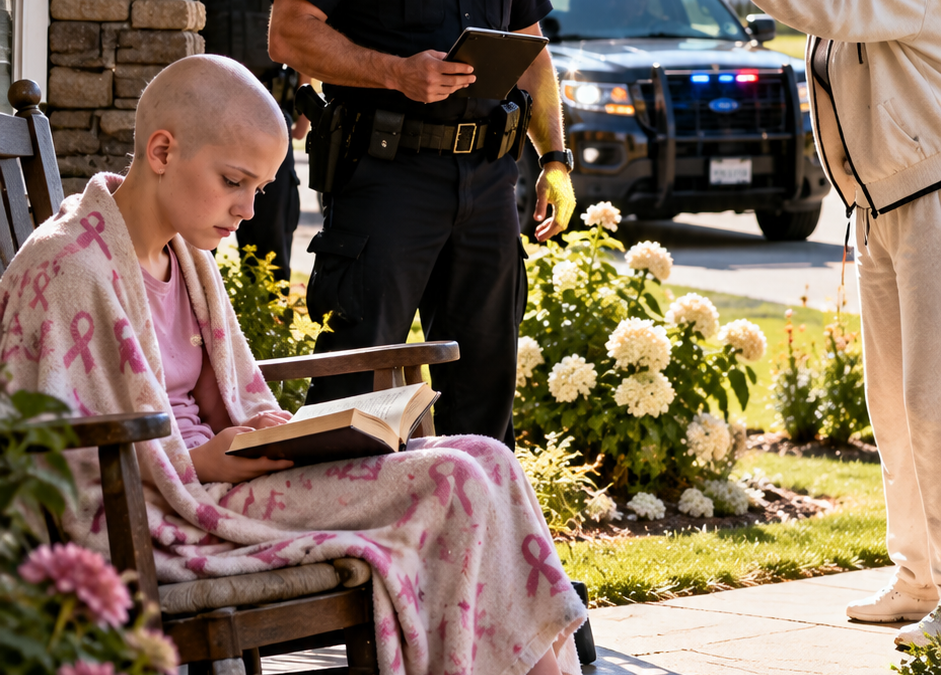
𝗙𝗨𝗟𝗟 𝗦𝗧𝗢𝗥𝗬
And somehow still capable of making jokes during chemotherapy.
We bought the house in Pinewood Estates because after months of hospitals, we wanted stability.
That word had become precious.
Stability.
A bedroom Lily could decorate.
A backyard.
A quiet street.
A school district we trusted.
A front porch where Rachel could drink coffee in the morning.
A place that did not smell like medicine.
Pinewood Estates looked almost embarrassingly perfect when we first drove through it.
Trimmed lawns.
Brick driveways.
Maple trees lining sidewalks.
Little American flags beside porch columns.
A swimming pool near the clubhouse.
A pond with a walking trail.
The houses were close enough that children could know one another but far enough apart that nobody had to hear every conversation next door.
We had saved for years.
Cancer had changed the financial picture dramatically, but we still managed it.
I remember signing the final paperwork and thinking we had bought something more important than a house.
We had bought Lily a place to feel ordinary again.
For about three weeks, that seemed possible.
Then the note appeared.
I found it under the windshield wiper of Rachel’s car.
Typed.
No signature.
One paragraph.
I read it standing in the driveway.
Then read it again because I could not believe I had understood the first time.
It said:
The appearance of certain residents is affecting property values and the aesthetic standards of Pinewood Estates. Please be mindful of HOA guidelines regarding public presentation.
I carried it inside.
Rachel was making tea.
“What’s that?”
I handed it to her.
She read it once.
Then again.
Her eyes lifted slowly.
For ten full seconds, neither of us said anything.
Finally she asked, “Is this about Lily?”
“I don’t know.”
She looked toward the living room.
Lily was lying on the sofa with a blanket over her legs, watching a documentary about Mars.
Rachel lowered her voice.
“Who writes something like this?”
That was the question.
Who sees a sick child and thinks aesthetics?
Who sees chemotherapy and thinks property values?
I wanted to believe we were misunderstanding.
Maybe the note referred to something else.
Maybe somebody had left it on the wrong car.
Maybe “appearance” meant landscaping.
I had spent enough years investigating people to know that assuming motive too early was dangerous.
So I folded the note.
Put it into an envelope.
Wrote the date on the front.
And waited.
We did not have to wait long.
Her name was Brenda Collier.
She was in her fifties.
Recently retired.
Treasurer of the Pinewood Estates HOA for six years.
And, according to several neighbors who eventually spoke to us, someone who had gradually confused being elected to a board with being granted jurisdiction over everybody’s life.
Brenda did not introduce herself when we moved in.
No welcome basket.
No handshake.
No “nice to meet you.”
Her introduction came by certified mail.
The envelope carried the Pinewood Estates HOA letterhead.
Inside was a formal complaint.
It specifically referenced our address.
And Lily.
The language was so sterile that it somehow felt crueler.
Visually disruptive presence inconsistent with neighborhood aesthetics.
I read the line three times.
My twelve-year-old daughter.
Visually disruptive.
Rachel took the paper from my hand.
Her face turned red.
“I’m going over there.”
“No.”
“Daniel.”
“Not yet.”
“She is writing complaints about our daughter.”
“I know.”
“Our daughter has cancer.”
“I know.”
“And you want to wait?”
“Yes.”
Rachel stared at me like she could not believe those words had come from my mouth.
I understood her anger.
I felt it too.
Maybe more.
But anger and action are not the same thing.
Seventeen years in law enforcement had taught me something useful about people who believed they were untouchable.
You rarely have to expose them.
You usually have to give them enough room to expose themselves.
“Let her keep talking,” I said.
Rachel shook her head.
“She already said enough.”
“Maybe.”
“What more do you need?”
“A pattern.”
“This isn’t a case.”
“No.”
I looked toward Lily’s room.
“That’s why I need to be careful.”
I did not want my daughter’s illness turned into neighborhood warfare.
I did not want to become the angry police detective who frightened an HOA board into silence.
I wanted the facts clean.
Documented.
Undeniable.
Three days later, Brenda knocked on our door.
Rachel answered.
I was in the kitchen.
Close enough to hear.
Brenda wore a Pinewood Estates HOA polo shirt.
There was something almost absurd about it.
Blue fabric.
Embroidered logo.
A little badge-shaped name tag.
As though lawn enforcement required a uniform.
“Mrs. Mercer?”
“Yes.”
“I just wanted to stop by personally.”
“How thoughtful.”
I heard the edge in Rachel’s voice.
Brenda ignored it.
“There seems to be some confusion regarding our community standards.”
“There’s no confusion.”
“Well, the board has received concerns.”
“About my daughter having cancer?”
“I did not say cancer.”
“You wrote ‘visually disruptive presence.’”
Brenda paused.
“The language was not intended to be insensitive.”
“What was it intended to mean?”
Another pause.
I stepped closer to the kitchen doorway but stayed out of sight.
Brenda lowered her voice into the tone people use when they want cruelty to sound reasonable.
“Pinewood Estates maintains certain presentation standards. Families move here expecting a specific environment.”
Rachel said nothing.
Brenda continued.
“I understand your daughter has been ill.”
“She has leukemia.”
“Yes.”
“She has spent eight months in chemotherapy.”
“I’m very sorry.”
“She lost her hair because of that chemotherapy.”
“I understand.”
“No, I don’t think you do.”
Brenda’s voice became cooler.
“I am trying to find a solution that avoids unnecessary conflict.”
“To what?”
“Perhaps Lily could spend more time in the backyard.”
Silence.
Even from the kitchen, I could feel the temperature change.
Rachel said very quietly, “Excuse me?”
“For everyone’s comfort.”
I set my coffee mug on the counter.
Carefully.
Very carefully.
Because for the first time in years, I was afraid I might throw something if I kept holding it.
Rachel’s voice remained controlled.
“You are asking my twelve-year-old daughter to hide in the backyard because chemotherapy made her bald.”
“That is not how I phrased it.”
“That is exactly what you said.”
“I’m talking about maintaining a comfortable environment.”
“For whom?”
“Mrs. Mercer—”
“No.”
Rachel opened the door wider.
“You need to leave.”
“I’m only trying—”
“Leave.”
Brenda stepped back.
“This could have been handled cooperatively.”
Rachel closed the door.
Not slammed.
Closed.
Then she stood there with one hand on the knob.
I walked into the hallway.
She turned.
Her eyes were wet.
“She wants our daughter hidden.”
I put my arms around her.
For a few seconds, neither of us spoke.
Then a small voice came from the stairs.
“Why?”
Lily.
She was standing halfway down.
We had not heard her.
Rachel wiped her face.
“Sweetheart—”
“Why does she want me in the backyard?”
I looked at Rachel.
Then at Lily.
There are lies parents tell children because childhood should contain some protection.
There are also moments when lying teaches the wrong lesson.
I walked to the stairs.
“Come here.”
Lily came down.
She sat beside me on the couch.
Rachel sat on her other side.
Lily asked, “Is it because I’m bald?”
I hated that she had arrived there so quickly.
Rachel said, “There is nothing wrong with being bald.”
“That’s not what I asked.”
She had always been direct.
I took a breath.
“Yes.”
Lily stared at her hands.
“Does she think I’m contagious?”
The question almost broke me.
“No.”
“Then why?”
“Because some people are uncomfortable with things they don’t understand.”
“But she knows I have cancer.”
“Yes.”
“So she understands.”
I had no good answer.
Lily touched her scalp.
“Do I look scary?”
Rachel’s face crumpled.
I took Lily’s hand.
“No.”
“You have to say that. You’re my dad.”
“I don’t.”
“Yes, you do.”
“Then I’ll tell you something I don’t have to say.”
She looked at me.
“You look like a twelve-year-old girl who fought harder this year than most adults fight in a lifetime.”
She rolled her eyes.
“That’s very dad.”
“Good. I’m your dad.”
She leaned against me.
After a moment, she said, “I’m still sitting outside.”
I smiled.
“Yes, you are.”
That evening, after Lily went upstairs, I went into my home office.
I opened a yellow legal pad.
At the top, I wrote:
PINEWOOD ESTATES — COLLlER CONTACT LOG.
Then I recorded everything.
The anonymous note.
Date.
Time discovered.
Exact wording.
Certified complaint.
Date received.
Exact wording.
Brenda’s visit.
Rachel’s account.
My own observations.
No adjectives.
No conclusions.
Just facts.
Rachel stood in the doorway.
“You’re making a case.”
“I’m making a record.”
“Same thing.”
“Not always.”
She crossed her arms.
“Are you going to tell them what you actually do?”
Most neighbors knew I worked in law enforcement.
Few knew my specific assignment.
At the time, I was a detective overseeing much of our department’s civil-rights compliance work.
That meant reviewing complaints involving discriminatory conduct, protected-status concerns, accessibility issues, and officer interactions that could create constitutional or civil-rights problems.
It also meant I had learned to be very careful with labels.
Not every ugly act automatically became a federal case.
Not every offensive comment satisfied a statute.
But patterns mattered.
Documentation mattered.
Intent mattered.
The target mattered.
And a child receiving cancer treatment deserved protection from being harassed in her own home.
“Not yet,” I said.
Rachel shook her head.
“You’re enjoying this.”
“No.”
“You know what I mean.”
“I do.”
“And?”
“I want Brenda responding to us as neighbors.”
“Why?”
“Because if she changes the second she hears my title, then we learn nothing except that she understands power.”
Rachel was quiet.
I continued.
“I want to know whether she understands right and wrong.”
Two weeks passed.
Lily kept sitting outside.
Sometimes in a knit cap.
Sometimes without it.
She read.
Watched birds.
Used an old pair of binoculars to stare at the moon before sunset.
One afternoon, she dragged her telescope onto the porch and spent forty-five minutes trying to explain Venus to a seven-year-old from down the street.
The child did not care that Lily had no hair.
Children are often less complicated than adults.
Brenda watched from across the street.
We saw her.
Lily saw her too.
She stopped asking why.
That hurt almost more.
The moment a child stops asking why an adult is behaving cruelly may be the moment she begins understanding that sometimes there is no satisfying reason.
Saturday came.
The weather was mild.
Lily felt better than she had all week.
She ate breakfast.
Kept it down.
That alone put Rachel and me in a good mood.
By early afternoon, Rachel was working in the flower bed.
Lily sat on the front porch reading.
I was inside on the phone with my sergeant.
We were discussing a case schedule.
I heard the front door open.
Rachel stepped inside.
Her gardening gloves were still on.
Her voice was tight.
“Daniel.”
I covered the phone.
“What?”
“Brenda called the police.”
For a second, I genuinely thought I had heard wrong.
“What?”
“She called 911.”
“Why?”
“She said there’s a disturbance on our property.”
I stared at her.
“Where is Lily?”
“On the porch.”
“Doing what?”
“Reading.”
I returned to the phone.
My sergeant was still there.
“Something came up.”
“What kind?”
“I’m about to be on the receiving end of one of our calls.”
Silence.
Then:
“You serious?”
“Unfortunately.”
“You need me?”
“No.”
“Daniel—”
“I’ll call if I do.”
I ended the call.
Then walked to the front window.
Brenda was across the street.
Standing on her lawn.
Phone in her hand.
She was recording.
Lily sat on the porch swing.
Book open.
The sight was so ridiculous that if it had not involved my daughter, I might have laughed.
Rachel stood beside me.
“What are you going to do?”
“Nothing.”
“Nothing?”
“Until the officers arrive.”
“You know whoever they send.”
“Probably.”
“And if they recognize you?”
“They probably will.”
“Then Brenda is going to realize—”
“I know.”
I walked toward the door.
Rachel caught my arm.
“Daniel.”
I turned.
“She called police on our child.”
Her voice cracked.
I took her hand.
“I know.”
“No, I need you to hear me. She called police because our daughter has cancer.”
“I hear you.”
“What if Lily thinks she did something wrong?”
That mattered more than Brenda.
I went outside.
Lily looked up.
“Mom said police are coming.”
“Yes.”
“Am I in trouble?”
“No.”
“Did I break a rule?”
“No.”
She closed the book.
“Should I go inside?”
I sat beside her.
“No.”
“Dad.”
“Yeah?”
“I don’t want them thinking I’m weird.”
I looked toward the street.
Then back at her.
“Police don’t get to decide whether you’re allowed to sit on your own porch.”
She lowered her voice.
“What if she lies?”
“Then we tell the truth.”
Eight minutes after the 911 call, two patrol cars turned onto Pinewood Drive.
No sirens.
No lights.
Good.
The officers parked.
I recognized the first one before he closed his car door.
Officer James Pilaski.
Seven years on the department.
Good cop.
Patient.
Not easily rattled.
He had attended a retirement ceremony for me three years earlier, before I ultimately returned to detective work rather than leaving permanently.
His partner was Officer Tran.
She had been with us less time but had a reputation for thorough reports.
Brenda started walking toward them before they reached the sidewalk.
I stood.
Pilaski saw me.
He stopped midstride.
His expression changed.
“Detective Mercer?”
I nodded.
“Hey, James.”
He looked at Lily.
Then Rachel.
Then across the street at Brenda.
“You live here?”
“Apparently that’s part of the dispute.”
Pilaski exhaled slowly.
“I think we’re here about your daughter.”
“I think you are.”
Brenda arrived.
She immediately began talking.
“Officers, thank you. I’m the HOA treasurer. We have been dealing with an ongoing compliance problem at this residence.”
Pilaski raised a hand.
“Ma’am, we’ll take it one step at a time.”
Brenda pointed toward Lily.
“The disturbance is right there.”
Pilaski looked at my daughter.
Lily was sitting perfectly still with a paperback book in her lap.
“What disturbance?”
Brenda seemed irritated that he had asked.
“That child has been repeatedly sitting in full public view despite complaints.”
Officer Tran’s expression changed.
“In public view?”
“On the porch.”
“Her porch?”
“Yes.”
Pilaski took out his notebook.
“Is she yelling?”
“No.”
“Playing loud music?”
“No.”
“Threatening anybody?”
“No.”
“Damaging property?”
“No.”
Brenda pointed again.
“She’s sitting there with no hair.”
Everything stopped.
Even knowing what Brenda believed, I had not expected her to say it that plainly.
Officer Pilaski did not move.
Tran lowered her pen slightly.
Brenda continued.
“It is disturbing to look at.”
Rachel made a small sound behind me.
I looked at Lily.
She had heard every word.
Her face changed.
Not dramatically.
That was worse.
Her eyes dropped toward the book.
Brenda kept talking.
“It upsets residents. We have community standards, and the family has repeatedly ignored reasonable requests to keep this kind of medical situation private.”
Pilaski’s jaw tightened.
Officer Tran keyed her radio.
I stepped off the porch.
“Brenda.”
She looked at me.
I kept my voice level because my daughter was listening.
“I want you to understand something.”
Pilaski glanced at me.
He knew my tone.
Not angry.
Formal.
“Everything you have done over the past five weeks has been documented.”
Her eyes shifted.
“The letters.”
I took another step.
“The certified complaint.”
Another.
“The conversation where you told my wife our daughter should sit in the backyard for everyone else’s comfort.”
Brenda’s phone lowered slightly.
“And now you have called 911 and stated on a recorded dispatch line, in front of two officers, that a twelve-year-old child receiving cancer treatment is disturbing the peace because chemotherapy caused her hair to fall out.”
Brenda’s confidence began to disappear.
“I never said cancer was the problem.”
“No.”
I looked directly at her.
“You said my child was the problem.”
She opened her mouth.
I continued.
“Targeted harassment of a child because of a medical condition can raise serious civil-rights and disability-related issues.”
Her face changed.
“And since you seem interested in professional credentials now, I oversee civil-rights compliance work for this department.”
The phone in her hand dropped to her side.
Pilaski looked at Brenda.
Then at me.
Brenda whispered, “What?”
“I’m a detective.”
I paused.
“And this is part of my professional area.”
For the first time since we moved into Pinewood Estates, Brenda looked uncertain.
Not offended.
Not superior.
Uncertain.
She looked toward Pilaski.
He did not rescue her.
He asked, “Ms. Collier, did you call 911 because Lily Mercer was sitting on her porch?”
Brenda swallowed.
“I called because of an ongoing community disturbance.”
“What was she doing when you called?”
“Sitting there.”
“Reading?”
“I believe so.”
“Was she making noise?”
“No.”
“Was she threatening anyone?”
“No.”
“Was anyone in danger?”
“No.”
Pilaski wrote something.
Brenda’s voice rose.
“You don’t understand. There’s history here.”
“I’m asking about the emergency you reported today.”
“It wasn’t an emergency emergency.”
Officer Tran looked up.
“You called 911.”
Brenda’s mouth closed.
Pilaski turned to me.
“Detective Mercer, do you want an incident report?”
“Yes.”
Brenda stared.
I continued.
“I want every prior letter preserved with it.”
Pilaski nodded.
“I also want the dispatch recording preserved.”
“Understood.”
Brenda stepped forward.
“This is ridiculous.”
Rachel moved beside Lily.
I looked at Brenda.
“No.”
My voice was quiet.
“You calling the police because my daughter is bald is ridiculous.”
Brenda pointed at me.
“You are using your position to intimidate me.”
“I have not threatened you.”
“You just started talking about civil-rights violations.”
“After you called my department.”
“That sounds like a threat.”
“It’s information.”
Pilaski stepped between the conversation slightly.
“Everyone needs to keep some distance.”
I nodded.
“Agreed.”
Then something happened that changed the meeting from our word against Brenda’s into something much larger.
A woman named Gail walked over from three houses down.
I had spoken to her perhaps twice.
She was in her sixties.
Retired school librarian.
She approached Officer Tran.
“Officer?”
Tran turned.
“Yes, ma’am?”
“I think I need to report something too.”
Brenda spun around.
“Gail, stay out of this.”
That was not a wise thing to say in front of a police officer.
Tran looked at Brenda.
“Ma’am, she can speak.”
Gail held a folded piece of paper.
“Ms. Collier has been issuing complaints against residents for unapproved exterior structures.”
Brenda folded her arms.
“That has nothing to do with this.”
Gail ignored her.
“She has a full garden shed in her backyard.”
Pilaski looked at Gail.
“Why is that relevant to the police call?”
“It may not be to you.”
She handed the paper toward me instead.
“But it will be relevant at the HOA meeting.”
Gail explained that Brenda’s shed had been built without the permits and approval she had demanded from other residents.
Brenda had issued violation letters to two homeowners for smaller structures.
One family had spent almost three thousand dollars modifying a playhouse after being threatened with fines.
Yet Brenda’s own shed had never appeared in HOA enforcement records.
Brenda laughed nervously.
“That structure predates the current guidelines.”
Gail shook her head.
“I watched the contractor build it last year.”
Another neighbor had now stepped onto the sidewalk.
Then another.
I looked down the street.
People had been watching.
Not because they enjoyed drama.
Because apparently many of them had their own history with Brenda.
Officer Tran completed the incident report.
Pilaski spoke separately with Rachel.
Then with Brenda.
Then, gently, with Lily.
He crouched several feet away.
“Lily, do you mind if I ask what you were doing before we arrived?”
She held up the book.
“Reading.”
“What book?”
She showed him the cover.
Pilaski smiled.
“My daughter likes that one.”
Lily glanced at him.
“Really?”
“She says the ending is sad.”
“It is.”
“Were you yelling at anyone?”
“No.”
“Did you talk to Ms. Collier today?”
“No.”
“Did you leave your porch?”
“No.”
He closed his notebook.
“Okay.”
Then Lily asked the question I had been afraid she would ask.
“Am I allowed to stay outside?”
Pilaski’s expression changed.
“Yes.”
“Even like this?”
She touched her head.
Rachel turned away.
Pilaski looked at Lily for a moment.
Then said, “Especially like that.”
I will remember that answer for the rest of my life.
Not because it was legally precise.
Because it was kind.
After the officers left, Brenda went inside.
Her phone was no longer recording.
The street slowly returned to normal.
Lawn sprinklers.
Cars.
A dog barking.
But Lily stayed on the porch.
She reopened her book.
I sat beside her.
Rachel sat on the other side.
After a few minutes, Lily said, “She really called because I’m bald.”
Neither of us answered immediately.
Finally Rachel said, “Yes.”
Lily stared at the page.
“I thought adults were supposed to be nicer than kids.”
I almost smiled.
“So did I when I was twelve.”
She looked at me.
“Are you going to arrest her?”
“No.”
“Why?”
“Because that isn’t how this works.”
“But she called police on me.”
“And we documented it.”
“She lied.”
“We documented that too.”
Lily was quiet.
Then she asked, “Is she going to get in trouble?”
“Maybe.”
“With you?”
“No.”
“With the HOA.”
“That’s less exciting.”
I laughed.
She smiled slightly.
That smile felt more valuable than any punishment Brenda could receive.
The HOA board met the following Thursday.
Rachel wanted Lily to stay home.
Lily refused.
“She was talking about me.”
“Yes.”
“So I’m going.”
“You don’t have to prove anything.”
“I know.”
“Then why?”
She looked at me like I was missing something obvious.
“Because I live here too.”
So all three of us attended.
The clubhouse meeting room filled early.
Normally, maybe fifteen residents attended.
That night there were more than forty.
Gail sat near the front.
Mrs. Harmon from the next block had a folder in her lap.
A couple named the Petersons whispered with another family I had never met.
Brenda sat at the board table.
She looked tired.
For once, she was not wearing the HOA polo shirt.
The board president, Richard Hale, opened the meeting.
He explained that several formal complaints had been submitted regarding board conduct.
He reminded everyone not to interrupt.
Then asked me to speak.
I stood.
I brought the documents.
Nothing else.
No speech about my career.
No dramatic introduction.
I laid out the timeline.
Anonymous typed note.
Certified HOA complaint describing Lily as a “visually disruptive presence inconsistent with neighborhood aesthetics.”
Brenda’s visit.
Her statement that Lily should use the backyard “for everyone’s comfort.”
The 911 call.
The police report.
The recorded statement Brenda had made about Lily’s hair.
I kept my voice flat.
At some point, I looked toward my daughter.
She sat between Rachel and Gail.
Her head was uncovered.
She was not looking down.
That made continuing easier.
When I finished, Richard asked Brenda whether she disputed any of the documents.
“The context is being manipulated.”
“What context changes the wording?”
“I was addressing community concerns.”
“Which residents complained?”
“I’m not permitted to disclose confidential complaints.”
One board member leaned forward.
“Did you receive complaints?”
Brenda hesitated.
“Yes.”
“Written?”
“Some verbal.”
“Do we have records?”
“Not all conversations become records.”
That answer did not help her.
Gail spoke next.
She described the shed.
Then Mrs. Harmon stood.
Brenda had sent her three violation letters over a decorative ramp installed for her husband after knee surgery.
Another resident said Brenda threatened fines over a child’s basketball hoop.
A couple at the back described receiving repeated complaints after putting a mobility chair near their front steps for an elderly parent.
None of those stories alone had caused the board to act.
Together, they formed something different.
A pattern.
Then Richard produced another folder.
“Three former residents submitted written complaints after hearing about the current review.”
Brenda’s face tightened.
One family said selective enforcement contributed to their decision to move.
Another said they felt repeatedly targeted over ordinary exterior items while favored residents received no notices.
The third complaint involved Brenda entering a backyard without permission to photograph a fence.
I watched the room.
This was exactly why I had told Rachel to document rather than explode.
Not because Brenda deserved patience.
Because facts accumulate.
Anger can be dismissed.
A pattern is harder.
When the board finally addressed Lily directly, Richard looked uncomfortable.
“Lily, you don’t have to say anything.”
“I know.”
She stood anyway.
She was twelve.
Bald.
Thin.
Wearing a NASA sweatshirt several sizes too large.
She looked around the room.
“I don’t really understand HOA stuff.”
A few people smiled.
“But I understand cancer.”
Nobody moved.
“I didn’t choose to lose my hair.”
Rachel reached for my hand.
Lily continued.
“It already felt weird enough when people looked at me at school or stores.”
Her voice trembled.
She stopped.
Breathed.
Then kept going.
“I liked sitting outside because at home I didn’t feel like a sick kid.”
The room became completely silent.
“Then I found out somebody here thought I should hide.”
I felt Rachel’s fingers tighten around mine.
Lily looked toward Brenda.
“I don’t want you to like how I look.”
Brenda stared at the table.
“I just want you to leave me alone.”
Then Lily sat down.
That was the moment the meeting ended for me emotionally.
Everything afterward was procedure.
Necessary.
Important.
But nothing anybody said carried more weight than those sentences.
The board went into executive session.
We waited outside.
Twenty-three minutes later, they returned.
Richard read the motion.
Brenda Collier was removed as HOA treasurer effective immediately.
Five votes in favor.
Zero opposed.
She was also removed from the compliance committee pending a broader governance review.
Her backyard shed would be evaluated under the same architectural standards applied to every other resident.
No special treatment.
No revenge.
Same process.
The board voted to withdraw every complaint involving Lily’s appearance.
It also adopted an interim rule prohibiting aesthetic-enforcement actions based on personal medical appearance or disability-related conditions.
Richard publicly apologized to our family.
Not just for Brenda.
For the board’s failure to question the language in the original letter.
That mattered.
Institutions often protect themselves by pretending one bad person acted alone.
Richard did something harder.
He acknowledged that other people had seen the letter.
Someone typed it.
Someone mailed it.
Someone received the complaint.
Nobody stopped it.
Brenda stood.
For one second, I thought she might argue.
She did not.
She picked up her folder.
Then looked toward us.
Her eyes landed on Lily.
I could not read the expression.
Anger.
Embarrassment.
Maybe regret.
She left.
No shouting.
No dramatic threat.
Just the door closing behind her.
Two days later, Brenda received a standard HOA violation notice regarding her garden shed.
Gail obtained a copy legally through the board packet and showed us.
The wording was almost identical to the letters Brenda had sent other homeowners.
Maintain community standards.
Submit appropriate documentation.
Correct violation within the specified period.
Lily thought it was the funniest thing she had heard all month.
“Can we frame ours?”
“What?”
“The letter about me.”
Rachel frowned.
“Why would you want to look at that?”
“Not that one.”
She pointed at the shed notice.
“Oh.”
I laughed.
“You want to frame Brenda’s shed violation?”
“Yes.”
“Why?”
“Because it’s funny.”
Rachel tried not to smile.
Failed.
So we made a copy.
Put it in a cheap black frame.
Hung it in the hallway.
Not as a trophy.
At least that is what I told myself.
Lily passed it the next morning.
Stopped.
Read it dramatically in a fake official voice.
“Residents are reminded that all exterior structures must comply with Pinewood Estates aesthetic standards.”
Then she started laughing.
Not a polite laugh.
Not the tired little smile she used in hospital rooms when adults tried too hard to cheer her up.
Real laughter.
Bent forward.
Tears in her eyes.
Rachel laughed because Lily was laughing.
I laughed because both of them were.
For eight months, cancer had filled our house with sounds I hated.
Vomiting.
Quiet crying behind bathroom doors.
Medicine bottles opening.
Alarms reminding us about pills.
Calls from the hospital.
Whispered conversations at midnight because Rachel and I did not want Lily to hear our fear.
That morning, the house filled with my daughter’s laughter.
If the entire conflict had produced nothing else, that would have been enough for me.
But the story did not end there.
Pinewood Estates changed.
Slowly.
Imperfectly.
The HOA board reviewed its enforcement procedures.
A single board member could no longer generate a formal violation involving a resident’s personal appearance or alleged nuisance without review.
Complaints had to identify an actual covenant provision.
Anonymous aesthetic complaints involving people rather than property were rejected.
Board members received training on disability accommodation and harassment concerns.
The HOA removed language about “public presentation” from an old standards guide because nobody could explain what it legally meant.
The garden shed was either going to need approval or removal.
Same rule as everyone else.
Several neighbors apologized to us.
Some admitted they had heard Brenda complain about Lily but said nothing.
One man told me, “I thought she was just being Brenda.”
I understood what he meant.
I also told him the phrase bothered me.
When a community starts describing someone’s harmful behavior as simply who they are, it quietly transfers responsibility from the person causing the harm to everyone expected to tolerate it.
Brenda’s actions were not weather.
They were choices.
At the same time, I tried to keep our family from making Brenda the center of our life.
Cancer already occupied too much space.
We were not giving another room to her.
Lily continued treatment.
There were more difficult weeks.
More bloodwork.
More fatigue.
One infection scared us enough to spend three nights in the hospital.
During that admission, Lily asked me whether Brenda had finally removed the shed.
I stared at her.
“You’re in a hospital bed and that’s what you’re wondering?”
She shrugged.
“I contain multitudes.”
I laughed.
“You’re twelve.”
“I can still contain multitudes.”
She had learned the phrase from a teacher and was determined to use it whenever possible.
Eventually the shed came down.
Gail sent Rachel a photograph.
We did not frame that one.
By the following spring, Lily’s hair began returning.
At first it was soft fuzz.
Then short curls.
She hated the curls.
Rachel loved them.
I knew better than to enter that argument.
Lily went back to school full-time when her doctors cleared her.
She still tired more easily than other kids.
She still had appointments.
Still had blood tests.
Still had moments when all three of us heard a medical word and felt the old fear return.
But slowly, ordinary life took up more space.
That was the victory.
Not Brenda losing a board position.
Ordinary life.
Homework.
Arguments about bedtime.
Shoes left in the hallway.
Strawberry ice cream disappearing from the freezer.
Lily complaining that Rachel did not understand astronomy despite Rachel having a graduate degree.
Family dinners where nobody discussed white blood cells.
Two years later, Lily was fourteen.
Still in remission.
Still obsessed with astronomy.
Still capable of making me feel intellectually inadequate while explaining gravitational lensing.
Her hair had grown past her shoulders.
Sometimes I missed the bald head.
Not because I missed cancer.
Because I remembered how defiantly she carried it.
One evening, I found her on the same front porch.
She had a telescope set up.
The neighborhood was quiet.
A group of younger kids sat on the grass while Lily showed them Saturn.
I stood inside the doorway for a moment.
Rachel came beside me.
“She’s okay,” she whispered.
Parents of children who have been seriously ill understand why those words can be terrifying.
You want to believe them.
You are afraid to.
I put my arm around Rachel.
“She’s okay today.”
Rachel nodded.
“Today is enough.”
Across the street, Brenda’s house had new owners by then.
She moved about a year after the board removed her.
I did not celebrate that either.
People asked me occasionally whether I felt satisfied by how everything ended.
The question always bothered me.
Satisfied?
My daughter had cancer.
A grown woman made her feel ashamed of the physical evidence that she had survived treatment.
There is no version of that story that becomes satisfying.
There are only better endings than the worst ones.
Brenda was held accountable.
The HOA changed its rules.
Neighbors spoke up.
Lily learned that one cruel adult did not represent the whole community.
Those things mattered.
But I would trade every dramatic moment in that story for the chance to remove one afternoon when Lily asked whether she looked scary.
That question stayed with me.
I have interviewed victims who remembered one sentence for decades.
Not the whole incident.
One sentence.
Words can attach themselves to people.
Especially children.
I never wanted Brenda’s words to become part of the way Lily saw herself.
So I made a deliberate choice afterward.
We did not talk about Brenda as though Lily had defeated her.
We talked about what Lily had done.
She kept sitting outside.
She spoke at the meeting.
She told the truth.
She refused to hide.
That was hers.
I once asked Lily what she remembered most from the incident.
I expected her to say the police cars.
Or Brenda’s comment.
Or the HOA meeting.
She thought for a long time.
Then said, “Officer Pilaski telling me I was allowed to stay outside.”
That surprised me.
“Why that?”
“Because I thought maybe I wasn’t.”
I felt something tighten in my chest.
“Even after Mom and I told you?”
“You’re my parents.”
“So?”
“You have to be on my side.”
I smiled.
“That’s fair.”
She continued.
“When the police said it, I knew she couldn’t make me leave.”
That was when I understood how frightening the call had actually been for her.
Adults see systems.
Children see uniforms.
Brenda had not merely insulted Lily.
She had tried to recruit authority into the insult.
When that patrol car arrived, Lily did not know whether the officers might agree that she was the problem.
No twelve-year-old should have to wonder whether police are coming to remove her from her own porch because cancer changed the way she looks.
That realization changed something in me professionally too.
At our department, we reviewed how nuisance and disturbance calls involving disability or medical conditions were documented.
Not because of Brenda alone.
Because the incident exposed a simple weakness.
A caller can use neutral words to disguise discriminatory motives.
Disturbance.
Safety concern.
Community complaint.
Suspicious behavior.
Words that sound legitimate until an officer asks:
What exactly did the person do?
That question matters.
What action occurred?
What law was violated?
Who is in danger?
Sometimes the difference between fair policing and becoming a tool for somebody else’s prejudice is one officer asking for specifics.
Pilaski did.
Tran did.
I was proud of them.
Not because they recognized me.
I actually wish that part had mattered less.
People who hear the story sometimes focus on the reveal.
Brenda called the cops.
Surprise.
The child’s father is a detective.
Even better, he works civil-rights compliance.
I understand why that makes a good twist.
But if that is the only lesson, then the story teaches something ugly.
Be careful who you mistreat because they might be powerful.
No.
Brenda should not have treated Lily that way if I had been a plumber.
A teacher.
A grocery clerk.
Unemployed.
A single parent.
A new immigrant.
A man who spoke broken English.
A person with no idea how HOA procedure worked.
My profession made me better equipped to document what happened.
It did not make what happened more wrong.
Lily’s dignity did not come from my badge.
That was important enough that I told her directly.
One night, maybe six months after the HOA meeting, we were sitting in the backyard.
She asked whether Brenda would have gotten away with it if I were not a detective.
I thought about lying.
Then decided she deserved honesty.
“Maybe.”
She looked surprised.
“Really?”
“Maybe someone else would have been too intimidated to fight.”
“That’s unfair.”
“Yes.”
“What if they didn’t know the rules?”
“Then they might have believed Brenda did.”
She thought about that.
“So you won because you knew more?”
“No.”
“You kind of did.”
“We succeeded because we had evidence and because other people finally spoke.”
“That’s still because you knew what to collect.”
“Partly.”
She went quiet.
Then said, “That makes me mad.”
“Good.”
She looked at me.
“Good?”
“Anger can be useful if you aim it at the right thing.”
“What’s the right thing?”
“Making systems easier to understand so people don’t need a detective in the family to defend themselves.”
She considered that.
“That sounds boring.”
“It usually is.”
“Can I go get ice cream?”
“Strawberry?”
“Obviously.”
She went inside.
I sat alone for another minute.
That conversation stayed with me too.
Justice should not depend on having the right father.
Or the right job.
Or knowing which words make an institution nervous.
The best outcome from cases like ours is not one bully meeting the wrong family.
It is a community making the behavior harder to repeat against the next family.
Pinewood Estates did some of that.
Not perfectly.
But enough that I noticed.
A year after Brenda left the board, a new family moved in several streets over.
Their son used a wheelchair.
They wanted a front access ramp.
The old architectural rules were vague.
Under Brenda, that could have become weeks of letters.
The new board approved it in days.
Gail called Rachel just to tell her.
When Rachel told me, I smiled.
“That’s something.”
She nodded.
“That’s more than something.”
She was right.
Rules had changed because people had seen what happened when procedure became a weapon.
That mattered more than the framed shed letter.
We eventually took the frame down.
Lily was fifteen by then.
She found it in a closet.
“You’re throwing this away?”
“Thinking about it.”
“That’s historic.”
“It’s an HOA shed notice.”
“Exactly.”
I laughed.
“You want it?”
“Yes.”
“For what?”
“My future office.”
“What future office?”
She shrugged.
“Maybe NASA.”
I stared at her.
“You’re going to hang an HOA violation in NASA?”
“It teaches resilience.”
“It teaches hypocrisy.”
“That too.”
She kept the frame.
I have no idea whether it will actually follow her into adulthood.
I hope not.
I hope the important parts follow her instead.
That she never believed being ill made her ugly.
That she learned adults can be wrong even when they carry titles.
That she learned rules deserve questions.
That she saw neighbors eventually stand beside her.
That she remembers her mother closing the door in Brenda’s face.
That she remembers Officer Pilaski treating her like a person instead of a problem.
That she remembers standing in front of a room full of adults and saying:
I just want you to leave me alone.
I have testified in court dozens of times.
I have watched experienced witnesses freeze under cross-examination.
My twelve-year-old daughter stood in front of forty neighbors while undergoing cancer treatment and said exactly what needed saying.
No legal jargon.
No accusation.
No threat.
Just the truth.
I did not understand until later how much courage that required.
Lily once told me chemotherapy was easier than people staring.
I thought she was exaggerating.
Then she explained.
“Chemo is supposed to hurt.”
She said it casually.
“You go there knowing it’s going to be bad.”
“What about staring?”
“You don’t know when people are going to do it.”
That answer has never left me.
Disease attacks the body.
Shame attacks the place where a child is supposed to feel safe inside herself.
Brenda could not control Lily’s leukemia.
But she tried to turn its visible consequences into a reason for Lily to disappear.
That was why the front porch mattered so much.
It was not just a porch.
It became the place where Lily decided she would not make herself smaller for another person’s comfort.
Even now, when I see her sitting there, I sometimes remember that Saturday.
The patrol cars.
Brenda holding her phone.
Pilaski’s notebook.
Rachel standing behind our daughter.
And Lily asking:
Am I allowed to stay outside?
Yes.
That word is the real ending of the story.
Yes.
She was allowed to exist visibly.
Allowed to be sick visibly.
Allowed to recover visibly.
Allowed to be bald.
Allowed to grow her hair back.
Allowed to sit on her porch with a book.
Allowed to laugh.
Allowed to become fourteen.
Then fifteen.
Allowed to think about college.
Allowed to argue about Pluto.
Allowed to complain about homework.
Allowed to become more than the worst eight months of our lives.
Cancer had already taken enough from her.
We were never going to let a neighbor take the rest.
Today, Lily is still in remission.
I remain careful when I say that word.
Remission.
Parents learn respect for words like that.
We do not call them guarantees.
We call them gifts.
She still loves astronomy.
Strawberry ice cream remains the only flavor she believes should exist.
Her telescope has been upgraded twice.
Our front porch has scratches where the tripod legs sit.
Rachel keeps asking me to repaint the railing.
I keep promising I will.
Some weekends, Lily brings younger neighborhood kids over and shows them planets.
They sit on the lawn.
They ask ridiculous questions.
Could you stand on Saturn?
Can a black hole eat the Earth?
Are aliens real?
Lily answers every one as seriously as she can.
Sometimes I watch from inside.
No badge.
No notebook.
No investigation.
Just her father.
That is the role I wanted most from the beginning.
Not detective.
Not civil-rights officer.
Dad.
I could not protect Lily from leukemia.
That helplessness changed me.
Every parent wants to believe love can become protection if you feel it strongly enough.
Cancer teaches you otherwise.
I could sit beside her during treatment.
Hold the basin when she was sick.
Shave her head when the hair fell out.
Learn medication schedules.
Sleep in hospital chairs.
But I could not fight the cells inside her body.
When Brenda came after her dignity, I finally faced something I could do something about.
That made my anger dangerous.
Because part of me wanted to solve it with all the power I had been denied against cancer.
I wanted to make the problem disappear.
I wanted to protect my child by force of position.
Documentation saved me from that.
Procedure saved me from that.
Rachel saved me from that.
And Lily herself saved me from it.
She did not need me to destroy Brenda.
She needed me to make sure Brenda could not define her.
Those are different things.
Brenda lost her board position.
Her shed came down.
The HOA corrected its procedures.
Those were consequences.
But the real outcome was sitting in front of me every day.
A girl who still walked outside without asking whether someone might be uncomfortable.
That is why, when people tell me our story is about an HOA bully accidentally targeting the wrong family, I disagree.
Brenda did target the wrong family.
But not because I was a detective.
She targeted the wrong family because every family would have been the wrong family.
No parent should receive a letter describing a sick child as aesthetically disruptive.
No child should be told to hide a medical condition so adults can feel more comfortable.
No emergency system should become a tool for enforcing prejudice.
And no community should confuse uniform appearance with decency.
A neighborhood is not beautiful because every lawn is the same height.
It is not beautiful because every mailbox matches.
It is not beautiful because nobody has scars, wheelchairs, bald heads, oxygen tanks, braces, or bodies that make comfortable people remember uncomfortable things.
A neighborhood is beautiful when the people living inside it understand that belonging is not an aesthetic standard.
Lily taught Pinewood Estates that.
She taught me too.
Not through my badge.
Not through a law.
Not through the board vote.
By sitting on the porch.
That was all.
A twelve-year-old girl with a book in her hands and no hair on her head refused to disappear.
And in the end, that was stronger than every letter Brenda ever wrote.
𝗧𝗛𝗘 𝗘𝗡𝗗
Someone in Pinewood Estates Had Decided My Daughter Was Something the Neighborhood Needed to Hide
My twelve-year-old daughter had spent eight months fighting cancer without once asking why the world had chosen her.
Then one Saturday afternoon, she sat on our own front porch with a book in her lap, and a neighbor called the police because Lily’s shaved head made her uncomfortable.
I had spent seventeen years carrying a badge, but nothing in my career prepared me for watching my job collide with my daughter’s dignity.
My name is Daniel Mercer.
For seventeen years, I worked in law enforcement.
I had seen the things people usually imagine when they hear that sentence.
Domestic violence.
Fraud.
Drugs.
Fatal crashes.
Assaults committed over arguments that began with nothing.
Parents who abandoned children.
Children who lied to protect parents who had hurt them.
Victims who apologized for being victims.
People who could look directly at evidence and insist reality was unfair because it did not support the story they wanted.
I thought years of seeing the worst parts of people had hardened me.
Not made me cruel.
Just difficult to shock.
I was wrong.
Because there is a difference between seeing ugliness as a detective and watching someone aim it at your child.
Lily was twelve when we moved into Pinewood Estates.
She had already endured eight months that no twelve-year-old should understand.
Hospital rooms.
Blood draws.
Needles.
Medication schedules.
Nausea.
Steroids.
The smell of antiseptic.
Waiting for numbers on lab reports that determined whether our family could breathe that week.
She had acute lymphoblastic leukemia.
By the time we bought the house, she had completed her fourth round of chemotherapy.
Her doctors were encouraged.
We were encouraged.
But encouragement during cancer treatment is a strange thing.
You learn not to celebrate too loudly.
You learn that good news can feel temporary.
You learn to be grateful for a week without fever.
For breakfast staying down.
For enough energy to walk around the block.
For one normal afternoon when nobody mentions blood counts.
Lily had lost all her hair.
At first, that devastated her.
She had long brown hair before treatment.
She used to complain when Rachel, my wife, asked her to brush it.
Then one morning after chemotherapy, Lily stood in front of the bathroom mirror and watched another handful come loose.
She did not cry immediately.
That was worse.
She simply stared at the hair in her hand.
Rachel and I stood behind her.
Neither of us knew what to say.
Finally Lily asked, “Is it all going to fall out?”
Rachel swallowed.
“Yes, sweetheart.”
“All of it?”
“Probably.”
Lily looked back at the mirror.
“Then I want it gone.”
We let her choose.
That evening, I sat her on a kitchen chair.
Rachel held her hand.
I shaved what remained.
I had shaved my own head countless times in the military.
I had never understood that a pair of clippers could feel heavy.
When I finished, Lily ran her hand across her scalp.
Then looked at herself.
For a few seconds, her face trembled.
I expected tears.
Instead, she said, “I look like Eleven.”
She was talking about the television character.
Rachel laughed first.
Then Lily did.
I almost broke right there.
After that, Lily wore hats when she wanted.
Scarves when she wanted.
And sometimes nothing at all.
She stopped treating her bald head as something that needed to be hidden.
“She wore it like a crown,” Rachel once said.
That was exactly right.
Lily was pale.
Thin.
Sometimes exhausted.
But she was still Lily.
Bright.
Stubborn.
Obsessed with astronomy.
Capable of talking for twenty uninterrupted minutes about neutron stars.
Deeply offended by people who called Pluto “just a rock.”
Completely addicted to strawberry ice cream.
And somehow still capable of making jokes during chemotherapy.
We bought the house in Pinewood Estates because after months of hospitals, we wanted stability.
That word had become precious.
Stability.
A bedroom Lily could decorate.
A backyard.
A quiet street.
A school district we trusted.
A front porch where Rachel could drink coffee in the morning.
A place that did not smell like medicine.
Pinewood Estates looked almost embarrassingly perfect when we first drove through it.
Trimmed lawns.
Brick driveways.
Maple trees lining sidewalks.
Little American flags beside porch columns.
A swimming pool near the clubhouse.
A pond with a walking trail.
The houses were close enough that children could know one another but far enough apart that nobody had to hear every conversation next door.
We had saved for years.
Cancer had changed the financial picture dramatically, but we still managed it.
I remember signing the final paperwork and thinking we had bought something more important than a house.
We had bought Lily a place to feel ordinary again.
For about three weeks, that seemed possible.
Then the note appeared.
I found it under the windshield wiper of Rachel’s car.
Typed.
No signature.
One paragraph.
I read it standing in the driveway.
Then read it again because I could not believe I had understood the first time.
It said:
The appearance of certain residents is affecting property values and the aesthetic standards of Pinewood Estates. Please be mindful of HOA guidelines regarding public presentation.
I carried it inside.
Rachel was making tea.
“What’s that?”
I handed it to her.
She read it once.
Then again.
Her eyes lifted slowly.
For ten full seconds, neither of us said anything.
Finally she asked, “Is this about Lily?”
“I don’t know.”
She looked toward the living room.
Lily was lying on the sofa with a blanket over her legs, watching a documentary about Mars.
Rachel lowered her voice.
“Who writes something like this?”
That was the question.
Who sees a sick child and thinks aesthetics?
Who sees chemotherapy and thinks property values?
I wanted to believe we were misunderstanding.
Maybe the note referred to something else.
Maybe somebody had left it on the wrong car.
Maybe “appearance” meant landscaping.
I had spent enough years investigating people to know that assuming motive too early was dangerous.
So I folded the note.
Put it into an envelope.
Wrote the date on the front.
And waited.
We did not have to wait long.
Her name was Brenda Collier.
She was in her fifties.
Recently retired.
Treasurer of the Pinewood Estates HOA for six years.
And, according to several neighbors who eventually spoke to us, someone who had gradually confused being elected to a board with being granted jurisdiction over everybody’s life.
Brenda did not introduce herself when we moved in.
No welcome basket.
No handshake.
No “nice to meet you.”
Her introduction came by certified mail.
The envelope carried the Pinewood Estates HOA letterhead.
Inside was a formal complaint.
It specifically referenced our address.
And Lily.
The language was so sterile that it somehow felt crueler.
Visually disruptive presence inconsistent with neighborhood aesthetics.
I read the line three times.
My twelve-year-old daughter.
Visually disruptive.
Rachel took the paper from my hand.
Her face turned red.
“I’m going over there.”
“No.”
“Daniel.”
“Not yet.”
“She is writing complaints about our daughter.”
“I know.”
“Our daughter has cancer.”
“I know.”
“And you want to wait?”
“Yes.”
Rachel stared at me like she could not believe those words had come from my mouth.
I understood her anger.
I felt it too.
Maybe more.
But anger and action are not the same thing.
Seventeen years in law enforcement had taught me something useful about people who believed they were untouchable.
You rarely have to expose them.
You usually have to give them enough room to expose themselves.
“Let her keep talking,” I said.
Rachel shook her head.
“She already said enough.”
“Maybe.”
“What more do you need?”
“A pattern.”
“This isn’t a case.”
“No.”
I looked toward Lily’s room.
“That’s why I need to be careful.”
I did not want my daughter’s illness turned into neighborhood warfare.
I did not want to become the angry police detective who frightened an HOA board into silence.
I wanted the facts clean.
Documented.
Undeniable.
Three days later, Brenda knocked on our door.
Rachel answered.
I was in the kitchen.
Close enough to hear.
Brenda wore a Pinewood Estates HOA polo shirt.
There was something almost absurd about it.
Blue fabric.
Embroidered logo.
A little badge-shaped name tag.
As though lawn enforcement required a uniform.
“Mrs. Mercer?”
“Yes.”
“I just wanted to stop by personally.”
“How thoughtful.”
I heard the edge in Rachel’s voice.
Brenda ignored it.
“There seems to be some confusion regarding our community standards.”
“There’s no confusion.”
“Well, the board has received concerns.”
“About my daughter having cancer?”
“I did not say cancer.”
“You wrote ‘visually disruptive presence.’”
Brenda paused.
“The language was not intended to be insensitive.”
“What was it intended to mean?”
Another pause.
I stepped closer to the kitchen doorway but stayed out of sight.
Brenda lowered her voice into the tone people use when they want cruelty to sound reasonable.
“Pinewood Estates maintains certain presentation standards. Families move here expecting a specific environment.”
Rachel said nothing.
Brenda continued.
“I understand your daughter has been ill.”
“She has leukemia.”
“Yes.”
“She has spent eight months in chemotherapy.”
“I’m very sorry.”
“She lost her hair because of that chemotherapy.”
“I understand.”
“No, I don’t think you do.”
Brenda’s voice became cooler.
“I am trying to find a solution that avoids unnecessary conflict.”
“To what?”
“Perhaps Lily could spend more time in the backyard.”
Silence.
Even from the kitchen, I could feel the temperature change.
Rachel said very quietly, “Excuse me?”
“For everyone’s comfort.”
I set my coffee mug on the counter.
Carefully.
Very carefully.
Because for the first time in years, I was afraid I might throw something if I kept holding it.
Rachel’s voice remained controlled.
“You are asking my twelve-year-old daughter to hide in the backyard because chemotherapy made her bald.”
“That is not how I phrased it.”
“That is exactly what you said.”
“I’m talking about maintaining a comfortable environment.”
“For whom?”
“Mrs. Mercer—”
“No.”
Rachel opened the door wider.
“You need to leave.”
“I’m only trying—”
“Leave.”
Brenda stepped back.
“This could have been handled cooperatively.”
Rachel closed the door.
Not slammed.
Closed.
Then she stood there with one hand on the knob.
I walked into the hallway.
She turned.
Her eyes were wet.
“She wants our daughter hidden.”
I put my arms around her.
For a few seconds, neither of us spoke.
Then a small voice came from the stairs.
“Why?”
Lily.
She was standing halfway down.
We had not heard her.
Rachel wiped her face.
“Sweetheart—”
“Why does she want me in the backyard?”
I looked at Rachel.
Then at Lily.
There are lies parents tell children because childhood should contain some protection.
There are also moments when lying teaches the wrong lesson.
I walked to the stairs.
“Come here.”
Lily came down.
She sat beside me on the couch.
Rachel sat on her other side.
Lily asked, “Is it because I’m bald?”
I hated that she had arrived there so quickly.
Rachel said, “There is nothing wrong with being bald.”
“That’s not what I asked.”
She had always been direct.
I took a breath.
“Yes.”
Lily stared at her hands.
“Does she think I’m contagious?”
The question almost broke me.
“No.”
“Then why?”
“Because some people are uncomfortable with things they don’t understand.”
“But she knows I have cancer.”
“Yes.”
“So she understands.”
I had no good answer.
Lily touched her scalp.
“Do I look scary?”
Rachel’s face crumpled.
I took Lily’s hand.
“No.”
“You have to say that. You’re my dad.”
“I don’t.”
“Yes, you do.”
“Then I’ll tell you something I don’t have to say.”
She looked at me.
“You look like a twelve-year-old girl who fought harder this year than most adults fight in a lifetime.”
She rolled her eyes.
“That’s very dad.”
“Good. I’m your dad.”
She leaned against me.
After a moment, she said, “I’m still sitting outside.”
I smiled.
“Yes, you are.”
That evening, after Lily went upstairs, I went into my home office.
I opened a yellow legal pad.
At the top, I wrote:
PINEWOOD ESTATES — COLLlER CONTACT LOG.
Then I recorded everything.
The anonymous note.
Date.
Time discovered.
Exact wording.
Certified complaint.
Date received.
Exact wording.
Brenda’s visit.
Rachel’s account.
My own observations.
No adjectives.
No conclusions.
Just facts.
Rachel stood in the doorway.
“You’re making a case.”
“I’m making a record.”
“Same thing.”
“Not always.”
She crossed her arms.
“Are you going to tell them what you actually do?”
Most neighbors knew I worked in law enforcement.
Few knew my specific assignment.
At the time, I was a detective overseeing much of our department’s civil-rights compliance work.
That meant reviewing complaints involving discriminatory conduct, protected-status concerns, accessibility issues, and officer interactions that could create constitutional or civil-rights problems.
It also meant I had learned to be very careful with labels.
Not every ugly act automatically became a federal case.
Not every offensive comment satisfied a statute.
But patterns mattered.
Documentation mattered.
Intent mattered.
The target mattered.
And a child receiving cancer treatment deserved protection from being harassed in her own home.
“Not yet,” I said.
Rachel shook her head.
“You’re enjoying this.”
“No.”
“You know what I mean.”
“I do.”
“And?”
“I want Brenda responding to us as neighbors.”
“Why?”
“Because if she changes the second she hears my title, then we learn nothing except that she understands power.”
Rachel was quiet.
I continued.
“I want to know whether she understands right and wrong.”
Two weeks passed.
Lily kept sitting outside.
Sometimes in a knit cap.
Sometimes without it.
She read.
Watched birds.
Used an old pair of binoculars to stare at the moon before sunset.
One afternoon, she dragged her telescope onto the porch and spent forty-five minutes trying to explain Venus to a seven-year-old from down the street.
The child did not care that Lily had no hair.
Children are often less complicated than adults.
Brenda watched from across the street.
We saw her.
Lily saw her too.
She stopped asking why.
That hurt almost more.
The moment a child stops asking why an adult is behaving cruelly may be the moment she begins understanding that sometimes there is no satisfying reason.
Saturday came.
The weather was mild.
Lily felt better than she had all week.
She ate breakfast.
Kept it down.
That alone put Rachel and me in a good mood.
By early afternoon, Rachel was working in the flower bed.
Lily sat on the front porch reading.
I was inside on the phone with my sergeant.
We were discussing a case schedule.
I heard the front door open.
Rachel stepped inside.
Her gardening gloves were still on.
Her voice was tight.
“Daniel.”
I covered the phone.
“What?”
“Brenda called the police.”
For a second, I genuinely thought I had heard wrong.
“What?”
“She called 911.”
“Why?”
“She said there’s a disturbance on our property.”
I stared at her.
“Where is Lily?”
“On the porch.”
“Doing what?”
“Reading.”
I returned to the phone.
My sergeant was still there.
“Something came up.”
“What kind?”
“I’m about to be on the receiving end of one of our calls.”
Silence.
Then:
“You serious?”
“Unfortunately.”
“You need me?”
“No.”
“Daniel—”
“I’ll call if I do.”
I ended the call.
Then walked to the front window.
Brenda was across the street.
Standing on her lawn.
Phone in her hand.
She was recording.
Lily sat on the porch swing.
Book open.
The sight was so ridiculous that if it had not involved my daughter, I might have laughed.
Rachel stood beside me.
“What are you going to do?”
“Nothing.”
“Nothing?”
“Until the officers arrive.”
“You know whoever they send.”
“Probably.”
“And if they recognize you?”
“They probably will.”
“Then Brenda is going to realize—”
“I know.”
I walked toward the door.
Rachel caught my arm.
“Daniel.”
I turned.
“She called police on our child.”
Her voice cracked.
I took her hand.
“I know.”
“No, I need you to hear me. She called police because our daughter has cancer.”
“I hear you.”
“What if Lily thinks she did something wrong?”
That mattered more than Brenda.
I went outside.
Lily looked up.
“Mom said police are coming.”
“Yes.”
“Am I in trouble?”
“No.”
“Did I break a rule?”
“No.”
She closed the book.
“Should I go inside?”
I sat beside her.
“No.”
“Dad.”
“Yeah?”
“I don’t want them thinking I’m weird.”
I looked toward the street.
Then back at her.
“Police don’t get to decide whether you’re allowed to sit on your own porch.”
She lowered her voice.
“What if she lies?”
“Then we tell the truth.”
Eight minutes after the 911 call, two patrol cars turned onto Pinewood Drive.
No sirens.
No lights.
Good.
The officers parked.
I recognized the first one before he closed his car door.
Officer James Pilaski.
Seven years on the department.
Good cop.
Patient.
Not easily rattled.
He had attended a retirement ceremony for me three years earlier, before I ultimately returned to detective work rather than leaving permanently.
His partner was Officer Tran.
She had been with us less time but had a reputation for thorough reports.
Brenda started walking toward them before they reached the sidewalk.
I stood.
Pilaski saw me.
He stopped midstride.
His expression changed.
“Detective Mercer?”
I nodded.
“Hey, James.”
He looked at Lily.
Then Rachel.
Then across the street at Brenda.
“You live here?”
“Apparently that’s part of the dispute.”
Pilaski exhaled slowly.
“I think we’re here about your daughter.”
“I think you are.”
Brenda arrived.
She immediately began talking.
“Officers, thank you. I’m the HOA treasurer. We have been dealing with an ongoing compliance problem at this residence.”
Pilaski raised a hand.
“Ma’am, we’ll take it one step at a time.”
Brenda pointed toward Lily.
“The disturbance is right there.”
Pilaski looked at my daughter.
Lily was sitting perfectly still with a paperback book in her lap.
“What disturbance?”
Brenda seemed irritated that he had asked.
“That child has been repeatedly sitting in full public view despite complaints.”
Officer Tran’s expression changed.
“In public view?”
“On the porch.”
“Her porch?”
“Yes.”
Pilaski took out his notebook.
“Is she yelling?”
“No.”
“Playing loud music?”
“No.”
“Threatening anybody?”
“No.”
“Damaging property?”
“No.”
Brenda pointed again.
“She’s sitting there with no hair.”
Everything stopped.
Even knowing what Brenda believed, I had not expected her to say it that plainly.
Officer Pilaski did not move.
Tran lowered her pen slightly.
Brenda continued.
“It is disturbing to look at.”
Rachel made a small sound behind me.
I looked at Lily.
She had heard every word.
Her face changed.
Not dramatically.
That was worse.
Her eyes dropped toward the book.
Brenda kept talking.
“It upsets residents. We have community standards, and the family has repeatedly ignored reasonable requests to keep this kind of medical situation private.”
Pilaski’s jaw tightened.
Officer Tran keyed her radio.
I stepped off the porch.
“Brenda.”
She looked at me.
I kept my voice level because my daughter was listening.
“I want you to understand something.”
Pilaski glanced at me.
He knew my tone.
Not angry.
Formal.
“Everything you have done over the past five weeks has been documented.”
Her eyes shifted.
“The letters.”
I took another step.
“The certified complaint.”
Another.
“The conversation where you told my wife our daughter should sit in the backyard for everyone else’s comfort.”
Brenda’s phone lowered slightly.
“And now you have called 911 and stated on a recorded dispatch line, in front of two officers, that a twelve-year-old child receiving cancer treatment is disturbing the peace because chemotherapy caused her hair to fall out.”
Brenda’s confidence began to disappear.
“I never said cancer was the problem.”
“No.”
I looked directly at her.
“You said my child was the problem.”
She opened her mouth.
I continued.
“Targeted harassment of a child because of a medical condition can raise serious civil-rights and disability-related issues.”
Her face changed.
“And since you seem interested in professional credentials now, I oversee civil-rights compliance work for this department.”
The phone in her hand dropped to her side.
Pilaski looked at Brenda.
Then at me.
Brenda whispered, “What?”
“I’m a detective.”
I paused.
“And this is part of my professional area.”
For the first time since we moved into Pinewood Estates, Brenda looked uncertain.
Not offended.
Not superior.
Uncertain.
She looked toward Pilaski.
He did not rescue her.
He asked, “Ms. Collier, did you call 911 because Lily Mercer was sitting on her porch?”
Brenda swallowed.
“I called because of an ongoing community disturbance.”
“What was she doing when you called?”
“Sitting there.”
“Reading?”
“I believe so.”
“Was she making noise?”
“No.”
“Was she threatening anyone?”
“No.”
“Was anyone in danger?”
“No.”
Pilaski wrote something.
Brenda’s voice rose.
“You don’t understand. There’s history here.”
“I’m asking about the emergency you reported today.”
“It wasn’t an emergency emergency.”
Officer Tran looked up.
“You called 911.”
Brenda’s mouth closed.
Pilaski turned to me.
“Detective Mercer, do you want an incident report?”
“Yes.”
Brenda stared.
I continued.
“I want every prior letter preserved with it.”
Pilaski nodded.
“I also want the dispatch recording preserved.”
“Understood.”
Brenda stepped forward.
“This is ridiculous.”
Rachel moved beside Lily.
I looked at Brenda.
“No.”
My voice was quiet.
“You calling the police because my daughter is bald is ridiculous.”
Brenda pointed at me.
“You are using your position to intimidate me.”
“I have not threatened you.”
“You just started talking about civil-rights violations.”
“After you called my department.”
“That sounds like a threat.”
“It’s information.”
Pilaski stepped between the conversation slightly.
“Everyone needs to keep some distance.”
I nodded.
“Agreed.”
Then something happened that changed the meeting from our word against Brenda’s into something much larger.
A woman named Gail walked over from three houses down.
I had spoken to her perhaps twice.
She was in her sixties.
Retired school librarian.
She approached Officer Tran.
“Officer?”
Tran turned.
“Yes, ma’am?”
“I think I need to report something too.”
Brenda spun around.
“Gail, stay out of this.”
That was not a wise thing to say in front of a police officer.
Tran looked at Brenda.
“Ma’am, she can speak.”
Gail held a folded piece of paper.
“Ms. Collier has been issuing complaints against residents for unapproved exterior structures.”
Brenda folded her arms.
“That has nothing to do with this.”
Gail ignored her.
“She has a full garden shed in her backyard.”
Pilaski looked at Gail.
“Why is that relevant to the police call?”
“It may not be to you.”
She handed the paper toward me instead.
“But it will be relevant at the HOA meeting.”
Gail explained that Brenda’s shed had been built without the permits and approval she had demanded from other residents.
Brenda had issued violation letters to two homeowners for smaller structures.
One family had spent almost three thousand dollars modifying a playhouse after being threatened with fines.
Yet Brenda’s own shed had never appeared in HOA enforcement records.
Brenda laughed nervously.
“That structure predates the current guidelines.”
Gail shook her head.
“I watched the contractor build it last year.”
Another neighbor had now stepped onto the sidewalk.
Then another.
I looked down the street.
People had been watching.
Not because they enjoyed drama.
Because apparently many of them had their own history with Brenda.
Officer Tran completed the incident report.
Pilaski spoke separately with Rachel.
Then with Brenda.
Then, gently, with Lily.
He crouched several feet away.
“Lily, do you mind if I ask what you were doing before we arrived?”
She held up the book.
“Reading.”
“What book?”
She showed him the cover.
Pilaski smiled.
“My daughter likes that one.”
Lily glanced at him.
“Really?”
“She says the ending is sad.”
“It is.”
“Were you yelling at anyone?”
“No.”
“Did you talk to Ms. Collier today?”
“No.”
“Did you leave your porch?”
“No.”
He closed his notebook.
“Okay.”
Then Lily asked the question I had been afraid she would ask.
“Am I allowed to stay outside?”
Pilaski’s expression changed.
“Yes.”
“Even like this?”
She touched her head.
Rachel turned away.
Pilaski looked at Lily for a moment.
Then said, “Especially like that.”
I will remember that answer for the rest of my life.
Not because it was legally precise.
Because it was kind.
After the officers left, Brenda went inside.
Her phone was no longer recording.
The street slowly returned to normal.
Lawn sprinklers.
Cars.
A dog barking.
But Lily stayed on the porch.
She reopened her book.
I sat beside her.
Rachel sat on the other side.
After a few minutes, Lily said, “She really called because I’m bald.”
Neither of us answered immediately.
Finally Rachel said, “Yes.”
Lily stared at the page.
“I thought adults were supposed to be nicer than kids.”
I almost smiled.
“So did I when I was twelve.”
She looked at me.
“Are you going to arrest her?”
“No.”
“Why?”
“Because that isn’t how this works.”
“But she called police on me.”
“And we documented it.”
“She lied.”
“We documented that too.”
Lily was quiet.
Then she asked, “Is she going to get in trouble?”
“Maybe.”
“With you?”
“No.”
“With the HOA.”
“That’s less exciting.”
I laughed.
She smiled slightly.
That smile felt more valuable than any punishment Brenda could receive.
The HOA board met the following Thursday.
Rachel wanted Lily to stay home.
Lily refused.
“She was talking about me.”
“Yes.”
“So I’m going.”
“You don’t have to prove anything.”
“I know.”
“Then why?”
She looked at me like I was missing something obvious.
“Because I live here too.”
So all three of us attended.
The clubhouse meeting room filled early.
Normally, maybe fifteen residents attended.
That night there were more than forty.
Gail sat near the front.
Mrs. Harmon from the next block had a folder in her lap.
A couple named the Petersons whispered with another family I had never met.
Brenda sat at the board table.
She looked tired.
For once, she was not wearing the HOA polo shirt.
The board president, Richard Hale, opened the meeting.
He explained that several formal complaints had been submitted regarding board conduct.
He reminded everyone not to interrupt.
Then asked me to speak.
I stood.
I brought the documents.
Nothing else.
No speech about my career.
No dramatic introduction.
I laid out the timeline.
Anonymous typed note.
Certified HOA complaint describing Lily as a “visually disruptive presence inconsistent with neighborhood aesthetics.”
Brenda’s visit.
Her statement that Lily should use the backyard “for everyone’s comfort.”
The 911 call.
The police report.
The recorded statement Brenda had made about Lily’s hair.
I kept my voice flat.
At some point, I looked toward my daughter.
She sat between Rachel and Gail.
Her head was uncovered.
She was not looking down.
That made continuing easier.
When I finished, Richard asked Brenda whether she disputed any of the documents.
“The context is being manipulated.”
“What context changes the wording?”
“I was addressing community concerns.”
“Which residents complained?”
“I’m not permitted to disclose confidential complaints.”
One board member leaned forward.
“Did you receive complaints?”
Brenda hesitated.
“Yes.”
“Written?”
“Some verbal.”
“Do we have records?”
“Not all conversations become records.”
That answer did not help her.
Gail spoke next.
She described the shed.
Then Mrs. Harmon stood.
Brenda had sent her three violation letters over a decorative ramp installed for her husband after knee surgery.
Another resident said Brenda threatened fines over a child’s basketball hoop.
A couple at the back described receiving repeated complaints after putting a mobility chair near their front steps for an elderly parent.
None of those stories alone had caused the board to act.
Together, they formed something different.
A pattern.
Then Richard produced another folder.
“Three former residents submitted written complaints after hearing about the current review.”
Brenda’s face tightened.
One family said selective enforcement contributed to their decision to move.
Another said they felt repeatedly targeted over ordinary exterior items while favored residents received no notices.
The third complaint involved Brenda entering a backyard without permission to photograph a fence.
I watched the room.
This was exactly why I had told Rachel to document rather than explode.
Not because Brenda deserved patience.
Because facts accumulate.
Anger can be dismissed.
A pattern is harder.
When the board finally addressed Lily directly, Richard looked uncomfortable.
“Lily, you don’t have to say anything.”
“I know.”
She stood anyway.
She was twelve.
Bald.
Thin.
Wearing a NASA sweatshirt several sizes too large.
She looked around the room.
“I don’t really understand HOA stuff.”
A few people smiled.
“But I understand cancer.”
Nobody moved.
“I didn’t choose to lose my hair.”
Rachel reached for my hand.
Lily continued.
“It already felt weird enough when people looked at me at school or stores.”
Her voice trembled.
She stopped.
Breathed.
Then kept going.
“I liked sitting outside because at home I didn’t feel like a sick kid.”
The room became completely silent.
“Then I found out somebody here thought I should hide.”
I felt Rachel’s fingers tighten around mine.
Lily looked toward Brenda.
“I don’t want you to like how I look.”
Brenda stared at the table.
“I just want you to leave me alone.”
Then Lily sat down.
That was the moment the meeting ended for me emotionally.
Everything afterward was procedure.
Necessary.
Important.
But nothing anybody said carried more weight than those sentences.
The board went into executive session.
We waited outside.
Twenty-three minutes later, they returned.
Richard read the motion.
Brenda Collier was removed as HOA treasurer effective immediately.
Five votes in favor.
Zero opposed.
She was also removed from the compliance committee pending a broader governance review.
Her backyard shed would be evaluated under the same architectural standards applied to every other resident.
No special treatment.
No revenge.
Same process.
The board voted to withdraw every complaint involving Lily’s appearance.
It also adopted an interim rule prohibiting aesthetic-enforcement actions based on personal medical appearance or disability-related conditions.
Richard publicly apologized to our family.
Not just for Brenda.
For the board’s failure to question the language in the original letter.
That mattered.
Institutions often protect themselves by pretending one bad person acted alone.
Richard did something harder.
He acknowledged that other people had seen the letter.
Someone typed it.
Someone mailed it.
Someone received the complaint.
Nobody stopped it.
Brenda stood.
For one second, I thought she might argue.
She did not.
She picked up her folder.
Then looked toward us.
Her eyes landed on Lily.
I could not read the expression.
Anger.
Embarrassment.
Maybe regret.
She left.
No shouting.
No dramatic threat.
Just the door closing behind her.
Two days later, Brenda received a standard HOA violation notice regarding her garden shed.
Gail obtained a copy legally through the board packet and showed us.
The wording was almost identical to the letters Brenda had sent other homeowners.
Maintain community standards.
Submit appropriate documentation.
Correct violation within the specified period.
Lily thought it was the funniest thing she had heard all month.
“Can we frame ours?”
“What?”
“The letter about me.”
Rachel frowned.
“Why would you want to look at that?”
“Not that one.”
She pointed at the shed notice.
“Oh.”
I laughed.
“You want to frame Brenda’s shed violation?”
“Yes.”
“Why?”
“Because it’s funny.”
Rachel tried not to smile.
Failed.
So we made a copy.
Put it in a cheap black frame.
Hung it in the hallway.
Not as a trophy.
At least that is what I told myself.
Lily passed it the next morning.
Stopped.
Read it dramatically in a fake official voice.
“Residents are reminded that all exterior structures must comply with Pinewood Estates aesthetic standards.”
Then she started laughing.
Not a polite laugh.
Not the tired little smile she used in hospital rooms when adults tried too hard to cheer her up.
Real laughter.
Bent forward.
Tears in her eyes.
Rachel laughed because Lily was laughing.
I laughed because both of them were.
For eight months, cancer had filled our house with sounds I hated.
Vomiting.
Quiet crying behind bathroom doors.
Medicine bottles opening.
Alarms reminding us about pills.
Calls from the hospital.
Whispered conversations at midnight because Rachel and I did not want Lily to hear our fear.
That morning, the house filled with my daughter’s laughter.
If the entire conflict had produced nothing else, that would have been enough for me.
But the story did not end there.
Pinewood Estates changed.
Slowly.
Imperfectly.
The HOA board reviewed its enforcement procedures.
A single board member could no longer generate a formal violation involving a resident’s personal appearance or alleged nuisance without review.
Complaints had to identify an actual covenant provision.
Anonymous aesthetic complaints involving people rather than property were rejected.
Board members received training on disability accommodation and harassment concerns.
The HOA removed language about “public presentation” from an old standards guide because nobody could explain what it legally meant.
The garden shed was either going to need approval or removal.
Same rule as everyone else.
Several neighbors apologized to us.
Some admitted they had heard Brenda complain about Lily but said nothing.
One man told me, “I thought she was just being Brenda.”
I understood what he meant.
I also told him the phrase bothered me.
When a community starts describing someone’s harmful behavior as simply who they are, it quietly transfers responsibility from the person causing the harm to everyone expected to tolerate it.
Brenda’s actions were not weather.
They were choices.
At the same time, I tried to keep our family from making Brenda the center of our life.
Cancer already occupied too much space.
We were not giving another room to her.
Lily continued treatment.
There were more difficult weeks.
More bloodwork.
More fatigue.
One infection scared us enough to spend three nights in the hospital.
During that admission, Lily asked me whether Brenda had finally removed the shed.
I stared at her.
“You’re in a hospital bed and that’s what you’re wondering?”
She shrugged.
“I contain multitudes.”
I laughed.
“You’re twelve.”
“I can still contain multitudes.”
She had learned the phrase from a teacher and was determined to use it whenever possible.
Eventually the shed came down.
Gail sent Rachel a photograph.
We did not frame that one.
By the following spring, Lily’s hair began returning.
At first it was soft fuzz.
Then short curls.
She hated the curls.
Rachel loved them.
I knew better than to enter that argument.
Lily went back to school full-time when her doctors cleared her.
She still tired more easily than other kids.
She still had appointments.
Still had blood tests.
Still had moments when all three of us heard a medical word and felt the old fear return.
But slowly, ordinary life took up more space.
That was the victory.
Not Brenda losing a board position.
Ordinary life.
Homework.
Arguments about bedtime.
Shoes left in the hallway.
Strawberry ice cream disappearing from the freezer.
Lily complaining that Rachel did not understand astronomy despite Rachel having a graduate degree.
Family dinners where nobody discussed white blood cells.
Two years later, Lily was fourteen.
Still in remission.
Still obsessed with astronomy.
Still capable of making me feel intellectually inadequate while explaining gravitational lensing.
Her hair had grown past her shoulders.
Sometimes I missed the bald head.
Not because I missed cancer.
Because I remembered how defiantly she carried it.
One evening, I found her on the same front porch.
She had a telescope set up.
The neighborhood was quiet.
A group of younger kids sat on the grass while Lily showed them Saturn.
I stood inside the doorway for a moment.
Rachel came beside me.
“She’s okay,” she whispered.
Parents of children who have been seriously ill understand why those words can be terrifying.
You want to believe them.
You are afraid to.
I put my arm around Rachel.
“She’s okay today.”
Rachel nodded.
“Today is enough.”
Across the street, Brenda’s house had new owners by then.
She moved about a year after the board removed her.
I did not celebrate that either.
People asked me occasionally whether I felt satisfied by how everything ended.
The question always bothered me.
Satisfied?
My daughter had cancer.
A grown woman made her feel ashamed of the physical evidence that she had survived treatment.
There is no version of that story that becomes satisfying.
There are only better endings than the worst ones.
Brenda was held accountable.
The HOA changed its rules.
Neighbors spoke up.
Lily learned that one cruel adult did not represent the whole community.
Those things mattered.
But I would trade every dramatic moment in that story for the chance to remove one afternoon when Lily asked whether she looked scary.
That question stayed with me.
I have interviewed victims who remembered one sentence for decades.
Not the whole incident.
One sentence.
Words can attach themselves to people.
Especially children.
I never wanted Brenda’s words to become part of the way Lily saw herself.
So I made a deliberate choice afterward.
We did not talk about Brenda as though Lily had defeated her.
We talked about what Lily had done.
She kept sitting outside.
She spoke at the meeting.
She told the truth.
She refused to hide.
That was hers.
I once asked Lily what she remembered most from the incident.
I expected her to say the police cars.
Or Brenda’s comment.
Or the HOA meeting.
She thought for a long time.
Then said, “Officer Pilaski telling me I was allowed to stay outside.”
That surprised me.
“Why that?”
“Because I thought maybe I wasn’t.”
I felt something tighten in my chest.
“Even after Mom and I told you?”
“You’re my parents.”
“So?”
“You have to be on my side.”
I smiled.
“That’s fair.”
She continued.
“When the police said it, I knew she couldn’t make me leave.”
That was when I understood how frightening the call had actually been for her.
Adults see systems.
Children see uniforms.
Brenda had not merely insulted Lily.
She had tried to recruit authority into the insult.
When that patrol car arrived, Lily did not know whether the officers might agree that she was the problem.
No twelve-year-old should have to wonder whether police are coming to remove her from her own porch because cancer changed the way she looks.
That realization changed something in me professionally too.
At our department, we reviewed how nuisance and disturbance calls involving disability or medical conditions were documented.
Not because of Brenda alone.
Because the incident exposed a simple weakness.
A caller can use neutral words to disguise discriminatory motives.
Disturbance.
Safety concern.
Community complaint.
Suspicious behavior.
Words that sound legitimate until an officer asks:
What exactly did the person do?
That question matters.
What action occurred?
What law was violated?
Who is in danger?
Sometimes the difference between fair policing and becoming a tool for somebody else’s prejudice is one officer asking for specifics.
Pilaski did.
Tran did.
I was proud of them.
Not because they recognized me.
I actually wish that part had mattered less.
People who hear the story sometimes focus on the reveal.
Brenda called the cops.
Surprise.
The child’s father is a detective.
Even better, he works civil-rights compliance.
I understand why that makes a good twist.
But if that is the only lesson, then the story teaches something ugly.
Be careful who you mistreat because they might be powerful.
No.
Brenda should not have treated Lily that way if I had been a plumber.
A teacher.
A grocery clerk.
Unemployed.
A single parent.
A new immigrant.
A man who spoke broken English.
A person with no idea how HOA procedure worked.
My profession made me better equipped to document what happened.
It did not make what happened more wrong.
Lily’s dignity did not come from my badge.
That was important enough that I told her directly.
One night, maybe six months after the HOA meeting, we were sitting in the backyard.
She asked whether Brenda would have gotten away with it if I were not a detective.
I thought about lying.
Then decided she deserved honesty.
“Maybe.”
She looked surprised.
“Really?”
“Maybe someone else would have been too intimidated to fight.”
“That’s unfair.”
“Yes.”
“What if they didn’t know the rules?”
“Then they might have believed Brenda did.”
She thought about that.
“So you won because you knew more?”
“No.”
“You kind of did.”
“We succeeded because we had evidence and because other people finally spoke.”
“That’s still because you knew what to collect.”
“Partly.”
She went quiet.
Then said, “That makes me mad.”
“Good.”
She looked at me.
“Good?”
“Anger can be useful if you aim it at the right thing.”
“What’s the right thing?”
“Making systems easier to understand so people don’t need a detective in the family to defend themselves.”
She considered that.
“That sounds boring.”
“It usually is.”
“Can I go get ice cream?”
“Strawberry?”
“Obviously.”
She went inside.
I sat alone for another minute.
That conversation stayed with me too.
Justice should not depend on having the right father.
Or the right job.
Or knowing which words make an institution nervous.
The best outcome from cases like ours is not one bully meeting the wrong family.
It is a community making the behavior harder to repeat against the next family.
Pinewood Estates did some of that.
Not perfectly.
But enough that I noticed.
A year after Brenda left the board, a new family moved in several streets over.
Their son used a wheelchair.
They wanted a front access ramp.
The old architectural rules were vague.
Under Brenda, that could have become weeks of letters.
The new board approved it in days.
Gail called Rachel just to tell her.
When Rachel told me, I smiled.
“That’s something.”
She nodded.
“That’s more than something.”
She was right.
Rules had changed because people had seen what happened when procedure became a weapon.
That mattered more than the framed shed letter.
We eventually took the frame down.
Lily was fifteen by then.
She found it in a closet.
“You’re throwing this away?”
“Thinking about it.”
“That’s historic.”
“It’s an HOA shed notice.”
“Exactly.”
I laughed.
“You want it?”
“Yes.”
“For what?”
“My future office.”
“What future office?”
She shrugged.
“Maybe NASA.”
I stared at her.
“You’re going to hang an HOA violation in NASA?”
“It teaches resilience.”
“It teaches hypocrisy.”
“That too.”
She kept the frame.
I have no idea whether it will actually follow her into adulthood.
I hope not.
I hope the important parts follow her instead.
That she never believed being ill made her ugly.
That she learned adults can be wrong even when they carry titles.
That she learned rules deserve questions.
That she saw neighbors eventually stand beside her.
That she remembers her mother closing the door in Brenda’s face.
That she remembers Officer Pilaski treating her like a person instead of a problem.
That she remembers standing in front of a room full of adults and saying:
I just want you to leave me alone.
I have testified in court dozens of times.
I have watched experienced witnesses freeze under cross-examination.
My twelve-year-old daughter stood in front of forty neighbors while undergoing cancer treatment and said exactly what needed saying.
No legal jargon.
No accusation.
No threat.
Just the truth.
I did not understand until later how much courage that required.
Lily once told me chemotherapy was easier than people staring.
I thought she was exaggerating.
Then she explained.
“Chemo is supposed to hurt.”
She said it casually.
“You go there knowing it’s going to be bad.”
“What about staring?”
“You don’t know when people are going to do it.”
That answer has never left me.
Disease attacks the body.
Shame attacks the place where a child is supposed to feel safe inside herself.
Brenda could not control Lily’s leukemia.
But she tried to turn its visible consequences into a reason for Lily to disappear.
That was why the front porch mattered so much.
It was not just a porch.
It became the place where Lily decided she would not make herself smaller for another person’s comfort.
Even now, when I see her sitting there, I sometimes remember that Saturday.
The patrol cars.
Brenda holding her phone.
Pilaski’s notebook.
Rachel standing behind our daughter.
And Lily asking:
Am I allowed to stay outside?
Yes.
That word is the real ending of the story.
Yes.
She was allowed to exist visibly.
Allowed to be sick visibly.
Allowed to recover visibly.
Allowed to be bald.
Allowed to grow her hair back.
Allowed to sit on her porch with a book.
Allowed to laugh.
Allowed to become fourteen.
Then fifteen.
Allowed to think about college.
Allowed to argue about Pluto.
Allowed to complain about homework.
Allowed to become more than the worst eight months of our lives.
Cancer had already taken enough from her.
We were never going to let a neighbor take the rest.
Today, Lily is still in remission.
I remain careful when I say that word.
Remission.
Parents learn respect for words like that.
We do not call them guarantees.
We call them gifts.
She still loves astronomy.
Strawberry ice cream remains the only flavor she believes should exist.
Her telescope has been upgraded twice.
Our front porch has scratches where the tripod legs sit.
Rachel keeps asking me to repaint the railing.
I keep promising I will.
Some weekends, Lily brings younger neighborhood kids over and shows them planets.
They sit on the lawn.
They ask ridiculous questions.
Could you stand on Saturn?
Can a black hole eat the Earth?
Are aliens real?
Lily answers every one as seriously as she can.
Sometimes I watch from inside.
No badge.
No notebook.
No investigation.
Just her father.
That is the role I wanted most from the beginning.
Not detective.
Not civil-rights officer.
Dad.
I could not protect Lily from leukemia.
That helplessness changed me.
Every parent wants to believe love can become protection if you feel it strongly enough.
Cancer teaches you otherwise.
I could sit beside her during treatment.
Hold the basin when she was sick.
Shave her head when the hair fell out.
Learn medication schedules.
Sleep in hospital chairs.
But I could not fight the cells inside her body.
When Brenda came after her dignity, I finally faced something I could do something about.
That made my anger dangerous.
Because part of me wanted to solve it with all the power I had been denied against cancer.
I wanted to make the problem disappear.
I wanted to protect my child by force of position.
Documentation saved me from that.
Procedure saved me from that.
Rachel saved me from that.
And Lily herself saved me from it.
She did not need me to destroy Brenda.
She needed me to make sure Brenda could not define her.
Those are different things.
Brenda lost her board position.
Her shed came down.
The HOA corrected its procedures.
Those were consequences.
But the real outcome was sitting in front of me every day.
A girl who still walked outside without asking whether someone might be uncomfortable.
That is why, when people tell me our story is about an HOA bully accidentally targeting the wrong family, I disagree.
Brenda did target the wrong family.
But not because I was a detective.
She targeted the wrong family because every family would have been the wrong family.
No parent should receive a letter describing a sick child as aesthetically disruptive.
No child should be told to hide a medical condition so adults can feel more comfortable.
No emergency system should become a tool for enforcing prejudice.
And no community should confuse uniform appearance with decency.
A neighborhood is not beautiful because every lawn is the same height.
It is not beautiful because every mailbox matches.
It is not beautiful because nobody has scars, wheelchairs, bald heads, oxygen tanks, braces, or bodies that make comfortable people remember uncomfortable things.
A neighborhood is beautiful when the people living inside it understand that belonging is not an aesthetic standard.
Lily taught Pinewood Estates that.
She taught me too.
Not through my badge.
Not through a law.
Not through the board vote.
By sitting on the porch.
That was all.
A twelve-year-old girl with a book in her hands and no hair on her head refused to disappear.
And in the end, that was stronger than every letter Brenda ever wrote.

