𝗙𝗨𝗟𝗟 𝗦𝗧𝗢𝗥𝗬 Someone Had Been Waiting for My Grandfather’s Farm to Fall Silent
𝗙𝗨𝗟𝗟 𝗦𝗧𝗢𝗥𝗬
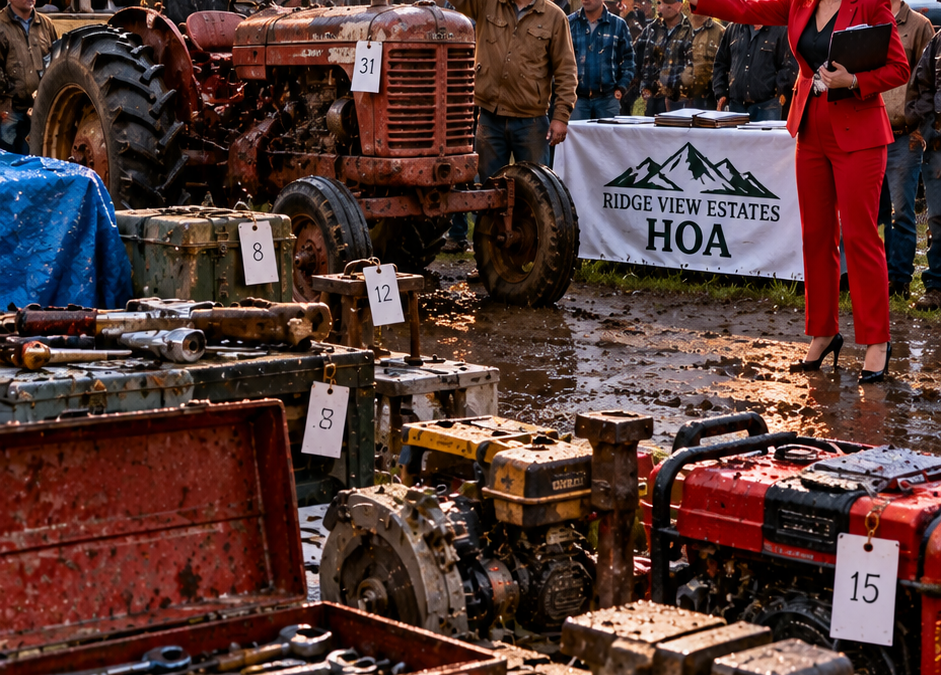
The buyers.
The invoices.
The vehicles.
The two men in work jackets standing near the barn.
Then I noticed the fresh dirt beside an old stone survey marker.
The grass around it had been disturbed.
The soil was darker than the ground nearby.
Someone had moved that stone recently.
Whoever had done it had made one important mistake.
My grandfather trusted almost no one around his property anymore.
And Thomas Mercer liked cameras.
Three days earlier, I had been sitting in my chambers in Richmond, Virginia, reading an appeal involving a commercial lease.
My clerk appeared in my doorway shortly after two in the afternoon.
There are expressions people wear when they are carrying news that will divide your life into a before and an after.
She had that expression.
“Judge Mercer?”
I looked up.
“What happened?”
She came inside and closed the door.
My grandfather had died at eighty-four.
A stroke, according to the sheriff’s deputy who found him on the kitchen floor beside his workbench.
No long illness.
No hospital room.
No final phone call.
Just a cooling cup of coffee.
An unfinished grocery list.
And twelve years of silence between us.
For a long time, I had told myself that silence belonged equally to both of us.
That was easier than admitting I had started it.
Thomas Mercer was technically my grandfather.
He was also the only father I really knew.
My mother died when I was nine.
Thomas took me into the same cedar farmhouse where he had raised her.
He taught me how to square a frame.
How to sharpen a chisel.
How to weld without looking directly into an arc.
How to listen to a machine before taking it apart.
“Everything tells you what’s wrong,” he used to say. “Most people just get impatient before they learn the language.”
When I left North Carolina for law school, Thomas told anyone who would listen that his grandson was going to become somebody important.
Years later, when developers began buying the ridge around his farm, he called me.
By then I had spent years in law and recently accepted an appointment to an appellate court in Virginia.
Thomas wanted help.
He said developers were using the homeowners association next door to pressure him over access.
I told him I could recommend an excellent local property lawyer.
He told me he wanted me to come home.
I said I could not become personally involved every time his new neighbors argued over a fence or a road.
He became quiet.
Then he said something that angered me because part of me knew he was right.
“Land only looks like dirt to the person who doesn’t know what happened on it.”
I told him he was being stubborn.
He answered, “You’ve become polished enough to mistake distance for wisdom.”
I hung up.
He did not call again.
Neither did I.
Twelve years.
I had argued hundreds of cases before becoming a judge.
I had written opinions about contracts, property rights, government authority, and due process.
But there was no doctrine that made twelve years easier to defend.
The probate attorney who called after my grandfather’s death was Mara Ellis.
I had known Mara since high school.
She told me Thomas’s will left me all sixty-three acres.
The farmhouse.
The barn.
The equipment.
Everything.
I almost laughed when she said it.
Not because it was funny.
Because there was something cruel about inheriting the place I had refused to visit.
Then Mara told me something else.
Within hours of Thomas’s death, someone from Ridge View Estates had contacted the county and asked when his property would legally be considered abandoned.
That was why I drove through the night.
I reached Old Mill Road at 10:17 Friday morning.
By 10:18, I knew my grandfather had not exaggerated anything.
The auctioneer lowered his microphone.
He was thin, maybe fifty-five, wearing a tan cowboy hat with rain running off the brim.
The sign beside his podium identified him as Caleb Dunn.
He looked from me to Evelyn.
“Ma’am?”
She turned.
“Is this the heir you mentioned?”
Something in Evelyn’s face sharpened.
“He has no authority until probate is complete.”
That interested me.
I walked closer.
“What exactly did you tell Mr. Dunn about the estate?”
Caleb looked at Evelyn.
Then at me.
“I was given an abandoned-property authorization and a board resolution.”
“Signed by whom?”
“The HOA president and secretary.”
“Did either person represent that the HOA owned the barn or the property inside it?”
Evelyn stepped between us.
“This interrogation is over.”
“It isn’t an interrogation.”
I looked at Caleb.
“You’re free not to answer.”
Caleb removed his hat and rubbed his forehead.
Auctioneers survive by understanding three things.
What can legally be sold.
Who owns it.
And when ownership changes.
Good auctioneers become nervous when any of those answers stop being clear.
Caleb was getting nervous.
“Mrs. Cross told me the barn was a community structure,” he said. “She said everything inside had been abandoned following years of unpaid assessments.”
“My grandfather was living here four days ago.”
The man in the green cap slowly lowered the buyer number he had been holding against the tractor.
Evelyn pulled a document from her binder.
A blue county stamp was visible across the top.
She held it toward the crowd without allowing me to take it.
“A lien was recorded against this parcel fourteen months ago. Mr. Mercer refused seven violation notices. The board exercised its right to secure neglected common property.”
“A lien is not a bill of sale.”
She stiffened.
“And even a valid lien does not ordinarily allow you to walk onto a recently deceased owner’s property, seize movable assets, and conduct an auction without the required foreclosure or probate process.”
Her eyes narrowed.
“Are you an attorney?”
“I asked to see your ownership document.”
“I told you this matter has been settled.”
That exchange mattered.
People with clean authority usually show it.
People with weak authority tend to describe it loudly.
I walked toward the barn.
Two men in matching gray jackets moved in front of the doors.
“Private event,” one said.
“On whose property?”
He glanced toward Evelyn.
I photographed both men.
Their company logo.
Their license plates.
And the truck parked behind them.
HOLLOW CREEK DEVELOPMENT.
That name meant something.
Hollow Creek owned roughly one hundred eighty acres beyond the far side of Thomas’s property.
The tract had changed hands twice in six years.
Nobody had developed it.
The reason was simple.
There was no practical roadway wide enough to support a major residential expansion.
The easiest route to the existing road network crossed my grandfather’s land.
More specifically, it ran directly beneath his barn.
Evelyn followed me.
“You need to leave.”
“I’m standing on property devised to me under a will already lodged with the county clerk.”
“The HOA controls this section.”
“Show me the recorded instrument.”
She snapped the binder closed.
“If you think what we’re doing is illegal, take us to court.”
“That may happen.”
I turned toward the crowd.
“But before anyone removes another item, I want everyone here to understand that ownership is formally disputed. Anyone who removes property after receiving notice may later face a claim for its return.”
I did not threaten anyone.
I did not perform for the crowd.
I simply told them what uncertainty meant.
Within thirty seconds, the man in the green cap told Caleb he no longer wanted the tractor.
Two other bidders demanded their deposits back.
A woman who had bought the drill press asked whether the sheriff had approved the auction.
Evelyn’s face hardened.
“The auction continues.”
Caleb looked at the paperwork.
Then at my phone.
“No.”
Evelyn turned.
“Excuse me?”
“Not until counsel confirms title.”
He placed the hammer on the podium.
That was the first reversal.
It was not a victory.
The tractor was still sitting in the grass.
Its keys were missing.
Several smaller tools had already been loaded into private vehicles.
And taped to the barn door was a demolition notice.
Monday.
8:00 a.m.
Seventy-one hours away.
I read it twice.
Evelyn watched me.
“The board approved an emergency access improvement.”
“You’re demolishing this barn Monday?”
“It has been declared unsafe.”
I looked toward the crowd.
“You invited forty people inside an unsafe building to inspect merchandise?”
For once, she had no immediate answer.
Then she looked at the Hollow Creek workers.
“Get him off the site.”
Both men stepped forward.
I stayed where I was.
So did Caleb.
Then something happened Evelyn had not expected.
Almost everyone still standing in the yard raised a phone.
People began recording.
Bad authority depends on isolation.
It looks much less convincing when forty witnesses are watching.
The workers stopped.
I photographed the demolition notice.
Then I sent everything to Mara and called her.
She answered immediately.
“Tell me you’re not there alone.”
“I’m standing with an HOA president, an auctioneer, two development employees, and half the county’s bargain hunters.”
“Daniel.”
“Yes?”
“I need to file something before the courthouse closes.”
There was a pause.
Mara knew me well enough to recognize that when I became unusually calm, the problem was usually worse than I had described.
“Send me everything.”
“I will.”
“And do not tell them you’re a judge.”
“I wasn’t planning to.”
“Good. You have no jurisdiction in North Carolina. The last thing we need is anyone claiming you used your office to influence a local dispute.”
“Agreed.”
Then her voice changed.
“One more thing.”
“What?”
“The clerk found an envelope attached to Thomas’s will.”
I said nothing.
“It’s addressed to you.”
My throat tightened.
“What does it say?”
“I don’t know. It’s sealed. Thomas specifically instructed me not to open it.”
I looked at his name carved above the barn doors.
Then at Evelyn Cross collecting auction signs as though we had merely interrupted her schedule.
“Bring it.”
Before Evelyn left, she handed me a red folder.
“Settlement offer.”
I opened it.
“If you sign by six tonight, the association will reduce the estate’s obligation by fifty percent.”
The first page offered to forgive $37,300 of the alleged debt.
In exchange, I would acknowledge Ridge View’s authority.
Release every claim arising from the auction.
And grant a permanent sixty-foot access corridor across the center of the Mercer farm.
I studied the map.
The corridor ran straight through the barn.
“Did your attorney draft this?”
“The board has authority to negotiate its own agreements.”
“That wasn’t what I asked.”
Her mouth tightened.
“We don’t need an attorney to deal with people like you.”
I turned to the signature page.
Then I wrote above the owner line:
Received at 10:46 a.m. for review only. No terms accepted.
I signed underneath and photographed every page.
Evelyn saw my signature.
She smiled.
“Smart choice.”
“You should read what I wrote.”
Her eyes dropped.
The smile disappeared.
“Six o’clock,” she said. “After that, the offer is gone.”
She walked away.
She had no idea she had just handed me the first clear explanation for everything happening around us.
This was not really about unpaid assessments.
It was not about an unsafe barn.
Someone needed a road.
And they needed it before the estate had time to understand what Thomas owned.
Mara arrived shortly after noon with two coffees, a portable scanner, a legal pad, and the sealed envelope.
She was fifty-one, sharp-eyed, and professionally allergic to wasted words.
She set the envelope aside.
“Not yet.”
I nodded.
She examined the auction paperwork first.
“This isn’t a foreclosure sale.”
“No.”
“They’ve dressed it to look official, but their stated theory is that the contents were abandoned community property.”
“Thomas died Tuesday.”
She checked the board resolution.
“This is dated Wednesday morning.”
“That’s fast.”
“It’s faster than fast.”
I pulled out the death record information.
“The medical examiner did not formally confirm his identity until 9:20 Wednesday.”
Mara looked at the board resolution.
“Time?”
“8:45.”
She stared at me.
The association had declared the property abandoned thirty-five minutes before Thomas Mercer’s death had been officially confirmed.
That was difficult to explain innocently.
Mara scanned the demolition notice.
“No permit number.”
“Meaning?”
“Maybe one is pending.”
“And maybe?”
“It’s theater.”
Caleb released the barn keys once Mara identified herself as counsel for the estate.
Inside, I immediately knew “unsafe” was not the right word.
The eastern wall leaned less than half an inch over twenty feet.
It had leaned that way when I was seventeen.
The roof was dry.
The old-growth oak beams were dark with age and hard enough to ruin cheap drill bits.
The barn was old.
It was not collapsing.
Ransacked was the better word.
Cabinet doors stood open.
Paper files covered the floor.
Dust outlines marked the places where tools had been removed before the auction.
The small steel cabinet where Thomas stored deeds, receipts, and property records was gone.
Mara crouched beside a severed padlock.
“They weren’t securing abandoned property.”
“No.”
“They were searching it.”
I looked toward the loft.
Thomas had installed a trail camera there years earlier after fuel began disappearing from his truck.
The mounting bracket remained.
The camera did not.
“Thomas had surveillance.”
“Do you know where it stored footage?”
“Some cameras sent images to his phone. Others used cards.”
“Where’s the phone?”
“The sheriff logged it with his personal effects.”
Mara called the sheriff’s office.
I stayed beside the workbench.
Beneath several auction tags, I found a strip of blue painter’s tape stuck to the wood.
Thomas wrote reminders on anything he could reach.
Cardboard.
Wood scraps.
Masking tape.
The back of receipts.
Three words were visible beneath dried grease.
NOT THE LOFT.
I stared at them.
When I was a child, Thomas hid birthday presents using clues designed to make me think rather than search.
If a clue said not the kitchen, the gift was often beside something that served the same purpose as a kitchen.
A camp stove.
A smokehouse.
The outdoor oven.
Not the loft did not mean look somewhere else upstairs.
It meant stop looking high.
I crouched beside the workbench.
Ran my fingers beneath the lowest shelf.
At the back, one floorboard had two newer screws.
Mara and I removed it.
Beneath the floor was a weatherproof plastic case.
Inside were three memory cards.
A ring of keys.
A folded plat.
And a note in Thomas’s handwriting.
Daniel,
If you’re reading this, they moved faster than I expected.
Start with the stone.
Then follow the road money.
Do not trust the red folder.
T.
Mara looked at the settlement package.
“He knew.”
“He knew enough.”
We inserted the first card into her laptop.
Most of the footage was ordinary.
Deer.
Raccoons.
Thomas carrying firewood.
A fox crossing the lane.
Then we reached a recording from 2:13 Thursday morning.
A white Hollow Creek truck backed toward the barn with its headlights off.
Two men climbed out carrying shovels and a metal detector.
They walked directly toward the survey marker.
For eleven minutes, they dug around it.
Then they lifted the stone.
Carried it west.
And reset it.
One of those men had blocked me from entering the barn that morning.
The second memory card showed Evelyn arriving twenty minutes later.
She photographed the relocated stone.
Handed one worker an envelope.
Then pointed along the line of the proposed access corridor.
Mara stopped the video.
“That’s no longer a boundary misunderstanding.”
“No.”
The third card contained no video.
It held scanned checks.
Twelve years of them.
Every payment Thomas had made toward road upkeep carried the same notation.
VOLUNTARY ROAD MAINTENANCE CONTRIBUTION — NO HOA MEMBERSHIP.
Every check had been deposited.
That alone did not decide the entire legal dispute.
Property cases rarely collapse because of one magical document.
Evidence becomes powerful when independent records, physical facts, and human behavior begin pointing in the same direction.
We were getting there.
The folded plat Thomas had hidden was not an official survey.
It was a photocopy marked in pencil.
On the eastern side of the farm, someone had shaded a rectangle labeled PHASE 4.
Twenty-eight proposed lots branched from a new road.
The road crossed Thomas’s farm.
Passed directly through the barn.
Then connected to Alder Ridge Drive inside Ridge View.
Three dates were written in the margin.
Beside them was one name.
Owen Price.
Owen was a licensed surveyor who had worked in the county for thirty-two years.
He arrived at 3:15 carrying a tripod, a receiver, and the expression of a man who had already received an unpleasant phone call.
“Evelyn Cross called me at lunch,” he said.
“What did she want?” Mara asked.
“Told me the Mercer tract was under HOA control and said surveying it would interfere with pending litigation.”
“Did she identify the case?”
“No.”
Owen unfolded the recorded subdivision plat beside Thomas’s photocopy.
He traced the boundary with one finger.
“Ridge View stops here.”
The Mercer farm lay outside it.
The subdivision declaration covered 112 residential lots, a clubhouse parcel, and two common roads.
Thomas’s farm was not listed.
“Could it have been annexed later?” I asked.
“Only through a properly recorded amendment with the required consent.”
“Is there one?”
“I found six amendments.”
He looked at me.
“None adds this property.”
Then he pointed to a narrow strip along Old Mill Road.
“There is an agreement here.”
Mara leaned closer.
“But?”
“It is not what Mrs. Cross says.”
Years earlier, Thomas had agreed to contribute to maintenance on approximately seven hundred forty feet of Old Mill Road also used by Ridge View residents.
The agreement was explicit.
Payments were voluntary.
No HOA membership was created.
No ownership interest was transferred.
No new easement was granted.
Either side could terminate the maintenance arrangement on sixty days’ notice.
Nothing gave Ridge View rights to Thomas’s barn.
Owen set his equipment near the disturbed survey stone.
Twenty minutes later, his receiver found the recorded boundary location.
The stone had been moved twenty-nine feet, eight inches.
The new location made the barn appear to touch the HOA’s maintenance strip.
Even then, Ridge View would not have owned the building.
But to someone relying on a quick drawing instead of a recorded survey, the lie looked plausible.
That is how a lot of land grabs begin.
Not with a bulldozer.
With one small distortion that makes the next distortion easier to believe.
Owen drove a temporary stake at the verified point.
He documented the disturbed soil.
Signed his field note.
Mara sent the probate documents, camera footage, and preliminary survey materials to the local court.
At 4:12, a judge issued a temporary order.
No removal of estate property.
No demolition of the barn.
The order lasted through the following week while ownership and access questions were reviewed.
It was narrow.
Temporary.
Exactly enough.
Nobody had declared us right about everything.
The court simply stopped irreversible damage while the evidence was examined.
At 4:30, a deputy delivered the order to Evelyn at the Ridge View clubhouse.
At 4:41, the farmhouse lost power.
There was no utility outage.
Someone had manually opened the main disconnect beside the road and locked it with a new padlock.
A tag hung from it.
RIDGE VIEW FACILITIES.
Mara stared at the lock.
“They received the court order eleven minutes ago.”
“Pressure.”
“What?”
“The red-folder offer expires at six.”
She looked at me.
“They think there’s something you haven’t found.”
She was right.
At 5:20, a black SUV turned into the driveway.
Evelyn stepped out.
A man in a navy overcoat came with her.
Wade Halpern.
Regional director of Hollow Creek Development.
He carried a leather portfolio.
“Mr. Mercer, I’m sorry for your loss.”
He spoke with the careful sympathy of a man trying to make an unfair offer sound compassionate.
“I knew Thomas. Difficult man. But I respected him.”
“Before or after your employees moved his survey marker?”
Wade’s eyes flicked toward Evelyn.
Her response came immediately.
“We have no knowledge of that allegation.”
“I have video.”
The generator hummed behind the house.
Neither spoke for several seconds.
Then Wade changed direction.
“All the more reason to resolve this professionally.”
He opened his portfolio.
“Hollow Creek will pay the estate two hundred fifty thousand dollars for the access corridor.”
“And Ridge View?”
“The association will waive its outstanding claims.”
I looked toward the barn.
“The corridor destroys that building.”
“The structure is near the end of its useful life.”
“It has already survived longer than the company offering to destroy it.”
Evelyn held out the red folder.
“The offer expires in thirty-seven minutes.”
“Why?”
Wade remained composed.
Only his right thumb betrayed him, pressing hard against the portfolio.
“Construction schedules. Financing. Ordinary business realities.”
“Did your financing assume legal access through this farm?”
“Our financing is not your concern.”
“Then my signature should not be urgent.”
He studied me more carefully.
Until that moment, they had treated me as a grieving heir from another state.
Someone who could be frightened by a large alleged debt.
Then impressed by a quarter-million-dollar offer.
Calm questions did not fit that picture.
Evelyn stepped closer.
“Your grandfather spent his last years fighting everyone around him.”
That hurt.
Because it contained enough truth to find the place I had kept exposed.
“Do you really want to inherit that too?”
I looked toward the farmhouse.
Then the barn.
The workbench where Thomas had taught me to make a straight cut.
“No.”
For the first time, Evelyn looked satisfied.
Then I finished.
“I intend to inherit what he was protecting.”
At six o’clock, the offer expired.
At 6:03, they drove away.
At 6:17, Mara found the money.
Eight months earlier, Hollow Creek had transferred fifty thousand dollars to Ridge View Estates.
Meeting minutes described it as restricted funding for possible clubhouse improvements.
No membership vote had approved an access agreement.
No Phase 4 road plan had been disclosed.
Yet Ridge View had already spent nineteen thousand dollars on architectural work.
If the road through Thomas’s farm failed, the HOA might owe money it no longer possessed.
That gave Evelyn another motive.
Not just control.
Not just pride.
She had helped build a financial arrangement around land Ridge View did not own.
Saturday morning, I collected Thomas’s phone from the sheriff’s evidence desk.
There were forty-six unheard voice messages.
Most were ordinary.
A pharmacy reminder.
A feed supplier.
A neighbor asking about a fallen tree.
Seven came from Evelyn during the month before Thomas died.
The first was polite.
“Thomas, this is Evelyn. We need to revisit the access proposal. Please call me.”
The fourth was colder.
“Continued refusal may affect the board’s willingness to maintain your road.”
The seventh had been left two nights before his death.
“You cannot hold back progress forever. Once the board confirms the boundary, the barn issue will be handled with or without your cooperation.”
Then I found a recording Thomas had made but never sent.
His voice sounded tired.
Older than I remembered.
“Daniel, I told myself I wouldn’t call again. That was pride talking.”
I sat down.
Mara stayed quiet.
“Hollow Creek needs my land, and Evelyn promised them something she doesn’t own. If you hear this, look under the false bottom in the steel cabinet. I kept the road records there.”
He paused.
I could hear him breathing.
“And son… whatever you decide about the farm, decide after you know the truth. Not after you remember our last argument.”
The recording ended.
For twelve years, I had remembered our last conversation as a closed door.
Thomas had remembered it as one he was still waiting for me to walk through.
The steel cabinet was missing.
The camera footage showed who had taken it.
Thursday morning, two Hollow Creek employees had carried it from the barn while Ridge View board secretary Linda Shaw watched.
Mara called Linda.
She denied knowing about any cabinet.
Mara sent one still image from the footage.
Seven minutes later, Linda called back.
Her voice shook.
“Evelyn said it contained hazardous chemicals.”
“Where did you take it?”
“The HOA maintenance garage.”
“Was it opened?”
Silence.
“Linda?”
“Wade cut the lock.”
“Where are the records?”
“I don’t know.”
Then she started crying.
“Evelyn took a file box home.”
Fear does not automatically make someone innocent.
But fear often destroys a rehearsed story.
Linda agreed to meet us at the clubhouse with a deputy present.
The cabinet sat inside the maintenance garage.
Empty except for old oil cans and rusted hinges.
The false bottom had been pried open.
The road papers were gone.
But whoever searched the cabinet overlooked a small numbered label beneath the bottom drawer.
PIEDMONT RECORDS STORAGE — BOX 417.
Thomas distrusted three things.
Fire.
Floodwater.
And anyone who said paperwork was unnecessary.
For twenty-three years, he had paid a private records company in Boone to store duplicates of important documents.
Box 417 contained exactly what the cabinet no longer did.
The original 2012 road-maintenance agreement.
Recorded plats.
Correspondence.
Survey photographs.
And one certified letter sent by Ridge View’s own attorney four years earlier.
The letter explicitly stated that the Mercer farm was not subject to the Ridge View declaration.
It asked Thomas to consider voluntary annexation so the HOA could pursue “future connectivity opportunities.”
Thomas had written one sentence across the bottom.
THEY KNOW THEY DON’T OWN IT.
Mara placed the letter carefully on the table.
“That will be difficult to explain.”
There was more.
An old photograph showed the survey marker in its original position.
Maintenance receipts showed Thomas had personally paid most of the cost of grading Old Mill Road after Ridge View stopped contributing.
And there was a prior purchase proposal from Hollow Creek.
Nine hundred thousand dollars.
For the same access corridor Wade had offered me two hundred fifty thousand to surrender while I was facing a fake HOA debt and a demolition deadline.
The association’s position was no longer merely unsupported.
It directly contradicted its own earlier legal correspondence.
Saturday afternoon would have been an excellent time for the Ridge View board to stop.
Preserve every record.
Cancel Monday’s demolition.
Hire independent counsel.
Ask what Evelyn had done.
Instead, Evelyn called an emergency membership meeting for Sunday evening.
Her email accused me of blocking a critical fire-access project and endangering 112 families.
It did not mention the auction.
It did not mention the moved survey stone.
It called Hollow Creek’s fifty-thousand-dollar payment a “refundable community grant.”
And it repeated one phrase three times.
Emergency access.
That was smart.
Fire safety changes the emotional frame.
A man trying to preserve his grandfather’s barn can look selfish if families believe their children need the same ground to escape a wildfire.
So Mara and I checked.
County engineer Rachel Kim met us Sunday morning.
She reviewed Hollow Creek’s Phase 4 sketch.
Measured the proposed grade.
Then examined the existing bridge over Mill Creek on the Ridge View side.
She shook her head.
“This cannot be certified as a fire route in this configuration.”
“Why?” I asked.
“The bridge is too narrow for the apparatus in the plan, and this turn exceeds the required template.”
Mara pointed toward the barn.
“Did the county request demolition of that structure?”
“No.”
“Has Hollow Creek submitted this alignment for approval?”
Rachel flipped through her folder.
“Not this version.”
“What version did they submit?”
She showed us.
The official plan used a longer road entirely within Hollow Creek’s property.
It required a new bridge.
And cost significantly more.
The road through my grandfather’s farm was not required for public safety.
It was a shortcut.
Estimated savings to Hollow Creek:
Approximately $1.4 million.
By 6:50 Sunday evening, the Ridge View clubhouse parking lot was full.
Residents crowded into the meeting room.
Wet coats hung over folding chairs.
Evelyn stood at the front in another red suit.
Behind her was a projected photograph of Thomas’s barn.
Across it, in large capital letters, she had written:
OBSTRUCTION TO EMERGENCY ACCESS.
She began with a practiced speech about community safety.
Progress.
Responsibility.
And one absentee heir trying to hold 112 families hostage.
I sat in the back beside Mara.
For twenty minutes, I said nothing.
Evelyn displayed assessment ledgers showing the $74,600 she claimed Thomas owed.
She showed pictures of peeling paint.
A leaning fence post.
Weeds near the barn foundation.
She described Thomas as hostile.
Uncooperative.
Anti-community.
Then Wade Halpern stood.
Hollow Creek, he announced, would pay for construction of the access road.
On top of that, the company would contribute another two hundred thousand dollars toward clubhouse improvements.
People began nodding.
I did not blame them.
Most had never seen the underlying documents.
All they heard was that a developer would give them a new emergency road and a large community improvement at no personal cost.
The deception belonged to the people who had hidden what that deal required.
When public comment opened, I walked to the front carrying the red settlement folder.
Evelyn folded her arms.
“State your name and address.”
“Daniel Mercer. Sixty-three Old Mill Road.”
“That address is not recognized as a Ridge View residence.”
“On that point, we agree.”
A few people laughed.
Evelyn did not.
“I’d like to display four documents.”
“The board has not verified your materials.”
Carol Beck, an older resident near the front, stood.
“You displayed his account records.”
Evelyn looked at her.
Carol continued.
“Let him display his.”
Several residents agreed.
Reluctantly, Evelyn turned the projector over to Linda.
Linda’s hands trembled as she connected Mara’s laptop.
The first image was the recorded subdivision plat.
Owen Price stood and explained the boundary.
He explained the absence of any annexation amendment.
Then we displayed the 2012 road agreement.
On the screen was the sentence stating that no HOA membership, ownership interest, or additional property right was created.
The third document was Rachel Kim’s engineering note.
The proposed road across the Mercer farm had not been approved as emergency access.
The existing bridge and turning radius failed the necessary design requirements.
Then we played the trail-camera video.
Nobody needed narration.
The room watched a Hollow Creek truck arrive after two in the morning.
Two workers removed Thomas’s survey marker.
Moved it almost thirty feet.
Then Evelyn appeared.
She photographed the false location.
Handed one worker an envelope.
And pointed down the future road corridor.
When the video ended, Wade stood quickly.
“This meeting is becoming a litigation trap. I advise the board to adjourn.”
Mara looked at him.
“You do not represent this board.”
He turned toward her.
“And you represent?”
“The Mercer estate.”
Evelyn pointed at me.
“Then why has he been conducting himself like an attorney? What is this, some amateur ambush?”
Wade looked at me.
Really looked at me.
His expression changed slowly.
“Mercer.”
I waited.
“Daniel Mercer.”
“Yes.”
His confidence faded.
“Judge Mercer.”
The room changed.
People turned in their chairs.
Evelyn stared at him.
“What are you talking about?”
Wade swallowed.
“He sits on the Virginia Court of Appeals.”
Silence.
“I argued a land-use appeal before his panel last year.”
Evelyn’s face flushed.
She looked at me.
“You told me you restored buildings.”
“No.”
I kept my voice level.
“You assumed I did. I worked restoration with my grandfather before law school.”
She stepped away from the lectern.
“So this whole time you’ve been using your judicial position to intimidate us.”
“No.”
“You concealed who you were.”
“I did not invoke my office because it has no authority here.”
I looked around the room.
“I have no jurisdiction in North Carolina. I contacted no judge about the merits of this case. I will not decide any part of this dispute.”
I pointed toward Mara.
“Mara Ellis represents the estate.”
Then Owen.
“Owen Price performed the boundary work.”
Then Rachel.
“Rachel Kim reviewed the proposed road.”
Then the frozen camera image behind me.
“And Thomas Mercer’s camera recorded what happened to his survey marker.”
I looked at Evelyn.
“I am not standing here as a judge.”
I paused.
“I am standing here as the lawful heir to the property you tried to auction.”
Nobody applauded.
Real reversals are often quieter than movies make them.
What I heard instead was more dangerous to Evelyn.
Residents whispering.
Asking each other questions.
Wondering what else had been omitted.
Carol Beck stood again.
“Where did Hollow Creek’s fifty-thousand-dollar deposit go?”
Evelyn gripped the lectern.
“It is restricted and fully accounted for.”
“Then show us.”
Near the wall stood Malcolm Reed, the HOA treasurer.
A retired accountant.
He looked confused.
“What deposit?”
That was the moment Evelyn lost her board.
The fifty thousand dollars had never entered the HOA’s regular operating account.
Hollow Creek had sent it to a special-project account opened by Evelyn and Linda.
Linda admitted she had signed the board resolution without fully reading the supporting documents.
Nineteen thousand dollars had gone to an architect.
Eight thousand had gone to a consultant linked to Wade’s project.
Twelve thousand had already been paid to the demolition contractor scheduled to reach Thomas’s barn Monday morning.
Eleven thousand dollars could not immediately be accounted for.
Evelyn called it a bookkeeping issue.
Wade blamed the HOA.
Then Linda unlocked her phone.
She had saved emails.
The oldest dated back eight months.
Thomas was still alive.
Wade wrote:
Once Mercer is no longer an obstacle, Phase 4 access should be straightforward.
Evelyn responded:
The board can establish control through the maintenance agreement. His heir lives out of state and will sell.
My grandfather had been alive.
They were already planning around his absence.
Then came the final email.
Wednesday morning.
7:58 a.m.
More than an hour before the medical examiner formally confirmed Thomas’s identity.
Wade wrote:
Proceed with abandonment resolution. We need the barn cleared before estate counsel appears.
That explained the impossible timetable.
Someone in the neighborhood had seen the sheriff at Thomas’s farm Tuesday evening.
The information reached Evelyn.
She contacted Wade before the family notification and death-confirmation process was complete.
They had not discovered abandoned property.
They had been waiting for a narrow interval when death, distance, grief, and probate paperwork might leave Thomas’s land undefended.
I have spent much of my professional life reading records.
Thousands upon thousands of pages.
The most revealing evidence is often not a dramatic confession.
It is a timetable that makes the innocent explanation impossible.
Malcolm stood.
“I move that the board suspend Evelyn Cross from presidential authority pending independent legal review and preserve every association email, invoice, account, and project record.”
Linda raised her hand.
“I second.”
Three directors voted yes.
Evelyn slammed one palm against the table.
“This vote is invalid.”
Nobody responded.
She closed the black binder.
Then she tried to leave with it.
Carol Beck stepped into the aisle.
“That belongs to the association.”
Evelyn stared at her.
Then at the residents.
Thirty minutes earlier, she had controlled the room.
Now people were looking past her toward the records.
She placed the binder on the table.
Then she walked out alone.
The temporary court order stopped Monday morning’s demolition.
By Monday afternoon, Hollow Creek’s lender had suspended portions of its Phase 4 financing after receiving notice that legal access was disputed and that evidence related to the property boundary had been manipulated.
The county paused its review until Hollow Creek submitted a lawful access plan.
None of that happened because I was a judge.
It happened because lenders dislike hidden risk.
Engineers sign their findings.
Survey coordinates can be checked.
And recorded documents remain stubbornly unimpressed by expensive presentations.
At the court hearing later that week, I sat behind Mara.
I spoke only when she asked me to establish facts concerning the estate.
A North Carolina Superior Court judge extended the temporary order.
She did not give a dramatic speech.
She did not humiliate Evelyn.
She reviewed the camera footage.
The plat.
The auction documents.
The road agreements.
The emails.
Then she ordered the property and relevant records preserved while the civil claims moved forward.
I respected that more than any theatrical ruling.
Lawful authority is most credible when it does no more than the evidence justifies.
Once Ridge View hired independent counsel and notified its insurer, the rest unraveled quickly.
The association withdrew all $74,600 in assessments because it could not produce any instrument establishing Thomas as a member.
Every auction transaction was cancelled.
Deposits were returned.
Caleb Dunn waived his fee.
He also helped identify the buyers who had already loaded smaller tools into their vehicles.
Almost everything came back within ten days.
Almost.
Thomas’s small oak tool chest was missing.
The buyer had paid cash and given a false phone number.
Three weeks later, Caleb found the chest listed online two counties away.
The seller wanted $180.
I paid it.
Several people told me I should have refused.
That it was already mine.
That buying stolen or wrongfully sold property back was insulting.
They were probably right as a matter of principle.
But principle can become vanity when proving you are right matters more than bringing something home.
I paid the $180.
Put the chest in my truck.
And returned it to the exact spot where Thomas had kept it.
Hollow Creek eventually agreed to pay for restoring the survey location.
Replacing the locks.
Repairing the farmhouse electrical disconnect.
Compensating the estate for damaged and missing property.
And reimbursing several legal and inspection expenses.
More importantly, the company abandoned the shortcut.
It returned to the longer road in its original county filing.
That route required a new bridge.
It delayed Phase 4 by almost a year.
It cost far more.
But every foot of it remained on property Hollow Creek actually controlled.
Ridge View elected a new board.
Malcolm became interim president.
The association terminated its side arrangement with Hollow Creek.
All project-account transactions were released to residents.
The missing eleven thousand dollars remained under investigation.
Nobody on the new board pretended suspicion was the same thing as a finding.
Evelyn resigned before the recall vote.
Her final letter said she had acted to protect Ridge View from an unreasonable landowner who opposed progress.
Maybe she believed some of that.
People rarely wake up and tell themselves they are about to steal someone else’s rights.
Usually they start somewhere easier.
They decide their goal is important.
Then someone else’s consent becomes inconvenient.
Then rules become obstacles.
Then records become technicalities.
Then the person saying no becomes the problem.
By the time the line is crossed, they have spent months teaching themselves not to see it.
The old road-maintenance agreement still needed to be addressed.
I could have terminated it.
Part of me wanted to.
Ridge View had used Thomas’s voluntary contribution as the foundation for a claim against his farm.
Ending the arrangement would have been satisfying.
It also would have punished residents who had never moved a survey stone, hidden an account, or touched Thomas’s property.
So Mara drafted a replacement.
Exact distance.
Exact cost-sharing.
Exact maintenance obligations.
Exact inspection rights.
And one sentence written plainly enough that even the most creative future board could not misunderstand it.
The Mercer farm is not, and shall not by this agreement become, property of or subject to the Ridge View Estates Homeowners Association.
The residents approved it overwhelmingly.
That winter, I took a leave from the court.
Originally, I intended to stay at the farm for two weeks.
I stayed much longer.
I repaired the eastern wall of the barn.
Not because it was unsafe.
Because Thomas had been right that it needed attention.
I rewired the workbench.
Replaced several broken windows.
Cleaned the loft.
Put returned tools back where he kept them.
Sometimes I knew the location without thinking.
Hammer.
Second peg.
Wrenches.
Third drawer.
Welding gloves.
Metal cabinet near the south wall.
My hands remembered a room my pride had spent twelve years pretending not to miss.
One afternoon, while sanding the edge of the old workbench, I found pencil marks beneath layers of dust.
Daniel — 9.
Daniel — 12.
Daniel — 16.
Beside the last one, Thomas had drawn an arrow and written:
Finally taller than the vise.
I sat on the floor.
I was fifty-six years old.
A judge.
A grandfather myself.
And for several minutes, I cried like the nine-year-old boy Thomas Mercer had taken home after his mother died.
Mara waited until the barn was mostly repaired before giving me the sealed envelope.
We stood beside the workbench.
“You ready?”
“No.”
She held it out anyway.
“I don’t think readiness is part of this.”
I took it.
Thomas had written only one page.
Daniel,
If this reaches you, I ran out of time before I ran out of pride.
The farm is yours.
Keep it, sell it, or give it away.
Just do not let anyone frighten you into believing they own what they never earned.
I was wrong to make you choose between your life and this land.
You were wrong to think asking for help made me weak.
That makes us even, though I would rather have had the argument in person.
I did not leave you this place because you stayed.
I left it to you because I believed you would come back.
Thomas.
I read it twice.
Then a third time.
I sat at his workbench beside a gouge I had made when I dropped a hammer at eleven years old.
For most of my life, I thought inheritance meant receiving whatever remained after somebody died.
Money.
Land.
Objects.
Debts.
Names.
I understand it differently now.
Sometimes inheritance is a burden.
Sometimes it is unfinished work.
Sometimes it is a question someone leaves behind because they ran out of time to ask it.
And sometimes it is one last opportunity to become worthy of faith someone placed in you long before you deserved it.
That spring, the barn opened again.
Not as an auction site.
Not as an access corridor.
Not as a piece of “abandoned community property.”
We called it the Thomas Mercer Workshop.
Every Saturday, local teenagers came to learn basic carpentry, welding, equipment repair, and small-engine maintenance.
The first morning, I stood outside before anyone arrived.
The doors were open.
Thomas’s name was still carved into the beam.
Sunlight crossed the concrete floor.
For twelve years, I had imagined returning to that barn as surrender.
Instead, standing there, I realized leaving had never been the problem.
Thomas had wanted me to have a life beyond the farm.
What hurt him was that I treated returning as proof I had failed to escape it.
There is a difference.
Ridge View residents donated lumber.
A retired electrician donated fixtures.
Caleb Dunn brought back the old auction podium.
He removed the bidding-number sign and turned it into our registration desk.
I laughed when I saw it.
“Little dark, don’t you think?”
He shrugged.
“Seemed appropriate.”
Owen Price had the displaced survey stone cleaned.
We mounted it inside a glass case near the workshop entrance.
Outside, at the real boundary, a properly recorded marker remained exactly where his instruments placed it.
Beneath the old stone in the case, we put a small plaque.
BOUNDARIES ARE MEASURED, NOT DECLARED.
I kept my home in Virginia.
I returned to the court.
I did not abandon one life for another.
Thomas’s letter had finally taught me what our last argument should have taught me twelve years earlier.
Loving where you came from does not require refusing to leave.
Leaving does not require pretending you came from nowhere.
Once a month, I drove back to Old Mill Road.
Sometimes more.
I opened the barn doors.
Checked the tools.
Helped teenagers straighten boards that looked straight until someone showed them how to measure.
On cold mornings, I made coffee in Thomas’s old percolator.
His oak tool chest sat beneath the workbench.
The red generator waited by the wall.
The welding cart had fresh wheels.
And the tractor Evelyn had told me to buy back from her auction remained in the center bay.
I never restored the paint.
Thomas had worn away the finish with his hands, boots, chains, and years.
Some things do not need to look new to prove they survived.
One Saturday afternoon, after the students left, I stood alone beside the barn doors.
The ridge beyond the field had changed.
New roofs from Hollow Creek’s Phase 4 were beginning to appear between the trees.
Their legal road curved the long way around.
Across land the developer actually owned.
It cost more.
It took longer.
It required a bridge.
That was not injustice.
That was the price of building without taking someone else’s shortcut.
The wind moved through the pasture.
For a second, I could hear Thomas as clearly as if he were standing behind me.
Land only looks like dirt to the person who doesn’t know what happened on it.
I had thought he was talking about acreage.
Boundaries.
Deeds.
I finally understood that he had been talking about memory.
A farm is soil.
But it is also the place where someone teaches a frightened nine-year-old how to use a saw.
A barn is timber.
But it is also pencil marks showing a boy getting taller.
A road is gravel.
But it is also the line between permission and ownership.
A tool chest is oak and iron.
Until the hand that built it is gone.
Then it becomes evidence that someone was here.
Evelyn Cross had looked at the Mercer farm and seen a legal inconvenience.
Wade Halpern had seen a cheaper road.
Hollow Creek’s financial model saw $1.4 million in savings.
The HOA’s secret project account saw fifty thousand dollars already partly spent.
The auction saw lot numbers.
I had once looked at the same land and seen an obligation I was desperate to outgrow.
Thomas had seen something none of us understood.
He saw a place worth protecting until somebody came back who understood why.
The last time Evelyn spoke directly to me, she told me I could buy back my inheritance.
She was wrong.
The tractor could be priced.
The tools could be tagged.
The barn could be appraised.
Sixty-three acres could be given a market value.
Even the corridor had a number attached to it.
Nine hundred thousand when Thomas was alive.
Two hundred fifty thousand when they thought grief would make me weak.
But the most valuable thing he left me had never belonged on an auction sheet.
He left me the truth.
He left me enough evidence to defend it.
And despite twelve years of silence, he left me one final sentence proving he had never stopped believing I would eventually find my way home.
What do you think of this story? Please leave a like and share your thoughts in the comments. Your support means a lot to us and inspires us to keep writing more meaningful and powerful stories. Thank you! 👍

