My Husband Smiled in Court Because He Believed There Was Nothing Left Beneath My Gray Coat
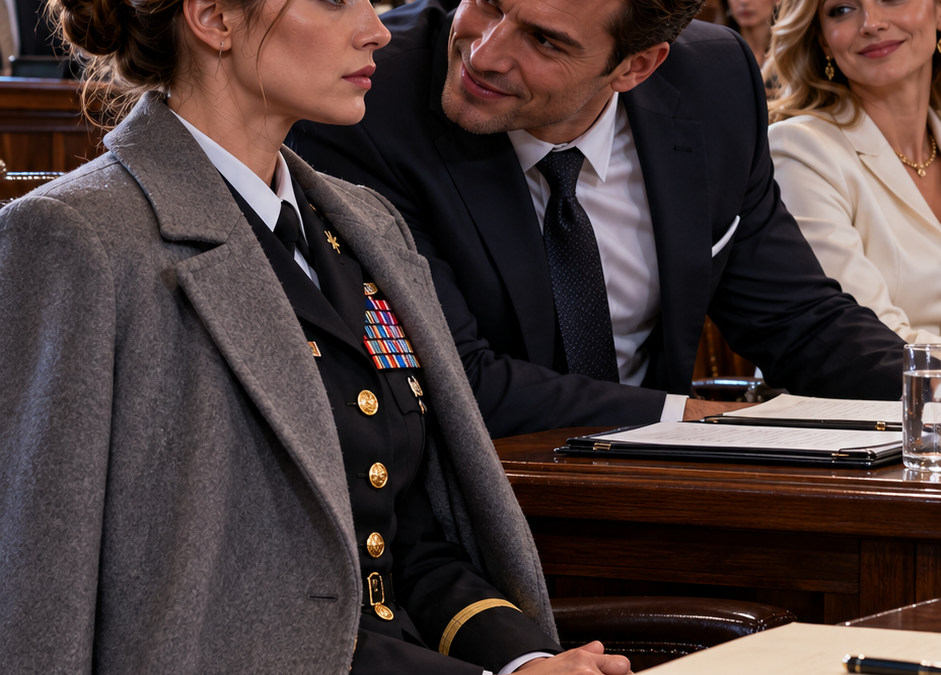
My Husband Smiled in Court Because He Believed There Was Nothing Left Beneath My Gray Coat
Julian leaned toward me across the narrow space between our tables and whispered, “When you walk out of here today, Iris, you’ll finally understand what it feels like to have nothing.”
He smiled as if my destruction had already been entered into the court record.
What he did not know was that beneath my plain gray coat was the one part of my life he had spent years convincing everyone did not matter.
And inside my attorney’s sealed folder was everything he believed my silence had buried with it.
I kept my hands folded in my lap.
Across the courtroom, cameras clicked softly.
Reporters bent over notebooks.
Spectators whispered behind us.
At Julian’s side sat Nora Bell, a woman I had once considered one of my closest friends.
For almost two years, Nora had eaten in my home.
She had sat at my kitchen island drinking wine while I cooked.
She had hugged me when I told her my marriage felt strangely distant.
She had listened while I wondered whether Julian still loved me.
Sometimes she would reach across the counter, touch my wrist, and say, “You’ve been through enough, Iris. Stop blaming yourself.”
All the while, she was sleeping with my husband.
I learned about their affair three months before the divorce filing.
I learned about the money two weeks later.
The affair hurt.
The financial betrayal terrified me.
Because cheating was personal.
The money was deliberate.
Julian had not merely fallen in love with someone else.
He had spent years preparing to erase me.
Now he stood beside Nora in a tailored navy suit, one hand resting casually on the back of her chair as though he had already replaced me in every part of his life.
“The company,” he whispered. “The mansion. The lake house. The investments. Every dollar we made.”
He leaned closer.
“All mine.”
I looked at him.
That annoyed him more than tears would have.
Julian had always needed reactions.
Admiration.
Fear.
Gratitude.
Anger.
Anything that proved he could still reach inside another person and move something.
I gave him nothing.
He smiled wider.
“You spent ten years standing beside me while I built our life.”
Our life.
I almost laughed.
Instead, I looked toward Judge Evelyn Rowan.
She had not entered yet.
My attorney, Marcus Hale, sat beside me reviewing a stack of motions for perhaps the twentieth time.
Marcus had been a military prosecutor before moving into complex civil litigation.
He understood patience.
More importantly, he understood classified records.
That combination was the only reason I had made it this far without losing my mind.
Julian glanced at the reporters again.
He wanted them listening.
“You’re going to learn something today,” he said.
“What’s that?”
His eyes narrowed slightly, almost pleased that I had answered.
“What life looks like when nobody salutes you anymore.”
I felt that sentence somewhere below my ribs.
Not because it was clever.
Because he had used versions of it for years.
Nobody cares about your rank here.
This isn’t the Army.
You’re not in command anymore.
Stop acting like everyone has to obey you.
Each sentence had been designed to reduce something in me.
Not my arrogance.
My identity.
Julian had spent our marriage telling people I could not adjust to civilian life.
If I asked why a transfer had occurred without my knowledge, I was controlling.
If I questioned an unexplained business expense, I was paranoid.
If I noticed that legal documents had been signed while I was overseas, I was confused.
If I became angry, I was unstable.
And because large portions of my military career were not things I could casually explain at dinner parties, Julian had discovered that secrecy made excellent soil for lies.
My coat sleeves covered my wrists.
The collar covered most of my neck.
Underneath was my formal military dress uniform.
Rows of ribbons.
Campaign medals.
Silver stars.
And scars.
Scars Julian had spent years telling people came from a car accident.
Or a skiing accident.
Or surgery.
The explanation changed depending on the audience.
He never imagined those scars would matter in divorce court.
Neither did I.
Not until Marcus explained that Julian’s entire financial defense depended on portraying my deployments and restricted records as evidence that I had abandoned our business and surrendered control.
That changed everything.
Nora leaned toward Julian.
Her perfume reached me.
The same floral perfume I had once bought her for Christmas.
Of all the humiliations I had endured, that stupid familiar scent nearly undid me.
“Maybe she’s finally accepted it,” Nora murmured.
Julian chuckled.
“Poor thing.”
I turned my head.
Nora met my eyes.
For half a second, she looked ashamed.
Then Julian touched her shoulder, and the shame disappeared behind loyalty to the man she had chosen.
I wondered if he had told her she was different.
He used to tell me that.
Marcus closed his file.
“General.”
He said it quietly.
Only for me.
I looked at him.
“It’s time.”
My pulse changed.
Not faster exactly.
Heavier.
For thirty years, my body had learned different kinds of fear.
There is battlefield fear.
Immediate.
Physical.
Useful.
Your hearing sharpens. Time narrows. Training takes over.
Then there is personal fear.
It is slower.
Messier.
It asks questions.
What if nobody believes you?
What if revealing the truth costs more than remaining silent?
What if the person who betrayed you still somehow convinces everyone you deserved it?
I had faced armed men with less anxiety than I felt sitting ten feet from my husband.
Judge Rowan entered.
“All rise.”
Everyone stood.
The room settled.
We began.
Julian’s attorney spoke first.
His name was Richard Morrison.
He was polished, expensive, and visibly confident.
He laid out Julian’s position with the smoothness of a man reciting something he believed would never be seriously challenged.
The marital estate, he argued, had largely been accumulated through Julian’s entrepreneurial leadership.
Vance Medical Technologies had expanded dramatically during our marriage.
Julian had managed operations.
Julian had negotiated acquisitions.
Julian had maintained the family properties.
Julian had overseen investments.
Meanwhile, I had been absent for extended periods due to military obligations and later medical recovery.
He did not call my service honorable.
He called it absence.
That word appeared repeatedly.
Absence.
Absence.
Absence.
Each time, Julian looked at me.
Morrison continued.
“My client does not diminish General Vance’s service. However, military distinction does not automatically translate into entitlement to corporate assets another spouse spent years developing.”
Marcus wrote something on his legal pad.
I did not ask what.
Morrison gestured toward Julian.
“Mr. Vance did not merely preserve these assets. He created their value.”
That was lie number one.
Morrison continued.
“Financial records show General Vance gradually withdrew from corporate participation.”
Lie number two.
“Ownership was restructured with her knowledge.”
Lie number three.
“She signed multiple authorizations.”
Lie number four.
“She repeatedly entrusted financial decisions to her husband.”
A half-truth.
Which made it more dangerous.
I had trusted Julian.
That part was true.
When I deployed, I gave him limited authority to handle ordinary household and corporate administrative matters.
Pay taxes.
Sign routine vendor documents.
Manage payroll emergencies.
Nothing close to transferring ownership.
Nothing close to creating shell companies.
Nothing close to emptying accounts.
But Julian understood something important about fraud.
The best lies borrow pieces of truth.
Morrison finished by describing the marriage as one in which Julian had carried the financial burden while I pursued an “extraordinary but highly consuming military career.”
Translation:
He stayed.
I left.
He built.
I disappeared.
He deserved everything.
I deserved whatever remained.
Judge Rowan turned toward Marcus.
“Mr. Hale?”
Marcus stood.
“Your Honor, opposing counsel’s argument depends on three assumptions.”
Morrison glanced toward him.
Marcus continued.
“First, that General Vance had no significant ownership interest independent of the marriage.”
Julian’s expression remained relaxed.
“Second, that the transfer documents bearing General Vance’s signature are authentic.”
That smile weakened.
“And third, that her periods of military service created opportunities for her husband to act because she voluntarily surrendered financial control.”
Marcus paused.
“All three assumptions are false.”
The courtroom changed.
Not dramatically.
Just enough.
Pens stopped moving.
Someone behind me whispered.
Morrison stood.
“Your Honor—”
“You’ll have your opportunity, Mr. Morrison.”
Judge Rowan looked at Marcus.
“Proceed.”
Marcus turned toward me.
“General Vance.”
I stood.
Julian smirked.
He had seen me wearing the coat when we entered.
To him, it was exactly what it looked like.
Plain gray wool.
Conservative.
Almost severe.
Something a woman wore when she wanted to disappear.
Marcus said, “Would you please remove your coat?”
Julian’s expression changed.
Only slightly.
But I saw it.
I reached for the first button.
My fingers were steady.
Second.
Third.
I slid the coat from my shoulders.
The room inhaled.
Not metaphorically.
I heard it.
One collective breath.
Beneath the gray coat was my formal United States military dress uniform.
Pressed.
Perfect.
The uniform I had spent most of the previous night staring at from the edge of my bed, wondering whether wearing it was courage or desperation.
Rows of ribbons stretched across my chest.
Combat decorations.
Campaign medals.
Commendations.
Qualification badges.
Silver stars marked the rank I had worked nearly three decades to earn.
A journalist near the aisle slowly lowered his pen.
Nora’s face lost its color.
Julian stared.
I folded the coat over the back of my chair.
That exposed the scar along the base of my neck.
Another crossed the upper portion of my shoulder before disappearing beneath the uniform.
A pale line climbed toward my jaw.
Julian knew every one.
He had kissed some of them in the early years.
Before he began lying about where they came from.
Judge Rowan looked at me.
“General Vance?”
“Yes, Your Honor.”
Her tone changed slightly.
“Mr. Hale indicated certain service records are relevant to these proceedings.”
“They are.”
“Would you explain?”
I looked at the judge.
Not Julian.
“My military record remained partially restricted because several operations in which I served involved classified intelligence, specialized overseas missions, and personnel whose identities remained protected.”
Julian shifted.
“For most of my marriage,” I continued, “I accepted that limitation. I did not discuss specific deployments. I did not correct speculation publicly. I did not disclose operational details simply to defend myself socially.”
My throat tightened.
I continued anyway.
“For years, protecting those missions mattered more to me than protecting my reputation.”
Then I turned.
Julian’s eyes met mine.
“But my silence is now being used to protect misconduct.”
His smile disappeared.
“Iris,” he whispered.
Judge Rowan looked at him.
“Mr. Vance, do not interrupt.”
I pulled the sleeve of my jacket back slightly.
The scar across my forearm became visible.
“These did not come from domestic accidents.”
Silence.
“They did not come from skiing.”
Nora looked at Julian.
“They did not come from a car crash.”
Julian stared at the table.
“I received these injuries during overseas operations.”
I touched the scar near my neck.
“One incident ended the operational portion of my career.”
The courtroom had become so quiet I could hear the ventilation system.
“During the months that followed, I underwent surgeries, rehabilitation, physical therapy, and psychological evaluations required before returning to restricted duty.”
My voice nearly failed on the next sentence.
Not from weakness.
From memory.
“I trusted my husband to protect our life while I recovered.”
Julian looked up.
I continued.
“He used that trust to change it.”
Marcus approached the bench carrying a sealed evidence folder.
A thick one.
Red security markings had been covered by a court-approved evidence sleeve.
He placed it in front of Judge Rowan.
Morrison immediately stood.
“Your Honor, objection. We have serious concerns regarding the admission of restricted military documents into an ordinary domestic proceeding.”
Marcus did not look at him.
“These materials have been reviewed and cleared for limited disclosure pursuant to Department of Defense authorization. Classified operational details have been redacted. What remains is directly relevant to Mr. Vance’s financial representations.”
Judge Rowan examined the seal.
“What specifically does this contain?”
Marcus answered.
“Service verification, deployment records, injury documentation, sworn witness statements, forensic accounting reports, signature comparisons, corporate filings, banking records, and written authorization from the Department of Defense permitting disclosure of the limited service information necessary to establish General Vance’s physical location during disputed financial transactions.”
Morrison’s confidence vanished.
Judge Rowan looked toward Julian.
Julian was staring at the folder.
For the first time that morning, fear appeared in his face.
Not anger.
Not irritation.
Fear.
“Iris,” he whispered again.
There was something almost intimate about it.
The voice he used at home.
The voice he used when asking me to forgive something.
Please.
Don’t.
Judge Rowan broke the seal.
Julian leaned toward me.
“Don’t do this.”
I looked at him.
“You already did.”
Judge Rowan read the first page.
Then the second.
Then another.
Nobody spoke.
Morrison stopped organizing papers.
Nora’s fingers tightened around the strap of her handbag.
Judge Rowan turned one page slowly.
Then another.
Finally, she looked up.
“Mr. Vance.”
Julian swallowed.
“Yes, Your Honor?”
“These transfers began while General Vance was serving outside the United States?”
Julian glanced at Morrison.
Morrison stood.
“My client handled family finances during her deployments.”
“That was not my question.”
Judge Rowan held up the page.
“Was General Vance overseas when these transfers began?”
Julian hesitated.
“Yes.”
“And your position is that she authorized them?”
“Yes.”
Marcus stood.
“She did not.”
Morrison shook his head.
“Counsel is asserting—”
Judge Rowan lifted another document.
“Then perhaps someone can explain this.”
The room went still again.
“I have seventeen documents attributed to General Vance.”
Julian stared straight ahead.
“The signatures appear on corporate authorizations, banking amendments, ownership restructuring documents, and transfer instruments.”
She looked at me.
“Mr. Hale has also submitted military location verification.”
Marcus nodded.
Judge Rowan continued.
“According to those records, General Vance was physically outside the United States on every date these signatures were purportedly executed domestically.”
Morrison’s face tightened.
Julian said quickly, “Electronic authorization.”
Marcus was ready.
“No.”
He approached the evidence monitor.
“We subpoenaed server metadata, document creation logs, notary records, internal timestamps, and access histories.”
A chart appeared.
Dates.
Locations.
Signatures.
IP addresses.
Marcus pointed.
“Several documents were printed from Mr. Vance’s corporate office.”
Another line.
“Two were notarized by an employee later dismissed for falsifying records.”
Another.
“Four were uploaded from an IP address assigned to the lake residence while General Vance was confirmed by military records to be more than six thousand miles away.”
Julian whispered something to Morrison.
Morrison ignored him.
Judge Rowan looked toward Julian.
“Mr. Vance?”
“She knew.”
I spoke for the first time since sitting down.
“I knew about three accounts.”
Julian looked at me.
I held his gaze.
“There were twenty-six.”
The gallery erupted in whispers.
Judge Rowan struck the gavel once.
“Quiet.”
Marcus brought up the banking diagram.
Even I hated looking at it.
Twenty-six accounts.
Some business.
Some personal.
Some shell entities.
Lines connected them like arteries.
Money moved from Vance Medical Technologies into subcontractors.
From subcontractors into holding companies.
From holding companies into private accounts.
From private accounts into investments controlled by Julian.
Millions.
Slowly.
Carefully.
Over years.
Not theft committed in panic.
A system.
Marcus pointed toward the screen.
“Funds were not merely transferred between legitimate corporate accounts.”
He enlarged one section.
“They were routed through shell entities and returned to accounts controlled directly or indirectly by Mr. Vance.”
Nora stared at the screen.
Then at Julian.
Her voice was barely audible.
“You told me those companies belonged to investors.”
Julian turned.
“Not now.”
Nora flinched.
Something changed in her face.
For the first time, she looked less like my replacement and more like another person beginning to realize she had been recruited into Julian’s version of reality.
“You said Iris left everything.”
“Nora.”
“You said she didn’t want the company.”
“Nora, stop.”
“You said she was unstable.”
That word hit me.
Unstable.
I had heard it from mutual friends.
From investors.
From Julian’s sister.
I had even heard it once from Nora.
You’ve been under so much stress, Iris. Are you sure you’re remembering everything correctly?
At the time, she had sounded concerned.
Now I understood.
Julian had been building a story.
Marcus returned to the center of the courtroom.
“Your Honor, Mr. Vance repeatedly cited General Vance’s restricted deployments as evidence that she was absent without explanation.”
He glanced toward Julian.
“Privately, he used those same absences as opportunities to alter ownership records.”
Judge Rowan removed her glasses.
“That raises issues significantly beyond equitable distribution.”
“Yes, Your Honor.”
Morrison rose.
“We request an immediate recess.”
Judge Rowan looked toward him.
“On what basis?”
“To consult regarding newly disclosed materials.”
“These documents were produced under protective order forty-eight hours ago.”
“Because of the extraordinary restrictions surrounding them, my client has not had adequate—”
“Your client appears to have had more than adequate time to create several of the documents in question.”
A few people in the gallery reacted.
Judge Rowan looked toward Marcus.
“You indicated there was another exhibit.”
Marcus did not immediately move.
Instead, he looked at me.
That exhibit was different.
Everything before it proved misconduct.
The last document proved ownership.
For years, I had tried to avoid using it.
Not because it was weak.
Because it was devastating.
I nodded.
Marcus opened the final file.
Julian saw the first page before the judge did.
His entire body went rigid.
He knew.
Eleven years earlier, before I married Julian, I had helped create Vance Medical Technologies.
Not Julian.
Me.
The company had begun as a much smaller defense-medical technology venture built around emergency trauma logistics and field medical systems.
I had invested my own money.
I had contributed the original intellectual framework with civilian engineers.
I had signed the incorporation agreement.
Julian joined later.
He was brilliant at sales.
Charismatic.
Strategic.
He turned a small company with excellent technology and poor visibility into something investors noticed.
I respected that.
Eventually, I loved him for it.
When we married, I never changed the original ownership structure because there was no reason to.
I trusted him.
Over time, he became the public face of Vance Medical Technologies.
I became less visible as military obligations increased.
People naturally assumed the company was his.
Julian eventually started assuming it too.
Or perhaps he always knew the truth and simply believed enough forged documents could rewrite it.
Judge Rowan studied the incorporation agreement.
She looked at Marcus.
Then at me.
“General Vance.”
“Yes, Your Honor.”
“According to this filing, Vance Medical Technologies existed before your marriage.”
“Yes.”
“You were the principal founding shareholder.”
“Yes.”
“And Mr. Vance did not acquire his interest until approximately fourteen months later.”
“That is correct.”
Julian’s chair scraped against the floor.
“No.”
Judge Rowan looked toward him.
“Sit down, Mr. Vance.”
Morrison grabbed his sleeve.
Julian remained half-standing.
“That isn’t how the company worked.”
I looked at him.
“No. It’s how the company was owned.”
His eyes burned into mine.
“We built it together.”
“We expanded it together.”
“Same thing.”
“No.”
I had said that word to armed officers.
To colonels.
To contractors.
To people with far more power than Julian.
But I had never said it to him with such certainty.
“You helped grow something I founded. That does not make the original filing disappear.”
Julian shook his head.
“You told me it was ours.”
“I believed our marriage was ours.”
His mouth opened.
I continued.
“I believed trust meant I did not need to remind my husband every year which signatures existed before the wedding.”
Judge Rowan looked toward him.
“Mr. Vance, do you have any explanation for the discrepancy between the original incorporation records and the later filings?”
Julian said nothing.
“Mr. Vance?”
His attorney whispered urgently.
Julian finally sat.
Judge Rowan picked up another document.
“Do you have any defense regarding the seventeen signatures General Vance disputes?”
Silence.
“Any explanation for documents executed while she was verified outside the United States?”
Silence.
“Any explanation for the twenty-six accounts?”
His lips moved.
Nothing emerged.
Marcus stood.
“Your Honor, given the evidence now before the court, we move for an immediate freeze on all corporate assets, personal accounts, investment holdings, and related property associated with Vance Medical Technologies and the disputed entities.”
Morrison jumped up.
“That is extraordinarily broad.”
“So is twenty-six hidden accounts.”
“Your Honor—”
Marcus continued.
“We also request preservation orders covering servers, cloud storage, financial records, corporate devices, property records, and communications between Mr. Vance and all associated entities.”
Judge Rowan read the motion.
Julian leaned toward Morrison.
“This cannot happen.”
Morrison whispered, “Be quiet.”
“You told me—”
“Julian.”
Nora stood.
Everyone looked at her.
She picked up her handbag.
Julian stared.
“What are you doing?”
She looked at him as though seeing him clearly for the first time.
“You lied to me.”
His voice dropped.
“Sit down.”
“No.”
Something about that word almost made me smile.
Almost.
Nora looked at me.
I expected an apology.
She did not offer one.
Good.
An apology in that moment would have been about making herself feel better.
She simply moved to the other side of the gallery.
Away from Julian.
Judge Rowan signed the freezing order.
“Granted.”
The sound of her pen against paper seemed louder than the gavel.
Julian’s face collapsed.
Not emotionally.
Structurally.
Like something holding him upright had disappeared.
Judge Rowan continued.
“Mr. Vance, you and your counsel will appear before this court Monday morning to address potential contempt and referral issues arising from the disputed filings.”
Morrison stood rigidly.
“The court is also directing that copies of the relevant financial evidence be transmitted pursuant to proper procedure for review by appropriate investigative authorities.”
Julian finally found his voice.
“This is a divorce case.”
Judge Rowan looked directly at him.
“It was.”
Silence.
She struck the gavel.
The hearing ended.
But I did not feel victorious.
That surprised me.
For months, I had imagined this moment.
Julian exposed.
The accounts frozen.
The company protected.
The truth public.
I thought relief would feel like something warm.
Instead, I felt exhausted.
Bailiffs moved closer to Julian’s side of the courtroom as attorneys began discussing procedures.
Reporters rushed toward the hallway.
Marcus touched my elbow gently.
“You all right?”
I looked at him.
“No.”
He nodded.
“That’s allowed.”
I picked up my gray coat.
My uniform suddenly felt heavier than it had that morning.
I draped the coat over my arm instead of putting it back on.
Julian saw me preparing to leave.
“Iris.”
I stopped.
Marcus remained beside me.
Julian looked smaller.
Not physically.
The arrogance was gone.
“Nora didn’t mean anything.”
I stared at him.
Of all the things he could have said.
That.
He thought the affair was the deepest wound.
Maybe because betrayal was something he understood.
The financial abuse?
The lies?
Using my service against me?
That would have required seeing me as a full human being.
“You still don’t understand,” I said.
His brow tightened.
“I don’t care whether Nora meant something.”
Nora heard me from the gallery.
I did not look at her.
Julian shook his head.
“Then what do you want?”
I almost answered:
My years back.
The nights I spent wondering whether combat injuries had made me impossible to love.
The friendships damaged because Julian convinced people I was unstable.
The moment I found the empty account.
The hours with Marcus reconstructing signatures.
The humiliation of learning Nora had been sleeping with him while comforting me.
I wanted every morning I had woken beside a man who knew he was quietly dismantling my life.
Instead, I said, “Nothing from you.”
His face tightened.
“You’re going to destroy everything.”
There it was.
The oldest trick.
When accountability arrived, suddenly I was the person causing destruction.
“No, Julian.”
I looked toward the frozen financial charts still visible on the evidence monitor.
“You built this.”
I walked away.
The hallway outside the courtroom was chaos.
Reporters.
Cameras.
Court staff.
People calling editors.
Marcus tried to shield me from the worst of it.
“General Vance!”
“General, did your husband know about your military record?”
“Were the disputed transfers connected to your deployments?”
“Are federal charges expected?”
“Did Mr. Vance forge your signatures?”
I stopped once.
Marcus looked at me.
I faced the cameras.
“My attorney will address the legal issues. My service record is relevant only because it establishes facts Mr. Vance attempted to misrepresent.”
A reporter shouted, “Why did you keep your career secret?”
“I didn’t.”
That quieted them slightly.
“I protected classified information.”
Another reporter asked, “Do you feel vindicated?”
I thought about Julian.
Nora.
The decade of marriage.
The scars under my uniform.
“No.”
They waited.
“I feel truthful.”
Then I left.
The criminal investigation widened quickly.
Much faster than Julian expected.
Forensic accountants traced additional transfers.
Several shell companies were tied to people who admitted they had never performed the services listed on their invoices.
Investigators found altered board minutes.
Backdated ownership documents.
Electronic signature files.
Private messages between Julian and an accountant discussing how to “clean up Iris’s percentage” while I was deployed.
One message hurt more than all the financial records.
Julian had written:
She’ll never challenge it. Half her life can’t be discussed anyway.
I read that sentence alone in my apartment.
Then I closed the laptop.
For years, I believed Julian resented my military service because it took me away from him.
That message revealed something uglier.
Eventually, he valued my secrecy.
It gave him cover.
The thing I had considered an honorable responsibility became something he exploited.
That realization was harder to process than the affair.
Three weeks after the hearing, Nora contacted Marcus.
She wanted to cooperate.
Marcus asked whether I wanted to know.
“Yes.”
She turned over messages.
Hundreds of them.
Julian had told her I had emotionally abandoned the marriage years earlier.
He said my injuries had changed my personality.
He said I was paranoid.
Controlling.
Unpredictable.
He told Nora I had voluntarily transferred the company because I no longer cared about civilian life.
Then he told her we were effectively separated.
None of it was true.
But reading the messages forced me to confront something uncomfortable.
Nora had betrayed me.
Absolutely.
But Julian had betrayed both of us in different ways.
That did not absolve her.
It simply made the shape of his manipulation clearer.
Nora asked to meet me once.
I declined.
Forgiveness does not always require conversation.
Sometimes distance is the healthiest conclusion available.
Monday’s contempt hearing became the first of many court appearances.
Judge Rowan referred multiple matters for investigation.
Julian’s access to company accounts was suspended.
An independent administrator was appointed.
The corporate records were preserved.
The mansion remained frozen as disputed marital property.
The lake house too.
Several investment accounts were restrained.
Julian went from telling me I would leave court with nothing to asking permission through attorneys to access ordinary funds.
I did not enjoy that.
People expected me to.
Friends would say things like, “It must feel amazing.”
It didn’t.
Watching someone you once loved collapse under consequences is complicated.
Some nights I remembered the Julian I married.
The man who sat beside my hospital bed during my first surgery.
The man who learned how to change dressings on my shoulder because I could not reach them.
The man who slept in a chair because I woke screaming after anesthesia.
That man existed.
So did the man who later forged my name.
People want betrayal to be simple.
Villain.
Victim.
Good years revealed as fake.
Life is rarely that clean.
Julian had loved me.
Then something in him decided love did not matter as much as control.
Maybe ambition did it.
Maybe entitlement.
Maybe he had always been capable of it.
I stopped trying to diagnose him.
Understanding why someone harms you does not restore what they destroyed.
My physical scars healed better than the invisible ones.
That irony never left me.
The scar on my neck came from shrapnel during an overseas operation I still cannot describe fully.
The shoulder damage required three surgeries.
My left hand never regained perfect sensation.
Those injuries looked dramatic.
But they had clean timelines.
Incident.
Treatment.
Recovery.
Julian’s betrayal was different.
There was no single date.
No surgeon could tell me where to cut.
No rehabilitation plan told me when trust would return.
Some mornings, I was furious.
Others, I missed him.
Missing him embarrassed me until Marcus said something that changed how I thought about grief.
“You’re not missing what he did.”
“What am I missing?”
“The person you believed was there before he did it.”
That was true.
The divorce continued.
The financial investigation continued beside it.
The original incorporation agreement became decisive.
Vance Medical Technologies had been legally established before our marriage.
My founding interest remained traceable despite Julian’s attempted restructuring.
The court eventually restored control of the disputed shares pending final corporate proceedings.
Julian retained whatever lawful marital interest he could actually prove.
No more.
No less.
That mattered to me.
I did not want revenge disguised as justice.
I wanted the records corrected.
I wanted what was mine.
I wanted him held accountable for what he had taken.
Nothing extra.
The mansion was sold as part of the eventual settlement.
I chose that.
Marcus asked if I wanted to keep it.
“No.”
“You’re certain?”
I thought about the kitchen where Nora drank my wine.
The bedroom where Julian lay beside me while hiding another life.
The study where some of the financial records had been altered.
“I don’t want a museum.”
The lake house was different.
I had loved that place before Julian.
A small dock.
Tall pines.
Water that became perfectly still just before sunrise.
Julian wanted it.
Maybe because I did.
For the first time in years, I fought without guilt.
I kept it.
The first weekend I went there alone, I stood inside the kitchen for almost an hour.
The silence felt strange.
Then I opened every window.
Cold air moved through the house.
I carried old photographs into the living room.
Wedding pictures.
Anniversary pictures.
Julian smiling beside me.
Some people burn photographs after divorce.
I didn’t.
I put them in a box.
History does not disappear because it becomes painful.
I labeled the box:
PAST.
Then I stored it in the attic.
Months later, the final divorce order was entered.
Julian was no longer my husband.
I expected that sentence to feel enormous.
Instead, it felt quiet.
I walked out of the courthouse wearing civilian clothes.
No uniform.
No reporters.
No dramatic revelation.
Marcus joined me on the steps.
“That’s it.”
I looked back at the building.
“That’s it.”
“You okay?”
I smiled faintly.
“Ask me in a year.”
He laughed.
“Fair.”
The fraud case outlasted the marriage.
Julian eventually faced charges tied to forged financial documents, false corporate filings, fraudulent transfers, and related misconduct uncovered during the investigation.
Some counts changed as attorneys negotiated.
Some allegations took longer to prove.
But the central truth never disappeared.
He had manipulated records.
He had used signatures that were not mine.
He had concealed money.
And he had relied on my restricted service history to make challenging him difficult.
For years, Julian had believed my silence was his greatest protection.
In the end, it became part of the evidence against him.
Vance Medical Technologies survived.
That surprised people.
For a while, I considered selling everything.
Then I visited headquarters.
Employees stood awkwardly when I walked through the building.
Some had believed Julian’s version.
Others had suspected things but said nothing.
I understood silence better than most.
I did not punish people for being afraid.
I replaced the compromised financial leadership.
Commissioned independent audits.
Created dual-authorization requirements.
Separated executive financial controls.
Established stronger whistleblower procedures.
Then I returned to work.
Not because I wanted to become Julian.
Because the company had always represented something different to me.
Medicine under pressure.
Systems that functioned when lives depended on them.
That was why I had helped create it before our marriage.
Julian had turned it into status.
I wanted to make it useful again.
My military career changed too.
I was no longer serving operationally.
My injuries had already made that impossible.
For a long time, I considered that a personal failure.
The courtroom forced me to reconsider.
Service does not end just because the form changes.
I began advising on military medical logistics and veteran transition programs.
Eventually, I joined a board that helped injured service members navigate civilian employment.
The first time I spoke to a room of wounded soldiers, I wore no medals.
Just a dark suit.
A young captain approached afterward.
He had burns along one side of his face.
“General?”
“Yes?”
He hesitated.
“How do you stop feeling like the best part of your life already happened?”
The question hit harder than he knew.
I thought about my uniform.
My marriage.
The company.
The courtroom.
All the identities I had once thought were permanent.
“You don’t try to become who you were,” I told him.
He frowned.
“Then what?”
“You respect who you were enough to let that person become someone else.”
He looked at me for a long moment.
Then nodded.
I hoped it helped.
It was advice I was still learning myself.
One year after the day I removed my gray coat in court, I returned to the same courthouse.
Not for Julian.
A veterans’ legal nonprofit was holding an event there.
Judge Rowan attended.
I saw her in the hallway.
She recognized me immediately.
“General Vance.”
“Judge Rowan.”
She smiled.
“No gray coat today?”
I laughed.
“No, Your Honor.”
Then she became serious.
“I’ve handled thousands of cases.”
I waited.
“What I remember about yours isn’t the uniform.”
That surprised me.
“What do you remember?”
“You didn’t enjoy destroying him.”
I looked down.
“No.”
“That told me more about you than the medals did.”
For the rest of the day, I thought about that.
Because she was right.
Julian had expected war.
He understood war.
Winner.
Loser.
Asset.
Control.
Power.
I had spent much of my real military career learning something he never understood.
The point of force is not destruction.
The point is achieving the objective with the least unnecessary damage possible.
My objective had never been to ruin Julian.
It was to stop him from ruining me.
There is a difference.
A significant one.
The final time I saw him in person came almost two years after the original hearing.
A procedural matter brought us back to court.
He looked older.
His hair had more gray.
His expensive suit no longer fit perfectly.
He approached while our attorneys spoke.
“Iris.”
I turned.
For a moment, I saw the man I had married.
Not because he had changed back.
Because memory can be cruel.
He looked at the faint scar near my collar.
“I’m sorry.”
I said nothing.
He continued.
“For all of it.”
There had been a time when I wanted those words more than justice.
Now I understood apologies are strange things.
Sometimes they arrive after the part of you that needed them has already learned to live without them.
“I believe you’re sorry,” I said.
His eyes filled slightly.
“But?”
“There isn’t a but.”
He looked confused.
“I believe you’re sorry.”
“Can you forgive me?”
I considered the question.
“I already stopped carrying you.”
“That isn’t what I asked.”
“It’s the answer I have.”
He looked away.
Nora was gone from his life by then.
I had heard that through attorneys.
I did not care why.
Julian looked at me again.
“I really did love you.”
That sentence hurt.
Because I believed him.
“I know.”
His eyes widened.
Maybe he expected anger.
I continued.
“That’s what made it worse.”
He nodded slowly.
Then our attorneys called us back inside.
That was the last personal conversation we ever had.
I kept the gray coat.
People have asked why.
I could have thrown it away.
Donated it.
Burned it.
Instead, it hangs in the back of my closet.
The military uniform is stored separately.
Professionally preserved.
The medals remain where they belong.
Sometimes when I see the coat, I remember how Julian looked at me before the hearing.
Confident.
Certain.
Almost amused.
You’ll leave here with nothing.
For years, he believed everything valuable about me could be reduced to assets.
Company.
House.
Investment accounts.
Property.
He thought taking those things meant taking my identity.
That was his deepest misunderstanding.
I had already survived losing things more important than money.
Friends.
Soldiers.
Health.
Mobility.
Pieces of my career.
Versions of myself I could never become again.
Julian had never understood what combat teaches people about possession.
Eventually, you learn that almost everything can be taken.
Comfort.
Plans.
Certainty.
Even parts of your body.
What matters is what remains when those things disappear.
The morning of that hearing, I nearly did not wear the uniform.
I stood in front of my bedroom mirror with the gray coat open.
I saw the medals.
The scars.
The woman underneath.
For years, I had kept those worlds separate.
General Vance.
Iris.
Officer.
Wife.
Founder.
Patient.
I thought protecting everyone meant keeping them divided.
Julian exploited those divisions.
That morning, I finally stopped helping him.
I put on the coat.
Buttoned it.
Went to court.
And waited.
People later described the moment I removed it as dramatic.
It did not feel dramatic.
It felt sad.
Because nobody should have to reveal their deepest sacrifices simply to prove they existed.
Nobody should have to display scars to make lies stop.
Nobody should have to transform pain into evidence.
But sometimes truth has to enter the room in the only form people can no longer ignore.
Mine entered wearing silver stars.
Years passed.
The company stabilized.
The lake house became mine in a way it had never been while Julian lived there.
I repainted the bedroom.
Changed the furniture.
Removed his office completely.
The room became a reading room overlooking the water.
On difficult mornings, I sat there with coffee before sunrise.
No phone.
No briefings.
No attorneys.
Just water.
My scars faded slightly.
Not much.
Some never will.
I stopped hiding them.
Not because I wanted questions.
Because I was tired of dressing around other people’s comfort.
One summer afternoon, I attended an event honoring combat-wounded veterans.
A photographer asked whether I wanted him to retouch the scar near my neck.
He was polite.
Probably trying to help.
I said, “No.”
“You’re sure?”
“Yes.”
That answer came easily.
Later, I looked at the photograph.
For years, Julian had treated my scars as things requiring explanation.
Embarrassing evidence.
Signs of a wife who did not fit perfectly beside a wealthy technology executive.
But looking at the photograph, I realized something.
The scars were not beautiful.
I dislike when people romanticize injury.
Pain is pain.
Damage is damage.
I would rather not have them.
But they are true.
And truth does not have to be beautiful to deserve daylight.
That became the lesson I carried from the courtroom.
Not revenge.
Not victory.
Truth.
Julian’s power over me depended on controlling the story.
Iris disappeared overseas.
Iris abandoned the company.
Iris was emotionally unstable.
Iris signed the transfers.
Iris did not understand the finances.
Iris had been injured in accidents.
Iris needed Julian to manage everything.
Each lie was small enough to sound believable.
Together, they built a prison.
I escaped when I stopped defending myself one accusation at a time and brought the entire structure into the light.
Military records.
Medical records.
Bank records.
Corporate filings.
Witness statements.
Signatures.
Dates.
Truth is powerful because it does not need consistency invented for it.
It already matches itself.
Years after the divorce, someone asked me whether I regretted marrying Julian.
I thought carefully before answering.
“No.”
The woman looked surprised.
“How can you not?”
“Because regret would require me to believe every good thing that happened before the betrayal became worthless afterward.”
It didn’t.
I learned.
I loved.
I helped build a company.
I served.
I recovered.
I became someone capable of surviving what came next.
I would never excuse Julian.
But I would not let his worst actions rewrite my entire life any more than I allowed his lies to rewrite my records.
That power belonged to me.
On the fifth anniversary of the hearing, Marcus sent me a photograph.
He had been cleaning old files.
It was a press image from that day.
I was walking down the courthouse aisle.
Gray coat over one arm.
Uniform visible.
Head raised.
Julian was blurred in the background.
Marcus wrote:
You looked terrifying.
I replied:
I was terrified.
He answered:
Same thing sometimes.
I laughed.
Then I studied the photograph.
I remembered exactly how I felt.
Not powerful.
Not triumphant.
Grieving.
My marriage was ending.
My private service history had become public.
My friend had betrayed me.
My husband had stolen from me.
My company was in danger.
My body still carried pain from injuries sustained years earlier.
Nothing about that woman felt invincible.
And yet she kept walking.
That is the version of strength I believe in now.
Not fearlessness.
Movement.
One step while afraid.
Then another.
The courtroom did not give me my life back in a single afternoon.
The judge’s order did not repair my trust.
The asset freeze did not heal me.
The incorporation agreement did not erase betrayal.
Healing happened later.
Quietly.
Signing papers in my own name.
Sleeping through an entire night.
Laughing without wondering what Julian would think.
Walking into Vance Medical Technologies and knowing nobody could use my absence to erase my ownership again.
Returning to the lake house.
Wearing sleeveless clothing without hiding the marks on my arms.
Saying no without explaining.
Learning that solitude and loneliness were not the same thing.
Those were the victories.
Small.
Private.
Real.
Julian had been wrong when he told me nobody would salute me anymore.
But not for the reason he imagined.
The truth is, I stopped needing anyone to.
Rank had been part of my life.
An important part.
I was proud of it.
But rank was never where my worth came from.
Neither were the medals.
Neither was the company.
Neither was the mansion.
Neither was the court ruling.
My value existed before all of them.
I wish I had understood that sooner.
Maybe I would have recognized Julian’s manipulation earlier.
Maybe not.
We judge our past selves too harshly because we use information they did not yet possess.
The Iris who trusted him was not foolish.
She was trusting.
Those are not the same thing.
The Iris who stayed quiet was not weak.
She was protecting obligations she took seriously.
The Iris who questioned her own memory was not unstable.
She had spent years being told that evidence in front of her somehow meant less than Julian’s explanation of it.
And the Iris who sat in court beneath a plain gray coat was not waiting to become powerful.
She already was.
She simply had not revealed everything yet.
Sometimes I return mentally to the seconds before Marcus whispered, “General, it’s time.”
I remember Julian’s smile.
Nora’s hand on his arm.
The reporters.
The whispers.
My palms resting quietly in my lap.
I remember thinking:
Once I stand, there is no putting this back.
Then another thought followed.
Good.
Some truths are not meant to be put back.
I stood.
I removed the coat.
And the room finally saw what Julian had spent years trying to explain away.
Not just medals.
Not just stars.
Not scars.
A history.
My history.
One he had manipulated because he believed I would always protect it more fiercely than I protected myself.
He was almost right.
Almost.
But there comes a point when silence stops being honor and becomes permission for someone else to write your story.
That morning, I reached that point.
And once I did, Julian’s version of me could not survive the evidence.
He had told me I would leave court with nothing.
In one sense, he was right.
I left without the marriage I thought I had.
Without the friend I thought Nora was.
Without the illusion that love automatically makes someone safe.
Without the belief that loyalty requires endless silence.
I lost those things.
But when I walked through those courthouse doors, my gray coat folded over my arm and the afternoon light catching the medals on my chest, I understood something Julian never had.
Nothing he stole had ever been the source of my strength.
He could move money.
Forge signatures.
Rewrite ownership records.
Lie about my scars.
Turn friends against me.
Stand in open court and tell me I had nothing.
But he could not change where I had been.
He could not change what I had survived.
He could not change the company records that existed before our marriage.
He could not change seventeen impossible signatures.
He could not erase twenty-six hidden accounts.
And he could not erase me.
That was the real reason he looked frightened when my coat came off.
For the first time, he was standing in front of a version of me he could no longer edit.
I picked up my coat that day and walked away from him without looking back.
Not because I had won everything.
But because, after years of allowing Julian to tell the world who I was, I had finally taken my own story back.
And this time, my name was the only signature on it.
What do you think of this story? Please leave a like and share your thoughts in the comments. Your support means a lot to us and inspires us to keep writing more meaningful and powerful stories. Thank you! 👍
𝗧𝗛𝗘 𝗘𝗡𝗗
My Husband Smiled in Court Because He Believed There Was Nothing Left Beneath My Gray Coat
Julian leaned toward me across the narrow space between our tables and whispered, “When you walk out of here today, Iris, you’ll finally understand what it feels like to have nothing.”
He smiled as if my destruction had already been entered into the court record.
What he did not know was that beneath my plain gray coat was the one part of my life he had spent years convincing everyone did not matter.
And inside my attorney’s sealed folder was everything he believed my silence had buried with it.
I kept my hands folded in my lap.
Across the courtroom, cameras clicked softly.
Reporters bent over notebooks.
Spectators whispered behind us.
At Julian’s side sat Nora Bell, a woman I had once considered one of my closest friends.
For almost two years, Nora had eaten in my home.
She had sat at my kitchen island drinking wine while I cooked.
She had hugged me when I told her my marriage felt strangely distant.
She had listened while I wondered whether Julian still loved me.
Sometimes she would reach across the counter, touch my wrist, and say, “You’ve been through enough, Iris. Stop blaming yourself.”
All the while, she was sleeping with my husband.
I learned about their affair three months before the divorce filing.
I learned about the money two weeks later.
The affair hurt.
The financial betrayal terrified me.
Because cheating was personal.
The money was deliberate.
Julian had not merely fallen in love with someone else.
He had spent years preparing to erase me.
Now he stood beside Nora in a tailored navy suit, one hand resting casually on the back of her chair as though he had already replaced me in every part of his life.
“The company,” he whispered. “The mansion. The lake house. The investments. Every dollar we made.”
He leaned closer.
“All mine.”
I looked at him.
That annoyed him more than tears would have.
Julian had always needed reactions.
Admiration.
Fear.
Gratitude.
Anger.
Anything that proved he could still reach inside another person and move something.
I gave him nothing.
He smiled wider.
“You spent ten years standing beside me while I built our life.”
Our life.
I almost laughed.
Instead, I looked toward Judge Evelyn Rowan.
She had not entered yet.
My attorney, Marcus Hale, sat beside me reviewing a stack of motions for perhaps the twentieth time.
Marcus had been a military prosecutor before moving into complex civil litigation.
He understood patience.
More importantly, he understood classified records.
That combination was the only reason I had made it this far without losing my mind.
Julian glanced at the reporters again.
He wanted them listening.
“You’re going to learn something today,” he said.
“What’s that?”
His eyes narrowed slightly, almost pleased that I had answered.
“What life looks like when nobody salutes you anymore.”
I felt that sentence somewhere below my ribs.
Not because it was clever.
Because he had used versions of it for years.
Nobody cares about your rank here.
This isn’t the Army.
You’re not in command anymore.
Stop acting like everyone has to obey you.
Each sentence had been designed to reduce something in me.
Not my arrogance.
My identity.
Julian had spent our marriage telling people I could not adjust to civilian life.
If I asked why a transfer had occurred without my knowledge, I was controlling.
If I questioned an unexplained business expense, I was paranoid.
If I noticed that legal documents had been signed while I was overseas, I was confused.
If I became angry, I was unstable.
And because large portions of my military career were not things I could casually explain at dinner parties, Julian had discovered that secrecy made excellent soil for lies.
My coat sleeves covered my wrists.
The collar covered most of my neck.
Underneath was my formal military dress uniform.
Rows of ribbons.
Campaign medals.
Silver stars.
And scars.
Scars Julian had spent years telling people came from a car accident.
Or a skiing accident.
Or surgery.
The explanation changed depending on the audience.
He never imagined those scars would matter in divorce court.
Neither did I.
Not until Marcus explained that Julian’s entire financial defense depended on portraying my deployments and restricted records as evidence that I had abandoned our business and surrendered control.
That changed everything.
Nora leaned toward Julian.
Her perfume reached me.
The same floral perfume I had once bought her for Christmas.
Of all the humiliations I had endured, that stupid familiar scent nearly undid me.
“Maybe she’s finally accepted it,” Nora murmured.
Julian chuckled.
“Poor thing.”
I turned my head.
Nora met my eyes.
For half a second, she looked ashamed.
Then Julian touched her shoulder, and the shame disappeared behind loyalty to the man she had chosen.
I wondered if he had told her she was different.
He used to tell me that.
Marcus closed his file.
“General.”
He said it quietly.
Only for me.
I looked at him.
“It’s time.”
My pulse changed.
Not faster exactly.
Heavier.
For thirty years, my body had learned different kinds of fear.
There is battlefield fear.
Immediate.
Physical.
Useful.
Your hearing sharpens. Time narrows. Training takes over.
Then there is personal fear.
It is slower.
Messier.
It asks questions.
What if nobody believes you?
What if revealing the truth costs more than remaining silent?
What if the person who betrayed you still somehow convinces everyone you deserved it?
I had faced armed men with less anxiety than I felt sitting ten feet from my husband.
Judge Rowan entered.
“All rise.”
Everyone stood.
The room settled.
We began.
Julian’s attorney spoke first.
His name was Richard Morrison.
He was polished, expensive, and visibly confident.
He laid out Julian’s position with the smoothness of a man reciting something he believed would never be seriously challenged.
The marital estate, he argued, had largely been accumulated through Julian’s entrepreneurial leadership.
Vance Medical Technologies had expanded dramatically during our marriage.
Julian had managed operations.
Julian had negotiated acquisitions.
Julian had maintained the family properties.
Julian had overseen investments.
Meanwhile, I had been absent for extended periods due to military obligations and later medical recovery.
He did not call my service honorable.
He called it absence.
That word appeared repeatedly.
Absence.
Absence.
Absence.
Each time, Julian looked at me.
Morrison continued.
“My client does not diminish General Vance’s service. However, military distinction does not automatically translate into entitlement to corporate assets another spouse spent years developing.”
Marcus wrote something on his legal pad.
I did not ask what.
Morrison gestured toward Julian.
“Mr. Vance did not merely preserve these assets. He created their value.”
That was lie number one.
Morrison continued.
“Financial records show General Vance gradually withdrew from corporate participation.”
Lie number two.
“Ownership was restructured with her knowledge.”
Lie number three.
“She signed multiple authorizations.”
Lie number four.
“She repeatedly entrusted financial decisions to her husband.”
A half-truth.
Which made it more dangerous.
I had trusted Julian.
That part was true.
When I deployed, I gave him limited authority to handle ordinary household and corporate administrative matters.
Pay taxes.
Sign routine vendor documents.
Manage payroll emergencies.
Nothing close to transferring ownership.
Nothing close to creating shell companies.
Nothing close to emptying accounts.
But Julian understood something important about fraud.
The best lies borrow pieces of truth.
Morrison finished by describing the marriage as one in which Julian had carried the financial burden while I pursued an “extraordinary but highly consuming military career.”
Translation:
He stayed.
I left.
He built.
I disappeared.
He deserved everything.
I deserved whatever remained.
Judge Rowan turned toward Marcus.
“Mr. Hale?”
Marcus stood.
“Your Honor, opposing counsel’s argument depends on three assumptions.”
Morrison glanced toward him.
Marcus continued.
“First, that General Vance had no significant ownership interest independent of the marriage.”
Julian’s expression remained relaxed.
“Second, that the transfer documents bearing General Vance’s signature are authentic.”
That smile weakened.
“And third, that her periods of military service created opportunities for her husband to act because she voluntarily surrendered financial control.”
Marcus paused.
“All three assumptions are false.”
The courtroom changed.
Not dramatically.
Just enough.
Pens stopped moving.
Someone behind me whispered.
Morrison stood.
“Your Honor—”
“You’ll have your opportunity, Mr. Morrison.”
Judge Rowan looked at Marcus.
“Proceed.”
Marcus turned toward me.
“General Vance.”
I stood.
Julian smirked.
He had seen me wearing the coat when we entered.
To him, it was exactly what it looked like.
Plain gray wool.
Conservative.
Almost severe.
Something a woman wore when she wanted to disappear.
Marcus said, “Would you please remove your coat?”
Julian’s expression changed.
Only slightly.
But I saw it.
I reached for the first button.
My fingers were steady.
Second.
Third.
I slid the coat from my shoulders.
The room inhaled.
Not metaphorically.
I heard it.
One collective breath.
Beneath the gray coat was my formal United States military dress uniform.
Pressed.
Perfect.
The uniform I had spent most of the previous night staring at from the edge of my bed, wondering whether wearing it was courage or desperation.
Rows of ribbons stretched across my chest.
Combat decorations.
Campaign medals.
Commendations.
Qualification badges.
Silver stars marked the rank I had worked nearly three decades to earn.
A journalist near the aisle slowly lowered his pen.
Nora’s face lost its color.
Julian stared.
I folded the coat over the back of my chair.
That exposed the scar along the base of my neck.
Another crossed the upper portion of my shoulder before disappearing beneath the uniform.
A pale line climbed toward my jaw.
Julian knew every one.
He had kissed some of them in the early years.
Before he began lying about where they came from.
Judge Rowan looked at me.
“General Vance?”
“Yes, Your Honor.”
Her tone changed slightly.
“Mr. Hale indicated certain service records are relevant to these proceedings.”
“They are.”
“Would you explain?”
I looked at the judge.
Not Julian.
“My military record remained partially restricted because several operations in which I served involved classified intelligence, specialized overseas missions, and personnel whose identities remained protected.”
Julian shifted.
“For most of my marriage,” I continued, “I accepted that limitation. I did not discuss specific deployments. I did not correct speculation publicly. I did not disclose operational details simply to defend myself socially.”
My throat tightened.
I continued anyway.
“For years, protecting those missions mattered more to me than protecting my reputation.”
Then I turned.
Julian’s eyes met mine.
“But my silence is now being used to protect misconduct.”
His smile disappeared.
“Iris,” he whispered.
Judge Rowan looked at him.
“Mr. Vance, do not interrupt.”
I pulled the sleeve of my jacket back slightly.
The scar across my forearm became visible.
“These did not come from domestic accidents.”
Silence.
“They did not come from skiing.”
Nora looked at Julian.
“They did not come from a car crash.”
Julian stared at the table.
“I received these injuries during overseas operations.”
I touched the scar near my neck.
“One incident ended the operational portion of my career.”
The courtroom had become so quiet I could hear the ventilation system.
“During the months that followed, I underwent surgeries, rehabilitation, physical therapy, and psychological evaluations required before returning to restricted duty.”
My voice nearly failed on the next sentence.
Not from weakness.
From memory.
“I trusted my husband to protect our life while I recovered.”
Julian looked up.
I continued.
“He used that trust to change it.”
Marcus approached the bench carrying a sealed evidence folder.
A thick one.
Red security markings had been covered by a court-approved evidence sleeve.
He placed it in front of Judge Rowan.
Morrison immediately stood.
“Your Honor, objection. We have serious concerns regarding the admission of restricted military documents into an ordinary domestic proceeding.”
Marcus did not look at him.
“These materials have been reviewed and cleared for limited disclosure pursuant to Department of Defense authorization. Classified operational details have been redacted. What remains is directly relevant to Mr. Vance’s financial representations.”
Judge Rowan examined the seal.
“What specifically does this contain?”
Marcus answered.
“Service verification, deployment records, injury documentation, sworn witness statements, forensic accounting reports, signature comparisons, corporate filings, banking records, and written authorization from the Department of Defense permitting disclosure of the limited service information necessary to establish General Vance’s physical location during disputed financial transactions.”
Morrison’s confidence vanished.
Judge Rowan looked toward Julian.
Julian was staring at the folder.
For the first time that morning, fear appeared in his face.
Not anger.
Not irritation.
Fear.
“Iris,” he whispered again.
There was something almost intimate about it.
The voice he used at home.
The voice he used when asking me to forgive something.
Please.
Don’t.
Judge Rowan broke the seal.
Julian leaned toward me.
“Don’t do this.”
I looked at him.
“You already did.”
Judge Rowan read the first page.
Then the second.
Then another.
Nobody spoke.
Morrison stopped organizing papers.
Nora’s fingers tightened around the strap of her handbag.
Judge Rowan turned one page slowly.
Then another.
Finally, she looked up.
“Mr. Vance.”
Julian swallowed.
“Yes, Your Honor?”
“These transfers began while General Vance was serving outside the United States?”
Julian glanced at Morrison.
Morrison stood.
“My client handled family finances during her deployments.”
“That was not my question.”
Judge Rowan held up the page.
“Was General Vance overseas when these transfers began?”
Julian hesitated.
“Yes.”
“And your position is that she authorized them?”
“Yes.”
Marcus stood.
“She did not.”
Morrison shook his head.
“Counsel is asserting—”
Judge Rowan lifted another document.
“Then perhaps someone can explain this.”
The room went still again.
“I have seventeen documents attributed to General Vance.”
Julian stared straight ahead.
“The signatures appear on corporate authorizations, banking amendments, ownership restructuring documents, and transfer instruments.”
She looked at me.
“Mr. Hale has also submitted military location verification.”
Marcus nodded.
Judge Rowan continued.
“According to those records, General Vance was physically outside the United States on every date these signatures were purportedly executed domestically.”
Morrison’s face tightened.
Julian said quickly, “Electronic authorization.”
Marcus was ready.
“No.”
He approached the evidence monitor.
“We subpoenaed server metadata, document creation logs, notary records, internal timestamps, and access histories.”
A chart appeared.
Dates.
Locations.
Signatures.
IP addresses.
Marcus pointed.
“Several documents were printed from Mr. Vance’s corporate office.”
Another line.
“Two were notarized by an employee later dismissed for falsifying records.”
Another.
“Four were uploaded from an IP address assigned to the lake residence while General Vance was confirmed by military records to be more than six thousand miles away.”
Julian whispered something to Morrison.
Morrison ignored him.
Judge Rowan looked toward Julian.
“Mr. Vance?”
“She knew.”
I spoke for the first time since sitting down.
“I knew about three accounts.”
Julian looked at me.
I held his gaze.
“There were twenty-six.”
The gallery erupted in whispers.
Judge Rowan struck the gavel once.
“Quiet.”
Marcus brought up the banking diagram.
Even I hated looking at it.
Twenty-six accounts.
Some business.
Some personal.
Some shell entities.
Lines connected them like arteries.
Money moved from Vance Medical Technologies into subcontractors.
From subcontractors into holding companies.
From holding companies into private accounts.
From private accounts into investments controlled by Julian.
Millions.
Slowly.
Carefully.
Over years.
Not theft committed in panic.
A system.
Marcus pointed toward the screen.
“Funds were not merely transferred between legitimate corporate accounts.”
He enlarged one section.
“They were routed through shell entities and returned to accounts controlled directly or indirectly by Mr. Vance.”
Nora stared at the screen.
Then at Julian.
Her voice was barely audible.
“You told me those companies belonged to investors.”
Julian turned.
“Not now.”
Nora flinched.
Something changed in her face.
For the first time, she looked less like my replacement and more like another person beginning to realize she had been recruited into Julian’s version of reality.
“You said Iris left everything.”
“Nora.”
“You said she didn’t want the company.”
“Nora, stop.”
“You said she was unstable.”
That word hit me.
Unstable.
I had heard it from mutual friends.
From investors.
From Julian’s sister.
I had even heard it once from Nora.
You’ve been under so much stress, Iris. Are you sure you’re remembering everything correctly?
At the time, she had sounded concerned.
Now I understood.
Julian had been building a story.
Marcus returned to the center of the courtroom.
“Your Honor, Mr. Vance repeatedly cited General Vance’s restricted deployments as evidence that she was absent without explanation.”
He glanced toward Julian.
“Privately, he used those same absences as opportunities to alter ownership records.”
Judge Rowan removed her glasses.
“That raises issues significantly beyond equitable distribution.”
“Yes, Your Honor.”
Morrison rose.
“We request an immediate recess.”
Judge Rowan looked toward him.
“On what basis?”
“To consult regarding newly disclosed materials.”
“These documents were produced under protective order forty-eight hours ago.”
“Because of the extraordinary restrictions surrounding them, my client has not had adequate—”
“Your client appears to have had more than adequate time to create several of the documents in question.”
A few people in the gallery reacted.
Judge Rowan looked toward Marcus.
“You indicated there was another exhibit.”
Marcus did not immediately move.
Instead, he looked at me.
That exhibit was different.
Everything before it proved misconduct.
The last document proved ownership.
For years, I had tried to avoid using it.
Not because it was weak.
Because it was devastating.
I nodded.
Marcus opened the final file.
Julian saw the first page before the judge did.
His entire body went rigid.
He knew.
Eleven years earlier, before I married Julian, I had helped create Vance Medical Technologies.
Not Julian.
Me.
The company had begun as a much smaller defense-medical technology venture built around emergency trauma logistics and field medical systems.
I had invested my own money.
I had contributed the original intellectual framework with civilian engineers.
I had signed the incorporation agreement.
Julian joined later.
He was brilliant at sales.
Charismatic.
Strategic.
He turned a small company with excellent technology and poor visibility into something investors noticed.
I respected that.
Eventually, I loved him for it.
When we married, I never changed the original ownership structure because there was no reason to.
I trusted him.
Over time, he became the public face of Vance Medical Technologies.
I became less visible as military obligations increased.
People naturally assumed the company was his.
Julian eventually started assuming it too.
Or perhaps he always knew the truth and simply believed enough forged documents could rewrite it.
Judge Rowan studied the incorporation agreement.
She looked at Marcus.
Then at me.
“General Vance.”
“Yes, Your Honor.”
“According to this filing, Vance Medical Technologies existed before your marriage.”
“Yes.”
“You were the principal founding shareholder.”
“Yes.”
“And Mr. Vance did not acquire his interest until approximately fourteen months later.”
“That is correct.”
Julian’s chair scraped against the floor.
“No.”
Judge Rowan looked toward him.
“Sit down, Mr. Vance.”
Morrison grabbed his sleeve.
Julian remained half-standing.
“That isn’t how the company worked.”
I looked at him.
“No. It’s how the company was owned.”
His eyes burned into mine.
“We built it together.”
“We expanded it together.”
“Same thing.”
“No.”
I had said that word to armed officers.
To colonels.
To contractors.
To people with far more power than Julian.
But I had never said it to him with such certainty.
“You helped grow something I founded. That does not make the original filing disappear.”
Julian shook his head.
“You told me it was ours.”
“I believed our marriage was ours.”
His mouth opened.
I continued.
“I believed trust meant I did not need to remind my husband every year which signatures existed before the wedding.”
Judge Rowan looked toward him.
“Mr. Vance, do you have any explanation for the discrepancy between the original incorporation records and the later filings?”
Julian said nothing.
“Mr. Vance?”
His attorney whispered urgently.
Julian finally sat.
Judge Rowan picked up another document.
“Do you have any defense regarding the seventeen signatures General Vance disputes?”
Silence.
“Any explanation for documents executed while she was verified outside the United States?”
Silence.
“Any explanation for the twenty-six accounts?”
His lips moved.
Nothing emerged.
Marcus stood.
“Your Honor, given the evidence now before the court, we move for an immediate freeze on all corporate assets, personal accounts, investment holdings, and related property associated with Vance Medical Technologies and the disputed entities.”
Morrison jumped up.
“That is extraordinarily broad.”
“So is twenty-six hidden accounts.”
“Your Honor—”
Marcus continued.
“We also request preservation orders covering servers, cloud storage, financial records, corporate devices, property records, and communications between Mr. Vance and all associated entities.”
Judge Rowan read the motion.
Julian leaned toward Morrison.
“This cannot happen.”
Morrison whispered, “Be quiet.”
“You told me—”
“Julian.”
Nora stood.
Everyone looked at her.
She picked up her handbag.
Julian stared.
“What are you doing?”
She looked at him as though seeing him clearly for the first time.
“You lied to me.”
His voice dropped.
“Sit down.”
“No.”
Something about that word almost made me smile.
Almost.
Nora looked at me.
I expected an apology.
She did not offer one.
Good.
An apology in that moment would have been about making herself feel better.
She simply moved to the other side of the gallery.
Away from Julian.
Judge Rowan signed the freezing order.
“Granted.”
The sound of her pen against paper seemed louder than the gavel.
Julian’s face collapsed.
Not emotionally.
Structurally.
Like something holding him upright had disappeared.
Judge Rowan continued.
“Mr. Vance, you and your counsel will appear before this court Monday morning to address potential contempt and referral issues arising from the disputed filings.”
Morrison stood rigidly.
“The court is also directing that copies of the relevant financial evidence be transmitted pursuant to proper procedure for review by appropriate investigative authorities.”
Julian finally found his voice.
“This is a divorce case.”
Judge Rowan looked directly at him.
“It was.”
Silence.
She struck the gavel.
The hearing ended.
But I did not feel victorious.
That surprised me.
For months, I had imagined this moment.
Julian exposed.
The accounts frozen.
The company protected.
The truth public.
I thought relief would feel like something warm.
Instead, I felt exhausted.
Bailiffs moved closer to Julian’s side of the courtroom as attorneys began discussing procedures.
Reporters rushed toward the hallway.
Marcus touched my elbow gently.
“You all right?”
I looked at him.
“No.”
He nodded.
“That’s allowed.”
I picked up my gray coat.
My uniform suddenly felt heavier than it had that morning.
I draped the coat over my arm instead of putting it back on.
Julian saw me preparing to leave.
“Iris.”
I stopped.
Marcus remained beside me.
Julian looked smaller.
Not physically.
The arrogance was gone.
“Nora didn’t mean anything.”
I stared at him.
Of all the things he could have said.
That.
He thought the affair was the deepest wound.
Maybe because betrayal was something he understood.
The financial abuse?
The lies?
Using my service against me?
That would have required seeing me as a full human being.
“You still don’t understand,” I said.
His brow tightened.
“I don’t care whether Nora meant something.”
Nora heard me from the gallery.
I did not look at her.
Julian shook his head.
“Then what do you want?”
I almost answered:
My years back.
The nights I spent wondering whether combat injuries had made me impossible to love.
The friendships damaged because Julian convinced people I was unstable.
The moment I found the empty account.
The hours with Marcus reconstructing signatures.
The humiliation of learning Nora had been sleeping with him while comforting me.
I wanted every morning I had woken beside a man who knew he was quietly dismantling my life.
Instead, I said, “Nothing from you.”
His face tightened.
“You’re going to destroy everything.”
There it was.
The oldest trick.
When accountability arrived, suddenly I was the person causing destruction.
“No, Julian.”
I looked toward the frozen financial charts still visible on the evidence monitor.
“You built this.”
I walked away.
The hallway outside the courtroom was chaos.
Reporters.
Cameras.
Court staff.
People calling editors.
Marcus tried to shield me from the worst of it.
“General Vance!”
“General, did your husband know about your military record?”
“Were the disputed transfers connected to your deployments?”
“Are federal charges expected?”
“Did Mr. Vance forge your signatures?”
I stopped once.
Marcus looked at me.
I faced the cameras.
“My attorney will address the legal issues. My service record is relevant only because it establishes facts Mr. Vance attempted to misrepresent.”
A reporter shouted, “Why did you keep your career secret?”
“I didn’t.”
That quieted them slightly.
“I protected classified information.”
Another reporter asked, “Do you feel vindicated?”
I thought about Julian.
Nora.
The decade of marriage.
The scars under my uniform.
“No.”
They waited.
“I feel truthful.”
Then I left.
The criminal investigation widened quickly.
Much faster than Julian expected.
Forensic accountants traced additional transfers.
Several shell companies were tied to people who admitted they had never performed the services listed on their invoices.
Investigators found altered board minutes.
Backdated ownership documents.
Electronic signature files.
Private messages between Julian and an accountant discussing how to “clean up Iris’s percentage” while I was deployed.
One message hurt more than all the financial records.
Julian had written:
She’ll never challenge it. Half her life can’t be discussed anyway.
I read that sentence alone in my apartment.
Then I closed the laptop.
For years, I believed Julian resented my military service because it took me away from him.
That message revealed something uglier.
Eventually, he valued my secrecy.
It gave him cover.
The thing I had considered an honorable responsibility became something he exploited.
That realization was harder to process than the affair.
Three weeks after the hearing, Nora contacted Marcus.
She wanted to cooperate.
Marcus asked whether I wanted to know.
“Yes.”
She turned over messages.
Hundreds of them.
Julian had told her I had emotionally abandoned the marriage years earlier.
He said my injuries had changed my personality.
He said I was paranoid.
Controlling.
Unpredictable.
He told Nora I had voluntarily transferred the company because I no longer cared about civilian life.
Then he told her we were effectively separated.
None of it was true.
But reading the messages forced me to confront something uncomfortable.
Nora had betrayed me.
Absolutely.
But Julian had betrayed both of us in different ways.
That did not absolve her.
It simply made the shape of his manipulation clearer.
Nora asked to meet me once.
I declined.
Forgiveness does not always require conversation.
Sometimes distance is the healthiest conclusion available.
Monday’s contempt hearing became the first of many court appearances.
Judge Rowan referred multiple matters for investigation.
Julian’s access to company accounts was suspended.
An independent administrator was appointed.
The corporate records were preserved.
The mansion remained frozen as disputed marital property.
The lake house too.
Several investment accounts were restrained.
Julian went from telling me I would leave court with nothing to asking permission through attorneys to access ordinary funds.
I did not enjoy that.
People expected me to.
Friends would say things like, “It must feel amazing.”
It didn’t.
Watching someone you once loved collapse under consequences is complicated.
Some nights I remembered the Julian I married.
The man who sat beside my hospital bed during my first surgery.
The man who learned how to change dressings on my shoulder because I could not reach them.
The man who slept in a chair because I woke screaming after anesthesia.
That man existed.
So did the man who later forged my name.
People want betrayal to be simple.
Villain.
Victim.
Good years revealed as fake.
Life is rarely that clean.
Julian had loved me.
Then something in him decided love did not matter as much as control.
Maybe ambition did it.
Maybe entitlement.
Maybe he had always been capable of it.
I stopped trying to diagnose him.
Understanding why someone harms you does not restore what they destroyed.
My physical scars healed better than the invisible ones.
That irony never left me.
The scar on my neck came from shrapnel during an overseas operation I still cannot describe fully.
The shoulder damage required three surgeries.
My left hand never regained perfect sensation.
Those injuries looked dramatic.
But they had clean timelines.
Incident.
Treatment.
Recovery.
Julian’s betrayal was different.
There was no single date.
No surgeon could tell me where to cut.
No rehabilitation plan told me when trust would return.
Some mornings, I was furious.
Others, I missed him.
Missing him embarrassed me until Marcus said something that changed how I thought about grief.
“You’re not missing what he did.”
“What am I missing?”
“The person you believed was there before he did it.”
That was true.
The divorce continued.
The financial investigation continued beside it.
The original incorporation agreement became decisive.
Vance Medical Technologies had been legally established before our marriage.
My founding interest remained traceable despite Julian’s attempted restructuring.
The court eventually restored control of the disputed shares pending final corporate proceedings.
Julian retained whatever lawful marital interest he could actually prove.
No more.
No less.
That mattered to me.
I did not want revenge disguised as justice.
I wanted the records corrected.
I wanted what was mine.
I wanted him held accountable for what he had taken.
Nothing extra.
The mansion was sold as part of the eventual settlement.
I chose that.
Marcus asked if I wanted to keep it.
“No.”
“You’re certain?”
I thought about the kitchen where Nora drank my wine.
The bedroom where Julian lay beside me while hiding another life.
The study where some of the financial records had been altered.
“I don’t want a museum.”
The lake house was different.
I had loved that place before Julian.
A small dock.
Tall pines.
Water that became perfectly still just before sunrise.
Julian wanted it.
Maybe because I did.
For the first time in years, I fought without guilt.
I kept it.
The first weekend I went there alone, I stood inside the kitchen for almost an hour.
The silence felt strange.
Then I opened every window.
Cold air moved through the house.
I carried old photographs into the living room.
Wedding pictures.
Anniversary pictures.
Julian smiling beside me.
Some people burn photographs after divorce.
I didn’t.
I put them in a box.
History does not disappear because it becomes painful.
I labeled the box:
PAST.
Then I stored it in the attic.
Months later, the final divorce order was entered.
Julian was no longer my husband.
I expected that sentence to feel enormous.
Instead, it felt quiet.
I walked out of the courthouse wearing civilian clothes.
No uniform.
No reporters.
No dramatic revelation.
Marcus joined me on the steps.
“That’s it.”
I looked back at the building.
“That’s it.”
“You okay?”
I smiled faintly.
“Ask me in a year.”
He laughed.
“Fair.”
The fraud case outlasted the marriage.
Julian eventually faced charges tied to forged financial documents, false corporate filings, fraudulent transfers, and related misconduct uncovered during the investigation.
Some counts changed as attorneys negotiated.
Some allegations took longer to prove.
But the central truth never disappeared.
He had manipulated records.
He had used signatures that were not mine.
He had concealed money.
And he had relied on my restricted service history to make challenging him difficult.
For years, Julian had believed my silence was his greatest protection.
In the end, it became part of the evidence against him.
Vance Medical Technologies survived.
That surprised people.
For a while, I considered selling everything.
Then I visited headquarters.
Employees stood awkwardly when I walked through the building.
Some had believed Julian’s version.
Others had suspected things but said nothing.
I understood silence better than most.
I did not punish people for being afraid.
I replaced the compromised financial leadership.
Commissioned independent audits.
Created dual-authorization requirements.
Separated executive financial controls.
Established stronger whistleblower procedures.
Then I returned to work.
Not because I wanted to become Julian.
Because the company had always represented something different to me.
Medicine under pressure.
Systems that functioned when lives depended on them.
That was why I had helped create it before our marriage.
Julian had turned it into status.
I wanted to make it useful again.
My military career changed too.
I was no longer serving operationally.
My injuries had already made that impossible.
For a long time, I considered that a personal failure.
The courtroom forced me to reconsider.
Service does not end just because the form changes.
I began advising on military medical logistics and veteran transition programs.
Eventually, I joined a board that helped injured service members navigate civilian employment.
The first time I spoke to a room of wounded soldiers, I wore no medals.
Just a dark suit.
A young captain approached afterward.
He had burns along one side of his face.
“General?”
“Yes?”
He hesitated.
“How do you stop feeling like the best part of your life already happened?”
The question hit harder than he knew.
I thought about my uniform.
My marriage.
The company.
The courtroom.
All the identities I had once thought were permanent.
“You don’t try to become who you were,” I told him.
He frowned.
“Then what?”
“You respect who you were enough to let that person become someone else.”
He looked at me for a long moment.
Then nodded.
I hoped it helped.
It was advice I was still learning myself.
One year after the day I removed my gray coat in court, I returned to the same courthouse.
Not for Julian.
A veterans’ legal nonprofit was holding an event there.
Judge Rowan attended.
I saw her in the hallway.
She recognized me immediately.
“General Vance.”
“Judge Rowan.”
She smiled.
“No gray coat today?”
I laughed.
“No, Your Honor.”
Then she became serious.
“I’ve handled thousands of cases.”
I waited.
“What I remember about yours isn’t the uniform.”
That surprised me.
“What do you remember?”
“You didn’t enjoy destroying him.”
I looked down.
“No.”
“That told me more about you than the medals did.”
For the rest of the day, I thought about that.
Because she was right.
Julian had expected war.
He understood war.
Winner.
Loser.
Asset.
Control.
Power.
I had spent much of my real military career learning something he never understood.
The point of force is not destruction.
The point is achieving the objective with the least unnecessary damage possible.
My objective had never been to ruin Julian.
It was to stop him from ruining me.
There is a difference.
A significant one.
The final time I saw him in person came almost two years after the original hearing.
A procedural matter brought us back to court.
He looked older.
His hair had more gray.
His expensive suit no longer fit perfectly.
He approached while our attorneys spoke.
“Iris.”
I turned.
For a moment, I saw the man I had married.
Not because he had changed back.
Because memory can be cruel.
He looked at the faint scar near my collar.
“I’m sorry.”
I said nothing.
He continued.
“For all of it.”
There had been a time when I wanted those words more than justice.
Now I understood apologies are strange things.
Sometimes they arrive after the part of you that needed them has already learned to live without them.
“I believe you’re sorry,” I said.
His eyes filled slightly.
“But?”
“There isn’t a but.”
He looked confused.
“I believe you’re sorry.”
“Can you forgive me?”
I considered the question.
“I already stopped carrying you.”
“That isn’t what I asked.”
“It’s the answer I have.”
He looked away.
Nora was gone from his life by then.
I had heard that through attorneys.
I did not care why.
Julian looked at me again.
“I really did love you.”
That sentence hurt.
Because I believed him.
“I know.”
His eyes widened.
Maybe he expected anger.
I continued.
“That’s what made it worse.”
He nodded slowly.
Then our attorneys called us back inside.
That was the last personal conversation we ever had.
I kept the gray coat.
People have asked why.
I could have thrown it away.
Donated it.
Burned it.
Instead, it hangs in the back of my closet.
The military uniform is stored separately.
Professionally preserved.
The medals remain where they belong.
Sometimes when I see the coat, I remember how Julian looked at me before the hearing.
Confident.
Certain.
Almost amused.
You’ll leave here with nothing.
For years, he believed everything valuable about me could be reduced to assets.
Company.
House.
Investment accounts.
Property.
He thought taking those things meant taking my identity.
That was his deepest misunderstanding.
I had already survived losing things more important than money.
Friends.
Soldiers.
Health.
Mobility.
Pieces of my career.
Versions of myself I could never become again.
Julian had never understood what combat teaches people about possession.
Eventually, you learn that almost everything can be taken.
Comfort.
Plans.
Certainty.
Even parts of your body.
What matters is what remains when those things disappear.
The morning of that hearing, I nearly did not wear the uniform.
I stood in front of my bedroom mirror with the gray coat open.
I saw the medals.
The scars.
The woman underneath.
For years, I had kept those worlds separate.
General Vance.
Iris.
Officer.
Wife.
Founder.
Patient.
I thought protecting everyone meant keeping them divided.
Julian exploited those divisions.
That morning, I finally stopped helping him.
I put on the coat.
Buttoned it.
Went to court.
And waited.
People later described the moment I removed it as dramatic.
It did not feel dramatic.
It felt sad.
Because nobody should have to reveal their deepest sacrifices simply to prove they existed.
Nobody should have to display scars to make lies stop.
Nobody should have to transform pain into evidence.
But sometimes truth has to enter the room in the only form people can no longer ignore.
Mine entered wearing silver stars.
Years passed.
The company stabilized.
The lake house became mine in a way it had never been while Julian lived there.
I repainted the bedroom.
Changed the furniture.
Removed his office completely.
The room became a reading room overlooking the water.
On difficult mornings, I sat there with coffee before sunrise.
No phone.
No briefings.
No attorneys.
Just water.
My scars faded slightly.
Not much.
Some never will.
I stopped hiding them.
Not because I wanted questions.
Because I was tired of dressing around other people’s comfort.
One summer afternoon, I attended an event honoring combat-wounded veterans.
A photographer asked whether I wanted him to retouch the scar near my neck.
He was polite.
Probably trying to help.
I said, “No.”
“You’re sure?”
“Yes.”
That answer came easily.
Later, I looked at the photograph.
For years, Julian had treated my scars as things requiring explanation.
Embarrassing evidence.
Signs of a wife who did not fit perfectly beside a wealthy technology executive.
But looking at the photograph, I realized something.
The scars were not beautiful.
I dislike when people romanticize injury.
Pain is pain.
Damage is damage.
I would rather not have them.
But they are true.
And truth does not have to be beautiful to deserve daylight.
That became the lesson I carried from the courtroom.
Not revenge.
Not victory.
Truth.
Julian’s power over me depended on controlling the story.
Iris disappeared overseas.
Iris abandoned the company.
Iris was emotionally unstable.
Iris signed the transfers.
Iris did not understand the finances.
Iris had been injured in accidents.
Iris needed Julian to manage everything.
Each lie was small enough to sound believable.
Together, they built a prison.
I escaped when I stopped defending myself one accusation at a time and brought the entire structure into the light.
Military records.
Medical records.
Bank records.
Corporate filings.
Witness statements.
Signatures.
Dates.
Truth is powerful because it does not need consistency invented for it.
It already matches itself.
Years after the divorce, someone asked me whether I regretted marrying Julian.
I thought carefully before answering.
“No.”
The woman looked surprised.
“How can you not?”
“Because regret would require me to believe every good thing that happened before the betrayal became worthless afterward.”
It didn’t.
I learned.
I loved.
I helped build a company.
I served.
I recovered.
I became someone capable of surviving what came next.
I would never excuse Julian.
But I would not let his worst actions rewrite my entire life any more than I allowed his lies to rewrite my records.
That power belonged to me.
On the fifth anniversary of the hearing, Marcus sent me a photograph.
He had been cleaning old files.
It was a press image from that day.
I was walking down the courthouse aisle.
Gray coat over one arm.
Uniform visible.
Head raised.
Julian was blurred in the background.
Marcus wrote:
You looked terrifying.
I replied:
I was terrified.
He answered:
Same thing sometimes.
I laughed.
Then I studied the photograph.
I remembered exactly how I felt.
Not powerful.
Not triumphant.
Grieving.
My marriage was ending.
My private service history had become public.
My friend had betrayed me.
My husband had stolen from me.
My company was in danger.
My body still carried pain from injuries sustained years earlier.
Nothing about that woman felt invincible.
And yet she kept walking.
That is the version of strength I believe in now.
Not fearlessness.
Movement.
One step while afraid.
Then another.
The courtroom did not give me my life back in a single afternoon.
The judge’s order did not repair my trust.
The asset freeze did not heal me.
The incorporation agreement did not erase betrayal.
Healing happened later.
Quietly.
Signing papers in my own name.
Sleeping through an entire night.
Laughing without wondering what Julian would think.
Walking into Vance Medical Technologies and knowing nobody could use my absence to erase my ownership again.
Returning to the lake house.
Wearing sleeveless clothing without hiding the marks on my arms.
Saying no without explaining.
Learning that solitude and loneliness were not the same thing.
Those were the victories.
Small.
Private.
Real.
Julian had been wrong when he told me nobody would salute me anymore.
But not for the reason he imagined.
The truth is, I stopped needing anyone to.
Rank had been part of my life.
An important part.
I was proud of it.
But rank was never where my worth came from.
Neither were the medals.
Neither was the company.
Neither was the mansion.
Neither was the court ruling.
My value existed before all of them.
I wish I had understood that sooner.
Maybe I would have recognized Julian’s manipulation earlier.
Maybe not.
We judge our past selves too harshly because we use information they did not yet possess.
The Iris who trusted him was not foolish.
She was trusting.
Those are not the same thing.
The Iris who stayed quiet was not weak.
She was protecting obligations she took seriously.
The Iris who questioned her own memory was not unstable.
She had spent years being told that evidence in front of her somehow meant less than Julian’s explanation of it.
And the Iris who sat in court beneath a plain gray coat was not waiting to become powerful.
She already was.
She simply had not revealed everything yet.
Sometimes I return mentally to the seconds before Marcus whispered, “General, it’s time.”
I remember Julian’s smile.
Nora’s hand on his arm.
The reporters.
The whispers.
My palms resting quietly in my lap.
I remember thinking:
Once I stand, there is no putting this back.
Then another thought followed.
Good.
Some truths are not meant to be put back.
I stood.
I removed the coat.
And the room finally saw what Julian had spent years trying to explain away.
Not just medals.
Not just stars.
Not scars.
A history.
My history.
One he had manipulated because he believed I would always protect it more fiercely than I protected myself.
He was almost right.
Almost.
But there comes a point when silence stops being honor and becomes permission for someone else to write your story.
That morning, I reached that point.
And once I did, Julian’s version of me could not survive the evidence.
He had told me I would leave court with nothing.
In one sense, he was right.
I left without the marriage I thought I had.
Without the friend I thought Nora was.
Without the illusion that love automatically makes someone safe.
Without the belief that loyalty requires endless silence.
I lost those things.
But when I walked through those courthouse doors, my gray coat folded over my arm and the afternoon light catching the medals on my chest, I understood something Julian never had.
Nothing he stole had ever been the source of my strength.
He could move money.
Forge signatures.
Rewrite ownership records.
Lie about my scars.
Turn friends against me.
Stand in open court and tell me I had nothing.
But he could not change where I had been.
He could not change what I had survived.
He could not change the company records that existed before our marriage.
He could not change seventeen impossible signatures.
He could not erase twenty-six hidden accounts.
And he could not erase me.
That was the real reason he looked frightened when my coat came off.
For the first time, he was standing in front of a version of me he could no longer edit.
I picked up my coat that day and walked away from him without looking back.
Not because I had won everything.
But because, after years of allowing Julian to tell the world who I was, I had finally taken my own story back.
And this time, my name was the only signature on it.

