I Spent My Whole Life Looking for My Father in the Empty Chair Beside My Mother
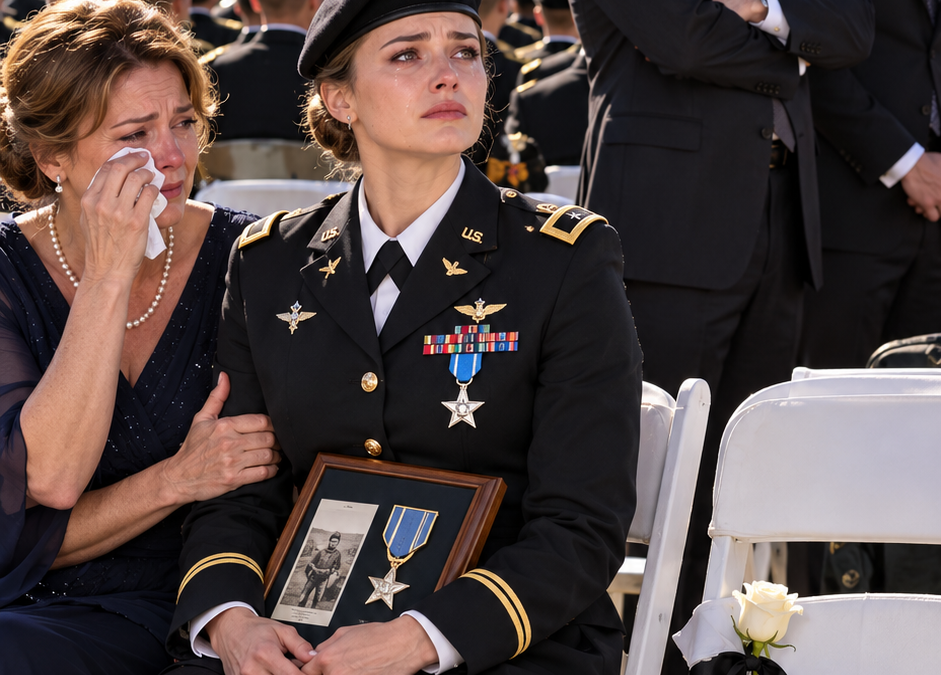
I Spent My Whole Life Looking for My Father in the Empty Chair Beside My Mother
My father missed my basic training graduation, my commissioning, and the ceremony where the Army pinned a Silver Star to my uniform.
For years, I told myself I had stopped searching every audience for his face, but the empty chair beside my mother always found me first.
Long after I ran out of chances to ask him why, a sealed letter waited for the day he finally chose to sit in one of those chairs.
My name is Paige Halston.
My father believed there were two kinds of decisions in life.
The ones he approved of.
And the ones you would eventually regret.
Dr. Richard Halston had built his entire life around certainty.
He was a cardiothoracic surgeon in Richmond, Virginia, the kind of man who could walk into an operating room during a crisis and make everyone else breathe more slowly just because he had arrived.
He wore tailored suits.
Drove a black Mercedes.
Read medical journals at breakfast.
He spoke about achievement the way other fathers talked about weather.
measurable.
Comparable.
Expected.
My older brother Wesley understood the system better than I did.
He went to medical school.
Dad approved.
He pursued surgery.
Dad approved.
He joined the hospital network where Dad had spent most of his career.
Dad practically glowed whenever someone asked what Wesley was doing.
Then there was me.
By the time I was seventeen, Dad had already designed my future.
Duke.
Pre-med.
Medical school.
A residency secured through connections he had spent decades building.
He talked about it so confidently that relatives began congratulating me before I had agreed to any of it.
“You’ll be brilliant,” he used to say.
Not if you choose medicine.
Not if this is what you want.
You’ll be brilliant.
As though my life were an operation he had already scheduled.
There was one problem.
I did not want his future.
I wanted the Army.
The first person I told was my mother.
Marianne Halston was everything Dad was not.
She listened before deciding what she thought.
Her younger brother, Owen, had been an Army medic.
He was killed in Afghanistan when I was twelve.
I remembered his funeral more clearly than I wanted to.
The folded flag.
The uniformed soldiers.
My mother holding my hand so tightly it hurt.
And stories.
So many stories about Uncle Owen.
One stayed with me.
During an attack, he had crawled through exposed ground to reach two wounded soldiers.
Someone asked why.
The person telling the story shook his head.
“Because they were alive.”
That answer followed me home.
For weeks afterward, I thought about it.
Not medals.
Not heroism.
Not patriotism.
Just that sentence.
Because they were alive.
By seventeen, I knew what I wanted.
Combat medicine.
I wanted to be the person moving toward the wounded when everyone else had every reason to move away.
Mom sat quietly when I told her.
Then she took my hands.
“If this is really your choice, make sure you’re choosing service.”
“I am.”
“Not escape.”
“From Dad?”
She nodded.
“I’m not running from him.”
“Then you’re going to have to stand in front of him.”
That was harder.
I told Dad three weeks before high school graduation.
We were eating dinner.
Wesley was home from college.
Mom had already warned him something important was coming.
I knew because she barely touched her food.
I waited until Dad finished talking about one of his patients.
Then I said, “I enlisted.”
He looked at me.
Actually, he looked through me at first, as though waiting for the joke.
“What?”
“I enlisted in the Army.”
Wesley put down his fork.
Mom closed her eyes.
Dad gave a short laugh.
“No, you didn’t.”
“I signed yesterday.”
The laughter disappeared.
“You’ve been accepted to Duke.”
“I know.”
“You have a scholarship.”
“Partial.”
“That isn’t the point.”
“I know.”
“You have every academic advantage a student could ask for.”
“I know.”
“And you intend to throw that away?”
“I’m not throwing anything away.”
“You’re enlisting.”
“I want to train as a medic.”
His expression changed.
Not anger exactly.
Disbelief.
“You want to spend your life cleaning wounds in a desert?”
“Dad.”
“No.”
His voice stayed calm.
Dad rarely shouted.
That made arguments worse.
He spoke like a surgeon giving instructions to people who had already agreed to obey.
“No daughter of mine is enlisting in the Army.”
I remember staring at him.
Then saying, “I already did.”
The dining room became completely still.
“You signed without speaking to me.”
“Yes.”
“Without permission.”
“I’m eighteen.”
“You live beneath my roof.”
“For six more weeks.”
His face hardened.
Mom whispered, “Richard.”
He ignored her.
“I have spent your entire life making sure doors would be open for you.”
“I know.”
“And you are choosing the one path that wastes every advantage you have.”
“That’s not how I see it.”
“I am not interested in how an eighteen-year-old sees a decision that will affect the next fifty years.”
That hurt.
Maybe because part of me had hoped he would challenge me and then, eventually, listen.
Instead, he dismissed the person making the decision.
“Dad, this is my life.”
“I am aware.”
“Then why does it sound like you think it belongs to you?”
Wesley inhaled.
Mom stared at the table.
Dad leaned back slowly.
“If you walk away from the future I built for you, do not expect me to celebrate it.”
“I’m not asking you to celebrate.”
“Good.”
His eyes met mine.
“Because I won’t.”
Six weeks later, Mom drove me to the recruiting station.
Dad went to work.
He did not call before I boarded the bus.
I told myself that did not matter.
Then basic training started.
Nothing strips away an eighteen-year-old’s certainty quite like having another human being scream before sunrise because your bunk has somehow offended national security.
I was exhausted.
Homesick.
Covered in blisters.
Proud.
Miserable.
Excited.
There were nights I lay under a scratchy blanket and cried so quietly I could barely hear myself.
I wrote letters home.
Mostly to Mom.
But I wrote to Dad too.
I described obstacle courses.
Training.
Women in my platoon.
The first time I qualified.
I told him the Army was harder than I expected.
I thought admitting that might make him respond.
It did not.
Every mail call, I searched the envelopes.
Mom’s handwriting.
Friends.
Occasional family members.
Never Dad.
I wrote three letters anyway.
Then five.
Then eight.
Eventually, I stopped counting.
Graduation day came.
Families filled the reviewing stands at Fort Jackson.
Parents carried signs.
Children waved little flags.
People cried before we even marched onto the field.
I found Mom immediately.
She stood near the front.
And beside her was an empty chair.
At first I assumed Dad was parking.
Then I thought he had gone to the restroom.
Then the ceremony started.
The chair remained empty.
I marched.
Called cadence.
Stood in formation.
Listened to speeches.
And kept seeing that chair.
It was ridiculous.
Hundreds of people surrounded it.
Mom was there.
She was crying and clapping.
I should have looked at her.
Instead, I kept noticing the space beside her.
Afterward, Mom ran to me.
She hugged me so tightly I laughed.
“Can’t breathe.”
“I don’t care.”
I held her.
Then looked over her shoulder.
She knew immediately.
“He had surgery.”
“Emergency?”
The hesitation answered before she did.
“No.”
I nodded.
“He couldn’t reschedule?”
“Paige.”
“It’s okay.”
It was not.
That night I learned something I would spend years pretending I had forgotten.
An empty chair can be louder than a room full of applause.
I trained as a combat medic.
Then I joined an infantry brigade.
The work made sense to me in a way my father’s planned life never had.
It was demanding.
Precise.
Human.
You could have perfect technique and still fail someone if you forgot there was a frightened person attached to the wound.
Mom sent care packages during my first deployment.
Coffee.
Protein bars.
Socks.
Letters.
Pictures.
Sometimes Dad appeared in the background.
At a hospital fundraiser.
Beside Wesley at a conference.
In his study.
“He asks about you,” Mom wrote once.
I wrote back:
Then why doesn’t he ask me?
She never answered.
My second deployment changed everything.
A roadside bomb hit the vehicle ahead of ours.
One second, the road was ordinary.
The next, smoke filled everything.
People were shouting.
Training replaced thought.
I ran.
One soldier had lost part of his leg.
Another was unconscious.
The vehicle commander was trapped.
Flames were spreading.
His name was Sergeant First Class Aaron Bellamy.
Father of three.
Ohio.
I learned those details while trying to stop him from dying.
“Landon,” he kept saying.
“Stay with me.”
“Claire.”
“Sergeant, look at me.”
“Toby.”
“Tell them yourself.”
“I can’t feel my legs.”
“Then feel me pulling you.”
Ammunition began cooking off.
Someone outside yelled for me to move.
Aaron looked at me.
There are expressions you never forget.
He knew what was happening.
So did I.
“Go,” he said.
“No.”
“Medic.”
“No.”
Another soldier helped me pull him free.
We cleared the vehicle seconds before the interior burned completely.
All three wounded men survived.
Months later, I learned I would receive the Silver Star.
People congratulated me.
My commander shook my hand.
Mom cried on the phone.
I thought about Dad.
That embarrassed me.
After everything, my first thought was still:
Maybe he’ll come.
I sent him an invitation.
Then called.
No answer.
I called again.
Mom eventually called me back.
I knew from her voice.
“He isn’t coming.”
I sat on the edge of my bed.
“Why?”
“He says he doesn’t approve of making combat into a spectacle.”
“A spectacle.”
“He doesn’t believe war should be glorified.”
“That isn’t why.”
Silence.
“Mom.”
“I know.”
“He told Wesley he’s ashamed of me.”
She inhaled.
“How did you—”
“Wesley told me.”
“He shouldn’t have.”
“So it’s true.”
“He’s angry.”
“That wasn’t the question.”
“He loves you.”
I laughed once.
It sounded terrible.
“Then why does his love always look like an empty chair?”
She said nothing.
The award ceremony came.
Mom sat in front.
The seat beside her was empty.
Major General Nathaniel Ward pinned the Silver Star to my uniform.
He leaned closer.
“Your father should be proud.”
I looked straight ahead.
“He isn’t, sir.”
Ward paused.
Then stepped back.
The medal felt heavier afterward than it had during the ceremony.
Not because of what it represented.
Because some childish part of me had believed achievement could force love to become visible.
It could not.
My relationship with Dad did not end in one dramatic argument.
It disappeared slowly.
Birthdays became short texts.
Christmas became tense dinners.
Every conversation eventually turned into the person I could have been if I had listened.
When I was accepted into a military physician-assistant program, I called him.
I thought this one might matter.
Medicine.
Advanced training.
The bridge between what he wanted and what I had chosen.
“I got into the PA program.”
There was a pause.
Then:
“You could have been a doctor by now.”
My excitement disappeared.
“I thought you’d want to know.”
“I do.”
“That didn’t sound like it.”
“I’m stating a fact.”
“I’m proud of what I’m doing.”
“That doesn’t make it wise.”
I almost hung up.
Instead, I asked the question I had been avoiding for years.
“Are you ashamed of me?”
Silence.
A father should answer that question quickly.
Mine did not.
Finally:
“I’m disappointed by the life you chose.”
“That wasn’t what I asked.”
“I’m not going to lie to protect your feelings.”
My throat tightened.
“Thank you.”
“For what?”
“For finally being honest.”
I ended the call.
We did not speak for eleven months.
Then Mom got sick.
Pancreatic cancer.
Advanced.
Months, not years.
I requested emergency leave and flew home.
Dad met me at the hospital.
I almost did not recognize him.
My father had always seemed larger than whatever room he occupied.
Now his tie was crooked.
Gray covered his jaw.
His shoulders sagged.
“She has months,” he said.
The surgeon had become a husband who could not fix his wife.
For the first time, I felt sorry for him before I felt angry.
Mom came home under hospice care.
Wesley visited, but his hospital responsibilities made long stays difficult.
I remained.
I managed medication.
Dressings.
Pain.
Breathing.
Nausea.
The thousand indignities illness brings into a house.
Dad watched me.
He never complimented me.
But he stopped correcting me.
That was progress.
One night around three, Mom woke.
Dad was sleeping in the chair beside the bed.
She asked me to help her sit up.
“You’re good at this,” she whispered.
“I’ve had good training.”
“No.”
Her fingers closed around mine.
“Training teaches hands.”
She looked at me.
“It doesn’t teach the heart.”
I looked away.
“Dad would disagree.”
“Your father is afraid.”
“Of what?”
“Losing everyone.”
“He pushed me away.”
“Because you chose a world he couldn’t control.”
“That doesn’t excuse it.”
“No.”
She looked toward him.
“It doesn’t.”
For a moment, we listened to him breathe.
“Paige.”
“Yes?”
“Don’t spend your life begging that man to see your worth.”
My eyes filled.
“But don’t let his blindness make you cruel.”
“I don’t hate him.”
“I know.”
“That’s the problem.”
Mom smiled faintly.
“Love is rarely the problem.”
She squeezed my hand.
“Pride is.”
She died eight days later.
At her funeral, Dad stood beside me.
He looked at the flag.
Refused to touch it.
Afterward, he went back to work.
I went back to the Army.
Our last real conversation happened beside my car.
“If you ever need me,” I said, “call.”
He placed his hands in his coat pockets.
“I can manage.”
“I know.”
He waited.
Maybe he expected an argument.
I did not give him one.
I drove away.
In the mirror, he stood alone.
Two more years passed.
I finished the physician-assistant program.
Promoted to captain.
I could diagnose, prescribe, perform emergency procedures, manage trauma care.
Dad never congratulated me.
Then I deployed again.
The mission combined humanitarian support with security operations in a mountainous region damaged by severe flooding and insurgent violence.
We treated everyone.
Soldiers.
Children.
Farmers.
People pulled from collapsed buildings.
People caught in attacks.
There were never enough beds.
Never enough blood.
Never enough hours.
One afternoon, a convoy brought casualties from an ambush near a flooded village.
Lieutenant Christopher Hale arrived barely conscious.
Twenty-seven.
Married six months.
Wife pregnant.
Multiple shrapnel wounds.
Internal bleeding.
Weather grounded evacuation helicopters.
The nearest surgeon was hours away.
Chris grabbed my sleeve.
“Am I dying?”
You learn quickly never to promise what medicine cannot guarantee.
“I’m going to do everything I can.”
“My wife’s name is Emma.”
“I know.”
His eyes opened wider.
“You know?”
“You’ve told me seventeen times.”
He almost smiled.
“She’ll be mad.”
“No.”
“She hates when I repeat myself.”
“Trust me. She won’t care.”
General Ward entered.
“No helicopter for at least ninety minutes.”
“Sir, he doesn’t have ninety.”
“What do you need?”
“A surgeon.”
“You know where the nearest one is.”
I did.
Then another answer came.
My father.
Dr. Richard Halston had performed more emergency operations than most surgeons would see in a lifetime.
I had not spoken to him properly in years.
I still knew his number.
“Get me secure video.”
Ward studied me.
“You know someone?”
“Yes.”
“Good?”
I looked at him.
“The best.”
Dad answered on the fourth ring.
“Paige?”
The first time he had heard my voice in nearly two years.
“I need your help.”
He heard something in me.
No judgment.
No questions.
“What happened?”
“Twenty-seven-year-old male. Multiple abdominal shrapnel wounds. Severe hemorrhage. No evacuation for ninety minutes.”
“Vitals?”
I gave them.
His voice changed.
It happened instantly.
The father disappeared.
The surgeon took over.
“Show me imaging.”
For the next two hours, my father guided us through the most difficult procedure of my career.
Video failed twice.
Power flickered.
Chris lost his pulse.
Dad never raised his voice.
At one point my hands hesitated.
His voice came through the monitor.
“Paige.”
“I’m here.”
“Listen to me.”
I looked up.
“You know what you’re doing.”
Everything inside me stopped for half a second.
Then resumed.
It was one sentence.
Eight words.
I had waited half my life to hear something like them.
Not I love you.
Not I’m proud.
You know what you’re doing.
From him, it was almost the same thing.
We controlled the bleeding.
Chris survived until evacuation.
As the team moved him, his eyes opened.
“Tell Emma…”
“You can tell her yourself.”
His mouth twitched.
“You say that to everybody?”
“Only the people who talk too much.”
He smiled.
Then closed his eyes.
Afterward, I called Dad.
“He’s alive.”
Silence.
Then:
“And you?”
“I’m fine.”
“You don’t sound fine.”
“I’m tired.”
“You saved him.”
“We saved him.”
Another pause.
“Your mother would be proud.”
My chest tightened.
“What about you?”
Nothing.
“Dad?”
The connection ended.
I never learned whether it failed.
Or whether he chose silence.
Three weeks later, Ward called me in.
Chris had reached Germany.
Complications.
Outcome uncertain.
“He wrote something for his wife,” Ward said.
Then handed me another envelope.
“And something for you.”
I stared at it.
“Read it.”
“No.”
“Why?”
“If I read that, it feels like goodbye.”
Ward did not argue.
I carried the envelope for the rest of deployment.
Unopened.
Christopher survived.
Recovery took nearly a year.
He went home to Emma.
Met his daughter.
They named her Grace.
His letter remained sealed in a box beneath my bed.
I claimed I was busy.
Truth was, I had become frightened of final words.
Mom left none.
I did not want to discover what a man wrote when he believed he would never go home.
Six months later, General Ward offered me a position with a specialized medical response unit.
Disaster zones.
Isolated military teams.
Civilian emergencies where hospitals could not function.
High risk.
Exactly the kind of work my father feared.
I accepted.
He heard from Wesley.
My phone rang that evening.
“You volunteered for another high-risk unit?”
“Yes.”
“After what happened on your last deployment?”
“Because of what happened.”
“You can work at any hospital.”
“I don’t want any hospital.”
“You’re still trying to prove something.”
I closed my eyes.
“No.”
“You always—”
“Dad.”
He stopped.
“I stopped trying to prove myself to you years ago.”
I heard the words hurt him.
I continued anyway.
“You’re angry.”
“I’m tired.”
“Of what?”
“Being loved like a failed version of the daughter you wanted.”
“I never called you a failure.”
“You didn’t have to.”
“That isn’t fair.”
“You missed basic training.”
“I had work.”
“You missed my commissioning.”
“I disagreed with the direction you were going.”
“You missed the Silver Star.”
“I refuse to glorify—”
“You punished me for making my own life.”
Silence.
“You walked away from an extraordinary opportunity,” he said.
“And built an extraordinary life.”
Nothing.
My voice softened.
“I wish you could see that.”
Then I ended the call.
Three months later, an earthquake struck a coastal region overseas.
Hospitals collapsed.
Roads broke apart.
Thousands displaced.
Our unit deployed.
For eleven days, sleep came in fragments.
Aftershocks shook the ground constantly.
On the twelfth morning, we received word that a school being used as an emergency shelter had partially collapsed.
Children were trapped.
We entered through the eastern wall.
Dust filled the corridors.
Water from a broken pipe flooded the basement.
We found survivors.
Moved them one at a time.
Then we found a little girl pinned beneath concrete.
Her name was Sofia.
She spoke little English.
I spoke almost none of her language.
Fear needed no translation.
I gave her my unit patch.
“Hold this.”
She grabbed it.
Engineers worked around the slab.
Another aftershock struck.
The ceiling shifted.
Somebody screamed for evacuation.
Sofia screamed too.
I thought of Uncle Owen.
Aaron Bellamy saying his children’s names.
Christopher Hale begging me to remember Emma.
Mom telling me not to let Dad’s blindness make me cruel.
And Dad standing alone beside my car.
I stayed.
Six minutes later, they freed Sofia.
I carried her toward the exit.
Twenty feet.
Maybe less.
Then the corridor collapsed.
The official report later said I covered her with my body.
I have no memory of choosing.
Some decisions happen before fear gets a vote.
Sofia lived.
I did not walk out.
My team carried me.
At the field hospital, General Ward sat beside my bed.
One look at him and I knew.
“How long?”
“Paige.”
“How long, sir?”
His jaw tightened.
“Not long.”
I nodded.
Pain medication blurred the tent.
“Did Sofia make it?”
“Yes.”
“Promise.”
“I promise.”
I closed my eyes.
Then remembered Christopher’s unopened letter.
Still packed with my personal belongings.
“General.”
“I’m here.”
“I need paper.”
He found a notebook.
Writing was harder than I expected.
My hand shook.
Blood pressure falling.
Pain.
Fatigue.
I wrote slowly.
Dad.
I stopped.
Started again.
When I finished, I folded the pages.
Handed them to Ward.
“Don’t mail this.”
“What do you want?”
“Give it to him yourself.”
“When?”
I imagined Dad receiving notification.
My funeral.
Another empty chair somewhere.
“When he finally comes to one of my ceremonies.”
Ward stared at me.
“And if he doesn’t?”
“Keep it.”
“He’ll come.”
“You don’t know him.”
“No.”
He held the letter.
“But I know regret.”
I almost laughed.
“There’s another letter.”
“Whose?”
“Lieutenant Hale.”
“The man you saved?”
“Yes.”
“Give Dad that too.”
Ward nodded.
“Anything else?”
My anger suddenly felt heavy.
All those years.
All those chairs.
All those conversations that ended before either of us said what we meant.
“Tell him…”
My voice broke.
Ward leaned closer.
“Tell him I wasn’t ashamed of being his daughter.”
“You should tell him yourself.”
“I think I waited too long.”
Ward took my hand.
“No, Captain.”
His voice cracked.
“He did.”
I died twenty-three minutes later.
I wasn’t there to see what came next.
But this is the part of my story that belonged to the people I left behind.
Dad attended my funeral.
He did not cry where anyone could see.
Hundreds of soldiers stood beneath a gray Virginia sky.
My coffin was covered with the flag he had avoided for most of my military life.
General Ward spoke.
Christopher Hale stood with a cane beside Emma.
Their daughter Grace was there.
Sofia’s family watched remotely from overseas.
Dad sat in the front row.
Beside him was another empty chair.
Mom’s.
The honor guard folded my flag.
Placed it into Dad’s hands.
“This flag is presented on behalf of a grateful nation…”
For years, Dad had refused to touch military flags at family ceremonies.
Now he held mine against his chest.
After my funeral, he stopped performing surgery for a while.
When he returned, colleagues said he had changed.
Quieter.
Less interested in awards.
He removed many of Wesley’s framed medical achievements from his office.
Not because he loved my brother less.
Because he finally understood what comparison had cost us.
He placed one photograph on his desk.
Me at basic training graduation.
Mom beside me.
The empty chair visible in the background.
Four years passed.
The Army built a new emergency medical training facility at Fort Liberty.
They named it the Captain Paige Halston Center for Combat and Humanitarian Medicine.
Dad received an invitation to the dedication.
He left it unopened on the kitchen counter.
Wesley found it.
“You’re going.”
Dad shook his head.
“I can’t.”
“You didn’t go when she was alive.”
Dad looked away.
“Exactly.”
Wesley did not let him hide behind that.
“That isn’t a reason to stay away.”
He pushed the invitation across the counter.
“It is the reason you have to go.”
On the morning of the ceremony, Dad put on the same dark suit he had worn at my funeral.
Then drove three hours to Fort Liberty.
The auditorium was full.
Medics.
Military physicians.
Nurses.
Pilots.
Veterans.
Families.
A large photograph of me stood on the stage.
Beside it sat an empty chair.
My Silver Star rested inside a glass display case.
Dad sat at the back.
When General Ward entered, everyone stood.
Ward walked down the center aisle.
But he did not go to the stage.
He stopped beside my father.
“Dr. Halston?”
Dad rose.
Unsteadily.
Ward reached inside his uniform jacket.
Two envelopes.
One old.
Creased.
The other carrying my handwriting.
“Your daughter asked me to give these to you.”
Dad stared.
“Why now?”
“She said I should wait until you attended one of her ceremonies.”
The room became completely silent.
Dad looked toward the stage.
Toward the empty chair.
Then he opened Christopher Hale’s letter first.
Captain Halston,
If you’re reading this, I may not have made it home.
Please tell my wife that I fought to stay.
Tell my daughter, if I’m lucky enough to have one, that a medic named Paige refused to let her father die.
You said your father helped guide the surgery.
I don’t know what stands between you and him, but I hope he understands something.
There are children who still have a father because he taught you steady hands, and because the Army gave you the courage to use those hands where they were needed.
Whatever he wanted you to become, I hope someday he sees what you already are.
You are the reason I may get to go home.
—Christopher Hale
Dad read the letter twice.
Then Christopher stood.
He walked slowly.
Still carrying the effects of his injuries.
Beside him was Grace.
Four years old.
She held his hand.
“This is my daughter,” Christopher told Dad.
Dad stared at her.
“She exists because Paige saved me.”
Grace stepped forward with a folded drawing.
A woman in a green uniform stood beneath a yellow sun.
Across the top:
THANK YOU, CAPTAIN PAIGE.
Dad covered his mouth.
The surgeon who had spent his entire life controlling his face broke down in front of hundreds of strangers.
General Ward waited.
Then handed him my letter.
Dad opened it.
Dad,
If you’re reading this, then you finally came.
I wish I could tell you I stopped looking for you in audiences.
I didn’t.
At basic training, my commissioning, the Silver Star ceremony, I always found the empty chair first.
For years, I thought your absence meant I had failed to become someone worth watching.
I know better now.
I treated soldiers who called for their mothers when they were wounded.
I held fathers who begged to see their children again.
I cared for people who had nobody nearby.
They taught me something I wish we had understood while there was still time.
Love should not be a reward for obedience.
You wanted me to become a doctor because you believed saving lives mattered.
I chose a different uniform.
But Dad, I was trying to do the same thing.
Your hands taught me precision.
Mom taught me compassion.
The Army taught me courage.
Everything good I carried into the field came from somewhere.
Part of it came from you.
I was angry with you.
Sometimes, even near the end, I was still angry.
But I never hated you.
The night we saved Lieutenant Hale, you told me I knew what I was doing.
You probably forgot.
I didn’t.
It was the first time I heard something that sounded like pride in your voice.
I carried those words with me.
If there is an empty chair at this ceremony, don’t stare at it.
Look at the medics being trained.
Look at the patients they will save.
Look at the families who will get one more birthday, one more Christmas, one more ordinary Tuesday morning together.
That is where I am.
And Dad, for what it’s worth, I was never ashamed of being your daughter.
I only wish you had not been ashamed of me.
—Paige
My father lowered the letter.
Ward guided him toward the stage.
Dad stopped beside the empty chair.
There had been so many of them.
Beside Mom at basic training.
At my commissioning.
At my Silver Star ceremony.
Beside him at my funeral.
Empty chairs had become the architecture of our relationship.
This time, Dad did something different.
He sat down.
When Ward unveiled the dedication plaque, the auditorium stood.
Applause filled the room.
Dad looked toward my photograph.
“I’m here,” he whispered.
Too late.
But true.
Afterward, he donated most of his private medical library to the center.
Then created a scholarship for enlisted medics pursuing advanced medical education.
He insisted on one unusual condition.
The scholarship would not be reserved for perfect academic records.
Some recipients would be soldiers whose families did not understand why they had chosen service.
Every year, Dad attended the graduation.
Front row.
Every name.
Every time.
If he saw a young soldier look toward an empty family seat, he remembered.
Sometimes he introduced himself.
Sometimes he simply stayed.
Five years after my death, he stood before another class of Army medics.
His hair had turned completely white.
His hands, once famous for their steadiness, trembled slightly around the lectern.
“My daughter believed I was ashamed of her,” he said.
The room became quiet.
“She was right.”
No excuses.
No softened version.
“I confused control with love.”
He looked toward my photograph above the doors.
“I believed that because Paige rejected the future I designed for her, she had rejected me.”
He swallowed.
“So I punished her with my absence.”
A few medics lowered their eyes.
“She spent her life running toward people who needed her.”
His voice broke.
“I spent too much of mine refusing to take one step toward her.”
Dad removed a copy of my letter.
“My daughter saved soldiers.”
He looked at Christopher Hale, who had returned for the ceremony.
“Civilians.”
He looked toward a photograph Sofia’s family had sent.
“Children.”
Then touched his own chest.
“And one very stubborn surgeon who understood the truth four years too late.”
He took a long breath.
“She did not ruin her life by choosing the Army.”
His eyes lifted toward my photograph.
“She gave her life meaning.”
The medics stood.
Then the families.
Then instructors.
Then officers.
Applause filled the auditorium.
Dad turned toward my picture.
Every chair that day was occupied.
And maybe that was the final mercy.
Not that he could repair what had happened between us.
He couldn’t.
Regret does not travel backward.
There was no version of time in which he could suddenly appear beside Mom at Fort Jackson.
No way for him to stand in the audience when I became an officer.
No second Silver Star ceremony.
No phone call where I could hear him say what he finally learned to say publicly.
I am proud of you.
But change matters even when it arrives too late for the person who needed it first.
Dad could not become the father I had waited for.
He could become a man who refused to leave another young soldier staring at an empty chair without understanding that somebody saw them.
That became his work.
My father had once believed saving lives happened in operating rooms.
Maybe that was why he never understood mine.
He saw medicine as hospitals.
Sterile instruments.
Controlled environments.
The Army frightened him because it put medicine inside chaos.
But chaos was where I found meaning.
A burning vehicle.
A field hospital.
A collapsed school.
A frightened child beneath concrete.
Lives do not always wait for ideal conditions.
Sometimes someone has to go where the patient is.
That was what Uncle Owen understood.
It was what I learned.
And eventually, through loss, it was what Dad came to understand too.
If I could have spoken to him at that final ceremony, I do not think I would have asked whether he was proud.
That question belonged to a younger version of me.
The eighteen-year-old searching mail for his handwriting.
The soldier watching an empty chair.
The captain staring straight ahead while a general pinned silver to her uniform.
I spent too many years believing his approval would prove I had chosen correctly.
I know better.
The people I helped were proof enough.
Aaron Bellamy went home to Landon, Claire, and Toby.
Christopher Hale met Grace.
Sofia grew up because our team refused to leave her beneath concrete.
There were others whose names disappeared into medical records and memory.
People who got another morning.
Another argument with a spouse.
Another school pickup.
Another birthday.
That was the life I chose.
It was not the life Dad chose for me.
But it was mine.
And perhaps that was the lesson underneath everything.
Parents can build roads for their children.
They can open doors.
Offer advice.
Warn about danger.
Give every advantage they know how to give.
What they cannot do is demand that love become the price of using those roads.
My father believed love meant guiding me toward the safest future he could imagine.
When I refused, he withheld his presence, expecting pain to correct me.
Instead, the pain changed both of us.
I learned to live without applause from the person I wanted it from most.
He learned that absence is not neutrality.
Every ceremony he skipped said something.
Even when he intended silence.
Especially then.
An empty chair speaks.
It says:
Your choice disappointed me more than your presence matters.
I spent years hearing that message.
Then, in the final letter of my life, I tried to leave him another one.
Love should not be a reward for obedience.
That was what I wanted him to understand.
Not that the Army was always right.
Not that service made me noble.
Not that danger should be celebrated.
Only that I was still his daughter when I chose differently.
I was still worthy of being watched.
Still worthy of being congratulated.
Still worthy of having my father beside my mother.
I had never needed him to love the Army.
I needed him to love me while I did.
He learned.
Eventually.
Four years after my death.
Years too late for us.
But not too late for everyone.
The scholarship at Fort Liberty continued.
Dad attended every ceremony his health allowed.
One year, a young enlisted medic named Ramirez graduated from an advanced program.
His parents had refused to attend because they believed he should have stayed home and joined the family business.
Dad noticed the empty seats.
Afterward, he found Ramirez standing alone outside the auditorium.
The young man was pretending to check his phone.
Dad knew that performance.
He had watched me do versions of it.
He approached.
“Specialist Ramirez?”
“Yes, sir?”
Dad held out his hand.
“I’m Richard Halston.”
Ramirez recognized the name from the center.
“Oh.”
Dad looked toward the auditorium.
“You did well today.”
“Thank you, sir.”
The young man smiled awkwardly.
Dad could have left.
Instead he asked, “Do you have dinner plans?”
Years earlier, Dad would never have done that.
Not because he was cruel.
Because he believed family pain was private.
He had learned otherwise.
He invited Ramirez to dinner with several instructors.
No speech.
No attempt to replace parents.
Just presence.
That became a habit.
Dad never told those soldiers he understood exactly how they felt.
He did not.
He understood the other chair.
The one that should have been filled.
Sometimes that was enough.
Toward the end of his life, Wesley once asked whether he regretted pushing me toward medicine.
Dad shook his head.
“No.”
Wesley was surprised.
“You don’t?”
“I regret believing medicine was the only honorable way for her to save people.”
Then he looked at my photograph.
“And I regret making her pay for teaching me I was wrong.”
That answer would have mattered to me.
I like to believe I would have smiled.
Maybe I would have made him work harder.
Probably.
Forgiveness is not the same as pretending years did not happen.
But I would have wanted him back.
That is the truth I could never quite say while I was alive.
Even when I stopped calling.
Even when I told him I no longer needed his approval.
Even when I told myself I had accepted the empty chair.
I still wanted my father.
Not Dr. Richard Halston.
Not the surgeon.
Not the planner.
Not the man who knew what my future should look like.
Just Dad.
The man who once taught me how to hold my hands steady while tying fishing line.
The man who stayed up all night when I had pneumonia at nine.
The man who carried me asleep from the car when he thought I was too old to remember.
Love can survive pride for a very long time.
Sometimes longer than people do.
That is what makes it tragic.
Dad loved me.
I loved him.
We wasted years behaving as though love had to wait until one of us surrendered.
Neither of us won.
The only victory came later, when he finally stopped treating surrender as the goal.
He began showing up.
For strangers.
For medics.
For young people making lives their families did not understand.
He could not fill my empty chairs.
But he could refuse to create new ones.
And that became the closest thing our story had to healing.
The Captain Paige Halston Center still carried my name above the entrance.
Students walked beneath it every morning.
Some knew my full story.
Most did not.
That was fine.
Names on buildings eventually become background.
What mattered happened inside.
Medics learned.
Physician assistants trained.
Teams prepared for places where ordinary hospitals might not exist.
People practiced stopping bleeding.
Opening airways.
Making decisions when equipment failed.
They learned that competence and compassion had to live together.
Dad’s medical books lined one section of the library.
His scholarship funded students who might otherwise have left training.
My Silver Star remained in the display case.
But Dad stopped standing in front of it.
When visitors asked what he was proudest of, he did not point to the medal.
He pointed toward the classrooms.
“That.”
Once, someone asked him whether he wished I had become a surgeon.
He answered immediately.
“No.”
Then smiled sadly.
“I wish I had become her father sooner.”
By then, every chair in that auditorium seemed occupied.
But Dad still looked at them.
Habits formed by regret are difficult to break.
Maybe he imagined me there.
Maybe not.
I like to think that when applause rose for each graduating class, he finally understood something I had learned during basic training.
The person beside you matters more than the seat that is empty.
Mom had been there.
I should have looked at her more.
She had clapped enough for two parents.
Loved enough for two.
Written every week.
Held the family together until cancer took her.
For years, I let Dad’s absence become louder than Mom’s presence.
That was one of my regrets.
If I could speak to my eighteen-year-old self standing on that parade field, I would tell her:
Look at Mom.
See her.
Do not give an empty chair more power than the person who came.
But I would also tell her she is allowed to hurt.
Strength does not require pretending rejection is painless.
That was another lesson the Army taught me.
Pain acknowledged becomes information.
Pain denied becomes direction.
I spent too long letting Dad’s absence steer me.
Work harder.
Volunteer again.
Take another risk.
Maybe then he will see.
Eventually, I stopped.
The day I told him, “I stopped trying to prove myself to you years ago,” I finally believed it.
That freedom came late.
But it came before the end.
When I went into that collapsed school, I was not thinking about earning anyone’s approval.
I stayed with Sofia because she was there.
Alive.
Afraid.
Because she was alive.
Uncle Owen would have understood.
Mom would have understood.
Dad eventually did too.
That was enough.
My final letter was not written to punish him.
I could have written anger.
There was plenty available.
You missed everything.
You chose pride.
You made me feel small.
All true.
But dying stripped life down quickly.
Twenty-three minutes does not leave room for elegant grudges.
What remained was love.
Complicated.
Wounded.
Unfinished.
Love.
So I wrote the truth.
I was never ashamed to be his daughter.
I only wished he had not been ashamed of me.
Maybe that sentence hurt him most.
I hope it also freed him.
Years later, before one graduation, Dad stood alone in the auditorium before anyone else arrived.
The lights were dim.
Rows of empty chairs faced the stage.
He walked to the front.
Sat where families would later sit.
For several minutes, he did nothing.
Then he took my letter from his pocket.
The paper had been folded so many times the creases were beginning to weaken.
He read the final lines again.
And Dad, for what it’s worth, I was never ashamed of being your daughter.
I only wish you had not been ashamed of me.
He closed his eyes.
“I wasn’t.”
Then corrected himself.
Not because anyone was there.
Because truth mattered even when nobody could hear it.
“I was.”
He looked toward my photograph.
“And I was wrong.”
That morning, families arrived.
Soldiers filled the seats.
Children climbed onto grandparents’ laps.
Phones came out.
People waved.
The class entered.
Dad stood with everyone else.
One by one, names were called.
One by one, he applauded.
Not politely.
Fully.
The way Mom used to clap.
And when the ceremony ended, nobody noticed one elderly surgeon standing beneath my photograph with tears in his eyes.
They did not need to.
Some transformations are not performances.
They are simply the long-delayed decision to become different.
My father could not go backward.
Neither can anyone.
He could only decide what to do with the truth once it reached him.
He chose to show up.
Again.
Again.
Again.
Until presence became something stronger than regret.
That is how I prefer to remember him.
Not as the man who missed basic training.
Not the man who left the Silver Star chair empty.
Not even the father whose silence followed me across half my career.
I remember the man standing in a military auditorium years after my death, holding a letter he should have received from a living daughter.
The man who finally sat down.
The man who finally listened.
The man who finally understood that my life had never been ruined because I refused to live the one he chose for me.
It had been difficult.
Dangerous.
Beautiful.
Mine.
And when he stood before those young medics and admitted he had been wrong, every chair around him was full.
He could not change our past.
But at last, my father stood for me.
What do you think of this story? Please leave a like and share your thoughts in the comments. Your support means a lot to us and inspires us to keep writing more meaningful and powerful stories. Thank you! 👍
𝗧𝗛𝗘 𝗘𝗡𝗗
I Spent My Whole Life Looking for My Father in the Empty Chair Beside My Mother
My father missed my basic training graduation, my commissioning, and the ceremony where the Army pinned a Silver Star to my uniform.
For years, I told myself I had stopped searching every audience for his face, but the empty chair beside my mother always found me first.
Long after I ran out of chances to ask him why, a sealed letter waited for the day he finally chose to sit in one of those chairs.
My name is Paige Halston.
My father believed there were two kinds of decisions in life.
The ones he approved of.
And the ones you would eventually regret.
Dr. Richard Halston had built his entire life around certainty.
He was a cardiothoracic surgeon in Richmond, Virginia, the kind of man who could walk into an operating room during a crisis and make everyone else breathe more slowly just because he had arrived.
He wore tailored suits.
Drove a black Mercedes.
Read medical journals at breakfast.
He spoke about achievement the way other fathers talked about weather.
measurable.
Comparable.
Expected.
My older brother Wesley understood the system better than I did.
He went to medical school.
Dad approved.
He pursued surgery.
Dad approved.
He joined the hospital network where Dad had spent most of his career.
Dad practically glowed whenever someone asked what Wesley was doing.
Then there was me.
By the time I was seventeen, Dad had already designed my future.
Duke.
Pre-med.
Medical school.
A residency secured through connections he had spent decades building.
He talked about it so confidently that relatives began congratulating me before I had agreed to any of it.
“You’ll be brilliant,” he used to say.
Not if you choose medicine.
Not if this is what you want.
You’ll be brilliant.
As though my life were an operation he had already scheduled.
There was one problem.
I did not want his future.
I wanted the Army.
The first person I told was my mother.
Marianne Halston was everything Dad was not.
She listened before deciding what she thought.
Her younger brother, Owen, had been an Army medic.
He was killed in Afghanistan when I was twelve.
I remembered his funeral more clearly than I wanted to.
The folded flag.
The uniformed soldiers.
My mother holding my hand so tightly it hurt.
And stories.
So many stories about Uncle Owen.
One stayed with me.
During an attack, he had crawled through exposed ground to reach two wounded soldiers.
Someone asked why.
The person telling the story shook his head.
“Because they were alive.”
That answer followed me home.
For weeks afterward, I thought about it.
Not medals.
Not heroism.
Not patriotism.
Just that sentence.
Because they were alive.
By seventeen, I knew what I wanted.
Combat medicine.
I wanted to be the person moving toward the wounded when everyone else had every reason to move away.
Mom sat quietly when I told her.
Then she took my hands.
“If this is really your choice, make sure you’re choosing service.”
“I am.”
“Not escape.”
“From Dad?”
She nodded.
“I’m not running from him.”
“Then you’re going to have to stand in front of him.”
That was harder.
I told Dad three weeks before high school graduation.
We were eating dinner.
Wesley was home from college.
Mom had already warned him something important was coming.
I knew because she barely touched her food.
I waited until Dad finished talking about one of his patients.
Then I said, “I enlisted.”
He looked at me.
Actually, he looked through me at first, as though waiting for the joke.
“What?”
“I enlisted in the Army.”
Wesley put down his fork.
Mom closed her eyes.
Dad gave a short laugh.
“No, you didn’t.”
“I signed yesterday.”
The laughter disappeared.
“You’ve been accepted to Duke.”
“I know.”
“You have a scholarship.”
“Partial.”
“That isn’t the point.”
“I know.”
“You have every academic advantage a student could ask for.”
“I know.”
“And you intend to throw that away?”
“I’m not throwing anything away.”
“You’re enlisting.”
“I want to train as a medic.”
His expression changed.
Not anger exactly.
Disbelief.
“You want to spend your life cleaning wounds in a desert?”
“Dad.”
“No.”
His voice stayed calm.
Dad rarely shouted.
That made arguments worse.
He spoke like a surgeon giving instructions to people who had already agreed to obey.
“No daughter of mine is enlisting in the Army.”
I remember staring at him.
Then saying, “I already did.”
The dining room became completely still.
“You signed without speaking to me.”
“Yes.”
“Without permission.”
“I’m eighteen.”
“You live beneath my roof.”
“For six more weeks.”
His face hardened.
Mom whispered, “Richard.”
He ignored her.
“I have spent your entire life making sure doors would be open for you.”
“I know.”
“And you are choosing the one path that wastes every advantage you have.”
“That’s not how I see it.”
“I am not interested in how an eighteen-year-old sees a decision that will affect the next fifty years.”
That hurt.
Maybe because part of me had hoped he would challenge me and then, eventually, listen.
Instead, he dismissed the person making the decision.
“Dad, this is my life.”
“I am aware.”
“Then why does it sound like you think it belongs to you?”
Wesley inhaled.
Mom stared at the table.
Dad leaned back slowly.
“If you walk away from the future I built for you, do not expect me to celebrate it.”
“I’m not asking you to celebrate.”
“Good.”
His eyes met mine.
“Because I won’t.”
Six weeks later, Mom drove me to the recruiting station.
Dad went to work.
He did not call before I boarded the bus.
I told myself that did not matter.
Then basic training started.
Nothing strips away an eighteen-year-old’s certainty quite like having another human being scream before sunrise because your bunk has somehow offended national security.
I was exhausted.
Homesick.
Covered in blisters.
Proud.
Miserable.
Excited.
There were nights I lay under a scratchy blanket and cried so quietly I could barely hear myself.
I wrote letters home.
Mostly to Mom.
But I wrote to Dad too.
I described obstacle courses.
Training.
Women in my platoon.
The first time I qualified.
I told him the Army was harder than I expected.
I thought admitting that might make him respond.
It did not.
Every mail call, I searched the envelopes.
Mom’s handwriting.
Friends.
Occasional family members.
Never Dad.
I wrote three letters anyway.
Then five.
Then eight.
Eventually, I stopped counting.
Graduation day came.
Families filled the reviewing stands at Fort Jackson.
Parents carried signs.
Children waved little flags.
People cried before we even marched onto the field.
I found Mom immediately.
She stood near the front.
And beside her was an empty chair.
At first I assumed Dad was parking.
Then I thought he had gone to the restroom.
Then the ceremony started.
The chair remained empty.
I marched.
Called cadence.
Stood in formation.
Listened to speeches.
And kept seeing that chair.
It was ridiculous.
Hundreds of people surrounded it.
Mom was there.
She was crying and clapping.
I should have looked at her.
Instead, I kept noticing the space beside her.
Afterward, Mom ran to me.
She hugged me so tightly I laughed.
“Can’t breathe.”
“I don’t care.”
I held her.
Then looked over her shoulder.
She knew immediately.
“He had surgery.”
“Emergency?”
The hesitation answered before she did.
“No.”
I nodded.
“He couldn’t reschedule?”
“Paige.”
“It’s okay.”
It was not.
That night I learned something I would spend years pretending I had forgotten.
An empty chair can be louder than a room full of applause.
I trained as a combat medic.
Then I joined an infantry brigade.
The work made sense to me in a way my father’s planned life never had.
It was demanding.
Precise.
Human.
You could have perfect technique and still fail someone if you forgot there was a frightened person attached to the wound.
Mom sent care packages during my first deployment.
Coffee.
Protein bars.
Socks.
Letters.
Pictures.
Sometimes Dad appeared in the background.
At a hospital fundraiser.
Beside Wesley at a conference.
In his study.
“He asks about you,” Mom wrote once.
I wrote back:
Then why doesn’t he ask me?
She never answered.
My second deployment changed everything.
A roadside bomb hit the vehicle ahead of ours.
One second, the road was ordinary.
The next, smoke filled everything.
People were shouting.
Training replaced thought.
I ran.
One soldier had lost part of his leg.
Another was unconscious.
The vehicle commander was trapped.
Flames were spreading.
His name was Sergeant First Class Aaron Bellamy.
Father of three.
Ohio.
I learned those details while trying to stop him from dying.
“Landon,” he kept saying.
“Stay with me.”
“Claire.”
“Sergeant, look at me.”
“Toby.”
“Tell them yourself.”
“I can’t feel my legs.”
“Then feel me pulling you.”
Ammunition began cooking off.
Someone outside yelled for me to move.
Aaron looked at me.
There are expressions you never forget.
He knew what was happening.
So did I.
“Go,” he said.
“No.”
“Medic.”
“No.”
Another soldier helped me pull him free.
We cleared the vehicle seconds before the interior burned completely.
All three wounded men survived.
Months later, I learned I would receive the Silver Star.
People congratulated me.
My commander shook my hand.
Mom cried on the phone.
I thought about Dad.
That embarrassed me.
After everything, my first thought was still:
Maybe he’ll come.
I sent him an invitation.
Then called.
No answer.
I called again.
Mom eventually called me back.
I knew from her voice.
“He isn’t coming.”
I sat on the edge of my bed.
“Why?”
“He says he doesn’t approve of making combat into a spectacle.”
“A spectacle.”
“He doesn’t believe war should be glorified.”
“That isn’t why.”
Silence.
“Mom.”
“I know.”
“He told Wesley he’s ashamed of me.”
She inhaled.
“How did you—”
“Wesley told me.”
“He shouldn’t have.”
“So it’s true.”
“He’s angry.”
“That wasn’t the question.”
“He loves you.”
I laughed once.
It sounded terrible.
“Then why does his love always look like an empty chair?”
She said nothing.
The award ceremony came.
Mom sat in front.
The seat beside her was empty.
Major General Nathaniel Ward pinned the Silver Star to my uniform.
He leaned closer.
“Your father should be proud.”
I looked straight ahead.
“He isn’t, sir.”
Ward paused.
Then stepped back.
The medal felt heavier afterward than it had during the ceremony.
Not because of what it represented.
Because some childish part of me had believed achievement could force love to become visible.
It could not.
My relationship with Dad did not end in one dramatic argument.
It disappeared slowly.
Birthdays became short texts.
Christmas became tense dinners.
Every conversation eventually turned into the person I could have been if I had listened.
When I was accepted into a military physician-assistant program, I called him.
I thought this one might matter.
Medicine.
Advanced training.
The bridge between what he wanted and what I had chosen.
“I got into the PA program.”
There was a pause.
Then:
“You could have been a doctor by now.”
My excitement disappeared.
“I thought you’d want to know.”
“I do.”
“That didn’t sound like it.”
“I’m stating a fact.”
“I’m proud of what I’m doing.”
“That doesn’t make it wise.”
I almost hung up.
Instead, I asked the question I had been avoiding for years.
“Are you ashamed of me?”
Silence.
A father should answer that question quickly.
Mine did not.
Finally:
“I’m disappointed by the life you chose.”
“That wasn’t what I asked.”
“I’m not going to lie to protect your feelings.”
My throat tightened.
“Thank you.”
“For what?”
“For finally being honest.”
I ended the call.
We did not speak for eleven months.
Then Mom got sick.
Pancreatic cancer.
Advanced.
Months, not years.
I requested emergency leave and flew home.
Dad met me at the hospital.
I almost did not recognize him.
My father had always seemed larger than whatever room he occupied.
Now his tie was crooked.
Gray covered his jaw.
His shoulders sagged.
“She has months,” he said.
The surgeon had become a husband who could not fix his wife.
For the first time, I felt sorry for him before I felt angry.
Mom came home under hospice care.
Wesley visited, but his hospital responsibilities made long stays difficult.
I remained.
I managed medication.
Dressings.
Pain.
Breathing.
Nausea.
The thousand indignities illness brings into a house.
Dad watched me.
He never complimented me.
But he stopped correcting me.
That was progress.
One night around three, Mom woke.
Dad was sleeping in the chair beside the bed.
She asked me to help her sit up.
“You’re good at this,” she whispered.
“I’ve had good training.”
“No.”
Her fingers closed around mine.
“Training teaches hands.”
She looked at me.
“It doesn’t teach the heart.”
I looked away.
“Dad would disagree.”
“Your father is afraid.”
“Of what?”
“Losing everyone.”
“He pushed me away.”
“Because you chose a world he couldn’t control.”
“That doesn’t excuse it.”
“No.”
She looked toward him.
“It doesn’t.”
For a moment, we listened to him breathe.
“Paige.”
“Yes?”
“Don’t spend your life begging that man to see your worth.”
My eyes filled.
“But don’t let his blindness make you cruel.”
“I don’t hate him.”
“I know.”
“That’s the problem.”
Mom smiled faintly.
“Love is rarely the problem.”
She squeezed my hand.
“Pride is.”
She died eight days later.
At her funeral, Dad stood beside me.
He looked at the flag.
Refused to touch it.
Afterward, he went back to work.
I went back to the Army.
Our last real conversation happened beside my car.
“If you ever need me,” I said, “call.”
He placed his hands in his coat pockets.
“I can manage.”
“I know.”
He waited.
Maybe he expected an argument.
I did not give him one.
I drove away.
In the mirror, he stood alone.
Two more years passed.
I finished the physician-assistant program.
Promoted to captain.
I could diagnose, prescribe, perform emergency procedures, manage trauma care.
Dad never congratulated me.
Then I deployed again.
The mission combined humanitarian support with security operations in a mountainous region damaged by severe flooding and insurgent violence.
We treated everyone.
Soldiers.
Children.
Farmers.
People pulled from collapsed buildings.
People caught in attacks.
There were never enough beds.
Never enough blood.
Never enough hours.
One afternoon, a convoy brought casualties from an ambush near a flooded village.
Lieutenant Christopher Hale arrived barely conscious.
Twenty-seven.
Married six months.
Wife pregnant.
Multiple shrapnel wounds.
Internal bleeding.
Weather grounded evacuation helicopters.
The nearest surgeon was hours away.
Chris grabbed my sleeve.
“Am I dying?”
You learn quickly never to promise what medicine cannot guarantee.
“I’m going to do everything I can.”
“My wife’s name is Emma.”
“I know.”
His eyes opened wider.
“You know?”
“You’ve told me seventeen times.”
He almost smiled.
“She’ll be mad.”
“No.”
“She hates when I repeat myself.”
“Trust me. She won’t care.”
General Ward entered.
“No helicopter for at least ninety minutes.”
“Sir, he doesn’t have ninety.”
“What do you need?”
“A surgeon.”
“You know where the nearest one is.”
I did.
Then another answer came.
My father.
Dr. Richard Halston had performed more emergency operations than most surgeons would see in a lifetime.
I had not spoken to him properly in years.
I still knew his number.
“Get me secure video.”
Ward studied me.
“You know someone?”
“Yes.”
“Good?”
I looked at him.
“The best.”
Dad answered on the fourth ring.
“Paige?”
The first time he had heard my voice in nearly two years.
“I need your help.”
He heard something in me.
No judgment.
No questions.
“What happened?”
“Twenty-seven-year-old male. Multiple abdominal shrapnel wounds. Severe hemorrhage. No evacuation for ninety minutes.”
“Vitals?”
I gave them.
His voice changed.
It happened instantly.
The father disappeared.
The surgeon took over.
“Show me imaging.”
For the next two hours, my father guided us through the most difficult procedure of my career.
Video failed twice.
Power flickered.
Chris lost his pulse.
Dad never raised his voice.
At one point my hands hesitated.
His voice came through the monitor.
“Paige.”
“I’m here.”
“Listen to me.”
I looked up.
“You know what you’re doing.”
Everything inside me stopped for half a second.
Then resumed.
It was one sentence.
Eight words.
I had waited half my life to hear something like them.
Not I love you.
Not I’m proud.
You know what you’re doing.
From him, it was almost the same thing.
We controlled the bleeding.
Chris survived until evacuation.
As the team moved him, his eyes opened.
“Tell Emma…”
“You can tell her yourself.”
His mouth twitched.
“You say that to everybody?”
“Only the people who talk too much.”
He smiled.
Then closed his eyes.
Afterward, I called Dad.
“He’s alive.”
Silence.
Then:
“And you?”
“I’m fine.”
“You don’t sound fine.”
“I’m tired.”
“You saved him.”
“We saved him.”
Another pause.
“Your mother would be proud.”
My chest tightened.
“What about you?”
Nothing.
“Dad?”
The connection ended.
I never learned whether it failed.
Or whether he chose silence.
Three weeks later, Ward called me in.
Chris had reached Germany.
Complications.
Outcome uncertain.
“He wrote something for his wife,” Ward said.
Then handed me another envelope.
“And something for you.”
I stared at it.
“Read it.”
“No.”
“Why?”
“If I read that, it feels like goodbye.”
Ward did not argue.
I carried the envelope for the rest of deployment.
Unopened.
Christopher survived.
Recovery took nearly a year.
He went home to Emma.
Met his daughter.
They named her Grace.
His letter remained sealed in a box beneath my bed.
I claimed I was busy.
Truth was, I had become frightened of final words.
Mom left none.
I did not want to discover what a man wrote when he believed he would never go home.
Six months later, General Ward offered me a position with a specialized medical response unit.
Disaster zones.
Isolated military teams.
Civilian emergencies where hospitals could not function.
High risk.
Exactly the kind of work my father feared.
I accepted.
He heard from Wesley.
My phone rang that evening.
“You volunteered for another high-risk unit?”
“Yes.”
“After what happened on your last deployment?”
“Because of what happened.”
“You can work at any hospital.”
“I don’t want any hospital.”
“You’re still trying to prove something.”
I closed my eyes.
“No.”
“You always—”
“Dad.”
He stopped.
“I stopped trying to prove myself to you years ago.”
I heard the words hurt him.
I continued anyway.
“You’re angry.”
“I’m tired.”
“Of what?”
“Being loved like a failed version of the daughter you wanted.”
“I never called you a failure.”
“You didn’t have to.”
“That isn’t fair.”
“You missed basic training.”
“I had work.”
“You missed my commissioning.”
“I disagreed with the direction you were going.”
“You missed the Silver Star.”
“I refuse to glorify—”
“You punished me for making my own life.”
Silence.
“You walked away from an extraordinary opportunity,” he said.
“And built an extraordinary life.”
Nothing.
My voice softened.
“I wish you could see that.”
Then I ended the call.
Three months later, an earthquake struck a coastal region overseas.
Hospitals collapsed.
Roads broke apart.
Thousands displaced.
Our unit deployed.
For eleven days, sleep came in fragments.
Aftershocks shook the ground constantly.
On the twelfth morning, we received word that a school being used as an emergency shelter had partially collapsed.
Children were trapped.
We entered through the eastern wall.
Dust filled the corridors.
Water from a broken pipe flooded the basement.
We found survivors.
Moved them one at a time.
Then we found a little girl pinned beneath concrete.
Her name was Sofia.
She spoke little English.
I spoke almost none of her language.
Fear needed no translation.
I gave her my unit patch.
“Hold this.”
She grabbed it.
Engineers worked around the slab.
Another aftershock struck.
The ceiling shifted.
Somebody screamed for evacuation.
Sofia screamed too.
I thought of Uncle Owen.
Aaron Bellamy saying his children’s names.
Christopher Hale begging me to remember Emma.
Mom telling me not to let Dad’s blindness make me cruel.
And Dad standing alone beside my car.
I stayed.
Six minutes later, they freed Sofia.
I carried her toward the exit.
Twenty feet.
Maybe less.
Then the corridor collapsed.
The official report later said I covered her with my body.
I have no memory of choosing.
Some decisions happen before fear gets a vote.
Sofia lived.
I did not walk out.
My team carried me.
At the field hospital, General Ward sat beside my bed.
One look at him and I knew.
“How long?”
“Paige.”
“How long, sir?”
His jaw tightened.
“Not long.”
I nodded.
Pain medication blurred the tent.
“Did Sofia make it?”
“Yes.”
“Promise.”
“I promise.”
I closed my eyes.
Then remembered Christopher’s unopened letter.
Still packed with my personal belongings.
“General.”
“I’m here.”
“I need paper.”
He found a notebook.
Writing was harder than I expected.
My hand shook.
Blood pressure falling.
Pain.
Fatigue.
I wrote slowly.
Dad.
I stopped.
Started again.
When I finished, I folded the pages.
Handed them to Ward.
“Don’t mail this.”
“What do you want?”
“Give it to him yourself.”
“When?”
I imagined Dad receiving notification.
My funeral.
Another empty chair somewhere.
“When he finally comes to one of my ceremonies.”
Ward stared at me.
“And if he doesn’t?”
“Keep it.”
“He’ll come.”
“You don’t know him.”
“No.”
He held the letter.
“But I know regret.”
I almost laughed.
“There’s another letter.”
“Whose?”
“Lieutenant Hale.”
“The man you saved?”
“Yes.”
“Give Dad that too.”
Ward nodded.
“Anything else?”
My anger suddenly felt heavy.
All those years.
All those chairs.
All those conversations that ended before either of us said what we meant.
“Tell him…”
My voice broke.
Ward leaned closer.
“Tell him I wasn’t ashamed of being his daughter.”
“You should tell him yourself.”
“I think I waited too long.”
Ward took my hand.
“No, Captain.”
His voice cracked.
“He did.”
I died twenty-three minutes later.
I wasn’t there to see what came next.
But this is the part of my story that belonged to the people I left behind.
Dad attended my funeral.
He did not cry where anyone could see.
Hundreds of soldiers stood beneath a gray Virginia sky.
My coffin was covered with the flag he had avoided for most of my military life.
General Ward spoke.
Christopher Hale stood with a cane beside Emma.
Their daughter Grace was there.
Sofia’s family watched remotely from overseas.
Dad sat in the front row.
Beside him was another empty chair.
Mom’s.
The honor guard folded my flag.
Placed it into Dad’s hands.
“This flag is presented on behalf of a grateful nation…”
For years, Dad had refused to touch military flags at family ceremonies.
Now he held mine against his chest.
After my funeral, he stopped performing surgery for a while.
When he returned, colleagues said he had changed.
Quieter.
Less interested in awards.
He removed many of Wesley’s framed medical achievements from his office.
Not because he loved my brother less.
Because he finally understood what comparison had cost us.
He placed one photograph on his desk.
Me at basic training graduation.
Mom beside me.
The empty chair visible in the background.
Four years passed.
The Army built a new emergency medical training facility at Fort Liberty.
They named it the Captain Paige Halston Center for Combat and Humanitarian Medicine.
Dad received an invitation to the dedication.
He left it unopened on the kitchen counter.
Wesley found it.
“You’re going.”
Dad shook his head.
“I can’t.”
“You didn’t go when she was alive.”
Dad looked away.
“Exactly.”
Wesley did not let him hide behind that.
“That isn’t a reason to stay away.”
He pushed the invitation across the counter.
“It is the reason you have to go.”
On the morning of the ceremony, Dad put on the same dark suit he had worn at my funeral.
Then drove three hours to Fort Liberty.
The auditorium was full.
Medics.
Military physicians.
Nurses.
Pilots.
Veterans.
Families.
A large photograph of me stood on the stage.
Beside it sat an empty chair.
My Silver Star rested inside a glass display case.
Dad sat at the back.
When General Ward entered, everyone stood.
Ward walked down the center aisle.
But he did not go to the stage.
He stopped beside my father.
“Dr. Halston?”
Dad rose.
Unsteadily.
Ward reached inside his uniform jacket.
Two envelopes.
One old.
Creased.
The other carrying my handwriting.
“Your daughter asked me to give these to you.”
Dad stared.
“Why now?”
“She said I should wait until you attended one of her ceremonies.”
The room became completely silent.
Dad looked toward the stage.
Toward the empty chair.
Then he opened Christopher Hale’s letter first.
Captain Halston,
If you’re reading this, I may not have made it home.
Please tell my wife that I fought to stay.
Tell my daughter, if I’m lucky enough to have one, that a medic named Paige refused to let her father die.
You said your father helped guide the surgery.
I don’t know what stands between you and him, but I hope he understands something.
There are children who still have a father because he taught you steady hands, and because the Army gave you the courage to use those hands where they were needed.
Whatever he wanted you to become, I hope someday he sees what you already are.
You are the reason I may get to go home.
—Christopher Hale
Dad read the letter twice.
Then Christopher stood.
He walked slowly.
Still carrying the effects of his injuries.
Beside him was Grace.
Four years old.
She held his hand.
“This is my daughter,” Christopher told Dad.
Dad stared at her.
“She exists because Paige saved me.”
Grace stepped forward with a folded drawing.
A woman in a green uniform stood beneath a yellow sun.
Across the top:
THANK YOU, CAPTAIN PAIGE.
Dad covered his mouth.
The surgeon who had spent his entire life controlling his face broke down in front of hundreds of strangers.
General Ward waited.
Then handed him my letter.
Dad opened it.
Dad,
If you’re reading this, then you finally came.
I wish I could tell you I stopped looking for you in audiences.
I didn’t.
At basic training, my commissioning, the Silver Star ceremony, I always found the empty chair first.
For years, I thought your absence meant I had failed to become someone worth watching.
I know better now.
I treated soldiers who called for their mothers when they were wounded.
I held fathers who begged to see their children again.
I cared for people who had nobody nearby.
They taught me something I wish we had understood while there was still time.
Love should not be a reward for obedience.
You wanted me to become a doctor because you believed saving lives mattered.
I chose a different uniform.
But Dad, I was trying to do the same thing.
Your hands taught me precision.
Mom taught me compassion.
The Army taught me courage.
Everything good I carried into the field came from somewhere.
Part of it came from you.
I was angry with you.
Sometimes, even near the end, I was still angry.
But I never hated you.
The night we saved Lieutenant Hale, you told me I knew what I was doing.
You probably forgot.
I didn’t.
It was the first time I heard something that sounded like pride in your voice.
I carried those words with me.
If there is an empty chair at this ceremony, don’t stare at it.
Look at the medics being trained.
Look at the patients they will save.
Look at the families who will get one more birthday, one more Christmas, one more ordinary Tuesday morning together.
That is where I am.
And Dad, for what it’s worth, I was never ashamed of being your daughter.
I only wish you had not been ashamed of me.
—Paige
My father lowered the letter.
Ward guided him toward the stage.
Dad stopped beside the empty chair.
There had been so many of them.
Beside Mom at basic training.
At my commissioning.
At my Silver Star ceremony.
Beside him at my funeral.
Empty chairs had become the architecture of our relationship.
This time, Dad did something different.
He sat down.
When Ward unveiled the dedication plaque, the auditorium stood.
Applause filled the room.
Dad looked toward my photograph.
“I’m here,” he whispered.
Too late.
But true.
Afterward, he donated most of his private medical library to the center.
Then created a scholarship for enlisted medics pursuing advanced medical education.
He insisted on one unusual condition.
The scholarship would not be reserved for perfect academic records.
Some recipients would be soldiers whose families did not understand why they had chosen service.
Every year, Dad attended the graduation.
Front row.
Every name.
Every time.
If he saw a young soldier look toward an empty family seat, he remembered.
Sometimes he introduced himself.
Sometimes he simply stayed.
Five years after my death, he stood before another class of Army medics.
His hair had turned completely white.
His hands, once famous for their steadiness, trembled slightly around the lectern.
“My daughter believed I was ashamed of her,” he said.
The room became quiet.
“She was right.”
No excuses.
No softened version.
“I confused control with love.”
He looked toward my photograph above the doors.
“I believed that because Paige rejected the future I designed for her, she had rejected me.”
He swallowed.
“So I punished her with my absence.”
A few medics lowered their eyes.
“She spent her life running toward people who needed her.”
His voice broke.
“I spent too much of mine refusing to take one step toward her.”
Dad removed a copy of my letter.
“My daughter saved soldiers.”
He looked at Christopher Hale, who had returned for the ceremony.
“Civilians.”
He looked toward a photograph Sofia’s family had sent.
“Children.”
Then touched his own chest.
“And one very stubborn surgeon who understood the truth four years too late.”
He took a long breath.
“She did not ruin her life by choosing the Army.”
His eyes lifted toward my photograph.
“She gave her life meaning.”
The medics stood.
Then the families.
Then instructors.
Then officers.
Applause filled the auditorium.
Dad turned toward my picture.
Every chair that day was occupied.
And maybe that was the final mercy.
Not that he could repair what had happened between us.
He couldn’t.
Regret does not travel backward.
There was no version of time in which he could suddenly appear beside Mom at Fort Jackson.
No way for him to stand in the audience when I became an officer.
No second Silver Star ceremony.
No phone call where I could hear him say what he finally learned to say publicly.
I am proud of you.
But change matters even when it arrives too late for the person who needed it first.
Dad could not become the father I had waited for.
He could become a man who refused to leave another young soldier staring at an empty chair without understanding that somebody saw them.
That became his work.
My father had once believed saving lives happened in operating rooms.
Maybe that was why he never understood mine.
He saw medicine as hospitals.
Sterile instruments.
Controlled environments.
The Army frightened him because it put medicine inside chaos.
But chaos was where I found meaning.
A burning vehicle.
A field hospital.
A collapsed school.
A frightened child beneath concrete.
Lives do not always wait for ideal conditions.
Sometimes someone has to go where the patient is.
That was what Uncle Owen understood.
It was what I learned.
And eventually, through loss, it was what Dad came to understand too.
If I could have spoken to him at that final ceremony, I do not think I would have asked whether he was proud.
That question belonged to a younger version of me.
The eighteen-year-old searching mail for his handwriting.
The soldier watching an empty chair.
The captain staring straight ahead while a general pinned silver to her uniform.
I spent too many years believing his approval would prove I had chosen correctly.
I know better.
The people I helped were proof enough.
Aaron Bellamy went home to Landon, Claire, and Toby.
Christopher Hale met Grace.
Sofia grew up because our team refused to leave her beneath concrete.
There were others whose names disappeared into medical records and memory.
People who got another morning.
Another argument with a spouse.
Another school pickup.
Another birthday.
That was the life I chose.
It was not the life Dad chose for me.
But it was mine.
And perhaps that was the lesson underneath everything.
Parents can build roads for their children.
They can open doors.
Offer advice.
Warn about danger.
Give every advantage they know how to give.
What they cannot do is demand that love become the price of using those roads.
My father believed love meant guiding me toward the safest future he could imagine.
When I refused, he withheld his presence, expecting pain to correct me.
Instead, the pain changed both of us.
I learned to live without applause from the person I wanted it from most.
He learned that absence is not neutrality.
Every ceremony he skipped said something.
Even when he intended silence.
Especially then.
An empty chair speaks.
It says:
Your choice disappointed me more than your presence matters.
I spent years hearing that message.
Then, in the final letter of my life, I tried to leave him another one.
Love should not be a reward for obedience.
That was what I wanted him to understand.
Not that the Army was always right.
Not that service made me noble.
Not that danger should be celebrated.
Only that I was still his daughter when I chose differently.
I was still worthy of being watched.
Still worthy of being congratulated.
Still worthy of having my father beside my mother.
I had never needed him to love the Army.
I needed him to love me while I did.
He learned.
Eventually.
Four years after my death.
Years too late for us.
But not too late for everyone.
The scholarship at Fort Liberty continued.
Dad attended every ceremony his health allowed.
One year, a young enlisted medic named Ramirez graduated from an advanced program.
His parents had refused to attend because they believed he should have stayed home and joined the family business.
Dad noticed the empty seats.
Afterward, he found Ramirez standing alone outside the auditorium.
The young man was pretending to check his phone.
Dad knew that performance.
He had watched me do versions of it.
He approached.
“Specialist Ramirez?”
“Yes, sir?”
Dad held out his hand.
“I’m Richard Halston.”
Ramirez recognized the name from the center.
“Oh.”
Dad looked toward the auditorium.
“You did well today.”
“Thank you, sir.”
The young man smiled awkwardly.
Dad could have left.
Instead he asked, “Do you have dinner plans?”
Years earlier, Dad would never have done that.
Not because he was cruel.
Because he believed family pain was private.
He had learned otherwise.
He invited Ramirez to dinner with several instructors.
No speech.
No attempt to replace parents.
Just presence.
That became a habit.
Dad never told those soldiers he understood exactly how they felt.
He did not.
He understood the other chair.
The one that should have been filled.
Sometimes that was enough.
Toward the end of his life, Wesley once asked whether he regretted pushing me toward medicine.
Dad shook his head.
“No.”
Wesley was surprised.
“You don’t?”
“I regret believing medicine was the only honorable way for her to save people.”
Then he looked at my photograph.
“And I regret making her pay for teaching me I was wrong.”
That answer would have mattered to me.
I like to believe I would have smiled.
Maybe I would have made him work harder.
Probably.
Forgiveness is not the same as pretending years did not happen.
But I would have wanted him back.
That is the truth I could never quite say while I was alive.
Even when I stopped calling.
Even when I told him I no longer needed his approval.
Even when I told myself I had accepted the empty chair.
I still wanted my father.
Not Dr. Richard Halston.
Not the surgeon.
Not the planner.
Not the man who knew what my future should look like.
Just Dad.
The man who once taught me how to hold my hands steady while tying fishing line.
The man who stayed up all night when I had pneumonia at nine.
The man who carried me asleep from the car when he thought I was too old to remember.
Love can survive pride for a very long time.
Sometimes longer than people do.
That is what makes it tragic.
Dad loved me.
I loved him.
We wasted years behaving as though love had to wait until one of us surrendered.
Neither of us won.
The only victory came later, when he finally stopped treating surrender as the goal.
He began showing up.
For strangers.
For medics.
For young people making lives their families did not understand.
He could not fill my empty chairs.
But he could refuse to create new ones.
And that became the closest thing our story had to healing.
The Captain Paige Halston Center still carried my name above the entrance.
Students walked beneath it every morning.
Some knew my full story.
Most did not.
That was fine.
Names on buildings eventually become background.
What mattered happened inside.
Medics learned.
Physician assistants trained.
Teams prepared for places where ordinary hospitals might not exist.
People practiced stopping bleeding.
Opening airways.
Making decisions when equipment failed.
They learned that competence and compassion had to live together.
Dad’s medical books lined one section of the library.
His scholarship funded students who might otherwise have left training.
My Silver Star remained in the display case.
But Dad stopped standing in front of it.
When visitors asked what he was proudest of, he did not point to the medal.
He pointed toward the classrooms.
“That.”
Once, someone asked him whether he wished I had become a surgeon.
He answered immediately.
“No.”
Then smiled sadly.
“I wish I had become her father sooner.”
By then, every chair in that auditorium seemed occupied.
But Dad still looked at them.
Habits formed by regret are difficult to break.
Maybe he imagined me there.
Maybe not.
I like to think that when applause rose for each graduating class, he finally understood something I had learned during basic training.
The person beside you matters more than the seat that is empty.
Mom had been there.
I should have looked at her more.
She had clapped enough for two parents.
Loved enough for two.
Written every week.
Held the family together until cancer took her.
For years, I let Dad’s absence become louder than Mom’s presence.
That was one of my regrets.
If I could speak to my eighteen-year-old self standing on that parade field, I would tell her:
Look at Mom.
See her.
Do not give an empty chair more power than the person who came.
But I would also tell her she is allowed to hurt.
Strength does not require pretending rejection is painless.
That was another lesson the Army taught me.
Pain acknowledged becomes information.
Pain denied becomes direction.
I spent too long letting Dad’s absence steer me.
Work harder.
Volunteer again.
Take another risk.
Maybe then he will see.
Eventually, I stopped.
The day I told him, “I stopped trying to prove myself to you years ago,” I finally believed it.
That freedom came late.
But it came before the end.
When I went into that collapsed school, I was not thinking about earning anyone’s approval.
I stayed with Sofia because she was there.
Alive.
Afraid.
Because she was alive.
Uncle Owen would have understood.
Mom would have understood.
Dad eventually did too.
That was enough.
My final letter was not written to punish him.
I could have written anger.
There was plenty available.
You missed everything.
You chose pride.
You made me feel small.
All true.
But dying stripped life down quickly.
Twenty-three minutes does not leave room for elegant grudges.
What remained was love.
Complicated.
Wounded.
Unfinished.
Love.
So I wrote the truth.
I was never ashamed to be his daughter.
I only wished he had not been ashamed of me.
Maybe that sentence hurt him most.
I hope it also freed him.
Years later, before one graduation, Dad stood alone in the auditorium before anyone else arrived.
The lights were dim.
Rows of empty chairs faced the stage.
He walked to the front.
Sat where families would later sit.
For several minutes, he did nothing.
Then he took my letter from his pocket.
The paper had been folded so many times the creases were beginning to weaken.
He read the final lines again.
And Dad, for what it’s worth, I was never ashamed of being your daughter.
I only wish you had not been ashamed of me.
He closed his eyes.
“I wasn’t.”
Then corrected himself.
Not because anyone was there.
Because truth mattered even when nobody could hear it.
“I was.”
He looked toward my photograph.
“And I was wrong.”
That morning, families arrived.
Soldiers filled the seats.
Children climbed onto grandparents’ laps.
Phones came out.
People waved.
The class entered.
Dad stood with everyone else.
One by one, names were called.
One by one, he applauded.
Not politely.
Fully.
The way Mom used to clap.
And when the ceremony ended, nobody noticed one elderly surgeon standing beneath my photograph with tears in his eyes.
They did not need to.
Some transformations are not performances.
They are simply the long-delayed decision to become different.
My father could not go backward.
Neither can anyone.
He could only decide what to do with the truth once it reached him.
He chose to show up.
Again.
Again.
Again.
Until presence became something stronger than regret.
That is how I prefer to remember him.
Not as the man who missed basic training.
Not the man who left the Silver Star chair empty.
Not even the father whose silence followed me across half my career.
I remember the man standing in a military auditorium years after my death, holding a letter he should have received from a living daughter.
The man who finally sat down.
The man who finally listened.
The man who finally understood that my life had never been ruined because I refused to live the one he chose for me.
It had been difficult.
Dangerous.
Beautiful.
Mine.
And when he stood before those young medics and admitted he had been wrong, every chair around him was full.
He could not change our past.
But at last, my father stood for me.

