𝗙𝗨𝗟𝗟 𝗦𝗧𝗢𝗥𝗬 Five Families Brought Molly Back for the Same Reason, but the Sixth Man Never Tried to Make Her Stop
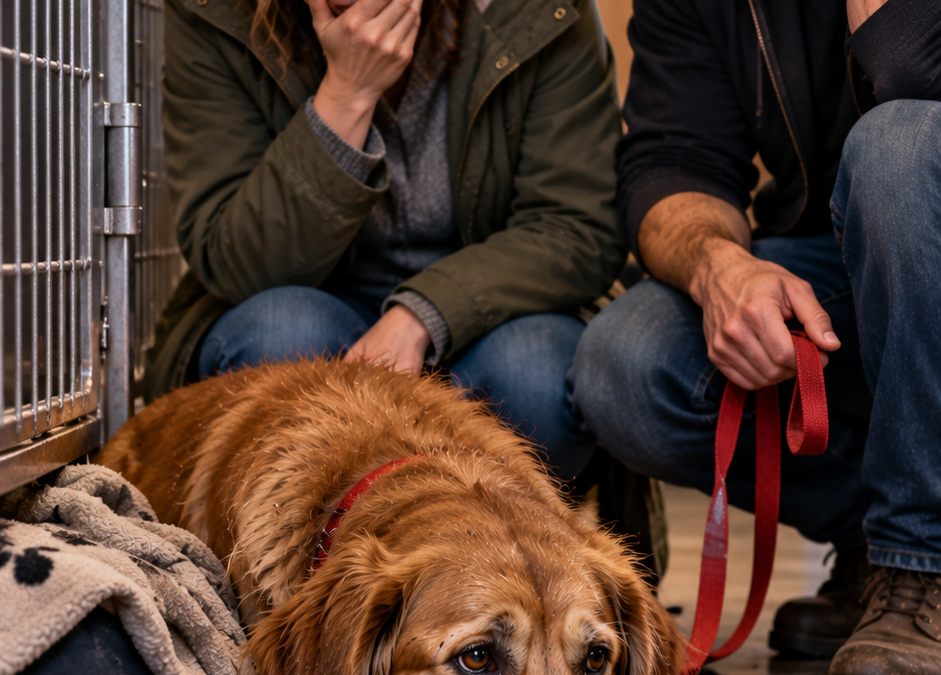
𝗙𝗨𝗟𝗟 𝗦𝗧𝗢𝗥𝗬
The first night she arrived, I sat outside her kennel and whispered, “We’ll find you somebody.”
She had looked at me with huge dark eyes.
I remember adding, “I promise.”
I regretted it almost immediately.
Not because I did not believe she could be adopted.
Because shelter workers should never make promises life might force us to break.
Molly was a beautiful dog.
Medium-sized.
Cream-colored coat with darker ears.
Not especially young, but not old.
About four, according to the veterinarian.
Healthy.
House-trained.
Gentle.
Good with children.
Fine with other dogs.
Walked beautifully on a leash.
Never destroyed furniture.
Never guarded food.
Never snapped.
During the day, she was almost ridiculously easy.
That was why the returns were so difficult to understand.
People met her and fell in love quickly.
Then night arrived.
And something inside Molly came apart.
Her first family lasted four days.
A young couple named Eric and Natalie.
They were excited when they adopted her.
They had researched everything.
Bought a large orthopedic bed.
Two bowls with her name printed on them.
A yellow leash.
A basket of toys.
Natalie sat on the shelter floor while Molly leaned against her.
“We’ve been waiting for a dog like her,” she told me.
I smiled.
Molly licked her wrist.
Three days later, Natalie called.
“Rachel?”
I knew from her voice that something was wrong.
“What happened?”
“I don’t know.”
“Is Molly okay?”
“Yes. I mean… physically.”
“What’s going on?”
“She cries.”
I looked through the office window toward the kennels as though Molly might somehow already be back.
“When?”
“At night.”
“How long?”
“Last night, almost four hours.”
My first thought was separation anxiety.
“Where does she sleep?”
“In the living room.”
“Does she have access to your bedroom?”
“No. We wanted to establish boundaries.”
“Okay.”
I asked more questions.
Food.
Exercise.
Bathroom schedule.
Any noises outside.
Other animals.
Nothing obvious.
“Try moving her bed closer to your room tonight,” I said. “Not necessarily inside yet. Just closer.”
They tried.
Molly cried again.
They moved her into the bedroom.
She paced.
They sat with her.
She trembled.
Natalie slept beside her bed.
Molly continued crying.
On the fourth afternoon, they returned her.
Natalie cried harder than Molly ever had.
“We can’t do this.”
I nodded.
She looked at me as if she needed punishment.
Instead, I said, “Thank you for trying.”
The second family had a teenager and another dog.
I thought that might help.
Maybe Molly needed canine company.
During the introduction, she relaxed immediately around their older beagle.
They sniffed.
Walked together.
Shared space without conflict.
Perfect.
The family took her home.
At 12:37 that night, according to the father, Molly began crying.
The beagle eventually left the room.
By two in the morning, their daughter was awake.
By three, everyone was awake.
Night two was worse.
Night three, Molly scratched at the bedroom door until one paw became raw.
They returned her the next morning.
The third family lasted twelve days.
They hired a trainer.
The trainer said Molly was sensitive but not unmanageable.
He suggested routine.
Predictability.
More daytime exercise.
Less attention during nighttime vocalization.
They followed everything.
On night seven, the husband slept in his car because he had an early shift and had not slept properly in a week.
On night twelve, his wife called me from their kitchen at 2:16 in the morning.
Molly was crying in the background.
Even through the phone, the sound hurt.
“Listen,” the woman whispered.
I did.
Low.
Long.
Broken.
“What does she want?”
“I don’t know.”
“I’ve taken her outside.”
Another cry.
“She doesn’t need the bathroom.”
Cry.
“She ate.”
Cry.
“We walked for an hour.”
Then the woman started crying too.
“I’m sitting right beside her.”
That was the part I could not understand.
Molly was not alone.
She was not confined.
No obvious trigger.
Yet she cried as though the house were empty.
The fourth family had experience with rescue dogs.
They were older.
Patient.
Calm.
I almost did not tell them about the previous returns.
That would have been wrong.
So I told them everything.
“Five hours sometimes,” I said.
The man shrugged.
“I was a firefighter for thirty years. I can sleep through anything.”
His wife laughed.
“We raised three children.”
I smiled.
“Maybe Molly finally met her match.”
They returned her six days later.
Not because they could not sleep.
Because they could not stand watching her suffer.
“That dog isn’t asking us for something,” the woman said quietly.
“What do you mean?”
“She’s remembering something.”
I stared.
“How do you know?”
“I don’t.”
She looked back through the shelter doors.
“But I’ve had dogs my whole life. That isn’t ordinary anxiety.”
That sentence stayed with me.
The fifth family were the people standing at the desk now.
Nine days.
Nine nights.
And once again, Molly was back.
After they left, I took her to kennel seventeen.
She knew the way.
That was what destroyed me.
I opened the gate.
Molly walked inside.
Turned around.
Lay down.
No hesitation.
No confusion.
No protest.
She had learned.
Homes were temporary.
The shelter was permanent.
I crouched outside the kennel.
“Molly.”
Her eyes moved toward me.
“I’m sorry.”
She lowered her head.
I put my fingers through the bars.
She did not approach.
“Remember when I promised?”
Nothing.
“I’m doing a terrible job.”
Her ears moved slightly.
I sat there until closing.
That night, Molly cried in the shelter too.
She always had.
But shelters are loud.
Dogs bark.
Staff move around.
Machines hum.
Lights remain on in some areas.
Perhaps that was why we had never fully understood how intense the crying became in a quiet house.
At 12:15, I was still there finishing paperwork.
The night attendant came into the office.
“She’s starting.”
I knew immediately.
I walked down the kennel row.
Molly was standing at the gate.
Head slightly raised.
A low sound came from her throat.
Then another.
I opened the kennel.
She stepped out.
I sat beside her.
“Molly.”
She paced.
I touched her shoulder.
No reaction.
I offered a treat.
Nothing.
Water.
Nothing.
I walked her outside.
She relieved herself.
Then immediately returned toward the shelter.
Back inside, the crying resumed.
I sat with her for nearly an hour.
Eventually I went home.
Not because she stopped.
Because I could not.
That night I lay awake thinking about the fourth family’s words.
She’s remembering something.
We knew very little about Molly’s history.
She had been picked up outside an abandoned property seven months earlier.
No chip.
No collar.
No one responded to notices.
The property had once belonged to an older man who had died, but neighbors could not confirm whether Molly had been his.
One person remembered “some kind of light-colored dog.”
Another said the man fed strays.
Nothing useful.
The medical exam told us she had been cared for at some point.
Her teeth were good.
Nails had been trimmed before.
She understood basic commands.
Sit.
Stay.
Come.
Down.
She knew what furniture was.
Knew not to steal food from counters.
She had lived in a home.
Someone had taught her.
Someone had probably loved her.
Then somehow she had ended up alone.
Maybe that was enough explanation.
Still, something did not fit.
Night after night.
Same pattern.
After midnight.
Cry.
Pace.
Stop briefly.
Cry again.
Sometimes walk toward the front door.
Sometimes bedroom doors.
Sometimes windows.
The behavior did not seem directed at one object.
It seemed directed at absence itself.
We gave Molly a break from adoption listings.
Two weeks.
Then three.
I told myself it was to let her decompress.
The truth was, I was afraid to send her out again.
Five returns.
Every return leaves a mark.
People talk about behavioral damage in shelter dogs as though it comes only from abuse.
Instability can damage too.
New home.
New smell.
New people.
New rules.
Then back.
Again.
Again.
Again.
Eventually a dog may stop trusting beginnings.
Molly began avoiding visitors.
Not aggressively.
She simply stayed at the back of her kennel.
Families would stop.
“Oh, she’s beautiful.”
I would open the gate.
Molly would remain lying down.
“Does she like people?”
“Yes.”
“Why doesn’t she come?”
“She’s tired.”
That was partly true.
Then one Tuesday afternoon, James arrived.
He did not look like someone who had come to adopt a dog.
Most adopters entered with energy.
They looked at every kennel.
Asked questions.
Made noises at puppies.
James walked slowly through the building with both hands in the pockets of a dark work jacket.
Mid-thirties, maybe.
Tall.
Lean.
Short beard.
Tired eyes.
Very tired eyes.
I greeted him near the front desk.
“Can I help you?”
“I’m looking for a dog.”
“Any particular kind?”
“No.”
“Size?”
“No.”
“Age?”
“No.”
That was unusual.
“Do you rent or own?”
“Rent.”
“Pet-friendly?”
“Yes.”
“Other animals?”
“No.”
“Children?”
“No.”
“What kind of schedule do you work?”
“Night shifts.”
I paused.
“Regularly?”
“Four nights on, three off. Twelve-hour shifts.”
That eliminated several dogs immediately.
Some would struggle with long periods alone.
“What do you do?”
“Emergency department technician.”
That explained the tired eyes.
“I sleep during the day,” he added.
“Apartment?”
“Yes.”
“Neighbors?”
“Unfortunately.”
He almost smiled.
I did too.
“Okay. Let me show you a few dogs that might fit.”
We passed kennel seven.
Then nine.
Then twelve.
James asked practical questions.
Energy.
Noise.
House training.
Medical needs.
He never asked which dog was cutest.
Never asked which one was most popular.
When we reached Molly’s row, I automatically moved past kennel seventeen.
James stopped.
“Who’s that?”
I looked back.
Molly was curled against the wall.
“That’s Molly.”
“Why didn’t you show her?”
I hesitated.
“She has some complications.”
“What kind?”
I gave him the short version.
“Nighttime vocalization.”
He looked at me.
“What does that mean?”
“She cries.”
“How much?”
“Sometimes for hours.”
“Medical?”
“Nothing we can find.”
“Pain?”
“Vet doesn’t think so.”
“Separation anxiety?”
“Maybe. But it doesn’t behave exactly like typical separation anxiety.”
James crouched slightly to look through the gate.
Molly did not move.
“How long has she been here?”
“Seven months, including adoption attempts.”
“Attempts?”
I hated that word, but yes.
“Five families adopted her.”
“And?”
“All five returned her.”
He looked at me.
“Because of crying.”
“Yes.”
“How quickly?”
“Between four and twelve days.”
James stood.
“Can I meet her?”
I almost said no.
Not because he seemed bad.
Because I had become protective.
I was tired of watching people fall in love with Molly in daylight and give up on her after dark.
“You work nights.”
“Yes.”
“That may complicate things.”
“How?”
“If she struggles at night, and you’re gone—”
“I live close to the hospital.”
“That doesn’t help if you’re working.”
“No.”
He looked through the bars again.
“But I’d still like to meet her.”
I sighed.
“All right.”
I opened the kennel.
Usually adopters crouched immediately.
Called Molly’s name.
Patted their thighs.
Offered treats.
James did none of that.
He walked inside.
Then sat on the concrete floor with his back against the wall.
Several feet from Molly.
He didn’t look directly at her.
Didn’t reach.
Didn’t speak.
I stood outside the kennel.
One minute passed.
Molly remained curled up.
Two minutes.
James rested his head against the wall.
Three.
He closed his eyes.
Four.
Molly lifted her head.
James did nothing.
Five minutes.
Molly stood.
My breath caught.
She walked toward him slowly.
Stopped two feet away.
Sniffed.
James kept his hands relaxed in his lap.
Molly moved closer.
Then did something she had not done with any visitor since her fourth return.
She leaned against him.
Not a quick touch.
Her entire body.
Shoulder against his leg.
Head against his thigh.
James finally opened his eyes.
He looked down.
Still did not touch her.
For a few seconds, they simply sat that way.
Then Molly curled herself against his hip.
James smiled.
Not broadly.
Just enough.
“I think she already decided.”
My throat tightened.
I stepped into the kennel.
“She does this sometimes.”
That was a lie.
James looked at me.
I corrected myself.
“No. She doesn’t.”
He scratched Molly lightly behind one ear.
She closed her eyes.
“Tell me everything.”
So I did.
All five families.
Every night.
Every call.
The trainer.
The veterinarian.
The beds.
The routines.
The crying.
I expected him to become less interested.
He didn’t.
“What happens if I return her?”
The question hit me hard.
“You mean hypothetically?”
“Yes.”
I looked at Molly.
“Nothing punitive.”
“That wasn’t what I asked.”
I met his eyes.
“What do you mean?”
“What happens to her?”
I understood.
I sat on the floor across from him.
“She comes back here.”
“And then?”
“We keep trying.”
“For how long?”
“As long as we can.”
James stared at Molly.
“She knows, doesn’t she?”
“Knows what?”
“That people bring her back.”
I swallowed.
“I think so.”
His jaw tightened.
He rubbed one thumb over Molly’s ear.
“I don’t like that.”
“Neither do I.”
“What if the crying doesn’t stop?”
I appreciated the question.
Not when will it stop.
What if it doesn’t?
“You’ll need a plan.”
“Okay.”
“Talk to your landlord about noise.”
“Walls are thick.”
“Neighbors?”
“Mostly students. They create more noise than any dog.”
“What about work?”
He thought.
“I can take several days off.”
“James, do not adopt her because you feel sorry for her.”
He looked at me.
“I don’t.”
“You’ve known her ten minutes.”
“I don’t feel sorry for her.”
“Then what?”
He looked down.
“She looks tired.”
That answer surprised me.
“Of what?”
“Being watched.”
Molly opened her eyes.
James continued.
“Everybody probably keeps trying to figure out what’s wrong with her.”
I said nothing.
“So she never gets to stop being the dog with a problem.”
The words landed uncomfortably close to the truth.
I looked toward the kennel door.
“How do you know that?”
James shrugged.
“I work in an emergency room.”
“That’s not an explanation.”
He stared at the floor.
“My younger brother had panic attacks.”
I waited.
“Bad ones.”
“How bad?”
“Ambulances. ER visits. Couldn’t breathe. Thought he was dying.”
“I’m sorry.”
James nodded.
“Everybody tried to calm him down.”
“Isn’t that normal?”
“Yes.”
“But?”
“The more people panicked about his panic, the worse it got.”
I understood.
“What helped?”
“Sometimes?”
He looked at Molly.
“Nothing.”
“Nothing?”
“Somebody sitting nearby and acting like the world wasn’t ending.”
Molly shifted closer to him.
I felt a strange chill.
“You think that’s what she needs?”
“No idea.”
He looked at me.
“She’s a dog.”
That answer made me trust him more.
He wasn’t pretending to understand her.
He was willing not to.
The adoption paperwork took almost two hours.
I told him repeatedly that he could come back the next day.
Think overnight.
Talk to his landlord.
Prepare.
He did all of that by phone from the shelter.
At six fifteen that evening, Molly walked out with James.
She did not look back.
I did.
I stood at the glass door until his car disappeared.
Then I went to kennel seventeen.
Empty.
The bed remained.
One forgotten toy in the corner.
I should have been happy.
Instead, I felt sick.
Five families.
Five returns.
I had watched this movie before.
I knew the ending.
That night, I barely slept.
At 12:30, I checked my phone.
No message.
1:10.
Nothing.
2:00.
Nothing.
At 2:43, I almost texted him.
I stopped myself.
At 4:15, I was still awake.
Maybe Molly was crying.
Maybe James was pacing.
Maybe a neighbor had already complained.
Maybe he was regretting everything.
At six, I finally slept.
When I woke at nine thirty, my phone was empty.
No message.
For some reason, that worried me more.
I arrived at work before noon.
“Any call from James?” I asked the receptionist.
“No.”
“Email?”
“No.”
I checked anyway.
Nothing.
At three, I convinced myself silence was good.
At five, I stopped believing it.
The next morning, still nothing.
Then at 11:17, my phone vibrated.
James.
A message.
Video attached.
My stomach dropped.
I opened the text first.
Only one sentence.
She slept here the rest of the night. For the first time, she stopped crying.
I read it twice.
Then opened the video.
Black-and-white hallway footage.
Timestamp: 2:46 a.m.
Molly appeared at the far end.
She stood still.
Her head raised slightly.
Listening.
Then she shook herself.
A full-body shake.
Dogs do that for many reasons.
Wet fur.
Stress release.
Transition.
Whatever the reason, something about it looked like a decision.
She walked toward James’s bedroom.
The door was slightly open.
Molly nudged it with her nose.
Waited.
Then disappeared inside.
The clip ended.
I called him immediately.
He answered on the fourth ring.
“Hello?”
“Tell me everything.”
James laughed softly.
“Morning to you too.”
“What happened?”
“She cried.”
My heart sank.
“For how long?”
“First night, maybe two hours.”
“What did you do?”
“Nothing.”
I paused.
“Nothing?”
“I was asleep.”
“You slept through it?”
“I’d worked twelve hours.”
“James.”
“What?”
“You mean you didn’t hear her?”
“I heard something eventually.”
“And?”
“I thought I was dreaming.”
I closed my eyes.
“So she cried alone?”
“Rachel.”
His voice sharpened slightly.
“She wasn’t alone.”
I stopped.
“The bedroom door was open.”
I thought about that.
“Where was her bed?”
“Hallway.”
“You put it there?”
“Yes.”
“Why?”
“Seemed quiet.”
“And when she cried?”
“I didn’t move it.”
“No.”
“Didn’t go to her?”
“No.”
“Didn’t call her?”
“No.”
“Didn’t turn on lights?”
“No.”
I sat slowly in the office chair.
“What happened?”
“When I woke up, she was against my feet.”
His voice softened.
“I didn’t even know she was there at first.”
“How?”
“She barely moved.”
He described it.
Morning light.
Warm weight against his feet.
Molly curled along the bottom edge of the mattress.
Head on the comforter.
Sleeping.
Not collapsed from exhaustion.
Not trembling.
Actually sleeping.
James checked the hallway camera afterward.
That was the video he sent.
“What about the second night?”
“She went straight to the room.”
“No crying?”
“Maybe ten minutes earlier in the evening. Nothing like the first.”
“And last night?”
“Nothing.”
I did not answer.
“Rachel?”
“I’m here.”
“You okay?”
“No.”
He laughed.
“Why?”
“Because five families tried everything.”
“That doesn’t mean they did something wrong.”
“I know.”
“They cared.”
“I know.”
James paused.
“Maybe Molly didn’t need something done.”
The sentence stayed between us.
Maybe Molly didn’t need something done.
“What does she do when you leave for work?” I asked.
“Waits.”
“No destruction?”
“No.”
“Accidents?”
“No.”
“Barking?”
“Neighbor says not much.”
“And when you come home?”
James laughed.
“Nearly knocks me over.”
“You’re gone twelve hours.”
“I have a dog walker come twice.”
“Good.”
“She seems okay with her.”
“But she waits for you.”
“Yes.”
I leaned back.
“What side of the bed?”
“What?”
“Where does Molly sleep?”
“Right side.”
I smiled despite the tears gathering in my eyes.
“You have lost half your bed.”
“More.”
I wiped my face.
“Keep sending updates.”
“I will.”
“And James?”
“Yeah?”
“If it starts again—”
“I’ll call.”
“No.”
He waited.
“If it starts again, don’t assume you failed.”
Silence.
Then he said, “I won’t.”
Weeks passed.
No return.
That alone felt unbelievable.
Day ten.
No return.
Day twenty.
No return.
One month.
Molly was still home.
I called.
“How is she?”
James sighed theatrically.
“Abusive.”
My heart stopped.
“What?”
“She steals my pillow.”
I exhaled.
“You’re an idiot.”
“She has no boundaries.”
“You invited her into bed.”
“I left a door open.”
“Same thing.”
“No.”
“Yes.”
He laughed.
In every conversation, he sounded increasingly tired in a different way.
Normal dog-owner tired.
She stole laundry.
She barked at delivery drivers.
She hated the vacuum cleaner.
She had developed a suspicious fascination with cheese.
None of it mattered.
Because she slept.
Every night.
Sometimes beside his feet.
Sometimes against his back.
Once apparently across his pillow while James woke up with six inches of mattress left.
But she slept.
No hours of crying.
No mournful sounds after midnight.
No pacing.
Months later, I asked if I could visit.
“Of course.”
James lived in a small apartment building fifteen minutes from the hospital.
Third floor.
Modest.
Clean.
A little too clean for someone living with a dog.
When I knocked, I heard paws.
Then the door opened.
Molly burst out.
“Hey!”
She jumped against me.
Tail moving so hard that her entire body twisted.
“Molly!”
She licked my chin.
I laughed.
For several seconds, she was completely focused on me.
Then she stopped.
Turned.
Looked back through the doorway.
James stood there.
Molly immediately ran back.
Not because he called.
He did not.
She placed herself against his legs.
Checked.
He was there.
Then returned to me.
I noticed.
James noticed me noticing.
“She does that.”
“What?”
“Checks.”
“How often?”
“All the time.”
He scratched the top of her head.
“If I’m in another room too long, she comes looking.”
“Does she panic?”
“No.”
“Cry?”
“No.”
“She just checks.”
“Then leaves?”
“Sometimes.”
That mattered.
Seven months of nighttime crying had become one quiet question.
Are you still here?
And because the answer kept being yes, Molly no longer needed to scream it.
James made coffee.
Molly followed us into the kitchen.
Then back to the living room.
There was a dog bed near the sofa.
Unused.
I pointed.
“How much?”
“Sixty-eight dollars.”
“She sleeps there?”
“Never.”
“Good investment.”
“I hate this dog.”
Molly rested her head on his knee.
He immediately scratched her ear.
“Clearly.”
We sat.
I looked around.
The apartment was quiet.
No television.
No music.
No special calming system.
Nothing designed around Molly’s anxiety.
“You really did nothing.”
James looked offended.
“I feed her.”
“You know what I mean.”
“Yes.”
“Why didn’t you react when she cried?”
He thought.
“I was exhausted.”
“That simple?”
“First night, yes.”
“And after?”
He looked toward Molly.
“Because once I saw what she did when nobody interrupted her…”
He shrugged.
“I figured I should let her keep choosing.”
“What do you mean?”
“She cried.”
He touched Molly’s shoulder.
“Then she moved.”
“Toward you.”
“Yes.”
“She found you.”
“Yes.”
“So you kept the door open.”
“Always.”
Molly closed her eyes.
I thought about the five homes.
Each family trying desperately to make the crying stop.
Lights turning on.
People walking.
Hands reaching.
Voices.
Beds moving.
Doors opening and closing.
Anxiety meeting anxiety.
Every sound Molly made became an emergency.
What if the fourth family had been right?
She’s remembering something.
Maybe she had once cried because someone did not come back.
Maybe nighttime had meant abandonment.
Maybe a former owner had worked nights.
Maybe she had slept beside someone who disappeared.
We still did not know.
We would probably never know.
But perhaps each frantic response had accidentally confirmed what Molly already feared.
Something is wrong.
Everyone is worried.
Night is dangerous.
Do not relax.
James had offered the opposite message without knowing he was offering anything.
Darkness arrived.
Nothing terrible happened.
The house remained quiet.
No one panicked.
A door stayed open.
And when Molly finally went searching, she found somebody.
Sleeping.
Steady.
Present.
She climbed onto the bed.
The world did not end.
The next night, she did not have to ask for as long.
By the third, she already knew the answer.
I looked at James.
“Do you realize five families blamed themselves?”
“They shouldn’t.”
“Some blamed Molly.”
“They shouldn’t do that either.”
“Then who was at fault?”
“No one.”
His answer was immediate.
“No one?”
“Maybe they weren’t the right homes.”
“That sounds too simple.”
“Most true things do.”
I smiled.
“Psychologist now?”
“Emergency department.”
“Worse.”
He laughed.
Then his expression became serious.
“My brother used to say something.”
“What?”
“When people tried too hard to calm him during panic attacks.”
James paused.
“He said, ‘Everyone acting scared makes me think I should be more scared.’”
I looked at Molly.
“And when someone didn’t react?”
“He could sometimes find his own way down.”
Not always.
That mattered too.
I did not want to turn Molly’s story into a universal rule.
Ignoring an animal in distress is not always the solution.
Dogs can cry because of pain.
Illness.
Neurological conditions.
Severe anxiety.
Fear.
Physical need.
And Molly had been examined repeatedly before anyone reached this point.
There was no magic formula.
No proof that James’s schedule or temperament would work for another dog.
This was Molly.
This was James.
One frightened animal.
One tired man.
One open door.
That was enough for them.
While I was there, James stood to refill his coffee.
Molly’s eyes opened immediately.
She watched him enter the kitchen.
Waited three seconds.
Then stood.
Followed.
I smiled.
A minute later, both returned.
“She supervises.”
“I see.”
“She also knows exactly when I come home.”
“How?”
“I swear she knows time.”
“Dogs are good with routine.”
“No. This is creepy.”
“How creepy?”
“My shift ends at seven.”
“Yes.”
“The dog walker says at about seven fifteen, she sits at the door.”
“When do you get home?”
“Seven twenty-five.”
“Traffic.”
“Usually.”
“And if you’re late?”
“She stares at the door.”
I laughed.
“She waits?”
“Every night.”
Of course she did.
The dog who once cried because the night felt empty had built a new ritual.
Not crying.
Waiting.
There is a difference.
Waiting contains belief.
Crying sometimes means belief has already begun collapsing.
A few months later, James sent another video.
Molly sitting beside the apartment door.
Timestamp 7:22 a.m.
Her tail was still.
Ears forward.
Then came the sound of a key.
Before the lock fully turned, Molly exploded.
Tail.
Paws.
Whole body.
James entered.
She circled him.
Jumped once.
Then pressed her head into his stomach.
James laughed.
“Hi.”
Molly whined once.
A small sound.
Nothing like the nighttime cries.
“I know.”
He knelt.
“I’m home.”
She licked his face.
The video ended.
I watched it repeatedly.
I’m home.
Perhaps that was the sentence Molly had needed all along.
Not verbally.
Repeated.
Night after night.
Morning after morning.
I leave.
I return.
You search.
You find me.
I am still here.
Eventually, seven months passed.
Seven months since James had adopted her.
The exact length of time Molly had spent crying before him.
I called.
“Anniversary.”
“Of what?”
“You and Molly.”
James groaned.
“You shelter people are weird.”
“How is she?”
“Currently asleep.”
“Where?”
“My pillow.”
“Of course.”
“No respect.”
“Has she cried?”
He became quiet.
“Not like before.”
“Ever?”
“Sometimes if I’m late.”
“Whining?”
“Yeah.”
“Night?”
“No.”
“Not once?”
“No.”
I leaned back in my office chair.
Molly’s old kennel was occupied by another dog now.
A nervous black shepherd named Atlas.
The shelter continued.
Dogs came.
Dogs left.
Some returned.
That never stopped hurting.
But Molly became the story I remembered whenever I was tempted to decide too quickly what a dog “needed.”
We write descriptions.
Good with kids.
No cats.
High energy.
Resource guarding.
Separation anxiety.
Quiet home.
Experienced adopter.
Those labels are useful.
Necessary, even.
But they are not the animal.
A dog is not a list of behaviors.
Behavior happens somewhere.
With someone.
At some time.
Under specific conditions.
Change the relationship, and sometimes the behavior changes with it.
Not always.
But sometimes.
One afternoon, the third family who had adopted Molly came back to the shelter.
Not to return another dog.
They were considering adopting again.
The wife recognized me.
“How’s Molly?”
I smiled.
“Good.”
Her face changed.
“She found a home?”
“Yes.”
“Does she still cry?”
I hesitated.
“No.”
The woman became very still.
“Oh.”
I immediately realized how that could sound.
“It wasn’t because you did anything wrong.”
She looked embarrassed.
“I’m happy.”
“I know.”
“I really am.”
Her husband stood beside her.
“What changed?”
I told them.
Not dramatically.
James.
The open bedroom door.
Molly finding him.
Sleeping against his feet.
The woman’s eyes filled.
“We tried so hard.”
“I know.”
“We sat with her every night.”
“I know.”
“We loved her.”
“I know.”
Her voice broke.
“Why wasn’t that enough?”
That question was harder than anything else.
Because love should feel like enough.
But love is not always compatibility.
You can care deeply and still not be the right environment for a particular animal.
I touched her arm.
“You gave her information.”
She frowned.
“What?”
“Every home taught us something.”
I meant it.
“You told us she cried even when people stayed beside her.”
“Yes.”
“The second family taught us another dog didn’t fix it.”
She listened.
“The trainer helped rule out certain patterns. The vet ruled out pain. You helped us understand that physical closeness alone wasn’t what she was asking for.”
The woman wiped her cheek.
“And James?”
“He gave her space to answer the question herself.”
Her husband nodded slowly.
“So we weren’t failures.”
“No.”
Molly’s five returns had not been five failures.
They had been five incomplete answers.
Painful ones.
But answers.
The couple adopted a different dog that afternoon.
Older.
Sleepy.
Completely uninterested in nighttime drama.
I got a Christmas card from them later.
Dog on the couch.
Both humans smiling.
Right home.
Right dog.
That matters too.
Nearly a year after Molly left, James brought her back to visit the shelter.
The moment she entered, I worried.
Would she remember?
She did.
I saw it.
Her pace slowed.
Her ears changed.
She looked toward the kennel corridor.
James stopped.
“Want to leave?”
Molly looked at him.
Then at me.
I crouched.
“Hey, girl.”
She came immediately.
Licked my face.
Tail moving.
I hugged her.
“You look terrible.”
James nodded.
“I don’t feed her.”
Molly had gained exactly the right amount of weight.
Her coat was glossy.
Her eyes were brighter.
She no longer carried herself like a dog trying to occupy as little space as possible.
Then another dog barked from the kennel row.
Molly startled.
She turned sharply toward James.
He did not bend down.
Did not reassure.
Did not say anything.
He simply stood there.
Molly looked at him.
Then relaxed.
She came back to me.
I noticed.
“You do that intentionally now.”
“What?”
“Nothing.”
He smiled.
“Maybe.”
Molly walked through the shelter with us.
When we passed kennel seventeen, she stopped.
I stopped too.
James remained a few feet away.
The kennel was empty that afternoon.
Molly stared inside.
I wondered what animals remember about places.
Smells, certainly.
Sounds.
Emotional associations.
Maybe not stories.
Maybe not “I lived here.”
But something.
She stepped toward the gate.
Sniffed.
Then turned away.
Walked back to James.
That was all.
I almost cried.
Not because she remembered.
Because she did not stay.
James scratched her shoulder.
“Ready?”
Molly headed toward the front door.
I followed them.
Outside, sunlight filled the parking lot.
James opened the car door.
Molly jumped in.
Before closing it, he looked at me.
“She still takes most of the bed.”
“Good.”
“Nothing good about it.”
“You could close the bedroom door.”
He stared.
“Absolutely not.”
I smiled.
Exactly.
He closed the door.
Molly watched through the window.
Not panicked.
Not afraid.
Waiting for him to walk around to the driver’s side.
He did.
She relaxed.
Before leaving, James rolled down the window.
“Rachel?”
“Yeah?”
“You told me something the day I adopted her.”
“What?”
“Don’t adopt her because you feel sorry for her.”
I remembered.
“Yes.”
“You were right.”
“What made you adopt her?”
He glanced at Molly.
“She was quiet.”
I laughed.
“That is objectively false.”
“Not with me.”
He smiled.
“She didn’t ask me to do anything.”
I looked at her.
“No.”
James started the engine.
“Maybe I needed that too.”
Then they drove away.
I stood in the parking lot watching until the car disappeared.
Only later did I understand his last sentence.
Everyone had focused on what James gave Molly.
Calm.
Space.
Predictability.
An open bedroom door.
But Molly gave James something too.
He spent his nights in an emergency department where people screamed.
Cried.
Bled.
Panicked.
Needed answers.
Needed him to move faster.
Needed him to do something.
Then he came home to a dog who asked only one question.
Are you here?
Eventually the answer was enough for both of them.
Years have passed since the first family brought Molly back.
I no longer work at the front desk every day.
I help coordinate adoptions now.
I train newer staff.
And whenever someone says, “This dog failed in three homes,” I correct them.
Dogs do not fail homes.
Homes do not always fail dogs either.
Sometimes the fit fails.
Sometimes timing fails.
Sometimes people simply do not yet understand the question the animal is asking.
Molly’s question sounded like crying.
For seven months, we tried answering with action.
Move the bed.
Turn on lights.
Add sound.
Add touch.
Add training.
Add medication reviews.
Add routines.
Add attention.
James accidentally answered differently.
He left the door open.
That is all.
Not metaphorically.
Literally.
A bedroom door.
Half open.
A tired man sleeping on the other side.
Molly cried.
Nobody panicked.
The house remained safe.
Eventually she stood.
Walked through the dark hallway.
Pushed the door with her nose.
Stopped at the bed.
Waited.
Then climbed up.
No one pulled her.
No one called.
No one begged her to settle.
She chose.
That may have been the first important difference.
Choice.
After being picked up as a stray.
Moved to a shelter.
Chosen by one family.
Returned.
Chosen again.
Returned.
Again.
Again.
Again.
Molly had spent months being moved through decisions other people made.
That first night with James, nobody decided where she had to feel safe.
She decided.
His bedroom.
His feet.
The bottom corner of the mattress.
Her place.
Once she found it, she kept choosing it.
Second night.
Third.
Then months.
And the crying stopped.
Not because James defeated the behavior.
Because Molly no longer needed it.
That is the part I still think about.
We often assume unwanted behavior is the problem itself.
Sometimes it is communication.
Not language exactly.
But information.
Fear is information.
Pacing is information.
Withdrawal is information.
Crying is information.
Our job is not always to silence it.
Sometimes we need to understand what changes when the animal no longer needs to say it.
Molly taught me that.
James taught me that too.
The last time I visited them, Molly was older.
Gray around the muzzle.
A little slower getting up.
James had moved to a slightly larger apartment closer to the hospital.
He had bought Molly another expensive bed.
She ignored that one too.
I arrived around seven thirty in the morning.
James had just come home from work.
The key turned in the lock.
Before the door opened, I heard Molly moving inside.
Then James entered.
Molly greeted him with the same ridiculous joy she had years earlier.
Tail slamming furniture.
Body twisting.
Small sounds in her throat.
James dropped his bag.
“Hi.”
Molly pressed against him.
He rested his forehead briefly against hers.
“I’m here.”
Three words.
Maybe that was the whole story.
I’m here.
Not:
Stop crying.
Not:
Be good.
Not:
Go to sleep.
Not:
You’re safe now.
People say those things because we mean well.
But safety is not something another person can always announce into existence.
Sometimes safety has to become boring.
Repetitive.
Predictable.
The same key.
The same footsteps.
The same bed.
The same door left open.
The same person coming back.
Again.
Again.
Again.
Until the body stops preparing for abandonment.
James made coffee.
Molly followed him.
I sat on the sofa.
She eventually climbed up beside me.
Her head rested in my lap.
I stroked the gray fur around her ears.
“You remember me?”
James answered from the kitchen.
“She remembers everyone who owes her food.”
“Good.”
Molly sighed.
Peacefully.
I looked toward the bedroom.
The door was open.
Still.
After all those years.
“Do you ever close that thing?”
I asked.
James appeared holding two mugs.
“No.”
“Why?”
He shrugged.
“Molly likes choices.”
I smiled.
He handed me coffee.
“She still sleeps with you?”
“Every night.”
“At your feet?”
“Used to.”
“Where now?”
“My side.”
“Which side?”
“All of it.”
I laughed.
Molly opened one eye.
Then closed it.
I thought about the five families.
Their exhausted faces.
The apologies.
The tears.
The shelter kennel.
The empty red leash.
I wished they could see her.
Not because I wanted them to regret anything.
The opposite.
I wanted them to know she had made it.
The dog they worried might never be happy was asleep on a couch, completely unafraid of morning.
That mattered.
Not every story ends this way.
I wish it did.
Some anxious dogs need intensive behavioral treatment.
Some need medication.
Some need specialized homes.
Some problems do not disappear when the right person arrives.
Real rescue is more complicated than that.
But Molly’s story was hers.
Five homes.
Five returns.
Seven months of crying.
Then one man who did something almost absurdly simple.
Nothing.
Or, more accurately, he gave her permission to do something herself.
Find him.
Maybe Molly had spent those nights waiting for someone to come.
Maybe James was the first person who let her discover that she could go to him instead.
I will never know.
Neither will he.
Neither does Molly.
The explanation matters less to me now.
The outcome is enough.
She sleeps.
She waits for his key.
She checks where he is.
Then she goes back to being a dog.
She steals pillows.
Begging for cheese.
Hates vacuum cleaners.
Takes too much space.
Loves one exhausted emergency-room worker with the complete, unreasonable devotion dogs are so good at giving.
And James loves her in a quieter way.
No dramatic rescue.
No obsession with fixing.
He just keeps coming home.
Sometimes that is what love looks like.
Not pulling someone out of darkness.
Leaving a door open so they can walk toward you when they are ready.
Molly walked through that door on her first night.
And after five families, seven months, hundreds of hours of crying, and more failed solutions than I can count, she finally discovered that when she reached the other side, someone was still there.
She never needed to cry that way again.
𝗧𝗛𝗘 𝗘𝗡𝗗
Five Families Brought Molly Back for the Same Reason, but the Sixth Man Never Tried to Make Her Stop
By the time Molly came back to us for the fifth time, nobody at the shelter knew what to say.
The family stood at the front desk looking exhausted.
Molly sat beside them.
Head down.
Tail still.
A faded red leash hung loosely between the husband’s fingers.
The woman had dark circles beneath her eyes, and the man kept rubbing one palm over the back of his neck as though searching for the right words.
I already knew what they were going to say.
I had heard it four times before.
“She cries all night.”
The woman’s voice cracked.
I looked at Molly.
She did not look at me.
“How long did it happen?” I asked.
“Every night.”
“From the first night?”
“Yes.”
“What time?”
The husband answered this time.
“Usually after midnight.”
“And how long?”
He laughed once, but there was no humor in it.
“Hours.”
His wife looked ashamed.
“We tried everything.”
I believed her.
That was what made it worse.
They were not cruel people.
None of the five families had been.
Every family that returned Molly had tried.
They had bought beds.
Toys.
Blankets.
Calming sprays.
Puzzle feeders.
Music.
One family left the television on all night because someone online said voices might help.
Another moved Molly’s bed from the kitchen to the hallway, then from the hallway to the living room, then from the living room into their bedroom.
Another slept beside her on the floor for three nights.
Someone called a trainer.
Someone called a veterinarian.
Someone bought an expensive pressure vest.
Someone tried lavender.
Someone tried white noise.
Someone tried ignoring her.
Someone tried holding her.
Nothing worked.
At midnight, Molly cried.
Low at first.
Almost too soft to notice.
Then longer.
A dragging, mournful sound that seemed to come from somewhere below her ribs.
Not barking.
Not whining for food.
Not scratching at a door because she wanted outside.
Crying.
That was the only word that fit.
The fifth family had lasted nine days.
That was actually longer than most.
“I’m sorry,” the woman said.
I hated that sentence.
Not because she owed me an apology.
Because people returning dogs always thought the shelter staff hated them.
Sometimes we did get angry.
We are human.
But anger is easier when someone is careless.
This family had not been careless.
They looked destroyed.
The husband knelt in front of Molly.
“Hey, girl.”
Molly finally raised her head.
He scratched beneath her chin.
“I’m sorry.”
Her tail moved once.
Just once.
Then stopped.
His wife covered her mouth.
I looked away.
That part never became easier.
The dog does not understand paperwork.
She does not understand lease agreements.
Allergies.
Behavioral exhaustion.
Family discussions behind closed doors.
She understands that one morning she wakes up in a place she has slowly started calling home, and by afternoon she is back in the building she thought she had left forever.
People often ask shelter workers whether dogs know they have been returned.
Yes.
They know.
Maybe not in the human sense.
But they know the smell.
The doors.
The kennel sounds.
The concrete.
The people.
They know the direction the car takes.
Some become excited because the shelter is familiar.
Some become afraid.
Some pull toward the entrance.
Some refuse to get out of the car.
Molly simply became smaller each time.
The first time she came back, she barked in the parking lot.
The second time, she resisted walking through the door.
The third time, she trembled.
The fourth time, she went straight to her old kennel without being guided.
The fifth time, she did not even look surprised.
That was the day she broke my heart.
My name is Rachel, and I had been working at the shelter for almost six years when Molly came to us.
I thought I had learned how to protect myself by then.
You have to.
If every abandoned dog comes home with you emotionally, eventually there is no room left inside your head for your own life.
You learn small defenses.
Do not imagine where they slept before.
Do not wonder whether a child is asking where the dog went.
Do not read too much into the bag of toys surrendered with them.
Do not keep every collar.
Do not promise.
Especially do not promise.
I had broken that last rule with Molly.
The first night she arrived, I sat outside her kennel and whispered, “We’ll find you somebody.”
She had looked at me with huge dark eyes.
I remember adding, “I promise.”
I regretted it almost immediately.
Not because I did not believe she could be adopted.
Because shelter workers should never make promises life might force us to break.
Molly was a beautiful dog.
Medium-sized.
Cream-colored coat with darker ears.
Not especially young, but not old.
About four, according to the veterinarian.
Healthy.
House-trained.
Gentle.
Good with children.
Fine with other dogs.
Walked beautifully on a leash.
Never destroyed furniture.
Never guarded food.
Never snapped.
During the day, she was almost ridiculously easy.
That was why the returns were so difficult to understand.
People met her and fell in love quickly.
Then night arrived.
And something inside Molly came apart.
Her first family lasted four days.
A young couple named Eric and Natalie.
They were excited when they adopted her.
They had researched everything.
Bought a large orthopedic bed.
Two bowls with her name printed on them.
A yellow leash.
A basket of toys.
Natalie sat on the shelter floor while Molly leaned against her.
“We’ve been waiting for a dog like her,” she told me.
I smiled.
Molly licked her wrist.
Three days later, Natalie called.
“Rachel?”
I knew from her voice that something was wrong.
“What happened?”
“I don’t know.”
“Is Molly okay?”
“Yes. I mean… physically.”
“What’s going on?”
“She cries.”
I looked through the office window toward the kennels as though Molly might somehow already be back.
“When?”
“At night.”
“How long?”
“Last night, almost four hours.”
My first thought was separation anxiety.
“Where does she sleep?”
“In the living room.”
“Does she have access to your bedroom?”
“No. We wanted to establish boundaries.”
“Okay.”
I asked more questions.
Food.
Exercise.
Bathroom schedule.
Any noises outside.
Other animals.
Nothing obvious.
“Try moving her bed closer to your room tonight,” I said. “Not necessarily inside yet. Just closer.”
They tried.
Molly cried again.
They moved her into the bedroom.
She paced.
They sat with her.
She trembled.
Natalie slept beside her bed.
Molly continued crying.
On the fourth afternoon, they returned her.
Natalie cried harder than Molly ever had.
“We can’t do this.”
I nodded.
She looked at me as if she needed punishment.
Instead, I said, “Thank you for trying.”
The second family had a teenager and another dog.
I thought that might help.
Maybe Molly needed canine company.
During the introduction, she relaxed immediately around their older beagle.
They sniffed.
Walked together.
Shared space without conflict.
Perfect.
The family took her home.
At 12:37 that night, according to the father, Molly began crying.
The beagle eventually left the room.
By two in the morning, their daughter was awake.
By three, everyone was awake.
Night two was worse.
Night three, Molly scratched at the bedroom door until one paw became raw.
They returned her the next morning.
The third family lasted twelve days.
They hired a trainer.
The trainer said Molly was sensitive but not unmanageable.
He suggested routine.
Predictability.
More daytime exercise.
Less attention during nighttime vocalization.
They followed everything.
On night seven, the husband slept in his car because he had an early shift and had not slept properly in a week.
On night twelve, his wife called me from their kitchen at 2:16 in the morning.
Molly was crying in the background.
Even through the phone, the sound hurt.
“Listen,” the woman whispered.
I did.
Low.
Long.
Broken.
“What does she want?”
“I don’t know.”
“I’ve taken her outside.”
Another cry.
“She doesn’t need the bathroom.”
Cry.
“She ate.”
Cry.
“We walked for an hour.”
Then the woman started crying too.
“I’m sitting right beside her.”
That was the part I could not understand.
Molly was not alone.
She was not confined.
No obvious trigger.
Yet she cried as though the house were empty.
The fourth family had experience with rescue dogs.
They were older.
Patient.
Calm.
I almost did not tell them about the previous returns.
That would have been wrong.
So I told them everything.
“Five hours sometimes,” I said.
The man shrugged.
“I was a firefighter for thirty years. I can sleep through anything.”
His wife laughed.
“We raised three children.”
I smiled.
“Maybe Molly finally met her match.”
They returned her six days later.
Not because they could not sleep.
Because they could not stand watching her suffer.
“That dog isn’t asking us for something,” the woman said quietly.
“What do you mean?”
“She’s remembering something.”
I stared.
“How do you know?”
“I don’t.”
She looked back through the shelter doors.
“But I’ve had dogs my whole life. That isn’t ordinary anxiety.”
That sentence stayed with me.
The fifth family were the people standing at the desk now.
Nine days.
Nine nights.
And once again, Molly was back.
After they left, I took her to kennel seventeen.
She knew the way.
That was what destroyed me.
I opened the gate.
Molly walked inside.
Turned around.
Lay down.
No hesitation.
No confusion.
No protest.
She had learned.
Homes were temporary.
The shelter was permanent.
I crouched outside the kennel.
“Molly.”
Her eyes moved toward me.
“I’m sorry.”
She lowered her head.
I put my fingers through the bars.
She did not approach.
“Remember when I promised?”
Nothing.
“I’m doing a terrible job.”
Her ears moved slightly.
I sat there until closing.
That night, Molly cried in the shelter too.
She always had.
But shelters are loud.
Dogs bark.
Staff move around.
Machines hum.
Lights remain on in some areas.
Perhaps that was why we had never fully understood how intense the crying became in a quiet house.
At 12:15, I was still there finishing paperwork.
The night attendant came into the office.
“She’s starting.”
I knew immediately.
I walked down the kennel row.
Molly was standing at the gate.
Head slightly raised.
A low sound came from her throat.
Then another.
I opened the kennel.
She stepped out.
I sat beside her.
“Molly.”
She paced.
I touched her shoulder.
No reaction.
I offered a treat.
Nothing.
Water.
Nothing.
I walked her outside.
She relieved herself.
Then immediately returned toward the shelter.
Back inside, the crying resumed.
I sat with her for nearly an hour.
Eventually I went home.
Not because she stopped.
Because I could not.
That night I lay awake thinking about the fourth family’s words.
She’s remembering something.
We knew very little about Molly’s history.
She had been picked up outside an abandoned property seven months earlier.
No chip.
No collar.
No one responded to notices.
The property had once belonged to an older man who had died, but neighbors could not confirm whether Molly had been his.
One person remembered “some kind of light-colored dog.”
Another said the man fed strays.
Nothing useful.
The medical exam told us she had been cared for at some point.
Her teeth were good.
Nails had been trimmed before.
She understood basic commands.
Sit.
Stay.
Come.
Down.
She knew what furniture was.
Knew not to steal food from counters.
She had lived in a home.
Someone had taught her.
Someone had probably loved her.
Then somehow she had ended up alone.
Maybe that was enough explanation.
Still, something did not fit.
Night after night.
Same pattern.
After midnight.
Cry.
Pace.
Stop briefly.
Cry again.
Sometimes walk toward the front door.
Sometimes bedroom doors.
Sometimes windows.
The behavior did not seem directed at one object.
It seemed directed at absence itself.
We gave Molly a break from adoption listings.
Two weeks.
Then three.
I told myself it was to let her decompress.
The truth was, I was afraid to send her out again.
Five returns.
Every return leaves a mark.
People talk about behavioral damage in shelter dogs as though it comes only from abuse.
Instability can damage too.
New home.
New smell.
New people.
New rules.
Then back.
Again.
Again.
Again.
Eventually a dog may stop trusting beginnings.
Molly began avoiding visitors.
Not aggressively.
She simply stayed at the back of her kennel.
Families would stop.
“Oh, she’s beautiful.”
I would open the gate.
Molly would remain lying down.
“Does she like people?”
“Yes.”
“Why doesn’t she come?”
“She’s tired.”
That was partly true.
Then one Tuesday afternoon, James arrived.
He did not look like someone who had come to adopt a dog.
Most adopters entered with energy.
They looked at every kennel.
Asked questions.
Made noises at puppies.
James walked slowly through the building with both hands in the pockets of a dark work jacket.
Mid-thirties, maybe.
Tall.
Lean.
Short beard.
Tired eyes.
Very tired eyes.
I greeted him near the front desk.
“Can I help you?”
“I’m looking for a dog.”
“Any particular kind?”
“No.”
“Size?”
“No.”
“Age?”
“No.”
That was unusual.
“Do you rent or own?”
“Rent.”
“Pet-friendly?”
“Yes.”
“Other animals?”
“No.”
“Children?”
“No.”
“What kind of schedule do you work?”
“Night shifts.”
I paused.
“Regularly?”
“Four nights on, three off. Twelve-hour shifts.”
That eliminated several dogs immediately.
Some would struggle with long periods alone.
“What do you do?”
“Emergency department technician.”
That explained the tired eyes.
“I sleep during the day,” he added.
“Apartment?”
“Yes.”
“Neighbors?”
“Unfortunately.”
He almost smiled.
I did too.
“Okay. Let me show you a few dogs that might fit.”
We passed kennel seven.
Then nine.
Then twelve.
James asked practical questions.
Energy.
Noise.
House training.
Medical needs.
He never asked which dog was cutest.
Never asked which one was most popular.
When we reached Molly’s row, I automatically moved past kennel seventeen.
James stopped.
“Who’s that?”
I looked back.
Molly was curled against the wall.
“That’s Molly.”
“Why didn’t you show her?”
I hesitated.
“She has some complications.”
“What kind?”
I gave him the short version.
“Nighttime vocalization.”
He looked at me.
“What does that mean?”
“She cries.”
“How much?”
“Sometimes for hours.”
“Medical?”
“Nothing we can find.”
“Pain?”
“Vet doesn’t think so.”
“Separation anxiety?”
“Maybe. But it doesn’t behave exactly like typical separation anxiety.”
James crouched slightly to look through the gate.
Molly did not move.
“How long has she been here?”
“Seven months, including adoption attempts.”
“Attempts?”
I hated that word, but yes.
“Five families adopted her.”
“And?”
“All five returned her.”
He looked at me.
“Because of crying.”
“Yes.”
“How quickly?”
“Between four and twelve days.”
James stood.
“Can I meet her?”
I almost said no.
Not because he seemed bad.
Because I had become protective.
I was tired of watching people fall in love with Molly in daylight and give up on her after dark.
“You work nights.”
“Yes.”
“That may complicate things.”
“How?”
“If she struggles at night, and you’re gone—”
“I live close to the hospital.”
“That doesn’t help if you’re working.”
“No.”
He looked through the bars again.
“But I’d still like to meet her.”
I sighed.
“All right.”
I opened the kennel.
Usually adopters crouched immediately.
Called Molly’s name.
Patted their thighs.
Offered treats.
James did none of that.
He walked inside.
Then sat on the concrete floor with his back against the wall.
Several feet from Molly.
He didn’t look directly at her.
Didn’t reach.
Didn’t speak.
I stood outside the kennel.
One minute passed.
Molly remained curled up.
Two minutes.
James rested his head against the wall.
Three.
He closed his eyes.
Four.
Molly lifted her head.
James did nothing.
Five minutes.
Molly stood.
My breath caught.
She walked toward him slowly.
Stopped two feet away.
Sniffed.
James kept his hands relaxed in his lap.
Molly moved closer.
Then did something she had not done with any visitor since her fourth return.
She leaned against him.
Not a quick touch.
Her entire body.
Shoulder against his leg.
Head against his thigh.
James finally opened his eyes.
He looked down.
Still did not touch her.
For a few seconds, they simply sat that way.
Then Molly curled herself against his hip.
James smiled.
Not broadly.
Just enough.
“I think she already decided.”
My throat tightened.
I stepped into the kennel.
“She does this sometimes.”
That was a lie.
James looked at me.
I corrected myself.
“No. She doesn’t.”
He scratched Molly lightly behind one ear.
She closed her eyes.
“Tell me everything.”
So I did.
All five families.
Every night.
Every call.
The trainer.
The veterinarian.
The beds.
The routines.
The crying.
I expected him to become less interested.
He didn’t.
“What happens if I return her?”
The question hit me hard.
“You mean hypothetically?”
“Yes.”
I looked at Molly.
“Nothing punitive.”
“That wasn’t what I asked.”
I met his eyes.
“What do you mean?”
“What happens to her?”
I understood.
I sat on the floor across from him.
“She comes back here.”
“And then?”
“We keep trying.”
“For how long?”
“As long as we can.”
James stared at Molly.
“She knows, doesn’t she?”
“Knows what?”
“That people bring her back.”
I swallowed.
“I think so.”
His jaw tightened.
He rubbed one thumb over Molly’s ear.
“I don’t like that.”
“Neither do I.”
“What if the crying doesn’t stop?”
I appreciated the question.
Not when will it stop.
What if it doesn’t?
“You’ll need a plan.”
“Okay.”
“Talk to your landlord about noise.”
“Walls are thick.”
“Neighbors?”
“Mostly students. They create more noise than any dog.”
“What about work?”
He thought.
“I can take several days off.”
“James, do not adopt her because you feel sorry for her.”
He looked at me.
“I don’t.”
“You’ve known her ten minutes.”
“I don’t feel sorry for her.”
“Then what?”
He looked down.
“She looks tired.”
That answer surprised me.
“Of what?”
“Being watched.”
Molly opened her eyes.
James continued.
“Everybody probably keeps trying to figure out what’s wrong with her.”
I said nothing.
“So she never gets to stop being the dog with a problem.”
The words landed uncomfortably close to the truth.
I looked toward the kennel door.
“How do you know that?”
James shrugged.
“I work in an emergency room.”
“That’s not an explanation.”
He stared at the floor.
“My younger brother had panic attacks.”
I waited.
“Bad ones.”
“How bad?”
“Ambulances. ER visits. Couldn’t breathe. Thought he was dying.”
“I’m sorry.”
James nodded.
“Everybody tried to calm him down.”
“Isn’t that normal?”
“Yes.”
“But?”
“The more people panicked about his panic, the worse it got.”
I understood.
“What helped?”
“Sometimes?”
He looked at Molly.
“Nothing.”
“Nothing?”
“Somebody sitting nearby and acting like the world wasn’t ending.”
Molly shifted closer to him.
I felt a strange chill.
“You think that’s what she needs?”
“No idea.”
He looked at me.
“She’s a dog.”
That answer made me trust him more.
He wasn’t pretending to understand her.
He was willing not to.
The adoption paperwork took almost two hours.
I told him repeatedly that he could come back the next day.
Think overnight.
Talk to his landlord.
Prepare.
He did all of that by phone from the shelter.
At six fifteen that evening, Molly walked out with James.
She did not look back.
I did.
I stood at the glass door until his car disappeared.
Then I went to kennel seventeen.
Empty.
The bed remained.
One forgotten toy in the corner.
I should have been happy.
Instead, I felt sick.
Five families.
Five returns.
I had watched this movie before.
I knew the ending.
That night, I barely slept.
At 12:30, I checked my phone.
No message.
1:10.
Nothing.
2:00.
Nothing.
At 2:43, I almost texted him.
I stopped myself.
At 4:15, I was still awake.
Maybe Molly was crying.
Maybe James was pacing.
Maybe a neighbor had already complained.
Maybe he was regretting everything.
At six, I finally slept.
When I woke at nine thirty, my phone was empty.
No message.
For some reason, that worried me more.
I arrived at work before noon.
“Any call from James?” I asked the receptionist.
“No.”
“Email?”
“No.”
I checked anyway.
Nothing.
At three, I convinced myself silence was good.
At five, I stopped believing it.
The next morning, still nothing.
Then at 11:17, my phone vibrated.
James.
A message.
Video attached.
My stomach dropped.
I opened the text first.
Only one sentence.
She slept here the rest of the night. For the first time, she stopped crying.
I read it twice.
Then opened the video.
Black-and-white hallway footage.
Timestamp: 2:46 a.m.
Molly appeared at the far end.
She stood still.
Her head raised slightly.
Listening.
Then she shook herself.
A full-body shake.
Dogs do that for many reasons.
Wet fur.
Stress release.
Transition.
Whatever the reason, something about it looked like a decision.
She walked toward James’s bedroom.
The door was slightly open.
Molly nudged it with her nose.
Waited.
Then disappeared inside.
The clip ended.
I called him immediately.
He answered on the fourth ring.
“Hello?”
“Tell me everything.”
James laughed softly.
“Morning to you too.”
“What happened?”
“She cried.”
My heart sank.
“For how long?”
“First night, maybe two hours.”
“What did you do?”
“Nothing.”
I paused.
“Nothing?”
“I was asleep.”
“You slept through it?”
“I’d worked twelve hours.”
“James.”
“What?”
“You mean you didn’t hear her?”
“I heard something eventually.”
“And?”
“I thought I was dreaming.”
I closed my eyes.
“So she cried alone?”
“Rachel.”
His voice sharpened slightly.
“She wasn’t alone.”
I stopped.
“The bedroom door was open.”
I thought about that.
“Where was her bed?”
“Hallway.”
“You put it there?”
“Yes.”
“Why?”
“Seemed quiet.”
“And when she cried?”
“I didn’t move it.”
“No.”
“Didn’t go to her?”
“No.”
“Didn’t call her?”
“No.”
“Didn’t turn on lights?”
“No.”
I sat slowly in the office chair.
“What happened?”
“When I woke up, she was against my feet.”
His voice softened.
“I didn’t even know she was there at first.”
“How?”
“She barely moved.”
He described it.
Morning light.
Warm weight against his feet.
Molly curled along the bottom edge of the mattress.
Head on the comforter.
Sleeping.
Not collapsed from exhaustion.
Not trembling.
Actually sleeping.
James checked the hallway camera afterward.
That was the video he sent.
“What about the second night?”
“She went straight to the room.”
“No crying?”
“Maybe ten minutes earlier in the evening. Nothing like the first.”
“And last night?”
“Nothing.”
I did not answer.
“Rachel?”
“I’m here.”
“You okay?”
“No.”
He laughed.
“Why?”
“Because five families tried everything.”
“That doesn’t mean they did something wrong.”
“I know.”
“They cared.”
“I know.”
James paused.
“Maybe Molly didn’t need something done.”
The sentence stayed between us.
Maybe Molly didn’t need something done.
“What does she do when you leave for work?” I asked.
“Waits.”
“No destruction?”
“No.”
“Accidents?”
“No.”
“Barking?”
“Neighbor says not much.”
“And when you come home?”
James laughed.
“Nearly knocks me over.”
“You’re gone twelve hours.”
“I have a dog walker come twice.”
“Good.”
“She seems okay with her.”
“But she waits for you.”
“Yes.”
I leaned back.
“What side of the bed?”
“What?”
“Where does Molly sleep?”
“Right side.”
I smiled despite the tears gathering in my eyes.
“You have lost half your bed.”
“More.”
I wiped my face.
“Keep sending updates.”
“I will.”
“And James?”
“Yeah?”
“If it starts again—”
“I’ll call.”
“No.”
He waited.
“If it starts again, don’t assume you failed.”
Silence.
Then he said, “I won’t.”
Weeks passed.
No return.
That alone felt unbelievable.
Day ten.
No return.
Day twenty.
No return.
One month.
Molly was still home.
I called.
“How is she?”
James sighed theatrically.
“Abusive.”
My heart stopped.
“What?”
“She steals my pillow.”
I exhaled.
“You’re an idiot.”
“She has no boundaries.”
“You invited her into bed.”
“I left a door open.”
“Same thing.”
“No.”
“Yes.”
He laughed.
In every conversation, he sounded increasingly tired in a different way.
Normal dog-owner tired.
She stole laundry.
She barked at delivery drivers.
She hated the vacuum cleaner.
She had developed a suspicious fascination with cheese.
None of it mattered.
Because she slept.
Every night.
Sometimes beside his feet.
Sometimes against his back.
Once apparently across his pillow while James woke up with six inches of mattress left.
But she slept.
No hours of crying.
No mournful sounds after midnight.
No pacing.
Months later, I asked if I could visit.
“Of course.”
James lived in a small apartment building fifteen minutes from the hospital.
Third floor.
Modest.
Clean.
A little too clean for someone living with a dog.
When I knocked, I heard paws.
Then the door opened.
Molly burst out.
“Hey!”
She jumped against me.
Tail moving so hard that her entire body twisted.
“Molly!”
She licked my chin.
I laughed.
For several seconds, she was completely focused on me.
Then she stopped.
Turned.
Looked back through the doorway.
James stood there.
Molly immediately ran back.
Not because he called.
He did not.
She placed herself against his legs.
Checked.
He was there.
Then returned to me.
I noticed.
James noticed me noticing.
“She does that.”
“What?”
“Checks.”
“How often?”
“All the time.”
He scratched the top of her head.
“If I’m in another room too long, she comes looking.”
“Does she panic?”
“No.”
“Cry?”
“No.”
“She just checks.”
“Then leaves?”
“Sometimes.”
That mattered.
Seven months of nighttime crying had become one quiet question.
Are you still here?
And because the answer kept being yes, Molly no longer needed to scream it.
James made coffee.
Molly followed us into the kitchen.
Then back to the living room.
There was a dog bed near the sofa.
Unused.
I pointed.
“How much?”
“Sixty-eight dollars.”
“She sleeps there?”
“Never.”
“Good investment.”
“I hate this dog.”
Molly rested her head on his knee.
He immediately scratched her ear.
“Clearly.”
We sat.
I looked around.
The apartment was quiet.
No television.
No music.
No special calming system.
Nothing designed around Molly’s anxiety.
“You really did nothing.”
James looked offended.
“I feed her.”
“You know what I mean.”
“Yes.”
“Why didn’t you react when she cried?”
He thought.
“I was exhausted.”
“That simple?”
“First night, yes.”
“And after?”
He looked toward Molly.
“Because once I saw what she did when nobody interrupted her…”
He shrugged.
“I figured I should let her keep choosing.”
“What do you mean?”
“She cried.”
He touched Molly’s shoulder.
“Then she moved.”
“Toward you.”
“Yes.”
“She found you.”
“Yes.”
“So you kept the door open.”
“Always.”
Molly closed her eyes.
I thought about the five homes.
Each family trying desperately to make the crying stop.
Lights turning on.
People walking.
Hands reaching.
Voices.
Beds moving.
Doors opening and closing.
Anxiety meeting anxiety.
Every sound Molly made became an emergency.
What if the fourth family had been right?
She’s remembering something.
Maybe she had once cried because someone did not come back.
Maybe nighttime had meant abandonment.
Maybe a former owner had worked nights.
Maybe she had slept beside someone who disappeared.
We still did not know.
We would probably never know.
But perhaps each frantic response had accidentally confirmed what Molly already feared.
Something is wrong.
Everyone is worried.
Night is dangerous.
Do not relax.
James had offered the opposite message without knowing he was offering anything.
Darkness arrived.
Nothing terrible happened.
The house remained quiet.
No one panicked.
A door stayed open.
And when Molly finally went searching, she found somebody.
Sleeping.
Steady.
Present.
She climbed onto the bed.
The world did not end.
The next night, she did not have to ask for as long.
By the third, she already knew the answer.
I looked at James.
“Do you realize five families blamed themselves?”
“They shouldn’t.”
“Some blamed Molly.”
“They shouldn’t do that either.”
“Then who was at fault?”
“No one.”
His answer was immediate.
“No one?”
“Maybe they weren’t the right homes.”
“That sounds too simple.”
“Most true things do.”
I smiled.
“Psychologist now?”
“Emergency department.”
“Worse.”
He laughed.
Then his expression became serious.
“My brother used to say something.”
“What?”
“When people tried too hard to calm him during panic attacks.”
James paused.
“He said, ‘Everyone acting scared makes me think I should be more scared.’”
I looked at Molly.
“And when someone didn’t react?”
“He could sometimes find his own way down.”
Not always.
That mattered too.
I did not want to turn Molly’s story into a universal rule.
Ignoring an animal in distress is not always the solution.
Dogs can cry because of pain.
Illness.
Neurological conditions.
Severe anxiety.
Fear.
Physical need.
And Molly had been examined repeatedly before anyone reached this point.
There was no magic formula.
No proof that James’s schedule or temperament would work for another dog.
This was Molly.
This was James.
One frightened animal.
One tired man.
One open door.
That was enough for them.
While I was there, James stood to refill his coffee.
Molly’s eyes opened immediately.
She watched him enter the kitchen.
Waited three seconds.
Then stood.
Followed.
I smiled.
A minute later, both returned.
“She supervises.”
“I see.”
“She also knows exactly when I come home.”
“How?”
“I swear she knows time.”
“Dogs are good with routine.”
“No. This is creepy.”
“How creepy?”
“My shift ends at seven.”
“Yes.”
“The dog walker says at about seven fifteen, she sits at the door.”
“When do you get home?”
“Seven twenty-five.”
“Traffic.”
“Usually.”
“And if you’re late?”
“She stares at the door.”
I laughed.
“She waits?”
“Every night.”
Of course she did.
The dog who once cried because the night felt empty had built a new ritual.
Not crying.
Waiting.
There is a difference.
Waiting contains belief.
Crying sometimes means belief has already begun collapsing.
A few months later, James sent another video.
Molly sitting beside the apartment door.
Timestamp 7:22 a.m.
Her tail was still.
Ears forward.
Then came the sound of a key.
Before the lock fully turned, Molly exploded.
Tail.
Paws.
Whole body.
James entered.
She circled him.
Jumped once.
Then pressed her head into his stomach.
James laughed.
“Hi.”
Molly whined once.
A small sound.
Nothing like the nighttime cries.
“I know.”
He knelt.
“I’m home.”
She licked his face.
The video ended.
I watched it repeatedly.
I’m home.
Perhaps that was the sentence Molly had needed all along.
Not verbally.
Repeated.
Night after night.
Morning after morning.
I leave.
I return.
You search.
You find me.
I am still here.
Eventually, seven months passed.
Seven months since James had adopted her.
The exact length of time Molly had spent crying before him.
I called.
“Anniversary.”
“Of what?”
“You and Molly.”
James groaned.
“You shelter people are weird.”
“How is she?”
“Currently asleep.”
“Where?”
“My pillow.”
“Of course.”
“No respect.”
“Has she cried?”
He became quiet.
“Not like before.”
“Ever?”
“Sometimes if I’m late.”
“Whining?”
“Yeah.”
“Night?”
“No.”
“Not once?”
“No.”
I leaned back in my office chair.
Molly’s old kennel was occupied by another dog now.
A nervous black shepherd named Atlas.
The shelter continued.
Dogs came.
Dogs left.
Some returned.
That never stopped hurting.
But Molly became the story I remembered whenever I was tempted to decide too quickly what a dog “needed.”
We write descriptions.
Good with kids.
No cats.
High energy.
Resource guarding.
Separation anxiety.
Quiet home.
Experienced adopter.
Those labels are useful.
Necessary, even.
But they are not the animal.
A dog is not a list of behaviors.
Behavior happens somewhere.
With someone.
At some time.
Under specific conditions.
Change the relationship, and sometimes the behavior changes with it.
Not always.
But sometimes.
One afternoon, the third family who had adopted Molly came back to the shelter.
Not to return another dog.
They were considering adopting again.
The wife recognized me.
“How’s Molly?”
I smiled.
“Good.”
Her face changed.
“She found a home?”
“Yes.”
“Does she still cry?”
I hesitated.
“No.”
The woman became very still.
“Oh.”
I immediately realized how that could sound.
“It wasn’t because you did anything wrong.”
She looked embarrassed.
“I’m happy.”
“I know.”
“I really am.”
Her husband stood beside her.
“What changed?”
I told them.
Not dramatically.
James.
The open bedroom door.
Molly finding him.
Sleeping against his feet.
The woman’s eyes filled.
“We tried so hard.”
“I know.”
“We sat with her every night.”
“I know.”
“We loved her.”
“I know.”
Her voice broke.
“Why wasn’t that enough?”
That question was harder than anything else.
Because love should feel like enough.
But love is not always compatibility.
You can care deeply and still not be the right environment for a particular animal.
I touched her arm.
“You gave her information.”
She frowned.
“What?”
“Every home taught us something.”
I meant it.
“You told us she cried even when people stayed beside her.”
“Yes.”
“The second family taught us another dog didn’t fix it.”
She listened.
“The trainer helped rule out certain patterns. The vet ruled out pain. You helped us understand that physical closeness alone wasn’t what she was asking for.”
The woman wiped her cheek.
“And James?”
“He gave her space to answer the question herself.”
Her husband nodded slowly.
“So we weren’t failures.”
“No.”
Molly’s five returns had not been five failures.
They had been five incomplete answers.
Painful ones.
But answers.
The couple adopted a different dog that afternoon.
Older.
Sleepy.
Completely uninterested in nighttime drama.
I got a Christmas card from them later.
Dog on the couch.
Both humans smiling.
Right home.
Right dog.
That matters too.
Nearly a year after Molly left, James brought her back to visit the shelter.
The moment she entered, I worried.
Would she remember?
She did.
I saw it.
Her pace slowed.
Her ears changed.
She looked toward the kennel corridor.
James stopped.
“Want to leave?”
Molly looked at him.
Then at me.
I crouched.
“Hey, girl.”
She came immediately.
Licked my face.
Tail moving.
I hugged her.
“You look terrible.”
James nodded.
“I don’t feed her.”
Molly had gained exactly the right amount of weight.
Her coat was glossy.
Her eyes were brighter.
She no longer carried herself like a dog trying to occupy as little space as possible.
Then another dog barked from the kennel row.
Molly startled.
She turned sharply toward James.
He did not bend down.
Did not reassure.
Did not say anything.
He simply stood there.
Molly looked at him.
Then relaxed.
She came back to me.
I noticed.
“You do that intentionally now.”
“What?”
“Nothing.”
He smiled.
“Maybe.”
Molly walked through the shelter with us.
When we passed kennel seventeen, she stopped.
I stopped too.
James remained a few feet away.
The kennel was empty that afternoon.
Molly stared inside.
I wondered what animals remember about places.
Smells, certainly.
Sounds.
Emotional associations.
Maybe not stories.
Maybe not “I lived here.”
But something.
She stepped toward the gate.
Sniffed.
Then turned away.
Walked back to James.
That was all.
I almost cried.
Not because she remembered.
Because she did not stay.
James scratched her shoulder.
“Ready?”
Molly headed toward the front door.
I followed them.
Outside, sunlight filled the parking lot.
James opened the car door.
Molly jumped in.
Before closing it, he looked at me.
“She still takes most of the bed.”
“Good.”
“Nothing good about it.”
“You could close the bedroom door.”
He stared.
“Absolutely not.”
I smiled.
Exactly.
He closed the door.
Molly watched through the window.
Not panicked.
Not afraid.
Waiting for him to walk around to the driver’s side.
He did.
She relaxed.
Before leaving, James rolled down the window.
“Rachel?”
“Yeah?”
“You told me something the day I adopted her.”
“What?”
“Don’t adopt her because you feel sorry for her.”
I remembered.
“Yes.”
“You were right.”
“What made you adopt her?”
He glanced at Molly.
“She was quiet.”
I laughed.
“That is objectively false.”
“Not with me.”
He smiled.
“She didn’t ask me to do anything.”
I looked at her.
“No.”
James started the engine.
“Maybe I needed that too.”
Then they drove away.
I stood in the parking lot watching until the car disappeared.
Only later did I understand his last sentence.
Everyone had focused on what James gave Molly.
Calm.
Space.
Predictability.
An open bedroom door.
But Molly gave James something too.
He spent his nights in an emergency department where people screamed.
Cried.
Bled.
Panicked.
Needed answers.
Needed him to move faster.
Needed him to do something.
Then he came home to a dog who asked only one question.
Are you here?
Eventually the answer was enough for both of them.
Years have passed since the first family brought Molly back.
I no longer work at the front desk every day.
I help coordinate adoptions now.
I train newer staff.
And whenever someone says, “This dog failed in three homes,” I correct them.
Dogs do not fail homes.
Homes do not always fail dogs either.
Sometimes the fit fails.
Sometimes timing fails.
Sometimes people simply do not yet understand the question the animal is asking.
Molly’s question sounded like crying.
For seven months, we tried answering with action.
Move the bed.
Turn on lights.
Add sound.
Add touch.
Add training.
Add medication reviews.
Add routines.
Add attention.
James accidentally answered differently.
He left the door open.
That is all.
Not metaphorically.
Literally.
A bedroom door.
Half open.
A tired man sleeping on the other side.
Molly cried.
Nobody panicked.
The house remained safe.
Eventually she stood.
Walked through the dark hallway.
Pushed the door with her nose.
Stopped at the bed.
Waited.
Then climbed up.
No one pulled her.
No one called.
No one begged her to settle.
She chose.
That may have been the first important difference.
Choice.
After being picked up as a stray.
Moved to a shelter.
Chosen by one family.
Returned.
Chosen again.
Returned.
Again.
Again.
Again.
Molly had spent months being moved through decisions other people made.
That first night with James, nobody decided where she had to feel safe.
She decided.
His bedroom.
His feet.
The bottom corner of the mattress.
Her place.
Once she found it, she kept choosing it.
Second night.
Third.
Then months.
And the crying stopped.
Not because James defeated the behavior.
Because Molly no longer needed it.
That is the part I still think about.
We often assume unwanted behavior is the problem itself.
Sometimes it is communication.
Not language exactly.
But information.
Fear is information.
Pacing is information.
Withdrawal is information.
Crying is information.
Our job is not always to silence it.
Sometimes we need to understand what changes when the animal no longer needs to say it.
Molly taught me that.
James taught me that too.
The last time I visited them, Molly was older.
Gray around the muzzle.
A little slower getting up.
James had moved to a slightly larger apartment closer to the hospital.
He had bought Molly another expensive bed.
She ignored that one too.
I arrived around seven thirty in the morning.
James had just come home from work.
The key turned in the lock.
Before the door opened, I heard Molly moving inside.
Then James entered.
Molly greeted him with the same ridiculous joy she had years earlier.
Tail slamming furniture.
Body twisting.
Small sounds in her throat.
James dropped his bag.
“Hi.”
Molly pressed against him.
He rested his forehead briefly against hers.
“I’m here.”
Three words.
Maybe that was the whole story.
I’m here.
Not:
Stop crying.
Not:
Be good.
Not:
Go to sleep.
Not:
You’re safe now.
People say those things because we mean well.
But safety is not something another person can always announce into existence.
Sometimes safety has to become boring.
Repetitive.
Predictable.
The same key.
The same footsteps.
The same bed.
The same door left open.
The same person coming back.
Again.
Again.
Again.
Until the body stops preparing for abandonment.
James made coffee.
Molly followed him.
I sat on the sofa.
She eventually climbed up beside me.
Her head rested in my lap.
I stroked the gray fur around her ears.
“You remember me?”
James answered from the kitchen.
“She remembers everyone who owes her food.”
“Good.”
Molly sighed.
Peacefully.
I looked toward the bedroom.
The door was open.
Still.
After all those years.
“Do you ever close that thing?”
I asked.
James appeared holding two mugs.
“No.”
“Why?”
He shrugged.
“Molly likes choices.”
I smiled.
He handed me coffee.
“She still sleeps with you?”
“Every night.”
“At your feet?”
“Used to.”
“Where now?”
“My side.”
“Which side?”
“All of it.”
I laughed.
Molly opened one eye.
Then closed it.
I thought about the five families.
Their exhausted faces.
The apologies.
The tears.
The shelter kennel.
The empty red leash.
I wished they could see her.
Not because I wanted them to regret anything.
The opposite.
I wanted them to know she had made it.
The dog they worried might never be happy was asleep on a couch, completely unafraid of morning.
That mattered.
Not every story ends this way.
I wish it did.
Some anxious dogs need intensive behavioral treatment.
Some need medication.
Some need specialized homes.
Some problems do not disappear when the right person arrives.
Real rescue is more complicated than that.
But Molly’s story was hers.
Five homes.
Five returns.
Seven months of crying.
Then one man who did something almost absurdly simple.
Nothing.
Or, more accurately, he gave her permission to do something herself.
Find him.
Maybe Molly had spent those nights waiting for someone to come.
Maybe James was the first person who let her discover that she could go to him instead.
I will never know.
Neither will he.
Neither does Molly.
The explanation matters less to me now.
The outcome is enough.
She sleeps.
She waits for his key.
She checks where he is.
Then she goes back to being a dog.
She steals pillows.
Begging for cheese.
Hates vacuum cleaners.
Takes too much space.
Loves one exhausted emergency-room worker with the complete, unreasonable devotion dogs are so good at giving.
And James loves her in a quieter way.
No dramatic rescue.
No obsession with fixing.
He just keeps coming home.
Sometimes that is what love looks like.
Not pulling someone out of darkness.
Leaving a door open so they can walk toward you when they are ready.
Molly walked through that door on her first night.
And after five families, seven months, hundreds of hours of crying, and more failed solutions than I can count, she finally discovered that when she reached the other side, someone was still there.
She never needed to cry that way again.

