Everyone at My Reunion Had Already Decided What My Life Was Worth Before the Windows Began to Shake
Everyone at My Reunion Had Already Decided What My Life Was Worth Before the Windows Began to Shake
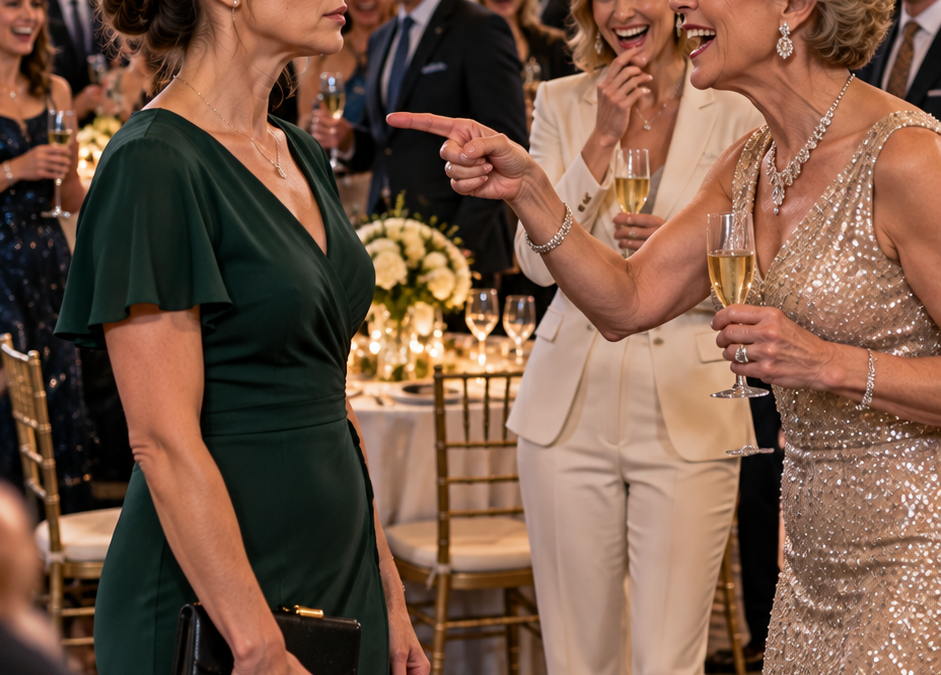
My stepmother looked at my dark-green dress, smiled just enough to make the insult appear polite, and asked whether the Air Force had finally stopped paying me enough to shop somewhere respectable.
Several people laughed because they already knew which woman in the room was supposed to matter and which one was supposed to be pitied.
I let them laugh, because in less than an hour I would be reminded that the most dangerous mistake people make about quiet lives is assuming nothing important is happening inside them.
My name is Audrey Langston.
I was forty-three years old when I attended the twenty-fifth reunion of Hamilton Ridge High School, and by then I had spent more than half my life learning how little public recognition had to do with actual responsibility.
That lesson had taken years.
My family still had not learned it.
The reunion was held at Briarwood Mountain Resort outside Denver, one of those places designed to make wealth look effortless.
Stone entrance.
Valets in matching coats.
Firelight behind enormous windows.
Luxury SUVs and German sedans lined along the circular driveway.
When I pulled up in my twelve-year-old sedan, the valet glanced at it and then at me.
Not rudely.
Just long enough that I noticed.
I handed him the keys.
“Please ignore the coffee cup in the back.”
He almost smiled.
“Yes, ma’am.”
Inside, I received a plastic name tag.
AUDREY LANGSTON
Nothing underneath.
No rank.
No title.
No profession.
I knew why.
Charlotte had volunteered for the reunion committee and had completed my registration herself.
Under profession, she had written:
Government employee.
Technically true.
I could have corrected it.
I chose not to.
There was something almost liberating about allowing people to reveal themselves before they understood exactly who was standing in front of them.
The ballroom looked like an exhibition devoted to visible achievement.
Ivory tablecloths.
Crystal centerpieces.
Gold lettering.
An enormous anniversary cake.
Photographs from our high-school years moved across a projection screen near the stage.
The organizers had added professional titles to many of the name tags.
DR. VANESSA WHITMORE — FEDERAL JUDGE
CALEB FOSTER — CEO, FOSTER DEVELOPMENT
MELANIE CROSS — STATE SENATOR
Mine still said only Audrey Langston.
Charlotte noticed me before I had crossed half the room.
She was sixty-eight now, still immaculate, still able to convert disapproval into something that sounded almost affectionate.
She came toward me with my younger cousin Vanessa beside her.
Vanessa wore an ivory designer suit.
Her newly issued federal judicial appointment had clearly become the event’s unofficial centerpiece.
Charlotte looked me up and down.
“Nice dress.”
I already knew the second sentence would be worse.
“Did the Army finally stop paying enough for you to shop somewhere respectable?”
“Air Force.”
“What?”
“I’m Air Force.”
She waved one hand.
“You know what I mean.”
I looked down at the dress.
I had bought it from a department-store clearance rack four years earlier.
It traveled well.
It fit comfortably.
It required almost no maintenance.
It looked appropriate beneath a military coat.
I had never needed more from fabric.
“I like the dress.”
Charlotte touched my name tag with one manicured finger.
“At least they spelled your name correctly.”
A few people nearby smiled.
Vanessa did too.
Not openly cruel.
That would have been easier.
Vanessa had perfected the expression of someone tolerating a relative whose life choices had become mildly embarrassing.
She was five years younger than I was.
Technically my cousin.
Emotionally, Charlotte had treated her like the daughter she preferred.
My mother died when I was nine.
Dad married Charlotte three years later.
She never abused me.
That distinction mattered.
People like simple stories.
Cruel stepmother.
Poor child.
Real life was rarely that clean.
Charlotte fed me.
Drove me to school.
Signed permission forms.
Attended some events.
But she measured affection through comparison.
And Vanessa was always available as the comparison.
Vanessa was graceful.
I was awkward.
Vanessa enjoyed dresses.
I preferred running shoes.
Vanessa understood networking.
I liked mathematics.
Vanessa knew what to say at church dinners.
I once corrected the pastor’s statistics during a fundraiser.
Charlotte remembered that for six years.
“You don’t always have to prove you’re the smartest person in the room,” she told me.
I had not been trying to prove anything.
The number had simply been wrong.
That misunderstanding followed me through adolescence.
When I succeeded quietly, Charlotte treated it as a personality defect.
When Vanessa succeeded publicly, Charlotte treated it as evidence of character.
At sixteen, I won a statewide mathematics competition.
Charlotte asked whether I had thanked the teachers enough.
Vanessa made homecoming court.
Charlotte organized dinner.
When I was named valedictorian, my father hugged me so hard I could barely breathe.
Charlotte said, “Just don’t become one of those women who thinks grades are everything.”
Vanessa graduated near the top of her class several years later.
Charlotte sent announcements to half the county.
I eventually stopped measuring the imbalance.
Or tried to.
That evening at Briarwood, Vanessa was introduced onstage as Hamilton Ridge’s newest federal judge.
She stood beneath soft gold lights and spoke with the confidence of someone who understood exactly how the room perceived her.
“After sixteen years in public service,” she said, “I’m honored to begin this appointment to the federal bench.”
Applause.
“But I’ll always remember where I first learned ambition.”
More applause.
“Hamilton Ridge.”
People smiled.
Then Vanessa noticed me.
Her expression sharpened.
“And I should recognize my cousin Audrey, who’s here tonight.”
Faces turned.
I stayed where I was.
“Audrey taught me early that success can take many unusual forms.”
A few people laughed.
“She chose a very different path after graduation. While the rest of us went to college, she ran away to basic training.”
More laughter.
Charlotte clapped.
I waited until it stopped.
Then I walked toward my assigned seat.
Table Nineteen.
Beside the service doors.
No centerpiece.
Half-empty water pitcher.
Two missing chairs.
Across the ballroom, the front tables had engraved place cards and expensive wine.
The message was obvious enough that it almost became funny.
Charlotte had not excluded me.
That would have looked bad.
She had included me precisely where she believed I belonged.
I sat.
Twenty-five years in the Air Force teaches you to sleep on aircraft, eat when food appears, and find humor in bad seating.
A table near a buffet barely qualified as hardship.
I poured water.
Three minutes later, Caleb Foster approached.
I recognized him immediately.
Twenty-five years had changed his hairline, widened his shoulders, and made his suits significantly more expensive.
The expression was the same.
Caleb had been my boyfriend during senior year.
We were the couple teachers loved predicting things about.
Valedictorian and salutatorian.
Computer science.
Stanford applications.
Technology.
Ambition.
We once sat on the hood of his old Honda outside a diner and planned a company neither of us knew enough to build.
He would handle business.
I would create systems.
We would move west.
Get married eventually.
Own a house somewhere expensive before thirty.
At seventeen, certainty is cheap.
Then I received an appointment to the United States Air Force Academy.
I accepted.
Caleb did not forgive me.
He told me I was throwing away everything we had planned.
I told him plans made by two teenagers were not contracts.
We broke up before graduation.
He went to Stanford.
I went to Colorado Springs.
Now he stood beside Table Nineteen with a whiskey in his hand.
“Audrey.”
“Caleb.”
“I almost didn’t recognize you.”
“That seems to be happening tonight.”
His eyes moved to my name tag.
“So you’re still with the Air Force?”
“Yes.”
“What do you do now?”
“Strategic defense.”
He laughed.
“That sounds deliberately vague.”
“It is.”
“I heard you left the Academy.”
“I graduated.”
He blinked.
“Really?”
“Yes.”
“Charlotte always said you transferred into some kind of support program.”
“Charlotte says many things.”
A woman beside him looked at me sympathetically.
“Weren’t you supposed to attend Stanford?”
“I had an offer.”
“Such a shame. You were valedictorian.”
“I chose the Academy.”
Caleb shook his head.
Not mockingly.
Almost sadly.
“You could have built something important.”
I looked at him.
“I did.”
He gave me the smile successful people sometimes use when they believe kindness requires pretending another person hasn’t failed.
“I mean something people recognize.”
There are moments when an old wound surprises you by still existing.
That sentence found one.
Not because I needed Caleb to know my rank.
Because twenty-five years earlier he had made the same mistake.
If he could not see the value of my choice, he assumed there was none.
Before I answered, Vanessa arrived with a photographer.
“Audrey. There you are.”
She hugged me.
The photographer took the picture.
The instant the flash disappeared, Vanessa stepped away.
“We’re organizing a group photograph of the class’s most successful graduates.”
“Congratulations.”
“The space is limited.”
“I wasn’t planning to join.”
“Good.”
She smiled.
“I didn’t want you to feel excluded.”
I studied her face.
Vanessa had followed me throughout childhood.
If I entered debate, she entered debate.
If I won an academic competition, she wanted tutoring.
If teachers praised my writing, she submitted essays everywhere.
For years, I thought she simply admired me.
Later, I understood comparison had shaped her too.
When I left for the Academy, something changed.
Vanessa finally had a role that belonged entirely to her.
The brilliant one.
The ambitious one.
The one Charlotte could show off.
For twenty-five years, my absence had protected that arrangement.
“Enjoy the photograph,” I said.
She tilted her head.
“You always were comfortable standing outside things.”
Then she walked away.
My secure phone vibrated inside my clutch.
One short pulse.
Pause.
Two pulses.
Urgent.
I stood.
Caleb noticed.
“Payroll calling?”
Someone laughed.
I walked toward the balcony without responding.
Cold mountain air wrapped around me outside.
The resort lawn sloped toward dark pine trees.
Below, decorative lights lined stone paths.
I opened the encrypted device.
Message from Brigadier General Wesley Archer.
My deputy commander.
SENTINEL breach expanding. Three allied networks affected. Possible penetration of orbital command architecture. Joint Chiefs requesting immediate assessment.
The reunion disappeared from my mind.
I typed:
Initiate containment protocol. Maintain compartmentalization. I can reach Peterson within ninety minutes.
Seconds later:
Situation may not allow ninety. Stand by for extraction authorization.
I read it twice.
For eight months, my command had tracked a hostile cyber operation we called SENTINEL.
Calling it a cyberattack was too simple.
SENTINEL was designed to attack confidence.
Military command systems depend on information arriving from different sources and being judged as trustworthy.
Radar.
Satellite data.
Communications traffic.
Allied warning systems.
An attacker who simply destroys one system reveals himself.
An attacker who quietly changes what commanders believe is real creates something much more dangerous.
A false launch warning could provoke escalation.
A concealed launch could delay response.
Corrupted orbital data could blind decision-makers at exactly the wrong moment.
Three weeks earlier, my analysts found a dormant access path inside an allied contractor.
We had isolated most of it.
Apparently not enough.
The balcony door opened.
Caleb came outside.
Whiskey in hand.
“I knew I’d find you hiding.”
“I’m not hiding.”
“You always liked the edges of rooms.”
“I like quiet.”
He stood beside me.
Too close.
“Do you remember senior year?”
“Yes.”
“We were going to build a company.”
“I remember.”
“You threw it away.”
I looked at him.
“No.”
“You joined the military.”
“Yes.”
“Instead of Stanford.”
“Yes.”
“That changed everything.”
“It changed my life.”
“Our life.”
“We didn’t have a life, Caleb. We had a plan.”
He stared toward the lawn.
“You always did that.”
“Did what?”
“Made things sound logical so you didn’t have to deal with how they affected people.”
That accusation would have hurt more at eighteen.
At forty-three, I could examine it.
“There were things I handled badly.”
“So you admit it.”
“I admit I was eighteen.”
His expression softened slightly.
“Then why stay in?”
“Because I found work that mattered.”
“To whom?”
The question was not rhetorical to him.
That made it more revealing.
“People you will never meet.”
He laughed.
Not cruelly.
Disbelieving.
“You were the smartest person in our class, Audrey. You could have been important.”
I looked directly at him.
“I am important.”
His smile turned sympathetic.
“To whom?”
I could have told him.
I could have said lieutenant general.
Three stars.
Commander of the Joint Strategic Cyber Defense Authority.
Thousands of personnel across military, civilian, and allied components.
Responsibility for networks he had probably seen referenced only in news reports.
But rank would not correct his actual mistake.
“People you’ll never meet,” I repeated.
He mistook restraint for wounded pride.
“I’m not insulting you.”
“You have been insulting me since you walked to my table.”
“I’m trying to understand why someone with your potential settled for being an anonymous government employee.”
“I didn’t settle.”
“Then what do you do?”
“If I could explain my work completely on a hotel balcony, I wouldn’t be doing it properly.”
That irritated him.
I turned toward the door.
Caleb caught my wrist.
“We’re having a conversation.”
I looked down at his hand.
He released me immediately.
“Twenty-five years,” he said. “And you’re still angry because I didn’t support your ridiculous Academy decision.”
“My career has never been about you.”
“You changed our entire future.”
“I changed mine. You decided that meant I stole yours.”
The door opened.
Vanessa stepped onto the balcony.
“There you are. Caleb, the photographer is waiting.”
Her gaze shifted to me.
“You’re still here?”
“Yes.”
“I assumed you’d leave early.”
“Why?”
“Military people are always disappearing whenever family needs them.”
That sentence had layers she did not understand.
She linked her arm through Caleb’s.
“Come on. Everyone wants the judge and the real-estate genius together.”
Before going inside, she glanced at my dress.
“Try not to stand too close to the backdrop. The green might clash.”
The door closed.
My phone vibrated.
SENTINEL confirmed internal access. Strategic launch-warning data potentially compromised. Pentagon authorizes direct extraction. Aircraft inbound. Twelve minutes.
I read the message.
Then looked through the glass at two hundred people celebrating careers measured in things they could print on name tags.
I went back inside.
The Leaders portrait was forming near the stage.
Vanessa stood in the middle.
Caleb beside her.
Charlotte saw me.
“Audrey.”
“Yes?”
“Could you help move those chairs?”
I looked at the perfectly arranged chairs.
“The staff already handled them.”
“They seem busy.”
“You want me to move chairs?”
Charlotte smiled as if explaining something to a difficult teenager.
“You’re military. Don’t you people handle logistics?”
Someone nearby laughed.
A former chemistry classmate lifted his glass.
“Maybe she works in the mess hall.”
Another voice:
“Put her in charge of the buffet.”
Laughter grew.
I stood quietly.
There was a strange freedom in that moment.
I no longer felt eighteen.
No need to correct every misunderstanding.
No need to say, Actually, I graduated from the Academy.
No need to explain that logistics itself was one of the most essential military functions on earth.
No need to list stars.
People who wanted information could have asked.
Charlotte approached.
She adjusted my plastic name tag.
“Don’t look so serious. They’re joking.”
“Are they?”
“You’ve always been too sensitive about your career.”
“I rarely discuss my career with you.”
“Because there isn’t much to discuss.”
A quiet voice interrupted.
“I always suspected there was more.”
Mr. Sterling.
My high-school physics teacher.
He was almost eighty.
Thinner.
White hair.
Same alert eyes.
He stepped toward me.
“You wrote a paper senior year about vulnerabilities in interconnected defense systems.”
I smiled.
“I remember.”
“You argued future conflicts might begin by manipulating information instead of destroying weapons.”
Charlotte rolled her eyes.
“She was always dramatic.”
Mr. Sterling ignored her.
“What happened to that interest?”
I glanced at the secure phone.
“I kept studying.”
“Through the Air Force?”
“Yes.”
His eyes narrowed thoughtfully.
“How far?”
The windows vibrated.
At first, almost imperceptibly.
Several guests looked around.
Then the vibration deepened.
Glassware trembled.
The string quartet stopped.
Vanessa turned from the photography backdrop.
“What is that?”
I looked toward the northern tree line.
“They’re early.”
Charlotte frowned.
“Who?”
A military helicopter rose above the pines.
The room went silent.
Matte gray.
Low.
Navigation lights cutting through darkness.
Rotor wash struck the resort grounds.
Flower petals tore from decorative arrangements.
Table linens outside snapped violently.
Guests crowded the windows.
A second aircraft circled above.
The first descended onto the center of the lawn.
Resort staff started toward the terrace, but military security personnel were already moving outward from the landing zone.
The ballroom doors opened.
Brigadier General Wesley Archer entered first.
Formal uniform.
One silver star on each shoulder.
Two security officers followed carrying sealed communications equipment.
Every conversation stopped.
Vanessa reacted first.
Of course she did.
She stepped toward Archer.
“General. I’m Judge Vanessa Whitmore. Is there an emergency?”
Archer walked past her.
He saw me beside Table Nineteen.
His posture changed.
Three precise steps.
Then a one-star general stopped in front of the woman in a clearance-rack dress and plastic name tag.
He saluted.
“Lieutenant General Langston, ma’am. The Pentagon requires your immediate presence.”
Silence has weight.
You can feel two hundred people realize simultaneously that their understanding of a room has been wrong.
Someone dropped a champagne glass.
Charlotte gripped a chair.
Vanessa’s face emptied of color.
Caleb whispered, “Lieutenant general?”
I returned Archer’s salute.
“At ease, General.”
He handed me a sealed folder.
“SENTINEL accessed a secondary warning network twenty-six minutes ago. Joint Chiefs are assembled. NATO cyber command is holding for your recommendation.”
“Confirmed corruption?”
“Fourteen packets. Two isolated. Intrusion is adapting.”
“Operational systems?”
“Not yet.”
“That won’t remain true.”
“No, ma’am.”
“We have a secure communications suite on the aircraft. Ninety-second departure window.”
“Understood.”
Vanessa finally spoke.
“Wait.”
Nobody moved.
She pointed toward me.
“You called her General?”
Archer looked at her.
“Yes, ma’am.”
“Lieutenant general?”
“Yes.”
Charlotte shook her head.
“That isn’t possible. Audrey works administration.”
Archer’s face remained perfectly professional.
“Lieutenant General Audrey Langston commands the Joint Strategic Cyber Defense Authority.”
Nobody laughed now.
“She oversees defensive operations protecting military networks, satellite-warning systems, and strategic command infrastructure.”
A former classmate pulled out his phone.
Typed my name.
His expression changed.
“Oh my God.”
Others followed.
I almost wanted to laugh.
Twenty-five years of service had been publicly searchable.
Not everything.
Enough.
They had never looked.
Caleb stepped toward me.
“Why didn’t you tell us?”
“I did.”
“No, you said strategic defense.”
“That is what I do.”
“You didn’t say you were a three-star general.”
“You never asked a question long enough to hear an answer.”
Charlotte stared.
“How long?”
“Almost two years.”
“But I’m your stepmother.”
“Yes.”
“You let me tell everyone you were some government clerk.”
“You registered me as a government employee.”
“You could’ve corrected it.”
“I could have.”
She stared as though my refusal to rescue her from her own assumptions was somehow an offense.
Vanessa looked around the room.
“You planned this.”
“No.”
“You arrived without a title.”
“Because Charlotte registered me without one.”
“You wore that dress.”
I looked down.
“Yes.”
“You wanted to humiliate me.”
“I sat at the table assigned to me and answered every direct question truthfully.”
“You knew the helicopter was coming.”
“I knew twelve minutes ago.”
Caleb looked at Archer.
“What exactly has she done?”
Archer hesitated.
I answered.
“What I’m permitted to discuss.”
His expression indicated that was all anyone would receive.
Mr. Sterling came closer.
“The paper.”
I looked at him.
“You followed it.”
“It was the beginning.”
His eyes filled.
“I knew you hadn’t disappeared.”
That sentence reached me more deeply than the salute.
The communications case emitted a warning.
Archer checked it.
“Ma’am. Seventy seconds.”
I picked up my clutch.
Charlotte stepped into my path.
“You cannot leave now.”
I stared.
“Everyone has questions.”
“The Joint Chiefs have more urgent ones.”
“At least stay for a photograph.”
That almost hurt.
An hour earlier, Charlotte had placed me at the last table because she did not want my life included among the visible successes.
Now she wanted photographic evidence that a lieutenant general belonged to her family.
“No.”
“Audrey.”
“You didn’t want me in the photograph when you thought I was insignificant.”
Her face tightened.
“My rank doesn’t give you the right to claim me now.”
She stepped back.
Vanessa raised her phone.
“This is unbelievable.”
One of the security officers moved between us.
“No photography of aircraft or communications equipment.”
Her phone lowered.
I headed toward the terrace.
Caleb followed.
“Please.”
I stopped.
He looked shaken.
“I had no idea.”
“That was never the problem.”
“Then what was?”
“You decided my choices were failures without knowing where they led.”
“We were young.”
“Tonight you told me I could have become important.”
He looked toward the helicopter.
“I was wrong.”
“Yes.”
“I’m sorry.”
I believed he was embarrassed.
I was not yet sure he understood why.
Archer called, “Thirty seconds, ma’am.”
I crossed the lawn.
Behind me, classmates crowded onto the terrace.
Designer dresses and tailored jackets snapped in the rotor wash.
Phone screens glowed.
At the aircraft door, I turned.
Vanessa stood beneath the enormous screen displaying her judicial appointment.
Charlotte remained beside the chair she had gripped.
Caleb watched me like he was trying to reconcile forty-three-year-old Audrey with the girl who had refused the future he planned for her.
I raised my voice just enough.
“I didn’t waste my potential.”
Nobody moved.
“I used it somewhere your applause was irrelevant.”
Then I boarded.
The helicopter lifted.
Briarwood became smaller beneath us.
The reunion hall turned into a golden rectangle in the darkness.
I sat opposite Archer and removed the plastic name tag.
AUDREY LANGSTON
No title.
No rank.
For the first time that evening, I thought Charlotte had accidentally gotten something right.
The label was sufficient.
My name had always been enough.
The people downstairs simply had not cared enough to understand what it represented.
Inside the aircraft, a uniform bag had already been prepared.
I changed before landing.
When I pulled on the coat, three silver stars settled onto each shoulder.
Archer was studying data on a secure display.
“SENTINEL has moved again.”
“Show me.”
The reunion disappeared.
By the time we landed at the secure airfield, I had already reviewed the first intrusion maps.
A convoy took us to an underground operations center.
The Joint Chiefs were assembled.
NATO representatives appeared on secure screens.
Analysts tracked traffic moving through allied networks.
Nobody commented on my dress still folded inside a garment bag.
Nobody cared what car I drove.
Nobody asked whether my life looked successful.
They needed decisions.
That was the world I understood.
The first hour established the shape of the threat.
SENTINEL had injected false warning data to conceal a genuine attempt to penetrate satellite-control infrastructure.
It was elegant.
Dangerous.
Exactly the kind of attack I had spent years predicting.
The hostile network wanted our analysts looking at the wrong problem while the real intrusion moved beneath it.
“Separate warning validation completely from orbital control,” I ordered.
An analyst looked up.
“That creates a temporary blind seam.”
“I know.”
“Ma’am, if the threat moves during separation—”
“We’re already blind if the data is contaminated.”
He nodded.
“Execute.”
We isolated compromised channels.
Rerouted critical communications.
Moved allied verification through clean architecture.
Then found the internal contractor credential that had reopened the dormant access point.
The intrusion fought back.
Changed patterns.
Moved.
The operations center became a world of screens, voices, cold coffee, and decisions measured in seconds.
Seven hours later, at 5:46 in the morning, the final hostile connection went dark.
No missile warning failed.
No satellite command was lost.
No aircraft had to be grounded.
No allied government acted on false information.
Nobody outside a limited number of secure rooms knew how close several systems had come to becoming unreliable.
No headlines.
No television interviews.
No applause.
That was success in my world.
Absence.
The crisis that did not become a crisis.
The war that did not begin.
I walked outside shortly after sunrise.
Washington was turning pale gold.
My personal phone contained more than two hundred messages.
I scrolled.
Former classmates who had ignored me suddenly wanted coffee.
People who had laughed near the buffet called me inspirational.
The reunion committee wanted to issue a special tribute.
Someone had apparently already renamed a group chat.
Vanessa sent seven messages.
The first:
Why didn’t you ever tell me?
The second:
You let everybody embarrass themselves.
Interesting phrasing.
The third:
Did you stage the helicopter?
The fourth:
Please call me.
The fifth:
There are things we should discuss as family.
The sixth:
I may need a contact at Defense regarding a judicial security matter.
The seventh:
Congratulations.
I answered none.
Charlotte had left a voicemail.
Her voice sounded fragile.
“Audrey, I’m sorry if my joke sounded unkind. You know how proud I’ve always been of you.”
I deleted it.
An apology beginning with if usually apologizes for another person’s reaction, not your own action.
Caleb sent an email asking whether he could visit Washington.
Deleted.
Then I found one message from Mr. Sterling.
You were right in your senior paper. Information became the battlefield. I’m proud that you chose to defend it.
I read it twice.
Then saved it.
That difference told me something.
Mr. Sterling was proud of what I had done.
The others were impressed by what I had become.
Those are not the same thing.
Months passed.
The reunion became a story people told.
A helicopter landing.
A salute.
A dramatic reveal.
I understood why.
Visible moments are easier to remember.
They make good photographs.
What nobody understood was how little that night had changed the actual substance of my life.
I went back to work.
Briefings.
Threat assessments.
Personnel issues.
Budgets.
Long secure meetings.
Mentoring young officers.
Travel.
Calls at terrible hours.
The ordinary machinery of high responsibility.
Eight months later, the Senate confirmed my promotion.
General.
Four stars.
The ceremony took place at Joint Base Andrews.
Senior military leaders attended.
Intelligence officials.
Former commanders.
People I had served under.
People I had mentored.
I invited Mr. Sterling.
I did not invite Charlotte.
I did not invite Vanessa.
I did not invite Caleb.
My father had died seven years earlier.
Our relationship had never been simple.
He loved me.
That I knew.
But he hated conflict, especially with Charlotte, and too often he chose peace in the house over defending me from small humiliations.
Still, after his death, I discovered a folder containing every article he could find mentioning my career.
Many described programs rather than me directly.
He had circled my name.
Written dates.
Saved photographs.
He never fully understood what I did.
But he had tried.
I kept the folded flag from his funeral in the front row.
Wesley Archer, now my chief of staff, helped pin the fourth star onto my shoulder.
Quietly, he said, “You earned this twenty times.”
“No one earns this alone.”
After the ceremony, a young Air Force captain approached.
She looked nervous.
“Ma’am?”
“Yes?”
“May I ask you something personal?”
“You may ask.”
She hesitated.
“My family thinks I ruined my future by staying in the military.”
I almost smiled.
“What do you do?”
“Cyber-threat analysis for orbital systems.”
“That sounds somewhat more complicated than ruining your future.”
She laughed nervously.
“They tell people I handle computers in an office.”
“Sometimes you probably do.”
“Yes, ma’am.”
“What bothers you?”
“They think I could’ve done something more important in civilian life.”
I studied her.
Twenty years younger than me.
Different uniform.
Same wound.
“What if they never understand?” she asked.
The question carried me back to Hamilton Ridge.
To Charlotte.
Caleb.
Vanessa.
Table Nineteen.
To years of believing some sufficiently impressive achievement might finally correct the record.
“Build a life that remains meaningful without their understanding.”
She swallowed.
“Does that get easier?”
“Yes.”
“When?”
“When you stop treating somebody else’s ignorance as evidence against your worth.”
She stood a little straighter.
“Thank you, ma’am.”
That evening, after the ceremony ended, I stood outside the hangar.
Aircraft lights moved along the runway.
For years, I had believed recognition would heal something.
Graduating from the Academy had not done it.
My first command had not.
My first star.
Second.
Third.
None mattered to people who had already decided what story they preferred.
The helicopter at Briarwood changed their behavior.
It did not change my value.
That was the distinction I finally understood.
I had been the same woman before Archer entered the ballroom.
Same officer.
Same judgment.
Same record.
Same responsibility.
Same work protecting systems most Americans would never know existed.
The only difference was visibility.
Truth had arrived loudly enough to interrupt their laughter.
Months after my promotion, Charlotte mailed a handwritten letter to my office.
Not an email.
Not a voicemail.
Paper.
I left it unopened for three days.
Then I read it.
This apology was different.
No if.
No explanation disguised as innocence.
She admitted she had deliberately entered my profession as “government employee.”
She admitted assigning me to Table Nineteen.
She admitted minimizing my military career for years.
Then she wrote something I had not expected.
Vanessa was always insecure around you.
I stopped.
Charlotte continued.
I knew that. I thought protecting her confidence meant making your achievements smaller.
There it was.
Not hatred.
Not ignorance.
A choice.
The more accomplished you became, the more I told myself it was probably ordinary military work because that made Vanessa feel less threatened.
I read the sentence several times.
Then:
I was unfair to you when you were young, and I continued doing it when you were old enough that I had no excuse to pretend I didn’t know better.
That was an apology.
A real one.
At the end:
I do not expect you to forgive me. I only wanted to stop lying about what I did.
I folded the letter.
Placed it in a drawer.
I did forgive Charlotte eventually.
But forgiveness is not the same as restored access.
I did not suddenly begin calling her weekly.
I did not invite her into intimate parts of my life because she finally understood my rank.
I simply stopped carrying active anger.
That was enough.
Vanessa sent a formal congratulations card after my promotion.
Embossed.
Expensive.
Perfect handwriting.
I did not respond.
Months later, I saw an article about one of her rulings.
She looked confident in the photograph.
I hoped she became an excellent judge.
I meant that sincerely.
Her success did not diminish mine.
That was something neither Charlotte nor Vanessa had understood when we were younger.
There was room.
There had always been room.
Caleb wrote one final email.
I almost deleted it without reading.
Then I opened it.
I spent twenty-five years believing you chose an insignificant life because it was easier than the future we planned.
I continued.
Now I understand you chose the harder path because it mattered more to you.
Then:
I think I needed your choice to be wrong because otherwise I had to accept that you did not choose me.
That was the first thing he had ever written about our past that felt completely true.
He apologized.
Not for being wrong about my rank.
For believing my life required his approval.
I read the email once.
Then deleted it.
Not angrily.
He finally understood.
His understanding was simply no longer necessary.
I never attended another Hamilton Ridge reunion.
People occasionally interpreted that as bitterness.
It wasn’t.
I had no need to return to a ballroom where people from my past measured one another using cars, titles, marriages, clothing, income, and photographs.
Those things were not automatically bad.
Vanessa had every right to celebrate becoming a federal judge.
Caleb had built a successful company.
Others had raised families, become physicians, teachers, business owners, elected officials.
Their achievements mattered.
The problem was never success.
It was confusing visibility with value.
For twenty-five years, I worked in rooms where many of the most important victories could not be discussed afterward.
The network remained secure.
The warning was accurate.
The satellite responded.
The allied commander received real data.
The intrusion failed.
The service member came home.
The escalation never occurred.
Nobody applauded because nobody knew there was something to applaud.
That was fine.
One afternoon, several years after Briarwood, I attended a retirement ceremony for an officer who had served under me.
Afterward, a colonel approached with his teenage daughter.
The girl looked uncomfortable.
“General Langston, my daughter wants to join the Air Force.”
Her father said it like a confession.
The girl immediately corrected him.
“The Academy.”
He sighed.
“The Academy.”
I smiled.
“What interests you?”
“Computer engineering.”
Her father shook his head affectionately.
“She has offers from some excellent civilian universities.”
“So did I.”
The girl looked up sharply.
“You did?”
“Yes.”
“What made you choose the Academy?”
Nobody had asked me that question in years.
I considered giving her the polished answer.
Service.
Challenge.
Opportunity.
All true.
Instead, I remembered being seventeen.
Mr. Sterling’s classroom.
A paper about information warfare.
My father’s pride.
Charlotte’s uncertainty.
Caleb’s anger.
“I wanted to find out what I was capable of somewhere that would require more from me than grades.”
The girl nodded slowly.
“Did your family support you?”
Her father looked embarrassed.
I smiled.
“Some did. Some didn’t.”
“What if people think I’m making the wrong choice?”
“Listen to criticism seriously.”
She seemed surprised.
I continued.
“People who love you can see risks you miss. Listen.”
Then I added, “But after listening, make sure the life you’re building belongs to you.”
Her father nodded.
The girl smiled.
“Thank you.”
As they walked away, I thought again about Briarwood.
People loved the helicopter part.
Whenever the story somehow resurfaced among officers, someone would grin.
“You really got extracted from your reunion?”
“Yes.”
“In a helicopter?”
“Yes.”
“After they insulted your dress?”
Unfortunately, that detail survived too.
“Yes.”
“Must have felt incredible.”
I always gave some version of the same answer.
“It felt inconvenient.”
They usually laughed.
But it was true.
The helicopter had not felt like vindication.
SENTINEL was attacking strategic architecture.
People I respected were waiting for decisions.
The emotional meaning came later.
The moment mattered not because everyone discovered I outranked their assumptions.
It mattered because I finally saw how little their assumptions had to do with me.
Charlotte could call my dress cheap.
It remained a perfectly good dress.
Caleb could call my life wasted.
My work remained meaningful.
Vanessa could exclude me from a photograph of successful graduates.
I remained successful.
The room had confused recognition with reality.
So had I, for far too long.
Years after the reunion, I still owned that green dress.
A seam had been repaired once.
The fabric had softened.
The style had become increasingly unfashionable.
I wore it occasionally.
One evening Archer noticed it at a small retirement dinner.
He stared.
“Is that the dress?”
I knew exactly what he meant.
“Yes.”
“The reunion dress?”
“Yes.”
He shook his head.
“I assumed you burned it.”
“Why would I?”
“Symbolism?”
“I like the dress.”
He laughed.
“Of course you do.”
At the end of the evening, I passed a mirror.
Four-star general.
Clearance-rack dress.
Gray beginning at my temples.
Lines around my eyes.
For a second, I saw the forty-three-year-old woman at Table Nineteen.
Then the seventeen-year-old girl before her.
Both had spent too much energy hoping other people would interpret their lives correctly.
I smiled at my reflection.
We eventually learned.
Retirement came years later.
Quietly, by military standards.
There were speeches.
Flags.
People said generous things.
Some of my work remained classified.
Some probably always would.
Mr. Sterling had passed away by then.
His message from the reunion remained stored in my phone archive.
Information became the battlefield. I’m proud that you chose to defend it.
I kept it because he had seen the thread.
Not the stars.
Not the helicopter.
The thread.
A curious student wrote a paper.
A young woman chose the Academy.
An officer kept studying.
A commander built teams.
A general protected systems.
No single moment made the life meaningful.
Meaning accumulated.
Quietly.
One choice after another.
At my retirement reception, a young major asked what accomplishment made me proudest.
I could have mentioned SENTINEL.
I didn’t.
Could have mentioned commands.
Promotions.
National-level policy.
I didn’t.
I thought about the captain at my four-star ceremony.
The young woman whose family told people she handled office computers.
Years later, she had become one of the finest cyber officers I ever commanded.
“I think,” I said, “I’m proudest of the people who learned they didn’t have to make themselves smaller so other people would feel comfortable.”
The major smiled.
“That sounds specific.”
“It is.”
Afterward, I drove home myself.
No military helicopter.
No convoy.
No security team.
Just my car.
Not the twelve-year-old sedan from the reunion.
That vehicle had finally surrendered after more than two hundred thousand miles.
I missed it more than was rational.
At a red light, I thought about Table Nineteen one final time.
The service doors.
The water pitcher.
Charlotte touching my name tag.
Caleb saying I could have built something important.
Vanessa telling me there was no room in the photograph.
For years, I might have imagined returning to that room and telling them everything.
Showing stars.
Listing commands.
Watching their faces change.
Then reality gave me something close to that fantasy.
It was far less satisfying than teenage Audrey would have expected.
Because the real victory was not watching them discover who I was.
It was realizing I no longer needed them to.
That night, my name tag contained only two words.
AUDREY LANGSTON.
No title.
No rank.
No biography.
At the time, everyone treated the blank space beneath my name as evidence that nothing important belonged there.
They were wrong.
But not for the reason they thought afterward.
Not because the missing words should have read Lieutenant General.
Not because they should have listed my command.
Not because a helicopter should have been required to validate me.
The blank space was never the problem.
They had been looking at a human being and asking for credentials before deciding how much respect she deserved.
That was the mistake.
I was the same woman before the windows shook.
The same woman before Wesley Archer entered the ballroom.
The same woman when Charlotte laughed at my dress.
The same woman when Caleb called my life insignificant.
The same woman when Vanessa left me out of the photograph.
Nothing essential changed when the salute came.
Only their information changed.
I never forgot that.
Because some of the most consequential people I served beside spent their careers almost entirely unknown.
Analysts whose names never appeared in newspapers.
Young enlisted specialists who caught anomalies everyone else missed.
Civilian engineers who prevented catastrophic failures.
Officers who quietly said no when saying yes would have been easier.
People whose families sometimes had no idea what they actually did all day.
People who would never receive dramatic public recognition.
Their work mattered anyway.
Real purpose does not become smaller because it happens in silence.
Real integrity does not require witnesses.
And a life does not become unsuccessful simply because the wrong people fail to understand it.
The woman at Table Nineteen never needed a helicopter to prove she mattered.
It only took a helicopter for everyone else to realize how badly they had misunderstood her.
By then, I had already learned the more important truth.
Their understanding was optional.
What do you think of this story? Please leave a like and share your thoughts in the comments. Your support means a lot to us and inspires us to keep writing more meaningful and powerful stories. Thank you! 👍
𝗧𝗛𝗘 𝗘𝗡𝗗
Everyone at My Reunion Had Already Decided What My Life Was Worth Before the Windows Began to Shake
My stepmother looked at my dark-green dress, smiled just enough to make the insult appear polite, and asked whether the Air Force had finally stopped paying me enough to shop somewhere respectable.
Several people laughed because they already knew which woman in the room was supposed to matter and which one was supposed to be pitied.
I let them laugh, because in less than an hour I would be reminded that the most dangerous mistake people make about quiet lives is assuming nothing important is happening inside them.
My name is Audrey Langston.
I was forty-three years old when I attended the twenty-fifth reunion of Hamilton Ridge High School, and by then I had spent more than half my life learning how little public recognition had to do with actual responsibility.
That lesson had taken years.
My family still had not learned it.
The reunion was held at Briarwood Mountain Resort outside Denver, one of those places designed to make wealth look effortless.
Stone entrance.
Valets in matching coats.
Firelight behind enormous windows.
Luxury SUVs and German sedans lined along the circular driveway.
When I pulled up in my twelve-year-old sedan, the valet glanced at it and then at me.
Not rudely.
Just long enough that I noticed.
I handed him the keys.
“Please ignore the coffee cup in the back.”
He almost smiled.
“Yes, ma’am.”
Inside, I received a plastic name tag.
AUDREY LANGSTON
Nothing underneath.
No rank.
No title.
No profession.
I knew why.
Charlotte had volunteered for the reunion committee and had completed my registration herself.
Under profession, she had written:
Government employee.
Technically true.
I could have corrected it.
I chose not to.
There was something almost liberating about allowing people to reveal themselves before they understood exactly who was standing in front of them.
The ballroom looked like an exhibition devoted to visible achievement.
Ivory tablecloths.
Crystal centerpieces.
Gold lettering.
An enormous anniversary cake.
Photographs from our high-school years moved across a projection screen near the stage.
The organizers had added professional titles to many of the name tags.
DR. VANESSA WHITMORE — FEDERAL JUDGE
CALEB FOSTER — CEO, FOSTER DEVELOPMENT
MELANIE CROSS — STATE SENATOR
Mine still said only Audrey Langston.
Charlotte noticed me before I had crossed half the room.
She was sixty-eight now, still immaculate, still able to convert disapproval into something that sounded almost affectionate.
She came toward me with my younger cousin Vanessa beside her.
Vanessa wore an ivory designer suit.
Her newly issued federal judicial appointment had clearly become the event’s unofficial centerpiece.
Charlotte looked me up and down.
“Nice dress.”
I already knew the second sentence would be worse.
“Did the Army finally stop paying enough for you to shop somewhere respectable?”
“Air Force.”
“What?”
“I’m Air Force.”
She waved one hand.
“You know what I mean.”
I looked down at the dress.
I had bought it from a department-store clearance rack four years earlier.
It traveled well.
It fit comfortably.
It required almost no maintenance.
It looked appropriate beneath a military coat.
I had never needed more from fabric.
“I like the dress.”
Charlotte touched my name tag with one manicured finger.
“At least they spelled your name correctly.”
A few people nearby smiled.
Vanessa did too.
Not openly cruel.
That would have been easier.
Vanessa had perfected the expression of someone tolerating a relative whose life choices had become mildly embarrassing.
She was five years younger than I was.
Technically my cousin.
Emotionally, Charlotte had treated her like the daughter she preferred.
My mother died when I was nine.
Dad married Charlotte three years later.
She never abused me.
That distinction mattered.
People like simple stories.
Cruel stepmother.
Poor child.
Real life was rarely that clean.
Charlotte fed me.
Drove me to school.
Signed permission forms.
Attended some events.
But she measured affection through comparison.
And Vanessa was always available as the comparison.
Vanessa was graceful.
I was awkward.
Vanessa enjoyed dresses.
I preferred running shoes.
Vanessa understood networking.
I liked mathematics.
Vanessa knew what to say at church dinners.
I once corrected the pastor’s statistics during a fundraiser.
Charlotte remembered that for six years.
“You don’t always have to prove you’re the smartest person in the room,” she told me.
I had not been trying to prove anything.
The number had simply been wrong.
That misunderstanding followed me through adolescence.
When I succeeded quietly, Charlotte treated it as a personality defect.
When Vanessa succeeded publicly, Charlotte treated it as evidence of character.
At sixteen, I won a statewide mathematics competition.
Charlotte asked whether I had thanked the teachers enough.
Vanessa made homecoming court.
Charlotte organized dinner.
When I was named valedictorian, my father hugged me so hard I could barely breathe.
Charlotte said, “Just don’t become one of those women who thinks grades are everything.”
Vanessa graduated near the top of her class several years later.
Charlotte sent announcements to half the county.
I eventually stopped measuring the imbalance.
Or tried to.
That evening at Briarwood, Vanessa was introduced onstage as Hamilton Ridge’s newest federal judge.
She stood beneath soft gold lights and spoke with the confidence of someone who understood exactly how the room perceived her.
“After sixteen years in public service,” she said, “I’m honored to begin this appointment to the federal bench.”
Applause.
“But I’ll always remember where I first learned ambition.”
More applause.
“Hamilton Ridge.”
People smiled.
Then Vanessa noticed me.
Her expression sharpened.
“And I should recognize my cousin Audrey, who’s here tonight.”
Faces turned.
I stayed where I was.
“Audrey taught me early that success can take many unusual forms.”
A few people laughed.
“She chose a very different path after graduation. While the rest of us went to college, she ran away to basic training.”
More laughter.
Charlotte clapped.
I waited until it stopped.
Then I walked toward my assigned seat.
Table Nineteen.
Beside the service doors.
No centerpiece.
Half-empty water pitcher.
Two missing chairs.
Across the ballroom, the front tables had engraved place cards and expensive wine.
The message was obvious enough that it almost became funny.
Charlotte had not excluded me.
That would have looked bad.
She had included me precisely where she believed I belonged.
I sat.
Twenty-five years in the Air Force teaches you to sleep on aircraft, eat when food appears, and find humor in bad seating.
A table near a buffet barely qualified as hardship.
I poured water.
Three minutes later, Caleb Foster approached.
I recognized him immediately.
Twenty-five years had changed his hairline, widened his shoulders, and made his suits significantly more expensive.
The expression was the same.
Caleb had been my boyfriend during senior year.
We were the couple teachers loved predicting things about.
Valedictorian and salutatorian.
Computer science.
Stanford applications.
Technology.
Ambition.
We once sat on the hood of his old Honda outside a diner and planned a company neither of us knew enough to build.
He would handle business.
I would create systems.
We would move west.
Get married eventually.
Own a house somewhere expensive before thirty.
At seventeen, certainty is cheap.
Then I received an appointment to the United States Air Force Academy.
I accepted.
Caleb did not forgive me.
He told me I was throwing away everything we had planned.
I told him plans made by two teenagers were not contracts.
We broke up before graduation.
He went to Stanford.
I went to Colorado Springs.
Now he stood beside Table Nineteen with a whiskey in his hand.
“Audrey.”
“Caleb.”
“I almost didn’t recognize you.”
“That seems to be happening tonight.”
His eyes moved to my name tag.
“So you’re still with the Air Force?”
“Yes.”
“What do you do now?”
“Strategic defense.”
He laughed.
“That sounds deliberately vague.”
“It is.”
“I heard you left the Academy.”
“I graduated.”
He blinked.
“Really?”
“Yes.”
“Charlotte always said you transferred into some kind of support program.”
“Charlotte says many things.”
A woman beside him looked at me sympathetically.
“Weren’t you supposed to attend Stanford?”
“I had an offer.”
“Such a shame. You were valedictorian.”
“I chose the Academy.”
Caleb shook his head.
Not mockingly.
Almost sadly.
“You could have built something important.”
I looked at him.
“I did.”
He gave me the smile successful people sometimes use when they believe kindness requires pretending another person hasn’t failed.
“I mean something people recognize.”
There are moments when an old wound surprises you by still existing.
That sentence found one.
Not because I needed Caleb to know my rank.
Because twenty-five years earlier he had made the same mistake.
If he could not see the value of my choice, he assumed there was none.
Before I answered, Vanessa arrived with a photographer.
“Audrey. There you are.”
She hugged me.
The photographer took the picture.
The instant the flash disappeared, Vanessa stepped away.
“We’re organizing a group photograph of the class’s most successful graduates.”
“Congratulations.”
“The space is limited.”
“I wasn’t planning to join.”
“Good.”
She smiled.
“I didn’t want you to feel excluded.”
I studied her face.
Vanessa had followed me throughout childhood.
If I entered debate, she entered debate.
If I won an academic competition, she wanted tutoring.
If teachers praised my writing, she submitted essays everywhere.
For years, I thought she simply admired me.
Later, I understood comparison had shaped her too.
When I left for the Academy, something changed.
Vanessa finally had a role that belonged entirely to her.
The brilliant one.
The ambitious one.
The one Charlotte could show off.
For twenty-five years, my absence had protected that arrangement.
“Enjoy the photograph,” I said.
She tilted her head.
“You always were comfortable standing outside things.”
Then she walked away.
My secure phone vibrated inside my clutch.
One short pulse.
Pause.
Two pulses.
Urgent.
I stood.
Caleb noticed.
“Payroll calling?”
Someone laughed.
I walked toward the balcony without responding.
Cold mountain air wrapped around me outside.
The resort lawn sloped toward dark pine trees.
Below, decorative lights lined stone paths.
I opened the encrypted device.
Message from Brigadier General Wesley Archer.
My deputy commander.
SENTINEL breach expanding. Three allied networks affected. Possible penetration of orbital command architecture. Joint Chiefs requesting immediate assessment.
The reunion disappeared from my mind.
I typed:
Initiate containment protocol. Maintain compartmentalization. I can reach Peterson within ninety minutes.
Seconds later:
Situation may not allow ninety. Stand by for extraction authorization.
I read it twice.
For eight months, my command had tracked a hostile cyber operation we called SENTINEL.
Calling it a cyberattack was too simple.
SENTINEL was designed to attack confidence.
Military command systems depend on information arriving from different sources and being judged as trustworthy.
Radar.
Satellite data.
Communications traffic.
Allied warning systems.
An attacker who simply destroys one system reveals himself.
An attacker who quietly changes what commanders believe is real creates something much more dangerous.
A false launch warning could provoke escalation.
A concealed launch could delay response.
Corrupted orbital data could blind decision-makers at exactly the wrong moment.
Three weeks earlier, my analysts found a dormant access path inside an allied contractor.
We had isolated most of it.
Apparently not enough.
The balcony door opened.
Caleb came outside.
Whiskey in hand.
“I knew I’d find you hiding.”
“I’m not hiding.”
“You always liked the edges of rooms.”
“I like quiet.”
He stood beside me.
Too close.
“Do you remember senior year?”
“Yes.”
“We were going to build a company.”
“I remember.”
“You threw it away.”
I looked at him.
“No.”
“You joined the military.”
“Yes.”
“Instead of Stanford.”
“Yes.”
“That changed everything.”
“It changed my life.”
“Our life.”
“We didn’t have a life, Caleb. We had a plan.”
He stared toward the lawn.
“You always did that.”
“Did what?”
“Made things sound logical so you didn’t have to deal with how they affected people.”
That accusation would have hurt more at eighteen.
At forty-three, I could examine it.
“There were things I handled badly.”
“So you admit it.”
“I admit I was eighteen.”
His expression softened slightly.
“Then why stay in?”
“Because I found work that mattered.”
“To whom?”
The question was not rhetorical to him.
That made it more revealing.
“People you will never meet.”
He laughed.
Not cruelly.
Disbelieving.
“You were the smartest person in our class, Audrey. You could have been important.”
I looked directly at him.
“I am important.”
His smile turned sympathetic.
“To whom?”
I could have told him.
I could have said lieutenant general.
Three stars.
Commander of the Joint Strategic Cyber Defense Authority.
Thousands of personnel across military, civilian, and allied components.
Responsibility for networks he had probably seen referenced only in news reports.
But rank would not correct his actual mistake.
“People you’ll never meet,” I repeated.
He mistook restraint for wounded pride.
“I’m not insulting you.”
“You have been insulting me since you walked to my table.”
“I’m trying to understand why someone with your potential settled for being an anonymous government employee.”
“I didn’t settle.”
“Then what do you do?”
“If I could explain my work completely on a hotel balcony, I wouldn’t be doing it properly.”
That irritated him.
I turned toward the door.
Caleb caught my wrist.
“We’re having a conversation.”
I looked down at his hand.
He released me immediately.
“Twenty-five years,” he said. “And you’re still angry because I didn’t support your ridiculous Academy decision.”
“My career has never been about you.”
“You changed our entire future.”
“I changed mine. You decided that meant I stole yours.”
The door opened.
Vanessa stepped onto the balcony.
“There you are. Caleb, the photographer is waiting.”
Her gaze shifted to me.
“You’re still here?”
“Yes.”
“I assumed you’d leave early.”
“Why?”
“Military people are always disappearing whenever family needs them.”
That sentence had layers she did not understand.
She linked her arm through Caleb’s.
“Come on. Everyone wants the judge and the real-estate genius together.”
Before going inside, she glanced at my dress.
“Try not to stand too close to the backdrop. The green might clash.”
The door closed.
My phone vibrated.
SENTINEL confirmed internal access. Strategic launch-warning data potentially compromised. Pentagon authorizes direct extraction. Aircraft inbound. Twelve minutes.
I read the message.
Then looked through the glass at two hundred people celebrating careers measured in things they could print on name tags.
I went back inside.
The Leaders portrait was forming near the stage.
Vanessa stood in the middle.
Caleb beside her.
Charlotte saw me.
“Audrey.”
“Yes?”
“Could you help move those chairs?”
I looked at the perfectly arranged chairs.
“The staff already handled them.”
“They seem busy.”
“You want me to move chairs?”
Charlotte smiled as if explaining something to a difficult teenager.
“You’re military. Don’t you people handle logistics?”
Someone nearby laughed.
A former chemistry classmate lifted his glass.
“Maybe she works in the mess hall.”
Another voice:
“Put her in charge of the buffet.”
Laughter grew.
I stood quietly.
There was a strange freedom in that moment.
I no longer felt eighteen.
No need to correct every misunderstanding.
No need to say, Actually, I graduated from the Academy.
No need to explain that logistics itself was one of the most essential military functions on earth.
No need to list stars.
People who wanted information could have asked.
Charlotte approached.
She adjusted my plastic name tag.
“Don’t look so serious. They’re joking.”
“Are they?”
“You’ve always been too sensitive about your career.”
“I rarely discuss my career with you.”
“Because there isn’t much to discuss.”
A quiet voice interrupted.
“I always suspected there was more.”
Mr. Sterling.
My high-school physics teacher.
He was almost eighty.
Thinner.
White hair.
Same alert eyes.
He stepped toward me.
“You wrote a paper senior year about vulnerabilities in interconnected defense systems.”
I smiled.
“I remember.”
“You argued future conflicts might begin by manipulating information instead of destroying weapons.”
Charlotte rolled her eyes.
“She was always dramatic.”
Mr. Sterling ignored her.
“What happened to that interest?”
I glanced at the secure phone.
“I kept studying.”
“Through the Air Force?”
“Yes.”
His eyes narrowed thoughtfully.
“How far?”
The windows vibrated.
At first, almost imperceptibly.
Several guests looked around.
Then the vibration deepened.
Glassware trembled.
The string quartet stopped.
Vanessa turned from the photography backdrop.
“What is that?”
I looked toward the northern tree line.
“They’re early.”
Charlotte frowned.
“Who?”
A military helicopter rose above the pines.
The room went silent.
Matte gray.
Low.
Navigation lights cutting through darkness.
Rotor wash struck the resort grounds.
Flower petals tore from decorative arrangements.
Table linens outside snapped violently.
Guests crowded the windows.
A second aircraft circled above.
The first descended onto the center of the lawn.
Resort staff started toward the terrace, but military security personnel were already moving outward from the landing zone.
The ballroom doors opened.
Brigadier General Wesley Archer entered first.
Formal uniform.
One silver star on each shoulder.
Two security officers followed carrying sealed communications equipment.
Every conversation stopped.
Vanessa reacted first.
Of course she did.
She stepped toward Archer.
“General. I’m Judge Vanessa Whitmore. Is there an emergency?”
Archer walked past her.
He saw me beside Table Nineteen.
His posture changed.
Three precise steps.
Then a one-star general stopped in front of the woman in a clearance-rack dress and plastic name tag.
He saluted.
“Lieutenant General Langston, ma’am. The Pentagon requires your immediate presence.”
Silence has weight.
You can feel two hundred people realize simultaneously that their understanding of a room has been wrong.
Someone dropped a champagne glass.
Charlotte gripped a chair.
Vanessa’s face emptied of color.
Caleb whispered, “Lieutenant general?”
I returned Archer’s salute.
“At ease, General.”
He handed me a sealed folder.
“SENTINEL accessed a secondary warning network twenty-six minutes ago. Joint Chiefs are assembled. NATO cyber command is holding for your recommendation.”
“Confirmed corruption?”
“Fourteen packets. Two isolated. Intrusion is adapting.”
“Operational systems?”
“Not yet.”
“That won’t remain true.”
“No, ma’am.”
“We have a secure communications suite on the aircraft. Ninety-second departure window.”
“Understood.”
Vanessa finally spoke.
“Wait.”
Nobody moved.
She pointed toward me.
“You called her General?”
Archer looked at her.
“Yes, ma’am.”
“Lieutenant general?”
“Yes.”
Charlotte shook her head.
“That isn’t possible. Audrey works administration.”
Archer’s face remained perfectly professional.
“Lieutenant General Audrey Langston commands the Joint Strategic Cyber Defense Authority.”
Nobody laughed now.
“She oversees defensive operations protecting military networks, satellite-warning systems, and strategic command infrastructure.”
A former classmate pulled out his phone.
Typed my name.
His expression changed.
“Oh my God.”
Others followed.
I almost wanted to laugh.
Twenty-five years of service had been publicly searchable.
Not everything.
Enough.
They had never looked.
Caleb stepped toward me.
“Why didn’t you tell us?”
“I did.”
“No, you said strategic defense.”
“That is what I do.”
“You didn’t say you were a three-star general.”
“You never asked a question long enough to hear an answer.”
Charlotte stared.
“How long?”
“Almost two years.”
“But I’m your stepmother.”
“Yes.”
“You let me tell everyone you were some government clerk.”
“You registered me as a government employee.”
“You could’ve corrected it.”
“I could have.”
She stared as though my refusal to rescue her from her own assumptions was somehow an offense.
Vanessa looked around the room.
“You planned this.”
“No.”
“You arrived without a title.”
“Because Charlotte registered me without one.”
“You wore that dress.”
I looked down.
“Yes.”
“You wanted to humiliate me.”
“I sat at the table assigned to me and answered every direct question truthfully.”
“You knew the helicopter was coming.”
“I knew twelve minutes ago.”
Caleb looked at Archer.
“What exactly has she done?”
Archer hesitated.
I answered.
“What I’m permitted to discuss.”
His expression indicated that was all anyone would receive.
Mr. Sterling came closer.
“The paper.”
I looked at him.
“You followed it.”
“It was the beginning.”
His eyes filled.
“I knew you hadn’t disappeared.”
That sentence reached me more deeply than the salute.
The communications case emitted a warning.
Archer checked it.
“Ma’am. Seventy seconds.”
I picked up my clutch.
Charlotte stepped into my path.
“You cannot leave now.”
I stared.
“Everyone has questions.”
“The Joint Chiefs have more urgent ones.”
“At least stay for a photograph.”
That almost hurt.
An hour earlier, Charlotte had placed me at the last table because she did not want my life included among the visible successes.
Now she wanted photographic evidence that a lieutenant general belonged to her family.
“No.”
“Audrey.”
“You didn’t want me in the photograph when you thought I was insignificant.”
Her face tightened.
“My rank doesn’t give you the right to claim me now.”
She stepped back.
Vanessa raised her phone.
“This is unbelievable.”
One of the security officers moved between us.
“No photography of aircraft or communications equipment.”
Her phone lowered.
I headed toward the terrace.
Caleb followed.
“Please.”
I stopped.
He looked shaken.
“I had no idea.”
“That was never the problem.”
“Then what was?”
“You decided my choices were failures without knowing where they led.”
“We were young.”
“Tonight you told me I could have become important.”
He looked toward the helicopter.
“I was wrong.”
“Yes.”
“I’m sorry.”
I believed he was embarrassed.
I was not yet sure he understood why.
Archer called, “Thirty seconds, ma’am.”
I crossed the lawn.
Behind me, classmates crowded onto the terrace.
Designer dresses and tailored jackets snapped in the rotor wash.
Phone screens glowed.
At the aircraft door, I turned.
Vanessa stood beneath the enormous screen displaying her judicial appointment.
Charlotte remained beside the chair she had gripped.
Caleb watched me like he was trying to reconcile forty-three-year-old Audrey with the girl who had refused the future he planned for her.
I raised my voice just enough.
“I didn’t waste my potential.”
Nobody moved.
“I used it somewhere your applause was irrelevant.”
Then I boarded.
The helicopter lifted.
Briarwood became smaller beneath us.
The reunion hall turned into a golden rectangle in the darkness.
I sat opposite Archer and removed the plastic name tag.
AUDREY LANGSTON
No title.
No rank.
For the first time that evening, I thought Charlotte had accidentally gotten something right.
The label was sufficient.
My name had always been enough.
The people downstairs simply had not cared enough to understand what it represented.
Inside the aircraft, a uniform bag had already been prepared.
I changed before landing.
When I pulled on the coat, three silver stars settled onto each shoulder.
Archer was studying data on a secure display.
“SENTINEL has moved again.”
“Show me.”
The reunion disappeared.
By the time we landed at the secure airfield, I had already reviewed the first intrusion maps.
A convoy took us to an underground operations center.
The Joint Chiefs were assembled.
NATO representatives appeared on secure screens.
Analysts tracked traffic moving through allied networks.
Nobody commented on my dress still folded inside a garment bag.
Nobody cared what car I drove.
Nobody asked whether my life looked successful.
They needed decisions.
That was the world I understood.
The first hour established the shape of the threat.
SENTINEL had injected false warning data to conceal a genuine attempt to penetrate satellite-control infrastructure.
It was elegant.
Dangerous.
Exactly the kind of attack I had spent years predicting.
The hostile network wanted our analysts looking at the wrong problem while the real intrusion moved beneath it.
“Separate warning validation completely from orbital control,” I ordered.
An analyst looked up.
“That creates a temporary blind seam.”
“I know.”
“Ma’am, if the threat moves during separation—”
“We’re already blind if the data is contaminated.”
He nodded.
“Execute.”
We isolated compromised channels.
Rerouted critical communications.
Moved allied verification through clean architecture.
Then found the internal contractor credential that had reopened the dormant access point.
The intrusion fought back.
Changed patterns.
Moved.
The operations center became a world of screens, voices, cold coffee, and decisions measured in seconds.
Seven hours later, at 5:46 in the morning, the final hostile connection went dark.
No missile warning failed.
No satellite command was lost.
No aircraft had to be grounded.
No allied government acted on false information.
Nobody outside a limited number of secure rooms knew how close several systems had come to becoming unreliable.
No headlines.
No television interviews.
No applause.
That was success in my world.
Absence.
The crisis that did not become a crisis.
The war that did not begin.
I walked outside shortly after sunrise.
Washington was turning pale gold.
My personal phone contained more than two hundred messages.
I scrolled.
Former classmates who had ignored me suddenly wanted coffee.
People who had laughed near the buffet called me inspirational.
The reunion committee wanted to issue a special tribute.
Someone had apparently already renamed a group chat.
Vanessa sent seven messages.
The first:
Why didn’t you ever tell me?
The second:
You let everybody embarrass themselves.
Interesting phrasing.
The third:
Did you stage the helicopter?
The fourth:
Please call me.
The fifth:
There are things we should discuss as family.
The sixth:
I may need a contact at Defense regarding a judicial security matter.
The seventh:
Congratulations.
I answered none.
Charlotte had left a voicemail.
Her voice sounded fragile.
“Audrey, I’m sorry if my joke sounded unkind. You know how proud I’ve always been of you.”
I deleted it.
An apology beginning with if usually apologizes for another person’s reaction, not your own action.
Caleb sent an email asking whether he could visit Washington.
Deleted.
Then I found one message from Mr. Sterling.
You were right in your senior paper. Information became the battlefield. I’m proud that you chose to defend it.
I read it twice.
Then saved it.
That difference told me something.
Mr. Sterling was proud of what I had done.
The others were impressed by what I had become.
Those are not the same thing.
Months passed.
The reunion became a story people told.
A helicopter landing.
A salute.
A dramatic reveal.
I understood why.
Visible moments are easier to remember.
They make good photographs.
What nobody understood was how little that night had changed the actual substance of my life.
I went back to work.
Briefings.
Threat assessments.
Personnel issues.
Budgets.
Long secure meetings.
Mentoring young officers.
Travel.
Calls at terrible hours.
The ordinary machinery of high responsibility.
Eight months later, the Senate confirmed my promotion.
General.
Four stars.
The ceremony took place at Joint Base Andrews.
Senior military leaders attended.
Intelligence officials.
Former commanders.
People I had served under.
People I had mentored.
I invited Mr. Sterling.
I did not invite Charlotte.
I did not invite Vanessa.
I did not invite Caleb.
My father had died seven years earlier.
Our relationship had never been simple.
He loved me.
That I knew.
But he hated conflict, especially with Charlotte, and too often he chose peace in the house over defending me from small humiliations.
Still, after his death, I discovered a folder containing every article he could find mentioning my career.
Many described programs rather than me directly.
He had circled my name.
Written dates.
Saved photographs.
He never fully understood what I did.
But he had tried.
I kept the folded flag from his funeral in the front row.
Wesley Archer, now my chief of staff, helped pin the fourth star onto my shoulder.
Quietly, he said, “You earned this twenty times.”
“No one earns this alone.”
After the ceremony, a young Air Force captain approached.
She looked nervous.
“Ma’am?”
“Yes?”
“May I ask you something personal?”
“You may ask.”
She hesitated.
“My family thinks I ruined my future by staying in the military.”
I almost smiled.
“What do you do?”
“Cyber-threat analysis for orbital systems.”
“That sounds somewhat more complicated than ruining your future.”
She laughed nervously.
“They tell people I handle computers in an office.”
“Sometimes you probably do.”
“Yes, ma’am.”
“What bothers you?”
“They think I could’ve done something more important in civilian life.”
I studied her.
Twenty years younger than me.
Different uniform.
Same wound.
“What if they never understand?” she asked.
The question carried me back to Hamilton Ridge.
To Charlotte.
Caleb.
Vanessa.
Table Nineteen.
To years of believing some sufficiently impressive achievement might finally correct the record.
“Build a life that remains meaningful without their understanding.”
She swallowed.
“Does that get easier?”
“Yes.”
“When?”
“When you stop treating somebody else’s ignorance as evidence against your worth.”
She stood a little straighter.
“Thank you, ma’am.”
That evening, after the ceremony ended, I stood outside the hangar.
Aircraft lights moved along the runway.
For years, I had believed recognition would heal something.
Graduating from the Academy had not done it.
My first command had not.
My first star.
Second.
Third.
None mattered to people who had already decided what story they preferred.
The helicopter at Briarwood changed their behavior.
It did not change my value.
That was the distinction I finally understood.
I had been the same woman before Archer entered the ballroom.
Same officer.
Same judgment.
Same record.
Same responsibility.
Same work protecting systems most Americans would never know existed.
The only difference was visibility.
Truth had arrived loudly enough to interrupt their laughter.
Months after my promotion, Charlotte mailed a handwritten letter to my office.
Not an email.
Not a voicemail.
Paper.
I left it unopened for three days.
Then I read it.
This apology was different.
No if.
No explanation disguised as innocence.
She admitted she had deliberately entered my profession as “government employee.”
She admitted assigning me to Table Nineteen.
She admitted minimizing my military career for years.
Then she wrote something I had not expected.
Vanessa was always insecure around you.
I stopped.
Charlotte continued.
I knew that. I thought protecting her confidence meant making your achievements smaller.
There it was.
Not hatred.
Not ignorance.
A choice.
The more accomplished you became, the more I told myself it was probably ordinary military work because that made Vanessa feel less threatened.
I read the sentence several times.
Then:
I was unfair to you when you were young, and I continued doing it when you were old enough that I had no excuse to pretend I didn’t know better.
That was an apology.
A real one.
At the end:
I do not expect you to forgive me. I only wanted to stop lying about what I did.
I folded the letter.
Placed it in a drawer.
I did forgive Charlotte eventually.
But forgiveness is not the same as restored access.
I did not suddenly begin calling her weekly.
I did not invite her into intimate parts of my life because she finally understood my rank.
I simply stopped carrying active anger.
That was enough.
Vanessa sent a formal congratulations card after my promotion.
Embossed.
Expensive.
Perfect handwriting.
I did not respond.
Months later, I saw an article about one of her rulings.
She looked confident in the photograph.
I hoped she became an excellent judge.
I meant that sincerely.
Her success did not diminish mine.
That was something neither Charlotte nor Vanessa had understood when we were younger.
There was room.
There had always been room.
Caleb wrote one final email.
I almost deleted it without reading.
Then I opened it.
I spent twenty-five years believing you chose an insignificant life because it was easier than the future we planned.
I continued.
Now I understand you chose the harder path because it mattered more to you.
Then:
I think I needed your choice to be wrong because otherwise I had to accept that you did not choose me.
That was the first thing he had ever written about our past that felt completely true.
He apologized.
Not for being wrong about my rank.
For believing my life required his approval.
I read the email once.
Then deleted it.
Not angrily.
He finally understood.
His understanding was simply no longer necessary.
I never attended another Hamilton Ridge reunion.
People occasionally interpreted that as bitterness.
It wasn’t.
I had no need to return to a ballroom where people from my past measured one another using cars, titles, marriages, clothing, income, and photographs.
Those things were not automatically bad.
Vanessa had every right to celebrate becoming a federal judge.
Caleb had built a successful company.
Others had raised families, become physicians, teachers, business owners, elected officials.
Their achievements mattered.
The problem was never success.
It was confusing visibility with value.
For twenty-five years, I worked in rooms where many of the most important victories could not be discussed afterward.
The network remained secure.
The warning was accurate.
The satellite responded.
The allied commander received real data.
The intrusion failed.
The service member came home.
The escalation never occurred.
Nobody applauded because nobody knew there was something to applaud.
That was fine.
One afternoon, several years after Briarwood, I attended a retirement ceremony for an officer who had served under me.
Afterward, a colonel approached with his teenage daughter.
The girl looked uncomfortable.
“General Langston, my daughter wants to join the Air Force.”
Her father said it like a confession.
The girl immediately corrected him.
“The Academy.”
He sighed.
“The Academy.”
I smiled.
“What interests you?”
“Computer engineering.”
Her father shook his head affectionately.
“She has offers from some excellent civilian universities.”
“So did I.”
The girl looked up sharply.
“You did?”
“Yes.”
“What made you choose the Academy?”
Nobody had asked me that question in years.
I considered giving her the polished answer.
Service.
Challenge.
Opportunity.
All true.
Instead, I remembered being seventeen.
Mr. Sterling’s classroom.
A paper about information warfare.
My father’s pride.
Charlotte’s uncertainty.
Caleb’s anger.
“I wanted to find out what I was capable of somewhere that would require more from me than grades.”
The girl nodded slowly.
“Did your family support you?”
Her father looked embarrassed.
I smiled.
“Some did. Some didn’t.”
“What if people think I’m making the wrong choice?”
“Listen to criticism seriously.”
She seemed surprised.
I continued.
“People who love you can see risks you miss. Listen.”
Then I added, “But after listening, make sure the life you’re building belongs to you.”
Her father nodded.
The girl smiled.
“Thank you.”
As they walked away, I thought again about Briarwood.
People loved the helicopter part.
Whenever the story somehow resurfaced among officers, someone would grin.
“You really got extracted from your reunion?”
“Yes.”
“In a helicopter?”
“Yes.”
“After they insulted your dress?”
Unfortunately, that detail survived too.
“Yes.”
“Must have felt incredible.”
I always gave some version of the same answer.
“It felt inconvenient.”
They usually laughed.
But it was true.
The helicopter had not felt like vindication.
SENTINEL was attacking strategic architecture.
People I respected were waiting for decisions.
The emotional meaning came later.
The moment mattered not because everyone discovered I outranked their assumptions.
It mattered because I finally saw how little their assumptions had to do with me.
Charlotte could call my dress cheap.
It remained a perfectly good dress.
Caleb could call my life wasted.
My work remained meaningful.
Vanessa could exclude me from a photograph of successful graduates.
I remained successful.
The room had confused recognition with reality.
So had I, for far too long.
Years after the reunion, I still owned that green dress.
A seam had been repaired once.
The fabric had softened.
The style had become increasingly unfashionable.
I wore it occasionally.
One evening Archer noticed it at a small retirement dinner.
He stared.
“Is that the dress?”
I knew exactly what he meant.
“Yes.”
“The reunion dress?”
“Yes.”
He shook his head.
“I assumed you burned it.”
“Why would I?”
“Symbolism?”
“I like the dress.”
He laughed.
“Of course you do.”
At the end of the evening, I passed a mirror.
Four-star general.
Clearance-rack dress.
Gray beginning at my temples.
Lines around my eyes.
For a second, I saw the forty-three-year-old woman at Table Nineteen.
Then the seventeen-year-old girl before her.
Both had spent too much energy hoping other people would interpret their lives correctly.
I smiled at my reflection.
We eventually learned.
Retirement came years later.
Quietly, by military standards.
There were speeches.
Flags.
People said generous things.
Some of my work remained classified.
Some probably always would.
Mr. Sterling had passed away by then.
His message from the reunion remained stored in my phone archive.
Information became the battlefield. I’m proud that you chose to defend it.
I kept it because he had seen the thread.
Not the stars.
Not the helicopter.
The thread.
A curious student wrote a paper.
A young woman chose the Academy.
An officer kept studying.
A commander built teams.
A general protected systems.
No single moment made the life meaningful.
Meaning accumulated.
Quietly.
One choice after another.
At my retirement reception, a young major asked what accomplishment made me proudest.
I could have mentioned SENTINEL.
I didn’t.
Could have mentioned commands.
Promotions.
National-level policy.
I didn’t.
I thought about the captain at my four-star ceremony.
The young woman whose family told people she handled office computers.
Years later, she had become one of the finest cyber officers I ever commanded.
“I think,” I said, “I’m proudest of the people who learned they didn’t have to make themselves smaller so other people would feel comfortable.”
The major smiled.
“That sounds specific.”
“It is.”
Afterward, I drove home myself.
No military helicopter.
No convoy.
No security team.
Just my car.
Not the twelve-year-old sedan from the reunion.
That vehicle had finally surrendered after more than two hundred thousand miles.
I missed it more than was rational.
At a red light, I thought about Table Nineteen one final time.
The service doors.
The water pitcher.
Charlotte touching my name tag.
Caleb saying I could have built something important.
Vanessa telling me there was no room in the photograph.
For years, I might have imagined returning to that room and telling them everything.
Showing stars.
Listing commands.
Watching their faces change.
Then reality gave me something close to that fantasy.
It was far less satisfying than teenage Audrey would have expected.
Because the real victory was not watching them discover who I was.
It was realizing I no longer needed them to.
That night, my name tag contained only two words.
AUDREY LANGSTON.
No title.
No rank.
No biography.
At the time, everyone treated the blank space beneath my name as evidence that nothing important belonged there.
They were wrong.
But not for the reason they thought afterward.
Not because the missing words should have read Lieutenant General.
Not because they should have listed my command.
Not because a helicopter should have been required to validate me.
The blank space was never the problem.
They had been looking at a human being and asking for credentials before deciding how much respect she deserved.
That was the mistake.
I was the same woman before the windows shook.
The same woman before Wesley Archer entered the ballroom.
The same woman when Charlotte laughed at my dress.
The same woman when Caleb called my life insignificant.
The same woman when Vanessa left me out of the photograph.
Nothing essential changed when the salute came.
Only their information changed.
I never forgot that.
Because some of the most consequential people I served beside spent their careers almost entirely unknown.
Analysts whose names never appeared in newspapers.
Young enlisted specialists who caught anomalies everyone else missed.
Civilian engineers who prevented catastrophic failures.
Officers who quietly said no when saying yes would have been easier.
People whose families sometimes had no idea what they actually did all day.
People who would never receive dramatic public recognition.
Their work mattered anyway.
Real purpose does not become smaller because it happens in silence.
Real integrity does not require witnesses.
And a life does not become unsuccessful simply because the wrong people fail to understand it.
The woman at Table Nineteen never needed a helicopter to prove she mattered.
It only took a helicopter for everyone else to realize how badly they had misunderstood her.
By then, I had already learned the more important truth.
Their understanding was optional.

