𝗙𝗨𝗟𝗟 𝗦𝗧𝗢𝗥𝗬 Every Night at 2:00, Max Took My Daughter’s Photograph Somewhere I Had Never Followed Him
𝗙𝗨𝗟𝗟 𝗦𝗧𝗢𝗥𝗬
That was how Max chose me.
Or how I chose him.
I am still not sure which version is more accurate.
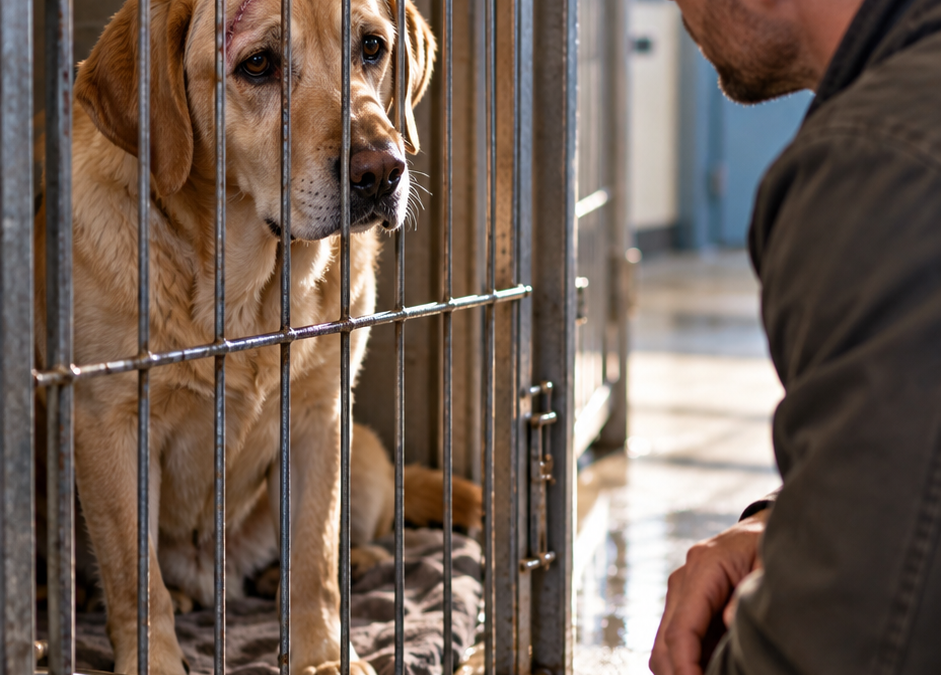
Three hours later, I drove home with a Labrador sitting in the back seat and a blue folder full of medical records on the passenger side.
Max did not pace.
He did not whine.
He watched the world through the window.
Every few minutes, he looked at me.
Not excited.
Checking.
As if making sure I had not disappeared.
“You’re coming home,” I told him.
His ears lifted.
“Whether that’s good news remains to be seen.”
His tail struck the seat once.
When we reached the house, he froze at the front door.
I stood inside holding the leash.
“Come on.”
Nothing.
Max stared into the hallway.
It was not fear exactly.
More like caution.
I loosened the leash.
“You can take your time.”
For nearly a minute, he remained on the porch.
Then he crossed the threshold.
One paw.
Then another.
He spent the first half hour inspecting everything.
Kitchen.
Living room.
Bathroom.
Hallway.
Émilie’s bedroom.
He stopped there longer than anywhere else.
I was standing behind him.
“That’s my daughter’s room.”
Max stepped inside.
He sniffed the bed.
The carpet.
A stuffed rabbit.
Then he walked to Émilie’s desk and looked up.
There were photographs taped to the wall.
One of me holding Émilie at the beach.
One of her with her mother.
One school portrait.
Max stared at them.
I didn’t think anything of it.
“Come on, detective.”
He followed me out.
That evening he ate half his dinner.
Then drank enough water to make me wonder whether the shelter had sent home a camel.
At bedtime, I placed a small blue cushion next to my bed.
“That’s yours.”
Max looked at it.
Then at me.
“Don’t even think about it.”
He jumped onto my bed.
“No.”
He lay down.
“Max.”
His eyes closed.
“Absolutely not.”
His breathing slowed.
Ten minutes later, I gave up.
By morning, his head was on my chest.
I woke with one numb arm and an eighty-pound animal snoring into my neck.
That first week was easy.
Easier than I expected.
Max followed me from room to room.
If I cooked, he lay near the kitchen door.
If I worked at my desk, he slept behind my chair.
If I went outside, he waited at the window.
When Émilie visited that weekend, I was nervous.
I had not told her about him.
I wanted it to be a surprise.
The second she opened the door, she screamed.
“Dad!”
Max froze.
Émilie froze.
Then she dropped her backpack.
“Is that a Labrador?”
Max’s tail started moving.
“A yellow Labrador?”
“Yes.”
“For us?”
“For me.”
She looked offended.
“Dad.”
“For us.”
That was apparently the correct answer.
Émilie dropped to her knees.
Max walked toward her.
I watched carefully.
His entire body changed.
His ears relaxed.
His tail accelerated.
Then he buried his face against her shoulder.
Émilie laughed and wrapped both arms around his neck.
“Oh my God, Dad, he loves me!”
“Traitor.”
Max licked her cheek.
She laughed harder.
For the rest of the weekend, they were inseparable.
He slept outside her bedroom.
Waited beside her chair at breakfast.
Followed her into the garden.
When she read on the couch, he placed his head across her legs.
Watching them should have made me happy.
It did.
But something else happened too.
Max sometimes stared at Émilie in a way I could not explain.
Not like a dog watching food.
Not like a dog waiting for a command.
He watched her as though comparing her to a memory.
I noticed it once while she sat at the kitchen table drawing.
Émilie bent over the page, hair falling across one side of her face.
Max was lying near the doorway.
Suddenly he raised his head.
His eyes fixed on her.
He stood.
Walked slowly toward her.
Then pressed his nose against her elbow.
“What?” Émilie asked.
Max gave a soft whine.
She scratched his head.
“I’m right here.”
He stayed beside her for almost an hour.
I remembered that moment later.
At the time, I thought he was simply affectionate.
The first week after Émilie went back to her mother, I noticed the photograph.
It was in my bedroom.
A framed picture of Émilie at eight years old.
She was standing in a field wearing a yellow sweater, smiling so hard her eyes almost disappeared.
The frame sat on a shelf to the right of my bed.
It had been there for nearly a year.
One Tuesday morning, I woke and noticed it was crooked.
I fixed it.
Wednesday, it was shifted slightly left.
I moved it back.
Thursday, I found it angled toward the edge of the shelf.
I stood there holding my coffee.
“How?”
Max lay on the bed watching me.
“Did you do this?”
His tail moved.
“That is not a confession.”
Friday morning, the photograph had shifted again.
That evening I checked the shelf carefully.
Stable.
No vibration from heating vents.
No loose board.
Nothing.
The frame was too heavy for air movement.
I stared at Max.
He stared back.
“You’re up to something.”
He yawned.
I had installed a small camera in my bedroom months earlier after developing problems with sleep.
My doctor had suggested tracking my nighttime movement.
Eventually I stopped using it.
But it was still mounted near the corner of the room.
That night, I plugged it in.
I told myself I felt ridiculous.
I was spying on my dog.
At six thirty the next morning, I made coffee, opened my laptop, and started reviewing the footage.
For the first two hours, nothing happened.
I slept.
Max slept.
At 1:58 a.m., Max opened his eyes.
No sound woke him.
At least none that the camera recorded.
He simply became alert.
At exactly 2:00 a.m., he stood.
He looked at me.
Waited.
Then stepped quietly off the cushion.
I leaned closer to the laptop.
Max walked toward the shelf on the right side of my room.
My heart began beating faster.
He rose onto his hind legs.
Pressed his nose against the small cabinet door.
Opened it.
I stared.
“No way.”
He had clearly done it before.
There was no fumbling.
No random pawing.
He knew exactly what he was doing.
Max reached inside.
His mouth closed gently around the frame containing Émilie’s photograph.
Then he pulled it out.
Not biting.
Carrying.
Carefully.
He walked out of my bedroom.
The camera could not see beyond the doorway.
I checked the timestamp.
2:03 a.m.
Then nothing.
For more than four hours.
At 6:27, Max reappeared.
The photograph was still in his mouth.
He walked to the shelf.
Rose onto his hind legs.
Placed the frame back.
Not perfectly.
That explained the movement.
Then he closed the cabinet door.
At 6:31, he returned to his cushion.
Lay down.
Closed his eyes.
Three minutes later, I moved in bed.
Max lifted his head as though he had been sleeping there all night.
I sat frozen in front of the computer.
My coffee went cold.
“What the hell are you doing?”
Max was downstairs at that moment.
I heard his nails crossing the kitchen floor.
I replayed the video.
Then again.
The same thing.
At two in the morning, he stole Émilie’s photograph.
At six thirty, he returned it.
The next night, I recorded again.
2:00.
He woke.
2:03.
Photograph gone.
6:27.
Returned.
Again.
Third night.
Same.
Fourth.
Same.
Not approximate.
Not random.
Almost exact.
Two o’clock.
Six thirty.
Every night.
That was when curiosity turned into unease.
Dogs have routines.
Dogs notice sunrise.
Meal times.
Human schedules.
But Max had lived with me only three weeks.
Why would a photograph of my daughter matter to him?
And where was he taking it?
The obvious thing would have been to follow him.
I didn’t.
Not yet.
I wanted to know why before interfering.
So on Monday morning, I loaded Max into the car.
He jumped in happily.
The moment we turned onto the road leading to the shelter, his posture changed.
He sat upright.
Ears forward.
Then his body tightened.
By the time the white shelter building appeared ahead, Max was whining.
Not loudly.
A low, trembling sound.
“Hey.”
I reached toward him at a red light.
“It’s okay.”
He licked my hand.
But when I pulled into the parking lot, he backed against the seat.
That broke my heart.
He thought I was returning him.
Of course he did.
Three weeks.
That was all he had known me.
Three weeks was not long enough to trust permanence.
I turned off the engine.
Max would not look at me.
“Hey.”
Nothing.
“Max.”
His eyes shifted toward mine.
“You did nothing wrong.”
His body remained tense.
“I’m not bringing you back.”
I placed my hand on his shoulder.
“We’re asking questions.”
His ears moved.
“You’re leaving with me.”
I leaned closer.
“You understand?”
Obviously, he didn’t understand the words.
But maybe he understood something in my voice.
His body softened slightly.
“You’re mine now.”
His tail moved once.
“And unfortunately, I’m yours.”
I opened the door.
“Come on.”
The shelter entrance displayed a handmade wooden sign.
EVERY CREATURE DESERVES A SECOND CHANCE.
I had barely noticed it the first time.
That morning, I read it twice.
Jennifer was behind the front desk.
Her face lit up when she saw me.
Then she noticed Max.
“James.”
“Hi.”
“Oh, Max.”
She came around the desk.
Max approached cautiously.
Jennifer knelt.
“How’s my boy?”
His tail moved.
She scratched beneath his chin.
“Look at you.”
Then she looked at me.
“Everything okay?”
“I don’t know.”
Her smile disappeared.
“What happened?”
“He’s healthy.”
“Eating?”
“Yes.”
“Any aggression?”
“No.”
“Anxiety?”
“A little.”
Jennifer waited.
I pulled out my phone.
“I need to show you something.”
We sat in a small office beside reception.
Max lay beneath my chair.
I played the video.
Jennifer watched without speaking.
At first, confusion.
Then recognition.
Then something changed in her face.
A sadness so immediate that my stomach tightened.
When the footage reached 6:30 and Max returned the picture, Jennifer closed her eyes.
“You know.”
She did not deny it.
“You know why he does this.”
Jennifer looked down at Max.
His head rested on his paws.
“Yes.”
I sat back.
“Then tell me.”
She did not answer immediately.
Instead, she stood.
Walked to the filing cabinet.
Opened the bottom drawer.
And removed a thick blue folder.
MAX was written across the front.
She returned to the desk.
“There are things we usually don’t tell adopters immediately.”
“Why?”
“Privacy.”
She placed the folder between us.
“And sometimes because an animal deserves a chance to begin again without becoming a tragedy people adopt.”
I frowned.
“What does that mean?”
“Some people adopt because they fall in love with suffering.”
“That sounds strange.”
“It happens.”
Jennifer looked at me.
“They hear a terrible story, and suddenly they need to rescue the animal. But when the emotional story fades, they’re left with a dog who still has behavioral needs.”
“I didn’t adopt him because of a story.”
“I know.”
“Then tell me.”
She opened the folder.
The first photograph showed Max much younger.
Almost a puppy.
His face narrower.
Coat brighter.
Beside him was a little girl.
Blond ponytail.
Blue eyes.
She was hugging him around the neck.
They both looked directly at the camera.
My chest tightened.
“She looks like Émilie.”
Jennifer nodded.
“How old?”
“In that picture? About five.”
“And now?”
Jennifer’s hand became still.
“Her name was Lily.”
Was.
The word entered the room before Jennifer explained it.
I looked at the picture again.
“Tell me.”
Jennifer took a breath.
“Max belonged to a family on the north side of the city.”
She removed several photographs.
“Thomas and Sarah Bennett. Their daughter, Lily.”
A family of three.
A small green house on a hill.
A backyard.
A garden.
A child.
A dog.
Jennifer placed another picture in front of me.
Lily sitting on grass.
Max beside her.
A box of crayons between them.
“They got Max when Lily was four.”
“He was a puppy?”
“Yes.”
“He grew up with her.”
Jennifer smiled sadly.
“They grew up together.”
I looked under the desk.
Max was awake now.
Listening.
“Lily loved drawing,” Jennifer continued. “Constantly. Birds. Trees. Her parents. Max.”
“Émilie draws.”
“I know.”
I looked up sharply.
“How?”
“You told me when you adopted him.”
Right.
The application.
I had mentioned Émilie’s hobbies.
Jennifer continued.
“Lily kept her favorite drawings in her bedroom.”
“Where?”
Jennifer looked at me.
“On a shelf.”
My stomach tightened.
“What side?”
“The right side.”
The room seemed smaller.
“Jennifer.”
“There was one drawing she especially loved.”
She removed a photocopy from the file.
The original artwork showed Lily sitting beside Max under a large orange sun.
Childish lines.
Uneven coloring.
At the bottom, written in a little girl’s handwriting:
MY BEST FRIEND.
I looked at Max.
He was staring at the paper.
“Oh God.”
“Sometimes Lily took that drawing down at night,” Jennifer said.
“Why?”
“If she couldn’t sleep.”
“And?”
“She would carry it into a small alcove in the hallway.”
My skin went cold.
“What kind of alcove?”
“Window seat. Small recessed space. She called it her thinking corner.”
I thought about my house.
The hallway.
A small recess near the back window.
I had never considered it an alcove.
It was simply an awkward architectural feature.
Max had noticed it immediately when we first came home.
“Keep going.”
Jennifer’s eyes filled.
“Two years ago, Lily became sick.”
I looked at the photograph.
“What kind of sick?”
Jennifer hesitated.
“Serious.”
“How serious?”
“Terminal.”
I closed my eyes.
“No.”
“Her parents tried everything.”
She spoke slowly now.
“Specialists. Treatments. Different hospitals.”
“How long?”
“About a year.”
I thought about Émilie.
Nine years old.
Hair falling into her face while she drew.
Complaining about broccoli.
Leaving socks under my couch.
Being alive with the careless certainty children deserve.
My throat closed.
“Max stayed with Lily through everything.”
Jennifer stroked his back with her foot.
“Hospital visits when allowed. Days at home. Nights when she couldn’t sleep.”
“Did he understand she was dying?”
“No one knows.”
Dogs do not need diagnoses to understand change.
Smell changes.
Movement changes.
Routine changes.
Pain changes everything.
Jennifer opened another document.
“Near the end, Lily became very weak.”
I didn’t want to hear more.
I needed to.
“She spent most of her time in bed. Max slept beside her.”
Jennifer stopped.
Her voice failed.
I waited.
Finally she whispered, “Lily died at home.”
I looked at her.
“When?”
Jennifer’s eyes met mine.
“About two in the morning.”
The number hit me physically.
I sat back.
Two o’clock.
My bedroom camera.
Max opening his eyes.
Exactly two.
“No.”
Jennifer nodded.
“And six thirty?”
She looked down.
“That was when her parents found them.”
My mouth went dry.
“Them?”
“Lily and Max.”
Jennifer wiped one eye.
“Max was lying beside the bed with his head on her hand.”
I stared at the dog beneath my chair.
He had lived that night.
Not once.
Every night.
For years.
“What happened afterward?”
“Max changed.”
“How?”
“He stopped eating for days.”
Jennifer opened another page.
“He cried at night.”
“Cried?”
“Howled.”
My stomach tightened.
“Every night?”
“For months.”
“What time?”
She didn’t need to answer.
I already knew.
“Two.”
“Yes.”
I looked away.
“He would walk to Lily’s room.”
Jennifer continued carefully.
“He’d stand by the shelf.”
“Right side.”
“Yes.”
“And take the drawing.”
“Yes.”
I closed my eyes.
“Then where?”
“To the alcove.”
“And stay there until…”
“Six thirty.”
The room went completely silent.
A dog barked somewhere outside the office.
Another answered.
Max remained still beneath me.
I could hear him breathing.
Four hours and thirty minutes.
Every night.
Guarding a drawing.
Waiting for a girl who would never wake again.
“What did Lily’s parents do?”
“At first, they let him.”
Jennifer’s voice softened.
“They were grieving too.”
“Of course.”
“Sometimes Sarah would sit beside him in the alcove.”
I pictured a mother on the floor beside her daughter’s dog.
Neither capable of understanding why the other could not let go.
“But it got worse,” Jennifer said.
“What did?”
“Max’s grief.”
“He lost weight?”
“Yes.”
“Stopped playing?”
“Yes.”
“He waited?”
“All the time.”
Jennifer closed the folder halfway.
“Thomas and Sarah were drowning too.”
I looked at her.
“They surrendered him.”
“They loved him.”
“That wasn’t what I asked.”
Jennifer did not flinch.
“Yes.”
“They surrendered him.”
“Because?”
“Because every night at two o’clock, Max began howling.”
I exhaled.
“They couldn’t bear it.”
“It wasn’t only that.”
“What else?”
“They believed the house was keeping him trapped.”
Jennifer leaned forward.
“Every room smelled like Lily.”
“Every object.”
“Yes.”
“Her bedroom.”
“Yes.”
“The shelf.”
“The hallway.”
“The alcove.”
“Everything.”
I understood.
The entire house had become a map of someone who no longer existed.
Jennifer continued.
“Sarah told me Max no longer seemed to live in the present.”
That sentence landed harder than everything else.
I looked at him.
Max lifted his eyes.
“Why didn’t you tell me?”
Jennifer’s expression tightened.
“Would it have changed whether you adopted him?”
“No.”
“Would it have changed how you looked at him?”
I did not answer.
“That’s why.”
I understood.
If I had known, every quiet behavior might have become Lily.
Every whine.
Lily.
Every glance at Émilie.
Lily.
Every sad moment.
Lily.
I might never have allowed Max to simply be Max.
“What about Émilie’s photograph?”
Jennifer looked thoughtful.
“Dogs don’t understand photographs the way people do.”
“I know.”
“But the frame.”
“The location.”
“Yes.”
“The shelf.”
“Yes.”
“And Émilie.”
Jennifer nodded.
“Same age.”
“Similar hair.”
“Yes.”
“Drawing.”
“She was drawing the first weekend.”
“Yes.”
I rubbed both hands over my face.
“So he sees the photograph and…”
“I don’t know exactly what he understands.”
Jennifer was careful.
I appreciated that.
“He may associate the picture, the shelf position, your daughter, the routine, the room, or some combination of all of them with Lily.”
“But he takes it at two.”
“That is likely learned ritual.”
“And returns it at six thirty.”
“Another learned ritual.”
I looked down.
“Every night.”
Jennifer whispered, “He never forgot.”
Something inside me cracked.
I thought about my own house.
The weekends waiting for Émilie.
The silence afterward.
Checking the clock on Sundays.
Knowing exactly how long until she returned.
I had spent three years telling myself my daughter was fine.
I saw her often.
She loved me.
I loved her.
We talked on the phone.
Our separation was not death.
Not remotely.
And yet absence still had rituals.
Her toothbrush remained in my bathroom when she was gone.
Her room remained untouched.
I sometimes stood in the doorway on Sunday night simply because I missed the noise.
Max and I were not suffering the same loss.
I would never pretend we were.
But I understood searching a room for someone who was not there.
“Where are Lily’s parents now?”
Jennifer hesitated.
“Still in the city.”
“Do they know Max was adopted?”
“Yes.”
“How?”
“We notified them.”
“What did they say?”
Jennifer smiled through tears.
“Sarah cried.”
I swallowed.
“Happy?”
“Both.”
I understood that too.
“Do they want him back?”
“No.”
“Are you sure?”
“Yes.”
Jennifer touched the folder.
“They want him to live.”
That sentence changed everything.
On the drive home, sunset filled the car with orange light.
Max sat in the passenger seat because I no longer had the heart to make him ride in back.
His head rested near the window.
The sky looked like fire.
Jennifer had told me Lily’s favorite color was orange.
Not because of sunsets.
Sunrise.
Lily said orange meant the world was beginning again.
I glanced at Max.
“So that’s you.”
He looked at me.
“Every night.”
His ears moved.
“You go looking for her.”
Max turned toward the window again.
I drove in silence for several miles.
Then said, “I look for Émilie too.”
He looked back.
“Different situation.”
I swallowed.
“She’s alive.”
The words felt important.
“She’s safe.”
My fingers tightened around the steering wheel.
“But when she leaves, I still walk past her room.”
Max watched.
“I still look at the bed.”
His head tilted.
“I still count days.”
I laughed softly.
“Maybe you and I are both a little pathetic.”
His tail touched the seat.
“Yeah.”
I rubbed behind his ear when we stopped at a light.
“But you’re not going back to that shelter.”
He leaned into my hand.
“Do you understand me?”
He closed his eyes.
“Good.”
That night, I did not turn on the camera.
At 1:45 a.m., I got out of bed.
Max opened one eye.
“Go back to sleep.”
He did.
I sat on the floor beside the bed.
Waited.
At 1:59, Max’s eyes opened.
His entire body changed.
Alert.
Quiet.
At 2:00, he stood.
He saw me sitting there.
Stopped.
I said nothing.
He looked at the shelf.
Then at me.
Then back at the shelf.
“Go ahead.”
Max approached it.
Opened the cabinet.
Removed Émilie’s photograph.
Watching him in person felt different.
The video had made the behavior seem mysterious.
Seeing him now made it feel heartbreaking.
His movements were careful.
Practiced.
Reverent.
I stood.
“This time, I’m coming.”
Max froze.
I expected him to resist.
Instead, he walked into the hallway.
I followed.
Past the bathroom.
Past Émilie’s room.
Toward the back of the house.
Then Max turned into the recessed alcove beneath the narrow window.
I stopped.
Jennifer had described Lily’s thinking corner.
This was not identical.
Of course not.
But similar enough that my chest tightened.
The moonlight fell through the window.
Max lay down.
Placed Émilie’s photograph between his front paws.
Then stared at it.
I sat beside him.
He looked at me.
“Is this where you come?”
His chin lowered onto his paws.
I leaned against the wall.
For several minutes, neither of us moved.
At two fifteen, Max gave a tiny whine.
I put my hand on his back.
He did not pull away.
“I never met her.”
Max’s ears moved.
“Lily.”
I looked toward the window.
“Jennifer showed me pictures.”
Max lifted his head.
“She was beautiful.”
He stared at me.
“And from what I hear, she loved you more than anything.”
His breathing changed.
“That matters.”
I rubbed his shoulder.
“It doesn’t stop mattering because she’s gone.”
Max lowered his head again.
“I’m not going to tell you to forget her.”
I swallowed.
“I wouldn’t tell anyone that.”
For years after my divorce, people had told me to move on.
Such easy words.
Move on.
As if pain were a chair blocking a hallway.
Move it.
Walk past.
Finished.
Real grief does not work like that.
You do not move on.
You move with.
The loss changes shape.
Some days it fits in your pocket.
Other days it fills the room.
“You can love her,” I whispered.
Max’s eyes stayed on the photograph.
“And still live here.”
He gave another soft whine.
“With me.”
I smiled faintly.
“And Émilie.”
His ears lifted at her name.
“Yes.”
“She’s not Lily.”
His head tilted.
“I need you to understand that.”
Impossible request.
But I said it anyway.
“She has her own laugh.”
I looked at the picture.
“Her own temper.”
Max blinked.
“Definitely her own temper.”
His tail moved once.
“She hates peas.”
Another movement.
“She loves drawing.”
I paused.
“She cries when she thinks I don’t see.”
My voice broke unexpectedly.
I looked away.
“She misses me too.”
Max shifted closer.
His shoulder pressed against my leg.
I placed my arm across his back.
“Maybe that’s why you came here.”
I almost said Lily sent him.
Then stopped.
Grief already asks people to believe enough impossible things.
I didn’t need to invent meaning.
“You came because I went to the shelter.”
That was the truth.
“And I went because the house was too quiet.”
Max sighed.
“And somehow here we are.”
For the next four hours, I talked.
Not because Max needed the words.
I did.
I told him about Émilie learning to ride a bicycle.
The first time she fell.
The furious way she kicked the bike.
How she shouted, “I hate this stupid thing!”
Then got back on ten minutes later.
I told him about her first day of school.
The missing front tooth.
The Christmas she stayed awake until nearly midnight trying to catch Santa.
The night she asked why her mother and I no longer loved each other.
The first time I had no good answer for my own child.
I told Max about separation.
About guilt.
About Sunday evenings.
About feeling like a part-time father even when every part of me remained full-time.
Max listened.
Sometimes his eyes closed.
Sometimes he looked at the photograph.
Once he rested his head in my lap.
At 6:26, he woke fully.
I checked the clock.
My heart tightened.
Max stood.
Picked up Émilie’s photograph.
Then walked back toward my bedroom.
I followed.
At 6:30, he placed it on the shelf.
Not exactly straight.
He stared at it.
Then looked at me.
His tail moved once.
“Good night?”
He walked toward his cushion.
Lay down.
Within minutes he was asleep.
I stood in the room for a long time.
The sun began touching the window.
Orange light spread across the wall.
Lily’s color.
A beginning.
When Émilie arrived Friday afternoon, Max was waiting at the door.
Her mother had barely stopped the car before Émilie jumped out.
“Max!”
His body exploded with excitement.
He ran toward her.
Émilie dropped her bag.
Max almost knocked her over.
She laughed.
“Dad! He remembers me!”
“He has a better memory than I realized.”
She wrapped both arms around him.
Max licked her face.
“Ew!”
She kept laughing.
That evening, after dinner, I told her.
Not everything at once.
I started with Max’s nighttime behavior.
Émilie’s eyes widened.
“He steals my picture?”
“Yes.”
“Every night?”
“Yes.”
“That’s creepy.”
I laughed.
“Fair.”
“Where does he take it?”
“The little window alcove.”
“Why?”
I looked at Max.
He was asleep beside the couch.
“Because he used to know another little girl.”
Émilie became serious.
“What girl?”
“Her name was Lily.”
I told her carefully.
That Lily had been nine.
That she loved drawing.
That Max had been her dog.
That they had grown up together.
Émilie smiled.
“Like me and him?”
“Sort of.”
Then I told her Lily became sick.
The smile disappeared.
“Did she get better?”
There are questions children ask even when they already know the answer.
“No.”
Émilie looked down.
“She died?”
“Yes.”
“When?”
“A long time ago.”
“Was Max there?”
“Yes.”
Her face crumpled.
She did not cry immediately.
She looked toward him.
Max slept on.
“What happened after?”
I told her about the drawing.
The shelf.
Two o’clock.
Six thirty.
By the time I finished, tears were running down Émilie’s face.
She slid off the couch and knelt beside Max.
He woke.
Émilie wrapped her arms around his neck.
“Oh, Max.”
He licked her wrist.
“You waited for her.”
Her shoulders shook.
I moved toward them.
Émilie looked at me.
“Does he think I’m Lily?”
“I don’t know.”
That was the truth.
“I hope not.”
“Why?”
“Because I don’t want him to forget her.”
My throat tightened.
“Neither do I.”
Émilie stroked his head.
“But I want him to know me too.”
“I think he does.”
She looked at him.
“I’m Émilie.”
Max’s tail moved.
“I’m not Lily.”
Another movement.
“But I can love you.”
I had to look away.
Children sometimes say things adults spend years learning how to say.
That night, around ten, Émilie disappeared into her bedroom.
I assumed she was changing.
Twenty minutes later, she came out holding a photograph.
It showed the two of us together.
A picture from the beach.
She was sitting on my shoulders.
Both of us laughing.
“What are you doing?”
“You’ll see.”
She walked to Max’s cushion.
He watched.
Émilie placed the photograph beside his bed.
“There.”
“What is that?”
She looked at Max.
“Now he has another one.”
“Émilie…”
“Not to replace Lily.”
She said it quickly.
“I know.”
“She can still be his best friend.”
Her voice softened.
“I can be another friend.”
Max sniffed the photograph.
Then sniffed Émilie.
His tail moved.
She smiled.
“See?”
I did not trust myself to answer.
At 1:55 that morning, Émilie appeared in my bedroom.
Hair messy.
Pajamas wrinkled.
“You’re supposed to be asleep.”
“So are you.”
“Émilie.”
“I want to see.”
I sighed.
“You’re exactly like your mother.”
She smiled.
“Thank you.”
“That wasn’t praise.”
We sat together on the floor.
Max slept.
At two o’clock, he woke.
He looked at me.
Then at Émilie.
Then at the shelf.
He stood.
Émilie held her breath.
Max walked to the shelf.
Opened it.
Removed her photograph.
Then stopped.
He looked directly at Émilie.
She whispered, “Hi.”
Max stayed still.
Then approached her.
The frame remained in his mouth.
Émilie extended both hands.
Max did not give it to her.
Instead, he turned toward the hallway.
She looked at me.
“Follow him.”
We did.
Max led us to the alcove.
Lay down.
Placed the photograph between his paws.
Émilie sat beside him.
I stayed a little farther back.
For nearly a minute, no one spoke.
Then Émilie whispered, “Is this where you sat with Lily?”
Max lowered his head.
Émilie touched his back.
“I’m sorry she died.”
My eyes filled.
“But my dad says people can still love someone after they’re gone.”
She looked toward me.
“I did say that.”
“So you can still love Lily.”
Émilie returned her attention to Max.
“And you can love us.”
Max shifted.
His head settled across her leg.
Émilie smiled through tears.
“I think she would want that.”
We remained there until nearly three.
Then I sent Émilie back to bed.
“Not fair.”
“You’re nine.”
“Lily was nine.”
“That argument is not helping you.”
She kissed Max’s head.
“Good night.”
He watched her walk away.
Something changed after that weekend.
Not suddenly.
Not magically.
The next three nights, Max still took the photograph.
The fourth, he woke at two.
Walked to the shelf.
But did not open it.
He sat.
Stared.
Then returned to bed.
The fifth night, he never got up.
I woke at 2:17 and found him sleeping.
I stood beside his cushion for a long time.
He was not cured.
I hated that word anyway.
Grief is not an illness with a discharge date.
But perhaps the ritual no longer controlled him.
Two weeks later, Émilie came again.
She brought crayons.
“I’m drawing Max.”
“Try to capture his criminal personality.”
“Dad.”
She sat in the garden.
Max beside her.
For nearly an hour, she worked.
When she finished, she brought me the picture.
Émilie and Max under an orange sun.
I stared.
My heart stopped.
“What?”
Émilie looked worried.
“Nothing.”
“Do you hate it?”
“No.”
The composition was eerily similar to Lily’s old drawing.
Not identical.
But close enough.
“What did you write?”
At the bottom:
MY NEW BEST FRIEND.
I crouched beside her.
“Émilie.”
“What?”
“Can we change one word?”
Her face fell.
“Why?”
I touched “new.”
“How about ‘my friend’?”
She thought.
Then understood.
“Oh.”
She erased the word.
MY FRIEND.
“That’s better.”
She smiled.
“Because Lily was his best friend first.”
“Yes.”
“Can you have two best friends?”
“I think so.”
Émilie considered.
Then wrote beneath the first line:
FOREVER CAN HAVE MORE THAN ONE PERSON.
I laughed.
“That is not how most nine-year-olds write.”
“I’m advanced.”
“You’re ridiculous.”
“Also true.”
We framed the drawing.
Placed it near Max’s cushion.
That night, he slept through until morning.
Three weeks later, I noticed something I had not seen since adopting him.
Max ran.
Not trotted.
Ran.
Émilie and I were in the backyard.
She threw a tennis ball.
Max took off across the grass.
Full speed.
Ears flying.
Mouth open.
He caught the ball on the bounce and turned back toward us.
For the first time, his face did not look older than his body.
It looked young.
Émilie clapped.
“Again!”
He dropped the ball.
She threw.
Max ran.
Again.
Again.
After the fourth throw, he stopped in the middle of the yard.
He looked upward.
Still.
The ball lay near his feet.
Émilie lowered her arm.
“Max?”
He stood there for several seconds.
Then turned.
Ran back toward us.
He ignored the ball.
Walked straight to Émilie.
Placed one paw on her knee.
She looked at him.
Then at me.
“He said goodbye.”
My throat tightened.
“To who?”
“Lily.”
“How do you know?”
Émilie stroked his face.
“Because he doesn’t look like he’s waiting anymore.”
I stared at my daughter.
Nine years old.
Missing front tooth.
Grass stain on one knee.
Wisdom arriving from somewhere I couldn’t identify.
“He found us,” she whispered.
I corrected her gently.
“We found each other.”
That night, after Émilie returned to her mother’s house, I sat alone in the bedroom.
Max slept beside me.
The photograph remained untouched on the shelf.
I looked at it.
Then at the little framed note Émilie had left beside Max’s bed.
Dear Max,
Thank you for staying with Dad when I’m not there.
Thank you for loving him.
I know you had Lily first.
I hope she knows we love you too.
I promise I’ll make you lots of drawings.
You don’t have to forget anybody.
Love,
Émilie
I reread it twice.
Then put it into a better frame the next morning.
The following day, I called Jennifer.
“How is he?” she asked immediately.
“He stopped taking the photograph.”
Silence.
“Completely?”
“So far.”
Jennifer exhaled.
“Oh.”
“You sound sad.”
“I’m not.”
“You are.”
“I’m relieved.”
“Those aren’t opposites.”
She laughed softly.
“No.”
I hesitated.
“I want to contact Lily’s parents.”
Jennifer became quiet.
“Why?”
“To tell them.”
“Tell them what?”
“That Max is okay.”
Another pause.
“That he remembers Lily.”
I swallowed.
“But he’s okay.”
“I need their permission before giving you contact information.”
“Of course.”
“I’ll call them.”
“Thank you.”
She called me back the next afternoon.
“Sarah wants to speak with you.”
My heart began pounding harder than it should have.
“She does?”
“Yes.”
“She asked if you could call tonight.”
Jennifer gave me the number.
For almost two hours, I stared at it.
What do you say to the mother of a dead child whose dog now sleeps in your bedroom?
Finally, at seven thirty, I called.
A woman answered.
“Hello?”
“Sarah?”
“Yes.”
“My name is James.”
Silence.
Then her breath caught.
“You have Max.”
“Yes.”
Another silence.
“How is he?”
Not hello.
Not why are you calling.
How is he?
“He’s good.”
A sound escaped her.
Half laugh.
Half sob.
“Really?”
“Yes.”
“He eats?”
“Too much.”
She laughed through tears.
“He always did.”
“He steals socks.”
“He used to steal Lily’s.”
“He snores.”
“Oh, horribly.”
We both laughed.
And just like that, two strangers were speaking about the same dog.
I told her everything.
The photograph.
Two o’clock.
Six thirty.
The alcove.
Émilie.
Max sleeping through the night.
Sarah cried quietly.
“I’m sorry,” I said.
“No.”
She took a breath.
“Please don’t apologize.”
“I didn’t know whether telling you would hurt.”
“Everything hurts.”
The sentence was simple.
“I mean… Lily’s room hurt. Moving hurt. Giving Max away hurt. Not knowing where he was hurt.”
Her voice shook.
“But knowing he’s happy?”
She inhaled.
“That hurts too.”
I understood.
“But it’s a good hurt.”
“Yes.”
I waited.
Sarah whispered, “He still remembered her.”
“Every night.”
She began crying harder.
“I thought maybe he would forget.”
“No.”
“I wanted him to.”
That surprised me.
“Why?”
“Because remembering was destroying him.”
I closed my eyes.
“But I hated myself for wanting that.”
“You don’t have to.”
“I gave away her dog.”
“You gave him another chance.”
Sarah was silent.
“Jennifer told me you loved him.”
“He was our family.”
“I know.”
“We didn’t surrender him because we stopped loving him.”
“I know.”
“I need you to understand that.”
“I do.”
Another long silence.
Then I said, “Would you like to see him?”
Sarah stopped breathing.
“See Max?”
“Yes.”
“I don’t know.”
“That’s okay.”
“I want to.”
Her voice broke.
“But I don’t know if I can.”
“That’s okay too.”
“Thomas…”
“Your husband?”
“Yes.”
“He still keeps Max’s old collar in his desk.”
I swallowed.
“You don’t have to decide now.”
“Could we call you?”
“Anytime.”
A month passed.
Then Sarah called.
“Sunday?”
I knew immediately.
“Yes.”
Émilie happened to be with me that weekend.
I told her who was coming.
She became very serious.
“Lily’s mom and dad?”
“Yes.”
“Will they be sad?”
“Probably.”
“Should I leave?”
“No.”
She thought.
“Should Max leave?”
I smiled.
“No.”
Sunday arrived bright and warm.
At two in the afternoon, a car pulled into the driveway.
Max was sleeping in the living room.
The doorbell rang.
He raised his head.
I stood.
Émilie appeared beside me.
“You ready?”
She nodded.
I opened the door.
Sarah looked older than the photograph Jennifer had shown me.
Grief does that.
Beside her stood Thomas.
Tall.
Thin.
One hand holding hers so tightly their knuckles pressed together.
For several seconds, nobody spoke.
“I’m James.”
Thomas nodded.
“Thank you.”
He had not even entered the house.
“For what?”
“For taking him.”
Sarah’s eyes moved past me.
“Where is he?”
Before I could answer, Max appeared.
He stopped in the hallway.
Everything inside the house became still.
Sarah covered her mouth.
“Max.”
His ears shot upward.
Thomas whispered his name too.
“Buddy.”
Max froze.
Then he ran.
Sarah dropped to her knees.
He collided with her chest.
She wrapped both arms around him.
The sound she made was not a cry I had heard before.
It was grief recognizing something it thought it had lost twice.
Thomas knelt beside them.
Max moved between them.
Licking hands.
Faces.
Whining.
His entire body trembling.
Émilie stood beside me.
She took my hand.
Sarah buried her face in Max’s neck.
“Oh, baby.”
Thomas stroked his back.
“You remember us.”
Of course he did.
Max remembered everything.
They remained on the floor for nearly ten minutes.
No one rushed them.
Eventually Sarah looked up and saw Émilie.
Her expression changed.
“You must be Émilie.”
My daughter nodded.
Sarah stood.
Émilie stepped forward.
“I know about Lily.”
Sarah’s face folded.
Émilie continued.
“Dad told me she liked drawing.”
“She did.”
“So do I.”
Sarah smiled through tears.
Émilie held up something behind her back.
A drawing.
She had made it that morning.
Two girls.
A yellow dog between them.
One girl beneath an orange sun.
The other beneath a blue sky.
Across the bottom, she had written:
LOVE DOESN’T HAVE TO CHOOSE ONLY ONE HOME.
Sarah stared.
Then hugged my daughter.
I looked away.
Thomas put a hand on my shoulder.
“Thank you.”
“I didn’t do anything.”
“You did.”
“No.”
I looked toward Max.
“He did.”
Thomas smiled.
“He always did.”
We spent the afternoon talking about Lily.
For the first time, I heard her from the people who knew her best.
She hated tomatoes.
Loved astronomy.
Could never find matching socks.
She named every bird in the yard whether she knew the actual species or not.
A pigeon once became “Captain Gerald.”
She sang loudly and badly.
She wrote Max birthday cards.
She used to whisper secrets into his ears.
Émilie listened to every story.
Max moved from person to person.
Sometimes beside Sarah.
Sometimes Thomas.
Sometimes Émilie.
Sometimes me.
No confusion.
No choosing.
That was the thing I finally understood.
I had been afraid that seeing Lily’s parents might reopen some wound in him.
Maybe it did.
But wounds do not always need to remain closed.
Sometimes they need to be touched gently enough that the body learns they are no longer happening.
When Sarah and Thomas prepared to leave, Max walked with them to the door.
My chest tightened.
I wondered whether he would try to follow.
Sarah knelt.
She held his face.
“Max.”
He licked her chin.
“We love you.”
Thomas crouched beside her.
“You know that?”
Max’s tail moved.
Sarah kissed his forehead.
“But this is home now.”
My eyes filled.
She looked toward me.
Then at Émilie.
“You stay.”
Max watched them walk to the car.
He stood in the doorway until they drove away.
Then he remained there.
Émilie moved toward him.
I stopped her.
“Give him a minute.”
Max stared at the empty street.
One minute.
Two.
Then he turned around.
Walked past me.
Walked past Émilie.
Entered the living room.
Circled his cushion twice.
And lay down.
Émilie smiled.
“He knows.”
“Yes.”
That evening, Max slept more deeply than I had ever seen.
Months passed.
The photograph never moved again.
Sometimes I woke around two.
Max occasionally opened his eyes.
He would look toward the shelf.
Then toward me.
Then go back to sleep.
At first, I watched carefully.
Eventually I stopped.
Healing had become ordinary.
That was how I knew it was real.
Émilie continued visiting every other weekend.
Max learned the sound of her mother’s car.
Friday afternoons, he waited near the window.
When Émilie arrived, he ran to the door.
Sunday evenings were still hard.
But now, after the car disappeared, Max waited beside me.
Sometimes we walked into Émilie’s room together.
I would straighten her blanket.
Pick up the forgotten sock.
Max would sniff beneath the bed.
Then we would leave.
The silence was different.
Not empty.
Shared.
One Sunday, I sat on the couch after Émilie left.
Max rested beside me.
“You miss her too?”
His tail moved once.
“Yeah.”
I put my hand on his head.
“Tuesday phone call.”
He closed his eyes.
“Friday in twelve days.”
Another tail movement.
We both knew how to count absence.
That is what Max taught me.
Not that love cures grief.
Not that a new person replaces someone who left.
Not that pain disappears if you simply open your heart.
Those are pretty ideas.
They are also incomplete.
Max taught me something harder.
Love can survive beside grief.
You do not have to evict one to make room for the other.
Lily did not disappear because Max loved Émilie.
Émilie did not become less important because Max still remembered Lily.
My daughter did not stop belonging to me because she lived in another house.
And my marriage ending did not mean every form of family had ended with it.
Love changes shape.
Sometimes that change feels like loss.
Sometimes it is loss.
But change does not always mean disappearance.
A year after I adopted Max, Jennifer called.
“Anniversary.”
I laughed.
“You track that?”
“Of course.”
“What kind of shelter are you running?”
“A sentimental one.”
She asked me to send a picture.
I did.
Émilie in the garden.
Max beside her.
Orange sunset behind them.
A few weeks later, the shelter printed it in their newsletter.
The caption read:
MAX — HOME.
One word.
I stared at it longer than I expected.
Not rescued.
Not recovered.
Not healed.
Home.
That was enough.
Sarah and Thomas visited occasionally after that.
Not often.
Every few months.
The visits became easier.
They brought photographs of Lily.
Émilie showed them her drawings.
One day Sarah gave her a small orange pencil case.
“It belonged to Lily.”
Émilie immediately shook her head.
“I can’t take that.”
Sarah smiled.
“I want you to.”
Émilie looked at me.
I nodded.
She accepted it with both hands.
“Thank you.”
“There’s one condition.”
“What?”
“Use it.”
Émilie smiled.
“I will.”
Max watched from beneath the table.
Years later, that orange pencil case still sat on Émilie’s desk.
By then Max’s muzzle had turned white.
His running days became shorter.
His naps longer.
But every Friday he still waited for Émilie.
Every visit from Sarah and Thomas still made his tail move.
And every night he slept beside my bed.
Sometimes with a stuffed toy.
Sometimes a sock.
Once with one of Émilie’s hair ties somehow hooked around his paw.
But never the photograph.
That ritual belonged to another life.
One night, long after everyone else had gone home, I woke at two o’clock.
The room was dark.
Max was awake.
I knew immediately.
His breathing was different.
I turned on the bedside lamp.
He was sitting near the shelf.
My heart tightened.
For a second, I wondered whether the old ritual had returned.
“Max?”
He looked at me.
Then at the photograph.
Then back at me.
Slowly, I got out of bed.
Walked toward him.
He did not open the cabinet.
He simply sat.
I sat beside him.
“Thinking about her?”
His head leaned against my shoulder.
I stayed there.
No speeches.
No need.
After several minutes, Max stood.
Walked back to his cushion.
Lay down.
That was all.
Memory without ritual.
Love without panic.
I finally understood what healing looked like.
Not forgetting.
Remembering without being pulled backward.
Years before, Max had carried Lily’s drawing to an alcove every night because some part of him remained trapped in the last hours of her life.
He waited from two until six thirty.
As if repeating the night might somehow change the morning.
It never did.
Then he came to my house.
Found Émilie’s photograph.
Found another shelf.
Another little girl.
Another family carrying its own fractures.
And he repeated what he knew.
Until someone followed him.
Maybe that was the only thing we really did for each other.
We followed.
I followed him into the hallway.
He followed me into a quieter life.
Émilie followed us into grief without being frightened by it.
Sarah and Thomas followed Max into a home they had once been afraid to see.
None of us fixed anyone.
We simply stopped leaving each other alone with the hardest parts.
That turned out to matter more.
Today, when Émilie is older and asks me what I remember most about those years, I never say the divorce.
I never say the shelter.
I never even say the night I discovered what Max was doing.
I remember the alcove.
Two in the morning.
Moonlight.
A Labrador lying with my daughter’s photograph between his paws.
And me sitting beside him, realizing that for three weeks I thought I had adopted a lonely dog.
In truth, two lonely creatures had simply ended up in the same house.
Both of us loved someone we could not have every day.
Both of us knew how empty rooms could hurt.
Both of us had built routines around absence.
And both of us needed to learn the same thing.
Missing someone is not the opposite of moving forward.
You can do both.
You can look backward with love and still walk toward something new.
You can keep the memory.
And make another.
You can lose a family.
And still build one.
Max taught me that without ever saying a word.
He only stole a photograph.
Night after night.
At two o’clock.
And returned it at six thirty.
Until one day, he no longer needed to.
Because Lily had not disappeared.
She had simply become part of the love he carried forward.
And Émilie did not replace her.
She gave that love somewhere new to go.
As for me, the man who once believed his house had become nothing more than a place to wait between weekends, I stopped counting empty days.
The house had breathing in it again.
Paws on the floor.
Drawings on the refrigerator.
An orange pencil case on a desk.
A framed photograph that stayed exactly where I left it.
And a Labrador sleeping beside my bed.
I used to think Max stole that photograph because he was confused.
Maybe part of him was.
But now, when I think about it, I see something else.
He was not stealing it.
He was protecting what love looked like to him.
A little girl.
A familiar place.
A memory he was terrified to lose.
And by following him into the dark one night, I learned that grief does not ask us to let go of the people we loved.
It asks us to find a way to carry them without stopping where they left us.
Max eventually did.
So did I.
And every morning after that, when sunlight came through the window and found him asleep beside me, I understood what Lily meant about orange.
It really was the color of beginning again.

