𝗙𝗨𝗟𝗟 𝗦𝗧𝗢𝗥𝗬 Every Day My Old Dog Disappeared While I Was at Work, and the Place He Kept Returning To Forced Me to Question Whether He Had Ever Truly Been Mine
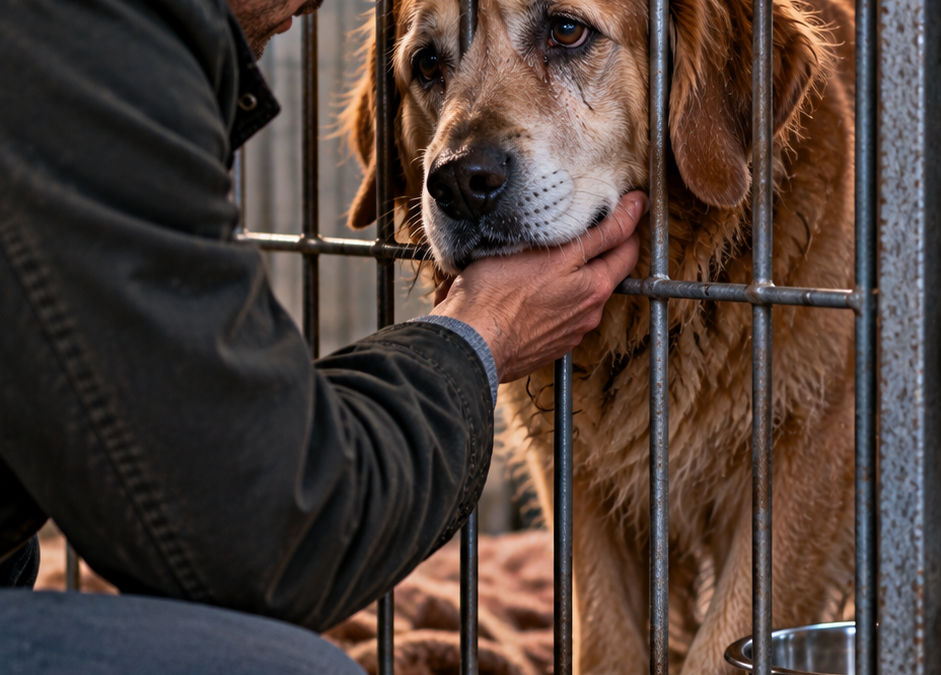
𝗙𝗨𝗟𝗟 𝗦𝗧𝗢𝗥𝗬
He stood.
Apparently the discussion was over.
We walked before breakfast.
Slowly.
Charlie was never interested in speed.
He liked lampposts.
Tree trunks.
Corners.
Every patch of grass seemed to contain information urgently requiring investigation.
After our walk, I made coffee while he ate.
Then I left for work.
The first few weeks, I worried he might panic alone.
Instead, he claimed an old sofa near the window.
I had bought it secondhand specifically for him after discovering that he preferred furniture to the expensive orthopedic dog bed I had ordered online.
“Of course,” I told him.
“The one thing designed for your joints is beneath you.”
He climbed onto the battered couch and sighed.
That became his spot.
Every afternoon when I returned, he was there.
Head up.
Tail moving.
Sometimes he waited at the door.
Sometimes he slept so deeply I had to touch him gently to make sure he was breathing.
Those moments frightened me more than I admitted.
I had never owned an old dog before.
With Charlie, love came with an awareness of time.
When he struggled getting up, I noticed.
When he slept longer, I noticed.
When gray fur appeared farther up his face, I noticed.
I tried not to count those things.
Instead, I built routines.
Saturday mornings at the park.
Sunday eggs—one scrambled, no salt, divided into small pieces.
Evening television with Charlie sleeping against my foot.
He became the quiet constant in an otherwise unremarkable life.
I lived alone.
I had dated occasionally but never seriously enough for anyone to leave a permanent toothbrush behind.
My apartment had always felt sufficient.
Not lonely.
Just quiet.
After Charlie arrived, I realized quiet and empty were not necessarily the same thing.
He filled space without demanding it.
Sometimes I spoke to him for twenty minutes and then laughed at myself.
“You have no idea what I’m saying.”
He would look at me.
“I know. You’re pretending.”
His tail moved.
It was enough.
For the first several months, nothing was wrong.
Then one Tuesday evening, I came home and Charlie was gone.
I remember the exact feeling when I opened the apartment door.
Wrong.
That was the first word that entered my mind.
Nothing looked obviously disturbed.
His water bowl sat near the kitchen.
The bedroom door was open.
His favorite stuffed bear lay near the couch.
But Charlie wasn’t on the sofa.
“Charlie?”
Silence.
I set down my bag.
“Charlie?”
Nothing.
I checked the bedroom.
Bathroom.
Closet.
Ridiculous places.
As though an eighty-pound golden retriever might be hiding behind my coats.
Then I saw the back door.
Open.
Only a few inches.
My stomach dropped.
I ran outside.
“Charlie!”
The small shared garden behind the apartment building was empty.
The gate near the alley hung slightly open.
I had no memory of leaving it that way.
I ran into the street.
“Charlie!”
People looked at me.
I asked everyone.
A woman walking a stroller.
A teenager on a bicycle.
The man who owned the corner store.
“Old golden retriever? Gray face?”
Nobody had seen him.
I searched until my throat hurt.
Three streets.
Four.
The park.
The bus stop.
Behind the grocery store.
I called the shelter.
Animal control.
Two nearby veterinarians.
Nothing.
By seven thirty, I was terrified.
Charlie was old.
Traffic was heavy near the main road.
His hearing wasn’t perfect.
What if he had been hit?
What if someone took him?
What if he had wandered too far and couldn’t find his way back?
Darkness came.
I kept searching.
At nine fifteen, I walked back toward my apartment because my phone battery was dying.
I turned the corner.
And there he was.
Charlie.
Walking toward me.
Slowly.
Head down.
Dust on his paws.
“Charlie!”
He froze.
I ran.
His tail moved once.
Then again.
I dropped to my knees.
“Where the hell have you been?”
I wrapped my arms around him.
Charlie leaned into me.
For several seconds, relief was so overwhelming that I forgot to be angry.
Then I pulled back.
“Do you understand what you just did?”
He looked at me.
“No. Of course you don’t.”
His breathing was tired but steady.
He didn’t appear injured.
I touched his paws.
Checked his legs.
His belly.
Nothing.
“Come on.”
Charlie followed me home.
He drank a little water.
Ate half his dinner.
Then climbed onto his couch and fell asleep.
Not ordinary sleep.
Deep sleep.
The kind where his paws twitched and his breathing became slow and heavy.
I stood beside him for a long time.
“Where did you go?”
He didn’t answer.
The next morning, I secured the back door.
Checked the gate twice.
Closed every window.
I even moved a chair against the door.
When I left for work, Charlie was lying on his couch.
“You are staying here.”
He blinked.
“I mean it.”
That evening, he was gone again.
The chair had shifted.
The door was open.
I stared at it in disbelief.
“How?”
I searched.
This time he returned around eight thirty.
Same slow walk.
Same lowered head.
Same exhausted sleep afterward.
The next day, I changed the lock.
Two days passed.
Charlie stayed home.
I began to relax.
Then Friday evening I returned and found the apartment empty.
The lock was still secured.
The back door was closed.
I stared around.
It made no sense.
I checked the garden.
That was when I noticed a narrow gap beneath one section of fence where the soil had been disturbed.
Charlie had dug underneath.
Not enough for a young dog.
Enough for an old dog who wanted something badly.
“What are you doing?”
I sat on the back step waiting for him.
He returned after sunset.
His paws were dirty.
His coat carried the smell of dry grass.
This time I didn’t scold him.
I watched.
Charlie approached carefully.
His head lowered.
Not because he was guilty.
Because he expected me to be angry.
That hurt.
I crouched.
“Come here.”
He came.
I held his face between my hands.
“Where do you go?”
His eyes looked past me for a moment.
Not toward the apartment.
Toward the street.
Something was pulling him.
Over the next two weeks, it became a pattern.
Charlie disappeared whenever I was gone long enough.
Not every day.
But often.
I blocked the fence.
He found another route.
I shut every door.
He pushed open a poorly latched window.
I installed a camera.
That finally showed me part of the mystery.
Twenty minutes after I left for work, Charlie walked from room to room.
He checked the front door.
Then the back.
Then he sat for almost ten minutes.
Waiting.
After that, he rose, nudged at the kitchen door until it opened, crossed the garden, and disappeared through a narrow space beside the storage shed I had somehow missed.
He wasn’t escaping randomly.
He had a plan.
That realization scared me more.
One evening, I sat beside him on the floor.
“Charlie.”
He opened one eye.
“You have a secret life.”
His tail moved.
“I’m serious.”
He closed his eye again.
“Are you visiting another family?”
Nothing.
“Do they feed you better?”
One eye opened.
“That was offensive.”
He sighed.
Despite myself, I laughed.
But beneath the humor, something else had started growing.
Jealousy.
I’m not proud of it.
But it was there.
I had given Charlie a home.
Food.
Vet care.
A couch.
Two years of mornings and evenings.
And every chance he got, he left.
Somewhere mattered more.
Or someone.
The thought felt ridiculous.
He was a dog.
But love rarely becomes less painful just because the creature involved cannot explain itself.
I needed to know.
So I decided to follow him.
I took a personal day but went through my normal routine.
Shower.
Coffee.
Shoes.
Keys.
Charlie watched from the couch.
“See you tonight.”
I opened the door.
Closed it.
Then quietly walked around the building and waited behind a parked car.
Twenty-three minutes later, Charlie appeared.
He came through the side passage.
Looked left.
Right.
Then began walking.
I followed at a distance.
He moved with surprising purpose.
No wandering.
No sniffing every tree.
This was not one of our leisurely walks.
Charlie knew exactly where he was going.
He crossed the first street.
Then the second.
At the third, he waited at the curb until traffic cleared.
My heart stopped.
“You do this alone?”
He crossed.
I followed.
He turned down a narrower street lined with older houses.
Then into a lane I rarely used.
And stopped.
The house in front of him was old.
Two stories.
White paint faded almost gray.
A dead tree stood near the front walk.
And the door was blue.
Or had once been blue.
Time and weather had stripped much of the paint away.
Charlie walked to the front step.
Then sat.
That was all.
He sat.
I stopped beneath a tree across the street.
Charlie stared at the door.
His head tilted slightly.
His ears lifted.
His tail moved slowly against the pavement.
He wasn’t trying to get inside.
He wasn’t scratching.
He wasn’t barking.
He was waiting.
The sight did something strange to me.
There was so much patience in his body.
Not the relaxed patience of an animal lying in sunlight.
This was expectation.
Belief.
Every time a sound came from inside, Charlie’s ears moved.
Every time a car passed, he glanced toward it.
Then back at the blue door.
I stood there for nearly forty minutes.
Charlie barely moved.
And slowly I understood that he had done this before.
Many times.
Maybe hundreds.
His body knew exactly where to sit.
Exactly where to look.
This was not a place he had discovered recently.
This was a place he remembered.
I stepped closer.
My shoe scraped the pavement.
Charlie turned.
He saw me.
For one second, he looked almost ashamed.
That broke my heart more than anything.
“Hey.”
I crossed the street.
Charlie stayed where he was.
I crouched beside him.
“So this is where you go.”
He leaned into my hand.
But his eyes remained on the door.
I looked at the house.
“Who lives here?”
Charlie’s ears lifted.
No answer.
Of course.
I sat beside him.
Five minutes.
Ten.
Nobody opened the door.
Finally I clipped the leash to his collar.
“Come on.”
Charlie resisted.
Not strongly.
Just enough that I felt it.
“Charlie.”
He looked at the door.
Then at me.
“Please.”
For the first time since adopting him, I felt as though I were asking him to leave someone behind.
He stood.
We walked home.
But his mind remained at the blue door.
So did mine.
That night, Charlie slept deeply.
I didn’t.
I kept seeing him sitting on that step.
Waiting.
By three in the morning, the jealousy had become something else.
Fear.
What if this had been his old home?
What if his original family lived there?
What if they wanted him back?
What if Charlie wanted them back?
I hated myself for thinking the next question.
What if he loved them more than me?
I rolled onto my back.
The apartment was dark.
Charlie slept on his couch in the next room.
Two years.
He had been mine for two years.
But was that even the right word?
Mine?
Animals aren’t furniture.
They don’t become blank the day adoption papers are signed.
They arrive carrying entire lives we cannot see.
People.
Rooms.
Sounds.
Losses.
Promises.
Charlie had brought a history into my apartment.
I had simply never known where it was hidden.
The next morning, I took another day off.
This time, I didn’t pretend to leave.
I put on my jacket and clipped on Charlie’s leash.
“Okay.”
His eyes brightened.
“Show me.”
We walked together.
He chose the route.
Three streets.
One crossing.
The narrow lane.
The blue door.
As soon as the house appeared, Charlie’s pace changed.
He pulled ahead.
Not much.
He was old.
But there was urgency in him.
He reached the steps.
Sat.
I stood behind him.
Then I knocked.
Nothing.
Charlie looked up at me.
I knocked again.
Still nothing.
“Maybe nobody’s home.”
Charlie stood.
He moved closer to the door.
Then scratched once.
A soft scrape.
I heard movement inside.
Charlie froze.
So did I.
Footsteps.
Slow.
Approaching.
The door opened.
A young woman stood there.
Late twenties, maybe early thirties.
Blonde hair pulled loosely behind her head.
Her eyes looked swollen.
As if she had been crying recently or sleeping badly.
She looked at me first.
Then down.
Charlie.
Everything in her face changed.
Her mouth opened.
No sound came.
Her hand flew to her chest.
Charlie’s tail began moving.
The woman dropped to her knees.
“Bennie.”
The name came out as a whisper.
Charlie launched himself toward her.
Not the way an old dog launches.
The way a puppy does.
His entire body moved.
His tail slammed against the doorframe.
The woman wrapped both arms around him.
“Bennie.”
She buried her face in his neck.
“Oh my God.”
Charlie licked her face.
She laughed.
Then cried.
Then laughed again.
I stood on the step.
Invisible.
The woman held him as though she had spent years imagining exactly this moment.
“You came back.”
Her voice broke.
“You still come back.”
Still.
That word struck me.
I looked at Charlie.
She had seen him before.
Many times.
The woman finally looked up at me.
Her eyes were wet.
“I’m sorry.”
“For what?”
She wiped her face.
“You must be his owner.”
The sentence hurt more than I expected.
“Yes.”
I hesitated.
“I’m Daniel.”
“Julia.”
She kept one hand on Charlie’s shoulder.
“And he…”
She smiled painfully.
“He was Bennie.”
“I know.”
“You know?”
“The shelter told me his old name.”
Julia nodded.
Charlie pressed against her.
She looked toward him.
“He was my grandfather’s dog.”
There it was.
Not a stolen dog.
Not an old owner demanding him back.
Something more complicated.
Julia stepped aside.
“Would you like to come in?”
I looked at Charlie.
He was already halfway through the door.
I almost laughed.
“Apparently I would.”
Inside, the house smelled faintly of old wood, dust, coffee, and something floral.
Everything was clean but dated.
Furniture polished smooth by years of use.
Framed photographs.
A fireplace.
Charlie walked into the living room without hesitation.
He knew exactly where he was.
He approached the fireplace.
Turned twice.
Then lay down.
My throat tightened.
Julia watched him.
“He always slept there.”
I looked above the fireplace.
A photograph hung on the wall.
An older man with a full gray beard sat in a wooden chair.
Beside him stood a younger Charlie.
Golden coat brighter.
Face unmarked by gray.
Same eyes.
The old man had one hand resting on his back.
“James?”
Julia looked at me.
“How did you know?”
“I didn’t.”
I nodded toward the photograph.
“He looks like a James.”
That made her laugh softly.
“My grandfather.”
She touched the frame.
“He lived here almost forty years.”
“And Charlie?”
“Bennie.”
She smiled.
“Sorry.”
“No. Bennie.”
The name felt strange in my mouth.
“He had him twelve years?”
Julia nodded.
“Since he was a puppy.”
I sat on the couch.
Charlie lifted his head.
Then rested it on Julia’s knee.
The gesture was so natural that jealousy stabbed me again.
I hated myself for it.
Julia stroked his ear.
“My grandmother died when I was sixteen.”
“I’m sorry.”
“Grandpa never really recovered.”
She looked down.
“Bennie became everything.”
Her fingers moved through his fur.
“They ate breakfast together. Walked together. Grandpa talked to him constantly.”
I smiled.
“I do that too.”
Julia smiled back.
“Then you understand.”
I did.
Too well.
She continued.
“When Grandpa’s health started getting worse, I was away at college.”
Her face tightened.
“I visited when I could.”
“What happened?”
“He started going to the hospital more often.”
Charlie lifted his head at Julia’s voice.
“Every time he left, he would tell Bennie the same thing.”
I waited.
Julia swallowed.
“‘I’ll be back, boy. Wait for me.’”
Something cold moved through my chest.
She looked toward the blue door.
“One day the ambulance came.”
Her voice softened.
“Grandpa was conscious when they took him.”
Charlie was sitting by the front window now.
Listening.
“He told Bennie to stay.”
Julia looked at me.
“He never came home.”
I stared at the dog.
That explained the waiting.
The door.
The steps.
The daily journey.
James had left.
James had promised to return.
And Charlie had never received an explanation he could understand.
“What happened to Charlie?”
Julia’s eyes filled again.
“I was in another city when Grandpa died.”
She rubbed her palms together.
“Everything happened too fast.”
“Family?”
“There wasn’t much family.”
“What about you?”
“I came back as soon as I could.”
Her voice tightened.
“But Bennie was already gone.”
“Gone where?”
“Animal services.”
My stomach dropped.
“They took him to the shelter?”
“Yes.”
“I looked.”
She turned toward me.
“I swear I looked.”
“I believe you.”
“I went to three shelters.”
She was crying again.
“I called everyone. But there had been some transfer between facilities, paperwork problems. By the time I found the right place…”
“You had already missed him.”
Julia nodded.
“They said an older golden retriever matching his description had been adopted.”
By me.
I looked at Charlie.
Two years.
Two entire years.
Julia wiped her face.
“They wouldn’t give me the adopter’s information.”
“They shouldn’t.”
“I know.”
“I’m sorry.”
“No.”
She shook her head quickly.
“I was relieved.”
That surprised me.
“Relieved?”
“I knew someone had chosen him.”
Her voice trembled.
“I kept thinking about him in a kennel, waiting for Grandpa.”
She looked at me.
“When they told me he had been adopted, I thought maybe that was enough.”
I knew that feeling.
The belief that love could overwrite grief.
I had probably believed the same thing.
“Did you ever see him before today?”
Julia looked embarrassed.
“A few times.”
My chest tightened.
“So you knew he was coming.”
“I didn’t know where from.”
“Why didn’t you stop him?”
“What was I supposed to do?”
Her question was not defensive.
It was genuinely helpless.
“The first time I saw him, I thought I was imagining it.”
She looked down at Charlie.
“He was sitting outside.”
“Exactly where he was today?”
“Yes.”
“What did you do?”
“I went outside.”
She smiled faintly.
“He almost knocked me down.”
I could picture it.
“Why didn’t you keep him then?”
Julia stared at me.
“Because he belonged to someone.”
The answer disarmed me.
“I saw his collar.”
She continued.
“He was healthy.”
“Happy?”
She looked at me carefully.
“I thought so.”
The word hurt.
Thought.
“You could have called the number.”
“I know.”
“Why didn’t you?”
Julia looked toward the fireplace.
“Because I was afraid.”
“Of what?”
“That whoever had adopted him would think I was trying to take him.”
I said nothing.
“I had already lost Grandpa.”
She swallowed.
“And I knew Bennie had lost him too. But if he had another home…”
Her voice broke.
“I didn’t want to destroy it.”
I looked at Charlie.
He had fallen asleep with his head against Julia’s leg.
Not merely resting.
Sleeping.
Deeply.
Peacefully.
I had watched him sleep almost every night for two years.
At home, even in deep sleep, he often sighed.
Sometimes his paws moved.
Sometimes he woke and looked toward the front door.
Here, his entire body seemed to soften.
As if some tension I had never noticed had finally released.
That was when the truth began to form.
I didn’t like it.
I fought it immediately.
Charlie loved me.
I knew he did.
He waited by my door.
He followed me from room to room.
He slept with his paw touching my foot.
He greeted me every evening.
That was real.
But so was this.
Love did not erase history.
Charlie had not spent two years trying to leave me.
He had spent two years trying to return to something.
I looked around the room again.
The fireplace.
The old photographs.
A worn rug Charlie clearly remembered.
The blue door.
This place contained pieces of him that my apartment never could.
Julia stood.
“Coffee?”
“Yes.”
She disappeared into the kitchen.
I remained with Charlie.
He opened his eyes.
I looked at him.
“So this is your secret.”
His tail tapped once against the floor.
“You could have told me.”
Another tap.
I smiled despite the ache in my chest.
“You’re a terrible communicator.”
Julia returned with two mugs.
We sat.
For the next hour, we talked.
She told me about James.
He had been stubborn.
Funny.
Terrible at cooking.
Obsessed with western novels.
He read aloud in the evenings.
Not because Bennie understood.
Because James liked having someone listen.
I laughed.
“What?”
“I read emails aloud to Charlie sometimes.”
“Why?”
“Because my job annoys me and he’s the only coworker who never interrupts.”
Julia laughed.
I watched her.
She didn’t feel like a threat anymore.
That almost made things harder.
If Julia had been careless or selfish, I could have taken Charlie home and told myself I was protecting him.
Instead, she loved him.
And she had loved him before I knew he existed.
She had even stayed away because she believed leaving him with me was kinder.
“What brought you back?” I asked.
“To the house?”
“Yes.”
“Work.”
She wrapped both hands around her coffee mug.
“I got a position nearby.”
“You live here now?”
“I moved in three months ago.”
That explained Charlie’s recent disappearances.
Before that, the house had probably been empty.
He may have visited for years and found no one.
Now Julia was here.
Someone connected to James.
Someone carrying the same familiar scents, objects, voice patterns.
“Why keep the house?”
Julia smiled sadly.
“At first, I was going to sell it.”
“What changed?”
“I walked in.”
She looked around.
“I realized every good memory of my childhood was here.”
I understood.
“I want to renovate it.”
“Keep the blue door.”
She looked at me.
I nodded toward Charlie.
“I think he’d object.”
Julia laughed.
“I was thinking the same thing.”
Then silence.
A comfortable silence for her, perhaps.
Not for me.
Because one question was growing louder.
What happens now?
Charlie eventually woke.
He stretched.
Walked around.
Then found an old corner beside the fireplace and lay down again.
Julia watched him.
I watched Julia.
Then I said, “You’ve thought about asking for him back.”
She looked shocked.
“No.”
“Never?”
“No.”
I raised an eyebrow.
Julia exhaled.
“Of course I’ve thought about it.”
There it was.
“But I wouldn’t.”
“Why?”
“Because he’s your dog now.”
I looked at Charlie.
Was he?
Legally, yes.
Emotionally, yes.
Completely?
I no longer knew.
“He comes here every day.”
Julia looked down.
“I know.”
“I tried locking everything.”
“I’m sorry.”
“He found a way.”
“That sounds like Bennie.”
“Charlie.”
The correction came too quickly.
Julia’s expression changed.
Not offended.
Understanding.
“Charlie,” she repeated softly.
I felt ashamed.
“I’m sorry.”
“You don’t need to be.”
But I did.
Because beneath that small correction was fear.
If I let her call him Bennie, maybe I was surrendering something.
I stood.
“We should go.”
Charlie did not move.
I clipped the leash.
“Charlie.”
He looked at me.
“Home.”
His ears lowered.
My chest tightened.
Julia stood near the doorway.
“You don’t have to rush.”
“I do.”
I hated the edge in my voice.
“I have work tomorrow.”
That was true.
It was also an excuse.
Charlie rose slowly.
He walked toward me.
Halfway to the door, he looked back at Julia.
Then the fireplace.
Then me.
That look followed me all the way home.
The apartment felt different when we returned.
Nothing had changed.
Same couch.
Same bowls.
Same stuffed bear.
Same evening sunlight across the floor.
But now I could see what was missing.
History.
Charlie’s life before me.
James.
Julia.
The blue door.
I prepared dinner.
Charlie ate.
Then stood at the window.
“What?”
He looked toward the street.
“We just came from there.”
Tail movement.
“No.”
He looked back at me.
I sat down.
“Don’t.”
My voice surprised both of us.
Charlie lowered his head.
Immediately I felt terrible.
“Come here.”
He approached.
I put my hand against his face.
“I’m sorry.”
His tail moved weakly.
“I’m trying.”
He leaned into me.
That made it worse.
For the next three days, I kept Charlie home.
Not locked like a prisoner.
I took him on longer walks.
Stayed home during lunch.
Closed the garden gate securely.
I told myself I was protecting him.
Traffic was dangerous.
He was old.
Daily unsupervised walks across several streets were reckless.
All true.
But beneath those responsible reasons sat another truth.
I didn’t want him going back.
On the second day, Charlie stood at the back door for nearly an hour.
On the third, he refused breakfast.
By evening, he ate.
But only after I sat beside him.
That night, I woke at two.
Charlie was standing in the hallway.
Staring toward the front door.
“Charlie.”
He looked at me.
His eyes held the same sadness I had seen in the shelter.
That destroyed me.
I sat on the floor.
“Come here.”
He walked over.
I pulled him against my chest.
“You love me, right?”
It was a ridiculous question.
Cruel, even.
Charlie licked my wrist.
I laughed quietly.
“Okay.”
My eyes burned.
“You love me.”
He rested against me.
“But you loved them first.”
There.
I had finally said it.
“And that has to be okay.”
I wasn’t sure I believed myself.
The next morning, I called Julia.
“Can I come over?”
“Yes.”
I didn’t tell her why.
Charlie knew immediately.
When we turned onto her street, his pace quickened.
By the time the blue door appeared, he was pulling.
Julia opened it before we knocked.
Charlie went to her.
She crouched.
“Hi, sweetheart.”
I stood on the walk.
Watched.
Then went inside.
Julia made coffee.
Again.
Maybe difficult decisions always require coffee.
Charlie settled by the fireplace.
I sat across from Julia.
“I’ve been thinking.”
She looked nervous.
“Okay.”
“I love him.”
“I know.”
“I need you to know that before I say anything else.”
“I do.”
“No.”
My voice shook.
“I mean he’s…”
I stopped.
How do you explain what a dog becomes in a quiet life?
“He’s the reason my apartment feels like home.”
Julia’s eyes filled.
“He’s the first thing I see every morning.”
I laughed weakly.
“He annoys me until I get up.”
“He used to do that with Grandpa.”
“Of course he did.”
I wiped my eyes.
“He’s there when I come home.”
I looked toward Charlie.
“And for two years, I thought I had rescued him.”
Julia said nothing.
“But I don’t think rescue means what I thought it meant.”
My throat tightened.
“I thought giving him a good home meant his old life would stop hurting.”
Julia whispered, “It probably did hurt less.”
“Maybe.”
I looked at her.
“But he still came here.”
“Yes.”
“Every chance he got.”
Julia’s face tightened.
“Daniel…”
“I want you to keep him.”
Silence.
Absolute.
Julia stared.
Charlie slept.
The clock on the wall ticked.
Finally, Julia whispered, “What?”
“I want Charlie to stay here.”
She shook her head.
“No.”
“Yes.”
“No.”
She stood.
“I can’t take your dog.”
“You wouldn’t be taking him.”
“That is exactly what I would be doing.”
“I’m giving you permission.”
“That doesn’t make it right.”
“What if it’s right for him?”
Julia stopped.
That question landed between us.
I continued.
“You didn’t see him at my apartment the last three nights.”
“What happened?”
“He stood at the door.”
Her eyes filled.
“He wouldn’t eat yesterday morning.”
“Daniel…”
“He’s not miserable with me.”
“I know.”
“I need you to understand that.”
“I do.”
“He loves me.”
“I know.”
“But he comes alive here.”
Julia covered her mouth.
I looked toward Charlie.
“He sleeps differently.”
She nodded.
“I noticed.”
“He isn’t waiting.”
My voice broke.
“He’s been waiting for two years.”
Maybe longer.
For James.
For the house.
For something familiar.
Julia sat slowly.
“I don’t deserve him.”
“This isn’t about deserving.”
“I lost him.”
“You were young.”
“I should have found him.”
“You tried.”
“Not enough.”
“That’s grief talking.”
Her tears fell.
“I gave him a new name.”
I smiled sadly.
“He survived that.”
She laughed through tears.
I leaned forward.
“I’m not giving him away because I don’t want him.”
That was the hardest sentence.
“I’m doing it because I do.”
Julia shook her head.
“You’re going to regret this.”
“Probably.”
“That isn’t reassuring.”
“I’m going to miss him every day.”
She looked at me.
“Then don’t.”
I closed my eyes.
For one second, I wanted to accept the escape she was offering.
Take Charlie home.
Seal the fence.
Return to normal.
Tell myself animals adapt.
Tell myself love means staying together.
Then Charlie sighed beside the fireplace.
A deep, peaceful sigh.
I opened my eyes.
“No.”
Julia cried silently.
I continued.
“I only want one thing.”
“Anything.”
“Let me visit.”
Her expression collapsed.
“Of course.”
“Often.”
“Daniel.”
“I mean it.”
She laughed through tears.
“Whenever you want.”
I looked at Charlie.
“And his name?”
Julia smiled.
“Charlie.”
That surprised me.
“What?”
“He was Bennie with Grandpa.”
She wiped her eyes.
“But you gave him two more years of life.”
She looked at him.
“He’s Charlie too.”
Something loosened inside my chest.
“Maybe he can be both.”
“I think he already is.”
We didn’t make the change that day.
I needed time.
So did Charlie, though he didn’t know it.
Over the next week, I brought his things to Julia’s house.
His bowls.
Medication.
Favorite blanket.
The ugly orthopedic bed he rarely used.
And finally his couch.
Julia stared when I arrived with it strapped awkwardly to a rented van.
“You brought the couch?”
“He likes it.”
“It’s enormous.”
“He likes it.”
“It’s hideous.”
“Careful.”
She laughed.
Together we carried it into the living room.
Charlie supervised.
When we placed it near the fireplace, he climbed onto it immediately.
Julia looked at me.
“Well.”
“Told you.”
I brought his stuffed bear last.
That nearly ended me.
It was a small brown toy missing one eye.
Charlie had carried it around my apartment every evening.
I placed it beside him.
He sniffed it.
Then put his chin over it.
My chest tightened.
“I should go.”
Julia looked toward the window.
“You could stay for dinner.”
“No.”
I knew if I stayed, I might change my mind.
I knelt beside Charlie.
He looked at me.
“Hey.”
Tail tap.
“So…”
I swallowed.
“This is your house now.”
He licked my hand.
“No more escaping.”
Tail.
“No crossing traffic by yourself.”
Another lick.
“And you’re going to be nice to Julia.”
She laughed behind me.
“I think he already likes me.”
“Don’t get arrogant.”
I wrapped my arms around him.
Charlie leaned into me.
For a moment, I held him too tightly.
“I love you.”
He breathed against my neck.
I closed my eyes.
Then stood.
Walked to the door.
Charlie followed.
Of course he did.
I opened it.
He stepped outside with me.
My heart lurched.
Maybe he was coming.
Maybe this was wrong.
Maybe—
Julia said nothing.
Charlie stood between us.
He looked at me.
Then back at the house.
Then at me again.
I crouched.
“You can stay.”
He came close.
Pressed his forehead against mine.
Then turned.
Walked back through the blue door.
I almost broke.
Julia covered her mouth.
I stood outside.
Charlie turned once from the hallway.
His tail moved.
Then he went toward the fireplace.
I left.
The drive home took eight minutes.
I remember none of it.
When I opened the apartment door, silence hit me.
Real silence.
Not peaceful.
Physical.
Charlie’s water bowl was gone.
His couch was gone.
No nails clicked against the floor.
I set down my keys.
For one ridiculous second, I expected him to appear from the bedroom.
Then I remembered.
I sat on the floor.
And cried.
There was no noble feeling in that moment.
No satisfaction.
No beautiful lesson about selfless love.
I wanted my dog back.
That was the truth.
I wanted to drive to Julia’s house.
Knock on the blue door.
Say I had made a mistake.
Take Charlie home.
Legally, I could.
Emotionally, part of me believed I should.
Instead, I stayed on the floor.
My phone buzzed twenty minutes later.
Julia.
A photograph.
Charlie asleep beside the fireplace.
His stuffed bear beneath his paw.
The message read:
He’s okay.
I stared at the picture.
Then another message arrived.
I’m not going anywhere.
I typed:
Thank you.
Deleted it.
Typed:
Give him back.
Deleted that.
Finally:
Tell him I’ll see him Saturday.
Julia replied:
You can tell him yourself.
The first week was terrible.
Every morning, I woke at six because Charlie had trained me to.
Then I remembered there was no walk.
I still reached automatically for his leash one morning.
It wasn’t there.
At work, people noticed.
Paul found me staring at nothing during lunch.
“You look awful.”
“Thank you.”
“Where’s Charlie?”
I had told him pieces of the story.
“He’s with Julia.”
Paul sat down.
“You actually did it?”
“Yes.”
“How do you feel?”
“Like I made the right decision and would like to reverse it immediately.”
He nodded.
“That sounds normal.”
“I hate normal.”
Julia sent photographs every day.
Charlie sleeping in sunlight.
Charlie in the garden.
Charlie beside the fireplace.
Charlie staring out the blue door.
But the thing I noticed most was his face.
He looked peaceful.
That was painful.
And comforting.
Both could be true.
On the fifth day, Julia sent a video.
Charlie was standing in the garden.
She called, “Bennie!”
One ear lifted.
Then she said, “Charlie!”
He turned immediately and walked toward her.
I laughed so hard I nearly cried.
“Traitor,” I whispered.
But there was pride beneath it.
My name for him had become part of who he was too.
I had not been erased.
That mattered more than I expected.
The third Saturday, I went to visit.
I stood outside the blue door with my heart pounding absurdly.
What if Charlie barely reacted?
What if three weeks were enough to make me unimportant?
I knocked.
Inside, nails struck the floor.
Fast.
The door opened.
Charlie came through like a golden cannon.
“Hey!”
He slammed against my legs.
His tail whipped from side to side.
I crouched.
He licked my face.
My ears.
My hands.
“Okay.”
I laughed.
“Okay, I get it.”
Julia stood in the doorway smiling.
“Told you.”
Charlie ran back to her.
Then back to me.
Then toward the house.
Then back again.
He seemed overwhelmed by the fact that both of us existed in the same place.
I looked at Julia.
“He doesn’t know what to do.”
She smiled.
“Maybe he doesn’t have to choose.”
That sentence stayed with me.
We drank tea in the garden.
Charlie lay between our chairs.
Julia told me stories about James.
I told her stories about Charlie.
“He hates bananas.”
“No, he doesn’t.”
“He absolutely does.”
“My grandfather fed him bananas every morning.”
I stared down at Charlie.
“You lied to me.”
He slept.
Julia laughed.
“He used to steal socks.”
“He still does.”
“Really?”
“Only mine.”
“Grandpa’s too.”
Piece by piece, we assembled the life of one old dog.
Before me.
With me.
Now with Julia.
Instead of competing, the stories began fitting together.
James used to read western novels aloud.
I listened to podcasts with Charlie in the room.
James let him sleep beside the fireplace.
I let him sleep on my bed whenever I was too tired to argue.
Julia remembered the puppy who ran circles around the dead tree in the yard.
I knew the old dog who stopped halfway up stairs and looked at me as though gravity was personally insulting him.
Same dog.
Different chapters.
I began visiting every week.
Sometimes twice.
Eventually Julia gave me a key.
“For emergencies.”
I looked at her.
“You understand this guarantees I will enter your house and steal your food.”
“You already bring groceries.”
“That’s different.”
Charlie benefited most.
He no longer escaped.
He no longer needed to.
Sometimes he stayed at my apartment for a weekend.
The first time, I worried he would immediately try to return to Julia.
Instead, he slept on the floor beside my bed exactly as before.
On Sunday evening, when I drove him back, he became excited the moment we turned onto Julia’s street.
And I discovered something important.
His happiness to return did not cancel his happiness with me.
Love was not a scale.
He did not need to subtract affection from one person in order to give it to another.
That was a human insecurity.
Not his.
Months passed.
Julia restored the house carefully.
New roof.
Plumbing.
Windows.
But the blue door remained.
She repainted it the same faded shade.
When she showed me, I laughed.
“You made an old door look old again.”
“Historically accurate.”
Charlie sat on the step.
“Your client seems pleased.”
She looked down.
“He insisted.”
Eventually Julia placed a framed photograph beside James’s old picture.
It was one I had taken.
Charlie sitting on my apartment couch, gray muzzle resting on the armrest.
When I noticed it, I became quiet.
Julia stood beside me.
“Both lives.”
I nodded.
“Both homes.”
“Yes.”
That was what we had built.
Not ownership.
Continuity.
One evening, almost a year after I first followed Charlie, Julia and I sat in the garden.
Charlie slept between us.
He was older.
Noticeably.
His back legs had weakened.
The veterinarian had adjusted his arthritis medication.
We both knew the truth neither wanted to discuss.
Limited time.
The phrase from the shelter returned.
I ran my hand through his fur.
“I used to think adopting an old dog was brave.”
Julia looked at me.
“Why?”
“Because you know you won’t get enough years.”
She was quiet.
“There are never enough years.”
“No.”
Charlie sighed.
Julia looked at him.
“You know what Grandpa used to say?”
“What?”
“Dogs don’t count life the way we do.”
I smiled.
“That sounds like something an old man would invent.”
“Probably.”
“What did he mean?”
“He said people count years.”
She scratched behind Charlie’s ear.
“Dogs count mornings when the right person is still there.”
I looked away.
“That’s annoyingly good.”
“He was annoyingly good sometimes.”
We sat quietly.
Then Julia said, “Do you regret it?”
I knew exactly what she meant.
Giving Charlie to her.
“No.”
The answer came easily now.
“I missed him.”
“You still do.”
“Sometimes.”
“That isn’t regret?”
“No.”
I looked toward the blue door.
“Regret would be knowing I kept him somewhere because I was afraid to lose him.”
Julia’s eyes filled.
“I almost did.”
“You loved him.”
“So did you.”
“Yes.”
Charlie lifted his head.
He looked first at me.
Then Julia.
His tail moved once.
We both laughed.
“See?” Julia said.
“He knows we’re talking about him.”
“He always knows.”
That winter was difficult.
Charlie developed a cough.
Then weakness.
Nothing dramatic at first.
Just changes.
Shorter walks.
Longer naps.
He stopped climbing onto the couch unless we helped.
Sometimes he looked at the stairs and decided they were unnecessary.
Julia called me one morning.
Her voice told me before her words did.
“Can you come?”
I left work immediately.
Charlie was lying beside the fireplace.
His breathing was slow.
The veterinarian had already visited.
His heart was weakening.
There were treatment options.
Medication.
Monitoring.
No emergency yet.
But time had shifted.
We could feel it.
I sat beside him.
“Hey, old man.”
His tail tapped.
Julia sat on the other side.
For several weeks, we organized our lives around Charlie.
I stayed overnight sometimes.
Julia worked from home when possible.
We took him outside on a supportive harness.
We fed him ridiculous combinations of food when his appetite faded.
Chicken.
Eggs.
A little rice.
Bits of cheese when nothing else worked.
One morning, Julia handed him banana.
Charlie ate it immediately.
I stared.
“I knew it.”
She laughed.
“He never hated bananas.”
“He refused every banana I ever gave him.”
“Maybe your bananas were bad.”
“For two years?”
Charlie looked at us.
I pointed.
“You are manipulative.”
Tail tap.
Even illness did not erase his personality.
That gave us more good days.
And good days mattered.
One afternoon, I arrived and found Charlie sitting at the blue door.
Not waiting for James.
Just watching sunlight move across the yard.
I sat beside him.
For a while, we said nothing.
Then I spoke.
“You know, I used to be jealous of this door.”
His ear moved.
“I thought every time you came here, it meant I wasn’t enough.”
He leaned against me.
“I was stupid.”
I looked down.
“You weren’t leaving me.”
Charlie breathed quietly.
“You were carrying someone with you.”
I imagined James.
The man I never met.
The man who had loved this dog for twelve years.
In a strange way, I felt connected to him now.
We had loved the same animal.
Different eras.
Same loyalty.
“You kept your promise to him, didn’t you?”
Charlie looked toward the house.
Wait for me.
Maybe Charlie had waited.
Maybe that was why he came.
But perhaps, eventually, waiting had transformed.
James did not return.
Julia did.
Then I came into the story.
Home had changed shape.
Charlie had taught us that.
His final decline came months later.
Slow.
Gentle.
The veterinarian told us we were nearing the point when comfort mattered more than treatment.
Julia cried.
I didn’t.
Not until I got into my car.
Then I sat behind the wheel and could not start the engine.
Limited time.
The words again.
But now I understood them differently.
Time was limited from the beginning.
That had never been a reason not to love him.
It was the reason to love him well.
Charlie spent his last weeks mostly in the living room.
His couch beside the fireplace.
Blanket under him.
James’s photograph above.
My photograph beside it.
Julia and I took turns sitting nearby.
Sometimes I read aloud.
Western novels.
Julia insisted.
“He likes them.”
“He has terrible taste.”
Charlie slept.
One evening, he opened his eyes while I was reading.
Looked directly at me.
I stopped.
“What?”
Tail movement.
I smiled.
“You want another chapter?”
He closed his eyes.
“Thought so.”
Julia stood in the doorway.
“You’re becoming Grandpa.”
“Take that back.”
She laughed.
It felt good to laugh.
The last morning was quiet.
Charlie did not want breakfast.
He drank a little water.
Then looked toward the garden.
We helped him outside.
The sun was warm.
He lay beneath the old tree.
The tree wasn’t dead anymore.
Julia had pruned it the previous spring.
New growth had appeared.
Small leaves.
Life returning to wood we thought had finished.
Charlie rested there.
I sat on one side.
Julia on the other.
He placed his head across my foot.
For almost an hour, nobody spoke.
Eventually Julia whispered, “Do you think he remembers Grandpa?”
“Yes.”
No hesitation.
“Do you think he knows where he is?”
“Yes.”
She took Charlie’s paw.
“I’m glad you followed him.”
My throat tightened.
“So am I.”
“If you hadn’t…”
“He would have kept coming.”
“Probably.”
I smiled.
“Stubborn old man.”
Charlie’s ear moved.
That afternoon, the veterinarian came.
I will not turn that moment into something prettier than it was.
It hurt.
It was one of the worst moments of my life.
Julia held Charlie’s head.
I kept my hand on his side.
We told him he was good.
Safe.
Loved.
I said his name.
“Charlie.”
Julia whispered, “Bennie.”
His tail moved once.
Just once.
Both names.
Both lives.
Then he relaxed.
And was gone.
For a long time, neither of us moved.
Eventually Julia leaned against me.
I held her.
The garden was silent.
The blue door stood open behind us.
Charlie would never wait outside it again.
He didn’t need to.
We buried his ashes beneath the tree after keeping some in a small urn inside.
Julia placed a stone there.
Not elaborate.
Just his names.
BENNIE / CHARLIE
Underneath:
HOME WAS WHERE LOVE REMEMBERED HIM.
The first time I saw it, I cried.
“You wrote that?”
Julia nodded.
“It seemed right.”
“It is.”
After Charlie died, I expected the connection between Julia and me to fade.
It didn’t.
We had become family in the strange way grief sometimes builds families.
I still visited.
Tea in the garden.
Dinner.
Stories.
Sometimes we talked about Charlie.
Sometimes not.
The blue door remained.
One afternoon months later, I stood outside it.
For a second, I could almost see him.
Gray muzzle.
Slow steps.
Sitting patiently.
Waiting.
Then I understood something that had taken me years to learn.
Charlie had never been searching for a building.
Not really.
He had been searching for continuity.
For the feeling that love had not vanished simply because someone did.
At first, that feeling was James.
Then Julia.
Then me.
Then all of us.
I had once believed I needed to choose between being Charlie’s person and allowing him to remember his first family.
I had been wrong.
Love expanded.
Charlie had proved it every week when I visited and he ran between Julia and me, tail swinging, unable to understand why humans thought affection required exclusive ownership.
The apartment I returned to after his death was quiet again.
For a while, the silence hurt.
Then it changed.
I no longer heard absence.
I heard memory.
His nails on the floor.
His morning sigh.
The sound of his body landing heavily on the couch.
Sometimes I still woke at six.
For several seconds, I expected him beside the bed.
Then I smiled.
Because missing him no longer meant I had made the wrong choice.
It meant he had mattered.
Years later, people still ask whether giving Charlie to Julia was difficult.
I tell them yes.
Of course.
Some expect me to say it was the hardest thing I ever did.
It wasn’t.
Losing him was harder.
Watching him age was harder.
Seeing him sick was harder.
But letting him stay at the blue house taught me something those other moments could not.
Love is not proven by how tightly you hold someone.
Sometimes it is proven by whether you can recognize what they need when it hurts you.
I could have kept Charlie.
Legally.
Physically.
I could have repaired the fence.
Locked the doors.
Walked him only on a leash.
And perhaps he would have been fine.
He would have eaten.
Slept.
Waited for me.
Loved me.
But some part of him would still have been sitting at that blue door.
Waiting for a man who promised to return.
Instead, he found Julia.
She could not give James back.
Neither could I.
But she carried his voice.
His stories.
His house.
His memories.
And I brought the life Charlie had built afterward.
Together, those pieces gave him something neither of us could have offered alone.
Wholeness.
That is what I finally understand.
I did not lose Charlie the day I left him with Julia.
I stopped forcing him to divide his heart.
He no longer had to escape one home to reach another.
He no longer had to choose the past over the present.
We made room for both.
Sometimes, when I visit Julia, I still sit beneath the tree.
The stone is weathered now.
Leaves fall around it every autumn.
In spring, the branches fill with green.
The blue door remains exactly the same color.
Julia refuses to repaint it anything else.
I understand why.
That door once represented everything Charlie had lost.
Then it became the place where two parts of his life met.
Mine.
Theirs.
Charlie taught me that home is not always one address.
It is not ownership.
It is not the place where someone happens to sleep.
Home is the place where you are remembered completely.
Where the old version of you and the new version are both allowed to exist.
Where love does not demand that you forget who came before.
And if I had kept Charlie only because letting go hurt too much, I would have confused possession with devotion.
He deserved better.
So did Julia.
Maybe I did too.
The last photograph I have of Charlie was taken in Julia’s garden.
He was very old.
White around the face.
Lying between us.
My hand rested on his shoulder.
Julia’s hand rested near his neck.
Charlie’s eyes were almost closed.
But his tail had blurred in the photograph because it was moving.
I keep that picture beside my bed.
Some mornings, I look at it before work.
I think about the terrified feeling I had when Charlie first disappeared.
How desperately I searched.
How certain I was that losing sight of him meant losing him entirely.
I know better now.
Charlie disappeared because part of him was trying to return to something unfinished.
Following him did not lead me to lose him.
It allowed me to finally understand him.
And once I understood, I knew what I had to do.
Not keep him.
Not surrender him.
Something harder.
Share him.
Let his life become larger than my fear.
That was the gift he gave me.
The old dog with the gray muzzle who waited outside a faded blue door taught me that real love does not say, “You are mine.”
It says, “I want you to be whole, even if part of your wholeness exists beyond me.”
And when I finally learned that, Charlie no longer had to disappear.
He had already found his way home.

