By the Thirtieth Blow, I Realized My Son Had No Idea What He Was Standing On
By the Thirtieth Blow, I Realized My Son Had No Idea What He Was Standing On
I counted every time my son’s hand struck my face, not because I was helpless, but because by then I needed a number I could never explain away.
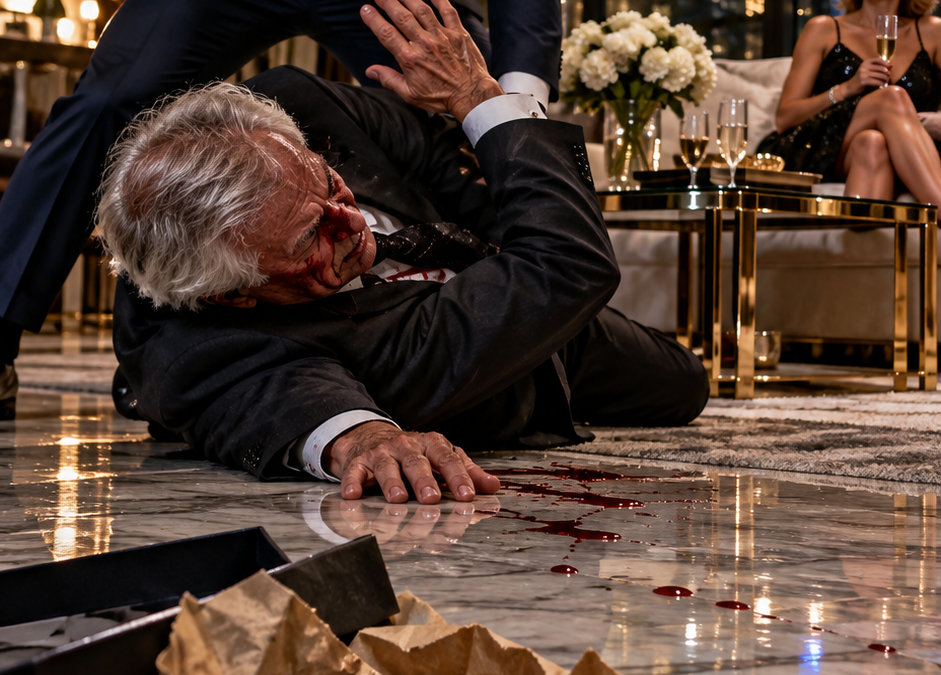
When I reached thirty, I tasted blood, looked across his River Oaks living room at the wife who was smiling while he humiliated me, and understood that the boy I had spent three decades rescuing was gone.
What Brandon did not understand was that the floor beneath his feet, the walls around him, and the life he believed proved his success were resting on something he had never bothered to check.
My name is Franklin Reeves.
I was sixty-eight years old when my son taught me the most expensive lesson of my life.
For forty years, I built things.
Roads.
Bridges.
Commercial towers.
Warehouses.
Apartment complexes.
Anything that required concrete, steel, patience, and people willing to solve problems before those problems became catastrophes.
Construction taught me that failure rarely begins where the crack finally appears.
A bridge does not collapse because of the last truck that crosses it.
A foundation does not suddenly decide to sink.
The damage starts earlier.
A bad calculation.
A corner cut.
Water where water should never have been.
Pressure ignored because fixing it seemed inconvenient.
Families, I would eventually learn, are not very different.
The night Brandon turned thirty, I walked into his mansion carrying an antique wristwatch wrapped in brown paper.
It had taken me six months to find the right model.
My father had admired one just like it when I was a boy, although he had never been able to afford it. I had tracked one down, paid to have the movement restored, and imagined Brandon someday passing it to a child of his own.
I parked my old sedan two blocks away because his driveway was packed with luxury cars.
Brandon hated that sedan.
He called it embarrassing.
Amber, his wife, once asked whether I could rent something nicer when I came to one of their parties because, according to her, the neighbors noticed those things.
I had laughed.
The irony was almost too much.
Five years earlier, after closing one of the largest deals of my career, I had purchased their River Oaks property outright.
No mortgage.
No financing.
I told Brandon he and Amber could live there.
Eventually, their language changed.
The house became their house.
Then Brandon’s house.
Then proof of Brandon’s success.
I never corrected them.
What neither of them bothered to investigate was the deed.
The property belonged to Redwood Capital LLC.
I owned Redwood Capital.
Alone.
I had originally structured it that way for tax and estate reasons, but over the years the arrangement became something else in my mind.
A test, perhaps.
One Brandon did not know he was taking.
I wanted to see whether comfort would make him generous or entitled.
I already knew the answer before his birthday.
I simply had not been willing to admit it.
The warning signs had accumulated slowly.
He stopped asking how I was doing and started asking why I had come over.
Amber insisted that I call before visiting.
Brandon mocked my clothes.
My car.
My habit of repairing things instead of replacing them.
At parties, he introduced me as a retired contractor, never mentioning that the supposedly modest contractor had financed much of the life he was showing off.
Once, I heard him tell a friend I had “gotten lucky in Texas real estate.”
I almost interrupted.
Then I decided not to.
A man who needs to diminish his father’s work so he can feel taller has already told you something important about himself.
Still, I kept helping.
Parents become talented at confusing assistance with love.
We tell ourselves one more loan will give a child stability.
One more introduction will help him find his path.
One more rescued mistake will teach gratitude.
Then years pass, and you realize the lesson your child learned was not gratitude.
It was that consequences always stop at your door.
That night, Brandon barely opened the watch box.
“What is this?”
“Take a look.”
He pulled back the cloth, glanced at the watch, and gave a short laugh.
“Vintage?”
“Restored.”
“You know I wear a Patek, right?”
Around us, his friends went quiet.
I felt my face warm, but I kept my voice even.
“It wasn’t meant to compete with anything.”
Amber sipped her wine.
Brandon dropped the box onto a side table.
“Then what’s the point?”
“It reminded me of your grandfather.”
“My grandfather is dead.”
That hurt more than it should have.
I looked at the watch.
Then at my son.
“That’s generally why people inherit things with meaning.”
Amber’s mouth tightened.
Brandon leaned back in his chair.
“You always do this.”
“Do what?”
“Show up and make everything about you.”
“I brought you a birthday gift.”
“No. You brought me another reminder that you expect everyone to be grateful.”
Several people stared at their glasses.
Nobody intervened.
“Brandon,” I said quietly, “this isn’t necessary.”
He stood.
“It is necessary. I’m tired of you walking into my house acting like you built everything.”
I should have left then.
Instead, I said the sentence that detonated years of resentment.
“Don’t forget who laid the foundation beneath your feet.”
His expression changed.
Maybe Daniel had already taught him to hear threat where I meant history.
I did not know that yet.
All I saw was rage.
Brandon shoved me.
I stumbled into the edge of a chair.
Someone gasped.
Amber did not move.
“Enough,” I said.
Brandon stepped closer.
“You don’t get to say enough in my house.”
Then his hand came across my face.
Once.
I could have stopped him.
Even at sixty-eight, I was larger than he expected and stronger than my age suggested. I had spent decades around job sites where occasionally a man needed reminding that shouting did not make him foreman.
But this was my son.
So I froze.
His hand came again.
Twice.
Then again.
Three.
At some point people began leaving.
Nobody wanted to be present for what came next.
Amber stayed seated.
I remember that clearly.
Her expression frightened me almost as much as Brandon’s anger.
She did not look shocked.
She looked satisfied.
By ten, my cheek burned.
By seventeen, I could taste blood.
By twenty-three, something inside me became strangely quiet.
By thirty, I understood why I was counting.
Each strike was killing one excuse.
He’s stressed.
He’s been drinking.
He’s confused.
He’s young.
Amber provoked him.
Work has been difficult.
He doesn’t mean it.
He loves me.
Thirty.
There were no excuses left.
Brandon finally stopped, chest heaving.
He stared at me like he expected me to retaliate.
I touched my split lip.
My fingers came away red.
“Finished?” I asked.
He gave a contemptuous laugh.
“Get out.”
Amber said nothing.
I walked to the side table.
Picked up the antique watch.
Placed it carefully inside its box.
Then I looked at my son.
For one unbearable second, I saw him at four years old, feverish in my arms.
At nine, wearing a toy hard hat beside me on a construction site.
At sixteen, gripping a steering wheel while I taught him to drive.
At twenty-two, hugging me after graduation.
Then the images disappeared.
I walked out.
I did not call the police.
I did not threaten him.
I did not tell him what I was going to do.
At 8:06 the next morning, I called my attorney, Samuel Price.
At 8:23, I contacted the manager of Redwood Capital.
By 9:10, the River Oaks property was being offered in a fast private sale to a buyer who had previously expressed interest.
At 11:49, I signed.
Not because I believed selling a house would undo what Brandon had done.
And not because thirty blows could be priced in real estate.
I sold it because I finally understood that the most destructive thing I had given my son was not a mansion.
It was the belief that anything I gave him could never be taken away.
At 11:52, my phone rang.
Brandon.
“Dad, what the hell did you do?”
I sat in Samuel’s conference room, the transfer documents still in front of me.
“What makes you think I did anything?”
“There are people at the house.”
“Which house?”
“My house!”
“No.”
Silence.
I touched the bruise under my eye.
“The house you’ve been living in.”
He laughed.
That arrogant laugh.
“You gave it to me.”
“I allowed you to live there.”
Another silence.
This one lasted longer.
In the background, I heard Amber yelling.
The buyer’s representative had arrived with notice explaining the ownership transfer and their obligation to vacate.
“You can’t sell my home!”
“I sold my property.”
“I’m calling a lawyer.”
“Call several.”
“I’ll sue you.”
“You can try.”
Then his voice became low.
“You’ll regret embarrassing me.”
That sentence erased any doubt I might have had about whether he understood what had happened the previous night.
“Thirty times, Brandon.”
Nothing.
“You struck your father thirty times, and you’re worried about embarrassment.”
His breathing changed.
I ended the call.
I thought that was the beginning of his lesson.
I did not realize it was the beginning of mine.
Amber called seven times that afternoon.
I ignored her.
Then she sent a message.
Franklin, there is something about Brandon you need to know.
I almost deleted it.
Instead, at 4:17, I called.
She answered on the first ring.
Her voice was barely above a whisper.
“He thinks the house is the worst thing you can take from him.”
“What are you talking about?”
“You need to look at Redwood Capital’s old records.”
“Why?”
“A document Brandon started preparing about eighteen months ago.”
“What document?”
She hesitated.
“Amber.”
“He was trying to have you declared mentally incompetent.”
I said nothing.
“He wanted control over your assets.”
A strange pressure filled my chest.
“How do you know?”
“Because I saw the paperwork.”
“And you said nothing.”
“I know.”
“Why tell me now?”
Another pause.
“Because last night scared me.”
“You were smiling.”
Her breath caught.
“I know.”
That answer stayed with me.
Not denial.
Not justification.
Just shame.
Then she added, “Franklin, Brandon wasn’t doing it alone.”
The original draft of the competency petition had come from a computer associated with Samuel Price’s law office.
Samuel had been my attorney for decades.
More than that, he had been my friend.
He stood beside me when my wife, Eleanor, died.
He negotiated the sale of my construction company.
He understood my trusts, Redwood Capital, my estate, every financial structure I had built.
If someone wanted to take my life apart legally, Samuel had the blueprint.
When I confronted him, he sounded less defensive than frightened.
“Someone used an old office machine,” he said.
“Registered to you.”
“Yes.”
“To draft a document designed to strip me of control over everything I own.”
“That’s what the metadata suggests.”
“Who had access?”
“Several people.”
“Including you.”
“Yes.”
I stared at photographs and documents spread across my kitchen table.
A questionable trust amendment.
My falsified signature.
Brandon’s involvement.
Another name that had surfaced in old communications.
Daniel.
My younger brother.
A man I had believed dead for eleven years.
“Samuel,” I said, “Daniel called me.”
He stopped breathing for a second.
“Daniel?”
“Alive enough to use a telephone.”
“Franklin, Daniel was legally declared dead.”
“Apparently he objected privately.”
Daniel had warned me to stop investigating.
He had also said something worse.
Brandon knew.
While Samuel and I were talking, there was a crash on his end.
“Samuel?”
No answer.
Movement.
A muffled voice.
Then silence.
The call disconnected.
I called back.
Nothing.
I contacted police and requested a welfare check.
Twenty-three minutes later, an officer called.
Samuel’s office was empty.
His jacket was still hanging behind his door.
His phone had been found beneath his desk.
His laptop was gone.
On the conference table sat a manila envelope with my name written across it.
Inside was a photograph.
Daniel.
And Brandon.
Standing together.
The timestamp was three years old.
Three years.
My son had stood beside me at a memorial for Daniel.
He had listened while I talked about regret.
He had watched me place flowers near a marker for a man he knew was alive.
On the back of the photograph, someone had written:
You gave him everything. He gave it to me.
That night, Amber called again.
This time she was crying.
“Brandon knows I’ve been helping you.”
“Where are you?”
“In my car.”
“Stay somewhere public.”
“I left him.”
“Good.”
Then she confessed that she had met Daniel three years earlier.
Brandon had introduced him as a business consultant named David Reed.
They had discussed my estate.
Amber claimed she believed it was tax planning.
Maybe she was lying to protect herself.
Maybe she truly had been that willfully blind.
At that point, I no longer knew where stupidity ended and greed began.
“Why are you helping me now?” I asked.
“Because Brandon hit you.”
Silence stretched between us.
Then I asked the question I suddenly dreaded.
“Has he ever hit you?”
She did not answer.
She did not need to.
My anger changed shape.
I still remembered her smile at the dinner.
I still held her responsible for remaining silent.
But fear is complicated.
People can be both cruel and trapped.
Victims can become accomplices to someone else’s cruelty.
None of that makes the harm disappear.
It only makes the truth uglier.
Before hanging up, Amber gave me one more clue.
“Daniel kept talking about something called Atlas.”
The name struck a memory.
A week before Eleanor died, she had asked me to retrieve a metal box from our bank vault.
Inside were family papers and an envelope labeled ATLAS.
I had been too consumed by grief to open it.
The following morning, I did.
Eleanor’s handwriting was waiting inside.
Franklin, if you are reading this, someone has probably started asking questions about money they were never meant to control.
I sat down.
She explained that years earlier Daniel had approached her demanding money he claimed I owed him.
She refused.
Afterward, she created Atlas.
Not an investment.
A safeguard.
A separate family trust designed to protect assets if greed turned our family against itself.
Then came the sentence that changed everything:
Do not assume the person threatening you is the person standing in front of you.
And at the end:
The real Atlas documents are with the one person Brandon would never think to question.
Ask Rebecca.
Rebecca Hale.
Eleanor’s younger sister.
The woman who had disappeared from our lives nine years earlier.
I tried every number I had.
Disconnected.
Emails bounced.
Her former house had been sold.
Before noon, my phone received a message from an unknown number.
You opened Atlas.
A second followed.
Good.
Then:
Now stop trusting everyone.
I typed, Who is this?
The reply came immediately.
Rebecca.
Then another message.
Samuel is alive.
Daniel has him.
And your son already knows where you are.
I looked through the bank’s glass doors.
Across the street sat a black SUV.
Brandon was behind the wheel.
Watching me.
I called him.
He answered while staring directly at me from across traffic.
“Dad.”
“Why are you following me?”
“Because you’re making a mistake.”
“Which one?”
“Trusting Rebecca.”
“Interesting.”
“What?”
“You called her unstable.”
“So?”
“The competency petition used the same word about me.”
His jaw tightened.
“Come talk to me.”
“Where is Samuel?”
“I don’t know.”
“You know something.”
“Samuel isn’t who you think he is.”
“Where is he?”
“I said I don’t know.”
Then I asked about Daniel.
Brandon finally admitted he had discovered Daniel was alive three years earlier.
“He told me things about you,” Brandon said.
“Of course he did.”
“He said Grandpa wanted him to have part of the company.”
“Our father left debt.”
“He said you took everything.”
“Daniel stole from that company before you were born.”
“That’s not what he said.”
“No. Because his version requires me to be the villain.”
Brandon gripped the steering wheel.
Then he said something that mattered.
“Daniel is afraid of Rebecca.”
“Why?”
“He thinks she has something that belongs to him.”
“Atlas?”
His eyes widened.
That was enough.
I ended the call.
Rebecca eventually sent me an address at a farmhouse outside Montgomery.
When she opened the door, I nearly forgot everything I had come to ask.
Her eyes looked like Eleanor’s.
She crossed the yard and embraced me.
I cried.
Not elegantly.
Not quietly.
Nine years of anger and grief left me at once.
“You disappeared,” I said.
“So did Daniel.”
“That’s different.”
“Not as different as you think.”
Inside her farmhouse were no decorations and almost no photographs.
Only files.
She placed a heavy binder on the table.
ATLAS.
Eleanor had funded it quietly through inheritance, investments, and property interests.
Its value had grown to approximately forty-one million dollars.
I stared at Rebecca.
“My wife had forty-one million dollars in a trust I didn’t know existed?”
“She wasn’t hiding money from you.”
“It feels remarkably similar.”
“She was hiding control from everybody.”
Then Rebecca showed me why.
Daniel had demanded money from Eleanor years earlier.
He claimed I had stolen his share of the family business.
He threatened to expose a secret if she refused.
“What secret?”
Rebecca’s expression changed.
I knew immediately that I was about to lose something.
“Franklin… Brandon isn’t biologically your son.”
For a moment I could not hear anything.
“No.”
“I’m sorry.”
“No.”
“Eleanor—”
“Brandon is my son.”
“Yes.”
“I mean biologically.”
Rebecca shook her head.
“Daniel is his biological father.”
I stood so fast my chair fell backward.
The room seemed too small.
Thirty years collapsed into one sentence.
Eleanor had been with Daniel once while I was away on a long Louisiana project.
Lonely.
Ashamed.
Terrified.
She told Rebecca years later but never told me.
“She decided I didn’t deserve to know?”
“She believed telling you would destroy your family.”
“The family is being destroyed because nobody told the truth.”
“I know.”
I went to the window.
My chest hurt.
Then images of Brandon returned.
A fever at four.
Baseball at eight.
His first broken heart.
Graduation.
His wedding.
Thirty years of birthdays.
Biology could not erase any of it.
That realization arrived almost immediately.
Whatever Daniel had contributed to Brandon’s blood, I had contributed my life.
“Does Brandon know?”
“Yes.”
“How long?”
“Three years.”
Everything aligned.
Daniel had found him through commercial DNA testing.
He had contacted Brandon.
Told him that I had stolen his father.
His inheritance.
His identity.
That I had taken the company and the family life Daniel deserved.
Grievance became intimacy.
Intimacy became conspiracy.
Daniel did not simply tell Brandon who his biological father was.
He taught him who to hate.
Rebecca then showed me a photograph of Samuel tied to a chair inside an empty warehouse.
Daniel stood beside him.
“What does Daniel want?”
“Atlas.”
“The money?”
“Not primarily.”
She opened a sealed portion of Eleanor’s records.
Bank transactions.
Corporate shells.
Forgery evidence.
Payments.
Old statements.
Daniel had been involved in financial fraud long before his supposed death.
Eleanor had discovered pieces of it.
Atlas was not merely protecting family wealth.
It contained evidence that could destroy the story Daniel had spent decades building about himself.
My phone rang.
Daniel.
His voice had aged, but I recognized it instantly.
“You found Rebecca.”
“Yes.”
“Then she told you about Brandon.”
“She did.”
“He’s my son.”
I felt something in me become very calm.
“No.”
Daniel laughed.
“You can’t change biology.”
“I’m not trying to.”
“Then admit it.”
“You supplied DNA. I raised him.”
“You bought him.”
“I stayed.”
Daniel went silent.
“Where is Samuel?”
“Safe.”
“Prove it.”
A video call appeared.
Samuel was alive.
Exhausted, restrained, furious.
“Franklin, don’t give him anything.”
Daniel pulled the phone away.
“You want your lawyer back?”
“Yes.”
“Bring Rebecca and the Atlas originals.”
“No.”
His smile disappeared.
“Then Samuel disappears the way I did.”
“Where?”
“The first bridge you ever built.”
I knew it immediately.
An abandoned section near the Brazos where I had worked one of my first major projects nearly four decades earlier.
Daniel had spent one summer there with me.
“Midnight tomorrow.”
The connection ended.
Rebecca looked at me.
“You cannot go.”
“I’m going.”
“He could be armed.”
“Probably.”
“You’re sixty-eight.”
“I appreciate the reminder.”
I called a retired financial-crimes investigator I trusted, Marcus Bell.
He arranged quiet law-enforcement support.
No sirens.
No visible convoy.
Daniel had survived by being patient and suspicious.
We would need to be more patient.
At 11:42 the next night, Rebecca and I walked beneath the abandoned bridge.
The air smelled of mud and rust.
One work light illuminated the concrete.
Samuel sat in a chair.
Brandon stood nearby.
Daniel was beside him.
Seeing my brother alive after mourning him for eleven years produced less emotion than I expected.
Perhaps there had been too many betrayals already.
“Frankie,” Daniel said.
Only he still used that childhood name.
“You look old.”
“You look remarkably healthy for a dead man.”
Rebecca stepped beside me.
Daniel’s expression changed immediately.
“You.”
“Me.”
“Where’s Atlas?”
Rebecca lifted a briefcase.
“Copies.”
“I said originals.”
“You also told people you were dead,” I said. “Apparently instructions are flexible in this family.”
Even Samuel smiled.
Daniel did not.
I looked at Brandon.
He could not meet my eyes.
“Three years?” I asked.
“Dad—”
“Three years you knew?”
“Yes.”
“Why?”
Daniel answered for him.
“Because I told him the truth.”
“You told him a story.”
“I’m his father.”
I stepped closer.
“No. I’m his father.”
Daniel laughed.
“You think bedtime stories and tuition checks make you his father?”
“No.”
I looked at Brandon.
“Staying does.”
Daniel’s smile faded.
“I stayed when he was sick.”
Another step.
“I stayed when he failed.”
Another.
“I stayed when he was impossible.”
Brandon finally looked at me.
“And even after he struck me thirty times, I’m standing here trying to bring him home alive.”
Daniel snapped, “Don’t listen to him.”
That was when I understood my brother’s real fear.
Not Atlas.
Not prison.
Me.
More precisely, losing control of Brandon.
“What did Daniel promise you?” I asked.
Brandon swallowed.
“Everything.”
“Meaning?”
“The company. The trusts. The property. What you supposedly stole.”
“The company was almost bankrupt twice while Daniel was involved.”
“Liar,” Daniel said.
Samuel raised his voice.
“Daniel withdrew company funds in 2001 and 2003. I have the records.”
Daniel kicked Samuel’s chair.
“Shut up.”
“Stop.”
Brandon’s voice was quiet.
Daniel turned.
“What?”
“I said stop.”
It was a small rebellion.
But it was the first crack in Daniel’s control.
Rebecca raised the briefcase.
Daniel moved toward her.
“Give it to me.”
“No.”
His hand entered his coat.
When it came out, there was a gun.
Brandon froze.
Rebecca did not move.
“Daniel,” she said, “it’s finished.”
“It isn’t finished until Eleanor stops controlling this family from her grave.”
I stared at my brother.
And suddenly the entire thing became obvious.
This had never really been about inheritance.
Daniel had turned his whole life into a competition with mine.
Our father’s approval.
My business.
Eleanor.
Money.
Brandon.
Every success I had became evidence, in Daniel’s mind, that something had been stolen from him.
“You don’t want your son,” I said.
His eyes flashed.
“What?”
“You want what belonged to me.”
“He is my son.”
“You discovered that three years ago and immediately turned him into leverage.”
“I showed him the truth!”
“You showed him who you needed him to become.”
Daniel raised the gun.
From somewhere in the darkness, police began moving.
Brandon stepped between us.
“Put it down.”
“Move.”
“No.”
“Brandon.”
“You told me nobody would get hurt.”
Daniel laughed bitterly.
“Your father took everything from you.”
Brandon stared at him.
Then at me.
“No,” he whispered.
“What?”
“He gave me everything.”
Daniel’s face hardened.
“The house. College. Jobs. Introductions. Every chance I had.”
“To control you.”
Brandon shook his head.
“No.”
“He made you dependent.”
“No.”
Daniel lifted the weapon higher.
Brandon’s voice shook.
“I think you’re the one who controlled me.”
Everything happened at once.
Samuel threw his weight sideways with the chair.
Rebecca hurled the briefcase.
Brandon grabbed Daniel’s arm.
The gun fired.
The shot exploded beneath the bridge.
I saw Brandon fall.
“Brandon!”
I ran.
For one horrifying second, every betrayal disappeared.
He was no longer the man who had struck me.
He was my child on the ground.
I dropped beside him.
No blood.
The bullet had hit steel.
Police flooded the site.
Daniel was restrained.
Samuel was freed.
Rebecca stood trembling beside the concrete barrier.
Brandon looked at my bruised face.
“Dad.”
One word.
Then:
“I’m sorry.”
I could not tell him I forgave him.
I loved him too much to lie.
So I said, “I know.”
He began to cry.
Daniel shouted from behind the officers.
“He’s mine!”
Brandon turned.
“No.”
Daniel stopped struggling.
“You’re my biological father,” Brandon said.
Then he looked at me.
“But he’s my dad.”
For one moment, I thought that was the end.
Then investigators searched Daniel’s phone.
Among hundreds of messages and financial records, they found years of communication with Samuel.
My attorney had known Daniel was alive.
Again, the ground shifted beneath me.
Samuel eventually admitted the truth.
Eleanor had left him instructions.
If Daniel resurfaced after her death, Samuel was to investigate quietly before telling me.
Protect Atlas.
Protect Brandon.
Protect Franklin from acting before he knows the whole truth.
Samuel had followed those instructions far beyond what I considered acceptable.
Daniel approached him four years earlier looking for a legal way to seize control of my estate.
Samuel pretended to cooperate.
The first competency petition draft had been bait.
He wanted Daniel to reveal who else was involved.
“You let Brandon participate,” I said.
“I was trying to stop him before he crossed a line he could not return from.”
“Did he?”
“Legally? Not completely.”
Samuel explained that Brandon discussed the fraud.
Reviewed documents.
Attended meetings.
But he never filed the petition.
Never executed the false trust amendment.
Never successfully transferred anything.
“So my son is greedy, cruel, and stupid.”
Samuel sighed.
“At the moment, those may be his most accurate liabilities.”
I almost laughed.
Almost.
Then Samuel showed me that Daniel planned to activate the competency strategy within ninety days.
Selling the River Oaks house had frightened him.
It demonstrated that I was still exercising independent control over my property.
My act of anger had accidentally disrupted a conspiracy years in the making.
Over the next three weeks, Brandon’s life collapsed.
Amber left him.
The new owner of the River Oaks mansion gave them thirty days to move.
Brandon left in four.
His employer dismissed him after the investigation became public.
He sold the luxury car.
Cancelled memberships.
Moved into a modest apartment.
For the first time in his adult life, there was no father standing between him and ordinary expenses.
I did not enjoy watching it.
That surprised me.
I had imagined consequences would feel satisfying.
Mostly they felt sad.
Meanwhile, I struggled with Eleanor’s secret.
At night I would lie awake wondering whether thirty years of marriage had contained some invisible room I had never been allowed to enter.
I was angry with a dead woman.
Then guilty for being angry.
Then angry about the guilt.
Rebecca visited one afternoon.
“Do you hate her?” she asked.
“No.”
“Are you angry?”
“Very.”
“Then be angry.”
“I wish she had trusted me.”
Rebecca stared at the grass.
“She was afraid the truth would make you stop loving Brandon.”
“That was never possible.”
“She eventually understood that.”
Before leaving, Rebecca gave me one final letter from Eleanor.
I read it alone.
She admitted she had made mistakes I might someday learn about.
Then she wrote something that stayed with me:
A father was not defined by the blood he contributed.
A father was defined by the years he contributed.
If Brandon ever learned where he came from, she hoped he would remember who had stayed.
I called him.
He answered immediately.
“Dad?”
“Come for dinner tomorrow.”
A long silence.
“What time?”
“Six.”
“I’ll be there.”
“And Brandon?”
“Yes?”
“If you raise your voice in this house, you leave.”
“I understand.”
“If you insult me, you leave.”
“I understand.”
“If you ever put your hands on me in anger again, you will never enter this house afterward.”
His voice cracked.
“I understand.”
He arrived eight minutes early.
No suit.
No luxury car.
He carried the antique watch.
“I had it repaired,” he said.
“It wasn’t broken.”
“I know.”
He stared down at it.
“I think I was.”
I let the sentence sit between us.
He needed to hear himself say it.
After dinner, Brandon told me how Daniel had drawn him in.
A DNA match became curiosity.
Curiosity became secret meetings.
Daniel told him I had stolen the family company.
That Eleanor had chosen me over him.
That Brandon’s comfortable life had actually been purchased with property that rightfully belonged to Daniel.
“I wanted to believe him,” Brandon said.
“Why?”
His answer surprised me.
“Because it made everything I had feel earned.”
“Explain.”
“If you stole it from him, then taking it from you wasn’t greed.”
He looked down.
“It was justice.”
“And if I didn’t steal anything?”
“Then I was just an entitled man trying to take more.”
That was the first time I heard my son describe himself without hiding behind someone else.
Then he pushed an envelope toward me.
Inside was a life-insurance policy.
Twenty million dollars.
On me.
Brandon was the primary beneficiary.
Daniel, under an alias, was secondary.
“I never bought this.”
“I know.”
“Who did?”
“Daniel.”
My skin went cold.
Then Brandon said, “The competency petition wasn’t his only plan.”
“What does that mean?”
“If he couldn’t take control of you legally…”
He swallowed.
“He wanted you gone.”
Six months earlier, Daniel had begun talking about how much easier the estate would become if I died suddenly.
An accident.
A car failure.
He had asked about my medication.
My routine.
My house.
Two months earlier, the brakes on my sedan had failed unexpectedly.
I had blamed age and an old hydraulic line.
Then Brandon confessed something worse.
He had given Daniel my garage code.
Investigators searched my home.
They found hidden cameras in a smoke detector, the kitchen, and the hallway.
Daniel had been watching me.
Then they examined my sedan.
The brake line had been deliberately weakened.
Not enough to fail immediately.
Enough to fail unpredictably.
When Marcus told us, Brandon sat on my porch and covered his face.
“I could have stopped it.”
“Yes.”
He looked at me, maybe expecting comfort.
I gave him none.
“I thought Daniel only wanted money.”
“That would not make your silence acceptable.”
“I know.”
“You wanted what he promised badly enough to ignore what he was becoming.”
“Yes.”
“And that nearly destroyed both of us.”
“Both?”
“You think twenty million dollars after your father’s convenient death would have made you free?”
He looked away.
“It would have owned you for the rest of your life.”
The next morning, Brandon went to prosecutors voluntarily.
No immunity agreement first.
No bargaining.
He turned over messages, passwords, recordings, aliases, payment information, meeting locations, everything.
He admitted his role in the competency scheme.
For the first time since he was a child, I watched my son accept consequences without looking toward me to absorb them.
That mattered.
It did not erase the thirty blows.
It did not restore trust.
But it mattered.
Investigators discovered that Daniel had operated through shell companies in multiple jurisdictions.
He used false identities.
Moved money through fraudulent consulting agreements.
Exploited investors.
Staged his own death to escape mounting financial problems.
Then DNA gave him something he considered more valuable than money.
A son he could use against me.
Atlas eventually produced the document that destroyed Daniel’s favorite lie.
Twenty-seven years earlier, our father had forced him to sign a confession after Daniel misused company funds.
He had not been robbed of the family business.
He had been removed because he stole from it.
Brandon read the confession in my kitchen.
For a long time, he said nothing.
Then tears ran down his face.
“I wanted you to be the villain.”
“Why?”
“Because then I didn’t have to be one.”
I looked at him.
“You’re not a villain.”
His head lifted.
“You did cruel things.”
“Yes.”
“You made selfish choices.”
“Yes.”
“You hurt people.”
He nodded.
“But a person doesn’t have to remain trapped inside the worst thing he has ever done.”
“Does that mean you forgive me?”
“No.”
Pain crossed his face.
I continued.
“It means I believe you might become a man I can forgive.”
That was harder than forgiveness.
And more useful.
Daniel remained in custody while the case expanded.
Samuel resigned as my personal attorney.
I did not fire him.
Neither of us pretended our professional relationship could return to what it had been.
“I should have told you,” he said during our last meeting.
“Yes.”
“I thought protecting you meant controlling what you knew.”
“So did Eleanor.”
He gave a tired smile.
“You’re difficult to protect.”
“I’m difficult in most situations.”
For the first time in months, we both laughed.
Amber filed for divorce.
Brandon did not fight her.
She turned over everything she had to investigators and left with her share of their remaining assets.
Later, she wrote me an apology.
I never needed to become close to her.
Forgiveness does not require restoring every relationship.
Some relationships survive best at a distance.
Brandon found work at a small engineering firm.
Not through me.
Not through Samuel.
No calls to old friends.
No favors.
He drove a used pickup.
Paid rent.
Learned the price of groceries, electricity, insurance, and pride.
At thirty years old, my son finally began adulthood.
Months later, I discovered he had started volunteering at a vocational program Eleanor once supported.
It trained young adults who had aged out of foster care.
I visited without telling him.
He was standing over a set of structural drawings with two teenagers.
One of them kept making the same mistake.
Years earlier, Brandon would have grown impatient.
That afternoon, he pulled up a chair.
“Okay,” he said. “Forget the numbers for a second. Tell me what the beam is trying to do.”
The boy frowned.
“Carry the load?”
“Exactly. So where does that load go next?”
They worked through it together.
No cameras.
No friends watching.
No social media posts.
Nobody important to impress.
I stood outside the room longer than I intended.
For the first time in years, I felt proud of my son.
Carefully.
Pride, once damaged, does not return as a flood.
It comes back like water through dry ground.
A little at a time.
That evening Brandon called.
“Were you spying on me today?”
“Observing.”
“That’s what spies say.”
“I wanted to see whether it was real.”
“Was it?”
“Yes.”
He went quiet.
Then said, “I think I like building again.”
“You always liked building.”
“I forgot.”
“No.”
“What?”
“You replaced building with owning.”
Another silence.
“Yeah,” he said eventually. “I think I did.”
Daniel’s trial came eight months later.
Before it began, Rebecca brought me a small digital recorder.
“Eleanor,” she said.
My hands stopped moving.
“Her voice?”
Rebecca nodded.
I pressed play.
My wife’s voice filled my kitchen.
Older.
Tired.
Unmistakable.
She explained the affair.
Her shame.
Daniel’s demands.
The possibility that Brandon was his child.
Most painfully, she explained why she had remained silent.
Then she said something about me.
“Franklin’s greatest weakness is also his greatest strength. He loves longer than most people deserve.”
I stopped the recording.
I could not listen anymore that day.
I sat with my head lowered.
For years I had thought strength meant endurance.
Maybe Eleanor had understood something else.
Sometimes endurance becomes permission.
Sometimes refusing to give up on someone turns into refusing to let them fall.
And people who never fall never learn to stand.
Investigators later located another son Daniel had fathered while living under an alias.
Lucas Mercer.
Thirty-four years old.
Daniel had abandoned him.
For years, Daniel told Brandon that I had stolen his chance to be a father.
Yet another child had spent his life wondering why Daniel walked away.
When Brandon learned, he sat silently.
Then said, “I think I understand him now.”
“What?”
“He didn’t want sons.”
I waited.
“He wanted mirrors.”
I knew then that something fundamental inside Brandon had changed.
The night before the trial, he brought me the antique watch again.
“I want you to keep it.”
“I gave it to you.”
“I know.”
“It was meant to become yours.”
He placed it in my palm.
“I used to think inheritance meant receiving something.”
I looked at him.
“Now?”
“Maybe it means becoming worthy of what you’re given.”
I closed his fingers around the watch.
“Then keep working.”
His eyes filled.
“I don’t know whether I’ll ever forgive myself.”
“Don’t spend your life worshipping your regret either.”
He frowned.
“What does that mean?”
“If regret doesn’t produce better behavior, eventually it becomes another form of vanity.”
“Mom used to say things like that.”
“Then steal it from her, not me.”
He laughed.
So did I.
It was the first time laughter between us had not felt fragile.
Daniel’s trial lasted six weeks.
Brandon testified for nearly four hours.
He admitted the meetings.
The competency strategy.
The forged documents he knew about.
The insurance policy.
His greed.
His resentment.
And finally, the birthday dinner.
Daniel’s attorney asked whether Brandon hated me.
“I thought I did,” Brandon answered.
“You thought?”
“I hated being accountable to him.”
“Isn’t that hatred?”
“No.”
“What’s the difference?”
Brandon looked toward me.
“Hatred wanted him gone. Accountability required me to grow up.”
Daniel was convicted on multiple serious charges connected to fraud, conspiracy, identity offenses, financial exploitation, and the attempt on my life.
The man who had spent decades telling himself that everyone else stole from him finally had to answer for what he had taken.
Atlas survived.
But I no longer wanted forty-one million dollars sitting behind walls waiting for another generation to fight over it.
Rebecca and I met with the trustees.
Eleanor’s documents permitted Atlas assets to be directed toward charitable work if family conflict ever threatened the trust’s original purpose.
So we changed its purpose.
The Eleanor Reeves Foundation was established the following spring.
Vocational scholarships.
Construction training.
Engineering education.
Housing assistance for young adults leaving foster care.
Rebecca chaired the board.
I served briefly.
Brandon refused any authority over the money.
His decision.
“I don’t want control,” he told me.
“What do you want?”
“A place to work.”
He became a volunteer instructor.
No executive office.
No salary.
No title beyond what students naturally gave him.
Mr. Reeves.
The first time I heard someone call him that with genuine respect, I smiled.
Not because he was carrying my name.
Because he was finally earning his own.
Two years passed.
The bruises disappeared long before the memories did.
Someone else lived in the River Oaks mansion.
New floors.
New furniture.
A different family.
Sometimes I drove by.
Eventually the house stopped making me feel anything.
For years, I had believed giving Brandon an expensive home meant giving him security.
Looking back, I had actually given his entitlement a stage.
Losing the mansion had not ruined him.
It had removed the scenery.
Without it, he was finally forced to see himself.
One rainy Thursday, Brandon came to my kitchen with blueprints.
“What did you break?” I asked.
“Nothing.”
“Suspicious.”
He spread the drawings across the table.
Twelve modest homes.
Energy efficient.
A shared garden.
Simple construction.
Good construction.
“What are these?”
“Starter homes.”
“For whom?”
“Graduates from the vocational program.”
I looked closer.
“Who designed them?”
“Two engineers at work helped me.”
“Financing?”
“Credit union partnership.”
“Land?”
“The foundation has a vacant parcel. It would lease it to an independent nonprofit.”
I looked at him sharply.
“You said you wanted no Atlas money.”
“I don’t control a dollar.”
“Who’s running the nonprofit?”
“Rebecca.”
I laughed.
“Naturally.”
He pointed at the drawings.
“We need someone to review construction planning.”
“You have engineers.”
“We need someone annoying.”
“Finally, a position I’m overqualified for.”
Then I asked, “What’s it called?”
His expression changed.
“Eleanor Court.”
The room blurred for a moment.
I saw my wife at our kitchen window.
Gardening gloves.
Her chipped blue bowl.
The woman who refused to remodel a perfectly functional room because, as she once told me, imperfections prove people actually lived somewhere.
“Your mother would like this,” I said.
Brandon smiled.
“I hope so.”
“She’d complain about the roof pitch.”
His smile widened.
“Of course she would.”
We worked until after midnight.
Not as wealthy father and spoiled son.
Not as victim and offender.
Just two builders leaning over plans.
Foundation first.
Structure second.
Everything beautiful comes later.
Three months after that, Brandon asked me to attend counseling with him.
That surprised me more than discovering Daniel was alive.
“I thought you hated therapy.”
“I hated anything requiring me to admit I was wrong.”
“Fair.”
Counseling was not dramatic.
There was no single session in which years of damage vanished.
It was uncomfortable work.
Sometimes humiliating.
Sometimes repetitive.
Useful work often is.
One evening, Brandon finally explained the birthday dinner.
Daniel had called him twenty minutes before I arrived.
He told Brandon I planned to cut him out of my estate.
He said the antique watch was probably a symbolic farewell.
He told him I intended to remind everyone that everything in Brandon’s life existed only because I permitted it.
Then I arrived and said, “Don’t forget who laid the foundation beneath your feet.”
To Brandon, it sounded like proof.
“That doesn’t excuse me,” he said immediately.
“No.”
“I know.”
“You had thirty chances to stop.”
His eyes lowered.
“I remember.”
My throat tightened.
“I counted because I needed to stop making excuses for you.”
He looked at me.
“What disappeared while you counted?”
I had never told him.
“Respect.”
His face tightened.
“Trust.”
Tears gathered in his eyes.
“Hope.”
He swallowed.
“Then why did you let me come back?”
I answered without thinking.
“Because love was still there.”
He cried.
So did I.
Love had survived.
That did not mean everything else automatically returned.
Trust came back through installments.
A promise kept.
A disagreement that did not become shouting.
An apology without an excuse attached.
A Sunday repairing my fence.
A phone call where he needed nothing.
A birthday without luxury.
A difficult conversation he did not run from.
That is how damaged foundations are repaired.
Not with speeches.
With load tests.
Three years after I sold the mansion, Eleanor Court opened.
Twelve families received keys.
One young man named Marcus Jr. had spent much of his childhood in foster care before completing Brandon’s vocational program.
When he received the keys to his house, he looked at Brandon.
“This is really mine?”
Brandon smiled.
“Your name is on everything.”
I nearly laughed.
Neither of them knew how much history lived inside that sentence.
Later, Brandon and I stood beside the community garden.
Families carried furniture.
Children ran between newly planted trees.
Rebecca was arguing with a contractor about irrigation.
Some things in our family apparently could never change.
Brandon watched one young couple carry a table into their home.
“I used to think River Oaks meant I’d succeeded.”
“What do you think now?”
He looked at the families.
“Helping someone own something honestly feels better.”
“Usually does.”
Four years after the birthday dinner, he came to my house for Christmas carrying two old suitcases.
“I’m not letting you move back in,” I said.
He laughed.
“They’re gifts.”
Inside the first were tools.
My father’s hammer.
My first measuring tape.
A level I had used on the old Brazos bridge.
Brandon had found them in storage and restored them.
The second suitcase contained photographs.
Hundreds of them.
Eleanor.
Rebecca.
Me.
Brandon as a baby.
Brandon at school.
Job sites.
Vacations.
Christmases.
Even old photographs of Daniel from before resentment consumed him.
“I almost threw those away,” Brandon said.
“Why didn’t you?”
He studied one photograph of Daniel.
“Because he existed.”
I nodded.
That was wiser than erasure.
Families do not heal by pretending
𝗧𝗛𝗘 𝗘𝗡𝗗
By the Thirtieth Blow, I Realized My Son Had No Idea What He Was Standing On
I counted every time my son’s hand struck my face, not because I was helpless, but because by then I needed a number I could never explain away.
When I reached thirty, I tasted blood, looked across his River Oaks living room at the wife who was smiling while he humiliated me, and understood that the boy I had spent three decades rescuing was gone.
What Brandon did not understand was that the floor beneath his feet, the walls around him, and the life he believed proved his success were resting on something he had never bothered to check.
My name is Franklin Reeves.
I was sixty-eight years old when my son taught me the most expensive lesson of my life.
For forty years, I built things.
Roads.
Bridges.
Commercial towers.
Warehouses.
Apartment complexes.
Anything that required concrete, steel, patience, and people willing to solve problems before those problems became catastrophes.
Construction taught me that failure rarely begins where the crack finally appears.
A bridge does not collapse because of the last truck that crosses it.
A foundation does not suddenly decide to sink.
The damage starts earlier.
A bad calculation.
A corner cut.
Water where water should never have been.
Pressure ignored because fixing it seemed inconvenient.
Families, I would eventually learn, are not very different.
The night Brandon turned thirty, I walked into his mansion carrying an antique wristwatch wrapped in brown paper.
It had taken me six months to find the right model.
My father had admired one just like it when I was a boy, although he had never been able to afford it. I had tracked one down, paid to have the movement restored, and imagined Brandon someday passing it to a child of his own.
I parked my old sedan two blocks away because his driveway was packed with luxury cars.
Brandon hated that sedan.
He called it embarrassing.
Amber, his wife, once asked whether I could rent something nicer when I came to one of their parties because, according to her, the neighbors noticed those things.
I had laughed.
The irony was almost too much.
Five years earlier, after closing one of the largest deals of my career, I had purchased their River Oaks property outright.
No mortgage.
No financing.
I told Brandon he and Amber could live there.
Eventually, their language changed.
The house became their house.
Then Brandon’s house.
Then proof of Brandon’s success.
I never corrected them.
What neither of them bothered to investigate was the deed.
The property belonged to Redwood Capital LLC.
I owned Redwood Capital.
Alone.
I had originally structured it that way for tax and estate reasons, but over the years the arrangement became something else in my mind.
A test, perhaps.
One Brandon did not know he was taking.
I wanted to see whether comfort would make him generous or entitled.
I already knew the answer before his birthday.
I simply had not been willing to admit it.
The warning signs had accumulated slowly.
He stopped asking how I was doing and started asking why I had come over.
Amber insisted that I call before visiting.
Brandon mocked my clothes.
My car.
My habit of repairing things instead of replacing them.
At parties, he introduced me as a retired contractor, never mentioning that the supposedly modest contractor had financed much of the life he was showing off.
Once, I heard him tell a friend I had “gotten lucky in Texas real estate.”
I almost interrupted.
Then I decided not to.
A man who needs to diminish his father’s work so he can feel taller has already told you something important about himself.
Still, I kept helping.
Parents become talented at confusing assistance with love.
We tell ourselves one more loan will give a child stability.
One more introduction will help him find his path.
One more rescued mistake will teach gratitude.
Then years pass, and you realize the lesson your child learned was not gratitude.
It was that consequences always stop at your door.
That night, Brandon barely opened the watch box.
“What is this?”
“Take a look.”
He pulled back the cloth, glanced at the watch, and gave a short laugh.
“Vintage?”
“Restored.”
“You know I wear a Patek, right?”
Around us, his friends went quiet.
I felt my face warm, but I kept my voice even.
“It wasn’t meant to compete with anything.”
Amber sipped her wine.
Brandon dropped the box onto a side table.
“Then what’s the point?”
“It reminded me of your grandfather.”
“My grandfather is dead.”
That hurt more than it should have.
I looked at the watch.
Then at my son.
“That’s generally why people inherit things with meaning.”
Amber’s mouth tightened.
Brandon leaned back in his chair.
“You always do this.”
“Do what?”
“Show up and make everything about you.”
“I brought you a birthday gift.”
“No. You brought me another reminder that you expect everyone to be grateful.”
Several people stared at their glasses.
Nobody intervened.
“Brandon,” I said quietly, “this isn’t necessary.”
He stood.
“It is necessary. I’m tired of you walking into my house acting like you built everything.”
I should have left then.
Instead, I said the sentence that detonated years of resentment.
“Don’t forget who laid the foundation beneath your feet.”
His expression changed.
Maybe Daniel had already taught him to hear threat where I meant history.
I did not know that yet.
All I saw was rage.
Brandon shoved me.
I stumbled into the edge of a chair.
Someone gasped.
Amber did not move.
“Enough,” I said.
Brandon stepped closer.
“You don’t get to say enough in my house.”
Then his hand came across my face.
Once.
I could have stopped him.
Even at sixty-eight, I was larger than he expected and stronger than my age suggested. I had spent decades around job sites where occasionally a man needed reminding that shouting did not make him foreman.
But this was my son.
So I froze.
His hand came again.
Twice.
Then again.
Three.
At some point people began leaving.
Nobody wanted to be present for what came next.
Amber stayed seated.
I remember that clearly.
Her expression frightened me almost as much as Brandon’s anger.
She did not look shocked.
She looked satisfied.
By ten, my cheek burned.
By seventeen, I could taste blood.
By twenty-three, something inside me became strangely quiet.
By thirty, I understood why I was counting.
Each strike was killing one excuse.
He’s stressed.
He’s been drinking.
He’s confused.
He’s young.
Amber provoked him.
Work has been difficult.
He doesn’t mean it.
He loves me.
Thirty.
There were no excuses left.
Brandon finally stopped, chest heaving.
He stared at me like he expected me to retaliate.
I touched my split lip.
My fingers came away red.
“Finished?” I asked.
He gave a contemptuous laugh.
“Get out.”
Amber said nothing.
I walked to the side table.
Picked up the antique watch.
Placed it carefully inside its box.
Then I looked at my son.
For one unbearable second, I saw him at four years old, feverish in my arms.
At nine, wearing a toy hard hat beside me on a construction site.
At sixteen, gripping a steering wheel while I taught him to drive.
At twenty-two, hugging me after graduation.
Then the images disappeared.
I walked out.
I did not call the police.
I did not threaten him.
I did not tell him what I was going to do.
At 8:06 the next morning, I called my attorney, Samuel Price.
At 8:23, I contacted the manager of Redwood Capital.
By 9:10, the River Oaks property was being offered in a fast private sale to a buyer who had previously expressed interest.
At 11:49, I signed.
Not because I believed selling a house would undo what Brandon had done.
And not because thirty blows could be priced in real estate.
I sold it because I finally understood that the most destructive thing I had given my son was not a mansion.
It was the belief that anything I gave him could never be taken away.
At 11:52, my phone rang.
Brandon.
“Dad, what the hell did you do?”
I sat in Samuel’s conference room, the transfer documents still in front of me.
“What makes you think I did anything?”
“There are people at the house.”
“Which house?”
“My house!”
“No.”
Silence.
I touched the bruise under my eye.
“The house you’ve been living in.”
He laughed.
That arrogant laugh.
“You gave it to me.”
“I allowed you to live there.”
Another silence.
This one lasted longer.
In the background, I heard Amber yelling.
The buyer’s representative had arrived with notice explaining the ownership transfer and their obligation to vacate.
“You can’t sell my home!”
“I sold my property.”
“I’m calling a lawyer.”
“Call several.”
“I’ll sue you.”
“You can try.”
Then his voice became low.
“You’ll regret embarrassing me.”
That sentence erased any doubt I might have had about whether he understood what had happened the previous night.
“Thirty times, Brandon.”
Nothing.
“You struck your father thirty times, and you’re worried about embarrassment.”
His breathing changed.
I ended the call.
I thought that was the beginning of his lesson.
I did not realize it was the beginning of mine.
Amber called seven times that afternoon.
I ignored her.
Then she sent a message.
Franklin, there is something about Brandon you need to know.
I almost deleted it.
Instead, at 4:17, I called.
She answered on the first ring.
Her voice was barely above a whisper.
“He thinks the house is the worst thing you can take from him.”
“What are you talking about?”
“You need to look at Redwood Capital’s old records.”
“Why?”
“A document Brandon started preparing about eighteen months ago.”
“What document?”
She hesitated.
“Amber.”
“He was trying to have you declared mentally incompetent.”
I said nothing.
“He wanted control over your assets.”
A strange pressure filled my chest.
“How do you know?”
“Because I saw the paperwork.”
“And you said nothing.”
“I know.”
“Why tell me now?”
Another pause.
“Because last night scared me.”
“You were smiling.”
Her breath caught.
“I know.”
That answer stayed with me.
Not denial.
Not justification.
Just shame.
Then she added, “Franklin, Brandon wasn’t doing it alone.”
The original draft of the competency petition had come from a computer associated with Samuel Price’s law office.
Samuel had been my attorney for decades.
More than that, he had been my friend.
He stood beside me when my wife, Eleanor, died.
He negotiated the sale of my construction company.
He understood my trusts, Redwood Capital, my estate, every financial structure I had built.
If someone wanted to take my life apart legally, Samuel had the blueprint.
When I confronted him, he sounded less defensive than frightened.
“Someone used an old office machine,” he said.
“Registered to you.”
“Yes.”
“To draft a document designed to strip me of control over everything I own.”
“That’s what the metadata suggests.”
“Who had access?”
“Several people.”
“Including you.”
“Yes.”
I stared at photographs and documents spread across my kitchen table.
A questionable trust amendment.
My falsified signature.
Brandon’s involvement.
Another name that had surfaced in old communications.
Daniel.
My younger brother.
A man I had believed dead for eleven years.
“Samuel,” I said, “Daniel called me.”
He stopped breathing for a second.
“Daniel?”
“Alive enough to use a telephone.”
“Franklin, Daniel was legally declared dead.”
“Apparently he objected privately.”
Daniel had warned me to stop investigating.
He had also said something worse.
Brandon knew.
While Samuel and I were talking, there was a crash on his end.
“Samuel?”
No answer.
Movement.
A muffled voice.
Then silence.
The call disconnected.
I called back.
Nothing.
I contacted police and requested a welfare check.
Twenty-three minutes later, an officer called.
Samuel’s office was empty.
His jacket was still hanging behind his door.
His phone had been found beneath his desk.
His laptop was gone.
On the conference table sat a manila envelope with my name written across it.
Inside was a photograph.
Daniel.
And Brandon.
Standing together.
The timestamp was three years old.
Three years.
My son had stood beside me at a memorial for Daniel.
He had listened while I talked about regret.
He had watched me place flowers near a marker for a man he knew was alive.
On the back of the photograph, someone had written:
You gave him everything. He gave it to me.
That night, Amber called again.
This time she was crying.
“Brandon knows I’ve been helping you.”
“Where are you?”
“In my car.”
“Stay somewhere public.”
“I left him.”
“Good.”
Then she confessed that she had met Daniel three years earlier.
Brandon had introduced him as a business consultant named David Reed.
They had discussed my estate.
Amber claimed she believed it was tax planning.
Maybe she was lying to protect herself.
Maybe she truly had been that willfully blind.
At that point, I no longer knew where stupidity ended and greed began.
“Why are you helping me now?” I asked.
“Because Brandon hit you.”
Silence stretched between us.
Then I asked the question I suddenly dreaded.
“Has he ever hit you?”
She did not answer.
She did not need to.
My anger changed shape.
I still remembered her smile at the dinner.
I still held her responsible for remaining silent.
But fear is complicated.
People can be both cruel and trapped.
Victims can become accomplices to someone else’s cruelty.
None of that makes the harm disappear.
It only makes the truth uglier.
Before hanging up, Amber gave me one more clue.
“Daniel kept talking about something called Atlas.”
The name struck a memory.
A week before Eleanor died, she had asked me to retrieve a metal box from our bank vault.
Inside were family papers and an envelope labeled ATLAS.
I had been too consumed by grief to open it.
The following morning, I did.
Eleanor’s handwriting was waiting inside.
Franklin, if you are reading this, someone has probably started asking questions about money they were never meant to control.
I sat down.
She explained that years earlier Daniel had approached her demanding money he claimed I owed him.
She refused.
Afterward, she created Atlas.
Not an investment.
A safeguard.
A separate family trust designed to protect assets if greed turned our family against itself.
Then came the sentence that changed everything:
Do not assume the person threatening you is the person standing in front of you.
And at the end:
The real Atlas documents are with the one person Brandon would never think to question.
Ask Rebecca.
Rebecca Hale.
Eleanor’s younger sister.
The woman who had disappeared from our lives nine years earlier.
I tried every number I had.
Disconnected.
Emails bounced.
Her former house had been sold.
Before noon, my phone received a message from an unknown number.
You opened Atlas.
A second followed.
Good.
Then:
Now stop trusting everyone.
I typed, Who is this?
The reply came immediately.
Rebecca.
Then another message.
Samuel is alive.
Daniel has him.
And your son already knows where you are.
I looked through the bank’s glass doors.
Across the street sat a black SUV.
Brandon was behind the wheel.
Watching me.
I called him.
He answered while staring directly at me from across traffic.
“Dad.”
“Why are you following me?”
“Because you’re making a mistake.”
“Which one?”
“Trusting Rebecca.”
“Interesting.”
“What?”
“You called her unstable.”
“So?”
“The competency petition used the same word about me.”
His jaw tightened.
“Come talk to me.”
“Where is Samuel?”
“I don’t know.”
“You know something.”
“Samuel isn’t who you think he is.”
“Where is he?”
“I said I don’t know.”
Then I asked about Daniel.
Brandon finally admitted he had discovered Daniel was alive three years earlier.
“He told me things about you,” Brandon said.
“Of course he did.”
“He said Grandpa wanted him to have part of the company.”
“Our father left debt.”
“He said you took everything.”
“Daniel stole from that company before you were born.”
“That’s not what he said.”
“No. Because his version requires me to be the villain.”
Brandon gripped the steering wheel.
Then he said something that mattered.
“Daniel is afraid of Rebecca.”
“Why?”
“He thinks she has something that belongs to him.”
“Atlas?”
His eyes widened.
That was enough.
I ended the call.
Rebecca eventually sent me an address at a farmhouse outside Montgomery.
When she opened the door, I nearly forgot everything I had come to ask.
Her eyes looked like Eleanor’s.
She crossed the yard and embraced me.
I cried.
Not elegantly.
Not quietly.
Nine years of anger and grief left me at once.
“You disappeared,” I said.
“So did Daniel.”
“That’s different.”
“Not as different as you think.”
Inside her farmhouse were no decorations and almost no photographs.
Only files.
She placed a heavy binder on the table.
ATLAS.
Eleanor had funded it quietly through inheritance, investments, and property interests.
Its value had grown to approximately forty-one million dollars.
I stared at Rebecca.
“My wife had forty-one million dollars in a trust I didn’t know existed?”
“She wasn’t hiding money from you.”
“It feels remarkably similar.”
“She was hiding control from everybody.”
Then Rebecca showed me why.
Daniel had demanded money from Eleanor years earlier.
He claimed I had stolen his share of the family business.
He threatened to expose a secret if she refused.
“What secret?”
Rebecca’s expression changed.
I knew immediately that I was about to lose something.
“Franklin… Brandon isn’t biologically your son.”
For a moment I could not hear anything.
“No.”
“I’m sorry.”
“No.”
“Eleanor—”
“Brandon is my son.”
“Yes.”
“I mean biologically.”
Rebecca shook her head.
“Daniel is his biological father.”
I stood so fast my chair fell backward.
The room seemed too small.
Thirty years collapsed into one sentence.
Eleanor had been with Daniel once while I was away on a long Louisiana project.
Lonely.
Ashamed.
Terrified.
She told Rebecca years later but never told me.
“She decided I didn’t deserve to know?”
“She believed telling you would destroy your family.”
“The family is being destroyed because nobody told the truth.”
“I know.”
I went to the window.
My chest hurt.
Then images of Brandon returned.
A fever at four.
Baseball at eight.
His first broken heart.
Graduation.
His wedding.
Thirty years of birthdays.
Biology could not erase any of it.
That realization arrived almost immediately.
Whatever Daniel had contributed to Brandon’s blood, I had contributed my life.
“Does Brandon know?”
“Yes.”
“How long?”
“Three years.”
Everything aligned.
Daniel had found him through commercial DNA testing.
He had contacted Brandon.
Told him that I had stolen his father.
His inheritance.
His identity.
That I had taken the company and the family life Daniel deserved.
Grievance became intimacy.
Intimacy became conspiracy.
Daniel did not simply tell Brandon who his biological father was.
He taught him who to hate.
Rebecca then showed me a photograph of Samuel tied to a chair inside an empty warehouse.
Daniel stood beside him.
“What does Daniel want?”
“Atlas.”
“The money?”
“Not primarily.”
She opened a sealed portion of Eleanor’s records.
Bank transactions.
Corporate shells.
Forgery evidence.
Payments.
Old statements.
Daniel had been involved in financial fraud long before his supposed death.
Eleanor had discovered pieces of it.
Atlas was not merely protecting family wealth.
It contained evidence that could destroy the story Daniel had spent decades building about himself.
My phone rang.
Daniel.
His voice had aged, but I recognized it instantly.
“You found Rebecca.”
“Yes.”
“Then she told you about Brandon.”
“She did.”
“He’s my son.”
I felt something in me become very calm.
“No.”
Daniel laughed.
“You can’t change biology.”
“I’m not trying to.”
“Then admit it.”
“You supplied DNA. I raised him.”
“You bought him.”
“I stayed.”
Daniel went silent.
“Where is Samuel?”
“Safe.”
“Prove it.”
A video call appeared.
Samuel was alive.
Exhausted, restrained, furious.
“Franklin, don’t give him anything.”
Daniel pulled the phone away.
“You want your lawyer back?”
“Yes.”
“Bring Rebecca and the Atlas originals.”
“No.”
His smile disappeared.
“Then Samuel disappears the way I did.”
“Where?”
“The first bridge you ever built.”
I knew it immediately.
An abandoned section near the Brazos where I had worked one of my first major projects nearly four decades earlier.
Daniel had spent one summer there with me.
“Midnight tomorrow.”
The connection ended.
Rebecca looked at me.
“You cannot go.”
“I’m going.”
“He could be armed.”
“Probably.”
“You’re sixty-eight.”
“I appreciate the reminder.”
I called a retired financial-crimes investigator I trusted, Marcus Bell.
He arranged quiet law-enforcement support.
No sirens.
No visible convoy.
Daniel had survived by being patient and suspicious.
We would need to be more patient.
At 11:42 the next night, Rebecca and I walked beneath the abandoned bridge.
The air smelled of mud and rust.
One work light illuminated the concrete.
Samuel sat in a chair.
Brandon stood nearby.
Daniel was beside him.
Seeing my brother alive after mourning him for eleven years produced less emotion than I expected.
Perhaps there had been too many betrayals already.
“Frankie,” Daniel said.
Only he still used that childhood name.
“You look old.”
“You look remarkably healthy for a dead man.”
Rebecca stepped beside me.
Daniel’s expression changed immediately.
“You.”
“Me.”
“Where’s Atlas?”
Rebecca lifted a briefcase.
“Copies.”
“I said originals.”
“You also told people you were dead,” I said. “Apparently instructions are flexible in this family.”
Even Samuel smiled.
Daniel did not.
I looked at Brandon.
He could not meet my eyes.
“Three years?” I asked.
“Dad—”
“Three years you knew?”
“Yes.”
“Why?”
Daniel answered for him.
“Because I told him the truth.”
“You told him a story.”
“I’m his father.”
I stepped closer.
“No. I’m his father.”
Daniel laughed.
“You think bedtime stories and tuition checks make you his father?”
“No.”
I looked at Brandon.
“Staying does.”
Daniel’s smile faded.
“I stayed when he was sick.”
Another step.
“I stayed when he failed.”
Another.
“I stayed when he was impossible.”
Brandon finally looked at me.
“And even after he struck me thirty times, I’m standing here trying to bring him home alive.”
Daniel snapped, “Don’t listen to him.”
That was when I understood my brother’s real fear.
Not Atlas.
Not prison.
Me.
More precisely, losing control of Brandon.
“What did Daniel promise you?” I asked.
Brandon swallowed.
“Everything.”
“Meaning?”
“The company. The trusts. The property. What you supposedly stole.”
“The company was almost bankrupt twice while Daniel was involved.”
“Liar,” Daniel said.
Samuel raised his voice.
“Daniel withdrew company funds in 2001 and 2003. I have the records.”
Daniel kicked Samuel’s chair.
“Shut up.”
“Stop.”
Brandon’s voice was quiet.
Daniel turned.
“What?”
“I said stop.”
It was a small rebellion.
But it was the first crack in Daniel’s control.
Rebecca raised the briefcase.
Daniel moved toward her.
“Give it to me.”
“No.”
His hand entered his coat.
When it came out, there was a gun.
Brandon froze.
Rebecca did not move.
“Daniel,” she said, “it’s finished.”
“It isn’t finished until Eleanor stops controlling this family from her grave.”
I stared at my brother.
And suddenly the entire thing became obvious.
This had never really been about inheritance.
Daniel had turned his whole life into a competition with mine.
Our father’s approval.
My business.
Eleanor.
Money.
Brandon.
Every success I had became evidence, in Daniel’s mind, that something had been stolen from him.
“You don’t want your son,” I said.
His eyes flashed.
“What?”
“You want what belonged to me.”
“He is my son.”
“You discovered that three years ago and immediately turned him into leverage.”
“I showed him the truth!”
“You showed him who you needed him to become.”
Daniel raised the gun.
From somewhere in the darkness, police began moving.
Brandon stepped between us.
“Put it down.”
“Move.”
“No.”
“Brandon.”
“You told me nobody would get hurt.”
Daniel laughed bitterly.
“Your father took everything from you.”
Brandon stared at him.
Then at me.
“No,” he whispered.
“What?”
“He gave me everything.”
Daniel’s face hardened.
“The house. College. Jobs. Introductions. Every chance I had.”
“To control you.”
Brandon shook his head.
“No.”
“He made you dependent.”
“No.”
Daniel lifted the weapon higher.
Brandon’s voice shook.
“I think you’re the one who controlled me.”
Everything happened at once.
Samuel threw his weight sideways with the chair.
Rebecca hurled the briefcase.
Brandon grabbed Daniel’s arm.
The gun fired.
The shot exploded beneath the bridge.
I saw Brandon fall.
“Brandon!”
I ran.
For one horrifying second, every betrayal disappeared.
He was no longer the man who had struck me.
He was my child on the ground.
I dropped beside him.
No blood.
The bullet had hit steel.
Police flooded the site.
Daniel was restrained.
Samuel was freed.
Rebecca stood trembling beside the concrete barrier.
Brandon looked at my bruised face.
“Dad.”
One word.
Then:
“I’m sorry.”
I could not tell him I forgave him.
I loved him too much to lie.
So I said, “I know.”
He began to cry.
Daniel shouted from behind the officers.
“He’s mine!”
Brandon turned.
“No.”
Daniel stopped struggling.
“You’re my biological father,” Brandon said.
Then he looked at me.
“But he’s my dad.”
For one moment, I thought that was the end.
Then investigators searched Daniel’s phone.
Among hundreds of messages and financial records, they found years of communication with Samuel.
My attorney had known Daniel was alive.
Again, the ground shifted beneath me.
Samuel eventually admitted the truth.
Eleanor had left him instructions.
If Daniel resurfaced after her death, Samuel was to investigate quietly before telling me.
Protect Atlas.
Protect Brandon.
Protect Franklin from acting before he knows the whole truth.
Samuel had followed those instructions far beyond what I considered acceptable.
Daniel approached him four years earlier looking for a legal way to seize control of my estate.
Samuel pretended to cooperate.
The first competency petition draft had been bait.
He wanted Daniel to reveal who else was involved.
“You let Brandon participate,” I said.
“I was trying to stop him before he crossed a line he could not return from.”
“Did he?”
“Legally? Not completely.”
Samuel explained that Brandon discussed the fraud.
Reviewed documents.
Attended meetings.
But he never filed the petition.
Never executed the false trust amendment.
Never successfully transferred anything.
“So my son is greedy, cruel, and stupid.”
Samuel sighed.
“At the moment, those may be his most accurate liabilities.”
I almost laughed.
Almost.
Then Samuel showed me that Daniel planned to activate the competency strategy within ninety days.
Selling the River Oaks house had frightened him.
It demonstrated that I was still exercising independent control over my property.
My act of anger had accidentally disrupted a conspiracy years in the making.
Over the next three weeks, Brandon’s life collapsed.
Amber left him.
The new owner of the River Oaks mansion gave them thirty days to move.
Brandon left in four.
His employer dismissed him after the investigation became public.
He sold the luxury car.
Cancelled memberships.
Moved into a modest apartment.
For the first time in his adult life, there was no father standing between him and ordinary expenses.
I did not enjoy watching it.
That surprised me.
I had imagined consequences would feel satisfying.
Mostly they felt sad.
Meanwhile, I struggled with Eleanor’s secret.
At night I would lie awake wondering whether thirty years of marriage had contained some invisible room I had never been allowed to enter.
I was angry with a dead woman.
Then guilty for being angry.
Then angry about the guilt.
Rebecca visited one afternoon.
“Do you hate her?” she asked.
“No.”
“Are you angry?”
“Very.”
“Then be angry.”
“I wish she had trusted me.”
Rebecca stared at the grass.
“She was afraid the truth would make you stop loving Brandon.”
“That was never possible.”
“She eventually understood that.”
Before leaving, Rebecca gave me one final letter from Eleanor.
I read it alone.
She admitted she had made mistakes I might someday learn about.
Then she wrote something that stayed with me:
A father was not defined by the blood he contributed.
A father was defined by the years he contributed.
If Brandon ever learned where he came from, she hoped he would remember who had stayed.
I called him.
He answered immediately.
“Dad?”
“Come for dinner tomorrow.”
A long silence.
“What time?”
“Six.”
“I’ll be there.”
“And Brandon?”
“Yes?”
“If you raise your voice in this house, you leave.”
“I understand.”
“If you insult me, you leave.”
“I understand.”
“If you ever put your hands on me in anger again, you will never enter this house afterward.”
His voice cracked.
“I understand.”
He arrived eight minutes early.
No suit.
No luxury car.
He carried the antique watch.
“I had it repaired,” he said.
“It wasn’t broken.”
“I know.”
He stared down at it.
“I think I was.”
I let the sentence sit between us.
He needed to hear himself say it.
After dinner, Brandon told me how Daniel had drawn him in.
A DNA match became curiosity.
Curiosity became secret meetings.
Daniel told him I had stolen the family company.
That Eleanor had chosen me over him.
That Brandon’s comfortable life had actually been purchased with property that rightfully belonged to Daniel.
“I wanted to believe him,” Brandon said.
“Why?”
His answer surprised me.
“Because it made everything I had feel earned.”
“Explain.”
“If you stole it from him, then taking it from you wasn’t greed.”
He looked down.
“It was justice.”
“And if I didn’t steal anything?”
“Then I was just an entitled man trying to take more.”
That was the first time I heard my son describe himself without hiding behind someone else.
Then he pushed an envelope toward me.
Inside was a life-insurance policy.
Twenty million dollars.
On me.
Brandon was the primary beneficiary.
Daniel, under an alias, was secondary.
“I never bought this.”
“I know.”
“Who did?”
“Daniel.”
My skin went cold.
Then Brandon said, “The competency petition wasn’t his only plan.”
“What does that mean?”
“If he couldn’t take control of you legally…”
He swallowed.
“He wanted you gone.”
Six months earlier, Daniel had begun talking about how much easier the estate would become if I died suddenly.
An accident.
A car failure.
He had asked about my medication.
My routine.
My house.
Two months earlier, the brakes on my sedan had failed unexpectedly.
I had blamed age and an old hydraulic line.
Then Brandon confessed something worse.
He had given Daniel my garage code.
Investigators searched my home.
They found hidden cameras in a smoke detector, the kitchen, and the hallway.
Daniel had been watching me.
Then they examined my sedan.
The brake line had been deliberately weakened.
Not enough to fail immediately.
Enough to fail unpredictably.
When Marcus told us, Brandon sat on my porch and covered his face.
“I could have stopped it.”
“Yes.”
He looked at me, maybe expecting comfort.
I gave him none.
“I thought Daniel only wanted money.”
“That would not make your silence acceptable.”
“I know.”
“You wanted what he promised badly enough to ignore what he was becoming.”
“Yes.”
“And that nearly destroyed both of us.”
“Both?”
“You think twenty million dollars after your father’s convenient death would have made you free?”
He looked away.
“It would have owned you for the rest of your life.”
The next morning, Brandon went to prosecutors voluntarily.
No immunity agreement first.
No bargaining.
He turned over messages, passwords, recordings, aliases, payment information, meeting locations, everything.
He admitted his role in the competency scheme.
For the first time since he was a child, I watched my son accept consequences without looking toward me to absorb them.
That mattered.
It did not erase the thirty blows.
It did not restore trust.
But it mattered.
Investigators discovered that Daniel had operated through shell companies in multiple jurisdictions.
He used false identities.
Moved money through fraudulent consulting agreements.
Exploited investors.
Staged his own death to escape mounting financial problems.
Then DNA gave him something he considered more valuable than money.
A son he could use against me.
Atlas eventually produced the document that destroyed Daniel’s favorite lie.
Twenty-seven years earlier, our father had forced him to sign a confession after Daniel misused company funds.
He had not been robbed of the family business.
He had been removed because he stole from it.
Brandon read the confession in my kitchen.
For a long time, he said nothing.
Then tears ran down his face.
“I wanted you to be the villain.”
“Why?”
“Because then I didn’t have to be one.”
I looked at him.
“You’re not a villain.”
His head lifted.
“You did cruel things.”
“Yes.”
“You made selfish choices.”
“Yes.”
“You hurt people.”
He nodded.
“But a person doesn’t have to remain trapped inside the worst thing he has ever done.”
“Does that mean you forgive me?”
“No.”
Pain crossed his face.
I continued.
“It means I believe you might become a man I can forgive.”
That was harder than forgiveness.
And more useful.
Daniel remained in custody while the case expanded.
Samuel resigned as my personal attorney.
I did not fire him.
Neither of us pretended our professional relationship could return to what it had been.
“I should have told you,” he said during our last meeting.
“Yes.”
“I thought protecting you meant controlling what you knew.”
“So did Eleanor.”
He gave a tired smile.
“You’re difficult to protect.”
“I’m difficult in most situations.”
For the first time in months, we both laughed.
Amber filed for divorce.
Brandon did not fight her.
She turned over everything she had to investigators and left with her share of their remaining assets.
Later, she wrote me an apology.
I never needed to become close to her.
Forgiveness does not require restoring every relationship.
Some relationships survive best at a distance.
Brandon found work at a small engineering firm.
Not through me.
Not through Samuel.
No calls to old friends.
No favors.
He drove a used pickup.
Paid rent.
Learned the price of groceries, electricity, insurance, and pride.
At thirty years old, my son finally began adulthood.
Months later, I discovered he had started volunteering at a vocational program Eleanor once supported.
It trained young adults who had aged out of foster care.
I visited without telling him.
He was standing over a set of structural drawings with two teenagers.
One of them kept making the same mistake.
Years earlier, Brandon would have grown impatient.
That afternoon, he pulled up a chair.
“Okay,” he said. “Forget the numbers for a second. Tell me what the beam is trying to do.”
The boy frowned.
“Carry the load?”
“Exactly. So where does that load go next?”
They worked through it together.
No cameras.
No friends watching.
No social media posts.
Nobody important to impress.
I stood outside the room longer than I intended.
For the first time in years, I felt proud of my son.
Carefully.
Pride, once damaged, does not return as a flood.
It comes back like water through dry ground.
A little at a time.
That evening Brandon called.
“Were you spying on me today?”
“Observing.”
“That’s what spies say.”
“I wanted to see whether it was real.”
“Was it?”
“Yes.”
He went quiet.
Then said, “I think I like building again.”
“You always liked building.”
“I forgot.”
“No.”
“What?”
“You replaced building with owning.”
Another silence.
“Yeah,” he said eventually. “I think I did.”
Daniel’s trial came eight months later.
Before it began, Rebecca brought me a small digital recorder.
“Eleanor,” she said.
My hands stopped moving.
“Her voice?”
Rebecca nodded.
I pressed play.
My wife’s voice filled my kitchen.
Older.
Tired.
Unmistakable.
She explained the affair.
Her shame.
Daniel’s demands.
The possibility that Brandon was his child.
Most painfully, she explained why she had remained silent.
Then she said something about me.
“Franklin’s greatest weakness is also his greatest strength. He loves longer than most people deserve.”
I stopped the recording.
I could not listen anymore that day.
I sat with my head lowered.
For years I had thought strength meant endurance.
Maybe Eleanor had understood something else.
Sometimes endurance becomes permission.
Sometimes refusing to give up on someone turns into refusing to let them fall.
And people who never fall never learn to stand.
Investigators later located another son Daniel had fathered while living under an alias.
Lucas Mercer.
Thirty-four years old.
Daniel had abandoned him.
For years, Daniel told Brandon that I had stolen his chance to be a father.
Yet another child had spent his life wondering why Daniel walked away.
When Brandon learned, he sat silently.
Then said, “I think I understand him now.”
“What?”
“He didn’t want sons.”
I waited.
“He wanted mirrors.”
I knew then that something fundamental inside Brandon had changed.
The night before the trial, he brought me the antique watch again.
“I want you to keep it.”
“I gave it to you.”
“I know.”
“It was meant to become yours.”
He placed it in my palm.
“I used to think inheritance meant receiving something.”
I looked at him.
“Now?”
“Maybe it means becoming worthy of what you’re given.”
I closed his fingers around the watch.
“Then keep working.”
His eyes filled.
“I don’t know whether I’ll ever forgive myself.”
“Don’t spend your life worshipping your regret either.”
He frowned.
“What does that mean?”
“If regret doesn’t produce better behavior, eventually it becomes another form of vanity.”
“Mom used to say things like that.”
“Then steal it from her, not me.”
He laughed.
So did I.
It was the first time laughter between us had not felt fragile.
Daniel’s trial lasted six weeks.
Brandon testified for nearly four hours.
He admitted the meetings.
The competency strategy.
The forged documents he knew about.
The insurance policy.
His greed.
His resentment.
And finally, the birthday dinner.
Daniel’s attorney asked whether Brandon hated me.
“I thought I did,” Brandon answered.
“You thought?”
“I hated being accountable to him.”
“Isn’t that hatred?”
“No.”
“What’s the difference?”
Brandon looked toward me.
“Hatred wanted him gone. Accountability required me to grow up.”
Daniel was convicted on multiple serious charges connected to fraud, conspiracy, identity offenses, financial exploitation, and the attempt on my life.
The man who had spent decades telling himself that everyone else stole from him finally had to answer for what he had taken.
Atlas survived.
But I no longer wanted forty-one million dollars sitting behind walls waiting for another generation to fight over it.
Rebecca and I met with the trustees.
Eleanor’s documents permitted Atlas assets to be directed toward charitable work if family conflict ever threatened the trust’s original purpose.
So we changed its purpose.
The Eleanor Reeves Foundation was established the following spring.
Vocational scholarships.
Construction training.
Engineering education.
Housing assistance for young adults leaving foster care.
Rebecca chaired the board.
I served briefly.
Brandon refused any authority over the money.
His decision.
“I don’t want control,” he told me.
“What do you want?”
“A place to work.”
He became a volunteer instructor.
No executive office.
No salary.
No title beyond what students naturally gave him.
Mr. Reeves.
The first time I heard someone call him that with genuine respect, I smiled.
Not because he was carrying my name.
Because he was finally earning his own.
Two years passed.
The bruises disappeared long before the memories did.
Someone else lived in the River Oaks mansion.
New floors.
New furniture.
A different family.
Sometimes I drove by.
Eventually the house stopped making me feel anything.
For years, I had believed giving Brandon an expensive home meant giving him security.
Looking back, I had actually given his entitlement a stage.
Losing the mansion had not ruined him.
It had removed the scenery.
Without it, he was finally forced to see himself.
One rainy Thursday, Brandon came to my kitchen with blueprints.
“What did you break?” I asked.
“Nothing.”
“Suspicious.”
He spread the drawings across the table.
Twelve modest homes.
Energy efficient.
A shared garden.
Simple construction.
Good construction.
“What are these?”
“Starter homes.”
“For whom?”
“Graduates from the vocational program.”
I looked closer.
“Who designed them?”
“Two engineers at work helped me.”
“Financing?”
“Credit union partnership.”
“Land?”
“The foundation has a vacant parcel. It would lease it to an independent nonprofit.”
I looked at him sharply.
“You said you wanted no Atlas money.”
“I don’t control a dollar.”
“Who’s running the nonprofit?”
“Rebecca.”
I laughed.
“Naturally.”
He pointed at the drawings.
“We need someone to review construction planning.”
“You have engineers.”
“We need someone annoying.”
“Finally, a position I’m overqualified for.”
Then I asked, “What’s it called?”
His expression changed.
“Eleanor Court.”
The room blurred for a moment.
I saw my wife at our kitchen window.
Gardening gloves.
Her chipped blue bowl.
The woman who refused to remodel a perfectly functional room because, as she once told me, imperfections prove people actually lived somewhere.
“Your mother would like this,” I said.
Brandon smiled.
“I hope so.”
“She’d complain about the roof pitch.”
His smile widened.
“Of course she would.”
We worked until after midnight.
Not as wealthy father and spoiled son.
Not as victim and offender.
Just two builders leaning over plans.
Foundation first.
Structure second.
Everything beautiful comes later.
Three months after that, Brandon asked me to attend counseling with him.
That surprised me more than discovering Daniel was alive.
“I thought you hated therapy.”
“I hated anything requiring me to admit I was wrong.”
“Fair.”
Counseling was not dramatic.
There was no single session in which years of damage vanished.
It was uncomfortable work.
Sometimes humiliating.
Sometimes repetitive.
Useful work often is.
One evening, Brandon finally explained the birthday dinner.
Daniel had called him twenty minutes before I arrived.
He told Brandon I planned to cut him out of my estate.
He said the antique watch was probably a symbolic farewell.
He told him I intended to remind everyone that everything in Brandon’s life existed only because I permitted it.
Then I arrived and said, “Don’t forget who laid the foundation beneath your feet.”
To Brandon, it sounded like proof.
“That doesn’t excuse me,” he said immediately.
“No.”
“I know.”
“You had thirty chances to stop.”
His eyes lowered.
“I remember.”
My throat tightened.
“I counted because I needed to stop making excuses for you.”
He looked at me.
“What disappeared while you counted?”
I had never told him.
“Respect.”
His face tightened.
“Trust.”
Tears gathered in his eyes.
“Hope.”
He swallowed.
“Then why did you let me come back?”
I answered without thinking.
“Because love was still there.”
He cried.
So did I.
Love had survived.
That did not mean everything else automatically returned.
Trust came back through installments.
A promise kept.
A disagreement that did not become shouting.
An apology without an excuse attached.
A Sunday repairing my fence.
A phone call where he needed nothing.
A birthday without luxury.
A difficult conversation he did not run from.
That is how damaged foundations are repaired.
Not with speeches.
With load tests.
Three years after I sold the mansion, Eleanor Court opened.
Twelve families received keys.
One young man named Marcus Jr. had spent much of his childhood in foster care before completing Brandon’s vocational program.
When he received the keys to his house, he looked at Brandon.
“This is really mine?”
Brandon smiled.
“Your name is on everything.”
I nearly laughed.
Neither of them knew how much history lived inside that sentence.
Later, Brandon and I stood beside the community garden.
Families carried furniture.
Children ran between newly planted trees.
Rebecca was arguing with a contractor about irrigation.
Some things in our family apparently could never change.
Brandon watched one young couple carry a table into their home.
“I used to think River Oaks meant I’d succeeded.”
“What do you think now?”
He looked at the families.
“Helping someone own something honestly feels better.”
“Usually does.”
Four years after the birthday dinner, he came to my house for Christmas carrying two old suitcases.
“I’m not letting you move back in,” I said.
He laughed.
“They’re gifts.”
Inside the first were tools.
My father’s hammer.
My first measuring tape.
A level I had used on the old Brazos bridge.
Brandon had found them in storage and restored them.
The second suitcase contained photographs.
Hundreds of them.
Eleanor.
Rebecca.
Me.
Brandon as a baby.
Brandon at school.
Job sites.
Vacations.
Christmases.
Even old photographs of Daniel from before resentment consumed him.
“I almost threw those away,” Brandon said.
“Why didn’t you?”
He studied one photograph of Daniel.
“Because he existed.”
I nodded.
That was wiser than erasure.
Families do not heal by pretending

