PART 2: I Found 27 HOA Homes Built on My Lakeside Ranch — So I Shut Down Their Only Way Out
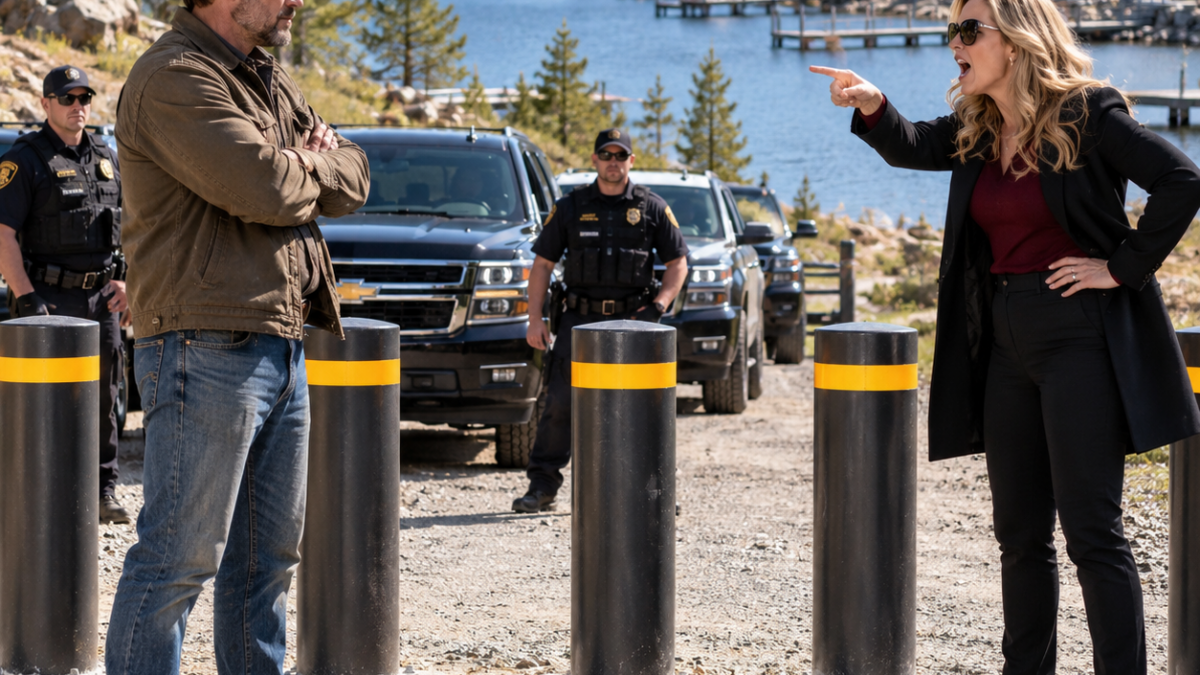
PART 2
Marilyn kept her finger pressed against the bottom of the page.
“The notary was Paul Whitfield.”
I shook my head. The name meant nothing to me.
“He died in April 2018.”
For several seconds, I honestly thought I had misunderstood her.
“What did you say?”
“He died six months before this deed was supposedly notarized.”
The room seemed to lose all sound.
I looked at my father’s forged signature, then at the notary seal, then back at Marilyn.
My father had been dead for two years.
The notary had been dead for six months.
Yet according to the county’s official digital records, those two dead men had met in October 2018 and legally transferred eighty acres of my family’s ranch to Garrett Sullivan.
I leaned back in the chair.
“How does something like this get recorded?”
“That’s what bothers me.”
Marilyn removed her glasses and rubbed the bridge of her nose.
“I’ve worked here thirty-one years. Bad descriptions happen. Missing signatures happen. Family members dispute deeds. But this?”
She tapped the page.
“This isn’t a mistake.”
“Then somebody inside the county helped him.”
Her eyes immediately moved toward the closed door.
“I didn’t say that.”
“You didn’t have to.”
She lowered her voice.
“I’m telling you to get an attorney before you start confronting people.”
But I had spent eight years running away from that ranch.
I wasn’t in the mood to run anymore.
I drove straight from the courthouse to Lakewood Estates.
The HOA office occupied what looked like a converted model home near the development entrance. Cream-colored stone. Decorative shutters. A flag snapping in the hot Texas breeze.
Inside, a woman behind a polished desk looked up.
“Can I help you?”
“I need whoever runs this HOA.”
“That would be me.”
She stood and extended her hand.
“Denise Barker. President of the Lakewood Estates Homeowners Association.”
She wore a navy blazer, gold earrings, and the professionally pleasant smile of somebody used to ending conversations without appearing rude.
I didn’t shake her hand.
I laid the deed on her desk.
“My father’s signature is on that document.”
She looked down.
“Okay.”
“He died two years before he supposedly signed it.”
Her smile disappeared.
“The man who notarized it was dead too.”
She stared at the page for another second before pushing it slightly back toward me.
“Mr…?”
“Sanders.”
That got her attention.
“Randy Sanders.”
Something flickered behind her eyes.
Recognition.
Not surprise.
Recognition.
“You know my name.”
“I’m familiar with the history of the property.”
“The history?”
I almost laughed.
“Twenty-seven houses are sitting on eighty acres that belong to me, and you’re calling it history?”
“Mr. Sanders, I’m not qualified to evaluate disputed legal documents.”
“You’re president of an HOA built on my ranch.”
“The HOA did not develop Lakewood Estates. Sullivan Development did.”
“Then call Sullivan.”
“You’ll need to contact their legal department.”
“I’m standing right here.”
“I understand that.”
“No, Mrs. Barker, I don’t think you do.”
I put both palms on her desk and leaned forward.
“I buried the man whose name is forged on that deed.”
Her face tightened.
“I’m asking you to step away from my desk.”
“And I’m asking how twenty-seven homes appeared on my land without a single person thinking maybe they should contact the owner.”
“I think this conversation is over.”
I straightened.
“Not even close.”
I called Sullivan Development from the parking lot.
I was transferred twice, put on hold, disconnected, called again, and finally reached a lawyer who refused to give me his first name.
“Mr. Sullivan will not discuss pending property matters directly.”
“It wasn’t pending until I came home.”
“You can direct all future communication to our litigation office.”
“I haven’t filed anything.”
There was a pause.
That pause told me more than his words did.
They had expected this day.
Maybe not this morning.
Maybe not this week.
But they had known somebody might eventually come asking questions.
“Have your counsel contact us,” he said.
Then the line went dead.
I sat behind the wheel for a long time.
Anger is strange when it gets big enough.
People imagine yelling.
Punching walls.
Breaking things.
Mine became quiet.
I drove back to the ranch boundary and parked on a rise where I could see most of Lakewood Estates.
Twenty-seven homes.
Twenty-seven driveways.
Twenty-seven families who probably believed they had purchased legitimate property.
Children rode bicycles along the street.
A man washed his pickup.
A woman watered flowers.
They weren’t criminals.
They were buyers.
Garrett Sullivan had taken something from them too, even if they didn’t know it yet.
But as I watched cars move through the entrance, an engineer’s habit took over.
I stopped looking at houses.
I started looking at lines.
Road lines.
Boundary lines.
Access lines.
I pulled the old survey from my folder and spread it across the hood.
The original ranch contained 240 acres.
The fraudulent transfer claimed eighty.
Which meant 160 acres were still indisputably recorded in my name.
Lakewood Drive entered the development from the county highway.
I followed it on the survey.
Then followed it again.
My heart began pounding.
The road ran across the 160 acres Sullivan had never claimed.
Not part of it.
All of it.
From the county highway to the Lakewood entrance, every foot of their access road crossed land that was still legally mine.
I drove back to the clerk’s office before closing and asked Marilyn to search for any easement, right-of-way agreement, access covenant, or recorded permission tied to Lakewood Drive.
We searched until almost six.
Nothing.
No easement.
No access agreement.
No condemnation.
No road dedication.
No right-of-way granted by my father.
No right-of-way granted by me.
Sullivan had built twenty-seven houses behind a road he had no recorded legal right to cross.
That night I stood alone beside Lakewood Drive as headlights passed through my property.
Car after car.
Residents coming home from work.
Delivery trucks.
Contractors.
HOA vehicles.
Sullivan had spent years constructing an elaborate fraud to take eighty acres.
And somehow he had forgotten about the road crossing the 160 acres he couldn’t steal.
That was the first moment I realized I had leverage.
But leverage and justice are not the same thing.
I knew that.
So the next morning I called an attorney.
Her name was Teresa Price.
A colleague from my engineering firm had used her during a property boundary dispute.
His exact description was, “She reads surveys for fun and makes developers nervous.”
Her Austin office occupied an old Victorian house squeezed between two newer commercial buildings. Files were stacked everywhere. Books lined the walls. A coffee mug on her desk said I OBJECT, even though I suspected she had received it as a joke and eventually decided it was accurate.
I handed her everything.
For almost an hour, she barely spoke.
She compared the deeds.
Checked dates.
Read the legal descriptions twice.
Studied photographs of the development.
When she reached the deed supposedly signed by my father, she leaned back.
“Your father died in 2016?”
“Yes.”
“This says 2018.”
“Yes.”
“And the notary?”
“Dead six months before that.”
She stared at me.
“You understand how serious this could become?”
“I’m starting to.”
“No. I don’t think you are.”
She pushed the papers together.
“If this document is fraudulent, your problem isn’t an HOA dispute. It’s potentially organized property fraud. But we need proof, not outrage.”
“I have death certificates.”
“That proves the men were dead. It doesn’t prove who created the document.”
“What do we need?”
Her answer was immediate.
“Everything.”
That was the beginning.
Teresa hired Dr. Rebecca Hollis, a forensic document examiner who had testified in state and federal cases throughout the Southwest.
I gave her legitimate examples of Dad’s signature—tax forms, loan documents, checks, the 1987 deed, and even an old equipment financing agreement he had signed while sitting at our kitchen table.
Three days later, she called us.
“The questioned signature was not written by your father.”
I felt my jaw tighten.
“How certain?”
“Certain enough to testify.”
She showed us enlarged comparisons.
The angle of the capital S.
The pressure on the downward stroke.
The spacing between letters.
Dad had signed his name thousands of times during his life. His handwriting had small inconsistencies, like anyone’s, but it had habits.
The forged signature copied the shape.
It didn’t copy the movement.
Then Dr. Hollis showed us something worse.
“The ink is inconsistent with the claimed execution date.”
Teresa leaned closer.
“What does that mean?”
“The formulation used here was not commercially distributed in this product line until after the date on the document.”
I stared at the signature.
“So somebody created it later.”
“That would be consistent with my findings.”
That should have felt like a victory.
Instead, all I could think about was Dad.
Someone had used his name because they thought a dead man couldn’t object.
That evening, I went through Joseph Martinez’s belongings.
His daughter had boxed everything from the foreman’s cottage after his death and stored it in our old equipment barn.
Joseph had saved everything.
Receipts from feed stores.
Fence repair invoices.
Veterinary bills.
Handwritten rainfall records.
Tax statements going back decades.
I spent hours opening dusty boxes until I found an old wooden crate beneath a stack of farmer’s almanacs.
Inside was a folder.
On the tab, in Joseph’s block handwriting, was one word.
SULLIVAN.
I sat down on an overturned bucket.
The first letter was dated 2017.
Garrett Sullivan offered to purchase a portion of the Sanders property at what he called a generous market rate.
Joseph had written one sentence across the bottom.
NO AUTHORITY TO SELL. OWNER NOT INTERESTED.
The next letter came three months later.
The language was less friendly.
It mentioned development opportunities, local economic growth, and the legal expenses that might arise if boundaries became disputed.
Joseph had written:
SURVEY DOES NOT SUPPORT CLAIM.
Then came the third letter.
This one was different.
No politeness.
No sales pitch.
It read:
Mr. Martinez,
Your employer is deceased and his heir has demonstrated no continuing interest in the property. Continued resistance to reasonable development will create legal and financial complications that you are not equipped to manage.
I strongly advise cooperation.
I read that paragraph three times.
My shame arrived before my anger.
His heir has demonstrated no continuing interest.
That heir was me.
While I was hiding from everything that reminded me of my father, Joseph had been standing between Sullivan and the ranch.
Alone.
An old ranch foreman against a developer with lawyers, money, contractors, and political connections.
Joseph had never called me.
Maybe he thought he was protecting me.
Maybe he was angry with me.
Maybe he knew I wouldn’t come.
All I knew was that he had stayed.
I kept digging.
At the bottom of the folder was an original survey from 1987.
I knew survey drawings.
That was my world.
Within minutes I saw what had happened.
The 1987 survey carried the Sanders boundary beyond Miller Creek and continued approximately 2,300 feet to the natural shoreline.
Sullivan’s development survey stopped the property line at the creek.
That small change carved nearly eighty acres away from Sanders Ranch.
The survey bore the name Raymond Keeler.
Teresa looked him up.
His professional license had been revoked in 2021 following multiple findings involving falsified boundary work.
Now we had a forged deed and a questionable survey.
But neither explained how the forged pages got into an official county database.
Marilyn helped answer that.
When Teresa subpoenaed county digitization contracts, one company stood out.
Lone Star Data Solutions.
Bernett County had paid it nearly $200,000 in 2019 to digitize deed and survey records.
Teresa called me late that afternoon.
“You need to get here.”
When I arrived, she slid a corporate registration toward me.
Lone Star Data Solutions had been formed shortly before the county project.
It had been dissolved months after completion.
The managing director listed on the records was Garrett Sullivan.
I read the name twice.
“He had access to the county system.”
“His company did.”
“And then the fake deed appears in the digital records.”
“That’s the sequence.”
I leaned back.
“He didn’t find a bad deed.”
“No.”
“He created the environment where he could make one look legitimate.”
“That is what we’re now trying to prove.”
For the first time, Teresa stopped sounding like a lawyer discussing a land dispute.
Her voice became colder.
“If the evidence establishes that Sullivan used a shell company and unauthorized digital access to alter government property records, this moves beyond a private lawsuit.”
“How far beyond?”
“Potentially federal.”
I thought about the road.
“Can I close it?”
Teresa looked at me for a long moment.
Then she unfolded the original survey.
“No recorded easement. No dedicated public right-of-way. No agreement signed by your father. No agreement signed by you.”
“So yes.”
“Legally, you have a strong basis to control access.”
“Strong basis isn’t yes.”
She sighed.
“Yes, Randy. But there’s another problem.”
“The residents.”
“Exactly.”
Twenty-seven families.
People who hadn’t forged anything.
People who had probably put their savings into those houses.
Blocking the road could force Sullivan to react, but it would hurt them first.
For three nights, I barely slept.
Every time I decided not to do it, I remembered Sullivan’s threat to Joseph.
Every time I decided to do it, I saw that mother in the minivan.
Finally, I called Pastor Eugene Bennett.
I didn’t know he was a pastor yet. I only knew his number appeared on a neighborhood contact list Teresa had obtained.
“I’m Randy Sanders.”
Silence.
Then, “You’re the ranch owner.”
“Yes.”
“What do you want?”
“To make sure your residents hear something before tomorrow morning.”
His voice changed.
“What happens tomorrow morning?”
“At dawn, I’m closing Lakewood Drive where it crosses my property.”
“You can’t do that.”
“I can.”
“There are families here.”
“I know.”
“Elderly residents.”
“I know.”
“People have jobs. Children have school.”
“I know.”
His frustration broke through.
“Then why are you doing it?”
“Because Garrett Sullivan stole eighty acres from my family, and your only road sits on 160 acres he never acquired. If I keep allowing unrestricted use while he delays this case, I surrender the only leverage I have.”
He was silent.
“I’m not blocking ambulances,” I continued. “I’m not blocking fire engines. I’ll make arrangements for school buses and verified medical transport. But general traffic ends tomorrow.”
“That’s going to make twenty-seven families hate you.”
“Probably.”
“Are you prepared for that?”
I looked through the ranch house window toward the dark pasture.
“No.”
That answer surprised him.
Then I added, “But I’m doing it anyway.”
The contractors arrived at 4:30 Tuesday morning.
I hired a crew from San Antonio because I didn’t want local contractors caught between me and Sullivan.
We worked under portable lights.
Steel posts.
Concrete footings.
Heavy gate.
Industrial locking mechanism.
By 5:20, Lakewood Drive was closed at the point where it crossed onto Sanders property.
I attached a sign.
PRIVATE PROPERTY
NO UNAUTHORIZED VEHICLE ACCESS
EMERGENCY ACCESS AVAILABLE
Then I waited.
The first car appeared at 6:22.
A silver sedan.
The driver wore hospital scrubs.
She stopped.
Stared.
Honked once.
Then twice.
She got out.
“Are you serious?”
“I’m Randy Sanders.”
“I don’t care who you are. I have a shift in forty minutes.”
I hated that moment.
She hadn’t stolen from me.
Garrett Sullivan wasn’t sitting in that sedan.
A nurse trying to get to work was.
I opened a temporary side barrier.
“You can go through.”
Her anger paused.
“What?”
“I said emergency and essential medical workers can pass today while we establish procedures.”
She drove through without thanking me.
I didn’t expect her to.
By 6:45, eight vehicles were waiting.
By seven, the line stretched toward the development.
Horns echoed across the valley.
People got out.
Someone screamed that I was insane.
A man threatened to sue me.
A woman filmed everything on her phone.
One driver attempted to go around the gate and sank his SUV into the drainage ditch.
At 7:18, the sheriff arrived.
Deputy Aaron Cole stepped out of his cruiser and approached me carefully.
“You Randy Sanders?”
“Yes.”
“We’ve got about fourteen calls saying you blocked a neighborhood.”
“I blocked a private road across my property.”
“That distinction is why I’m here.”
I handed him a folder Teresa had prepared.
Deed.
Survey.
Title records.
Easement search.
Legal memorandum.
He read for several minutes.
Then his sergeant arrived.
They talked beside the patrol cars while the crowd grew louder.
Eventually the sergeant raised both hands.
“Everybody listen.”
The shouting slowly faded.
“This is currently a civil property dispute. We have documents indicating the roadway crosses private land and we have not been provided evidence of a recorded access easement. Law enforcement is not going to remove the gate.”
The crowd erupted.
I heard my name used in ways my mother would not have appreciated.
Then a black Mercedes stopped behind the line of cars.
The rear door opened.
Garrett Sullivan stepped out.
I knew him immediately.
Silver hair.
Tailored charcoal suit.
Perfect posture.
He moved through the residents like a man walking onto his own stage.
“There you are,” he said.
I folded my arms.
“There I am.”
He stopped six feet away.
“You’ve created a dangerous situation.”
“You created a neighborhood without legal access.”
“You think a gate gives you power?”
“No.”
I pointed toward the folder in the deputy’s hands.
“Paper gives me power. You taught me that.”
His expression sharpened.
“I will bury you in litigation.”
“Then bring a shovel.”
Several residents went quiet.
He stepped closer.
“You abandoned this property for almost a decade.”
I felt that one.
He knew exactly where to aim.
I let the words hit me.
Then I said, “Abandoning my grief isn’t the same as abandoning title.”
His jaw tightened.
I lowered my voice.
“I know about Raymond Keeler.”
Nothing.
“I know the notary was dead.”
A flicker.
“I know about Lone Star Data Solutions.”
There it was.
Not panic.
Not yet.
But the smallest break in his confidence.
“I don’t know what you think you know.”
“I know somebody entered fabricated deed pages into county records during the digitization contract your company controlled.”
For the first time, Garrett Sullivan looked at me without contempt.
He looked at me like a problem.
Then he turned away.
“Enjoy this little performance,” he said. “It won’t last.”
He climbed back into the Mercedes.
The residents watched him drive away.
Pastor Bennett approached me after the crowd began thinning.
He was a middle-aged man with tired eyes and the measured voice of somebody accustomed to speaking when people were angry.
“My wife and I bought here five years ago,” he said.
“I know.”
“We put almost everything we had into our house.”
I nodded.
“We didn’t steal your land.”
“I know.”
“Some people here think you hate us.”
“I don’t.”
“Then help me understand.”
So I showed him.
Not everything.
But enough.
Dad’s death certificate.
The deed dated two years later.
The dead notary.
The surveys.
When he finished reading, he sat on the hood of his car.
“My God.”
“That’s what I said.”
He looked toward the houses.
“There are people in there who have no idea what this means.”
“I know.”
“Some of them are going to lose sleep tonight.”
“So am I.”
He studied me.
“You could open the gate.”
“I could.”
“And you won’t.”
“No.”
“Why?”
“Because Garrett Sullivan has spent years betting that everyone he hurts will choose the easier path.”
Pastor Bennett said nothing.
“If I open that gate because people yell at me,” I continued, “he learns that the bet still works.”
Two days later, Sullivan filed for an emergency temporary restraining order.
Teresa called at seven in the morning.
“Hearing at ten.”
I was already dressed.
The Bernett County courthouse was smaller than I expected.
Judge Helen Cartwright presided.
Sullivan arrived with three attorneys.
I arrived with Teresa and a cardboard box full of documents.
His lead attorney spoke first.
He described the gate as reckless.
Dangerous.
An unlawful blockade.
He talked about schoolchildren, elderly residents, nurses, emergency services, lost wages.
Every concern he raised was real.
That was what made his argument effective.
Then Teresa stood.
“Your Honor, Mr. Sanders did not create a subdivision with no lawful access. Garrett Sullivan did.”
She placed the forged deed on the evidence table.
“This document claims eighty acres were transferred by Mr. Sanders’s father in October 2018.”
She paused.
“His father died in 2016.”
The judge looked toward Sullivan.
Teresa continued.
“The notary whose stamp appears on the document died in April 2018.”
The courtroom became still.
“We also have a forensic examiner prepared to testify that the signature is not authentic and that characteristics of the ink are inconsistent with the date shown on the deed.”
Sullivan’s lawyer stood.
“Unproven allegations.”
Teresa didn’t even turn around.
“We have also identified a development survey signed by a surveyor whose license was later revoked in connection with fraudulent practices.”
“Your Honor—”
“And county records show the company contracted to digitize property documents at the time this deed entered the database was controlled by Mr. Sullivan.”
Now Judge Cartwright leaned forward.
“Counsel, is that true?”
Sullivan’s attorney hesitated.
“The corporate structure is more complicated than opposing counsel suggests.”
“That wasn’t my question.”
Another pause.
“A related entity participated in the county project.”
Judge Cartwright looked at Sullivan.
He didn’t move.
Teresa addressed the court again.
“Mr. Sanders is not seeking to endanger residents. We have maintained emergency access and are prepared to guarantee passage for emergency vehicles, school transportation, and documented medical needs. But there is no recorded general easement granting this development unlimited use of my client’s property.”
Sullivan stood suddenly.
“This is extortion.”
Judge Cartwright’s eyes hardened.
“Sit down, Mr. Sullivan.”
“He’s holding families hostage!”
“Sit. Down.”
Sullivan sat.
The judge reviewed the documents for nearly fifteen minutes.
Nobody spoke.
Finally, she removed her glasses.
“The court will not order Mr. Sanders to provide unrestricted access at this time.”
A sound moved through the gallery.
Not quite a gasp.
Not quite a whisper.
She continued.
“Mr. Sanders will maintain immediate access for emergency services, school buses, medical transportation, and other essential services as reasonably required. The parties will return for a full hearing on the underlying property issues.”
Then she looked directly at Sullivan.
“And I strongly suggest both sides preserve every record relevant to the acquisition and development of this property.”
We won the first round.
Garrett Sullivan walked out without looking at me.
I should have felt triumphant.
Instead, I felt exhausted.
Teresa and I reached the courthouse steps.
“That went better than expected,” she said.
“He’s not done.”
“No.”
Neither were we.
That afternoon, Marilyn called.
Her voice was different.
“Randy, come back to the clerk’s office.”
“What happened?”
“I found the original file.”
Twenty minutes later, I sat across from her in the same back room.
A yellowing folder lay between us.
SANDERS RANCH TRUST
TRANSFER DOCUMENTS — 2018
Marilyn opened it.
“There should be six pages.”
We counted.
Four.
“The signature page is missing,” I said.
“And the notary certification.”
“But the digital record has them.”
“Exactly.”
I felt the room grow colder.
“The physical file never contained the two pages that supposedly transferred my land?”
“That’s what it appears.”
She handed me another document.
A computer access log.
During the county’s 2019 digitization project, forty-seven property files had been manually “corrected” after scanning.
One was Sanders Ranch.
The change occurred at 2:14 a.m.
March 15, 2019.
The account used belonged to a temporary contractor associated with Lone Star Data Solutions.
Three days after the digitization project ended, the account was deleted.
I called Teresa from Marilyn’s parking lot.
She listened without interrupting.
When I finished, she said, “Do not touch anything else. Don’t call Sullivan. Don’t call Denise. Don’t discuss these logs publicly.”
“Why?”
“Because this just became a much bigger case.”
“How big?”
“Big enough that I’m making federal referrals.”
Two days later, Special Agent Diana Reeves and Agent Marcus Webb sat in Teresa’s conference room.
Reeves read documents with the same expression people use while dismantling machinery—carefully, looking for how every part connects.
“The deed is one issue,” she said. “Unauthorized alteration of county electronic records is another.”
Teresa slid the contractor records toward her.
Reeves looked at Sullivan’s corporate connection.
Then the access log.
Then the physical file.
“If this is what it appears to be, we will need records from the county, financial institutions, Sullivan Development, and the data company.”
“I’ll cooperate fully,” I said.
Agent Webb looked up from his notes.
“Mr. Sanders, I need you to understand something. From this point forward, don’t try to investigate Sullivan yourself.”
“I already found half of this myself.”
“And now you have us.”
I almost smiled.
“Fair enough.”
Garrett Sullivan apparently realized the situation had changed.
Three days later, a courier delivered an envelope to the motel where I had been staying.
Inside was an offer.
Sullivan Development would purchase my remaining 160 acres.
Cash.
Immediate closing.
Confidential settlement.
Full release of all claims.
Price: $4.8 million.
I sat on the edge of the bed staring at the figure.
Four point eight million dollars.
Enough to pay every debt I had.
Enough to retire early if I was careful.
Enough to leave Texas again and never deal with Lakewood Estates.
My phone was in my hand before I realized I had picked it up.
Teresa answered.
“He made an offer.”
“How much?”
“Four point eight.”
She whistled softly.
“What do you think?”
“What do you think?”
“I’m your attorney. I can tell you what the contract means. I can’t tell you what your father’s ranch means.”
I walked to the window.
Beyond the motel parking lot, traffic moved along the highway.
For years I had thought staying away from the ranch was how I survived losing Dad.
Now I understood something I should have understood earlier.
The ranch wasn’t the grief.
It was what remained after the grief.
Dad’s hands were gone.
The fence posts he drove into the ground were still there.
His voice was gone.
The dock he built was still there.
His morning coffee cup was gone.
The porch was still there.
If I sold because Garrett Sullivan had finally named a number large enough to make me disappear, then I would be doing what he had expected from the beginning.
I picked up the letter.
“Draft a response.”
“What do you want it to say?”
“Not for sale.”
“That’s all?”
“That’s all.”
Teresa laughed once.
“I can bill you for one sentence.”
“Make it a good one.”
The rejection went out that afternoon.
Meanwhile, Lakewood Estates was beginning to fracture.
Some residents hated me.
Signs appeared in windows.
OPEN OUR ROAD.
STOP PUNISHING FAMILIES.
One man waited beside the gate just to tell me I was a thief.
I didn’t argue.
If I had spent my savings on a house and suddenly discovered the land beneath it might belong to someone else, I might have hated the nearest available person too.
But Pastor Bennett started asking different questions.
A week after the hearing, he called.
“We need to show you something.”
The community center was packed.
Not with angry residents this time.
With paper.
Bank statements.
HOA budgets.
Contracts.
Receipts.
A dozen residents had been reviewing years of financial records.
A woman named Carla Nguyen pushed a spreadsheet toward me.
“I’m an accountant,” she said. “These numbers make no sense.”
Every household paid $450 per month in HOA dues.
Twenty-seven homes.
More than $145,000 annually.
The HOA claimed the money covered road maintenance, landscaping, security, community facilities, lake upkeep, and reserves.
But the account balance rarely exceeded $12,000.
“Where did the rest go?” I asked.
Pastor Bennett pointed to recurring transfers.
LWE MANAGEMENT SERVICES LLC.
We pulled the state registration.
Owner: Garrett Sullivan.
Carla looked sick.
“He’s been moving our dues into his own management company.”
“How much?”
“We’ve confirmed hundreds of thousands so far.”
The room went silent.
Then an older man at the end of the table spoke.
“So we paid him to manage the neighborhood he built on stolen land?”
No one answered.
That was the day Lakewood Estates stopped seeing me as the only enemy.
The residents began cooperating.
They supplied records.
Emails.
Contracts.
Meeting minutes.
A retired teacher produced copies of HOA notices warning residents not to contact county offices regarding property matters because “all title questions should be directed through authorized community representatives.”
Another resident had an email from Denise Barker discouraging him from ordering an independent survey when he wanted to build a fence.
The walls around Garrett Sullivan were closing.
And then Joseph spoke from the grave.
I found his letter on a Saturday afternoon.
The envelope had my name on it.
RANDY.
Nothing else.
I recognized his handwriting before I opened it.
Inside was one page.
Randy,
If you’re reading this, I’m gone and you finally came home.
I’m sorry I couldn’t protect the ranch better.
Sullivan tried everything. He wanted me to sign papers, grant access, sell pieces, change boundaries. I never did.
I never signed anything.
If they show you documents with my name or your father’s name saying otherwise, they are fake.
I kept what I could in the Sullivan folder.
Your father built this place with his hands.
Don’t let somebody take it with a pen.
Joseph.
I read it standing in the barn.
Then I sat down.
For eight years I had avoided crying about my father.
That afternoon, I cried for Joseph.
For Dad.
For myself.
For all the years I had confused running away with healing.
I pressed the heel of my hand against my eyes.
“I’m sorry,” I whispered.
There was nobody there to answer.
I don’t know how long I sat in that barn.
When I finally stood, the grief was still there.
But underneath it was something stronger.
Purpose.
Joseph had held the ranch together while I couldn’t even look at it.
He had resisted Sullivan’s pressure.
Saved documents.
Protected records.
Written me instructions he wasn’t sure I would ever read.
He had done his part.
Now I had to do mine.
The federal investigation accelerated.
Denise Barker was interviewed.
At first, she claimed she knew nothing about the fraudulent acquisition.
Then agents showed her emails.
Payments.
Instructions.
Three hours later, she began cooperating.
Her lawyer negotiated terms.
In exchange, she turned over years of correspondence with Sullivan.
One email changed everything.
It had been sent three months before I returned.
The message referred to Sanders Ranch.
Sullivan wrote that the property issue was manageable and that they only needed more time before an absent heir could interfere with the development.
Another email instructed Denise to discourage independent title inquiries.
Another told her to route resident complaints through Sullivan’s office.
His own words connected the fraud, the HOA, and his awareness that I still existed.
On a Wednesday evening, Teresa called.
“Where are you?”
“At the lake.”
“Sit down.”
I sat on the end of Dad’s old dock.
“What happened?”
“The grand jury returned indictments.”
I stopped breathing for a second.
“Against Sullivan?”
“Yes.”
“When?”
“This afternoon.”
The water moved softly beneath the dock.
“What charges?”
She listed them.
Fraud-related offenses.
Computer-related offenses connected to county records.
Conspiracy allegations.
Money laundering counts tied to the movement of funds.
“Warrant?”
“Signed.”
“When?”
“Federal agents plan to execute it tomorrow.”
I looked across Miller Lake.
The sunset turned the surface gold.
Eight years earlier I had stood near that same water after Dad’s funeral and convinced myself I could never come back.
Now I couldn’t imagine leaving.
“What happens next?”
“Now,” Teresa said, “we prove it.”
Garrett Sullivan was arrested at 8:47 the next morning.
Federal agents entered Sullivan Development’s Austin headquarters.
Twelve minutes later, he walked outside wearing handcuffs.
Every local station carried the footage.
Same silver hair.
Same expensive suit.
Same man who had stood beside my gate and promised to bury me.
But the expression was different.
For the first time since I had met him, Garrett Sullivan looked like a man who understood that money could delay consequences without eliminating them.
His attorneys attacked the case immediately.
They challenged searches.
Questioned digital evidence.
Attacked Marilyn’s handling of county files.
Suggested Raymond Keeler had acted independently.
Claimed Denise Barker was lying to reduce her own exposure.
They even tried to characterize me as a disgruntled heir exploiting innocent residents to force an exaggerated property claim.
Teresa prepared me for months of fighting.
Instead, the evidence kept growing.
Financial investigators traced payments from Sullivan-controlled entities to Raymond Keeler.
County server backups confirmed the altered deed pages had been uploaded during the digitization project.
Archived system data tied the temporary account to credentials issued through Lone Star Data Solutions.
Bank records showed HOA money flowing into Sullivan’s management companies.
And Joseph’s letters established that Sullivan had tried to obtain legitimate signatures before fraudulent documents appeared.
Sullivan had asked.
Joseph refused.
Then the paperwork changed.
That sequence mattered.
The trial began months later.
I attended every day.
The federal courtroom felt colder than the county courtroom.
Bigger.
More formal.
Less forgiving.
Twelve jurors listened while prosecutors built the case one brick at a time.
Dr. Hollis testified about Dad’s signature.
She displayed enlarged samples.
“This signature is an imitation,” she said.
Sullivan’s attorney tried to shake her.
“Handwriting varies, doesn’t it?”
“Yes.”
“Especially with age?”
“Yes.”
“So you cannot say every signature Mr. Sanders ever made looked identical.”
“I never said that.”
“Then your conclusion is subjective.”
Dr. Hollis barely blinked.
“No. Natural signatures vary in ways consistent with motor habits. Simulated signatures vary differently. The questioned signature contains characteristics of imitation.”
The lawyer moved on.
Marilyn testified next.
She described the physical file.
Four pages.
Then the digital record.
Six.
“Could pages have been lost from the paper file?” Sullivan’s attorney asked.
“Possible.”
“So the digital record could be complete while the paper file is incomplete.”
“Except the digital pages were added during a manual correction at 2:14 in the morning.”
The attorney stopped.
Marilyn continued.
“And the user account belonged to the contractor working for Mr. Sullivan’s affiliated company.”
The jury looked toward the defense table.
Raymond Keeler testified under a cooperation agreement.
I expected him to appear monstrous.
He didn’t.
That almost made it worse.
He looked ordinary.
Nervous.
Ashamed.
A man who had accepted money and convinced himself lines on paper weren’t real people’s lives.
“Did Garrett Sullivan ask you to alter the Sanders boundary?”
“Yes.”
“How?”
“He wanted the boundary shown at Miller Creek instead of the lake.”
“Was that supported by the historical survey?”
“No.”
“Why did you do it?”
Keeler stared at the microphone.
“Money.”
One word.
That was all.
Money.
Eighty acres.
My father’s memory.
Joseph’s final years.
Twenty-seven families’ savings.
Reduced to one word.
Money.
Denise testified on day six.
Her voice shook.
She admitted forwarding Sullivan’s instructions to residents.
Admitted discouraging outside title questions.
Admitted signing HOA contracts with Sullivan-controlled companies.
“Did you know the Sanders deed was forged?” the prosecutor asked.
“Not at first.”
“When did you suspect there was a problem?”
She hesitated.
“Before Mr. Sanders returned.”
“How long before?”
“About a year.”
A murmur moved through the courtroom.
“What did you do?”
“Nothing.”
“Why?”
Denise looked toward Sullivan.
“He told me everything would be resolved if we didn’t create unnecessary attention.”
“Did you believe him?”
“I wanted to.”
“Why?”
“Because if he was lying, then the neighborhood I helped run was built on a crime.”
That was the first moment I felt pity for her.
Not forgiveness.
But pity.
She had seen the edge of the truth and stepped away because the truth threatened everything around her.
I understood running from painful things better than I wanted to.
Then came day eight.
Joseph’s letter.
Teresa had worked with prosecutors to establish the records needed to admit the surrounding evidence.
The prosecutor held a copy.
I knew the words.
I had read them dozens of times.
Still, hearing them in that courtroom was different.
“If you’re reading this, I’m gone and you finally came home…”
My throat closed.
The prosecutor continued.
“Sullivan tried everything… I never signed anything…”
A woman on the jury wiped her eyes.
“I kept what I could…”
Another juror looked down.
“Your father built this place with his hands. Don’t let somebody take it with a pen.”
The courtroom went completely silent.
I looked at Sullivan.
He was staring at the table.
For months I had imagined what revenge would feel like.
I thought maybe I would enjoy seeing him afraid.
I didn’t.
What I felt was grief.
Because there was Joseph’s life.
Reduced to a page.
An old man standing alone against someone richer and more powerful because he had made a promise to my father.
And there I was, finally doing what I should have done years earlier.
The defense presented its case.
Sullivan did not testify.
His lawyers argued the government had assembled unrelated mistakes and misconduct into a conspiracy centered on a successful developer.
They blamed Keeler.
Blamed contractors.
Blamed Denise.
Blamed outdated county systems.
They suggested Sullivan had relied on professionals who failed him.
Then prosecutors showed the emails.
His emails.
His instructions.
His companies.
His money.
His timing.
His words.
By the end, there wasn’t much room left to hide.
The jury deliberated for six hours.
I waited in the hallway with Teresa.
Pastor Bennett was there.
So was Marilyn.
Joseph’s daughter, Elena, had come too.
She held my arm when the courtroom deputy called us back inside.
The jury entered.
Everyone stood.
I remember the foreman’s face more clearly than almost anything else from that year.
Middle-aged man.
Brown glasses.
Blue shirt beneath his jacket.
The clerk asked if the jury had reached a verdict.
“We have.”
My heart pounded.
Count one.
Guilty.
Count two.
Guilty.
Count three.
Guilty.
Again.
Again.
Again.
Each word seemed to strike the room physically.
Garrett Sullivan did not turn around.
I closed my eyes.
Elena Martinez began crying quietly beside me.
I put my arm around her.
“That was for your dad,” I whispered.
She shook her head.
“No.”
She looked at me through tears.
“That was for both of them.”
Sentencing came weeks later.
The judge imposed a substantial federal prison term and restitution exceeding eight million dollars, subject to the final accounting of victim losses.
Sullivan’s assets were targeted for forfeiture and liquidation.
The money could never return the years Joseph spent fighting.
It could not erase what had happened.
But it could help repair what remained.
Then came the hardest question.
What happened to the twenty-seven families?
Legally, the situation was complicated.
Emotionally, it was worse.
Some houses occupied land returned to the Sanders title.
Some owners wanted out immediately.
Others had nowhere else to go.
Every one of them had bought in good faith.
I could have forced the issue.
After everything that happened, I had leverage nobody could ignore.
Teresa explained my options.
I listened.
Then I called a meeting at the Lakewood community center.
Almost every family attended.
I stood in front of people who months earlier had screamed at me through a locked gate.
Pastor Bennett sat in the front row.
Carla Nguyen had a folder on her lap.
A young couple held hands near the back.
I recognized the nurse from that first morning.
Nobody knew what I was about to say.
“I’m not Garrett Sullivan.”
The room stayed silent.
“I spent a long time angry enough that I wanted everything put back exactly the way it was before he touched it.”
I looked around.
“But there’s no way to do that.”
I pointed toward the neighborhood.
“You live there now.”
No one moved.
“Some of you have raised children there. Some of you spent your retirement savings there. Some of you believed Sullivan because county records told you his paperwork was legitimate.”
A man near the back lowered his head.
“You were deceived.”
I took a breath.
“So was I.”
Then I explained the plan.
No one would be forced out overnight.
Owners whose homes sat on restored Sanders acreage would receive options negotiated individually: purchase the underlying parcel at a fair value adjusted for restitution already received, accept buyout assistance funded through recovered assets where available, or participate in a structured relocation arrangement.
Several families chose to remain.
Several chose to leave.
A few houses in areas most important to restoring the ranch and lake buffer were eventually removed after negotiated settlements.
There were no bulldozers arriving at dawn.
No families standing on sidewalks while their belongings were thrown outside.
No spectacle.
I had already learned what it felt like when somebody treated land as if the people connected to it didn’t matter.
I refused to repeat that mistake.
Then we addressed the road.
Teresa expected me to demand substantial easement compensation.
Maybe I could have.
Instead, I offered the remaining residents a permanent recorded access easement for one dollar per year.
The room didn’t react at first.
They thought they had misheard me.
Pastor Bennett stood.
“One dollar?”
“One.”
“Why?”
“Because the road was leverage against Sullivan.”
I looked around the room.
“Not against you.”
Someone began crying.
I continued.
“The agreement has conditions. No expansion of the development onto ranch property. No commercial construction traffic without separate permission. Shared responsibility for road maintenance. And an annual contribution to a Miller Lake conservation fund.”
Carla raised her hand.
“How much?”
“Enough to protect the lake. Not enough to punish anybody.”
The nurse from the first morning stood.
“I owe you an apology.”
“You don’t.”
“Yes, I do.”
She swallowed.
“I called you a monster.”
“I had just locked the road you needed to get to work.”
“You still let me through.”
“You were going to a hospital.”
She wiped her eyes.
“I didn’t know.”
“None of you did.”
That was the difference.
Sullivan knew.
They didn’t.
Every remaining homeowner signed the easement agreement.
On a Sunday morning almost a year after I had installed it, I removed the steel gate.
I could have hired a contractor.
I didn’t.
I wanted to do it myself.
Pastor Bennett came.
So did half the neighborhood.
We unbolted the locking assembly.
A local welder cut the final steel connection.
When the gate swung open, nobody cheered.
That surprised me.
Instead, people stood quietly.
There was something solemn about it.
The same road that had divided us now connected us.
Pastor Bennett looked at me.
“You want to do the honors?”
I stepped aside.
“No.”
I pointed toward the residents.
“It’s your road now too.”
The nurse drove through first.
She slowed beside me.
Rolled down her window.
“Morning, Randy.”
“Morning.”
Then she smiled.
This time, I smiled back.
The old Lakewood HOA did not survive.
Residents dissolved it.
They formed a smaller neighborhood association with open books, elected leadership, and no developer-controlled management company.
Pastor Bennett became president.
He complained about it for two weeks before accepting unanimously.
Carla became treasurer.
Her first rule was simple.
“Every dollar gets explained.”
Nobody argued.
Three months after Sullivan’s sentencing, I moved back into my father’s house.
Not because it was easy.
The first night was brutal.
Every room contained a ghost.
Dad’s old workbench.
His chair.
The marks on the pantry door where he had measured my height as a kid.
I stood in the kitchen at two in the morning and almost drove back to San Antonio.
Then I found one of his old coffee mugs.
Chipped handle.
Faded logo from a feed store that had closed twenty years earlier.
I made coffee.
Sat on the porch.
And stayed.
The next morning, the sunrise over Miller Lake looked exactly as it had when I was twelve.
That was when I finally understood something.
Coming home didn’t mean pretending nothing had happened.
It meant accepting that everything had happened—and choosing to belong there anyway.
I restored the old ranch entrance.
Not exactly as it had been.
Some things shouldn’t be copied perfectly.
They should carry the history of what happened.
We rebuilt the wooden gate using cedar harvested from the property.
Beside it, I installed a bronze plaque.
JOSEPH MARTINEZ
1952–2023
THE MAN WHO NEVER SIGNED
Elena cried when she saw it.
“So people will know?” she asked.
“They’ll know.”
“My dad would hate having his name on a plaque.”
I laughed.
“Absolutely.”
“He’d call it a waste of good metal.”
“That sounds like him.”
She touched the bronze letters.
“He loved this place.”
“I know.”
“No, Randy.”
She looked at me.
“He loved your family. That’s why he stayed.”
I didn’t have an answer.
A few weeks later, I visited Joseph’s grave.
I brought flowers.
Felt ridiculous carrying them because Joseph had always claimed flowers were “plants people killed to apologize for something.”
I set them down anyway.
“You held the line,” I said.
The cemetery was quiet.
Wind moved across the grass.
“I should’ve been here.”
No answer.
“I’m sorry.”
Still nothing.
Then I remembered something Joseph had told me when I was nineteen after I wrecked Dad’s tractor backing into a shed.
You can spend all day wishing you hadn’t hit the wall, or you can start fixing the wall.
I laughed out loud.
“All right.”
I put my hands in my pockets.
“I’m fixing the wall.”
One year after the verdict, Pastor Bennett joined me on the dock.
He brought two beers.
I brought fishing poles.
We sat for almost twenty minutes without catching anything.
Finally he said, “You know, there are still people who think you were wrong to close that road.”
“I know.”
“Does that bother you?”
“Sometimes.”
He nodded.
“I was furious with you.”
“I remember.”
“I told my wife you were the most unreasonable man in Texas.”
“Only Texas?”
He laughed.
Then became serious again.
“But I’ve thought about it.”
I watched my line move with the water.
“And?”
“If you hadn’t closed the road, none of us would have looked at Sullivan.”
I said nothing.
“We would’ve kept paying him.”
“Probably.”
“We would’ve kept trusting the paperwork.”
“Probably.”
“And he would’ve kept waiting.”
“Yes.”
Pastor Bennett looked toward the neighborhood.
Children were playing somewhere beyond the trees.
“You forced the truth into the open.”
“I forced people into a terrible situation.”
“Both things can be true.”
That sentence stayed with me.
Both things can be true.
I had been wronged.
So had the residents.
I had every reason to be angry.
But anger could have turned twenty-seven innocent families into collateral damage if I had let it.
Sullivan had stolen land.
What made him dangerous was that he stopped seeing people.
Everything became a transaction.
A signature.
A parcel.
A leverage point.
A delay strategy.
I came closer than I like to admit to making the same mistake.
The difference was that people like Pastor Bennett, Teresa, Marilyn, Elena, and Joseph’s memory kept pulling me back.
Justice wasn’t getting everything I wanted.
Justice was making the person responsible answer for what he had done without destroying everyone he had already used.
That was harder.
And more satisfying.
By the second year, much of the disputed acreage looked like ranchland again.
Grass returned where empty lots had been cleared.
We restored a buffer of native plants along Miller Lake.
The conservation fund helped repair shoreline erosion.
Families from Lakewood volunteered during cleanup days.
The irony wasn’t lost on me.
The people I once locked behind a steel gate now helped maintain the land that gate had been built to protect.
Carla brought her teenage son one Saturday to plant young oak trees.
She handed me a shovel.
“Where?”
I pointed toward a slope overlooking the lake.
“My grandfather planted the big ones over there.”
She smiled.
“Then these can be for the next generation.”
We planted twenty.
I kept one tree separate.
Near Joseph’s plaque.
That one was mine.
On the anniversary of Dad’s death, I walked the entire boundary of the ranch.
I hadn’t done that since I was a teenager.
Fence line.
Creek.
Pasture.
Lake.
Some markers were new.
Some were the same rusted posts Dad had driven decades earlier.
At the far end of Miller Creek, I stopped where Sullivan’s fraudulent survey had cut our land in two.
For years, a line on a piece of paper had nearly erased everything beyond that point.
I stood there thinking about how absurd that was.
A ranch feels permanent.
Rock.
Soil.
Water.
Trees.
But ownership can become terrifyingly fragile when people stop watching the records that describe it.
Sullivan understood that.
He believed the paperwork mattered more than memory.
In a way, he was right.
What he failed to understand was that paper leaves trails.
Signatures can be compared.
Databases keep logs.
Bank transfers create records.
Threatening letters get saved in wooden crates by stubborn old ranch foremen who refuse to throw anything away.
His scheme depended on everybody forgetting.
Joseph didn’t.
Marilyn didn’t.
Teresa didn’t.
Eventually, neither did I.
That evening I returned to the porch.
Dad’s chair was beside mine.
I had never moved it.
The sun dropped behind the trees and turned Miller Lake orange.
For years, I had been angry at myself for leaving.
Maybe I always would be a little.
But guilt is useful only until it teaches you what not to abandon twice.
I couldn’t give Dad those eight years back.
I couldn’t tell Joseph I was sorry while he was alive.
I couldn’t erase what Garrett Sullivan had built.
But I could decide what happened next.
I could keep the ranch.
I could protect the lake.
I could know my neighbors.
I could open the road instead of guarding it.
I could make sure Joseph’s name stayed at the gate long after mine was forgotten.
A pickup approached along Lakewood Drive.
For a second, some old instinct made me look up sharply.
Then I saw Pastor Bennett behind the wheel.
He slowed.
Raised one hand.
I raised mine.
No security booth.
No guard asking for an address.
No PRIVATE COMMUNITY sign telling me I didn’t belong.
Just a road crossing land my family had worked for three generations, carrying neighbors home.
Pastor Bennett disappeared around the bend.
I leaned back in my chair.
Somewhere behind me, the kitchen clock ticked.
Cicadas buzzed in the trees.
The lake was calm.
And for the first time since my father died, silence didn’t feel empty.
It felt peaceful.
Garrett Sullivan thought my absence meant surrender.
He thought grief had made me weak.
He thought a dead man’s signature was useful because dead men couldn’t object, an old foreman could be intimidated, homeowners could be distracted, county records could be manipulated, and enough money could turn theft into legitimacy.
He was wrong about all of them.
My father couldn’t object.
Joseph did it for him.
Joseph couldn’t finish the fight.
Marilyn carried it forward.
The residents had been deceived.
They eventually opened their own files.
And I had spent eight years running from home.
But when I finally came back, I stayed.
Sometimes I still walk down to the gate just before sunset.
I stop beside Joseph’s plaque.
THE MAN WHO NEVER SIGNED.
Those four words tell the whole story better than any courtroom transcript ever could.
Garrett Sullivan had forged signatures because he believed names on paper were stronger than the people behind them.
Joseph proved otherwise.
My father proved otherwise.
Twenty-seven families eventually proved otherwise.
And, finally, so did I.
The ranch is still here.
The oak trees are still here.
Miller Lake still catches the evening light.
Children from the old Lakewood neighborhood fish from the shoreline now, legally, with permission, sometimes using the same spot where Dad taught me when I was six.
I don’t chase them away.
Sometimes I show them where the bass hide beneath the shaded bank.
The first time I did that, I heard my father’s voice in my head.
Not literally.
Just memory.
Easy on the line, Randy. Let the fish take it.
I smiled.
A little boy looked up at me.
“What’s funny?”
“Nothing.”
I handed him the rod.
“Your turn.”
He cast badly.
The line landed ten feet from shore.
I laughed.
He frowned.
“Was that terrible?”
“Absolutely.”
“Can I try again?”
I looked across the water.
At the ranch.
At the houses beyond the trees.
At the road that once divided all of us.
“Yeah,” I said.
“You can always try again.”
And maybe that was what coming home had really been about.
Not getting back exactly what had been taken.
Not making the world look the way it did before loss.
Not revenge.
A second chance.
For the ranch.
For those families.
For Joseph’s sacrifice.
And, whether I deserved it or not, for me.
I spent eight years believing the hardest thing I would ever do was return to my father’s ranch.
I was wrong.
The hardest thing was returning and discovering someone else had tried to erase us.
The most satisfying thing wasn’t locking the gate.
It wasn’t watching Garrett Sullivan get arrested.
It wasn’t hearing the guilty verdicts.
It wasn’t even seeing the property returned.
It was standing on the same land years later and realizing he had failed at the one thing he had wanted most.
He wanted the Sanders family to disappear.
We didn’t.
I came home.
And this time, I stayed.




