I Inherited a 12-Unit Apartment Building With No HOA—Then a Woman Demanded Seven Years of Fees. She Had No Idea I Audit Fraud for a Living.
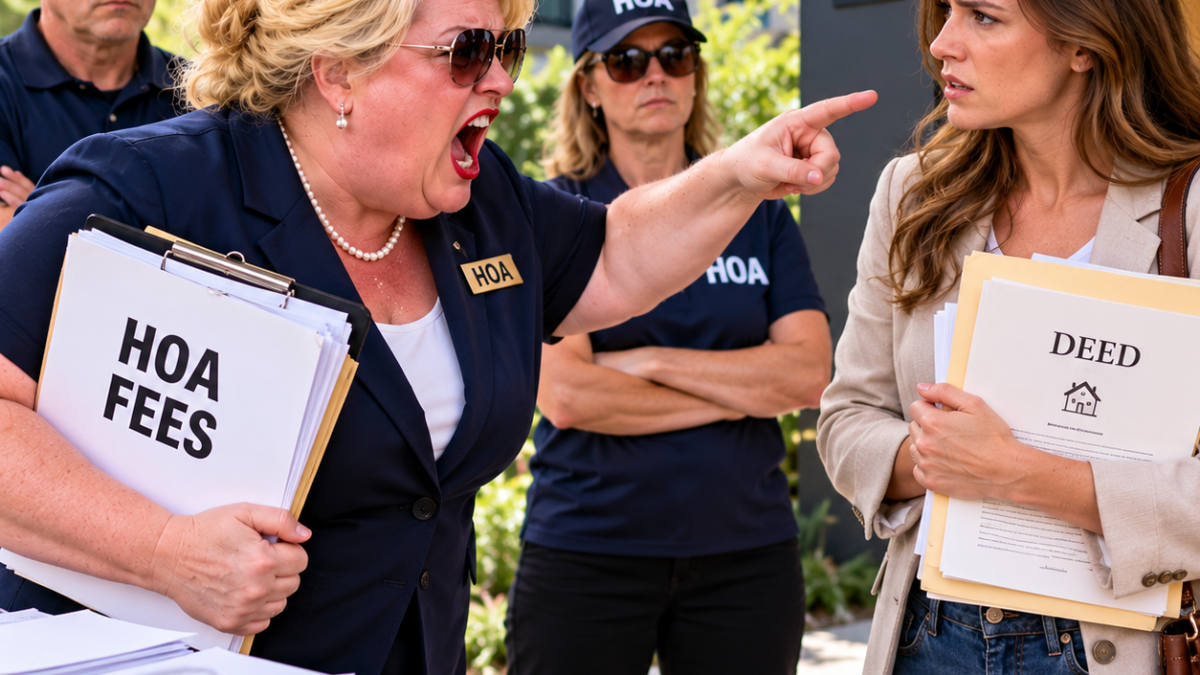
PART 2
I didn’t sleep much that night.
Every time I closed my laptop, my mind kept returning to the same date.
2017.
The year my grandmother’s memory began to fail.
The year Patricia claimed the HOA had been formed.
The year a woman who had spent decades managing every dollar in that building had supposedly decided she suddenly needed somebody else to collect money from her tenants.
Coincidences exist.
I knew that.
My profession had taught me to be careful with conclusions.
Suspicion was not evidence.
Timing was not proof.
And anger—especially personal anger—could make intelligent people start seeing patterns where none existed.
So I did what I would have done for a client.
I built a file.
I searched the Arizona corporate registry again using every variation I could think of.
Maplewood Commons HOA.
Maplewood Homeowners Association.
Maplewood Commons Association.
Maplewood Residential Association.
Nothing.
Then I searched county property records.
No recorded CC&Rs.
No declarations.
No recorded HOA documents attached to my grandmother’s parcel.
No lien history from any association.
No recorded assessments.
Nothing showing that a legal homeowners association had ever controlled that building.
I sat back in the hotel chair and looked at the screen.
The room was dark except for the laptop light.
My grandmother’s photograph sat on the desk beside me.
I had carried it from Chicago in my suitcase.
She was seventy in the picture, standing in the Maplewood courtyard with one hand on my shoulder and the other holding a paper plate from a tenant barbecue.
She looked tired.
Happy.
Stubborn.
Exactly like herself.
“What did she do to you?” I whispered.
The room had no answer.
The next morning, I returned to the building.
This time, I brought copies of everything.
The deed.
Probate authorization.
Death certificate.
My identification.
I also started an audio recorder on my phone before I got out of the car.
Patricia met me at the same doorway.
But her performance had changed.
Yesterday, she had been a gatekeeper.
Today, she was warm.
“Megan.”
She said my name like we were old friends.
“I’m glad you came back. I think yesterday was a little tense for both of us.”
“It was a strange day.”
“I understand.”
She stepped aside.
“Come in. Let’s talk properly.”
That was the first time she allowed me into the office.
I almost wished she hadn’t.
My grandmother’s management office had always smelled like paper, instant coffee and peppermint candy.
Now it smelled like lavender air freshener.
Her old wooden desk was still there.
So were the metal filing cabinets.
But the wall behind the desk had changed.
Framed photographs of community events.
Printed HOA notices.
A large plaque:
**PATRICIA ROGERS
PRESIDENT
MAPLEWOOD COMMONS HOA**
I remembered that exact wall.
When I was eight, it held a photograph of my grandmother standing beside the building on the day she bought it.
There had been another picture of my mother at college graduation.
Another of me missing my two front teeth.
Those pictures were gone.
Patricia sat in my grandmother’s chair.
“Please.”
She motioned to the chair opposite her.
I sat.
She opened a thick manila folder.
“I want you to understand something first. Your grandmother was very important to this community.”
“I know.”
“She supported what we were doing.”
“Did she?”
Patricia missed the edge in my question.
“She did.”
She pulled out several documents.
Meeting minutes.
Fee schedules.
Community rules.
And finally:
**MAPLEWOOD COMMONS HOA MEMBERSHIP AGREEMENT**
My grandmother’s name was typed beneath a signature line.
There was a signature.
It looked like hers.
At first.
I picked up the page.
My grandmother’s older signatures were distinctive.
A large loop in the L.
A sharp downward stroke in the E.
The signature on this document had both.
But it was too clean.
Too smooth.
Too much like the signature she had used before her hands began shaking.
By 2017, my grandmother’s writing had changed noticeably.
Probate had required me to review dozens of examples.
Tax returns.
Checks.
Letters.
Medical documents.
The signature in front of me looked like somebody had copied an older version.
“Can I see the original?”
Patricia’s smile shifted.
“That is the original.”
“This is a photocopy.”
“The signed original is in secure storage.”
“Where?”
“For insurance purposes.”
I looked at her.
“Where is secure storage?”
“Megan, I really don’t think—”
“I’m asking where the original agreement supposedly signed by the owner of this property is stored.”
Patricia leaned back.
“I’d have to check.”
“Please do.”
I placed the copy on the desk.
“What exactly did my grandmother agree to?”
“Membership.”
“In an HOA that isn’t registered with the state?”
That landed.
Her eyes narrowed.
“I’m not sure what you mean.”
“I searched.”
“Online databases aren’t always current.”
“What about county records?”
“Again, records can be incomplete.”
“No CC&Rs.”
Patricia folded her hands.
“You’ve been here twenty-four hours.”
“Correct.”
“I have managed this community for seven years.”
“Also correct.”
“I think you may want to be careful about making assumptions.”
I smiled.
“I agree completely.”
That answer confused her.
So I changed direction.
“What does the HOA charge?”
Patricia visibly relaxed.
“One hundred fifty dollars per unit per month.”
“All twelve units?”
“Yes.”
I did the math in my head, although I didn’t need to.
$1,800 a month.
$21,600 a year.
Seven years.
More than $150,000.
“What does that pay for?”
“Common-area maintenance, landscaping, security lighting, administrative costs, community reserves.”
I looked out the office window.
The courtyard fountain was dry.
The paint on the opposite wall was peeling.
One of the exterior lights near unit six had been flickering since the previous afternoon.
“Can I see the annual financial statements?”
“Those are board-level records.”
“Who is on the board?”
“I’m president.”
“I gathered that.”
“Our secretary is Melissa.”
“Last name?”
“Turner.”
“Treasurer?”
Patricia hesitated.
“We rotate administrative responsibilities.”
“That’s not a treasurer.”
“We are a small organization.”
“Which bank holds the operating account?”
Her posture changed.
“That information is confidential.”
“The organization collects money from tenants living in my building.”
“You keep saying ‘my building’ as if your grandmother didn’t agree to community governance.”
“She owned it.”
“She was also part of something larger.”
I leaned forward.
“Patricia, I’m asking where the money went.”
That was when she switched tactics.
Her voice softened.
“Megan.”
I hated the way she said my name.
Not because it was rude.
Because it was sympathetic.
“I know you’re grieving.”
I said nothing.
“You’ve lost your grandmother. You’re dealing with probate, a property you don’t understand, tenants you don’t know, and a management structure that predates your involvement.”
She paused.
“Your grandmother struggled toward the end.”
My fingers tightened around the edge of my notebook.
“She became confused.”
“I’m aware.”
“She forgot bills.”
“Yes.”
“She misplaced paperwork.”
“Yes.”
“Frankly, she was relieved when I started helping.”
There it was.
A story built around my grandmother’s decline.
A story where Patricia wasn’t taking over.
She was rescuing her.
“Helping with what?”
“Collections. Notices. Maintenance coordination.”
“Did she pay you?”
“Not directly.”
“How were you compensated?”
Patricia blinked.
“The HOA has administrative expenses.”
“Which I’m asking to see.”
She sighed.
“Megan, you’re making this adversarial.”
“No. I’m making it auditable.”
That sentence changed the room.
Patricia stared at me.
I continued.
“I’m a CPA.”
“I know.”
“You looked me up?”
“Your grandmother talked about you.”
“Then you know what I do.”
“She said accounting.”
“Forensic accounting.”
Her face went still.
I let the silence sit.
“I audit financial irregularities.”
Patricia recovered quickly.
“Well, then you should appreciate that proper records require proper procedures.”
“I do.”
“Board approval—”
“I’m requesting the financial records in writing.”
“You don’t have standing as an HOA member until—”
“I’m not requesting them as an HOA member.”
I stood.
“I’m requesting records related to money collected from tenants in property I own and financial activity conducted through an office that legally belongs to my estate.”
She stood too.
“You cannot just come in and take records.”
“I didn’t say I would.”
“Good.”
“I said I’m requesting them.”
“Megan—”
“I’ll give you ten business days.”
Her composure cracked.
Not completely.
Enough.
“This is unnecessary.”
“Then it should be easy.”
I walked toward the door.
Behind me, Patricia said:
“The current month’s assessment is due on the fifteenth.”
I stopped.
“How much?”
“Three hundred dollars for the owner assessment.”
“For what?”
“Building-level administrative obligations.”
“And your claim is that I owe this?”
“Yes.”
“Anything else?”
She opened a folder.
“There are accumulated late charges on your grandmother’s estate.”
I turned slowly.
“You’re charging my dead grandmother late fees.”
Patricia didn’t even flinch.
“Obligations don’t disappear because someone passes away.”
For several seconds, I could hear the old wall clock ticking.
My grandmother had bought that clock in 1994.
I remembered because she made me stand on a chair while she hung it.
Patricia sat beneath it now.
In my grandmother’s chair.
Explaining why a dead woman owed her money.
“Send everything in writing,” I said.
Then I left.
I made it to my rental car before my hands started shaking.
Not fear.
Rage.
The kind that makes your vision sharpen.
I sat behind the steering wheel and stared straight ahead.
Patricia’s words kept repeating.
**Toward the end, she wasn’t well.**
**She trusted us.**
**She was relieved.**
She had taken my grandmother’s weakness and turned it into authorization.
That was what bothered me more than the money.
My grandmother had survived war.
Crossed an ocean.
Cleaned houses for people who sometimes wouldn’t look her in the eye.
Saved money in envelopes because banks intimidated her when her English was still uncertain.
Bought property.
Learned landlord law.
Managed repairs.
Built relationships with tenants.
And now Patricia was describing her final decline as proof that somebody else deserved control.
I put my hands flat on the steering wheel.
“Okay,” I whispered.
Not a threat.
A decision.
If Patricia wanted paperwork, I was going to give her paperwork.
Four days later, she gave me more.
The certified envelope had **URGENT LEGAL NOTICE** stamped in red.
Inside was a three-page demand.
**NOTICE OF INTENT TO FILE LIEN**
Unpaid assessments.
Administrative fees.
Late penalties.
Community reserve charge.
Total:
**$4,200.**
Payment deadline:
Fourteen days.
Failure to pay could allegedly result in a lien and foreclosure action.
For about thirty seconds, my stomach dropped.
That reaction embarrassed me later.
I knew better.
But official-looking paper works because the body reacts before the brain finishes reading.
There were case citations.
Reference numbers.
A notary block.
A seal.
It looked legal.
Then I remembered the corporate search.
The county search.
No HOA.
No CC&Rs.
No legal organization.
I drove directly to the recorder’s office.
“Complete search,” I told the clerk.
“On the property?”
“Everything.”
She pulled thirty-four years of records.
Clean ownership.
No HOA lien.
No recorded association declaration.
No HOA assessment rights.
Nothing.
I showed her Patricia’s notice.
“Has this been filed?”
The clerk searched.
“No.”
“Can this organization file one?”
She frowned at the name.
“I’m not giving you legal advice, but there’s nothing in our records showing an association interest in this parcel.”
I thanked her.
Back in the parking lot, I read Patricia’s letter again.
It wasn’t a lien.
It was a threat to create one.
A threat written to look like something that had already happened.
Theater.
That was Patricia’s entire system.
Signs.
Titles.
Meeting minutes.
Fee schedules.
Notices.
Bylaws.
Enough visual legitimacy that most people would assume somebody else had verified it.
I was beginning to understand the architecture of the fraud.
And I was beginning to understand why it had lasted seven years.
My phone rang before I left the parking lot.
Unknown Phoenix number.
“Hello?”
“Is this Megan Lawson?”
A woman.
Quiet.
Breathing fast.
“Yes.”
“I live at Maplewood.”
“Which unit?”
“Seven.”
She lowered her voice.
“I can’t talk long.”
“Okay.”
“That woman.”
“Patricia?”
“Yes.”
A door closed on her end.
“She keeps everything in a notebook.”
“What notebook?”
“Black cover. Leather-looking. She writes every payment in it.”
My posture changed.
“Every HOA payment?”
“Every one I’ve seen.”
“Cash?”
“Cash. Checks. Dates. Amounts. Names.”
“How do you know?”
“Because she makes us sign sometimes when we pay cash.”
I closed my eyes.
Physical ledger.
Seven years.
Names.
Dates.
Amounts.
Possibly signatures.
“Where does she keep it?”
“Unit 1A.”
“Her apartment?”
“Yes.”
“Where?”
“Desk drawer usually. She brings it to meetings.”
I wrote everything down.
“How much have you paid?”
The woman hesitated.
“Almost thirteen thousand.”
My throat tightened.
“For what?”
“That’s what I want to know.”
“Have you ever seen financial statements?”
“No.”
“Receipts?”
“Sometimes handwritten.”
“Vendor invoices?”
“No.”
“Do you know whether there is an HOA bank account?”
“No.”
Then she said something that changed the investigation.
“She wasn’t president when she moved in.”
“When did she move in?”
“2016.”
“She was a tenant?”
“Yes.”
“Then what happened?”
“Your grandmother started getting sick.”
I didn’t respond.
“She forgot things. Patricia started helping. Picking up packages. Collecting rent when Eleanor wasn’t feeling well.”
“And then?”
“Suddenly there was an HOA.”
The line went quiet.
“Are you still there?”
“Yes.”
“I have to go.”
“Wait. What’s your name?”
“I’m sorry.”
The call ended.
I stayed in the car.
Unit 1A.
Patricia lived in the building.
My building.
I pulled up the probate property files from cloud storage.
Tenant list.
Unit 1A.
Lease signed 2016.
**Patricia Rogers.**
Monthly rent:
$1,200.
I opened my grandmother’s bank statements.
2016.
Regular deposits.
Patricia Rogers.
$1,200.
Then I moved to 2017.
January.
Nothing.
February.
Nothing.
March.
Nothing.
I searched the year.
Zero.
2018.
Zero.
2019.
Zero.
Every year afterward.
Zero.
I did the calculation.
Seven years of rent at $1,200 per month.
More than $100,000.
Add the tenant fees.
More than $150,000.
Potential combined benefit:
Over a quarter-million dollars.
And that didn’t include late fees.
Special assessments.
Cash payments.
Anything unrecorded.
The woman had apparently lived free in my grandmother’s building while collecting fees from the other tenants through an HOA that had no legal existence.
I stared at my laptop screen.
Then I opened a spreadsheet.
Patricia had made one mistake that fraudsters make more often than people realize.
She believed detail protected her.
It usually does.
Until somebody audits the detail.
Three days later, the tenants received an email.
One of them forwarded it to me anonymously.
Subject:
**URGENT SECURITY ALERT REGARDING UNAUTHORIZED INDIVIDUAL**
I read it once.
Then again.
Patricia warned residents that a woman claiming to be the property owner was approaching tenants and soliciting financial information.
She suggested I might be engaged in identity theft.
She instructed tenants not to speak with me.
She claimed the HOA was consulting law enforcement.
By the end of the email, I had gone from legal heir to dangerous outsider.
My name wasn’t used.
It didn’t need to be.
That week, residents who had smiled at me began avoiding me.
One woman pulled her little boy closer when I walked past.
A man on the second-floor balcony shouted:
“Stop bothering people.”
I looked up.
“I own the building.”
He laughed.
“Sure you do.”
That hurt more than I expected.
Not because he doubted me.
Because the building my grandmother had spent thirty-four years turning into a community no longer recognized her family.
Patricia had taken control of the story.
And stories are powerful when nobody has seen the records.
I went to the building that evening.
Not to confront her.
I wanted to see my grandmother’s office.
My key didn’t work.
I tried again.
Nothing.
The lock had been changed.
I stood there holding a useless key.
Then I looked through the office window.
The desk was still inside.
The filing cabinets.
The clock.
The old wall calendar with tenant birthdays marked in red.
But my grandmother’s family photographs were gone.
Where my childhood picture had been was a laminated fee schedule.
Where my mother’s graduation photograph had hung was an HOA meeting notice.
In the center:
**PATRICIA ROGERS — PRESIDENT**
I put my palm against the glass.
“She took them down last month.”
I turned.
An older man stood behind me.
Gray beard.
Work boots.
Tired eyes.
“I’m Andrew Brown. Unit nine.”
“How long have you lived here?”
“Twenty-three years.”
“You knew my grandmother?”
He smiled.
“Eleanor saved my life.”
I waited.
“Heart attack. 2011. Ambulance got confused about the entrance. Your grandmother drove me halfway to the hospital until we met them.”
“That sounds like her.”
“She also let me postpone rent three months in 2008.”
He looked toward Patricia’s unit.
“That one wouldn’t lend you a phone charger without writing a receipt.”
I almost smiled.
Andrew nodded toward the office.
“Patricia said the family pictures looked unprofessional.”
“Unprofessional?”
“Said this was an HOA office now.”
I looked through the glass again.
“Andrew, how did the HOA start?”
He exhaled.
“Slowly.”
We sat on the edge of the dry fountain.
“Patricia moved in around 2016. Complained about everything. Trash pickup. Noise. Landscaping. Parking. Your grandmother was still sharp then.”
“And?”
“Eleanor mostly ignored her.”
“That also sounds like her.”
“In 2017, your grandmother started forgetting things.”
Andrew looked uncomfortable saying it.
“She missed a repair request. Paid the landscaper twice. One month she asked me for rent after I’d already paid.”
I nodded.
“We knew.”
“Patricia started helping.”
“How?”
“Collecting checks. Posting notices. Organizing maintenance.”
“Did my grandmother approve?”
“At first, I think she did.”
That mattered.
I didn’t want to invent victimhood where there had been legitimate assistance.
“But then Patricia said Eleanor wanted a homeowners association.”
“Did that make sense to anyone?”
“Not really.”
“Why would tenants in one apartment building form an HOA?”
Andrew gave me a tired look.
“Because Patricia explained it confidently.”
There it was again.
Confidence.
“She said it would protect us. Create reserves. Improve security. Give tenants a voice.”
“Did anybody vote?”
“I don’t remember one.”
“Board election?”
“No.”
“Bylaws?”
“She posted rules.”
“Financial reports?”
Andrew laughed without humor.
“Never.”
“Why keep paying?”
His expression became serious.
“Because when everyone around you pays, you assume somebody knows something you don’t.”
That sentence hit me hard.
Fraud doesn’t always survive because victims are gullible.
Sometimes it survives because everyone is using everyone else as proof.
Andrew reached inside his jacket.
“I kept these.”
He handed me a thick worn envelope.
Receipts.
Seven years.
HOA fees.
Special assessments.
Late charges.
Some signed by Patricia.
Some stamped.
Some handwritten.
“I didn’t trust her.”
“Then why pay?”
“I trusted your grandmother.”
His voice cracked slightly.
“If Eleanor let it happen, I thought there must be a reason.”
I held the receipts carefully.
“Can I copy these?”
“Keep them.”
“Andrew—”
“I want this stopped.”
He looked at Patricia’s darkened window.
“Your grandmother helped me when I thought I was dying.”
Then he looked back at me.
“I should have helped her when she was losing herself.”
The guilt in his voice made me uncomfortable.
“You didn’t know.”
“I knew something was wrong.”
“Knowing something feels wrong isn’t the same as knowing what to do.”
“Maybe.”
He stood.
“Patricia announced an emergency meeting Saturday.”
“What about?”
“You.”
I looked up.
“Mandatory attendance. Security measures. Harassment.”
“She’s holding a vote?”
“That’s what she says.”
“On what?”
“Restricting you from the property.”
I actually laughed.
Andrew didn’t.
“She’ll bring the notebook.”
My laughter stopped.
“You’re sure?”
“She always does.”
“Why?”
“Checks who paid before meetings.”
I looked toward unit 1A.
The black notebook.
The unknown woman had told me it existed.
Now Andrew confirmed it.
“When is the meeting?”
“Seven.”
“Four days.”
Andrew nodded.
“Whatever you’re going to do, do it carefully.”
I drove straight back to the hotel.
My anger had burned itself down into something more useful.
Structure.
I turned the room into an audit office.
Documents across the bed.
Laptop open.
Printer borrowed from the business center.
Spreadsheet.
Timeline.
Source column.
Date column.
Amount.
Witness.
Supporting document.
Possible explanation.
Open question.
By midnight, Patricia’s seven-year operation began to take shape.
2016:
Patricia becomes tenant.
2017:
My grandmother’s cognitive decline becomes noticeable.
Patricia begins “helping.”
Rent payments from 1A stop.
HOA appears.
Tenant fee collections begin.
No state registration.
No recorded governing documents.
2018 onward:
Regular fees.
Special assessments.
No visible improvements.
No financial reporting.
No documented election.
My grandmother’s alleged signature on membership agreement.
2024:
Grandmother dies.
I inherit.
Patricia attempts to block access.
Requests personal financial information.
Claims authority.
Threatens lien.
Changes lock.
Warns tenants I may be committing fraud.
The next morning, I called a real-estate attorney.
His name was Jack Rogers.
“No relation?” I asked immediately.
His assistant laughed.
“To the woman you’re calling about?”
“Yes.”
“No.”
“Please confirm.”
“She is definitely not his wife, sister, mother, daughter or favorite cousin.”
“Good.”
Jack’s office was downtown.
Small.
Organized.
Legal books.
Family photos.
A yellow pad already waiting when I arrived.
I carried in a banker’s box.
He looked at it.
“How long have you been in Phoenix?”
“About two weeks.”
“That’s a lot of paper for two weeks.”
“I’m an accountant.”
“I was warned.”
For the next hour, I told him everything.
He interrupted only for dates.
At the end, he removed his glasses.
“So the short version is that an unregistered organization has been collecting money from tenants for seven years, the self-appointed president appears to have stopped paying rent at the same time, your grandmother was cognitively declining, you have questionable signature documents and now they’ve threatened a lien.”
“That’s the short version.”
He looked at Andrew’s receipts.
“These are useful.”
Then my grandmother’s statements.
“Very useful.”
Then Patricia’s lien notice.
He raised an eyebrow.
“This is aggressive.”
“You’re being polite.”
“I bill by the hour. Politeness extends meetings.”
I almost laughed.
Then he became serious.
“What do you want?”
“My building back.”
“You already own it.”
“You know what I mean.”
“Yes.”
“I want Patricia out of control.”
“Okay.”
“I want the tenants to know the truth.”
“Okay.”
“I want to know where the money went.”
“That’s the harder piece.”
“I know.”
He tapped the receipt envelope.
“We can show fees were collected.”
“Yes.”
“We can show no legal HOA appears in the searches you ran.”
“Yes.”
“We can show your grandmother’s property records don’t contain the documents Patricia claims create this authority.”
“Yes.”
“We can show Patricia apparently stopped paying rent.”
“Yes.”
“But where did the fee money go?”
“The notebook.”
Jack looked up.
I explained.
His expression changed.
“Handwritten?”
“According to two tenants.”
“Dates and amounts?”
“Yes.”
“Cash versus check?”
“Apparently.”
“Signatures?”
“Possibly.”
“Where is it?”
“Patricia’s apartment.”
He immediately shook his head.
“No.”
“I didn’t say anything.”
“I know that CPA face.”
“What CPA face?”
“The one where you’re calculating access.”
“I own the apartment.”
“She occupies it as a tenant.”
“It contains evidence.”
“And that does not give us permission to walk into her residence and take it.”
“I know.”
“Good.”
“She brings it to meetings.”
Jack stopped.
“When?”
“Saturday.”
“On the property?”
“Yes.”
“Public tenant meeting?”
“Mandatory, according to her.”
“And she’s using the meeting to vote on restricting you?”
“That’s what I’ve been told.”
Jack leaned back.
Then smiled.
“That is helpful.”
For the next three hours, we planned.
Not a trap.
I refused to think of it that way.
A sequence of questions.
Questions were safer than accusations.
When was Maplewood Commons HOA registered?
Where were the governing documents recorded?
Who elected the board?
Where were the ballots?
Where were annual financial statements?
What bank held collected funds?
Who had signing authority?
What vendor contracts existed?
How were maintenance reserves spent?
Why had Patricia’s rent stopped?
Where was the original membership agreement?
Each answer would create a path.
If Patricia produced legitimate records, we would review them.
If she refused, the tenants would see the refusal.
If she lied, she would create more evidence.
Jack sent a formal letter asserting my legal ownership and right to access common areas of the property.
He also prepared letters for tenants explaining that no eviction or housing action would be taken against anyone for participating in an investigation.
“That matters,” he said.
“Why?”
“Because frightened tenants protect bad systems if they think housing is at risk.”
He was right.
Friday evening, I drove past Maplewood.
Lights glowed in the apartments.
People cooking.
Watching television.
Children running across balconies.
Lives continuing.
The fountain was dark.
The landscaping was overgrown.
More than $150,000 in alleged maintenance fees.
I could not see $15,000 worth of improvements.
Patricia’s unit light was on.
I wondered whether she was sitting at her desk with the ledger.
Adding numbers.
Checking names.
Preparing her speech.
She thought Saturday would isolate me.
She thought she could turn the tenants formally against the owner of the building.
She thought this was another meeting where her title would be enough.
I did not feel excited.
I felt sick.
Because no matter how the meeting went, people were about to learn something painful.
They hadn’t just paid unnecessary fees.
They had trusted somebody.
Trust is harder to refund.
Saturday evening, the community room was full.
Twenty people.
Some tenants had brought spouses.
Andrew sat in the third row.
The woman from unit seven kept her head down.
I recognized her voice immediately when she whispered to the woman beside her.
Patricia stood at the front.
Navy blazer.
Pearls.
Full makeup.
A stack of papers.
And beside them—
the black notebook.
My pulse changed.
Jack noticed.
“That it?”
“Yes.”
“Do not touch it.”
“I know.”
“I’m saying it for both of us.”
Patricia hadn’t seen me yet.
Jack handed a letter and deed copy to the person nearest the entrance.
“Please pass this forward.”
The paper traveled row by row.
When Patricia received it, she read the first page.
Her face changed.
Then she looked up.
Our eyes met.
She smiled.
Not warm.
Not anymore.
“It seems we have a guest.”
Every head turned.
“Miss Lawson has chosen to attend despite not being a member of our association.”
I stood.
Jack stood beside me.
Patricia continued.
“Since she claims ownership of the property, I will allow her to observe provided she does not disrupt official proceedings.”
Allow.
Jack whispered:
“Remember that word.”
I walked down the center aisle.
Stopped about ten feet from her.
“Before you begin, I have a few questions.”
“This is not a question-and-answer session.”
“I think the tenants deserve answers.”
Patricia’s smile tightened.
“We have an agenda.”
“Perfect. Add financial accountability.”
A murmur moved through the room.
Patricia lifted one hand.
“This is exactly the disruptive behavior I warned everyone about.”
I kept my voice calm.
“When was Maplewood Commons HOA registered with the Arizona Corporation Commission?”
She blinked.
“What?”
“When?”
“Our registration is currently being updated.”
“Was it ever completed?”
“That is an internal administrative matter.”
“So there is no active registration you can show us tonight?”
“Miss Lawson—”
“Where are the recorded CC&Rs?”
Her jaw tightened.
“Our governing documents are secure.”
“Where are they recorded?”
“Secure storage.”
“That’s not what I asked.”
She looked toward the tenants.
“This woman is trying to confuse you with technicalities.”
I turned too.
“The county recorder has no CC&Rs for this property.”
The room changed.
Not dramatically.
People started looking at each other.
Patricia spoke quickly.
“County databases can be incomplete.”
“Then show us your copies.”
“They are not available tonight.”
“Who elected you?”
Silence.
“I was selected by the board.”
“Who elected the board?”
“We formed by community agreement.”
“Where are the election minutes?”
“Those records are archived.”
“Where?”
“Miss Lawson.”
“Who is treasurer?”
She stared at me.
“Who holds the bank account?”
No answer.
“What bank?”
“This is harassment.”
“No.”
I looked at the tenants.
“This is an audit.”
Andrew stood.
“I have a question.”
Patricia’s head snapped toward him.
“Andrew, please sit down.”
“I paid you almost thirteen thousand dollars.”
The room went dead silent.
“I want to know where it went.”
Patricia’s expression softened instantly.
“Andrew, you know what those fees support.”
“No.”
His voice was steady.
“That’s the problem.”
He held up his envelope.
“I kept every receipt.”
Someone behind him said:
“I have mine too.”
Another tenant:
“I paid cash.”
Another:
“She told me it was mandatory.”
A woman near the wall raised her hand.
“I asked for financial statements three years ago. You told me tenants weren’t entitled to them.”
Patricia gripped the edge of the table.
“You are all being manipulated.”
“Then prove it,” I said.
She looked at me.
“Show the financials.”
“I don’t have them here.”
“You have records.”
Her eyes flicked toward the black notebook.
Everybody saw it.
The movement was tiny.
But once a room is watching, tiny things become loud.
I pointed.
“You use that ledger to track payments, don’t you?”
Patricia put her hand on the cover.
“It contains private information.”
“Then show aggregate totals.”
“No.”
“Show deposits.”
“No.”
“Show vendor payments.”
“This is outrageous.”
“Show anything.”
Her fingers tightened.
“This notebook belongs to the association.”
Jack finally stepped forward.
“There is no association.”
Patricia looked at him.
“And you are?”
“Jack Rogers. Counsel for Megan Lawson.”
A few people murmured at the surname.
“No relation,” Jack said automatically.
Even I almost smiled.
Then his tone became formal.
“We have searched state corporate records and county property records. We have found no legally registered homeowners association under the name Maplewood Commons HOA and no recorded covenants creating such an organization over this property.”
Patricia’s face went pale.
Jack continued.
“We have documentation showing residents have paid substantial sums to an entity whose legal basis has not been established.”
“That is false.”
“Excellent.”
Jack gestured toward the table.
“Then documentation should resolve it.”
Patricia picked up the notebook.
Not opened it.
Picked it up.
Held it against her chest.
Andrew stared at her.
“Open it.”
“I don’t have to show any of you anything.”
“You took our money.”
“Those were community fees.”
“For what?”
“Maintenance.”
Andrew pointed toward the courtyard.
“The fountain hasn’t worked since 2009.”
Someone laughed.
Not humor.
Disbelief.
Another tenant spoke.
“The stairwell light has been broken three months.”
Another:
“I paid a special landscaping assessment last year.”
A woman near the back:
“So did I.”
“Where did it go?”
The voices multiplied.
Patricia took a step backward.
“This meeting is adjourned.”
“No,” Andrew said.
She froze.
It was the first direct refusal I had heard any tenant give her.
“This isn’t finished.”
“You do not control this meeting.”
Andrew looked around.
“Maybe none of us ever did.”
Patricia clutched the notebook.
Then walked quickly toward the door.
Jack did not block her.
Neither did I.
“Let her go,” he whispered.
A few tenants followed.
Not aggressively.
They wanted answers.
Patricia reached the parking lot and began fumbling with her keys.
Then a police cruiser entered.
Two officers got out.
One was a woman in her forties with a financial-crimes detective badge clipped at her waist.
Patricia stopped.
The detective looked toward Jack.
“Mr. Rogers?”
“Yes.”
“I’m Detective Meyers.”
Patricia turned.
“What is this?”
The detective approached calmly.
“Mrs. Patricia Rogers?”
“Yes.”
“I’d like to speak with you concerning financial activity associated with Maplewood Commons.”
Patricia pointed at me.
“This woman is harassing me.”
Meyers looked at me.
Then back at Patricia.
“We received information before tonight regarding possible financial irregularities. We also have residents here who appear willing to provide statements.”
“I have done nothing wrong.”
“Then we can clarify that.”
“I want a lawyer.”
“That is your right.”
Patricia hugged the notebook tighter.
Detective Meyers noticed.
“What are you holding?”
“Personal records.”
“Personal?”
“Yes.”
“Not HOA records?”
Patricia hesitated.
The entire parking lot seemed to hold its breath.
“They’re administrative.”
“Financial?”
“Some.”
“Payment records?”
Another pause.
“Yes.”
Meyers nodded.
“If you want to keep possession of the notebook tonight, you may speak with counsel about how we proceed. If it contains evidence relevant to an investigation, we can seek appropriate legal process.”
Patricia looked around.
Twenty tenants.
Jack.
Me.
Andrew.
Every face waiting.
Then something in her expression hardened.
“Fine.”
She thrust the notebook toward Meyers.
“Take it.”
The detective accepted it carefully.
“You’ll see everything is proper.”
Meyers opened to the middle.
Read for maybe five seconds.
Then another page.
Her expression barely changed.
But I saw it.
The slight narrowing of the eyes.
Professional attention.
She closed the notebook.
“Mrs. Rogers, I’d like you to accompany us to answer some questions.”
“Am I under arrest?”
“Not at this moment.”
“I’m not going anywhere.”
“Then we can continue the investigation through formal process.”
Patricia looked at the tenants.
Nobody spoke for her.
Not one person.
Seven years of authority.
Gone in less than an hour.
She eventually agreed to go for questioning after speaking briefly with an attorney by phone.
No dramatic struggle.
No shouting.
She got into the cruiser.
The door closed.
And Maplewood Commons became quiet.
Andrew stood beside me.
“Seven years.”
I looked at him.
“Seven years I paid her.”
His voice shook.
“And you came here three weeks ago.”
“This didn’t start with me.”
“It ended with you.”
“No.”
I looked at the building.
“My grandmother started this place thirty-four years ago.”
Then at the tenants.
“They ended it tonight by finally asking questions.”
People stayed in the courtyard for more than an hour.
Stories came out.
Eight thousand.
Nine thousand.
Thirteen thousand.
Special assessments.
Late fees.
Cash collections.
One tenant said Patricia had threatened lease consequences if she refused to pay.
Another said Patricia claimed the fees were required by state law.
Another remembered being charged a $400 “community emergency reserve assessment.”
Nobody knew where the reserve was.
Detective Meyers returned later.
She sat with Jack and me near the dry fountain.
“The ledger is detailed.”
“How detailed?” Jack asked.
“Names. Dates. Amounts. Method of payment. Notes. Running totals.”
My stomach tightened.
“Where did the money go?”
“We don’t know yet.”
“But?”
Meyers looked at me.
“Your concern appears well-founded.”
She opened her notebook.
“We’ll need statements from tenants. Copies of receipts. Bank records where available.”
“I have Andrew’s.”
“Good.”
“I also have my grandmother’s bank statements.”
“The missing rent?”
“Yes.”
Meyers nodded.
“We’ll examine that separately.”
“How much did Patricia collect?”
“Preliminary ledger totals appear to exceed one hundred fifty thousand dollars.”
Andrew sat down heavily.
Even though he knew the rough number, hearing it from a detective made it real.
Meyers continued.
“The case will take time.”
“I understand.”
“Financial cases are document-heavy.”
“I understand that better than most.”
She smiled faintly.
“I heard.”
She stood.
“Do not dispose of anything.”
“I won’t.”
“Do not access Mrs. Rogers’s apartment without legal guidance.”
“I won’t.”
“And don’t discuss details of an active investigation publicly beyond what your attorney advises.”
Jack looked at me.
“She won’t.”
I looked at him.
“I’m right here.”
“I know.”
Detective Meyers walked away.
I stayed beside the fountain.
For the first time since I arrived in Arizona, I felt like the building belonged to my family again.
Not because Patricia was gone.
Because the tenants were talking.
The next few weeks were exhausting.
Statements.
Copies.
Bank subpoenas.
Receipts.
Lease records.
Patricia hired an attorney.
Her first position was that the fees had been voluntary community contributions.
That claim collapsed under letters describing them as mandatory.
Her second argument was that my grandmother had authorized the HOA.
That created focus on the alleged 2017 agreement.
Jack sent the signature for examination.
The result wasn’t dramatic enough to declare immediately who had written it, but the document raised serious questions.
The signature style matched an older period of my grandmother’s writing more closely than her documented 2017 handwriting.
That mattered.
Then detectives obtained financial records.
Money collected for Maplewood Commons had not been flowing into a nonprofit HOA account.
Large portions had gone into accounts Patricia controlled personally.
Some cash deposits lined up closely with collection dates recorded in the ledger.
The pattern became difficult to explain.
Meanwhile, I began reviewing the building itself.
Roof.
Insurance.
Plumbing.
Electrical.
Vendor history.
What Patricia called “maintenance spending” did not match reality.
There were legitimate expenses.
Some landscaping.
Some repairs.
A few light fixtures.
But nothing remotely close to the fees collected.
The building had not consumed $150,000 in mysterious community services.
Someone had.
The tenants were angry.
Some wanted Patricia thrown out immediately.
Jack stopped me from making emotional decisions.
“She is still a tenant until the legal process changes that.”
“She hasn’t paid rent in seven years.”
“That gives us remedies.”
“So use them.”
“We will.”
“Fast.”
Jack looked at me.
“Megan.”
“What?”
“You hired a lawyer so you wouldn’t make decisions while angry.”
“I hired you because I like paperwork.”
“That too.”
We handled Patricia’s tenancy through formal legal channels.
No surprise lockouts.
No humiliation.
No revenge theatrics.
I didn’t want to become her.
That became important to me.
Patricia had justified everything because she believed the goal made her methods acceptable.
Community.
Order.
Structure.
Whatever words she used.
I wasn’t going to claim justice gave me the right to ignore rules.
Months passed.
Then the prosecutor’s office offered a resolution.
Patricia ultimately pleaded guilty to multiple fraud-related offenses arising from the fee scheme, forged documents and unpaid rent arrangement.
The sentencing hearing took place three months after the meeting.
I sat in the back.
Andrew sat beside me.
The woman from unit seven sat two rows ahead.
Patricia looked smaller.
That’s the word everyone uses in stories like this.
Smaller.
But it wasn’t her physical size.
Without the blazer, the office, the plaque, the clipboard, the notebook and the title “president,” she looked ordinary.
That may have been the most revealing thing.
Her power had always depended on objects.
Symbols.
Paper.
A room where everyone else believed she belonged at the front.
The judge reviewed the losses.
Tenant restitution exceeded $150,000.
My claim for unpaid rent exceeded $100,000.
Assets were identified for liquidation.
There wasn’t enough to make everyone whole.
There almost never is.
Patricia received a custodial sentence followed by supervision.
The exact number of years mattered less to me than I expected.
I thought I would feel something sharp when the sentence was announced.
Triumph.
Relief.
Vindication.
Instead, I felt tired.
Andrew leaned toward me.
“You okay?”
“Yes.”
“You don’t look happy.”
“I’m not sure this is supposed to make me happy.”
He nodded.
“Me neither.”
Afterward, we stood outside the courthouse.
The Arizona sun was brutal.
Andrew looked toward the street.
“Your grandmother would’ve enjoyed today.”
I smiled.
“She hated courtrooms.”
“She would’ve enjoyed Patricia losing.”
“That, maybe.”
We both laughed.
It was the first easy laugh I had had in months.
I kept Maplewood Commons.
Several friends thought I was crazy.
“You live in Chicago.”
“Hire a management company.”
“I am.”
“Sell it.”
“No.”
“Why?”
Because Patricia did not get to become the final chapter of something my grandmother built.
That answer became clearer each time someone asked.
My grandmother had owned the building for thirty-four years.
Patricia’s scheme had lasted seven.
I refused to let the worst seven years define the whole story.
I hired a licensed professional property-management company.
Real registration.
Real insurance.
Real monthly reports.
Real bank accounts.
Real invoices.
Real audits.
Jack drafted new leases.
At the top of every tenant information packet was a plain statement:
**MAPLEWOOD COMMONS IS NOT GOVERNED BY A HOMEOWNERS ASSOCIATION. NO SEPARATE HOA FEE IS AUTHORIZED OR REQUIRED.**
Rent remained unchanged for the first year.
I could afford that.
After everything the tenants had been through, I wanted consistency before adjustments.
Andrew became my unofficial eyes and ears.
He refused payment.
“Your grandmother did enough for me.”
“That doesn’t mean you work free.”
“I’m not working.”
“You call me three times a week.”
“That’s friendship.”
“You sent me a spreadsheet.”
“That was concern.”
“You color-coded repairs.”
Andrew looked offended.
“Your grandmother liked organization.”
Eventually, I bought him dinner instead.
Trust returned slowly.
The tenants did not automatically love me because I had exposed Patricia.
That was fair.
From their perspective, another person had arrived claiming authority.
This time, I actually had legal ownership.
But trauma does not care how good your paperwork is.
So I showed up.
When the stairwell light broke, it was fixed.
When the air conditioner in unit four failed in July, a contractor arrived the same day.
When a tenant asked where rent money went, the management company provided a clear explanation of building expenses.
When I didn’t know an answer, I said:
“I don’t know yet.”
The first time I said that publicly, Andrew smiled.
“What?”
“Patricia never said that.”
That stayed with me.
Fraud loves certainty.
Trust can survive uncertainty if uncertainty is honest.
Six months after sentencing, the courtyard looked different.
Fresh paint.
Trim repaired.
New lighting.
Landscaping cut back.
The fountain still didn’t work.
I had received three estimates.
All ridiculous.
Andrew defended the fountain.
“It has character.”
“It has cracks.”
“Historic character.”
“It’s dry concrete.”
“Your grandmother loved that fountain.”
“She complained about it constantly.”
“That was love.”
I left it alone.
For the moment.
The hardest task was cleaning my grandmother’s office.
I postponed it for months.
The professional management company needed the space.
I knew that.
But every time I opened the door, I saw where Patricia’s plaque had hung.
So I closed it again.
Eventually, one Saturday morning, I brought boxes.
Andrew offered to help.
“No.”
“You sure?”
“Yes.”
“This might be rough.”
“That’s why I need to do it alone.”
He understood.
The office had layers of history.
Recent HOA documents went into evidence storage or legal archives.
Old tax papers were sorted.
Expired contracts shredded.
Office supplies donated.
I found a coffee mug from 1997.
A broken calculator.
A roll of peppermint candy fused together by Arizona heat.
Then, in the bottom drawer, beneath tax returns from the 1990s, I found an envelope.
No seal.
No stamp.
My name on the front.
**Megan.**
The handwriting was shaky.
I sat down.
For several seconds, I just held it.
Then I opened it.
One page.
Dated three months before my grandmother died.
My hands started shaking before I finished the first line.
**My dear Megan,**
**I know something is wrong with the building.**
I stopped breathing.
Then kept reading.
**The woman in 1A, Patricia, has been taking money. I see it, but I cannot prove it. My mind is not what it was. I forget things. I lose papers. She knows this. She uses it.**
The words blurred.
I wiped my eyes.
**I am writing this now while I can still write, so you will know when I am gone. Please look carefully. Please protect what I built.**
Then:
**I trust you.**
And:
**You are always the smart one.**
At the bottom:
**Love, Grandma.**
I sat in her chair.
And for the first time since the funeral, I cried.
Not politely.
Not the controlled tears I had allowed myself between phone calls and probate appointments.
I folded forward over the letter and cried until my chest hurt.
She knew.
That was what broke me.
My grandmother had known enough to be afraid.
Enough to understand someone was taking advantage.
But not enough to organize the proof.
Her own mind had become unreliable to her.
Imagine knowing something is wrong while also knowing you cannot trust your memory.
Imagine watching a stranger slowly take control of the building you spent your life creating and wondering whether the problem is real or whether your own brain is betraying you.
Patricia had lived inside that uncertainty.
Used it.
That was the cruelty I had never fully understood until I held the letter.
I had spent months believing I was protecting my grandmother’s legacy.
She had known I might have to.
She had left me instructions.
Not evidence.
Not enough for court.
Something more personal.
Trust.
I pressed the paper against my chest.
“I found it,” I whispered.
“I looked carefully.”
The office was silent.
“I protected it.”
I stayed there until evening.
Then I called Andrew.
He answered immediately.
“You okay?”
“No.”
“I’m coming.”
“Wait.”
“What?”
“I found a letter.”
Silence.
“From Eleanor?”
“Yes.”
“What did she say?”
I looked down at the paper.
“She knew.”
Andrew did not speak for several seconds.
Then I heard him inhale sharply.
“Oh.”
“She knew Patricia was taking money.”
Another silence.
“I should’ve—”
“No.”
“Megan—”
“No.”
I interrupted him.
“She didn’t blame you.”
“You don’t know that.”
“I know my grandmother.”
He started crying quietly.
That hurt almost as much as my own grief.
“Andrew.”
“I should’ve checked on her more.”
“You did.”
“Not enough.”
“You stayed twenty-three years.”
“So?”
“You trusted her.”
“Yes.”
“And she trusted you.”
He said nothing.
“Don’t turn Patricia’s choices into your guilt.”
It was advice I would eventually have to take myself.
A week later, I brought the letter to Jack.
He read it.
Then handed it back.
“This would have mattered emotionally.”
“Legally?”
“Possibly as context. But the case already had stronger direct evidence.”
“I know.”
“You wish you found it earlier?”
“Yes.”
“Why?”
“I don’t know.”
“You wanted your grandmother to testify through it.”
Maybe he was right.
I wanted everyone to see that she understood.
That she hadn’t willingly surrendered.
That the woman Patricia described as “relieved” and “grateful” had actually been frightened.
But the criminal case was over.
The truth did not need another victory.
The letter was mine.
I framed a copy and stored the original safely.
Not in the lobby.
Not on display.
In my office at home.
A reminder.
The following spring, I returned to Maplewood for a tenant barbecue.
Andrew had organized it.
Of course he had.
Tables in the courtyard.
Children running.
Food everywhere.
Someone had strung lights overhead.
The fountain was still dry.
I looked at Andrew.
“You did this to annoy me.”
“What?”
“The fountain.”
“I told you it has character.”
A woman approached.
Unit seven.
The anonymous caller.
Her name was Rachel.
She had never introduced herself before.
“I owe you an apology.”
“For what?”
“For not giving my name that day.”
“You were scared.”
“Yes.”
“Then you don’t owe me anything.”
She looked toward her daughter, who was playing near the courtyard.
“I paid Patricia because she told me she could make my lease renewal difficult.”
“I know.”
“I believed her.”
“I know.”
“I feel stupid.”
“Don’t.”
“She wasn’t even real.”
“Patricia was real.”
Rachel looked at me.
“That sounds obvious.”
“It matters. Fake authority can create real fear.”
She nodded slowly.
“I kept thinking, how did I not check?”
“Because you had a job.”
“What?”
“And a kid. Bills. A home. You weren’t conducting a corporate audit every time somebody put a notice under your door.”
She smiled faintly.
“I guess.”
“People like Patricia depend on normal people having normal lives.”
Rachel looked relieved.
Maybe because she had been waiting for someone to tell her she wasn’t foolish.
I understood that feeling.
For months, I had asked myself why my grandmother hadn’t stopped it sooner.
Why the tenants hadn’t checked.
Why nobody had looked up the registration.
Those questions were useful during an investigation.
They were cruel afterward.
The answer was human.
People trust systems because they cannot personally verify everything.
Fraud thrives in that gap.
That didn’t make the victims stupid.
It made the fraud deliberate.
After the barbecue, Andrew handed me a folder.
I groaned.
“What now?”
“Relax.”
Inside was a proposal.
**COURTYARD FOUNTAIN RESTORATION**
I looked at him.
“You got quotes?”
“Four.”
“You have too much time.”
“I’m retired.”
“You are dangerous.”
“That’s what Patricia used to say.”
We both froze.
Then laughed.
It felt good to laugh at something that once would have hurt.
I approved the repair.
Two months later, the fountain ran for the first time in more than a decade.
The pump made an ugly grinding sound.
Water sprayed slightly too far to the left.
Three children immediately tried to climb into it.
Andrew stood beside me looking proud.
“Historic character.”
“It sounds like a washing machine full of rocks.”
“You’re impossible.”
“My grandmother said the same thing.”
The courtyard filled with the sound of water.
I hadn’t realized how much I wanted to hear it.
That evening, after everyone went inside, I sat alone near the fountain.
The building lights came on one by one.
Twelve units.
Twelve families.
No fake notices.
No separate fees.
No president.
No secret ledger.
Just rent.
Repairs.
Receipts.
Actual management.
Ordinary things.
Honesty is surprisingly ordinary.
That may be why people underestimate it.
Fraud is theatrical.
It needs language.
Urgency.
Titles.
Threats.
Confidentiality.
Complicated explanations.
Honest systems are boring.
Here is the rent.
Here is the invoice.
Here is the repair.
Here is the account.
Here is what we know.
Here is what we don’t.
That was the community I wanted.
Not perfect.
Transparent.
A year after everything happened, I received the final restitution statement.
The recovered funds covered only part of what Patricia had taken.
Some money was gone permanently.
Spent.
Transferred.
Unrecoverable.
The tenants received distributions.
I received a portion of unpaid rent.
Nobody was made completely whole.
That bothered me at first.
Justice stories always sound cleaner when every dollar returns.
Life rarely works that way.
Andrew told me:
“I got enough back to replace my truck.”
“Are you buying a truck?”
“No.”
“What are you doing?”
“Taking my granddaughter to Hawaii.”
“That seems better.”
“Much.”
Rachel used her restitution for her daughter’s college savings.
Another tenant paid medical bills.
One couple paid off credit cards.
The money Patricia had taken for years did not return as a dramatic fortune.
It returned as small pieces of stability.
That felt appropriate.
One afternoon, Jack called.
“You’ll enjoy this.”
“I’m afraid whenever you say that.”
“The corporate commission got an application.”
“For what?”
“Maplewood Commons Community Association.”
I almost dropped the phone.
“Who filed it?”
“New tenant group.”
“Absolutely not.”
He laughed.
“They want a voluntary social association. Barbecues. Community cleanups.”
“No fees.”
“They wrote that explicitly.”
“No authority.”
“Explicit.”
“No president named Patricia.”
“That appears impossible.”
I sighed.
“People are unbelievable.”
“Relax. I reviewed it.”
“You reviewed it?”
“Andrew asked.”
“Of course he did.”
The voluntary group lasted four months before everyone lost interest.
Exactly as community committees probably should.
Years later, when people ask me about Maplewood Commons, they usually begin with the money.
“Was it really over $150,000?”
Yes.
“Did Patricia really live rent-free?”
According to the records, yes.
“Did she actually keep a handwritten ledger?”
Yes.
They find the ledger part fascinating.
I understand why.
There is something almost poetic about somebody documenting her own scheme.
But the ledger was not the most important evidence to me.
My grandmother’s letter was.
The ledger proved what Patricia did.
The letter proved what my grandmother endured.
Those are different things.
The first belongs to a case file.
The second belongs to a family.
I still have both.
The black ledger eventually became part of the official record.
My grandmother’s letter sits in a fireproof box.
Sometimes I take it out.
Not often.
The handwriting hurts.
Each shaky word reminds me that she was fighting to remain herself while her memory was disappearing.
I used to feel guilty when I read it.
Why hadn’t I visited more?
Why hadn’t I noticed?
Why had I accepted her answers when she said everything was fine?
But guilt has a way of making grief about yourself.
My grandmother did not write:
**Why didn’t you save me sooner?**
She wrote:
**Please protect what I built.**
So I try to honor the sentence she actually wrote, not the accusation I invented.
Maplewood Commons is still mine.
I spend more time in Phoenix now.
The building no longer feels haunted by Patricia.
For a while, every hallway reminded me of her.
Every notice board.
Every locked cabinet.
Every time I saw unit 1A.
Eventually, another tenant moved in.
A nurse named Carmen.
She had no idea who had lived there before.
On move-in day, she asked:
“Is there an HOA?”
I laughed so suddenly that she looked concerned.
“No.”
“Are you sure?”
“I am extremely sure.”
“Good. I hate HOAs.”
“You’ll fit in.”
I almost told her the whole story.
Then decided not to.
Not every new resident needed to inherit the building’s trauma.
That was another lesson.
Preserving history does not mean forcing everyone to live inside it.
Andrew still tells the story anyway.
His version gets more dramatic each year.
According to him, I walked into the meeting carrying three bankers’ boxes, two attorneys and “the face of federal accounting justice.”
None of that happened.
“Stop exaggerating,” I tell him.
“I was there.”
“So was I.”
“You were busy.”
“With what?”
“Destroying an empire.”
“I asked questions.”
“Exactly.”
He likes that line.
So do I, secretly.
Because that is what happened.
I did not storm the office.
I did not take the ledger.
I did not scream at Patricia.
I asked questions.
Where is the registration?
Where are the CC&Rs?
Who elected you?
Where are the financials?
What bank?
What account?
What vendor?
What authority?
Fraud often sounds powerful until someone forces it to become specific.
Patricia’s system survived in generalities.
Community.
Safety.
Governance.
Maintenance.
Administration.
Procedures.
The moment those words had to attach to actual records, the structure collapsed.
That is what I teach junior auditors now.
When someone gives you a large answer, ask a small question.
“Where?”
“When?”
“Who signed?”
“Which account?”
“What date?”
“What invoice?”
Specificity is uncomfortable for people who survive on impression.
Patricia was excellent at impression.
She had a sign.
A title.
A blazer.
A clipboard.
A meeting room.
Letters with red stamps.
A plaque.
Seven years of habit.
She looked legitimate because legitimacy had become a routine.
Then I checked.
That was the legal time bomb.
Not some secret clause.
Not a hidden trick.
Verification.
Seven years of decisions built on the assumption that nobody would verify the foundation.
Once somebody did, every year became evidence.
The fees.
The unpaid rent.
The forged-looking paperwork.
The fake lien threat.
The meeting records.
The black ledger.
Each layer had once made Patricia feel safer.
Together, they buried her defense.
Two years after my grandmother died, I stood in the courtyard during another barbecue.
The fountain was running.
Fresh paint reflected the evening light.
Andrew was arguing with a teenager about music volume.
Rachel’s daughter had graduated high school.
The building felt alive.
Someone handed me a plate.
I sat in the same spot where my grandmother had been sitting in the photograph I brought from Chicago.
For a moment, I could almost see her.
Not as she was near the end.
Not confused.
Not tired.
The earlier version.
Strong hands.
Sharp eyes.
Calculator beside her.
Peppermint candy in her purse.
The woman who remembered every tenant’s due date and every child’s birthday.
I imagined telling her:
“Patricia is gone.”
She would probably say:
“Good.”
Then:
“Did you fix the fountain?”
I laughed aloud.
Andrew looked over.
“What?”
“Nothing.”
“You’re getting strange.”
“I inherited it.”
“From Eleanor?”
“Definitely.”
Later that night, after everyone left, I walked into the management office.
The walls had changed again.
No president plaque.
No HOA notices.
One framed photograph of my grandmother.
The one from 1989.
Standing beside the building the day she bought it.
Underneath, I placed a small printed sentence.
Not a slogan.
Not a warning.
Just:
**Eleanor Lawson
Owner, 1989–2023**
Nothing about Patricia.
Nothing about fraud.
Nothing about what happened.
Because Patricia did not deserve equal space on that wall.
My grandmother built something for thirty-four years.
Patricia exploited it for seven.
History should remember proportions.
Before locking the office, I looked at the old clock.
Still ticking.
Same clock I helped hang as a child.
For years, Patricia sat under it pretending time had erased who really owned the building.
It hadn’t.
I turned off the light.
Walked into the courtyard.
Locked the door.
My key worked.
That small detail still makes me smile.
The first day I arrived, Patricia stood in that doorway and told me I needed approval.
She wanted my Social Security number.
My bank information.
A credit check.
She told me my grandmother belonged to an organization that had never legally existed.
She told me I was not allowed to access records in a building I inherited.
She threatened fees.
Then a lien.
Then foreclosure.
Then she told the tenants I might be the fraud.
She changed the locks.
She removed my family photographs.
And through all of it, she kept a handwritten record of the money she was taking.
That was the part I still struggle to understand.
How could someone be so careful and so reckless at the same time?
Jack explained it best.
“People stop hiding when they stop believing they’re doing anything wrong.”
Patricia had collected money for so long that the payments had become normal to her.
The tenants paying was proof, in her mind, that she had the right to collect.
Her control became its own justification.
That is how entitlement mutates.
At first, you take something you know isn’t yours.
Then you explain why you deserve it.
Then you repeat the explanation.
Eventually, the explanation feels like fact.
Patricia stopped seeing herself as someone taking money.
She saw herself as president.
She stopped seeing herself as a tenant not paying rent.
She saw herself as management.
She stopped seeing my grandmother as the owner.
She saw her as an elderly woman who needed supervision.
And when I appeared, Patricia didn’t see an heir.
She saw a threat to the reality she had created.
That was why she escalated.
Not because she had a strong legal position.
Because she needed everyone else to keep believing the story.
Once the tenants stopped believing, her authority vanished almost instantly.
That may have been the most powerful lesson of all.
Fake authority is expensive to maintain.
It needs constant agreement.
Real ownership did not need applause.
My deed was still my deed when the tenants doubted me.
My probate order remained valid when Patricia mocked it.
The state records stayed empty no matter how many times she called herself president.
Truth did not need the meeting.
The meeting only made people look at it.
One evening, years after the case, Rachel asked me:
“Do you ever wish you had come in harder on day one?”
“What do you mean?”
“Police. Lawyer. Big confrontation.”
I thought about it.
“No.”
“Why?”
“Because if I had told Patricia immediately that I knew the HOA was fake, she might have destroyed records.”
Rachel looked toward the fountain.
“The notebook.”
“Yes.”
“She really brought it herself.”
“She was proud of it.”
Rachel shook her head.
“Unbelievable.”
“Not really.”
“What?”
“People protect what they think proves their authority.”
That notebook had been Patricia’s symbol of control.
Who paid.
Who owed.
Who was late.
Who could be pressured.
Every page told her she was in charge.
She never understood that a record changes meaning depending on who is reading it.
To her, it was power.
To Detective Meyers, it was evidence.
To the tenants, it was betrayal.
To me, it was an audit trail.
Same notebook.
Four realities.
That is why documents matter.
They do not care about the story you tell yourself.
They only remember what you wrote down.
I keep one receipt from Andrew framed in my office now.
Not because I enjoy looking at Patricia’s signature.
Because it reminds me of what ordinary evidence can do.
Date.
Amount.
Purpose.
Signature.
Nothing dramatic.
One receipt cannot tell a seven-year story.
Hundreds can.
One tenant complaint sounds personal.
Twelve complaints become a pattern.
One missing rent payment can be error.
Seven years become something else.
One questionable signature might be disputed.
A whole timeline changes its meaning.
Fraud is often defeated the same way it succeeds.
Slowly.
Piece by piece.
My grandmother’s building taught me that.
It also taught me something I did not expect.
Winning is not the same as recovering.
We won the case.
Patricia faced consequences.
Money came back.
The fake HOA disappeared.
But the tenants still had to learn how to trust.
Andrew still carried guilt.
Rachel still felt embarrassed.
I still had grief.
My grandmother was still gone.
No judge fixes that.
No restitution check fixes that.
Accountability stops the damage.
Healing is a different job.
So I focused on the small things.
Working lights.
Working locks.
Accurate statements.
Fast repairs.
Clear notices.
No surprise charges.
No threatening language.
A functioning fountain.
Birthday cards.
Tenants knowing who to call.
Boring things.
My grandmother had understood something Patricia never did.
Property management is not power over people.
It is responsibility for a place people call home.
That difference is everything.
On the third anniversary of my grandmother’s death, I visited early in the morning.
The courtyard was empty.
Water moving gently in the fountain.
Sunlight just reaching the upper balconies.
I carried coffee into the management office.
Sat in her old chair.
Opened the framed copy of her letter on my phone.
I read the last lines again.
**Please protect what I built.**
**I trust you.**
I no longer cried when I read them.
Not usually.
That morning, I smiled.
“You were right,” I said.
The room stayed quiet.
“You built something worth protecting.”
Then I looked around.
“And you were wrong about one thing.”
I could almost hear her asking what.
“I’m not always the smart one.”
I laughed.
Andrew knocked on the glass.
“You talking to yourself?”
“Yes.”
“Bad sign.”
“You need something?”
“Coffee.”
“You live twenty feet away.”
“Yours is better.”
“It’s hotel coffee.”
“Exactly.”
He came in.
We sat.
No HOA.
No president.
No emergency meeting.
No black notebook.
Just two people drinking bad coffee in an office that belonged to a building my grandmother bought before I was old enough to understand what property meant.
Andrew looked at the photograph on the wall.
“She’d be proud.”
I didn’t answer immediately.
For a long time, that sentence would have broken me.
Now it settled gently.
“I hope so.”
“She would.”
“How do you know?”
“Because Eleanor never cared whether you avoided trouble.”
I looked at him.
“She cared whether you finished the job.”
That sounded like her.
We sat quietly.
Outside, the fountain continued running.
A tenant left for work.
Another walked a dog.
Someone upstairs dropped something heavy.
Ordinary life.
Honest life.
That was enough.
People sometimes ask me what finally destroyed Patricia Rogers.
My answer disappoints them.
They expect:
The police.
The judge.
The guilty plea.
The ledger.
The CPA granddaughter.
But none of those alone destroyed the scheme.
What destroyed it was the moment her story met verification.
That was the time bomb she had been sitting on for seven years.
Every fake notice.
Every fee.
Every unpaid month of rent.
Every signature.
Every threatening letter.
Every ledger entry.
Every time she called herself president.
Every time she told tenants the HOA was mandatory.
She thought each act strengthened her authority.
In reality, each act added another piece of evidence to the day someone finally checked.
I checked.
That was all.
I looked up the organization.
Nothing.
I looked up the county records.
Nothing.
I checked the lien.
Nothing.
I checked her rent.
Nothing.
I asked for the financials.
Nothing.
Then I asked the tenants.
Everything came out.
That is the ending I remember.
Not Patricia leaving in a police car.
Not the courtroom.
Not the sentence.
The meeting.
Andrew standing up.
A room full of people realizing at the same time that they were allowed to ask where their own money went.
Authority changed hands in that moment.
Not from Patricia to me.
From fear back to the people who had been living under it.
That mattered more.
Years later, Maplewood Commons still does not have an HOA.
And as long as I own it, it never will.
We have a management company.
We have leases.
We have building policies.
We have repair schedules.
We have insurance.
We have accounting.
We have something far more useful than a fake organization with a title.
We have transparency.
Twelve families live here.
They know what rent costs.
They know what fees exist.
They know there are no hidden assessments.
They know who owns the property.
They know how to reach management.
They know if I make a mistake, they can question me.
Especially that last one.
Because the day people become afraid to ask you for proof is the day you should question what kind of authority you think you have.
Patricia hated questions.
My grandmother loved them.
“Why?”
That was her favorite word when I was a child.
Why is the sky red at sunset?
Why did you get that answer wrong?
Why is the grocery store charging more for the same rice?
Why is this repair invoice higher than last year?
Why did the plumber bill three hours when he was here two?
She taught me auditing long before I knew the word.
Check.
Compare.
Ask.
Do not confuse confidence with correctness.
She lost some of that ability near the end.
But she left it to me.
That was the inheritance.
Not twelve apartments.
Not rent.
Not land.
A habit.
Look carefully.
So when I think about Patricia now, I do not feel anger.
Anger is expensive.
She already took enough.
What I feel is gratitude that the story ended before she could take more.
And responsibility to make sure the building never becomes vulnerable the same way again.
I still keep my grandmother’s original letter in a fireproof box.
The envelope is fragile now.
Her handwriting is faint.
Every time I see my name written in those shaking letters, I remember that she was trying to reach across the confusion in her own mind.
She succeeded.
Patricia spent seven years building a fake institution.
My grandmother needed one page to outlast it.
That is the part of the story I love most.
The fake HOA had signs.
Letterhead.
Meetings.
Rules.
Fees.
A president.
Threats.
A ledger.
My grandmother had a single handwritten letter hidden beneath old tax returns.
In the end, hers was the document that mattered to me.
Because Patricia’s papers explained what she took.
My grandmother’s explained why I stayed.
The building is quiet tonight.
The fountain works.
The paint is fresh.
The landscaping finally looks cared for.
Andrew is probably watching baseball.
Rachel’s daughter is away at college.
Unit 1A has a good tenant who pays rent on time and complains politely about the parking lights.
My grandmother’s photograph hangs in the office.
No one blocks the doorway.
No one asks for HOA approval.
No one collects phantom fees.
And when I lock the office at night, the key turns smoothly.
Every time.
Sometimes justice is a sentence.
Sometimes restitution.
Sometimes a guilty plea.
But sometimes the most satisfying ending is simpler.
It is returning to the place someone tried to take from your family and realizing the lies are gone while the building remains.
Patricia sat on a legal time bomb for seven years because she believed nobody would ever inspect what she had built.
She mistook silence for permission.
Habit for legality.
Fear for loyalty.
Paperwork for proof.
And my grandmother’s failing memory for weakness.
That was her biggest mistake.
My grandmother may have forgotten appointments.
She may have lost papers.
She may have struggled to remember names.
But before she was gone, she remembered one thing clearly enough to write it down.
Something was wrong.
And she trusted me to look.
I did.
The HOA disappeared.
The money trail surfaced.
The tenants spoke.
The ledger opened.
The truth became impossible to hide.
And the building my grandmother spent thirty-four years creating is still standing exactly where she left it.
Twelve apartments.
One repaired fountain.
No HOA.
No hidden fees.
No fake president.
Just a place built by a woman who started with almost nothing and left behind more than property.
She left behind proof that something honest can survive years of dishonesty if somebody is willing to look carefully enough.
I was.
And in the end, that was all the inheritance asked of me.




