The RCA Brought Wildlife Officers to Arrest Me on My Own Lake—Then Watched Them Shake My Hand Instead
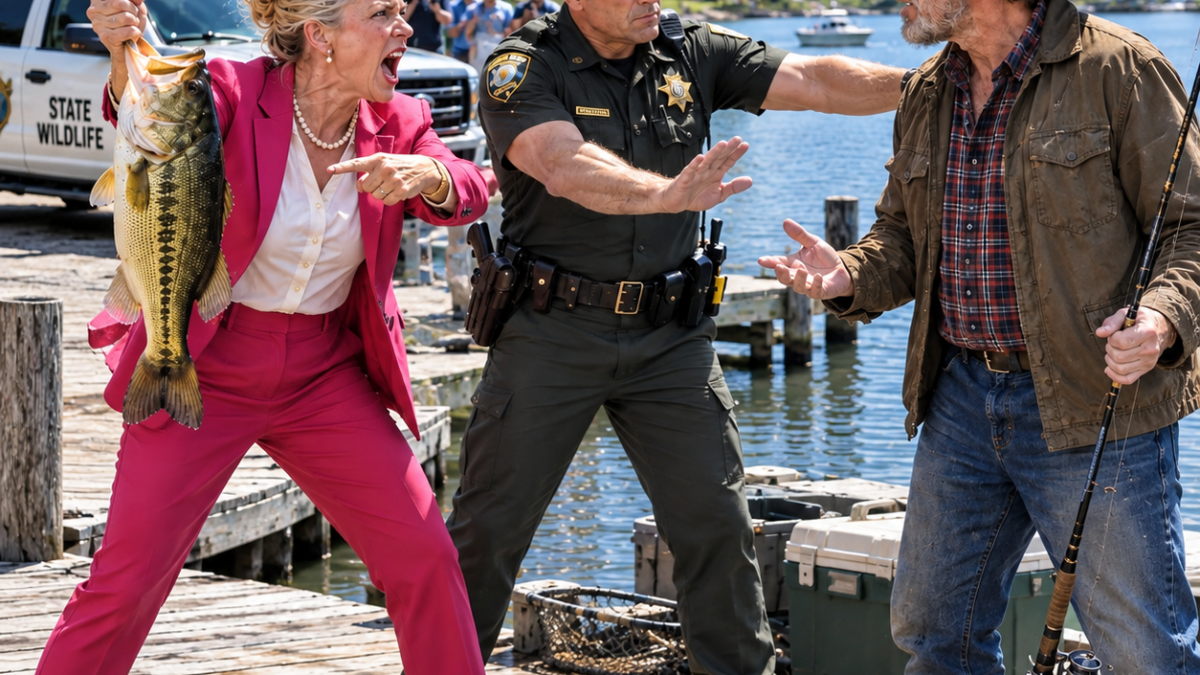
The RCA Brought Wildlife Officers to Arrest Me on My Own Lake—Then Watched Them Shake My Hand Instead
The chairwoman of the neighborhood’s Residential Community Authority stood at the top of my private boat ramp, pointed at me like she was ordering an arrest, and told two armed wildlife officers I had been trespassing on “their” lake and stealing “community fish.”
What Karen didn’t know was that the original 1972 deed proving I owned every inch of shoreline and every drop of water was sealed inside a Ziploc bag in my tackle box—and the officers she had brought to remove me already knew exactly who I was.
By the time one of them reached the dock, shook my hand, and asked why anyone was reporting me for fishing on my own property, Karen’s face had gone white, because the false complaint was about to expose the $49,200 her board had collected from eighty-two families for access to a lake the RCA had never owned.
I didn’t reel in my line.
That seemed to bother Karen more than anything.
She had arrived expecting fear.
Maybe scrambling.
Maybe me dropping the fishing rod and trying to explain myself before the officers even reached the dock.
Instead, I remained exactly where I had been sitting for the previous forty minutes.
On the edge of the old pine dock my grandfather built with his own hands.
Rod across my knees.
Coffee cooling beside my tackle box.
A red-and-white bobber sitting motionless thirty feet out.
The lake was flat.
Overcast morning.
Not much wind.
A turtle slid off a half-submerged log on the far bank.
Then came the slam of Karen’s Lexus door.
“He’s right there!”
Her voice carried across the water.
I turned my head.
Karen Whitmore stood at the top of my concrete boat ramp in a white blouse, beige blazer, black slacks, and shoes that probably cost more than my aluminum fishing boat.
Clipboard tucked under one arm.
Oversized sunglasses.
Phone in the other hand.
Behind her Lexus sat a green-and-white State Wildlife Division truck with its amber lights flashing.
Two officers stepped out.
Karen immediately moved toward them.
She was already pointing at me.
“That is the man I reported.”
The officers looked down the ramp.
Then at her.
Then back at me.
PART2:
Karen continued before either could speak.
“He has been repeatedly trespassing on community property despite written warnings from the Residential Community Authority.”
I almost smiled.
Community property.
My grandfather would have loved that.
“He has also been illegally harvesting fish from a protected private lake.”
Now I did smile.
One of the wildlife officers noticed.
Karen noticed him noticing.
She raised her voice.
“I want him removed.”
The lead officer started walking down the ramp.
Tall.
Broad shoulders.
Gray mustache.
Sunglasses resting above the brim of his campaign hat.
Officer Daniel Ruiz.
I had known Dan for eleven years.
The officer behind him was younger.
Evan Pierce.
I had met Evan twice during spring electrofishing surveys.
Karen knew none of that.
Dan reached the dock.
Stopped.
Looked at my rod.
Then at me.
“Morning, Jack.”
PART3:
Karen went completely silent.
My name is Jack Mercer.
I stood carefully.
“Morning, Dan.”
He held out his hand.
I shook it.
Behind him I heard Karen say:
“What?”
Dan looked toward the water.
“Any luck?”
“One bluegill.”
“Size?”
“Embarrassing.”
He smiled.
Evan reached the dock.
“Mr. Mercer.”
“Officer Pierce.”
Karen hurried down the ramp.
Her heels struck concrete hard enough to echo.
“Excuse me.”
Dan turned.
“Yes, ma’am?”
“You know him?”
Dan looked at me.
Then Karen.
“Yes.”
Her mouth opened slightly.
“Well, that doesn’t change anything.”
“I didn’t say it did.”
She stepped closer.
“He is illegally fishing on RCA-controlled water.”
Dan removed his sunglasses from his cap.
“That’s what you reported.”
“Yes.”
“He’s been formally warned.”
She held up her clipboard.
“Multiple times.”
Dan nodded.
“Okay.”
Karen looked relieved.
Then he asked:
“Can you show me where the RCA property starts?”
Her confidence returned instantly.
“The entire lake is a community amenity.”
“That wasn’t my question.”
She blinked.
Dan repeated:
“Where is the legal property boundary?”
“The subdivision surrounds the lake.”
“Yes, ma’am.”
“So obviously—”
“Surrounding a parcel doesn’t establish ownership.”
Her jaw tightened.
“The developer conveyed the lake for community use.”
“Do you have that conveyance?”
“The management company maintains those records.”
“So you don’t have it with you?”
“Officer, I am the chairwoman of the RCA.”
Dan waited.
Karen stared.
It was one of those moments where somebody hears their own sentence one second too late.
I bent down.
Opened my tackle box.
Karen pointed immediately.
“See?”
Evan’s posture changed slightly.
“Sir, what are you reaching for?”
“Property documents.”
“Go ahead.”
I pulled out a gallon-size Ziploc bag.
Inside:
Certified deed.
Survey plat.
County parcel map.
Recorder certification.
Copies of tax records.
I had started carrying them every time I fished because Karen had made insanity portable.
I handed the bag to Dan.
“This is the certified copy.”
He took it.
Karen scoffed.
“That document is fifty years old.”
“1972.”
“Exactly.”
Dan looked at her.
“Age doesn’t invalidate a deed.”
“The community was developed later.”
“Yes.”
“So newer land-use agreements supersede it.”
“Sometimes recorded instruments change property rights.”
Karen smiled.
“Exactly.”
Dan continued:
“Do you have one?”
Smile disappeared.
I leaned against the dock post.
Dan unfolded the survey.
The lake sat in the center of my twelve-acre parcel.
Three acres of water.
Every shoreline segment inside my boundary.
My grandfather’s property was shaped like an awkward rectangle with the lake almost dead center.
The subdivision came later.
Eighty-two houses around us.
Not on us.
That distinction had become Karen’s personal enemy.
Evan checked the county parcel map.
Dan looked at me.
“You still own parcel 14-22-06-300-017?”
“According to the tax bill I paid last month.”
He nodded.
Karen said:
“This doesn’t reflect RCA jurisdiction.”
Dan looked at her.
“RCA jurisdiction over what?”
“The lake.”
“Based on?”
“Our bylaws.”
I couldn’t help it.
I laughed.
Karen turned.
“This isn’t funny.”
“No.”
I looked at Dan.
“Sorry.”
He folded the deed.
Then addressed Karen.
“Ma’am, an association bylaw doesn’t transfer real property from a nonmember.”
She stiffened.
“Mr. Mercer is subject to our regulations because his parcel sits within the geographic boundaries of the community.”
“No.”
The answer came from me and Dan almost simultaneously.
Dan glanced at me.
I let him continue.
He said:
“Is Mr. Mercer’s parcel legally included in your association?”
“Yes.”
I said:
“No.”
Karen snapped:
“You don’t determine that.”
Dan said:
“The county does.”
Silence.
Evan pulled a tablet from the truck.
He began searching public parcel data.
Karen looked from one officer to the other.
“You’re missing the broader issue.”
Dan’s eyebrow lifted.
“What’s the broader issue?”
“He is stealing fish stocked for the benefit of community residents.”
That was new.
I stared at her.
“Stocked?”
“Yes.”
“When?”
She ignored me.
Dan asked:
“Who stocked the lake?”
“The RCA.”
“Permit?”
Karen paused.
“Excuse me?”
“Stocking permit.”
“We use a lake-management contractor.”
“Which one?”
“That is not relevant.”
“To me it is.”
Her eyes narrowed.
“Why?”
“Because if somebody commercially stocked privately owned waters without the landowner’s permission, I need the details.”
Karen’s face changed.
Small.
But there.
That was the first moment I realized she had not considered what would happen if the officers believed me.
She had imagined law enforcement as a weapon.
Not an investigator.
I said:
“Nobody has stocked this lake through the RCA.”
Karen turned on me.
“You have no idea what you’re talking about.”
Actually, I did.
Probably more than she knew.
For more than a decade, I had participated voluntarily in a state warm-water fisheries monitoring program.
Nothing glamorous.
Every few springs, wildlife biologists sampled private ponds and lakes with owner permission to monitor bluegill, bass, and crappie populations.
My lake was unusually healthy because it was spring-fed, cold, and almost entirely isolated from agricultural runoff.
Dan Ruiz had been part of the first survey crew.
I helped them launch.
Made coffee.
Held nets.
Complained about how much state biologists talked while fishing.
Over the years, they returned several times.
They knew the lake.
They knew the deed.
They knew I owned it because state access permission forms required my signature.
Karen had accidentally called two officers who had literally needed my written permission to put a state boat into the water she claimed belonged to her.
Dan handed the deed to Evan.
Then asked Karen:
“When did your RCA acquire this property?”
She said:
“2005.”
I said:
“The subdivision started construction in 2005.”
She glared at me.
“Same thing.”
“No.”
Dan nodded.
“No, ma’am. Not the same thing.”
“The developer represented the lake as part of the neighborhood.”
Now we were getting somewhere.
I asked:
“Represented where?”
She ignored me.
Dan didn’t.
“Do you have sales material?”
Karen hesitated.
“Our homeowners were all informed that lake access was included.”
“Access from where?”
“The community.”
“There is no public access.”
I pointed toward the shoreline.
Every inch was mine.
No common path.
No recorded easement.
No beach.
No RCA dock.
Only my boat ramp.
Karen said:
“The original developer intended to create access.”
I looked at her.
“Intended?”
She realized the mistake.
Dan caught it too.
He asked:
“Was an easement ever recorded?”
Silence.
Evan looked up from the tablet.
“I’m not seeing one.”
Karen snapped:
“County databases aren’t always current.”
“This one shows instruments through last month.”
“I would need our attorney present.”
Dan nodded.
“That’s probably a good idea.”
That wasn’t the answer she wanted.
“I called you to enforce wildlife law.”
“And we’re determining whether there’s a wildlife violation.”
“There obviously is.”
Dan looked toward my fishing rod.
“What regulation is Mr. Mercer violating?”
“He’s taking fish from a community lake without authorization.”
“If he owns the lake, he doesn’t need RCA authorization.”
“He doesn’t.”
Dan gestured toward the documents.
“Everything I have so far says he does.”
Karen crossed her arms.
“The RCA has maintained that lake for years.”
I said:
“No, you haven’t.”
“We pay for algae control.”
“No, you don’t.”
“We pay for shoreline management.”
“No.”
“We pay for fish habitat.”
“No.”
“Mr. Mercer—”
Dan raised a hand.
“Let her finish.”
Karen squared her shoulders.
“Our financial records document substantial annual expenditures on this amenity.”
That was the sentence that changed everything.
Because I had already seen those records.
Three days earlier.
I asked:
“How substantial?”
She turned.
“That’s RCA business.”
“About twelve thousand dollars a year?”
Her eyes flickered.
Dan noticed.
I continued.
“Interesting number.”
“Jack.”
Dan’s voice was quiet.
Not stopping me.
Warning me to be careful.
I nodded.
Karen said:
“I won’t discuss association finances with a nonmember.”
“That’s convenient.”
She stared.
I bent down again.
Opened a second compartment in my tackle box.
Pulled out another plastic folder.
Copies.
RCA budget summaries.
Four years.
Lake Amenity Assessment.
$150 per household annually.
Eighty-two households.
$12,300 each year.
Four years represented in the records I had obtained.
$49,200 collected.
The amount from my notes.
I handed copies to Dan.
Karen’s face lost color.
“Where did you get those?”
“Homeowners.”
“Those are confidential.”
“Not according to the homeowners who paid the assessments.”
“You had no right—”
Dan said:
“Ma’am.”
She stopped.
He scanned the first page.
Then the next.
“Lake maintenance fund?”
“Yes.”
Karen recovered slightly.
“Exactly.”
Dan asked:
“What maintenance?”
“Vegetation management.”
“Contractor?”
“The RCA maintains several vendors.”
“Names?”
“I don’t have them memorized.”
I did.
Because I’d checked.
Three businesses appeared across various budgets.
ClearWater Aquatics LLC.
Midwest Shoreline Services.
Blue Ridge Habitat Management.
The problem?
I called all three.
ClearWater had treated the subdivision retention pond near the front entrance.
Not my lake.
Midwest Shoreline had done erosion work along a drainage ditch.
Not my lake.
Blue Ridge Habitat Management didn’t appear to exist as a registered business in the state.
That one had interested me.
A lot.
I said:
“Would you like the invoices?”
Karen looked at me like she’d finally understood I had not spent the last month merely fishing.
Dan looked over.
“You have invoices?”
“Some.”
I handed him another packet.
“This is ridiculous.”
Karen’s voice had changed.
Not confident now.
Fast.
Defensive.
“These officers aren’t financial auditors.”
“No.”
Dan said it calmly.
“But knowingly making a false complaint to law enforcement is our concern.”
Karen went still.
“I did not make a false complaint.”
“You told dispatch Mr. Mercer was trespassing.”
“He is.”
“We don’t currently have evidence of that.”
“You haven’t seen our legal documents.”
“Correct.”
“You’re taking his side.”
“No.”
Dan pointed at the deed.
“I’m taking the documents I can verify.”
She looked toward the houses surrounding the lake.
Several neighbors had noticed the wildlife truck.
People stood on decks.
Phones out.
Karen saw them.
Performance mattered to her.
Always.
She raised her chin.
“I want a citation issued.”
Dan’s face hardened.
“That’s not your decision.”
“I called your office.”
“Yes.”
“And reported a crime.”
“Yes.”
“So do your job.”
Dan stared at her for two seconds.
Then he said:
“We are.”
That shut her up.
He turned to me.
“Jack, mind if we inspect your license and catch?”
“Not at all.”
I handed over my fishing license.
Current.
Bluegill in the cooler.
Legal.
One fish.
Dan checked.
Evan checked the tackle.
No prohibited gear.
No issue.
Then Dan looked toward my grandfather’s old dock.
“How’s the west-bank spawning bed?”
“Better this year.”
“Bass?”
“Seeing juveniles.”
“Good.”
Karen stared.
“You’ve been managing this lake with him?”
Dan turned.
“No.”
“You clearly have a relationship.”
“We perform fisheries surveys with private landowners.”
Her mouth opened.
I said:
“They needed my written permission to survey this lake.”
Silence.
Dan gave me a look.
You didn’t need to say that.
I disagreed internally.
I absolutely needed to say that.
Karen whispered:
“What?”
I continued:
“State biologists have sampled this lake several times.”
I pointed toward the water.
“Every time, the access form identifies me as landowner.”
Evan nodded.
“I’ve been out here once.”
Karen looked at him.
“You?”
“Two years ago.”
That was it.
Her entire theory collapsed visibly.
No dramatic explosion.
Just posture.
Shoulders lowered.
Clipboard suddenly heavier.
But Karen didn’t become RCA chairwoman by admitting mistakes.
She pivoted.
“Well, then clearly the county’s records conflict with ours.”
Dan asked:
“What records?”
“Our legal file.”
“Bring them.”
“I don’t have them.”
“Then get them.”
“My attorney will contact you.”
“That’s fine.”
She pointed at me.
“In the meantime, he should be prohibited from using the lake until ownership is resolved.”
Dan almost laughed.
“No.”
Karen’s face reddened.
“Why not?”
“Because ownership isn’t unresolved based on anything you’ve provided.”
“This is unbelievable.”
She turned toward me.
“You planned this.”
I laughed.
“You brought them.”
That line traveled around the neighborhood before noon.
I know because three different people texted it back to me.
Karen had brought wildlife officers to arrest me.
The officers shook my hand.
But that wasn’t her real problem.
Her real problem was the homeowners.
By 10:30, seven of them were standing near the top of my ramp.
One was Thomas Reed.
Retired accountant.
House 41.
He held an RCA dues statement.
He called:
“Karen?”
She turned.
“Not now, Tom.”
He kept coming.
“Is the lake Jack’s?”
She said:
“This is a legal dispute.”
Tom looked at Dan.
“Officer?”
Dan said:
“I can’t provide legal advice, sir.”
“Fair.”
Tom held up his paper.
“Then maybe Karen can explain why I’ve paid six hundred dollars in lake assessments over four years.”
Another neighbor, Linda Parker, said:
“Same.”
Then another.
“We don’t even have access.”
That was the absurdity.
Karen had been charging lake fees despite there being no legal community boat launch.
No swimming area.
No easement.
The RCA newsletter frequently advertised the lake as a “protected scenic amenity.”
Residents assumed they owned some collective right.
Most had never questioned why they couldn’t actually use it.
When families asked, Karen said access remained restricted for “environmental conservation.”
The lake was apparently valuable enough to assess.
But too protected to touch.
Except me.
The actual owner.
Who Karen claimed was trespassing.
Tom looked at me.
“Jack, do we have rights to the lake?”
“Not that I’m aware of.”
Karen snapped:
“Do not make legal representations to RCA residents.”
Tom turned.
“He owns the lake.”
“That remains contested.”
“By who?”
“The board.”
Tom laughed.
“That isn’t how title works.”
Karen’s eyes narrowed.
“Tom.”
“What?”
“You served on the finance committee.”
“For six months.”
“Then you should know better than to speculate in public.”
He held up his statement.
“I know multiplication.”
That got me.
I laughed.
He continued:
“Eighty-two homes.”
“Hundred fifty dollars.”
“Twelve thousand three hundred a year.”
“Where did the money go?”
Karen said:
“To maintenance.”
“Of what?”
“The lake.”
Tom pointed at me.
“He says you never maintained it.”
“Mr. Mercer is not privy to RCA contracts.”
“I live here.”
I said.
“I’d probably notice dredging.”
Someone laughed.
Karen’s composure cracked.
“Enough.”
She turned toward the officers.
“Are you issuing a citation or not?”
Dan answered:
“Not based on what we’ve seen.”
“Then we’re done.”
She started up the ramp.
Dan said:
“Not quite.”
She stopped.
Very slowly.
“What?”
“I need your identification.”
Her face hardened.
“For what?”
“Report.”
“You know who I am.”
“I need identification for the complaint record.”
“I already provided my information by phone.”
“I need to verify it.”
She opened her handbag.
Pulled out her driver’s license.
Handed it over.
Dan copied details.
Then:
“You stated to dispatch that Mr. Mercer had been warned he was trespassing on RCA-owned property?”
“Yes.”
“You stated the RCA owned the lake?”
“Yes.”
“Do you have documentation supporting that?”
“I’ve already answered.”
“I need your answer for the report.”
“Our management company has documentation.”
“You personally haven’t reviewed the deed?”
“I’ve reviewed our records.”
“Which record says RCA owns parcel 14-22-06-300-017?”
Karen paused.
“I don’t have parcel numbers memorized.”
“Okay.”
Dan wrote.
She looked nervous now.
“Am I being accused of something?”
“No.”
“Then why are you writing all this?”
“Because you requested enforcement action against a property owner.”
Dan closed his notebook.
“And because the basis for that request appears questionable.”
She took her license back.
“This is harassment.”
Nobody answered.
She walked to the Lexus.
Before getting in, she turned to the homeowners.
“There will be an emergency RCA meeting Monday.”
Tom called:
“Bring the lake deed.”
Karen slammed the door.
The Lexus left.
The wildlife truck remained.
That mattered.
Dan waited until she disappeared.
Then looked at me.
“Jack.”
“Yeah?”
“What the hell is going on?”
I handed him the binder.
Not tackle-box copies.
The real binder.
Three inches thick.
“This.”
He opened it.
Tabs.
1972 deed.
Surveys.
Tax records.
RCA notices.
Fine letters.
Lien threat.
Budget records.
Vendor searches.
Homeowner statements.
Photographs.
County correspondence.
Dan stared.
“You were going to present this?”
“Board meeting.”
“You have an attorney?”
“Appointment Monday morning.”
“Move it up.”
He looked at Evan.
Then me.
“If somebody is knowingly misrepresenting ownership to collect fees, that’s beyond us.”
“I know.”
“But the false wildlife complaint is now documented.”
“Good.”
“And Jack?”
“Yeah?”
“Don’t start a fight with them.”
“I’ve spent two months trying not to.”
He nodded.
“I know.”
He handed the binder back.
“You’re going to need copies.”
“I have three.”
He smiled.
“Your grandfather teach you that too?”
“My grandfather taught me never to hand over the only copy of anything involving land or money.”
“Smart man.”
“He was deeply suspicious.”
“Also smart.”
The neighbors stayed after the officers left.
Eleven eventually.
Then eighteen.
People began asking questions.
Not accusing me.
Mostly confused.
“Did the developer ever have permission?”
“Could people fish?”
“Why did the brochures call it a community lake?”
“Did my closing documents include lake rights?”
That last question mattered.
I said:
“Bring your closing documents Monday.”
Tom nodded.
“So should everybody.”
By Sunday night, thirty-four households had shared documents.
Not one deed granted ownership in my lake.
Some sales brochures called it “lake-view living.”
Several called it “adjacent to a pristine spring-fed lake.”
One early brochure used:
“Enjoy the natural beauty of Lake Mercer.”
My grandfather had never officially named the lake.
Residents had assumed “Lake Mercer” meant neighborhood amenity.
It actually meant my family’s last name.
The developer had been clever.
Marketing.
Not conveyance.
A photograph showed kayaks.
But tiny print beneath it read:
“Lifestyle imagery representative only. Access subject to private-property restrictions.”
Thomas found that.
Called me at 11:14 Sunday night.
“You awake?”
“I am now.”
“Page eighteen.”
“What?”
“The original sales brochure.”
He emailed it.
I read the line.
Then laughed.
The developer had legally protected itself twenty years earlier.
Karen had turned marketing implication into fake authority.
Monday morning my attorney, Sarah Klein, read the binder.
Sarah specialized in land-use disputes.
Late forties.
No patience for drama.
She read Karen’s lien threat twice.
Then:
“She cannot lien your property through RCA enforcement if your parcel isn’t subject to RCA covenants.”
“That was my understanding.”
“What has she actually filed?”
“Nothing yet.”
“Good.”
She read the assessment records.
“Where did these come from?”
“Homeowners.”
“Board records?”
“Budget summaries.”
“Need full financials.”
“I know.”
She looked at me.
“Do you?”
“I’m beginning to.”
She smiled slightly.
Then:
“What’s Blue Ridge Habitat Management?”
“That’s the interesting one.”
I handed her business-search printouts.
No active registered company under that name.
Sarah became very still.
“How much paid?”
“Thirty-one thousand eight hundred over four years.”
“To an entity you can’t find.”
“Yes.”
“And RCA collected forty-nine thousand two hundred in lake assessments during the same period.”
“Yes.”
“Any invoices?”
“Summary only.”
“Checks?”
“Not yet.”
“Who signs checks?”
“Board chair and treasurer.”
“Who’s treasurer?”
Karen’s sister-in-law.
Sarah looked at me.
“Of course.”
The emergency RCA meeting that night drew seventy-four households.
I had never seen the clubhouse full.
Karen sat at the front.
White blouse.
Clipboard.
Attorney beside her.
Not the RCA’s normal counsel.
Personal attorney.
Interesting.
Thomas whispered:
“She hired a lawyer.”
“So did I.”
Sarah sat beside me.
Karen called the meeting to order.
Immediately said:
“There has been substantial misinformation spread regarding our lake amenity.”
People murmured.
Our lake.
Still.
She continued.
“The board has acted in good faith based on longstanding community understandings.”
Thomas raised his hand.
“What does that mean?”
“You’ll have opportunity during comments.”
He ignored that.
“Do we own the lake?”
Karen’s attorney leaned toward her.
Whispered.
She answered:
“The RCA maintains certain equitable and historical rights.”
Sarah murmured:
“That means no.”
I almost smiled.
Karen continued.
“Ownership is more complicated than a single old deed.”
Sarah raised her hand.
Karen ignored her.
I stood.
Karen’s expression sharpened.
“Mr. Mercer is not an RCA member and does not have speaking privileges.”
Seventy-four households started talking at once.
Tom shouted:
“He’s the one whose lake we’ve been paying for!”
Karen struck the table with a gavel.
She owned a gavel.
Of course.
Sarah stood.
“My name is Sarah Klein.”
The room quieted.
“I represent Mr. Mercer.”
Karen’s attorney looked unhappy.
Sarah continued:
“We provided RCA counsel this afternoon with certified title records confirming Mr. Mercer owns the entire twelve-acre parcel, including the lake.”
Karen said:
“That is under review.”
Sarah looked at her.
“No title dispute has been filed.”
Silence.
“Your board has not produced a deed.”
“Easement.”
“Recorded covenant.”
“Transfer instrument.”
“License.”
“Or any other instrument granting RCA ownership or use rights.”
People turned toward Karen.
Sarah held up the RCA fine letters.
“Yet the association has attempted to fine a nonmember for using his own property.”
Then the lien threat.
“And threatened an invalid lien.”
Then assessment records.
“And apparently collected specific lake-related assessments from residents.”
Karen’s attorney stood.
“We’re not discussing pending legal matters.”
Thomas yelled:
“We’re discussing our money.”
Applause.
Karen raised the gavel.
Nobody cared anymore.
Sarah said:
“Residents should request a full accounting.”
Then sat.
That was all.
She knew when to stop.
Karen didn’t.
She began defending herself.
Badly.
“The lake has always been presented as part of the community identity.”
Not ownership.
“The RCA has protected it.”
From what?
“Property values depend on it.”
Irrelevant.
“Residents understood they were paying to preserve the lake.”
Preserve how?
Then someone asked:
“What is Blue Ridge Habitat Management?”
Karen froze.
Thomas stood.
“Yes.”
He held copies.
“Thirty-one thousand eight hundred dollars paid.”
“Who are they?”
Karen said:
“An environmental vendor.”
Thomas replied:
“What’s the address?”
The treasurer whispered.
Karen said:
“This is turning into a witch hunt.”
An older woman in the front said:
“No.”
“This is an audit.”
That line got applause.
The meeting ended without resolution.
But it didn’t need one.
The homeowners voted sixty-six to eight to commission an independent forensic audit.
Karen couldn’t stop it.
The RCA bylaws actually mattered there.
Members had authority.
Over their organization.
Not my lake.
The audit took seven weeks.
During those weeks, Karen sent me nothing.
No fines.
No letters.
No Lexus visits.
The silence was beautiful.
Then the report arrived.
Blue Ridge Habitat Management existed only as a name used on RCA bookkeeping.
Payments had been deposited into an account controlled by a small consulting company.
That company belonged to Karen’s brother.
Not illegal automatically.
Except no documented lake-management work existed.
No contracts.
No permits.
No field reports.
No treatment logs.
No proof anyone had ever stepped on my property.
Additional expenses labeled “lake preservation” included landscaping near the clubhouse, newsletter printing, and one bizarre invoice for “executive community-engagement services.”
Sarah read that one.
“What’s executive community engagement?”
“Karen talking?”
“Expensive talking.”
The audit found the lake assessment itself had never been properly approved as a dedicated fee under the association’s own bylaws.
Annual budgets included it.
Residents paid it.
Nobody questioned.
Four years.
$49,200.
The money had not all been stolen.
Important distinction.
Some remained in RCA accounts.
Some funded unrelated neighborhood expenses.
Some went through questionable vendor payments.
The real scandal was simpler.
They had charged people under a false premise.
Lake amenity.
No lake rights.
No maintenance authority.
No access.
Nothing.
The board suspended Karen.
Then removed her.
Sixty-nine households voted.
Eleven wanted to wait.
Two abstained.
Her sister-in-law resigned as treasurer the same night.
The county prosecutor later reviewed the financial records.
I didn’t control that process.
Nor did I pretend every bad HOA decision was automatically a crime.
But the wildlife complaint created its own problem.
Dan’s report documented that Karen had alleged criminal trespass and poaching despite having no property documents supporting RCA ownership.
When investigators interviewed her, she claimed she genuinely believed the RCA controlled the lake.
Maybe she did.
People can repeat convenient things until belief becomes indistinguishable from strategy.
The prosecutor did not charge her for making the wildlife call itself.
There wasn’t enough to prove the required intent beyond dispute.
That disappointed some neighbors.
Not me.
I cared more about stopping the behavior than manufacturing a dramatic arrest.
The financial investigation went farther.
Blue Ridge payments.
Conflict disclosures.
Board approvals.
Tax records.
Karen’s brother eventually repaid a substantial portion under civil settlement.
The RCA’s insurer covered parts of the governance dispute.
Karen herself signed a settlement with the association that required repayment of certain expenses and barred her from serving on the board again.
No handcuffs.
No federal agents.
No courtroom confession.
Real consequences are usually paperwork.
My own case settled too.
Every fine against me was voided.
The RCA issued a written statement acknowledging:
My parcel was not part of the association.
The lake was privately owned.
No RCA jurisdiction extended onto my land.
No community access rights existed.
No assessments would ever again be described as lake-access or lake-maintenance fees absent legally obtained rights.
They paid my legal costs.
And replaced the damaged section of my fence where an RCA contractor had once installed a “community property” sign.
Yes.
They had actually drilled through one of my grandfather’s cedar posts.
I kept the old sign.
COMMUNITY LAKE — RESIDENTS ONLY.
Sarah asked why.
“Humor.”
She approved.
Residents received credits against future dues from recovered funds and remaining lake-assessment reserves.
Not every dollar.
Enough to make the point.
The new RCA board president was Thomas Reed.
He tried to refuse.
People voted for him anyway.
His first official action was abolishing the term “community lake” from RCA materials.
His second was visiting my house.
No clipboard.
No lawyer.
Six-pack of beer.
“I need to ask something.”
“That sounds dangerous.”
“The residents want to know whether you’d ever consider allowing controlled access.”
I stared at him.
“Fishing?”
“Maybe.”
“Picnic days.”
“Educational stuff.”
“No permanent easement.”
“Nothing like that.”
I said:
“You understand I can say no.”
“Yes.”
“And it stays no.”
“Yes.”
“And the RCA doesn’t acquire rights by use.”
“Sarah already explained licenses to me for three hours.”
I smiled.
“Then maybe.”
His eyes widened.
“Really?”
“Maybe.”
He laughed.
“That’s more than Karen ever got.”
“Karen never asked.”
That was the entire difference.
Months later, we created a written revocable access agreement.
Six community fishing mornings per year.
Residents registered.
Catch-and-release bass.
Limited bluegill harvest under state rules.
Children had to attend with adults.
No boats without permission.
No swimming.
No permanent improvements.
I could cancel any event.
No easement created.
Sarah drafted seven pages to say:
Jack owns the lake.
Visitors are guests.
Thomas called it the most expensive fishing invitation in state history.
Probably true.
Dan Ruiz came to the first community fishing morning.
Not as enforcement.
He brought his grandson.
Karen’s old house overlooked the west shore.
She had sold by then.
Moved somewhere forty miles away.
I didn’t ask where.
I arrived at the dock before sunrise.
Grandfather’s old coffee thermos.
Same tackle box.
The Ziploc deed still inside.
Habit.
Around seven, families started walking down.
Quietly.
Children carrying fishing rods.
Adults carrying folding chairs.
Thomas had printed simple rules.
No RCA logo.
Good man.
A little girl named Emily caught the first bluegill.
Four inches.
Maybe five.
She screamed like she’d hooked a marlin.
Dan helped remove it.
She held the fish with both hands.
“Can I keep him?”
I crouched.
“Too small.”
Her face fell.
“But if you put him back, he’ll get bigger.”
She considered.
Then released him.
The fish disappeared.
Emily looked at the water.
“When can I catch him again?”
“Probably next week if he’s stupid.”
She laughed.
I sat on the dock.
For the first time since the subdivision was built, families were legally enjoying my grandfather’s lake.
Not because an RCA had claimed it.
Because I invited them.
That’s a difference Karen never understood.
Ownership wasn’t about keeping everyone away.
It was about choice.
Granddad understood that.
He let neighborhood kids fish long before a neighborhood existed.
Farm families.
Friends.
Anybody who asked.
The important word was asked.
One afternoon, Thomas found me replacing a dock board.
He said:
“You know what’s strange?”
“What?”
“People like the lake more now.”
“Than when they thought they owned it?”
“Yes.”
“Why?”
“They treat it differently.”
I nodded.
That’s true of most things.
Entitlement makes people careless.
Permission makes people aware.
The residents stopped calling it the community lake.
Most call it Mercer’s Lake now.
I don’t love that either.
Granddad would’ve hated having his name on anything.
But it’s better than “RCA Amenity No. 4.”
We installed two wood duck boxes.
A bat box.
Native grasses along a small erosion area.
All with my permission.
State biologists surveyed again the following spring.
Bass healthy.
Bluegill strong.
Water excellent.
Dan stood on the dock entering measurements.
I asked:
“So am I still stealing the fish?”
He didn’t look up.
“Absolutely.”
“Should I turn myself in?”
“Eventually.”
“Think you’ll catch me?”
“No.”
We both laughed.
Then he became serious.
“That call could’ve gone differently.”
I knew what he meant.
Karen brought armed officers.
False assumptions happen.
Property disputes get tense.
People panic.
I said:
“I know.”
“You handled it right.”
“Had paperwork.”
“Exactly.”
That became another lesson.
Do not meet paperwork with outrage alone.
Meet it with better paperwork.
Deed.
Survey.
Parcel map.
Tax record.
Certified copies.
Dates.
Documents don’t shout.
That’s why they win so often.
My grandfather understood that.
His original deed is yellowing now.
Typewritten.
Heavy paper.
Embossed county seal.
His signature near the bottom.
I had it professionally preserved after everything.
The original no longer lives in the hall closet.
Fireproof safe.
Certified copy stays in the tackle box.
Sarah says that’s ridiculous.
Maybe.
But I like knowing it’s there.
Sometimes I open the plastic bag while fishing.
Not because I need proof anymore.
Because I see Granddad’s name.
He bought twelve acres in 1972.
No subdivision.
No RCA.
No luxury homes.
Just timber.
Dirt.
Lake.
He built the dock with mismatched boards because he refused to throw away usable lumber.
He taught me to fish there.
Taught me how to tie knots.
Taught me that silence could be company instead of emptiness.
During the summer my parents separated, I spent almost every day with him.
He rarely asked how I felt.
He knew I hated that.
He’d hand me a rod.
We’d sit.
Sometimes three hours.
Maybe ten words.
People would call that poor communication now.
I call it love in his language.
That’s why Karen’s first violation letter made me angrier than she understood.
It wasn’t about $250.
It wasn’t even about fishing.
A stranger had sent me a letter telling me I needed permission to sit in the place my grandfather had built for me before her house existed.
Then she refused to look at proof.
That was what changed the dispute.
People can be wrong.
Wrong is fixable.
Refusing information because it interferes with authority is different.
Karen had the chance.
I brought the deed to her house.
Certified copy.
Survey.
She would not read it.
That decision created everything afterward.
The fines.
Lien threat.
Financial questions.
Wildlife call.
Audit.
Removal.
All because looking at one sheet of paper would’ve required saying:
“I was mistaken.”
Those three words are cheaper than lawyers.
People forget that.
I ran into Karen once after she moved.
Hardware store.
Two years later.
I was buying stainless screws.
She was near paint supplies.
We saw each other.
I expected her to turn away.
She didn’t.
“Jack.”
“Karen.”
Silence.
She looked older.
Not dramatically.
Just less armored.
No clipboard.
No sunglasses indoors.
She said:
“I heard they’re fishing there now.”
“Six mornings a year.”
Her lips tightened.
“So you ended up doing exactly what I wanted.”
I looked at her.
“No.”
She waited.
“You wanted control.”
“I gave permission.”
“Same people on the same lake.”
“Different principle.”
She shook her head.
“You always were difficult.”
I smiled.
“And you still don’t understand.”
She started walking away.
Then stopped.
“Did you enjoy it?”
“What?”
“The officers.”
I knew exactly what she meant.
The handshake.
Her face.
Neighbors watching.
Did I enjoy humiliating her?
I thought.
“A little.”
She almost smiled.
Not warmly.
But honestly.
Then I said:
“But I would’ve preferred you read the deed.”
She looked down.
For one second I thought she might apologize.
She didn’t.
Maybe people change only so far.
She left.
I bought my screws.
Went home.
The RCA changed too.
It still sends annoying letters.
Thomas once mailed residents a reminder about trash cans.
I called him.
“You’ve become her.”
He said something unprintable.
But the difference is the current board knows where it stops.
At my property line.
They can see my dock from the road.
They can see my boat.
They can see me fish.
They cannot regulate it.
If they want access, they ask.
The agreement renews annually only if I choose.
That makes some lawyers very happy.
It makes me happier.
The funny thing is, the neighborhood became better after losing imaginary ownership.
Families stopped arguing over “their” lake.
They started volunteering on approved cleanup days.
Kids learned catch-and-release.
Wildlife officers gave an educational talk one spring.
Dan stood at the top of the same ramp where Karen had demanded my arrest.
Twenty-seven children sat on folding chairs.
He explained fishing regulations.
Conservation.
Private-water rules.
Permission.
At one point he asked:
“Who owns this lake?”
Every kid pointed at me.
I said:
“Unfortunately.”
They laughed.
Dan smiled.
Then:
“And why are you here?”
A girl raised her hand.
“Because Mr. Mercer said we could.”
Exactly.
Simple.
Permission.
I looked around.
Same water.
Same houses.
Same dock.
Nothing physical had changed.
Only the story people told about who had authority.
That morning years earlier, Karen had arrived certain the uniforms behind her would make her version of reality official.
She thought badges worked like her clipboard.
Point them at the person you wanted moved.
Say “community.”
Say “rules.”
Say “authority.”
Then stand back.
But law doesn’t work like an HOA newsletter.
Property records exist.
Boundaries exist.
Evidence exists.
Officers ask questions.
At least good ones do.
Karen’s mistake wasn’t calling Wildlife.
That actually helped me.
Her mistake was assuming the officers would obey her certainty instead of checking her facts.
I sometimes replay the moment Dan reached the dock.
Karen behind him.
Me holding my rod.
“Morning, Jack.”
Handshake.
If you froze the story there, it would be satisfying.
Karen brings officers.
Officers know landowner.
Karen embarrassed.
Viral reversal.
But that wasn’t the important part.
The important part came afterward.
The questions.
Who owns the land?
Where is the easement?
What are residents paying for?
Where did the money go?
What documents support the board’s claim?
Power hates specific questions.
Because vague authority can survive only while nobody asks for the page number.
Karen had a clipboard.
I had a deed.
She had bylaws.
I had a survey.
She had violation notices.
I had county records.
She had confidence.
I had twelve acres.
In the end, confidence didn’t transfer title.
My grandfather did.
The lake still sits where it always has.
Three acres.
Spring-fed.
Cold even in July.
Bass under the west-bank structure.
Bluegill near the dock.
Turtles on the logs.
Some mornings I fish alone.
No families.
No RCA.
No officers.
Just the bobber.
Birds.
Water.
Those are my favorite mornings.
Not because I hate people.
Because some places teach you who you are when nobody is demanding anything from you.
Granddad’s lake has always been that for me.
The first house in the subdivision went up thirty-three years after he signed that deed.
Karen arrived later.
Her board later.
The fines later.
All temporary.
The property remains.
Sometimes I think about what would’ve happened if I’d paid the first $250.
Probably another fine.
Another letter.
Maybe eventually some manufactured agreement everybody treated as established history.
That’s how false authority grows.
Not always through one enormous act.
Through little concessions nobody wants to fight.
Two hundred fifty dollars isn’t worth a lawyer.
Neither is five hundred.
A letter is easier to ignore.
A fake rule feels easier to tolerate.
Then one day somebody tells two state officers you are trespassing on your own dock.
The line did not move.
Only people’s willingness to defend it did.
I’m glad I finally did.
The new RCA board framed a copy of the corrected parcel map in the clubhouse.
Thomas did that as a joke.
My twelve acres are shaded differently.
A little note at the bottom reads:
PRIVATE PROPERTY — NOT RCA JURISDICTION.
I told him:
“Subtle.”
He said:
“Future-proof.”
Fair.
Someone drew a tiny fishing rod beside my parcel in pencil.
Probably a kid.
Thomas offered to erase it.
I said leave it.
I like it.
Every time I see that map, I think about the old manila folder in my grandfather’s handwriting.
The one Karen wouldn’t read.
LAND — DEED / TAX / LAKE
Simple words.
Fifty years later, they beat a board chairwoman, four years of fake assessments, a lien threat, and a wildlife complaint.
Not because the paper was powerful.
Because truth had been sitting there the entire time waiting for somebody to finally open the folder.
These days, when people ask what I learned, they expect me to say:
Never trust an RCA.
Not exactly.
Some boards are useful.
Some people volunteer because neighborhoods actually require boring administration.
Roads.
Snow.
Lighting.
Drainage.
Pools.
Budgets.
The problem begins when stewardship turns into ownership of people.
When someone starts believing a title gives authority beyond the paper that created it.
The cure is equally boring.
Read.
Ask.
Verify.
Where is it written?
Who owns this?
Who approved that?
Where did the money go?
Show me the deed.
Show me the vote.
Show me the invoice.
Show me the boundary.
If the answer is anger instead of evidence, keep asking.
Karen hated those questions.
Dan Ruiz didn’t.
Neither did Sarah.
Neither did Thomas.
That’s the difference between authority worth respecting and authority merely demanding respect.
Last summer, I took my grandson fishing from Granddad’s dock.
He’s seven.
Too impatient.
Talks constantly.
Granddad would’ve pretended to be annoyed and secretly loved him.
The kid caught a bluegill.
Bigger than mine on the wildlife-officer morning.
He held it carefully.
“Is this our fish?”
I almost answered yes.
Then stopped.
“It’s a fish.”
He looked confused.
“In our lake?”
“Yes.”
“So ours?”
I smiled.
“The lake belongs to our family.”
“The fish belong to the lake.”
He thought about that.
“Can I keep him?”
“Too small.”
He frowned.
Then released it.
We watched the fish disappear.
My grandson asked:
“Did that lady really call the police because Grandpa fished here?”
“Wildlife officers.”
“Same thing.”
“Close enough.”
“Did they arrest her?”
“No.”
“Why?”
“Being wrong isn’t automatically a crime.”
He seemed disappointed.
Kids love cleaner endings.
“What happened?”
“She stopped being in charge.”
“Because she lied?”
“Partly.”
“Because the lake wasn’t hers?”
“Yes.”
“Did she know?”
That one took longer.
“I think she knew enough to ask better questions.”
He nodded as if that made sense.
Then:
“Was she mean?”
“Sometimes.”
“Are you still mad?”
I looked across the lake.
Karen gone.
New board.
Families occasionally fishing.
Granddad’s dock repaired three times but still standing.
“No.”
That surprised me too.
My grandson cast again.
Terrible cast.
Line landed four feet away.
I didn’t correct him immediately.
We sat.
Quiet for maybe nine seconds.
Personal record.
Then he said:
“Grandpa?”
“Yeah?”
“Is this where your grandpa taught you?”
I looked at the old boards beneath us.
“Same spot.”
He smiled.
“Cool.”
That was it.
The entire reason I fought.
Not revenge.
Not forty-nine thousand dollars.
Not winning against Karen.
This.
A seven-year-old sitting where I sat.
The property reaching another generation without somebody else’s board rewriting the lines around it.
My grandfather bought the land in 1972.
He built the dock.
He taught me to fish.
He left the lake to me.
Someday I’ll leave it forward.
And whoever gets it will find the deed.
The survey.
The RCA settlement.
The access agreement.
Probably an unnecessarily thick folder because I have learned my lesson.
On top, I’m going to leave one note.
Not legal language.
Just:
THE LAKE IS YOURS.
BE GENEROUS.
BUT MAKE THEM ASK.
Because that was the difference all along.
Karen believed community meant she could take authority.
Granddad believed community meant you opened the gate because you wanted to.
One is control.
The other is generosity.
People confuse them until something valuable is at stake.
That Saturday morning, Karen arrived believing she had brought the state to my property line to remove me.
Instead, she watched Officer Dan Ruiz walk down my grandfather’s ramp, take my hand, and ask about the fishing.
That handshake didn’t make me the owner.
The deed already had.
It simply forced everyone watching to confront something Karen had spent years pretending wasn’t true.
The lake had never belonged to the RCA.
The fish had never belonged to Karen.
The property line had never moved.
Only her story had.
And once the officers started asking for proof, the story was the first thing that sank.

