**The HOA Board Cheered When Their Buyer Outbid Me at $180,000—Then I Bought the Tax Lien on Their $1.2 Million Clubhouse for $6,412 and Sold It Back for $1.8 Million.**
PART2:
Not mansion expensive by Atlanta standards.
But expensive enough.
Comparable renovated houses had been selling between four hundred twenty-five and four hundred seventy-five thousand dollars.
Arthur’s house needed maybe sixty thousand in work.
Roof.
HVAC servicing.
Paint.
Flooring.
Kitchen cosmetics.
Landscaping.
Possibly plumbing.
I estimated seventy-five thousand just to stay conservative.
My absolute auction ceiling was one hundred eighty thousand.
At that number, the deal still worked.
Not spectacularly.
But well.
Three days before the auction, I drove through Crestview Manor to inspect the exterior.
That was my first mistake.
Not financially.
Socially.
Crestview Manor did not look like a place that appreciated unannounced pickup trucks.
The entrance alone probably cost more than my first house.
Stone columns.
Wrought iron gates.
Bronze lettering.
Cameras.
Flowers replaced so frequently I wondered whether plants were being fired for underperformance.
The neighborhood was silent.
Too silent.
No basketball hoops.
No work trailers.
No cars on grass.
Garbage bins invisible.
Every mailbox identical.
The lawns looked vacuumed.
I parked my faded Ford F-150 in front of 402 Willow Creek.
Got out wearing jeans, work boots, and a canvas jacket.
Walked up the driveway with a clipboard.
I had been outside maybe four minutes when I heard an electric motor.
A white golf cart rolled toward me.
Not normal golf cart.
Custom upholstery.
Chrome wheels.
Little Crestview Manor crest on the side.
The woman driving it looked as if she had dressed specifically to appear in a brochure titled Southern Affluence.
Pink tennis skirt.
White sweater.
Designer sunglasses.
Pearls.
Clipboard.
Behind her sat a man in khakis and a navy polo.
Expression permanently irritated.
The golf cart stopped.
The woman smiled.
Not warmly.
“Can I help you?”
Southern politeness can mean many things.
Sometimes hospitality.
Sometimes warning.
This was warning.
I smiled.
“Just looking at the Pendleton property.”
She looked at my truck.
Then boots.
Then clipboard.
“Are you with a contractor?”
“No.”
“County?”
“No.”
Her smile disappeared slightly.
“Then?”
“Nathan Reed.”
I offered my hand.
She ignored it.
“Real estate investor.”
The man’s face changed immediately.
I continued.
“Planning to bid Friday.”
The woman took off her sunglasses.
“That property is inside Crestview Manor.”
“I noticed the gate.”
“We have standards here.”
“I noticed those too.”
“My name is Patty Higgins.”
Of course it was.
“I’m president of the Crestview Manor Homeowners Association.”
She pointed toward the man.
“Richard Gable, our treasurer.”
Richard gave the smallest possible nod.
Patty said, “We do not encourage investor purchases.”
“Okay.”
She seemed surprised.
“Okay?”
“That’s your preference.”
“It is more than preference.”
“Not at a county tax auction.”
Her mouth tightened.
“We are a community of owner-occupants.”
“Are rentals prohibited by covenant?”
That caught her.
“Excuse me?”
“Your declaration. Does it prohibit rentals?”
Richard answered.
“We restrict them.”
“How?”
“Board approval.”
“Interesting.”
I wrote something on my clipboard.
Patty stared.
“What are you writing?”
“Question for title review.”
“You aren’t going to own that house.”
I looked up.
“No?”
“No.”
Richard folded his arms.
“The board has arranged for an appropriate buyer.”
“Then I guess they’ll bid.”
Patty leaned slightly closer.
“You would be wasting your time.”
“Probably not.”
“Mr. Reed, people move here because Crestview Manor protects property values.”
“So do roofs.”
Her eyes narrowed.
“What?”
“Arthur’s roof is failing.”
I pointed.
“Left valley. Probably decking underneath too.”
Neither of them looked.
I continued.
“You protect property values by letting houses rot for five years?”
Richard said, “The legal situation was complicated.”
“I believe it.”
Patty replaced her sunglasses.
“You should find another opportunity.”
“Maybe.”
I walked toward the side of the house.
She said, “Your kind usually does.”
I stopped.
Turned.
“My kind?”
There are moments when people realize they have said the quiet part too clearly.
Patty did not care.
“Investors.”
She smiled again.
“Transient landlords. Flippers. People who don’t belong in established communities.”
I nodded.
“Good luck Friday.”
Richard laughed.
“You’ll need more than luck.”
They drove away.
I should have forgotten them.
Instead I spent the next three days wanting that house more.
That was dangerous.
Marcus reminded me.
We were sitting in my office Thursday night.
He looked at the spreadsheet.
“One-eighty.”
“I know.”
“Say it.”
“One hundred eighty thousand.”
“Absolute.”
“Yes.”
“Even if Miss Country Club starts bidding?”
“Yes.”
“Nathan.”
“What?”
“You have the expression.”
“What expression?”
“The one you had when that bank sold the Lawrence Street duplex to somebody else.”
“I made money on the next deal.”
“After sulking for six weeks.”
“I did not sulk.”
“You reorganized the tool trailer three times.”
“It needed organization.”
Marcus pointed at me.
“One-eighty.”
“One-eighty.”
“Then walk.”
“Then walk.”
Friday morning was humid enough to make the courthouse steps sweat.
Investors gathered early.
Regulars.
Attorneys.
Representatives from larger firms.
People with folders.
People with cashier’s checks.
People pretending not to know each other even though we had all bid against one another for years.
Inside, air-conditioning hit like a refrigerator.
The auction moved quickly.
Small parcels.
Vacant lots.
Duplexes.
Condemned houses.
Then:
“Item seventy-one, 402 Willow Creek Drive.”
The room woke up.
Everybody knew Crestview.
Opening amount.
I raised my paddle.
“Eighty thousand.”
Before the auctioneer finished acknowledging me:
“One hundred.”
Woman’s voice.
Sharp.
Confident.
I turned.
Back row.
Diamonds.
Cream suit.
Perfect silver-blonde hair.
Beside her sat Patty Higgins.
Richard Gable on the other side.
Patty smiled directly at me.
There it was.
Their “proper buyer.”
Later I learned her name was Beatrice Vanderwood.
Patty’s sister-in-law.
Widow of a commercial real estate developer.
Money was not her problem.
Pride apparently wasn’t either.
I raised.
“One ten.”
Beatrice did not hesitate.
“One fifty.”
Several investors looked around.
Forty-thousand-dollar jump.
Aggressive.
Unnecessary.
Message bid.
I glanced at Marcus.
He whispered:
“She wants you gone.”
“I noticed.”
“One-sixty.”
I raised.
Beatrice:
“One-eighty.”
Immediate.
My ceiling.
Exactly.
My hand stayed on the paddle.
Every emotional impulse in my body screamed:
One eighty-five.
Just five more.
Make her pay.
Don’t let Patty win.
Then Marcus said quietly:
“Numbers.”
I looked at the property sheet.
Purchase.
Roof.
Unknown interior.
Carrying costs.
One eighty was already high.
One eighty-five could still work.
One ninety maybe.
Two hundred if I told myself three optimistic lies.
That is how deals go bad.
I lowered the paddle.
Auctioneer looked at me.
“Mr. Reed?”
I shook my head.
“Out.”
Patty’s smile widened.
“Going once.”
Beatrice sat perfectly still.
“Going twice.”
I could feel people watching me.
“Sold.”
Gavel.
“One hundred eighty thousand dollars to bidder forty-two.”
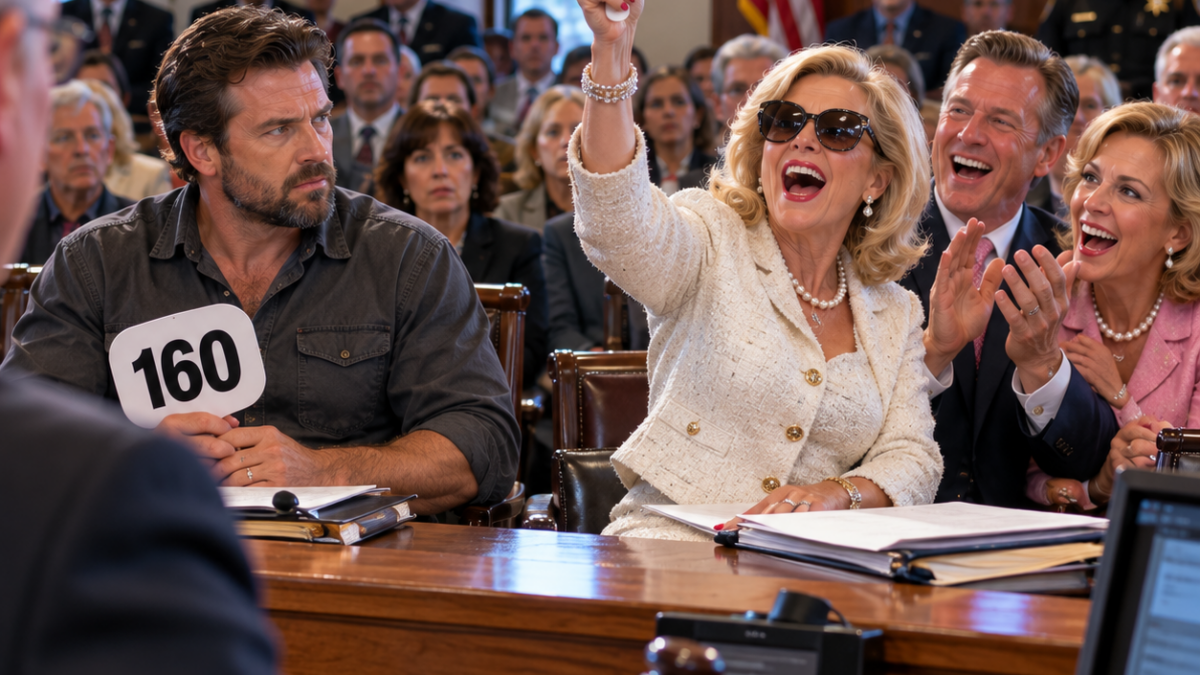
Then Patty Higgins did something I have never seen at a courthouse tax auction before or since.
She cheered.
Actually cheered.
“Woo!”
Richard stood.
High-fived her.
Beatrice smiled.
Patty hugged her.
A few people laughed awkwardly because adults rarely know what to do when wealthy retirees behave like college students at a football game.
Then Patty looked toward me.
“That is how we keep the riffraff out of Crestview!”
The room went silent.
Not completely.
But enough.
Twenty heads turned.
I felt heat rush up my neck.
Marcus muttered something unprintable.
I gathered my folder.
Patty laughed.
Richard said, loudly:
“Better luck in another zip code!”
I walked out.
Did not answer.
Did not turn.
Because I knew if I did, emotion would make me stupid.
Outside, Marcus caught up.
“You okay?”
“Yes.”
“You’re lying.”
“Yes.”
“She paid too much.”
“I know.”
“She’ll have another hundred grand in that house.”
“I know.”
“You did the right thing.”
“I know.”
“Want me to keep saying things you know?”
“No.”
He grinned.
“Good.”
I drove home alone.
The humiliation followed me.
That annoyed me more than losing the house.
I should have been too experienced to care.
Patty Higgins did not matter.
Richard Gable did not matter.
Beatrice Vanderwood had voluntarily paid my maximum.
Fine.
Move on.
Instead, at 11:00 that night, I was in my home office.
Two monitors.
County records.
Coffee.
I told myself I was researching Beatrice.
Maybe she owned other properties.
Maybe there was some strategic reason she wanted Arthur’s house.
Mostly, I was angry.
Anger is useless in investing unless you make it research.
So I researched.
First the house.
Parcel.
Assessment.
Taxes.
Ownership chain.
Nothing interesting.
Then adjoining lots.
Still nothing.
Then I opened the GIS map.
Gwinnett County’s geographic information system displayed aerial imagery beneath parcel boundaries.
Red lines.
Parcel IDs.
Ownership.
Assessment values.
Zoning.
I zoomed out.
Crestview Manor appeared like a miniature kingdom.
Homes around winding streets.
Greenbelts.
Retention ponds.
Main gate.
At the center was the clubhouse.
Ten thousand square feet.
Slate roof.
Ballroom.
Commercial kitchen.
Wine lockers.
Olympic-sized pool.
Tennis courts.
Patios.
Landscaping.
The building probably drove a good portion of the neighborhood’s value.
Out of curiosity, I clicked the parcel.
403C.
A small information box appeared.
Owner:
Harrison Development LLC.
I stared.
Clicked again.
Same.
Not Crestview Manor Homeowners Association.
Harrison Development LLC.
“That’s weird.”
I opened another tab.
Georgia corporate records.
Harrison Development LLC.
Search.
Result.
Administratively dissolved.
I sat back.
Original developer?
Likely.
I pulled old plats.
Subdivision documents.
Developer filings.
Harrison Development had built Crestview Manor in phases.
Then bankruptcy.
Common areas were supposedly transferred to the association.
That happened all the time.
Developer builds.
Developer-controlled HOA initially.
Then turnover.
I searched recorded deeds.
Found the 2004 transfer document.
Twenty-seven pages.
I downloaded it.
Started reading.
Road parcels.
Entrance parcel.
Retention pond.
Landscaped easements.
Greenbelt.
Maintenance tracts.
Then—
Nothing.
No 403C.
I read again.
Slowly.
Parcel descriptions.
Legal descriptions.
Exhibits.
No clubhouse parcel.
I whispered:
“No way.”
Opened the original plat.
403C clearly included clubhouse, pool, courts.
Checked transfer again.
Missing.
Completely missing.
Some lawyer twenty years earlier had apparently transferred every common parcel except the one containing the most valuable amenity in the neighborhood.
Surely fixed later.
I searched.
Nothing.
Corrective deed?
None.
Quitclaim?
None.
Subsequent transfer?
None.
Mortgage?
Nothing.
Ownership remained:
Harrison Development LLC.
Dead company.
I felt my heartbeat change.
Then one question:
Taxes.
I opened delinquent tax records.
Search parcel 403C.
Balance due.
$6,412.
I laughed out loud.
Not because six thousand was funny.
Because a property worth more than a million dollars could not owe only $6,412 after twenty years unless something else was wrong.
Assessment history.
There it was.
The county system still classified the parcel as:
0.9 acres.
Unimproved commercial.
No structure.
The tax maps had never properly updated the improvements.
Maybe bad data migration.
Maybe missed aerial reassessment.
Maybe paperwork buried during developer bankruptcy.
Whatever the reason, the computer thought Crestview Manor’s luxury clubhouse was dirt.
I checked payment history.
No payments.
Bills mailed to a dead company’s old post-office box.
Returned.
Year after year.
Eventually automatic lien process triggered.
I opened the tax sale list from that morning.
Item seventy-one.
Arthur’s house.
Scroll.
Eighty-two.
Eighty-three.
Eighty-four.
Then:
Item eighty-nine.
Parcel 403C.
Harrison Development LLC.
0.9 acres unimproved.
Taxes owed: $6,412.
Status:
No bid.
My hands went cold.
It had been offered after I left.
Nobody bid because every investor saw a worthless dirt parcel owned by a dead developer.
The HOA board had not bid because they did not know.
When tax property went unsold under that process, certain interests could become available over the counter subject to statutory rules and redemption procedures.
I checked the county guidance.
Then checked again.
Then called Marcus.
4:18 a.m.
He answered on the sixth ring.
“What?”
“Wake up.”
“Somebody better be dead.”
“Maybe an LLC.”
Silence.
“What?”
“Get your laptop.”
“No.”
“Marcus.”
“Nathan, it is four in the morning.”
“I think Crestview Manor does not own its clubhouse.”
Silence.
Longer.
Then I heard movement.
“What did you just say?”
I explained.
He stopped me three times.
“Wait.”
“Say that again.”
“The actual clubhouse?”
“Yes.”
“The pool?”
“Yes.”
“Tennis courts?”
“Yes.”
“And it’s delinquent?”
“Yes.”
“How much?”
“Six thousand four hundred twelve.”
Marcus went quiet.
Then:
“Oh.”
“Yeah.”
“Oh.”
“Exactly.”
“Can you buy it?”
“I think I can buy the tax position.”
“Think?”
“I’m not doing anything until I confirm.”
“Good.”
“I’ll be at the commissioner’s office before they open.”
“Talk to a lawyer.”
“After.”
“Before.”
I hated that he was right.
At 5:05 a.m., I emailed our title attorney, Susan Patel.
Subject:
URGENT – TAX DEED QUESTION.
She called at 6:12.
“I hate you.”
“Good morning.”
“Explain.”
I did.
She became awake quickly.
“Nathan, do not assume buying the tax deed means you immediately own the property.”
“I know.”
“Georgia redemption rights are complicated.”
“I know.”
“You need formal notice procedures before you can bar redemption.”
“I know.”
“Anybody with a qualifying interest may redeem during the statutory period.”
“I know.”
She paused.
“Then why are you calling?”
“Because I need you to tell me I’m not hallucinating.”
She pulled records remotely.
Ten minutes.
Twenty.
Then:
“You’re not hallucinating.”
I stood.
“Really?”
“Based on what I’m seeing, 403C was never conveyed to Crestview HOA.”
“And the tax sale?”
“Unsold.”
“OTC?”
“Appears available.”
“Can I buy it?”
“Yes.”
“Today?”
“Yes.”
“Will that make me owner?”
“No.”
“I know.”
“I’m serious.”
“So am I.”
“You become tax deed holder subject to redemption and further statutory procedure.”
“Fine.”
“You may spend money and eventually get redeemed.”
“Fine.”
“You may uncover title problems.”
“Fine.”
“You may get sued by the HOA.”
“Definitely.”
Susan sighed.
“Why do you sound happy?”
“No reason.”
“Nathan.”
“What?”
“This is not revenge.”
“Of course not.”
“This is investment.”
“Obviously.”
“You are a terrible liar.”
At 7:26, I parked outside the tax commissioner’s office.
Cashier’s check:
$6,412.
Doors opened at eight.
I was first inside.
The clerk was a woman named Denise who looked like she had already lost patience with the public despite the building having been open for twenty seconds.
“I’d like to purchase an available tax deed.”
She held out her hand.
“Parcel?”
I gave her 403C.
She typed.
Paused.
Looked at me.
“Unimproved lot?”
“Yes.”
“You inspected it?”
“Extensively.”
She shrugged.
Not her job.
Paperwork.
Identification.
Payment.
Signatures.
Ten minutes later she stamped the document.
I took it.
The paper weighed almost nothing.
Yet emotionally it felt heavier than the deed to my own house.
Outside, Marcus waited.
“You got it?”
I held up the folder.
He stared.
“Six thousand four hundred twelve?”
“Plus filing.”
“And what is physically sitting on it?”
“Clubhouse. Pool. Tennis courts.”
He started laughing.
Not polite laughing.
Bent over.
Hands on knees.
I laughed too.
Then stopped.
“Don’t get excited.”
He looked at me.
“You called me before dawn.”
“Still.”
“They can redeem.”
“Yes.”
“They have a year.”
“Yes.”
“If they find out.”
“Yes.”
“They’ll find out.”
“Probably.”
We looked at each other.
Neither of us believed “probably.”
The Crestview board thought it owned that property.
The county thought it was empty dirt.
The dead developer could not receive tax notices.
Nobody had noticed in twenty years.
Now I held the tax deed.
The clock began.
I did nothing.
That was the hardest part.
Nothing.
No letters.
No golf-cart drive-bys.
No anonymous hint.
No call to Patty.
No smiling selfie outside the clubhouse.
Just procedure.
Susan handled statutory deadlines.
We documented title.
Checked interested parties.
Confirmed the dissolved LLC.
Confirmed deed history.
Confirmed no later conveyance had been missed.
Meanwhile, Beatrice renovated 402 Willow Creek.
And renovated.
And renovated.
She had paid $180,000.
Then discovered water damage.
Roof decking.
Mold.
Old plumbing.
Electrical updates.
Marcus estimated she was over three hundred thousand all-in before finishes.
I felt almost sorry for her.
Almost.
Every few months, business brought me near Crestview.
Sometimes I drove past.
The clubhouse remained beautiful.
Summer galas.
Tennis tournaments.
Wine dinners.
Holiday parties.
Patty walking across the pool deck with her clipboard.
Richard reviewing budgets.
Residents signing guest sheets at a facility their HOA did not legally own.
The irony became almost unbearable.
Marcus called it my “evil retirement account.”
I told him to stop.
He did not.
Month six.
No redemption.
Month eight.
Nothing.
Month ten.
Nothing.
I asked Susan:
“You sure notices aren’t required yet?”
“Do not improvise.”
“I asked a question.”
“You ask questions with schemes behind them.”
“What happens at twelve months?”
“Then we begin formal foreclosure of redemption rights under the applicable process.”
“Not automatic ownership?”
“No.”
“Good.”
“Nathan?”
“What?”
“If you want a cartoon revenge fantasy, I recommend television.”
I liked Susan.
Mostly.
Day 365 arrived.
Nothing.
The next stage began.
Formal notices.
Record owner.
Interested parties.
Publication where required.
Four consecutive weeks.
Tiny legal notices nobody normal reads.
Harrison Development LLC.
Parcel 403C.
Right to redeem.
Expiration.
Crestview Manor had no reason to search because, as far as its board knew, there was nothing to redeem.
Still, Susan insisted every requirement be exact.
“No shortcuts.”
“I know.”
“One defective notice can reopen this.”
“I know.”
“No cute language.”
“I know.”
“No contact with Patty.”
I smiled.
She pointed at me.
“Especially that.”
The foreclosure process went through court.
Quietly.
No fireworks.
No HOA board.
No champagne.
A judge reviewed documentation.
Tax deed.
Notice.
Publication.
Ownership history.
Statutory compliance.
Quiet-title issues.
Then signatures.
Recording.
One afternoon Susan called.
“You should come by.”
“Why?”
“Because I don’t trust mail with something you’ll frame.”
I drove over.
She placed a certified recorded document in front of me.
Owner:
Nathan Reed.
Parcel:
403C.
I stared.
“The whole thing?”
“The legal parcel.”
“Which contains…”
“The clubhouse.”
“Pool.”
“Yes.”
“Tennis courts.”
“Yes.”
I leaned back.
Susan watched.
“Don’t do anything stupid.”
“I haven’t said anything.”
“Your face said several things.”
The county’s current estimated value of the improved property was approximately $1.2 million after reassessment work began.
I had acquired the tax position for $6,412 plus legal expenses.
But money stopped being the most interesting part.
Because I remembered a courthouse.
Patty cheering.
Richard laughing.
Riffraff.
I wanted them to learn.
That desire was petty.
I admit it.
Legally careful.
Financially rational.
Emotionally petty.
I checked Crestview’s public social calendar.
Midsummer Chandelier Gala.
Second Saturday in July.
Annual centerpiece.
Catered dinner.
Politicians.
Donors.
Charity auction.
Dress code.
Apparently chandeliers were involved.
The Friday before, I arrived at six in the morning.
Not alone.
Susan would have killed me.
I brought Dave Larkin.
Licensed commercial locksmith.
Also two off-duty sheriff’s deputies retained through an approved security service.
And copies of every recorded document.
Dave looked at the clubhouse.
“Nice place.”
“Apparently.”
“You own it?”
“Apparently.”
He laughed.
“Real estate people are weird.”
“You charge two hundred dollars an hour to drill locks.”
“Fair.”
The building was empty.
We changed exterior locks.
Loading doors.
Main entrance.
Service entrance.
Pool access.
Tennis gates.
Not destructive beyond necessary lock replacement.
Everything documented.
Then signs.
PRIVATE PROPERTY.
NO TRESPASSING.
UNAUTHORIZED ENTRY PROHIBITED.
I put one on the front doors.
One at the pool.
One near courts.
Then dragged a patio chair to the entrance.
Sat.
Coffee.
Waited.
At 8:31, the golf cart appeared.
White.
Of course.
Patty drove too fast around the curve.
Behind her came three catering vans.
Florists.
Event-rental truck.
It was magnificent.
She saw my F-150.
Stopped so hard the golf cart bounced.
Then saw me.
Her face changed.
“You.”
“Morning, Patty.”
She marched toward me.
Linen blazer.
Phone.
Clipboard.
Same sunglasses.
Some people remain committed to branding.
“What are you doing here?”
“Coffee.”
“You know exactly what I mean.”
“Beautiful morning.”
“You are not permitted inside Crestview Manor.”
“Interesting.”
“Move your truck.”
“No.”
Her eyes shifted to the sign.
Then chains.
Then changed lock hardware.
Her mouth opened.
“What have you done?”
“Changed my locks.”
She laughed.
Not because it was funny.
Because her brain rejected the sentence.
“Your locks?”
“Yes.”
“This is the Crestview Manor Clubhouse.”
“Yes.”
“You vandalized HOA property.”
“No.”
She turned toward the caterers.
“François, take the ice sculptures around the service entrance.”
I almost admired the denial.
“That’s locked too.”
She spun.
“What?”
“The service entrance.”
Patty stormed to the main doors.
Pulled.
Nothing.
Again.
Harder.
“Open this door.”
“No.”
She pounded.
“Nathan Reed, open this door right now.”
“No.”
“You are trespassing.”
I pointed toward the sign.
“That is actually what we need to discuss.”
Another golf cart arrived.
Richard.
He got out already angry.
“What is going on?”
Patty pointed at me.
“This lunatic changed the locks.”
Richard stared.
“Nathan?”
“Morning.”
“You cannot do this.”
“I can.”
“No, you cannot.”
“Then call police.”
Patty pulled out her phone.
“I already am.”
“Great.”
She dialed.
Then noticed the two uniformed off-duty deputies standing near the parking area.
Her expression brightened.
“Officers!”
Deputy Stan Wallace walked over.
Big man.
Mustache.
Had already reviewed my documents with Susan.
Patty pointed.
“This man broke into our clubhouse and changed the locks.”
Stan said calmly:
“Ma’am, nobody broke into the building.”
“He replaced our locks.”
“Yes.”
“Arrest him.”
“I cannot.”
“Why not?”
“Because Mr. Reed is the recorded owner of the parcel.”
Silence.
I will remember that silence forever.
Patty looked at Stan.
Then me.
Then Stan.
“That’s ridiculous.”
Richard stepped forward.
“What did you say?”
I opened my portfolio.
Pulled certified copy.
Handed it to him.
“Thought you’d appreciate this.”
He snatched it.
Read.
First page.
Second.
Legal description.
Parcel number.
Recorded owner.
Judge’s order.
His skin changed color.
Not metaphorically.
Actual color drained from his face.
Patty grabbed his arm.
“Richard?”
He did not answer.
“Richard?”
His mouth moved.
Nothing.
Then:
“Patty.”
“What?”
He looked at her.
“It’s his.”
“What is?”
“The parcel.”
She laughed.
“No.”
Richard held the document with both hands now.
“403C.”
Patty stared.
“No.”
“The clubhouse parcel.”
“No.”
“The deed says Nathan Reed.”
She turned toward me.
“This is fraud.”
“No.”
“You forged this.”
Deputy Stan said, “Ma’am.”
“You conspired with the county.”
“Ma’am.”
“This is our clubhouse.”
Stan’s voice became firmer.
“Mrs. Higgins, I have reviewed the recorded documentation.”
She looked at him.
“If you attempt to force entry after being notified by the owner that you do not have permission, you could expose yourself to trespass charges.”
Patty clutched her pearls.
Literally.
I had always assumed people only did that in old movies.
She actually grabbed the necklace.
“You are threatening to arrest me at my own clubhouse?”
Stan corrected:
“At Mr. Reed’s property.”
Behind us, the caterers watched.
One had started recording.
Patty turned on Richard.
“How did this happen?”
“I don’t know.”
“You are treasurer.”
“I handle finances, not title.”
“You told me our documents were clean.”
“They were.”
“They obviously weren’t!”
The full public explosion began.
Another board member arrived.
Then residents.
Rumors spread at suburban speed.
By ten in the morning, twenty people stood outside.
By noon, fifty.
Phones everywhere.
Patty screamed.
Richard blamed the original developer.
Someone blamed the county.
Somebody asked whether the pool memberships were invalid.
Someone else wanted to know if I was shutting everything forever.
I answered almost nobody.
The gala was canceled at 2:00 p.m.
Mass email.
“Unexpected legal issue affecting clubhouse access.”
That may be my favorite phrase ever written by an HOA.
Unexpected legal issue.
Saturday passed.
No gala.
By Monday, Crestview held an emergency board meeting at a local country club because it no longer had access to its own clubhouse.
Tuesday morning my phone rang.
Gregory Pierce.
Corporate real-estate attorney.
I had seen his name in large deals around Atlanta.
Professional.
Calm.
No nonsense.
“Mr. Reed.”
“Gregory.”
“I represent the Crestview Manor Homeowners Association.”
“I assumed.”
“I’ve spent the last forty-eight hours reviewing a title history that frankly should have been caught twenty years ago.”
“Agreed.”
“You acquired the tax deed.”
“Yes.”
“You completed foreclosure of redemption.”
“Yes.”
“You obtained final title.”
“Yes.”
He sighed.
“I hate efficient conversations.”
“I don’t.”
“The board wants a resolution.”
“So do I.”
“Are you prepared to sell?”
“Yes.”
That surprised him.
“How much?”
I had already run numbers.
Not revenge numbers.
Leverage numbers.
Clubhouse value.
Neighborhood dependency.
Replacement cost.
Amenity impact.
Financing urgency.
Legal uncertainty if they tried to fight.
Time.
I said:
“One point eight million.”
Silence.
“That exceeds current assessment.”
“Yes.”
“Substantially.”
“Yes.”
“We could litigate.”
“You can.”
“We could assert equitable theories based on decades of HOA possession and maintenance.”
“Then do it.”
Silence again.
I continued.
“You called because you don’t want to.”
Gregory exhaled.
“No.”
“Because even if you believe you have arguments, title litigation could freeze the clubhouse for years.”
“Yes.”
“And forty-five luxury homes without amenities have a problem.”
“Yes.”
“So one point eight.”
“Cash?”
“Thirty-day close.”
“Board will never accept.”
“Then enjoy country-club meeting rooms.”
“Nathan.”
“One more condition.”
He became cautious.
“What?”
“Patty Higgins and Richard Gable resign from the HOA board.”
Silence.
“And sign agreements not to seek another elected board position within Crestview.”
“Nathan.”
“That’s the deal.”
“That is personal.”
“Partially.”
“You’re conditioning real estate on governance.”
“I am conditioning my voluntary sale on terms I care about. Your clients can decline and litigate.”
Gregory sighed.
“I’ll take it to them.”
The neighborhood imploded.
I did not need inside sources.
Marcus had three.
Crestview residents received notice of the problem.
Then potential purchase price.
Then proposed special assessment.
Forty-five homes.
$1.8 million divided across them meant $40,000 each before financing adjustments and legal costs.
Forty thousand dollars.
Mandatory.
People who had spent years worrying about mailbox colors suddenly had a real issue.
Emergency meetings.
Emails.
Lawyers.
Threats.
Residents demanded:
How did the HOA not own the clubhouse?
Why had nobody verified title?
Why had taxes not been monitored?
Why did the treasurer never notice?
How could board leadership spend time targeting minor violations while a million-dollar asset sat legally outside the association?
And then someone dug up footage from the auction.
Patty cheering.
“That is how we keep the riffraff out.”
The video spread through Crestview’s private groups.
Then local Facebook.
Then everywhere.
Beatrice had problems too.
She was now an owner in Crestview.
Which meant she received the assessment.
She had paid $180,000 for Arthur’s deteriorated house.
Spent heavily renovating.
And now faced another $40,000 because the HOA leadership she helped celebrate had failed to secure its own clubhouse title.
Marcus called me.
“Beatrice is selling.”
“No.”
“Yep.”
“Already?”
“Listing prep.”
I sat back.
“That’s unfortunate.”
“You don’t sound devastated.”
“I’m processing.”
“Poorly.”
Residents organized against Patty and Richard.
Some threatened breach-of-fiduciary-duty claims.
Others wanted an audit.
The broader board panicked.
Gregory called again.
“They’ll meet your price.”
“Good.”
“But governance terms are causing problems.”
“Then no deal.”
“Nathan.”
“What?”
“You understand they can resign before closing and run again later.”
“Which is why the restriction exists.”
“Richard may accept.”
“And Patty?”
Long pause.
“Less cooperative.”
“Then she can purchase the clubhouse personally for two million.”
Gregory laughed despite himself.
“You’ve been waiting to say that.”
“A little.”
Three days later, both signed.
Patty’s signature looked angry.
I did not know handwriting could look angry.
Richard’s looked shaky.
The special assessment passed.
Residents were furious.
But the alternative was worse.
Without pool, tennis courts, ballroom, events, and social facilities, Crestview’s entire luxury branding suffered.
The HOA financed part of the purchase, but each homeowner still faced a painful assessment.
Beatrice included.
Closing day arrived.
Susan sat beside me.
Gregory across.
HOA representatives.
New interim board officers.
Not Patty.
Not Richard.
Wire confirmed.
$1,800,000.
I stared at the number.
Susan whispered:
“Don’t grin.”
“I am not.”
“You are.”
“Financial professionalism.”
“You look like the Grinch.”
We signed.
Clubhouse returned to Crestview Manor HOA.
Legally this time.
I made a substantial profit.
Enough that Marcus and I paid debt, expanded the business, and changed what retirement looked like.
Did I retire at forty?
No.
I learned quickly that people who genuinely enjoy real estate do not know how to retire.
I simply stopped needing every deal.
That is better.
Patty resigned.
Richard resigned.
Neither returned to the board.
Richard stayed in Crestview another few years.
Quietly.
Patty lasted six months.
Then listed.
Florida.
I heard Boca Raton.
No idea if true.
I hope she found an HOA with standards.
Beatrice eventually sold Arthur’s house.
She did not lose everything.
Rich people rarely do in stories like this.
But she lost enough money to remember me.
And that was sufficient.
The funniest part came afterward.
The new Crestview board invited me to a meeting.
I almost declined.
Then curiosity won.
They were meeting inside the clubhouse.
My former clubhouse.
I drove through the gate in the same old Ford.
Security waved me through.
No golf cart interception.
Inside, around twenty residents sat in the ballroom.
New president was a man named Dr. Michael Avery.
Cardiologist.
Reasonable.
He shook my hand.
“Mr. Reed.”
“Nathan.”
“Nathan.”
He gestured toward the room.
“We owe you an apology.”
“I don’t think everybody here owes me anything.”
A woman in the back said:
“Patty does.”
People laughed.
Michael smiled.
“We’ve reviewed the old board’s conduct.”
“Sounds painful.”
“It was.”
They had changed policies.
Independent annual financial review.
Periodic title verification for common property.
Clear records.
Conflict disclosures.
Limits on certain enforcement powers.
New rental rules written properly instead of invented by Patty depending on who she disliked.
One homeowner stood.
Older man.
“I voted for Patty for eight years.”
I nodded.
“She was effective.”
He laughed bitterly.
“That was what we told ourselves.”
Another woman said:
“She kept everything perfect.”
Michael replied:
“She also almost lost the clubhouse.”
The room became quiet.
That was the point.
Petty authority can look like competence.
Rules enforced.
Mulch measured.
Cars towed.
Trash cans hidden.
Grass inspected.
Everything orderly.
Meanwhile, the one thing worth a million dollars?
Nobody had checked the deed.
That irony stuck with me.
People in power often focus on what is visible because visible control feels like leadership.
A mailbox color is easy.
Title chains are boring.
You can photograph a garbage can.
You cannot impress neighbors by saying:
“I spent six hours reviewing common-area conveyance documents from 2004.”
But boring things decide expensive outcomes.
Ask any investor.
Or attorney.
Or accountant.
Or eventually Patty Higgins.
Months later, I drove past Crestview.
Clubhouse open again.
Kids in pool.
Tennis courts busy.
No red signs.
No chains.
I felt no ownership.
That surprised me.
For one year, the property had been this giant secret in my life.
Then legally mine.
Then sold.
Gone.
That is business.
Marcus asked:
“Would you do it again?”
“Buy a million-dollar clubhouse for six grand?”
“Yes.”
“No, Marcus, terrible strategy.”
He laughed.
“I mean wait the full year without telling them.”
“Yes.”
“Really?”
“Yes.”
“Even knowing they could redeem and kill the profit?”
“Yes.”
“Why?”
“Because the numbers worked.”
He stared at me.
“You’re lying.”
“A little.”
The truth was revenge had mattered.
I am not proud enough to pretend otherwise.
Patty humiliated me publicly.
That stayed in my head.
But here is the important distinction:
Revenge made me look.
Math made me act.
Law made me wait.
If I had let revenge control the transaction, I would have ruined it.
Imagine if I called Patty that first morning.
“Guess what I found?”
They would have redeemed immediately.
Paid my $6,412 plus statutory premium.
I would have made some money.
Patty would keep her clubhouse.
Story over.
Instead, I followed the process.
Because good revenge, if we are using that word, is mostly discipline.
Silence.
Paperwork.
Deadlines.
No premature celebration.
Ironically, exactly what Patty had failed to do at the courthouse.
She celebrated before understanding what she had won.
I stayed quiet before understanding what I might own.
That difference was worth nearly two million dollars.
A year after the sale, a young investor named Tyler asked me about the Crestview deal at a real estate meetup.
Everybody knew the story by then.
He said:
“What was the secret?”
“Secret?”
“How did you know to check the clubhouse?”
“I didn’t.”
“You just happened to?”
“Yes.”
“That isn’t useful.”
“Most breakthroughs aren’t predictable.”
He looked disappointed.
So I gave him the useful version.
“When a deal hurts your ego, don’t chase the deal.”
He nodded.
“Chase the information.”
He wrote that down.
I continued.
“Know your maximum bid.”
“Write it before the auction.”
“Do not change it because somebody laughs.”
“Why?”
“Because the person laughing may be paying more than the property is worth.”
Tyler smiled.
“Like Beatrice.”
“Exactly.”
“And if somebody humiliates you?”
“Go home.”
“That’s it?”
“Go home and research.”
He laughed.
I did not.
“Seriously.”
“Anger wants action.”
“Research is action.”
That became one of my rules.
The deal you lost may still teach you where the next one is.
402 Willow Creek was not my deal.
403C was.
I would never have found it if Patty had not irritated me enough to keep digging through Crestview records after midnight.
That does not mean I owe her gratitude.
Let’s not become ridiculous.
But arrogance creates blind spots.
Sometimes the best thing you can do is let arrogant people keep talking.
They reveal priorities.
Patty cared desperately about who bought one decaying house.
She spent time.
Energy.
Family money.
Political capital.
She never checked whether the association owned the building where she held board meetings.
That was the real failure.
Not one missing deed from 2004.
Clerical errors happen.
The failure was twenty years of assumed certainty.
Nobody verified.
Nobody audited.
Nobody asked.
“We’ve always used it” became “we own it.”
Those sentences are not legally interchangeable.
Years later, Susan called me about another case.
“Thought of you.”
“Should I be concerned?”
“HOA common parcel issue.”
“Clubhouse?”
“No.”
“Pool?”
“No.”
“Stormwater pond.”
“Less exciting.”
“Potentially more expensive.”
I laughed.
“Please tell me you’re checking title.”
“That is why I called.”
The Crestview story had become a cautionary tale among local real estate lawyers.
Not because the exact facts happened constantly.
They didn’t.
But because assumptions do.
Developers dissolve.
Old deeds omit parcels.
Common areas remain titled incorrectly.
Tax notices go to dead addresses.
Associations operate for decades on paperwork nobody rechecks.
Usually somebody eventually fixes it quietly.
Crestview got unlucky.
Or I got lucky.
Depending on where you were sitting.
I have been asked whether what I did was ethical.
Interesting question.
Legally, I followed the process.
But legality and ethics are not synonyms.
Would I do the exact same thing if ordinary homeowners were unknowingly losing something essential because of a harmless clerical error?
Maybe not.
That answer surprises people.
Crestview residents ultimately paid for leadership’s mistake.
Forty thousand dollars per household was painful.
Some residents had nothing to do with Patty’s arrogance.
That part never felt as good as the viral version makes it sound.
I made money from a legal vulnerability.
I am comfortable admitting that.
Real estate investing is full of uncomfortable incentives.
But I also gave the HOA a clean resolution.
They regained the amenity.
No years-long title fight.
No developer lawsuit.
No permanent dismantling.
No luxury developer buying the clubhouse and charging memberships.
Could I have made more by selling to an outsider?
Possibly.
I did not.
I sold it back.
At a premium.
Yes.
A very large premium.
And I required removal of the two people whose leadership had helped create the crisis.
Was that personal?
Absolutely.
Was it also beneficial to the association?
The homeowners seemed to think so.
Both things can be true.
The part I regret least is not humiliating Patty.
It is keeping control of myself when she humiliated me.
That mattered far more.
Imagine the alternate version.
Courthouse.
Beatrice bids $180,000.
Patty cheers.
I get angry.
Raise to $190,000.
Beatrice goes $200,000.
I go $210,000.
Maybe she finally stops.
Now I own a damaged house at a stupid price.
I renovate.
Unexpected mold.
Foundation drainage.
HVAC.
Maybe I lose money.
Meanwhile item 89 passes unsold because I’m congratulating myself for defeating Patty.
The clubhouse lien sits unnoticed.
Somebody else buys it.
Or county catches error.
I never know.
That is how expensive ego can be.
Walking away created the win.
I teach that now.
Not the revenge part.
The paddle.
Know when to lower the paddle.
One afternoon, years later, I was at another auction.
Young guy beside me.
First-time bidder.
House reached his number.
He raised again.
I whispered:
“That your ceiling?”
He looked at me.
“Yeah.”
“Then why are you bidding?”
He hesitated.
Other bidder raised.
Young guy’s hand started moving.
I said:
“Lower it.”
He did.
Lost the house.
Looked sick.
Afterward he said:
“I could’ve gone five more.”
“Everybody can go five more.”
“What if that would’ve won?”
“Then you’ll never know.”
He stared.
“That sucks.”
“Yes.”
Two months later, he texted me.
Foundation had major structural damage.
Winning bidder lost money.
Message:
YOU SAVED ME.
I responded:
NO. YOUR ORIGINAL MATH DID.
That’s what Crestview taught me.
Patty thought she beat me because I stopped bidding.
In reality, stopping was the first correct decision in the chain that beat her.
There is a kind of power in leaving.
Not every insult deserves response.
Not every challenge deserves escalation.
Sometimes the person celebrating your retreat has no idea what you noticed on the way out.
I still own the Ford F-150.
Older now.
Dented.
Marcus keeps telling me to replace it.
I could buy almost anything.
I don’t.
Partly because I like it.
Partly because I enjoy parking it beside expensive cars.
A few years ago, Crestview invited me to a charity fundraiser.
Yes.
At the clubhouse.
I almost declined.
Then Michael Avery called.
“We’re raising money for county housing assistance.”
That interested me.
So I went.
Same truck.
Same driveway.
Same building.
Different board.
A young volunteer at the entrance asked my name.
“Nathan Reed.”
She checked the list.
Then looked up.
“Wait.”
I smiled.
“Yes.”
“You’re that Nathan Reed?”
“Depends what you’ve heard.”
She started laughing.
“My dad lives here.”
“Oh.”
“He says you stole the clubhouse.”
“I bought a tax deed.”
“He says the old board deserved it.”
“Your father sounds wise.”
Inside, nobody treated me like riffraff.
Patty was long gone.
Richard did not attend.
The ballroom looked exactly as it had in photographs.
Chandeliers.
Wine storage.
French doors toward the pool.
I stood near the terrace.
Marcus came beside me.
“You okay?”
“Why wouldn’t I be?”
“You’ve never been inside.”
He was right.
I had owned the clubhouse.
Changed its locks.
Sold it.
Never actually attended an event inside.
Funny.
I looked around.
“It’s nice.”
“Worth one point eight?”
“To them.”
Marcus laughed.
Then pointed toward a framed display near the boardroom.
A plaque listed past HOA presidents.
Patty Higgins.
Years of service.
End date.
No explanation.
I smiled.
“Tempted?”
“To do what?”
“Add a footnote.”
“No.”
I meant it.
Because humiliation only tastes satisfying for a while.
Then it becomes boring.
Patty’s name on a plaque did not threaten me.
Her opinions certainly didn’t.
I had moved on.
That may be the final revenge nobody talks about.
Not money.
Not winning.
Not the other person losing.
Indifference.
They stop taking up space in your head.
Patty once made my face burn in a courthouse.
Years later, I had to consciously remember the exact sound of her voice.
Good.
The Crestview deal changed how I viewed HOAs too.
I still dislike petty enforcement.
Everybody does.
But not every association is evil.
Some are boring organizations trying to maintain roofs, roads, pools, insurance, landscaping, reserves, and common property while fifty homeowners insist their own problem is the only emergency.
The new Crestview board actually functioned well.
They hired competent management.
Audited.
Verified ownership.
Maintained reserves.
Reduced pointless fines.
Property values recovered.
People stayed.
That was a better ending than total destruction.
The internet prefers villains burned to ash.
Real life benefits more when systems improve.
Still—
I kept the original courthouse auction sheet.
Item 71.
402 Willow Creek.
Sold $180,000.
And the tax list.
Item 89.
403C.
No bid.
Those pages hang side by side in my office.
Under them I wrote one sentence:
THE DEAL EVERYONE WANTED WASN’T THE DEAL THAT MATTERED.
Clients ask about it.
I tell the story.
Usually shorter.
No champagne.
No dramatic golf-cart reenactment.
Just:
I lost one auction.
Then checked records.
Found another opportunity.
Waited.
Followed procedure.
Made money.
They always look disappointed.
“So luck?”
“Partly.”
“Revenge?”
“Partly.”
“Skill?”
“Partly.”
“Then what’s the lesson?”
I point at the first sheet.
“Know when to stop.”
Then second.
“Know where to look next.”
Simple.
Everything else is entertainment.
But sometimes, late at night, I let myself remember the entertaining version.
Patty on the courthouse floor.
Arms raised.
Cheering.
“That is exactly how we keep the riffraff out of Crestview!”
Richard laughing.
Beatrice triumphant.
My paddle lowering.
Then one year later.
Same Patty.
Same pearls.
Same certainty.
Standing outside the clubhouse.
Pulling on a locked mahogany door.
My sign above her hands.
PRIVATE PROPERTY.
Her demanding an arrest.
Deputy Stan telling her:
“Ma’am, Mr. Reed is the legal owner.”
Richard reading the deed.
Color leaving his face.
Patty whispering:
“No.”
That part?
Yes.
I enjoyed it.
I’m human.
I had waited a year.
The important thing is that I waited legally.
Quietly.
Patiently.
Because money rarely rewards the person who celebrates first.
Neither does property law.
I did not beat Crestview Manor because I was richer.
I wasn’t.
I did not beat them because I had more influence.
I didn’t.
I beat Patty because while she was deciding who looked like they belonged in her neighborhood, I was reading the documents that decided who legally owned it.
She watched my boots.
I watched parcel numbers.
She watched my truck.
I watched title history.
She cared about appearances.
I cared about records.
And records do not care how expensive your sunglasses are.
That remains one of my favorite things about them.
Somewhere in Florida, maybe Patty tells this story differently.
Maybe I am the villain.
The greedy investor.
The opportunist.
The man who exploited a clerical error and held a neighborhood hostage.
Fair enough.
Everybody is entitled to a version.
But the county record has its own version.
Harrison Development LLC owned parcel 403C.
Taxes went unpaid.
The lien went to sale.
Nobody bid.
I acquired it.
Redemption procedures ran.
Notices published.
Rights foreclosed.
Title recorded.
Then Crestview bought the property from me.
No applause changes those facts.
That’s the thing Patty never understood.
She thought power meant controlling the room.
Getting the last word.
Making people embarrassed.
Deciding who belonged.
But real power is often less theatrical.
A deadline.
A signature.
A parcel number.
A line buried in a legal notice.
A person willing to read one more page after everybody else gets bored.
The board spent years measuring mulch.
They missed the deed.
They fined people over trash cans.
They missed the taxes.
They worried about one investor buying one house.
They almost lost the building at the center of their entire neighborhood.
And they celebrated before they knew any of it.
So whenever somebody tells me they were humiliated in a negotiation, outbid at an auction, dismissed by somebody richer, or treated like they didn’t belong, I tell them the same thing.
Do not chase the laugh.
Do not spend money to erase embarrassment.
Do not let somebody else’s arrogance write your next number.
Lower the paddle.
Walk away.
Then go home.
Open the records.
Because sometimes the person cheering over the little thing they took from you is standing on something far more valuable they never bothered to check.
Patty Higgins outbid me for a house.
Well—
technically, her sister-in-law did.
They laughed.
High-fived.
Called me riffraff.
And spent $180,000 celebrating their victory.
By sunrise, I was holding a cashier’s check for $6,412.
One year later, I held the deed to their clubhouse.
And thirty days after that, Crestview Manor wired me $1.8 million to get it back.
The last time anyone asked me who really won that auction, I gave them the only answer that still makes sense.
Nobody.
The house was never the prize.

