Nobody Believed She Had Flown in War—Then Her Old Call Sign Came Over the Radio
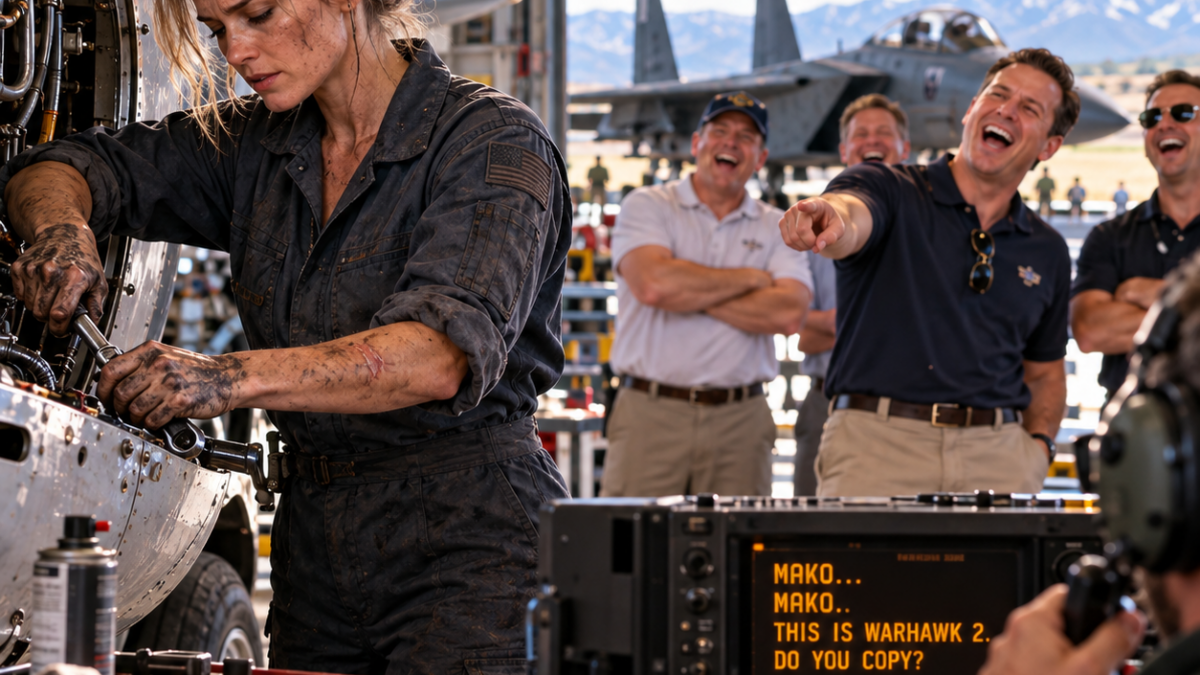
Nobody Believed She Had Flown in War—Then Her Old Call Sign Came Over the Radio.
For three years, everyone at the Oakridge Aero Club thought I was just the grease-covered mechanic who had never had the nerve to become a real pilot.
Then, during the worst blizzard Colorado had seen that winter, a damaged military fighter disappeared from radar over the Rockies—and the terrified pilot on the emergency frequency heard my voice and suddenly whispered the name I had buried with my uniform: “Mako?”
The laughter in the pilots’ lounge stopped instantly, because the woman they had spent years mocking had once flown seventy-two combat missions, earned a Distinguished Flying Cross, and survived the night everyone in my squadron thought I was going to die.
The first time Todd Harrison told me women weren’t built for combat aviation, I had both hands buried inside the right engine nacelle of his Cessna 310.
He was standing behind me with a coffee in one hand and a pair of aviator sunglasses hooked into the collar of a polo shirt that probably cost more than the tool set I was using.
I heard his shoes before I saw him.
Oakridge Aero Club was full of men who wore shoes inappropriate for hangars.
Leather loafers.
White sneakers.
Italian driving shoes.
Things that looked very expensive until someone stepped into hydraulic fluid.
“Sam.”
That was what everyone called me.
Not Vanessa.
Not Malcolm.
Sam.
The nickname had begun because one member had misheard my last name when I first started.
I never corrected him.
There was something useful about being called the wrong name.
It made disappearing easier.
“Sam, did you check the manifold pressure?”
I rolled out from beneath the aircraft on my mechanic’s creeper.
Todd stood above me.
Fifty-two.
Real-estate developer.
Private pilot.
Seven hundred flight hours, most of them logged during perfect-weather weekend trips in an aircraft with leather seats and enough avionics to make bad decision-making look sophisticated.
“I did.”
“And?”
“You had a vacuum leak on the right side.”
He frowned.
“I thought it was fuel delivery.”
“It wasn’t.”
“You sure?”
I wiped my hands on a rag.
“Yes.”
Todd folded his arms.
PART2:
“I felt a slight hesitation coming down through ten thousand yesterday.”
“I know.”
“It was subtle.”
“I know.”
“Something somebody without flight experience could easily miss.”
I looked at him.
Todd smiled.
“No offense.”
“None taken.”
That was the lie I told most often at Oakridge.
None taken.
Todd leaned against the aircraft.
“I was talking with Arthur about this the other day. You really should’ve gotten your license when you were younger.”
I closed the access panel.
“Didn’t work out.”
“Probably for the best.”
I stopped turning the screwdriver.
Todd continued.
PART3:
“Flying isn’t like wrenching.”
“I know.”
“Different pressure.”
“I know.”
“When something goes wrong at altitude, you need instinct.”
My hand tightened around the screwdriver.
“A certain aggression.”
He smiled.
“Killer instinct.”
I kept my eyes on the panel.
Todd lowered his voice as if sharing serious wisdom.
“Men and women react differently under pressure. Biology. It’s not personal.”
My left sleeve had ridden slightly above my wrist.
The edge of the burn scar showed.
Todd didn’t notice.
Nobody ever did unless I let them.
“You don’t see many women flying the heavy iron for a reason,” he said.
There were many things I could have told him.
I could have told him about pulling nine Gs until capillaries burst around my eyes.
I could have told him what it felt like to release weapons while antiaircraft fire climbed toward you from black desert.
I could have told him about aerial refueling at night when turbulence made the tanker boom dance inches from your canopy.
I could have told him about flying with hydraulic pressure falling toward zero while the master warning panel screamed.
I could have told him about hearing a friend stop answering over the intercom.
Instead I slid the screwdriver into my toolbox.
“Your aircraft is ready, Mr. Harrison.”
Todd smiled.
“See? That’s what I like about you, Sam. No ego.”
Then he walked toward the lounge.
I remained beside his aircraft until he disappeared.
Only then did I look at my hand.
It was shaking.
Barely.
But enough.
I closed my fingers into a fist.
Waited.
The tremor stopped.
Three years.
Three years since I had worn a flight suit.
Three years since anyone had called me Captain.
Three years since I had heard the name Mako spoken anywhere except my nightmares.
At Oakridge, I was simply Vanessa Malcolm, thirty-four years old, A&P mechanic, dispatcher, quiet woman in an old flannel shirt who changed tires, tracked weather, filed flight plans, and somehow never joined the pilots when they told stories in the lounge.
They thought I was shy.
Some thought I was bitter.
Todd thought I’d failed basic military training.
That rumor had started because somebody once asked whether my scars came from “that little Army thing” I’d supposedly done.
I didn’t correct him.
The truth lived in a fireproof safe in my apartment.
Silver wings.
A Purple Heart.
A Distinguished Flying Cross.
One photograph of twenty-two pilots standing beneath the nose of an F-15E.
And an embroidered patch.
Black background.
A shark silhouette.
White letters.
MAKO.
I kept the safe locked.
Not because anyone would steal the medals.
Because sometimes I was afraid I might open it.
That afternoon, the weather changed fast.
Colorado mountain weather does that.
At three, the sky was gray.
At four, wind started.
By five, weather radar showed a wall of red and purple climbing over the Rockies.
I sat in my little dispatch office watching the storm build.
The room had no windows.
I liked that.
No horizon.
No runway.
No mountains.
Only screens.
Paper charts.
Radios.
Weather reports.
Predictable systems.
I had built my civilian life around predictable systems.
A piston engine had reasons for failing.
Compression.
Fuel.
Spark.
Air.
Find the problem.
Fix it.
Test it.
Done.
People were harder.
Memory was worst.
The lounge wall was thin enough that I could hear Todd and the others.
Arthur Pendleton was telling a story.
Again.
Arthur owned a chain of private surgical centers and flew a Cirrus.
He loved retelling the time he’d encountered wind shear near Aspen.
Every version became more dangerous.
That evening, apparently, he had nearly died.
“I’m telling you,” Arthur said, “most people would’ve panicked.”
Someone laughed.
“I didn’t.”
Glass clinked.
“You never panic. You execute.”
I stared at the radar.
You don’t panic.
You execute.
The office disappeared.
For less than a second.
That was all it took.
Colorado vanished.
Syria returned.
Night.
Black desert.
Cockpit vibration.
Radar warning receiver screaming.
Fletch’s voice in my headset.
“Mako, we are painted.”
I squeezed my eyes shut.
Not here.
“Missile launch! Three o’clock low!”
My right hand grabbed the edge of the desk.
“Breaking right.”
The memory came in pieces.
Never whole.
That made it worse.
Flash.
Afterburner.
Nine Gs.
My vision tunneling.
Flares streaking behind us.
Fletch breathing.
Then light.
Orange.
White.
Impact.
The surface-to-air missile didn’t strike us directly.
The proximity blast did enough.
Shrapnel tore through the right side.
Hydraulic warning.
Engine fire.
Cockpit filling with alarms.
Fletch stopped answering.
I heard myself say his name.
“Fletch?”
No response.
“Fletch!”
Smoke behind me.
Aircraft rolling.
Altitude unwinding.
Enemy territory beneath us.
The ejection handle between my knees.
Pull it.
That was procedure.
Maybe.
Depending on damage.
Depending on altitude.
Depending on everything.
But we were above hostile territory.
And Fletch was unconscious.
If I ejected, I did not know whether his seat would sequence properly.
I did not know if he would survive landing.
I did know what might happen if we came down alive on the wrong side of the border.
So I stayed with the aircraft.
Killed the burning engine.
Emergency hydraulics.
Trim.
Rudder.
Stick pressure.
The jet wanted to roll.
I fought it.
One hundred miles.
Then another.
My shoulders burned.
My left arm hurt where fragments had cut through the cockpit.
I didn’t feel the pain fully until later.
I only remember the blood making the throttle slick.
Friendly airspace finally appeared.
Then runway.
Damaged brakes.
No right engine.
Fletch still unconscious.
I landed fast.
Too fast.
The aircraft left the runway.
Gear collapsed.
Fire trucks met us.
Someone dragged me out.
Fletch survived.
Everyone called it heroic.
That’s what people do when they don’t know what else to call survival.
Three days later, I woke screaming.
Then again.
Then again.
Months followed.
Evaluation.
Grounding.
Therapy.
More evaluation.
Medication.
I stopped sleeping.
The aircraft incident became easier to discuss than what came afterward.
Everyone knew how to honor a damaged pilot.
Nobody knew what to say when that pilot could no longer enter a simulator without smelling burning fuel that wasn’t there.
The medical board didn’t “take my wings,” not literally.
But that’s how it felt.
I was declared unfit to return to operational flying.
There were other positions.
Administrative roles.
Training roles.
I tried.
For six months.
Every flight line sound made my heart race.
Every warning tone turned my stomach.
Eventually I left.
Not dramatically.
No farewell formation.
No speech.
I signed papers.
Packed uniforms.
Put medals in a safe.
Drove west.
Oakridge gave me work.
Engines gave me quiet.
Then Arthur said:
“You don’t panic. You execute.”
My hand shook.
I opened my eyes.
Colorado again.
Desk.
Coffee.
Radio.
Weather radar.
Breathe.
Five things I could see.
Four things I could touch.
Three things I could hear.
Therapist’s method.
I hated it.
It worked.
Then static cracked over the VHF receiver.
I glanced at the radio.
Nothing unusual.
A controller.
Fragmented transmission.
I turned the volume higher.
The storm had intensified.
By six, every civilian aircraft in the valley should have been on the ground.
Snow hammered the hangar.
Wind screamed through antenna cables.
Visibility outside had dropped almost completely.
Most club members couldn’t leave.
Roads were closing.
So they gathered in the lounge with bourbon and catered sandwiches.
I stayed in dispatch.
Then the radio came alive again.
“Denver Center…”
Static.
“…declaring emergency…”
I leaned closer.
“…electrical failure…”
My entire body changed.
There is no better way to describe it.
Fear did not disappear.
But something older moved in front of it.
Training.
“Aircraft calling Denver, say again.”
Static.
Then:
“Ghost Two-Four. Complete avionics failure after lightning strike. Standby instruments only. Fuel critical.”
Ghost.
Military.
My coffee stopped halfway to my mouth.
The controller replied.
“Ghost Two-Four, squawk ident.”
“No transponder.”
“Say position.”
“Unknown. Last reliable navigation approximately twenty miles west of…”
Static swallowed the location.
I stood.
My chair rolled backward.
Ghost Two-Four.
Single fighter.
No avionics.
Mountain weather.
Fuel critical.
I looked at the chart.
Controller transmission:
“Ghost Two-Four, maintain heading. Climb flight level two-niner-zero.”
“No.”
I whispered it.
The controller obviously couldn’t hear me.
“No.”
If the fighter was where I believed it was, climbing while damaged into the weather band near the high terrain was exactly what I would not have wanted.
Then Ghost transmitted:
“Unable climb. Engine instability. Severe icing.”
I felt cold despite the heated room.
I grabbed the topographic chart.
Marked likely position.
Estimated speed.
Fuel.
Wind.
There were too many unknowns.
I should have stayed out.
I know that.
Civilian mechanic.
Not ATC.
Not active military.
No authority.
But then the pilot said:
“I’m losing altitude.”
And his voice changed.
I knew that sound.
Spatial disorientation beginning.
Fear becoming faster than procedure.
I heard Fletch again.
Silence after missile impact.
No.
Not another one.
I ran.
The dispatch door slammed open.
Everyone in the lounge turned.
Todd held a bourbon glass.
Arthur was mid-sentence.
I crossed the room toward the main communications console.
Todd stepped in front of me.
“Sam?”
“Move.”
“What?”
“Move.”
He laughed reflexively.
“What’s going on?”
“Military emergency.”
“So?”
“I need that radio.”
His expression changed.
“You need?”
“Yes.”
He put his glass down.
“You are not transmitting on the club base station.”
“Todd.”
“That equipment is restricted.”
I looked at him.
“Move.”
Something in my voice finally reached him.
Not enough.
He stepped closer.
“Sam, you cannot just—”
I shoved him.
Not hard enough to hurt him.
Hard enough to move him.
Todd stumbled into a leather chair.
The whole room went silent.
Arthur said:
“Jesus.”
I sat at the console.
Set guard frequency.
Headset.
Transmit.
“Ghost Two-Four, Oakridge base on guard.”
Static.
“Ghost Two-Four, Oakridge base. Do you read?”
A voice.
Weak.
“Oakridge… go.”
I looked at the map.
“Abort climb.”
Someone behind me said:
“What?”
I continued.
“Ghost Two-Four, do not continue climb on current heading. Severe terrain and downdraft risk. Roll left heading two-zero-five.”
The pilot hesitated.
“Who is this?”
“Doesn’t matter.”
“Denver has control.”
“Denver doesn’t know your aircraft condition.”
Todd shouted behind me:
“You’re interfering with ATC!”
I ignored him.
“Ghost Two-Four, say aircraft type.”
Pause.
“F-35.”
My pulse jumped.
“Engine condition?”
“Right-side systems degraded. Primary display black. Compressor instability. Standby attitude, altimeter, compass.”
“Fuel?”
“Emergency state.”
I knew enough.
Not everything.
Enough.
“Turn two-zero-five. Descend twelve thousand.”
The pilot’s voice sharpened.
“Negative. Terrain.”
“I have terrain.”
That was generous.
I had a topographic map, local knowledge, and years of tactical flying.
No real-time radar.
No magic.
But he needed confidence.
I needed precision.
Todd came forward.
“Sam, give me the headset.”
I turned.
“If you touch this console, I will remove you.”
Todd stared.
“Who do you think you are?”
The answer came automatically.
“Right now?”
I pointed toward the radio.
“The only person in this building who knows what he’s flying.”
Arthur stopped Todd with one hand.
“Let her talk.”
That surprised me.
I went back to the radio.
“Ghost Two-Four, execute turn now.”
Static.
Engine noise came through his microphone.
Then:
“Rolling left.”
“Good.”
“Descending.”
“Hold three-degree nose-down attitude. Do not chase your inner ear. Trust standby attitude.”
His breathing was loud.
“I can’t see anything.”
“You don’t need to.”
“I have no terrain.”
“I do.”
Again, not completely true.
But I knew those valleys.
I had flown Colorado training routes years earlier.
I had spent three civilian years looking at those mountains.
I knew the broad corridors.
Enough to build a path.
Maybe.
The word maybe is terrifying when someone else’s life depends on you.
The pilot transmitted:
“Oakridge, engine spool fluctuating. I may have to eject.”
“No.”
My answer came too fast.
He said:
“Say again?”
“No ejection yet.”
“I’m below safe altitude.”
“Your survival odds under canopy in this blizzard are terrible.”
“I can’t hold the aircraft.”
“Yes, you can.”
“My controls are mush.”
“Then stop strangling them.”
Silence.
I heard my own old instructor’s voice coming out of my mouth.
“Squeeze the stick. Don’t fight every movement. Let the aircraft tell you what it still has.”
The pilot breathed.
In.
Out.
Then:
“Copy.”
I looked at the chart.
“Heading two-zero-five. Keep descending.”
Behind me nobody spoke.
Even Todd.
I said:
“Ghost Two-Four, fox-three your fear. Put it in the dirt. You are in the slot. I have the watch. Just fly the jet.”
The radio went silent.
My stomach dropped.
I had not meant to say it.
Fox-three your fear.
I have the watch.
Squadron language.
Not official brevity.
Something we said in Syria.
Something one pilot in particular had heard from me dozens of times.
Then the voice came back.
Different.
Not panic.
Recognition.
“Say again.”
I froze.
The pilot breathed.
“Who is this?”
My hand tightened around the microphone.
“Mako?”
Everything stopped.
Not the storm.
Not the wind.
Not the radio hiss.
But inside me.
Three years.
Nobody had called me that.
I heard Todd behind me whisper:
“What did he call her?”
The pilot said again:
“Mako, is that you?”
I closed my eyes.
Thomas Caldwell.
Brick.
He had been a lieutenant in my squadron.
Young.
Loud.
Talented.
Wingman on one of my final missions.
He had watched my damaged Strike Eagle disappear toward friendly airspace and believed for six hours that Fletch and I were dead.
Brick.
I pressed transmit.
“Affirmative, Ghost Two-Four.”
My voice changed.
I felt it.
The hesitation disappeared.
“This is Mako.”
Silence.
Then something between a laugh and a sob.
“Holy hell.”
“Save it for the ground, Brick.”
“Mako…”
“I have your six.”
His breathing slowed.
“Just like Al-Hasakah, you are not going into the dirt today.”
Behind me someone gasped.
Todd knew enough military geography to understand what he’d just heard.
Brick said:
“Copy, Mako.”
Now he sounded like a fighter pilot again.
“Right engine indications dead. Left unstable. Avionics bus gone. Steam gauges only.”
“Good.”
“Good?”
“You still have instruments.”
“Barely.”
“Barely is plenty.”
That was a lie.
Sometimes leadership is choosing which truth matters first.
I walked him down.
Heading.
Altitude.
Airspeed.
Engine.
One variable at a time.
The mountains outside remained invisible.
Snow struck the building horizontally.
I looked at weather.
Eagle County was buried under the worst cell.
Not workable.
Other fields too far.
Oakridge had one runway.
Five thousand two hundred feet.
Normally not enough margin for what Brick was bringing.
But wind was almost perfectly aligned down Runway 27.
Strong headwind.
Dangerous.
Also useful.
“Brick.”
“Go.”
“I’m bringing you to Oakridge.”
Pause.
“Your civilian strip?”
“Yes.”
“Length?”
“Five-two.”
He actually laughed once.
“Mako, I need more runway than that.”
“Not tonight.”
“What?”
“You have sixty knots of wind nearly down the centerline.”
“Gusting.”
“I know.”
“I have degraded brakes.”
“I know.”
“No anti-skid.”
“I know.”
“I’m heavy.”
“I know.”
“Mako—”
“Do you trust me?”
Silence.
The club members stared.
Brick answered:
“With my life.”
Something hurt in my chest.
“Then stop arguing.”
“Copy.”
“Manual gear extension.”
“Now?”
“Now.”
Mechanical noise.
Then:
“Gear down. Three green.”
“Feel the drag?”
“Definitely.”
“Good. Keep descent stable.”
I looked behind me.
“Arthur.”
He startled.
“What?”
“Runway lights.”
“Already on.”
“Emergency crews?”
He reached for his phone.
“I’ll call.”
“Todd.”
Todd looked shocked I had addressed him.
“What?”
“Get everybody away from windows facing the runway.”
“Why?”
“Because if he loses control, thirty-five thousand pounds of military aircraft may come through that side of the property.”
Nobody needed telling twice.
People moved.
I remained at the console.
Brick descended.
Nine thousand.
Eight-five.
Eight.
Airframe icing worsened.
Controls sluggish.
Airspeed.
Sink rate.
Headwind.
Everything mattered.
“Two miles,” I told him.
“I have nothing visual.”
“You don’t need it.”
“I would strongly prefer it.”
“Noted.”
“Mako.”
“Yeah?”
“If this goes wrong—”
“No.”
“What?”
“Don’t finish that sentence.”
He laughed weakly.
“Yes, ma’am.”
“I hated when you called me that.”
“You still do.”
“Yes.”
The engine roar arrived before the aircraft.
Low.
Distant.
Growing.
Everyone in the lounge heard it.
Todd looked toward the wall.
His face changed.
For the first time, this was not a story.
A fighter jet was actually coming.
“Brick, hold heading.”
“Compass wandering.”
“Correct gently.”
“Crosswind component changing.”
“I know.”
“One mile.”
“I can’t see the strobes.”
“Keep coming.”
The roar grew.
My scars started burning.
Not physically.
Memory.
Fuel fire.
Night.
Fletch.
No.
I pressed the microphone harder.
“Stay with me.”
Brick said:
“Stick buffet.”
“Hold.”
“I’m near stall.”
“Hold.”
“Mako—”
“Hold it.”
The room lights flickered.
Then died.
Backup emergency lights came on.
Green.
Dim.
Todd whispered:
“My God.”
I could hear Brick’s jet through the walls now.
The entire hangar vibrated.
Coffee cups rattled.
A bottle fell in the lounge.
“Thirty seconds.”
Brick shouted:
“I still don’t have runway.”
“You will.”
“I can’t.”
“You can.”
“I may have to wave off.”
“No.”
“My engine won’t survive another pattern.”
“Exactly. So this is the landing.”
The roar became physical.
I could feel it in my ribs.
“Two hundred feet.”
Brick’s breathing changed again.
Panic.
“Mako, I don’t have the deck.”
“I have you.”
“I can’t see.”
“I am your eyes.”
The phrase hit me after I said it.
Fletch.
Smoke-filled rear cockpit.
Me trying to bring him home.
I almost lost focus.
Almost.
“Hundred feet.”
Engine screaming.
“Seventy.”
The floor shook.
“Fifty.”
My hand gripped the console.
“Forty.”
Brick said:
“I see lights!”
“Do not chase them.”
“Thirty.”
“Hold.”
“Twenty.”
“Flare.”
The sound outside was violent.
Tires hit.
Hard.
Rubber.
Metal.
Engine howl.
Then Brick:
“Down!”
I almost smiled.
Then:
“Can’t stop!”
The smile vanished.
“Brakes ineffective!”
“Stay rudder.”
“Sliding!”
“Release brakes.”
“What?”
“Get off them. Let rolling resistance and wind work.”
“I’m running out of runway!”
“Keep nose straight.”
There was nothing else I could do.
Nothing.
For ten seconds all we heard was chaos.
Then silence.
No engine.
No voice.
Static.
My heart stopped.
“Ghost Two-Four.”
Nothing.
Todd whispered:
“He crashed.”
I turned.
“Shut up.”
Back to radio.
“Brick.”
Nothing.
“Thomas.”
That name hurt.
“Talk to me.”
Static.
Then breathing.
Heavy.
Alive.
“Mako.”
I nearly collapsed.
“Status.”
He laughed weakly.
“Stopped.”
I closed my eyes.
“How much runway?”
“None.”
I opened them.
“What?”
“Fence is maybe ten feet ahead.”
“Aircraft?”
“Still one airplane.”
“Fire?”
“Negative.”
“Injury?”
“Only my dignity.”
My legs weakened.
I leaned against the console.
“Copy.”
Brick removed his oxygen mask.
I heard the click over the radio.
“Mako?”
“Yeah?”
“You brought me home.”
The room disappeared emotionally, not physically.
Three years earlier, everyone had said the same thing about Fletch.
You brought him home.
I hated it then.
Because nobody understood that part of me had never returned with him.
That night in Colorado, something shifted.
Not healed.
People use that word too easily.
Trauma isn’t a cut.
But shifted.
I pressed transmit.
“Welcome to Oakridge.”
Then I took off the headset.
Set it down.
Turned.
Twelve men stared at me.
Todd looked like he had forgotten how to stand normally.
Arthur’s bourbon glass lay broken near his shoe.
No one spoke.
I wiped both hands on my jeans.
Old habit.
Todd finally said:
“Sam…”
I waited.
“You…”
Nothing.
“Were you…”
I looked at him.
“A pilot?”
He nodded.
“Yes.”
“What kind?”
“F-15E.”
Todd looked toward the radio.
“How many hours?”
I almost laughed.
Of course that was the civilian pilot question.
Hours.
Always hours.
“Enough.”
Arthur said:
“He called you Mako.”
“Yes.”
“You knew that pilot.”
“Yes.”
“How?”
“We served together.”
Todd stared.
“You flew combat?”
“Yes.”
His face changed again.
“How many missions?”
I didn’t answer immediately.
“Seventy-two.”
Someone in the back whispered:
“Jesus.”
Todd’s eyes dropped toward the scar visible on my left arm.
For the first time he actually saw it.
“That…”
“Syria.”
He swallowed.
“I didn’t know.”
“No.”
“I thought—”
“I know what you thought.”
His face reddened.
“I didn’t mean…”
“Yes, you did.”
That stopped him.
I wasn’t angry.
That was the strange part.
For years I had imagined what I would say if people at Oakridge ever found out.
Something devastating.
Something that made them feel stupid.
But standing there after Brick’s landing, Todd seemed small.
Not physically.
His certainty.
His little rules about courage.
Men.
Women.
Pilots.
Mechanics.
The categories looked childish.
I stepped closer.
“The next time you want to explain who has the nerve for combat aviation…”
Todd looked at me.
“Make sure you know who you’re talking to.”
No yelling.
Didn’t need it.
I walked toward the exterior door.
Arthur called:
“Vanessa.”
He used my real name.
I stopped.
“The Air Force will come.”
“I know.”
“You need to stay.”
“Why?”
“Because you saved one of their pilots.”
I stared at the door.
“I’ve already done that once.”
Arthur didn’t understand.
Nobody there did.
Not yet.
I pushed the door open.
Wind nearly tore it from my hand.
Snow exploded into the lounge.
Todd shouted:
“Where are you going?”
“To the runway.”
“You can’t go out there.”
I looked back.
“You’ve spent three years telling me about pilot nerve, Todd.”
Then I stepped into the blizzard.
Snow hit sideways.
Within seconds my hair was wet.
My flannel shirt wasn’t enough.
I didn’t care.
Emergency vehicles were beginning to move toward the far end of Runway 27.
Through snow, I saw the fighter.
Gray.
Low.
Alien-looking against the white field.
Stopped near the perimeter.
Its landing lights still glowed weakly.
I walked.
Every step became harder as snow deepened.
Then the canopy opened.
A figure moved.
Pilot stood.
Helmet off.
Thomas Caldwell.
Older.
Face thinner.
But Brick.
He saw me.
For a moment neither of us moved.
Then he raised his right hand.
Salute.
Perfect.
Automatic.
My throat closed.
I hadn’t returned a salute in three years.
My right hand lifted.
No tremor.
None.
I returned it.
Brick climbed down after rescue crews reached the aircraft.
He walked toward me.
Then stopped.
Military discipline disappeared.
He hugged me.
Hard.
I froze.
Then hugged him back.
“You’re supposed to be dead,” he said.
I almost laughed.
“So are you.”
He pulled away.
“Mako.”
“Brick.”
“What the hell are you doing here?”
“Fixing airplanes.”
He stared.
“At a civilian flying club?”
“Yes.”
“Why?”
I looked toward the hangar.
“That is a long conversation.”
He saw my scar.
Then my expression.
Something changed in his face.
He knew.
Maybe not everything.
Enough.
“I heard you got out.”
“Yes.”
“We heard medical.”
“Yes.”
“Fletch tried to find you.”
My chest tightened.
“How is he?”
“Alive.”
“I know that.”
“He has two kids.”
I smiled despite myself.
“Of course.”
“He tells the landing story every chance he gets.”
“I hate him already.”
Brick laughed.
Then became serious.
“I thought you were dead that night.”
“I almost was.”
“No.”
He shook his head.
“I mean afterward.”
I understood.
“We all heard you disappeared.”
“I didn’t disappear.”
“You absolutely disappeared.”
“Fine.”
“You changed numbers.”
“Yes.”
“No social media.”
“I hate social media.”
“No reunion.”
“I hate reunions.”
“Mako.”
I looked at him.
“We missed you.”
That hurt more than anything Todd had said.
I looked away.
Emergency crews surrounded the jet.
Military coordination was already beginning.
Brick stood beside me in the snow.
“You know what I heard first?”
“What?”
“Your voice.”
He smiled.
“Before I recognized the phrase.”
“Okay.”
“I thought, that woman sounds terrifying.”
I laughed.
“Good.”
“Then you said ‘fox-three your fear.’”
I closed my eyes.
“Shouldn’t have.”
“Why?”
“Because apparently it reveals classified information such as my identity to old idiots who remember everything.”
Brick smiled.
“I knew you.”
“I know.”
“No.”
He pointed toward the hangar.
“They didn’t.”
I looked at Oakridge.
Lights glowed through storm.
Silhouettes stood in windows.
Watching us.
For years, I had believed being unseen made me safe.
Invisible mechanic.
No expectations.
No questions.
No one asked about Syria if no one knew Syria existed.
But hiding has a cost.
Eventually you start disappearing from yourself too.
Brick said:
“Come back.”
My head snapped toward him.
“To what?”
“Not flying.”
“Good.”
“I’m not stupid.”
“Debatable.”
He smiled.
“Come see people.”
I said nothing.
“Fletch.”
My throat tightened.
“I can’t.”
“Why?”
“You know why.”
“No.”
“You weren’t in my head.”
“Neither were you.”
That stopped me.
Brick stepped closer.
“You think the rest of us walked away fine?”
I stared.
He continued.
“Fletch couldn’t sleep for a year.”
I looked down.
“He blamed himself because he blacked out.”
“He was hit.”
“I know.”
“He couldn’t control that.”
“I know.”
“He thought you lost your career because you refused to eject for him.”
My eyes filled.
“That isn’t true.”
“Tell him.”
Silence.
Brick said softly:
“You don’t have to become Captain Malcolm again.”
I looked up.
“But you don’t have to pretend she died either.”
For three years, therapists had said versions of that.
None reached me.
Brick did.
Maybe because he had been there.
Maybe because thirty minutes earlier he had trusted my voice while falling through a mountain storm.
Maybe because trauma recognizes itself.
We went inside eventually.
Todd approached.
Not immediately.
He waited until military personnel began securing the lounge and taking statements.
Then he walked toward me.
No bourbon.
No swagger.
“Vanessa.”
“Yeah?”
“I owe you an apology.”
“Yes.”
He looked surprised.
I wasn’t going to rescue him from discomfort.
“I said some stupid things.”
“Yes.”
“I didn’t know your history.”
“That shouldn’t matter.”
He frowned.
“What?”
“You shouldn’t need my medals before you decide women deserve basic respect.”
Todd looked down.
I continued.
“I could have been exactly who you thought I was.”
“A mechanic.”
“A mechanic who had never flown.”
He nodded.
“You still would’ve been wrong.”
He swallowed.
“Yeah.”
That was enough.
Not absolution.
A beginning.
Arthur apologized too.
His was simpler.
“I’m embarrassed.”
“You’ll survive.”
He laughed.
A few others avoided me.
Also fine.
By morning, weather improved enough for military recovery teams to arrive in force.
Oakridge became a temporary secure site.
Everyone suddenly learned my full name.
Someone found old articles.
Then photographs.
Within hours, the club members knew everything I had spent three years hiding.
Captain Vanessa Malcolm.
391st Fighter Squadron.
F-15E Strike Eagle.
Seventy-two combat sorties.
Purple Heart.
Distinguished Flying Cross.
Combat mission that ended my operational flying.
One member brought his phone toward me.
“Is this you?”
I looked.
Photo of me in a flight suit beside Fletch.
Younger.
Smiling.
“Yes.”
“You look different.”
“I was.”
That answer stayed with me.
I was different.
Not better.
Not braver.
Different.
The Air Force sent an investigator.
Then a colonel.
Then someone from my old wing called.
By noon, my phone had fourteen missed calls.
One name made me stop breathing.
Danny Fletcher.
Fletch.
I stared at the screen.
Brick stood beside me.
“Answer.”
“No.”
“Mako.”
“No.”
“Vanessa.”
That was worse.
I answered.
“Hello?”
Silence.
Then:
“You stubborn son of a—”
I started crying before he finished.
Fletch heard it.
His voice broke too.
“You’re alive.”
“So are you.”
“You saved another idiot.”
“Apparently.”
“Brick?”
“Yes.”
“He always was terrible in weather.”
Brick shouted from beside me:
“I can hear you!”
Fletch laughed.
That laugh.
Same one from before Syria.
Older.
But same.
I sat down.
We talked forty-three minutes.
His wife.
Kids.
Rehab.
My life.
His guilt.
Mine.
At one point he said:
“You know I never blamed you.”
“I know.”
“No, you don’t.”
I was silent.
“You think saving me broke your life.”
“Fletch.”
“It didn’t.”
“Stop.”
“You got hurt.”
“I said stop.”
“Because you stayed with me.”
“Stop.”
“You gave me my whole life after that.”
I couldn’t speak.
He continued.
“My daughter exists because you didn’t eject.”
I covered my face.
“Don’t put that on me.”
“I’m not.”
His voice softened.
“I’m telling you what happened.”
I cried.
Not quietly.
Didn’t care who heard.
Fletch said:
“You don’t owe anybody more heroism.”
That sentence saved me more than he knew.
The story spread.
I hated that part.
LOCAL MECHANIC REVEALED AS DECORATED COMBAT PILOT AFTER GUIDING DISABLED FIGHTER THROUGH BLIZZARD.
Reporters called.
I refused most.
Oakridge received more attention in one week than it had in twenty years.
Todd disappeared for several days.
When he returned, he handed me a box.
I looked inside.
New mechanic’s gloves.
Nothing dramatic.
No expensive gift.
A note.
VANESSA — I WAS WRONG. — TODD
I looked at him.
“Gloves?”
“You always complain ours are garbage.”
“They are.”
“So…”
I took them.
“Thank you.”
He nodded.
Then:
“Will you still maintain the 310?”
I looked at him.
“Your right magneto is due inspection next month.”
He smiled weakly.
“So that’s yes?”
“For now.”
I didn’t quit.
Not that day.
The dramatic version of the story says I walked into the storm, told everyone to find a new mechanic, and vanished.
I thought about it.
But life isn’t always improved by a perfect exit line.
Oakridge had given me something during the worst years of my life.
Routine.
Work.
Quiet.
And, despite Todd, there were good people there too.
So I stayed.
But things changed.
I stopped answering to Sam.
The first time someone called it across the hangar, I said:
“Vanessa.”
He blinked.
“What?”
“My name is Vanessa.”
After that, they used it.
I stopped wearing long sleeves to hide the scar.
Not as a statement.
It was July.
Colorado summers get hot.
I opened the safe.
That took longer.
Three weeks after Brick’s landing, I sat on the floor of my apartment.
Safe door open.
Shadow box in my lap.
Wings.
Medals.
Mako patch.
I touched the patch.
My hand shook.
I let it.
That was new.
For years, every tremor felt like defeat.
Now I let my hand shake until it stopped naturally.
Then I took the patch out.
The next morning, I put it inside my toolbox lid.
Not outside.
I wasn’t ready for that.
Inside.
Where I could see it whenever I opened the box.
Mako.
Both names became mine again.
Months later, Fletch visited.
He arrived with his wife and two children.
His daughter was six.
His son four.
The little girl stared at my scar.
Her mother started to correct her.
I said:
“It’s okay.”
She asked:
“Did it hurt?”
“Yes.”
“How?”
Her father looked at me.
I looked at him.
“Airplane accident.”
Fletch laughed.
“That is technically true.”
His daughter said:
“Daddy says you saved him.”
I looked at Fletch.
He suddenly found the ceiling interesting.
“Your daddy exaggerates.”
“No, he doesn’t.”
His wife laughed.
“He absolutely does.”
The little girl pulled something from her backpack.
A drawing.
Two gray airplanes.
Blue sky.
One had MAKO written under it in huge purple letters.
She handed it to me.
I had received medals from generals.
That drawing affected me more.
I framed it.
It hangs above my desk now.
Brick recovered fully.
The fighter needed major repair.
The official investigation was complicated.
The emergency diversion and radio coordination were reviewed exhaustively.
I expected consequences for inserting myself into the radio situation.
Instead, because of the immediate emergency and the circumstances, the focus stayed on reconstructing what had happened and why the aircraft survived.
I gave statements.
Lots of them.
Every technical choice.
Every assumption.
Every risk.
There were questions I couldn’t answer perfectly.
Why did you intervene?
Because I knew he was dying.
Why did you direct him away from the controller’s climb instruction?
Because based on his reported aircraft condition and my understanding of the terrain and weather, I believed the climb presented unacceptable risk.
Did you have complete situational awareness?
No.
Did you understand the risk of transmitting?
Yes.
Would you do it again?
That answer took me a while.
Finally:
“If the circumstances were identical?”
The investigator waited.
“Yes.”
He nodded.
Wrote it down.
No drama.
Brick eventually returned to duty.
Not immediately.
When he did, he sent me a photograph.
Flight suit.
Helmet.
Aircraft behind him.
Text:
STILL A BRICK. STILL FLYING.
I replied:
TRY NOT TO GET HIT BY WEATHER.
He sent back:
YES, MOM.
I almost blocked him.
Todd changed.
Not overnight.
People don’t become new humans because they are embarrassed once.
But he changed enough.
He stopped making jokes about female pilots.
More importantly, he started listening.
A year later, a twenty-three-year-old woman named Elena joined Oakridge working toward commercial ratings.
Todd offered unsolicited advice once.
I watched from across the hangar.
He started:
“You know, when you’re flying something heavier…”
Then stopped.
Looked at me.
I raised one eyebrow.
He corrected himself.
“If you ever want another pilot to practice approaches with, let me know.”
Elena smiled.
“Thanks.”
Todd walked away.
Progress can be very small.
Arthur eventually asked me for emergency-procedure training.
“Why me?”
He looked embarrassed.
“Because I realized I’ve spent more time practicing normal flying than abnormal.”
That was actually smart.
So we started monthly safety sessions.
Not military flying.
Civilian decision-making.
Weather.
Spatial disorientation.
System failures.
When to divert.
When to stop.
How ego kills pilots.
Todd hated that title.
I kept it.
Oakridge became a different place.
Not magically humble.
Pilots are still pilots.
They still exaggerate crosswinds.
Still compare aircraft.
Still drink too much coffee.
Still argue about landings.
But the story everyone tells now when weather gets bad isn’t Arthur over Aspen.
It’s Ghost Two-Four.
They tell it wrong.
Every time.
The headwind grows to eighty knots.
The fighter gets closer to the trees.
My instructions become more dramatic.
Someone once claimed I had used “classified satellite weather.”
I nearly threw a wrench.
“Paper map.”
The member looked disappointed.
“Seriously?”
“Yes.”
“But that’s less cool.”
“Reality usually is.”
The part they get right is the radio.
Mako?
Everyone remembers that.
Sometimes I wish they didn’t.
Other times I don’t mind.
Three years after Brick’s landing, Oakridge installed a new emergency communications room.
Modern equipment.
Backup power.
Better weather displays.
They asked me to design the workflow.
I did.
Then Arthur unveiled a small plaque.
I had specifically told him not to.
It said:
MAKO ROOM.
I stared at him.
“You were told no.”
“Yes.”
“Repeatedly.”
“Yes.”
“I’m taking it down.”
“No, you’re not.”
Todd appeared behind him.
“Board vote.”
I looked at both.
“You’re children.”
Arthur smiled.
“Probably.”
The plaque stayed.
Not because I loved it.
Because eventually I stopped feeling like Mako belonged only to the worst night of my life.
That was the real change.
For years, hearing my call sign meant Syria.
Missile.
Fire.
Fletch unconscious.
Hospital.
Grounding.
Loss.
Then Brick said it over a radio in a Colorado storm.
And suddenly Mako also meant something else.
A voice in darkness.
Heading two-zero-five.
Trust your instruments.
I have your six.
Come home.
Trauma had taken one word and poisoned it.
That night gave part of it back.
Not all.
I still have bad nights.
That matters.
I did not wake up after saving Brick magically cured.
I still sometimes smell fuel that isn’t there.
Fireworks are difficult.
Certain warning tones can spike my heart rate before my brain catches up.
I still see a therapist.
I still have days when opening the old flight box feels impossible.
Healing didn’t happen in one salute.
But I no longer believe those things make me less of what I was.
Or less of what I am.
I never returned to combat flying.
I didn’t need to.
That surprised me.
For years, I believed recovery had one definition:
Become who you were before.
It doesn’t.
Sometimes recovery means becoming someone new who can finally look at the old version without running.
I am still a mechanic.
Proudly.
There is no “just” before that word anymore.
I maintain aircraft carrying people I care about.
I teach emergency systems.
I dispatch flights.
I occasionally fly light aircraft again.
That took five years.
The first time was with Brick.
He came to Colorado.
Rented a basic Cessna.
I stood outside looking at it.
“This is offensive.”
He laughed.
“Why?”
“It’s slow.”
“Perfect.”
“No afterburner.”
“Exactly.”
“Engine sounds like lawn equipment.”
“Mako.”
I looked at him.
“Get in.”
I did.
Right seat.
Not pilot flying.
At first.
We climbed.
Clear day.
No storm.
Mountains everywhere.
My hands were sweating.
Brick didn’t mention it.
At eight thousand feet he said:
“You want it?”
“No.”
“Okay.”
Five minutes.
“You want it?”
“No.”
“Okay.”
Ten.
Then I said:
“Give me the airplane.”
He let go.
“Your airplane.”
I touched the controls.
Nothing dramatic happened.
No flashback.
No orchestra.
The aircraft kept flying.
I turned gently.
Watched the horizon.
Breathed.
Brick said nothing.
After a while I laughed.
“What?”
“This thing is incredibly slow.”
He grinned.
“There she is.”
I flew thirty minutes.
Then gave it back.
On landing, Brick said:
“You know that was terrible.”
“What?”
“Your pattern.”
I punched his shoulder.
Hard.
He deserved it.
The next day I opened my safe again.
This time I took the silver wings out.
I don’t wear them.
They sit framed beside the photograph of my old squadron.
The fireproof safe now holds tax documents.
Much less dramatic.
Sometimes young pilots at Oakridge ask about combat.
I don’t tell them everything.
They usually want excitement.
Missiles.
Bombs.
Speed.
I tell them the truth they don’t expect.
The hardest part wasn’t fear.
Everyone thinks fear is the enemy.
It isn’t.
Fear can be useful.
It sharpens.
Warns.
The real enemy is pretending fear doesn’t exist.
Todd used to talk about killer instinct.
He thought bravery meant some people were born without panic.
Wrong.
Brick was terrified.
I heard it.
I was terrified in Syria.
Fletch was terrified.
Every serious pilot I knew had been afraid.
Courage is procedure while afraid.
Decision while afraid.
Trusting training while your body is screaming something else.
Sometimes courage is ejecting.
Sometimes staying with the aircraft.
Sometimes admitting you cannot fly anymore.
That last one took me longest to understand.
I thought leaving the Air Force meant failure.
It didn’t.
I had reached a limit.
Humans have them.
Machines too.
The dangerous ones are the people who pretend limits don’t exist.
Years later Todd invited me to dinner with his family.
I almost declined.
Then went.
His daughter was home from college.
Engineering student.
Aerospace.
She asked me:
“Did my dad really tell you women don’t have the nerve for flying?”
Todd nearly choked.
I smiled.
“Yes.”
She stared at him.
“Dad.”
“I’ve apologized.”
“How many times?”
“Enough.”
I said:
“Not enough.”
His wife laughed so hard she spilled wine.
Todd pointed at me.
“You are a terrible guest.”
“You invited Mako.”
His daughter went silent.
Then grinned.
That was one of the first times I used the call sign casually.
I noticed.
So did Todd.
He didn’t say anything.
Good choice.
Fletch’s daughter is older now.
She wants to fly.
Of course.
He blames me.
She visited Oakridge when she was fifteen.
I let her sit in a Cessna cockpit.
She asked:
“Were you ever scared the first time you flew alone?”
“Yes.”
“Really?”
“Everybody is.”
“My dad says you weren’t afraid of anything.”
“Your father lies.”
She smiled.
“Mom says that too.”
I showed her instruments.
Controls.
Nothing glamorous.
Before leaving she asked:
“What made you good at it?”
I thought.
Not aggression.
Not nerve.
Not talent alone.
Finally I said:
“Paying attention.”
She looked disappointed.
I laughed.
“Sorry.”
“No, I mean…”
She shrugged.
“I thought it’d be something cooler.”
“That’s flying.”
“Pay attention before things become emergencies.”
I pointed toward the sky.
“Respect weather.”
Then toward the aircraft.
“Respect machines.”
Then toward her.
“Respect fear.”
She nodded.
Maybe she understood.
Maybe she will later.
The Oakridge Aero Club still smells like 100LL fuel and burnt coffee.
Some things do not change.
My red toolbox is still beside Hangar Three.
Inside the lid is the Mako patch.
The new gloves Todd gave me wore out years ago.
I kept the note.
Don’t tell him.
He’d become unbearable.
Arthur’s old Cirrus is gone.
Todd still owns the Cessna 310.
His landings remain average.
He disagrees.
Whenever someone new joins, eventually they hear the story.
They look at me differently afterward.
I used to hate that.
Now, if they stare too long, I hand them a wrench.
“Need something?”
They usually stop.
One winter evening, almost exactly five years after Ghost Two-Four landed, snow began falling.
Not a blizzard.
Soft.
I was alone in the communications room finishing paperwork.
Radio chatter murmured.
Normal.
A military flight crossed the frequency.
Routine.
Then a voice said:
“Denver, Ghost flight checking in.”
I froze.
Not Brick.
Different voice.
Different aircraft.
But Ghost.
My heart accelerated.
For one second Syria pressed against Colorado again.
I put my hand flat on the desk.
Breathed.
Five things I could see.
Four things I could touch.
Three things I could hear.
Then my phone buzzed.
Message from Brick.
Photograph.
He was standing beside an aircraft somewhere sunny.
Caption:
HEARD YOU’RE GETTING SNOW. TRY NOT TO SAVE ANYBODY TONIGHT.
I laughed.
Typed:
TRY NOT TO NEED IT.
He replied:
MAKO ALWAYS HAS THE WATCH.
I stared at the words.
Years earlier that sentence would have hurt.
That night it didn’t.
I turned toward the window.
Snow drifted past runway lights.
Aircraft sat quiet in the hangars.
No emergencies.
No one dying.
Just weather.
I thought about who I had been when Todd told me women didn’t have killer instinct.
The woman underneath that Cessna had believed silence was strength.
Sometimes it is.
Sometimes silence is only hiding.
I don’t regret not telling Todd who I was that first day.
He wasn’t entitled to my history.
Nobody is.
But I regret believing my history was something I had to bury in order to survive it.
There is a difference.
My medals don’t prove Todd wrong.
My combat record doesn’t make me worthy of respect.
I deserved respect when he thought I was only a mechanic.
That may be the most important thing I learned from all of it.
People love reveal stories.
The waitress was actually a millionaire.
The janitor was a professor.
The quiet nurse was a decorated veteran.
The mechanic was a fighter pilot.
They’re satisfying because arrogant people discover they misjudged someone.
But there is a dangerous lesson hiding inside them if we’re not careful.
That the arrogant person was wrong only because the person they mocked turned out to be extraordinary.
No.
Todd was wrong before he knew anything about Mako.
He was wrong because I was standing there doing my job and he had decided what I could or could not be based on being a woman with grease on my hands.
Everything after was simply evidence he never should have needed.
I still think about that night.
Not the radio recognition.
Not Todd’s face.
Not even the salute.
I remember the four seconds after I said:
Fox-three your fear.
The static.
Then Brick’s voice.
Mako?
It was the first time the name returned from outside my own nightmares.
Three years earlier, I thought I had buried Mako because that was the only way Vanessa could keep living.
I was wrong.
People are not that cleanly divided.
Captain Malcolm.
Vanessa.
Mechanic.
Pilot.
Patient.
Veteran.
Mako.
All one person.
Damaged in some places.
Strong in others.
Still here.
The storm did not give me my wings back.
They had never actually gone anywhere.
It only reminded me that I was allowed to decide what they meant now.
Sometimes late in the afternoon, when the hangar is quiet and sunlight comes through the open doors, I catch my reflection in an aircraft windshield.
Gray eyes.
Hair with a few new silver strands.
Scar on my arm.
Grease on my cheek.
I look nothing like the young captain in the photograph inside my apartment.
Good.
She survived long enough to become me.
And if another voice ever comes over the emergency frequency from somewhere dark, somewhere cold, somewhere between control and catastrophe, I know exactly what I will do.
I’ll pick up the microphone.
I’ll listen.
I’ll calculate.
I’ll tell them what I know.
And if, through the static, someone recognizes the old call sign again—
I won’t run from it.
Not anymore.
Because Mako was never the ghost.
I was.
And the night Brick said my name over that radio was the night I finally came back.

