My Wingman Left Me Alone Against Three Enemy Fighters—Four Days Later, I Walked Into His Victory Toast
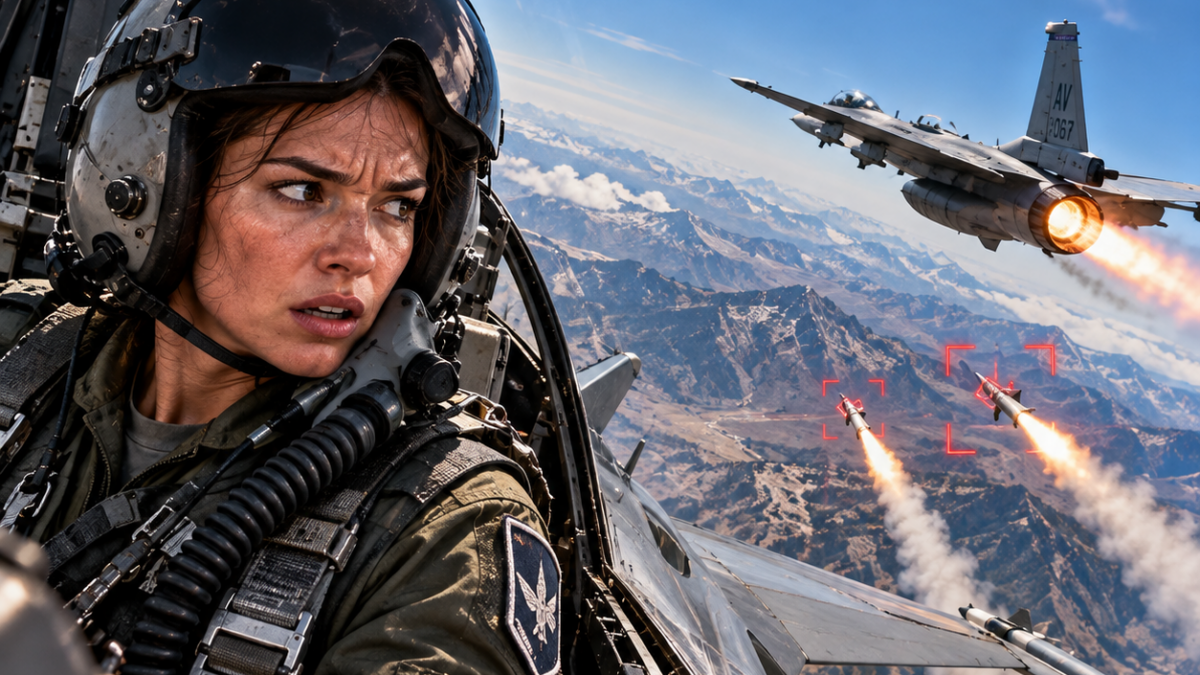
My Wingman Left Me Alone Against Three Enemy Fighters—Four Days Later, I Walked Into His Victory Toast.
At thirty thousand feet over hostile mountains, three enemy fighters locked onto my F-16—and the man assigned to protect my six turned around, lit his afterburner, and left me there to die.
Hours later, while my command center listed me as missing and my wingman calmly told everyone he had watched my aircraft explode, I was still alive inside a crippled jet, flying so low through the mountains that my wings nearly touched the canyon walls.
Four days later, David Harrison raised a glass and called my death “unavoidable”—and then the doors behind him opened.
My name is Captain Selena Jenkins.
Call sign Wraith.
Before the day Lieutenant David Harrison abandoned me in enemy skies, I believed there were certain truths military aviation made simple.
Fuel burns.
Gravity wins.
Missiles do not care about politics.
And your wingman does not leave you.
That last one matters more than civilians usually understand.
Flying combat formation is not two pilots happening to occupy the same patch of sky.
It is trust translated into geometry.
Your eyes cover what mine cannot.
My radar protects your blind side.
If one of us is threatened, both of us react.
If one gets damaged, the other stays as long as staying is possible.
You do not have to like your wingman.
You do not have to invite him to dinner.
But when the radar warning receiver starts screaming and somebody launches something designed to turn your aircraft into burning aluminum, the person off your wing is supposed to become more reliable than your own heartbeat.
That morning, mine was Lieutenant David Harrison.
I already knew that was a problem.
Aviano Air Base was hot enough to make the concrete shimmer.
Mediterranean summer.
Blue sky.
Jet fuel.
Hot metal.
The briefing room was the opposite.
Cold air-conditioning.
Fluorescent lights.
Thirty pilots pretending not to be tense.
I sat in the front row.
Flight suit zipped.
Kneeboard resting against my thigh.
Mission packet open.
I was thirty-two years old and had a little over two thousand hours in the F-16.
Combat hours.
Instructor hours.
Enough emergencies to know the difference between fear and useful caution.
I had been shot at before.
PART2:
I had flown home with an engine running rough enough that maintenance thought I was exaggerating until they opened it.
I had landed at night in weather that made the runway appear only seconds before touchdown.
But I had never been assigned a wingman I distrusted as much as David Harrison.
He sat two rows behind me.
Call sign Rook.
Appropriate, though probably not for the reason he believed.
David was a legacy pilot.
His father was Senator Thomas Harrison, a powerful member of the Senate Armed Services Committee.
David never said, “My father can help my career.”
He did not need to.
Other people said it for him.
Instructors remembered the name.
Commanders were careful.
Errors became learning opportunities that would have destroyed another lieutenant’s evaluation.
Assignments somehow worked out.
Recommendations appeared.
He was not incompetent.
That was what made him dangerous.
David could fly.
His hands were good.
His systems knowledge was good.
PART3:
When everything went according to plan, he looked excellent.
But I had watched him in simulators.
Pressure changed him.
Most pilots under pressure simplify.
Training takes over.
Breathe.
Prioritize.
Aviate.
Navigate.
Communicate.
David became smaller.
His awareness collapsed inward.
Mission disappeared.
Formation disappeared.
Everyone except David Harrison disappeared.
He did whatever protected David Harrison.
Once during a simulator exercise, his lead took a simulated missile hit.
David immediately turned toward friendly territory without even checking whether the lead aircraft remained controllable.
I had been instructing.
Afterward I asked:
“Why did you leave?”
He looked genuinely confused.
“My lead was hit.”
“And?”
“Mission was compromised.”
“Your lead was still flying.”
“He was defensive.”
“So you support him.”
David shrugged.
“In a real engagement, preserving a second aircraft might be smarter.”
That answer stayed with me.
Not because it was always tactically wrong.
Sometimes disengagement is necessary.
But David had not made a tactical decision.
He had made a personal one.
There is a difference.
Major James Murphy entered the briefing room.
Conversation stopped.
Murphy was one of those officers who seemed carved rather than born.
Square face.
Gray beginning at the temples.
Voice that never required amplification.
He had flown before half the room had entered high school.
He tapped the digital map.
“Operation Silent Anvil.”
The room became still.
The mission looked simple.
Those are often the dangerous ones.
Intelligence suggested hostile forces had moved mobile air-defense systems near the edge of an exclusion zone.
Our job was not to attack.
We were going to make them look at us.
Fly parallel to the border.
Stay in international airspace.
Let enemy radars illuminate.
AWACS would record emissions.
Map locations.
Identify frequencies.
Then we would leave.
Provocation without crossing.
Information without escalation.
Murphy pointed at the projected route.
“You do not enter their airspace.”
He looked at us.
“You do not fire unless fired upon.”
Then at me.
“Wraith, you’re flight lead.”
“Copy.”
His eyes shifted behind me.
“Rook, you’re on her wing.”
David gave a lazy thumbs-up.
“Copy, sir.”
Murphy did not smile.
“If they light you up, you hold until Magic gets the data.”
“How long?”
I asked.
“Approximately thirty seconds after full tracking.”
Thirty seconds.
In normal life, nothing.
In a fighter cockpit with enemy radar tracking you, thirty seconds can stretch into a separate lifetime.
Murphy finished.
“Questions?”
None.
We stood.
As pilots moved toward the door, David caught up with me.
“Relax, Wraith.”
“I am relaxed.”
“You looked like you wanted Murphy to assign you somebody else.”
I looked at him.
“Did I?”
“You’re not subtle.”
“Good.”
He laughed.
“You instructors always think simulator mistakes are personality tests.”
“Sometimes they are.”
His smile narrowed.
“That what you think of me?”
“I think today you stay where you’re supposed to stay.”
His face cooled.
“Don’t worry.”
He tapped my shoulder.
“I’ve got your six.”
I wish I had told Murphy then.
Not that David should be removed.
There was no formal basis.
A pilot cannot accuse another of future cowardice because of a simulator impression.
But I wish I had said:
Watch him.
I did not.
An hour later, I strapped into my aircraft.
Harness locked.
Oxygen connected.
Canopy down.
The cockpit always calmed me.
People look at fighter cockpits and see complexity.
Switches.
Screens.
Warnings.
Weapons.
To a pilot who knows the machine, it becomes almost intimate.
Every control where it should be.
Every display carrying a particular kind of information.
A small world that makes sense.
“Wraith One, engine start.”
“Rook Two, engine start.”
David’s voice sounded relaxed.
Taxi.
Checks.
Runway.
Then afterburner.
The F-16 accelerated.
There is a violence to takeoff that never becomes ordinary.
Acceleration presses you back.
Runway markings blur.
The nose becomes light.
Then ground falls away.
We climbed hard.
Italian coastline shrinking behind.
David slid into formation exactly where I wanted him.
Perfect.
That irritated me somehow.
Because I wanted my concern proven wrong.
At thirty thousand feet, Aviano was far behind.
Mountain terrain spread below.
The sky looked peaceful enough to be insulting.
“Wraith flight, Magic.”
Sergeant Chloe Bennett’s voice entered my headset from AWACS.
“We have you clean on scopes. Proceed waypoint Alpha.”
“Wraith One copies.”
“Rook Two copies.”
Chloe continued:
“Be advised, intermittent radar emissions from inside the exclusion zone.”
“They know you’re coming.”
“Understood.”
I checked my radar warning receiver.
Quiet.
For now.
“Rook, tighten to three miles.”
“Copy.”
David moved closer.
“Little sightseeing trip,” he said.
“Keep comms professional.”
“You’re fun today.”
“I’m always fun.”
“That’s objectively false.”
I almost smiled.
For several minutes, nothing happened.
Then my warning receiver chirped.
One tone.
Then again.
A symbol appeared.
Ground radar.
Tracking.
“Magic, Wraith One. Mud spike. SA-22 type, approximately twelve o’clock.”
“Copy.”
Chloe’s voice sharpened.
“We’re receiving.”
I glanced at time.
Thirty seconds.
“Rook, confirm.”
“I see it.”
His voice changed.
The casual tone was gone.
“They’re tracking hard.”
“Hold.”
“Wraith—”
“Hold.”
Ten seconds.
Fifteen.
Twenty.
The warning grew more insistent.
Then the cockpit screamed.
Not the same radar.
New signal.
Airborne.
Multiple.
My body tightened before my mind finished interpreting.
“Magic, Wraith. Airborne spikes.”
Major Murphy’s voice replaced Chloe’s.
“Wraith flight, three fast movers rising from terrain masking.”
“What type?”
“Probable Su-35s.”
My mouth went dry.
“Position?”
“Crossing the border now.”
“Into international?”
“Yes.”
That changed the mission.
This was no longer observation.
This was an intercept.
Then Murphy said the words every fighter pilot understands immediately.
“They’re weapons hot.”
I armed the aircraft.
“Rook, defensive formation.”
Silence.
“Rook, acknowledge.”
David answered.
His breathing audible.
“They’ve got me.”
“We know.”
“Solid lock.”
“Stay with me.”
“Wraith, they’re locking me.”
“David.”
I used his name.
“Stay with me.”
Then Chloe shouted:
“Missile launch!”
My display confirmed.
One hostile missile airborne.
Then another.
Training disappeared.
Muscle memory took over.
“Break right!”
I rolled.
Hard.
G-forces slammed down.
Anti-G suit inflated.
Chest tightened.
Chaff deployed.
I grunted through the strain.
My eyes flicked to the tactical display.
I expected David’s symbol to mirror the maneuver.
It did not.
At first, I thought the data lagged.
Then I saw his vector.
Opposite direction.
Turning away.
Throttle increasing.
“Rook!”
No answer.
“Rook Two, what the hell are you doing?”
His symbol accelerated toward friendly airspace.
“I have control issues.”
The words came fast.
“My avionics are failing. I’m RTB.”
My aircraft’s link still received his systems status.
Green.
His jet was healthy.
“Your telemetry is clean.”
“I’m losing controls!”
“You’re lying.”
“Wraith—”
“Get back here!”
Another missile warning.
I had no time to fight him.
Chloe shouted:
“Wraith defensive! Missile tracking you!”
David’s aircraft continued west.
Then his transponder disappeared.
Not failed.
Went dark.
He had turned it off.
For half a second, anger overwhelmed fear.
He was not just running.
He was hiding the evidence that he was running.
Then the incoming missile reminded me there were more urgent problems.
“Magic, Wraith One.”
I pulled hard.
“Rook has abandoned formation. I’m defensive alone.”
Behind the radios, I heard shouting in the control room.
Murphy came back.
“Wraith, abort. Get out.”
“Working on it.”
The missile was closing.
I dumped chaff.
Changed altitude.
Turned.
The world compressed into instruments and pressure.
I felt the edges of my vision darken.
Straining.
Breathing.
Stay awake.
Stay precise.
The missile passed.
For a fraction of a second, I thought I had defeated it completely.
Then white light erupted off my right side.
The proximity detonation hit like being struck by a truck.
The aircraft slammed left.
Metal screamed.
Warning lights ignited.
My helmet snapped against the seat.
“Hydraulic failure.”
The automated voice remained impossibly calm.
Smoke entered the cockpit.
“Engine fire.”
I coughed.
My right side responded sluggishly.
Controls heavy.
Aircraft shuddering.
“Magic, Wraith One. I’m hit.”
My own voice sounded distant.
“Right wing damage. Hydraulic loss.”
Altitude unwound rapidly.
Twenty thousand.
Fifteen.
Murphy:
“Eject.”
“No.”
“Wraith, eject now.”
I looked below.
Enemy mountains.
If I ejected there, I would land deep inside hostile territory with enemy fighters above me.
Capture was not theoretical.
Neither was exploitation.
“No.”
“Selena, that’s an order.”
“I can still fly.”
That might have been pride.
Might have been judgment.
At the time, it was both.
I fought the aircraft.
Fire warning eased after suppression.
Engine still gave me partial thrust.
The three hostile fighters remained.
That was the worst part.
They did not leave after hitting me.
They followed.
They wanted confirmation.
“Magic, they’re pursuing.”
“We see them.”
“I need to drop below their radar.”
“Don’t disappear.”
“If you can see me, so can they.”
“Wraith—”
“I’m going dark.”
I killed the radar.
Transponder.
Data link.
Reduced emissions.
Murphy’s voice entered once more.
“Selena, don’t.”
I shut off the radio.
Silence.
That was the moment I vanished.
Later, Chloe told me the control room became completely still.
My symbol disappeared.
No telemetry.
No transponder.
No datalink.
Nothing.
One second I existed.
The next, I was blank screen over mountains.
Ten minutes later, David Harrison returned to the radio.
He said he had seen me die.
I learned that much later.
At the time, I was too busy staying alive.
I dropped into the ravines.
Two hundred feet.
Sometimes lower.
The F-16 was damaged enough that every turn required strength.
My right wing had been torn.
Control response uneven.
Hydraulic pressure unstable.
I kept both hands working.
The terrain rose around me.
Stone walls.
Trees.
A river tracing the canyon floor.
Flying that low while damaged violated every instinct except the most basic one.
Do not let them see you.
One Su-35 passed above the canyon.
I saw its shadow cross my canopy.
I held the aircraft beneath the ridgeline.
My fuel leaked steadily.
I checked quantity.
Bad.
Very bad.
I could try climbing and run west.
They would find me.
A healthy F-16 might survive.
Mine would not.
Stay low?
Fuel would eventually disappear.
Crash.
I needed something else.
I pulled the physical map from my kneeboard.
Old-fashioned paper.
Still useful when electronics become liabilities.
Canyon system.
North.
Then east.
A large valley beyond the mountains.
Enemy territory.
Uralsk Valley.
The mission planning intelligence came back to me.
The hostile fighters had appeared too perfectly.
Mobile SAMs in exactly the right locations.
Three interceptors hidden behind terrain waiting for us.
That was not coincidence.
They knew our route.
Maybe a leak.
Maybe compromised planning.
Maybe pattern analysis.
Didn’t matter then.
An ambush this coordinated required command and control.
Radar.
Communications.
Forward coordination.
And a valley shielded by mountains from our high-altitude surveillance would make an excellent place to put it.
Uralsk.
I looked at fuel again.
I could not get home.
Not yet.
The thought arrived without drama.
If I was going to die there, I could at least make surviving me expensive.
Then another thought followed.
No.
That is not enough.
Find leverage.
My aircraft still carried weapons.
I was damaged.
Not helpless.
I followed the canyon north.
Low.
Fast enough to maintain control.
Slow enough not to over-stress the airframe.
Every turn hurt my shoulders.
The aircraft wanted to roll.
I corrected constantly.
Fuel continued falling.
The canyon finally opened.
Uralsk Valley spread ahead.
And there it was.
Military vehicles.
Camouflage netting.
Radar.
Command vehicles.
Equipment tucked against a cliff face.
I had been right.
For one bizarre second, I felt offended.
As if the enemy should have had the courtesy to prove me wrong.
The site was protected against attacks from altitude.
I was arriving from behind, nearly level with the trees.
Nobody expected a crippled American fighter to emerge from its own hiding terrain.
Alarms began.
People moved.
I selected the remaining strike weapons.
I did not have time for precision planning.
I had one pass.
I climbed slightly.
Enough to see.
The radar and command element became the aim point.
I released.
Then turned away.
Hard.
The aircraft protested.
A second later, light filled the valley behind me.
The explosion rolled through the canyon.
My damaged jet shook.
A warning tone sounded.
I did not look back until distance gave me room.
Smoke climbed from the command complex.
The main radar structure was gone.
Communications vehicles burned.
Whatever had coordinated the ambush had just lost its eyes.
Back in the AWACS control room, they saw enemy radar coverage disappear.
Chloe later told me that Major Murphy stared at the screen and asked:
“Who hit them?”
Nobody knew.
Then AWACS detected a weak raw return leaving the valley.
No transponder.
No friendly identification.
Fighter-sized.
Moving poorly.
Chloe said she knew before anyone else.
“That’s her.”
Murphy apparently told her not to guess.
She called anyway.
“Wraith One, this is Magic. If that’s you, give me anything.”
I had turned the radio back on because I had no reason to remain silent after destroying the command site.
Static.
Then Chloe again.
“Wraith One.”
I keyed the microphone.
“Magic.”
My voice barely worked.
“This is Wraith One.”
She screamed.
Actually screamed.
Not professionally.
Just once.
Then Murphy was on.
“Selena?”
“Affirm.”
The control room erupted in the background.
I said:
“Enemy command post neutralized.”
Pause.
“My aircraft is critically damaged.”
I looked behind.
Three contrails.
“And I have company.”
Murphy’s voice became steel.
“We’re coming.”
“How long?”
“Alert aircraft are launching.”
“How long?”
“Twelve minutes.”
I laughed once.
It hurt.
“Twelve minutes is an entire career right now.”
My fuel warning began screaming.
Less than six hundred pounds.
The three Su-35s were closing.
One locked me.
Missile warning.
I had no speed to waste.
No altitude to trade.
No fuel for prolonged maneuvering.
I did the only thing I could.
Dumped flares.
Slowed violently.
The missile streaked past.
One enemy fighter overshot with it.
Two remained.
Then my engine coughed.
Once.
Again.
Silence.
The turbine wound down.
Everything changed.
Fighter jets are loud machines.
When the engine stops, silence feels supernatural.
Only wind remained.
“Magic.”
“Go.”
“Flameout.”
Murphy swore.
“Eject.”
“No.”
“Selena.”
“I can’t eject over their installation.”
“We will recover you.”
“Before they do?”
He did not answer.
That was answer enough.
I lowered the nose.
Converted altitude to airspeed.
The aircraft became a glider.
A very expensive, badly damaged glider.
I searched.
Forest.
Rocks.
Slope.
Then a dry riverbed.
Narrow.
Ugly.
Possible.
“Magic, I have a dry riverbed.”
Murphy sounded desperate.
“Selena, pull the handle.”
“No.”
“That’s an order.”
“Sorry, sir.”
I looked at the riverbed.
“Tell my sister I love her.”
“Don’t do that.”
“And tell Harrison—”
I stopped.
No.
I would tell Harrison myself if I survived.
“Never mind.”
I shut the radio off.
The riverbed rushed toward me.
I lowered landing gear instinctively, then changed my mind.
Too damaged.
Too rough.
Belly landing.
Keep nose up.
Stay straight.
I had landed aircraft hundreds of times.
None of those landings helped much.
The ground hit.
Violently.
Sparks.
Metal grinding.
My body slammed against the harness.
The jet bounced once.
Came down harder.
Right wing caught something.
Then everything turned.
Sky.
Rock.
Dust.
Sky.
Impact.
Pain.
Another impact.
The aircraft stopped against a boulder.
Silence.
I do not know how long I was unconscious.
Maybe seconds.
Maybe minutes.
When my eyes opened, the world was tilted.
Blood ran into my right eye.
My left arm would not move correctly.
Every breath hurt.
Smoke seeped from the panel.
I remember thinking:
I’m alive.
Then immediately:
Move.
A crashed fighter attracts attention.
I released the harness.
Nearly blacked out.
Forced the canopy.
Got out.
Fell onto rocks.
Pain shot through my ribs.
My left forearm looked wrong.
Broken.
I checked survival gear.
Sidearm.
Water.
Emergency equipment.
Beacon.
I did not activate the beacon yet.
Enemy territory.
I heard aircraft overhead.
The Su-35s.
I crawled beneath the shadow of the wreck.
One passed.
Then another.
They circled.
They saw the wreck.
Did not fire.
Probably assumed nobody had survived.
Eventually they left.
I waited.
Ten minutes.
Maybe fifteen.
Then moved toward the trees.
Every step hurt.
I remember saying aloud:
“David, I’m still here.”
It helped.
Anger is a terrible long-term fuel.
Excellent for the first mile.
The next four days became a different kind of war.
No aircraft.
No radar.
No missiles.
Just staying alive.
The first day, I moved away from the wreck.
Not far.
Far enough.
I found cover beneath thick trees near a rocky slope.
Tried to stabilize my arm.
The pain made me vomit.
I drank carefully.
My head wound had stopped bleeding heavily.
Ribs hurt but did not feel collapsed.
I could walk.
Barely.
That was enough.
I waited until dark before activating a coded emergency burst.
Short.
Then off.
If friendly assets were searching, they might detect it.
If enemy forces were monitoring, they might too.
Everything became probability.
Water.
Signal.
Movement.
Rest.
I slept in ten-minute fragments.
Every sound woke me.
Vehicles moved somewhere in the valley.
Once I heard dogs.
I moved farther uphill.
The second day, helicopters searched.
Not ours.
I hid.
A patrol passed within a few hundred yards.
I could hear men speaking.
I pressed myself beneath brush and tried not to cough.
My ribs screamed.
The patrol stopped.
For several minutes I thought they had found me.
Then they continued.
That night, I sent another coded burst.
This time there was a response.
Very faint.
Authentication sequence.
Friendly.
Somebody knew.
I cried.
Quietly.
Not from relief exactly.
From no longer being alone.
I had spent so long inside survival mode that hearing the confirmation broke something loose.
They were coming.
The challenge was surviving until they arrived.
Day three, I moved toward a recovery point transmitted through the beacon.
Slow.
My left arm strapped.
Face swollen.
Food nearly gone.
I reached a wooded ridge above a narrow clearing.
Waited.
Nothing.
Hours.
Then distant gunfire.
Not near me.
A distraction?
I did not know.
After sunset, aircraft passed high.
Friendly, maybe.
No lights.
Then a whisper in my emergency receiver.
“Wraith.”
I froze.
“Wraith, authenticate.”
I answered.
A voice:
“Stay down.”
Best sentence I had heard in my life.
Special operations recovery team.
They reached me after midnight.
Four men.
Night vision.
No speeches.
The first medic looked at my arm.
“That’s broken.”
“Excellent diagnosis.”
He grinned.
“You must be Wraith.”
“Unfortunately.”
They moved me out before sunrise.
Helicopter.
Then aircraft.
Then friendly territory.
Medical treatment.
Debrief.
Security.
For almost forty-eight hours after recovery, very few people at Aviano knew I was alive.
That became useful.
Because David Harrison believed I was dead.
He had landed safely.
His aircraft showed no mechanical failure.
But his father had already begun applying pressure.
David’s official statement claimed catastrophic avionics problems.
He said he had lost situational awareness.
He said he witnessed my aircraft take a direct missile hit.
He said my F-16 disintegrated.
He said there had been nothing he could do.
Then he switched narratives slightly.
He had saved a valuable aircraft.
He had followed emergency procedure.
He had acted rationally.
The senator’s office reportedly contacted people before the formal inquiry had even developed.
Murphy hated it.
Chloe hated it.
The squadron hated it.
But without me, David’s story had one enormous advantage.
Dead pilots do not testify.
My aircraft wreckage was in hostile territory.
My transponder had vanished.
My final communications had been fragmented.
There was telemetry proving his aircraft had been functional until he shut down transmissions.
But David’s lawyers could call that incomplete.
Anomaly.
Data issue.
Combat confusion.
His father’s influence could not rewrite every fact.
But it could make facts expensive to use.
Then came the memorial.
They scheduled it for the fifth day.
Flags.
Photograph.
Empty boots.
The whole ritual.
I was still in a medical facility when Murphy visited.
He stood beside the bed.
Looked terrible.
“Welcome back.”
“Thanks.”
“You look awful.”
“Everybody keeps saying that.”
“Maybe listen.”
He sat.
For a while, neither of us spoke.
Then I asked:
“Harrison?”
Murphy’s jaw hardened.
“Still flying?”
“No.”
“Grounded?”
“Temporarily.”
“He’s claiming mechanical failure.”
“I know.”
“Telemetry?”
“We have it.”
“Then why is this complicated?”
“You know why.”
His father.
I leaned back.
Pain medication made the ceiling move slightly.
Murphy continued.
“Harrison is telling people you were killed instantly.”
“I noticed I wasn’t.”
“He says he saw your cockpit take the hit.”
“He ran before the hit.”
“I know.”
“He killed his transponder.”
“I know.”
“So charge him.”
“Investigation has to be done correctly.”
I closed my eyes.
“That’s commander language for politics.”
“It’s commander language for I want him buried so deeply in evidence nobody can dig him out.”
That made me open my eyes.
Murphy placed a small encrypted drive on the table.
“What is that?”
“Recovery team pulled surviving data modules from your aircraft.”
My heart rate changed.
“Flight recorder?”
“Partial recovery.”
“How much?”
“Enough.”
He looked at me.
“Radio traffic.”
“Tactical picture.”
“Some system data.”
“Your recording of Harrison reporting false control problems is intact.”
I stared.
Murphy smiled without humor.
“And Rook’s telemetry before he intentionally disabled the transponder was mirrored through AWACS.”
“So we have him.”
“Yes.”
“Then why do you look worried?”
“Because accountability is not the same as conviction.”
He stood.
“And because his father has friends.”
I picked up the drive.
“When does David learn I’m alive?”
Murphy paused.
“He doesn’t know yet.”
I looked at him.
“Keep it that way.”
That afternoon, Lieutenant Harrison gave an informal toast at the officers’ club.
Not officially celebrating my death.
Of course not.
He was “honoring my memory.”
There were junior pilots there.
Friends.
People who had flown with me.
Some attended because they felt they had to.
Some because David had somehow made himself part of the tragedy.
The survivor.
The grieving wingman.
A man carrying the burden of having watched his lead die.
He held a glass of bourbon.
He said things about me.
I heard later.
“She was a legend.”
“She would’ve understood why I had to save the aircraft.”
“Once my systems failed, there was nothing I could do.”
One young lieutenant apparently said:
“You must feel awful.”
David answered:
“You don’t get over watching something like that.”
He was correct.
Just not in the way he meant.
At 18:42, I arrived at the officers’ club.
My left arm in a sling.
Forehead stitched.
Bruising across half my face.
Borrowed flight suit because mine had been cut off during treatment.
Two Security Forces personnel with me.
Not bodyguards.
Witnesses.
The doors opened.
Conversation died.
I remember the sound of a glass hitting the floor.
David.
His bourbon shattered against the wood.
For several seconds, nobody moved.
He stared at me.
His face became gray.
“You’re dead.”
That was the first thing he said.
Not Selena.
Not thank God.
Not you’re alive.
You’re dead.
I walked toward him.
Slowly.
Everything hurt.
“Apparently not.”
He backed up.
I kept walking.
The room parted.
Nobody wanted to stand between us.
Major Murphy entered behind me.
He stopped when he saw David’s face.
I reached the table.
Three feet between us.
David tried to recover.
“Selena.”
“Captain.”
“What?”
“You address me as Captain Jenkins.”
His mouth opened.
Closed.
I put the encrypted drive on the table.
He looked at it.
“What is that?”
“You know how you told Overlord your controls failed?”
His eyes moved around the room.
“Selena, I—”
“Captain.”
He swallowed.
“Captain, my aircraft experienced intermittent—”
“No.”
My voice was not loud.
It did not need to be.
“You had no flight-control failure.”
“Your data link couldn’t—”
“It could.”
He looked at Murphy.
Murphy said nothing.
I continued.
“Your engine was healthy.”
“Avionics healthy.”
“Flight controls healthy.”
“Countermeasures healthy.”
“You turned around.”
“Accelerated west.”
“Then manually killed your transponder after Major Murphy ordered you back.”
David’s mouth tightened.
“You weren’t there.”
“I was slightly busy.”
A few pilots looked down.
Others stared directly at him.
David pointed at the drive.
“That proves nothing.”
“It proves a lot.”
“Telemetry gets corrupted in combat.”
“The recording didn’t.”
Silence.
His face changed.
I leaned slightly closer.
“Your voice is on my recovered flight data.”
“You telling Overlord your controls were stiff.”
“You saying you couldn’t return.”
“And AWACS telemetry showing full control authority at the same time.”
David looked toward the door.
Security personnel remained there.
Not blocking him.
But the message was clear.
He was not leaving before the investigator arrived.
Then he did something I did not expect.
He got angry.
“You don’t know what it was like.”
The room went completely still.
I stared.
“What?”
“Three Flankers.”
“Missiles.”
“My radar lit up.”
“I thought we were dead.”
I almost laughed.
“Yes.”
“We were in combat.”
“I know.”
“No, you don’t understand.”
His voice rose.
“I panicked.”
There it was.
Truth.
Not all of it.
Enough.
Someone behind me inhaled sharply.
David heard himself too.
He immediately tried to recover.
“I mean, the systems indications made me believe—”
I shook my head.
“No.”
“You just said it.”
He looked terrified.
“Selena—”
“Captain.”
He dropped his eyes.
I felt no triumph.
That surprised me.
For four days, anger had kept me moving.
I had imagined this moment.
David exposed.
Humiliated.
Destroyed by his own lie.
Now that he stood in front of me, he looked small.
Not innocent.
Small.
A man who had built his entire identity around being seen as brave, then discovered courage cannot be borrowed from a senator.
I said:
“You were afraid.”
His jaw clenched.
“So was I.”
He looked up.
“So was everyone in that engagement.”
I pointed toward the pilots around us.
“Courage is not the absence of that.”
“You had one job.”
“Stay.”
“If we had to leave, we leave together.”
“If we had to fight, we fight together.”
“You left.”
“You lied.”
“And while I was trying to keep a damaged aircraft out of the rocks, you turned off your transponder so nobody could prove why.”
He whispered:
“I thought you were dead.”
“No.”
“You hoped I was dead.”
That landed.
His eyes widened.
“Because dead pilots cannot contradict reports.”
He said nothing.
Murphy stepped forward.
“Lieutenant Harrison.”
David looked at him.
“You are relieved of flight duties pending formal investigation.”
“My father—”
Murphy’s expression changed instantly.
That was the wrong sentence.
“Your father is not in this room.”
David went pale.
Murphy continued:
“And he does not fly your aircraft.”
“He did not make your decision.”
“He did not turn off your transponder.”
“You did.”
Two investigators entered.
David looked at me.
For one moment, I saw anger return.
Then fear.
Real fear.
Not enemy missiles.
Consequences.
He was escorted out.
Nobody clapped.
I am glad.
It would have made the moment cheap.
Murphy waited until the doors closed.
Then looked at me.
“Welcome home, Captain.”
That nearly broke me.
I nodded.
“Good to be back, sir.”
Then I sat down because my knees stopped cooperating.
The court-martial process took months.
Not the instant punishment people later imagined.
David’s father hired excellent attorneys.
They attacked telemetry reliability.
Questioned stress.
Argued David had reasonably believed his systems were failing.
Pointed to combat confusion.
Raised procedural objections.
That is what defense counsel is supposed to do.
The military justice system is not supposed to operate on whether people dislike the accused.
Evidence mattered.
Fortunately, evidence was extensive.
AWACS recordings.
Aircraft telemetry.
Radio communications.
Mission data.
His intentional transponder shutdown.
His later statements.
My recovered flight records.
Other simulator evaluations showing a pattern of abandoning formation under pressure were not used as some magical proof of character, but training records did raise questions about whether concerns had been overlooked.
The most damaging evidence was not one heroic recording.
It was consistency.
His aircraft was healthy.
He knew his lead was engaged.
He received direct orders to return.
He refused.
Then concealed tracking information.
Then lied about witnessing my death.
Politics could complicate that.
It could not erase all of it.
Senator Harrison publicly said he trusted the process.
Privately, according to rumors I never tried to verify, he was furious.
Maybe at me.
Maybe at David.
Maybe both.
It did not matter.
David never returned to fighter status.
His military career ended.
The exact legal consequences became less important to me over time than people expected.
I wanted accountability.
I got it.
I did not need to spend the rest of my life counting his punishment.
The bigger question was the ambush.
How had enemy forces known our route?
My strike on the forward command post produced intelligence.
Recovery teams later exploited what remained.
Communications fragments.
Planning materials.
Radar logs.
That investigation became classified far beyond my need to know.
I learned enough to understand that our mission profile had been compromised.
Whether through espionage, cyber compromise, predictable planning, or a combination of failures was not something I was permitted to discuss publicly.
What mattered to me was simpler.
We had not walked into bad luck.
Somebody knew we were coming.
That realization changed training.
Mission security tightened.
Procedures changed.
The loss of secrecy almost killed me.
David’s decision almost finished the job.
Neither did.
People later turned my strike on the command center into mythology.
Wraith died and came back.
Wraith single-handedly destroyed an enemy network.
Wraith flew through mountains like a ghost.
Pilots love stories almost as much as fishermen.
Every retelling got more ridiculous.
According to one version, I flew inverted through a canyon.
I did not.
Another said I landed the F-16 with one wing missing.
Also no.
The wing came off during the crash.
Someone claimed I fought three Su-35s after my engine stopped.
That would have been impressive.
And very brief.
Reality was less cinematic.
I was scared.
Injured.
Tired.
My aircraft barely worked.
I made decisions with incomplete information.
Some were good.
Some were risky.
I survived because of training, luck, terrain, people searching for me, and several enemy assumptions that happened to favor me.
Heroism is usually the story people tell after uncertainty stops.
Inside the event, it feels like work.
Fly the airplane.
Solve the next problem.
Do not think about the next ten.
One.
Then another.
That lesson became important during recovery.
Flying had always been part of who I was.
Then doctors told me I might not return.
Broken arm.
Rib injuries.
Concussion.
Shoulder damage.
Nerve problems in my left hand.
The physical recovery was slow.
The psychological recovery was worse.
Nobody wants to hear that from a combat pilot.
They want the clean version.
She survived.
She came back stronger.
No.
I came back angry.
I woke up hearing missile warnings.
I hated enclosed rooms for several months because the crushed cockpit returned whenever I could not move my arm freely.
If someone left a room unexpectedly, my body reacted before my brain.
Abandonment had become physical.
That embarrassed me.
Which made it worse.
The flight psychologist was named Dr. Elena Morris.
Civilian.
Unimpressed by rank.
Our first meeting lasted ten minutes before I disliked her.
She asked:
“What bothers you most?”
“The crash.”
“That’s what you think should bother you most.”
I stared.
“What does that mean?”
“You describe the missile clinically.”
“The crash clinically.”
“The four days behind enemy lines clinically.”
“Then every time you say Harrison’s name, your breathing changes.”
“I don’t like him.”
“Clearly.”
“He abandoned me.”
“Yes.”
“I almost died.”
“Yes.”
“So what exactly are we discovering here?”
She leaned back.
“That you’re treating betrayal as if it were an aviation problem.”
I hated that sentence.
Mostly because she was right.
Aircraft failures make sense.
A hydraulic line breaks.
Reason exists.
Material.
Pressure.
Damage.
Human betrayal is uglier because the mechanism is choice.
I had trusted David with something pilots rarely say out loud:
My life.
Not abstractly.
Literally.
And when the test came, he chose himself.
Dr. Morris said:
“You keep asking why.”
“Yes.”
“You may never get an answer that feels proportionate.”
“I know why.”
“He panicked.”
“That’s an explanation.”
“Not enough?”
“No.”
“What would be enough?”
I had no answer.
That was the problem.
There is no explanation that makes abandonment acceptable.
Eventually I stopped trying to find one.
Months passed.
My arm healed.
Strength returned.
Simulator first.
Then trainer flights.
Then F-16.
The first time I sat in the cockpit again, my hands shook.
Not dramatically.
Enough.
Crew chief noticed.
Said nothing.
I appreciated that.
Canopy closed.
The sound changed.
My heart rate jumped.
For half a second, I smelled smoke that was not there.
Then training.
Battery.
Systems.
Checks.
Breathe.
I taxied.
At the runway, tower cleared me.
My instructor in the chase aircraft asked:
“Ready?”
I wanted to say no.
Instead:
“Yes.”
Afterburner.
Acceleration.
Airborne.
Everything inside me screamed that something would break.
Nothing did.
Gear up.
Climb.
Turn.
Sky.
I cried.
Inside the oxygen mask.
Nobody heard.
Or the instructor politely pretended not to.
That first flight lasted forty-two minutes.
No tactical maneuvers.
No missiles.
No heroics.
Just flying.
Best forty-two minutes of my career.
A month later, Murphy cleared me for formation training.
I asked who my wingman would be.
He said:
“Captain Laura Chen.”
I knew Laura.
Excellent pilot.
Reliable.
Still, before takeoff I gave her a briefing so detailed she stared at me.
“Selena.”
“What?”
“I know formation procedures.”
“I know.”
“You have explained lost-wingman procedures three times.”
“I know.”
“Do you want me to promise something?”
That irritated me.
“No.”
“Good.”
She put on her helmet.
“Because promises are cheap.”
I looked at her.
“What?”
“I’ll just stay.”
Simple.
She did.
We flew.
Nothing dramatic.
At one point I checked six.
There she was.
Exactly where expected.
Something inside me loosened.
Trust returned like strength after injury.
Not through reassurance.
Repetition.
People showing up.
Again.
Again.
Again.
Years later, Laura became one of my closest friends.
She never once said:
“I’d never do what Harrison did.”
She did not need to.
That’s another thing betrayal taught me.
Reliable people rarely spend time advertising reliability.
They demonstrate it.
David wrote me once.
Three years after the court-martial.
A letter.
Handwritten.
I recognized the name on the envelope and nearly threw it away.
Instead I opened it.
He apologized.
Not perfectly.
People rarely do.
He wrote that fear had taken over.
That once he turned away, shame made him continue.
Then lying became easier than admitting the first decision.
That sentence felt true.
One bad decision created another.
Then another.
Run.
Hide.
Lie.
Protect the lie.
Use influence.
Destroy trust.
He wrote:
I thought survival meant getting myself home.
I understand now that I stopped being your wingman before I ever turned the airplane.
I read that line several times.
Then folded the letter.
Did not answer.
People ask whether I forgave him.
I don’t know.
Forgiveness is treated like a finish line.
I never experienced it that way.
I stopped wanting to hurt him.
Stopped checking what happened to him.
Stopped imagining conversations.
Stopped needing him to understand me.
If that is forgiveness, maybe.
If forgiveness means I would trust him again?
No.
Trust is not a moral reward.
It is risk assessment.
You can release hatred without reopening the cockpit.
Murphy retired before I did.
At his ceremony, Chloe Bennett attended.
She had become an officer by then.
Still worked in battle management.
We stood together afterward.
She hugged me.
“Do you know what I remember?”
“What?”
“The blank screen.”
I knew immediately.
“When you went dark.”
She looked away.
“I thought we’d lost you.”
“Sorry.”
“You should be.”
She punched my good shoulder.
“Then ten minutes later, Rook comes on saying he watched you explode.”
I waited.
“When you called back…”
She laughed.
“I nearly got written up for screaming on frequency.”
“I heard.”
“Of course you heard.”
“You were loud.”
Murphy joined us.
“You were both loud.”
Chloe pointed at him.
“You were crying.”
“I was not.”
“You absolutely were.”
Murphy looked at me.
“See what you’ve caused?”
“Command climate issues.”
He smiled.
Then became serious.
“I thought I killed you.”
“What?”
“I assigned Harrison.”
“That was not your decision.”
“Yes, it was.”
“You had no reason to remove him.”
“I had concerns.”
“So did I.”
“And neither of us pushed hard enough.”
I shook my head.
“You don’t get to borrow his choice.”
Murphy looked at me.
I continued.
“He left.”
“Not you.”
That sentence surprised me as I said it.
Because years earlier, I had blamed Murphy too.
Quietly.
He chose the wingman.
He knew David’s reputation.
Maybe leadership should have acted sooner.
There were lessons there.
But responsibility still had boundaries.
David’s decision belonged to David.
That mattered.
You can improve systems without stealing guilt from the person who made the choice.
Murphy nodded.
“Thank you.”
“Don’t get emotional.”
“Too late.”
Chloe said:
“He was definitely crying.”
Military friendships are mostly insults hiding affection.
I eventually became a tactical instructor again.
That changed how I taught formation.
Earlier in my career, I emphasized positioning.
Communication.
Threat reactions.
Weapons.
After Silent Anvil, I added something else.
Decision pressure.
I built scenarios where pilots had to choose between protecting themselves and supporting a damaged lead.
Not suicidal loyalty.
Disciplined mutual support.
Sometimes disengaging is correct.
Sometimes your lead orders you out.
Sometimes staying kills both aircraft for no gain.
The answer is not “never leave.”
The answer is:
Do not disguise fear as tactics.
Know why you’re making the decision.
Communicate.
Do not lie.
And never disappear because shame makes honesty inconvenient.
I told students:
“Your wingman doesn’t need you fearless.”
“They need you predictable.”
That confused them.
So I explained.
“Predictable means when you say you’re there, you’re there.”
“When you say you’re damaged, you’re damaged.”
“When you say you’re leaving, your lead knows why.”
“Trust is predictability under pressure.”
David had destroyed that.
Laura restored it.
Dozens of pilots after her reinforced it.
I stopped being known primarily as the pilot who came back from the dead.
Thank God.
For a few years, younger officers would whisper.
That’s Wraith.
She took out the command post.
She survived four days.
She walked into the officers’ club.
Then time did what time does.
New stories replaced mine.
New pilots arrived.
Some had not even been in high school when Silent Anvil happened.
Eventually I became just another senior instructor telling people to stop over-controlling the jet.
That felt healthy.
The aircraft involved in my crash was recovered in pieces much later.
Most of it was useless.
The recovery team returned a section of cockpit panel to me after investigations and classification issues were resolved.
I did not want it.
People expected me to mount it on a wall.
Battle trophy.
No.
I gave it to the squadron training room.
A small plaque beneath it reads:
FLY THE NEXT PROBLEM.
Not:
Never give up.
I dislike that phrase.
Sometimes giving up the wrong plan is exactly what saves you.
Not:
Be fearless.
Fear kept me alert.
Not:
Heroes fight alone.
I did not.
Even when I physically had no wingman, hundreds of people were working to bring me home.
AWACS.
Search teams.
Recovery crews.
Intelligence.
Medics.
Maintainers.
My mistake for years was telling myself I had survived alone because David abandoned me.
I had not survived alone.
I had simply survived without him.
There is a difference.
That distinction healed more than therapy did.
The enemy fighters saw one crippled F-16.
David saw one abandoned lead.
I felt alone.
But behind every radio silence were people still looking.
Chloe staring at a radar screen.
Murphy refusing to stop search planning.
Recovery teams waiting for a beacon.
Pilots launching when my signal reappeared.
Medics preparing before they knew whether I was alive.
Isolation is powerful because it narrows your view.
You see nobody.
That does not mean nobody is there.
I wish I had known that in the canyon.
Maybe I did, somewhere underneath the anger.
The final time I saw David Harrison was unexpected.
No uniforms.
No court.
An airport in Washington.
Years later.
I was walking toward a gate.
He was coming the other direction.
Older.
Civilian clothes.
Carrying a laptop bag.
We stopped.
For a second, neither of us spoke.
Then:
“Selena.”
“David.”
He looked tired.
Normal.
Not villainous.
That’s the uncomfortable thing about people who fail you.
They remain human.
He said:
“I heard you’re retiring.”
“Soon.”
“Congratulations.”
“Thanks.”
Pause.
Then:
“I meant what I wrote.”
“I know.”
“I’m sorry.”
I looked at him.
For years, I imagined what I would say if he apologized in person.
Something sharp.
Something unforgettable.
Instead:
“I know.”
He waited.
Maybe hoping for more.
I did not have more.
Then I said:
“I hope you’re doing better.”
He looked surprised.
“So do I.”
We walked away.
I never saw him again.
That was enough.
My retirement flight happened on a clear morning.
No combat.
No border.
No hostile radar.
Three aircraft.
Laura Chen on my wing.
Another former student on the other side.
Murphy came back to watch.
Chloe watched from operations.
My sister came.
So did my mother.
At thirty thousand feet, I looked across.
Laura’s aircraft sat exactly where it should.
Sunlight flashed off the canopy.
She raised one gloved hand.
I raised mine.
No speeches.
Formation.
Trust.
I thought about Silent Anvil.
David disappearing from my display.
Missile warning.
Impact.
Canyon.
Command site.
Crash.
Forest.
Officers’ club.
All of it felt like it belonged to someone else.
Not erased.
Integrated.
That’s the word psychologists like.
I used to hate it.
Now I understand.
Trauma does not vanish.
It stops demanding the entire cockpit.
We returned to base.
Initial.
Break.
Landing.
Taxi.
Shutdown.
The canopy opened.
Noise rushed in.
I climbed down.
Laura was waiting.
“You know,” she said, “technically I’ve been trying to get away from you for fifteen years.”
“You’re bad at it.”
“Terrible.”
Murphy hugged me.
Chloe cried openly this time.
Nobody accused her of professionalism.
My mother said:
“Now you’re done?”
“With military flying.”
“Good.”
“I might fly civilian.”
She stared.
“Selena.”
“What?”
“Please develop a hobby that does not require ejection seats.”
Fair.
That evening, after everyone left, I walked back toward the flight line alone.
The sun had dropped.
Aircraft sat in rows.
Quiet shapes under lights.
I thought about the first sentence every fighter pilot learns in one form or another:
Never lose sight of your wingman.
For years, I thought David’s betrayal taught me the obvious version.
Choose people who stay.
It did.
But there was another lesson.
Do not lose sight of yourself either.
The person you become under pressure matters.
David looked at danger and decided survival justified abandonment.
I looked at betrayal and nearly decided anger had to keep me alive forever.
Both are forms of surrender.
Different kinds.
Eventually you choose again.
Who are you after the emergency?
Who are you when nobody is launching missiles?
Who are you once the person who hurt you no longer has any power over your day?
Those decisions matter too.
If you ask me what shocked the control room most during Silent Anvil, people assume it was my voice returning after everyone thought I was dead.
Maybe.
Chloe says the room stopped moving.
Murphy says he forgot to breathe.
But that was not the moment that stayed with me.
The moment I remember happened before the ambush.
Briefing room.
David behind me.
Murphy saying:
“Rook, you’re on her wing.”
And David replying:
“Just a little sightseeing trip.”
So easy.
So confident.
Promises always are when nothing is burning.
The real meaning of loyalty appears later.
When warning lights come on.
When staying becomes expensive.
When fear offers you a reason to leave.
That’s when the word wingman becomes more than a position in formation.
I learned that at thirty thousand feet.
David Harrison taught me through failure.
Laura Chen taught me through repetition.
Murphy taught me through responsibility.
Chloe taught me by continuing to look at a blank screen after everyone else thought there was nothing left to find.
And the recovery team taught me something I should have known all along.
Sometimes you cannot see the people coming for you.
Keep transmitting anyway.
That idea followed me outside aviation.
Friends.
Family.
Grief.
Recovery.
Trust.
There were years after the crash when I felt like I was still flying low through that canyon.
No radar.
No radio.
Nobody visible.
Just survive the next turn.
Then somewhere in the static, somebody would answer.
My sister.
Laura.
Murphy.
Chloe.
A therapist.
A student.
Sometimes a stranger who heard enough of the story to say:
“I understand why that still hurts.”
Tiny signals.
Enough to navigate.
I do not keep David’s letter on display.
It sits in a box.
Neither treasured nor destroyed.
Just part of the record.
The part of my story involving him ended long ago.
What remains is simpler.
I flew.
He left.
I survived.
People came for me.
I went home.
That’s enough.
And if there is one thing I want young pilots to remember when they hear the exaggerated version of Captain Selena “Wraith” Jenkins disappearing into enemy mountains and returning from the dead, it is not the dramatic part.
Not the missiles.
Not the bombing run.
Not the crash.
Not walking into an officers’ club looking like something dug out of a battlefield.
Remember the control room.
Remember the blank screen.
A pilot disappeared.
Her wingman claimed she was dead.
The evidence looked terrible.
And still somebody kept watching.
Then a tiny return appeared where nothing should have been.
No transponder.
No identification.
Barely a signal.
Chloe looked at it and said:
“That could be her.”
That is the line that matters to me.
That could be her.
Not:
She’s gone.
Not:
We failed.
Not:
Stop looking.
Maybe.
Could be.
Check again.
Call again.
Listen again.
Sometimes survival depends on the person who refuses to accept an empty screen as the final answer.
At thirty thousand feet, my wingman left me.
For years I thought the story was about betrayal.
It isn’t anymore.
It’s about what happened after.
One man turned away.
Hundreds of others didn’t.
One pilot lied that I was dead.
An entire team kept searching.
One person failed the meaning of wingman.
And enough others showed me that loyalty was still real.
So when people ask whether David Harrison destroyed my trust, I tell them no.
He damaged it.
There is a difference.
Damaged aircraft can sometimes fly.
Damaged people can too.
Not immediately.
Not perfectly.
But eventually.
And on my final flight, when I looked across thirty thousand feet of clear sky and saw Laura Chen exactly where she had promised to be, I realized something I wish I could have told the woman I was inside that canyon years earlier.
You are not alone just because one person left.
Keep flying.
Someone is still looking for you.

