My Daughter Kept My Granddaughter From Me for Eight Months—Then She Showed Up Crying and Said, “Dad, I Need You Now.”
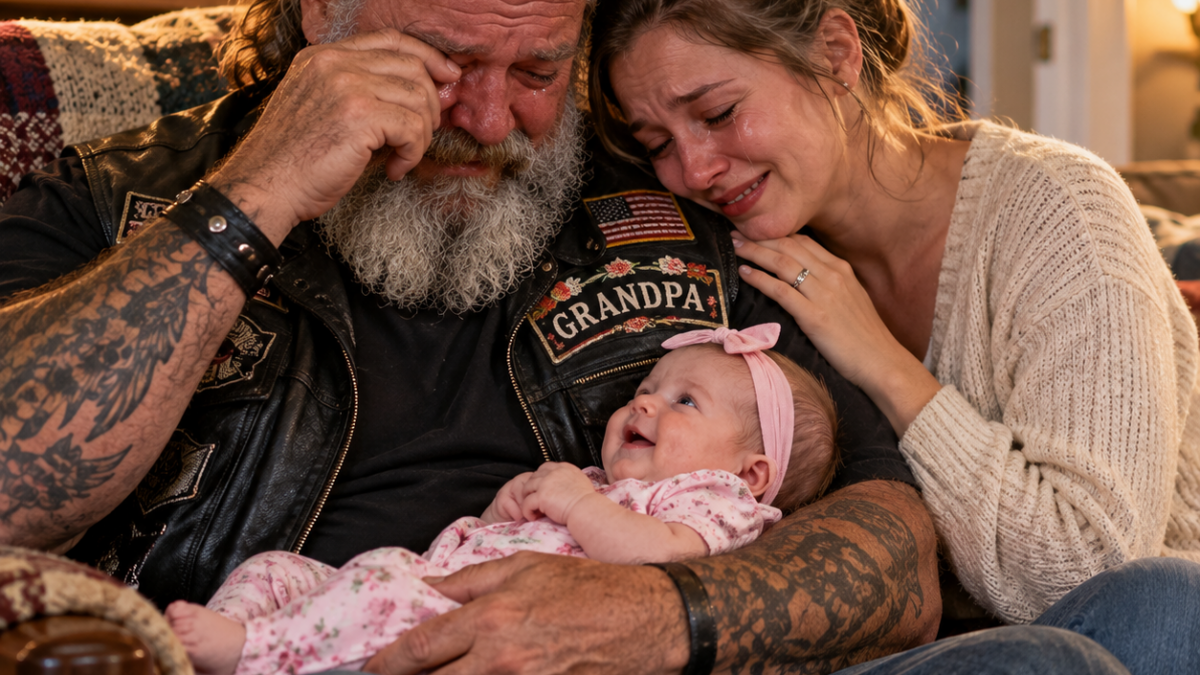
My Daughter Kept My Granddaughter From Me for Eight Months—Then She Showed Up Crying and Said, “Dad, I Need You Now.”
For eight months after my granddaughter was born, my daughter kept her away from me, and I convinced myself she was finally ashamed of the tattooed, gray-bearded biker who had raised her alone after her mother died.
Then one rainy Sunday evening, Sarah appeared on my porch holding a baby carrier, tears pouring down her face, and whispered four words I had spent nearly a year believing I would never hear: “Dad, I need you.”
But when she finally told me why she had been afraid to let me hold her daughter, the truth hurt worse than rejection—because Sarah had spent her whole life believing I was the perfect father, and she was terrified one afternoon with me would prove she was failing as a mother.
The first thing I saw was the baby carrier.
Not Sarah.
Not the rain coming down behind her.
Not the suitcase sitting beside her left foot.
The carrier.
Black plastic.
Gray blanket tucked around the sides.
One tiny pink sock sticking out beneath it.
For a second, I forgot how to breathe.
I had imagined that carrier for eight months.
Imagined walking toward it.
Imagined the weight of a baby I had never touched.
Imagined whether she would have Sarah’s eyes or my late wife’s nose.
Imagined everything because imagining was all my daughter had left me.
Sarah stood on my porch at 6:43 on a Sunday evening in November.
I know the time because the old clock above my television chimed three times while I was standing frozen with the door open.
My name is Michael Donnelly.
Most people call me Mick.
I was sixty-eight years old then.
Six foot two when my back cooperated.
Gray beard halfway down my chest.
Both arms tattooed.
Forty years riding motorcycles.
Twenty-eight of those with the Iron Harbor Riders, a club that looked considerably more frightening than we behaved.
I had been called intimidating.
Dangerous-looking.
A thug.
A fossil.
One woman at a supermarket once moved her child behind her when I reached for cereal.
The kid waved at me anyway.
Children usually knew better than adults.
But none of that mattered when I looked at Sarah.
My daughter was thirty-six.
Same dark brown hair her mother had worn.
Same green eyes.
PART2:
Same habit of pressing her lips together when she was about to cry and had decided crying was unacceptable.
She was losing that battle badly.
Rain ran from the shoulders of her coat.
Her face was soaked too, and not all of it was rain.
“Dad.”
That was it.
One word.
Then:
“I need you now.”
My hand tightened around the edge of the door.
Eight months.
Eight months since Sarah called and told me she’d delivered a daughter.
Eight months since she said:
“Her name is Emma Rose.”
Rose.
Her mother’s name.
Eight months of waiting for an invitation that never came.
I had received photographs.
Not many.
One from the hospital.
One at two weeks.
One at Christmas.
PART3:
A few short videos.
Emma yawning.
Emma hiccupping.
Emma sleeping.
Sarah never completely cut me off.
That almost made it harder.
Enough to know the baby was alive.
Healthy.
Growing.
Not enough to know her.
Every time I asked when I could visit, there was a reason.
We’re exhausted.
The pediatrician says keep visitors limited.
Maybe next week.
Daniel’s family is here.
She has a cold.
We’re trying to establish a schedule.
We’re overwhelmed, Dad.
Please don’t push.
So I didn’t push.
That was my biggest rule with Sarah.
I had spent too much of her childhood making decisions because I had to.
After her mother died, somebody had to decide everything.
School.
Food.
Doctors.
Bedtime.
Who she could stay with.
Whether there was enough money for braces.
When she became an adult, I promised myself I would not become one of those fathers who mistook love for ownership.
If she said wait, I waited.
Even when waiting hurt.
Especially then.
But standing on my porch that night, with Sarah crying and a baby between us, I knew something had broken.
I stepped aside.
“Come in, sweetheart.”
Her knees almost buckled with relief.
That frightened me.
Sarah had never been fragile.
Even as a child.
When she broke her wrist at nine, she asked the emergency-room nurse whether she would still be allowed to go to school Monday because her class had pizza day.
When her mother died at eleven, Sarah was the one who brought me a glass of water after the funeral because she’d noticed I hadn’t eaten or drunk anything all day.
At eighteen, she moved into a college dorm three states away and hugged me once before saying:
“Don’t make this weird.”
Then cried in the parking lot after I drove away.
I knew because she called me twenty minutes later.
This woman did not arrive at people’s doors falling apart.
I lifted the suitcase.
She carried the baby.
We entered.
My house hadn’t changed much since Sarah grew up in it.
Same hardwood floor.
Same stone fireplace.
Different couch because the old one finally surrendered.
The bookshelf along the far wall was still there.
So were the children’s books on the bottom shelf.
I had never moved them.
Goodnight Moon.
Where the Wild Things Are.
The Velveteen Rabbit.
Charlotte’s Web for later years.
A battered copy of The Wind in the Willows with tape along the spine.
Sarah saw the shelf.
Her face crumpled.
She set the carrier carefully on the rug.
Then covered her face with both hands.
“I’m sorry.”
I put suitcase down.
“For what?”
“All of it.”
“Sarah.”
“I’m sorry.”
She was crying hard now.
Shoulders shaking.
“I’m so sorry, Dad.”
I went to her.
Not the baby.
Her.
That’s important.
Every nerve in my body was screaming to look into that carrier.
My granddaughter was three feet away.
But my daughter was falling apart.
She came first.
I put both arms around her.
Sarah pressed her face into my chest like she was seventeen again.
Or eleven.
Or six.
“I thought you hated me.”
I whispered.
“I thought you were ashamed.”
She pulled away so fast I regretted saying it.
“What?”
“Sarah, it’s okay.”
“No.”
She wiped her face.
“You thought I was ashamed of you?”
I looked down.
Suddenly I felt foolish.
“You wouldn’t let me come.”
“Dad.”
“Your mother-in-law met her.”
She froze.
That was a wound I hadn’t meant to expose.
“Daniel’s sister met her.”
“Dad—”
“You posted a picture of his father holding her.”
“I know.”
“I’m not keeping score.”
I was absolutely keeping score.
Quietly.
Pain keeps excellent records.
Sarah stared.
“You thought it was because of your club?”
“Not just the club.”
“My tattoos.”
“The bike.”
“All of it.”
Her mouth opened.
Closed.
“Oh, Dad.”
I shrugged.
“What else was I supposed to think?”
She sat on the couch.
I sat beside her.
The baby remained asleep.
Tiny breathing sounds came from the carrier.
Sarah rubbed her palms against her jeans.
“I didn’t keep her away because I’m ashamed of you.”
“Okay.”
“I swear.”
“I believe you.”
“No, you don’t.”
I looked at her.
She was right.
Not yet.
“Then tell me.”
Sarah looked toward the carrier.
That was when I saw my granddaughter’s face for the first time.
Really saw it.
Not a photograph.
A real child.
Three months old? No.
I had the age wrong because grief makes time stupid.
Emma had been born eight months earlier.
Sarah had kept sending old pictures sparsely, and in my head the baby had somehow remained tiny.
The child in the carrier was eight months old.
Chubby cheeks.
Dark hair.
One fist tucked near her chin.
Pink dress beneath a cream cardigan.
A face I did not know.
That realization hurt.
I had missed the newborn stage.
The first smile.
First laugh.
Rolling over.
Maybe sitting.
I had missed months you cannot replay.
Sarah saw my expression.
“I know.”
My eyes burned.
“She’s so big.”
“I know.”
“I thought…”
I couldn’t finish.
Sarah began crying again.
“I know.”
I swallowed.
“What’s wrong?”
“Nothing with Emma.”
“Then what?”
“Me.”
There are words a parent hears differently than everybody else.
Something’s wrong with me.
I turned fully toward her.
“What happened?”
“Daniel and I had a fight.”
“Did he hurt you?”
The question came so fast Sarah blinked.
“No.”
“Ever?”
“No.”
“Good.”
I believed her.
Daniel wasn’t a violent man.
I liked him.
Mostly.
He was a civil engineer, polite, organized, the kind of man who researched snow tires before buying them.
He also came from a family that considered motorcycles evidence of poor planning and tattoos something men acquired shortly before parole hearings.
His mother, Judith, had once asked me at their wedding:
“Do you still ride at your age?”
I said:
“Only when the walker’s in the shop.”
She didn’t laugh.
Not my audience.
Sarah said:
“He didn’t hurt me.”
“What fight?”
“He says I need help.”
My chest tightened.
“With Emma?”
“With everything.”
She stared at her hands.
“Dad, I haven’t slept more than three hours straight since she was born.”
“That’s babies.”
“No.”
She shook her head.
“It’s more.”
Then the words came.
Not dramatically.
Almost clinically.
Like she’d rehearsed them.
“I check whether she’s breathing thirty or forty times a night.”
“I know that’s too much.”
“I can’t leave her alone in a room.”
“If Daniel holds her and she cries, I take her back.”
“If my phone dies when someone else has her, I panic.”
“I haven’t gone anywhere alone except the grocery store twice.”
“I haven’t let a babysitter touch her.”
“I cry in the shower because I think I’m doing everything wrong.”
She looked up.
“I know every safe-sleep recommendation.”
“I know how many ounces she should drink.”
“I log every nap.”
“Every diaper.”
“I read pediatric articles until two in the morning.”
“And I still have no idea what she needs half the time.”
My heart hurt.
“Sarah.”
“She cries and I can’t fix it.”
“Babies cry.”
“I know.”
“But when she does, I hear this voice saying a good mother would know why.”
“Whose voice?”
She gave a broken laugh.
“Mine.”
Then:
“Sometimes Judith’s.”
There it was.
I kept my face neutral.
“What did she say?”
“She doesn’t mean it the way it sounds.”
“Tell me exactly.”
Sarah hesitated.
“Dad.”
“Exactly.”
“She said I seem nervous.”
“That babies feel nervous energy.”
“True sometimes.”
“She said Daniel was an easy baby because she kept him on a strict schedule.”
“Okay.”
“She said women today read too much instead of trusting instinct.”
I felt my jaw tighten.
Sarah continued quickly.
“She isn’t cruel.”
“I know.”
“And when Emma was six weeks old, she came over because I hadn’t showered.”
“She took Emma.”
“Emma stopped crying.”
“Of course she did.”
“She’d just been fed.”
“That doesn’t matter.”
“It mattered to me.”
Her voice broke.
“I’d been walking the floor for forty minutes.”
“She cried in my arms.”
“Judith took her, bounced twice, and she stopped.”
“And Judith smiled.”
“Not mean.”
“Just…”
“That look.”
I knew the look.
People don’t have to say “see?” when their face says it.
Sarah whispered:
“I felt like somebody had exposed me.”
I reached for her hand.
She let me.
“Then I thought about you.”
“Why?”
Her eyes filled again.
“Because you were so good at it.”
“At what?”
“Being my dad.”
I almost laughed.
Then realized she wasn’t joking.
“Sarah.”
“No.”
“Listen.”
“You don’t remember.”
“I remember.”
“You remember after Mom died.”
“Yes.”
“You made breakfast.”
“Badly.”
“You learned my hair.”
“Eventually.”
“You never missed school.”
“I missed one conference because transmission died.”
“You drove three hours overnight when I got food poisoning in college.”
“You taught me to ride a bike.”
“I taught you to fall off a bike.”
“You read every night.”
Her voice rose.
“You were there.”
“Every time.”
“Everything.”
“And I thought…”
She looked toward Emma.
“If I brought her here and she cried…”
I stared.
Sarah whispered:
“You’d know what to do.”
“And if I didn’t…”
“That would prove it.”
“Prove what?”
“That I’m not you.”
That sentence sat between us.
I did not know whether to laugh or cry.
So I did neither.
I squeezed her hand.
“Thank God.”
Sarah stared.
“What?”
“Thank God you’re not me.”
“Dad.”
“I’m serious.”
She looked almost offended.
“You think I was good at this?”
“Yes.”
I leaned back.
“Your mother was good.”
“Your mother could tell your cry from opposite end of grocery store.”
“She knew hungry versus tired versus gas.”
“She could wrap you in blanket so tight you looked like burrito and you’d pass out.”
“I’d pick you up and somehow make everything worse.”
Sarah shook her head.
“I don’t remember that.”
“Of course not.”
“You were two months old.”
“I once called your mother at work because you had been crying forty-five minutes.”
“She asked if I’d changed your diaper.”
I paused.
Sarah waited.
“I had not.”
Despite everything, she laughed.
One short burst.
I pointed.
“Exactly.”
“You didn’t know?”
“I was twenty-nine and apparently stupid.”
“You were twenty-nine?”
“Parents don’t become wise at conception.”
She smiled through tears.
“Mom died when I was eleven.”
“Yes.”
“And then?”
“Then I had eleven years of practice.”
Sarah’s smile faded.
I continued.
“You compare your first eight months to my eighteenth year.”
“That’s not fair math.”
She looked toward Emma.
“I still feel like you’re better.”
“Of course I look calm now.”
“She’s not mine.”
Sarah frowned.
“That sounded wrong.”
“You know what I mean.”
“Grandparents have luxury.”
“We get baby after feeding.”
“We hand baby back when they become unreasonable.”
“We show up with books and leave before three a.m.”
“You don’t see what I would’ve looked like if I’d had to raise another infant at sixty-eight.”
“That would be criminal.”
She almost laughed again.
I leaned closer.
“Sweetheart, I was terrified raising you.”
“Every day.”
“Before Mom died?”
“Especially after.”
I hadn’t talked about that much.
Sarah knew grief.
Not details.
“The first night after your mother’s funeral, you slept in my bed.”
“You remember?”
“No.”
“You were eleven.”
“You had stopped sleeping with us years before.”
“But that night you crawled in.”
“I lay awake until morning because I was convinced you’d wake up and ask something only your mother could answer.”
Sarah’s face softened.
“The next morning you asked me to braid your hair.”
“Oh.”
“Your mother had done it.”
“I’d watched.”
“Never learned.”
“You had picture day.”
Sarah smiled faintly.
“I remember picture day.”
“You remember hair?”
“It looked okay.”
“It looked like two drunk ropes fighting.”
She laughed properly.
I laughed too.
“I practiced on rope from garage.”
“What?”
“Then on one of Mom’s old wigs.”
“She had wigs?”
“From chemo.”
“I didn’t know you kept them.”
“For a while.”
Sarah wiped eyes.
“I thought you just knew.”
“No.”
“I learned.”
I pointed gently toward carrier.
“You will too.”
She was quiet.
Then said:
“That’s not all.”
I waited.
“Daniel asked me why I wouldn’t let you meet her.”
My stomach tightened.
“What did you say?”
“I told him you overwhelm me.”
That hurt.
She saw it.
“Not because you’re bad.”
“Because you’re…”
She struggled.
“Safe.”
I stared.
“How is safe overwhelming?”
“Because when I’m with you, I can fall apart.”
That landed harder than shame.
Sarah continued.
“With Judith, I perform.”
“With friends, I perform.”
“With Daniel, I try to be okay because he’s tired too.”
“But if I walked in here with Emma…”
She began crying again.
“I knew you’d see me.”
That was answer.
Not embarrassment.
Not leather.
Not motorcycles.
Trust.
She had stayed away from the one person she trusted enough to fail in front of.
Human beings are complicated idiots.
We avoid safest places because we know that’s where defenses collapse.
I put my arm around her.
“Then collapse.”
She leaned into me.
“You can do that here.”
For several minutes neither of us spoke.
Then Emma woke.
It began with movement.
Tiny grunt.
One foot kicked.
Sarah stiffened immediately.
I felt her body change.
Attention snapping from daughter to mother.
Emma’s eyes opened.
Dark blue-gray.
Exactly like Sarah’s baby eyes.
She looked up at unfamiliar ceiling.
Then at us.
Her lip trembled.
Sarah stood instantly.
“Hi, baby.”
She reached into carrier.
Emma began crying.
Not screaming.
Confused baby cry.
Sarah lifted her.
Bounced.
“It’s okay.”
“Mommy’s here.”
Emma cried harder.
Sarah’s breathing changed.
I heard it.
Faster.
Shoulders rising.
She bounced more.
Emma arched.
Sarah whispered:
“No, no, no.”
I stood.
“Slow down.”
“I know.”
“Sarah.”
“I know.”
Her voice sharpened.
I stopped.
This was not moment to become expert.
Emma kept crying.
Sarah checked diaper.
Dry.
Bottle?
She’d eaten in car.
Teething?
Maybe.
Tired?
Likely.
Sarah walked.
Baby cried.
I watched my daughter’s face unravel under sound.
Then she whispered:
“See?”
I walked closer.
“See what?”
“I don’t know.”
“She doesn’t want me.”
“That’s nonsense.”
“She does this.”
“Yes.”
“She’s a baby.”
Sarah began crying with her.
That was when I understood how deep it had gone.
This wasn’t ordinary new-parent insecurity alone.
Her nervous system was living under permanent examination.
Every cry was verdict.
Every sleepless night proof.
Every calm baby in someone else’s arms accusation.
I did not say diagnosis.
I wasn’t a doctor.
I said:
“Give her to me.”
Sarah froze.
Eight months of fear in that pause.
Then:
“Okay.”
One word.
She held Emma toward me.
My hands began shaking.
That surprised me.
I had imagined this moment so many times that in fantasy I was steady.
Reality turned me into twenty-nine-year-old idiot again.
I slid one hand under Emma’s head and neck.
Other beneath her body.
“Like this?”
Sarah laughed through tears.
“You’re asking me?”
“She’s your daughter.”
“You’re the expert.”
That mattered.
I wanted Sarah to hear herself answer.
“Yes.”
She adjusted my elbow.
“Support her higher.”
“Yes, ma’am.”
Emma landed against my chest.
Warm.
Heavier than photographs.
Real.
She cried for three more seconds.
Then stopped.
Sarah’s face fell.
I felt it happen before I saw it.
Exactly what she’d feared.
I almost panicked.
If I smiled wrong, I could confirm every ugly thought in her head.
So I looked down at Emma and said:
“Well, this means absolutely nothing.”
Sarah blinked.
“What?”
“She was already nearly done.”
“No.”
“Yes.”
“How do you know?”
“I don’t.”
“Exactly.”
Emma hiccuped.
Then grabbed my beard.
Hard.
“Jesus.”
Sarah laughed.
“Don’t swear.”
“She assaulted me.”
Emma pulled.
My eyes watered.
“Okay, little criminal.”
Sarah was laughing and crying now.
I looked at her.
“She didn’t stop because I’m better.”
“How do you know?”
“Because I’m not doing anything.”
I demonstrated.
Standing still.
“I’m furniture with beard.”
Emma stared at me.
Then made strange small sound.
Almost laugh.
My throat closed.
“Hi.”
I whispered.
“Hi, Emma Rose.”
Sarah stopped laughing.
The name.
Rose.
My wife.
I looked at Emma.
Then at daughter.
“You named her after Mom.”
Sarah nodded.
“I didn’t tell you why.”
“I assumed because you loved her.”
“Yes.”
“But…”
She wiped cheek.
“I wanted Emma to have something from us before I even knew what kind of mother I’d be.”
“You are a mother.”
“I know.”
“Not auditioning.”
She nodded.
I looked back at baby.
“I’m your grandpa.”
My voice broke.
“I’ve been waiting a while.”
Emma grabbed beard again.
I cried.
Not masculine single tear.
I mean cried.
Huge tears into beard.
My face folded.
My chest hurt.
Sarah started crying again because apparently that house had become competitive crying arena.
Emma stared at both of us like we were incompetent adults.
Then smiled.
Small.
Maybe gas.
I refuse to accept that.
It was smile.
Sarah whispered:
“See?”
“What?”
“You’re natural.”
I laughed.
“She just tried to scalp me.”
“She likes you.”
“That is not evidence.”
Sarah sat down.
I sat carefully beside her holding Emma.
For the first time in eight months, three generations were on one couch.
One of them absent.
Rose.
But there too.
In name.
Books.
Sarah’s eyes.
My memory.
I asked:
“Where’s Daniel?”
Sarah’s expression changed.
“At home.”
“Does he know you’re here?”
“Yes.”
“Does he know you’re staying?”
“I don’t know if I’m staying.”
I looked at suitcase.
“You brought luggage.”
“I packed while angry.”
“Highly efficient anger.”
She gave me look.
“What was fight?”
“He said I need to call my doctor.”
I nodded.
“Probably.”
Sarah stiffened.
“You think I’m crazy?”
“No.”
“I think you’re drowning.”
“People who are drowning don’t need character evaluation.”
“They need help.”
She looked away.
“I’m supposed to be able to do this.”
“Why?”
“Women have done it forever.”
“Women have struggled forever too.”
That silenced her.
I continued.
“You’d take Emma to doctor if she wasn’t sleeping, couldn’t settle, cried constantly.”
“Yes.”
“Why does your brain get lower standard of care?”
Sarah’s eyes filled.
“Because I’m the mom.”
“That is exactly why.”
She looked at me.
“Will you come?”
“To doctor?”
She nodded.
“If Daniel comes too?”
“Yes.”
“Then yes.”
“Not because you need permission.”
“Because you asked.”
Emma fell asleep against me.
Her fist caught in my shirt.
I didn’t move.
For forty-five minutes.
My left foot went numb.
Didn’t matter.
Sarah leaned against couch.
Closed eyes.
Within minutes, she fell asleep too.
That hurt almost as much as anything.
My daughter trusted me enough to sleep.
I sat there with Emma on chest and Sarah asleep beside me and remembered another room.
Thirty-five years earlier.
Rose asleep after labor.
Newborn Sarah in my arms.
I had been terrified then too.
No tattoos? Fewer.
Short beard.
No idea.
I had looked at Sarah and thought:
How do they let people leave hospitals with these?
I hadn’t known how to hold her.
How warm bottles.
What normal breathing looked like.
I remember asking nurse whether baby’s hiccups were dangerous.
Nurse said:
“No.”
Then smiled because she’d heard question a thousand times.
I had not been born knowing.
Nobody is.
That night Sarah slept six hours.
Not continuously.
Emma woke twice.
First time, I offered to take her.
Sarah said yes.
That alone told me how tired she was.
We changed diaper together.
I held flashlight because nursery light in spare room was harsh.
At two in morning, Emma refused bottle.
Sarah started spiraling.
I said:
“What would you tell friend?”
She paused.
“That babies sometimes refuse.”
“Good.”
“What would you tell yourself?”
“That I’m doing something wrong.”
“That’s the problem.”
We tried again later.
Emma ate.
World continued.
At 7:20 Daniel arrived.
He looked awful.
Not angry.
Scared.
He stood on porch holding diaper bag.
“Is she here?”
“Yes.”
“Emma okay?”
“Yes.”
“Sarah?”
“Sleeping.”
His shoulders dropped.
“Thank God.”
I stepped aside.
He hesitated.
“I thought you’d hit me.”
“For what?”
“Letting it get this bad.”
“You’re not sole adult either.”
He entered.
We sat kitchen.
Daniel stared at coffee.
“I didn’t know what to do.”
“That makes two of us.”
“She won’t leave Emma with me.”
“I heard.”
“I thought maybe she didn’t trust me.”
“She doesn’t trust herself.”
Daniel closed eyes.
“I said that last night.”
“How’d that go?”
“She threw a burp cloth at me.”
I smiled.
“Accurate marriage communication.”
Daniel laughed tiredly.
Then cried.
Quietly.
“I love her.”
“I know.”
“I love them both.”
“I know.”
“I’m so tired, Mick.”
There it was.
Fathers get forgotten when newborn arrives too.
Not equivalently.
Not physically.
But emotionally sometimes.
He had been holding house together while Sarah held baby.
He was scared too.
I asked:
“Who’s helping you?”
He stared.
“No one.”
“Why?”
“Because everyone’s helping Sarah.”
“No.”
“Everyone’s advising Sarah.”
“Different.”
He looked up.
That was true.
Judith brought meals.
Then critiqued schedule.
Friends sent sleep tips.
Instagram sent perfection.
Books sent rules.
Nobody said:
What can I carry?
So we made plan.
Not grand.
Simple.
Doctor appointment Monday.
Daniel would attend.
I would come if Sarah wanted.
Sarah and Emma could stay with me three nights if needed.
Daniel could stay too.
No family advice unless requested.
Especially mine.
I wrote that last part down.
Daniel laughed.
“Can I photograph this?”
“No.”
Sarah woke around nine.
Came into kitchen.
Saw Daniel.
Stopped.
He stood.
Neither spoke.
Then Daniel said:
“I’m sorry.”
Sarah’s face tightened.
“For what?”
“For saying you need help like it was accusation.”
She stared.
“You do need help.”
“So do I.”
He looked at me.
“So does Grandpa apparently.”
I raised coffee.
“Constantly.”
Sarah almost smiled.
Daniel walked closer.
“I don’t want to be right.”
“I want you okay.”
Her eyes filled.
“I don’t know how.”
“Then we ask people who do.”
Sarah cried.
Daniel held her.
Emma woke in spare room.
Sarah started to pull away automatically.
Then stopped.
Looked at me.
“Can you…”
I stood before she finished.
“Yeah.”
That was beginning.
Not miracle.
Beginning.
Sarah saw her doctor.
Then therapist who specialized in postpartum mental health.
The word anxiety came up.
So did exhaustion.
Perfectionism.
Grief.
Sarah admitted she’d been having intrusive fears about Emma getting hurt.
Not desires.
Fears.
Images that made her terrified to hand baby to anyone.
Therapist normalized without minimizing.
They created plan.
Sleep.
Support.
Medication discussion with doctor.
Routine.
Limits on internet rabbit holes.
Judith became complicated part.
When Sarah told her she was getting professional help, Judith said:
“In my day we just got on with it.”
Daniel finally snapped.
“Mom.”
That led to fight.
Sarah later blamed herself.
I did not.
Judith wasn’t villain.
She was from generation trained to rename suffering as duty.
Eventually, to her credit, she apologized.
Not perfectly.
“I didn’t understand.”
Sarah said:
“I know.”
Judith asked:
“What would help?”
Sarah replied:
“Hold Emma while I shower and don’t tell me how you did it.”
Judith laughed.
“Fair.”
That was healing too.
Small boundary.
Kept.
The biker part came later.
Because my original fear—that Sarah was ashamed of me—hadn’t disappeared instantly.
I understood her explanation.
But wounds do not vanish after one conversation.
Three weeks after first visit, Sarah and Emma came Wednesday afternoon.
I wore plain flannel.
No vest.
No motorcycle.
Sarah noticed.
“Where’s your vest?”
“Garage.”
“Why?”
“Didn’t need it.”
“You wear it to get groceries.”
“That is different.”
“How?”
“Groceries respect leather.”
She stared.
“Dad.”
“What?”
“Are you hiding it because of me?”
“No.”
Lie.
Sarah walked to garage.
I followed.
“Sarah.”
She found vest hanging.
Old black leather.
Club patches.
Ride pins.
Memorial patch for Rose inside.
And new patch Rick had given me as joke after hearing Emma visited.
GRANDPA.
Black background.
White letters.
Tiny red roses.
I hadn’t sewn it on.
It sat on workbench.
Sarah picked it up.
“What’s this?”
“Nothing.”
“Dad.”
“Rick had it made.”
“Why isn’t it on?”
I shrugged.
She looked at me for long time.
Then:
“You still think I’m ashamed.”
“I said I believe you.”
“Your mouth does.”
She held patch up.
“Your hands don’t.”
That was Rose’s daughter.
Always dangerous.
Sarah sat on shop stool.
“Dad, Daniel’s family did judge you.”
I looked away.
“I know.”
“I heard things.”
I leaned against bench.
“What things?”
She hesitated.
“His aunt asked if you were in a gang.”
“Technically—”
“Don’t joke.”
I stopped.
“His mother worried about pictures at wedding.”
“With vest?”
“Yes.”
“I didn’t wear vest at ceremony.”
“I know.”
“She still worried.”
I nodded.
Sarah continued:
“One of Daniel’s cousins said he wouldn’t want kids around bikers.”
That one hurt.
I let it.
Sarah said:
“I should have defended you harder.”
“You don’t have to fight every idiot.”
“I know.”
“But after Emma was born…”
She took breath.
“I remembered all of it.”
“And I hated that part of me wondered whether people would judge me if I let you hold her while wearing colors.”
I stared.
There it was.
Not whole reason.
But a piece.
Sarah cried.
“I feel horrible.”
“Don’t.”
“I am ashamed.”
“Not of me.”
“Of myself.”
I walked over.
Took patch from her.
“Sarah.”
“What?”
“You’re allowed to have ugly thoughts.”
“Everybody does.”
“Character is what you do after.”
She looked at vest.
“What do we do after?”
I handed patch.
“You know how to sew?”
“No.”
“Your mother did.”
“Helpful.”
We took it to alteration shop.
An eighty-year-old Vietnamese woman named Mrs. Tran sewed GRANDPA patch beneath my club name and beside small rose emblem.
When I wore it home, Sarah photographed me holding Emma.
I almost said:
Don’t post.
Then stopped.
She asked first.
“Can I?”
I said:
“If you want.”
She posted privately to family.
Caption:
MY DAD. EMMA’S GRANDPA.
No explanation.
Judith liked it.
That made me laugh.
Wednesday became ours.
Every Wednesday, Sarah arrived around two.
Sometimes Daniel came after work.
Sometimes not.
I held Emma.
Read.
At eight months she mostly ate books.
At ten months she turned pages violently.
At one year, she laughed at voices.
I had retained every character.
The fox sounded like gangster.
The rabbit like old Boston bartender.
Sarah used to scream laughing.
Emma did too.
First time Emma laughed at exact same silly voice Sarah had loved, I had to stop reading.
My chest hurt.
Sarah looked up.
“What?”
“Nothing.”
“Dad.”
“Your mother used to complain about this voice.”
“Mom hated fox?”
“She said he sounded drunk.”
Sarah smiled.
“Keep going.”
I did.
Emma took first steps in my living room.
Not planned.
Sarah and Daniel were both there.
Emma stood holding coffee table.
I sat six feet away.
She let go.
Three steps.
Fell into my knees.
Sarah screamed.
Daniel filmed poorly.
I cried.
Of course.
At Emma’s second birthday, Sarah gave me framed photograph.
Me in rocking chair.
Emma asleep on chest.
Sarah asleep on couch behind us.
Taken by Daniel that first Monday morning after she’d come to my house.
I hadn’t known.
On back Sarah wrote:
THE DAY I LEARNED I DIDN’T HAVE TO DO IT ALONE.
I hung it beside Rose’s photograph.
Sarah became good mother.
Not perfect.
Good.
She stopped asking whether those were same thing.
She learned Emma’s cries eventually.
Then Emma changed them.
Toddlers do that.
At two, Emma had meltdown because banana broke.
Sarah called.
“Dad, what do I do?”
“Buy stronger bananas.”
“I’m serious.”
“So am I.”
She laughed.
Then handled it.
At three, Emma refused preschool drop-off.
Sarah cried in car afterward.
I told her:
“Good mothers sometimes leave crying children with safe teachers.”
“That sounds cruel.”
“So does brushing teeth to toddler.”
Parenting isn’t always being liked.
At four, Emma asked why Grandpa had skull on back.
I said:
“Because Grandpa made fashion decisions in 1987.”
Sarah laughed for ten minutes.
At five, Emma wanted temporary tattoo.
I put butterfly on her arm.
Judith nearly fainted.
Progress has limits.
At six, Emma started reading.
First book she read to me was same battered Goodnight Moon.
She struggled with “telephone.”
I waited.
No correction until she asked.
Sarah watched from doorway.
Later she said:
“You used to do that with me.”
“What?”
“Wait.”
I had forgotten.
She hadn’t.
This is strange thing about parenting.
Children remember tiny behavior you didn’t know mattered.
Tone.
Pause.
Whether you looked up from phone.
Whether you sighed when they entered room.
You think love is big sacrifices.
Two jobs.
Hospital bills.
College.
Sometimes they remember you waiting while they sound out telephone.
I was not perfect.
I told Sarah more as she aged.
Things she didn’t remember.
I shouted too much after Rose died.
Not at Sarah, mostly at life.
Once I forgot school pickup because overtime.
Sarah waited forty minutes.
Teacher stayed.
I cried in truck after.
There were nights dinner was cereal.
Months money terrifying.
One Christmas half gifts came from biker brothers because I couldn’t afford list.
Sarah had thought they were from me.
When I told her, she said:
“Why didn’t you?”
“Pride.”
“Stupid.”
“Yes.”
I wanted her to see me whole.
Not pedestal.
Pedestals are cruel.
People on pedestals become evidence against you.
Every time Sarah said:
“You were perfect,”
I corrected:
“I was present.”
That is attainable.
Present does not mean physically every minute.
It means return.
Repair.
Apologize.
Notice.
Ask.
Show up again after messing up.
Sarah grew into that.
One afternoon Emma, five, shouted:
“You’re the worst mommy!”
because Sarah turned off tablet.
Sarah looked crushed even though she knew.
Later called me.
“She hates me.”
“No.”
“She said—”
“She also said dinosaur nuggets were poison yesterday.”
“Her credibility is weak.”
Sarah laughed.
“Did I ever say that?”
“Worse.”
“What?”
“At seven you said you’d run away and join wolves.”
“Why wolves?”
“I asked same.”
“What did you do?”
“Packed you peanut butter sandwich.”
Sarah went silent.
“You did not.”
“I did.”
“You were going to let me leave?”
“You made it to mailbox.”
“Then?”
“You cried because you forgot stuffed rabbit.”
Sarah laughed so hard she snorted.
I missed that sound.
Then came one difficult year.
I was seventy-two.
Had motorcycle accident.
Not dramatic.
Wet pavement.
Low speed.
Car turned.
I went down.
Broken collarbone.
Three ribs.
Concussion.
Emma was four.
Sarah arrived hospital before club brothers.
Furious.
“You’re done riding.”
I smiled weakly.
“No.”
“Yes.”
“No.”
“You could have died.”
“Yes.”
“Dad!”
Then she said something I recognized.
“I can’t lose you.”
There.
Fear pretending to be control.
Same thing I’d been careful not to do to her.
I took hand.
“You might lose me someday.”
She cried.
“Not today.”
“But someday.”
“Don’t make my life smaller so your fear gets quieter.”
She hated that.
Because it was true.
We compromised.
No night rides.
No rain if avoidable.
High-vis gear.
Advanced rider refresher.
Newer bike with ABS.
Sarah still hated it.
Allowed was wrong word.
Accepted.
That mattered.
Emma drew hospital picture.
Grandpa with enormous beard and tiny motorcycle.
Patch said GRANDPA bigger than club logo.
I framed it.
Of course.
At seventy-five, I voluntarily stopped riding long distances.
Knees.
Reaction time.
Not Sarah.
My choice.
Club brothers gave me grief.
Rick said:
“Finally realized you’re old?”
I said:
“Finally realized all of you look terrible from behind.”
I kept one bike.
Sunday mornings.
Short.
Grandpa patch remained.
By then people still judged sometimes.
Less perhaps because white beard signals Santa more than menace.
At playground one mother once pulled child away from me while Emma sat on shoulders.
Emma, seven, noticed.
“Why did she do that?”
I said:
“She doesn’t know me.”
“Because your tattoos?”
“Maybe.”
Emma frowned.
“That’s dumb.”
“Sometimes caution looks rude.”
“Is she bad?”
“No.”
That answer surprised Sarah, who heard.
Later:
“You defended her?”
“No.”
“I explained uncertainty.”
“People are allowed caution.”
“They’re not allowed cruelty.”
Difference.
Sarah understood because she’d lived it.
She had once worried too.
I never wanted Emma to inherit resentment.
At eighty, I moved from old house.
Too many stairs.
Sarah fought me.
“I want you closer.”
“I am moving closer.”
“You can live with us.”
“No.”
“Why?”
“I love you.”
“Exactly why.”
I bought condo six minutes away.
Brought bookshelf.
All children’s books.
Emma, twelve then, helped.
She pulled out Wind in the Willows.
“This is ancient.”
“Respect elders.”
“It smells weird.”
“So do I.”
“True.”
Sarah laughed.
New condo rocking chair by window.
Emma too big for lap.
Still sometimes sat on floor while I read aloud when she was sick.
Teenagers pretend not to need rituals.
They do.
At thirteen she asked about Grandma Rose.
Not death.
Person.
“What was she like before cancer?”
I loved question.
Rose had become family saint by absence.
I told truth.
“She snored.”
Emma laughed.
“She hated motorcycles.”
“What?”
“Yes.”
“You met through bikers?”
“At a barbecue.”
“She hated my bike.”
“Why’d she marry you?”
“Poor judgment.”
I showed photographs.
Rose dancing.
Rose holding baby Sarah.
Rose flipping camera off at campsite.
Sarah gasped.
“Mom!”
I smiled.
“Your mother contained multitudes.”
We talked.
Grief changed again.
No longer knife.
More like room you know furniture in.
At sixteen, Emma got into trouble.
Party.
Alcohol.
Called me instead of parents.
At 12:40 a.m.
“Grandpa?”
I knew from tone.
“Where?”
She told me.
I drove.
Did not lecture in car.
Sarah furious next morning.
“You should have called me immediately.”
Emma looked terrified.
I said:
“She called safe adult.”
“That is what we wanted.”
“I am her mother.”
“Yes.”
“And she was afraid of disappointing you.”
Sarah stopped.
Memory.
Thirty-six years old.
Baby.
Afraid of failing parent.
She softened.
We handled consequences.
Emma grounded.
Honest.
Trust repaired.
Later Sarah said:
“Now I get why you didn’t yell when I messed up.”
“I yelled plenty.”
“Not when it mattered.”
That is generous memory.
I accepted.
At eighteen, Emma left for college.
Same as Sarah.
I pretended fine.
She hugged me.
“Don’t cry, Grandpa.”
“I’m allergic to tuition.”
She laughed.
Sarah cried openly.
I watched my daughter watching her daughter leave.
Generations folding.
In parking lot Sarah whispered:
“I understand you more every year.”
I said:
“Wait until arthritis.”
“No.”
“When Emma calls less…”
She groaned.
“Stop.”
She did understand later.
Emma grew.
Sarah aged.
I aged faster.
At eighty-three, heart issue.
Hospital.
Not dying.
But enough.
Sarah sat beside bed.
Held my hand.
Emma, twenty-three, flew home.
I looked at them.
My girls.
Rose’s name still in Emma’s middle name.
GRANDPA patch now cracked with age.
Sarah brought it from closet.
“You want this?”
I laughed.
“To cardiology?”
“You wore it everywhere.”
“Not church.”
“You wore it to church once.”
“That was memorial ride.”
She laid vest over chair.
Emma traced patch.
“Mom gave you that?”
“Yes.”
“Why flowers?”
“Because your mother enjoys humiliating me.”
Sarah smiled.
Then she cried.
I said:
“Hey.”
“I’m not doing this.”
“What?”
“You dying.”
“Neither am I today.”
“Dad.”
“Sarah.”
She looked exactly like woman at my door decades before.
Still daughter underneath everything.
“I need you.”
I squeezed hand.
“You had me.”
“You still do.”
“And one day you won’t.”
She looked away.
I said:
“But look what you have now.”
Emma.
Her husband.
Friends.
Self.
“You built more hands.”
“That was point.”
No parent should try to become child’s only safe place forever.
We are supposed to help them build many.
That’s success.
Not dependency.
I recovered.
For a while.
More Wednesdays, though now Emma visited when home.
Books became jokes.
I kept reading anyway.
At eighty-five, I stopped riding completely.
Sold Harley to younger member.
He promised care.
I kept vest.
Sarah framed it after I protested.
“I’m not dead.”
“I know.”
“Then why glass?”
“Because leather’s falling apart.”
“Rude.”
She hung it in condo.
GRANDPA patch visible.
Best one I ever earned.
I thought about first time Sarah brought Emma almost every time I looked at it.
Eight months.
We lost them.
That remains true.
People sometimes want emotional stories to erase damage.
Love fixes everything.
No.
I never held newborn Emma.
Never smelled that first-week baby smell.
Never saw her first involuntary smile.
Never heard first laugh live.
Those are gone.
Sarah carries regret.
I carry sadness.
Forgiveness did not restore time.
It changed what time after became.
That is enough.
One night, years later, Sarah apologized again.
I said:
“You’ve apologized.”
“I know.”
“Stop.”
“I can’t.”
“Then apologize by not repeating it.”
She frowned.
“How?”
“When Emma has baby someday, don’t make her prove anything.”
Sarah smiled.
“She may not want kids.”
“Then don’t make her prove that either.”
“Dad.”
“I’m serious.”
Love children enough to let their life differ.
Sarah nodded.
Emma did have child eventually.
A boy.
Lucas Michael.
She brought him to me at ninety?
No.
I did not make ninety.
Life is not required to complete every circle.
I met Lucas through video call before my final illness? Let’s not jump falsely.
I was eighty-six when Emma told us she was pregnant.
I cried before she finished.
She laughed.
“Grandpa!”
“You’re making me great-grandpa.”
“Maybe don’t make that sound like threat.”
“Do I get patch?”
She said:
“Absolutely.”
I lived to meet him.
Two months old.
Emma brought him to condo.
No eight-month wait.
No fear.
She placed carrier down.
Sarah stood beside her.
I looked at baby.
Then at Sarah.
We both knew.
History.
Emma said:
“Mom says you need to hold him.”
I said:
“Your mom is bossy.”
Sarah laughed.
Emma handed Lucas.
My hands shook worse now.
Arthritis.
Age.
Emma adjusted my arm.
“Higher.”
Exactly like Sarah had.
I looked up.
Three generations of mothers teaching me how to hold babies.
I whispered:
“See?”
“What?”
“I still don’t know what I’m doing.”
Sarah cried immediately.
She remembered.
So did I.
Lucas slept.
Emma sat nearby.
Sarah rested head on my shoulder.
For one impossible moment Rose felt close enough to touch.
Not supernatural.
Memory.
Love arranging room.
After they left, I sat alone by bookshelf.
I thought of all times I had believed fatherhood was something I had to succeed at.
As young man.
Widower.
Single dad.
Father of adult daughter.
Grandfather.
Great-grandfather.
It never became competence.
It became humility.
You never fully know.
People change.
Babies change hourly.
Adult children hide things.
Parents make assumptions.
Everybody carries fear.
The best you can do is keep door unlocked for return.
Not literally.
Lock your doors.
I mean emotionally.
Sarah came back because she believed door would open.
Even after eight months.
Even after hurting me.
Some parents punish return.
Why didn’t you call?
Where have you been?
I told you so.
I had wanted to say all of those.
I am human.
Instead:
Come in, sweetheart.
That may have been best thing I ever did.
Not braids.
Not two jobs.
Not reading voices.
Opening door without invoice.
I learned that from Rose.
When Sarah was little and messed up, Rose always said:
“Correction after connection.”
I used to tease her.
“Sounds like bumper sticker.”
She said:
“Works.”
It did.
Sarah needed connection before truth.
So did I.
We got both.
My final years were quieter.
Not sad.
Quieter.
I volunteered less.
Club rides became breakfasts.
Emma called from school.
Sarah came Wednesdays sometimes even without child.
We read no books then.
Just coffee.
At some point parent-child relationship becomes two adults who know each other’s scars.
That’s beautiful too.
One Wednesday Sarah arrived holding old patch.
GRANDPA.
She had removed it from framed vest for repair.
“Stitching loose.”
“Like me.”
“Very funny.”
She sat.
“Dad.”
“What?”
“Do you remember what I said first night?”
“I have dementia?”
“No.”
“Then yes.”
“Dad.”
“You said, ‘I need you now.’”
She nodded.
“I think that saved me.”
I shook head.
“You saved yourself by coming.”
“You opened door.”
“That was easy.”
“No.”
She looked at me.
“It wasn’t.”
She knew.
Of course she did.
She was mother now.
Understood how hurt can coexist with love.
“I had kept Emma from you.”
“Yes.”
“You thought I was ashamed.”
“Yes.”
“You didn’t punish me.”
“No.”
“Why?”
I thought.
“Because you came home.”
That was enough.
Sarah took my hand.
“I hope Emma comes home to me if she ever needs to.”
“She will.”
“How do you know?”
“Because you learned.”
Not perfection.
Learning.
That is inheritance worth passing.
When people looked at my vest over years, they saw club.
Road.
Tattoos.
Maybe danger.
Emma saw Grandpa.
Sarah saw Dad.
Rose saw idiot she loved.
All true.
Identity is layered.
Patch is funny little metaphor people overuse, but in my case literal.
Iron Harbor Riders.
Memorial ride.
American flag.
Years of events.
Then one day:
GRANDPA with flowers.
The patch I was most embarrassed by.
Then proudest of.
Because nothing I earned on road compared to an eight-month-old baby grabbing my beard while my daughter finally believed she did not have to parent alone.
I spent years thinking Sarah had inherited my strength.
Wrong.
She inherited something better.
The ability to ask for help after pretending she didn’t need it.
That is harder.
Strength is often praised when visible.
Working two jobs.
Raising child alone.
Fixing things.
Standing up.
Holding everyone together.
But sometimes real strength looks like standing in father’s doorway soaked by rain, baby carrier in hand, admitting:
I am scared.
I don’t know what I’m doing.
I need you.
And real love does not answer:
Finally.
It says:
Come in.
That’s what I hope Emma remembers about me.
Not biker.
Not tattoos.
Not silly voices.
Not even books.
I hope she remembers that there was a house where she and her mother could arrive without being perfect.
A chair.
A shelf of stories.
An old man with shaking hands.
A place where crying did not mean failure.
Years after that rainy Sunday, Sarah once asked:
“What would Mom have said if she had seen me that night?”
I answered without thinking.
“She’d have made tea.”
Sarah laughed.
“Then?”
“She’d hold Emma.”
“And then she’d tell both of us we’re being dramatic.”
Sarah nodded.
“That sounds like her.”
Then I said:
“She would’ve been proud of you.”
“For what?”
“Coming.”
Sarah looked down.
I added:
“People think mothers prove love by knowing what to do.”
“Your mom knew better.”
“You prove love by staying in relationship with your child even when you don’t know.”
“By repairing.”
“By asking.”
“By returning.”
Sarah cried.
Still easy crier after all these years.
I was worse.
When I was younger, I believed fatherhood was providing.
Money.
Roof.
Protection.
Later I thought it was sacrifice.
Sleep.
Time.
Plans.
Then I thought it was guidance.
Rules.
Advice.
Experience.
Age corrected me.
Fatherhood was relationship.
Everything else served that.
You can provide without knowing your child.
Protect until they cannot breathe.
Advise until they stop calling.
Sacrifice until they owe you a life they never asked for.
Relationship requires something harder:
Seeing them as separate people.
Letting them disappoint you.
Letting them return.
Telling truth without demanding control.
Loving who they are instead of who you raised them to become.
Sarah kept my granddaughter away eight months.
It hurt.
Deeply.
But if I had turned that pain into punishment, maybe she would never have come back a second time.
Instead Wednesday afternoons lasted years.
Emma learned to read in my lap.
Sarah learned she was enough.
I got to be Grandpa.
And a patch with tiny flowers became the proudest piece of leather I ever wore.
People still crossed streets sometimes when they saw me.
Parents still pulled kids closer.
That’s okay.
A stranger owes me caution before trust.
But Emma never saw danger when she looked at me.
She saw stories.
Warm arms.
Bad singing.
An old man who cried constantly.
She saw the person who told her mother:
You don’t have to be perfect.
You just have to show up.
Eventually I realized that was advice I needed too.
I had never been perfect father.
Just one who kept showing up.
And when Sarah finally did the same—standing in my doorway with her daughter and all her fear—I got to return the lesson she had unknowingly taught me thirty years earlier.
Love is not being the person who always knows what to do.
Love is being the person someone can come back to when they don’t.
That rainy night, Sarah thought she was bringing me my granddaughter.
She was.
But she brought me something else too.
A second chance to hold my daughter without trying to fix her.
A chance to tell her the truth about my own fear.
A chance to turn eight months of silence into years of Wednesdays.
And when she finally placed Emma Rose in my arms, that baby grabbed my beard, looked straight into my eyes, and smiled.
Maybe it was gas.
I still refuse to believe it.
I cried for an hour.
Sarah laughed.
Emma slept.
And somewhere inside that ordinary living room, surrounded by old books and wet coats and three generations of fear, something in our family finally changed.
My daughter stopped believing she had to earn the right to be a mother.
And I stopped believing her distance meant she loved me less.
She had never been ashamed of her biker father.
She had simply spent eight months terrified that the man she thought had never failed her would notice how often she felt like she was failing.
What she did not understand yet was the secret every loving parent learns eventually:
We are all making it up as we go.
We just keep showing up long enough that our children mistake persistence for wisdom.
And if we’re very lucky, one day they bring their own children home and discover the truth.
There was never a perfect parent waiting behind that door.
There was only someone who loved them enough to open it.


