I Shut Off One Valve on My Ranch — Then the HOA Learned Their Entire Neighborhood Was Drinking From My Private Line
PART3:
“Because shared utility arrangements are always headaches waiting for a calendar date.”
For twelve years, the headache slept.
Mesa Vista paid monthly under the agreement. My predecessor had maintained the well quietly. I kept maintaining it quietly. Every so often the HOA reimbursed a shared cost. Once, a contractor repaired a joint near the connection point and the HOA paid part of the bill. Nobody shouted. Nobody called the sheriff. Nobody stood at my fence with phones raised.
Water flowed.
People stopped asking why.
That is how misunderstandings become tradition.
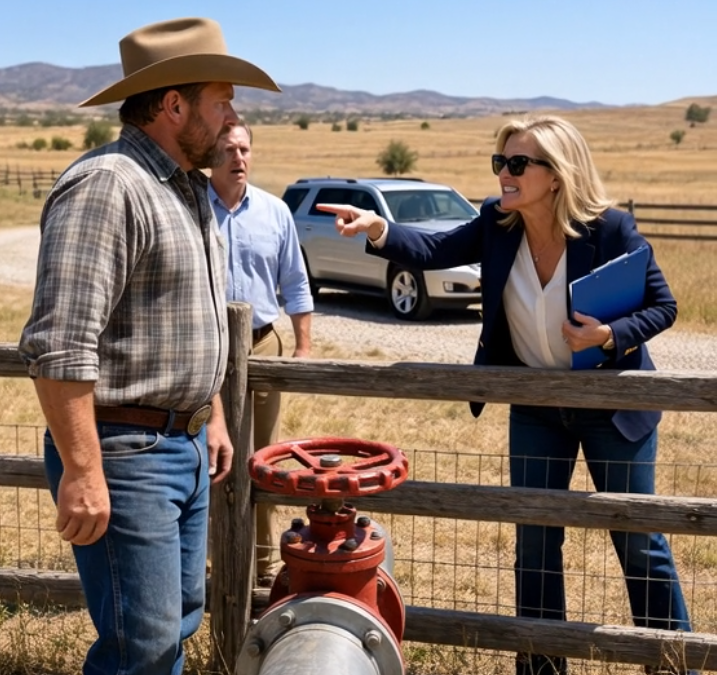
Melissa walked closer to the trench.
I climbed out and brushed dirt from my gloves.
“You can’t interrupt an essential utility whenever you feel like it,” she said.
“I didn’t.”
“You just shut off water to more than seventy homes.”
“I shut off a private line for scheduled maintenance.”
“You didn’t notify us.”
“I don’t need HOA permission to replace my own valve.”
She opened her binder.
The speed with which she found the right tab told me she had already used those pages in arguments before.
COMMON INFRASTRUCTURE.
She tapped a highlighted paragraph.
“Association-maintained utilities may not be altered, disconnected, or obstructed without board authorization.”
I read it.
Then looked at her.
“This says maintained.”
“Yes.”
“Not owned.”
Her expression changed slightly.
“The HOA is responsible for the system.”
“Responsible for what?”
“Repairs. Service. Community utility coordination.”
“Up to where?”
She frowned.
“What?”
“Where does your responsibility begin?”
“At the subdivision.”
“Exactly.”
She looked toward the exposed pipe.
“This line supplies the subdivision.”
“Yes.”
“Then it’s part of the system.”
“That doesn’t answer ownership.”
She closed the binder halfway.
“Everyone knows this is the neighborhood line.”
That sentence told me more than the policy.
Everyone knows.
No deed.
No easement granting title.
No utility dedication.
No purchase agreement.
Just collective certainty.
I had seen that kind of certainty before.
Landowners swear a fence has been the boundary “forever.” Families swear a private lane is public because school buses use it. People assume drainage ditches belong to the county because someone mows them. Hunters swear their grandfather had permission in 1978, therefore they have permission forever.
Then documents arrive and memory loses.
I did not tell Melissa that.
I stepped back into the trench.
“You have twenty minutes.”
“For what?”
“That’s about how long I need to finish.”
“You’re ignoring me.”
“No. I’m replacing a failing valve.”
Her jaw tightened.
“You understand residents have no water right now?”
“I do.”
“Families.”
“Yes.”
“Children.”
“Yes.”
“Elderly residents.”
“I understand how water works, Melissa.”
“Then act like it.”
That irritated me.
I looked up.
“I am. I’m replacing the part most likely to fail without warning.”
She stared down at me.
“What if the HOA refuses to accept this?”
I tightened the pipe wrench.
“Accept what?”
“That you can control community water whenever you choose.”
I stopped.
That was the first moment I saw the bigger problem.
This was not only about ownership.
It was about control.
Mesa Vista’s residents believed their water supply was governed through the HOA. If I truly owned the line, then a private ranch owner controlled the only physical connection between their homes and the well source they had depended on for years.
I looked toward the subdivision.
Rooflines were visible beyond the cedar trees. Sprinklers had gone silent. A few garage doors were open. A woman stood on a back patio in a robe, holding a coffee mug under an outdoor faucet that was not giving her anything.
“How long has the HOA believed it owns this line?” I asked.
Melissa seemed surprised.
“Always.”
“Since the neighborhood was built?”
“Yes.”
“Who told you?”
She hesitated.
“It’s in our infrastructure records.”
“Which record?”
“I just showed you.”
“That shows maintenance.”
“Same difference for practical purposes.”
“No.”
I shook my head.
“It really isn’t.”
A pickup stopped along the gravel road beyond my fence.
Then another car.
A man in shorts walked toward us, squinting through the morning light.
“Melissa?”
She turned.
“How long?”
“Mr. Walker shut it off without notice.”
I almost corrected her.
Then decided not to.
Another resident called, “My pressure’s gone.”
Melissa raised her voice slightly.
“We’re handling it.”
That sentence drew more people.
Within ten minutes, my quiet repair had become neighborhood theater.
People clustered along the fence. Whispers. Phones. A woman asked whether the pump had failed. Someone else asked whether I had a dispute with the HOA. One man said, “I thought they owned that well.”
They did not.
That was one thing even Melissa was not claiming.
My well permit had always been private. But somehow the distinction between the well and the transmission line had blurred over the years. The neighborhood used the water. The HOA collected money. The HOA sent notices. The HOA paid some invoices. Therefore, in the minds of the people standing at my fence, the system belonged to them.
I removed the old valve.
It came free with a metallic crack.
Rust and mineral deposits flaked onto the dirt. The inside looked worse than I expected. Corrosion had eaten around one edge. Another few months and that little leak could have become a split. Another year and it could have failed at midnight, or during a freeze, or in August when water demand was highest and patience lowest.
I placed the old valve on the white towel.
Melissa watched.
“You still have time to reconnect that.”
“I am reconnecting it.”
“To restore HOA service.”
“To finish my repair.”
She took out her phone.
“I don’t want to do this.”
I glanced at her.
“Do what?”
“Call the sheriff.”
Several residents visibly relaxed.
That amused me more than it should have.
People love official uniforms when they think the uniform will agree with them.
“Go ahead,” I said.
Melissa frowned.
“You’re serious.”
“Yes.”
“You want law enforcement involved?”
“No.” I picked up the new brass valve. “But you do.”
She made the call.
I wrapped the threads.
Hand-tightened the new fitting.
Then reached for the wrench.
My weatherproof folder sat unopened beside the tools. I carried that folder on almost every ranch project involving a boundary, utility, easement, or contractor. My father used to carry a cigar box full of folded papers behind the seat of his truck. I upgraded to plastic and zipper pockets, but the principle was the same.
A man who owns land long enough eventually learns that memory talks loud and paper talks last.
Inside were copies of my deed, county survey, well permit, original engineering plans, water-line installation records, recorded service agreement, and subdivision utility documents.
I did not pull them out.
Not yet.
Paper is strongest when somebody finally asks the right question.
Until then, it just becomes another thing people argue over.
A deputy arrived twenty minutes later.
No lights.
No siren.
County patrol truck.
Dust followed him up the drive.
Deputy Daniel Brooks stepped out.
He looked at the trench.
The pipe.
The crowd.
Melissa.
Then me.
“Morning.”
“Morning.”
Brooks was in his forties, broad through the shoulders, with the cautious calm of a man who had handled enough family fights, fence disputes, loose bulls, and drunk cousins at weddings to know volume was rarely connected to truth. He did not reach for his belt. He did not puff himself up. He just shut his truck door and let the scene explain itself.
Melissa moved first.
“Deputy, thank you.”
She gave him the clean version.
I had shut off essential neighborhood water. I had refused HOA instructions. The association controlled community utilities. Residents had been without service for almost an hour. There were elderly people, children, medical concerns, and community safety issues. She used phrases like “intentional disruption,” “unilateral control,” and “urgent intervention.”
Brooks listened.
No interruption.
No facial reaction.
When she finished, he looked at me.
“What’s being repaired?”
“Primary shutoff valve on the ranch supply line.”
“Failed?”
“Not yet. Stiff stem. Small leak beginning.”
“Water intentionally off?”
“Yes.”
“Expected duration?”
“Another fifteen or twenty minutes.”
Melissa stepped closer.
“That’s not the issue.”
Brooks looked at her.
“I’ll get there.”
That shut down the interruption immediately.
He looked into the trench.
“You own this property?”
“Yes.”
“The pump house?”
“Yes.”
“The well?”
“Yes.”
“The line?”
“Yes.”
Melissa shook her head.
“No.”
Brooks glanced between us.
“Okay.”
He pulled out a small notebook.
“That’s the disagreement.”
Simple.
Calm.
No drama.
“Do you have documents?”
I walked to the tailgate, unzipped the weatherproof folder, and placed the deed down first.
Then the survey.
Then the well permit.
Then the original line drawings.
Brooks removed his sunglasses and read slowly.
Melissa stood beside him. I could see her trying not to look nervous. Her hand stayed on the binder, but she was not tapping it anymore.
“This is the ranch parcel,” Brooks said.
“Yes.”
He traced the well location.
“Pump house here.”
“Yes.”
“Line runs east?”
“Correct.”
“Toward Mesa Vista.”
“Yes.”
“And where does HOA ownership begin?”
“That is what the connection agreement answers.”
I gave him the recorded service agreement.
He read.
The document dated back to before most current residents had moved into Mesa Vista. The original subdivision developer had negotiated with the ranch owner before me. He had not purchased the well. He had not purchased the line. He had not obtained ownership of the transmission system.
Instead, the developer obtained a connection right at a defined point near the eastern fence. The ranch owner agreed to supply water through a privately owned transmission line under specified terms. The subdivision assumed responsibility for distribution infrastructure after the connection point.
That was the arrangement.
Private source and line.
Community distribution afterward.
Somehow, during years of management changes and board turnover, the first half had been forgotten.
Brooks looked toward Melissa.
“Do you have something showing a later transfer?”
She opened the binder.
“HOA utility responsibilities.”
“Transfer,” he said.
She flipped pages.
“We maintain the system.”
“Which part?”
“The neighborhood supply.”
Brooks handed the binder back.
“That isn’t the same question.”
“I understand.”
Her voice had changed.
Less certain.
She searched infrastructure records, meeting minutes, maintenance invoices, budget summaries. Then she produced a page showing the HOA had paid for line work ten years earlier.
“This repair invoice.”
Brooks read it.
I did too.
Mesa Vista had reimbursed a contractor for work near the subdivision connection.
“Where was this done?” Brooks asked.
Melissa pointed vaguely.
“On the line.”
“That doesn’t establish title.”
She looked frustrated.
“So paying for repairs means nothing?”
“It means you paid for repairs.”
That was exactly the distinction.
I leaned against the truck.
No need to add anything.
Brooks opened my engineering drawing. He traced the line. The original pipe crossed my ranch from the well house to the eastern boundary. Then the subdivision distribution main began. Two systems touching at one point.
That physical connection had gradually become a mental merger.
Melissa looked at me.
“You knew residents thought it was ours.”
“No.”
“Come on.”
“I knew Mesa Vista used water from this source.”
“That is not what I said.”
“Then no.”
She shook her head.
“You’ve been controlling the supply for years without telling anyone.”
“I’ve been maintaining my property.”
“Same result.”
“Different legal reality.”
That did not comfort her.
I understood why.
Imagine learning your entire neighborhood depends on a private pipe crossing someone else’s ranch. The HOA believed it controlled everything important. The documents said otherwise.
Brooks asked, “Any recorded utility easement in favor of Mesa Vista over the ranch?”
Melissa kept searching.
Nothing.
I gave him the document index.
“No utility easement granting ownership.”
Brooks looked at me.
“What about access for repair?”
“Limited service access at the connection point, with notice.”
“Any right to operate your shutoff?”
“No.”
“Any prohibition against maintenance?”
“No.”
He nodded.
Then turned toward the crowd. Several residents had moved closer, gathered behind the fence line like spectators at a trial where everyone had brought coffee.
Brooks raised his voice only enough to be heard.
“Based on the documents I’ve reviewed here, Mr. Walker appears to be working on privately owned infrastructure located on his ranch.”
Whispers moved along the fence.
Melissa said, “You can’t seriously be saying one man can shut down an entire neighborhood.”
Brooks looked at her.
“I’m saying ownership and service obligations are civil matters governed by the recorded agreements.”
“What about the water?”
“He’s repairing it.”
“What if he doesn’t turn it back on?”
That question changed the mood.
Even I felt it.
The crowd got quieter. A man who had been filming lowered his phone. A woman near the road looked toward the subdivision where her house waited with dry taps. Melissa’s question was sharp, maybe unfair, but it reached the fear under everyone’s anger.
What if I did not?
Brooks looked toward me.
“Are you refusing service?”
“No.”
“Threatening to?”
“No.”
“Using the shutoff as leverage?”
“No. I closed it to replace a failing valve.”
Brooks nodded.
Then looked at Melissa.
“That matters.”
She folded her arms.
“But technically he could.”
“That’s not what I’m deciding.”
“Then who does?”
“Attorneys. Courts. Contracts. Utility regulators depending on structure.”
That was the right answer.
The sheriff was not there to become our utility commission. He was there because Melissa had described criminal interference.
There was not any.
I tightened the final connection.
“Ready.”
Brooks looked into the trench.
“No leaks?”
“Need pressure.”
I reached for the new handle.
Then stopped.
Not theatrically.
I needed to check downstream work.
“Melissa.”
“What?”
“Have residents opened faucets?”
“Probably.”
“Tell them to close everything except one test point.”
She stared at me.
“What?”
“If the line repressurizes with dozens of fixtures open, we get surging.”
She hesitated.
Then sent messages.
That moment mattered.
The conflict had not vanished. Her pride had not disappeared. The residents still looked at me like I had personally stolen every shower in Mesa Vista. But practical reality forced cooperation.
A resident at the nearest house volunteered to monitor pressure.
I slowly opened the brass valve.
Water hissed.
The pipe shuddered.
The pressure gauge climbed.
Twenty.
Thirty.
Forty-five.
Fifty-two PSI.
Held steady.
The pump cycled.
No leak.
No vibration.
No trouble.
Beyond the fence, someone shouted, “Water’s back!”
A few residents clapped.
I hated that.
Not because I was unhappy.
Because I did not want the repair turned into a show.
Brooks closed his notebook.
“Looks resolved for today.”
Melissa looked at him.
“Today?”
“The property question deserves formal review if the HOA disputes the records.”
She glanced at my folder.
Then at the pump house.
“That can’t be the end.”
“It isn’t.”
She was right.
That morning only revealed the problem.
It did not solve it.
After everyone left, I filled the trench, cleaned the old valve, stored my documents, and sat on my tailgate with a bottle of water that suddenly felt ironic.
For the first time, I thought seriously about the neighborhood.
I had inherited the service arrangement when I bought the ranch twelve years earlier. The attorney handling the purchase explained that Mesa Vista received water under an old recorded contract. I knew the line was mine. I assumed they knew too.
That assumption had been my mistake.
People on both sides had stopped reading.
My predecessor handled maintenance quietly. HOA boards paid occasional shared costs. Residents received water. Nobody had a reason to ask where private infrastructure ended and community infrastructure began.
Then I closed one valve.
Suddenly everybody cared.
Melissa emailed that evening.
Her tone was formal.
Mesa Vista HOA requests complete documentation regarding the water supply infrastructure and all rights affecting community service.
I forwarded it to my attorney, Grace Bennett.
Grace had handled ranch utility issues before. She had the kind of voice that made bad ideas sit down and rethink themselves.
She called within an hour.
“Did you really bring the deed to a valve replacement?”
“I carry documents.”
“You are the most predictable ranch owner alive.”
“Thank you.”
“That wasn’t praise.”
She reviewed everything.
Then said, “The HOA has a problem.”
“I know.”
“So do you.”
That got my attention.
“What problem?”
“They have seventy-three homes dependent on your line.”
“So?”
“So ownership is not the only question.”
I hated that phrase because I had already heard a version of it from Melissa.
Grace continued.
“You are obligated under the recorded supply agreement.”
“Yes.”
“You cannot arbitrarily cut service.”
“I didn’t.”
“I know.”
“But?”
“But if this relationship has become misunderstood for decades, we need to clarify it before a real emergency.”
That was sensible.
Annoyingly sensible.
“Set a meeting,” I said.
Three days later, Melissa arrived at Grace’s office with the HOA attorney, Charles Mercer.
No crowd.
No sheriff.
No fence line spectators.
Just documents.
That was better.
Charles started politely.
“We’re not disputing your ranch deed.”
“Good.”
“We’re reviewing infrastructure rights.”
“Good.”
Melissa looked uncomfortable with all the agreement.
Charles continued. “The HOA has historically maintained portions of the system.”
“Which portions?” Grace asked.
He had no clean answer.
They produced invoices.
Pipe repair.
Pump testing.
Emergency contractor call.
Valve inspection.
Some work occurred near the subdivision side. One repair appeared to have happened on my ranch.
I checked the date.
Eight years earlier.
Before Melissa was president.
I remembered it. A contractor had repaired a joint near the connection point. Mesa Vista reimbursed half the cost under the service agreement.
Grace found the invoice clause.
“Cost-sharing.”
Charles nodded slowly.
Not ownership.
The documents kept doing that.
Every piece the HOA thought proved control actually proved cooperation.
Then we reached the original developer agreement.
Charles read it twice.
“Private transmission line.”
“Yes,” Grace said.
“Connection at eastern boundary.”
“Yes.”
“Developer obtains service, not title.”
“Yes.”
Melissa leaned back.
“This was never given to us.”
“Maybe not to the current board,” I said.
“Then how were we supposed to know?”
That was fair enough that nobody answered too quickly.
Grace finally said, “By reviewing recorded infrastructure agreements before asserting ownership.”
Melissa’s jaw tightened.
“I wasn’t trying to steal his pipe.”
“I didn’t say you were.”
“The sheriff made it look ridiculous.”
“The sheriff asked for proof.”
“The residents think I lied.”
I finally understood part of her anger.
Not property.
Credibility.
She had stood in front of neighbors and told them the HOA owned something it did not. She had called law enforcement on a rancher replacing his own valve. Now she feared the consequences.
“I don’t think you lied,” I said.
She looked at me.
“You don’t?”
“I think you assumed.”
“That sounds better?”
“Not much.”
Charles interrupted.
“We need practical options.”
Correct.
That was the real meeting.
Grace proposed a formal infrastructure map, recorded clarification of ownership, updated maintenance responsibilities, emergency repair procedures, notice requirements, cost-sharing rules, service continuity protections, and annual document review for future HOA boards.
Most importantly, future board packets would include the actual service agreement.
Melissa resisted one point.
“The HOA needs emergency authority over the shutoff.”
“No,” I said.
“If you are unreachable?”
“Then there should be a defined emergency protocol.”
“That requires control.”
“No. It requires access under limited conditions.”
Grace drafted language.
Emergency responders or licensed contractors could access the valve only in defined circumstances, only after attempting contact, and only to prevent imminent damage or restore essential service.
That was reasonable.
Giving the HOA unrestricted physical control was not.
Melissa stared at the proposed clause.
“So you still control the water.”
“I own the infrastructure.”
“Which controls our water.”
“Yes.”
Her discomfort made sense.
But discomfort does not rewrite deeds.
“What do you want?” she asked.
“Redundancy.”
She frowned.
“What?”
“This line should not be your only supply.”
Charles looked at me.
“The development was built around this connection.”
“That was somebody else’s mistake.”
“Alternative source would cost millions.”
“Probably.”
Melissa stared.
“You want us to spend millions because you replaced a valve?”
“No. I want you to stop acting like seventy-three homes depending on one privately owned forty-year-old line is normal.”
That shut down the room.
Because it was not normal.
The line was aging. My valve had given us a warning.
What if the next failure was beneath twelve feet of soil?
What if the well pump died?
What if wildfire damaged the pump house?
What if I was hospitalized?
What if a legal dispute delayed repair?
What if the next ranch owner was not me?
Mesa Vista had no redundancy.
Suddenly the ownership revelation mattered less than the engineering reality.
Charles said, “We need a study.”
“Agreed.”
For the first time, Melissa and I were on the same side of a problem.
The HOA hired an independent utility engineer named Priya Desai. I allowed full access. She walked the route with ground-penetrating equipment, old plans, a GPS receiver, and a face that became less cheerful every hour.
She mapped the line.
Pressure.
Materials.
Age.
Connections.
Depth.
Condition.
Distribution network.
Her report was not comforting.
The ranch line remained functional. The pump house had adequate capacity. The well remained productive. The subdivision distribution lines were newer. But the private transmission line was the single point of failure.
One pipe.
One route.
One source.
The engineer recommended replacement planning, secondary interconnection with the municipal system several miles south, emergency storage, automated pressure monitoring, formalized access rights, and a funding plan that made every person in Mesa Vista suddenly understand why infrastructure meetings are never fun.
Residents were furious.
Not at me, mostly.
At the cost.
The municipal interconnection estimate exceeded two million dollars.
A special assessment discussion exploded.
That was when the story became ugly again.
A resident named Tom Sheffield started a petition.
Tom lived on Cedar Lantern Court in one of the biggest houses in Mesa Vista. He had a square jaw, a loud truck, and the kind of confidence that made people mistake volume for leadership. He cornered residents at the mailbox cluster. He posted in the neighborhood group. He called the engineering report “fear tactics.” He claimed I was holding Mesa Vista hostage.
One post read:
Ethan Walker can turn off our water whenever he wants. The HOA must condemn the line immediately.
Another:
No private rancher should control water for seventy-three families.
Another:
If we pay for repairs, we own it. End of story.
None of that was accurate.
Fear rarely waits for nuance.
Melissa called me three nights before the next HOA meeting.
“I need you there.”
“Why?”
“Residents think you plan to terminate service.”
“I’ve said the opposite.”
“They don’t believe board emails.”
“That’s your problem.”
“No.”
Her voice softened.
“It’s ours.”
That stopped me.
She was right.
I attended.
The clubhouse was packed.
People stared when I walked in. Some with embarrassment. Some with anger. Some with the exhausted fear of homeowners hearing the word assessment too many times in one week.
Melissa sat at the front table without her blue binder.
I noticed that.
Charles Mercer stood beside a projector. Grace sat beside me with a folder thick enough to knock a man unconscious.
Tom Sheffield stood before the meeting had fully started.
“Can you shut our water off whenever you want?” he asked me.
“No.”
“Why not?”
“Recorded service agreement.”
“What if you sell?”
“The agreement runs with defined property obligations.”
“What if the new owner hates us?”
“The agreement remains.”
“What if the line breaks?”
“We repair it.”
“Who pays?”
“That depends where and why.”
Not satisfying.
But honest.
Tom pointed toward the screen before anything was displayed.
“Why should we pay millions when you’ve been using our maintenance money for years?”
I looked at him.
“I haven’t.”
“The HOA repaired your pipe.”
“Under cost-sharing terms.”
“Same thing.”
“No.”
Grace put the original agreement on screen.
For twenty minutes, she explained it. No theatrics. No speech. Just the record.
Private ranch owns source and transmission line.
Subdivision owns downstream distribution.
Developer obtained service rights, not title.
Maintenance costs shared in defined situations because both benefit from continuity.
Emergency access limited.
No recorded transfer.
No HOA ownership of the ranch line.
Residents gradually understood.
Some looked embarrassed.
Some looked angry in a new direction.
Then Melissa stood.
This was the moment I expected her to protect herself.
Instead, she said, “I told several of you the HOA owned the entire water system.”
The room went quiet.
“That was incorrect.”
I looked at her.
She continued.
“I relied on association practice and incomplete infrastructure records. I should have verified the recorded documents before making that claim.”
No excuses.
No sheriff blame.
No attack on me.
That changed the room more than anything I could have said.
She put the engineering report on screen.
“Our larger problem isn’t that Ethan owns the line.” She paused. “Our larger problem is that we depend on one old line.”
Exactly.
The meeting shifted.
People stopped arguing about whether the HOA should seize my property.
They started arguing about capital planning.
Much healthier.
Still loud.
But healthier.
The board eventually approved a staged plan.
First, replace the oldest ranch-line section under a new cost-sharing agreement.
Second, install remote monitoring.
Third, build emergency storage.
Fourth, pursue municipal secondary interconnection over several years.
My ranch would continue supplying water.
Mesa Vista would gain redundancy.
Ownership remained unchanged.
That part was important.
Cooperation did not require surrender.
Construction started the following spring.
The first replacement section crossed my east pasture. I stood beside a contractor trenching machine while Melissa arrived wearing jeans instead of the blue blazer.
I looked at her boots.
“Learning?”
She looked down.
“Practical clothing.”
“I respect it.”
“Don’t get used to it.”
The old steel pipe came out in thirty-foot sections.
Rust.
Mineral scale.
Years.
One section had a deep corrosion pit less than an eighth inch from breakthrough.
The contractor showed it to us.
Melissa went pale.
“If that failed?”
“Major leak,” he said.
“How long did we have?”
He shrugged.
“Could’ve been tomorrow. Could’ve been three years.”
Melissa looked at me.
“Your valve really did save us from a bigger problem.”
“It exposed one.”
“That sounds like something you rehearsed.”
“I’ve had months.”
She laughed.
We replaced the line with modern material. Isolation valves. Monitoring. Better access points. Proper drawings. Proper labels. Recorded maintenance obligations.
One key difference:
Every component had ownership and maintenance labels in the engineering record.
No more guessing.
The municipal connection took longer.
Permitting.
Right-of-way.
Money.
Residents hated assessments.
The HOA found grants. County assistance. A utility partnership. A low-interest infrastructure loan that made everyone unhappy but nobody homeless.
Eventually, Mesa Vista had a second source.
The first time they tested it, I shut my ranch supply valve voluntarily.
Melissa stood beside me.
“Ready?”
“Ready.”
I closed it.
No panic.
No angry neighbors.
No sheriff.
The subdivision pressure dipped slightly.
Then stabilized through the municipal interconnection.
Melissa checked the live monitor.
“All homes holding.”
I looked at the brass handle.
Different valve now.
New system.
Same principle.
“How does it feel?” she asked.
“What?”
“Knowing you’re not the only water line anymore.”
“Fantastic.”
She looked surprised.
“You’re serious.”
“Yes.”
“I thought you’d hate losing leverage.”
“I never wanted leverage.”
“You had it.”
“That’s different.”
I reopened the ranch supply.
The systems balanced.
Redundancy.
That was the real victory.
Years after the original confrontation, people around Mesa Vista still told the story wrong.
According to some versions, I shut off the neighborhood because the HOA fined me.
Never happened.
According to others, the sheriff “awarded” me the water system.
Also wrong.
One person told a new resident I had bought the subdivision’s well out from under them.
Completely backwards.
The truth was much quieter.
I turned off a valve I owned.
For maintenance.
An HOA president assumed the line belonged to the association.
She called the sheriff.
The sheriff read the documents.
The line had always been private.
That discovery exposed a deeper infrastructure problem.
Then we fixed it.
That is the whole story.
But the important part came after.
The old valve still sits on my workshop shelf. I cleaned it, mounted it beneath a framed copy of the original survey, and put a small brass plate below it that reads:
8:12 A.M. — THE DAY EVERYONE CHECKED THE PAPERWORK.
Grace saw it once.
“You are unbearable,” she said.
“I know.”
Melissa thought it was funny.
Eventually.
One afternoon, Deputy Brooks walked into the feed store while I was buying mineral blocks.
He recognized me.
“How’s the water empire?”
“It was never an empire.”
“I know.”
“Two-source system now.”
“Good.”
“You started all of that.”
He shook his head.
“I asked a question.”
“Exactly.”
“What question?”
“Who owns it?”
He smiled.
“Seems obvious.”
“It was.”
“People usually don’t call us when obvious things are obvious.”
Fair.
Before leaving, he said, “You know what I remember?”
“What?”
“Everyone was talking except the documents.”
That was a good line.
I remembered it.
Ownership disputes often sound complicated because people start with conclusions.
The HOA controls it.
My father said so.
We’ve always used it.
Everyone knows.
The county maintains it.
The board pays for repairs.
Most of those statements can be true without answering ownership.
The ranch taught Mesa Vista that.
Mesa Vista taught me something too.
Knowing what you own does not mean you understand how much other people depend on it.
I had looked at the transmission line as part of ranch infrastructure.
Technically correct.
Seventy-three families looked at it as water.
Also correct.
Once those two truths collided, hiding behind the deed would have been just as irresponsible as Melissa hiding behind her binder.
Property rights mattered.
So did service obligations.
So did engineering.
So did continuity.
That was why I never threatened to stop service. Never demanded money beyond agreements. Never used the line as leverage.
What would that have proved?
That legal ownership can become reckless?
I already knew that.
The better answer was to clarify the record and remove the single point of failure.
Melissa remained HOA president.
Some residents wanted her removed after the sheriff incident.
I spoke against it.
That surprised people.
Tom Sheffield asked me after one meeting, “Why defend her?”
“I didn’t.”
“You said she should stay.”
“I said one bad assumption isn’t enough reason to throw out someone willing to correct it.”
“She called the sheriff on you.”
“Yes.”
“She accused you of taking neighborhood water.”
“Yes.”
“And?”
“She admitted she was wrong.”
Tom frowned.
“That makes everything okay?”
“No. It makes fixing things possible.”
Melissa heard about the conversation.
She mentioned it weeks later.
“You didn’t need to do that.”
“I know.”
“Why?”
“Because I don’t want another president spending six months learning the infrastructure.”
She laughed.
“So purely selfish.”
“Mostly.”
The real reason was simpler.
Melissa had been arrogant that first morning.
But so had I.
I knew the line was mine, so I assumed that fact answered every practical concern.
It did not.
Had she not arrived, had nobody called the sheriff, had the residents not gathered along my fence, I would have changed the valve and driven away. The neighborhood would have continued assuming ownership. The old line would have continued aging. The single-source risk would have remained.
Maybe the pipe would have failed during August heat.
Maybe fire season.
Maybe a freeze.
The argument exposed something we all needed to see.
That does not make the argument good.
It makes the outcome useful.
Five years later, I sold part of the ranch.
Not the pump-house tract.
I retained that.
The buyer asked during due diligence, “What is this Mesa Vista water agreement?”
I smiled.
Then handed him a binder.
Not blue.
Gray.
Inside were the recorded ownership clarification, updated utility maps, maintenance protocol, emergency access rules, service agreement, secondary interconnection record, monitoring responsibility, and every note a future owner would need to avoid repeating the same mess.
He looked at the thickness.
“Complicated?”
“No,” I said. “Detailed.”
There is a difference.
Complicated means nobody knows.
Detailed means the answers exist.
That was the transformation.
Before the valve repair, Mesa Vista had an important system everybody “understood.”
Afterward, we had a system everybody could verify.
I prefer the second.
Melissa eventually retired from the HOA board.
At her final meeting, residents gave her a framed photo of the neighborhood entrance. I attended because she asked. After the formal part, she handed me a small box.
“What is this?”
“Open it.”
Inside was a miniature brass valve mounted on wood.
Engraved beneath it were the words:
RESPONSIBLE IS NOT THE SAME AS OWNING.
I laughed.
“You remembered.”
“I hated that sentence.”
“I could tell.”
“You said it like you’d been waiting your whole life.”
“I hadn’t.”
She smiled.
“Now I tell new board members.”
“That is disturbing.”
She became serious.
“You know what bothered me most that morning?”
“The sheriff disagreed with you?”
“No. That everyone looked at me for answers and I didn’t have the one document that mattered.”
I nodded.
“I built my whole confidence around practice,” she said.
“Practice matters.”
“Until it conflicts with title.”
“Yes.”
She looked toward the neighborhood.
“I don’t think I understood the difference.”
“Most people don’t until somebody digs a trench.”
She laughed.
Before she left, she asked, “Do you still have the old valve?”
“Yes.”
“Of course you do.”
“Workshop shelf.”
“With the survey?”
“Yes.”
“You really are impossible.”
“Consistent.”
She shook her head.
Then drove away.
These days, the ranch water system is almost boring.
That is the highest compliment infrastructure can receive.
The pump runs.
The ranch gets water.
Mesa Vista receives contracted supply.
Municipal backup stands ready.
Remote monitoring alerts both sides if pressure changes.
Isolation valves let repairs happen without shutting down everything.
Every important access point is documented.
No one arrives with a binder demanding control.
No one calls the sheriff when I perform maintenance.
If I need to shut down the ranch side, I notify the HOA under the updated protocol. Not because they own it. Because cooperation is cheaper than chaos.
They notify residents.
We perform the work.
Service switches to backup if needed.
No drama.
That is progress.
Sometimes I stand beside the pump house in the morning and remember the crowd.
The same windmill turns.
Same pasture.
Same smell of cedar and dust.
But I can still see Melissa beside the trench.
Blue binder against her side.
Certain.
“Everyone knows it belongs to the HOA.”
That sentence became the entire lesson.
Everyone can know something.
Everyone can repeat it.
Everyone can organize around it.
Everyone can budget for it.
Everyone can maintain it.
And everyone can still be wrong about who owns it.
Truth does not become weaker because a crowd misunderstood it.
But ownership does carry responsibility when other lives depend on what you own.
That is the part I learned later.
The first half of the story was easy.
My line.
My deed.
My valve.
My ranch.
The second half was harder.
Their homes.
Their families.
Their water.
Their dependence.
Both halves mattered.
If I had treated ownership like unlimited power, I would have become exactly the person Melissa feared.
If Melissa had treated community need like automatic title, she would have turned convenience into confiscation.
Instead, we ended somewhere better.
The line remained private.
The neighborhood gained security.
The HOA learned to read property records.
I learned to communicate before closing valves.
And a forty-year-old mistake in institutional memory finally got corrected.
That original valve is corroded almost beyond recognition now.
The handle barely moves.
Sometimes visitors ask why I keep a worthless piece of metal.
I tell them, “Because that valve shut off more than water.”
They usually look confused.
I do not explain further.
It shut off assumption.
For an hour.
Long enough for everyone to ask questions they should have asked years earlier.
Where does the line begin?
Where does it end?
Who owns the well?
Who owns the transmission pipe?
Who owns the neighborhood distribution?
Who can maintain what?
Who pays?
Who gets access in an emergency?
Who has authority?
Those questions built a better system.
And they began because I reached into a trench one Texas morning and turned one old handle clockwise until the water stopped.
I thought I was replacing a valve.
Melissa thought I was taking control of the neighborhood.
The residents thought their HOA owned the line.
The sheriff thought everyone should read the paperwork.
Only one of us had the simplest idea.
And in the end, he was right.
The fastest way to settle a property argument is not to ask who sounds certain.
It is to ask what was actually recorded.
The water line had belonged to my ranch before Mesa Vista existed.
It still did after the sheriff left.
It still does today.
The difference is that now nobody has to guess.
And that is worth far more than winning an argument beside a trench.

