I Rode My Blind 8-Year-Old Granddaughter to School in a Harley Sidecar—Three Days Later, Child Services and Two Police Officers Were Standing on My Porch
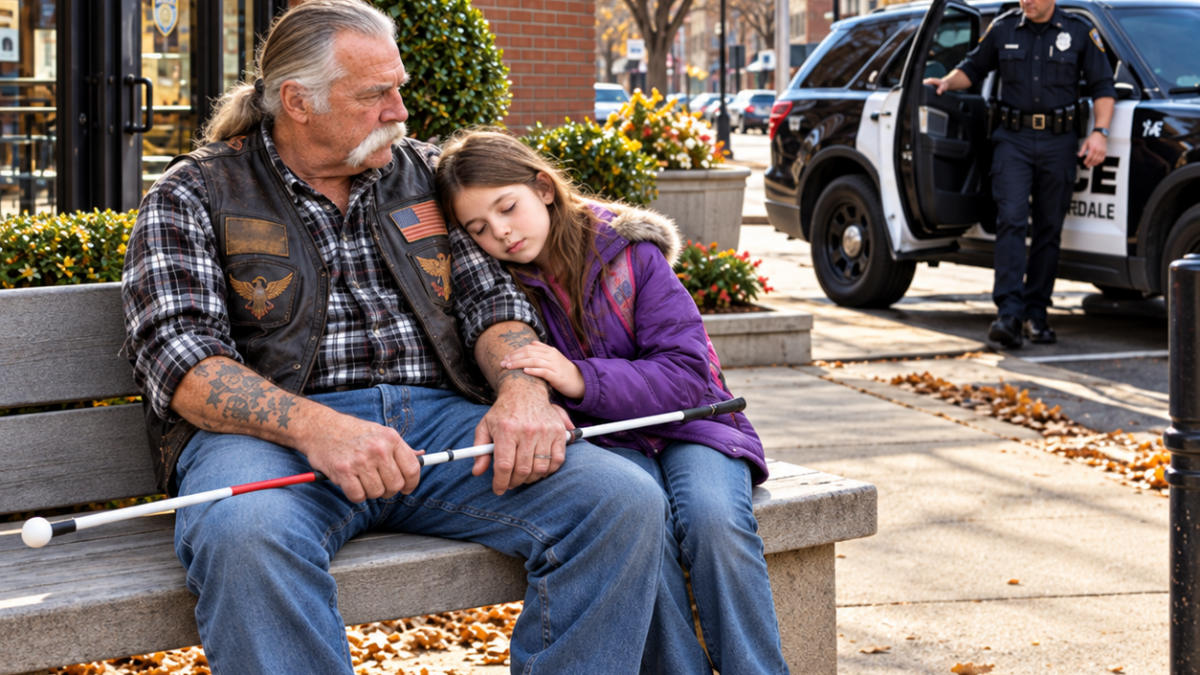
I Rode My Blind 8-Year-Old Granddaughter to School in a Harley Sidecar—Three Days Later, Child Services and Two Police Officers Were Standing on My Porch
Three days after I rode my blind eight-year-old granddaughter to school in a Harley sidecar, two police officers and a Child Protective Services investigator were standing on my porch.
They called what I did reckless, her other grandparents called it proof that a man like me had no business raising her, and suddenly the little girl I had cared for since her parents died could be taken from my home.
But when Sophie eventually stood in a courtroom with her white cane and told the judge what the motorcycle sounded like to her, every adult in that room stopped looking at me the same way.
My name is Frank Ellis.
I’m sixty-two years old, live at the end of Route 9, and ride a Harley Ultra Classic.
Sophie is eight.
She was born blind.
She also happens to be the brightest thing left in my life.
Two winters ago, my daughter Rebecca and her husband Kyle were killed when a drunk driver crossed the median.
Sophie survived.
After the funeral, she came home with me.
So I learned.
Braille labels on every drawer.
Raised markers on cabinet handles.
Tactile knobs on the stove.
Different rug textures near each doorway.
A rope guide from the back porch to her swing.
Wind chimes along the fence so she always knows where the yard ends.
I didn’t do any of that because I thought it made me special.
I did it because I’m her Papa.
Then one Friday morning my old pickup died.
Sophie was standing at the door in her purple coat, white cane in one hand, waiting for a school field trip to an apple orchard outside Mill Creek.
She had been counting down for weeks.
The only other vehicle I had was my Harley.
Beside it sat an old sidecar I had built years earlier for Rebecca when she was a little girl.
Reinforced frame.
Five-point harness.
A pink stripe Rebecca had insisted on because plain black was “too serious.”
When Sophie touched that stripe, she smiled.
“This was Mama’s?”
“Yes.”
That decided it.
I strapped her in.
Helmet.
Harness.
Three checks.
Then I started the engine.
The Harley rumbled beneath us.
Sophie gasped.
Not from fear.
From wonder.
“I can feel it.”
“Feel what?”
“The sound.”
I drove twenty miles an hour down Route 9 with my flashers on.
Cars passed us.
I didn’t care.
At school, kids cheered when we arrived.
Sophie was smiling so hard I thought Rebecca would have cried if she could have seen her.
For one minute, I believed I had done something right.
Monday morning, Child Protective Services arrived.
There had been a complaint.
Endangerment.
Custody.
My stomach dropped.
The petition came from Sophie’s other grandparents, Harold and Diane Whitmore.
They had always thought I was too rough.
Too old.
Too rural.
Too much motorcycle and motor oil.
PART2:
Not the kind of man who should raise a blind little girl.
Someone had photographed Sophie getting out of the sidecar.
Now that picture was evidence against me.
The caseworker walked through my house.
She saw the braille labels.
The tactile maps.
The rope guides.
The wind chimes.
Then she interviewed Sophie alone.
When they finished, Sophie came outside and wrapped both arms around my leg.
“She asked about the motorcycle,” she told me.
My throat tightened.
“What did you say?”
Sophie rested her head against my knee.
“I told her it sounds like Papa’s heart.”
I couldn’t breathe.
“It’s loud,” she added, “but it means somebody’s here.”
Three weeks later, we walked into family court.
The Whitmores sat across from me with an expensive lawyer.
Sophie sat in the back holding her white cane.
The caseworker testified first.
Then their attorney stood and asked the question I had been dreading:
“Would you call transporting a blind eight-year-old child in a motorcycle sidecar appropriate?”
The courtroom became silent.
And after the caseworker answered, the judge looked toward Sophie.
“Would you like to tell me where you want to live?”
She stood.
Tap.
Tap.
Tap.
Her white cane carried her toward the bench.
Then Sophie lifted her face toward the judge and began explaining why she wanted to stay with me.
And the last thing she said about that old Harley made even her grandmother start to cry…

