I Inherited a 2,400-Acre Private Lake—Then the HOA Tried to Fine Me on My Own Land, So I Raised Their Water Rent 500% Overnight
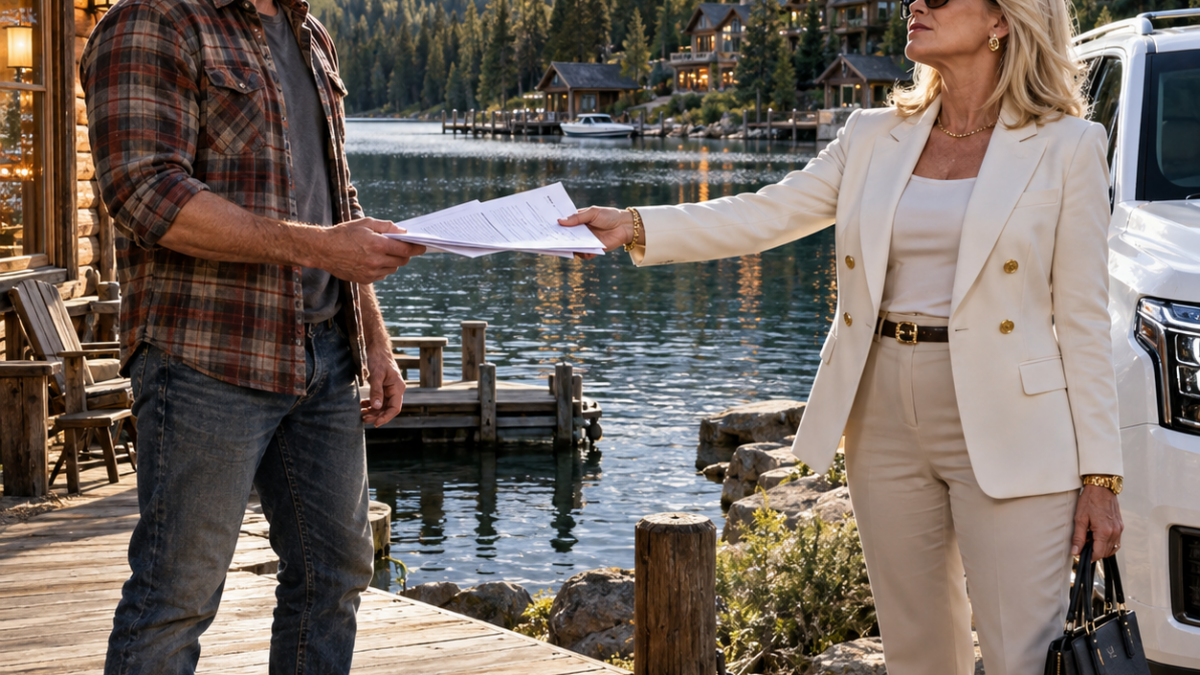
I Inherited a 2,400-Acre Private Lake—Then the HOA Tried to Fine Me on My Own Land, So I Raised Their Water Rent 500% Overnight.
Three weeks after I inherited a 2,400-acre private lake in the Colorado backcountry, the president of a luxury HOA walked onto my dock, handed me thousands of dollars in fines, and calmly informed me that I didn’t have the right to use my own water.
She thought I was a broke electrician who would fold under inspections, liens, legal threats, and public humiliation, but she had no idea my uncle had spent thirty years documenting the secret pipes, hidden docks, and unauthorized infrastructure her neighborhood had quietly built across our land.
By the time Vanessa Holloway realized the lake, the pipeline, and every gallon flowing into her three hundred homes legally belonged to me, I wasn’t fighting her fines anymore—I was sending Millbrook Estates a new access agreement with a 500% increase in rent effective immediately.
My name is Ethan Cole.
Three weeks before Vanessa Holloway drove onto my property in a white SUV that looked cleaner than most operating rooms, I was replacing breaker panels in two-bedroom condos outside Denver.
I was thirty-eight years old.
Divorced.
Behind on three bills.
Living in a one-bedroom apartment over a dry cleaner.
Driving a ten-year-old work van that made a clicking noise every time I turned left.
If you had told me then that I was about to inherit one of the largest privately held lakes in that part of Colorado, I would have asked what you were selling.
I had never owned anything significant.
Not really.
My marriage had ended two years earlier, and the divorce had taken what little equity I had in a townhouse.
My electrical contracting business was technically mine, but the bank had a better argument.
Even my tools had serial numbers attached to insurance paperwork and financing agreements.
So when a lawyer named Martin Ellison called and asked whether I was Ethan Cole, nephew of Ezra Blackwood, I assumed there was a debt involved.
Uncle Ezra was one of those family members who existed mostly in stories.
My mother’s older brother.
Quiet.
Stubborn.
Never married.
Lived somewhere in the mountains.
Apparently hated telephones.
As a kid, I saw him maybe five times.
He would show up at Christmas wearing the same brown jacket, bring me something strange instead of a normal toy, and disappear again before New Year’s.
Once he gave me a compass.
Another year, a pocketknife.
When I was thirteen, he mailed me a book on basic electrical theory with a note that said:
Learn something nobody can take from you.
I still have that book.
When my mother died, Ezra came to the funeral.
He stood in the back.
We spoke for maybe ten minutes.
Then life moved.
I got married.
Started working.
Got divorced.
Buried myself in jobs.
Ezra became another name I meant to call eventually.
Eventually ran out.
“He left you property,” Martin said.
“How much property?”
“Approximately twenty-four hundred acres.”
I laughed.
Martin didn’t.
“And a lake.”
“What kind of lake?”
There was a pause.
“The large kind.”
I drove out two days later.
Six hours from Denver.
PART2:
Then another forty-five minutes on roads that narrowed from pavement to gravel to something that looked more like an argument between tire tracks and forest.
The cabin appeared first.
Weathered cedar.
Stone chimney.
Tin roof patched in three shades of gray.
Then the trees opened.
And the lake appeared.
I stopped the truck.
For a long time, I didn’t get out.
Water stretched farther than I expected.
Dark blue.
Mountain-fed.
Pines rising around most of the shoreline.
Rock outcrops catching afternoon sun.
Not a pond.
Not a recreational puddle.
A real body of water.
Private.
According to the deed, almost all of it sat inside the Blackwood tract.
Ezra had owned it.
Now I did.
The first morning I woke in the cabin, the silence was so complete it almost felt loud.
No upstairs neighbor.
No traffic.
No compressor from the dry cleaner.
No phone vibrating with work orders.
No lawyer emails.
Just wind moving through pine needles.
I walked barefoot onto the dock with coffee.
The boards needed replacement.
Half the railing leaned outward.
A section near the end had warped enough to catch a boot.
Perfect.
Something I could fix.
I understood broken wood.
Wiring.
Pumps.
Things with visible failures.
People were harder.
I had been at the cabin eleven days when Vanessa arrived.
I heard tires before I saw the SUV.
Slow.
Deliberate.
A vehicle approaching a place this remote usually means one of two things.
Lost.
Or intentional.
This was intentional.
The white SUV stopped twenty feet from the porch.
Driver’s door opened.
Vanessa Holloway stepped out.
Mid-fifties.
Blonde hair perfectly arranged.
White blazer.
Dark slacks.
Sunglasses.
Heels completely wrong for gravel but somehow worn like an accusation against the gravel for existing.
She carried a leather folder.
I was halfway through replacing a dock board.
“Are you Ethan Cole?”
I set the hammer down.
“Depends who’s asking.”
No smile.
“Vanessa Holloway. President of Millbrook Estates Homeowners Association.”
She said president like governor.
I looked past her.
“No idea what that is.”
That irritated her.
Only slightly.
“Millbrook Estates is the residential community beyond the eastern tree line.”
“How far?”
“Approximately a mile.”
“I haven’t seen it.”
“We value privacy.”
That became funny later.
She opened the folder.
“I understand you’ve inherited the Blackwood property.”
“Correct.”
“Then we need to discuss several compliance issues.”
That word hit me wrong.
“Compliance with what?”
She extended the paperwork.
I took it.
The top read:
NOTICE OF VIOLATION.
Unauthorized shoreline use.
Non-compliant dock.
Improper exterior maintenance.
Unregulated access to managed community water.
I looked at Vanessa.
Then at the lake.
Then back at the page.
“Managed community water?”
“Yes.”
“This lake?”
“Yes.”
I laughed once.
She didn’t.
“Millbrook Estates maintains shared usage and management rights over the water system.”
“According to who?”
“Our governing documents.”
“Am I in your HOA?”
“No.”
“Then why am I holding HOA violations?”
“These issues extend beyond association boundaries.”
“How?”
“The lake and its distribution infrastructure are part of a long-established system serving Millbrook.”
I looked at the first page again.
Initial fine:
$3,500.
Potential daily penalties.
Dock removal.
County enforcement.
“Vanessa.”
“Yes?”
“This lake is on my deed.”
“Ownership and usage rights are not the same thing.”
That sounded rehearsarsed because it was.
I folded the page.
“Show me the easement.”
Her expression changed so slightly most people would have missed it.
I had spent fifteen years around clients trying not to admit they forgot permits.
I recognized the pause.
“The HOA’s counsel maintains all relevant documentation.”
“Good.”
“Good?”
“Have them send me the easement.”
Vanessa’s mouth tightened.
“You have thirty days.”
“For what?”
“To bring the dock into compliance and address unauthorized access.”
“Unauthorized access by me.”
“Yes.”
“To my lake.”
“The situation is more complex than you’re presenting it.”
“Then the easement should clear it up.”
She took off her sunglasses.
Blue eyes.
Cold.
“You’re new here, Mr. Cole.”
“Yes.”
“Your uncle understood the arrangement.”
That sentence landed harder than everything else.
“What arrangement?”
“He understood how our two properties functioned together.”
“Did he sign something?”
She didn’t answer directly.
“Ezra was difficult.”
I stepped off the dock.
“That’s not what I asked.”
Vanessa glanced toward the cabin.
Paint faded.
Stack of lumber.
My old van.
Then me.
I knew that look too.
Assessment.
She thought she knew exactly how much pressure I could afford.
“You don’t want this to become expensive,” she said.
I smiled.
“That sounds like advice.”
“It is.”
“No.”
I handed her the violation pages back.
“That’s a threat dressed like advice.”
Her face hardened.
“You should understand your position.”
“What position?”
“The one where you have significantly less control over this property than you appear to believe.”
She turned.
Walked back to her SUV.
Then looked once more over her shoulder.
“Thirty days.”
She drove away.
I stood beside the dock long after the sound disappeared.
The lake stayed calm.
That made me angry for some reason.
Maybe because Vanessa had arrived carrying certainty into a place older than both of us.
I picked up the hammer.
Couldn’t focus.
Went inside.
Spread the inheritance documents across Ezra’s kitchen table.
Deed.
Survey.
Tax receipts.
Old maps.
Twenty-four hundred acres.
Lake included.
No visible easement in the packet.
That didn’t mean there wasn’t one elsewhere.
Property law is full of things that exist outside the folder you’re holding.
Recorded rights.
Utility corridors.
Water agreements.
Prescriptive claims.
I knew enough to know what I didn’t know.
But one question wouldn’t leave me.
Why had Vanessa come so quickly?
Not a welcome visit.
Not an introduction.
Eleven days after I arrived.
Violation notice ready.
Final notice ready.
She wasn’t reacting to me.
She had been waiting for whoever inherited the property.
The next morning, I started walking.
I followed the shoreline east.
The first quarter mile looked untouched.
Trees.
Rock.
Needles.
Then I found a path.
Not a hiking trail.
Too narrow.
Too straight.
Brush cut deliberately.
Ground compacted by repeated traffic.
I followed it.
Fifty yards in, I found a dock.
Small.
Low.
Fresh screws.
Weathered boards.
A cleat bolted into one corner.
I crouched.
Ran my hand underneath.
New structural lumber beneath old surface boards.
Somebody maintained it.
I continued.
Second dock.
Third.
Five total before lunch.
None on my maps.
None visible from the cabin.
Then I heard an engine.
Old pickup.
Faded blue Ford appeared near the cabin as I returned.
The driver was almost sixty.
Sunburned face.
Gray beard.
Work shirt.
Boots that looked like boots, not fashion.
He got out.
“You Ethan?”
“Who’s asking?”
He smiled.
“Heard Ezra rubbed off on you.”
That got my attention.
“Tom Alvarez.”
He pointed west.
“My place is over the ridge.”
“You knew my uncle?”
“Thirty-two years.”
I looked at the pickup.
Then him.
“You know Vanessa Holloway?”
Tom’s smile disappeared.
“She already came.”
“Yesterday.”
“She tell you your lake belongs to her HOA?”
“Pretty much.”
Tom shook his head.
“Woman doesn’t waste time.”
“You know about the docks?”
“All of them.”
“How many?”
“More than five.”
I crossed my arms.
“Permission?”
Tom looked toward the water.
“Not from Ezra.”
That sentence opened everything.
I invited him onto the porch.
He accepted.
Unlike Vanessa, he wiped his boots first.
I made coffee.
Tom drank it black.
“Your uncle fought them for years.”
“The HOA?”
“Developers first. HOA after.”
“When was Millbrook built?”
“Started around twelve years ago.”
“Ezra objected?”
“From day one.”
“To what?”
Tom gave me a long look.
“Come with me.”
We took his truck.
Ten minutes through forest.
Then a clearing.
Gravel.
Tire tracks.
Concrete access box.
And a blue pipe.
Six inches wide.
Maybe more.
It came from the lake side and disappeared underground toward Millbrook.
I got out before the truck stopped completely.
“What the hell is that?”
Tom shut the door.
“That is why Vanessa came.”
I touched the pipe.
Cold.
A faint vibration inside.
Active.
“Water main.”
“Yes.”
“From my lake.”
“Yes.”
“To Millbrook.”
“Yes.”
“How many houses?”
“About three hundred.”
My stomach went still.
Not dropped.
Still.
There’s a kind of shock where your brain becomes unusually clear.
“How long?”
“Ten years at least.”
“Ezra let this happen?”
“No.”
“Then how is it here?”
Tom rubbed one hand across his beard.
“You ever see someone spend enough money making a wrong thing complicated that everybody gets tired before it gets corrected?”
“Yes.”
“That.”
He explained.
The original developer, Daniel Mercer, bought land bordering Ezra.
Promised a luxury residential community.
Needed water.
County wells were expensive and unreliable.
Lake access made the project far more valuable.
They approached Ezra.
He refused.
They returned with money.
He refused again.
They offered partnership.
Still no.
Then permits started getting strange.
Survey crews crossed the property.
Ezra chased them off.
Construction started near the boundary.
Utility trenches appeared.
Ezra hired attorneys.
Letters.
Temporary injunction attempts.
County hearings.
The developer argued historical drainage and emergency-use rights.
Nothing stuck permanently.
But nothing stopped the construction either.
One pipe section became another.
By the time Ezra got a clear court date, parts of Millbrook were already occupied.
Then the argument changed.
Now there were families.
Children.
Mortgages.
Essential services.
Disrupting the water system would harm innocent residents.
Ezra refused to shut it off for exactly that reason.
The developers learned something from his decency.
They could use it against him.
“So he just lived with it?”
“No.”
Tom stared at the pipe.
“He documented everything.”
“Where?”
“County.”
That afternoon another vehicle arrived.
County inspection truck.
Dale Whitaker.
Clipboard.
Fourteen violations.
Electrical.
Septic.
Structural.
Runoff.
Land classification.
Improper shoreline improvement.
Total possible fines:
$47,200.
I almost admired the speed.
Vanessa had threatened pressure.
Twenty-four hours later pressure had a county logo.
Dale walked the property.
I made him show me every violation.
Electrical?
I had just upgraded the panel properly.
Safe.
Septic?
Old but functioning.
No leakage.
Foundation?
Ugly, not failing.
Roof?
Worn, not dangerous.
Drainage?
Natural grade.
By the end Dale looked embarrassed.
On the porch I asked:
“What’s actually unsafe?”
He stared at his clipboard.
“Nothing requiring emergency correction.”
“Then why fourteen violations?”
“Complaints.”
“From Millbrook.”
He didn’t answer.
“Vanessa.”
Still nothing.
Then, quietly:
“Off the record?”
“Sure.”
“This is heavier than normal.”
“Meaning?”
“Somebody wants movement.”
“Movement off the property?”
He sighed.
“I didn’t say that.”
“You didn’t have to.”
Before leaving he looked at me.
“Sixty days.”
“For what?”
“That’s the timeline before penalties escalate.”
I watched him drive away.
Then I went into Ezra’s bedroom.
I had avoided it.
Not because it was emotional.
Because it felt private.
His clothes remained in the closet.
Boots near the wall.
Old reading glasses on the nightstand.
A wooden trunk sat beneath the window.
Locked.
I found the key taped underneath his desk.
Inside were maps.
Not decorative.
Working maps.
Survey notes.
Pipe routes.
Photographs.
Certified letters.
A notebook.
The first page said:
IF THEY TELL YOU IT’S COMPLICATED, ASK WHO BENEFITS FROM THE COMPLICATION.
I sat on the floor.
Read for hours.
Ezra had documented everything.
Dates.
Vehicles.
Contractors.
Meetings.
Promises.
Names.
Vanessa appeared six years earlier.
At first as HOA treasurer.
Then vice president.
Then president.
According to Ezra’s notes, she became the main person insisting Millbrook possessed “community water rights.”
But nowhere in the trunk was a signed agreement.
One note was underlined three times.
NO EASEMENT.
NO WATER TRANSFER.
NO SHORELINE LICENSE.
THEY ARE COUNTING ON TIME TO TURN TRESPASS INTO ACCEPTANCE.
The next morning I drove to the county records office.
Old courthouse.
Wood counters.
File smell.
A woman named Evelyn Carter looked at my map.
“Blackwood property?”
“Yes.”
“You’re Ezra’s nephew.”
“Yes.”
She studied me.
Then said:
“I wondered when you’d come.”
That is never a sentence you want from a county records clerk.
She disappeared.
Returned with three thick files.
Original deed.
Modern surveys.
Ezra’s filings.
The original ownership record went back more than a century.
Blackwood family.
Twenty-four hundred acres.
Lake inside boundary.
Taxes paid every year.
No sale.
No recorded transfer.
No water-right conveyance.
No utility easement to Millbrook.
Nothing.
Then Evelyn placed a modern utility overlay in front of me.
Blue line.
Lake intake.
Main pipe.
Straight through the Blackwood property.
Branches into Millbrook.
“There’s no easement?”
“None recorded.”
“Could there be an unrecorded agreement?”
“Possible.”
“Any evidence?”
“No.”
“Ezra ever acknowledge one?”
“No.”
“Pay anything?”
“No.”
“Accept anything?”
“No.”
I leaned back.
“So they’ve been moving water across private land without authorization for more than a decade.”
“Yes.”
“And my uncle objected repeatedly.”
“Yes.”
“That matters.”
“A lot.”
I read Ezra’s letters.
Early ones polite.
Then sharper.
One from six months before he died:
You built your system on land you don’t own.
You run water you don’t control.
You have spent years converting delay into an excuse for entitlement.
I have never consented.
I will never consent.
Do not mistake my refusal to harm residents by shutting down service as recognition of your rights.
That letter changed everything.
Because it destroyed the easiest argument.
Consent.
Ezra had let water continue because innocent homeowners relied on it.
But he had never agreed that Millbrook had a permanent right.
I drove back to the cabin with copies.
Tom was waiting.
“Well?”
“No easement.”
He smiled.
Not happy.
Relieved.
“I knew Ezra wasn’t crazy.”
“People called him crazy?”
“Some.”
“Vanessa?”
“Frequently.”
That hurt.
Not because I had been close to Ezra.
Because suddenly I understood his isolation.
A stubborn old man living by a lake telling everyone a wealthy neighborhood was stealing his water.
Easy story to dismiss.
Harder when the maps agree with him.
I hired Rachel McKenna two days later.
Rachel was a property and water-rights attorney in Fort Collins recommended by a contractor I trusted.
She arrived in a black Tacoma wearing jeans and carrying two legal pads.
No theatrics.
“Show me everything.”
I did.
Lake.
Pipe.
Docks.
County records.
Ezra’s letters.
Violation notices.
Rachel read for almost three hours.
Then asked:
“Have you touched the pipe?”
“No.”
“Good.”
“I want to know how much water they’re using.”
“Measure without interfering.”
“Can I?”
“Yes, if the equipment stays on your property and doesn’t alter their system.”
I installed monitoring equipment at a visible junction.
External flow measurement.
Pressure logging.
Photographs.
Time stamps.
Thirty-four thousand gallons per day average.
Higher on weekends.
Pools.
Irrigation.
Household use.
Three hundred homes.
Rachel calculated conservatively.
Land access.
Utility corridor.
Shoreline structures.
Water draw.
Historical unauthorized use.
“Don’t get excited,” she said.
“I’m not.”
“You look excited.”
“I look tired.”
“You look like someone doing multiplication.”
I smiled.
“What can I legally do?”
“You have several options.”
“Shut it down?”
“Bad first option.”
“I agree.”
“If you cut water immediately, they run into court arguing irreparable harm to residents.”
“Which Ezra avoided.”
“Correct.”
“What else?”
“Demand compensation.”
“For future use?”
“And past use.”
“How far back?”
“Depends on limitation periods, continuing trespass theories, contract history, equitable arguments, county law, and what we can prove.”
“Complicated.”
Rachel smiled.
“Ask who benefits from the complication.”
I looked at her.
“What?”
“It’s written in your uncle’s notes.”
I laughed for the first time in days.
“What about increasing rent?”
“There is no rent right now.”
“Exactly.”
“Then technically you would be proposing a license fee.”
“How much?”
“Fair market rate.”
“I want five times what they’ve effectively been paying.”
“They’ve been paying zero.”
“That’s a math problem.”
Rachel laughed.
“Ethan.”
“Fine.”
We looked at the existing HOA budget.
Residents already paid substantial monthly dues.
A portion supposedly covered “water management and environmental access.”
That money went to the HOA.
Not me.
That was interesting.
“Where does the water-management fee go?”
Rachel asked.
“Vanessa.”
“Not personally, I hope.”
We requested financial disclosures later.
At the time, all we knew was residents had been paying the HOA for something the HOA did not own.
That gave us our framework.
We created a defensible annual corridor and water-access license.
Based on acreage occupied.
Utility value.
Water volume.
Maintenance burden.
Environmental liability.
Shoreline use.
Then multiplied the existing HOA’s internal “water access” allocation by approximately five.
Five hundred percent.
Not because five hundred sounded dramatic.
Because even at that rate, the monthly household impact was less than what most residents spent landscaping.
Rachel insisted every number be defensible.
“No revenge pricing.”
“Fine.”
“No ridiculous penalties.”
“Fine.”
“No cutting service.”
“Fine.”
“No language about teaching them a lesson.”
“I wasn’t going to write that.”
“You were thinking it.”
“Yes.”
Then came the letter.
Not just to Vanessa.
To every homeowner.
That was Rachel’s idea.
“If leadership hid this, residents deserve direct notice.”
Three hundred certified envelopes.
PROPERTY AND WATER ACCESS NOTICE.
Ownership documents attached.
No easement found.
Utility line unauthorized.
Historical dispute records.
Temporary continuation of service.
Proposed new license.
Five hundred percent increase over the amount the HOA had represented internally as its water-access expense.
Thirty days.
Back-use claims reserved.
No immediate interruption.
I mailed them Monday.
By Tuesday my phone had forty-three missed calls.
I listened to several.
“This must be a mistake.”
“We bought with lake rights.”
“You can’t charge us.”
“My closing documents say water included.”
That last one mattered.
I called Rachel.
“Homeowners have documents saying water rights included.”
“Get copies.”
Within forty-eight hours, residents began sending them.
Sales brochures.
Closing packets.
HOA disclosures.
Statements such as:
PERMANENT PRIVATE LAKE ACCESS.
COMMUNITY-OWNED WATER RESOURCE.
DEEDED RESIDENTIAL WATER RIGHTS.
Rachel became very quiet.
“What’s wrong?”
“These are representations made to buyers.”
“False ones.”
“Potentially.”
“By who?”
“Developer. HOA. Maybe both.”
The first resident who came to my cabin was Linda Carter.
Seventy.
Widow.
Had lived in Millbrook eight years.
She stood on my porch holding the notice.
“Is this real?”
“Yes.”
“Vanessa says it’s extortion.”
“I expected that.”
“She says you inherited land but not water control.”
I handed her a copy of the deed.
Then the survey.
Then Ezra’s objections.
Linda read slowly.
She looked toward the lake.
“We paid for access.”
“I believe you.”
“To the HOA.”
“I know.”
“So where did that money go?”
“That is a very good question.”
She stared.
“You’re not shutting us off?”
“No.”
Her shoulders dropped.
“Why not?”
“Because you didn’t build the pipe.”
That mattered.
Linda returned two days later with six neighbors.
Then twelve.
Not angry at me anymore.
Angry at Vanessa.
Vanessa called that afternoon.
“You’ve caused panic.”
“No.”
“You sent financial demands directly to association members.”
“Property-use notices.”
“You had no authority.”
“I own the property.”
“The system predates you.”
“So does the deed.”
“This is harassment.”
“It’s math.”
Silence.
She hated that answer.
“You will attend an emergency HOA meeting.”
“Will your attorney bring the easement?”
“You will attend.”
“If the easement exists, bring it.”
“You’re making a serious mistake.”
“I’ve made those before.”
“This one will cost you.”
“That part sounds familiar.”
She hung up.
The pressure escalated.
My power went out one night.
Not a storm.
Main service disconnect outside.
Someone had opened the utility enclosure.
I had cameras by then.
Black SUV.
Unknown man.
He walked near the pipe junction.
Then toward my service area.
Camera angle didn’t show his hand on the disconnect.
But timing showed arrival.
Power loss.
Departure.
I sent everything to Rachel.
Then county inspectors returned.
Different team.
Environmental concerns.
Unauthorized monitoring equipment.
Shoreline hazards.
The violations were sloppier this time.
One citation referenced a county code repealed six years earlier.
Rachel smiled when she saw it.
“They’re rushing.”
“Good?”
“Very.”
She filed formal records requests.
Complaints.
Emails.
Inspector assignments.
Who requested accelerated review.
That’s when Dale Whitaker called me.
The first inspector.
He asked to meet.
We met at a diner thirty miles away.
Dale looked sick.
“I didn’t know how far they were going.”
“Who?”
He stared at coffee.
“Vanessa.”
“You knew she was behind my inspection.”
“She called the county administrator.”
“Directly?”
“Yes.”
“Why?”
“She said your property was a public-health concern.”
“And fourteen violations appeared immediately.”
Dale nodded.
“Who ordered it?”
“My supervisor.”
“Why are you telling me?”
He looked toward the window.
“Because the second inspection wasn’t normal.”
“I noticed.”
“And because somebody changed my first report.”
That got me.
“What?”
“I wrote no immediate hazards.”
“Okay.”
“The final file says significant safety risk requiring continued enforcement.”
“Not your words.”
“No.”
“Who changed it?”
“I don’t know.”
“Will you say that officially?”
Dale looked terrified.
Then nodded.
“If subpoenaed.”
Rachel loved that.
“Don’t contact him again.”
“Why?”
“He’s now a witness.”
County records requests returned a week later.
Emails.
Vanessa to county staff.
Vanessa to developer counsel.
Vanessa to HOA board.
One email from two years earlier was devastating.
Subject:
BLACKWOOD EXPOSURE.
Vanessa wrote:
As long as Ezra remains unwilling to grant a formal easement, our best strategy is continuity of use and avoidance of any event requiring direct title review.
Another:
We should not distribute underlying water-right documentation to residents because doing so could raise unnecessary questions regarding Blackwood ownership.
I read it twice.
“She knew.”
Rachel nodded.
“She absolutely knew.”
Then we found the financial records.
Residents had paid something called Lake Infrastructure Maintenance Assessment.
Over eleven years.
Millions collected.
A portion had funded pumps and repairs.
Fair.
But substantial sums had also flowed into a reserve account used for landscaping, clubhouse renovation, legal fees, and HOA administrative costs.
The association had been charging homeowners for access it didn’t own, while using some of the money for unrelated expenses.
That is when the residents truly turned.
Tom called me.
“Emergency meeting was ugly.”
“What happened?”
“Linda asked Vanessa where the lake fees went.”
“And?”
“She shut down questions.”
“Bad idea.”
“Then someone printed your documents.”
“Who?”
“Half the neighborhood.”
I almost felt sorry for Vanessa.
Almost.
The public town hall happened Thursday night.
County commissioner Earl Henderson chaired.
Not related to me.
The room was packed.
Residents.
Press.
County staff.
Attorneys.
Vanessa arrived in navy.
Two lawyers beside her.
She looked at me once.
Then away.
That was new.
Rachel sat beside me.
“Don’t react.”
“To what?”
“Anything.”
“I don’t react.”
She stared.
“You are a divorced electrician who inherited a private lake and responded to an HOA fine by billing three hundred houses five times more.”
“Fair.”
Vanessa spoke first.
She framed the issue as community stability.
Three hundred innocent families.
Long-standing use.
Approved development.
Essential infrastructure.
A new owner seeking to exploit technical ambiguity.
She used the word extortion twice.
Rachel wrote something on her pad.
I leaned closer.
What?
She had written:
LET HER KEEP TALKING.
Vanessa continued.
“Mr. Cole inherited this property only weeks ago and is attempting to overturn more than a decade of settled community practice.”
Rachel stood.
“Settled by whom?”
Vanessa looked irritated.
“Our legal counsel will address historical rights.”
“Wonderful.”
Rachel walked to the evidence table.
“Let’s begin with ownership.”
Original deed.
Modern survey.
Tax continuity.
Then:
“No recorded utility easement.”
No rebuttal.
“No recorded water-right transfer.”
No rebuttal.
“No shoreline license.”
No rebuttal.
“No written consent from Ezra Blackwood.”
Vanessa’s attorney stood.
“Continuous use may establish equitable rights.”
Rachel nodded.
“In certain circumstances.”
The lawyer relaxed too early.
Rachel held up Ezra’s letters.
“Continuous written objection defeats the notion that this use was accepted without dispute.”
The room changed.
People whispered.
Then Rachel displayed Vanessa’s email.
AS LONG AS EZRA REMAINS UNWILLING TO GRANT A FORMAL EASEMENT…
Silence.
Vanessa went pale.
Linda stood from the third row.
“You knew?”
Commissioner Henderson asked her to sit.
She didn’t.
“You knew we didn’t own access.”
Vanessa tried.
“Linda, these issues are legally complex.”
“You knew.”
“Please sit down.”
“You sold us houses with permanent lake rights.”
“I did not sell your home personally.”
A man shouted:
“Your husband did.”
That was new.
I looked at Rachel.
She whispered:
“Here we go.”
Vanessa’s husband, Richard Holloway, had been a principal in the development partnership that took over Millbrook after the original developer retired.
That connection existed in records but had not been central yet.
Residents knew him as a developer.
What they had not known was Vanessa had signed several HOA documents while Richard’s company benefited from rising property values tied to “private lake access.”
Conflict of interest.
Maybe legal.
Maybe not.
Definitely undisclosed.
Rachel produced sales materials.
MILLBROOK ESTATES.
EXCLUSIVE PRIVATE LAKE COMMUNITY.
DEEDED WATER SECURITY.
YEAR-ROUND SHORELINE ACCESS.
People began shouting.
Not at me.
At Vanessa.
Vanessa raised her voice.
“You all benefited from these amenities.”
Linda answered:
“We paid for something you knew wasn’t yours.”
That landed.
Hard.
Then came the 500% rent issue.
Vanessa pointed toward me.
“And now this man wants to punish all of you with a five-hundred-percent increase.”
Residents turned.
This was the moment she wanted.
Make me the villain.
Rachel didn’t answer.
She looked at me.
My turn.
I stood.
I hate public speaking.
Electricians spend careers fixing things in rooms where people usually leave us alone.
I walked to the microphone.
“My name is Ethan Cole.”
Unnecessary.
Everyone knew.
“I inherited this property from Ezra Blackwood.”
I looked around.
“I did not build Millbrook.”
Pause.
“I did not sell anyone a house.”
Pause.
“I did not promise anyone permanent lake rights.”
Vanessa folded her arms.
“I also did not shut off your water.”
That quieted the room.
“I could have pursued an emergency injunction immediately after confirming the lack of easement.”
Vanessa’s attorney started to object.
Commissioner Henderson raised one hand.
I continued.
“I didn’t.”
I looked at Linda.
“Because families live there.”
Then Tom.
“Because kids need water.”
Then everyone.
“Because homeowners are not responsible for what developers and board leadership hid from them.”
The room was completely silent.
“The five-hundred-percent number sounds dramatic.”
A few people laughed nervously.
“It is dramatic compared with zero.”
More laughter.
Even Henderson smiled.
“But here’s the part Vanessa left out.”
Rachel displayed a chart.
“Millbrook homeowners have already been paying an internal water and lake assessment.”
People nodded.
“My proposed household access fee is five times the portion the HOA claims it has historically spent specifically on lake access.”
A man asked:
“How much per house?”
Rachel showed the number.
People started calculating.
It was not cheap.
But not catastrophic.
A fraction of the panic rumor.
I said:
“More importantly, I am not asking individual homeowners for eleven years of back fees.”
Vanessa turned sharply toward me.
Rachel had advised keeping that part until the meeting.
“I am reserving historical claims against the parties who actually made the unauthorized decisions.”
Now the room understood.
The target was not three hundred families.
It was leadership.
Developer.
Possibly insurers.
Possibly vendors.
Vanessa’s expression changed.
Fear.
Real fear.
I continued.
“If the community wants continued lake and utility access, I’m willing to sign a legal easement.”
Murmurs.
“Recorded.”
More murmurs.
“Permanent if negotiated fairly.”
The room settled.
“No secret arrangement.”
I looked directly at Vanessa.
“No handshake nobody can prove.”
Then at the residents.
“You’ll know what you own.”
That line ended the war for most of them.
Not Vanessa.
She stood.
“This is an ambush.”
Linda laughed.
“No, Vanessa.”
She held up one of Ezra’s letters.
“This is paperwork.”
The room erupted.
Commissioner Henderson called for order.
Then Dale Whitaker appeared at the side.
Rachel hadn’t told me he was coming.
He submitted a sworn statement regarding alteration of his inspection report.
County counsel immediately requested copies.
Vanessa stared at him.
Dale couldn’t meet her eyes.
Rachel leaned toward me.
“Don’t smile.”
“I’m not.”
“You are.”
“Internally.”
Then came the worst document for Vanessa.
Not from us.
From one of her own board members.
Mark Delaney.
HOA treasurer.
He had been silent until that night.
He stood.
“I need to disclose something.”
Vanessa turned.
“Mark.”
He ignored her.
“I was instructed not to include the Blackwood title dispute in annual homeowner disclosure packages.”
People started shouting again.
Vanessa snapped:
“That was counsel’s advice.”
Mark shook his head.
“No.”
Her face froze.
“You told me.”
“Mark.”
“I have the emails.”
That was the betrayal.
Not personal.
Institutional.
The man who had helped her maintain the books finally realized he might become part of the liability.
He handed a flash drive to county counsel.
Vanessa looked like someone had removed the floor.
Commissioner Henderson ended the meeting.
Formal mediation.
County review.
Possible referral to state agencies.
No one cheered.
The residents crowded Rachel.
Questions.
Documents.
Vanessa left through a side door.
Two weeks later, the Millbrook board voted six to one to remove her as president.
Mark voted yes.
Linda Carter was appointed interim chair.
Vanessa threatened litigation.
Then didn’t file.
Because discovery cuts both ways.
The county opened an internal review of the inspection process.
Dale’s supervisor was placed on administrative leave.
No dramatic arrest.
No handcuffs.
Real life rarely delivers justice on schedule.
But records changed.
People talked.
Emails became exhibits.
Rachel filed claims.
Against Millbrook Estates HOA.
Against the development entity.
Against Holloway Residential Partners.
Against certain insurers.
We did not sue individual homeowners.
That decision cost me leverage.
Rachel said so.
“You could demand more.”
“I know.”
“Some lawyers would.”
“I know.”
“Ezra might have.”
I thought about it.
“No.”
Rachel looked up.
“What?”
“He didn’t shut off the water.”
“True.”
“He could have tried harder.”
“Maybe.”
“He didn’t because families lived there.”
She nodded.
“So?”
“So I’m not using innocent residents as pressure.”
That became the structure.
Millbrook would sign a recorded utility and water-access easement.
The HOA would pay annual rent.
Five times the old internal “lake access” allocation for the first three years.
Then adjust according to indexed market rates.
Residents received full disclosure.
The HOA acknowledged my ownership.
I granted defined dock access at specified points.
Not unlimited shoreline.
No new construction without permission.
Environmental standards.
Insurance.
Maintenance responsibilities.
Emergency provisions.
And the most important clause:
No assertion of ownership through continued use.
Rachel called it the Ezra Clause.
I kept the name.
Back-use claims were settled mainly through insurers, developer entities, and HOA reserves not designated for essential services.
The final amount was significant.
Enough to repair the cabin.
Restore shoreline.
Upgrade monitoring.
And pay every attorney bill without making me sell a single acre.
Vanessa did not escape financially.
An investigation found she had approved expenditures from association accounts to fund legal pressure against Ezra and later me while failing to disclose her husband’s continuing financial interest in unsold development parcels and premium lake-front valuation.
Civil claims followed.
Insurance refused to cover portions tied to intentional nondisclosure.
Richard Holloway’s company settled separately.
They sold remaining development interests.
Vanessa and Richard sold their Millbrook house the following spring.
I never saw her again.
Except once.
Before they moved.
She came to the cabin.
No white blazer.
No folder.
Jeans.
Flat shoes.
That alone almost made me think I had the wrong woman.
I was repairing the dock.
She stopped twenty feet away.
“Can we talk?”
I set the drill down.
“Depends.”
She almost smiled at hearing my old answer.
“I suppose I earned that.”
I waited.
She looked at the lake.
“Do you know what Millbrook was before?”
“Pasture.”
“Failed development land.”
“Okay.”
“Richard and I put everything into it.”
“I’m aware.”
“No.”
She looked at me.
“You know the paperwork.”
Her voice was quieter.
“You don’t know what it was like.”
I didn’t say anything.
She continued.
“The first lender backed out.”
“Okay.”
“The county questioned the wells.”
“I know.”
“Without lake access, sales projections collapsed.”
“So you used Ezra’s water.”
“We believed we’d eventually get an agreement.”
“He said no.”
“We believed money would change that.”
“It didn’t.”
“No.”
Wind moved across the surface.
Vanessa looked older than she had the first day.
Not weak.
Just human.
“For years, every time Ezra objected, Richard said the same thing.”
“What?”
“Once enough people depend on the system, nobody will let him stop it.”
There it was.
The whole strategy in one sentence.
I felt anger rise.
Not hot.
Cold.
“You built families into your legal defense.”
She flinched.
“I didn’t think of it that way then.”
“But you do now.”
“Yes.”
I leaned against the railing.
“Why did you come after me so fast?”
She looked toward the cabin.
“Because you scared me.”
I laughed.
“I was fixing a dock.”
“You were new.”
“So?”
“Ezra was old.”
That sentence said everything.
She realized it immediately.
Closed her eyes.
Then continued anyway.
“We knew what he would do.”
“Object.”
“Yes.”
“And me?”
“We didn’t know.”
“So you tried to define the rules before I learned them.”
“Yes.”
“The fines.”
“Yes.”
“County inspection.”
She hesitated.
“Yes.”
“Power outage?”
Her head came up.
“No.”
I watched her.
“I don’t know anything about that.”
Maybe true.
Maybe not.
I never proved it.
She said:
“I thought if we moved quickly, you’d sell.”
“To who?”
She didn’t answer.
“Holloway Residential?”
Silence.
That was enough.
They had hoped to buy the problem.
My land.
Probably below value.
Maybe sell pieces.
Maybe negotiate water rights afterward.
I thought about my life three weeks before inheriting the property.
Debt.
Divorce.
Uncertainty.
If they had approached differently?
Offered enough?
Maybe I would have sold.
That’s the irony.
Vanessa created the enemy she feared.
“You could have knocked on my door with an offer,” I said.
“We thought you would ask too much.”
“So instead you fined me forty-seven thousand dollars.”
She looked down.
“Yes.”
“That was stupid.”
“Yes.”
I laughed.
She did too.
Very slightly.
Then:
“You raised the rent five hundred percent.”
“Yes.”
“That was brutal.”
“You were paying zero.”
“Fair.”
Silence.
She looked at the lake.
“Will you keep it?”
“The property?”
“Yes.”
“For now.”
She nodded.
“I hated Ezra.”
“I figured.”
“He made every meeting impossible.”
I smiled.
“I’m starting to like him more.”
That earned a real laugh.
Then she became serious.
“He wasn’t crazy.”
“No.”
“I knew that.”
That bothered me most.
She had known.
Years of calling a man unreasonable while privately understanding he was correct.
“What do you want from me, Vanessa?”
She looked at the water.
“I don’t know.”
“Apology?”
“Maybe.”
“Are you offering one?”
Her eyes came back to mine.
“Yes.”
“For what?”
“All of it.”
Too broad.
People use broad apologies when the details are painful.
I waited.
She understood.
“For telling residents the water was ours when I knew title was disputed.”
I nodded.
“For using association resources to pressure Ezra.”
Another nod.
“For coming here and assuming you’d be easier.”
I almost smiled.
“For involving the county.”
There.
The important one.
“And?”
She breathed.
“For treating your financial situation like leverage.”
I looked at her.
“You checked me.”
“Yes.”
Credit?
Business?
Divorce?
Probably all.
That explained how fast she moved.
They thought I was vulnerable.
They were right.
Just not in the way they hoped.
“You don’t get forgiveness because you listed everything.”
“I know.”
“Good.”
She nodded.
“I didn’t come for forgiveness.”
“Then why?”
She took a long time.
“Because I spent years telling myself Ezra was unreasonable.”
She looked toward the cabin.
“And then I became the person doing unreasonable things.”
That was probably the closest thing to accountability I would ever get.
“I hope you do better next time.”
“There won’t be a next time.”
“There always is.”
She left.
No handshake.
Didn’t need one.
The first year after the agreement was quieter.
Not silent.
Three hundred homeowners still produced complaints.
One wanted motorboats.
Denied.
Another wanted a private dock.
Denied.
A group requested a community fishing weekend.
Approved.
Tom joined the new HOA board.
Then immediately complained that board meetings were terrible.
“I told you.”
“You didn’t tell me how terrible.”
Linda became president.
She came to the cabin before sending any official request.
Every time.
That mattered.
Millbrook built a small public-style access pavilion on its side of the legal easement.
With my permission.
They added educational signs about water conservation.
Their consumption dropped fourteen percent the first summer once residents discovered water actually had a measurable cost.
Funny how that works.
Rachel visited in August.
We sat on the rebuilt dock.
She brought coffee.
“You know you could sell this place for a fortune.”
“I know.”
“Developers would line up.”
“I know.”
“You could retire.”
“I’d last six months.”
“Three.”
“Fair.”
The cabin looked different.
New roof.
Electrical.
Septic upgraded voluntarily.
Deck repaired.
Still rustic.
I kept Ezra’s chair.
His maps hang in my office.
The old trunk remains beneath the window.
One afternoon Evelyn Carter from county records visited.
She had never been to the lake.
I walked her to the dock.
She stared out.
“Ezra used to come into my office furious.”
“I can imagine.”
“He’d bring cookies.”
“That I can’t imagine.”
“Terrible cookies.”
“That I believe.”
She smiled.
“He always said somebody would finish it.”
“The fight?”
“Yes.”
I thought about the agreement.
“I didn’t really finish it.”
“No?”
“I legalized what he wanted removed.”
Evelyn looked at me.
“Ezra didn’t want families hurt.”
“I know.”
“He wanted ownership respected.”
I nodded.
“Then you finished it.”
That mattered more than I expected.
I never got to ask Ezra what he wanted.
Inheritance papers tell you who gets property.
Not why.
Months later, Martin Ellison, the estate lawyer, gave me a sealed envelope Ezra had instructed him to release only after the estate had been fully transferred.
My name on front.
Ethan.
Inside, one page.
His handwriting.
If you’re reading this, then either I finally had the good sense to die or Martin ignored my instructions.
You probably don’t want the land.
That’s all right.
Land doesn’t need to be loved immediately.
It needs to be understood before it is sold.
The lake will attract people who see money before they see water.
Do not trust anyone who tells you something is theirs but refuses to show you where it became theirs.
If Millbrook is still using the line, do not punish the homeowners.
They bought what they were told was legal.
The people who lied are the ones who owe the debt.
You always liked fixing things.
Maybe this is too large.
Maybe not.
Do what you think is fair.
Then go sit by the water before you decide anything important.
Your mother said you never knew when to stop working.
She was right.
—Ezra
I read it three times.
Then sat on the dock.
Because apparently dead uncles still give instructions.
That letter changed how I thought about the 500%.
At first it had felt like leverage.
A reversal.
You fine me?
I bill you.
You threaten me?
I charge you.
Satisfying.
Viral, if anyone cared.
But Ezra had seen the deeper problem.
Ownership without responsibility becomes another form of arrogance.
Vanessa treated the lake like hers because Millbrook needed it.
I could have made the opposite mistake.
Treating dependency as permission to squeeze people simply because the deed gave me power.
So after the first three-year agreement expired, I did not increase fees again.
We switched to a transparent cost-and-market formula.
Maintenance.
Environmental protection.
Infrastructure footprint.
Water volume.
Reasonable return.
Everything published.
Residents could see the math.
The HOA could audit.
So could I.
No mystery.
No hidden leverage.
Tom complained the spreadsheet was ugly.
I told him to fix it.
He did.
Two years later, wildfire came through the ridge north of Millbrook.
Not catastrophic.
Close enough.
Fire crews used water access through our easement.
Tankers staged near the lake.
For forty-eight hours, nobody cared who had once threatened whom.
We had water.
They needed it.
I authorized emergency draw.
No fee.
No paperwork until afterward.
The fire stopped three miles from the neighborhood.
Linda came to the cabin the next morning.
She looked exhausted.
“Thank you.”
“Don’t.”
“What?”
“Don’t thank me for not charging you while your houses might burn.”
She smiled.
“Ezra?”
“What?”
“You sound like him.”
I hated how pleased that made me.
The strangest part of inheritance is realizing property can introduce you to someone after they’re dead.
Through decisions.
Notes.
Old repairs.
Lines on maps.
I learned Ezra through resistance.
But I also learned him through restraint.
He could have sabotaged the pipe.
He never did.
He could have locked residents out of docks.
Sometimes he did temporarily when construction crews trespassed, but he always restored safe access.
He had spent thirty years furious and still refused to punish people for lies they didn’t tell.
That’s harder than revenge.
My ex-wife, Megan, visited once.
We hadn’t been friendly after the divorce.
Not enemies.
Just two people exhausted by what we’d become together.
She saw a news story online about the Millbrook dispute and called.
“So you own a lake now.”
“Apparently.”
“Of course you do.”
“What does that mean?”
“You couldn’t just inherit normal money?”
I laughed.
She drove out that fall.
We walked the shoreline.
She stopped near one of the old unauthorized docks.
“You seem different.”
“Older.”
“No.”
She looked at the cabin.
“Quieter.”
I thought about Denver.
Invoices.
Arguments.
Me working sixty-hour weeks and insisting everything would be better next month.
Next month became years.
“I think I was loud because I was scared.”
Megan nodded.
“I know.”
That was both kind and painful.
She said:
“You going to stay?”
“I think so.”
“Good.”
No dramatic reconciliation.
We weren’t meant to get back together.
That isn’t always what healing means.
Sometimes healing is being able to look at someone who shared your worst years and not need them to be the villain.
She left the next morning.
We hugged.
First time in years.
The lake stayed.
Millbrook stayed.
The agreement stayed.
Vanessa’s house sold to a cardiologist from Boulder who came to my cabin before moving in.
“I was told I should introduce myself.”
“By who?”
“Three separate neighbors.”
“Good policy.”
He held up a bottle of bourbon.
“Peace offering?”
“We haven’t fought yet.”
“Preventive maintenance.”
I liked him immediately.
Years passed.
The story became local legend.
Depending on who told it, I either saved Millbrook, extorted Millbrook, defeated an HOA, inherited a kingdom, or “raised rent five hundred percent overnight.”
That last version spread online.
It annoyed Rachel.
“That’s not legally accurate.”
“No one online wants legally accurate.”
“You established a utility access license.”
“Terrible title.”
“And negotiated easement compensation.”
“Worse.”
She shook her head.
“People are idiots.”
“You bill idiots by the hour.”
“Correct.”
The truth is the 500% increase mattered.
It made people pay attention.
But money wasn’t what broke Vanessa’s control.
Documents did.
One deed.
One missing easement.
One set of letters.
One email admitting she knew.
People expect power to look like shouting.
Sometimes it looks like a filing cabinet.
The cabin became my full-time home.
I sold my Denver contracting business to one of my foremen.
Kept enough electrical work to stay sane.
Millbrook hired me twice.
That was funny.
First for pump-control upgrades.
I almost refused on principle.
Tom said:
“You gonna make us call someone from Denver?”
“Maybe.”
“You’re petty.”
“Yes.”
I did the job.
Charged normal rates.
Second time was the clubhouse generator.
I found three code violations.
Real ones.
Tom stared.
“You’re enjoying this.”
“A little.”
We fixed them.
No fines.
No threats.
Imagine that.
Linda served as HOA president for four years.
At her retirement meeting, they held a small dinner by the legal community dock.
She gave me a plaque.
I hate plaques.
It said:
BOUNDARIES MAKE GOOD NEIGHBORS.
Below:
SO DOES READING THE DEED.
I laughed harder than anyone.
Ezra would have liked it.
The old hidden docks were either removed or incorporated into the agreement.
We restored shoreline where access paths had caused erosion.
Planted native vegetation.
Restricted motorized boats.
Created seasonal fishing rules.
Water quality improved.
Millbrook property values did not collapse.
They increased.
That was the final insult to Vanessa’s original logic.
She had acted as if honesty would destroy the development.
It didn’t.
Uncertainty was the danger.
Once people knew exactly what they owned and exactly what they paid for, buyers felt safer.
Funny how legitimate rights improve markets.
One summer afternoon, I found an elderly man standing near the edge of the lake.
I recognized him vaguely.
Former Millbrook homeowner.
He introduced himself as Frank Nolan.
“Moved here the second year.”
“So you knew Ezra.”
“Sort of.”
“Meaning?”
“He hated us.”
I laughed.
“Did he?”
Frank considered.
“No.”
“What did he hate?”
“Being ignored.”
That sounded right.
Frank looked at the water.
“I owe him an apology.”
“He’s been dead a while.”
“I know.”
“You can tell the lake.”
He smiled.
Then became serious.
“We thought he was trying to ruin our neighborhood.”
“Vanessa told you that.”
“Yes.”
“Did you ever talk to him?”
“Once.”
“What happened?”
“He told me to get off his land.”
“Sounds like Ezra.”
“I was standing on his land.”
I laughed.
Frank continued.
“He tried explaining the pipe.”
“And?”
“I thought he was making it up.”
“Why?”
“Because three hundred houses were there.”
That was the psychology of it.
Scale becomes proof.
People assume something too large to be wrong.
A fence can be misplaced.
A shed can cross a line.
But an entire neighborhood’s water system?
Surely somebody checked.
Sometimes everybody assumes somebody else did.
I told Frank:
“Ezra left me a letter.”
“What did it say?”
“Don’t punish homeowners.”
Frank looked away.
For a moment his eyes filled.
“He was better than we were told.”
“Yes.”
Frank nodded.
“Tell him I said sorry.”
So later I sat on the dock.
Felt ridiculous.
Then said aloud:
“Frank Nolan says he’s sorry.”
Nothing happened.
A fish jumped.
I decided that counted.
The biggest legal consequences took almost three years to finish.
Civil settlements confidential in parts.
County procedure reforms not confidential.
After the inspection scandal, the county changed how anonymous or politically connected complaints were assigned.
Two inspectors needed supervisory sign-off for escalating property actions above certain thresholds.
Report edits required audit trails.
Dale stayed.
Eventually became a supervisor.
He called once.
“I hate you.”
“Why?”
“Every report edit now takes three extra steps.”
“You’re welcome.”
“Seriously.”
“Still welcome.”
The developer entity paid.
Insurers paid.
HOA reserves paid some.
Vanessa personally paid a portion under settlement terms tied to fiduciary claims and nondisclosure.
Richard paid more.
No prison.
No dramatic federal raid.
They weren’t cartoon criminals.
They were people who made greedy decisions, institutionalized them, then defended them until lying became normal.
Consequences came through money.
Reputation.
Business.
Control.
Richard’s development company never built another major project in the county.
Vanessa resigned from several civic boards.
Her name, once on every community newsletter, disappeared.
That may have hurt her more than the money.
People like Vanessa don’t only want authority.
They want the room to recognize it.
The last time I heard about her, she was living in Arizona.
Someone said she joined another HOA board.
I sincerely hope that was a joke.
By my fifth year at Blackwood Lake, I finally replaced the entire dock.
Not because Vanessa’s original violation notice had been right.
It wasn’t.
Because the old dock genuinely needed work.
I saved one board.
The warped plank I had been replacing the day she first arrived.
It hangs inside the workshop.
Tom thinks that’s sentimental.
Tom kept the blue pipe section we removed during an upgrade.
So he has no standing.
One evening, Rachel visited.
Sunset.
Coffee.
We sat at the end of the dock.
She said:
“You know what’s funny?”
“What?”
“If Vanessa had done nothing, you might have sold.”
I looked at her.
“You think?”
“You were broke.”
“Thank you.”
“You were divorced.”
“Keep going.”
“You had no emotional connection to the property.”
“Excellent.”
“You knew nothing about water law.”
“I still don’t.”
“You would have seen a huge asset and probably taken an offer.”
I stared across the lake.
She was right.
Maybe.
“If she’d welcomed me?”
“Yes.”
“Explained the system?”
“Yes.”
“Offered fair market compensation?”
“Yes.”
I laughed.
“She could still be president.”
“Probably.”
“So the whole thing happened because she needed me afraid.”
Rachel nodded.
“People who rely on intimidation often mistake cooperation for weakness.”
I thought about the first morning.
Vanessa’s white blazer.
Violation notice.
Three thousand five hundred dollars.
Thirty days.
Demolition.
You don’t have as much control as you think.
She had been right about one thing.
I didn’t.
Not then.
Control isn’t the deed.
It isn’t owning twenty-four hundred acres.
It isn’t charging rent.
Real control is understanding what you’re responsible for once you have leverage.
That lesson took longer.
When I first discovered the pipe, I imagined shutting it off.
I’ll admit that.
I imagined Vanessa turning on her kitchen faucet and getting air.
Pools dropping.
Sprinklers stopping.
Three hundred homeowners calling her.
The revenge fantasy felt good for about ten minutes.
Then I thought about kids.
Elderly residents.
Families who had paid for something in good faith.
Ezra thought about them too.
That’s why the water kept flowing.
That was the difference between him and Vanessa.
She used innocent people as insulation.
He protected innocent people even when doing so weakened his own position.
I try to remember that whenever somebody tells me I “destroyed” the HOA.
I didn’t.
I could have.
I helped rebuild the part that should have existed all along.
Ownership.
Permission.
Payment.
Transparency.
Boundaries.
The HOA still exists.
It collects dues.
Maintains roads.
Runs the pool.
Enforces paint colors I personally consider ridiculous.
That is their business.
It no longer pretends my lake belongs to it.
That is mine.
One morning, almost exactly six years after I inherited the property, I woke before sunrise.
Old habit.
Coffee.
Dock.
Mist across the lake.
Nothing moving.
Then a truck approached.
For one second my body remembered Vanessa.
White SUV.
Folder.
Threat.
Instead it was Tom.
He parked.
Walked down carrying two cups.
“I brought coffee.”
“I have coffee.”
“Mine’s better.”
“It isn’t.”
He sat anyway.
We watched sunrise.
After a while he said:
“You staying forever?”
“That’s dramatic.”
“You know what I mean.”
I looked at the cabin.
The repaired roof.
Workshop.
Ezra’s chair visible through the window.
Then the water.
“I don’t know.”
“You got kids?”
“No.”
“Nieces? Nephews?”
“One nephew.”
“Talk to him?”
“Sometimes.”
Tom smiled.
“Ezra.”
“Shut up.”
“Just saying.”
I hated that he was right.
My nephew, Caleb, was sixteen.
Smart.
Restless.
Always building something.
I had started sending him books.
Electrical.
Mechanics.
Surveying.
Last Christmas I gave him a compass.
He looked confused.
My sister laughed so hard she almost dropped her drink.
History repeats when nobody stops it.
Maybe one day Caleb will inherit this place.
Maybe I’ll sell before then.
Maybe the lake ends up in a conservation trust.
I don’t know.
But whoever comes next will not have to dig through a trunk to learn where the lines are.
Everything is recorded now.
Deed.
Easement.
Water agreement.
Access maps.
Environmental protections.
No mystery.
No silence.
Ezra fought thirty years because the truth lived in boxes while the lie lived in three hundred houses.
I fixed that.
The truth is recorded where everybody can see it.
That is the victory.
Not five hundred percent.
Not Vanessa being removed.
Not the settlements.
Those were consequences.
The real win was making sure the next person doesn’t have to ask:
Who owns this?
Because the answer is clear.
I still have Vanessa’s original violation notice.
Rachel told me to preserve everything.
Legally sensible.
Emotionally satisfying.
It is framed in my workshop.
Not because I’m proud of beating her.
Because the first line says:
UNAUTHORIZED SHORELINE USAGE.
Every time I look at it, I remember standing on my own dock being told I was trespassing against people whose entire water system crossed my property without permission.
Sometimes life writes satire better than anyone else can.
Below it hangs Ezra’s note:
DO NOT TRUST ANYONE WHO TELLS YOU SOMETHING IS THEIRS BUT REFUSES TO SHOW YOU WHERE IT BECAME THEIRS.
That sentence has saved me more trouble than any legal education could.
Years after everything ended, Linda brought a group of new Millbrook residents to the cabin.
Annual orientation.
Her idea.
The HOA now explains the lake agreement to every buyer.
One man asked:
“So the lake is technically yours?”
“Not technically.”
He laughed.
“I mean, legally.”
“Also yes.”
“And we pay for access.”
“Yes.”
“Five hundred percent?”
Everyone laughed.
I sighed.
“No.”
Linda said:
“That was the first agreement.”
“Temporary.”
“Still funny.”
The man asked:
“What happens if we stop paying?”
I looked at Linda.
She answered before I could.
“We don’t.”
Good president.
Another resident asked:
“Can Ethan cancel access?”
Rachel had designed the easement so future owners couldn’t arbitrarily weaponize essential water.
“Not under normal conditions,” I said.
“Why would you agree to that?”
That question mattered.
“Because your family shouldn’t lose water because some future version of me wakes up angry.”
He looked surprised.
Property rights people sometimes dislike limits when the limits apply to them.
I understand.
But if you want rights respected, build systems that respect everybody’s rights.
Millbrook pays.
I provide access.
Both obligations recorded.
Neither depends on personalities.
That’s how it should have been from day one.
Vanessa built a system that depended on people not asking questions.
I rebuilt one that survives even if people hate each other.
That is better engineering.
Maybe better government too.
I don’t know.
I’m still an electrician.
The first morning after the final easement was recorded, I walked to the lake with Ezra’s letter in my pocket.
No celebration.
No champagne.
No reporters.
I sat at the edge.
Read the last lines again.
Do what you think is fair.
Then go sit by the water before you decide anything important.
I looked across the surface.
Millbrook roofs barely visible beyond trees.
Three hundred homes.
Families waking.
Coffee brewing.
Showers running.
Sprinklers activating.
Water moving through the same blue pipe.
Only now every gallon moved under an agreement.
Permission.
Not theft.
Not assumption.
Not intimidation.
I thought about Vanessa telling me ownership and usage weren’t the same thing.
She had been right.
Just not the way she intended.
Owning something doesn’t mean you should use it without restraint.
Using something doesn’t mean you own it.
Permission is the bridge.
Ezra understood.
Eventually I did too.
People ask me whether raising the HOA’s rent five hundred percent was revenge.
At first?
A little.
I’d be lying if I said otherwise.
I was angry.
A woman had walked onto my property, threatened fines, threatened demolition, weaponized county inspections, and treated my financial weakness like an opportunity.
Seeing her neighborhood receive a certified bill was satisfying.
But revenge burns fast.
The agreement lasted because it became something better.
Fair.
Recorded.
Transparent.
The five hundred percent wasn’t the ending.
It was the moment everyone finally looked at the paperwork.
Sometimes that’s what a shock does.
It interrupts a comfortable lie.
The lake looks exactly the same now as it did the first morning.
That’s another thing that humbles me.
Human beings can spend years fighting over land.
We write deeds.
File lawsuits.
Build pipes.
Hold meetings.
Threaten liens.
The water keeps moving.
Pines keep dropping needles.
Ice forms every winter.
Thaws every spring.
The lake doesn’t know who Vanessa is.
Doesn’t know who I am.
Doesn’t care about five hundred percent.
Maybe that’s why I stayed.
The place makes human drama look temporary.
One night, years after the dispute, a storm knocked out power across Millbrook and my property.
I started the backup generator.
Then noticed the water-system controls had lost telemetry.
I drove to the junction.
Rain.
Wind.
Mud.
Tom met me.
Seventy now.
Still stubborn.
We worked by headlights.
Reset controls.
Checked pressure.
Got the system stable.
At two in the morning, Linda called.
“Water’s back.”
“Good.”
“You okay?”
“Wet.”
“Thank you.”
“Stop thanking me.”
She laughed.
I stood beside the same pipe that started everything.
Tom looked at me.
“Five hundred percent surcharge for midnight storm service?”
I laughed.
“Six hundred.”
“Inflation.”
We drove home.
That night reminded me of something.
The pipe wasn’t only evidence anymore.
It was infrastructure.
Shared responsibility.
That transformation mattered.
What begins illegally can sometimes be corrected without destroying everything connected to it.
You don’t always have to rip out the pipe.
Sometimes you fix the agreement.
That’s not as satisfying in a revenge story.
It is much more useful in real life.
If Ezra could see the place now, I think he’d complain.
He’d say the new dock was too fancy.
He’d hate the security cameras.
He’d accuse Tom of overwatering tomatoes.
He’d probably tell Rachel lawyers charge too much.
Then he’d sit on the porch.
Look at Millbrook’s legal access road.
Look at the lake.
And eventually ask:
“They paying?”
I’d say:
“Yes.”
He’d nod.
That would be enough.
A few months ago, I found another note inside one of his engineering books.
Probably written years before he died.
Three lines:
A boundary is not hostility.
A contract is not distrust.
Clarity is kindness before conflict begins.
I framed that one too.
My workshop is becoming a museum to a man I barely knew alive.
Maybe that’s okay.
Inheritance isn’t only what someone leaves.
Sometimes it’s the argument they couldn’t finish.
Ezra left me twenty-four hundred acres.
A lake.
A broken cabin.
A utility dispute.
And enough documentation to change the outcome.
Vanessa thought she found a broke nephew.
Someone exhausted.
Divorced.
Financially cornered.
Technically she was right.
What she misunderstood was that people who’ve already lost things sometimes stop being as afraid of losing more.
I had lost a marriage.
A home.
Money.
My sense that life was moving according to plan.
When she threatened me, there wasn’t much ego left to protect.
So I did what electricians do.
I traced the line.
Found where it started.
Found where it ended.
Checked who had authority.
Then fixed the connection.
That is the whole story, really.
Vanessa thought power flowed from the HOA toward me.
Fines.
County.
Lawyers.
Threats.
But underneath all of that, hidden beneath pine roots and Colorado soil, the actual line flowed the other direction.
From my lake.
Across my land.
Into every home she believed she controlled.
All I had to do was follow it.
The morning I mailed those three hundred letters, I thought I was raising the rent.
What I was really doing was making the truth visible.
And once three hundred families saw where their water actually came from, Vanessa Holloway could no longer convince them that the man standing on his own dock was the trespasser.
She lost the presidency.
Her husband lost the development business he had built around hidden assumptions.
The county changed its inspection rules.
Millbrook got legal water rights.
Ezra’s land stayed intact.
And I finally got what I had driven into the mountains looking for before I even knew I wanted it.
Peace.
Not silence.
Peace is different.
Silence can come from people being afraid to speak.
Peace comes after everybody knows where the line is and agrees not to pretend it isn’t there.
Most mornings now, I take coffee onto the dock before sunrise.
Sometimes I hear pumps far off.
Sometimes a boat at the legal community access point.
Sometimes nothing.
I look across twenty-four hundred acres of land my uncle protected with paperwork, stubbornness, and a level of patience I did not appreciate until I inherited the consequences.
Then I look toward Millbrook.
Three hundred homes still standing.
Water still flowing.
Families still living normally.
Nobody destroyed.
Nobody displaced.
Just one lie removed.
That’s enough.
Vanessa once told me I didn’t have as much control as I thought.
She was right.
None of us do.
Not HOA presidents.
Not developers.
Not county officials.
Not landowners.
We only control what we do when the truth finally reaches us.
Vanessa tried to bury it.
Ezra documented it.
I inherited it.
And when the day came to decide whether I would use that truth to hurt three hundred innocent families or force the people responsible to finally make things right, I chose the same thing my uncle had chosen for thirty years.
Keep the water running.
Make the liars pay.
Put everything in writing.
And never confuse somebody else’s dependence on your property with permission to steal it.
So yes, I raised the HOA’s rent five hundred percent overnight.
But the real victory came later.
It came when the new agreement was signed.
When the easement was recorded.
When the old violation notices became meaningless.
When residents stopped asking whether the lake belonged to them and started understanding what lawful access actually meant.
And when I stood on the same dock where Vanessa Holloway had once threatened to demolish my property at my expense, looked across the water, and realized nobody could ever again tell me that my uncle had imagined the whole thing.
He had been right.
The lake had always been ours.
The only thing missing was someone willing to prove it.

