HOA President Auctioned My Family’s Land Without Consent—Then the Judge Put Her Own Mansion on the Auction Block
PART3:
Dad watched the subdivision go up with the detached curiosity of a man watching somebody build a cruise ship in a cornfield.
He never joined.
Never signed.
Never annexed his property.
His deed predated Stonebridge by decades.
The subdivision map wrapped around his 4.2 acres like somebody had cut a square hole out of a blanket.
He called it:
“My little island of bad manners.”
Developers offered to buy several times.
He said no.
The HOA asked whether he would voluntarily adopt certain appearance standards “for visual continuity.”
He said no.
One board member asked whether he might at least paint the workshop to match Stonebridge’s earth-tone palette.
Dad answered:
“It is earth tone.”
The workshop was rust-red.
The woman said:
“That is not an approved earth tone.”
Dad pointed at the red Tennessee soil beneath her shoes.
“Earth seems confused.”
That was Dad.
Stubborn.
Funny when he wanted to be.
Impossible when he did not.
I left Stonebridge long before any of that.
Civil engineering took me to Nashville.
Bridges.
Transportation projects.
Drainage systems.
Retaining structures.
The kind of work where nobody cares how persuasive you are after gravity gets involved.
I liked engineering for exactly that reason.
Numbers are difficult to charm.
Concrete does not care about your confidence.
Steel does not yield because you brought better stationery.
Then I met Claire.
She was an elementary-school music teacher.
Small.
Dark hair.
Terrible driver.
Perfect laugh.
We married when I was thirty-two.
Our son Sam arrived three years later.
For a while, life became the kind of ordinary you fail to appreciate while you have it.
School concerts.
Mortgage payments.
Saturday groceries.
Soccer.
Claire leaving sheet music on every flat surface in the house.
Me complaining.
Her promising to organize it.
Neither of us believing her.
Then, the same month Sam started third grade, Claire was diagnosed with pancreatic cancer.
Fourteen months.
That was how long we had between diagnosis and death.
People ask how somebody handles that.
You do not handle it.
You complete tasks while your life is falling apart.
Appointments.
Scans.
Insurance.
Medication.
Meals.
School pickup.
Laundry.
You learn which parking garage level connects most directly to oncology.
You learn to sleep in a chair without actually sleeping.
You learn not to tell your child every fear you have because he is eight years old and should still believe adults understand the world.
Claire spent her last three weeks at home.
Hospice bed in the living room.
Sam drew pictures and taped them to the wall beside her.
She died before sunrise with my hand on her shoulder.
After the funeral, people filled our house.
Food.
Flowers.
Stories.
Noise.
Then they went home.
The next night, I stood alone in the kitchen.
Sam was asleep upstairs.
The refrigerator hummed.
Faucet dripped.
Heating system clicked.
Every ordinary sound was still there.
The sounds that mattered were gone.
Her footsteps.
Her voice.
The way she laughed at jokes that were not funny enough.
There is too much silence in the wrong places after somebody dies.
I stayed in Nashville three years.
Tried.
Sam struggled.
So did I.
Then Dad died.
And the old house in Stonebridge stopped feeling like a piece of property.
It felt like an exit.
I sold the Nashville house.
Moved Sam east.
We came to live in the house my grandfather built.
Sam got a yard.
I got walls that did not remind me where Claire’s medical equipment had been.
That mattered.
For the first month, Dad’s house still felt like his.
Coffee can on the workbench.
Old jackets.
A coffee mug that said WORLD’S OKAYEST FATHER.
Sam found that one hilarious.
Gradually, we made the place ours.
He painted his room dark blue.
I repaired the porch railing.
We built shelves in the garage.
The grief did not leave.
But grief changed addresses.
Sometimes that is enough to breathe.
The first time I met Donna Whitfield, I honestly thought her license plate was a joke.
HOA QUEEN.
Pearl-white Range Rover.
She pulled into my gravel driveway at ten on a Saturday morning.
I was replacing a section of porch trim.
Sam was inside.
Donna stepped out in red-soled heels.
On gravel.
I remember thinking that told me almost everything I needed to know.
Platinum-blonde hair.
Tailored cream jacket.
Leather portfolio.
Perfume expensive enough that I noticed it outdoors.
She smiled.
“Tom Callaway?”
“Yes.”
“I’m Donna Whitfield.”
“I figured.”
She glanced at her plate.
“Oh.”
Then laughed like we were sharing something charming.
“I’m president of Stonebridge Estates.”
“I know.”
“I wanted to personally welcome you back.”
“That’s kind.”
“And discuss your property.”
There it was.
Not the property.
Your property.
Like a diagnosis.
She opened the portfolio.
Inside was a glossy brochure.
STONEBRIDGE WELLNESS EXPANSION.
Yoga pavilion.
Meditation garden.
Small spa.
Community greenhouse.
Walking path.
A rendering showed a landscaped complex surrounded by trees.
I recognized the shape of my parcel immediately.
“What am I looking at?”
“A concept.”
“For my land.”
“Potentially.”
“You had this drawn before talking to me?”
“We like to show homeowners a vision.”
“I’m not a homeowner in Stonebridge.”
“You live beside Stonebridge.”
“I live on Callaway land.”
Her smile remained.
“The HOA is interested in purchasing the parcel.”
“For?”
“A hundred twenty thousand.”
I laughed.
Not intentionally.
Donna’s eyes changed.
“Is something funny?”
“No.”
“I’m sorry.”
“It’s not for sale.”
“You haven’t heard the full offer.”
“It could be double.”
“I’m not selling.”
She closed the brochure.
“Everyone sells eventually.”
“Not me.”
“People change their minds.”
“Sometimes.”
She tilted her head.
“Some just need a little motivation.”
That sentence should have sent me directly to a lawyer.
Instead, I assumed she meant persuasion.
Maybe more money.
Maybe neighborhood pressure.
I underestimated her.
Donna clicked across the gravel toward the Range Rover.
Before getting in, she looked back.
“You should think about the future, Tom.”
I looked at Dad’s oak tree.
The one he planted the year I was born.
“I am.”
The first HOA fine came ten days later.
Three hundred fifty dollars.
Grass height.
Stonebridge standard allegedly limited turf to a maximum height of three and a quarter inches.
Mine measured five and a half.
According to their compliance officer.
I was drinking coffee.
Sam was eating cereal.
I read the letter.
Looked outside.
Normal lawn.
I dropped the fine in the trash.
That was emotionally satisfying and strategically stupid.
The second arrived four days later.
My cedar split-rail fence did not conform to approved colors.
Three hundred fifty dollars.
The fence had been there since 2004.
The subdivision had not.
The third fine involved my truck.
A factory-blue Ford F-150.
Apparently:
“Aesthetically incompatible with the residential character of Stonebridge.”
Three hundred fifty dollars.
Sam read that one.
“Can a truck be ugly illegally?”
“Apparently.”
“Is it ugly?”
“Watch yourself.”
Then the patrols started.
Three women in matching lavender polo shirts.
White golf cart.
Stonebridge crest.
Clipboards.
They drove past my property at nine almost every morning.
Slow.
Photograph.
Measure.
One got out and measured the mailbox.
Three-quarter inch too short.
Fine.
Another photographed Sam’s bird feeder.
Fine.
Reason:
Attracting wildlife inconsistent with the community aesthetic ecosystem.
I read that phrase three times.
Sam asked:
“What wildlife is aesthetically approved?”
“I assume squirrels with good posture.”
He laughed.
That laugh was worth every stupid letter.
Then Donna posted a picture of my house online.
Her Instagram account had thousands of followers.
Gray filter.
Fence.
Truck.
Dad’s workshop.
Caption:
THIS IS WHY WE CAN’T HAVE NICE THINGS.
Hashtags.
Stonebridge deserves better.
Fix your property.
HOA life.
Comments appeared.
Eyesore.
Embarrassing.
County should condemn it.
One woman said:
“People like this hurt everyone’s investment.”
I stared at the photograph of the house where my father had died.
The porch Grandpa built.
The oak Dad planted.
My son’s bicycle leaning against the steps.
Filtered until it looked neglected.
That night I did what engineers do when emotion starts interfering with judgment.
I found documents.
Next morning, Knox County Register of Deeds.
Three hours.
Forty dollars in copies.
Original Callaway deed.
Stonebridge plat.
Covenants.
Parcel map.
Everything showed exactly what Dad had always said.
Parcel 047-112.
4.2 acres.
Never platted into Stonebridge.
Never annexed.
No declaration.
No covenant signature.
No HOA jurisdiction.
I sent Donna a certified letter.
Professional.
Polite.
Parcel number.
Deed reference.
Map.
Statutory citation.
Demand that all fines cease.
She did not respond.
That silence scared me more than another angry letter would have.
People who are wrong usually argue.
People planning something sometimes go quiet.
The fines continued.
Weekly.
Garden hose visible.
Recycling bin angle.
Workshop exterior.
Mailbox.
Fence.
Truck.
Grass.
Bird feeder.
Then a lawyer’s letter.
Whitfield & Associates.
I looked up the firm.
Greg Whitfield.
Donna’s husband.
Of course.
The letter claimed accumulated obligations of $4,900.
It threatened a lien and judicial foreclosure.
I filed it.
Did not pay.
Then something unrelated happened.
Or so I thought.
I applied for a county permit to renovate a bathroom.
Simple work.
Shower.
Tile.
Plumbing.
Normally routine.
Three weeks later:
DENIED — PENDING ZONING REVIEW.
I called.
A county employee named Sheila explained the parcel had been flagged for potential land-use inconsistency.
“By who?”
“I can’t release internal notes.”
“What inconsistency?”
“I’m not sure.”
“How long?”
“Sixty to ninety days.”
“What triggered review?”
A pause.
Then:
“The request appears connected to the planning commission.”
Greg Whitfield had an appointment on the Knox County Planning Commission.
Not enough authority to decide my case.
More than enough access to make a question appear in somebody’s inbox.
That afternoon, I sat on the porch.
Smoky Mountains layered blue in the distance.
Sam was inside reading.
I finally understood.
Donna was not trying to annoy me into mowing.
She was applying pressure from every direction she could reach.
HOA letters.
Public shame.
County process.
Legal threats.
Motivation.
Pete Langford confirmed it.
Pete was seventy-two.
Retired surveyor.
Lived one street behind us.
No relation to anybody important despite sharing a last name with half of Tennessee.
He had known Dad twenty years.
He had also argued with Donna over an American flag she considered “oversized.”
He appeared in my driveway carrying groceries for his wife and said:
“She filed a lien.”
I stopped unloading my truck.
“What?”
“Forty-seven thousand.”
“For what?”
“Assessments.”
“I’m not in the HOA.”
“I know.”
“How do you know this?”
“Board meeting.”
“She called your place a mandatory improvement zone.”
“That isn’t a legal term.”
“It sounds legal if you dim the lights first.”
I stared.
Pete was not joking.
“She had a presentation.”
“What kind?”
“Drone video.”
“Music.”
“One Community, One Vision, One Standard.”
I rubbed my face.
“She actually said that?”
“She paid somebody to put it on a screen.”
Then he said:
“She filed a lien before the meeting.”
That was when the rice bag fell out of my hand.
I had been carrying groceries into the kitchen.
It hit the floor.
Neither of us picked it up.
“Forty-seven thousand?”
Pete nodded.
“Unpaid assessments and fines.”
“On land outside the HOA.”
“Yes.”
I looked toward Sam’s room.
Pete followed my eyes.
“Tom.”
“Get a lawyer.”
The auction notice arrived before I did.
Saturday morning.
Sam and I were building a bookshelf in Dad’s workshop.
We were using the old table saw.
WC scratched into the base.
Walter Callaway.
Grandpa’s initials.
An official envelope waited in the mailbox.
Knox County seal.
Notice of lien foreclosure and public auction.
Parcel 047-112.
Thirty days.
Forty-seven thousand dollars in delinquent HOA assessments.
Auction administered by Volunteer State Property Services LLC.
I read it standing in sawdust.
Then sitting.
Then standing again.
My hands shook.
Not fear.
Anger.
Some anger is loud.
Some starts in the fingers.
Sam came to the workshop door.
“Dad?”
I folded the paper.
“What?”
“You okay?”
“Yes.”
Lie.
He looked at me.
Claire’s eyes.
“You don’t look okay.”
“Grown-up paperwork.”
“That bad?”
“Annoying.”
Another lie.
I sent him inside.
Then sat on Dad’s workbench and stared at the notice.
You can know something is legally absurd and still be terrified by official paper.
Procedure gives nonsense weight.
A fake claim stamped enough times starts looking real to clerks who are paid to process forms, not investigate motives.
Monday morning, county office.
Lien confirmed.
Auction confirmed.
Procedurally valid on its face.
Contest hearing timeline:
Sixty to ninety days.
Auction:
Thirty.
The clerk gave me the look of a person who knew there was a cliff and could only point toward the nearest attorney.
That night, Pete sent me a recording from Donna’s HOA meeting.
I watched on Dad’s porch.
Dark outside.
Sam asleep.
Donna stood behind a podium.
Cream blazer.
Wireless microphone.
Projector.
Slide one:
STONEBRIDGE COMMUNITY WELLNESS EXPANSION.
Slide two:
Architect rendering.
My land.
My house gone.
Dad’s workshop gone.
Oak tree gone.
Parking lot.
Yoga pavilion.
Spa.
Meditation garden.
Slide three:
PHASE ONE — PROPERTY ACQUISITION: IN PROGRESS.
My stomach turned.
Not proposed.
Not under discussion.
In progress.
She had already scheduled:
Demolition.
Site prep.
Construction.
Grand opening gala.
She had planned a party on land she did not own.
Donna clicked forward.
“I know change can be uncomfortable.”
she said.
“But we have to think about Stonebridge’s future.”
Applause.
“Property values.”
More applause.
“Community wellness.”
Applause.
I paused the video.
The screen froze on Donna smiling beside the rendering of my father’s house replaced by a parking lot.
Then I looked up.
The real oak tree stood twenty yards away.
Black branches against night sky.
I remember thinking:
Not this one.
Not this time.
The next morning, I hired Katherine Walsh.
Real-estate litigator.
Downtown Knoxville.
No inspirational quotes in the office.
No fake plants.
No soft-sales personality.
She read everything.
Did not interrupt.
At the end:
“This isn’t new.”
“What?”
“Volunteer State Property Services.”
She turned to her computer.
Pulled a file.
Two years earlier, a retired teacher in Farragut lost a lot after HOA lien foreclosure.
Buyer:
Ridgeline Development Partners.
Registered agent:
Greg Whitfield.
Katherine looked at me.
“What is Donna’s husband’s full name?”
“Gregory Whitfield.”
She nodded.
“Thought so.”
My anger became cold.
“What else?”
She made calls.
Pulled records.
By the next day, we had names.
Ed and Nancy Pearson.
Owned two acres north of Stonebridge.
Their property predated the development.
HOA fines.
Camper parking.
Garage-door paint.
Garden sightline.
Thirty-one-thousand-dollar lien.
Auction.
Ridgeline bought property for nineteen thousand.
Built two townhomes.
Sold them for over four hundred thousand each.
Ellen Drake.
Single mother.
Inherited half-acre strip.
HOA claimed maintenance assessments.
Twelve-thousand-dollar lien.
She could not afford prolonged litigation.
Auction.
Ridgeline bought for eight thousand.
Land became parking extension beside clubhouse.
Harold Weber.
Eighty-four.
Partially deaf.
Lived alone.
His wife had helped build their house in 1991.
Structural-compliance fines.
Twenty-two-thousand-dollar lien.
Auction happened while he was at a medical appointment.
Ridgeline purchased.
House demolished three weeks later.
Stonebridge’s south entrance now occupied the space where Harold’s front door had been.
I sat in Katherine’s office looking at three families.
Three liens.
Three auctions.
One buyer.
“You’re telling me Greg bought all of them?”
“Through Ridgeline.”
“And Donna filed the liens?”
“The HOA did.”
“Under Donna.”
“Yes.”
“Were those properties inside Stonebridge?”
Katherine tapped the plat.
“No.”
Same as mine.
Never subject to HOA.
I stared out the window at the Tennessee River.
“How much value?”
“Between land and subsequent development?”
“At least 1.8 million.”
My mouth went dry.
Katherine leaned back.
“This isn’t a property dispute.”
“What is it?”
“A pattern.”
She paused.
“Maybe a criminal one.”
The line everybody remembers is the one she said next.
“This is a racketeering operation with a yoga mat.”
I did not laugh.
Not then.
My land was not the first target.
I was simply the first target with enough technical knowledge, enough financial breathing room, and enough anger to keep digging.
That realization made me feel sick.
Because Ed Pearson had probably been told he misunderstood.
Ellen Drake had probably been told the process was legal.
Harold Weber had probably thought the official letters meant he had done something wrong.
Systems do that to people.
Not because systems are always corrupt.
Because official-looking procedure can convince ordinary people they have no right to question what is happening.
Katherine filed an emergency motion to stop my auction.
Hearing in nine days.
Then we started building everything else.
I called the Pearsons.
Ed answered.
When I explained who I was, silence.
Then Nancy picked up another phone.
“We fought.”
she said.
“I believe you.”
“No.”
Her voice sharpened.
“You don’t understand.”
“We went everywhere.”
“County.”
“Board.”
“Lawyer.”
“We spent almost twelve thousand dollars and then couldn’t keep going.”
“Donna said it was our fault.”
“What did she say?”
“She told us we should have read the CC&Rs before buying.”
I closed my eyes.
“Your land was never under those CC&Rs.”
Nothing.
Then:
“What?”
“Pete has the original plats.”
“Your property was outside the subdivision.”
Nancy started crying.
Quietly.
Not relief.
Rage arriving two years late.
“So we didn’t miss anything?”
“No.”
“We didn’t sign something?”
“No.”
“They just…”
She could not finish.
“Yes.”
I said.
“They did.”
Ellen Drake was harder to find.
She had moved to Maryville.
Two jobs.
Daughter twelve.
When I finally reached her, she listened without interruption.
I asked:
“Would you join the case?”
“Yes.”
No hesitation.
Harold could not speak for himself easily anymore.
Assisted living.
His daughter Beth handled things.
She cried for five minutes.
Then stopped.
“Tell me what you need.”
Three families.
Three lives.
Same injury.
Pete brought the most important map.
Original 1982 survey.
He unrolled it across my kitchen table.
Thick black subdivision boundary.
Callaway parcel outside.
Pearson outside.
Drake outside.
Weber outside.
“These were never HOA properties.”
Pete said.
“Not one.”
I scanned everything.
Multiple backups.
Katherine developed four fronts.
Stop my auction.
Civil fraud suit against Donna and Greg personally.
Attempt to unwind prior auctions.
Damages.
She explained fraudulent liens.
Conversion.
Conspiracy.
Personal liability.
I listened.
Then asked:
“Can they lose their own house?”
Katherine looked at me.
“If the judgment is large enough and assets are reached lawfully?”
“Yes.”
I did not know then how literal that answer would become.
Donna learned about the lawsuit Monday.
Tuesday, the harassment accelerated.
Instagram post.
Picture of my property.
Caption about one person’s stubbornness threatening the future of an entire community.
Comments.
Squatter.
Greedy.
Go back to Nashville.
Anonymous letters began appearing.
SELL.
YOU DON’T BELONG HERE.
Then one:
THINK ABOUT YOUR SON.
That one changed me.
I sat on the porch with it in my hand.
Breathing.
Sam was at school.
I imagined Claire.
What she would say.
Not:
Be brave.
Claire hated motivational language.
She would say:
Document it.
Then eat something.
I photographed the letter.
Bagged it.
Called Katherine.
Called law enforcement.
Installed four trail cameras.
Every approach.
Every boundary.
Motion activated.
Timestamped.
A week later, Greg tried to accelerate the auction.
Claimed my property posed an urgent community safety risk.
Katherine called.
“He’s trying to complete the sale before the injunction hearing.”
“Can he?”
“He can try.”
“Why would a judge allow it?”
“Because courts process motions.”
“We respond.”
“That’s why lawyers exist.”
“I hate lawyers.”
“Get in line.”
Then the trail-camera notification came.
Thursday.
Middle afternoon.
EAST BOUNDARY — MOTION.
I opened the live feed.
Donna.
White designer jeans.
Silk blouse.
Two men in hard hats.
Laser measuring device.
On my property.
She pointed toward Dad’s oak.
Made a chopping motion.
Then pointed at workshop.
One man measured distance.
They were planning demolition before the auction.
Before the hearing.
Before ownership.
The confidence of that still amazes me.
She believed outcome so completely she had started directing site work on land she did not own.
I saved the video.
Downloaded.
Backed up.
Emailed Katherine.
She called twenty minutes later.
“Do not contact her.”
“I wasn’t going to.”
“That pause says you were thinking about it.”
“She’s measuring my father’s tree.”
“And she just handed us excellent evidence.”
Katherine’s voice remained calm.
“Trespass.”
“Premeditated post-auction plans.”
“Conduct during pending litigation.”
“Let the footage speak.”
At the emergency hearing, Donna wore black.
Greg sat beside her.
Their lawyer, Patterson, argued my property created safety and maintenance concerns.
Katherine stood.
Played the video.
Donna pointing.
Measuring.
Chopping motion.
Judge Eleanor Hayes watched without expression.
When the clip ended, Katherine said:
“Your Honor, the defendants argue the auction is necessary to address imminent deterioration.”
“Meanwhile, the HOA president is already directing private contractors around the plaintiff’s property before any lawful transfer has occurred.”
Judge Hayes looked at Patterson.
“Who are those men?”
He whispered with Greg.
“We believe planning consultants.”
“On Mr. Callaway’s land?”
Another whisper.
“It appears so.”
Judge Hayes issued the temporary restraining order.
Auction stopped.
Full hearing six weeks later.
Outside court, Donna passed me.
Sunglasses.
Perfect blazer.
She stopped.
“You’re making this much harder than it needs to be.”
I stared.
“Giving you my land would be easier?”
“You’d be compensated.”
“A hundred twenty thousand?”
“That was negotiable.”
“You filed a forty-seven-thousand-dollar lien.”
“You forced escalation.”
I almost laughed.
“Donna.”
“You offered to buy something.”
“I said no.”
“Everything after that belongs to you.”
Her jaw tightened.
“You think because you hired an aggressive lawyer you’ve won.”
“No.”
“I think because I have a deed, you never had the right to start.”
She walked away.
The restraining order should have slowed them.
Instead, it exposed panic.
Two weeks later, Katherine’s paralegal noticed amended county filings.
HOA meeting minutes had changed.
Assessment records.
Lien documents.
Dates.
Language.
Some entries suddenly contained authorization that had not existed in certified copies we already possessed.
Katherine called.
“They’re sanitizing records.”
“You’re sure?”
“I have certified originals and current versions side by side.”
“What do we do?”
“Nothing dramatic.”
“Preserve.”
“Compare.”
“Notify court.”
Then county confirmed physical files had been checked out for review by Stonebridge Administrative Services.
Registered agent:
Donna Whitfield.
She was trying to edit history after a judge had frozen the auction.
There is a strange moment in fraud cases when arrogance begins behaving like panic.
Donna had reached it.
Greg reached his a week later.
Ed Pearson called me at night.
Voice tight.
“Greg came here.”
“What?”
“This afternoon.”
“Why?”
“Offered us seventy-five thousand dollars.”
“For?”
“Withdraw.”
“Sign confidentiality.”
“Walk away.”
I stood.
“Do you have proof?”
Ed exhaled.
“Nancy recorded it.”
Nancy Pearson had been humiliated once.
She had learned.
Tennessee’s recording law allowed a participant to record.
Nancy had been present.
Audio clear.
Greg’s voice.
Seventy-five thousand.
Nondisclosure.
Withdraw claims.
No further cooperation.
When Katherine heard it, she was silent for several seconds.
Then:
“They keep building my case.”
The last piece came from Dale Hutchins.
Greg’s business partner in Ridgeline Development.
Home builder.
Sixty-one.
He contacted Katherine directly.
Dale had believed the first properties were legitimate distressed acquisitions.
Estate sales.
Foreclosures.
Cheap parcels.
By the time Harold Weber’s house was acquired, Dale knew something was wrong.
He had seen furniture still inside when demolition crews entered.
Family photographs.
Medication bottles.
A house somebody had lived in until recently.
He asked Greg.
Greg told him not to be sentimental.
Dale kept participating.
That matters.
He was not a hero.
He knew it.
When he finally came forward, he said:
“I’m not doing this because I’m brave.”
“I’m doing it because I waited too long and I’m tired of pretending that’s different from helping.”
I respected that sentence.
Not enough to erase what he had done.
Enough to listen.
Dale turned over emails.
Bank records.
Texts.
Donna coordinated liens.
Greg coordinated Ridgeline acquisitions.
Property values discussed before auctions.
Redevelopment plans drafted in advance.
Internal communications referencing target parcels.
The loop was visible.
Lien.
Auction.
Purchase.
Redevelopment.
Profit.
Repeat.
Katherine sent a criminal referral.
Our evidence outgrew one filing cabinet.
By the final hearing, two bankers’ boxes sat beside her table.
Courtroom three.
Wednesday morning.
Judge Hayes.
Open hearing.
Stonebridge residents filled the gallery.
Some curious.
Some angry.
Some hoping the whole thing was a misunderstanding because that would mean they had not spent years cheering for something ugly.
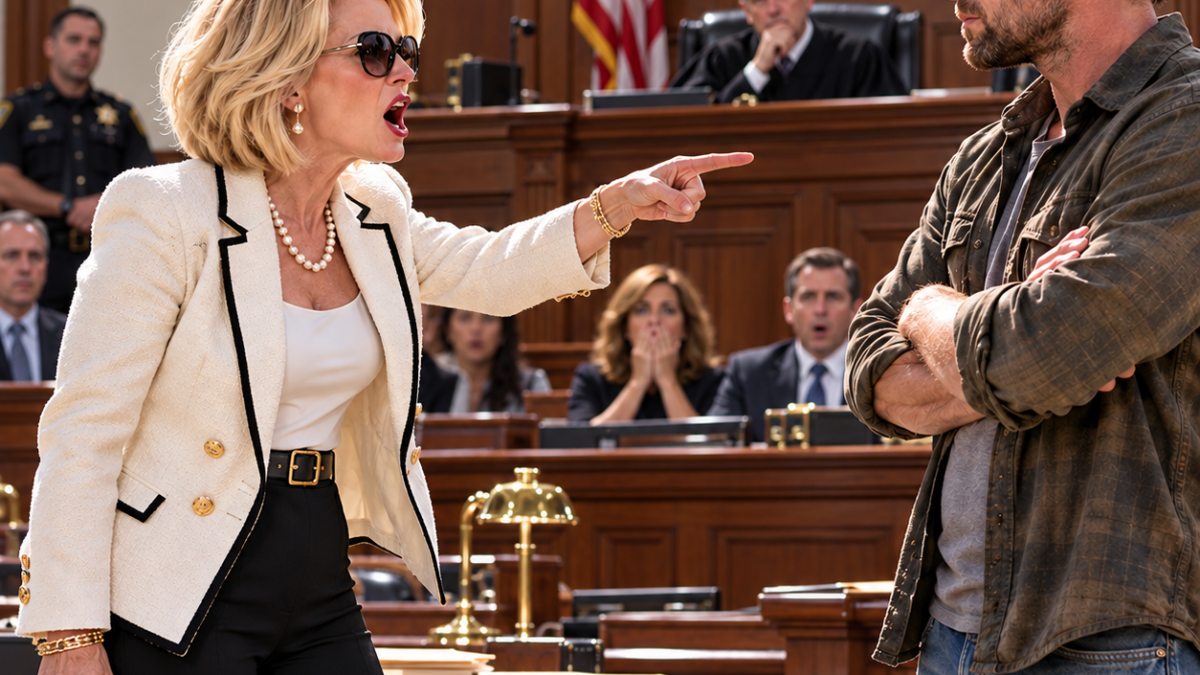
Donna entered wearing white.
Pearls.
Chanel clutch.
Perfect hair.
I had seen people dress for court three ways.
Nervous.
Defiant.
Respectful.
Donna dressed as though court were another room she expected to run.
Greg sat beside her.
Did not look at me.
Patterson opened.
Technical dispute.
Procedural authority.
Community standards.
Good-faith enforcement.
Jurisdictional ambiguity.
Mediation.
Katherine let him talk.
Then she stood.
No dramatic opening.
One slide.
Dates.
Names.
Numbers.
Pearson.
Drake.
Weber.
Callaway.
Four parcels.
All outside Stonebridge.
Three completed auctions.
One attempted.
Same HOA administration.
Same purchaser connected to Greg.
She walked slowly.
Certified plats.
Original deeds.
HOA filings.
False assessments.
Lien amounts.
Auction notices.
Ridgeline acquisitions.
Resale proceeds.
Then my case.
Donna’s offer.
My refusal.
Weekly fines.
Permit interference.
Forty-seven-thousand-dollar lien.
Wellness-center PowerPoint before auction.
Trespass video.
The chopping motion at the oak tree looked obscene on a courtroom screen.
Then amended records.
Certified copies versus sanitized versions.
Then Nancy Pearson’s recording.
Greg’s voice filled the courtroom.
Calm.
Professional.
Seventy-five thousand dollars.
Sign.
Withdraw.
Confidentiality.
I watched Greg.
He stared at the table.
Then Dale Hutchins.
Deposition excerpts.
Emails.
Payments.
Internal development plans.
By the time Katherine finished, nobody in the gallery was drinking coffee anymore.
Donna leaned toward Patterson.
Whispered.
He shook his head.
She whispered again.
He placed one hand on her forearm.
She pulled away.
Then she stood.
“Your Honor.”
Patterson closed his eyes.
Judge Hayes looked up.
“Mrs. Whitfield, your attorney is speaking for you.”
“I need to clarify.”
“Sit down.”
“This presentation is misleading.”
“Mrs. Whitfield.”
“I have served this community for three years.”
“Sit down.”
“I increased values.”
Judge Hayes removed her glasses.
Set them on the bench.
Donna made the mistake she had probably made her entire adult life.
She mistook composure for control.
“Do you know who my husband is?”
The courtroom went dead still.
Patterson looked physically ill.
Judge Hayes stared at her.
“I do.”
A beat.
“He is named in count four.”
Someone behind me inhaled sharply.
Donna sat.
The ruling took twelve minutes.
It felt longer.
Fraudulent liens void.
The prior forced sales invalidated to the extent legally possible.
Restoration and financial remedies ordered.
Donna and Greg found personally liable.
Compensatory damages.
Punitive damages.
Total:
2.1 million dollars.
Donna’s face changed.
Still.
Controlled.
Until Judge Hayes continued.
The defendants had repeatedly used forced property sales as a tool for personal enrichment.
They had demonstrated willingness to manipulate the auction process.
The judgment needed satisfaction.
Then she read the address.
1847 Ridgecrest Lane.
Stonebridge Estates.
Donna and Greg’s house.
Ordered sold at judicial auction subject to applicable procedures to satisfy the judgment.
Donna went white.
Not metaphorically.
All color left her face.
Her own house.
Her kitchen.
Her closet.
Her Range Rover driveway.
Her address on an auction notice.
The same machinery she had used against Harold.
Ellen.
The Pearsons.
Now pointed at her.
Donna turned toward Greg.
He did not look at her.
That was the exact moment their partnership ended.
Not the legal partnership.
The marriage.
You could see it.
Two people who had built a machine together suddenly realizing neither trusted the other once the machine reversed direction.
Outside the courthouse, reporters waited.
I had not invited them.
Court files were public.
Donna pushed through without speaking.
Greg followed another way.
Katherine stood beside me.
“You okay?”
“No.”
She smiled slightly.
“That’s probably healthy.”
“I thought I’d feel…”
“What?”
“I don’t know.”
“Triumphant?”
“Maybe.”
“You almost lost your home.”
She looked toward the courthouse steps.
“The people who did it are now losing theirs.”
“That’s not supposed to feel simple.”
It did not.
Justice is easier to celebrate when you do not have to look at the people receiving it.
But complexity does not make accountability wrong.
Six weeks later, the Whitfield residence sold for six hundred eighty thousand dollars.
The buyer was Ellen Drake.
When Katherine told me, I thought she was joking.
Ellen had received enough from her share of the civil judgment and restitution structure to make the purchase.
She bought Donna’s house.
Not because she wanted revenge.
At least that is what she said.
She wanted stability for her daughter.
The house was large.
Good school district.
No lien.
She had spent years moving after losing the property her mother left her.
This was the first time she could choose something without panic.
Still, the symbolism was impossible to miss.
The single mother whose half-acre Donna had taken now held the keys to the HOA president’s front door.
I helped Ellen move one Saturday.
So did the Pearsons.
Pete came.
Sam came.
Ellen’s daughter, Mia, ran upstairs.
Claimed the bedroom with the biggest closet.
Donna’s old designer closet.
Built-in shelves.
Lighting.
Mia filled one section with books.
Ellen stood in the foyer staring at gold-leaf wallpaper patterned with Stonebridge’s crest.
“What are you thinking?”
I asked.
“I hate this wallpaper.”
The first thing she did after moving was scrape it off.
The second was remove the custom SW monogram above the door.
She replaced it with a plain doormat.
THIS IS ENOUGH.
That made me cry harder than the court ruling.
Criminal proceedings followed.
Slower.
More complicated.
Greg faced multiple charges tied to fraudulent lien activity, financial transactions, and the Pearson witness approach.
He took a plea.
Custodial sentence.
Supervised release.
Financial consequences.
Donna tried to distance herself.
Her attorney argued she had been the public-facing HOA administrator, not the financial architect.
The records said otherwise.
Emails.
Lien instructions.
Altered minutes.
My trail-camera footage.
Prior cases.
She was convicted on fraud-related counts.
Fourteen months.
And permanently barred from serving on an HOA board in Tennessee.
When Pete heard about the ban, he called me.
“Is that a real punishment?”
“For Donna?”
“Yes.”
“That may be worse than jail.”
He laughed for a full thirty seconds.
The HOA Queen plate disappeared.
Range Rover repossessed.
Designer belongings sold.
People enjoyed those details.
I did not care much.
A handbag is not justice.
A car is not justice.
The important part was elsewhere.
The Pearsons regained their rights and received compensation.
Two townhomes now occupied part of their former lot.
Undoing reality completely was impossible.
Law can reverse title.
It cannot erase concrete.
Ed and Nancy ultimately chose to sell the townhomes rather than demolish them.
They used the proceeds to pay off their mortgage.
Then planted a garden on the untouched part of their old land.
Nancy sent me a picture that spring.
Tomatoes.
Peppers.
Two chairs.
Caption:
WE DIDN’T MISS THE FINE PRINT.
I saved it.
Ellen had Donna’s house.
Her daughter had a stable bedroom.
Her original parcel could not be restored exactly because the clubhouse parking extension had been built across it.
She received damages and title-related relief structured through settlement.
She told me:
“I thought justice meant getting the exact dirt back.”
“What does it mean now?”
“Getting to decide what happens next.”
That stayed with me.
Harold Weber’s outcome hurt most.
By the time judgment came, he was too frail to return home.
The house was gone.
Demolished.
The entrance road had replaced it.
No court could rebuild his old life.
His daughter Beth received compensation.
Harold died four months after trial.
Eighty-five.
Beth used part of the money to fund a bench at the Knoxville Public Library.
Near the children’s section.
Plaque:
FOR HAROLD WEBER, WHO BUILT A HOME WITH HIS HANDS AND NEVER LET ANYONE TELL HIM IT WASN’T GOOD ENOUGH.
I sat on that bench once.
Did not tell Beth.
Just sat.
Watched children carry books.
Thought about a partially deaf old man trying to interpret legal notices alone.
That is the part of fraud people do not put into spreadsheets.
Not dollars.
Humiliation.
Confusion.
People wondering whether maybe they really did misunderstand.
Predatory systems survive by making the victim feel technically incompetent.
Maybe you signed something.
Maybe you missed a deadline.
Maybe your land actually is subject to rules you do not understand.
Maybe the official-looking letter must be right.
Donna’s greatest weapon was not the lien.
It was certainty.
She never sounded unsure.
Victims did.
I understood why.
After everything, I used part of my recovery to create the Callaway Land Trust.
The name sounds grander than it is.
Small legal-aid fund.
Property-rights consultations for homeowners and landowners facing questionable HOA liens, boundary claims, or foreclosure notices in Knox County.
The first six months, twenty-three cases.
Eleven involved liens with serious jurisdictional problems.
Not all fraud.
Some simple administrative incompetence.
Some bad recordkeeping.
Some owners actually owed money.
That mattered too.
I did not want the trust becoming a machine that told everyone the HOA was always wrong.
It was there to answer:
What does the document actually say?
What did you sign?
What land is covered?
What procedure applies?
What rights exist?
Facts first.
Emotion later.
Katherine agreed to advise the fund.
She claimed she did it because I annoyed her into it.
I believed her.
Stonebridge changed.
It had to.
The board resigned almost entirely.
Carol Mills, an accountant who had opposed Donna several times, became interim president.
First meeting under the new board was packed.
No drone footage.
No music.
No slogan.
Just folding chairs and financial statements.
Pete attended.
He called me afterward.
“You missed history.”
“What?”
“They spent forty minutes discussing reserve balances.”
“Sounds unbearable.”
“It was beautiful.”
New policies.
Related-party transactions required disclosure.
Outside legal review for liens.
Independent notice.
Formal jurisdiction verification before enforcement.
Residents could inspect financial records electronically.
Nobody could unilaterally declare a property subject to Stonebridge merely because it was visually inconvenient.
An embarrassingly necessary rule.
The golf-cart aesthetic patrol disappeared.
Sam asked:
“What happened to the women with the rulers?”
“They were volunteers.”
“Did they get fired?”
“You cannot fire free.”
“Can they still measure our mailbox?”
“They can.”
“What if they do?”
“We wave.”
He seemed disappointed.
Sam was thirteen by then.
Old enough to understand more.
I had tried to shield him during the worst months.
Failed, obviously.
Children know when adults lie about stress.
One night, after the trial, he asked:
“Were we really going to lose the house?”
I considered lying.
Claire’s voice appeared in my head.
Do not.
“Yes.”
He looked toward the workshop.
“How close?”
“Closer than I told you.”
“Why didn’t you tell me?”
“You were twelve.”
“So?”
“I wanted you to sleep.”
“I didn’t.”
That hurt.
“Because you heard things?”
“Because you looked scared.”
I sat beside him.
“I’m sorry.”
“For being scared?”
“For pretending I wasn’t.”
He picked at a loose thread on his sleeve.
“Mom used to tell me when she was scared.”
“Sometimes.”
“Not always.”
“No.”
“Adults think not telling kids makes stuff disappear.”
“That sounds like something your mother would say.”
“She did.”
Of course.
Claire remained annoyingly correct from beyond the grave.
Sam and I rebuilt the porch that fall.
Not because Donna damaged it.
Because Dad had been planning to redo it before he died.
Some boards were soft.
One joist beginning to rot.
We used cedar from outside Maryville.
Four weekends.
Sam learned to measure twice.
Then measure again because his father was an engineer with trust issues.
Dad would have criticized my angles.
Grandpa would have criticized the store-bought fasteners.
Claire would have brought lemonade and told everybody to stop pretending minor carpentry was a military campaign.
When we finished, Sam and I sat on the new steps.
He had a book.
I had one of Dad’s two beers.
Yes, I had kept them.
One tasted terrible.
That did not matter.
The oak stretched its shadow across the yard.
Workshop still standing.
No spa.
No yoga pavilion.
No residents-only parking lot.
Just land.
A house.
A boy.
A father.
For the first time since coming back, I felt ownership differently.
Before, ownership meant paper.
Deed.
Parcel number.
Boundary.
After Donna, it meant continuity.
Dad.
Grandpa.
Sam.
Claire, even though she never lived there.
All the people whose lives had touched the place.
That is why Donna’s original offer offended me in a way money could not solve.
She saw 4.2 acres.
I saw accumulated meaning.
Those are not the same thing.
But I learned something uncomfortable too.
Donna was not wrong because she wanted the land.
Wanting is not theft.
Development is not theft.
HOAs are not inherently theft.
She was wrong because no became an obstacle to engineer around instead of an answer to respect.
That distinction matters.
People sometimes turn stories like mine into:
All developers are crooks.
All HOAs are tyrants.
That is lazy.
I am an engineer.
I build things.
Development matters.
Shared rules can protect communities.
The disease begins when authority becomes self-justifying.
Donna believed being elected president meant her idea of improvement outranked ownership.
Greg believed legal process was a tool that became legitimate once properly filed.
Together, they discovered something dangerous:
People trust paperwork.
Then they exploited that trust.
A fraudulent lien is powerful not because it is true.
Because the next clerk assumes somebody before them checked.
The auction service assumes the lien is valid.
The buyer assumes the process is legal.
The homeowner sees seals, deadlines, attorneys, notices.
Systems rely on good-faith inputs.
Bad actors know that.
That is why documentation defeated them.
Not outrage.
Not threats.
Certified copies.
Old plats.
Corporate filings.
Audio.
Video.
Dates.
Money.
Patterns.
The first time Donna came to my driveway, she had a glossy brochure.
I had nothing.
By the last hearing, she had confidence.
I had two boxes of evidence.
Evidence weighs more.
A year after the trial, I ran into Patterson, their former attorney, at a coffee shop downtown.
He recognized me.
I recognized him.
We both considered pretending otherwise.
He approached.
“Mr. Callaway.”
“Mr. Patterson.”
“How are you?”
“Better.”
He nodded.
“I’m glad.”
That surprised me.
We stood awkwardly.
Then he said:
“For what it’s worth, I didn’t know the full history when they retained us.”
“I assumed.”
“By the end…”
He stopped.
Attorney rules.
Confidentiality.
He could not say much.
“I should have asked different questions earlier.”
I looked at him.
“That seems to be the theme.”
He smiled faintly.
“Yes.”
He walked away.
I did not need more.
People love confessions.
They think closure comes when everyone finally admits what you knew.
It rarely does.
Donna never apologized to me.
Greg never wrote.
No dramatic letter.
No prison revelation.
I stopped needing one.
Accountability can exist without remorse.
That may be one of adulthood’s least satisfying truths.
Another year passed.
Sam started high school.
He grew taller than Claire.
Almost taller than me.
The bookshelf we had been building when the auction notice arrived still stands in his room.
One side slightly uneven.
I offered to fix it.
He refused.
“It survived.”
he said.
“So it stays.”
Pete became involved with the Callaway Land Trust.
Retired surveyors are dangerous when given purpose.
He volunteered boundary reviews.
Showed up with rolled plats.
Used phrases like:
“Here’s the problem.”
Usually there was.
He also developed an unreasonable hatred of digital parcel maps.
“Lines on screens make people lazy.”
“They’re accurate.”
“Until they aren’t.”
“You sound eighty.”
“I’m seventy-five.”
“Exactly.”
He kept paper.
I kept both.
The trust’s most important case in year two involved an elderly widow named Marlene Foster.
Not fraud.
Simple mistake.
Her HOA had filed a lien against the wrong lot number.
Twenty-eight thousand dollars.
Everyone involved assumed it was correct until our review compared the legal description.
The HOA immediately withdrew it.
Apologized.
Paid her legal fees.
No villain.
No conspiracy.
Just a wrong digit with terrifying consequences.
That case taught me almost as much as Donna.
Not every injustice requires evil.
Sometimes negligence is enough.
That is why systems need checks even when everyone is honest.
Especially then.
Stonebridge eventually tore down Donna’s old slogan banner in the clubhouse storage room.
ONE COMMUNITY, ONE VISION, ONE STANDARD.
Pete asked whether I wanted it.
“Why would I want that?”
“Trophy.”
“No.”
“Fire starter?”
“Maybe.”
He kept it instead.
His wife made him throw it away.
Ellen became oddly popular in Stonebridge.
Not because she tried.
The woman who bought the former HOA president’s home had a certain mythology.
People expected her to run for the board.
She refused.
“I spent enough of my life thinking about that HOA.”
She told me.
“I want to raise my daughter.”
That may have been the healthiest thing anybody said during the entire saga.
Mia turned Donna’s former designer closet into a reading nook.
Shelves.
Beanbag chair.
Christmas lights.
I saw it once.
All that space Donna once used to store expensive clothes now filled with library books and a thirteen-year-old girl’s notebooks.
There are forms of justice no judge can order.
The Pearsons sold one townhome to a young couple expecting their first child.
Kept the other as rental for a while.
Nancy’s garden expanded.
Tomatoes became absurd.
She brought boxes to every trust meeting.
Harold’s bench became one of my favorite places in Knoxville.
Beth sometimes left flowers.
I never asked who.
Maybe her.
Maybe someone else.
Life moved.
The trial became old news.
Stonebridge property values did not collapse.
Despite Donna’s repeated warnings that my fence, truck, workshop, lawn, bird feeder, and general existence threatened the neighborhood, houses continued selling at perfectly healthy prices.
Apparently buyers could survive the sight of blue Ford paint.
My bathroom permit was approved.
Eventually.
Sheila from the county called personally.
“Mr. Callaway?”
“Yes?”
“Your zoning flag has been cleared.”
“Was there ever an actual inconsistency?”
Long pause.
“No.”
“Thank you.”
“I’m sorry.”
“That wasn’t your flag.”
“No.”
“But I should have asked why it was there.”
I appreciated that.
The bathroom took six weeks.
Sam hated the tile.
I told him teenagers were not licensed design professionals.
He told me Donna Whitfield had apparently believed the same thing about herself.
I had no answer.
On the third anniversary of Dad’s death, I sat on the porch after Sam went to bed.
Oak leaves moving.
Workshop light off.
Mountains beyond.
I thought about the crossword.
Something passed from one generation to another.
Inheritance.
For years I had thought Dad left me land.
That night I understood inheritance is more complicated.
He left me property.
Also stubbornness.
Tools.
A habit of saving receipts.
A sense that official authority should still be questioned when facts disagree.
He left Sam a place connected to people who loved him.
Claire left different things.
Music.
Her laugh in our memories.
Sam’s expressions.
The instinct to say the uncomfortable truth when pretending would be easier.
No deed records those.
They still pass down.
That is why Donna’s scheme was never simply financial.
She was not taking dirt.
She was trying to sever continuity and call the result community improvement.
Harold understood that.
The Pearsons.
Ellen.
Maybe every person who has ever been forced from a home understands it.
Property has market value.
Home has a different accounting system.
The law is good at dollars.
It struggles with echoes.
One afternoon, a young lawyer volunteering with the trust asked me:
“Do you think the judge ordering Donna’s house auctioned was poetic justice?”
I thought before answering.
“Poetic?”
“Yes.”
“Maybe.”
“Justice?”
“Partly.”
He frowned.
“What’s missing?”
“She lost a house.”
“Harold lost years.”
“Ellen lost stability.”
“The Pearsons lost money and trust.”
“The exact math never balances.”
He nodded.
“So what does justice do?”
“Stops the pattern.”
That is the part people forget.
Justice cannot always restore.
Sometimes it prevents the next victim.
Donna’s house being sold was memorable.
Her HOA ban mattered more.
The fraudulent liens voided mattered more.
The record created mattered more.
The procedures Stonebridge adopted mattered more.
The twenty-three trust clients in six months mattered more.
A dramatic consequence makes a good ending.
A changed system makes a better one.
Sam heard me telling this to the lawyer later.
He said:
“You sound like Grandpa.”
“That is rude.”
“You both lecture people.”
“Your grandfather was wise.”
“He was exhausting.”
Also true.
When Sam turned sixteen, I taught him to drive in Dad’s truck.
We took the back roads around Stonebridge.
At one intersection, he asked:
“Which house was Donna’s?”
I pointed.
Ellen’s now.
He slowed.
“That one?”
“Yes.”
“Does Ellen like living there?”
“I think so.”
“Is it weird?”
“For who?”
“Everybody.”
“Probably at first.”
Sam looked toward the house.
Mia’s bicycle lay in the driveway.
A basketball hoop stood near garage.
Ordinary.
Then:
“Do you think Donna thinks about it?”
“I don’t know.”
“Would you?”
“Yes.”
He drove on.
A few minutes later:
“Would you ever sell our place?”
That question once would have made me answer immediately.
Never.
But that would turn Dad’s choice into Sam’s obligation.
I had learned something about forcing futures.
“If someday it makes sense.”
I said.
He looked shocked.
“Really?”
“Yes.”
“I thought Grandpa said never sell.”
“He did.”
“So?”
“He owned it then.”
“I own it now.”
“Someday maybe you will.”
“You get to decide.”
“What if I sell it to Stonebridge?”
I looked at him.
He grinned.
“That was a test.”
“Pull over.”
He laughed so hard he nearly missed the turn.
That conversation mattered.
Protecting inheritance does not mean trapping the next generation inside it.
Donna’s sin was not wanting change.
It was stealing choice.
If Sam sells someday freely, that is not Donna winning from beyond the grave.
That is ownership working properly.
Consent.
The whole case came down to that.
A word people think belongs to relationships and medicine.
It belongs to property too.
You cannot substitute confidence for consent.
Not a brochure.
Not a board vote from an organization with no jurisdiction.
Not a lien manufactured from imaginary debt.
Not an auction notice.
Process does not create rights that never existed.
It can disguise their absence for a while.
But facts remain underneath.
Pete died five years after Dad.
Stroke.
At his funeral, his wife handed me a cardboard tube.
“Peter wanted you to have this.”
Inside was the original copy of the old boundary survey he had brought to my kitchen.
A note taped around it.
TOM —
LINES ONLY MATTER IF SOMEBODY REMEMBERS WHY THEY’RE THERE.
— PETE
I framed the note.
Not the survey.
Engineers can be sentimental too.
Just not publicly.
The Callaway Land Trust added a survey-assistance program in Pete’s name.
Volunteer surveyors reviewed old plats for elderly property owners.
The first year, they found six boundary discrepancies.
Most harmless.
One very much not.
Pete would have loved it.
Donna eventually finished her sentence.
I heard through people.
I never looked her up.
Not because I forgave.
Because surveillance is another kind of attachment.
I had spent enough life letting her occupy mental property she did not own.
That boundary mattered too.
One day Ellen called.
“You’re not going to believe this.”
“What?”
“Mail came for Donna.”
“That happens.”
“It’s an HOA violation.”
I laughed before I could stop myself.
“What for?”
“My basketball hoop.”
I sat down.
“No.”
“Yes.”
“Current HOA?”
“Yes.”
“What are you going to do?”
“I called them.”
“And?”
“They apologized.”
“New board error.”
“Apparently an old address list.”
“So no war?”
“No war.”
I smiled.
“Growth.”
Then Ellen said:
“I framed it.”
“Also growth.”
We both laughed.
That was the first time the whole story felt far enough away to be funny.
Years after Donna stood in my driveway telling me everyone sells eventually, the oak tree Dad planted grew wide enough that two of its lower branches needed trimming.
Sam and I did it together.
He was eighteen.
Leaving for college that fall.
We stood beneath the tree afterward.
Saw marks where Donna had once gestured to contractors.
The trail-camera footage flashed in my memory.
White pants.
Silk blouse.
Chopping motion.
Sam put a hand on the trunk.
“Mom would’ve liked this place.”
“Yes.”
“You think?”
“She would have complained about the distance to good coffee.”
He laughed.
Then:
“Are you going to be okay here alone?”
I looked toward the house.
That question belonged to another life.
After Claire died, being alone felt like being abandoned.
After Dad died, returning home felt like retreat.
After Donna, the land became something I had defended.
But I did not want it becoming something I hid inside.
“I’ll be okay.”
I said.
“You don’t have to stay for me.”
“I know.”
“Go.”
“Dad.”
“What?”
“I haven’t even packed.”
“Go eventually.”
He smiled.
That night I sat on the porch alone.
A good alone.
There is a difference.
The house made sounds.
Refrigerator.
Floorboards.
Wind.
I could almost hear Dad in the workshop.
Claire humming somewhere impossible.
Sam upstairs, still there for another few weeks.
Nobody owns memories.
They visit.
That is enough.
People still ask me about Judge Hayes.
“Did she really auction the HOA president’s house?”
Yes.
But the question usually carries a little revenge fantasy underneath.
They want me to say it felt amazing.
That I smiled while Donna cried.
That the universe balanced the books.
I did not smile.
Neither did the judge.
A judicial auction is not a punchline.
It is a remedy.
The power of that moment came from its symmetry.
Donna had spent years treating forced sale like an administrative tool.
A lien.
A notice.
An auction.
Done.
She talked about other people’s homes in procedural language because procedure made suffering easier to ignore.
Then the address read aloud in court was hers.
Suddenly procedure had bedrooms.
A kitchen.
A closet.
A driveway.
That was what changed her face.
Not losing money.
Recognition.
For the first time, the mechanism had a human scale because she was standing inside it.
I do not know whether she learned empathy.
Maybe only fear.
But everyone else in that courtroom learned something.
Power feels abstract when aimed away from you.
That is why restraint matters.
That is why due process matters.
That is why jurisdiction matters.
That is why people should ask who gave an organization authority before obeying the envelope with the logo.
Donna taught Stonebridge that lesson expensively.
Dad would have described it more simply.
“Read before signing.”
Pete would have said:
“Check the line.”
Claire:
“Stop pretending confidence is competence.”
Katherine:
“Keep copies.”
Sam:
“Don’t build your evil wellness center before you own the property.”
Everybody contributes.
Today, the Callaway place still sits beside Stonebridge.
4.2 acres.
Same parcel number.
House has newer porch.
Bathroom Sam still says has ugly tile.
Workshop roof replaced.
Oak bigger.
My blue Ford finally died.
I bought a gray one.
Not because of approved community aesthetics.
Because the deal was good.
Stonebridge is quieter now.
Not physically.
Children.
Mowers.
Pool noise.
Delivery trucks.
Quiet politically.
Board meetings are boring.
That is the highest compliment I can give a homeowners association.
Budgets.
Pool repairs.
Landscaping.
Reserve studies.
No drone videos.
No mandatory vision.
No one measuring my mailbox.
Sometimes new residents do not know why one 4.2-acre parcel interrupts the subdivision map.
They ask.
Someone tells them:
“That’s Callaway land.”
And that is the end.
Exactly as it should be.
The wellness center never happened.
Stonebridge built a smaller pavilion on property it actually owned.
Nice place.
Sam and I attended a neighborhood barbecue there once.
Carol invited us.
I stood beneath string lights eating a hamburger and looking across the fence at my house.
No resentment.
That surprised me.
A man I had never met introduced himself.
“You’re Tom?”
“Depends who’s asking.”
He laughed.
“I bought here last year.”
“My realtor told me the HOA once tried to steal your land.”
“That is one version.”
“Did they?”
“Some people did.”
He nodded toward the pavilion.
“This is enough.”
The phrase reminded me of Ellen’s doormat.
I smiled.
“Yes.”
“It is.”
That may be the final lesson.
Enough.
Donna could not recognize it.
Three hundred forty homes.
Clubhouse.
Pool.
Landscaping.
She wanted more.
Wellness center.
Spa.
Parking.
Control.
Greg had development profits.
Wanted more.
Cheap parcels.
Flips.
Margins.
Influence.
Enough is not laziness.
It is a boundary against greed.
My grandfather had 4.2 acres.
Enough.
Dad had a workshop.
Enough.
Claire had fourteen months after diagnosis.
Never enough.
That is the cruel thing.
Life gives abundance in places we keep trying to expand and scarcity in places we would give everything to preserve.
The trick may be learning the difference before you hurt someone.
I still have the original auction notice.
Katherine told me to keep it.
It sits in a file with Donna’s first fine.
Grass height.
Three hundred fifty dollars.
Sometimes I put the two beside each other.
The beginning and near ending.
A ridiculous grass letter.
A public auction.
That is how abuse of process grows.
Not usually with a dramatic first act.
Something small.
Technically worded.
Easy to dismiss.
Then another.
Then another.
Each step normalizes the next.
That is why I tell trust clients:
Do not panic.
But do not ignore official paper either.
Read.
Verify.
Respond.
Save copies.
Ask whether the person sending it actually has authority over you.
Fear is expensive.
So is complacency.
The goal is neither.
Clarity.
The morning after Donna’s house sold, I woke before sunrise.
No celebration.
I made coffee.
Went outside.
Mist over red clay.
Dad’s oak dark against the sky.
Sam still asleep.
I walked to the edge of the property where Stonebridge’s manicured lawn began.
There was no dramatic marker.
No wall.
No gate.
Just a survey line.
Invisible unless you knew.
But invisible does not mean imaginary.
That is true of many boundaries.
Legal ones.
Emotional ones.
Moral ones.
Donna crossed all three because nobody stopped her early enough.
The Pearsons tried.
Ellen tried.
Harold probably tried in whatever way he could.
The system failed them individually.
Then their stories became a pattern too large to ignore.
That is why my case mattered.
Not because I was smarter.
I had advantages they did not.
Engineering background.
Records habit.
Money for counsel.
Pete.
Katherine.
Timing.
I was the fourth door Donna knocked on.
The first three had weakened the hinges in ways she could not see.
Their evidence helped save my land.
My case helped restore what could be restored to them.
Justice rarely belongs to one person.
We inherit that too.
The unfinished fights.
The warnings someone else left.
The documents they saved.
The courage they almost ran out of.
I used to think Dad left me 4.2 acres.
Now I think he left me a position in a line.
Grandpa before him.
Sam after me, maybe.
Not ownership forever.
Responsibility for a while.
That changes how you hold things.
You stop gripping like possession proves anything.
You protect.
Repair.
Document.
Then eventually hand over.
The land will have another owner someday.
Maybe Sam.
Maybe not.
What matters is that when that day comes, the choice is ours.
Not Donna’s.
Not an HOA vote.
Not a fraudulent lien.
Not a glossy rendering.
Not someone else’s idea of what our land should become.
Choice.
That was the thing they tried to auction.
The deed was only paper around it.
Donna once stood in my driveway and said:
“Your father is dead.”
She meant it as a weapon.
Dead men do not own dirt.
Technically, she was right.
Dad did not own it anymore.
I did.
And that was precisely her problem.
She thought death erased the chain.
That history became available once the person who defended it was gone.
She mistook inheritance for weakness.
But Dad had taught me to read plans.
Grandpa had built the house.
Pete kept the survey.
Claire taught me not to confuse certainty with truth.
Sam gave me a reason not to walk away.
The dead do not own dirt.
No.
They leave people.
Sometimes that is stronger.
Donna’s name is gone from Stonebridge leadership.
Greg’s company is gone.
The HOA Queen plate is gone.
Her old house belongs to Ellen and Mia.
The gold wallpaper is gone.
Harold’s front door is gone too.
That part still hurts.
The law could not rebuild everything.
It never can.
But his name sits on a library bench.
The Pearsons grow tomatoes.
Ellen’s daughter fills a closet with books.
The Callaway oak still throws shade across the workshop.
And every now and then, someone from the land trust calls because they received a terrifying letter and think they have no options.
I tell them the same thing Katherine told me in different words.
Start with the paper.
Find the line.
Find the deed.
Find the authority.
Do not let somebody else’s confidence become your surrender.
Because sometimes a person puts your property on an auction block and thinks that means the ending is already written.
It does not.
Sometimes that auction gets stopped.
Sometimes the records come out.
Sometimes the old victims return.
Sometimes a judge reads the same machinery back at the people who abused it.
And sometimes the woman who told you everyone sells eventually learns, in the most expensive way possible, that ownership and power both have boundaries.
Her house was auctioned.
Mine is still here.
But that is not the part I am proudest of.
I am proud that Sam still thinks of this place as home without thinking of it as a cage.
I am proud that the Pearsons stopped believing they had somehow failed to read a rule that never applied to them.
I am proud Ellen gets to choose what “enough” looks like.
I am proud Harold’s name survived the welcome sign built where his house once stood.
And I am proud that when Donna tried to turn four families into paperwork, we turned the paperwork back into people.
That is what finally beat her.
Not anger.
Not revenge.
Not a clever judge.
Names.
Dates.
Deeds.
Stories.
Proof.
And the stubborn belief that no one gets to redraw the line around your life simply because they brought a nicer folder.

