HOA Karen Sold 14 Families “Lakefront” Homes Along My Family’s 2,400-Foot Shoreline—Then I Found the 1961 Deed She Apparently Never Bothered to Read.
HOA Karen Sold 14 Families “Lakefront” Homes Along My Family’s 2,400-Foot Shoreline—Then I Found the 1961 Deed She Apparently Never Bothered to Read.
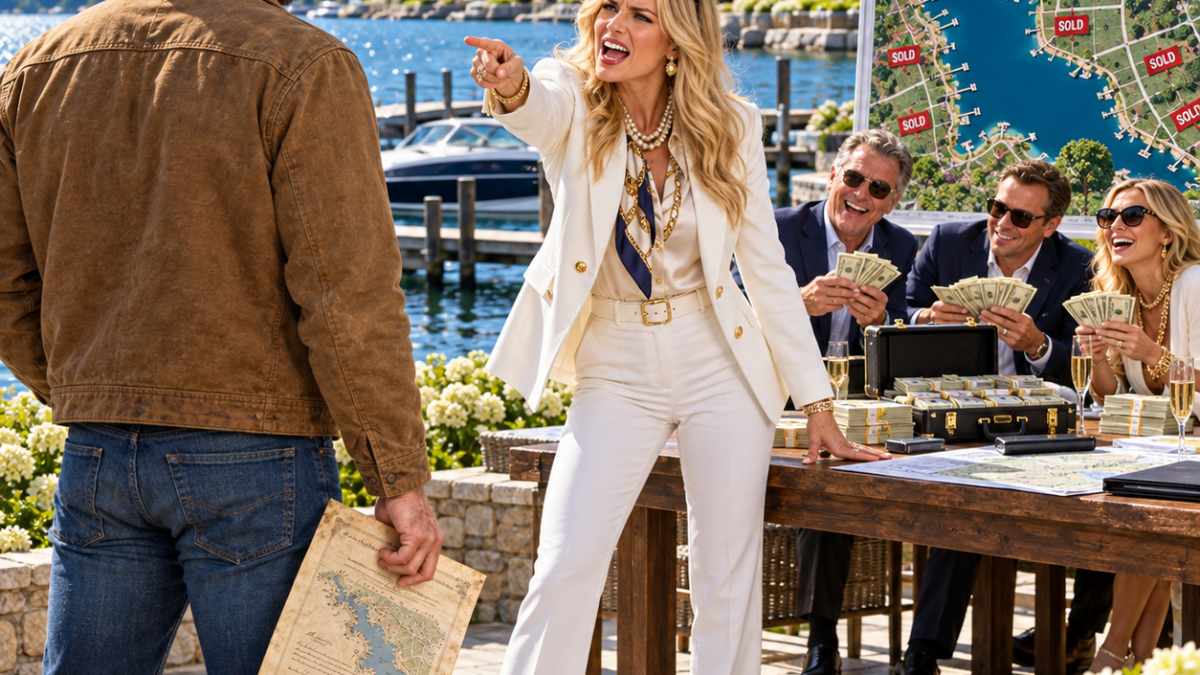
Victoria Ashford stood on my grandfather’s shoreline in four-inch heels, laughed when I showed her the deed, and told me she had already sold every dock, every beach, and every inch of waterfront to families who had paid nearly sixteen million dollars believing her.
She didn’t know that the original 1961 deed gave my family exclusive rights to 2,400 feet of Crescent Lake shoreline, or that my grandfather had left behind a handwritten letter proving every neighbor who ever used that water had done so only by his permission—not by any permanent right Victoria could sell.
By the time fourteen title insurers discovered they had guaranteed lake access that legally did not exist, Victoria wasn’t fighting one grieving grandson anymore—she was facing furious homeowners, regulators, insurers, and a paper trail that could destroy the real-estate empire she had built on land she never owned.
My name is Daniel Mercer.
The first thing I saw when I came back to Crescent Lake after my grandfather died was a pontoon boat tied to a dock I had never seen before.
I remember that more clearly than the funeral.
Maybe because funerals prepare you for grief.
That dock didn’t.
It was a Tuesday afternoon in October.
Cold enough that the leaves along the ridge had already turned red and gold.
Fog still clung to the far side of the lake.
I drove my old Silverado down the gravel lane expecting everything to look exactly the way memory had preserved it.
Granddad’s cedar-sided house on the hill.
The leaning mailbox he’d refused to straighten for fifteen years because, according to him, “the mailman can read sideways.”
The screened porch.
The stone steps he built himself.
The narrow path through tulip poplars toward the water.
Instead, I found a paved golf-cart trail.
Stamped concrete.
Decorative landscape lighting.
Stone retaining walls.
And that dock.
Forty feet of cedar decking with professional cleats, rubber bumpers, solar lanterns, and LED rope lighting beneath the rail.
A twenty-eight-foot pontoon sat beside it.
Champagne-colored upholstery.
Bluetooth speakers.
Someone’s cooler on the rear deck.
On my grandfather’s shore.
I stopped the truck and just stared.
Then I noticed the plaque.
Bronze.
Bolted to the retaining wall.
CRESCENT LAKE ESTATES
RESIDENTS ONLY
I actually laughed.
Not because it was funny.
Because my brain needed somewhere to put the disbelief.
Granddad’s family name was Mercer.
His property had been Mercer land since August 1961.
PART2:
And somebody had installed a bronze plaque on it announcing that I needed to be a resident of somebody else’s subdivision to stand there.
I walked north.
Found another dock.
Then another.
Five total.
Stone stairs led from the subdivision side down the slope.
A kayak rack had twelve numbered bays.
There was a swimming platform anchored offshore with a ladder and small diving board.
Someone had cleared a cart path through trees Granddad used to call his “privacy wall.”
Stamped concrete patio.
Fire pit.
Adirondack chairs.
Little brass tags identifying lot numbers.
Lot 14.
Lot 22.
Lot 31.
That last one made me stop.
Private Dock — Lot 31.
It wasn’t private.
Not theirs, anyway.
I took out my phone and started photographing everything.
That’s when I heard the golf cart.
Electric motor.
Gravel.
A woman came around the bend.
Mid-thirties.
Blonde highlights.
Cream silk blouse.
White linen pants.
Heels.
Actual heels beside a lake.
Large sunglasses pushed into her hair.
Hermès scarf tied around her clipboard handle.
The golf cart had monogrammed leather seats.
That detail somehow told me everything before she said a word.
She stopped beside me.
“This is a private community amenity.”
I lowered my phone.
“Excuse me?”
“Residents only.”
She glanced at my boots.
Then my jacket.
Then my truck uphill.
She had already categorized me.
I could see it happen.
“You need to leave.”
“My name is Daniel Mercer.”
Nothing.
“My grandfather was Earl Mercer.”
That got a small reaction.
“Oh.”
She looked toward the house.
“You’re the cabin grandson.”
Cabin.
Granddad’s three-bedroom house that he had built board by board in 1962.
“I’m the owner.”
She smiled.
Not warmly.
“Well, technically the estate may still—”
“The estate closed.”
Her smile thinned.
“I inherited the property.”
“I see.”
She extended one manicured hand.
“Victoria Ashford.”
I shook it.
“President of the Crescent Lake Estates Homeowners Association.”
Then she handed me a business card.
Heavy cream paper.
Gold lettering.
Victoria Ashford.
Licensed Real Estate Broker.
Crescent Lake Properties.
On the back:
President, Crescent Lake Estates HOA.
Two titles.
Two revenue streams.
One shoreline.
Mine.
I pointed toward the nearest dock.
“Who built this?”
“The community.”
“On whose property?”
Victoria laughed.
A short sound.
“Oh, sweetie.”
That word.
I would come to hate that word in her voice.
“This waterfront serves Crescent Lake Estates.”
“That isn’t what I asked.”
She looked at me over the edge of her sunglasses.
“What exactly are you trying to establish?”
“That my deed goes to the water.”
“Your grandfather owned the old house and hillside.”
“He owned forty-seven acres.”
“Yes.”
“And the shoreline.”
She laughed again.
“Mr. Mercer, I’ve sold this entire shore.”
I stopped.
“What?”
“Every premium lot along this side was marketed with waterfront access.”
“You sold access to this shore.”
“Yes.”
“All of it?”
She swept one hand elegantly.
“Every dock, every access path, every assigned slip.”
Then she looked at my truck.
“And if we’re being completely transparent, the old Mercer property has been depressing surrounding values for years.”
I stared at her.
She continued.
“If you’re thinking about selling, my office can help you avoid becoming a problem for your neighbors.”
“A problem.”
“That house needs substantial work.”
“My grandfather built it.”
“Yes.”
The way she said yes made it sound like evidence against him.
“We could put together a fair off-market offer, remove the obsolete structure, and finally integrate the remaining parcel into the community properly.”
Properly.
Meaning without me.
I pulled my wallet out.
Not money.
Folded photocopy of the deed.
I had brought it because the estate attorney told me I’d need it for utility transfers.
“Here.”
Victoria barely glanced.
“A deed?”
“Yes.”
“Daniel.”
First name now.
“Property documents from the 1960s are often superseded by modern development rights, easements, prescriptive use, shoreline agreements—”
“Read the legal description.”
She didn’t.
Instead she smiled.
“Your little piece of paper does not scare me.”
Then:
“I’ve closed fourteen waterfront transactions here.”
Fourteen.
“My buyers have title insurance.”
“Good.”
“They have recorded closing documents.”
“Good.”
“They have legal counsel.”
“Excellent.”
I folded the deed.
Victoria looked mildly amused.
“I would strongly advise you not to start a conflict you don’t understand.”
I looked past her.
Five docks.
Five stairways.
Lake glittering behind them.
“Who gave you permission to build any of this?”
She stared.
“Handle this through counsel.”
“That’s not an answer.”
She returned to her cart.
Before leaving, she said:
“Move your truck.”
“Why?”
“It’s leaking on our pavement.”
“Our pavement?”
She smiled.
“Exactly.”
Then drove away.
I stood alone beside the bronze plaque.
Granddad’s words came back to me.
Take care of the shore.
He had said it the night before I left for college.
I was eighteen.
Stupid enough to think places waited forever.
We had sat on his old dock while the radio played baseball quietly.
Granddad drank iced tea.
I drank a beer he pretended not to notice.
He pointed across the water.
“This place’ll be yours someday.”
“That’s depressing.”
“Why?”
“Because that means you’re dead.”
He nodded.
“Good point.”
Then he smiled.
“Still true.”
I remember skipping a stone.
“Sell it if you want.”
He looked at me.
“Seriously?”
“It’s land.”
“Granddad.”
“Don’t keep something out of guilt.”
He leaned back against the dock bench.
“But don’t let anybody take it while you’re not looking.”
That was Earl Mercer.
Generous enough to let half the county swim there.
Suspicious enough to document the difference between kindness and surrender.
I hadn’t understood that part yet.
Granddad bought the property in 1961.
Forty-seven acres.
$9,000.
Twelve years of mill wages.
He wasn’t wealthy.
He worked in Asheville, came home tired, and built the house himself.
My grandmother Dorothy helped.
She stained cabinets.
Held boards.
Painted walls.
They built a small dock in the early seventies.
Nothing fancy.
Pressure-treated pine.
Rope cleats.
Bench.
Grandma liked fishing.
Granddad liked sitting.
For decades, neighbors came down.
Church families.
Kids.
People with canoes.
Granddad never locked the path.
He believed water should be enjoyed.
But the deed was clear.
From survey pin 14-A to 22-C.
Approximately 2,400 linear feet.
Exclusive riparian use and shoreline privileges appurtenant to the Mercer property.
Almost half a mile.
I had known the property touched the lake.
I had never appreciated what “exclusive” meant until Victoria told me she had sold it.
Granddad got sick in 2021.
Parkinson’s.
Then a stroke.
He lost much of his speech.
I lived in Charlotte.
Civil engineer.
Commercial projects.
Drainage.
Site development.
Road design.
The kind of career that made people assume I understood property records better than I did.
I visited Granddad.
Not enough.
That’s the truth.
Every couple of months at first.
Then work got busy.
Then he moved into a care facility.
I told myself he was safe.
Told myself the house could wait.
Told myself I’d spend more time there after things settled.
Things never settle on their own.
They end.
Granddad died April 14.
I was holding his hand.
His eyes were closed.
For almost an hour I didn’t know whether he knew I was there.
Then I said:
“I’m going to take care of the lake.”
His fingers moved.
Barely.
Maybe reflex.
Maybe not.
I chose to believe he heard me.
Six months later, I came home to find Victoria Ashford had turned his shoreline into a luxury sales brochure.
That guilt sat in me.
Maybe if I’d visited more.
Maybe if I’d checked records.
Maybe if I’d walked the shore while Granddad was sick.
Maybe none of this would’ve happened.
Guilt loves maybe.
It can build an entire house out of it.
I spent my first week measuring.
I’m an engineer.
When I don’t know what to do emotionally, I measure something.
The property stretched exactly where the deed said.
Boundary markers remained.
Some buried.
Some old iron pins.
Some survey caps.
The subdivision boundary didn’t touch my eastern shoreline.
Not once.
I went to Henderson County records.
Pulled Granddad’s deed.
Same language.
No amendments.
No recorded transfers.
No easement granting Crescent Lake Estates access.
No riparian conveyance.
No declaration subjecting Granddad’s parcel to the HOA.
Nothing.
Then the subdivision plat.
Created in 2006.
Forty-two lots.
Located mostly north and west of Granddad’s property.
Some lots had lake views.
None owned the 2,400-foot eastern shore.
None.
That should have settled it.
Then I pulled recent sales listings.
Lot 14:
PREMIUM LAKEFRONT LIVING.
PRIVATE SHORE ACCESS.
DEEDED WATER RIGHTS.
Lot 22:
WALK TO YOUR OWN DOCK.
Lot 31:
EXCLUSIVE PRIVATE BEACH AND BOAT SLIP.
Another:
YOUR FAMILY’S FOREVER WATERFRONT.
Another:
DIRECT CRESCENT LAKE OWNERSHIP EXPERIENCE.
All brokered by Victoria Ashford.
I printed every listing.
Fourteen completed sales between 2019 and 2024.
Rough transaction volume around $15.4 million.
Some families had paid seven hundred thousand.
Others more than a million.
Comparable inland homes in the same subdivision sold for far less.
The water premium was enormous.
And Victoria had earned commissions.
I sat in the county parking lot with Granddad’s deed in my lap.
Exclusive.
One word.
Granddad didn’t sell access.
Victoria did.
But you cannot legally convey a right you never owned.
That distinction was about to become catastrophic.
I hired a surveyor.
Tom Whitfield.
Licensed.
Quiet.
Sixty.
Didn’t care about HOA drama.
Best kind.
Two days.
GPS.
Pins.
Plat comparisons.
Tom’s conclusion was almost comically simple.
One hundred percent of the disputed shoreline improvements were on Mercer property.
Zero percent sat within Crescent Lake Estates.
Five docks.
Stone stairs.
Patio.
Kayak rack.
Retaining wall.
Cart path.
Swim platform access.
All mine.
Or, more accurately, all unauthorized structures installed on my land.
Tom marked the boundary with red flags.
I added temporary orange fencing.
Private property signs.
Not permanent.
Not pretty.
Visible.
Within four days:
Certified HOA violation.
Unauthorized fencing.
$250 daily fine.
I laughed.
Actually laughed.
Then wrote a one-page response.
Mercer property purchased 1961.
Crescent Lake Estates established 2006.
Mercer parcel never subjected to HOA covenants.
Fence entirely within Mercer boundary.
No HOA jurisdiction.
Certified.
Victoria arrived in person three days later.
Two board members.
Attorney.
Craig Denton.
She wore white blazer, designer jeans, red-soled heels.
Denton carried actual legal files, which made me think someone had finally invited an adult.
Victoria pointed toward the orange fencing.
“You’re creating hardship.”
“For who?”
“Our residents.”
“They’re crossing private property.”
“They’ve used this shore for years.”
“With permission.”
Denton stepped forward.
“There may be a prescriptive access claim.”
I looked at him.
“Not if use was permissive.”
His face changed.
Small.
Victoria noticed.
“You’re an engineer, not a lawyer.”
“Correct.”
I looked at Denton.
“He is.”
Denton adjusted his glasses.
“Prescriptive easement law is fact-specific.”
“Agreed.”
“My grandfather gave people permission.”
“Can you prove that?”
“Yes.”
Victoria laughed.
“Really.”
“Yes.”
She leaned closer.
“Daniel, these families have been using this shore for decades.”
“Exactly.”
“You can’t erase history.”
“No.”
I looked toward the old house.
“My grandfather documented it.”
I hadn’t actually found the documents yet.
But I knew Earl.
And if Dad’s old advice about agreements had come from somewhere, it came from him.
Granddad wrote things down.
I went home.
Opened his desk.
Top drawer.
Spiral notebooks.
Forty years.
Weather.
Fishing.
Visitors.
Repairs.
Church.
Bills.
Birthdays.
In one:
Henderson family down at shore. Kids swam until dark. Sent lemonade.
Another:
Johnson boy got a good bass. Let him keep it even though Dorothy would’ve thrown it back.
Another:
Church kids using dock Saturday. Need to tighten east cleat first.
Not rights.
Guests.
Permission.
Then a folder.
CRESCENT DEVELOPMENT.
Inside:
Letter from the original developer.
Request asking whether future Crescent Lake Estates residents could continue using the Mercer shore.
Granddad’s reply.
Notebook paper.
Typed copy attached later.
Simple:
I don’t mind neighbors using the shore so long as they respect the land.
This permission is voluntary, revocable at any time, and does not create an easement, access right, ownership interest, or permanent privilege benefiting any Crescent Lake Estates property.
Signed.
Earl Mercer.
I sat back.
Granddad had anticipated the exact argument eighteen years earlier.
Then I found a photograph.
Cedar sign at path entrance.
WELCOME TO MERCER’S SHORE
PLEASE ENJOY
ACCESS BY PERMISSION OF OWNER
Five words mattered most.
ACCESS BY PERMISSION OF OWNER.
I took everything to Margaret Chen.
Real-estate attorney in Asheville.
Mid-forties.
Meticulous.
No interest in theatrics.
She read the deed.
Then the developer letter.
Then journals.
Then survey.
Then Victoria’s listings.
“Daniel.”
“Yeah?”
“Do you understand what she did?”
“Sold access she didn’t own.”
“That’s part.”
She lined up closing documents.
“Where did you get these?”
“County records. Buyers sent some.”
“What exactly do you want?”
That question stopped me.
“I want my shore back.”
“Anything else?”
“I don’t want innocent buyers destroyed.”
Margaret nodded.
“Good.”
“Can we do both?”
“Maybe.”
She held up one closing addendum.
“This is worse than marketing language.”
LAKEFRONT ACCESS AGREEMENT.
Crescent Lake Estates HOA letterhead.
Signed:
Victoria Ashford, President.
Guaranteeing perpetual exclusive waterfront access benefiting buyer, heirs, successors.
Margaret read it twice.
“She had no authority to grant this.”
“I know.”
“She used HOA office to convey purported property rights.”
“Yes.”
“And brokered the sale.”
“Yes.”
“Dual role.”
“Yes.”
“How many?”
“Fourteen sales.”
Margaret removed her glasses.
“Daniel.”
“What?”
“This is layered exposure.”
She pointed to documents.
“Broker liability.”
“HOA fiduciary issues.”
“Potential title claims.”
“Potential consumer fraud.”
“Misrepresentation.”
“Possibly licensing consequences.”
“What happens to the buyers?”
“That depends.”
“Are their house purchases void?”
“Not necessarily the entire fee-simple transfer.”
This is where reality became more complicated than Victoria’s marketing.
“The houses are still houses,” Margaret said.
“The lot deeds still convey the land actually described.”
“But lake access?”
“If not legally conveyed, that component is void.”
“So they bought inland property believing it was lakefront.”
“Yes.”
“Can they rescind?”
“Some may pursue rescission depending on their contracts and circumstances.”
“Or damages.”
“Yes.”
“Title insurance?”
“Potentially.”
She looked at me.
“This could become very expensive.”
“For them?”
“For everybody.”
I didn’t celebrate.
That matters.
Fourteen families had been lied to.
Some sold previous homes.
Moved states.
Took bigger mortgages.
Chose schools.
Planned retirements.
Their mistake was trusting someone licensed to know better.
Victoria had made money.
The buyers carried the risk.
I hated that.
Margaret built the strategy.
First:
Quiet title action.
Judicial declaration confirming Mercer ownership and exclusive shoreline rights.
Second:
Real Estate Commission complaint.
Third:
Notify title insurers.
Fourth:
Preservation notices to HOA and Victoria.
Fifth:
Claims regarding unauthorized improvements.
I asked:
“Can I remove the docks?”
“After proper notice and once we’ve documented everything.”
We documented.
Every board.
Every screw.
Every stair.
Every path.
Then sent thirty-day notice.
Unauthorized structures must be removed.
HOA could remove them.
They did nothing.
So I hired Dale Honeycutt.
Local contractor.
Dale grew up ten miles away.
Knew Granddad.
He stood beside the first dock.
“Earl would’ve hated this.”
“The dock?”
“The LED rope.”
I laughed.
“He would’ve liked the cleats.”
“Probably.”
We removed the structures carefully.
Not Granddad’s original dock.
The new ones.
Five private docks.
Stairs where removable.
Kayak rack.
Swim platform.
Bronze plaque.
Cart-path barriers.
Everything photographed.
Labeled.
Stored where needed for evidence.
The bronze plaque went into Granddad’s barn.
Victoria called halfway through removal.
“You are destroying community property.”
“It’s on my property.”
“You’ll be sued.”
“Talk to Margaret.”
“You’re hurting families.”
“I didn’t sell them my shore.”
Silence.
Then:
“You know what you’re doing.”
“Yes.”
“You’re trying to ruin me.”
“No.”
I looked toward one of her docks being lifted.
“You did that without my help.”
She hung up.
Title insurers reacted faster than I expected.
Fourteen notices.
Surveys.
Deeds.
Closing packages.
Lake access promises.
First carrier opened claim in eleven days.
Then others.
Investigations.
Appraisals.
Coverage positions.
Lawyers.
By six weeks, multiple carriers had concluded the insured lots did not own the shoreline rights described at closing.
Their houses remained.
Their lakefront promises didn’t.
Then homeowners began calling.
The first was Michael Turner.
Lot 31.
Corporate accountant.
Wife Rebecca.
Two children.
“We need to talk.”
“Okay.”
“Victoria walked us down the stairs.”
His voice sounded hollow.
“She stood on the dock.”
I didn’t answer.
“She said this exact dock belongs to Lot 31.”
“I know.”
“My wife cried.”
I closed my eyes.
Michael continued.
“She’d wanted a lake house since she was a kid.”
“I’m sorry.”
“You didn’t do this.”
“I still hate it.”
“She showed us paperwork.”
“The HOA addendum.”
“Yes.”
“She said it was better than an easement because it was permanent community protection.”
I almost laughed.
Couldn’t.
Michael said:
“We paid almost two hundred thousand more than a similar house without access.”
“I know.”
“What happens now?”
“Talk to your title carrier and attorney.”
“Can we still use the lake?”
I looked toward the water.
Not as a legal question.
Human.
“My grandfather allowed neighbors.”
Silence.
“I don’t know what the final arrangement will be.”
“Okay.”
“But I’m not interested in punishing your children for something Victoria did.”
Michael’s breath changed.
“Thank you.”
Another buyer called.
Retired teacher named Susan Beck.
Moved from Ohio.
“She told us our grandchildren would swim there forever.”
Her voice broke.
“My husband has cancer.”
I said nothing.
“We bought this place because he wanted the lake.”
That call stayed with me for months.
Another:
Young couple from Atlanta.
Another:
Retired military family.
Another:
Widow who had spent her husband’s life insurance on a lake home because he always wanted one.
Every story made Victoria’s fraud less abstract.
These weren’t transaction numbers.
They were futures.
She had monetized longing.
That is worse than merely selling land you don’t own.
She sold people a memory they hadn’t made yet.
The Real Estate Commission investigation began.
Victoria initially denied wrongdoing.
Claimed HOA counsel had approved.
Craig Denton disagreed.
In writing.
He produced emails showing he had warned Victoria during later sales that shoreline title needed verification.
That was the first betrayal inside her circle.
Then another board member produced meeting minutes.
Victoria had told the board:
“Mercer shore has functioned as common access long enough that ownership is irrelevant.”
Ownership.
Irrelevant.
The phrase would later appear in regulatory findings.
Margaret called me.
“She knew there was a title question.”
“How early?”
“At least three years before the last sale.”
“So she kept selling.”
“Yes.”
“Why?”
Margaret looked at me.
“Commission.”
Victoria’s estimated commissions were around $462,000.
But that still didn’t fully explain it.
Her brokerage specialized in Crescent Lake.
The “private waterfront lifestyle” was her brand.
If Mercer shore was not part of Crescent Lake Estates, many lots lost their premium identity.
Victoria wasn’t only protecting commissions already earned.
She was protecting the story on which her entire business depended.
That made her dangerous.
Unable to attack title, she attacked me.
Emergency HOA meeting.
Eighty-three residents.
Victoria at podium.
White dress.
Gold jewelry.
Slides.
She called me:
An absentee heir.
A profiteer.
A stranger.
Someone planning to sell the shore to an Atlanta condo developer.
None true.
She said I had abandoned Granddad.
That one hurt because it was close enough to my own guilt to land.
I had not abandoned him.
But I hadn’t been there enough.
Liars don’t need complete falsehoods.
The sharpest ones use your own private doubt.
Flyers:
PROTECT OUR LAKEFRONT.
PROTECT OUR HOME VALUES.
STAND TOGETHER.
Angry notes appeared on my windshield.
Someone keyed my truck.
A woman confronted me at the grocery store.
“You should be ashamed.”
“For what?”
“Taking their lake.”
“My family owns the shore.”
“Victoria said—”
“I know what Victoria said.”
A man followed me into the parking lot.
“You’d better sell.”
“Why?”
“People are angry.”
“So?”
“You don’t want trouble.”
I looked at him.
“I already have trouble.”
He walked away.
I documented everything.
Photos.
Incident reports.
No retaliation.
Margaret’s advice:
“Do not become the angry outsider Victoria is selling.”
So I didn’t.
Then Victoria filed for a prescriptive easement.
Continuous use.
Open use.
Twenty-plus years.
Historic community reliance.
Craig Denton signed.
I wondered if he actually believed it.
Margaret sent him Granddad’s letter.
Journals.
Photograph of permission sign.
Within seventy-two hours:
petition withdrawn.
No hearing.
No argument.
Victoria was furious.
She filed environmental complaints next.
Riparian buffer.
Fence posts.
Granddad’s original dock.
Shore disturbance.
State inspector arrived.
Four hours.
No violations.
Clean report.
Another official document saying I wasn’t the problem.
Every complaint Victoria filed generated evidence against her narrative.
She didn’t understand that.
Then December.
Kitchen table.
Granddad’s oak table.
Five years of sales documents.
Fourteen transactions.
Every one with lake language.
Three had the worst addendum.
Perpetual exclusive waterfront access.
I read Victoria’s signature again.
Flowing.
Confident.
Then listings.
Professional photography.
Wine glasses staged on Granddad’s shore.
Kayaks.
Children running toward water.
Sunsets.
Phrases:
YOUR PRIVATE SHORE.
YOUR DEEDED WATER.
YOUR FAMILY’S LAKEFRONT.
I had photographed those exact rocks as a child.
Now they were advertising copy.
I felt violated in a way I didn’t expect.
Land is one thing.
Memory another.
Victoria sold both.
Margaret spread the fourteen files across her conference table.
Chronological.
She read everything.
Then:
“This isn’t one mistake repeated.”
“What is it?”
“A business model.”
The same concept I’d seen in the documents.
HOA authority manufactured legitimacy.
Broker status manufactured trust.
Luxury branding manufactured certainty.
Each supported the other.
The bronze plaque wasn’t decoration.
It was evidence.
Docks with lot numbers weren’t amenities.
They were visual proof used to close deals.
Victoria had constructed physical props on my land to make fictional rights feel tangible.
Margaret said:
“She made the lie inspectable.”
“What does that mean?”
“Buyers walked down and touched what they thought they were buying.”
I understood.
That was why people trusted her.
Not just words.
Stone stairs.
Dock.
Plaque.
Brass lot number.
Infrastructure can make a lie feel permanent.
Then the first title payout.
Michael Turner.
Carrier determined value loss.
Settlement.
Then Susan.
Then others.
Payout amounts varied.
$150,000.
$200,000.
More than $300,000 in some cases.
Difference between lakefront valuation and inland valuation.
Some buyers accepted damages.
Some reserved further claims.
A few considered rescission.
Then insurers subrogated.
They paid homeowners.
Then turned toward Victoria.
One claim.
Three.
Nine.
Fourteen.
Combined exposure crossed millions.
Victoria’s errors-and-omissions policy had limits.
Not enough.
Her attorney tried to settle quietly.
Margaret refused any deal requiring me to validate old access promises.
“I won’t sign away Granddad’s shore.”
“Good.”
“Even for money.”
“Better.”
The North Carolina Real Estate Commission hearing was in Raleigh.
I attended only one day.
Victoria wore navy.
No dramatic white.
Hair perfect.
Face controlled.
Regulators questioned:
What did she know?
When?
Why did listings say deeded?
Where was the deed?
What authority did the HOA president possess to grant access?
Why did she personally broker sales benefiting from amenities controlled by the HOA?
Why were purported perpetual rights not recorded as valid easements?
Why had she continued after counsel raised title concerns?
She gave answers.
Long ones.
Technical ones.
None changed the central fact.
You cannot sell what you don’t own.
Her broker license was revoked.
Professional consequences cascaded.
Referrals followed.
HOA board panicked.
Emergency meeting.
Thirty-one of thirty-eight households attended.
Victoria refused to resign.
I watched recording later.
She stood at podium.
Cashmere.
Pearls.
“This is a coordinated attack by an outsider trying to destroy everything I built.”
Everything I built.
That line.
Michael Turner stood.
“You built it on his land.”
Applause.
Susan Beck:
“You looked me in the eye and told me my grandchildren owned that dock.”
Victoria:
“I relied on community understanding.”
Susan:
“You signed a guarantee.”
Silence.
Vote.
Remove Victoria.
Thirty to one.
Her only vote was herself.
The new board removed her access to HOA accounts that night.
Changed locks next morning.
But Victoria wasn’t done.
Three weeks passed.
No contact.
No threats.
I started rebuilding Granddad’s original dock.
Dale Honeycutt met me Saturday morning.
Fog low.
Still water.
For a moment everything felt exactly like childhood.
Then I saw pieces floating.
Granddad’s dock.
Destroyed.
Six pilings cut.
Planks in water.
Bench face down in mud.
Retaining wall spray-painted:
YOU DON’T BELONG HERE.
I stood there.
Didn’t move.
There are moments when anger arrives too quickly for the body to process.
My hands went numb.
Granddad built that dock.
Not valuable in money.
Pressure-treated lumber.
Rusting bolts.
Old bench.
But every important summer memory I had touched it.
First fish.
First swim.
First beer.
Last conversation before college.
My promise after Granddad died.
Destroyed.
Dale stood behind me.
“Daniel.”
I couldn’t speak.
He put one hand on my shoulder.
I eventually called sheriff.
Deputy Marcus Holt.
Photos.
Then cameras.
I had installed security after the truck vandalism.
Trail camera caught 4:17 a.m.
Dark figure.
Chainsaw.
Fast.
Spray paint.
Then white Range Rover Evoque leaving.
Victoria’s vehicle.
Plate visible enough.
Sheriff got warrant.
Receipt for red spray paint.
Credit card.
Sneakers.
Red paint transfer.
Chainsaw residue.
Victoria arrested.
That was the moment public sympathy finally collapsed completely.
Even people who had defended her couldn’t explain cutting down an old man’s dock after losing the title fight.
Her criminal attorney called it circumstantial.
Prosecutors called it a chain.
Vehicle.
Purchase.
Footwear.
Camera.
Timing.
Motive.
Jury convicted.
Felony property damage and related charges.
Probation.
Community service.
Restitution.
Not prison drama.
Consequences.
Real.
Photographs of Victoria in orange roadside vest circulated online.
I didn’t share them.
Didn’t need to.
There was no satisfaction in seeing someone pick up trash.
The dock stayed destroyed.
Granddad stayed dead.
Justice does not restore wood.
It only says destruction mattered.
The quiet-title judgment came in March.
Court confirmed Mercer ownership of the entire eastern shoreline.
Recorded.
Cross-indexed.
Permanent clarity.
No future HOA president could say they didn’t know.
No broker could sell imagined rights.
No buyer could be surprised later.
That judgment meant more to me than every other victory.
Granddad’s deed survived.
The civil insurance actions became enormous.
Title carriers pursued reimbursement.
Victoria’s professional insurance covered some.
Not enough.
Additional homeowner lawsuits.
Fraud.
Negligent misrepresentation.
Fiduciary breach.
Her brokerage dissolved.
Judgment liens.
Accounts restricted.
Her own Crescent Lake home became collateral damage.
Ironically, Victoria had paid a premium for it based partly on the same shoreline amenities she marketed to everyone else.
When Mercer access disappeared, her own valuation fell.
The lie ate its author.
Her house eventually went to auction.
I did not attend.
Despite what people later said online.
I didn’t need to watch.
Michael sent me a photo anyway.
Courthouse steps.
Folding chairs.
Bidders.
Victoria in distance.
I deleted it.
By then, I was tired of her.
I wanted my grandfather back more than I wanted her ruined.
That realization changed the rest.
Dale and I rebuilt the dock.
Granddad’s style.
Pressure-treated pine.
Rope cleats.
Bench at end.
No composite decking.
No LEDs beneath rails.
Dale convinced me to add two small solar lights.
Warm yellow.
“For safety.”
“Granddad hated fancy things.”
“He loved gadgets.”
True.
We used the old footprint.
Some original holes remained.
Dale measured.
“Four feet apart.”
“Granddad.”
“Sixty years and still square.”
I smiled.
We rebuilt over three weekends.
My uncle brought lunch one Saturday.
We talked about Granddad.
Things I’d forgotten.
How he sang badly while working.
How he cheated at cards.
How he once fell off the dock reaching for a hat and told Grandma he was “checking water temperature.”
Memory returned with construction.
That was healing.
Not the verdict.
Not Victoria’s license.
The dock.
I cleared the path.
Removed stamped concrete where practical.
Pulled decorative lights.
Restored bank.
Native grass.
Stone.
Trees.
Water.
I commissioned one cedar sign.
MERCER SHORE
EST. 1961
Simple.
But I kept thinking about Granddad.
He wasn’t territorial.
That was the contradiction.
He had protected the shore legally so he could afford to be generous socially.
Because generosity without boundaries becomes entitlement.
Victoria proved it.
The new HOA board requested a meeting.
September.
Community center.
Twenty-six homeowners attended.
Michael.
Susan.
Others.
Nervous.
The new president, Elaine Foster, started.
“Daniel, we want to apologize.”
“You were lied to too.”
“That doesn’t make everything okay.”
“No.”
She continued.
“We’d like to know whether there’s any lawful way residents could still use part of the shore.”
Silence.
People expected no.
Maybe deserved no.
I looked at Susan.
Her husband had started chemotherapy.
At Michael’s children.
At families who bought a dream they didn’t invent.
Then Granddad’s journals came to mind.
Henderson kids swam today.
Lemonade in cooler.
Johnson boy got bass.
He liked people using the shore.
He simply wanted choice.
So I placed a draft on the table.
Seasonal license.
May through September.
Three hundred feet near old boat launch.
Day use.
No permanent structures.
No motorized launch without separate permission.
No marketing access as a property right.
No adding value representations in real-estate listings.
Annual insurance.
Rules.
Revocable.
Recorded notice.
And Granddad’s words:
This permission is voluntary, revocable, and does not constitute an easement, ownership interest, or permanent right in the Mercer property.
Elaine read it.
“You’re willing to do this?”
“Yes.”
“After everything?”
“Granddad let people swim here for forty years.”
Michael stared.
“Victoria nearly destroyed you.”
“No.”
“She tried.”
“Yes.”
“And you’re letting us back?”
“I’m letting neighbors use part of the shore.”
I leaned forward.
“That is different from giving anyone ownership.”
Susan started crying.
Her husband put one hand over hers.
I pretended not to notice.
Agreement signed.
Recorded.
Clear.
Legal.
No bronze plaque.
No assigned private docks.
No lies.
First summer, residents returned.
Carefully.
Almost too carefully.
People asked permission for everything.
“Can we bring two kayaks?”
“Yes.”
“Can my sister visit?”
“Yes.”
“Can we fish?”
“Yes.”
“Can we put a chair here?”
Susan actually asked me that.
I laughed.
“Susan.”
“What?”
“It’s a chair.”
“I don’t want to overstep.”
“Put the chair down.”
Her husband sat on Granddad’s rebuilt dock during treatment.
Sometimes for hours.
He died two years later.
Susan wrote me afterward.
She said his favorite days had been the lake days.
That letter lives in Granddad’s desk now.
Alongside the 2007 permission letter.
That’s what I mean when I say justice and mercy are not opposites.
Boundaries made mercy possible.
If I had surrendered ownership to keep people happy, there would be resentment.
If I had closed the shore forever to punish Victoria, there would be bitterness.
Instead:
Truth first.
Then generosity.
Granddad would’ve understood.
One October evening, years after everything, I sat on the dock with Margaret Chen.
She had come up for dinner.
Her husband fished badly from the bank.
We watched sunset.
She said:
“You realize the internet version of this story is terrible.”
“What?”
“Apparently your deed made fourteen home sales disappear overnight.”
I laughed.
“Did it?”
“According to social media, fourteen families woke up homeless.”
“That didn’t happen.”
“No.”
“The homes stayed theirs.”
“Yes.”
“The fraudulent shoreline rights collapsed.”
“Yes.”
“Some got damages.”
“Yes.”
“Some sold.”
“Yes.”
“One rescinded.”
“Eventually.”
I smiled.
“Reality is less clickable.”
“Considerably.”
Margaret looked toward the Mercer Shore sign.
“Still, the deed did something powerful.”
“What?”
“It made everybody stop pretending.”
That was exactly right.
The deed didn’t magically erase houses.
It erased fiction.
Victoria sold lakefront rights.
The deed proved she never had them.
Title insurers paid for those false expectations.
Regulators punished the professional misconduct.
Courts confirmed the boundary.
Families adjusted.
Reality returned.
That’s more powerful than a dramatic myth.
My grandfather’s house remains.
I repaired the roof.
Upgraded wiring.
Kept the screened porch.
Kept the kitchen cabinets.
The oak table.
His radio sits on a shelf.
Doesn’t work.
I won’t throw it away.
Some things earn retirement.
I moved from Charlotte permanently two years after the case.
Work remotely part of the week.
Consult on civil projects.
Spend the rest maintaining forty-seven acres I once thought were just an inheritance.
They became a conversation with Granddad after his death.
Every boundary marker.
Every note.
Every repair.
I learned him differently.
People think inheritance is receiving property.
Sometimes it’s receiving unfinished responsibility.
Granddad’s responsibility was simple.
Take care of the shore.
Don’t let anyone take it while you’re not looking.
I failed the second part for a while.
I don’t torture myself over it anymore.
Victoria exploited Granddad’s illness.
I was working.
Living.
He was aging.
None of us expected someone to quietly build five docks on private property and then sell them in luxury brochures.
But I corrected it when I found it.
That has to be enough.
The strangest thing is that Crescent Lake Estates improved afterward.
Without Victoria.
Listings became honest.
“Lake view.”
Not lakefront.
Seasonal Mercer Shore access disclosed properly.
No permanent rights.
Prices adjusted.
People still bought homes.
Turns out you can sell a beautiful house without lying.
Imagine.
Elaine remained HOA president four years.
Boring meetings.
Transparent minutes.
No gold-embossed access guarantees.
She once called me about a resident wanting to install a floating trampoline.
“No.”
“Why?”
“Because I hate floating trampolines.”
“That’s not legally persuasive.”
“It’s my shore.”
She laughed.
“Fair.”
Then:
“What about one weekend?”
I thought.
“Fine.”
Good neighbors negotiate.
They don’t fabricate ownership.
Victoria eventually left Henderson County.
I heard different stories.
Florida.
Tennessee.
Somewhere outside Atlanta.
I never checked.
People asked whether I feared she’d start over.
Not my responsibility.
Her licensing consequences followed her.
The criminal record followed.
The civil judgments followed.
At some point consequences become society’s work, not mine.
The last physical piece of her era still on my property is the bronze plaque.
CRESCENT LAKE ESTATES
RESIDENTS ONLY
It’s in Granddad’s barn.
Dale asked why I kept it.
“Evidence?”
“Case is over.”
“Then why?”
I didn’t know.
Years later I realized.
It’s a reminder of how confidence can impersonate ownership.
A bronze plaque looked permanent.
Gold letterhead looked official.
Designer docks looked legitimate.
Lot numbers looked recorded.
A broker’s license looked trustworthy.
An HOA title looked powerful.
All of it lost to an old deed written in plain language.
That is one of the great equalizers in property law.
Paper doesn’t care what you’re wearing.
A county record doesn’t care who sounds richer.
The boundary is the boundary.
The owner is the owner.
Authority either exists or it doesn’t.
Victoria believed appearance could fill the gaps.
For years, it did.
Until somebody looked.
My grandfather always looked.
That’s why he wrote the 2007 letter.
He knew kindness gets rewritten by people with convenient memories.
He didn’t stop neighbors from visiting.
He simply made sure nobody could later claim his generosity had become their title.
Sometimes I read the letter again.
Not because I need legal reassurance.
Because it sounds like him.
No lawyer words.
No Latin.
No threats.
Just:
You’re welcome here.
But this is still mine.
That is a healthy sentence.
For land.
Relationships.
Almost everything.
Susan still lives in Crescent Lake Estates.
Her grandchildren visit summers.
They swim at Mercer Shore.
One of them caught a largemouth bass off Granddad’s rebuilt dock.
Three pounds.
Maybe a little less.
Susan took a picture.
Sent it to me.
I opened Granddad’s journal.
Found the old entry:
Johnson boy got a 3-lb bass off the dock. Reminded me of Daniel at that age.
I printed Susan’s photo.
Placed it beside the page.
Two children separated by decades.
Same dock footprint.
Same lake.
Different families.
Permission given both times.
That’s legacy.
Not keeping everyone out.
Keeping choice alive.
Michael Turner stayed too.
He and Rebecca became friends.
He still jokes that he paid a quarter million dollars for the privilege of learning what “appurtenant” means.
One evening he brought bourbon.
We sat on the porch.
“Daniel.”
“Yeah?”
“I hated you for about forty-eight hours.”
“I know.”
“Wanted to sue you.”
“You considered it.”
“How’d you know?”
“Margaret.”
He laughed.
Then:
“Why didn’t you hate us?”
“I did a little.”
“Really?”
“You were using my land.”
“We thought it was ours.”
“I know.”
He looked toward the lake.
“Victoria was good.”
“At lying?”
“At making you feel stupid for asking questions.”
That sounded familiar.
“She’d say, ‘Of course it’s deeded.’”
He mimicked her.
“Like asking to see the deed was insulting.”
“That’s how people hide missing documents.”
Michael nodded.
“I’ll never close a property deal again without reading everything.”
“Expensive lesson.”
“Very.”
He raised his glass.
“To Earl Mercer.”
I raised mine.
“To reading.”
Granddad would’ve preferred iced tea.
Some lessons remained.
My own work changed too.
As a civil engineer, I had always treated title and easement review as somebody else’s lane.
Surveyors.
Attorneys.
Developers.
After Crescent Lake, I became unbearable.
On every project:
Show me the deed.
Show me the easement.
Show me recorded access.
Show me who owns the drainage parcel.
One developer told me:
“We’ve always used that road.”
I laughed.
He asked why.
“Nothing.”
Then demanded documentation.
He found an expired license agreement.
Saved himself a lawsuit.
Granddad still teaching people.
The old house isn’t worth what Victoria’s homes are.
No granite chef’s kitchen.
No three-car garage.
No smart-home wall panel.
One bathroom still has tile from 1978.
I like it.
The porch screens rattle in wind.
The floor creaks outside the guest room.
The vegetable garden still grows tomatoes.
The shoreline stays mostly natural.
Grass.
Pine.
Stone.
Water.
The Mercer sign has weathered.
Black letters fading slightly.
I could repaint it.
Haven’t.
It looks honest.
Sometimes new residents walk the licensed section and ask:
“Why only three hundred feet?”
“Because that’s what I chose to share.”
“Could the HOA buy more?”
“No.”
“Could we build a community dock?”
“No.”
“Would you ever reconsider?”
“Maybe.”
That’s ownership.
Not absolute selfishness.
Decision.
The right to say yes without surrendering the right to say no.
Victoria’s entire scheme depended on erasing that difference.
She assumed if Granddad had allowed use long enough, his permission should become irrelevant.
Then she turned that assumption into money.
Fourteen times.
People online love saying she “sold my lake.”
She didn’t.
Nobody can sell what they don’t own.
She sold promises.
That’s worse in some ways.
Land remained.
Promises broke.
Families paid.
My grandfather’s deed did not destroy those families.
The lie did.
The deed simply exposed it.
That’s an important distinction.
When truth causes damage, people sometimes blame whoever revealed it.
I saw that early.
People called me greedy.
Cruel.
Selfish.
An outsider.
They wanted me to preserve a false arrangement because reality was expensive.
But postponing truth doesn’t make it cheaper.
Another sale would’ve happened.
Then another.
More mortgages.
More retirees.
More children promised permanent access.
Eventually the collapse would be larger.
The kindest thing I could do was stop it when I found it.
Even if stopping hurt.
That’s something engineers understand.
If a bridge has a structural defect, you close it.
People complain.
Traffic backs up.
Businesses lose money.
But you don’t leave it open because the truth is inconvenient.
Victoria built a financial bridge on land she didn’t own.
Granddad’s deed was the inspection report.
It failed.
Years later, I still sometimes wake thinking about Granddad in the care facility.
That window that didn’t open.
Nurses said he talked about fog over Crescent Lake.
Herons.
Fishing.
I wish I had brought him home one last time.
He probably couldn’t have managed the stairs.
Maybe we could have carried him.
Maybe.
There it is again.
Maybe.
I don’t live inside that anymore.
Instead, I sit on his bench.
The rebuilt one.
Listen to herons.
When fog comes in October, I take a picture.
No one to send it to.
Still take it.
The lake was here before Earl.
Before me.
Before Victoria.
Before Crescent Lake Estates.
It will be here after all of us.
Granddad understood that ownership isn’t forever.
It’s stewardship with paperwork.
You hold something for a while.
Protect it.
Use it.
Share it when you choose.
Then hand it forward.
What Victoria wanted was control without responsibility.
She wanted the image of lake ownership because it raised prices.
Granddad wanted responsibility without spectacle.
He repaired his own dock.
Cleaned trash.
Let children swim.
Paid taxes.
Kept documents.
He never had a gold business card.
Didn’t need one.
One quiet deed outlived an entire marketing machine.
And the day Victoria laughed at that deed beside the dock she’d sold, she probably thought I was the least powerful person there.
Old truck.
Muddy boots.
Grieving grandson.
No HOA.
No brokerage.
No board.
She had fourteen buyers, attorneys, title policies, glossy brochures, and years of established use.
I had one folder.
But that folder contained the only thing that mattered.
Ownership.
That’s why I didn’t argue with her that first afternoon.
You don’t win property disputes with posture.
You pull records.
You survey.
You read.
You document.
Then you let the paper speak.
Granddad’s deed spoke very clearly.
The shoreline was ours.
The docks were not theirs.
The HOA couldn’t convey what it didn’t own.
The broker couldn’t guarantee what the HOA couldn’t convey.
The buyers had been misled.
The insurers had insured a fiction.
And once that chain broke at the first link, every promise Victoria stacked on top of it started falling.
Fast.
She lost the presidency.
Lost the license.
Lost the brokerage.
Lost the house she had inflated with the same lie.
Lost money.
Lost reputation.
Then, finally, she lost the ability to tell anyone that my family didn’t belong on its own shore.
I didn’t win because I was smarter than her.
I won because Earl Mercer had been careful sixty-three years earlier.
That’s humbling.
My biggest victory had been prepared before I was born.
I only had to respect it.
There is a photograph on the wall beside my desk now.
Granddad.
Standing in front of the unfinished lake house.
Young.
Thin.
Work shirt.
Hammer in one hand.
Lake behind him.
On the back, Grandma wrote:
Earl says this is where we’ll grow old.
They did.
Under the photo I placed a photocopy of the deed.
Not the whole thing.
Just the shoreline clause.
Exclusive use.
Exclusive access.
Two words Victoria should have read before she sold fourteen families a dream.
Beside that is Granddad’s 2007 letter.
Permission is voluntary.
Revocable.
No ownership interest.
I think those two documents belong together.
One protects what is yours.
The other shows what you can still choose to give.
That’s the balance.
This summer, Susan’s grandchildren came again.
Michael brought kayaks.
Elaine set up picnic tables in the licensed area.
No permanent fixtures.
Everyone knows the rule.
A little boy asked me:
“Mr. Mercer, is this your lake?”
“No.”
He looked confused.
“My shore.”
“Who owns the lake?”
“Different owners control different pieces around it.”
He thought.
“Can I swim?”
“Yes.”
“Because I own it?”
“No.”
“Why?”
I smiled.
“Because I said you could.”
He shrugged.
“Okay.”
Then jumped in.
Children understand permission without turning it into insult.
Adults make it complicated.
Near sunset, I walked to the far end of the dock.
Sat on the bench.
Granddad’s place.
The kid’s laughter carried over water.
A pontoon moved far offshore.
Heron crossed low.
Everything quiet enough to hear the small slap of waves against pilings.
For years I thought taking care of the shore meant protecting it from people.
I was wrong.
Granddad protected it so people could enjoy it without owning it.
That’s a harder form of stewardship.
Hold the line.
Keep the gate unlocked when you can.
Know the difference.
Victoria didn’t.
She saw generosity and converted it into inventory.
She saw an old man who rarely complained and assumed silence meant weakness.
She saw an unused commercial opportunity.
Five docks.
Fourteen sales.
Nearly sixteen million dollars in transactions.
Hundreds of thousands in commissions.
One lie copied into contracts until volume made it feel true.
Then one grandson came home.
Not heroic.
Too late for some things.
Just in time for others.
I found the plaque.
I found the deed.
I found Granddad’s letter.
And I finally understood what he meant all those years ago.
Make sure nobody takes it while you’re not looking.
They almost did.
Not with bulldozers.
Not with guns.
Not with forged deeds.
With brochures.
With assumptions.
With gold lettering.
With people repeating a falsehood until everyone stopped asking where it began.
But ownership does not become real because enough expensive houses depend on the mistake.
A lie does not become an easement because it has LED lighting.
A broker cannot manufacture title with confidence.
And a homeowners association cannot sell another family’s shore simply because the real owner was old, sick, quiet, and too decent to post a gate.
My grandfather’s shore is still here.
Forty-seven acres.
2,400 feet of waterline.
One simple dock.
One weathered cedar sign.
One house on a ridge.
No bronze Residents Only plaque.
No lot numbers.
No fake guarantees.
And every evening when I sit on that bench watching sunlight fade across Crescent Lake, I think about Victoria’s first laugh when I handed her the deed.
“A deed?”
That’s what she said.
Like it was nothing.
She was right about one thing.
It was just paper.
Old paper.
Plain language.
Recorded in a courthouse before her subdivision existed.
But sometimes paper is where truth waits patiently for arrogance to finish talking.

