HOA Built a $9 Million Data Center Behind My Ranch—Then I Found Their Power Lines Buried Under My Land
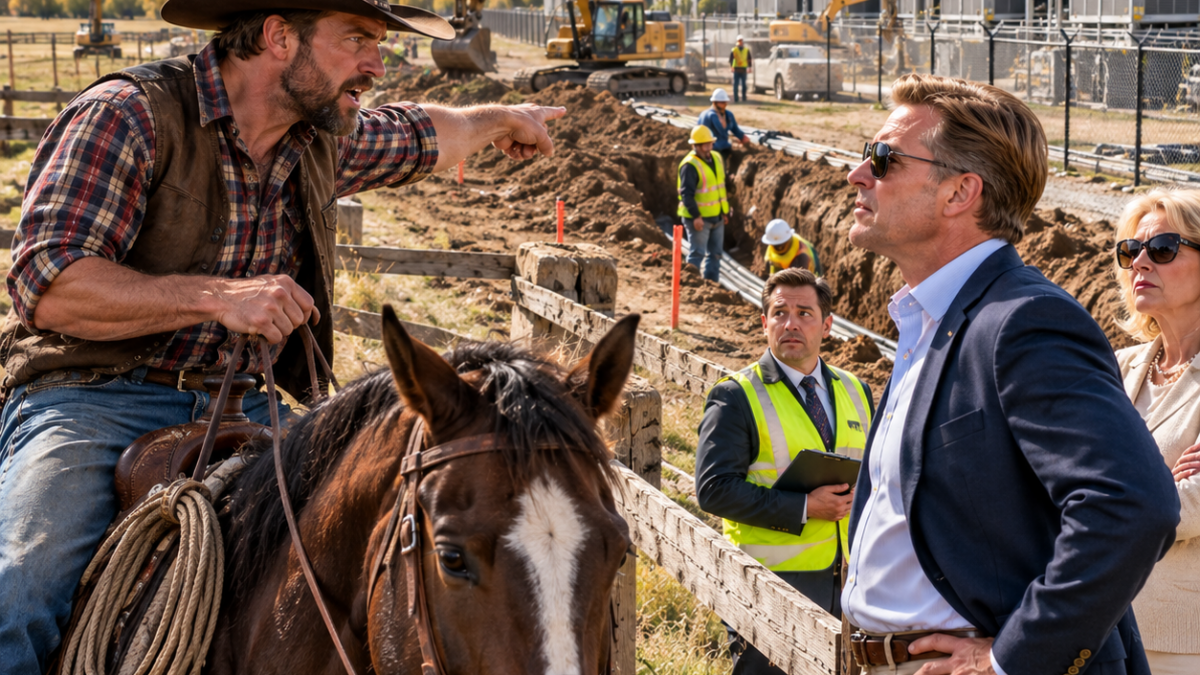
PART2:
That was why Oak Creek Estates bothered me from the beginning.
Ten years earlier, the ranch east of mine had been sold.
Old man Peterson owned it.
Good man.
Bad health.
Worse taxes.
His kids lived out of state and wanted nothing to do with cattle.
A development company bought most of the place.
Three years later, the pasture where Peterson used to run Herefords became a gated subdivision called Oak Creek Estates.
The name amused me.
There was no creek inside Oak Creek Estates.
The actual creek ran through my property.
But developers like names better than geography.
They built big homes.
Stone facades.
Three-car garages.
Black iron gates.
Identical landscaping.
Everything designed to look rugged without requiring anybody to touch dirt.
Soon came the HOA.
And soon after that came Richard Hayes.
Richard became HOA president during the subdivision’s second year.
He was in his late fifties, maybe sixty.
California money.
Software logistics.
That was how he described it.
He had sold a company and moved north because, according to an article somebody once showed me, he wanted “authentic western space.”
Richard’s idea of authenticity included a twelve-thousand-square-foot house, a heated driveway, imported landscaping rock, and a Range Rover that had probably never carried anything dirtier than golf clubs.
He dressed like Montana was an expensive theme.
Cashmere.
Waxed jackets.
Perfect boots without scratches.
Pastel sweaters tied around his neck even when nobody else understood why.
He disliked me instantly.
The feeling was mutual.
The difference was I had no authority over him.
Richard somehow believed he had authority over me.
The first HOA letter arrived three months after Oak Creek elected its first full board.
NOTICE OF EXTERIOR NONCOMPLIANCE.
I thought it was a joke.
My ranch was not part of Oak Creek.
Never had been.
No covenant.
No HOA agreement.
No deed restriction connecting my land to theirs.
Nothing.
Still, the letter informed me that my weathered red barn was “visually inconsistent with the earth-tone design language of the community.”
I burned it in the stove.
Then came a complaint about livestock odor.
Another about outdoor equipment storage.
Another about “visual nuisance caused by agricultural fencing.”
I started collecting them because they were funny.
My foreman, Wyatt Mercer, suggested framing them in the barn.
Wyatt had worked with my family since I was nineteen.
Leather-skinned old cowboy.
White beard.
Hands like fence posts.
His opinion of HOAs could not be repeated in polite company.
One morning I handed him a letter complaining about manure odor.
He read it.
Looked toward three hundred head of cattle.
Then said, “We should write back and tell them the cows have been formally warned.”
That was Wyatt.
Richard eventually stopped sending letters.
Not because he learned.
Because he changed strategies.
Two years before everything collapsed, Richard appeared at my front porch.
He brought Diane Higgins with him.
Diane was Oak Creek’s treasurer.
Late forties.
Sharp bob haircut.
Expensive glasses.
Expression like somebody had put vinegar under her nose.
Richard carried a leather folder.
“Caleb.”
“Richard.”
“Beautiful morning.”
“It was.”
He smiled.
I did not invite them inside.
Richard opened the folder.
“We’d like to discuss a land opportunity.”
“No.”
He chuckled.
“You don’t even know what it is.”
“You’re standing on my porch with Diane and paperwork. Whatever it is, no.”
Diane crossed her arms.
Richard continued smiling.
“Oak Creek is looking at expansion.”
“Not through me.”
“We’re interested in approximately forty acres along your eastern boundary.”
That forty mattered.
Heavily wooded.
Higher ground.
Old oaks.
Pine.
Natural shield between my cattle operation and Oak Creek’s manicured backyards.
My grandfather had called it the wall.
Protected the pasture from wind.
Blocked drifting snow.
Gave cattle shade.
Also kept me from seeing Oak Creek.
Which alone made it valuable.
Richard named a price.
I laughed.
Diane’s expression hardened.
“That is a legitimate offer.”
“It is half what that ground is worth.”
“It is undeveloped woodland.”
“It is ranch land.”
“Barely used ranch land.”
I looked at her.
“Funny thing about owning property.”
She waited.
“I get to decide what useful means.”
Richard’s smile thinned.
“We can increase slightly.”
“No.”
“You haven’t countered.”
“I did.”
“With what?”
“No.”
I closed the folder and handed it back.
Richard did not take it immediately.
“Progress is coming out here, Caleb.”
“I noticed.”
“You might want to be part of it.”
“I am part of it.”
He looked confused.
“I own the land you’re trying to buy.”
His face changed.
The friendly businessman disappeared for half a second.
“You cannot expect this area to remain frozen in time because your grandfather ran cattle here.”
I stepped closer.
“And you cannot expect my grandfather’s land to become yours because you built a gate nearby.”
Diane muttered, “This is pointless.”
“Yes.”
I smiled.
“It was pointless when you got out of the car.”
Richard took the folder.
“Think about the future.”
“I do every day.”
I looked toward my pastures.
“That’s why the answer is no.”
Six months later, Oak Creek purchased fifty acres north of the subdivision.
Barren commercial parcel pressed against my northern fence.
Odd piece of ground.
Natural bowl.
Low visibility from the highway.
I heard Richard had paid too much for it.
Did not care.
Then came the county planning meeting.
I attended because whenever an HOA near cattle asks the county for permits, a rancher should listen.
Richard stood before the commissioners in a navy suit.
He unveiled plans for what he called the Oak Creek Community Recreation and Climate-Controlled Storage Complex.
Nine million dollars.
Fitness space.
Pool.
Storage.
Community emergency equipment.
Maybe pickleball.
Everything planners like.
Jobs.
Permit fees.
Property values.
Private investment.
County approved it.
Why wouldn’t they?
On paper, it was a rich neighborhood paying for its own fancy clubhouse.
I went home.
Three months later, foundation work started.
That was when things stopped making sense.
You do not pour reinforced slabs like that for exercise bikes.
You do not run industrial electrical infrastructure for a pool.
You do not install fencing topped with surveillance cameras around neighborhood storage.
And you definitely do not need armed private security.
Wyatt and I watched construction from my ridge.
“That’s no gym,” he said.
“No.”
“What is it?”
“No idea.”
By fall, the building rose above the bowl.
Windowless.
Concrete.
Massive.
Ugly.
Rows of industrial chillers appeared behind it.
Transformer equipment.
Cooling towers.
Heavy electrical gear.
No basketball court.
No pool deck.
No playground.
No cheerful Oak Creek sign.
Just steel, concrete, fencing, and enough HVAC equipment to cool a small airport.
At night, trucks arrived.
Unmarked semis.
Two in the morning.
Sometimes three.
One afternoon I rode my horse, Buck, down near the northern fence.
A trenching crew worked twenty yards on the other side.
The site manager stood nearby.
Garrett Collins.
Early forties.
Tall.
Nervous.
Always wore a high-visibility vest over clothes too expensive for construction.
He was yelling into a radio when he saw me.
“Afternoon.”
He jumped.
Literally jumped.
“Mr. Montgomery.”
“Garrett.”
I nodded toward the chillers.
“Awfully serious air-conditioning for Christmas decorations.”
His eyes moved toward the building.
“Future-proofing.”
“Future-proofing?”
“Oak Creek has high standards.”
“So I’ve heard.”
I looked toward the new transformer yard.
“What are you drawing? Ten megawatts?”
His face changed.
I had guessed.
Apparently close enough.
“Electrical design isn’t really my area.”
“You’re site manager.”
“Project manager.”
“Even better.”
He wiped his forehead despite the cold.
“You have a good afternoon, Mr. Montgomery.”
He walked away.
Too fast.
I rode home convinced of one thing.
They were lying.
I just didn’t know about what.
Late November answered part of it.
The facility went live on a Tuesday night.
No ribbon cutting.
No residents touring treadmills.
No kids jumping into a pool.
Nothing.
At 10:37 p.m., my floor began vibrating.
Barely.
Low hum.
I thought furnace problem.
Went outside.
The sound became clearer.
A deep mechanical drone rolled across the ridge.
Not loud in the normal way.
Physical.
You could feel it in your jaw.
A high-frequency whine sat above a bass vibration that reminded me of jets idling far away.
I walked into the pasture.
The cattle were standing.
Every one of them.
Heads up.
Listening.
By sunrise, they were moving constantly.
Pacing.
Clustering away from the north.
Refusing normal grazing patterns.
Wyatt met me at the barn.
“This is bad.”
“I know.”
“What in God’s name is running over there?”
We learned soon enough.
Not from Richard.
From a county electrical contractor who drank at Wyatt’s favorite bar and talked too much.
Servers.
Thousands of them.
Cryptocurrency mining.
Private data hosting.
High-density computing.
Richard and the Oak Creek board had used residential and community-facility language to push through what was essentially a commercial data center.
Their lawyers had found every gray area in the zoning rules.
A “private digital infrastructure facility serving association members.”
Technically connected to Oak Creek.
Functionally a data center.
Then Harrison Cole later discovered it was much worse.
But at the time, I only knew the noise was hurting my cattle.
Weight gain dropped.
Pregnant cows became restless.
Calves startled.
Vet expenses climbed.
I called county planning.
They said the permits were valid.
Noise complaint under review.
I called Richard.
He did not answer.
Diane emailed:
The facility operates within all applicable standards.
I nearly threw my phone.
Then came Cheyenne.
Every year I attended a major livestock auction there.
That year mattered.
Hay costs were up.
Operating debt was tighter than I liked.
I needed good prices.
Could not skip it.
Before leaving, I told Wyatt:
“Watch the north.”
He nodded.
“I always do.”
“No. Really watch it.”
“What are you expecting?”
“I don’t know.”
“That makes two of us.”
I left for seven days.
Seven.
When I returned, Wyatt was standing in my driveway.
No coffee.
No joke.
Face pale.
I had not even shut off the truck.
“What?”
“East pasture.”
“What happened?”
“Get in the ATV.”
That was all.
We drove.
Fast.
Cold wind.
Mud frozen in patches.
As we came over the ridge, I saw it.
A scar across my land.
Quarter mile.
Maybe more.
A trench had been cut through my property, then refilled badly.
Fresh dirt.
Mud.
Tire marks.
Trees damaged.
One heritage oak had roots torn open.
Another leaned slightly.
The line ran from near the highway side across the center of my east pasture and toward the Oak Creek facility.
I stopped.
For a few seconds, I could not speak.
Wyatt said, “They came at night.”
“How many?”
“Three nights.”
“You saw them?”
“From a distance.”
“Why didn’t you call me?”
“I thought you had authorized utility work.”
I turned.
“Why would you think that?”
“They had markings. Utility trucks. Survey stakes.”
He looked sick.
“Caleb, I’m sorry.”
I immediately regretted my tone.
“This isn’t you.”
I climbed out.
Walked into the churned earth.
Fifty years earlier, my grandfather had planted some of those trees.
My father taught me to ride there.
Now the ground had been ripped open like somebody cut a surgical line across the ranch.
I knelt.
Grabbed dirt.
Still loose.
Then noticed something.
The trench continued directly toward the data center.
No.
Impossible.
I drove back to the barn.
Got shovel.
Digging bar.
Returned.
Wyatt watched.
“What are you doing?”
“Finding out what they buried.”
Three feet down, steel struck hard plastic.
Thunk.
I cleared dirt.
Black conduit.
Huge.
Then another.
Then another.
Power.
Fiber.
Commercial scale.
I recognized enough electrical work to know these were not residential lines.
Thick industrial power feed.
Fiber trunks.
The nervous system.
Everything clicked.
The data center needed direct connectivity to the county backbone at the highway.
And more electrical capacity.
Going legally around my property would require roads.
Permits.
Environmental reviews.
Time.
Money.
My land provided the shortest path.
Richard had asked to buy those forty acres.
I said no.
So he used them anyway.
Wyatt whispered, “Son of a bitch.”
I sat back in the mud.
He was right.
I called Sheriff Tom Boyd.
Tom arrived an hour later.
County sheriff.
Political smile.
Good hair.
Campaign signs every four years bigger than his actual achievements.
Oak Creek residents donated heavily to county races.
Everybody knew it.
He walked to the hole.
Chewed a toothpick.
Looked down.
“Well.”
“Well?”
He looked toward the facility.
“Could be mapping error.”
For one second I thought I misheard.
“A mapping error?”
“Contract crews make mistakes.”
“Tom.”
“Caleb.”
“This trench crosses thirteen hundred feet of fenced private land.”
“I can see that.”
“Then you can see it’s trespass.”
“We need survey confirmation.”
“I know where my fence is.”
“I’m not saying you don’t.”
“They cut through it.”
“Could be civil.”
“Civil?”
My voice rose.
“Unauthorized industrial utilities are buried under my cattle pasture.”
Tom sighed.
That sigh.
Like I was inconveniencing him.
“The lines are already installed.”
“That changes what?”
“They are powering a facility serving Oak Creek.”
“Serving Oak Creek?”
I pointed toward the bunker.
“That’s a commercial data center.”
“Caleb.”
“What?”
“Don’t make this bigger than it has to be.”
I stared at him.
“You’re standing inside a quarter-mile trespass telling me not to make it big.”
“Get a survey.”
“I will.”
“Hire a lawyer.”
“I will.”
“Negotiate an easement.”
“No.”
Tom removed the toothpick.
“Be realistic.”
“I am.”
“They’ll pay you.”
“Not interested.”
“Everybody has a number.”
I stepped close enough that he stopped smiling.
“No, Tom.”
“Some people have boundaries.”
He left.
That was when my anger changed.
Before Tom, I wanted answers.
After Tom, I wanted a strategy.
I called Arthur Pendleton.
Arthur was the most dangerous property attorney I knew.
Not physically.
Arthur looked like a man who forgot meals and resented sunlight.
Thin.
Gray.
Always tired.
Office downtown.
Old books.
Old coffee.
No motivational signs.
He charged too much.
Won often enough to justify it.
I had used him once on a water-right dispute.
He answered:
“Pendleton.”
“Arthur.”
“Caleb?”
“Oak Creek buried industrial utility lines through my pasture.”
Silence.
“What?”
I explained.
“How much line?”
“Quarter mile.”
“Easement?”
“No.”
“Contract?”
“No.”
“Notice?”
“No.”
“Permit?”
“Not that I know.”
Another silence.
Then:
“Do not touch anything.”
“I want to dig it out.”
“Absolutely not.”
“It is on my land.”
“And if you rip out operating infrastructure without court protection, they’ll claim malicious destruction, emergency harm, economic interference, maybe critical infrastructure sabotage depending on how imaginative their lawyers feel.”
“So they trespass and I protect their cables?”
“Temporarily.”
“I hate you.”
“Most clients do during useful advice.”
I drove to Arthur’s office the next morning.
Photographs.
Video.
GPS.
County parcel map.
Construction marks.
Everything.
He laid photos across his desk.
Then smiled.
Not warmly.
Predatory.
“Caleb.”
“What?”
“This is excellent.”
I nearly came across the desk.
“My pasture looks like open-heart surgery.”
“I mean legally.”
He tapped the photo.
“Commercial infrastructure.”
Another.
“Fenced property.”
Another.
“No recorded easement.”
Another.
“Visible destruction.”
He leaned back.
“They gave us facts.”
“I want it removed.”
“Good.”
“I want the data center shut down.”
“Different issue.”
“They lied to the county.”
“Maybe.”
“They did.”
“Then prove it.”
That became Arthur’s rule.
Do not assume when evidence can destroy.
He built a team.
First, licensed surveyor David Reynolds.
Former state cadastral specialist.
Gruff.
Unimpressed by everybody.
David surveyed the trench.
Snowstorm.
Wind.
Frozen fingers.
He confirmed the center line crossed my property for 1,342 feet.
Not edge.
Not ambiguous boundary.
Geographic center of the east pasture.
Second, Harrison Cole.
Private investigator.
Former federal forensic accountant.
Arthur loved using financial people in property cases because, according to him:
“Land disputes become money disputes eventually.”
Harrison dug into Oak Creek.
And found the real project.
The crypto mining was only part.
Rack space had been leased through shell corporations.
Companies in Cayman Islands.
Cyprus.
Delaware entities nested inside holding companies.
Data hosting contracts.
High-frequency trading platforms.
Private encrypted hosting.
Unregulated clients.
Some legitimate.
Some not clear.
Richard Hayes and Diane Higgins controlled several vendor companies receiving “management fees.”
HOA funds had subsidized infrastructure.
Residents thought the facility would lower association costs long-term.
Instead, Richard and Diane appeared to be extracting money personally.
Harrison placed statements in front of us.
“This isn’t a clubhouse.”
Arthur said, “We know.”
“No.”
Harrison pointed.
“You don’t understand.”
He traced payments.
“They’re making hundreds of thousands a month.”
I stared.
“Personally?”
“Looks like it.”
Arthur asked, “Can you prove that?”
“Give me another week.”
He did.
The deeper he went, the uglier it got.
All while I went home every night and listened to the data center hum across my ranch.
Cattle weight continued falling.
One cow miscarried.
Could I prove vibration caused it?
No.
Dr. Keene, my livestock vet, would not make claims without evidence.
I respected that.
But herd stress was obvious.
We documented.
Weight records.
Behavior.
Sound levels.
Dates.
Everything.
Arthur kept saying:
“Evidence is patience.”
I hated patience.
Then we found the legal angle.
It involved unauthorized infrastructure installed without easement or agreement.
Arthur filed motions I barely understood.
Property claims.
Hazard declarations.
Demand for removal.
Preservation notices.
Formal cease-and-desist.
The first letter to Oak Creek was almost polite.
It stated that unauthorized commercial infrastructure had been discovered on Montgomery land and demanded immediate disclosure of ownership, permits, construction records, easement authority, and a removal plan.
Two days later, Richard came to my ranch.
Black Range Rover.
Diane.
Corporate attorney named Gregory Pierce.
I met them on the porch.
Coffee.
Wyatt watched from the barn.
Richard smiled.
“Caleb.”
“Richard.”
“I understand there’s been a misunderstanding.”
“I understand you buried cables under my ranch.”
“Contractor error.”
“All thirteen hundred forty-two feet?”
Gregory stepped forward.
“We don’t need to begin adversarially.”
“We began when excavators crossed my fence.”
Richard forced a laugh.
“Let’s be adults.”
I sipped coffee.
“You first.”
Diane’s jaw tightened.
Gregory opened a briefcase.
“We are prepared to offer fifty thousand dollars for a retroactive utility easement.”
I looked at the check.
Then at him.
“Fifty?”
“Thousand.”
“I heard you.”
Richard said, “It’s substantially above normal easement value.”
“For land you already stole?”
“Nobody stole land.”
“You used it without permission.”
“Contractors made an error.”
“Then remove it.”
The three of them went silent.
Richard’s smile disappeared.
“Caleb.”
“No.”
“The facility is operational.”
“Not my problem.”
“It provides critical digital infrastructure.”
“Then you should have planned a legal route.”
Diane snapped:
“This is absurd.”
I looked at her.
“What part?”
“You are treating a buried line like somebody stole your house.”
“You cut through trees my grandfather planted.”
“They’re trees.”
I set my coffee down.
That was a mistake on her part.
Richard noticed.
He raised one hand.
“Diane.”
But I was already looking at her.
“Yes.”
“Trees.”
I nodded.
“And dirt.”
“And grass.”
“And fence.”
“And water.”
“And cattle.”
“And every other thing people like you call worthless right until you need it.”
She looked away.
Gregory pushed the check slightly forward.
“Mr. Montgomery, fifty thousand dollars is an objectively strong settlement.”
I slid it back.
“No.”
Richard’s face hardened.
“You need to be reasonable.”
“I am.”
“What do you want?”
“Removal.”
“That isn’t happening.”
“Then court.”
Richard laughed.
Not friendly anymore.
“You think court helps you?”
“We’ll find out.”
“We can seek a compulsory easement.”
“Try.”
“Prescriptive access.”
“You’ve been there three weeks.”
“Public necessity.”
“For your crypto mine?”
His eyes changed.
There.
Hit.
Richard said quietly, “You have no idea what you’re dealing with.”
I smiled for the first time in months.
“Actually, Richard.”
“I think that’s your problem.”
He stepped closer.
“If you push this, legal fees will bury you.”
“Maybe.”
“You could lose this ranch.”
“Maybe.”
“Then take the money.”
“No.”
He stared.
I picked up the check.
For one second, he thought I had changed my mind.
Then I tore it in half.
Not necessary.
Very satisfying.
Diane gasped.
Gregory closed his eyes.
Richard went red.
“You stubborn idiot.”
“Get off my porch.”
He pointed at me.
“When this is over, you’ll wish you had sold me the forty acres.”
I stepped toward him.
“When this is over, Richard, you may wish you’d bought them legally.”
They left.
Wyatt came over.
“You really tear fifty grand?”
“Yes.”
“You know checks can be reissued.”
“I know.”
“Just making sure the symbolism didn’t hurt your brain.”
Winter came hard.
Montana cold.
Twenty below some nights.
Ground froze deep.
That was when Garrett’s shortcuts became important.
David Reynolds had already noticed trench depth varied.
In sections, utilities sat shallower than required for conditions.
Rushed work.
Night installation.
Probably trying to finish while I was gone.
Arthur documented it.
Then January came.
I was feeding cattle when the ridge flashed.
Bright blue-white arc.
Boom.
Ground shook.
One cow bolted.
Then—
silence.
The hum stopped.
Completely.
No fans.
No vibration.
Nothing.
I stood in the snow.
For the first time in months, the valley sounded like winter again.
Wind.
Cattle breathing.
A gate chain tapping.
Beautiful.
Then Oak Creek’s generators started.
Huge diesel engines.
Roar across the bowl.
Black exhaust.
Not enough.
I knew from the sound.
Backup systems.
Emergency load.
Not full capacity.
My phone rang.
Arthur.
“Did you do anything?”
“No.”
“Good.”
“Why?”
“Oak Creek’s attorney just emailed an emergency access request.”
I laughed.
“What happened?”
“Line fault.”
“I noticed.”
“Do not let anyone on your property.”
“Gladly.”
At 1:53 a.m., my motion sensor alerted.
East pasture.
Three heat signatures.
I got dressed.
Boots.
Coat.
Flashlight.
Rifle.
Not because I planned to shoot anybody.
Coyotes.
Night.
Remote ranch.
And I had no idea who was trespassing.
I took the Winchester.
Walked out.
Snow reflected moonlight.
Down in the pasture, flashlights moved.
Pickaxes.
Shovels.
Three men.
Garrett Collins and two technicians.
They were hacking frozen ground above the failed line.
I stayed twenty yards away.
“Evening.”
They froze.
Garrett swung the light toward me.
“Montgomery?”
“You’re trespassing.”
“We have an emergency.”
“You have several.”
He dropped the pickaxe.
“Please.”
That word was new.
“The feed faulted.”
“I noticed.”
“We need to splice it.”
“No.”
“You don’t understand.”
“I understand private property.”
“The servers are overheating.”
“Sounds expensive.”
“It is.”
“How expensive?”
He stared.
“Millions.”
I nodded.
“Very expensive.”
“Please.”
His voice broke.
“We’re losing client data.”
“Then call Richard.”
“He sent us.”
“Of course he did.”
One technician looked terrified.
Not of me.
Of whatever was happening behind that fence.
Garrett moved closer.
“Some of these clients are not people you want angry.”
I almost laughed.
“Then Richard picked bad clients.”
“Caleb.”
“No.”
“Five minutes.”
“No.”
“We patch the fault and leave.”
“No.”
He looked at the rifle.
I shifted it so the muzzle pointed down.
“Don’t misunderstand that.”
He froze.
“I am not threatening you.”
I pointed toward the fence.
“I am telling three trespassers to leave private property in the middle of the night.”
Garrett’s face twisted.
“You’re destroying the whole facility.”
I shook my head.
“Winter did that.”
He cursed.
I took out my phone.
“Leave, or I call Sheriff Boyd.”
That was the funniest part.
Garrett knew it too.
The same sheriff who had told me to negotiate.
Garrett grabbed his tools.
The technicians followed.
As they left, he turned.
“Richard is going to bury you.”
I smiled.
“He’s been trying.”
By sunrise, Oak Creek had filed for an emergency injunction.
They demanded immediate access to repair “essential infrastructure.”
Arthur was already moving.
The hearing happened fast.
County courthouse.
Judge Henry Mitchell.
Old-school.
No patience for theatrics.
Richard arrived with Gregory Pierce and three other attorneys.
Diane sat behind them.
Garrett farther back.
Arthur sat beside me with three binders and a cup of coffee large enough to be a medical concern.
Oak Creek went first.
Critical systems.
Residential impacts.
Data continuity.
Emergency financial harm.
Infrastructure serving hundreds of homeowners.
Gregory described my refusal as “malicious interference.”
Arthur whispered:
“Good.”
“What?”
“Let him talk.”
Then Arthur stood.
Slowly.
No drama.
He handed the judge David Reynolds’ certified survey.
1,342 feet.
My parcel.
No easement.
No right-of-way.
No permit authorizing the crossing.
Then photos.
Fence cuts.
Tree damage.
Trench.
Conduits.
Then Garrett’s construction documents.
Obtained through discovery and county records.
Alternative route estimates.
Going around my property would cost roughly two million dollars more.
Longer timeline.
Environmental review.
There it was.
Not mapping error.
A decision.
Then Arthur presented the zoning file.
The facility had been approved as a community-use complex.
Actual equipment:
High-density server racks.
Industrial cooling.
Commercial data contracts.
Crypto mining.
Harrison’s financial evidence.
Shell companies.
Payments.
Board members benefiting.
The judge removed his glasses.
Looked at Richard.
“Mr. Hayes.”
Richard stood.
“Yes, Your Honor.”
“Did you authorize a trench across Mr. Montgomery’s parcel?”
“No, Your Honor.”
Gregory whispered.
Richard corrected.
“Not knowingly.”
Judge Mitchell looked at the survey.
“Did you sign the construction budget?”
“Yes.”
“Did that budget include a utility route savings line?”
Richard paused.
“I don’t recall.”
Arthur stood.
“Your Honor, exhibit forty-two.”
Gregory objected.
Judge overruled.
Document displayed.
Projected cost reduction: western direct route.
My land.
The courtroom went quiet.
Judge Mitchell looked back at Richard.
“Mapping error?”
Richard swallowed.
“Our contractors—”
“Sit down.”
He sat.
Arthur continued.
He did not overplay it.
That was his strength.
He simply stacked fact on fact until Richard had nowhere to hide.
Unauthorized trespass.
Hazardous damaged high-voltage line.
Commercial operation outside approved use.
No property agreement.
No compensation.
No legal access.
Then Arthur said:
“My client is being asked to surrender property rights after the fact because the trespasser built an expensive dependency on the trespass.”
Judge Mitchell nodded once.
That line mattered.
Oak Creek argued public necessity.
Arthur destroyed it.
Private commercial clients.
Profit.
Offshore leases.
Not water.
Not emergency services.
Not hospitals.
Not public grid.
Judge Mitchell denied the injunction.
Then addressed removal.
I remember every word.
“Mr. Montgomery is not required to host unpermitted private commercial infrastructure merely because its unauthorized installation made it financially important to the trespasser.”
My heartbeat pounded.
The judge continued.
He authorized removal subject to safety coordination and electrical isolation.
Not “any means necessary.”
Arthur would not let me become stupid at the finish line.
We had to do it properly.
Utility engineers.
Shutdown confirmation.
Licensed crews.
Document everything.
Richard looked like he had been shot.
Outside court, he approached me.
No cameras.
No smile.
“You think you won?”
Arthur stepped between us.
“Do not speak to my client.”
Richard ignored him.
“Caleb.”
I looked at him.
“You shut us down, you’re going to have lawsuits from people you’ve never heard of.”
“Then give them my attorney’s card.”
Richard’s jaw clenched.
“This isn’t over.”
Arthur smiled.
“It rarely is.”
But the cables were coming out.
Two days later, the electrical feed was formally isolated.
Fiber disconnected at approved points.
We brought equipment in.
My grandfather’s old Caterpillar excavator was still operational, though “old” did not mean gentle.
I climbed into the cab.
Wyatt stood on the ridge with coffee.
Across the fence:
Richard.
Diane.
Garrett.
Security.
Sheriff Boyd.
Tom did not say much.
He had seen the order.
I lowered the bucket.
Frozen soil cracked.
First scoop.
Second.
Then black conduit appeared.
I dug carefully.
No reckless sparks.
No live lines.
No Hollywood explosion.
Just controlled removal.
That almost made it better.
Because Richard had to watch slowly.
Piece by piece.
Cable.
Conduit.
Fiber.
All pulled from ground that never should have held it.
I lifted one twenty-foot section.
Mud falling.
Thick power line hanging from the bucket.
Richard shouted from behind the fence.
Could not hear him.
Did not care.
Wyatt yelled:
“Mapping error!”
I laughed so hard I nearly dropped the bucket.
By sunset, the first section was gone.
Within days, the entire unauthorized crossing had been removed.
Oak Creek tried generators.
Temporary feeds.
Portable cooling.
Nothing supported full operation.
Their commercial clients started leaving.
Contracts defaulted.
Revenue collapsed.
Then Harrison’s financial findings reached regulators.
That part no longer involved me directly.
Federal investigators.
State investigators.
Tax questions.
Wire transfers.
Fraud allegations.
Richard and Diane lost control of the narrative.
Oak Creek residents discovered their HOA dues had helped finance an operation most of them did not understand.
Meetings exploded.
People demanded records.
Board members resigned.
Residents sued.
Lenders got nervous.
Within weeks, federal agents executed warrants connected to financial activities involving Richard and Diane.
I stood on my ridge and watched black SUVs enter Oak Creek.
Wyatt beside me.
“You enjoying this?”
“I should say no.”
“But?”
“Yes.”
He nodded.
“Good.”
Sheriff Boyd called three days later.
“Caleb.”
“Tom.”
“Need to clear something.”
“What?”
“I didn’t know the full situation.”
“You knew they crossed my land.”
“I thought it was civil.”
“You hoped it was civil.”
Silence.
“That fair?”
“No.”
“Okay.”
He sighed.
“I should have taken the complaint more seriously.”
That surprised me.
“Yes.”
“I know.”
“What do you want me to say?”
“Nothing.”
I meant it.
“I just wanted you to know.”
“Now I know.”
We never became friends.
But he handled the later trespass complaints correctly.
Sometimes improvement is less satisfying than revenge.
Still useful.
Oak Creek’s data facility never recovered.
Without the cheap direct utility route, economics collapsed.
Temporary systems cost too much.
Contracts vanished.
Lenders called loans.
Regulatory problems multiplied.
Richard resigned as HOA president.
Diane too.
Criminal cases followed.
Wire fraud.
Financial misconduct.
Tax issues.
I did not attend every proceeding.
People assumed I wanted to.
I didn’t.
At some point, Richard stopped mattering.
That surprised me.
For months, he had occupied half my thoughts.
Then suddenly he didn’t.
The cattle gained weight after the noise stopped.
That mattered.
Grass recovered.
Trees would take longer.
That mattered.
My legal bills mattered.
Richard’s face in a courtroom?
Less.
Arthur noticed.
“You’re healing.”
I looked at him.
“Don’t talk like a therapist.”
“I bill more.”
“That’s true.”
Oak Creek HOA declared bankruptcy the following year.
Not because I alone destroyed it.
That version makes a better story.
Reality is messier.
Bad loans.
Illegal revenue assumptions.
Lawsuits.
Leadership fraud.
Regulatory exposure.
Residents refusing assessments.
The data center became an abandoned concrete shell.
Bank took it.
Foreclosure auction.
Nobody wanted the fifty acres.
Industrial bunker.
Damaged reputation.
Expensive remediation.
I went to the auction mostly out of curiosity.
Arthur came.
Wyatt too.
The price kept falling.
One developer bid.
Dropped out.
Another asked about utility access.
Laughed.
Walked away.
I bought it.
Not for pennies exactly.
But cheap enough that my grandfather would have accused me of theft.
Wyatt stared at the paperwork.
“You just bought their data center.”
“I bought fifty acres.”
“With a very ugly building.”
“Temporary problem.”
Demolition took all summer.
Concrete.
Steel.
Cooling units.
Server infrastructure already removed by lenders.
Transformer pads.
Fencing.
Miles of useless interior conduit.
Scrap companies took much of it.
Every day, walls disappeared.
The bunker became rubble.
Rubble became trucks.
Then empty ground.
We broke compacted soil.
Brought in topsoil.
Seeded native fescue.
Regraded drainage.
Removed asphalt.
Rebuilt fence.
One afternoon Wyatt and I stood where the server hall had been.
Nothing left except dirt.
He said, “You should build a monument.”
“To what?”
“Stupidity.”
“No.”
“Small plaque?”
“No.”
“Richard Hayes Memorial Pasture.”
I laughed.
“Absolutely not.”
“Cow pasture named after him?”
“Don’t insult the cows.”
By fall, green appeared.
Thin at first.
Next spring, more.
Within two years, cattle grazed where rows of servers had once run.
That was enough.
I did not need a monument.
The land forgetting was better.
Oak Creek Estates still exists.
People sometimes expect the whole subdivision to collapse.
It didn’t.
Families lived there who had nothing to do with Richard’s scheme.
Kids.
Retirees.
Doctors.
Teachers.
Some residents had hated the data center too.
Many had been lied to.
Property values dipped during the scandal, then stabilized.
A new HOA board took over.
First letter they sent me was not a violation notice.
It was an apology.
Official.
Signed by seven board members.
We acknowledge that prior leadership caused damage to the Montgomery property and damaged relations with our neighboring ranch.
I read it.
Wyatt asked:
“Burning that one too?”
“No.”
“Why?”
“They learned to write better.”
I kept it.
Years later, Oak Creek asked if they could contribute money toward restoring part of the tree line.
I almost said no automatically.
Then stopped.
Different board.
Different people.
Different decision.
I accepted on one condition.
“No landscaping committee.”
The new president laughed.
“Agreed.”
We planted oaks.
Not decorative imported trees.
Native.
Slow-growing.
The kind my grandfather would recognize.
One afternoon, a family from Oak Creek came over.
Father.
Mother.
Two kids.
They volunteered during planting.
The little boy asked:
“Why are there no big trees here?”
I looked at his father.
He looked uncomfortable.
I answered simply.
“Construction damaged them.”
The boy asked:
“Why?”
“People made a bad decision.”
“Did they get in trouble?”
His mother said, “Eli.”
I smiled.
“Yes.”
“Good.”
Kids appreciate simple justice.
Then he planted a tree.
That felt better than Richard losing a lawsuit.
Because one day that oak might outlive all of us.
That is the thing people misunderstand about property fights.
They think it’s always money.
Sometimes it is.
Often.
But land carries time differently.
A company sees route efficiency.
Twenty minutes saved.
Two million dollars avoided.
A rancher sees an oak his grandfather planted.
A hill where his father taught him to ride.
A drainage pattern learned through fifty winters.
Neither is automatically sacred.
But one party doesn’t get to decide the other party’s meaning is worthless.
Richard’s mistake wasn’t just trespassing.
It was believing value existed only in numbers he controlled.
Revenue.
Servers.
Contracts.
Property assessments.
Easement dollars.
He looked at my pasture and saw unused space.
I looked at it and saw the ranch.
That difference destroyed him long before the judge did.
People ask what moment felt best.
The court ruling?
Good.
The generators failing?
Very good.
The first conduit coming out?
Excellent.
Federal agents arriving?
Complicated.
Buying the data-center parcel?
Satisfying.
But the best moment came months after demolition.
Early morning.
June.
I rode Buck’s replacement, a sorrel mare named Ruby, onto the restored ridge.
The grass had grown.
Not fully.
Enough.
I opened the gate.
Cattle moved through.
Slow.
Curious.
One cow stopped where the main server room had stood.
Lowered her head.
Ate.
No hum.
No vibration.
No concrete.
Just grass.
I sat there a long time.
That was victory.
Not Richard losing.
The ranch becoming a ranch again.
Arthur died three years later.
Heart attack.
Of course.
Man lived on coffee and spite.
At his memorial, his partner told me Arthur used the Oak Creek case in lectures to young attorneys.
He called it “the expensive trespass.”
I laughed.
Apparently his favorite line was:
“Never assume the rural landowner is legally unsophisticated just because his office has manure nearby.”
That sounded like him.
Harrison Cole went back to federal consulting.
David Reynolds retired.
Wyatt stayed until seventy-three.
I begged him to slow down.
He ignored me.
One fall morning, he finally said:
“My knees are done negotiating.”
We held a retirement barbecue.
Half the county came.
Some Oak Creek residents too.
Wyatt stood near the barn eating pie when the new HOA president approached.
She said:
“I’ve heard you were here through the data-center fight.”
Wyatt looked at me.
“Oh, I was.”
“What was Caleb like?”
I said, “Don’t answer.”
Wyatt grinned.
“Mean.”
“Wyatt.”
“Obsessed.”
“Enough.”
“Didn’t sleep.”
“I’m leaving.”
“And he almost dug those cables up himself before the lawyer stopped him.”
The president laughed.
I did not.
Because that was true.
And important.
If I had used the excavator first—
before court—
Richard might have won.
Maybe not morally.
Legally.
He could have framed me as reckless.
Destroyed evidence.
Created emergency hazards.
Turned the dispute from their trespass into my conduct.
Arthur saved me from the most dangerous thing in a property war:
being right and stupid at the same time.
That lesson stayed with me.
Years later, another rancher called.
Pipeline company had entered without final easement.
He was furious.
Wanted to park a tractor across their access road.
I told him:
“Photograph everything.”
“Already did.”
“Survey.”
“Tomorrow.”
“Lawyer.”
“Hate lawyers.”
“So do I.”
“Then?”
“Do nothing angry until somebody explains what anger will cost.”
He went quiet.
“You sound old.”
“I am old.”
“You would’ve blocked the road twenty years ago.”
“Yes.”
“What changed?”
“A nine-million-dollar data center.”
He laughed.
Then hired counsel.
Sometimes knowledge is just scars that learned to speak.
The Oak Creek story became local legend.
Naturally, people improved it.
Some said I personally cut live high-voltage lines with an excavator.
False.
I enjoy living.
Some said Richard begged on his knees.
False.
He was never that humble.
Some said the FBI helicoptered in.
Definitely false.
Some said I won the whole nine million dollars.
I wish.
The truth was less cinematic.
Paperwork.
Surveys.
Bank records.
Emails.
Hearings.
Financial collapse.
Slow consequences.
That is usually how powerful people actually lose.
Not one dramatic punch.
Records.
Dates.
Signatures.
Numbers.
Evidence.
Their own arrogance preserved in documents.
My favorite evidence was Richard’s budget memo.
Utility Route Option B.
Western direct crossing.
Reduced cost: approximately $2 million.
Reduced schedule: eleven months.
“Landowner cooperation risk: moderate.”
Moderate.
I framed that page.
It hangs in my office.
Wyatt saw it once.
“You framed paperwork?”
“Yes.”
“Why?”
“Motivation.”
“Should’ve framed the torn check.”
“Didn’t keep it.”
“Shame.”
The line makes me laugh now.
Landowner cooperation risk: moderate.
Richard had mistaken silence for cooperation.
Rural manners for weakness.
Distance from power for ignorance.
Old equipment for poverty.
And land for emptiness.
He was wrong every time.
I have money now.
More than I did then.
Not Oak Creek money.
Enough.
Ranch survived.
Expanded to the fifty acres.
Debt lower.
Cattle operation stronger.
People sometimes ask whether I’d sell now.
Everything has a price, they say.
Maybe.
I am not sentimental enough to lie.
If my health failed, if family circumstances changed, if keeping the ranch became impossible, I would make the best decision I could.
Land ownership is stewardship, not immortality.
But nobody gets to take the decision from me.
That was always the point.
Richard thought money made consent optional.
It doesn’t.
Power doesn’t either.
A board vote does not.
A county connection does not.
A construction deadline does not.
A buried cable does not become lawful because removing it is expensive.
A trespass does not become an easement because the trespasser spent millions depending on it.
That sentence should be printed in every developer’s office.
The land still shows traces.
If you know where.
A slight change in tree age.
One section of pasture drains differently.
The oaks we replanted are younger.
Fence line newer.
Most visitors would never notice.
I do.
That’s okay.
Scars do not always mean damage is unfinished.
Sometimes they are simply evidence that repair happened.
At sunset, the ridge turns gold.
Cattle move toward water.
Oak Creek houses light up in the distance.
The subdivision no longer bothers me much.
People wave.
Some stop at the farm stand we added near the road.
Kids like calves.
Adults buy beef.
Occasionally an old-timer points toward the north pasture and asks:
“Is that where the data center was?”
“Yes.”
“Can’t tell.”
I smile.
“Good.”
That is exactly how I want it.
One evening, years after everything, I found the old first photograph on my computer.
The trench.
Fresh.
Ugly.
Muddy.
I stared.
Remembered kneeling there.
Hands bleeding from frozen dirt.
Rage so strong I could barely think.
At that moment I believed they had violated something permanent.
They had not.
They damaged it.
That was real.
But permanent?
No.
Trees can be replanted.
Soil restored.
Fence rebuilt.
Cattle return.
Even trust can grow back in strange directions.
What they could not undo was the evidence of what they had chosen.
That belonged to them.
I closed the photograph.
Went outside.
Ruby’s successor was in the barn.
Yes.
I’ve been doing this too long.
I saddled up.
Rode north.
The fifty-acre addition rolled green beneath evening light.
A calf ran after its mother.
The new oaks cast thin shadows.
Far beyond them, Oak Creek sat quiet.
No bunker.
No fans.
No diesel generators.
No midnight trucks.
Wind moved through grass.
For months during the fight, I dreamed about silence.
When I finally got it, I realized silence was not empty.
Insects.
Birds.
Cattle.
Wind.
Leather creaking.
My own breathing.
The data center had drowned all of that beneath machinery.
Richard called that progress.
Maybe in another place, built legally, it could have been.
Technology is not the villain.
Data centers exist.
Power lines exist.
Fiber exists.
Modern communities need infrastructure.
I am not some old rancher shouting at electricity.
My ranch runs GPS equipment.
Digital cattle records.
Online auctions.
Satellite internet.
I use the same world Richard did.
The difference is simple.
Build your future on land you own or land someone has agreed you may use.
Do not confuse innovation with entitlement.
Do not hide profit behind community language.
Do not call trespass progress.
And above all—
do not assume the person across the fence is too simple to understand what you’re doing.
Richard Hayes saw scuffed boots.
Rusty truck.
Weathered barn.
Cattle.
He saw a man stuck in the past.
What he did not see was four generations of people learning how to survive drought, banks, winter, taxes, bad markets, predators, and every smooth-talking outsider who believed rural meant weak.
Ranching teaches patience.
You plant grass you will not graze immediately.
Breed cattle for next year.
Repair fence before the storm.
Store hay before winter.
Wait.
Watch.
Prepare.
Arthur understood that better than Richard ever did.
Richard rushed.
Cut corners.
Shortened routes.
Buried risk.
Covered dirt.
Assumed nobody would look beneath it.
I looked.
Three feet down.
That was all.
Three feet of soil between his secret and daylight.
Sometimes I think about the moment my shovel hit conduit.
Thunk.
Simple sound.
That was the instant his entire scheme became vulnerable.
Not when the judge ruled.
Not when power failed.
Not when federal investigators arrived.
When metal met buried plastic in frozen Montana dirt.
Because once I knew what was under my land, Richard’s biggest advantage disappeared.
Secrecy.
People can do extraordinary things when they believe nobody will look.
That is why looking matters.
Read the deed.
Walk the fence.
Ask why the trucks arrive at night.
Question the foundation that makes no sense.
Measure.
Photograph.
Document.
Not paranoia.
Stewardship.
My grandfather used to say:
“Fence isn’t there to tell the cow where she is. It’s there to tell everybody else where she stops.”
As a kid, I thought it was a cattle joke.
Now I understand.
Boundaries mean nothing if nobody respects them.
Sometimes you have to enforce them.
Not with rage.
Not with threats.
Not by becoming reckless because someone else cheated first.
With evidence.
Patience.
Law.
And, occasionally, a very large excavator used only after the judge signs the order.
Wyatt would insist I include that part.
So yes.
The excavator helped.
But the court order mattered more.
If there is one image I keep from the whole fight, it is not Richard shouting behind the fence.
Not the dark data center.
Not federal agents.
It is my cattle on the restored ground.
Heads down.
Eating.
They did not know Richard Hayes.
Did not know Diane Higgins.
Did not care about shell companies.
Crypto.
Fiber.
Wire fraud.
Property law.
They knew the noise was gone.
Grass was there.
That was enough.
Maybe that should have been enough for me too.
In the end, Oak Creek buried its most important infrastructure beneath my ranch because going around me cost too much.
They believed expense created entitlement.
It didn’t.
They believed once the cables were underground, I would have no practical choice except to accept money.
Wrong.
They believed their lawyers could turn a trespass into a right.
Wrong.
They believed a rancher facing a nine-million-dollar corporation would become frightened.
That part was almost right.
I was frightened.
Of losing the ranch.
Of legal bills.
Of powerful people turning county government against me.
Of making one mistake that gave them leverage.
Courage was not being unafraid.
It was staying disciplined while afraid.
That is less exciting than people want.
Still true.
The last time I saw Richard in person was outside the courthouse months after the initial ruling.
He looked older.
No Range Rover.
No pastel sweater.
Just a dark suit.
He saw me.
Stopped.
For a second, I expected anger.
Instead he said:
“You destroyed everything.”
I thought about answering with all the things he had done.
The trespass.
The lies.
The money.
The trees.
Then I realized I didn’t need to.
So I said:
“No, Richard.”
He stared.
“You built something that could only survive if nobody challenged you.”
I stepped past him.
“That isn’t the same thing.”
He did not answer.
That was the last conversation we had.
Years later, when I ride the ridge, I sometimes think of that sentence.
Build anything you want.
Business.
Community.
Ranch.
Technology.
Reputation.
But if it survives only because the people beneath it remain silent, it is already failing.
Richard’s data center looked powerful.
Concrete walls.
Security.
Millions of dollars.
Server racks.
Transformers.
Offshore clients.
In reality, the whole thing depended on three buried conduits crossing land he did not own.
One ranch.
One boundary.
One man noticing.
That’s how arrogance works.
It builds high.
Then forgets to check the foundation.
They buried their $9 million nervous system beneath my pasture.
They covered it with dirt.
They shook my hand.
They expected me to accept it.
Instead, I dug down.
Found what they had hidden.
And made them live with what happened once it came back into the light.
Today, the place where that bunker stood is grass.
No plaque.
No monument.
No sign.
Just cattle beneath the Montana sky.
Sometimes, that’s the best ending.
Because Richard Hayes wanted his data center to change my ranch forever.
It didn’t.
The ranch changed what remained of his data center instead.

