A Former Navy SEAL Told His New Housekeeper, “Stay Out of My Way”—Then Her Scarf Slipped and He Saw the Scars She Had Been Hiding for Years.
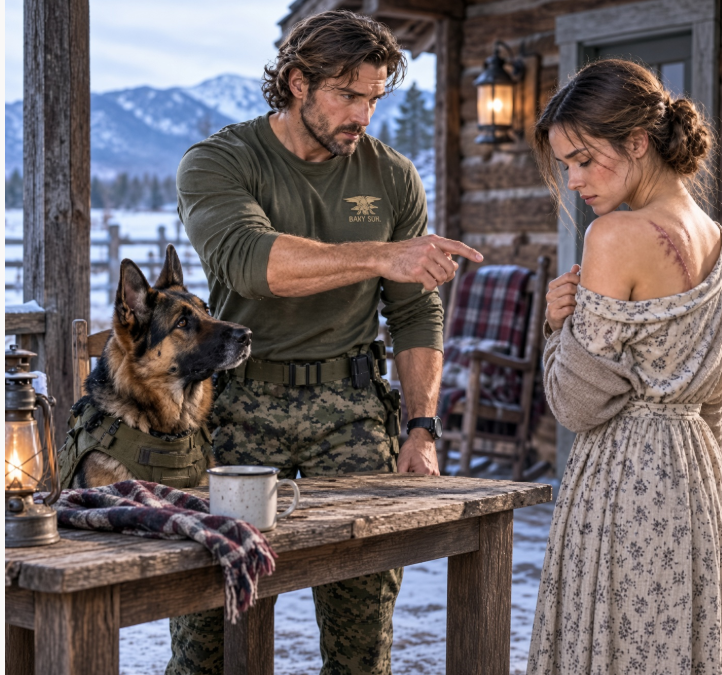
A Former Navy SEAL Told His New Housekeeper, “Stay Out of My Way”—Then Her Scarf Slipped and He Saw the Scars She Had Been Hiding for Years.
For months, Mara Ellison worked quietly at Red Willow Ranch, cooking meals, keeping accounts, organizing supplies, and never once removing the thin scarf wrapped around her neck.
Former Navy SEAL Harlon Beckett told her on the first day, “You handle the house and kitchen. I handle the ranch. Stay out of my way, and I’ll stay out of yours.”
Mara nodded and kept the bargain—until one blistering afternoon, her scarf slipped, Harlon saw the burn scars she had been hiding, and the past someone buried four years earlier finally found its way to Red Willow.
By the last week of April, the Flint Hills had not yet decided what season they belonged to.
Mornings could still leave a silver edge along the stock tanks, cold enough for breath to show against a truck window, while afternoons warmed the south-facing slopes until cattle stretched out in the dry grass as if winter had been only a rumor.
Red Willow Ranch sat fourteen miles outside Cottonwood Falls, where the road narrowed, the cell signal weakened, and the horizon opened so wide that a man could see trouble coming long before it reached him.
Storms came that way.
So did dust.
So did regret, if a person had lived long enough to recognize it at a distance.
The Beckett family had worked that ground for three generations. Nearly eighteen hundred acres rolled away from the main house in folds of limestone pasture, creek bottoms, cattle lots, hay ground, and fence lines that never seemed repaired for more than a season at a time.
The place was not wealthy in any glamorous sense.
There were no stone gates, no expensive sign at the county road, no long driveway built to impress strangers. Red Willow was sound in the way practical things were sound. Bills were paid. Equipment was maintained. Animals were fed before people sat down to eat. Radios were charged before anyone rode into the north pasture. Trucks did not go into the evening with less than half a tank unless someone wanted Harlon Beckett looking at them over the hood in silence.
At forty-seven, Harlon had been home long enough that most people in Chase County had stopped introducing him as “the former Navy SEAL.”
That suited him fine.
He had spent more than twenty years in the Navy and had no interest in turning those years into conversation for strangers who liked the idea of danger more than the cost of it.
What remained of that life showed itself in quieter ways.
Every first Monday of the month, Harlon opened every first aid kit on the property and replaced whatever had expired.
If a hand took a four-wheeler past the creek crossing, somebody else knew the route and expected return time.
If weather turned, he did not ask whether anyone had seen the forecast. He already had three versions of it and trusted none completely.
Walt Dugan once told him cattle had survived on those hills for a hundred years without a contingency plan.
Harlon looked at him and said, “Cattle have terrible planning habits.”
That was about as much explanation as Walt ever got.
Ridge understood Harlon’s system better than most people.
The nine-year-old German Shepherd had worked beside Harlon during the last part of his military career and had followed him into retirement with the calm entitlement of a partner who considered paperwork irrelevant.
Age had put gray around Ridge’s muzzle and taken some speed out of his first few steps in the morning, but discipline remained. He still waited at gates until released. Still watched Harlon’s hands as closely as his voice. Still knew the difference between a casual walk, a command, and work.
These days, Ridge’s hardest assignment was usually deciding whether to ride in the pickup or position himself near the kitchen in case bacon suffered a tragic fall.
PART2:
The woman who arrived at Red Willow on a Thursday afternoon would eventually influence that decision.
Mara Ellison drove a faded silver sedan that looked as if it had spent several years collecting gravel-road dust in different states. She parked beside the mudroom rather than in front of the house, stepped out, and lifted her own suitcase from the trunk before Harlon could offer.
A second bag followed.
Then a small rectangular metal box with worn corners and a handle polished smooth from use.
She carried that one herself.
Mara was thirty-six, with dark hair pinned loosely at the back of her head and the composed manner of somebody accustomed to entering unfamiliar buildings and learning their rules quickly. She was neither timid nor bold. She did not look around like a visitor. She looked around like a woman taking inventory.
A thin cotton scarf circled her neck, pale gray against a simple blouse and work trousers.
The day was mild enough that Harlon noticed it only because everything else about her clothing was practical.
He had hired her through a recommendation from a woman in Strong City who had once managed a small rehabilitation facility. According to the reference, Mara had experience supervising laundry, housekeeping, inventory, kitchens, and the dozen invisible tasks that kept a busy building from becoming a collection of small problems.
The woman who had handled Red Willow’s kitchen and house for the last four years had moved to Emporia to live closer to her sister.
Harlon discovered within two weeks that feeding ranch hands, tracking detergent, knowing which freezer held ground beef and which held stew meat, and remembering whether anyone had ordered coffee were jobs he had underestimated.
He showed Mara through the house without ceremony.
Breakfast began early because the crew often went out before sunrise.
Lunch depended on pasture work and was not always eaten indoors.
Supper shifted with the season.
The pantry was hers to manage.
PART3:
The mudroom belonged to everyone and therefore, Harlon warned, never truly belonged to anyone.
He stopped in the kitchen and turned toward her.
“You handle the house and kitchen,” he said. “I handle the ranch. Keep things running, stay out of my way, and I’ll stay out of yours.”
Mara looked around the kitchen once before answering.
“That should work.”
No offense.
No flinch.
No attempt to charm him.
She asked whether anyone had food allergies, whether the crew carried lunch during longer cattle moves, and which store they used when supplies could not wait for the weekly run.
Those were her only questions.
Her room was at the end of the hall beyond the laundry area. Harlon carried the suitcase as far as the doorway after she finally allowed him to take it.
Mara brought the metal box herself and placed it beneath the narrow writing desk before unpacking anything else.
Nobody mentioned it.
Walt Dugan arrived half an hour later and managed to tell Mara most of what he believed was wrong with modern beef prices before learning whether she knew his name.
At sixty-one, Walt had spent more of his life at Red Willow than Harlon had. He had worked for Harlon’s father, taught Harlon how to set a corner post when Harlon was still in school, and remained convinced smartphones had made everybody less intelligent while carrying one in his shirt pocket at all times.
He was also the sort of man who complained about a person for ten years and still drove forty miles at midnight if that person called for help.
Walt had been close to Catherine Beckett.
Since her death three years earlier, his loyalty toward Harlon had hardened into something almost protective. Harlon tolerated it because correcting Walt generally required more conversation than letting him worry.
Mara’s first supper was uncomplicated.
Roast beef.
Potatoes.
Green beans.
Biscuits.
Gravy made from the pan.
She did not try to impress anybody.
That seemed to impress them anyway.
Ten minutes before Harlon came in from checking calves, Ridge appeared in the kitchen doorway. The shepherd sat without invitation and watched the stove.
Walt noticed first.
“Well, look at that. Dog hasn’t cared this much about supper since Catherine was here.”
For half a second, the room changed.
Mara glanced toward Harlon’s empty chair, then back at the skillet.
She did not ask who Catherine was.
Walt seemed to realize he had said more than he intended and became unusually interested in his potatoes.
Ridge remained where he was.
The meal passed easily after that.
Later, while the crew scattered toward the bunkhouse and trucks, Mara stood alone in the kitchen and began to understand the difference between a house that was neglected and one that had simply stopped expecting anybody to enjoy it.
Red Willow was clean.
Repairs had been made when needed.
The refrigerator worked. The plumbing worked. Floors had been swept often enough that dust only gathered in corners nobody used.
But two ceramic mugs sat on the highest shelf with a fine gray film across their rims.
A small AM/FM radio rested above the kitchen counter with its cord wrapped tightly around the body.
In the living room, a framed wedding photograph stood on a side table turned several degrees toward the wall, as if somebody had once reached to put it away and lost the nerve halfway through.
Mara did not straighten it.
Some things were not untidy simply because they were out of place.
During her first week, she made no grand improvements.
She learned first.
The pantry was reorganized so canned goods could be seen without moving three other things.
Expired boxes disappeared.
An inventory sheet appeared on a clipboard in the mudroom.
Dish towels began showing up folded the same way every morning, not because the fold mattered, but because knowing where something would be mattered when six people moved through a room before sunrise.
A large container of coffee grounds migrated from the top pantry shelf to one at shoulder height.
Walt stopped reaching above his head for it.
He never asked how Mara had noticed the stiffness in his right shoulder.
She never told him.
Harlon noticed both things.
He also noticed that the grocery bill for the week was lower despite the kitchen having more food in it.
He said nothing.
By the sixth day, Mara had learned enough of the ranch to begin noticing what did not belong inside a working system.
The east service door on the equipment barn was one of those things.
She discovered it while carrying a carton of shop towels inside. The handle lifted, but the door did not move.
Walt, passing behind her, told her to raise the latch, pull toward herself, then put a shoulder against the frame.
The door opened with a hard wooden complaint.
“It’s been doing that for years,” Walt said.
Mara looked at the warped edge.
“That doesn’t make it less stuck.”
Walt gave her the expression of a man whose argument had somehow been stolen before he made it.
That evening, a new line appeared on the maintenance board in the mudroom.
East service door sticks.
Harlon saw it after supper.
The next afternoon, he removed the hinges, reset the frame, shaved a small section of swollen wood, and rehung the door. Ridge lay in the shade nearby and watched as if supervising government work.
When Harlon finished, the door opened with one hand.
He wiped sawdust from his palms and went back to checking fence without mentioning it.
Neither did Mara.
By the end of the first week, Red Willow looked nearly the same as before she arrived.
Same white house behind the windbreak.
Same trucks collecting dust near the barn.
Same radio unplugged on the kitchen shelf.
The changes were smaller than appearance.
Harlon came back from the west pasture late that Sunday after the sky had gone dark blue behind the cottonwoods. He entered through the mudroom expecting the house to be quiet.
A low kitchen light was still on.
Mara stood at the counter measuring coffee into the machine for morning.
Moving without hurry.
Ridge lay across the kitchen doorway with his head between his paws, close enough to watch her and far enough to stay out of the way.
Harlon stopped.
Ridge lifted his eyes toward him.
For a moment, the dog seemed to consider getting up.
Then he lowered his head again.
Mara did not notice Harlon standing there.
He remained in the darkened mudroom a few seconds longer than he needed to before turning toward the hallway.
Very little had changed at Red Willow.
But the house had begun keeping a different kind of time.
May came wet to Chase County.
Rain moved through the Flint Hills in long gray bands, filling shallow creeks that had nearly disappeared over winter and turning the low ground behind Red Willow into a dark green sweep of new grass.
Some mornings began under clean blue sky and ended with thunder rolling in from the west.
Other days stayed cool until noon, then warmed fast enough to leave cattle standing belly-deep in shade along the cottonwoods.
Mara learned the ranch the same way she had learned every place she had ever worked.
Not from maps.
From habits.
Ray Collins, the youngest ranch hand at thirty-three, took his coffee black and looked suspiciously at anything labeled healthy, yet somehow always knew when dessert had been made before anyone told him.
Walt Dugan complained about oatmeal with the dedication of a man defending a constitutional principle, then ate two bowls whenever Mara put brown sugar and sliced apples beside it.
Harlon was harder to predict.
On mornings when he checked the calving pasture before sunrise, his chair stayed empty at breakfast and his coffee cooled untouched.
But if Mara made beef stew for lunch, his truck had a curious habit of appearing near the house shortly before noon.
She noticed.
She did not mention it.
Ridge had no interest in preserving anyone’s dignity.
By the second week of May, the German Shepherd had claimed a place near the far end of the kitchen where he could see the back door, the table, and most importantly, whatever happened near the stove.
He never begged.
His training had survived too many years for that.
He simply made himself available to opportunity.
One evening, Mara came in from the laundry room and found his leash laid neatly across both of her shoes. Ridge sat three feet away, looking pleased with the arrangement.
Harlon came through the mudroom at the same time and stopped.
The dog glanced at him, then back at Mara.
“Chain of command is slipping,” Harlon said.
Mara picked up the leash.
“Maybe he found better management.”
From the table, Walt laughed hard enough to catch his mug before it tipped.
Harlon gave Ridge a look that had probably meant something much more serious in another life.
Ridge wagged his tail once.
That settled the matter.
Small things like that began changing the atmosphere at Red Willow.
The ranch had always functioned.
Work got done. Cattle were fed. Vaccines logged. Hay ordered. Fences repaired. Trucks maintained. Nobody would have called the place unhappy.
But before Mara came, people had moved through the house as if it were another building on the property. Breakfast happened because men needed food. Coffee happened because dawn came early. The kitchen existed because it had a stove.
Now Walt sometimes stayed after supper long enough to complain about Kansas City baseball.
Ray began bringing the mail inside instead of leaving it on the porch.
Someone replaced the cracked sugar bowl without being asked.
The house was not becoming lively.
It was becoming inhabited.
There was a difference.
One Tuesday afternoon, the sky changed before anyone heard thunder.
Mara saw it through the kitchen window—a bruised wall building low over the western hills while sunlight still lay bright across the east pasture.
Her phone showed one weak bar of service, then none.
She tried the weather app twice.
Nothing loaded.
On the shelf above the counter sat the old radio she had noticed her first night. Its cord remained wrapped around the body. The casing had yellowed with age. The tuning dial was scratched near the local AM band. Dust had gathered around the speaker grill, but not deeply enough to suggest it had been forgotten for decades.
Mara unwound the cord and plugged it in.
Nothing happened.
Then she turned the knob farther.
Static cracked into the kitchen.
Ridge raised his head.
Mara adjusted the dial until a weather report emerged through the noise.
A thunderstorm watch had been issued for several counties west of them.
High winds possible by late afternoon.
She left the radio playing while she checked the windows and moved a basket of clean towels away from the mudroom door.
The bulletin ended.
An old country song followed.
Steel guitar.
Slow rhythm.
Too gentle for the weather gathering outside.
Harlon came in carrying a coil of fence wire.
He made it two steps into the kitchen before stopping.
Mara noticed immediately that he was not looking at her.
He was looking at the radio.
Something passed across his face too quickly to name.
Not surprise.
Not exactly pain.
Something quieter.
Mara reached toward the knob.
“I can turn it off.”
“Leave it.”
She waited.
Harlon set the wire down by the mudroom wall.
“We need the weather.”
That was all.
He washed his hands, pulled out the chair at the far end of the table, and sat while the song played itself through.
Ridge watched him for a moment, then settled again.
Mara went back to slicing onions.
The storm arrived forty minutes later.
Rain hammered the windows hard enough to blur the pasture beyond them. Wind bent the cottonwoods almost flat along the creek and rattled the loose gutter over the back porch. One brief burst of hail bounced across the yard before turning back to rain.
Nobody said anything about the radio.
It stayed on through supper.
Two days later, Walt did.
Mara was putting biscuits into a basket when he looked toward the shelf and seemed to notice the radio was still plugged in.
“Catherine used to run that thing from breakfast to noon.”
Mara kept folding the towel beneath the biscuits.
Walt smiled faintly.
“Too loud, mostly. Claimed she couldn’t hear the weather over us talking.”
He left it there.
Mara did too.
By then, she understood enough not to ask questions just because an answer had been placed within reach.
Information came differently in houses that carried grief.
A photograph said one thing.
A chair nobody used said another.
Sometimes a man told you more by walking into a room and not turning off a radio than he would have told you in an hour of conversation.
The next piece came from Dr. Ellen Shaw, a veterinarian who arrived the following Monday to check several cows and update herd records.
Ellen was in her late forties, sun-browned and practical, with a voice that could calm nervous livestock and stubborn ranchers at roughly the same volume.
Ridge recognized her before she reached the porch.
He went out at a trot, dignity abandoned for approximately six seconds.
Ellen crouched and rubbed the gray along his muzzle.
“Well, look at you. Still pretending you’re working.”
Ridge leaned into her hand.
Harlon was carrying a case toward the truck.
“He does that when there’s an audience.”
Ellen glanced toward the kitchen where Mara had stepped outside with a thermos.
“Catherine used to ruin this dog every Sunday with scrambled eggs.”
Harlon paused only long enough to shift the case in his hand.
“He survived. Barely.”
“Poor thing was loved nearly to death.”
There was affection in Ellen’s voice and no awkwardness around Catherine’s name.
Mara noticed Harlon did not shut down.
He simply moved on to the next thing that needed doing.
Later, while Ellen worked near the chute, Walt supplied another small piece without realizing he was doing it.
Catherine had been the one who convinced Harlon to come back permanently after the Navy. She had grown up forty miles away and had always preferred Red Willow to anywhere else. The ordinary future they expected after his retirement lasted less than two years.
Three years earlier, Catherine had been diagnosed with aggressive cancer.
Harlon did what he knew.
He organized.
Appointment cards were filed by date.
Medication times went onto a whiteboard.
Overnight bags stayed packed.
Fuel stayed above half a tank.
Alternate routes to Topeka were written down in case weather closed part of the highway.
There were second opinions, treatment schedules, dietary notes, questions prepared before every doctor visit. He turned uncertainty into lists because lists had once helped keep people alive.
For a while, they probably helped Catherine too.
But lists could not negotiate with an illness that did not care how prepared a man was.
Mara never heard Harlon describe those months.
She pieced them together from other people, from an old insulated medication bag in the laundry cabinet, from a calendar hanging behind the office door that had never been replaced, and from the way nobody in the house had touched the radio for three years.
She did not need the final sentence explained.
Some silences were complete on their own.
Her own habits remained less visible.
By the middle of May, afternoons had grown warmer, sometimes reaching well into the seventies.
Yet the thin scarf remained around her neck.
It was light enough not to look strange at first. Soft cotton, gray or pale blue depending on the blouse beneath it, always loose, always arranged so one end rested over her left shoulder.
Harlon noticed because Harlon noticed patterns.
He also noticed Mara avoided turning her back when delivery drivers stood too close in narrow spaces.
He noticed she checked the mudroom smoke detector after replacing its battery, even though nobody had asked.
None of those things required questions yet.
Late one afternoon, Mara crouched in the pantry to pull a carton of canned tomatoes from the bottom shelf.
Ridge followed her in and stepped on the trailing end of the scarf.
She rose.
The fabric tightened suddenly against her neck.
Mara moved so fast that the carton slipped from her hands.
She caught it before it hit the floor.
Ridge immediately backed away, ears lowering.
For one second, Mara stood absolutely still.
Then she loosened the scarf.
“It’s all right.”
Her voice was aimed at the dog.
Not herself.
Ridge approached more carefully this time and touched his nose to her wrist.
Mara scratched behind his ear.
The moment passed.
Harlon had been standing in the mudroom doorway with a stack of invoices.
He saw all of it.
He did not ask.
There were times when curiosity wore the clothing of concern.
Harlon knew the difference better than he once had.
By the end of May, the second mug appeared on the kitchen counter.
Nobody put it there deliberately.
At least nobody admitted doing so.
Mara made coffee early. Harlon began coming through the kitchen after morning rounds while it was still hot enough to drink. One mug was hers. The other simply stopped being returned to the cabinet.
Some mornings Harlon sat for three minutes.
Other mornings ten.
They talked mostly about rain totals, feed orders, a section of fence Ray wanted repaired, or whether Walt had actually remembered the parts list Mara had put in his truck.
Nothing important.
Which was probably why it mattered.
Ridge usually lay between the table and the back door.
The radio stayed plugged in.
Outside, May rain kept the Flint Hills green.
Inside Red Willow, people were beginning to know where everyone would sit.
June gave way to July almost without ceremony.
The Flint Hills stayed green longest in the low country where creek beds held the last of spring moisture, but the higher slopes had begun turning the dull gold that came before the harder heat of August.
By midafternoon, dust followed ranch trucks in long red-brown ribbons, settled into boot seams, and worked its way beneath collars no matter how tightly a person buttoned them.
There were days the temperature climbed past ninety before lunch.
Mara still wore the scarf.
By then, everyone at Red Willow had noticed.
Nobody asked.
One particularly hot morning, Walt came into the kitchen with sweat darkening the band of his felt hat and found Mara pulling biscuits from the oven.
“Looking at that thing makes me ten degrees hotter.”
Mara glanced at her scarf, then at the heavy hat still planted firmly on Walt’s head.
“I was about to say the same thing.”
Ray laughed into his coffee.
Walt removed the hat, considered it as though betrayed, and carried on with breakfast.
The question disappeared.
Harlon did not forget it.
He had spent too much of his adult life around people whose habits meant something.
A man who always chose the same seat might simply like the view.
Or he might need to see the door.
A person who checked a watch three times in five minutes might be impatient, anxious, or measuring something nobody else knew mattered.
Patterns were not answers.
They were invitations to pay attention.
Mara had several.
She disliked being touched unexpectedly near her left shoulder.
The first time Harlon saw it clearly was when a feed supplier came through the mudroom carrying paperwork and reached around her to set a clipboard on the counter. His hand never touched Mara, but it passed close behind her shoulder.
She moved sideways before he finished the motion.
Not dramatically.
One step.
Enough to put the counter at her back and the man within view.
Then she signed the invoice and continued discussing the delivery as if nothing had happened.
The driver never noticed.
Harlon did.
At the beginning of July, Mara replaced batteries in two smoke detectors and tested both twice. Nobody had asked her to do it.
When Ray helped move shelving in the pantry to make room for bulk supplies, Mara’s first question was not whether the shelves were level. She asked whether the new position narrowed the path to the side door.
It did.
By six inches.
The shelves moved back.
Those things could have come from years managing housekeeping in large buildings.
Some probably did.
Others had a different weight.
Harlon knew something about that kind of weight.
His own life was full of harmless-looking habits that had survived the circumstances that created them.
Weather was one.
A thunderstorm forecast did not mean rain to Harlon.
It meant wind direction, creek crossings, visibility, whether the livestock trailer should remain near the north lot or be moved closer to the house, which pasture held enough shelter, and whether a radio dead zone mattered if somebody had to be reached quickly.
When the stock tank pump on the western section quit during the first hot week of July, Walt wanted to take it apart immediately.
Harlon stopped him.
He checked the breaker first.
Then line pressure.
Then the float.
Then whether enough water was available elsewhere if the pump remained down through the afternoon.
Only after knowing what could fail next did he open the housing.
Ray watched from beneath the brim of his cap.
“One of these days we’re going to have a problem so simple it disappoints you.”
Harlon kept working.
“I’m prepared for that.”
It drew a laugh.
But truth lived beneath it.
Preparation had once kept men alive.
Harlon had learned to think past the first problem toward the problem waiting behind it. One route was never enough. One communication method was not enough. One assumption should never carry more weight than the evidence beneath it.
Those instincts fit ranch life surprisingly well.
Cattle ignored schedules.
Weather lied.
Machines failed when needed most.
Yet there was another side to the habit.
One Harlon understood less willingly.
If a man spent enough years believing preparation could reduce loss, eventually he began to believe loss meant something had been missed.
A detail.
A warning.
A better option.
Catherine’s illness had taught him otherwise.
His mind had not entirely accepted the lesson.
Mara seemed to have her own version of that argument with the past, though whatever had created it remained hidden beneath a strip of cotton around her neck.
Harlon let it remain there.
The moment the scarf came off happened on an ordinary Thursday.
That was the strange thing about moments people remembered for years.
They rarely announced themselves beforehand.
Mara had driven into Cottonwood Falls after lunch for groceries, cleaning supplies, coffee filters, and a replacement gasket for a kitchen faucet that had started dripping.
She returned shortly before four in the afternoon in heat that made the gravel shimmer.
Harlon was crossing the yard with a tub of mineral supplement when she backed her sedan near the mudroom and opened the trunk. She had dressed differently for town—a simple summer dress, dark blue and practical, with short sleeves and a wider neckline than the work shirts she wore around the ranch.
The same thin scarf rested around her neck, one end falling toward the left shoulder.
Ridge came out from beneath the porch and inspected the grocery bags with professional interest.
Mara handed Harlon a sack containing coffee and canned goods without asking.
He took it.
The last paper bag sat toward the rear of the trunk.
Mara leaned in.
The loose end of her scarf caught on the metal latch near the trunk opening.
She did not realize it.
She straightened and turned.
The fabric pulled.
For one second, it held.
Then it slipped free of her neck, dragging lightly across the back of her dress and shifting the left side of the neckline downward.
Harlon saw the scar.
It began beneath the hairline on the back left side of her neck, passed over the upper curve of her shoulder, and continued across part of the shoulder blade before disappearing beneath the dress.
It was old.
Healed.
The skin there was pale and uneven, different in texture from the surrounding skin but no longer wounded.
There was nothing grotesque about it.
Nothing that required staring.
What caught Harlon was not the scar itself.
It was Mara’s reaction.
Her hand went immediately to her neckline.
The other reached for the fallen scarf.
For one brief moment, the composed woman who had learned everyone’s coffee habits, organized a ranch pantry without offending Walt, and calmly handled three kinds of weather in one week looked as if the ground beneath her had shifted.
Then it was gone.
She pulled the fabric back over her shoulder.
Harlon lowered his eyes to the grocery bag in his hands.
Mara wrapped the scarf again.
“Old injury.”
Her voice was level.
Harlon nodded once.
He did not ask how.
He did not tell her she did not need to hide it.
He did not offer sympathy she had not requested.
They carried the groceries inside.
By supper, nothing about the day appeared different.
But for the next several mornings, Harlon caught himself remembering what he had seen.
Not the shape of the scar so much as the speed with which Mara covered it.
He knew what it was to own a piece of history other people believed entitled them to questions.
So he left hers alone.
Eleven days passed.
Red Willow continued as though nothing had happened.
That may have mattered more than either of them realized.
Ridge brought his leash to Mara twice that week.
Once while Harlon was standing ten feet away.
The second time, the dog ignored Harlon completely and sat in front of her with such solemn expectation that Mara finally took him down the lane herself.
The radio developed a morning routine of its own.
Weather at six-thirty.
Market report afterward.
Music turned low enough that conversation did not have to compete with it.
Harlon never unplugged it.
Mara never asked whether she should.
On a Tuesday near the middle of July, Harlon finished replacing a section of fence in the south pasture and checked the time.
11:42.
There was another post he could have set before lunch.
Normally, he would have.
Instead, he put the tools in the truck and drove back toward the house.
Halfway there, he realized why.
Mara had mentioned beef stew that morning.
Harlon slowed slightly.
The realization embarrassed him more than it should have.
For three years, coming back to the house in the middle of the day had meant forgetting something, needing paperwork, or fixing a problem.
Home had become a location between tasks.
Now he had left a perfectly useful twenty minutes of daylight sitting in a pasture because there would be stew on the table and coffee on the counter.
He parked beside the barn but did not get out immediately.
Ridge, riding in the passenger footwell, looked at him.
Harlon rested both hands on the steering wheel.
He was not sure whether the feeling in his chest was guilt or relief.
Perhaps there were seasons when the difference was too small to matter.
Ridge sneezed against the dashboard.
Harlon opened the door.
“Good talk.”
Life went on.
Walt still argued with Ray over baseball.
Mara still left the inventory clipboard exactly three inches from the mudroom phone because that was where everyone eventually learned to find it.
The scarf stayed around her neck.
Then Walt made a parts run to Wichita.
One of the livestock trailers needed a replacement brake assembly the usual supplier did not have in stock, and Walt volunteered mostly because he wanted an excuse to eat lunch at a place he claimed had the last respectable chicken-fried steak in Kansas.
He returned after dark.
Nothing about him seemed different.
That changed just after nine.
Walt was sitting at his kitchen table in the small house he rented near Strong City when his phone buzzed.
A man he had spoken with at the parts counter had sent him a message.
Thought I recognized that name you mentioned.
Below it was a link.
Walt opened it.
The article was four years old.
Ashdown House.
Fatal fire in Wichita.
Two adults dead.
Questions surrounding the building, its owner, and a housekeeping employee investigators had interviewed after the incident.
Walt read halfway down the page before he found the name.
Mara Ellison.
He went back to the beginning.
Read it again.
Then a second time.
At 9:17, the Red Willow crew group text lit up.
Walt had sent the link.
The next morning, Red Willow looked exactly as it had the day before.
The same light came through the kitchen windows.
The same radio sat low on the shelf, murmuring weather and cattle prices beneath the clink of coffee cups.
Outside, a pickup coughed to life near the barn while Ridge slept with his chin across one paw.
Nothing visible had changed.
Mara knew before anyone said a word.
Ray came in, poured coffee, and left without waiting to see what she had put in the skillet.
Another hand carried a lunch cooler through the mudroom even though Mara had already packed sandwiches for the crew.
Walt entered last, removed his hat, and chose a chair at the far side of the table instead of the place he had occupied almost every morning since she arrived.
Nobody accused her of anything.
That made it worse.
People who wanted a fight were easier to understand than people who had suddenly become careful around you.
Mara set a plate on the table anyway.
Walt thanked her without looking up.
Ridge remained where he always was.
The dog had no reason to change his routine because a link appeared on a phone.
Mara watched him for a moment and understood.
She had been here before.
Different kitchens.
Different uniforms.
Different towns.
The sequence changed less than people thought.
Someone found the article.
Then came the quiet.
After that came questions.
Harlon walked in ten minutes later.
He had already read the article twice.
It was badly balanced in the way early reporting often was when facts arrived slower than public curiosity.
The headline named Ashdown House.
Fatal fire.
Former employee questioned.
Richard Talbot, the building owner, was quoted repeatedly.
Investigators had not ruled out employee negligence.
A laundry and housekeeping supervisor named Mara Ellison had been interviewed regarding her movements inside the building that night.
Two adult residents had died.
Several others had gotten out.
The article did not say Mara started the fire.
It did not say she had been charged.
It did not say a witness had seen her do anything wrong.
Harlon knew the difference.
For years, his work had depended on separating what somebody reported from what somebody believed and what somebody could actually confirm.
A rumor repeated three times did not become three sources.
A confident statement did not become evidence because a person wore a title while making it.
He read the article a third time before breakfast.
Then he found Walt near the equipment shed.
“Who saw her start it?”
Walt shifted the coil of hose in his hands.
“Nobody told me that.”
“Who saw her do anything that caused it?”
Walt frowned.
“The article says they questioned her.”
“That’s not what I asked.”
Walt looked toward the house.
Harlon waited.
Finally, Walt shook his head.
“I don’t know.”
That was the problem.
Nobody did.
By noon, the ranch had settled into work, but discomfort remained.
Mara moved through lunch preparation with the same efficiency she had shown every other day. If she was upset, she kept it inside the boundaries of the job.
Harlon came in while she was chopping carrots.
He should have known better than to begin the way he did.
But old habits had long lives.
“What time did the alarm go off?”
Mara did not stop cutting.
“A little after nine.”
“Where were you?”
“Laundry room.”
“Who else had access?”
She slowed.
Harlon continued before noticing.
“Did Talbot have a master key?”
“Yes.”
“Who used the service corridor?”
Mara set the knife down carefully.
Not angrily.
That was worse.
She wiped her hands on the towel beside the cutting board and turned toward him.
“Are you trying to understand what happened, or are you trying to clear me?”
The question stopped him.
For one second, Harlon heard his own voice from outside himself.
Short.
Ordered.
Timeline first, contradictions later.
The kind of questioning built to remove uncertainty.
Mara was not an incident report.
He pulled out a chair and sat.
That was the last question he asked for a while.
Four years earlier, Ashdown House had stood on the edge of downtown Wichita.
An old brick residential hotel renovated more cheaply than well. Some people stayed a week. Others stayed six months. Traveling nurses used it between contracts. Divorced men rented rooms while waiting for leases elsewhere. A few older tenants had lived there long enough to know which pipes knocked in winter and which stairwell smelled like dust after rain.
Mara had been the laundry and housekeeping supervisor.
The title sounded larger than the job.
Mostly, it meant there was always something she was responsible for that nobody else noticed until it failed.
Linens.
Cleaning supplies.
Room turnover.
Laundry schedules.
Storage.
Lost keys.
Things running out.
Things being put where they should not be.
She knew the building because her work required knowing where people moved through it.
That knowledge mattered the night of the fire.
Ashdown had a service corridor on the upper floor connecting several rooms to a secondary stairwell. Tenants sometimes used it at night because it was quieter than the main hall.
Richard Talbot disliked that.
He called it a security problem.
Instead of repairing the access system properly, he had a steel bar installed across part of the service door.
Cheap.
Simple.
Easy to control.
The kind of solution that worked perfectly until the day it mattered.
Mara had complained.
Others had too.
Talbot said the door could still be opened when needed.
The night of the fire, Mara was working in the rear laundry room when the alarm sounded.
She never told Harlon where the fire started because she did not know.
What she knew was that the main stairwell became unusable quickly and people on the upper floor began looking for another way down.
Mara moved through the service side because she knew another route.
At the upper corridor, the barred door had already become difficult to move.
The metal had warped.
The frame had shifted.
She worked at it long enough to get it open.
Four adults came through that way.
Two others did not.
Mara did not describe them.
Did not describe the hallway.
Did not describe what she remembered from the minutes before help reached that part of the building.
She simply told Harlon those two people had been beyond her reach by the time the door finally moved.
That was enough.
The scar Harlon had seen beneath her scarf came from that night.
The heat had caught the back of her neck, shoulder, and upper back while she worked at the door and moved people toward the stairwell.
She healed.
The story around her did not.
In the first days after the fire, Talbot told investigators there had been no unauthorized bar on the service door.
Then he suggested Mara had been careless around the laundry area.
She often worked late.
She had keys.
She knew the building.
At one point, he claimed she had used a personal electric appliance in a staff area against policy.
None of it proved the origin of the fire.
It did not need to.
It gave people somewhere to look.
Detective Paul Renshaw handled part of the early inquiry.
Mara later learned he knew Talbot before the fire.
Not secretly.
Wichita was not so large that businessmen and police officers never crossed paths. They had been at the same charity events. Talbot had donated to organizations Renshaw supported. People described them as friendly.
No elaborate conspiracy was necessary.
Something much smaller was enough.
A question that should have been pressed was allowed to rest.
A witness statement about the service door was treated as uncertain.
Talbot’s explanation was given more weight than the people renting rooms from him.
The newspapers reported what investigators were considering before investigators knew what had happened.
By the time officials stated there was not enough evidence to charge Mara, the first article had already traveled farther than the correction.
That was how it worked.
Questioned stayed searchable.
Not charged lived several paragraphs down in a later story nobody shared.
Mara left Wichita within weeks.
She found another job.
Then another.
At one place, she lasted nine months before a supervisor searched her name after a disagreement over payroll. At another, someone recognized her from an article reposted online.
Neither employer fired her outright.
They simply became different.
More watchful.
Less certain.
People stopped leaving keys near her.
Conversations ended when she entered rooms.
Eventually, Mara learned to leave before anyone had to ask.
Red Willow was the sixth place in four years where she believed the past might stay farther away than she could drive.
While Mara spoke, the radio remained on, soft, almost too low to hear.
Ridge moved once, rose from the floor, and settled closer to the table without touching either of them.
Harlon said very little.
The part of him that wanted details had gone quiet.
Mara reached for the scarf once during the telling and adjusted the fabric over her left shoulder. The gesture was so small she probably did not know she had done it.
When she finished, the carrots still sat half-cut on the board.
Outside, a truck door shut near the barn.
Walt was on the porch.
He had come up carrying paperwork and stopped before entering when he heard voices. He had not meant to listen, but leaving would have made more noise than staying, so he stood with his hat in his hands and heard enough.
Inside, Mara picked up the knife.
She did not resume cutting.
“I can be gone tonight.”
Harlon looked at her.
There was no self-pity in the offer.
That was what made it land.
Mara had made this arrangement before.
Pack the suitcase.
Take the metal box.
Leave before suspicion hardened into something uglier.
She was already making calculations.
Which stores would still be open.
How far she could drive before dark.
Whether she had enough money for a motel.
Whether the next employer would search her name sooner.
The same kind of contingency planning Harlon recognized in himself.
Only hers had been built around disappearing.
He looked toward the kitchen window.
Walt’s shadow sat faintly against the porch glass.
For almost three months, Mara had been putting things in order at Red Willow. The pantry, the kitchen, the broken door, routines nobody realized were broken.
Now the ranch had reached the point where it would have to decide what kind of place it actually was.
Mara waited.
Harlon did not answer yet.
When he did, his voice was calm.
“You’re not leaving because of a headline.”
She said nothing.
“If facts change, I’ll deal with facts. Right now, you still have a job here.”
That was all.
No speech about trust.
No promise that he knew everything.
No attempt to turn the decision into something noble.
Harlon had spent enough of his life around certainty to know when he did not have it.
What he had was nearly three months of watching Mara work, one poorly balanced article, and a story that fit more closely with what he had observed than the version Richard Talbot had given years earlier.
For the moment, that was enough.
Outside, Walt remained on the porch until he realized the conversation was over.
He came in carrying the paperwork he had forgotten he was holding.
His face made it plain he was not comfortable.
Harlon did not ask him to be.
“I don’t like it,” Walt said.
Harlon took the papers.
“You don’t have to.”
That ended the discussion.
Mara returned to the carrots.
The kitchen became quiet again, though not the same kind of quiet it had been before.
Something had shifted between Mara and Harlon.
Not trust exactly.
Trust was too large a word for what had happened.
Harlon had simply refused to let fear make the decision for him.
For Mara, that was unfamiliar enough.
She had lived four years inside the expectation that once people learned about Ashdown House, everything afterward became temporary.
A room.
A job.
A friendship.
Even the way someone said good morning.
At Red Willow, the article had arrived, and the roof had not fallen in.
The crew remained uneasy.
So did she.
But breakfast still needed making the next day.
That mattered more than it should have.
The rest of July passed unevenly.
Some days were hot enough to drive the cattle toward shade before ten. Others brought sudden rain that darkened the roads and left grass steaming when the sun returned. The hills never stayed one color long.
Walt kept his distance from Mara without becoming cruel.
He stopped sitting at the kitchen table unless someone else was already there. He carried lunch from home more often. When Mara asked whether he wanted coffee, he always said yes and always took it outside.
Ray noticed but wisely kept his opinions to himself.
Ridge behaved as though human suspicion were a problem outside his job description.
He continued appearing in the kitchen at the same times, sleeping near the same doorway, and bringing Mara his leash with the confidence of a dog who believed repetition could eventually turn preference into policy.
Mara was grateful for that.
Dogs did not search old newspapers.
They knew who filled the water bowl, who opened the back door, who spoke sharply and who did not.
They lived in the day they were given.
People had a harder time with that.
The rain that opened August came after dark.
It struck the windows in hard bursts and washed dust from the porch boards in pale streams. Lightning stayed mostly west, but the weather radio issued a warning for wind and possible hail.
The crew had already gone.
Harlon was in the office checking cattle records while Mara reorganized a kitchen drawer that had collected three years of dead batteries, takeout menus, screws, rubber bands, and objects nobody wanted badly enough to throw away.
Near the back, she found a thin folder.
The label from a cancer center in Topeka was still visible on the front.
Inside were appointment cards, notes written in two different hands, medication schedules, and a folded sheet listing questions for an oncologist.
Mara knew what it was before she read a name.
She closed the folder.
Harlon stood in the doorway.
Neither spoke at first.
Mara held it out.
“I was cleaning the drawer.”
“I know.”
He took the folder but did not put it away.
The radio shifted from weather coverage into music. An old song played low enough that the rain still filled most of the room.
Harlon looked down at the stack of appointment cards.
“Catherine was diagnosed about three years before she died.”
Mara waited.
He sat at the table.
This time, he did not need to be asked.
When Harlon left the Navy, he believed the difficult part of life was behind them.
He had been away too often. Missed holidays. Arrived home tired enough to fall asleep in chairs. Learned to measure time with Catherine in departures and returns.
Red Willow was supposed to end that.
For a while, it did.
Then Catherine got sick.
The diagnosis was aggressive.
Treatment began quickly.
Harlon responded the way training had taught him to respond to uncertainty.
He built structure around it.
Appointments went onto calendars in two places. Medication times were written down. He researched treatment options until the words sounded like another language. The truck never dropped below half a tank. An overnight bag stayed packed by the mudroom. If weather threatened the main route to Topeka, he already knew the second one.
Then the third.
He kept lists of questions for doctors because he had learned long ago that people forgot important things when they were tired or afraid.
Some of that helped.
It made bad days less chaotic.
It ensured Catherine never missed what could be done.
What it could not do was change the part that mattered most.
The disease continued.
Harlon had lived most of his adult life believing preparation changed outcomes.
Often it did.
With Catherine, preparation changed only the quality of the time they had left.
It let him be there.
It did not let him keep her.
He did not explain this dramatically.
He simply turned one appointment card over between his fingers.
“When she got worse, I kept thinking I’d miss something.”
Mara looked at him.
Harlon’s mouth tightened faintly.
“There was always supposed to be another option.”
Rain pressed against the windows.
Mara did not tell him grief was not his fault.
She did not tell him Catherine would want him to move on.
People often said those things because silence frightened them.
Instead, she folded the kitchen towel in front of her.
“There isn’t always another option.”
Harlon nodded.
He understood the sentence differently than most people would.
After Catherine died, he made Red Willow easier to control.
Fuel.
Schedules.
Gate checks.
Tool placement.
Radio charging.
Emergency supplies.
Those things responded to attention.
Loss did not.
The ranch became orderly enough that very little surprised him.
The house became quiet enough that nothing reminded him how little control he had ever really possessed.
Mara did not say that either.
She did not need to.
The radio played through another song.
When the rain softened, Harlon returned the folder to the drawer.
He did not push it as far toward the back this time.
The weeks after that conversation contained nothing large enough to mark on a calendar.
That was why they mattered.
Mara tightened Red Willow’s supply system without turning it into an office. She combined feed store and household runs when routes made sense. She stopped buying pantry items simply because nobody remembered whether they were already there. Cleaning products were ordered before they ran out instead of after. Freezer shelves were labeled by month. Leftovers became lunches instead of trash.
By late August, Harlon noticed supply expenses had dropped enough to matter.
He said only that the new system was working.
Mara answered that systems usually worked better when people used them.
It was as close as either came to discussing money.
Harlon knew better than to turn competence into gratitude.
Mara was not there as charity.
She was good at the job.
That deserved to be treated as fact.
Walt remained the last person to settle.
Then one Wednesday, he forgot his lunch.
He had driven halfway to the south section before realizing the cooler was still on his kitchen counter. By noon, heat burned away his pride more effectively than argument ever could.
He appeared in Mara’s kitchen while she was slicing roast beef.
She looked at him.
He looked at the sandwich.
Nothing was said about Wichita.
Mara set a plate on the counter.
Walt sat at his old place.
He was not ready to apologize.
She did not force him.
Sometimes a person returned before they knew how to explain why.
The following Sunday, Mara made scrambled eggs.
Ridge was asleep beneath the edge of the table when a small piece slipped from the spoon and landed on the floor.
His eyes opened instantly.
He was standing before the egg stopped moving.
Mara laughed under her breath.
Harlon looked at the dog.
For one moment, the kitchen from years earlier seemed to sit inside the room they had now.
Catherine had done exactly the same thing.
Every Sunday.
Always pretending the first piece was an accident.
Ridge had apparently never stopped believing the tradition remained in effect.
Harlon expected the memory to hurt sharply enough that he would need to leave.
It did hurt.
He stayed.
Mara bent and picked up the egg before Ridge could take advantage.
“Nice try.”
Ridge sat.
His expression suggested negotiations remained possible.
Harlon reached for his coffee.
The moment passed without taking the room with it.
That evening, Mara went to her bedroom after everyone had gone quiet.
The small metal box remained beneath the writing desk where she had placed it on her first afternoon at Red Willow. She pulled it out and set it on the bed.
Her hand rested on the latch.
For a long time, she did nothing.
Inside were things she had carried through six jobs and nearly as many rooms.
Things that had outlasted every landlord, supervisor, and person who discovered her name online and began looking at her differently.
Mara did not open the box.
Not yet.
She slid it back beneath the desk.
But this time, before turning off the light, she looked around the room differently.
For the first time in four years, she wondered whether the box might not have to travel to a seventh house.
By the last week of August, the Flint Hills had lost most of their softness.
Spring green had gone out of the higher slopes, leaving tall grass yellow-brown and brittle at the edges. Stock ponds sat lower than they had in June. Dust gathered around gates in pale drifts and worked into every hinge, boot seam, and pickup bed on the property.
Even the creek behind the cottonwoods had narrowed enough that Ridge could cross without wetting more than his paws.
The radio in the kitchen began talking about dry thunderstorms before breakfast.
Mara was making coffee when the warning came through.
Gusty winds.
Little measurable rain.
Lightning possible by late afternoon.
Harlon heard it once.
That was enough.
By seven, the water trailer had been checked and topped off. Fuel cans stored near the equipment barn were moved farther from the buildings. Radios went onto chargers until needed, and every man who left the central yard knew which section he was working and which route he planned to use back.
Nobody thought much of it.
Harlon always prepared.
If the forecast called for heavy rain, he checked low crossings.
If hail was possible, he moved equipment under cover.
If temperatures threatened to drop hard overnight, somebody checked exposed lines before supper.
That was simply Red Willow under Harlon Beckett.
The only one who seemed to recognize something more in the routine was Ridge.
The shepherd followed Harlon more closely that morning, watching his hands and posture, as if some older pattern had surfaced beneath ranch life.
By noon, heat sat over the property like weight.
The wind died almost completely.
Even Walt stopped talking about the weather.
That changed after four.
A dark line formed in the west, not broad enough to promise real rain, but high enough to carry electricity. Thunder moved across the hills without much sound reaching the ground.
For a few minutes, the light became strange—bright in the east, bruised purple in the west.
Then the wind came back fast.
Mara stepped onto the porch and watched dust lift off the lane.
The radio crackled from inside.
Harlon came around the side of the barn with Ray.
Neither man looked toward the sky for long.
They had already seen what they needed.
The first strike hit somewhere beyond the east section.
No one at the house saw it directly.
What they saw was smoke.
Thin gray at first.
Then darker.
Harlon reached for the radio clipped to his belt.
Within minutes, Red Willow shifted.
Not into panic.
Into motion.
Ray was sent toward the south pasture to move a small group of cattle away from the east fence.
Another hand took the water trailer.
Walt headed toward the north access road to meet the first volunteer unit coming in from the county road.
Mara stayed near the house long enough to move loose propane cylinders away from the mudroom and then helped clear vehicles from the lane.
Harlon’s voice never got louder.
It got shorter.
“South gate first.”
“Keep that road open.”
“Check in when you turn back.”
“Leave one truck here.”
The difference mattered.
People under stress often mistook movement for progress. Harlon had learned years ago that ten people making ten separate decisions could become its own kind of hazard.
So he kept the work simple enough that everyone knew where they belonged.
The past did not make him a firefighter.
It made him good at preventing confusion.
By the time the Chase County volunteer crews reached Red Willow, the first flame front had already been slowed along a cut section of pasture.
The problem was not size so much as wind.
It pushed sparks into dry grass, then changed direction just enough to make the next ten minutes harder to predict than the last.
A second line of fire moved toward the eastern equipment area.
Not directly at the main house.
Not yet near the cattle lots.
But close enough that Harlon sent two people to move a trailer and an older tractor before smoke thickened.
Mara carried bottled water from the house to the tank area and kept a written list of who had gone where.
It seemed like a small job.
It became important later.
Ridge stayed beside Harlon until Harlon sent him back near Mara.
The dog obeyed reluctantly.
His old training showed in the way he carried himself now.
Head higher.
Attention narrowed.
He no longer watched the kitchen door or hoped someone might drop food.
He watched Harlon.
Most of the fire stayed manageable.
That was what made the missing person easy to notice.
People began returning toward the central yard as volunteers gained better control along the southern edge.
Ray came in first.
Two others followed.
The water trailer returned nearly empty.
Mara checked the names on her list.
Then checked again.
Harlon looked over the yard.
“Where’s Walt?”
Nobody answered.
Ray lifted his radio.
Nothing.
They tried Walt’s channel again.
Still nothing.
His truck was not in the yard.
One of the hands remembered seeing it near the north access earlier, where Walt had gone to meet the incoming volunteer unit, but Walt himself had not returned.
Harlon’s attention narrowed immediately.
Not emotionally.
Operationally.
Last known location.
Vehicle.
Radio contact.
Likely route.
He asked three questions and stopped.
Then Mara pointed toward the bench near the water tank.
Walt’s work glove lay there.
“He took it off before he headed out,” she said.
Harlon looked at Ridge.
The shepherd was already watching him.
Harlon brought the glove down.
Ridge smelled it once.
Then again.
His whole posture changed.
This was not kitchen routine.
Not a walk.
Not play.
Harlon gave the cue.
Ridge moved across the yard, nose low at first, then angled toward the eastern equipment area.
Harlon followed.
Mara did too, until he motioned her back.
She ignored the gesture long enough to say, “He was near the barn earlier.”
Harlon looked at her.
She pointed east.
“He took a parts box over there before the storm came through.”
That mattered.
Harlon nodded once.
Ridge continued.
The dog tracked across churned ground and dry grass toward the side of the equipment barn, then slowed as smoke pushed harder across the yard.
Harlon saw the change before Ridge reached the edge of it.
Visibility had begun dropping.
Wind had shifted.
Ridge leaned forward against the leash.
Years earlier, Harlon might have let the dog continue because the task was not finished.
He did not.
“Enough.”
Ridge stopped.
The shepherd looked back at him.
Harlon shortened the leash and moved him away from the heavier smoke.
The dog had given them direction.
That was enough.
A volunteer firefighter named Miller came around the south side of the building when Mara caught up.
The front approach had worsened. Smoke blew across the main doors, and loose equipment near that side made the route slower.
Mara looked toward the east wall.
The service door.
The one that used to stick.
For a moment, she was back in April, carrying shop towels and lifting a handle that refused to move.
Then Harlon had repaired it.
She pointed.
“East side.”
Harlon understood immediately.
Miller checked conditions, then motioned them toward the wall.
The route remained clear enough.
Mara knew the interior better than Miller because she had carried supplies there for months.
She knew where shelves stood.
Where the tool cage ended.
Where the side aisle narrowed.
Harlon did not charge ahead.
He let the person with the best information lead.
That was a different kind of discipline.
They entered only far enough to find Walt.
He was near a stack of portable panels, partly blocked by a shifted equipment cart and unable to move cleanly through the aisle.
He was conscious.
Coughing.
Angry at himself and trying to free the wrong end of the obstruction.
Mara reached him first.
Walt stared at her for half a second.
Neither moved.
Then Mara pointed toward the east side.
“This way.”
No lecture.
No reminder about Wichita.
No satisfaction.
Walt pushed himself upright.
Miller moved the lighter obstruction.
Harlon took Walt’s arm when his balance faltered.
Mara stayed ahead, guiding them through the side aisle.
The east door opened with one pull.
Outside, air hit differently.
Cleaner.
Brighter.
Ridge stood exactly where Harlon had left him, body angled toward the doorway.
The dog took one step forward, stopped, waited.
Walt looked at Mara once they were clear.
Whatever he meant to say did not come.
She handed him water instead.
The fire took another two hours to settle into something crews could confidently hold.
A small shed on the eastern edge of the property was lost. Several hundred yards of fence would need replacing. A section of pasture burned black enough that the ground looked shaved from a distance.
The main barn stood.
So did the house.
No cattle were lost.
No horses were lost.
No one else was missing.
Near midnight, exhaustion replaced urgency.
People sat wherever there was room.
Tailgates.
Overturned buckets.
The ground beside the water tank.
Smoke left gray smudges on faces and shirts. Someone passed around bottled water gone warm from the heat.
Mara sat on the edge of the trough wall with both hands around a cup.
Ridge lay beside Harlon’s boot.
Walt sat several feet away, staring at nothing.
Ray checked the list Mara had kept, one name at a time.
Then he looked up.
“That’s everybody.”
The words were ordinary.
Harlon had heard versions of them before in places very far from Kansas.
Accountability had once meant checking names against uncertainty and knowing immediately what a missing one could cost.
For years afterward, Catherine’s absence made every complete room feel incomplete in some quiet way.
Now Harlon looked across the yard.
Mara.
Walt.
Ray.
The crew.
The volunteer firefighters finishing their work.
Ridge at his feet.
Everyone present.
Everyone breathing.
Nobody needing to be found.
Harlon looked back toward the dark shape of the ranch house beyond the cottonwoods.
“Yeah,” he said.
That was all.
But for once, everyone being accounted for did not belong to the life he had left behind.
It belonged here.
Morning showed what darkness had hidden.
The eastern pasture lay gray and black beyond the barn, with fence posts standing in places where grass around them had burned away. A small equipment shed was gone except for its metal frame. Smoke still lifted from a few patches farther out where volunteer crews had worked through the night.
The house remained.
So did the main barn.
Inside the kitchen, the radio played quietly beside the coffee maker.
Mara had been awake less than twenty minutes when Walt came through the mudroom.
The rest of the crew was beginning to gather for breakfast.
Ray stood near the counter.
Harlon was outside speaking with someone from the fire crew.
Nobody had settled into a chair yet.
Walt stopped near the table.
His clothes had been changed, but yesterday still seemed to be on him somehow. He looked tired, older around the eyes, and less certain of where to put his hands.
Mara waited.
Walt removed his hat.
“I was wrong.”
Nobody moved.
He looked at Mara rather than at the floor.
“I gave that article more fairness than I gave you.”
That was the important part.
He did not say he had only been protecting Harlon.
He did not blame the man in Wichita who sent the link.
He did not explain fear as though fear made the choice reasonable.
He simply owned it.
Mara held his gaze for a moment.
“Start there.”
Walt nodded.
Then he sat in his old chair.
Mara placed a plate in front of him.
Breakfast continued.
An apology worth anything usually changed what came after it.
The words were only the beginning.
Three days later, after the last hot spots had been checked and temporary fencing had gone up along the burned section, Mara carried the metal box outside.
Harlon was on the porch with Ridge asleep beneath his chair.
He noticed the box immediately.
It was the same one Mara had carried into Red Willow on her first afternoon and the same one she had moved from room to room for four years without letting anyone else handle.
She placed it on the small table between them.
The latch made a soft metallic sound.
Inside, there was no single piece of evidence capable of repairing everything.
Mara had never believed there was.
The first item was an employee badge with one edge darkened and warped. The photograph still showed enough of a woman’s face to recognize her.
Nina Mercer.
She had worked nights at Ashdown House and had been one of the two people Mara could not reach in time.
Mara touched the edge of the badge but did not remove it.
Beneath it lay a folded letter.
Diane Alvarez had written it several months after the fire. She had been staying at Ashdown during a temporary nursing contract and was one of the adults who came through the service corridor that night.
The letter thanked Mara.
More importantly, it described the steel security bar across the service door and stated that residents had complained about it before the fire.
There was a flash drive containing old workplace photographs, supply records, and copies of documents Mara had saved before leaving Wichita.
None showed the entire truth cleanly.
One photograph happened to include part of the service door in the background.
Another showed hardware near the frame.
Useful, perhaps.
But not the kind of image that could carry a case by itself.
At the bottom of the box lay a short piece of heat-warped steel.
Harlon picked it up carefully.
“The bracket?”
Mara nodded.
It had been removed during cleanup before Ashdown House was fully cleared. A maintenance worker who knew Mara had handed it to her because he believed Talbot would make the hardware disappear.
Richard Talbot later told investigators no such bar had existed.
Mara had carried the metal ever since.
Not because she knew what court might accept.
Not because she had spent four years building a legal strategy.
She kept it because Talbot told the world something she knew was false, and she needed one physical thing that did not depend on anyone believing her memory.
Harlon put the bracket down.
He did not tell her Talbot would go to prison.
He did not promise the article would disappear.
Instead, he carried a scanner from the ranch office onto the dining table.
That afternoon, they copied everything.
The letter.
The photographs.
The records.
Both sides of the badge.
The steel piece was photographed beside a ruler, then returned to the box.
The originals stayed with Mara.
Only after that did they call a lawyer in Wichita.
What followed took months, which was less satisfying than stories usually made justice sound.
Diane Alvarez agreed to speak again.
A former maintenance contractor confirmed he had been asked to work around the service door hardware before the fire and remembered warning that the arrangement was not appropriate for an emergency exit.
Archived photographs supported part of his account.
The old investigation was reviewed.
Richard Talbot was questioned again about statements he had made after the fire and building conditions that had not been fully documented the first time.
Paul Renshaw’s handling of early witness information was also examined, including the extent of his prior relationship with Talbot and why certain statements received more attention than others.
Red Willow did not stop while any of that happened.
That may have helped Mara more than the investigation itself.
September became October.
The burned grass gave way to new green in patches after rain.
Cattle had to be moved.
A water line failed behind the barn.
One section of replaced fence leaned after the first hard wind and had to be set again.
Walt went back to complaining about oatmeal.
Ridge stole half of Walt’s roast beef sandwich one afternoon while Walt was underneath a tractor. Walt came into the kitchen demanding justice.
Harlon looked at the dog.
“He served the government. He’s familiar with taxes.”
Walt stared at him for several seconds before deciding the ranch had become impossible.
By winter, Mara no longer waited for a room to change after someone learned about Wichita.
People in town knew something had happened with the old case. Some asked questions. Most did not.
At Red Willow, she had work.
More than that, her work had become part of how the ranch functioned.
Harlon formalized it.
Mara took responsibility for household operations, supply coordination, records that did not require an accountant, vendor scheduling, and parts of the ranch office that had previously lived in Harlon’s head or on scraps of paper.
Her pay changed with the job.
So did her authority.
If a vendor ignored something Mara approved and tried to go around her to Harlon, Harlon sent him back to Mara.
That mattered.
She was not being kept at Red Willow out of gratitude.
She belonged there because she had become good for the place in ways that could be measured.
The rest happened more slowly.
Harlon stopped thinking of the house as somewhere he returned after work. Some afternoons, he finished what could reasonably be finished and left the rest for morning. Mara began saving the last cup of coffee without asking whether he wanted it.
They went into Cottonwood Falls together sometimes, first for ranch supplies and later without inventing a reason.
Neither marked the moment companionship became something else.
There was no need.
Catherine’s photograph remained in the living room.
Mara never moved it.
The radio still played songs Catherine had once listened to.
Eventually, Harlon could hear them without measuring how long it had been since she died.
Love did not require one life to be erased before another could begin.
By January, a Wichita news outlet published a follow-up on Ashdown House.
The language was less dramatic than the original headline.
Mara Ellison was no longer considered a person of interest in any review concerning the cause of the fire. New findings instead focused on building safety violations, inconsistencies in Richard Talbot’s previous statements, and the handling of witness information during the original inquiry.
Mara read the article at the kitchen table once.
Then she closed the laptop.
She did not search her name afterward to see which story appeared first.
Talbot eventually faced civil claims and additional legal consequences tied to the building and statements made during the renewed investigation.
Renshaw lost his position while questions about his conduct continued through the appropriate review process.
Mara followed enough to know what happened.
She did not make it her new life.
There were years when she had wanted Talbot to sit across from the steel bracket and admit what he had done.
By the time anyone was finally asking him the questions he had avoided, Mara discovered she no longer needed to be in the room.
Spring returned slowly.
The Flint Hills turned green from the creek bottoms upward until Red Willow once again looked nothing like the place the fire had left behind.
One morning, Mara stood at the kitchen counter making breakfast in a light summer dress.
The back of her neck was uncovered.
The old scar crossed the left shoulder exactly as it always had.
Her scarf hung over the back of a chair.
She had forgotten it there.
Harlon came in from checking a heifer near the south lot and poured coffee from the pot.
He glanced at Mara.
Not at the scar.
“At her coffee still alive?”
“Barely.”
He took the cup anyway.
Beneath the table, Ridge had one paw resting on the end of Mara’s scarf as though he had acquired it through lawful means.
The radio played an old country song.
Outside the window, wind moved through new grass.
Across the yard, the east service door of the equipment barn swung open easily when Ray carried a toolbox through it.
In the ranch office, the metal box sat on an ordinary shelf.
It was no longer under a bed.
The latch was not locked.
No one needed to open it.
Some places enter a person’s life because rent is due, work is available, or there is nowhere better to go.
Then something changes so quietly that nobody can name the day it happened.
The suitcase stays unpacked.
The coffee cup finds its place.
A dog lies across the kitchen doorway.
And one morning, a person realizes they are no longer preparing to leave.

