“YOU FLOODED 38 HOMES, YOU PATHETIC LIAR—NOW YOU’LL LOSE EVERYTHING!” HOA Karen Demanded $2.9 Million From Me After Our Neighborhood Flooded—But Her Own Security Camera Had Recorded What Happened Before Dawn
“YOU FLOODED 38 HOMES, YOU PATHETIC LIAR—NOW YOU’LL LOSE EVERYTHING!” HOA Karen Demanded $2.9 Million From Me After Our Neighborhood Flooded—But Her Own Security Camera Had Recorded What Happened Before Dawn
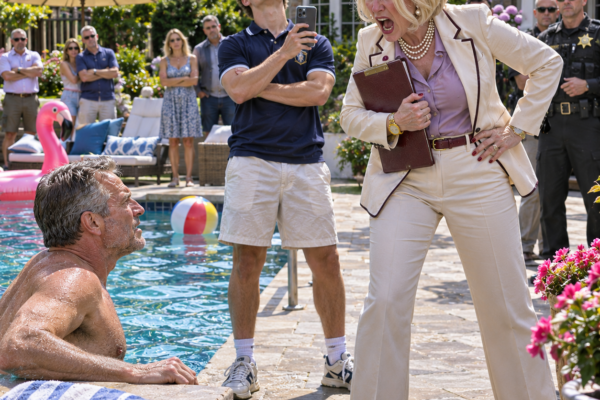
“Look at what you’ve done, you selfish bastard—I hope they drag you away in handcuffs and take every inch of your land!” HOA president Karen Bexley screamed, pointing at me as thirty-eight devastated families stood ankle-deep in muddy water.
An elderly woman was crying beside the ruined possessions she had collected over thirty years, my workshop was about to be shut down, and Karen’s attorneys were preparing to hold me responsible for $2.9 million in damages.
But the woman demanding my arrest had made one mistake that would eventually destroy everything she had built: she had forgotten who owned the camera overlooking my water pipeline.
At 3:52 that morning, my greenhouse was silent.
That was the first thing I noticed.
The automatic misting system should have been running, but not a single drop of water was coming through the overhead lines.
I checked the pressure monitor.
Zero.
My stomach tightened.
For nineteen years, I had worked as a field investigator for a Denver water utility, investigating pipeline failures, infrastructure damage, and emergencies that nobody else could explain.
Zero pressure meant trouble.
The absence of an emergency alarm meant something worse.
I pulled on my boots, grabbed a flashlight, and headed down the hillside.
My fourteen acres overlooked Brookstone Ridge, an expensive Colorado subdivision consisting of thirty-eight houses built along the valley floor.
The residents had beautiful mountain views.
Unfortunately, they also lived downhill.
I heard the water before I saw it.
It sounded like a river where no river belonged.
When my flashlight reached the lower valve pit, I stopped dead.
Water was pouring out of the flooded enclosure and racing down the ravine toward Brookstone Ridge.
The ground beneath my boots was already turning to mud.
My local shutoff valve was submerged and inaccessible.
I called the utility’s emergency number at 4:15.
Then I hurried back toward my truck.
The only practical vehicle route into the lower corridor passed through the association’s west maintenance gate.
Two security guards stood across it.
“Move,” I told them. “There’s a major water emergency.”
The larger guard shook his head.
“President’s orders.”
“What?”
“Nobody gets through. Especially you.”
I stared at him.
“People’s houses are about to flood.”
“Take it up with Mrs. Bexley.”
It was 4:30 in the morning.
And somehow, Karen Bexley already knew enough about my emergency to issue instructions preventing me from responding to it.
By 5:17, my phone wouldn’t stop ringing.
Water had entered garages, basements, and ground-floor rooms.
People were screaming.
Cars were being moved.
Residents were carrying children, pets, and whatever belongings they could rescue.
The utility finally isolated the supply at 6:40.
But the damage had already been done.
Thirty-eight homes had flooded.
Eight were severely damaged.
When I walked into the neighborhood shortly after sunrise, Karen was standing in the middle of the street wearing an expensive camel-colored coat.
She looked remarkably composed for a woman whose entire subdivision had just been devastated.
“There he is!” she shouted.
Every head turned toward me.
“There’s the man responsible!”
A woman named Della Marlow stepped forward.
Her eyes were swollen from crying.
“My mother’s photographs are gone!”
“Della, I’m sorry about your—”
“DON’T YOU DARE SAY YOU’RE SORRY!”
Karen raised her phone.
“We warned him repeatedly about that dangerous pipeline. He ignored us.”
“That isn’t true,” I said.
“Are you calling thirty-eight homeowners liars?”
“I’m asking you to produce one inspection report.”
Karen smiled.
Then she showed everyone a photograph.
It was an image taken from the association’s security camera.
I was standing beside the pipeline corridor with a flashlight in my hand.
The timestamp read 4:08 a.m.
“Caught at the scene,” Karen announced.
Several residents began shouting.
“Call the sheriff!”
“Make him pay!”
“He shouldn’t be allowed to leave!”
I looked at the photograph.
Then at Karen.
She knew perfectly well that the image showed me discovering the emergency.
Not causing it.
But nobody wanted to hear that.
By the time I returned home, an email from her attorney was waiting.
The preliminary damages claim was $2.9 million.
I opened my computer and retrieved the pipeline pressure history.
Then I found the exact moment the system had failed.
2:13 a.m.
Nearly two hours before Karen’s supposedly incriminating photograph.
I stared at that pressure curve.
It hadn’t gradually declined.
It had collapsed almost instantaneously.
Someone had opened my pipeline.
And whoever had done it had apparently known exactly where the water would go.
PART2
I didn’t call Karen.
I didn’t send an angry email to the association’s attorney.
And I didn’t walk back down the hill to defend myself against the people who were screaming my name.
Instead, I downloaded the original pressure records, made several backup copies, and sat at my kitchen table until the coffee in front of me went cold.
Something about the morning bothered me beyond the destroyed pipeline.
Karen had been ready.
That was the part I couldn’t get out of my head.
At 4:30 in the morning, when most of Brookstone Ridge was still asleep, her security guards had already received specific instructions to prevent me from entering the maintenance road.
By sunrise, she had a photograph.
By late morning, she had an accusation.
And before I had even finished assessing the damage to my own property, her attorneys had calculated a multimillion-dollar claim.
It was possible that she had simply reacted quickly.
It was also possible that she had known this disaster was coming.
But possibilities weren’t evidence.
I had spent nineteen years investigating water infrastructure failures, and if there was one thing that experience had taught me, it was that the most convincing explanation was not necessarily the correct one.
You followed the physical evidence.
You checked the records.
You tested the assumptions.
And if the results contradicted your favorite theory, you abandoned the theory.
Karen apparently operated under a different system.
She selected the person she wanted to blame.
Then she arranged the facts around him.
By that evening, she had called an emergency meeting at the Brookstone Ridge clubhouse.
The residents arrived carrying photographs of their damaged houses.
Some wore muddy boots.
Others were still dressed in the clothes they had thrown on during the evacuation.
The clubhouse itself had escaped the flooding, but the carpet near the entrance smelled of wet soil from the people walking through it.
Karen stood at the front of the room.
For seven years, she had served as president of the association. At fifty-four, she had mastered the particular kind of confidence that comes from repeatedly discovering that nobody wants to challenge you.
She knew how to control meetings.
She knew when to appear sympathetic.
She knew when to raise her voice.
And she knew how to take a frightened group of people and give them somebody to hate.
According to the minutes and accounts I later received, she told the residents that the association would pursue compensation on behalf of all thirty-eight affected homeowners.
She described my pipeline as outdated, poorly maintained, and dangerously neglected.
She claimed that repeated warnings had been ignored.
None of those warnings existed.
But by midnight, a notice containing those accusations had been distributed throughout the subdivision.
People forwarded it to relatives.
They posted photographs of their ruined possessions alongside my name.
They discussed how much property I owned and whether selling it would provide enough money to compensate them.
One resident reportedly suggested that the association should seize my workshop equipment before I had an opportunity to move it.
Another wanted to organize a protest outside my home.
By the following morning, that protest had arrived.
There were approximately twelve people standing at my front gate.
One carried a handwritten cardboard sign.
YOU OWE US OUR HOMES.
Another sign read:
MAKE GIDEON PAY.
I walked down the driveway without opening the gate.
A man in his sixties approached.
“My basement’s destroyed,” he said. “My wife can’t stop crying.”
“I’m sorry you’re dealing with that.”
“Sorry doesn’t replace a furnace.”
“No, it doesn’t.”
“Karen says you’ve known about this problem for months.”
“Karen hasn’t provided any records supporting that statement.”
He shook his head.
“You people always have an excuse.”
A woman beside him lifted photographs of her flooded living room.
“Do you know what it’s like to watch everything you’ve worked for disappear?”
I looked at the photographs.
“Yes,” I said quietly. “I’ve investigated enough of these disasters to know what they do to people.”
“Then why didn’t you fix your damned pipe?”
I took a breath.
I wanted to tell them that my pipeline had been inspected.
That it had passed its pressure test.
That it had been operating well within its rated capacity.
That I had been the first person trying to stop the water while Karen’s guards prevented me from reaching the corridor.
But these people weren’t ready to evaluate technical explanations.
They were exhausted.
They were angry.
They wanted somebody to promise that their lives could be put back together.
And Karen had promised them that person would be me.
“I’m going to find out exactly what happened,” I said.
The man laughed bitterly.
“You’d better.”
He tapped the sign beside him.
“Because we’re not going away.”
I believed him.
I watched them leave, then returned to my workshop.
A few hours later, my insurance representative called.
“We’ve received a formal complaint alleging negligent maintenance of your private water infrastructure.”
“From the association?”
“Yes.”
“Do they have an engineering report?”
“Not that we’ve received.”
“An inspection report?”
“No.”
“Any documented warning?”
“We’re requesting all relevant materials.”
She explained that the insurer needed my maintenance history, pressure records, inspection certificates, and system diagrams.
I told her she would have everything.
Then a county safety officer arrived.
The lower bay of my equipment repair workshop had taken on water during the emergency. Moisture had reached the area surrounding several electrical panels.
The officer examined it and told me that operations in the affected area would need to be restricted until the electrical system was inspected and cleared.
I understood.
Floodwater and electricity were not a combination anyone should take lightly.
I cooperated completely.
Unfortunately, the lower bay was where much of my repair business operated.
Restricting it meant postponing jobs, contacting customers, and losing income.
Several farmers depended on me to repair equipment they couldn’t afford to replace.
I spent the afternoon explaining that their machinery would be delayed.
Before I had finished making those calls, Karen was already announcing to Brookstone Ridge that the county had shut down my facility because of unsafe operations.
Technically, there had been a safety restriction.
But it was related to floodwater entering the building.
Not negligent maintenance.
Not a finding that I had caused the disaster.
Not evidence of wrongdoing.
Karen took a perfectly ordinary safety precaution and turned it into another weapon.
Two days after the flood, her white SUV appeared outside my workshop.
She stepped out holding a typed agreement.
For someone who claimed to be representing thirty-eight devastated families, she looked remarkably cheerful.
“Gideon,” she said. “I think we need to have a civilized conversation.”
I set down the tool I was holding.
“Then let’s start with why your guards blocked me from reaching the pipeline.”
Her smile tightened.
“We were protecting the residents.”
“By preventing someone from responding to a water emergency?”
“That’s not why I’m here.”
She held out the agreement.
“I’ve spoken with the attorneys. There might be a way to resolve this without destroying you financially.”
I took the document.
The first section required me to accept full responsibility for the pipeline failure.
The second required me to grant the association permanent use of the technical corridor crossing my hillside.
The third gave the association broad access to the maintenance road serving it.
I read those sections twice.
Then I looked at Karen.
“This isn’t a settlement.”
“Of course it is.”
“You’re asking for control of my land.”
“I’m asking you to take responsibility.”
“Why does taking responsibility require me to surrender property rights?”
She folded her arms.
“Because we can no longer trust you to manage infrastructure that threatens our community.”
“My pipeline serves my property.”
“It runs above our homes.”
“That doesn’t make it yours.”
She leaned closer.
“Thirty-eight families are going to sue you, Gideon. Do you understand what that means?”
“Yes.”
“They’ll take your savings. They’ll take your business. They’ll take this land.”
“Not without proving I’m responsible.”
Karen gave a little laugh.
“You think those people care about your pressure records?”
I didn’t answer.
She tapped the agreement.
“Sign it, grant us the corridor, and I’ll personally recommend that the homeowners reduce their claim.”
There it was.
The first real indication of what she wanted.
Not an apology.
Not immediate money to repair the houses.
The corridor.
A narrow but strategically important strip of land running along my hillside.
I handed the agreement back.
“No.”
Her smile disappeared.
“You’re making a very stupid decision.”
“Then I guess it’s mine to make.”
She stepped so close that I could see the muscles tightening along her jaw.
“By the time this is over, you won’t have a workshop, a greenhouse, or a single piece of land worth keeping.”
I looked at her.
“Are you threatening me?”
“I’m explaining reality.”
She folded the document, returned to her SUV, and drove away.
I stood outside the workshop until her vehicle disappeared.
Then I went inside and backed up every relevant record I possessed.
Because Karen had just confirmed something important.
The flood wasn’t merely an opportunity to make me pay.
It was an opportunity to make me surrender my land.
And I was beginning to suspect that someone had created that opportunity deliberately.
That night, I spread the pipeline records across my kitchen table.
I had designed the system for the specific demands of my greenhouses and repair business.
It consisted of a private six-inch supply line connected to the county-controlled master meter, with several monitoring points and shutoff arrangements.
I knew its maintenance history.
I knew the normal operating conditions.
I knew how the pressure responded when equipment started or stopped drawing water.
And I knew what I was looking at wasn’t ordinary.
Pipeline failures can happen for many reasons. Materials deteriorate. Ground shifts. Connections weaken. Pressure changes can expose defects that were previously invisible.
But a pressure curve alone doesn’t tell you the exact cause.
It tells you where to begin asking questions.
At 2:13 a.m., the recorded pressure had fallen dramatically, with a corresponding surge in flow.
The failure appeared sudden.
That didn’t prove sabotage.
But it gave me a compelling reason to have the failed section examined independently.
I called Wade Corrigan.
Wade was a pipeline technician I had worked with during my years investigating utility emergencies.
He was the sort of man who would rather tell a customer he needed another day of testing than give an answer he couldn’t defend.
I respected that.
“Gideon,” he said when he answered. “I heard about Brookstone.”
“Then you know why I’m calling.”
“Everybody in town’s got a theory.”
“I don’t need another theory. I need somebody to examine the pipe.”
“Where’s the failed section?”
“In the lower valve pit. We’re getting the remaining water and mud cleared.”
“I’ll come out when it’s accessible.”
I explained the insurance dispute and the accusations.
Wade listened.
Then he said something that reassured me.
“I’ll document what I find, whether it helps you or hurts you.”
“That’s exactly what I want.”
When the pit was sufficiently cleared, Wade spent several hours examining the damaged section.
He photographed the surrounding area.
He recorded the condition of the pipe.
He took measurements and documented the visible damage without making unnecessary alterations.
Late that afternoon, my phone received a series of photographs.
I opened the first one.
Then the second.
Then I enlarged the third.
There was an unnaturally clean line across part of the damaged pipe wall.
The edges showed regular marks.
I had seen enough damaged infrastructure during my career to know why Wade had sent those particular photographs.
I called him.
“What do you think?”
He was quiet for a moment.
“I think we need somebody to preserve that section and have it examined properly.”
“You see the marks?”
“I do.”
“Natural deterioration?”
“Not consistent with what I’m seeing.”
“Mechanical damage?”
“Possible mechanical cutting.”
I closed my eyes.
For several seconds, I listened to the sound of the ventilation fan in my workshop.
Then Wade spoke again.
“Don’t let anybody throw those pieces away, Gideon.”
“I won’t.”
“And don’t let somebody talk you into repairing over the damage before it’s documented.”
“Understood.”
His preliminary written report arrived shortly afterward.
At the bottom was a conclusion that would eventually become one of the foundations of the entire investigation.
Possible mechanical cutting; not consistent with ordinary pipe deterioration.
I called the sheriff’s office.
Sheriff Reed Tallant arrived the following morning.
He was fifty-one and had served as sheriff of Larkspur County for nine years.
Reed had investigated enough neighbor disputes to be cautious whenever someone presented him with an elaborate theory involving property, money, and personal enemies.
He didn’t arrive convinced that Karen was guilty.
He didn’t arrive convinced that I was innocent.
He came to look at the evidence.
I appreciated that.
We stood beside the valve pit while he studied Wade’s photographs and the damaged material.
“Who had access to this area?” he asked.
“The corridor is on my land. The association controls its maintenance gate below.”
“Does anybody else have permission to work on your line?”
“Not without arrangements with me.”
“Any contractors recently?”
“None performing work on this section.”
He nodded.
“Any documented disputes?”
I almost laughed.
“How much time do you have?”
I showed him the HOA’s correspondence, the preliminary claim, and the agreement Karen wanted me to sign.
He read it without comment.
Then he examined the pressure records.
“Two thirteen?”
“Yes.”
“And their photograph?”
“Four oh eight.”
He looked at the two timestamps again.
“So the image they circulated shows you arriving nearly two hours after the recorded pressure drop.”
“That’s correct.”
“Who can independently verify this?”
“The utility has its own meter records.”
Reed nodded.
“Good.”
He directed a deputy to preserve the damaged material for independent examination.
The fragments were documented and collected as evidence.
He told me not to disturb anything else that might be relevant without coordinating with the investigators.
At that stage, he made no accusations.
He simply explained that the circumstances justified treating the damage as possible criminal mischief.
Before he left, he shook my hand.
“Keep your records exactly as they are.”
“I will.”
“And don’t start confronting people based on what you think happened.”
“I wasn’t planning to.”
“Good. Let us find out what we can prove.”
I watched him drive away.
For the first time since the flood, I felt that somebody outside my property was willing to consider an explanation that didn’t begin and end with my negligence.
But down in Brookstone Ridge, many of the homeowners still believed Karen.
That afternoon, I drove to Della Marlow’s house.
Her lawn was covered with ruined furniture.
A mattress lay across two chairs beneath the sun.
Cardboard boxes had collapsed into soggy piles.
There were family photographs spread across a table, their edges curling as they dried.
Della was fifty-eight.
She had spent thirty years collecting the ordinary things that become extraordinary simply because they belong to your life.
Birthday cards.
Holiday decorations.
Children’s school projects.
Family albums.
Furniture that wasn’t particularly valuable to anyone else.
Now much of it was sitting beside the road waiting to be hauled away.
When she saw my truck, she stopped what she was doing.
“What do you want?”
“I wanted to explain something about the pipeline.”
Her expression hardened.
“I’ve heard enough explanations.”
“An independent technician examined the damaged section. He found evidence suggesting it may have been cut.”
She crossed her arms.
“Of course he did.”
“Della—”
“How much did you pay him to say that?”
I felt the accusation more sharply than I expected.
“His report is going to be independently examined.”
She pointed toward the piles of ruined belongings.
“Do you see those boxes?”
“Yes.”
“My daughter made some of those things when she was six years old.”
I looked at them.
“She has children of her own now,” Della continued. “And those memories are sitting out here like garbage.”
Her voice cracked.
“Karen said you wouldn’t even maintain the pipe properly.”
“I maintained it.”
“Then why is my house full of water?”
I didn’t have an answer that could make her feel better.
Not yet.
I heard a mechanical noise coming from her basement entrance.
A rented pump was struggling.
Della turned toward it.
“Oh, for God’s sake.”
The motor stopped.
She pressed a switch.
Nothing happened.
I walked closer.
“Your pump’s stalled.”
“I know that.”
“Do you have another one?”
“No.”
I looked back toward my truck.
“I’ve got equipment.”
“I don’t want your help.”
“There’s still water in your basement.”
“I SAID I DON’T WANT YOUR HELP!”
I stood there for a moment.
Then I said, “All right. But if you want to use my pump, it’s available.”
I began walking toward the truck.
Behind me, Della sighed.
“How much are you going to charge?”
“Nothing.”
She looked suspicious.
“I’m not signing anything.”
“I didn’t ask you to.”
A few minutes later, I was carrying equipment into her basement.
For the next two hours, we worked.
I helped remove the remaining water and used my wet vacuum in the areas the pump couldn’t reach.
Della barely spoke to me.
Whenever I asked where something belonged, she answered.
Otherwise, she remained quiet.
When we finished, I gathered my equipment.
She stood at the top of the stairs.
“This doesn’t mean I’ve forgiven you.”
“I didn’t expect it to.”
“And I’m not withdrawing my claim.”
“That’s your decision.”
She studied me.
“Aren’t you going to apologize?”
“I’m sorry your home flooded, Della. I’m sorry you’ve lost things you can’t replace. But I’m not going to accept responsibility for something I didn’t do.”
For the first time, her expression changed.
Not dramatically.
She didn’t suddenly believe me.
But some of the certainty disappeared from her face.
As I drove away, I thought about the people living below my property.
If the failed pipeline had released that much water, there should have been an established drainage route capable of carrying at least a substantial portion away from the houses.
I remembered seeing a wide channel indicated on older subdivision maps.
I hadn’t paid much attention to it when I purchased my land.
Now I wanted to know where it was.
That evening, I retrieved the approved construction plans for Brookstone Ridge from county records.
I cleared a workbench and laid the drawings flat.
The subdivision’s drainage design was fairly straightforward.
Water traveling down the hillside was supposed to enter an emergency overflow channel along the lower edge of the development.
The channel, approximately twelve feet wide in the approved plans, would guide the water toward a detention pond.
The homes would not be completely immune to flooding under every possible condition.
But they were supposed to have a defined route for excess water.
I traced the channel with my finger.
Then I opened the photographs Wade had taken around the lower part of the development.
I compared the locations.
I looked at the drawings again.
Something was missing.
Where the overflow channel should have been, I could see a decorative stone terrace.
Flower beds.
Large imported boulders.
Landscaped areas that appeared to occupy the very space reserved for emergency drainage.
I pulled another photograph onto the screen.
There was no open channel visible.
I sat down slowly.
The broken pipeline explained where the water had come from.
But the missing drainage route might explain why it had entered thirty-eight houses.
And whoever had authorized that terrace had potentially transformed a serious infrastructure failure into a neighborhood-wide disaster.
The next morning, an envelope arrived.
It came from a former county employee who had heard about the flood and remembered a drainage-related file.
Inside was a copy of an inspection notice issued fourteen months earlier.
I read it carefully.
The county had identified unauthorized construction obstructing the emergency overflow channel at Brookstone Ridge.
The notice required the association to restore the drainage route.
There was an acknowledgment of receipt at the bottom.
A date.
A signature.
Karen Bexley.
I stared at her name.
She had known.
More than a year before the flood, the county had warned the association that its drainage route was obstructed.
And the woman who had stood in front of thirty-eight families accusing me of ignoring imaginary safety warnings had personally acknowledged a real one.
I photographed the notice.
Then I contacted the county drainage inspector.
Because this time, Karen’s signature wasn’t on an accusation.
It was on the warning she had ignored.
Beatrice Rusk was forty-three, and she had an extraordinary ability to make people nervous simply by asking them to explain a document.
She didn’t accuse.
She didn’t speculate.
She didn’t raise her voice.
She would ask a question, wait for the answer, and then quietly produce a second document that made the answer impossible.
I met her at the county office and handed her the inspection notice.
“Where did you obtain this?” she asked.
I explained.
She examined the acknowledgment, then retrieved the original Brookstone Ridge file.
Within an hour, she had located the approved drainage design, the previous inspection findings, and documentation concerning the landscaping project.
The association had spent $460,000 on the terrace.
Karen had personally signed the project’s approval.
There was no county-approved revision authorizing the obstruction of the drainage channel.
No approved replacement route.
No engineering authorization allowing the association to bury part of the overflow infrastructure beneath the new landscaping.
Beatrice looked at the construction plans.
Then she looked at the photographs.
“We need to survey this.”
“Do you believe the terrace caused the flooding?”
“I believe we have enough information to investigate its contribution.”
She closed the folder.
“We’ll need a hydraulic analysis before reaching a final technical conclusion.”
That was the answer of a professional.
Karen would have hated it.
There was no instant villain.
No sensational declaration.
Just work that needed to be done.
The following day, Beatrice arrived at Brookstone Ridge with a survey crew.
They began measuring elevations and comparing existing conditions against the approved plans.
Standing beside the terrace, I could finally see the obstruction from ground level.
The landscaping was attractive.
There were elegant paving stones, carefully arranged flower beds, and expensive decorative rocks.
Someone had clearly spent a great deal of money making the area look impressive.
But water does not care how expensive your landscaping is.
It follows gravity.
When its intended route is obstructed, it finds another one.
In Brookstone Ridge, that route had led toward people’s homes.
Beatrice explained that the detailed analysis would determine how much of the flood damage could be attributed to the obstruction.
She pointed to the low areas.
She showed me where the water appeared to have backed up and spread sideways.
Then Karen arrived.
Her vehicle stopped near the terrace, and she marched toward us.
“WHO AUTHORIZED THIS?”
Beatrice turned.
“Good morning, Mrs. Bexley.”
“This is private association property.”
“I’m aware of that.”
“You can’t come here and start measuring things without my permission.”
Beatrice produced her inspection authorization.
“The drainage infrastructure serves multiple residential properties and is subject to the county-approved design.”
Karen looked at the survey equipment.
Then she looked at me.
“What is he doing here?”
“I provided relevant information,” I said.
“I wasn’t talking to you.”
Beatrice continued examining the documents.
“Mrs. Bexley, we’d like you to identify the approved replacement drainage route associated with this terrace.”
Karen blinked.
“The what?”
“The overflow channel shown in the original construction plans appears to have been obstructed.”
“Well, that’s a contractor issue.”
“Which contractor?”
“Barton Quade. He handled the work.”
“Did the association approve the landscaping project?”
“The board approved beautification.”
“Did you sign the authorization?”
Karen hesitated.
“I sign hundreds of things.”
Beatrice showed her the relevant page.
Karen looked at it briefly.
“If there was a drainage problem, Barton should have told us.”
I reached into my folder.
The previous evening, I had reviewed the meeting minutes available in the clubhouse archive.
One entry from six months earlier had caught my attention.
A homeowner had specifically raised concerns that the terrace might interfere with drainage.
Karen’s recorded response was that the design was final and she would not permit changes under any circumstances.
I handed the page to Beatrice.
She read it.
Then she handed it to Karen.
For several seconds, the only sound was the survey crew working nearby.
Karen looked at the page as if she couldn’t understand how her own words had betrayed her.
“Those minutes don’t capture the entire discussion.”
“Do you have additional records?” Beatrice asked.
Karen didn’t answer.
“Any technical analysis provided to the board?”
Nothing.
“Any evidence that you responded to the previous county notice?”
Karen handed back the paper.
“I’ll have my attorney contact you.”
She turned and walked toward her vehicle.
Beatrice watched her leave.
Then she returned to the survey.
She didn’t need to say anything.
We both understood that Karen’s explanation had just become considerably more difficult to defend.
That night, I was standing on my porch when I noticed lights moving along the maintenance road.
It was late.
The neighborhood below had mostly gone dark.
But a work truck was approaching the terrace, followed by a flatbed.
Portable lights came on.
Several workers began lifting paving stones.
Others were moving the decorative boulders.
I recognized Barton Quade.
He was forty-seven, broad-shouldered, and had operated a contracting business that frequently worked for the association.
There was something particularly suspicious about a contractor suddenly dismantling a disputed landscaping project in the middle of the night, immediately after a county inspection.
I didn’t go down there.
I retrieved a camera, placed it on a tripod at the edge of my property, and recorded what I could see.
Then I called the sheriff’s office.
Deputies arrived approximately twenty minutes later.
Barton attempted to explain that the crew was performing routine maintenance following the flood.
The deputies documented the activity, photographed the work area, and identified the people involved.
They directed the crew to stop.
By morning, Beatrice had issued a formal stop-work order and a preservation notice covering the terrace.
The remaining structures would stay where they were until the necessary examinations were completed.
Whatever Barton had intended to accomplish that night, he hadn’t managed to make the entire problem disappear.
Karen responded the way she always responded when reality refused to cooperate.
She produced more paperwork.
My attorney received an easement agreement that appeared to grant the association permanent rights over the technical corridor on my property.
I had never seen it before.
It purported to contain the previous owner’s signature.
That owner had been dead for six years.
The agreement allegedly allowed the HOA to access, operate, and modify the infrastructure within the corridor.
Attached to it was a legal argument claiming that my private pipeline constituted shared community infrastructure.
The association was asking the court for a temporary order giving it immediate access and management rights.
My attorney called me.
“Have you ever encountered this document?”
“No.”
“Any mention of it during your purchase?”
“None.”
“Title records?”
“Nothing granting rights like these.”
“Then we need to establish where it came from.”
I hired an independent land surveyor.
For two days, we worked through the recorded history of my property.
Eventually, we located the basis for Karen’s document.
Years earlier, there had been an unfinished draft concerning limited inspection access.
The original language contemplated specific permission, advance notice, and the consent of the landowner.
It had never been completed as a valid recorded transfer of permanent rights.
But the version submitted by Karen contained a different appendix page.
Where the original draft described conditional inspection permission, the substituted page described a permanent and unconditional right of use.
The surveyor placed both versions on the desk.
“Look here.”
The page numbering didn’t match.
The formatting was different.
The language was inconsistent with the surrounding provisions.
Most importantly, the county’s records contained no valid recorded grant of the rights Karen was claiming.
I looked at the two documents.
“She’s trying to get the same corridor she asked me to sign over.”
The surveyor nodded.
“That’s what this version would give the association.”
My attorney prepared to challenge the document and the association’s application for temporary access.
But before that process could be resolved, Karen decided to present her supposed easement to the residents.
She called an expanded HOA meeting.
Every homeowner in Brookstone Ridge was invited.
I went with copies of the relevant records.
Karen stood at the front of the clubhouse beside a projected image of the document.
“Ladies and gentlemen,” she began, “we have discovered evidence that Mr. Ashby has deliberately withheld information concerning the association’s lawful access rights.”
She looked directly at me.
“Had we been permitted to manage this infrastructure properly, the catastrophe might never have occurred.”
A few people applauded.
Others remained quiet.
She described the document as proof that the corridor belonged under the association’s control.
When she finished, I stood.
“May I show you something?”
Her expression suggested she would rather I didn’t.
“This is an association meeting.”
“You’ve just accused me of withholding documents.”
She glanced around the room.
Several homeowners were watching her.
Finally, she gestured toward the microphone.
“Make it brief.”
I walked to the front.
I displayed the original draft and the version the association had presented.
“Here is the document from which the purported agreement appears to have been derived.”
I pointed to the corresponding pages.
“And here is the version submitted by the association.”
I explained the discrepancy.
The missing page sequence.
The altered language.
The absence of a recorded transfer granting those permanent rights.
A man near the back raised his hand.
“Why don’t the page numbers match?”
Karen interrupted.
“That’s a clerical issue.”
A retired schoolteacher spoke next.
“Why isn’t it recorded with the county?”
Karen picked up her own microphone.
“We don’t need to conduct a legal seminar tonight.”
I continued.
“I’m simply showing you the original records.”
“You’re not entitled to manipulate this meeting!”
“I’m standing here because you told these people I was hiding something.”
Someone called out.
“Let him finish!”
Karen turned toward the board members.
“Turn off his microphone.”
My microphone went dead.
For a moment, the room was quiet.
Then several residents started speaking at once.
Karen announced that the meeting was adjourned.
She gathered her papers and disappeared through a side door.
I packed the documents into my folder.
I hadn’t convinced everybody.
But I had accomplished something that would have been impossible two weeks earlier.
People were asking Karen questions.
And she couldn’t answer them.
Outside, I was putting my folder into the truck when someone called my name.
It was Fay Holleran.
Fay was forty-nine and had served as the HOA’s treasurer for four years.
She had defended Karen publicly throughout the flood dispute.
I had seen her sitting beside Karen at meetings, distributing notices and helping explain the association’s claims.
Now she looked pale.
“Gideon, can I talk to you?”
“Of course.”
She glanced toward the clubhouse.
“Not here.”
I waited.
She lowered her voice.
“There’s something wrong with the security footage.”
I stopped moving.
“What do you mean?”
“The recording Karen gave the insurance company.”
“The one showing me at the fence?”
Fay nodded.
“A whole section is missing.”
“How much?”
“Hours. Including the time before your pipeline failed.”
I stared at her.
“What explanation did Karen give?”
“She said the camera was offline.”
“Was it?”
Fay looked over her shoulder again.
“The security company billed us for the entire night’s recording.”
She swallowed.
“And their records show the camera was transmitting during the time she says it wasn’t.”
I felt a chill that had nothing to do with the evening air.
“Fay, are you sure?”
“I checked it twice.”
Her voice became quieter.
“I think somebody removed the beginning of the video.”
For weeks, Karen had built her case around a single image of me holding a flashlight.
She had shown the residents exactly where she wanted their story to begin.
But if Fay was right, the camera had already been watching for hours.
And somewhere in those missing hours might be the answer to everything.
Fay and I met the following afternoon at a coffee shop two towns away.
She arrived carrying a small folder.
Before sitting down, she looked around the room.
I could tell that even being seen with me made her uncomfortable.
“Karen’s going to be furious if she finds out I’m here.”
“You don’t have to tell me anything you’re not authorized to share.”
Fay nodded.
“I understand.”
She opened the folder and explained the association’s security arrangement.
A year earlier, Karen had insisted on installing a camera on a pole beside the west maintenance gate.
Its view included the technical corridor on my property.
At the time, Karen had claimed that the camera was necessary to monitor unauthorized access to the maintenance road.
Everyone understood that she meant me.
The system recorded to the association’s equipment, while the security provider maintained separate copies of motion-triggered events.
Fay had never considered that arrangement particularly important.
She paid the monthly bills.
The camera kept running.
That was all she needed to know.
Until the flood.
The footage provided by Karen began around four in the morning.
According to Karen, earlier footage didn’t exist because the camera had been offline.
But Fay had requested technical and billing information while preparing the insurance materials.
The records indicated that the camera had been transmitting normally.
Including around two in the morning.
She placed the relevant information between us.
“I helped her prepare the notice accusing you,” she said.
I looked up.
“I believed her, Gideon.”
“I know.”
“She told us you’d ignored warnings. She said the photograph proved you’d been at the pipe.”
Fay rubbed her eyes.
“I sent that notice to every house.”
I didn’t say anything.
“I keep thinking about the people who came up to your gate.”
She looked at me.
“We made them believe something that might not be true.”
“Then help establish what is true.”
She nodded.
“That’s what I’m trying to do.”
I explained that the original recordings needed to be preserved and obtained through the proper channels.
I didn’t want unauthorized copies.
I didn’t want Fay taking risks that could jeopardize the integrity of the evidence.
What mattered was ensuring that investigators could establish exactly what the camera had recorded and whether the files had been altered.
Within days, Karen learned that Fay had been asking questions.
She called a closed board session.
According to Fay, the atmosphere was unlike any meeting she had attended during her four years as treasurer.
Karen announced that Fay was forbidden from communicating with me.
She described the security system as confidential association property.
Then she placed a statement in front of Fay.
The statement certified that the footage provided to the insurance company was complete and accurate.
“Sign it,” Karen told her.
Fay read the document.
Then she looked at Karen.
“I can’t certify this.”
“Excuse me?”
“The provider’s records indicate there’s missing footage.”
Karen glanced toward the other directors.
“We have already explained that the equipment malfunctioned.”
“Then let’s ask the provider to confirm that.”
“That’s unnecessary.”
Fay slid the statement back.
“I’m not signing something I know may be inaccurate.”
Karen’s voice became cold.
“Do you understand the damage you’re doing to this association?”
“I’m trying to protect it.”
“By helping Gideon Ashby?”
“By preserving the records.”
Karen leaned forward.
“You’re going to cost every resident in this neighborhood money.”
Fay looked at the other board members.
Nobody came to her defense.
But she refused to sign.
Instead, acting within her responsibilities as treasurer, she sent the security provider a formal preservation request.
She also notified the association’s insurance carrier of the discrepancy between the footage it had received and the provider’s records.
That decision brought Natalie Vesper into the investigation.
Natalie was forty-one and worked as an insurance claims investigator.
She had spent years examining suspicious losses, questionable documents, and inconsistencies that people hoped insurers wouldn’t notice.
She requested the original video files and the associated technical information.
Karen replied that the association’s recording equipment had been damaged by floodwater and that recovery of the original footage might not be possible.
There was only one problem with that explanation.
The recorder was housed inside the clubhouse office.
The clubhouse hadn’t flooded.
Natalie documented the contradiction.
She contacted the relevant parties and coordinated with the sheriff’s office.
Reed submitted an official preservation request covering the camera recordings and logs.
Fay could not simply provide the original video herself, but she was authorized to review certain event records associated with the service.
She gave me a copy of the appropriate log.
It contained no photographs.
No dramatic images.
Just times and event entries.
I opened my own pressure history beside it.
At 2:09 a.m., the camera registered motion near the corridor.
The event continued for several minutes.
At 2:13 a.m., the pressure in my pipeline collapsed.
Four minutes.
I looked at those entries until the numbers seemed permanently engraved in my mind.
The camera hadn’t merely been operating that night.
It had recorded activity at the location immediately before the failure.
Two days later, Natalie received a technical response from the security provider.
She called Reed.
“The footage wasn’t lost in the flood,” she explained.
The provider’s records indicated that someone had deleted the relevant footage from the association’s dashboard.
But the independently retained event archive remained available.
I learned afterward that Reed had immediately taken the information to Cynthia Barron, the county prosecutor.
A court order was obtained compelling production of the original recording.
The provider supplied the archived material with documentation addressing its origin and integrity.
The investigators compared the recording’s timestamps with the independently maintained utility records and my pressure data.
The times matched.
Then, in a conference room at the sheriff’s office, Reed played the footage for the investigative team.
A marked HOA maintenance pickup appeared beside the valve pit.
The driver’s door opened.
Karen Bexley stepped out.
There was no uncertainty about her identity.
The recording showed her face and clothing clearly.
It showed her approaching the pipeline.
It showed a cutting tool in her hands.
And then it showed the moment the water erupted.
Karen recoiled, abandoned what she was doing, climbed back out of the area, and drove away.
She didn’t remain to help stop the emergency.
She didn’t warn the homeowners.
She left.
The investigators continued reviewing the footage.
I was nowhere in it.
Reed called me that evening.
“Gideon, are you somewhere you can talk?”
I was sitting on the tailgate of my truck outside the workshop.
“Yeah.”
“We’ve obtained and reviewed the original recording.”
I waited.
“The footage establishes that Karen Bexley was present when the pipeline was deliberately damaged.”
I closed my eyes.
For a moment, I couldn’t speak.
“She’s visible?”
“Clearly.”
“And the damage?”
“The recording is consistent with the other physical evidence we’ve collected.”
I looked down the hillside.
From where I sat, I could see several houses in Brookstone Ridge.
Some still had piles of damaged material outside.
“Reed?”
“Yes?”
“She did that herself?”
“The evidence shows her directly involved.”
I thanked him.
Then I ended the call.
For a long time, I remained on the tailgate.
I had suspected sabotage.
I had suspected that Karen knew more about the disaster than she had admitted.
But knowing that she had personally caused the damage was different.
I remembered her standing in the flooded street.
I remembered her pointing at me.
I remembered Della crying over her mother’s photographs.
I remembered the people demanding that I be arrested.
Karen had looked those people in the eyes.
She had listened to them describe their losses.
She had accepted their trust.
And all the while, she had known why their homes were flooded.
That was the part I couldn’t forgive.
Not the financial claim against me.
Not the threats to my business.
Not even the attempt to acquire my land.
It was the realization that she had been willing to sacrifice the people she was elected to protect.
Thirty-eight households.
People who paid their dues.
People who trusted her judgment.
People who genuinely believed she cared about their community.
To her, apparently, their suffering was useful.
Over the following days, independent evidence continued to corroborate the recording.
The laboratory examination identified damage consistent with the type of cutting tool shown in the footage.
The electronic access records placed Karen’s personal credentials at the maintenance gate.
The vehicle’s tracking information independently confirmed its presence near the valve pit.
Investigators also found activity near the equipment associated with my missing pressure alarm.
Each record was examined separately.
Each answered a different question.
And together, they undermined the story Karen had told from the morning of the flood.
When Reed invited her to participate in a voluntary interview, she initially claimed that she had been inspecting the pipeline after hearing an unusual noise.
The evidence didn’t support that explanation.
Then she changed her story.
She said I had asked her to perform work on the line.
Reed asked whether she could provide any written authorization.
An email.
A text message.
A work order.
A witness.
Anything.
She had nothing.
Her attorney ended the interview.
But investigators had noticed another detail in the recording.
Shortly before the damage occurred, Karen had briefly spoken on her phone.
Lawfully obtained phone records identified the person she had contacted.
Barton Quade.
Investigators also discovered that Barton’s company had received an unusual payment from the association’s reserve account two days after the flood.
That payment led Fay to request a broader financial review.
By then, other directors were beginning to recognize that their association’s financial position might be far worse than they had understood.
An independent forensic auditor began examining eighteen months of expenses.
The results were devastating.
Nearly $620,000 had flowed to a relatively small group of companies billing the association for landscaping, surveying, and infrastructure work.
Numerous invoices lacked evidence that the services had been performed or properly inspected.
Barton had signed completion certificates for work the auditor could not identify at the development.
One of the major recipient businesses was connected to Karen through her adult nephew and a holding company.
Financial records revealed that she had concealed an interest in contracts approved under her own direction.
The residents had believed their money was being spent to maintain and improve the neighborhood.
Instead, investigators were finding payments that appeared to have benefited the woman who controlled the association’s spending.
And suddenly, the reason behind the flood became much clearer.
The expensive terrace had been part of Karen’s effort to make Brookstone Ridge more attractive for a proposed expansion.
More luxury lots.
More members.
More association dues.
More contracts.
More opportunities for the companies benefiting from her decisions.
But the county’s drainage notice threatened everything.
Restoring the overflow channel would require disturbing a $460,000 landscaping project.
It would invite questions about the contracts.
It could expose the irregular payments.
It could delay or prevent the expansion until the drainage problems were corrected.
Karen needed a different explanation for the neighborhood’s vulnerability.
She needed the residents to believe that their homes had been threatened by infrastructure outside the association.
And she needed control of my corridor so that the proposed expansion could move forward with a new drainage arrangement.
The emerging evidence indicated that Karen and Barton had chosen to create a disaster and place my name on it.
If I accepted responsibility, the association’s own drainage violations could be pushed into the background.
If I surrendered the corridor, Karen could gain what she had wanted.
And if I resisted, she could use thirty-eight frightened families to pressure me into submission.
I thought about the agreement she had brought to my workshop.
Accept responsibility.
Grant permanent access.
Give us the road.
She hadn’t been offering me mercy.
She had been trying to complete the transaction.
The first public indication that the case had turned came when Della Marlow received a formal notice informing her that I was no longer the primary subject of the sabotage investigation.
She read it at her kitchen table.
Then she read it again.
For weeks, she had believed Karen’s explanation.
She had shouted at me in the street.
She had stood among residents demanding compensation.
She had suspected that even the help I provided in her flooded basement was some kind of strategy.
Now she wanted answers.
At the next open board meeting, Della stood while Karen was discussing the association’s legal expenses.
“I have a question about the drainage channel.”
Karen glanced toward her.
“We’re handling that through the appropriate professionals.”
“Who authorized the terrace?”
“The board approved a landscaping improvement.”
“Did you know the county had ordered us to remove it?”
Karen paused.
“That’s a complicated matter.”
“No, it isn’t.”
Della held up a copy of the inspection notice.
“That’s your signature.”
Several people leaned forward.
Karen adjusted the papers in front of her.
“Documents are being circulated without their proper context.”
“What context makes it all right to block the drainage channel above our homes?”
Karen looked irritated.
“Della, I understand that you’ve suffered a personal loss.”
“My basement was destroyed!”
“I understand.”
“My photographs are gone! My furniture is gone! I’ve spent weeks living around contractors, and you told me this was Gideon’s fault!”
“Please control yourself.”
Della shook her head.
“Don’t tell me to control myself.”
Another resident stood.
“We want the full drainage report.”
A third wanted copies of the terrace contracts.
Someone else asked why the association had been paying contractors for projects that couldn’t be identified.
The questions multiplied.
Karen struck the table with her hand.
“Enough!”
The room quieted.
“You people are destroying the value of your own homes by dragging this association through a scandal!”
Della stared at her.
“The flood destroyed the value of our homes.”
Karen pointed toward the residents.
“You’re going to regret turning against the only person who ever made this neighborhood worth living in.”
For years, that kind of threat had been enough to end discussions.
This time, it wasn’t.
Someone demanded her resignation.
Others joined in.
By the end of the meeting, the atmosphere had changed completely.
The people Karen had directed toward my front gate were now demanding answers from her.
Two days later, investigators formally notified her that they were gathering financial records under court authority.
Barton had already been connected to the unusual payments, and the investigation was expanding.
The maintenance storage building near the west gate had become a location of particular interest.
Shortly after dawn the following morning, I was walking the corridor fence when I noticed a maintenance truck backing toward the building.
Barton was standing near the entrance.
Three workers were carrying boxes and equipment cases outside.
They stacked the materials in the truck bed.
Barton appeared impatient.
He kept looking toward the maintenance road and gesturing for the workers to hurry.
Several weeks earlier, I might have been tempted to march down the slope and demand an explanation.
But I knew better.
One angry confrontation on association property would give Karen another opportunity to misrepresent my actions.
I remained on my own land.
I recorded what was visible from my position.
Then I called Reed.
“There’s activity at the maintenance building.”
He asked me to describe it.
I did.
“Stay where you are,” he said.
“I’m not planning to go down there.”
“Good.”
Less than ten minutes later, two patrol units and an unmarked vehicle arrived.
Natalie Vesper and an evidence technician followed.
Reed approached the storage building.
Barton stepped in front of the entrance.
“This is private property.”
Reed produced a search warrant signed by a judge.
“The court has authorized the search.”
Barton looked at the document.
“You need to speak to the HOA’s attorney.”
“We have the authority we need.”
“You can’t just come in here and take things.”
Reed instructed the workers to set down what they were carrying and move away from the truck.
They complied.
Barton remained beside the entrance for several seconds.
Then he stepped aside.
The deputies began securing the area.
I watched from my side of the fence.
A short time later, a white SUV came down the maintenance road.
Karen was driving.
She stopped abruptly, climbed out, and slammed the door.
“WHAT THE HELL DO YOU THINK YOU’RE DOING?”
Reed turned toward her.
“Mrs. Bexley.”
“Get these officers off association property!”
“We’re executing a court-authorized warrant.”
“I don’t care what you think you have! This building belongs to the HOA!”
Reed remained calm.
Then Karen saw me.
I was standing uphill, outside the fence, wearing work clothes and holding my phone.
Her face changed.
She pointed at me.
“YOU DID THIS!”
I didn’t move.
“You turned my entire neighborhood against me!”
Several homeowners had begun gathering farther down the road.
They watched as Karen walked toward the fence.
“Are you satisfied now?” she shouted. “You’ve destroyed everything!”
I looked at her.
For weeks, I had imagined what I might say if the truth ever came out.
There had been nights when I lay awake thinking about the people who had called me a criminal.
There had been mornings when I opened another threatening letter and wondered whether my business would survive the accusations.
There had been moments when I wanted to tell Karen exactly what I thought of her.
But standing there, I didn’t feel the need for a speech.
“No, Karen,” I said.
She glared at me.
“I didn’t turn anybody against you.”
I pointed toward the security camera above the maintenance gate.
“Your own camera did.”
She followed my hand.
For a moment, she stared at the camera.
The one she had insisted on installing.
The one she had used to distribute an image of me carrying a flashlight.
The one whose recording she had tried to erase.
Then she turned back toward Reed.
“This is ridiculous.”
She began speaking rapidly.
She said her attorneys would challenge the warrant.
She said the investigators had misunderstood the footage.
She said the entire situation had been distorted by people who wanted to remove her from the presidency.
Reed listened until she finished.
Then he informed her that he had a separate court-issued warrant for her arrest.
Karen stared at him.
“What?”
He explained the charges covered by the warrant, including felony criminal mischief and fraud-related offenses.
Additional matters remained under investigation.
Karen took a step backward.
“No.”
A deputy approached.
“Mrs. Bexley, please turn around.”
“You can’t arrest me!”
The deputy repeated the instruction.
“I’m the president of this association!”
Nobody responded to that declaration.
For the first time in seven years, her title had no effect on the people standing in front of her.
The deputy placed her in handcuffs.
Residents watched from the road.
Some looked shocked.
Others looked angry.
Several were simply silent.
Barton was arrested shortly afterward under a separate warrant connected to the evidence investigators had gathered concerning the sabotage and financial transactions.
The authorized search recovered the cutting tool and related materials, along with boxes of financial records, documents concerning the drainage alterations, and correspondence about my technical corridor.
Investigators also found notes associated with the removal of recordings from the association’s security dashboard.
Those materials were preserved for examination.
As Karen was escorted toward a patrol vehicle, Della stepped out from the group of residents.
Her voice carried across the maintenance road.
“Thirty-eight homes, Karen!”
Karen kept walking.
“THIRTY-EIGHT!”
The deputy paused beside the vehicle.
Della’s voice trembled.
“You stood in front of us and promised to protect our homes.”
Karen didn’t look at her.
“You let us blame an innocent man while you knew what you’d done!”
For a second, I thought Karen might answer.
She didn’t.
The patrol vehicle’s door closed.
Della stood watching as it pulled away.
Then she looked toward me.
There were tears running down her cheeks.
She opened her mouth as if she wanted to say something.
But no words came.
I gave her a small nod.
She nodded back.
Neither of us smiled.
Because the arrest hadn’t returned her photographs.
It hadn’t repaired the furnaces.
It hadn’t restored the money homeowners had spent clearing water and replacing damaged possessions.
It hadn’t reopened my workshop or replaced my pipeline.
Accountability had begun.
But recovery would take considerably longer.
My attorney continued pursuing the civil remedies necessary to protect my property.
We sought confirmation of my rights over the corridor, protection against further unauthorized entry, and the restoration of reliable access to my water system.
The association’s request for temporary control was ultimately rejected after the court reviewed the evidence concerning the disputed easement.
The substituted page could not establish the permanent rights Karen had claimed.
My hillside remained mine.
My private pipeline remained mine.
And the access rights she had attempted to acquire through threats and misleading documentation were not hers to take.
Meanwhile, the homeowners began the formal process of removing the association’s leadership under its governing documents.
Karen could no longer dominate the boardroom.
She could no longer control the flow of information.
She could no longer use association funds to defend every decision without people asking questions.
Fay worked with the remaining directors and independent professionals to preserve the records and establish what had happened to the homeowners’ money.
The complete audit would eventually be made available to the residents.
For some, reading it was almost as painful as discovering the cause of the flood.
These were people who had trusted Karen with their monthly payments.
They had believed she was negotiating contracts in their interests.
They had accepted increased spending because she promised improvements.
Now they were looking at records suggesting that the person responsible for managing their money had secretly benefited from the arrangements she approved.
Months passed before the criminal proceedings were resolved.
Cynthia Barron assembled the prosecution’s case using the original security recording, independent laboratory analysis, utility meter records, my pressure logs, access records, financial documents, phone records, and the evidence concerning missing footage.
There was no single piece of evidence on which everything depended.
The physical damage supported the recording.
The recording supported the timestamps.
The independent logs supported the sequence of events.
The financial records helped establish the motives and relationships behind the operation.
And the altered records and attempts to remove materials provided additional evidence concerning the efforts to conceal what had happened.
Karen ultimately accepted a negotiated plea agreement that included felony criminal mischief, theft from the association, and evidence tampering.
The court sentenced her to four years in state prison.
It also ordered restitution for losses established to be her responsibility.
Barton received his own sentence and a separate restitution order based on his involvement in the sabotage and fraudulent invoices.
There was no courtroom speech that could undo the damage.
No single punishment that could restore all the things the flood had destroyed.
But the people who had caused it were no longer able to point at somebody else and walk away.
That mattered.
The civil litigation and county enforcement proceedings continued.
The association was required to remove structures obstructing the emergency overflow channel.
An independent engineering firm redesigned the drainage arrangements.
Beatrice Rusk’s office reviewed the plans, inspected the work, and required the necessary approvals before the replacement infrastructure entered service.
The new system was not treated as a decorative improvement.
It was essential safety infrastructure.
The association was also required to maintain a regular drainage inspection schedule.
Nobody would be allowed to bury an overflow route beneath expensive landscaping and pretend that appearance mattered more than the protection of the homes below it.
Compensation was complicated.
The homeowners’ losses involved different insurance policies, repair expenses, civil claims, and recoverable assets.
Not every dollar was covered by insurance.
Intentional damage could trigger exclusions depending on the applicable policy terms and circumstances.
But the independent investigation had established responsibility, giving the homeowners a meaningful basis to pursue repairs, recover documented costs, and seek remaining losses from the responsible parties.
I received separate compensation for the damaged pipeline, the interruption of my workshop operations, and the other losses I could document.
It took time to get the business running properly again.
There were repairs.
Inspections.
Cancelled appointments that needed to be rescheduled.
Customers who had waited far longer than either of us wanted.
But gradually, the workshop came back to life.
The familiar sounds returned.
Tools against metal.
Engines starting.
Equipment being repaired.
The greenhouses began operating again.
I replaced the damaged section of the supply line and restored the necessary monitoring arrangements.
For the first time in months, I could walk into the greenhouse before sunrise and hear the gentle hiss of the misting system without feeling that something terrible was about to happen.
Downhill, Brookstone Ridge was changing, too.
The recall vote passed by an overwhelming margin.
Karen was formally removed as president.
A new board was elected.
The new directors established financial controls limiting the president’s ability to authorize significant expenditures without independent review.
Contracts above the designated threshold required additional scrutiny.
The residents insisted on access to meaningful financial information.
They wanted records.
They wanted explanations.
They wanted to know that when somebody told them money was being spent to protect their homes, it actually was.
Fay helped make the audit findings available to every household.
She didn’t pretend that she had always known the truth.
She openly acknowledged that she had defended Karen and participated in distributing misleading information before she discovered the inconsistencies.
That honesty mattered to many residents.
It mattered to me.
Being deceived is not the same thing as deliberately deceiving somebody else.
What a person does after discovering the truth says a great deal about their character.
Fay had been given an opportunity to sign a false certification, remain comfortable in her position, and let somebody else suffer the consequences.
Instead, she had refused.
Without that decision, the independent archive might never have received the attention it deserved.
Without Della and the other residents demanding answers, Karen might have continued trying to use the association’s collective interests as a shield.
And without the county employees, technicians, surveyors, investigators, and attorneys who followed the evidence carefully, the truth could have remained buried beneath conflicting accusations.
On a bright morning in early spring, I was adjusting equipment inside one of the greenhouses when I heard a vehicle pull up.
Della Marlow stepped out.
She was carrying an envelope.
For a moment, I remembered her standing in the flooded street, screaming that her mother’s photographs were gone.
She looked different now.
Less exhausted.
But there was still something in her expression that told me the previous months had changed her.
“Morning, Gideon.”
“Morning, Della.”
She looked around the greenhouse.
“Everything working again?”
“Pretty much.”
“That’s good.”
I waited.
She held out the envelope.
“I brought something.”
I took it.
Inside was a letter.
It had been signed by dozens of Brookstone Ridge homeowners.
The letter formally withdrew their false accusations against me.
It acknowledged the results of the investigation.
It thanked me for cooperating with the authorities and for continuing to offer help during the flood despite the hostility directed toward me.
At the bottom, among the many signatures, was Della’s name.
I read the letter slowly.
When I finished, she was looking at the ground.
“I said some terrible things to you.”
“You were dealing with a lot.”
She shook her head.
“That doesn’t excuse it.”
I folded the letter.
“Karen gave you an explanation when you were desperate for one.”
“I should’ve asked questions.”
“Maybe.”
She looked up.
“But you came to my house anyway.”
I nodded.
“You helped clean my basement when I was accusing you of destroying it.”
“You needed a pump.”
A small, sad smile crossed her face.
“I’ve thought about that a hundred times.”
She wiped her eyes.
“I kept telling myself you were trying to make me feel guilty. I couldn’t understand why you weren’t shouting back.”
I looked out through the greenhouse.
“Shouting wasn’t going to get the water out of your house.”
She laughed softly through her tears.
Then she reached out and hugged me.
I stood there for a moment, surprised.
“I’m sorry, Gideon.”
I patted her shoulder.
“Thank you, Della.”
When she stepped back, I asked whether she wanted to see the repaired pipeline.
We walked down toward the corridor.
The ground had begun to recover.
New vegetation was appearing along the disturbed areas.
The damaged section had been replaced.
The infrastructure had been inspected.
Everything was operating normally.
I showed her where the new section was located.
She looked toward the valley.
From that position, the rooftops of Brookstone Ridge were spread across the low ground beneath us.
“It’s strange,” she said.
“What is?”
“I used to think this hill was the reason my house flooded.”
She looked toward the reconstructed drainage route.
“Now I know what actually happened.”
Above the maintenance gate, the association’s security camera was still mounted on the same pole.
The new board had adopted rules governing its operation, management, and access to recordings.
It no longer existed as one person’s private instrument of intimidation.
Della followed my gaze.
“That’s the camera?”
“That’s it.”
She stared at it.
“Karen paid to have that installed because she wanted to watch you.”
“Yes.”
Della shook her head.
“I wonder what she thinks about it now.”
I didn’t answer.
A week later, the new board sent me a written offer concerning the technical corridor.
The price was substantially more generous than anything Karen had ever proposed.
The letter was courteous.
It explained the association’s interest, acknowledged my ownership, and invited me to consider a voluntary arrangement.
I declined.
A few days later, the board thanked me for considering its proposal.
There were no fines attached.
No threats.
No fabricated documents.
No demands that I accept responsibility for somebody else’s decisions.
They respected my answer.
That was how neighbors were supposed to conduct business.
One person made an offer.
The other person had the right to refuse it.
And everybody went home.
That evening, I sat in my workshop and closed the thick file containing the records of the case.
The first document inside was Karen’s $2.9 million preliminary demand.
Farther back were the photographs, the pressure history, the engineering findings, the county notice she had acknowledged, the altered easement, and the correspondence relating to the security recording.
It was an extraordinary amount of paperwork for something that had begun with a silent greenhouse.
I turned off the workshop lights and stepped outside.
The sun was disappearing behind the Colorado mountains.
Below me, lights were coming on in the thirty-eight homes of Brookstone Ridge.
Families were eating dinner.
People were watching television.
Somebody was walking a dog.
A car pulled into a driveway.
The ordinary sounds of a neighborhood returning to its ordinary life.
For months, Karen Bexley had tried to convince those families that one man had destroyed everything they loved.
She had threatened my business.
She had tried to take my land.
She had obstructed a drainage channel, betrayed the people who trusted her, manipulated documents, and attempted to make crucial evidence disappear.
She had believed her position gave her the power to decide which version of the truth everybody would hear.
But there had been one witness she couldn’t intimidate.
One witness she couldn’t threaten with fines.
One witness she couldn’t remove from a board meeting or silence by cutting off a microphone.
It had been watching from above her own maintenance gate.
Karen Bexley installed that camera to catch me doing something wrong—and instead, it recorded the truth that sent her to prison.