PART 2: My Daughter-in-Law’s Phone Rang With My Son’s Name While He Was Sitting Beside Me, and One Sentence Turned Our Family Into a Crime Scene
PART 2 and FULL ENDING  Thank you

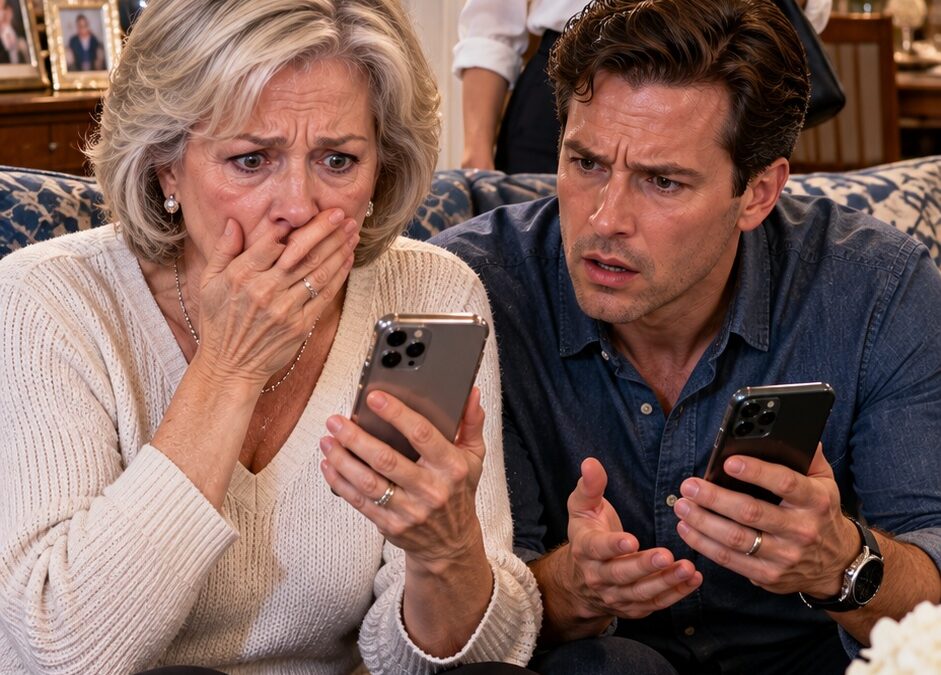
Brandon began scrolling.
His jaw tightened with every movement of his thumb.
Then he stopped.
“Mom.”
I did not like his voice.
“What?”
“You need to see this.”
Dozens of messages filled the screen.
Six weeks’ worth.
All supposedly from Brandon.
Hey babe, Mom’s having trouble with her online banking. Can you help me get her account info so I can straighten it out?
Ashley had replied:
Of course. What do you need?
Another message:
Thanks for those numbers. She’s embarrassed about not understanding technology.
Ashley:
Tell her not to be. We’ll get it fixed.
Then:
Can you send me the verification codes when they come through? Mom’s old phone is acting up again.
And Ashley had.
Account numbers.
Routing numbers.
Security codes.
Personal details.
Everything.
Not because she wanted to hurt me.
Because she thought she was helping her husband help his mother.
“Oh my God.”
My knees felt weak.
“She gave them everything.”
Brandon was already calling her.
Ashley answered brightly.
“Hey. Did Annalie find my phone? I feel naked without—”
“You need to come back.”
Silence.
“What?”
“Now.”
“I have a patient in the chair.”
“Ashley.”
Something in his voice reached her.
“What happened?”
“Come back.”
“Brandon—”
“Please.”
She arrived fifteen minutes later wearing navy scrubs, her hair pulled into a ponytail.
She rushed inside looking frightened.
“Is somebody hurt?”
Brandon held up her phone.
“Did you send someone my mother’s banking information?”
Her expression went from confusion to horror.
“What?”
“The messages.”
“What messages?”
We showed her.
She kept shaking her head.
“But that’s you.”
“No.”
“Brandon, you texted me from that number.”
“I never had that number.”
“Yes, you did. You told me your company upgraded your work phone.”
“No.”
Her face went gray.
“We’ve been texting on that number for over a month.”
“That wasn’t me.”
Ashley sank into a chair.
“Oh my God.”
Brandon called my bank.
Hillside Regional.
He put the call on speaker.
A woman named Carmen answered.
Brandon explained that we suspected fraud.
There was typing.
Then:
“We did process one large transfer today.”
My stomach dropped.
“How large?”
“Fifty thousand dollars.”
The room seemed to tilt.
Fifty thousand.
Almost everything I had left in liquid savings after my husband died three years earlier.
My emergency money.
My roof money.
My medical money.
My I-don’t-want-to-be-dependent-on-my-son money.
Gone.
“I didn’t authorize anything.”
The woman paused.
“Our records show the transaction was completed in person at the Maple Street branch.”
“In person?”
“Yes, ma’am.”
“I’ve been home.”
Brandon looked at me.
“I’ve been here since noon.”
Another pause.
“The customer presented valid identification.”
“What identification?”
“Driver’s license, debit card, and correct security responses.”
My skin went cold.
“What responses?”
“Mother’s maiden name.”
Dorothy.
“Street where you grew up.”
Sycamore Street.
“First pet.”
Charlie.
Things strangers should not know.
Things family might.
Ashley made a broken sound.
“I told him.”
We looked at her.
“Told who?”
“The person pretending to be Brandon.”
She was crying now.
“He said he was planning a surprise retirement thing for you.”
“I’ve been retired for years.”
“I know, but he said he wanted to make it special.”
Her voice cracked.
“He asked about your childhood. Your mother. Your first pet. Where you grew up.”
She covered her mouth.
“I thought it was sweet.”
We drove to the bank.
The security footage showed a woman entering at 2:13.
My height.
My build.
Gray wig.
Dark pants.
A cardigan almost exactly like one I owned.
Large sunglasses.
She presented my identification.
Sat calmly.
Completed the transfer.
Walked out ten minutes later.
I watched a stranger become me.
That was the moment the theft became something worse than money.
Someone had studied me.
My clothes.
My age.
My hair.
My history.
They had built a version of Annalie Hayes convincing enough to walk into a bank and steal fifty thousand dollars with my face.
The bank manager told us the money had been wired to an offshore account.
Bahamas.
Closed almost immediately.
“I’m sorry.”
He said it gently.
“The funds are probably gone.”
Probably.
Such a small word.
It can destroy an entire future.
We filed a police report.
The officer was sympathetic.
Not hopeful.
Organized identity-theft rings were sophisticated.
They gathered information slowly.
Targeted multiple relatives.
Moved fast.
Disappeared faster.
By the time we returned to my house, darkness had settled outside.
Brandon refused to leave.
Ashley did too.
We sat around the same kitchen table where we had eaten lunch only hours earlier.
Everything looked normal.
Fruit bowl.
Salt shaker.
Mail.
A grocery list.
My husband’s old mug near the sink.
But my life no longer felt normal.
Brandon finally said:
“They had your ID.”
“Yes.”
“Your card.”
“Yes.”
“They knew your security answers.”
Ashley stared at the table.
“Some came from me.”
“Not the documents.”
Brandon looked toward the garage.
“Mom, where do you keep your important papers?”
My chest tightened.
“File cabinet.”
We went out together.
The lock showed scratches.
Bent metal.
I had noticed it weeks earlier.
Thought I had slammed the drawer too hard.
Inside, nothing seemed missing.
Birth certificate.
Social Security card.
Passport copy.
Old tax papers.
Ashley picked up one document.
Then another.
She worked with files and patient records every day.
“Somebody took these out.”
“How can you tell?”
“The stacks aren’t aligned.”
I stared.
“They photographed them.”
She nodded slowly.
“They put everything back.”
So I would never know.
That night Brandon changed my locks.
Ashley froze my credit.
We reset passwords.
I lay awake staring at the ceiling.
Someone had entered my home.
Gone through my private life.
Opened drawers.
Touched documents.
Copied my identity.
Then placed everything back exactly enough that I kept sleeping peacefully in the same house.
The violation felt almost physical.
The next morning Brandon and Ashley were at my door before seven.
Neither had slept.
For three days, our lives became paperwork.
Fraud reports.
Banks.
Credit bureaus.
Password resets.
New accounts.
Insurance forms.
Police interviews.
Detective Marshall Hayes from the fraud division took the case.
He was in his forties.
Broad shoulders.
Gray at the temples.
Professional.
Observant.
At first, I trusted him.
He sat at my kitchen table taking notes.
“These groups are organized.”
“How organized?”
“They may target an entire family.”
Brandon frowned.
“Why?”
“More information. More money. More leverage.”
Ashley handed over her phone.
Detective Hayes said technicians would try tracing the fake messages.
“You think we’ll get the money back?”
I asked.
He hesitated.
“I don’t want to give you false hope.”
Translation:
Probably not.
Three days later, the nightmare spread.
I was watering tomatoes when Brandon called.
“Mom.”
I turned off the hose.
“What happened?”
“Fifteen thousand dollars was withdrawn from my account.”
I dropped the hose.
“What?”
“Riverside branch.”
“When?”
“An hour ago.”
“Where were you?”
“At work.”
The bank’s security video showed another impersonator.
Young woman.
Dark hair.
Ponytail.
Clothing similar to Ashley’s.
She presented Brandon’s identification.
Walked out with fifteen thousand in cash.
Ashley had been at the dental office.
Coworkers and patients confirmed it.
Detective Hayes watched the footage.
“This is coordinated.”
Brandon asked:
“You think they’re going after all of us?”
Hayes nodded.
That night I received the first threatening call.
Unknown number.
I almost ignored it.
Then answered because I thought it might be the bank.
“Hello, Annalie.”
A woman.
Cold voice.
Amused.
“Who is this?”
“This is just the beginning.”
My blood went cold.
“What do you want?”
“You should have been nicer to your daughter-in-law.”
I stopped breathing.
“What?”
“You heard me.”
“I don’t know who you are.”
“You kept Ashley at a distance.”
My fingers tightened around the phone.
“Polite little smiles. Never really welcoming her.”
“Who are you?”
“Someone who sees everything.”
“What do you want?”
A laugh.
Sharp.
“I already got what I wanted.”
“My money?”
“Your money. Your son’s money.”
Then:
“But that was only the beginning.”
I felt weak.
“What else?”
“Before I’m finished, you won’t have your money.”
Pause.
“Your family.”
Pause.
“Your reputation.”
My mouth went dry.
“Nothing.”
“If you want money—”
“Oh, Annalie.”
Her voice softened.
Crueler somehow.
“This was never only about money.”
The line died.
That was when I understood.
This was personal.
Someone knew Ashley.
Someone knew me.
Someone knew our family well enough to understand where the fault lines were.
And one of those fault lines was me.
Because the woman on the phone was right about one thing.
I had never fully welcomed Ashley.
I was never cruel.
Never openly hostile.
But after losing my husband, I had become emotionally careful.
Ashley tried to get close.
Invited me shopping.
Asked me to lunch.
Called occasionally just to talk.
I answered politely.
Always politely.
Too politely.
There is a kind of distance that wears good manners like armor.
That was mine.
I loved Brandon completely.
Ashley existed outside the wall.
Not because she had done anything wrong.
Because loving someone new felt dangerous.
I had already lost one person I loved more than I thought I could survive.
Somewhere inside me, I had decided never to make myself that vulnerable again.
Now a stranger was weaponizing that distance.
Over the next week, everything collapsed.
Credit cards opened in our names.
Online purchases.
Store charges across Texas.
Ashley’s savings drained.
My credit score crashed.
Brandon’s accounts became restricted.
Mine were frozen.
I could not make my mortgage payment.
Ashley and Brandon started fighting.
Small arguments became vicious because fear was always sitting at the table with us.
One evening Ashley snapped:
“If we actually talked like a family, maybe I would have questioned those messages sooner.”
Brandon stiffened.
“You’re blaming my mother?”
“That isn’t what I said.”
“It sounded like it.”
“I’m saying I never felt close enough to Annalie to ask things directly.”
I sat there listening to them destroy each other.
The woman on the phone had promised to take our family.
She was succeeding.
A few days later Ashley came over to help me organize fraud documents.
She was using my computer when she froze.
“Annalie.”
“What?”
“When did you search this?”
“Search what?”
She turned the screen.
How to create fake identification.
How to transfer money without being traced.
How to frame someone for financial fraud.
I stared.
“I didn’t.”
Browser history showed weeks of searches.
From my account.
My computer.
My internet.
Detective Hayes arrived later.
He examined the machine.
Found malware.
Spyware.
Remote-access programs.
But he also found emails sent from my account to offshore banking services.
Fake-ID templates in printer history.
Wire-transfer instructions.
His tone changed.
Formal.
Careful.
“Mrs. Hayes.”
“Yes?”
“I need to ask something.”
I already knew.
“Are you experiencing memory problems?”
“No.”
“Any confusion?”
“No.”
“Missing time?”
“No.”
I stood.
“You think I did this.”
“I’m examining all possibilities.”
“I stole my own money?”
“There are cases involving cognitive decline where—”
“I am sixty-seven years old.”
My voice rose.
“I am not senile.”
Ashley immediately said:
“Couldn’t somebody have accessed her computer remotely?”
“Possible.”
Hayes nodded.
“But many of these searches occurred when Mrs. Hayes says she was home.”
“So?”
“The traffic originates from this network.”
Then I looked at Brandon.
For half a second, I saw doubt.
He hid it quickly.
Too late.
That flicker hurt more than the missing money.
Two days later, police discovered an offshore account in my name.
Thirty thousand dollars.
Opened months earlier.
My Social Security number.
My signature.
My information.
Some stolen money had been deposited there.
Detective Hayes brought me to the station.
“Get a lawyer.”
“I can’t afford one.”
My accounts were frozen.
My savings gone.
I sat alone under fluorescent lights.
He spread evidence across the table.
Computer.
Printer.
Bank account.
Security footage.
Witness statements.
“Explain it.”
“I can’t.”
“Then how do you expect anyone to believe you?”
“I didn’t do it.”
The sentence sounded smaller every time I repeated it.
Someone is framing me.
Someone is framing me.
Someone is framing me.
Truth can begin sounding like madness when every piece of evidence says otherwise.
That night Brandon called.
“Mom.”
His voice was broken.
“Ashley and I think maybe you need help.”
I stared into the dark.
“Help.”
“Professional help.”
“You think I’m losing my mind.”
“I think something is wrong.”
“The evidence was planted.”
“I want to believe you.”
That sentence.
Want.
Not do.
“We need space.”
I whispered:
“You’re leaving me.”
“No.”
“Yes.”
“Just a few days.”
My son.
My only child.
The person I had raised alone after his father died.
He was walking away because someone had constructed a version of reality more convincing than his memory of who I was.
Then came the lawsuit.
A process server knocked on my door.
Brandon and Ashley Hayes versus Annalie Hayes.
Financial abuse.
Fraud.
Manipulation.
Damages.
One hundred fifty thousand dollars.
And a request for guardianship.
They wanted legal control if I was ruled incompetent.
My finances.
My decisions.
My remaining property.
The documents included a psychological opinion from someone who had never examined me suggesting cognitive decline.
And a restraining order.
Two hundred feet.
My son wanted me legally forbidden from approaching him.
I called.
Voicemail.
“Brandon.”
My voice broke.
“I would never hurt you.”
No call back.
Three lawyers refused me.
One said:
“The evidence is substantial.”
“I’m innocent.”
“Then you need expensive representation.”
“I have no money.”
“I’m sorry.”
That phrase followed me everywhere.
I’m sorry.
The bank.
Police.
Lawyers.
Church.
Pastor Williams called.
“The board thinks you should step away from the children’s program.”
“You think I’m dangerous?”
“Parents are concerned.”
News reporters picked up the story.
My driver’s-license photo appeared on television.
LOCAL GRANDMOTHER ACCUSED OF DEFRAUDING FAMILY.
People called.
Have you seen a doctor?
Are you getting help?
At the grocery store, two women from church whispered.
“That’s her.”
“The one who stole from her own family.”
I abandoned my cart.
Went home.
Looked in the mirror.
I had lost weight.
My hair was dirty.
Dark circles under my eyes.
For the first time, I looked exactly like the unstable elderly woman they claimed I was.
Maybe I should give up.
Sign papers.
Accept a plea.
Let someone else control everything.
Prison almost seemed easier than waking every day and having to prove I knew my own mind.
Then the mortgage company sent foreclosure papers.
Ninety days.
Thirty-two years in that house.
Brandon’s childhood.
My marriage.
My husband’s last Christmas.
Every ordinary memory.
About to disappear.
That night, at two in the morning, I started looking through old photographs.
I wanted proof that I had once been somebody other than an accused criminal.
Wedding.
Birthdays.
School.
Brandon’s graduation.
His marriage to Ashley.
I paused.
Ashley looked beautiful.
Brandon looked ecstatic.
And there I was in lavender.
Smiling.
But separate.
Even in photographs, my emotional distance showed.
Then I noticed another woman.
Brunette.
Stylish.
Smiling beside Ashley.
Something tugged at me.
Diane.
Ashley’s book-club friend.
She had come to my house.
Coffee.
Questions.
Lots of questions.
What bank did I use?
Did I bank online?
When was I usually out?
Did I have an alarm system?
I had thought she was lonely.
Curious.
Friendly.
Now every question sounded like reconnaissance.
I searched Ashley’s public social-media posts.
Found Diane.
A silver locket around her neck.
I knew that locket.
Where?
Then I remembered the police photographs from the garage break-in.
One image showed part of a vehicle near my driveway.
In the windshield reflection hung something silver.
A locket.
My pulse started pounding.
Someone connected to Ashley had been at my house.
Someone pretending to be her friend.
I could not go to Hayes.
He thought I was guilty.
I could not contact my son.
Restraining order.
So I took the last cash I possessed.
Eight hundred seventeen dollars hidden in a coffee can.
And hired Garrett Price.
Private investigator.
Gray beard.
Tired eyes.
Office above a nail salon.
He listened without interrupting.
When I finished:
“Police think you did it.”
“Everyone does.”
“But you didn’t.”
Not a question.
“No.”
He leaned back.
“Then let’s find whoever did.”
Four days later, he called.
“Diane doesn’t exist.”
I gripped the phone.
“What?”
“Real name is Brenda Sullivan.”
He had a photograph.
Same woman.
Different name.
Criminal record.
Identity theft.
Fraud.
Three years in federal prison.
Released eighteen months earlier.
Then Garrett uncovered the part that changed everything.
“Brenda Sullivan is Ashley’s half-sister.”
I almost dropped the phone.
“Ashley doesn’t have a sister.”
“Apparently, she does.”
Ashley’s father, Robert, had a previous marriage.
A daughter.
Brenda.
That marriage collapsed after Robert was caught embezzling from his business.
First wife left with almost nothing.
Brenda grew up poor.
Robert rebuilt.
Remarried.
Had Ashley.
Became wealthy in commercial real estate.
Built the successful family life Brenda believed had been stolen from her.
“Does Ashley know?”
Garrett shook his head.
“I can’t tell.”
He found something worse.
Psychological records from Brenda’s earlier criminal case described an obsession with what she called “replacement families.”
People who got the life she believed should have belonged to her.
She had previously targeted a stepmother.
Destroyed her credit.
Ruined her finances.
Tried to push her toward suicide.
Then Garrett showed me Ashley’s financial activity.
Cash deposits.
Five hundred.
One thousand.
Eight thousand total.
I felt sick.
“Ashley is involved.”
“Maybe.”
“Why else would Brenda pay her?”
“Could be payment.”
He said it carefully.
“Could be extortion.”
Then:
“There’s another problem.”
“What?”
“Detective Hayes.”
My stomach tightened.
“He’s been investigated by internal affairs.”
“For what?”
“Evidence tampering.”
Twice.
Cleared.
But accusations were serious.
Ex-wife had restraining orders.
Public posts calling him corrupt.
“You think he works with Brenda?”
“I think you need to stop trusting anybody just because they have a badge.”
I decided to contact the FBI.
The next morning, before I could, police came for me.
Six in the morning.
Hayes stood on my porch.
Two officers.
Warrant.
“Annalie Hayes, you are under arrest.”
“For what?”
“Obstruction.”
Conspiracy.
Illegal solicitation of financial records.
Garrett’s investigation had been reported.
I was handcuffed in front of neighbors.
Mrs. Carson recorded from across the street.
I was booked.
Fingerprinted.
Photographed.
Locked in a holding cell.
One woman there had been a paralegal.
When I mentioned Hayes, her face changed.
“Marshall Hayes?”
“Yes.”
“That man is dirty.”
She said he planted evidence in her case.
Falsified reports.
Destroyed her career before she proved herself innocent.
“Was he working with anyone?”
She thought.
“Brunette.”
“Age?”
“Thirties.”
“Cold eyes?”
She stared.
“You know her?”
I did now.
At arraignment, my assigned public defender advised me to plead.
“The evidence is overwhelming.”
“I’m innocent.”
He looked almost apologetic.
Judge Helena Ford presided.
Sharp eyes.
Tired expression.
When my turn came, I stood.
“Your Honor, may I speak?”
My lawyer whispered:
“Don’t.”
I ignored him.
Judge Ford nodded.
I told her.
Brenda Sullivan.
Half-sister.
Convicted identity thief.
False identity as Diane.
Garrett.
Hayes.
Internal Affairs.
Frame job.
I ended with:
“I’m not crazy.”
My voice shook.
“I am not senile.”
The courtroom was silent.
“I am being framed by criminals.”
I looked directly at Hayes.
“One of them is wearing a badge.”
Judge Ford brought him forward.
Asked about Brenda.
He denied knowing her.
Asked about Internal Affairs.
He became tense.
Something changed in Judge Ford’s expression.
Not belief.
Doubt.
Sometimes doubt is enough to save you.
She set bail at ten thousand dollars.
More than I had.
My friend Pette used her house as collateral.
When I was released, Judge Ford said:
“I don’t know whether you’re innocent.”
I nodded.
“But something about this case bothers me.”
She gave me two weeks.
“Make them count.”
Garrett met me at a diner.
“We need proof.”
“We have proof.”
“We have suspicion.”
He stirred bad coffee.
“Need something undeniable.”
“How?”
“Trap them.”
Brenda wanted to destroy me.
Money was part of it.
So I gave her more money to chase.
Not real money.
A story.
My late husband’s forgotten life-insurance policy.
Three hundred thousand dollars.
A reporter I knew from high school helped place the article.
Embattled grandmother receives surprise windfall amid legal battle.
It said the funds had only recently been discovered.
Separate asset.
Soon accessible.
All fiction.
Excellent bait.
Then I finally reached someone at the FBI.
Agent Tim Walters.
Police-corruption unit.
He had already been quietly investigating Hayes.
“What you have is circumstantial.”
“I know.”
“But if your trap works…”
“It will.”
“You sound very sure.”
“I have nothing left for them to take.”
He looked at me.
“Except your life.”
Three days after the article, someone called pretending to be from the insurance company.
They asked me to verify personal information.
I gave false answers.
Confirmed the money would become available soon.
That night, FBI surveillance surrounded my house.
Hidden cameras inside.
A wire under my clothes.
I went to bed fully dressed.
At 11:30, the back-door alarm sounded.
Footsteps.
Two people.
I stayed still.
One entered my bedroom.
Another went directly toward my computer.
I flipped on the light.
Brenda Sullivan stood there holding a flash drive.
Detective Marshall Hayes was searching my desk.
For one perfect second, neither moved.
“Hello, Brenda.”
Her face twisted.
“Or should I call you Diane?”
“You stupid old woman.”
Then everything exploded.
“FBI!”
Agents entered.
Hayes ran.
He shoved past me.
Made it three steps.
Agents tackled him.
Brenda screamed while they cuffed her.
“You don’t understand!”
She looked at me.
“She deserved it!”
Hayes shouted:
“Shut up!”
But Brenda was beyond control.
“She treated Ashley like trash!”
My stomach tightened.
“She kept her outside that family.”
“Brenda—”
“She thought she was better than her.”
Hayes swore.
“Someone had to make her pay.”
There it was.
Confession.
Recorded.
Brenda glared at me as agents pulled her toward the door.
“You think this fixes anything?”
I said nothing.
“I told Ashley what you thought of her.”
Nothing.
“I showed her you never wanted her.”
She smiled.
Cruel.
“You lost.”
Then I looked toward the doorway.
Brandon was there.
Ashley beside him.
FBI witnesses.
They had heard everything.
Brenda’s smile died.
The conspiracy unraveled quickly after that.
Hayes and Brenda had been partners for more than a year.
Criminal partners.
Romantic partners.
Victims across Texas.
Brenda found Ashley five years earlier.
Watched her from a distance.
Studied the family.
After prison, she contacted Hayes, the boyfriend of a former cellmate.
She befriended Ashley intentionally.
Coffee shop.
Book club.
Lonely newcomer.
Built trust slowly.
Then studied our emotional dynamics.
She saw my distance from Ashley.
Saw an opening.
The plan was viciously intelligent.
Use Ashley’s desire to help.
Impersonate Brandon.
Steal financial information.
Steal enough money to hurt us.
Not enough initially to guarantee federal involvement.
Plant evidence pointing at me.
Use Hayes to control the local investigation.
Destroy my credibility.
Turn Brandon against me.
Push our family into lawsuits.
Then let me collapse.
Hayes had installed or enabled the spyware.
Planted files.
Manipulated evidence.
Coached witnesses into describing me as confused.
The offshore account in my name was theirs.
Every road led to me because they built every road.
Previous victims had taken plea deals.
Some had lost everything.
Some had broken completely.
Brenda believed a sixty-seven-year-old widow would do the same.
She was wrong.
The morning after the arrest, Brandon called.
He was crying before I said hello.
“Mom.”
I closed my eyes.
“I’m sorry.”
“I know.”
“I should have believed you.”
I said nothing.
“I should have known.”
“The evidence was convincing.”
“But you’re my mother.”
“Yes.”
“Can you forgive me?”
That question hurt.
Because I loved him.
And because love did not erase what he had done.
“I think so.”
He began crying harder.
“But not today.”
Silence.
“It’s going to take time.”
“I understand.”
That was the first honest thing between us in weeks.
Ashley came the following day.
Thin.
Pale.
Eyes swollen.
She stood on my porch.
“I didn’t know Brenda was my sister.”
I believed her.
“My father never told me.”
Then:
“She eventually told me.”
I stiffened.
“When?”
“After the fraud started.”
“Why didn’t you say something?”
Ashley broke.
“She threatened Brandon.”
I stared.
“She had photographs.”
“Of what?”
“His work.”
“Gym.”
“Driving.”
“Everywhere.”
Ashley’s hands shook.
“She said if I told anyone, she would kill him.”
The cash deposits.
Eight thousand dollars.
Not payment.
Extortion.
“She demanded money.”
Ashley cried.
“I thought if I paid, she would leave us alone.”
“And when they blamed me?”
“I was terrified.”
“So you let them.”
“I didn’t know what to do.”
That hurt.
But so had my own behavior.
I invited her inside.
We sat at my kitchen table.
The same table where everything began.
For four years, Ashley and I had never really talked.
Not honestly.
That day we did.
“Brenda was right about one thing.”
Ashley looked at me.
“I kept you at a distance.”
“You did.”
“I told myself I was being respectful.”
“You were polite.”
“Polite isn’t the same as warm.”
Her eyes filled.
“Why?”
I looked toward the photograph of my husband.
“Fear.”
Ashley frowned.
“After he died, I stopped letting people get too close.”
My throat tightened.
“If I didn’t love deeply, I thought losing people wouldn’t hurt as much.”
“But you already loved Brandon.”
“Yes.”
“So you protected yourself from me.”
“Yes.”
She began crying.
“I tried so hard.”
“I know.”
“I thought something was wrong with me.”
“Nothing was wrong with you.”
I paused.
“Something was wrong with me.”
Maybe that was too harsh.
Grief is not a moral failure.
But mine had become a wall that hurt someone who had not built it.
“I’m sorry.”
Ashley reached across the table.
For the first time, I took her hand without hesitation.
“Keeping people at a distance didn’t protect me.”
I said.
“It only made sure I suffered alone.”
We cried.
Talked.
Not magically.
Not perfectly.
But honestly.
Legal proceedings took months.
Brenda and Hayes faced charges across multiple jurisdictions.
Identity theft.
Fraud.
Conspiracy.
Extortion.
Evidence tampering.
Obstruction.
Computer crimes.
I testified.
Brandon testified.
Ashley testified.
Twelve previous victims testified.
The jury took less than a day.
Marshall Hayes received fifteen years in federal prison.
Brenda Sullivan received twelve, with psychiatric treatment recommended.
At sentencing, Brenda looked at me.
The rage was gone.
Only emptiness remained.
“I wanted you to hurt like I hurt.”
I answered:
“You succeeded.”
She looked surprised.
“But I survived.”
The bailiff moved toward her.
“And I’m going to be happy.”
She said nothing.
My accounts were unfrozen.
Credit repaired.
Foreclosure stopped.
Some funds recovered through the investigation and restitution process.
Not everything.
But enough.
Slowly, pieces of my life came back.
More importantly, people came back.
Brandon and Ashley stayed with me for a week.
Real dinners.
Real conversations.
Silence without fear.
Laughter that sounded strange at first.
Then normal.
Brandon and I repaired trust slowly.
I did not pretend his doubt never happened.
He did not ask me to.
Sometimes he would say:
“I still hate that I filed that lawsuit.”
I would answer:
“So do I.”
And then we would keep talking.
That was healing.
Not pretending.
Ashley changed too.
We stopped performing politeness.
If I was hurt, I told her.
If she felt excluded, she told me.
Sometimes conversations were awkward.
Good.
Awkward honesty is healthier than graceful distance.
Six months after the trial, Ashley came into my kitchen carrying something behind her back.
“What?”
She was smiling.
“Sit down.”
“No.”
“Annalie.”
“You’re making me nervous.”
Brandon came in behind her.
His face gave it away.
“Oh.”
Ashley held out a pregnancy test.
Positive.
I cried before either of them spoke.
Ashley laughed through tears.
“We’re having a baby.”
I hugged her.
Not politely.
Completely.
Months later, she asked:
“Would you come into the delivery room?”
I stared.
“You want me there?”
“Yes.”
“Are you sure?”
She smiled.
“I’m done keeping family outside doors.”
That sentence nearly broke me.
My grandson was born on a Tuesday morning in March.
Eight pounds, six ounces.
Brandon’s nose.
Ashley’s eyes.
When the nurse placed him in my arms, peace came over me in a way I had not felt since before my husband died.
Brandon stood beside the bed.
One arm around Ashley.
Watching me hold their son.
“Our family.”
I whispered it.
Brandon said:
“Thank you for not giving up on us.”
Ashley rested her head against my shoulder.
“Thank you for coming back.”
We had discussed names for weeks.
Nothing seemed right.
Then, holding that tiny boy, I suggested:
“Parker.”
Brandon smiled.
“Parker Hayes.”
Ashley whispered it.
Then nodded.
“I love it.”
For a few minutes, Brandon went for coffee.
Ashley nursed Parker.
I sat quietly.
Watching them.
I thought about Brenda.
Her bitterness.
The years she spent believing someone else’s happiness proved she had been cheated.
I understood pain.
But pain is not permission.
A person can be wronged and still become someone who wrongs others.
Brenda made that choice again and again.
I had another choice.
I could leave the nightmare harder than before.
More suspicious.
More distant.
More afraid to love.
For years, I thought emotional walls kept me safe.
They did not.
Walls kept Ashley outside when she was trying to become my daughter.
They kept me alone when my husband died.
They made it easier for Brenda to convince Ashley that my distance meant rejection.
None of that excused Brenda’s crimes.
But I could learn from the vulnerability she exploited.
I chose not to live behind those walls anymore.
That did not mean trusting everyone.
I had learned enough about bank security for three lifetimes.
I had cameras.
Credit monitoring.
Locked files.
Two-factor authentication on everything.
I checked accounts obsessively for a while.
But emotionally?
I tried something different.
Love people.
Tell them.
Ask questions.
Say when something hurts.
Do not make strangers guess whether they matter.
Do not assume silence means peace.
Trust does not mean blindness.
Vulnerability does not mean stupidity.
Brandon eventually said:
“You’re different.”
“So are you.”
“I mean happier.”
I thought about that.
“I think I’m less careful.”
He frowned.
“After everything that happened?”
“Especially after.”
He laughed.
“That makes no sense.”
“It makes perfect sense.”
I looked at him.
“I spent years trying to avoid pain.”
“And?”
“It found me anyway.”
I smiled.
“Might as well live.”
Pette returned to being the friend who saved me before I could save myself.
She never let me forget that she put her house up for my bail.
“You owe me.”
“I thought friendship was unconditional.”
“Mine has interest.”
Pastor Williams apologized.
The church board invited me back to the children’s program.
I did return eventually.
But not immediately.
I needed them to understand something.
“You believed headlines before asking me.”
Pastor Williams looked ashamed.
“We were trying to protect the children.”
“I understand.”
“Can you forgive us?”
“Yes.”
“But?”
I smiled.
“You should know me better next time.”
The local station that aired my accusation ran the story of my exoneration.
Longer.
Front page.
CORRUPT DETECTIVE AND IDENTITY THIEF EXPOSED IN FAMILY FRAUD PLOT.
My old driver’s-license photo disappeared from broadcasts.
They used a newer one.
I appreciated that.
Garrett received enough attention from the case to move his office out from above the nail salon.
He claimed he preferred the old place.
I told him he was lying.
Judge Ford dismissed every proceeding against me.
When I thanked her, she said:
“You saved yourself.”
“No.”
“You did.”
“You listened.”
She shook her head.
“I paused.”
Sometimes that is the difference between justice and disaster.
Someone pauses.
Asks one more question.
Looks once more.
Refuses to let an overwhelming story become an unquestioned one.
I never forgot that.
Brandon and Ashley had their own healing to do.
Ashley struggled with guilt over the information she unknowingly gave Brenda.
Brandon struggled with guilt over doubting me.
They attended counseling.
So did I.
At first, I resisted.
“I’m not the criminal.”
The therapist smiled.
“No.”
“But you were traumatized.”
Fair enough.
I talked about losing my husband.
Why I became distant.
Why Brandon became the only person I allowed complete access to my heart.
Why Ashley’s arrival felt threatening even when I refused to admit it.
The therapist asked:
“What were you afraid she would take?”
I answered quickly:
“My son.”
Then stopped.
That was the truth.
Not consciously.
But somewhere inside me, I believed love had a fixed amount.
If Brandon loved Ashley more, I would receive less.
So I remained pleasant.
Helpful.
Distant.
I never tried to break their marriage.
Never interfered.
But emotional distance can communicate hostility even when no hostile words are spoken.
Ashley felt it.
Brenda saw it.
Then used it.
Months after Parker was born, Ashley and I had lunch alone.
Her idea.
We sat at a small café.
She said:
“Can I ask you something?”
“Of course.”
“When you first met me, did you dislike me?”
“No.”
“Then what?”
I considered giving a comforting answer.
Instead:
“I didn’t know where to put you.”
She laughed softly.
“That sounds like furniture.”
“It felt like furniture.”
She smiled.
“You belonged to Brandon.”
“So?”
“So I was afraid that meant he belonged less to me.”
Ashley nodded.
“I felt exactly the opposite.”
“What do you mean?”
“I thought you already had the most important part of him.”
I stared.
“His childhood.”
She said.
“His memories.”
“His father.”
“The person he called when something went wrong.”
Tears appeared.
“I thought I was competing with a woman who had a thirty-year head start.”
There it was.
We had both been afraid of the same thing.
Scarcity.
There was not enough love.
Not enough importance.
Not enough family.
Brenda’s entire revenge depended on that lie.
She believed her father’s love for his second family proved he had stolen something from her.
Maybe he had failed her terribly.
He probably had.
But destroying Ashley could never rebuild Brenda’s childhood.
Pain passed forward does not become justice.
It becomes more pain.
I held onto that.
So did Ashley.
When Parker was a year old, we celebrated at my house.
Not a huge party.
Family.
Friends.
Garrett.
Pette.
Even Judge Ford sent a card after Brandon jokingly invited her.
Parker smashed frosting into his face.
Everyone laughed.
For one second, I stood in the kitchen watching Ashley carry my grandson toward me.
No distance.
No careful smile.
She handed him over.
“He wants Grandma.”
Grandma.
I kissed his forehead.
Brandon walked behind her carrying plates.
“Mom, you okay?”
“Yes.”
“You’re crying.”
“I’m old. We do that.”
Ashley laughed.
“You hate when people call you old.”
“I can call myself old.”
“Of course.”
“Privileges.”
That became our relationship.
Messy.
Teasing.
Sometimes tense.
Real.
One afternoon Parker was playing in my living room when Ashley’s phone rang.
Brandon’s name appeared on the screen.
Every muscle in my body tightened.
The memory hit before reason.
Fake contact.
Transfer codes.
Bank.
Brandon sitting beside me.
Ashley noticed.
“Annalie?”
I looked toward the kitchen.
Brandon was not there.
He was at work.
Ashley answered.
“Hey.”
His actual voice came through.
Normal.
Warm.
“Can you ask Mom if she wants Thai tonight?”
I laughed suddenly.
Ashley stared.
“What?”
“Nothing.”
“What?”
I shook my head.
“Thai is fine.”
She ended the call.
Then understood.
“Oh.”
“Yes.”
“The phone.”
“Yes.”
She set it down.
Walked over.
Took my hand.
“You okay?”
“I am now.”
Trauma is strange.
Sometimes recovery is not forgetting the trigger.
It is experiencing the same trigger and discovering the ending changed.
Brandon’s name could appear on a phone.
And it could simply be Brandon.
No criminal.
No theft.
No trap.
Just my son asking what I wanted for dinner.
Ordinary life became precious after that.
I started noticing things I had once ignored.
Coffee with Ashley.
Brandon complaining about work.
Parker sleeping on my chest.
Pette insulting my cooking.
Rain against windows.
Mortgage payments going through normally.
A bank statement containing nothing surprising.
The first time my credit score fully recovered, I printed the page.
Brandon laughed.
“You’re framing that?”
“Maybe.”
“That is deeply weird.”
“You nearly sued me for fraud.”
“Fair.”
We laughed.
That kind of laughter took time.
The lawsuit remained one of the hardest wounds.
Brandon had not simply doubted me.
He had taken legal action.
Asked for guardianship.
Requested a restraining order.
When I confronted him months later:
“Why?”
He cried.
“I thought you were sick.”
“You thought taking control would protect me?”
“Yes.”
“And yourselves.”
“Yes.”
“Did you hate me?”
“No.”
“Were you afraid of me?”
He hesitated.
“That hurts more.”
“I know.”
We talked until midnight.
He never demanded quick forgiveness.
That helped.
He let me be angry.
That helped more.
Eventually I understood that Brenda and Hayes had engineered the evidence specifically to create that outcome.
But manipulation does not erase personal responsibility.
Brandon still had to own his choices.
So did Ashley.
So did I.
Forgiveness became possible because nobody insisted responsibility disappear.
Brenda never understood that.
At sentencing, she believed admitting pain should excuse cruelty.
It did not.
Her childhood may have been unfair.
Her father may have abandoned her.
She may have grown up watching Ashley receive comfort, money, stability, and love Brenda deserved too.
That tragedy explained something.
It did not justify anything.
I could grieve for the child Brenda had been.
And still believe the adult belonged in prison.
Both were true.
Years later, Parker grew old enough to ask why Grandma had so many cameras.
“Because Grandma is famous.”
Brandon said.
I glared.
“Do not.”
Parker’s eyes widened.
“You famous?”
“No.”
Ashley grinned.
“Grandma caught bad guys.”
I sighed.
“Technically the FBI caught them.”
“Because of you.”
Parker stared at me as if I were Batman.
“You fight bad guys?”
“Only before bedtime.”
For weeks, he told everyone his grandmother was a detective.
Garrett encouraged this.
I stopped inviting Garrett over.
Not really.
The story became family history.
But when Parker is old enough, I will tell him the full version.
Not just the dramatic part.
Not corrupt police officers.
Not fake insurance policies.
Not bank disguises.
Not arrests.
I want him to understand the quieter lesson.
Families become vulnerable when fear replaces communication.
Ashley was afraid I disliked her.
I was afraid loving her would make future loss hurt more.
Brandon was afraid of choosing sides.
So we all stayed partially silent.
Brenda walked into that silence and filled it with lies.
The crime required technology.
Fake identities.
Bank fraud.
Malware.
Police corruption.
But emotionally, it required distance.
That is the part I can control now.
I tell Ashley I love her.
The first time I said it, she cried.
So did I.
It felt strange.
Then less strange.
Then normal.
She calls me Mom occasionally.
Not always.
I never asked her to.
That makes it sweeter.
Brandon visits without checking whether I need something.
Sometimes he simply wants coffee.
I let him complain about his life without immediately trying to fix it.
That was another lesson.
Closeness does not mean control.
Ashley brings Parker over when she wants advice.
And when she does not want advice, I keep my mouth shut.
Mostly.
I am still a mother.
Perfection is unrealistic.
When I look back at the first phone call, I remember my fear.
But I also remember how normal the afternoon had been five minutes earlier.
Ashley at lunch.
Brandon showing me fishing pictures.
My tomato plants waiting for water.
One call divided my life into before and after.
Before, I thought safety meant privacy.
Money saved.
Doors locked.
Accounts secure.
After, I learned safety also means people knowing one another deeply enough to notice when something does not fit.
Ashley did not question the fake texts because my relationship with her was too formal.
She thought asking me directly might be intrusive.
I did not know about her friendship with Diane because I had never asked enough about her life.
Brandon did not understand how isolated both women felt because he assumed silence meant everything was fine.
We are different now.
Not because danger disappeared.
Because secrets became harder to grow.
Six months after Parker’s birth, we were all at my house when rain knocked out power.
No television.
No internet.
No Wi-Fi.
Brandon groaned.
Ashley lit candles.
Parker crawled beneath the kitchen table.
We ordered nothing because the delivery apps were useless.
So I made grilled cheese.
Brandon tasted his.
“Better than mine.”
“Everything is better than yours.”
Ashley laughed.
“You really were that bad?”
“He once burned water.”
“That is impossible.”
“Ask him.”
Brandon shook his head.
“It was a complicated situation.”
We sat around the kitchen table by candlelight.
The same table where I learned my money was gone.
Where Detective Hayes once questioned me.
Where Ashley and I finally told each other the truth.
Now Parker threw pieces of bread onto the floor.
Ashley complained.
Brandon laughed.
I looked around.
Family.
Not perfect.
Real.
Later, after they left, I stood alone in my kitchen.
I used to hate being alone after my husband died.
Then I learned to hide inside it.
Now solitude felt different.
Chosen.
Not imposed.
I turned off the candles.
Checked the locks.
Smiled at the cameras.
Went upstairs.
Before sleeping, I looked at the photograph beside my bed.
My husband.
Brandon.
Me.
Years ago.
I wondered what my husband would think about everything.
He would have hated the fraud.
Despised Hayes.
Wanted revenge on Brenda.
Probably hired an attorney within thirty seconds.
But I think he would have been proud of something else.
I stopped hiding from life.
That was the real thing I had lost after he died.
Not money.
Not security.
Openness.
I survived grief by becoming careful.
Brenda nearly destroyed me by exploiting that carefulness.
Then the fight forced me to become brave again.
Not fearless.
Brave.
There is a difference.
Fearless people do not feel danger.
Brave people feel it and act anyway.
I was terrified when I hired Garrett.
Terrified in jail.
Terrified standing before Judge Ford.
Terrified when I baited Brenda with the fake insurance policy.
Terrified lying in my bedroom knowing criminals might enter.
But once everything else had been taken, fear stopped being enough to control me.
Sometimes I think that is why Brenda failed.
She believed she could keep increasing pressure until I broke.
Money gone.
Family gone.
Reputation gone.
Freedom threatened.
House threatened.
She did not understand there is a strange kind of strength that appears when a person realizes:
I already survived the thing I feared most.
What else can you do?
That does not mean I became invincible.
I broke many times.
Cried.
Begged.
Doubted myself.
Thought about giving up.
Strength is not the absence of those moments.
It is continuing after them.
Judge Ford once told me during a later courthouse event:
“I remember you standing there in that orange jail uniform.”
“I looked terrible.”
“You looked furious.”
“That too.”
“You had no lawyer who believed you.”
“No.”
“No money.”
“No.”
“Everyone against you.”
“Pretty much.”
She smiled.
“And you still accused a detective of corruption in open court.”
“I had reached my limit.”
“Sometimes limits are useful.”
She was right.
That day gave me a new relationship with my own voice.
I had spent too many years being polite.
Not because politeness is bad.
Because I used politeness to avoid discomfort.
Now I know when to be gentle.
And when to say:
No.
That is not true.
I did not do that.
You are wrong.
Look again.
Those sentences saved me.
Ashley learned her own version.
When something scares her now, she tells Brandon.
She does not pay a blackmailer quietly.
Does not protect everyone by carrying terror alone.
Brandon learned that love does not mean neutrality.
Sometimes you have to choose truth even when it creates conflict.
And I learned that opening your heart after loss is not inviting another loss.
It is refusing to let the first one steal the rest of your life.
Parker is three now.
He loves trucks.
Blueberries.
Dogs.
Anything with buttons he is not supposed to touch.
He calls me Nana instead of Grandma because that is what came out first.
I pretend to dislike it.
I love it.
Sometimes Ashley brings him over and stays.
Sometimes she leaves him.
The first overnight visit, she packed enough supplies for a military deployment.
I held up three bags.
“He is sleeping one night.”
“He has routines.”
“I raised a child.”
“Things have changed.”
I stared at her.
She stared back.
Then we both laughed.
“Okay.”
I said.
“Tell me the routines.”
That laugh would have been impossible years earlier.
Every relationship contains history.
Healing does not erase it.
It changes what history does next.
The phone call still happened.
The money was still stolen.
Brandon still doubted me.
Ashley still kept Brenda’s threats secret.
I still kept Ashley outside my heart.
Hayes still put handcuffs on me.
The town still whispered.
None of it disappeared.
But those events no longer control every future conversation.
That is what forgiveness became for me.
Not forgetting.
Not excusing.
Not pretending.
Refusing to keep reliving the same injury after the danger has ended.
Brenda is still in prison.
I do not write.
She once wrote to Ashley.
I do not know everything it said.
Ashley told me only:
“She apologized in a way that still made everything my fault.”
I understood.
Some people cannot face what they have done without rewriting the story.
I hope Brenda eventually finds peace.
Not because she deserves access to us.
She does not.
But because bitterness already consumed enough lives.
I no longer need her suffering.
That surprised me.
For a while I wanted her to hurt.
I wanted Hayes afraid.
Wanted every person who whispered about me to feel ashamed.
Some did.
Eventually, anger became exhausting.
Joy was better.
Messy joy.
Parker screaming because he hates socks.
Ashley calling me because she forgot her own mother’s birthday and wants gift ideas.
Brandon asking me to review vacation photos.
Pette telling the same stories twice and accusing me of being old when I mention it.
Mortgage paid.
Accounts boring.
Credit intact.
Ordinary.
Ordinary became luxury.
On Parker’s second birthday, Brandon gave me a framed photograph.
The hospital.
Ashley holding Parker.
Brandon beside her.
Me leaning over the bed.
Four people.
No distance.
He had engraved one line beneath it:
WE CAME BACK.
I cried.
Brandon said:
“I knew you would.”
“No, you didn’t.”
He smiled sadly.
“No.”
I touched the frame.
“But we did.”
That mattered more.
Families do not prove themselves by never breaking.
Sometimes they prove themselves by choosing what happens after the break.
Do people tell the truth?
Take responsibility?
Do the difficult repair?
Or do they insist nothing happened?
We chose repair.
Slowly.
Painfully.
Imperfectly.
That is why when Parker asks about that photograph someday, I will not tell him:
We were always close.
We were not.
I will tell him:
We learned.
And if he asks about Brenda?
I will tell him a version appropriate to his age.
Then someday the truth.
A woman got hurt.
Instead of healing, she decided to hurt other people.
She became very good at it.
But hurting others did not repair her.
That lesson matters.
I understand Brenda more than I wish I did.
Loss can make you build stories.
Why me?
Why them?
Why did they get what I did not?
I spent years asking why my husband died.
Why Brandon still had a future when mine felt frozen.
Why Ashley got my son’s daily life while I got phone calls.
The difference between Brenda and me was not that I never felt resentment.
I did.
The difference was what we eventually chose to do with it.
Pain can become empathy.
Or entitlement.
Fear can become caution.
Or control.
Grief can become depth.
Or bitterness.
Choices accumulate.
So do consequences.
One summer evening, when Parker was asleep upstairs, Ashley and I sat on my porch.
Brandon had gone to pick up dinner.
Fireflies flickered across the yard.
Ashley said:
“Do you ever wish you had answered that phone differently?”
“What do you mean?”
“If you had just let it ring.”
I thought.
The question had occurred to me many times.
If I had ignored the call, the transfer would still have happened.
Maybe the thieves would have gone farther before we noticed.
Maybe Brenda would have destroyed us more completely.
Maybe Hayes would have succeeded.
“Sometimes.”
I said.
“Mostly?”
“I wish none of it happened.”
Ashley nodded.
“Me too.”
“But I don’t wish we were still the family we were before.”
She looked at me.
“That sounds awful.”
“I know.”
“We were okay.”
“No.”
She frowned.
“We were polite.”
I smiled.
“There’s a difference.”
Ashley was quiet.
Then:
“I love you.”
I looked at her.
She laughed nervously.
“I know we don’t say that much.”
“No.”
“Too weird?”
“A little.”
She smiled.
“I still mean it.”
My eyes filled.
“I love you too.”
There it was.
Four years late.
Still worth saying.
Brandon returned carrying Thai food.
Saw us crying.
Stopped.
“What happened?”
Ashley wiped her face.
“Nothing.”
He looked suspicious.
“Is this one of those things where ‘nothing’ means I’m in trouble?”
“Yes.”
I said.
Ashley laughed.
“No.”
He groaned.
“Great.”
We ate on the porch.
Parker woke halfway through and demanded noodles.
I looked at my family.
Thought about Brenda’s threat.
No money.
No family.
No reputation.
Nothing.
She came close.
For a while.
But what she never understood was that things can be rebuilt.
Money.
Credit.
Reputation.
Even trust.
Not always.
But sometimes.
And what gets rebuilt may be stronger because nobody is pretending the cracks were never there.
The first version of our family was built on assumptions.
Brandon assumed Ashley and I were fine.
Ashley assumed my distance meant rejection.
I assumed closeness would create more pain.
The rebuilt version had better materials.
Conversation.
Boundaries.
Apologies.
Questions.
Truth.
I will take that over perfect appearances any day.
At sixty-seven, I thought losing my money was the worst thing that could happen.
Then I lost my reputation.
Then my freedom.
Then my son’s trust.
Each loss stripped something away.
By the end, there was nowhere left to hide.
I had to know who I was even when everyone else had decided I was someone different.
Criminal.
Senile woman.
Fraudster.
Dangerous mother.
Those labels almost became reality simply because enough people repeated them.
But identity cannot survive entirely on other people’s opinions.
Eventually, I had to stand alone and say:
I know what I did.
I know what I did not do.
I know my own mind.
That certainty carried me when evidence did not.
Years later, that may be the part of the story I treasure most.
Not catching Brenda.
Not exposing Hayes.
Not Judge Ford doubting the case.
The moment I stopped needing everyone else to believe me before I believed myself.
That changed me.
The woman before the phone call was loving but cautious.
The woman after it is still cautious with bank passwords.
Not with people.
That is progress.
Now, when Ashley calls, I answer.
When Brandon disappoints me, I tell him.
When Pette annoys me, I tell her too.
She says I have become exhausting.
I tell her she paid my bail, so she is stuck with me.
She says that was her biggest financial mistake.
We laugh.
Sometimes ordinary laughter is the sound of victory.
On Parker’s third birthday, he wrapped his tiny fingers around my thumb.
Same gesture from the hospital.
I looked at him and thought about legacy.
Not money.
Certainly not perfect credit.
What do I want this child to inherit from me?
Not fear.
Not emotional walls.
Not suspicion.
I want him to know families can fail one another and still repair.
That forgiveness does not require stupidity.
That trust is both given and earned.
That telling the truth may cost you before it saves you.
That powerful people can be corrupt.
That institutions can be wrong.
That evidence can be manufactured.
That your age does not make your voice less valuable.
And that love is worth the vulnerability it demands.
Parker looked up.
“Nana?”
“Yes?”
“Cake.”
Profound moment over.
“Of course.”
He ran away.
I laughed.
Ashley called from the kitchen:
“Don’t give him another piece.”
I shouted back:
“I heard you.”
Brandon:
“She’s going to do it anyway.”
“I am considering my options.”
Ashley appeared in the doorway.
Hands on hips.
We all laughed.
That is my family now.
Imperfect.
Loud.
Occasionally irritating.
Mine.
Sometimes I still think about the moment Ashley’s phone rang.
Brandon’s name glowing on the screen.
My son beside me.
Two Brandons existing for one terrible second.
One real.
One manufactured.
That was what the whole nightmare became.
A battle between what was real and what someone could convincingly manufacture.
Fake messages.
Fake identities.
Fake evidence.
Fake bank accounts.
Fake memories of things I never did.
The lies almost won because they were documented better than the truth.
But truth had one advantage.
It had actually happened.
Eventually, reality leaves traces too.
A silver locket.
An old photograph.
A corrupt detective’s history.
A woman who talked too much when angry.
A fake insurance policy criminals could not resist.
A judge willing to ask one more question.
An elderly widow stubborn enough not to confess to something she did not do.
Those traces were enough.
When everything finally surfaced, I got more than vindication.
I got perspective.
People think betrayal changes you because it teaches you not to trust.
Maybe sometimes.
Mine taught me the opposite.
Trust carefully.
But do not confuse careful with closed.
I spent years believing emotional distance was wisdom.
It was fear wearing respectable clothes.
And fear almost gave Brenda exactly the family weakness she needed.
So no.
I would never choose that nightmare again.
I would never romanticize it.
I would never say being arrested, humiliated, nearly bankrupted, and abandoned was somehow “meant to happen.”
Some things are simply terrible.
Meaning comes later.
Meaning is what we build from the wreckage.
I built mine around honesty.
Around family.
Around refusing to let the people who tried to destroy me decide what kind of person I became afterward.
Brenda wanted bitterness.
I chose love.
Hayes wanted silence.
I chose to speak.
The town wanted a scandal.
I kept living until they had to see a person again.
Brandon wanted quick forgiveness.
I gave him honest forgiveness instead.
Ashley wanted acceptance.
Eventually, I gave it without reservation.
And myself?
I finally gave myself permission to stop living as though loss were always waiting outside the door.
Loss will come.
Pain will come.
That is life.
But so will babies.
Coffee.
Rain.
Bad grilled cheese.
Birthday cake.
Second chances.
One afternoon in the hospital years ago, Parker finished nursing and fell asleep against Ashley.
Brandon returned with coffee.
My phone buzzed.
Pette.
How’s the baby?
I took a photograph.
Ashley holding Parker.
Brandon leaning toward them.
Afternoon light across all three.
A family.
My family.
I sent the photo.
He’s perfect.
Then I stopped.
Deleted the sentence.
Typed again.
We’re all perfect.
Not flawless.
Never flawless.
Perfect in the way real families can sometimes be perfect.
Bruised.
Complicated.
Forgiven.
Honest.
Still choosing one another.
I looked at Parker’s tiny hand wrapped around Ashley’s thumb and knew exactly what I wanted to leave him.
Not a huge bank account.
Not some spotless family reputation.
Not the illusion that good people never hurt one another.
I wanted him to inherit this:
When darkness comes, you can fight without becoming darkness yourself.
When people doubt you, truth is still worth defending.
When you make mistakes, apologize without excuses.
When someone you love fails you, forgiveness can coexist with boundaries.
And when grief tells you to close your heart because loving people is dangerous, remember that refusing love does not prevent pain.
It only prevents love.
That phone call nearly took everything from me.
Instead, after the lies were exposed and the doors opened again, I found the one thing grief had quietly stolen years before Brenda ever learned my name.
I found the courage to let people all the way in.




