PART 2: They Found Norita Freezing and Bleeding on the Ground—No One Expected What She Would Become
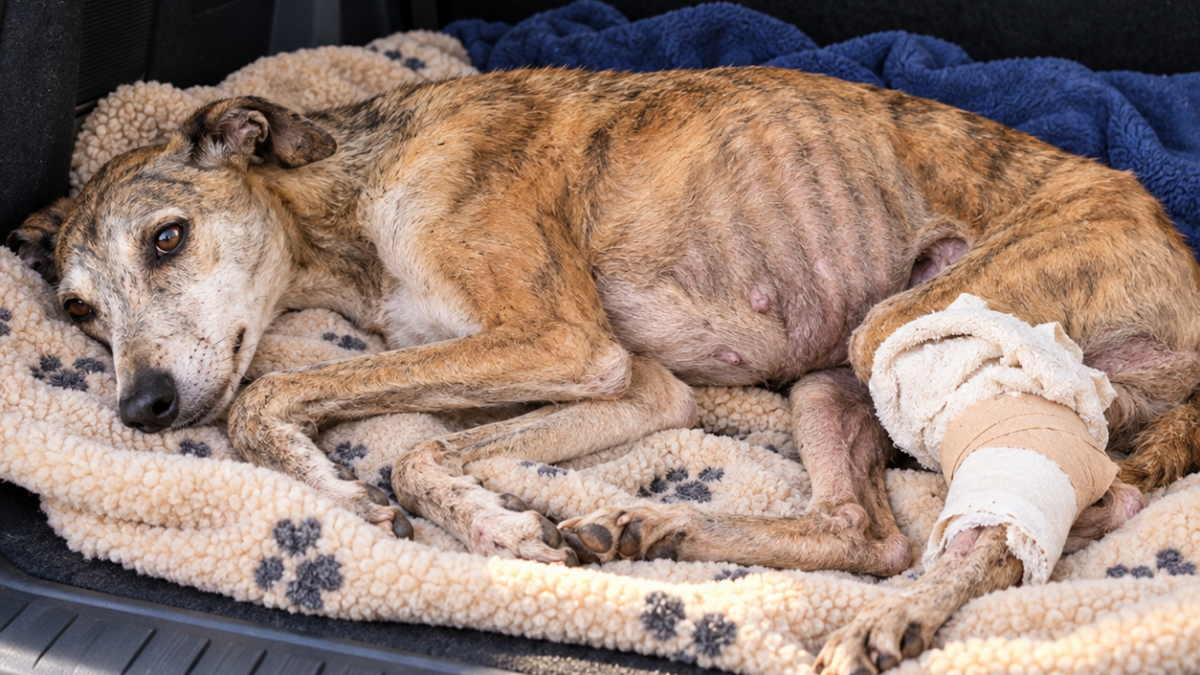
PART 2
The operating-room doors closed between us.
I stood there staring at them long after Norita disappeared.
A nurse touched my arm.
“You can sit in the waiting room.”
“I’m fine.”
“You’ve been saying that since you got here.”
“I’m still fine.”
She looked at my hands.
They were shaking.
I finally sat.
The clock above the reception desk made a soft clicking sound every time the second hand moved.
I hated that clock.
Every click felt like something being taken from us.
The veterinarian had said surgery was her only chance.
He had also made it clear that Norita might not survive anesthesia.
Her temperature was too low.
Her blood volume was depleted.
She was profoundly anemic.
Her body had almost no reserves.
And the kidney issue changed everything.
I leaned forward and pressed my palms against my face.
One of the other rescuers, Maya, sat beside me.
“You did everything you could.”
“Don’t say that.”
She looked at me.
“Why?”
“Because people say that when they’re preparing you for a bad ending.”
“I’m not.”
“Then don’t.”
She nodded.
We sat quietly.
After several minutes, she asked, “Do you think she knew we were there?”
“Yes.”
“You really think so?”
“I need to.”
Maya didn’t argue.
An hour passed.
Then another.
A nurse came out once and told us the surgeons were still working.
“Is she stable?”
“As stable as we can expect.”
That sentence stayed with me.
Not good.
Not safe.
Not improving.
As stable as we can expect.
I hated learning how much hope could fit inside such small language.
When the surgeon finally appeared, I stood so quickly my chair scraped backward.
His cap was still on.
His mask hung beneath his chin.
For one second, his face gave me nothing.
Then he said, “She made it through.”
My knees almost failed.
Maya covered her mouth.
I let out a sound somewhere between a laugh and a sob.
“The surgery worked?”
“We controlled the bleeding and removed the tissue that could not be saved.”
“Is she okay?”
His expression changed.
“No.”
The relief disappeared.
“She is alive,” he continued. “That is the victory tonight.”
I nodded.
“What happens now?”
“We support her body and see what it can do.”
“And the kidney?”
“We’re monitoring it closely.”
“Will she need a transfusion?”
“Very likely.”
“How many?”
“I can’t tell you yet.”
“When can I see her?”
“Give us time to move her into recovery.”
I sat again.
She had survived surgery.
That should have felt enormous.
It did.
But rescue teaches you not to confuse one victory with an ending.
Norita still had to wake up.
Still had to stabilize.
Still had to eat.
Still had to heal.
Still had to survive the things we hadn’t discovered yet.
About forty minutes later, a technician led me into the recovery area.
Norita was almost hidden beneath blankets.
Only her face was visible.
A warmer surrounded her.
An IV line ran into one front leg.
Another line was connected for medication.
Her breathing was shallow but regular.
I sat on a stool beside her.
“Hey.”
Her eyelids moved.
“That was a terrible first day together.”
No response.
“I’m hoping tomorrow is less dramatic.”
One ear twitched slightly.
I smiled.
“I’ll take that.”
I rested my hand near her head but did not touch her immediately.
She had spent enough time having things done to her.
When her nose shifted toward my fingers, I finally stroked her cheek.
“You’re safe.”
I had no proof she understood those words.
I kept saying them anyway.
That first night was brutal.
Her blood values fell again.
A donor was located.
The clinic prepared for a transfusion.
I stayed until the staff told me I needed to leave.
“Will someone call if anything changes?”
“Yes.”
“Anything?”
“Yes.”
“Even if it’s three in the morning?”
“Yes.”
“Promise?”
The technician smiled gently.
“Go home.”
I drove away at 1:20 a.m.
At 1:47, I called the clinic.
The night nurse answered.
“Norita?”
“Yes.”
“She’s the same.”
“Same good or same bad?”
“Same stable.”
“Okay.”
At 2:35, I called again.
“You know I’m going to tell you if something changes.”
“I know.”
“She’s still stable.”
“Thank you.”
At 3:10, I stopped myself from calling.
At 3:17, my phone rang.
I almost dropped it.
The clinic number.
“What happened?”
“She’s okay,” the nurse said quickly.
My heart restarted.
“We’re beginning the transfusion.”
“Is she tolerating it?”
“So far.”
“Can I come back?”
“No.”
“Why?”
“Because you need sleep.”
“I can sleep there.”
“You will pace.”
“I won’t.”
“You already wore a path into our waiting-room carpet.”
I almost laughed.
Almost.
“Please call me.”
“I will.”
I slept for forty minutes.
Maybe less.
By six, I was dressed.
By six-thirty, I was outside the hospital.
The doors were still locked.
A nurse arriving for her shift saw me.
“You’re early.”
“I know.”
She let me inside.
Norita had finished the first transfusion.
Her gums looked slightly less pale.
Slightly.
I stared at them anyway.
“Is that better?”
The nurse nodded.
“A little.”
“A little is good.”
“A little is excellent today.”
I sat beside Norita.
“Morning.”
Her eyes opened.
This time they moved toward my voice.
“Hi.”
Her gaze stayed on me for two seconds.
Then drifted.
That was more response than yesterday.
I smiled.
“You’re making me very easy to impress.”
Over the next forty-eight hours, we lived by numbers.
Temperature.
Heart rate.
Blood pressure.
Hematocrit.
Kidney values.
Fluid balance.
Urine output.
Every number became personal.
When one improved, I felt relief.
When one worsened, I felt my stomach turn.
The veterinarian, Dr. Carter, explained everything patiently.
“She has severe anemia.”
“I know.”
“The transfusion helps restore circulating red cells, but it doesn’t fix the reason her body is depleted.”
“So she may need another?”
“Yes.”
“And the kidney?”
“It’s functioning, but not normally.”
“Can it recover?”
“Possibly.”
“Possibly?”
“I know you want certainty.”
“I want you to tell me she’ll live.”
He looked at me.
“I can tell you we’re giving her every chance.”
That was not the sentence I wanted.
It was the honest one.
On the third day, Norita refused food completely.
We offered a recovery diet.
Warm chicken broth.
Hand feeding.
Nothing.
She smelled it.
Turned away.
Maya tried.
A technician tried.
I tried.
Nothing.
“What happens if she won’t eat?” I asked.
“We support her.”
“How?”
“If necessary, assisted nutrition.”
“She’s getting weaker.”
“I know.”
I sat beside her.
“Norita.”
Her eyes opened.
“This isn’t optional.”
No reaction.
“You have to help us.”
She blinked.
I placed a tiny amount of food near her nose.
She turned away.
I sighed.
“Okay.”
I removed it.
Dr. Carter watched from the doorway.
“You didn’t force her.”
“I wanted to.”
“But you didn’t.”
“She’s had enough things forced on her.”
He nodded.
The next day, her blood values dropped again.
Second transfusion.
By then, I knew the routine.
I knew which monitor alarm meant what.
I knew which technician would be on overnight.
I knew which chair near the recovery ward was least uncomfortable.
I knew the vending machine coffee was terrible.
I knew hope could be exhausting.
During the second transfusion, I sat on the floor and read aloud from an old magazine.
Not because I thought Norita cared about gardening.
Because I wanted her to hear a voice doing something ordinary.
“Tomatoes prefer at least six hours of sunlight,” I read.
Her ear moved.
“See? Useful information.”
Maya laughed quietly.
“Are you teaching the critically ill dog horticulture?”
“She needs hobbies.”
“You’re losing it.”
“Probably.”
Norita opened her eyes.
I lowered the magazine.
“Still here?”
She blinked.
“Good.”
Her second transfusion held longer.
The next morning, her gums looked more pink.
The numbers improved.
Not dramatically.
Enough.
Dr. Carter smiled when he read the chart.
I noticed immediately.
“You smiled.”
“I did not.”
“You did.”
“A little.”
“So something is better.”
“Her blood count is better.”
“How much better?”
“Enough that I’m cautiously encouraged.”
I sat back.
“Cautiously encouraged.”
“That is very positive language for me.”
“I’m learning.”
Days passed.
Norita remained weak.
Pain medication helped.
Antibiotics worked on the infection.
The fleas were gone.
Her body temperature stabilized.
Her kidney values fluctuated but did not collapse.
That alone felt like a gift.
But eating remained a battle.
She would accept two bites.
Then stop.
Three bites.
Stop.
A lick of food from my finger.
Then turn away.
Every calorie mattered.
One afternoon, I was sitting beside her with a plate of soft food.
“You know,” I said, “most dogs make me worry because they eat too much.”
Norita watched me.
“You’re very high-maintenance.”
Her eyes narrowed slightly.
I smiled.
“Was that judgment?”
She moved her head.
Just a little.
The next bite disappeared.
I froze.
“Did you do that on purpose?”
Another bite.
She ate it.
Then another.
I looked toward the technician.
“Don’t move.”
She stopped.
“Why?”
“She’s eating.”
The technician smiled.
“I can see that.”
“No, I mean actually eating.”
Norita took a fourth bite.
My throat tightened.
“Good girl.”
She paused.
Then took another.
It was not a full meal.
It was barely enough to cover the bottom of the dish.
But that night I drove home feeling lighter than I had in days.
The next morning she ate again.
Not much.
Enough.
Then came the third transfusion.
I remember staring at the bag and thinking how strange it was that another animal’s blood could buy Norita more time.
Somewhere, a healthy donor had arrived.
Been examined.
Given blood.
Gone home.
That donor would never know Norita.
Norita would never know the donor.
Yet part of one life was helping carry another.
I found that almost impossible to think about without getting emotional.
“You’re crying again,” Maya said.
“I am not.”
“You are literally wiping your face.”
“The air is dry.”
“In a veterinary hospital?”
“Extremely dry.”
She smiled.
By the end of the second week, Norita was stronger but still mostly quiet.
She slept.
Ate.
Received medication.
Slept again.
We celebrated any movement.
A head turn.
A deeper breath.
A paw shifting beneath her body.
She still did not attempt to stand.
Dr. Carter wasn’t surprised.
“She’s been through major trauma.”
“I know.”
“And her muscles are profoundly weak.”
“I know.”
“Recovery will take time.”
“I know.”
He looked at me.
“Then stop staring at her legs like you can intimidate them into working.”
I looked away.
“I wasn’t.”
“You were.”
I laughed.
Norita’s eyes opened.
“See?” I told her. “Even the doctor is rude now.”
Her ears moved.
That tiny reaction became another victory.
Then, almost a month after we found her, everything changed because of one small movement.
It happened early in the morning.
I had arrived with coffee.
A technician named Elena was checking Norita’s blankets.
“Morning,” I said.
Norita’s eyes opened.
I set the coffee down.
“Hi, sweetheart.”
Then she lifted her head.
Not an inch.
Not a twitch.
She lifted it fully.
Held it.
Looked at me.
Elena froze.
I froze.
Norita kept her head up.
“Did she just—”
“Yes.”
Neither of us moved.
“Norita?”
Her gaze followed my voice.
I crouched.
She held her head up for maybe six seconds.
Then lowered it.
I started crying.
Elena laughed.
“That was six seconds.”
“I know.”
“You’re crying over six seconds.”
“I know.”
“It was just her head.”
“I know.”
She handed me tissues.
By noon, everyone in the ward knew.
Norita lifted her head.
To anyone outside that room, it would have sounded absurd.
To us, it felt enormous.
Because for weeks, the world had happened around her.
Now she had moved toward it.
The next milestone came two days later.
I entered the room.
Norita’s eyes turned toward me before I spoke.
She recognized me.
I knew it immediately.
“Hi.”
Her ears lifted.
“You know me.”
A technician looked over.
“She’s been doing that.”
“Why does nobody tell me anything?”
“We assumed you noticed.”
“I’m emotionally compromised.”
That afternoon, Norita accepted food eagerly.
Not reluctantly.
Eagerly.
She finished the small portion.
Then looked at the bowl.
I stared.
“Are you asking for more?”
Her eyes stayed on the bowl.
I called for the veterinarian.
Dr. Carter appeared.
“What?”
“She wants more.”
“Good.”
“Can she have more?”
“A little.”
“How little?”
He named an amount.
“That’s insulting.”
“She has one compromised kidney and a recovering body.”
“She’s hungry.”
“That’s excellent.”
“She wants food.”
“That is also excellent.”
“Give her more.”
He laughed.
“We will.”
A few minutes later, Norita ate again.
I sat beside her, smiling like an idiot.
Her appetite became one of the first signs that her personality was returning.
She developed preferences.
Chicken?
Yes.
Certain recovery food?
Acceptable.
One expensive renal-support formula?
Deeply offensive.
Elena set it down once.
Norita smelled it and turned her face away.
“That was judgment,” Elena said.
“I told you she could do that.”
Another formula?
Approved.
Warm food?
Better.
Hand feeding?
Sometimes.
Eating from the bowl herself?
Increasingly.
Control was returning to her life.
But then recovery tested us again.
The surgical site on her injured leg began causing problems.
Inflammation.
Pain.
Delayed healing.
The damage extended farther than we had hoped.
Dr. Carter ordered new imaging.
He returned with another surgeon.
The expressions on their faces told me before they spoke.
“What is it?”
Dr. Carter pulled up the images.
“The remaining damaged tissue isn’t healing properly.”
“So what do we do?”
“We have to consider another surgery.”
I stared at him.
“No.”
“I know.”
“She barely survived the first one.”
“She’s stronger now.”
“She has one kidney.”
“Yes.”
“She needed three transfusions.”
“Yes.”
“And you want to operate again?”
“I don’t want to.”
“Then don’t.”
“If we leave the damaged tissue, she may have chronic infection and pain.”
I looked at Norita.
She was awake.
Watching us.
“What would the surgery involve?”
“Removing the remaining portion of the damaged thigh.”
I closed my eyes.
“So she loses more.”
“She loses tissue that can no longer give her a comfortable future.”
“That sounds clinical.”
“It is clinical.”
“It’s her body.”
“I know.”
He lowered his voice.
“This decision is not about what looks better. It is about pain.”
I sat beside her.
Norita lifted her head.
Her eyes were clearer now.
Present.
Alive.
The first surgery had happened when she was barely conscious.
This time she knew us.
She trusted us.
That made it harder.
“What if we wait?”
Dr. Carter shook his head.
“I wouldn’t.”
“Why?”
“Because every day she stays painful is another day she can’t move forward.”
I looked at him.
“What would you do if she were yours?”
He answered immediately.
“Surgery.”
That settled it.
The night before the operation, I stayed late.
Norita rested with her head in my lap.
She had started doing that recently.
Not every time.
Only when she chose.
I stroked the fur between her ears.
“Apparently we have to do this again.”
Her eyes closed.
“I hate it.”
Her breathing stayed slow.
“But I hate you hurting more.”
She shifted closer.
I swallowed.
“You know what’s unfair?”
Her ear moved.
“You already survived enough.”
I looked at the healing scars along her body.
“You shouldn’t have to be brave again.”
She sighed.
“But you do.”
I leaned down.
“I’m sorry.”
The next morning, she went into surgery.
Again I sat beneath the same clock.
Again I hated every click.
Again Maya sat beside me.
“This feels worse,” I said.
“Because you know her now.”
I nodded.
The first operation, I had been terrified of losing a dying dog.
This time, I was terrified of losing Norita.
There was a difference.
She had preferences now.
Expressions.
Habits.
She recognized footsteps.
She liked one blanket better than another.
She hated the renal food with the green label.
She relaxed when Elena sang badly while changing bandages.
She pressed her head into my hand when she wanted me to keep petting her.
She had become specific.
Specific animals are harder to lose.
The surgeon came out after what felt like an entire day.
“She did well.”
I closed my eyes.
“Really?”
“Yes.”
“No complication?”
“None we didn’t anticipate.”
“And the kidney?”
“Stable.”
“Pain?”
“We’re controlling it.”
“When can I see her?”
“Soon.”
This time, when Norita woke, she seemed angry.
It was the best thing I had seen.
Her eyes were sharp.
She moved her head.
She tried to reposition herself.
A technician laughed.
“She has opinions.”
“Good.”
Norita stared at us.
“You’re allowed to hate us today,” I said.
She huffed.
I smiled.
“That counts.”
The first twenty-four hours were uncomfortable.
The second day was better.
By the third, something remarkable happened.
Her pain seemed different.
Lower.
Not gone.
But the constant strain that had lived in her face was easing.
She slept deeply.
Not the unconscious exhaustion from the day we found her.
Real sleep.
Safe sleep.
The kind where her mouth relaxed and her breathing became soft.
That was when I knew the second surgery had been the right decision.
For the first time, her body wasn’t fighting damaged tissue every minute.
Healing could finally become the main job.
And once the pain eased, Norita became hungry.
Really hungry.
She ate her prescribed portion.
Then stared at Elena.
“You’re finished,” Elena said.
Norita continued staring.
“You cannot bully me.”
Stare.
“You have kidney restrictions.”
Stare.
I walked in.
“What’s happening?”
“She’s emotionally blackmailing me.”
“Good.”
“No.”
Norita looked at me.
I laughed.
“I’m not helping you.”
Her tail moved.
We both froze.
It was tiny.
One soft wag against the blanket.
Elena covered her mouth.
“Oh.”
Norita looked from her to me.
Tail.
Again.
I started crying.
Elena pointed at me.
“Dry air?”
“Exactly.”
That was the first wag.
The next day she did it twice.
Then every time I arrived.
Then for Elena.
Then for Dr. Carter, though I accused her of poor judgment.
Her tail became a gauge of confidence.
Tiny wag.
Bigger wag.
Whole-body effort.
Soon the rehabilitation team began working on balance.
Three-legged dogs often adapt beautifully.
But Norita was not starting from healthy.
She had been critically anemic.
Weak.
Hypothermic.
Immobilized.
Surgically altered twice.
She had spent weeks lying down.
Her front limbs had to become stronger.
Her remaining rear leg had to learn new responsibilities.
Her core muscles had to rebuild.
The first supported stand happened with a sling.
Two therapists positioned her carefully.
I watched from the wall.
“You ready?” one asked.
Norita had no idea what that meant.
They lifted gently.
Her front paws touched the mat.
Her remaining hind foot found the floor.
Her body trembled.
Hard.
Every muscle shook.
I held my breath.
“Good girl.”
Norita tried to sit.
The sling held her.
“Just a second.”
She stayed up.
One second.
Two.
Three.
Then lowered.
I clapped before remembering we were in a medical room.
Norita looked at me.
“What?”
I laughed.
“You stood.”
The therapist smiled.
“With help.”
“I don’t care.”
Neither did Norita.
She wanted the treat.
The next session lasted longer.
The next one included a tiny weight shift.
Then another.
We placed treats where she had to move her head slightly.
At first, balance was confusing.
She leaned too far.
Corrected.
Leaned again.
Her front legs spread wide for stability.
Sometimes she became frustrated.
One afternoon she simply lay down and refused.
The therapist offered a treat.
Norita looked away.
“Session over,” I said.
The therapist agreed.
Nobody forced her.
That mattered.
The next day she tried again.
Healing is easier when refusal is allowed.
One morning, about seven weeks after we found her, I entered the rehab room and saw Norita standing without the sling.
I stopped in the doorway.
Nobody had warned me.
Elena was crouched nearby.
Dr. Carter stood behind her.
Norita’s front legs were planted.
Her remaining back leg shook slightly.
But she was standing.
Alone.
“What are you doing?” I whispered.
Norita looked at me.
Her tail wagged.
The movement almost threw off her balance.
Elena laughed.
“Careful.”
I knelt ten feet away.
“Norita.”
Her ears came forward.
“Come here.”
She leaned.
One front paw moved.
Then the other.
Her hind leg hopped forward.
She almost tipped.
Recovered.
One step.
She stopped.
I put both hands over my mouth.
“Again.”
Another step.
Awkward.
Uncertain.
Real.
Then another.
She reached me.
I didn’t grab her.
I let her decide.
Norita pressed her head against my chest.
I held her.
Everyone in the room was crying by then.
Dr. Carter looked at the ceiling.
“You people are impossible.”
“You’re crying too.”
“Allergies.”
“In winter?”
“Very aggressive allergies.”
Norita stood for nearly fifteen seconds before sitting.
I kissed the top of her head.
“You did it.”
She looked up at me.
There is a strange cruelty in how ordinary miracles can look.
A dog standing.
A dog taking three steps.
Nothing dramatic.
No crowd.
No music.
No fireworks.
But those three steps contained every transfusion.
Every sleepless night.
Every surgery.
Every bandage.
Every meal.
Every minute we had asked her to stay.
After that, progress accelerated.
Three steps became five.
Five became a trip across the rehabilitation room.
Then a short walk down the hall.
We introduced a padded harness for support.
Norita learned quickly.
Three-legged movement became less strange.
She shifted her center of gravity.
Strengthened her shoulders.
Learned how to turn.
Learned how to stop.
Learned how to sit without falling sideways.
We added soft surfaces.
Then grass.
Grass was difficult at first.
Uneven ground demanded more balance.
The first time we carried her outside and set her down, she froze.
Sunlight touched her face.
Wind moved through her fur.
She lifted her nose.
I wondered what she smelled.
Soil.
Leaves.
Other dogs.
Cars.
Food from a nearby kitchen.
Life.
“Want to try?”
She looked at me.
Then took one step.
The grass bent under her paw.
Another.
She stumbled.
Recovered.
Then kept going.
No one had to ask.
She wanted forward.
Norita made it six yards before lying down.
I sat beside her.
She lifted her face into the sun.
That image became the one I remembered whenever things became hard.
Not the blood.
Not the cold ground.
Not the missing leg.
Norita in sunlight.
Alive enough to enjoy it.
Her personality emerged with strength.
She was quieter than some rescue dogs.
Not timid.
Observant.
She studied people.
If someone approached too fast, she watched.
If they sat down calmly, she often came closer.
She loved cheek scratches.
Disliked being fussed over by too many people.
Adored warm blankets.
Despised rain.
Loved chicken.
Still hated the green-label kidney food.
And she had one habit that made everyone laugh.
She stole towels.
Not with Rusty-level commitment, as another rescuer once joked.
But enough.
If a towel was left within reach, Norita would drag it into her bed.
We would return it.
She would steal it again.
Finally Elena gave her one.
“This is yours.”
Norita slept on it.
The next day she stole a different one.
“She doesn’t understand ownership,” Elena said.
“She understands perfectly,” I replied. “She just disagrees.”
Her lab work improved.
The anemia stabilized.
Her kidney values remained imperfect but manageable.
Dr. Carter built a long-term plan.
Diet.
Hydration.
Regular monitoring.
No unnecessary medications.
Careful pain management.
Frequent blood checks.
“She’ll always need monitoring,” he told me.
“But she can live normally?”
“Normal will look like Norita.”
I smiled.
“That sounds good.”
“It means we stop comparing her to a four-legged dog with two kidneys.”
“Fair.”
“She has one kidney that works imperfectly, three legs, and a history of severe trauma.”
“I know.”
“But she also has a good appetite, improving bloodwork, increasing strength, and an extremely stubborn personality.”
“Excellent prognosis, then.”
He laughed.
“Stubborn helps.”
Months passed.
The care center became home.
We discussed adoption.
We also discussed whether moving her made sense.
Norita had complicated medical needs.
She knew the staff.
She trusted the environment.
The center had resources for continued monitoring.
Potential adopters expressed interest, but many became uncertain once they understood the kidney care and follow-up requirements.
I couldn’t blame them.
Love was not enough.
Norita needed consistency.
One family visited twice.
They were kind.
Experienced.
But when we reviewed possible emergency expenses and ongoing testing, they hesitated.
The mother finally said, “I’m afraid we’ll fail her.”
I respected that.
Better an honest no than an emotional yes followed by disaster.
Norita remained with us.
And gradually I stopped thinking of that as a failure.
A forever home does not always need a suburban living room.
Sometimes home is the place where everyone already knows what your bloodwork means.
Where three people recognize your different barks.
Where the overnight staff knows which blanket you prefer.
Where the veterinarian sees you in the hallway and says, “There’s my most expensive patient.”
Where you know you belong.
Norita belonged.
One afternoon, nearly six months after her rescue, I was reviewing paperwork when Elena ran into the office.
“Come outside.”
“What happened?”
“Nothing.”
“You’re running.”
“Just come.”
I followed.
Norita stood at the far end of the fenced exercise yard.
No harness.
No support sling.
She looked at me.
“What?”
Elena pointed.
“Call her.”
I knelt.
“Norita!”
Her ears lifted.
Her tail wagged.
Then she started moving.
Not walking.
Running.
It was an uneven three-legged run.
More like a series of fast, determined hops.
But it was running.
Straight toward me.
Her ears bounced.
Her mouth opened.
Her tail flew.
I laughed so hard I couldn’t breathe.
Norita reached me and nearly knocked herself over trying to stop.
I caught her gently.
“You absolute lunatic.”
She licked my chin.
Elena was crying.
Again.
“Do you remember the ground?”
I nodded.
We both remembered.
Cold.
Bleeding.
Barely conscious.
Now she had crossed a yard because she felt like it.
That was when the idea of revenge finally changed for me.
In the beginning, I had wanted someone to blame.
I had wanted a name.
A person.
An explanation.
We had reported the case.
Authorities had asked questions.
People in the area were interviewed.
No one could establish with certainty exactly what had happened to Norita.
We never learned whether the catastrophic injury had come from traffic, machinery, a trap, deliberate cruelty, or some combination of injury and prolonged neglect afterward.
That uncertainty made me furious.
Someone must have known she was suffering.
Someone must have seen her before we did.
Someone could have helped sooner.
For weeks, I wanted an answer.
Then I wanted punishment.
Then I wanted anything that made what happened feel balanced.
But watching Norita run across that yard, I understood something.
Some stories never give you a villain you can put in a courtroom.
Sometimes the only thing you can defeat is the ending that seemed inevitable.
Death had been waiting for Norita on that cold ground.
She outran it.
Pain had taken part of her body.
She adapted.
Anemia had emptied her strength.
Her body rebuilt.
One damaged kidney threatened everything.
She learned to live carefully.
Her leg was gone.
Her future wasn’t.
That became her revenge.
Not against a person we could name.
Against every terrible prediction written into the condition we found her in.
She was supposed to disappear.
She didn’t.
A year after the rescue, Dr. Carter walked into the care center carrying a file.
“Annual check.”
“Don’t sound so excited.”
“I love paperwork.”
“No veterinarian has ever said that honestly.”
Norita came down the hall.
Her gait was efficient now.
Three legs.
No hesitation.
Dr. Carter crouched.
“There she is.”
Norita approached.
Smelled his pocket.
He sighed.
“Yes, I brought treats.”
Her tail wagged.
“You remember me only for food.”
“That is correct.”
The examination took longer because of her kidney monitoring.
Bloodwork.
Urine testing.
Weight.
Blood pressure.
Muscle condition.
When the results returned, I stood beside him.
“Well?”
“She’s stable.”
I exhaled.
“How stable?”
“Very.”
“Kidney?”
“Still compromised. Not significantly worse.”
“Blood?”
“Good.”
“Anemia?”
“No major concern today.”
“Weight?”
“Good.”
“Anything bad?”
He looked at me.
“She’s stolen three treats from my pocket.”
I laughed.
“Medical emergency.”
He closed the file.
“She’s doing better than I would have predicted the day she arrived.”
I stared at Norita.
She was licking crumbs from the floor.
“What did you predict?”
“I tried not to.”
“No.”
He hesitated.
“You really want to know?”
“Yes.”
“I thought there was a strong chance she wouldn’t survive the first night.”
I already knew that.
Hearing it still hurt.
“And after surgery?”
“I thought the kidney might fail.”
“And after the transfusions?”
“I thought infection might take her.”
“And after the second surgery?”
“I worried she wouldn’t regain useful mobility.”
I looked at Norita.
She had found another crumb.
“So basically she ignored you.”
He smiled.
“Repeatedly.”
“Good.”
“I’m happy to be wrong.”
A few days later, I took Norita outside.
The same yard where she had first learned to move on grass.
She walked to her favorite sunny patch.
Then lowered herself carefully.
I sat beside her.
A year.
I thought about the first day.
The cold body.
The blood.
The limp weight in my arms.
The sentence:
Without surgery, she will not survive.
I looked at her now.
Healthy coat.
Bright eyes.
Strong shoulders.
One back leg.
One complicated kidney.
A ridiculous amount of attitude.
“You know what everyone got wrong?”
Her ears shifted.
“They thought losing part of you meant becoming less.”
She looked toward me.
“You became more trouble.”
Tail wag.
“Exactly.”
We began using Norita’s story to train new volunteers.
Not the dramatic version.
The practical one.
I showed them the intake notes.
The stabilization protocol.
The importance of hypothermia care.
Why severely malnourished animals cannot simply be fed without planning.
Why anemia needs monitoring.
Why kidney compromise changes medication decisions.
Why pain control matters.
Why second surgeries are not failures.
Why rehabilitation requires patience.
Why three-legged dogs should be allowed to develop their own gait instead of being constantly corrected.
And why an animal that does not resist is not automatically trusting you.
That final lesson mattered most.
One new volunteer asked, “How do you know when they trust you?”
I looked across the room.
Norita was sleeping on a blanket.
“When they start making demands.”
He laughed.
“I’m serious.”
“What kind?”
“They refuse food they don’t like. They walk away when they’ve had enough. They come toward you because they want contact. They steal your towel and expect to keep it.”
Norita opened one eye.
The volunteer smiled.
“So attitude is good?”
“Attitude means they believe they’re allowed to have preferences.”
He nodded slowly.
I never forgot that conversation.
Norita’s greatest transformation wasn’t standing.
Or running.
Or surviving surgery.
It was expectation.
At first, she expected nothing.
Not food.
Not safety.
Not comfort.
Not tomorrow.
Later, she expected breakfast.
She expected Elena at seven.
She expected sun in the east courtyard.
She expected chicken after blood draws.
She expected her favorite blanket to be clean.
She expected us to listen when she had enough.
That expectation was proof of healing.
A dog who expects something believes the future exists.
Two years after we found her, Norita developed another medical scare.
Her appetite dropped.
She became quieter.
Because of her kidney, we never ignored changes.
Bloodwork showed values had worsened.
I felt the old fear return immediately.
Dr. Carter reviewed the results.
“Don’t panic.”
“I’m not.”
“You are.”
“What happened?”
“Likely dehydration combined with a minor gastrointestinal issue.”
“Kidney failure?”
“Not necessarily.”
“Not necessarily is not comforting.”
“We’ll treat her and repeat labs.”
Norita stayed overnight for fluids.
I sat beside her.
Again.
Same kind of room.
Different dog.
The first time she had lain in a hospital, she had almost no strength.
Now she was angry because the nurse would not give her a second treat.
“Apparently you’re dying,” I told her.
She stared.
“Very convincing.”
She recovered quickly.
Repeat values improved.
Dr. Carter handed me the results.
“See?”
“I was calm.”
“You called four times overnight.”
“Professional monitoring.”
“You don’t work overnight.”
“I was monitoring from home.”
He shook his head.
Norita wagged.
The scare reminded me of something important.
Her rescue had not made her immortal.
No rescue does.
Saving an animal doesn’t guarantee a perfect life.
It creates time.
Time for ordinary problems.
Time for age.
Time for small illnesses.
Time for bad weather.
Time for naps.
Time for birthdays we invent because we don’t know the real one.
Time is the gift.
On Norita’s third rescue anniversary, we gave her a small dog-safe cake.
Nothing elaborate.
We were still careful about her kidney diet.
Dr. Carter supervised the ingredients like a federal investigator.
“You’re taking this too seriously,” Elena told him.
“One kidney.”
“We know.”
“Compromised.”
“We know.”
“Then respect the cake protocol.”
I laughed.
Norita waited beneath the table.
She knew something was coming.
When we finally gave her a small piece, she ate it in three seconds.
Then stared at us.
“That’s all,” Elena said.
Stare.
“Doctor’s orders.”
Stare.
Dr. Carter pointed at himself.
“Don’t look at me.”
Norita looked at him.
He lasted nine seconds.
Then gave her another tiny bite.
“Medical authority is collapsing,” I said.
“Quiet.”
Everyone laughed.
That evening, after most people left, I sat alone with Norita.
She rested beside my chair.
I had kept one object from the first day.
Not something from her injury.
Not blood-stained fabric.
Not medical waste.
A simple corner of the first clean blanket we wrapped around her after we found her.
The blanket itself had been discarded later for hygiene reasons, but someone had cut away a clean section before it was thrown out.
For years, I kept it in a small envelope.
I took it out that night.
Norita smelled it.
No reaction.
Of course not.
“You don’t remember.”
She looked at me.
“Good.”
I put it away.
I had spent a long time believing memory was important.
Remember where she came from.
Remember what she survived.
Remember the pain.
But Norita didn’t need to carry history for us.
We could remember.
She could live.
As she grew stronger, people who met her for the first time sometimes reacted with pity.
“Oh, poor thing.”
I started correcting them.
“She’s not poor anything.”
They usually meant well.
But Norita didn’t live like a tragedy.
She raced to breakfast.
Demanded walks.
Stole laundry.
Sunbathed.
Barked at delivery carts.
Had strong opinions about veterinarians.
She was disabled, yes.
Medically complicated, yes.
But pity was too small for her.
One visitor asked, “Doesn’t she know she only has three legs?”
I smiled.
“She knows exactly how many legs she has.”
“What I mean is, does she feel different?”
“From what?”
He paused.
I continued.
“She wakes up as Norita. She doesn’t wake up comparing herself to an imaginary version with four legs.”
He nodded.
That question stayed with me.
Humans are often the ones who mourn the body an animal no longer has.
Animals tend to work with the body that remains.
Norita did.
Beautifully.
She learned efficient turns.
She avoided slippery floors.
She paused before stairs.
She built huge strength through her shoulders.
She rested when tired.
She never apologized for any of it.
One summer morning, I watched her move across the yard.
Fast.
Balanced.
Confident.
A new volunteer beside me said, “I expected her to struggle more.”
“She did.”
“When?”
“Before you met her.”
Norita reached the fence.
Turned.
Came back.
“She worked for every easy step you’re looking at.”
That was the truth.
Recovery becomes invisible once it succeeds.
People see the dog running.
They don’t see the weeks of supported standing.
They see the healthy coat.
They don’t see the fleas.
They see appetite.
They don’t see hand-fed bites.
They see three legs functioning.
They don’t see the second surgery.
They see life.
They don’t see how close death stood.
I saw all of it.
That was why every ordinary day still felt extraordinary.
Years passed.
Norita aged.
White appeared around her muzzle.
Her pace slowed slightly.
We adjusted her exercise.
Added joint support safe for her kidney.
Used rugs on slick floors.
Added ramps where necessary.
The young dog who had once fought for every breath became an older dog with routines.
Morning walk.
Breakfast.
Sun.
Nap.
Lunch sniff around the courtyard.
Afternoon greeting at the office.
Dinner.
Blanket theft.
Sleep.
It was everything I had wanted for her without knowing how to say it.
Ordinary aging.
One winter morning, I found her asleep near a window.
Sunlight stretched across the floor.
Her body lay completely relaxed.
I stood there for several minutes.
Elena came up behind me.
“You’re doing it again.”
“What?”
“Staring.”
“She’s asleep.”
“I can see that.”
“She sleeps deeply now.”
“She has for years.”
“I know.”
Elena stood beside me.
“Still surprises you?”
“Yes.”
“Why?”
I thought about the first day.
“Because she couldn’t even rest safely when we found her.”
Elena nodded.
Norita snored softly.
We both smiled.
At some point, the story stopped being about what Norita had lost.
It became about what she gained.
Time.
Comfort.
Trust.
Routine.
People.
Choice.
A place in the world.
The revenge the younger version of me wanted would have required someone to suffer.
Norita’s version was better.
She made suffering irrelevant.
She built a life so full that the beginning could no longer dominate the story.
The leg was gone.
The pain was not in charge.
The kidney was damaged.
It did not erase joy.
The blood loss had nearly killed her.
It did not define the years that followed.
The body on the cold ground had looked almost finished.
It wasn’t.
That was the answer.
Not rage.
Not punishment.
Not a villain dragged into a dramatic confrontation.
The answer was continuation.
One more breath.
One more transfusion.
One more bite.
One more surgery.
One more attempt to stand.
One more step.
Then thousands of steps after that.
One autumn afternoon, long after Norita had become part of the center’s family, we hosted a small rehabilitation workshop.
Veterinary students came to observe mobility exercises.
Norita was included because she was one of our best examples of successful tripod adaptation.
Dr. Carter stood before the group.
“This dog was once considered extremely unlikely to survive her initial presentation.”
Several students looked at her.
Norita was busy smelling someone’s backpack.
“She arrived hypothermic, severely anemic, actively bleeding, with significant tissue loss, parasitic burden, and renal compromise.”
Norita found a snack wrapper.
A student laughed.
Dr. Carter continued.
“She required multiple transfusions, surgery, additional revision surgery, intensive nutritional management, and prolonged rehabilitation.”
Norita tried to stick her head farther into the backpack.
I pulled her gently away.
“She’s also a thief,” I said.
The students laughed.
Dr. Carter smiled.
“Yes. That may be her most stable diagnosis.”
Then he demonstrated how Norita distributed weight.
How her shoulder muscles had adapted.
How she balanced during turns.
How we protected joints from overuse.
One student asked, “What was the hardest part?”
Dr. Carter looked at me.
I answered.
“Waiting.”
“Waiting?”
“Waiting to see whether each small intervention worked. Waiting for blood values. Waiting for her to eat. Waiting after surgery. Waiting for her to stand. Waiting without forcing the next step.”
The student nodded.
Another asked, “What was the most important treatment?”
“That’s impossible to answer medically,” I said. “She needed all of it.”
Dr. Carter agreed.
Then I added, “But emotionally?”
They looked at me.
“Giving her time.”
Norita walked toward me.
I touched her head.
“She had almost none left when we found her.”
After the workshop, the students left.
Norita climbed onto her bed.
I sat beside her.
“You were educational today.”
She sighed.
“Very prestigious.”
Eyes closed.
“Internationally respected.”
Sleep.
“Completely unimpressed.”
That was Norita.
She never cared what story humans were telling about her.
She cared whether dinner was late.
That grounded me.
On difficult rescue days, I sometimes went to sit beside her.
Not because she knew what had happened.
Because she didn’t.
A cruelty case.
A puppy lost despite treatment.
A senior dog surrendered after twelve years.
Those days made the world feel heavier.
Norita would be asleep.
Or eating.
Or trying to steal something.
And I would remember:
The worst moment is not always the final moment.
That lesson came from her.
Once, after we lost another dog at the clinic, I sat on the floor beside Norita’s bed.
I didn’t speak.
She got up.
Walked over.
Pressed her head against my shoulder.
Maybe she sensed grief.
Maybe she just wanted attention.
I didn’t need to know.
I wrapped one arm around her.
“You were supposed to die too.”
Her tail moved.
“That sounds terrible.”
She leaned closer.
“I’m glad you didn’t listen.”
The hardest truth in rescue is that not every Norita survives.
We can do everything.
Still lose.
That makes the survivors dangerous to the heart.
You want them to become proof that every story can turn around.
They can’t.
Norita was proof only of her own story.
And that was enough.
Her body had been closer to death than anyone wanted to admit.
She survived.
Not because survival was guaranteed.
Because a fragile series of things went right.
She was found.
She was transported.
Bleeding controlled.
Warmed.
Transfused.
Operated on.
Fed.
Monitored.
Operated on again.
Rehabilitated.
Loved.
One broken link in that chain and the ending might have been different.
That understanding made me grateful rather than certain.
On the fifth anniversary of her rescue, we did not throw a large celebration.
Norita was older.
Crowds tired her.
We gave her the things she actually enjoyed.
A slow morning.
Warm sun.
A favorite meal.
A new blanket.
A short walk.
Chicken approved by Dr. Carter.
Elena sat on the grass.
I sat beside her.
Norita lay between us.
“Five years,” Elena said.
“Hard to believe.”
“I remember her first night.”
“So do I.”
“I thought we’d lose her.”
“So did I.”
Norita lifted her head.
“Sorry,” Elena said. “We’re talking about you.”
Norita yawned.
“I think she forgives us.”
I rubbed her shoulder.
“She doesn’t care.”
“That might be healthier.”
We sat quietly.
After a while, Norita stood.
She walked across the yard.
Slowly now.
Age had changed her speed.
But the balance remained.
Three legs.
Steady.
She stopped in her favorite patch of sun.
Turned.
Lay down.
Same place.
Same habit.
Different year.
I watched her close her eyes.
“She always finds the sun,” Elena said.
“Yes.”
That sentence stayed with me.
She always finds the sun.
When I think of Norita now, I do not first see the wound.
I do not first see the blood.
I do not first see the cold ground.
Those memories still exist.
But they are no longer strongest.
I see her moving through the care center with one back leg and complete confidence.
I see her standing for the first time while everyone held their breath.
I see the first tail wag.
I see her stealing towels.
I see her judging food.
I see her running across the yard.
I see her asleep in a sunbeam.
I see the dog she became because she lived long enough to become someone other than a patient.
That was what we had fought for.
Not merely survival.
Identity.
There is a moment in emergency rescue when everything narrows.
You stop thinking about tomorrow.
You think about the next minute.
The next breath.
The next heartbeat.
With Norita, we spent so long inside that narrow world that when the future finally opened, it felt enormous.
First tomorrow.
Then next week.
Then next month.
Then next year.
Then five years.
Time expanded.
Norita expanded with it.
She became more than the dog we found.
More than the surgery.
More than the kidney.
More than the missing leg.
More than the anemia.
That was the ending I wanted most.
One evening, I stayed late.
The center was quiet.
Norita was resting on her bed.
I sat beside her.
Her breathing was slower now that she was older.
Still steady.
I remembered counting breaths in the rescue vehicle.
One.
Two.
Three.
Pause.
Fear.
Another breath.
I smiled.
“You made me count a lot of these.”
Norita opened one eye.
“Thousands.”
Eye closed.
“Probably millions.”
She sighed.
I placed my hand lightly against her ribs.
Rise.
Fall.
Rise.
Fall.
No panic.
No emergency.
Just breathing.
That might be the most beautiful difference in her whole story.
At the beginning, every breath felt borrowed.
Now it belonged to her.
I sat there until the room grew dark.
Before leaving, I adjusted the blanket around her.
She hated when I did that unnecessarily.
Her eye opened.
“Sorry.”
She huffed.
“I know.”
I stood.
At the door, I turned back.
Norita was already asleep again.
Safe.
Warm.
Full.
Loved.
Years earlier, someone could have looked at her on that cold ground and believed the kindest thing was to accept that she was finished.
I am grateful we didn’t.
Not because refusing to give up is always medically right.
Sometimes compassion means letting go.
But that day, Norita still had a path forward.
Narrow.
Dangerous.
Expensive.
Painful.
Uncertain.
Still a path.
She took it.
First in our arms.
Then on a stretcher.
Then through surgery.
Then through transfusions.
Then supported by a sling.
Then standing.
Then three steps.
Then across a room.
Then across grass.
Then running.
Eventually, she no longer needed anyone to carry her.
That is the part I love most.
We found Norita at a moment when she could not save herself.
We carried her until she could.
After that, she did the rest.
Her revenge against everything that nearly ended her was not dramatic.
She never needed revenge to be dramatic.
It was breakfast.
Sunlight.
A stolen towel.
A favorite blanket.
A tail wag.
A hundred ordinary mornings.
Thousands of confident three-legged steps.
A life that kept going long after everyone feared it would stop.
Norita lost a leg.
She lost blood.
She lost strength.
She came frighteningly close to losing everything.
But she never lost the possibility of another day.
We gave her the chance to reach it.
Then another.
Then another.
And eventually those days became a life.
Whenever someone sees her now and says, “Poor Norita,” I still correct them.
Not harshly.
Just clearly.
“No.”
They usually look confused.
I point toward her.
Maybe she is sleeping in the sun.
Maybe she is walking toward dinner.
Maybe she is staring at someone who has food.
Maybe she has stolen another towel.
“Look at her.”
They do.
Then they understand.
Norita is not the dog lying helpless on the cold ground anymore.
She is the dog who got up.
And for everyone who stood beside her through the blood, the surgeries, the transfusions, the fear, the setbacks, and the rehabilitation, there could not have been a more satisfying ending.
The world took one of her legs.
Norita took her life back.
One step at a time.




