PART 2: Someone Dumped a Dying White Kitten in My Garden—Then I Learned Why They Chose My House
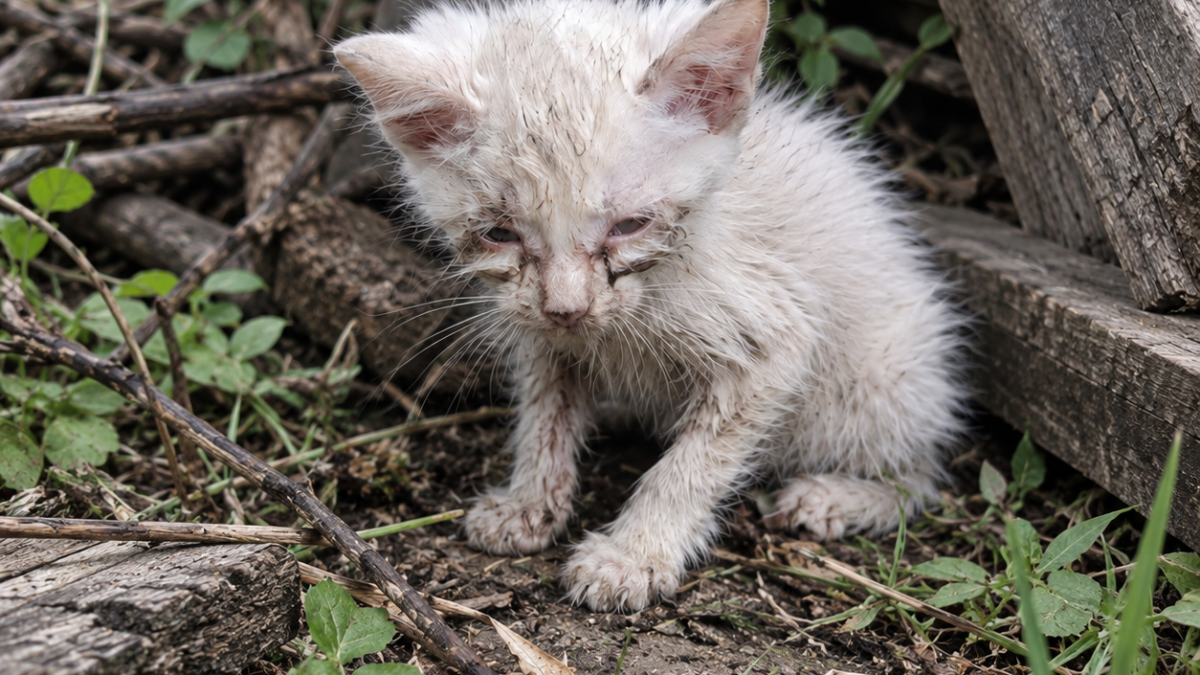
Someone left a dying white kitten in my backyard and disappeared before sunrise.
By the time I found him, he was so weak that when I lifted him from the wet ground, he simply pressed his face into my palm and closed his eyes.
I thought the worst part of his story was already behind him—but weeks later, I discovered there was a reason he had been left specifically at my house.
My name is Rebecca Miller, and until that morning, the most dramatic thing that had ever happened in my garden was a raccoon stealing tomatoes.
I lived alone in a small house outside Lexington, Kentucky, with a narrow backyard, an aging apple tree, and more vegetables than one person reasonably needed.
That morning was cool and quiet.
Late September.
The sun had only started clearing the trees when I stepped outside carrying a watering can.
Everything looked normal.
Dew sparkled on the grass.
Birds moved through the apple branches.
A light breeze shifted the tomato vines.
Then I heard something.
At first, I thought it was the rusty gate at my neighbor’s property.
A thin squeak.
Then silence.
I continued toward the garden.
The sound came again.
Not metal.
A cry.
Tiny.
Weak.
Almost too soft to hear.
I stopped.
“Hello?”
Ridiculous thing to say in an empty backyard.
Another sound.
This time from the far corner near a pile of old lumber I had been meaning to remove for months.
I set down the watering can.
The moment I stepped around the boards, my stomach dropped.
A kitten lay in the dirt.
White.
Or at least he had once been white.
His coat was gray with dust and mud.
There were scratches along both ears.
One eye was swollen almost completely shut.
His sides were so hollow that I could count his ribs from several feet away.
He tried to stand when he heard me.
His front legs shook.
One step.
Then another.
He looked directly toward my voice with one bright blue eye.
He opened his mouth.
Barely a sound came out.
Then he collapsed.
“Oh my God.”
I dropped to my knees.
He weighed almost nothing when I picked him up.
Far too little for a kitten who looked maybe eight or nine weeks old.
He didn’t fight.
Didn’t scratch.
Didn’t even struggle.
Instead, he pressed himself against my hand and closed his eyes.
That frightened me more.
Animals who feel strong enough to fight still believe they have options.
This little one had none left.
I carried him inside.
The first thing I gave him was water.
I placed a shallow bowl in front of him.
For several seconds he stared at it as though he didn’t understand.
Then he drank.
Too fast.
I pulled the bowl away after he coughed.
“Slowly.”
He stared at me.
“I know you’re thirsty.”
I offered smaller amounts.
Then food.
I had no cat food, so I called my neighbor, Linda, who owned three cats.
She arrived ten minutes later carrying canned kitten food, towels, and the expression of someone ready to commit a felony.
“Who did this?”
“I don’t know.”
“He didn’t climb your fence looking like that.”
“I know.”
The kitten attacked the food.
Not ate.
Attacked.
His entire body trembled as he swallowed.
Every few bites, he looked up as though expecting the bowl to disappear.
Linda sat beside me on the kitchen floor.
“He’s used to food.”
I looked at her.
“What?”
“He knows a bowl.”
That thought made my anger colder.
This wasn’t a feral kitten born outdoors.
Someone had cared for him.
At least once.
Someone had allowed him to become comfortable with people.
Then somebody had let him starve.
After eating, the kitten curled onto an old towel near my heater.
Within seconds, he was asleep.
For almost the entire day, he barely moved.
Sometimes his legs twitched.
Sometimes he made small sounds in his sleep.
I sat nearby working on my laptop and watching his chest rise.
Every few minutes, I checked again.
Still breathing.
Still there.
That evening, Dr. Elena Foster examined him at the emergency veterinary clinic.
Dehydration.
Severe malnutrition.
Eye infection.
Fleas.
Intestinal parasites.
Old bruising along his side.
Dr. Foster gently palpated his abdomen.
The kitten didn’t resist.
“He’s lucky,” she said.
“Lucky?”
I couldn’t hide the disbelief in my voice.
She looked at me.
“Lucky you heard him.”
My throat tightened.
“How close?”
Dr. Foster was quiet for a moment.
“Another day or two without food and fluids?”
She shook her head.
“We might be having a very different conversation.”
I looked at the kitten.
His one open blue eye followed my voice.
Then he leaned into my fingers.
That was the moment I made a decision I had absolutely not planned to make.
“What do I need to do to keep him alive?”
PART 2
Dr. Foster smiled.
Not a big smile.
The tired kind veterinarians give when they realize an animal has just found someone willing to become responsible for him.
“First,” she said, “we stabilize him.”
I nodded.
“And then?”
“Then we see who he becomes.”
I looked down at the kitten.
He was so thin that his head seemed too large for his body.
“Does he have to stay here?”
“Tonight, yes.”
My stomach twisted.
I had known him for less than twelve hours.
Still, leaving felt wrong.
Dr. Foster must have noticed.
“You can visit tomorrow morning.”
“I’ll be here when you open.”
She laughed softly.
“I believe you.”
Before leaving, I touched the top of his head.
“Don’t die.”
Dr. Foster raised an eyebrow.
“Excellent bedside manner.”
“I panicked.”
The kitten gave a tiny rasping meow.
I decided that counted as a promise.
## 1
I slept terribly.
At 2:00 a.m., I woke convinced the clinic would call.
At 3:30, I checked my phone.
At 5:15, I gave up and made coffee.
The hospital opened at seven.
I arrived at 6:48.
Dr. Foster found me outside.
“You know normal people wait until we unlock the door.”
“Is he alive?”
Her expression softened.
“Yes.”
I almost cried.
Inside, the kitten looked terrible.
But slightly less terrible.
His fluids had helped.
His temperature was normal.
He had eaten twice.
The swelling around his eye had started responding to medication.
“He hissed at a technician,” Dr. Foster said.
I smiled.
“Good.”
“Very good.”
Anger requires energy.
I was beginning to appreciate anger.
We discussed treatment.
Parasite medication.
Antibiotics.
Eye drops.
Small frequent meals.
Monitoring.
Isolation from other animals.
I signed forms.
Paid a bill large enough to make me stare at the number twice.
Then I brought him home.
On the drive, I decided he needed a name.
“Snowball?”
The kitten stared toward my voice.
“No.”
“Ghost?”
Nothing.
“Marshmallow?”
He sneezed.
“Correct. Terrible.”
At a red light, sunlight came through the windshield and hit his face.
His coat, where clean, looked almost silver-white.
One blue eye watched me.
“Finn.”
The kitten blinked.
“I don’t know why.”
Another blink.
“Finn it is.”
## 2
Finn spent his first week living in my guest bathroom.
It was the safest room.
Easy to clean.
Warm.
No places to fall.
I put down blankets, a low litter box, food, water, and a cardboard box with a towel inside.
He chose the cardboard box over the expensive cat bed Linda immediately bought for him.
“Of course,” she said.
“Cats have principles.”
His recovery wasn’t dramatic.
There was no morning when he suddenly became healthy.
It happened in fractions.
He stood longer.
Ate slower.
Stopped coughing when he drank.
His eye opened.
He began grooming his front paws.
On day five, he attacked my shoelace.
I almost applauded.
By the end of the second week, the kitten who had collapsed in my garden was running from one side of the bathroom to the other.
By week three, he graduated to the hallway.
That was when I discovered Finn had absolutely no gratitude.
He climbed curtains.
Knocked over a lamp.
Stole chicken.
Attacked my ankles.
One morning, he dragged a roll of toilet paper through three rooms and looked proud.
Linda came over.
“This is the dying kitten?”
“Apparently he died and was replaced by a criminal.”
Finn jumped onto the table.
Linda smiled.
“He looks good.”
He did.
The ribs were disappearing.
His coat was becoming truly white.
Both eyes were open.
And I finally noticed how unusually blue they were.
Bright.
Almost icy.
Beautiful.
That detail would matter later.
## 3
The question remained:
Who had put him in my yard?
For the first few days, I assumed someone had simply chosen a random house.
Mine had a low wooden fence along the alley.
Easy enough to open.
Maybe they thought I’d find him.
Maybe they didn’t care whether I did.
Then Linda asked:
“Do you have cameras?”
I shook my head.
“My doorbell camera only sees the front.”
“What about neighbors?”
That started everything.
The house behind mine belonged to Mr. Dawson, a retired teacher with three exterior cameras because someone had stolen tools from his garage the year before.
We went over.
He liked Finn immediately.
“Pretty thing.”
“He was less pretty when I found him.”
Mr. Dawson pulled up the recordings from the night before.
The camera facing his back gate caught part of my alley.
At 4:12 a.m., headlights appeared.
A dark SUV stopped.
The image wasn’t sharp.
A person got out.
Hood up.
They walked toward my gate carrying something.
Stayed out of frame for thirty-eight seconds.
Returned without it.
Drove away.
My skin went cold.
“Can you see the plate?”
Mr. Dawson zoomed.
Too blurry.
“What about the person?”
No face.
But something else showed.
A decal on the rear window.
A small paw print with lettering.
I leaned closer.
Mr. Dawson paused the video.
The words were distorted.
But readable.
**BLUE RIDGE PERSIANS**
Linda whispered:
“Oh.”
I stared.
“What is Blue Ridge Persians?”
She looked at me.
“A breeder.”
## 4
The business wasn’t far.
Twenty-five minutes outside town.
They advertised Persian and long-haired mixed kittens online.
Their social media pages were polished.
Clean kittens.
Ribbon collars.
Soft blankets.
Families smiling.
I searched backward.
Two months.
Three.
Then I found the photograph.
A white mother cat lying beside four kittens.
Three gray.
One white.
The white one had bright blue eyes.
Caption:
**Luna’s summer litter. Deposits opening soon.**
My heart began pounding.
The kitten looked like Finn.
Not similar.
Finn.
Same faint gray patch behind one ear.
Same blue eyes.
Same face.
I checked the comments.
Someone had asked:
**Is the white male available?**
Blue Ridge replied:
**Pending evaluation.**
Two weeks later, another post showed only three kittens.
No white one.
I called Dr. Foster.
“Can a breeder identify a kitten from photos?”
“Sometimes.”
“Could Finn be Persian?”
“Persian mix, possibly. His facial structure isn’t extreme.”
“What happened?”
I explained.
Dr. Foster became quiet.
“Rebecca, don’t contact them directly yet.”
“Why?”
“Because if they abandoned him, you want documentation before they start deleting things.”
That was good advice.
I hated it.
I wanted confrontation.
Instead, I took screenshots.
Every post.
Every comment.
Every date.
Then I called animal control.
## 5
Officer Melissa Grant met me the next morning.
Finn climbed into her lap during the interview.
Traitor.
She scratched his head while I showed the video.
“This establishes somebody associated with that vehicle stopped near your property.”
“It’s their decal.”
“Likely.”
“And Finn appears in their litter.”
“Likely.”
“You say likely a lot.”
“Because likely is not proof.”
I hated responsible people.
She continued.
“Did you ever contact this breeder?”
“No.”
“Do you know them?”
“No.”
“Any reason they’d choose your house?”
That question stopped me.
“No.”
“Think.”
“I don’t.”
“Do you volunteer with animals?”
“No.”
“Work at a veterinary clinic?”
“No.”
“Post publicly about rescue?”
“No.”
“Know anyone connected to them?”
“No.”
Then Linda, who had invited herself to the interview, said:
“Her sister does.”
I looked at her.
“What?”
“Your sister bought a cat last year.”
I froze.
My younger sister, Megan, lived forty minutes away.
She had a white Persian named Pearl.
I had never asked where she’d gotten her.
I called immediately.
“Megan, where did Pearl come from?”
“Blue Ridge. Why?”
Everything changed.
## 6
Megan arrived that afternoon carrying Pearl’s paperwork.
Purchase contract.
Vaccination record.
Receipt.
Breeder:
**Cassandra Vale.**
Blue Ridge Persians.
Megan looked at Finn.
“Oh my God.”
“What?”
“I saw him.”
I stared.
“When?”
“When I picked Pearl up.”
My skin prickled.
“Finn?”
“Maybe. There was a white kitten in a pen. Smaller than the others.”
“How long ago?”
“Five or six weeks.”
“Was he sick?”
“He looked thin.”
“Did you ask?”
Megan nodded.
“The breeder said he was a runt.”
“What else?”
“She said he wasn’t for sale.”
Finn climbed onto the couch between us.
Megan stared at him.
“It has to be him.”
“Why would they leave him at my house?”
She looked sick.
Then slowly said:
“My emergency contact.”
“What?”
“The contract.”
She flipped pages.
There it was.
In case the breeder couldn’t reach Megan regarding a returned or lost animal, she’d listed me as an alternate contact.
My name.
My phone number.
And—
my address.
I sat back.
“They knew where I lived.”
Linda swore.
Megan looked horrified.
“You think they left him here because of me?”
“No.”
“But my paperwork—”
“They chose me because they had the address.”
The cruelty of it hit differently now.
Not random.
Calculated.
Whoever left Finn had intentionally chosen a place connected to a previous customer.
Maybe they believed I would care for him.
Maybe they believed I wouldn’t connect him to them.
Either way, they had turned me into their disposal plan without asking.
## 7
Officer Grant contacted Cassandra Vale.
Her first answer was simple.
She had no idea what we were talking about.
White kitten?
No.
Her summer litter had three kittens.
The photograph showed four.
She claimed one belonged to another breeder and had only been placed with Luna temporarily.
Name of breeder?
Couldn’t remember.
Records?
None.
Then Officer Grant mentioned the vehicle.
Cassandra changed her tone.
Several people drove that SUV.
Her husband.
Her adult son.
An employee.
She couldn’t say where it had been that night.
Then she said something interesting.
“You can’t prove that cat came from me.”
Not:
That isn’t my cat.
You can’t prove it.
Officer Grant wrote that down.
## 8
Finn’s medical records became evidence.
Dr. Foster documented his condition at intake.
Severe malnutrition.
Parasites.
Untreated eye infection.
Bruising.
Estimated weeks of inadequate care.
She also found something I hadn’t known to ask about.
A tiny scar on the inside of his thigh.
“What is that?”
“Probably where a temporary breeder identification band rubbed.”
“Can you prove that?”
“No.”
I was learning to hate that word too.
But then Megan remembered something else.
“The kittens had little colored bands.”
She pulled up photos from the day she picked up Pearl.
In the background—
white kitten.
Blue identification band around one rear leg.
Finn’s scar was exactly where the band would have rested.
Officer Grant’s expression changed when she saw it.
“Better.”
Not enough yet.
Better.
## 9
The first real witness was a former employee.
Her name was Alyssa Green.
She contacted animal control after hearing questions were being asked about Blue Ridge.
She had worked there for four months.
“Cassandra hated weak kittens,” she said.
“What does that mean?”
“If they needed extra feeding or vet care, she called them losses.”
“Did you see a white male kitten?”
Alyssa nodded immediately.
“Snow.”
My chest tightened.
“He had a name?”
“That was what we called him.”
Finn had been Snow.
“Was he sick?”
“He developed an eye infection. Then stopped gaining weight.”
“Did they treat him?”
“Some drops at first.”
“Veterinarian?”
“No.”
“Why?”
Alyssa looked uncomfortable.
“Cassandra said he’d cost more to fix than she’d get selling him.”
There it was.
Again.
Price.
Not life.
“Did you see what happened to him?”
“No. I quit about two weeks before.”
“Why?”
She looked down.
“Because another kitten died.”
Silence.
## 10
The investigation expanded.
Animal control inspected Blue Ridge.
The property wasn’t a nightmare.
That surprised me.
I had imagined filth.
Cages stacked everywhere.
Sick animals.
Reality was more complicated.
The front rooms were clean.
The adult breeding cats appeared well-fed.
Customers would have seen nothing alarming.
The problem was in a converted basement area.
Three isolation cages.
Medication bottles.
Incomplete records.
One nursing mother with untreated dental disease.
Another cat with skin lesions.
And a small bin filled with plastic identification bands.
Blue.
Red.
Yellow.
Green.
Officer Grant collected one blue band.
It matched the style visible in Megan’s photo.
Still circumstantial.
But the walls were closing.
## 11
Cassandra posted online before anyone charged her with anything.
She wrote that “animal rights extremists” were attacking a small family breeder.
She claimed someone had stolen one of her kittens and was trying to destroy her reputation.
Then she posted a photograph of Finn.
My photograph.
Taken from Megan’s public page.
Caption:
**THIS KITTEN BELONGS TO BLUE RIDGE PERSIANS.**
I was furious.
Megan called.
“Don’t respond.”
“I know.”
“You’re typing.”
“I am deleting.”
“Rebecca.”
I threw my phone onto the couch.
Finn attacked it.
That helped.
## 12
Then Cassandra’s attorney sent me a letter.
She wanted Finn back.
Or compensation.
I laughed when I read it.
Not because it was funny.
Because I had reached that point of anger where laughter becomes safer than screaming.
She claimed Finn had been “temporarily placed” at my residence.
No agreement.
No phone call.
No note.
No food.
No carrier.
Just a starving kitten hidden beneath lumber before dawn.
Temporary placement.
I hired an attorney.
Her name was June Walters.
She read the letter.
Then looked at Finn, who was asleep on my paperwork.
“Is this the dangerous disputed asset?”
“Yes.”
Finn rolled over.
June scratched his chin.
“Terrifying.”
Then she became serious.
“They’re trying to establish ownership before the neglect case develops further.”
“Can they?”
“They can try.”
“Could I lose him?”
June did not lie.
“Animals are treated as property in many civil contexts. But abandonment changes ownership rights.”
“So prove abandonment.”
“That is exactly what we’ll do.”
## 13
The biggest problem remained the person in the SUV.
We knew the vehicle.
Not the driver.
Cassandra claimed multiple people had access.
Then Mr. Dawson noticed something.
“Look at the walk.”
We replayed the footage.
The person leaving my gate favored the left leg slightly.
Not a limp exactly.
More a shortened stride.
Megan went pale.
“What?”
“Cassandra walks like that.”
“How do you know?”
“She had knee surgery.”
I wasn’t satisfied.
Neither was Officer Grant.
Gait wasn’t enough.
But it pointed.
Then we found better video.
A gas station two blocks from my alley had exterior cameras.
The SUV stopped there at 3:56 a.m.
Cassandra got out.
No hood.
Clear face.
She purchased fuel.
The clerk remembered her because she paid cash after the pump rejected her card.
Sixteen minutes later, the SUV reached my alley.
Cassandra’s attorney stopped calling Finn a “temporary placement.”
## 14
The criminal investigation still needed more.
Why was Finn starving before he was dumped?
Why the bruises?
Why untreated parasites?
Alyssa helped again.
She had old messages.
She and Cassandra had texted about Snow.
One message:
**He isn’t gaining.**
Cassandra:
**Then don’t waste formula.**
Alyssa:
**He needs a vet.**
Cassandra:
**No. Separate him.**
Another:
**His eye is worse.**
Cassandra:
**If it clears, we sell him cheap. If not, he’s a write-off.**
Write-off.
Finn.
I read those words sitting beside the cat who was currently trying to open a cabinet.
The gap between what someone called him and who he actually was made me furious.
## 15
Charges came slowly.
Not dramatic television charges.
Animal neglect.
Abandonment.
Licensing violations.
Record-keeping violations.
The county also opened proceedings affecting Blue Ridge’s breeder permit.
Cassandra blamed me.
Directly.
She appeared at my gate one afternoon.
That was a mistake.
My new cameras recorded everything.
She stood outside.
Didn’t enter.
At least she had enough sense for that.
I opened the front door but stayed behind the screen.
“Leave.”
“I want my kitten.”
“No.”
“You have no idea what you’ve caused.”
“I didn’t leave a dying animal in somebody’s yard.”
“You made this public.”
“You did.”
Her face tightened.
“You think you’re some hero?”
“No.”
“Then give me Snow.”
Finn appeared behind my legs.
Cassandra saw him.
For the first time, her expression changed.
Not affection.
Calculation.
“He looks good.”
I almost couldn’t believe it.
“He’s alive.”
“I can see that.”
“He nearly died.”
“You don’t know what he was like.”
“Yes. I do.”
“Some kittens fail.”
I stared at her.
“Then why do you want him now?”
She didn’t answer.
Finn had become beautiful.
Pure white coat.
Blue eyes.
Healthy.
And now, because the story had started circulating locally, recognizable.
He had become valuable again.
That was all.
## 16
“You said he was a write-off,” I told her.
Cassandra’s face went still.
That was the first moment she realized Alyssa had saved messages.
“Who told you that?”
“Leave.”
“You don’t understand breeding.”
“No.”
I stepped closer to the screen.
“I understand putting a starving kitten beneath lumber at four in the morning.”
Her jaw tightened.
“You can’t prove I knew he was that bad.”
The camera above my door captured every word.
I smiled.
“Keep talking.”
She saw it.
Looked up.
Then walked away.
June later called that conversation “a gift.”
## 17
Finn became locally famous without my permission.
A reporter obtained public animal-control records after the breeder case became news.
They interviewed Dr. Foster.
Mrs. Walker—
no, wrong story; in this one Mr. Dawson.
Megan.
Alyssa.
Not me initially.
I didn’t want attention.
Then Blue Ridge posted another statement claiming Finn had never been neglected.
That was when I agreed.
The reporter asked:
“What do you want people to understand?”
I looked at Finn.
“That this isn’t about breeders versus rescues.”
“Then what is it?”
“Responsibility.”
I paused.
“If an animal stops being profitable, that doesn’t stop it from being alive.”
That line aired.
People repeated it everywhere.
I wished they wouldn’t.
Finn did not care.
He discovered faucet water that week and became obsessed.
## 18
The civil hearing came before the neglect case concluded.
Cassandra wanted Finn returned.
Her attorney argued she had bred him.
Therefore she owned him.
June argued she abandoned him.
The judge reviewed the timeline.
Photos.
Vet records.
Security footage.
Messages.
The demand letter.
Then Cassandra testified.
That was her biggest mistake.
Her attorney asked why Finn had been left at my residence.
She finally abandoned the “temporary placement” language.
“I was desperate.”
“Why?”
“He was sick.”
“Why not take him to a veterinarian?”
“Money.”
“How sick?”
“I didn’t realize.”
June stood for cross-examination.
“You didn’t realize he was sick?”
“Not that sick.”
“You wrote that his eye was worsening?”
“Yes.”
“You wrote that he wasn’t gaining weight?”
“Yes.”
“You instructed an employee not to waste formula?”
Cassandra’s face changed.
“I meant—”
“Yes or no?”
“Yes.”
“You called him a write-off?”
“That was business terminology.”
June let the silence sit.
Then:
“Were you aware he required medical care?”
“I knew he needed attention.”
“Did you provide it?”
“Some.”
“Did you surrender him to a shelter?”
“No.”
“Contact a rescue?”
“No.”
“Contact Ms. Miller before entering her property?”
“No.”
“Leave food?”
“No.”
“Water?”
“No.”
“Medical records?”
“No.”
“A note?”
“No.”
“What exactly made leaving a critically underweight kitten in someone’s backyard a placement rather than abandonment?”
Cassandra didn’t answer.
The judge did not return Finn.
Her ownership claim failed.
I cried outside the courthouse.
Not dramatically.
Just enough that Finn’s carrier became wet when I leaned over it.
“You’re mine.”
Finn meowed.
June corrected me.
“Legally, yes.”
## 19
The breeder-license hearing was uglier.
Other former customers came forward.
Some had healthy animals.
That mattered too.
Not every Blue Ridge cat had suffered.
But several had.
Untreated infections.
Inherited conditions not disclosed.
Kittens sold too young.
One family had bought a kitten that died from severe parasitic disease within ten days.
Another had spent thousands treating congenital problems Cassandra allegedly knew about.
Patterns matter.
That was what investigators kept saying.
No single complaint had been enough.
Together, they became a picture.
## 20
Cassandra’s permit was suspended.
Then revoked after further violations were substantiated.
She was prohibited from operating the breeding business for a defined period and subject to animal ownership restrictions during probation.
Several cats remained with relatives under monitoring.
Others were voluntarily surrendered.
The worst medical cases went to rescue.
Was it dramatic revenge?
No.
Nobody marched her out in handcuffs while a crowd cheered.
Reality is usually less cinematic.
But her operation stopped.
She paid fines.
Restitution.
Veterinary costs.
And, most importantly, she could no longer make the same calculation with another weak kitten tomorrow.
That mattered more than spectacle.
## 21
The most satisfying part came unexpectedly.
Luna.
Finn’s mother.
She was one of the cats surrendered during the breeder proceedings.
Not because she was dying.
Because Cassandra could no longer maintain the number of animals on the property.
Luna was six.
White.
Long-haired.
Blue-eyed.
The resemblance made me stop breathing.
Megan saw her first.
“Rebecca.”
I looked.
“Oh.”
Finn’s face.
Older.
Softer.
Female.
I asked Dr. Foster:
“Can he meet her?”
“Eventually.”
Vaccinations.
Testing.
Quarantine.
Spay surgery.
Medical clearance.
Responsible reunions require boring steps.
I hated boring steps.
We waited.
## 22
The meeting happened in my living room.
Finn was almost eight months old.
Luna entered in a carrier.
She smelled the room first.
Finn smelled her.
He froze.
Tail lowered.
Nose moving.
I opened Luna’s carrier.
She stepped out.
Finn didn’t run forward.
Neither did she.
They circled.
Sniffed.
Paused.
Then Luna touched her nose to his.
Finn’s tail lifted.
No cinematic miracle.
No obvious “Mom!”
Cats are cats.
But then Luna began grooming the top of Finn’s head.
He sat completely still.
I cried.
Linda cried.
Megan cried.
Dr. Foster pretended she had something in her eye.
Finn eventually got annoyed and attacked Luna’s tail.
Normal family reunion restored.
## 23
I did not adopt Luna.
That surprised everyone.
“You’re sure?” Megan asked.
“Yes.”
Finn liked her.
But my house was his territory, and Luna seemed calmer in a quieter environment.
Mr. Dawson adopted her.
The retired teacher whose camera had caught the SUV.
“You’re serious?”
He shrugged.
“My house is quiet.”
He had never owned a cat.
Luna corrected that.
Within three weeks, she slept on his chest every afternoon.
Finn visited occasionally.
They tolerated each other beautifully.
Sometimes affection looks like mutual refusal to cause trouble.
## 24
Finn’s behavior continued changing.
The kitten who had once attacked food like it might disappear began leaving pieces behind.
That was huge.
At first, I thought he was sick.
Dr. Foster laughed.
“He’s full.”
“He doesn’t finish everything.”
“Rebecca.”
“He always finishes everything.”
“He no longer believes every meal is his last.”
That sentence hurt.
Then healed something.
Food security is invisible until you watch an animal learn it.
Finn stopped guarding his bowl.
Stopped eating until he vomited.
Stopped waking whenever I entered the kitchen.
Slowly, abundance became normal.
## 25
The bruises faded.
The eye healed completely.
The scratches on his ears disappeared beneath new fur.
But some things remained.
He hated being placed inside cardboard boxes.
He panicked if a door closed while he was alone in a room.
Car rides terrified him.
Sudden footsteps behind him made him flatten.
Trauma does not ask whether the body has healed.
We worked on it.
Not dramatically.
Tiny repetitions.
Carrier open in the living room.
Treat inside.
Door never closing.
Then closing for one second.
Five.
Ten.
Eventually Finn slept in the carrier voluntarily.
That felt more triumphant than court.
## 26
People online wanted updates.
I resisted at first.
Then I realized Finn’s story could do something useful.
So I posted occasionally.
Not:
Look how sad he was.
Instead:
Finn gaining weight.
Finn learning carriers aren’t dangerous.
Finn playing.
Finn sleeping beside a full bowl.
Finn visiting Luna.
The most popular photograph showed him sprawled across my clean laundry.
Caption:
**Formerly starving. Currently preventing me from folding towels.**
Millions of people did not see it.
Thank God.
But enough did that local rescues gained foster applications.
That mattered.
## 27
One message stayed with me.
A woman wrote:
**I was going to surrender my sick kitten because I couldn’t afford treatment. Your post made me call a rescue instead of leaving her somewhere. They helped. Thank you.**
I read it three times.
That’s what I wanted.
Not fame.
A different decision.
One less kitten beneath lumber.
## 28
Cassandra contacted me once after sentencing.
Not directly.
Through her attorney.
She wanted Finn’s original breeder paperwork returned because it contained proprietary lineage information.
June laughed.
“Evidence doesn’t work like library books.”
I didn’t respond.
Later, I learned Cassandra had moved away.
I felt almost nothing.
That’s when I knew the story had stopped being about her.
## 29
Finn turned one.
I celebrated far too much.
Linda bought him a tiny bow tie.
He hated it.
Megan made a cat-safe cake.
He ignored it and tried to steal turkey from the counter.
Mr. Dawson brought Luna over.
She slapped Finn after he got too close.
Family.
I looked at him.
Healthy.
Bright-eyed.
White coat glowing in the afternoon sun.
And remembered his body collapsing in the dirt.
The difference was almost impossible to hold in one mind.
## 30
A year later, Meadow County passed updated breeder rules.
I won’t pretend Finn caused everything.
He didn’t.
Other cases had been building for years.
But his case became part of the public discussion.
New rules required clearer veterinary records and stronger licensing standards for repeated litters.
Was it perfect?
No.
Did it prevent all neglect?
Of course not.
But loopholes narrowed.
Sometimes one animal becomes the example people finally understand.
Finn did.
He knew none of this.
He spent the county meeting asleep on my coat.
## 31
Then came the letter.
Handwritten.
No return address.
I almost threw it away.
Inside:
**I worked for Cassandra years before Alyssa. You should know Snow wasn’t the first.**
My stomach dropped.
The letter described two previous weak kittens.
One allegedly given away without records.
One that disappeared after developing a severe respiratory infection.
No proof.
No names.
No dates precise enough for charges.
I gave it to Officer Grant anyway.
She added it to the file.
Some truth arrives too late for punishment.
That doesn’t make it worthless.
It helps us understand the pattern.
## 32
For a while, I was obsessed with finding those other kittens.
Were they alive?
Had someone saved them?
Did they die?
I searched old posts.
Contacted rescues.
Nothing.
Dr. Foster eventually told me:
“You can’t rescue backward in time.”
I hated that.
Because it was true.
“You saved the one in front of you.”
“I didn’t save him alone.”
“No one does.”
I had to learn to let the unknown remain unknown.
Finn helped.
He had no interest in my guilt about animals I’d never met.
He wanted dinner.
## 33
Finn became affectionate in a strange way.
He wasn’t a lap cat.
He was a proximity cat.
If I worked at the table, he slept under the chair.
If I cooked, he sat near the refrigerator.
If I showered, he waited outside the bathroom.
If I gardened, he watched from the screened porch.
Always near.
Rarely on me.
Until thunderstorms.
Storms changed everything.
At the first deep roll of thunder, Finn climbed onto my chest.
Every time.
Maybe the night he was abandoned had been stormy.
I don’t know.
I stopped guessing after a while.
I just held him.
## 34
Three years passed.
Finn became one of those cats who seemed to own the house with legal authority.
He woke me at five.
Inspected groceries.
Judged visitors.
Despised closed doors.
Loved tissue paper.
Feared cucumbers for reasons nobody understood.
He remained beautiful.
That was almost funny.
The trait that may have made Cassandra think he could be valuable—the white coat, blue eyes—became irrelevant to everyone who knew him.
What mattered was that he chirped instead of meowing when excited.
That he slept with one paw covering his face.
That he stole socks but never destroyed them.
That he liked women faster than men.
That he adored Mr. Dawson.
Specific things.
Love is specific.
## 35
Luna aged faster than Finn.
Years of breeding had taken a toll.
Dental problems.
Arthritis.
Chronic uterine inflammation discovered before her spay.
She required regular care.
Mr. Dawson never complained.
One afternoon, he told me:
“I thought I was doing her a favor.”
“What?”
“Taking an older cat.”
Luna slept beside him.
He smiled.
“Turns out she reorganized my entire life.”
“That sounds familiar.”
He nodded.
“She waits at the window when I get home.”
Small thing.
Big thing.
## 36
Cassandra’s name resurfaced once.
She applied for a breeder permit in another county under a different business name.
The background check found the previous revocation.
Application denied.
Officer Grant told me.
I expected satisfaction.
I felt relief.
That’s a better emotion.
Revenge wants someone to hurt.
Protection wants harm not to repeat.
By then, I wanted the second.
## 37
Finn’s story entered local humane-education classes.
Not because he was unusually special.
Because he illustrated something simple.
Abandonment is not surrender.
There are options.
Shelters.
Rescues.
Veterinary assistance programs.
Rehoming networks.
Even humane euthanasia in catastrophic medical cases is more responsible than secretly leaving a dependent animal to suffer.
That last part upset people.
It should.
Responsibility is not always pretty.
But abandonment transfers suffering to the animal and responsibility to strangers.
Cassandra had done exactly that.
## 38
I became one of those strangers who never left rescue again.
Accidentally.
It began with fostering one kitten.
Then another.
Then a mother cat with four babies.
Then a senior tabby.
I blamed Finn.
He tolerated fosters poorly.
Every time a new kitten arrived, he looked personally offended.
“Remember when you were homeless?”
He stared.
“You have no empathy.”
He walked away.
Within three days, he usually slept near them.
Hypocrite.
## 39
The first foster Finn truly bonded with was a black kitten named Pepper.
Pepper had been found beneath a shed.
Terrified.
Wouldn’t eat if people were present.
Finn sat outside her enclosure.
Hours.
No interaction.
Just presence.
Pepper eventually approached the barrier.
Finn sniffed.
Then walked away.
Next day, closer.
A week later, they slept on opposite sides of the gate.
I thought about how trauma sometimes recognizes trauma without language.
Pepper was adopted.
Finn searched the guest room for two days.
I pretended not to notice.
## 40
Years passed quickly after that.
Finn was six when Luna developed kidney disease.
Mr. Dawson treated her for almost two years.
Fluids.
Special food.
Medication.
Good days.
Bad days.
Then the day came.
He called me.
“Rebecca.”
I knew.
Finn came with me to say goodbye.
We weren’t sure whether that mattered to cats.
But Mr. Dawson wanted him there.
Luna lay on her blanket.
Thin.
Tired.
Still beautiful.
Finn approached.
Sniffed her face.
Then settled beside her.
No grooming.
No play.
Just there.
Mr. Dawson cried quietly.
“I wish I knew what happened to her babies.”
I touched Finn’s back.
“We know one.”
That was enough.
## 41
After Luna died, Mr. Dawson kept her bowl for months.
No cat.
Just the bowl.
Then one afternoon, he called.
“There’s a gray one at the shelter.”
I smiled.
“How old?”
“Eleven.”
Of course.
He adopted her.
Her name was Mildred.
She hated me.
Perfect match.
## 42
Finn’s health remained good until he was almost ten.
Then he developed diabetes.
I panicked.
Dr. Foster did not.
“Manageable.”
“He needs injections.”
“Yes.”
“Twice a day?”
“Yes.”
“He’ll hate me.”
“He already tolerates you.”
Finn hissed during the first injection.
Then ate chicken.
By week two, he barely noticed.
I structured my life around seven a.m. and seven p.m.
People asked whether it was exhausting.
Sometimes.
But I remembered the kitten who almost didn’t get another day.
Routine felt like privilege.
## 43
Finn’s blue eyes changed slightly with age.
One developed mild cloudiness.
Nothing serious.
His white coat remained bright.
He still stole laundry.
Still hated thunderstorms.
Still demanded doors open.
He also became a lap cat after ten years of pretending he wasn’t.
One winter evening, he climbed into my lap.
Turned three times.
Lay down.
I froze.
Linda, visiting, whispered:
“Don’t move.”
“I know.”
“You look scared.”
“I’ve waited a decade.”
Finn stayed forty minutes.
My legs went numb.
Worth it.
## 44
I often thought about the morning I found him.
What if I had slept late?
What if I hadn’t watered the garden?
What if rain had started?
What if I’d ignored the sound?
Rescue stories become inevitable after survival.
They weren’t inevitable.
Finn lived because dozens of small things aligned.
I heard him.
Linda had food.
Dr. Foster was available.
Mr. Dawson had cameras.
Megan had paperwork.
Alyssa saved messages.
Officer Grant took it seriously.
June knew the law.
Tiny hinges.
## 45
One afternoon, a journalist contacted me for an anniversary story.
I declined.
She asked:
“Why?”
“Because he’s just my cat now.”
That was true.
Finn didn’t need to remain evidence forever.
He didn’t need every birthday attached to the worst night of his life.
Trauma can be part of history without becoming identity.
The internet moved on.
Good.
Finn didn’t.
He stayed.
## 46
When Finn was twelve, his diabetes became harder to regulate.
Kidney values worsened too.
Dr. Foster had gray hair now.
So did I.
She examined him.
“He’s old.”
I hated that sentence.
“He was a kitten yesterday.”
“That’s how cats work.”
“Bad system.”
“Agreed.”
We adjusted treatment.
For another year, he did well.
## 47
His last summer was gentle.
He spent mornings on the screened porch.
Watched birds.
Slept in sun.
Followed me to the garden.
The same garden.
I had removed the old lumber years earlier.
In its place grew lavender.
Sometimes Finn sat near that corner.
He didn’t know.
Or maybe smell gave him some memory.
I never placed meaning on it.
It was simply part of the yard now.
That mattered.
Places can change.
## 48
One morning, Finn didn’t eat.
That had never happened.
Not seriously.
My stomach dropped.
Dr. Foster saw him immediately.
Bloodwork.
Imaging.
Advanced kidney failure.
We could hospitalize.
Aggressive fluids.
Maybe buy time.
“How much?”
She looked at me.
“Possibly days. Maybe weeks.”
“Comfort?”
“Uncertain.”
Finn sat in the carrier, tired.
I knew.
I hated knowing.
## 49
I took him home.
Not because I was giving up.
Because I had promised, without saying it, that he would never again be left somewhere frightened and alone.
He spent two days on the porch.
Ate tiny pieces of chicken.
Drank.
Slept.
Linda visited.
Megan came.
Mr. Dawson brought Mildred’s blanket because apparently that made sense to him.
Finn ignored it.
Then on the third night, a thunderstorm began.
Of course.
Rain hit the windows.
Thunder rolled.
Finn stood.
Slowly.
Walked toward me.
Climbed into my lap.
Like every storm.
I wrapped my arms around him.
“You remember this?”
He purred.
Weakly.
“You used to crush my ribs.”
Purr.
“Very inconsiderate.”
He rested his head against my chest.
## 50
Dr. Foster came the next morning.
Home visit.
I had already decided.
Finn wasn’t eating.
Was nauseated.
Could barely stand.
Waiting longer would be for me.
Not him.
He lay on the old towel I had saved.
Not the same towel from the first day.
I wasn’t that sentimental.
But similar.
White fur against gray.
Linda sat nearby.
Megan too.
Mr. Dawson stayed in the kitchen because he couldn’t watch.
Dr. Foster touched Finn’s head.
“You gave us trouble.”
Finn blinked.
She laughed.
“He remembers me.”
“He remembers chicken.”
“Fair.”
## 51
I held him.
Exactly the way I had in the garden.
Except he was heavy now.
Thirteen years of meals.
Muscle.
Warmth.
Life.
The first day, he had felt like nothing.
A handful of feathers.
Now there was weight.
History.
I pressed my face into his fur.
“You were supposed to die in my tomato garden.”
Linda started crying.
“Rebecca.”
“What?”
“Terrible speech.”
“I’ve always been bad at this.”
Finn purred.
## 52
Dr. Foster gave the medication.
His body relaxed.
No fear.
No cold ground.
No hunger.
No eye infection.
No one walking away.
My hand beneath his head.
His breathing slowed.
Then stopped.
I stayed there a long time.
Thirteen years before, someone had placed him in my yard expecting the problem to become mine.
They were right about one thing.
He became mine.
Not as a burden.
As family.
## 53
I buried none of his ashes in the garden.
People expected me to.
I couldn’t.
The corner where I found him wasn’t sacred.
It was simply where someone failed him.
I kept his ashes inside.
Beside a photograph of Finn sitting in a laundry basket looking furious.
That was him.
Not the starving kitten.
The tyrant.
## 54
Months later, Meadow County Animal Services opened a small emergency surrender station.
Not a drop box.
A staffed after-hours contact system.
People could call and arrange safe transfer rather than abandoning animals.
Part of the funding came from fines and restitution collected in breeding cases, including Blue Ridge.
I laughed when Officer Grant told me.
“What?”
“Nothing.”
“No, say it.”
“The money from people who dumped animals is paying for a system that helps people not dump animals.”
Grant smiled.
“Poetic.”
Very.
## 55
That was the revenge I could live with.
Not Cassandra starving.
Not losing everything.
Not public humiliation forever.
Something more useful.
Her fines helped prevent another Finn.
Her case helped tighten breeder oversight.
Her messages trained investigators on documentation.
The kitten she called a write-off lived thirteen years.
The business that measured him in sale price disappeared.
The life didn’t.
## 56
Sometimes people still ask me what I would say to Cassandra if I saw her.
Probably nothing.
I already said everything that mattered at my door.
Finn’s life said the rest.
She saw a sick kitten and calculated cost.
I saw a dying kitten and asked what it took to keep him alive.
That difference was the entire story.
## 57
I don’t pretend love makes medical care free.
It doesn’t.
Finn cost thousands over thirteen years.
Emergency care.
Eye treatment.
Dental work.
Diabetes.
Kidneys.
Food.
Medication.
He ruined curtains.
Destroyed two chairs.
Broke one lamp.
Once knocked my laptop onto the floor.
Love is not economical.
Neither are most meaningful things.
## 58
Cassandra’s mistake wasn’t that she couldn’t afford infinite treatment.
Sometimes people truly can’t.
Her mistake was deciding Finn’s suffering could be transferred secretly to the world.
No surrender.
No call.
No explanation.
Just darkness.
A gate.
A pile of lumber.
A kitten too weak to stand.
That’s not a financial decision.
That’s abandonment.
## 59
Finn taught me something else.
People often say rescued animals know they were rescued.
I don’t know if that’s true.
Finn never looked at me with mystical gratitude.
He bit me when I trimmed his nails.
Screamed in the carrier.
Stole food.
Ignored expensive toys.
Woke me before dawn.
He wasn’t grateful.
He was safe.
That’s better.
Safety means you don’t have to perform gratitude to keep your place.
## 60
The first weeks, Finn ate like every meal could vanish.
The final years, he became picky.
Chicken one day.
Refused the next.
Wouldn’t eat one brand of kidney food because apparently it offended him personally.
Every time he rejected food because he simply didn’t like it, I remembered that first bowl.
And smiled.
Choice is a luxury.
He earned it.
## 61
My garden is different now.
The apple tree is gone.
Lightning took half of it.
Mr. Dawson moved into assisted living.
Mildred went with his daughter.
Linda still lives next door and still thinks she owns my kitchen.
Megan has two children.
Pearl lived to fifteen.
Life kept moving.
The lavender by the old lumber corner grows too large every summer.
I trim it.
Sometimes I find white fur caught in old porch cushions.
Probably impossible after all these years.
Still, I leave it.
## 62
A new family moved into Cassandra’s old property eventually.
No breeding business.
Just a couple with one rescue dog.
Officer Grant told me casually.
I felt relief again.
No cages.
No litters.
No weak kitten designated as a loss.
Just a house.
That’s enough.
## 63
If people want the dramatic ending, they ask:
“Did Cassandra get what she deserved?”
I don’t know.
Who decides that?
She paid fines.
Lost the operation.
Lost her claim to Finn.
Faced public records.
Could not simply restart nearby under the same license.
Other animals were removed from her business.
Maybe that’s enough.
Maybe not.
Punishment never restores the suffering already experienced.
What mattered was interruption.
The pattern stopped.
## 64
And Finn?
He had no idea he won anything.
He didn’t know the judge rejected Cassandra’s claim.
Didn’t know the breeder permit was revoked.
Didn’t know his medical photographs became evidence.
Didn’t know his case changed rules.
Didn’t know strangers called him beautiful.
He knew my house.
My voice.
The sound of the refrigerator.
The warm spot on the porch.
Thunder.
Chicken.
The exact cabinet where treats lived.
That’s a successful life from a cat’s perspective.
## 65
Years after Finn died, I fostered another white kitten.
Healthy.
Loud.
Completely ordinary.
For the first night, I couldn’t stop comparing.
Then I caught myself.
This wasn’t Finn.
It didn’t need to be.
I named her Daisy.
She stayed three weeks.
A family adopted her.
I cried.
Then fostered another.
That’s how Finn continued.
Not by replacement.
By capacity.
He expanded what I could do.
## 66
The old video from Mr. Dawson’s camera still exists on an evidence drive somewhere.
Dark SUV.
4:12 a.m.
Person carrying a bundle.
Thirty-eight seconds.
Return empty-handed.
That tiny clip once felt like the center of everything.
Now it feels small.
Because the important footage would have lasted thirteen years.
Finn running through halls.
Sleeping in laundry.
Fighting eye drops.
Meeting Luna.
Stealing turkey.
Hiding from thunder.
Growing old.
Life is much longer than the moment someone tries to throw it away.
## 67
That is the part I wish Cassandra could understand.
She believed she was ending a problem.
She was actually walking out of the first thirty-eight seconds of a story that would continue without her.
A very long story.
## 68
If I could return to that morning, I wouldn’t change much.
I’d still walk outside half awake.
Still hear the faint cry.
Still think it was the neighbor’s gate.
Still kneel beside the lumber.
Still panic.
Still offer water too quickly and have to pull it away.
Still name him Finn at a red light for no good reason.
Maybe I would worry less.
But probably not.
## 69
I would tell the frightened version of myself one thing.
“He’s heavier later.”
That’s all.
Because that was the transformation that mattered most.
First morning:
Too light.
Barely there.
Final morning:
Heavy enough to feel like an entire life in my arms.
## 70
Someone left a kitten in my garden.
They did it quietly.
Before sunrise.
They hoped, I think, that their responsibility would disappear behind my fence.
It didn’t.
Responsibility followed them.
Through a neighbor’s camera.
A gas-station recording.
Old photos.
Employee messages.
Veterinary records.
A courtroom.
A licensing hearing.
Truth has a strange way of finding footprints.
But Finn didn’t spend his life chasing the person who abandoned him.
Neither did I.
Eventually, we stopped looking backward.
## 71
For thirteen years, he woke in a warm house.
He had clean water.
Food he sometimes refused because he could.
Veterinary care.
Soft beds he ignored.
Cardboard boxes he distrusted until he didn’t.
A mother he met again.
Neighbors who loved him.
Foster kittens he pretended to hate.
Someone who came home every night.
## 72
That was the revenge.
The kitten discarded because he wasn’t worth the cost became priceless to people who never once asked what he could be sold for.
The breeder who called him a write-off lost the right to profit from him.
The starving kitten became spoiled enough to reject dinner.
The animal hidden beneath lumber became the reason other people learned to surrender responsibly instead of abandon.
The body that almost weighed nothing grew old enough for me to complain when he slept on my legs.
## 73
People sometimes say:
“Everything happens for a reason.”
I don’t say that.
Finn did not need to be abandoned so he could meet me.
He didn’t need hunger to become lovable.
He didn’t need suffering to teach anybody a lesson.
What happened to him was wrong.
Full stop.
The meaning came afterward.
From what we chose to do with what was left.
## 74
Someone failed him.
I heard him.
Linda fed him.
Dr. Foster treated him.
Mr. Dawson recorded the truth.
Megan remembered.
Alyssa spoke.
Officer Grant investigated.
June defended him.
A judge listened.
Rescuers took the others.
Families opened homes.
No single person saved Finn.
A chain of ordinary people did.
That’s how most rescue works.
Not miracles.
Links.
## 75
The original bowl I gave Finn water from is still in my kitchen.
Not for sentimental reasons.
It’s just a good bowl.
Sometimes foster kittens drink from it.
I like that.
No plaque.
No display case.
Just water.
Always available.
Maybe that’s the best ending.
## 76
On quiet mornings, I still go into the garden early.
Water tomatoes.
Pull weeds.
Listen to birds.
Sometimes a gate squeaks.
For a fraction of a second, my body remembers.
I turn toward the corner.
Nothing there.
Just lavender.
And that’s exactly how I want it.
No kitten should ever be waiting there again.
## 77
But if one is—
I’ll hear him.
That’s what Finn changed.
Before him, I thought rescue belonged to shelters, veterinarians, officers, professionals.
After him, I understood rescue often begins before any of those people arrive.
It begins when someone notices.
Then refuses to walk away.
## 78
Finn was not lucky because someone abandoned him at my house.
He was lucky because abandonment did not get the final decision.
That’s different.
And important.
## 79
The person who left him believed his life had become inconvenient.
Finn responded by living long enough to become gloriously inconvenient.
Medication schedules.
Vet appointments.
Damaged furniture.
Early breakfasts.
Fur on everything.
Thunderstorm cuddles at two in the morning.
Thirteen years of taking up space.
I loved every inconvenience.
Almost.
The lamp was expensive.
## 80
The photograph I keep beside his ashes isn’t beautiful.
Finn is seven years old.
One ear folded backward.
Eyes half closed.
Sitting inside an empty grocery bag.
He looks ridiculous.
That’s why I chose it.
A starving kitten is not the image I want to preserve.
His suffering mattered.
But it wasn’t who he was.
He was funny.
Demanding.
Suspicious.
Affectionate when convenient.
Obsessed with chicken.
Terrified of thunder.
Annoyed by closed doors.
Mine.
## 81
If Cassandra ever thinks of him, I hope she remembers one fact.
Not the fines.
Not court.
Not the breeder license.
Not the headlines.
I hope she remembers that when she drove away at 4:12 that morning, Finn was alive.
And he stayed alive.
Without her.
## 82
She thought she was discarding a failed product.
What she actually abandoned was thirteen years of morning sunlight, purring, mischief, trust, routine, and love.
She didn’t know how valuable that was.
I did.
Eventually.
## 83
The day before Finn died, he sat beside the glass door watching the garden.
I sat with him.
“That’s where I found you.”
He didn’t look at me.
“Over there.”
Nothing.
“You were very dramatic.”
His ear moved.
“Still are.”
He leaned slightly against my leg.
That was our conversation.
No destiny.
No grand speech.
Just history resting quietly beside us.
## 84
The next day, when I held him for the last time, I remembered the first.
Same hands.
Completely different cat.
The first Finn closed his eyes because he had no strength left to be afraid.
The last Finn closed his eyes because he knew exactly whose arms were around him.
That’s the difference I care about.
## 85
Someone left a kitten in my garden.
They thought that was where their responsibility ended.
They were wrong.
But more importantly—
that was where Finn’s real life began.
And once it began, no breeder, no illness, no courtroom, no old fear, and no terrible first morning ever managed to take it away from him.
He had thirteen years.
Thirteen years of being fed.
Treated.
Annoying.
Adored.
Safe.
Thirteen years of never needing to wonder whether the next bowl would disappear.
Thirteen years of never sleeping alone outside.
Thirteen years of becoming so completely part of my home that even now, sometimes, I still open the bathroom door carefully because some part of me expects a white cat to be sitting on the other side.
That is the ending I wanted for him.
Not revenge.
Not punishment.
Something better.
A life so full that the person who threw him away became the least important character in his story.
And in the end, that was exactly what Finn got.
**THE END**


