PART 2: My Neighbors Lost Their House and Drove Away—Six Weeks Later, I Learned What They Left Behind
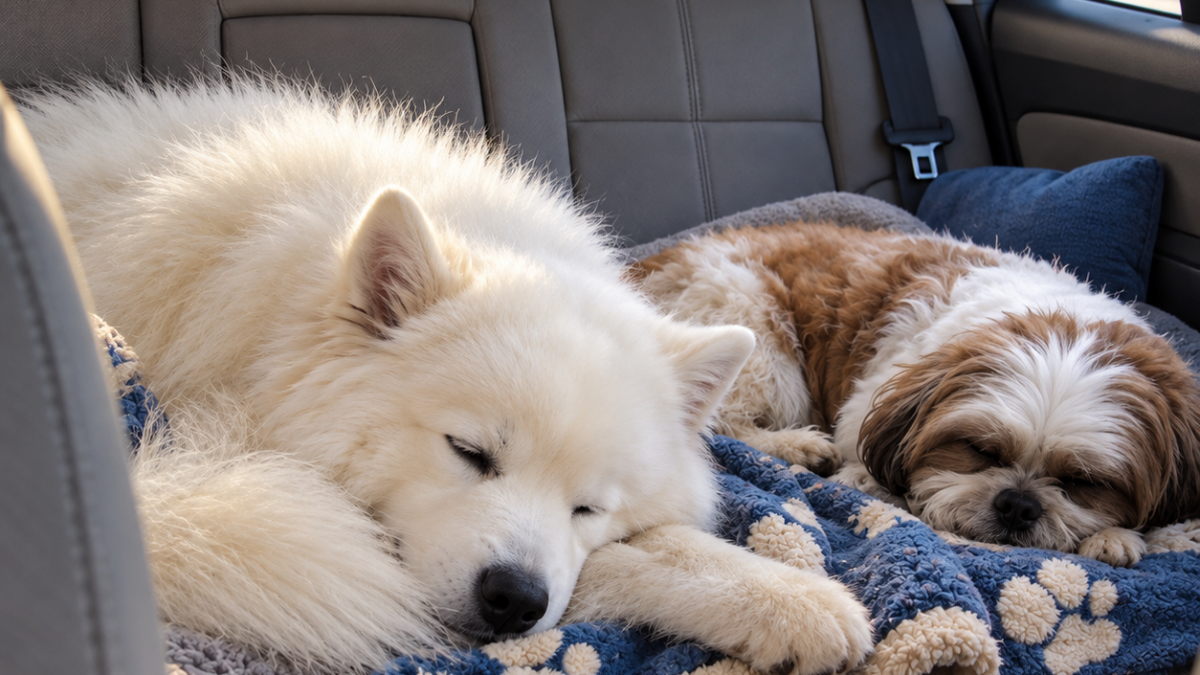
PART 2
I stopped moving.
The Samoyed stood about fifteen feet away from me, panting heavily.
Up close, I could finally see beyond all that white fur.
She was thin.
Far thinner than she had appeared from the other side of the fence.
Her coat disguised most of it, but her hips were sharp beneath the fur, and when she shifted her weight, the outline of her ribs appeared.
“Your friend’s okay,” I told her.
I had no idea if that was true.
The little Shih Tzu had barely been conscious when I handed him over the fence.
But the Samoyed kept staring toward the spot where he had disappeared.
I crouched.
“Come on.”
Her ears moved.
I turned slightly sideways so I wouldn’t seem confrontational.
“I’m not leaving you here.”
For several seconds, nothing happened.
Then she walked toward me.
Slowly.
One step at a time.
I could see the hesitation in every movement.
When she came within reach, I let my hand hang loosely at my side.
She smelled my fingers.
Her body remained tight.
Then something changed.
She leaned against my leg.
Not much.
Just enough.
“Okay.”
I placed one hand against her shoulder.
“You’re coming too.”
Getting a sixty-pound Samoyed over a six-foot fence would have been ridiculous under normal circumstances.
Fortunately, the gate on the side of the yard had a latch I could reach from inside.
Unfortunately, a heavy padlock had been threaded through it.
I stared at it.
Of course.
I heard the woman from across the street call, “Can you open it?”
“No.”
“What do you need?”
“Bolt cutters.”
“I have some.”
I looked over the fence.
“You have bolt cutters?”
“My husband collects tools.”
That was how I properly met my neighbor, Denise Walker.
Three minutes later she appeared with bolt cutters that looked big enough to dismantle a car.
I reached over the fence.
She passed them up.
“You sure this is legal?” she asked.
“No.”
“Okay.”
That was the entire discussion.
I cut the lock.
The gate opened.
The Samoyed did not rush out.
Instead, she walked to the corner of the yard where the Shih Tzu had collapsed.
She smelled the ground.
Then looked at me.
“Come on.”
I held the gate open.
She hesitated.
Denise stood twenty feet away holding the little dog in a blanket.
The Samoyed saw him.
Everything changed.
She hurried forward.
Not running.
She didn’t have the strength.
But moving as quickly as she could.
She reached Denise and immediately pushed her nose beneath the blanket.
The Shih Tzu barely moved.
The Samoyed whined.
It was the first sound I heard from her other than a growl.
Denise’s eyes filled.
“Oh, sweetheart.”
“I need a vet.”
“I already called mine.”
I stared at her.
“You did?”
“They’re waiting.”
I looked toward the empty house.
The dark windows.
The padlock lying in the dirt.
The stagnant kiddie pool.
Then back at the dogs.
“Let’s go.”
We took Denise’s SUV because it had more room.
I sat in the back with both dogs.
The Shih Tzu lay wrapped in a blanket beside me.
The Samoyed pressed herself against him.
At first I thought she was simply lying there.
Then I realized she had positioned her body so his head rested partly against her chest.
Every time the car turned, she adjusted herself to keep him supported.
Denise looked at us through the mirror.
“They bonded?”
“I think more than that.”
The smaller dog stirred.
His eyes opened.
The Samoyed immediately licked his face.
His tail moved.
Barely.
But it moved.
Denise saw it.
“Oh, thank God.”
“Keep driving.”
The veterinary clinic was twelve minutes away.
It felt like an hour.
A technician met us at the entrance with a stretcher.
The Shih Tzu went first.
When the technician lifted him away, the Samoyed panicked.
She tried to follow.
Her paws slipped on the tile.
“Wait.”
I held her harness area gently even though she had no actual harness.
She twisted toward the door where they had taken him.
“No one’s taking him away.”
She whined.
A veterinarian appeared.
“Bring them together if possible.”
They led us into an exam room large enough for both dogs.
The Shih Tzu was placed on a padded table.
The Samoyed refused to leave his side.
The veterinarian, Dr. Laura Mitchell, examined him first.
Temperature.
Gums.
Heart.
Hydration.
Weight.
Her expression got more serious with every minute.
“How bad?” I asked.
“Very dehydrated. Malnourished. Weak. Possibly hypoglycemic. We need bloodwork.”
“Do whatever he needs.”
Dr. Mitchell looked at me.
“You’re the owner?”
“No.”
“Rescue?”
“No.”
She paused.
“Who are you?”
“The neighbor.”
Denise raised her hand.
“Also neighbor.”
Dr. Mitchell looked between us.
“Where are the owners?”
“Gone.”
I explained.
The repossession.
The family leaving.
The cries.
The yard.
The rainwater.
The phone call.
Five to seven days.
Dr. Mitchell’s jaw tightened.
“You got them out today?”
“About thirty minutes ago.”
She turned toward the technician.
“Start fluids.”
Then she examined the Samoyed.
The dog resisted at first.
Not aggressively.
She kept trying to turn toward the Shih Tzu.
Dr. Mitchell understood.
She moved the examination beside him.
That solved it.
“She’s dehydrated too,” she said. “Not as unstable, but she’s underweight.”
“Can they stay together?”
“If it doesn’t interfere with treatment.”
“Please.”
Dr. Mitchell looked at the way the Samoyed watched the smaller dog.
“I was going to suggest the same thing.”
We had no names.
That bothered me.
“Do the records have anything?” Denise asked.
“What records?”
“Microchips.”
A technician scanned them.
The Samoyed had one.
The Shih Tzu did too.
The scanner produced numbers.
Then came the waiting.
The registry information pulled up names.
The Shih Tzu was Milo.
The Samoyed was Luna.
Owners listed at the house next door.
I stared at the screen.
“So there’s proof.”
The technician glanced at me.
“Proof of registered ownership, yes.”
“They left them.”
Dr. Mitchell stepped in.
“Call animal control again and tell them there are now two animals hospitalized in critical or serious condition following suspected abandonment. Tell them we’ll provide medical documentation.”
I made the call.
This time, the response was different.
An officer arrived at the clinic less than two hours later.
Her name was Officer Rebecca Torres.
She listened while I described everything.
“When did the family leave?” she asked.
“About six weeks ago.”
“You personally saw them leave?”
“Yes.”
“Dogs visible that day?”
“No.”
“Did you know they had dogs?”
“Not really.”
I felt embarrassed saying it.
The houses were close.
We had lived beside each other for almost three years.
We waved.
Said hello.
Complained about garbage pickup once.
But we weren’t friends.
I had occasionally heard barking behind their fence, but I had never paid attention.
That realization made me feel guilty.
“How long did you hear crying?” Torres asked.
“Three nights before I checked.”
“Any idea when the animals were last given food?”
“No.”
“Water?”
“No.”
I looked through the glass door.
Luna was lying beside Milo’s treatment area.
“They were drinking from the kiddie pool.”
Torres wrote that down.
“You entered the property?”
“Yes.”
“Cut the lock?”
“Yes.”
“Any concern you might be charged with something?”
I laughed once.
“I’m already aware that wasn’t exactly legal.”
Torres looked at me.
“You made a good-faith intervention to prevent apparent imminent harm after contacting authorities.”
“So?”
“So I’m interested in the dogs right now.”
I exhaled.
“Okay.”
Denise spoke up.
“I witnessed the second entry and helped.”
Torres looked at her.
“You’re the neighbor across the street?”
“Yes.”
“Name?”
“Denise Walker.”
“Did you see the original owners leave?”
“Yes.”
That surprised me.
“You did?”
She nodded.
“I was working from home that day.”
Torres asked, “Did you see the dogs?”
Denise’s expression changed.
“No.”
“Anything unusual?”
She thought.
“They loaded the car in a hurry.”
“How many people?”
“Man, woman, teenage son.”
“Anything from the backyard?”
Denise closed her eyes.
“Wait.”
We both looked at her.
“I heard barking.”
“When?”
“The morning they left.”
Torres leaned forward.
“Are you certain?”
“Yes.”
Denise swallowed.
“I remember because the white dog was barking while they loaded the last things.”
My stomach turned.
“They heard them.”
Denise looked sick.
“They must have.”
Torres wrote quickly.
“You saw anyone go into the backyard before leaving?”
“No.”
“Food being left?”
“No.”
“Water?”
“No.”
“You saw the car leave?”
“Yes.”
“What time?”
“Around eleven.”
The case stopped feeling like an accident.
Until then, some irrational part of me had wanted there to be an explanation.
Maybe someone had promised to pick up the dogs.
Maybe the owners believed a relative would care for them.
Maybe something went wrong.
But barking on the morning they drove away meant the dogs were there.
They knew.
At least they knew the animals had not already been removed.
Officer Torres photographed Milo and Luna with the clinic’s permission.
Dr. Mitchell explained their conditions.
“How long could they have survived like this?” Torres asked.
“Impossible to say exactly.”
“If the neighbor had waited five to seven more days?”
Dr. Mitchell looked toward Milo.
“I doubt he would have survived that long.”
No one spoke.
Torres put down her pen.
“Can you say that in your report?”
“Yes.”
That sentence followed me home.
I doubt he would have survived.
That night my yard felt different.
I stood near the fence and looked into the abandoned property.
The kiddie pool was still there.
Brown water.
A few leaves.
One corner of the yard had been scratched almost bare.
I wondered whether Luna had dug there trying to find cooler soil.
Near the back door, I found claw marks.
Deep.
Repeated.
They ran up the wood.
Milo and Luna had been trying to get inside.
I stood there staring until anger swallowed everything else.
Someone had locked the house.
Locked the yard.
Driven away.
And behind them, two dogs had waited at the door.
Waited for food.
Waited for water.
Waited for people who already knew they weren’t coming back.
I called Torres.
“Sorry. I know it’s late.”
“What happened?”
“I found marks.”
“Where?”
“Back door. Claw marks.”
“Don’t touch anything.”
“I won’t.”
“We’ll document tomorrow.”
I looked toward the empty house.
“Officer?”
“Yes?”
“Will they get away with this?”
She paused.
“I can’t promise you an outcome.”
“That’s not what I asked.”
“I know.”
I waited.
“If the evidence establishes intentional abandonment and neglect, we’ll submit charges.”
“Good.”
“But don’t make the mistake of thinking a criminal case will fix how you feel right now.”
I almost laughed.
“You don’t know how I feel.”
“I’ve done this twelve years.”
Fair enough.
“What fixes it, then?”
“Usually?”
“Yes.”
“The animal surviving.”
I looked toward the yard.
I hoped she was right.
For the next forty-eight hours, my entire schedule revolved around the clinic.
Milo was the biggest concern.
Bloodwork showed severe dehydration, electrolyte imbalances, malnutrition, and anemia.
His blood sugar had been dangerously low.
His stomach couldn’t simply be filled with food.
Dr. Mitchell explained the risk of refeeding too quickly after prolonged starvation.
“So we don’t just feed him?”
“We feed him carefully.”
“He’s starving.”
“I know.”
“That seems insane.”
“It feels that way, but his body needs controlled nutrition.”
Luna’s condition was better, but only relatively.
She was dehydrated.
Underweight.
Her paw pads were irritated.
She had intestinal parasites.
Several areas under her thick coat were matted and inflamed.
But what worried the staff most about Luna was her behavior when Milo disappeared from sight.
She panicked.
The first time a technician wheeled Milo into another room for imaging, Luna stood so fast she nearly pulled out her IV.
She barked.
Scratched at the door.
Paced.
I had never heard her bark before.
“Bring her,” Dr. Mitchell said.
So Luna followed.
That became the rule.
Milo goes, Luna goes.
Blood draw?
Luna nearby.
Ultrasound?
Luna waiting outside the door.
Cleaning?
Same room whenever possible.
When Milo slept, Luna slept.
When Milo woke, Luna lifted her head.
When food came, Luna looked toward his bowl before touching hers.
On the third day, Milo refused breakfast.
Luna refused hers.
A technician tried coaxing her.
Nothing.
Then Milo took one tiny bite from Dr. Mitchell’s hand.
Luna watched.
She walked to her bowl.
Started eating.
I looked at Denise.
“She won’t eat unless he does.”
Denise’s eyes filled.
“She kept him alive.”
I believed that.
Not medically.
Maybe not in any way a lab could measure.
But Milo had survived weeks in that yard.
I had seen where Luna slept.
Near the gate.
Between the smaller dog and anyone entering.
She had guarded him.
Shared whatever water there was.
Stayed beside him.
Maybe companionship was the only reason he hadn’t completely surrendered.
Day four brought our first real victory.
Milo stood.
Only for two seconds.
The technician had opened his kennel to change a pad.
Milo put his paws beneath himself.
Shook violently.
Then stood.
“Wait.”
Everyone froze.
Luna was lying nearby.
Her ears rose.
Milo stayed up.
One second.
Two.
Then collapsed back onto the blanket.
I laughed.
Denise covered her mouth.
The technician smiled.
“Good boy.”
Luna crawled closer and licked his ear.
It sounds ridiculous to say two seconds changed the atmosphere in that room.
But they did.
Milo had arrived in my arms like a dog whose body had already decided it was finished.
Now he was trying to stand.
The next morning, he ate voluntarily.
A teaspoon.
Then another.
I sent Denise a message:
HE ATE.
She replied:
I’m coming.
Ten minutes later, she arrived with coffee for everyone.
By then, Denise and I had known each other for five days.
It felt like years.
Before the dogs, we had exchanged maybe twenty words total.
Now she knew how I drank coffee.
I knew her husband’s name.
She had a spare key to my house because someone needed to let my plumber in while I was at the clinic.
Life does strange things.
“You realize,” I told her, “we lived across from each other for seven years.”
“And never talked.”
“You borrowed my recycling bin once.”
“You looked annoyed.”
“I was annoyed.”
She laughed.
“And now?”
“Now you have my house key.”
“Trauma bonding.”
“Apparently.”
She looked through the glass at Luna and Milo.
“Worth it.”
Officer Torres kept us updated on the investigation.
The former owners were Jason and Melissa Carter.
The mortgage company had formally taken possession of the house after foreclosure.
Records showed the Carters had moved to another county.
More importantly, security video from a gas station near the neighborhood showed their SUV loaded with belongings on the morning Denise saw them leave.
That proved departure.
Microchip registration proved ownership.
Veterinary records proved both dogs had been theirs for years.
Then investigators obtained something worse.
Text messages.
The bank’s property-management contractor had contacted Jason Carter three days after the family moved out because workers heard barking behind the fence.
The message read:
There appear to be dogs still at the property. You need to arrange removal immediately.
Jason replied:
We’re handling it.
They weren’t.
Four days later, the contractor sent another message.
Dogs are still there.
No response.
Another week passed.
A voicemail was left.
No response.
I stared at the copies Torres showed me.
“He knew.”
“Yes.”
“Days after leaving.”
“Yes.”
“And did nothing.”
“That’s what the evidence indicates.”
“Why didn’t the contractor call animal control?”
“They say they believed the former homeowner was arranging pickup.”
“Believed?”
“I’m not defending it.”
I stood.
Milo was still hospitalized.
My anger needed somewhere to go.
“They could’ve called.”
“Yes.”
“The bank could’ve called.”
“Yes.”
“The family could’ve surrendered them.”
“Yes.”
“They could’ve opened the gate.”
“Yes.”
Torres let me finish.
“You want a person to carry all of this.”
“They left them.”
“Yes.”
“That’s not debatable anymore.”
“No.”
“So arrest them.”
“The case is going to the prosecutor.”
“That isn’t the same thing.”
“No.”
I walked away.
Then turned back.
“I hate how slow this is.”
Torres nodded.
“So do I.”
That surprised me.
“You do?”
“I work in animal control. Of course I do.”
For the first time, I saw exhaustion beneath her professional calm.
“But if I rush evidence,” she continued, “their attorney attacks the case. If I document everything, we have something that survives court.”
I sat back down.
“Fine.”
“Good.”
“I’m still angry.”
“You’re allowed.”
The next breakthrough belonged to Luna.
She discovered blankets.
Real blankets.
At the clinic, she had been lying on veterinary bedding.
One evening Denise brought an old fleece blanket from home.
Blue.
Thick.
She placed it beside Luna.
Luna smelled it.
Pawed once.
Then lay down.
Her entire body seemed to melt.
Denise laughed.
“Oh.”
Luna rolled slightly onto her side.
Then onto her back.
Just enough to expose her stomach.
I stared.
“That’s new.”
Dr. Mitchell smiled from the doorway.
“She’s relaxing.”
For the first time, Luna wasn’t guarding Milo.
Because Milo was three feet away.
Safe.
Monitors on.
People nearby.
Maybe she had finally understood she could sleep.
Ten minutes later she was snoring.
A Samoyed snore is surprisingly undignified.
We loved it.
Milo improved more slowly.
He required nearly a week of inpatient care.
Every morning I visited before work.
Every evening after.
By day seven, he could walk across the treatment room.
Not gracefully.
But independently.
Luna followed so closely that her nose almost touched his back.
“Personal space,” I told her.
She ignored me.
Milo stopped.
Luna stopped.
Milo walked.
Luna walked.
Dr. Mitchell laughed.
“She’s his security detail.”
“She takes the job seriously.”
When Milo was finally medically stable enough to leave the clinic, I assumed they would go to a rescue.
That had been the plan.
I had already contacted three organizations.
One had space for Milo but not Luna.
I said no.
Another could take Luna but wanted to place them separately.
No.
The third had a foster willing to take both, but not for another week.
So I said the dangerous sentence.
“They can stay with me temporarily.”
Denise stared.
“You sure?”
“Week. Maybe two.”
She smiled.
“What?”
“Nothing.”
“Don’t do that.”
“Do what?”
“That face.”
“I didn’t make a face.”
“You made a face.”
We brought them home.
My home.
The first hour was chaos.
Milo wanted to smell everything.
Luna wanted to stay between Milo and everything.
My kitchen seemed suspicious.
The ceiling fan was suspicious.
The washing machine was unacceptable.
My vacuum cleaner became a sworn enemy.
I had borrowed two dog beds.
Luna ignored hers.
Milo climbed into Luna’s.
Luna then squeezed into the same bed.
She was four times his size.
Half her body hung off the edge.
“You know there’s another bed.”
No interest.
“Right beside you.”
Nothing.
I moved the beds together.
Milo shifted.
Luna followed.
I gave up.
That first night I slept on the couch.
Not because I planned to.
Because Milo cried when I went upstairs.
The moment I returned, he stopped.
Luna lay beside him.
I pulled a blanket over myself.
“Temporary.”
Luna looked at me.
“Very temporary.”
Milo sighed.
I woke at 3:00 a.m.
Milo was asleep on my chest.
Luna was lying on the floor beside the couch with one paw touching the cushion.
“Excellent boundaries.”
No reaction.
By the second week, the house no longer belonged to me.
Milo learned the kitchen produced food.
Luna discovered air-conditioning vents.
She would lie directly over one and refuse to move.
For a dog who had survived weeks outdoors in summer, cold air seemed almost sacred.
Milo followed me everywhere.
Bathroom.
Laundry.
Office.
Backyard.
If he lost sight of me, he panicked.
Luna did not follow me.
She followed Milo.
If Milo followed me, Luna followed us both.
We looked ridiculous moving through the house.
One man.
One tiny dog.
One giant cloud.
Denise visited every day.
The first time she arrived, Luna barked.
Then saw who it was.
Tail.
One wag.
Two.
Denise gasped.
“She remembers me.”
“Of course she does.”
Luna approached.
Denise crouched.
The dog pressed her enormous head into Denise’s chest.
That was the first time Luna voluntarily asked a person for affection.
Denise cried.
Naturally.
I pretended not to.
Naturally.
Milo, jealous of the attention, climbed into Denise’s lap.
“You weigh ten pounds.”
He settled.
Luna attempted to do the same.
Denise nearly fell backward.
“Absolutely not.”
Luna disagreed.
Three weeks after the rescue, the prosecutor approved charges.
Two counts of animal abandonment.
Two counts of neglect.
Additional violations related to failure to provide adequate food, potable water, and shelter.
The Carters were ordered to appear.
When Officer Torres called, I felt satisfaction.
For about thirty seconds.
Then I looked at Luna sleeping beneath the air-conditioning vent.
Milo was curled against her stomach.
Court wasn’t going to change what they had endured.
But it could prevent something else.
“That animal ownership restriction you mentioned?”
“We’re requesting one.”
“For both of them?”
“For the defendants.”
“No, I mean both Jason and Melissa?”
“Yes.”
“Good.”
The defense began before the hearing.
Their attorney argued the Carters believed a family friend would retrieve the dogs.
Officer Torres investigated.
The friend denied agreeing to do it.
Then the Carters claimed the bank had taken possession and therefore responsibility had transferred.
The bank produced documents showing animals were expressly excluded from abandoned-property handling and that owners had been told to remove all pets before vacating.
Then Jason claimed he had returned once with food.
A neighbor’s doorbell camera undermined that.
No sign of his vehicle.
Then Melissa claimed she did not know the dogs had remained behind.
Denise’s witness statement became important.
She had seen both adults loading the car.
She had heard Luna barking from the backyard while they were outside.
“Could she have assumed someone else was taking them?” their attorney asked at a pretrial hearing.
Denise answered calmly.
“I can’t tell you what she assumed.”
“Exactly.”
“I can tell you what I saw.”
“What did you see?”
“Two adults leave a property while their dog was barking behind the fence.”
That was Denise.
No drama.
No exaggeration.
Just fact.
I loved her for it.
The case went to court several months later.
By then, Milo and Luna were almost unrecognizable.
Milo had gained weight.
His Shih Tzu coat had been groomed short initially because the mats were so severe.
Now soft fur was growing back.
He had become a professional food thief.
Luna’s coat was bright white again.
Her hips no longer looked sharp.
Her paw pads had healed.
She still checked on Milo constantly.
But she no longer panicked when he went into another room.
Usually.
Sometimes.
Court morning arrived.
I considered staying home.
Then I remembered the claw marks on the back door.
I went.
Denise came too.
Officer Torres met us at security.
“Don’t expect television.”
“What?”
“No dramatic confession. No shouting. No judge slamming anything.”
“I know how court works.”
“Do you?”
“No.”
She almost smiled.
The Carters sat together.
It was the first time I had seen them since moving day.
Jason looked thinner.
Melissa looked tired.
For a moment, an uncomfortable memory returned.
Six weeks before finding the dogs, I had watched them lose their home.
Foreclosure is ugly.
People break under financial pressure.
I knew that.
Part of me wanted to understand.
Then the prosecutor displayed a photograph of the kiddie pool.
Brown water.
No food.
I stopped trying to understand.
Hardship explained losing a house.
It did not explain locking living animals behind a fence and driving away.
The prosecutor called Dr. Mitchell.
She described Milo’s condition.
“Was he in immediate medical danger?”
“Yes.”
“How immediate?”
“In my professional opinion, he was at risk of death without intervention.”
“Could he have safely waited five to seven additional days for assistance?”
“No.”
That word landed heavily.
No.
Then Luna.
“Was she in comparable condition?”
“Less critical, but still suffering from dehydration, malnutrition, parasitic disease, and environmental neglect.”
“Would her thick coat have made her condition less obvious?”
“Yes.”
The prosecutor showed photographs taken after sections of fur were parted.
Ribs.
Hip bones.
Skin irritation.
I hated those pictures.
Then came the microchip records.
Veterinary history.
Property records.
Texts from the bank contractor.
Dogs are still there.
Jason’s response:
We’re handling it.
No one in the courtroom needed dramatic language after that.
The defense argued financial crisis.
Mental stress.
Housing instability.
Confusion over who would retrieve the animals.
The judge listened.
So did I.
Melissa eventually testified.
She cried.
That made me uncomfortable.
Not because I thought tears proved innocence.
Because I could remember watching her put boxes into a car.
A person can do something terrible and still be human.
That is harder to hold than a simple villain.
She said, “Everything happened at once.”
Her attorney asked, “What do you mean?”
“We lost the house. We were staying with family. My husband and I were fighting. We had nowhere to take the dogs.”
My jaw tightened.
“Did you intend for them to suffer?”
“No.”
“Did you believe someone would retrieve them?”
“Yes.”
The prosecutor stood on cross-examination.
“Who?”
Melissa gave the name of the friend.
“The same person who testified he never agreed?”
She hesitated.
“We talked about it.”
“Did he say yes?”
“I thought he did.”
“That wasn’t my question.”
Silence.
“Did he say yes?”
“No.”
The prosecutor nodded.
“You knew the dogs were still at the property when you left?”
Melissa wiped her face.
“Yes.”
“You heard Luna barking?”
“Yes.”
“You left anyway?”
“Yes.”
“You received a message from the property contractor three days later?”
“My husband did.”
“You were aware of it?”
“Yes.”
“Did you contact animal control?”
“No.”
“A shelter?”
“No.”
“A rescue?”
“No.”
“A veterinarian?”
“No.”
“Your former neighbor?”
“No.”
“Anyone?”
Melissa’s voice fell.
“No.”
The prosecutor sat.
No speech.
None was needed.
Jason testified too.
He was more defensive.
He insisted he intended to return.
“When?” the prosecutor asked.
“I don’t know.”
“A day?”
“No.”
“A week?”
“I don’t know.”
“Milo was found approximately six weeks after you vacated.”
Jason said nothing.
“You told the property contractor, ‘We’re handling it.’ What did that mean?”
“I planned to.”
“Planned to do what?”
“Get them.”
“When?”
Silence.
The judge leaned forward.
“Mr. Carter, answer the question.”
“I don’t know.”
That became the entire case for me.
I don’t know.
The dogs didn’t have the luxury of his uncertainty.
They needed food that day.
Water that day.
Help that day.
Not when someone eventually figured out a plan.
The judge found both defendants guilty on the primary neglect and abandonment charges.
Sentencing happened later.
I attended that too.
I wanted to say I went for justice.
Part of me went because I still wanted revenge.
I wanted the judge to say something that would equal the anger I had carried since the backyard.
That didn’t happen.
No sentence can do that.
The court ordered probation with custodial time suspended under strict conditions, substantial restitution for veterinary costs, fines, community service, mandatory humane-care education, and a lengthy prohibition on owning or keeping animals.
The judge addressed them directly.
“Losing housing is a crisis.”
Neither defendant looked up.
“Financial hardship is a crisis.”
Still nothing.
“Family conflict is a crisis.”
Then the judge’s voice hardened.
“But an animal confined behind a locked fence without reliable food or potable water cannot solve your crisis for you.”
The courtroom became silent.
“You had options. Surrender. Shelter. Animal control. Rescue organizations. A veterinarian. A neighbor. Opening the gate and calling authorities would have been better than doing nothing.”
I thought about the bolt cutters.
“You chose nothing.”
That was the sentence that stayed with me.
You chose nothing.
Afterward, Officer Torres found me outside.
“How do you feel?”
I considered lying.
“Unsatisfied.”
She nodded.
“Told you.”
“I wanted more.”
“More jail?”
“Maybe.”
“Would that help Milo?”
“No.”
“Luna?”
“No.”
“Then what do you actually want?”
I looked across the courthouse plaza.
“I want them to understand.”
“Maybe they do.”
“I want them to remember.”
“They probably will.”
“I want them never to do this again.”
Torres nodded.
“That one we can work with.”
The ownership ban was what mattered.
The restitution helped cover the clinic costs.
The conviction created a record.
If either of them attempted to obtain another animal during the restricted period, there were consequences.
That was real.
Not emotionally perfect.
But real.
When I came home, Milo met me at the door.
By “met,” I mean he screamed with joy as though I had returned from military deployment instead of being gone five hours.
Luna arrived behind him.
She shoved him out of the way with her nose.
“Hello to you too.”
Milo jumped.
Luna leaned.
I almost fell.
Then both followed me into the kitchen.
I sat on the floor.
Milo climbed into my lap.
Luna lay across my feet.
I looked at them.
The court case suddenly felt very far away.
That evening, Denise came over.
“How’d it go?”
I told her.
She sat beside Luna.
“That’s it?”
“Pretty much.”
“You sound disappointed.”
“I was.”
“And now?”
Milo had fallen asleep against my leg.
Luna’s chin rested on Denise’s knee.
I looked around.
Two dog beds.
Toys.
Full water bowls.
Medication lined up on the counter.
A ridiculous bag of premium food.
“Now I’m not sure.”
Denise smiled.
“You know what I think?”
“What?”
“The worst thing they did wasn’t leaving.”
I frowned.
“What was?”
“They treated these two like their story ended when the family drove away.”
She scratched Luna’s neck.
“It didn’t.”
That became the revenge.
Not the courtroom.
This.
The months afterward changed everything.
I had planned to foster.
That was the agreement with myself.
Recover.
Stabilize.
Find permanent homes.
I contacted breed rescues.
Filled out profiles.
Took photographs.
Milo’s adoption profile practically wrote itself.
Small.
Friendly.
Affectionate.
Food motivated.
Good with adults.
Luna’s was harder.
Not because she was difficult.
Because they had to stay together.
The moment I separated them for photographs, both became anxious.
Milo searched.
Luna paced.
I put them back together.
Instant calm.
“No.”
I closed the laptop.
“They’re a pair.”
Denise laughed.
“What?”
“Nothing.”
“You keep making that face.”
“What face?”
“The one where you think you’re making a temporary decision.”
“I am.”
“Sure.”
Applications arrived.
One family wanted Milo only.
No.
Another wanted Luna.
No.
A couple seemed willing to take both but lived in an apartment with a strict size limit.
Impossible.
One excellent application came from a retired couple with a large property.
We arranged a meeting.
I hated every second leading up to it.
The couple, Susan and Mark, were wonderful.
Experienced dog owners.
Large fenced yard.
Excellent vet references.
No problem keeping Milo and Luna together.
Exactly what I had wanted.
When they arrived, Milo greeted them.
Luna stayed near me.
Susan sat on the floor.
Luna eventually approached.
Good.
Mark played with Milo.
Great.
Everything was perfect.
I felt sick.
After an hour, Susan smiled.
“They’re wonderful.”
“They are.”
“We’d love to move forward.”
I swallowed.
“That’s good.”
Denise, who had conveniently come over “to bring coffee,” stared at me.
I refused to look at her.
We scheduled a second meeting.
After the couple left, I started collecting veterinary paperwork.
Milo came over.
Sat on my foot.
Luna lay in the doorway.
I opened the folder.
Closed it.
Opened it.
Closed it.
Denise finally said, “This is painful to watch.”
“What?”
“You.”
“I’m organizing records.”
“You look like somebody filing divorce papers.”
“They deserve a permanent home.”
“Yes.”
“I can’t just keep every animal I help.”
“You’ve helped exactly two.”
“That’s not the point.”
“You love them.”
I looked at her.
She shrugged.
“Sorry. Was that classified?”
“I didn’t say that.”
“You didn’t need to.”
Luna got up.
Walked over.
Placed her enormous head on my shoulder.
Denise laughed.
“Oh, come on.”
“What?”
“She’s not even being subtle now.”
Milo climbed onto my lap.
I was pinned by approximately seventy pounds of emotional manipulation.
“This proves nothing.”
“Sure.”
That night, I slept badly.
Around two in the morning, I came downstairs.
Milo and Luna were in the same bed.
Still.
Despite owning three.
Milo was curled against Luna’s chest.
Luna’s tail covered part of his body like a blanket.
I sat on the floor beside them.
Milo woke.
His eyes found me.
Tail tap.
Luna opened one eye.
“You know I was supposed to find you a home?”
No response.
“A really good one.”
Milo stretched.
“They have a yard.”
Luna sighed.
“Experienced people.”
Milo walked toward me.
“They’re retired.”
He climbed into my lap.
“So basically available all day.”
Luna got up.
Walked over.
Sat beside me.
I leaned against the couch.
“You two are terrible.”
Milo licked my chin.
Luna rested her head on my chest.
That was it.
The next morning I called Susan.
“I owe you an apology.”
There was a pause.
“Oh.”
“I don’t think I can go through with the adoption.”
Another pause.
Then she laughed.
“You’re keeping them.”
“I think so.”
“You think?”
I looked down.
Milo was chewing a toy beside my chair.
Luna was blocking the kitchen doorway.
“Yes.”
Susan laughed again.
“We thought this might happen.”
“What?”
“Mark said you looked like you wanted to interrogate us about whether we deserved your children.”
I covered my face.
“I’m sorry.”
“Don’t be.”
“You were perfect.”
“I know.”
That made me laugh.
“We’ll adopt someone else.”
“Really?”
“That was the plan regardless.”
I felt relief flood through me.
“Thank you.”
Susan’s voice softened.
“Those dogs already looked home.”
After hanging up, I called Denise.
She answered immediately.
“Well?”
“I’m keeping them.”
She screamed.
Actually screamed.
Luna barked.
Milo started running in circles.
“Congratulations!” Denise shouted through the phone.
“This is your fault.”
“My fault?”
“You enabled the fence incident.”
“You were already halfway over it when I arrived.”
“You brought bolt cutters.”
“You needed bolt cutters.”
“You called the vet.”
“They needed a vet.”
“You emotionally manipulated me.”
“I barely knew you.”
“You’re very talented.”
She laughed.
“What are their last names now?”
I looked at Milo.
Then Luna.
“Mine.”
The adoption paperwork through animal control took several weeks because of the court case.
When it finally became official, Officer Torres called.
“Congratulations.”
“Thanks.”
“You know, most people who break into foreclosed properties don’t come out with two dependents.”
“I didn’t break into the house.”
“Technical defense.”
“I opened a gate.”
“With bolt cutters.”
“Emergency locksmithing.”
She laughed.
“Take care of them.”
“I will.”
She became quiet.
“I know.”
That meant more than she probably realized.
Life settled.
Milo became fearless once his body recovered.
Small-dog confidence is a fascinating phenomenon.
He weighed eleven pounds and believed he controlled weather systems.
The mail carrier?
Enemy.
Vacuum?
Enemy.
Squirrel?
Mortal enemy.
Luna, meanwhile, became exactly the opposite of the dog I first met.
She was gentle.
Quiet.
Patient.
Except around food.
Food was sacred.
We followed structured feeding.
Separate bowls.
Close enough that they could see each other.
Far enough to prevent competition.
For the first several months, Luna would not begin eating until Milo did.
Every meal.
She looked toward him.
Milo took the first bite.
Then Luna ate.
Eventually, one morning, she started before him.
I noticed immediately.
Denise was drinking coffee at my kitchen table.
“She ate first.”
“So?”
“She always waits.”
We watched.
Luna kept eating.
Milo wandered in late.
Denise smiled.
“She trusts the food now.”
That hit me harder than I expected.
She no longer needed Milo to prove the meal was safe.
Food would remain.
Tomorrow’s meal would come.
That is what security looks like sometimes.
A dog eating without checking first.
Summer returned.
That worried me.
The first very hot day, Luna became restless outside.
I watched closely.
Water bowls everywhere.
Shade.
Air-conditioning inside.
She stood near the back door.
I opened it.
She walked directly inside and lay over the floor vent.
I laughed.
“That’s right.”
She sighed.
Cold air moved through her fur.
“You never have to stay out there.”
Milo came inside.
Collapsed beside her.
I left the door open for another minute.
Not because they needed it.
Because I needed to see the choice.
Outside or inside.
Shade or air conditioning.
Sun or cool floor.
Freedom.
That was what had been stolen from them.
Now it was ordinary.
Denise became family too.
There was no formal decision.
It simply happened.
She had a coffee mug in my cabinet.
I had the code to her garage.
Her husband, Paul, built a low platform by my back door because Milo struggled with the step during his recovery.
Denise watched the dogs whenever I traveled.
I fixed their sprinkler system.
Christmas dinners became shared.
When people asked how we became friends, Denise said, “We committed a minor property offense together.”
I corrected her.
“Emergency animal extraction.”
“Using bolt cutters.”
“You’re obsessed with that detail.”
The original house next door eventually sold.
A young couple moved in.
Before closing, the bank sent contractors to clean the property.
The kiddie pool disappeared.
The damaged gate was replaced.
The clawed back door was removed.
I watched workers carry it to a dumpster.
For a second, I almost stopped them.
Then I realized I didn’t want it.
Some evidence belongs in a case file.
Not your life.
The new neighbors had a toddler and no pets.
One afternoon they asked why the fence had looked different in the listing photos.
I told them the short version.
Their faces changed.
“They left dogs?”
“Yes.”
“For six weeks?”
“About that.”
The woman looked toward my yard.
Luna was asleep beneath a tree.
Milo was barking at a leaf.
“Those dogs?”
“Those two.”
She stared.
“They look so happy.”
I smiled.
“They’re very demanding.”
Milo barked.
“Especially him.”
Years passed.
The scars became less visible.
Not all of them were physical.
Milo hated being alone.
We worked on it.
Seconds.
Minutes.
Short trips.
Return.
Repeat.
Over time, he learned departure did not equal abandonment.
Luna disliked closed gates.
If someone shut her behind a fence while standing on the other side, she paced.
So we trained gently.
Treat.
Gate closes for one second.
Open.
Two seconds.
Open.
Five.
Open.
Never trapped.
Always returned.
Months later, she could relax behind a gate.
It seems trivial until you understand what gates once meant.
People often asked whether the dogs remembered their former owners.
I didn’t know.
I still don’t.
Memory in dogs is not the same narrative machinery humans carry.
But bodies remember patterns.
A car leaving.
A locked gate.
An empty bowl.
Heat.
Waiting.
Luna and Milo carried pieces of that.
Then we layered new patterns over them.
Car rides meant parks.
Gates opened again.
Bowls refilled.
Heat meant going indoors.
Waiting ended with return.
That was our real work.
Not making them forget.
Giving memory competition.
On the second anniversary of the rescue, Denise knocked on my door carrying two cheeseburgers for humans and dog-safe treats.
“What’s this?”
“Fence Day.”
“Absolutely not.”
“It’s a holiday.”
“It is not.”
“We have traditions.”
“We have been doing this for two years.”
“Exactly.”
Paul arrived carrying a tiny cake.
“You encouraged her?”
“I’m married to her.”
Fair.
We sat in the backyard.
Luna had gained all the weight she needed.
Her coat was spectacular.
Milo looked like an entirely different dog from the bundle I had carried over the fence.
Denise watched him chasing a toy.
“Remember when he couldn’t stand?”
“Yes.”
“Remember Luna growling at you?”
“Yes.”
“She had good judgment.”
“Excuse me?”
“She didn’t know you.”
“She likes me now.”
“Debatable.”
Luna walked over.
Placed her head in my lap.
I raised an eyebrow.
Denise sighed.
“Fine.”
At sunset, Milo climbed onto Luna’s bed.
Even after two years.
Still together.
Luna shifted to make room.
Some things healing doesn’t need to change.
Their bond had kept them alive.
There was no reason to separate it now.
Three years after the case, Officer Torres called unexpectedly.
My stomach tightened when I saw her name.
“Everything okay?”
“With the dogs?”
“Yes.”
“They’re fine.”
“Then why are you calling?”
She hesitated.
“Jason Carter attempted to adopt a dog.”
I went cold.
“What?”
“A shelter flagged him during screening because of the court restriction.”
“Did he get the dog?”
“No.”
“Good.”
“The shelter contacted us. The adoption was denied and the violation was reported.”
“What happens?”
“Additional court review.”
I looked at Luna.
Sleeping.
“What kind of dog?”
“Does that matter?”
“No.”
But it did emotionally.
“Puppy.”
My jaw tightened.
“Of course.”
“Listen to me.”
“I’m listening.”
“The system worked.”
I was silent.
“The shelter checked.”
“Yes.”
“The record existed.”
“Yes.”
“The restriction stopped placement.”
“Yes.”
“No animal was harmed.”
I exhaled.
“Okay.”
“That is what the original case accomplished.”
She was right.
The courtroom had felt insufficient.
Years later, its value appeared.
Another dog never made it behind another locked fence.
That was justice.
The violation extended Jason’s restriction.
I didn’t attend the hearing.
I didn’t need to.
His story no longer belonged in my house.
Years four and five were gloriously uneventful.
Milo developed a passion for stealing socks.
Luna developed an obsession with ice cubes.
Every time the freezer opened, she appeared.
No matter where she had been.
I tested this.
Bedroom.
Freezer.
Three seconds.
Luna.
Backyard.
Freezer.
Seven seconds.
Luna.
Dead asleep.
Freezer.
Instant resurrection.
Milo cared less about ice and more about whatever I was eating.
He had mastered the Shih Tzu stare.
Large eyes.
Slight head tilt.
Fake starvation.
I remained vulnerable.
The veterinarian accused me of over-treating him.
I denied everything.
Milo gained one pound.
Evidence defeated me.
We adjusted.
Luna remained protective of Milo but no longer anxious.
At the vet, she let technicians take him into another room.
She watched the door.
Waited.
When he returned, she smelled him from nose to tail as if conducting an inspection.
Approved.
Life was normal.
That mattered more than I can explain.
The dramatic rescue became a story from the past.
Most days, nobody thought about it.
We thought about grocery lists.
Vet appointments.
Work.
Grass cutting.
Whether Milo had stolen another sock.
Whether Luna needed grooming.
That is what I wanted for them.
Trauma should not remain the most interesting thing about an animal forever.
They deserved boredom.
On the sixth anniversary, I walked past the side gate.
The same location where I had used Denise’s bolt cutters.
The new gate had weathered now.
I stopped.
Luna stood beside me.
Milo smelled grass.
I touched the latch.
One decision.
That was all it had been.
Wait five to seven days.
Or climb.
I am not recommending anyone ignore laws or place themselves in danger.
There were risks I didn’t fully appreciate in the moment.
But I knew one fact.
Milo had collapsed at my feet.
If I had waited for bureaucracy to move at normal speed, he likely would have died.
Sometimes emergencies do not arrive with perfect procedures.
They arrive crying after dark.
Luna nudged my hand.
“You ready?”
We walked inside.
Denise came over later.
I told her I’d been thinking about that first day.
She smiled.
“The bolt cutters?”
“You really need another hobby.”
“They were excellent bolt cutters.”
“They were absurd.”
“They saved lives.”
“Technically, I used them.”
“From my tool collection.”
“Your husband’s.”
“Joint marital property.”
We laughed.
Then Denise became quiet.
“You know what I remember?”
“What?”
“The little one in my arms.”
My smile disappeared.
“How light he was.”
“Yeah.”
“I kept thinking he had died.”
I looked at Milo.
He was attempting to disembowel a plush squirrel.
“He compensated.”
Denise laughed.
“He really did.”
Then she looked at Luna.
“And her face when you brought her through the gate.”
“What about it?”
“She looked at Milo first.”
I remembered.
Not us.
Not freedom.
Milo.
Everything she had done had centered on him.
Guard him.
Stay near him.
Refuse food without him.
Sleep beside him.
People talk about animals as though loyalty is a human idea we project onto them.
Maybe sometimes.
Not with those two.
I saw it.
Years later, their bond remained.
Milo aged faster.
Small gray hairs spread around his muzzle.
Luna’s face changed more subtly beneath white fur.
When Milo developed a heart murmur, Luna somehow knew appointments meant something.
She became clingier.
The veterinarian said the murmur was manageable.
Medication.
Monitoring.
Nothing catastrophic.
Still, I became terrified.
A rescue gives you extra years.
It does not give you infinite ones.
That truth is cruel.
When Milo started medication, Luna waited beside him every morning.
Pill hidden in food.
Milo swallowed.
Luna received a tiny treat too.
Fairness.
One morning, Milo refused breakfast.
I panicked.
Completely.
Old images returned instantly.
Weak legs.
Collapsed body.
Empty yard.
I called the vet.
They saw him that morning.
Upset stomach.
Nothing more.
By dinner he was demanding chicken.
I sat on the kitchen floor.
Luna lay beside him.
“You two are trying to kill me.”
Milo wagged.
Luna yawned.
I realized then how deeply the first days still lived in me.
They had healed.
I had some work left.
The seventh summer was unusually hot.
Temperatures approached the same levels from the year I found them.
I kept them indoors most of the day.
Fresh water in every room.
Curtains closed in the afternoon.
Air-conditioning working overtime.
At one point, Luna stood at the back door.
“You can go pee.”
She stepped outside.
Heat hit her.
Luna immediately turned around.
Back inside.
Straight to the vent.
I laughed.
“Excellent survival instinct.”
Milo went out for exactly forty seconds.
Then returned.
I closed the door.
Two dogs slept in a cool house.
Outside, cicadas screamed in the heat.
And I thought about the family who had left them.
For years, I had imagined revenge.
Sometimes vividly.
I wanted them to understand thirst.
Hunger.
Waiting.
I wanted them to look into an empty bowl and know no one was coming.
I am not proud of those thoughts.
I also won’t pretend I never had them.
But age changes anger.
Or maybe responsibility does.
The best revenge was sitting in front of me.
Luna had learned she could leave heat.
Milo had grown old enough to need heart medication.
Think about that.
The dog Dr. Mitchell thought might not survive two more days had survived long enough to become a senior patient.
He had gotten years.
Birthdays we invented.
Christmas mornings.
Vet visits.
Bad haircuts.
Thunderstorms.
Socks stolen.
Treats negotiated.
Ordinary years.
Someone had almost taken all of that from him.
They failed.
That was enough.
On the eighth anniversary, Officer Torres retired.
Denise and I attended a small reception at the county office.
Torres saw us.
“No dogs?”
“They weren’t invited.”
“Unacceptable.”
I handed her a photograph.
Milo and Luna asleep together.
Recent.
Luna’s head across Milo’s back.
She stared at it.
“They’re old.”
“Careful.”
She smiled.
“I remember them at the clinic.”
“So do I.”
She looked at me.
“You still angry?”
I thought for a moment.
“Yes.”
She laughed.
“Honest.”
“But different.”
“How?”
“It doesn’t feel like it needs somewhere to go anymore.”
Torres nodded.
“That’s probably closure.”
“I thought closure was supposed to feel better.”
“No. Closure is a marketing term.”
I laughed.
“That sounds like you.”
She handed the photo back.
I shook my head.
“Keep it.”
She looked at it again.
“Thanks.”
“You were right.”
“About?”
“The animal surviving.”
Her expression softened.
“That usually matters most.”
When I got home, Luna greeted me slowly.
Age had reduced her speed.
Milo barked from the couch.
I sat between them.
There was one thing I had never done.
I had never thanked the former owners.
Obviously.
But sometimes I considered writing them.
Not to forgive.
Not to reconcile.
To say:
You failed them.
They survived you.
I never sent anything.
Because even that would have given the Carters a place in Milo and Luna’s current life.
They didn’t deserve one.
The statement lived only in my head.
You don’t get to define their story anymore.
That was true.
Their story belonged to full bowls.
Clean water.
Veterinary files inches thick.
Denise’s blue blanket.
Air-conditioning vents.
Ice cubes.
Sock theft.
Heart medicine.
Shared beds.
Open gates.
People who stayed.
On the ninth anniversary, Milo could no longer jump onto the couch.
I built a ramp.
Poorly.
Paul came over.
Looked at it.
“What is that?”
“A ramp.”
“That is a liability claim.”
“It works.”
“For whom?”
“Milo.”
He stepped on it.
The ramp moved.
Paul stared.
“Please stop helping animals with carpentry.”
He rebuilt it.
Solid.
Carpeted.
Perfect.
Milo used it immediately.
Luna refused.
She preferred the floor now.
We added orthopedic beds everywhere.
Living room.
Bedroom.
Office.
Denise came in one day.
“You have more dog beds than furniture.”
“They move.”
“You have four.”
“They need options.”
“You have become insane.”
“Correct.”
Milo climbed his ramp.
Luna stretched across a bed.
Denise smiled.
“Worth it.”
Always.
Then came the day I had been avoiding.
Not an ending.
Not yet.
A warning.
Milo’s heart condition progressed.
The veterinarian adjusted medication.
I sat in the exam room while Milo slept in my lap.
Luna waited beside me.
“How much time?” I asked.
Dr. Mitchell was still our veterinarian.
Older too.
She looked at Milo.
“I can’t give you an exact answer.”
“Months?”
“Possibly more.”
“Years?”
“Maybe. He’s surprised me before.”
I looked down.
“That he has.”
Dr. Mitchell touched Luna’s shoulder.
“These two got a lot of borrowed time.”
I shook my head.
“Not borrowed.”
She looked at me.
“Their time.”
She smiled.
“You’re right.”
That distinction mattered.
Nothing after rescue was extra.
It was theirs.
Every day should have been theirs from the beginning.
We hadn’t given them a bonus life.
We helped return the life they were owed.
Milo remained stable for another year.
Ten years after I climbed the fence, Denise and I sat on my porch.
Milo slept in her lap.
Luna lay at our feet.
The abandoned-house family was long gone.
The property had changed owners twice.
Most current neighbors knew nothing about what happened.
That felt strange.
A day that defined my life had become invisible to the street.
Cars passed.
Kids rode bicycles.
Someone mowed a lawn.
Ordinary.
Denise looked down at Milo.
“Do you ever think about how we didn’t know each other?”
“All the time.”
“You seemed unfriendly.”
“You owned giant bolt cutters.”
“Useful giant bolt cutters.”
“You ran across the street like we were best friends.”
“There was no time for an introduction.”
I smiled.
“No.”
We sat quietly.
Then Denise said, “Would you do it again?”
I looked at the dogs.
“Yes.”
“No hesitation?”
“I’d call every emergency line first and document more.”
She laughed.
“That is the most middle-aged answer possible.”
“But yes.”
She scratched Milo’s head.
“Me too.”
Luna stood slowly.
Walked to the water bowl.
Drank.
Clean water.
Such a small thing.
It never became small to me.
I kept bowls in three rooms.
Refilled them before they were empty.
Maybe excessive.
I didn’t care.
Every time I heard water hit stainless steel, part of me remembered the plastic kiddie pool.
Brown rainwater.
Debris.
Survival reduced to whatever the sky provided.
Now water came from a tap.
Fresh.
Cold.
Unlimited.
That sound was one of my favorite sounds in the house.
Milo eventually woke.
Looked around.
Saw Luna.
Relaxed.
Even after all those years, he checked for her.
She checked for him too.
Age had not changed that.
One winter evening, a storm knocked out electricity.
The house became cold.
Within an hour, I had blankets.
Battery lights.
A small generator running safely outside.
Luna and Milo curled together near the fireplace.
Denise came over.
“Need anything?”
“No.”
“You sure?”
“Yes.”
She looked at the dogs.
“Remember when they had nobody checking?”
I nodded.
Now two households were monitoring whether they were warm enough.
That was the difference.
They had gone from abandoned to overprotected.
I was comfortable with that.
When the power returned, the heater kicked on.
Luna lifted her head.
Warm air reached the room.
She settled again.
I sat beside her.
The first time I touched Luna, she had growled.
That growl had been intelligent.
People had failed her.
Distrust was reasonable.
Years later, she pressed herself against me whenever thunder shook the windows.
Trust did not erase wisdom.
She chose me because I had spent years giving her evidence.
I loved that more than instant affection would ever have meant.
On one of Milo’s final healthy spring mornings, we walked to the fence.
The original fence was gone.
Replaced years earlier.
Still, I knew the exact place.
Milo sniffed.
Luna stood in the sun.
I opened the gate.
Both dogs walked through.
No leash tension.
No panic.
Then back again.
So ordinary.
Open gate.
Choice.
I closed it gently.
Milo looked at me as if expecting a treat.
“You did nothing.”
He stared.
I gave him one.
Luna got one too.
Fairness.
That evening, I found them sleeping side by side.
I took a photograph.
Not because anything special happened.
Because nothing did.
No crisis.
No rescue.
No court.
No starvation.
No rainwater.
Just sleep.
I realized that was the picture I wanted people to remember.
Not the worst photograph.
The ordinary one.
Two old dogs asleep in a home.
Milo died years after Dr. Mitchell once doubted he would survive another forty-eight hours.
He did not die alone.
He did not die hungry.
He did not die behind a locked fence.
His heart disease finally became too much.
The last week was hard.
He stopped enjoying food.
His breathing changed.
Medication no longer gave enough comfort.
Dr. Mitchell came to the house.
Denise came too.
Luna lay beside Milo.
We put his favorite blanket beneath him.
I held him.
His body was old now.
Soft fur.
Gray face.
Nothing like the skeletal little dog who collapsed at my feet.
I whispered, “You can rest.”
For years, I had fought to keep him.
That day, loving him meant not asking for another painful hour.
Milo died with Luna’s nose resting against his head.
I don’t know how to describe what Luna did afterward without turning animal behavior into a human story.
She stayed beside him for a while.
Smelled him.
Lay down.
Quiet.
When Dr. Mitchell eventually carried him out, Luna watched.
She did not panic.
Maybe she understood something.
Maybe she didn’t.
That night, she refused dinner.
The old pattern.
Milo eats.
Then Luna eats.
Except Milo wasn’t there.
I sat beside her bowl.
My heart broke all over again.
“Sweetheart.”
Luna looked toward the hallway.
I understood.
She was waiting.
I moved the bowl closer.
Nothing.
I sat on the floor.
“We have to learn this part.”
She lowered her head.
So did I.
Neither of us knew how.
The next morning, Luna ate three bites.
I cried.
Not because three bites were enough.
Because she had eaten without seeing Milo.
Another step.
Days passed.
She searched less.
Slept more.
Stayed closer to me.
Denise visited constantly.
We walked slowly.
Sat in the sun.
Luna adapted again.
She had survived abandonment with Milo.
Now she had to survive losing him.
I kept his collar in a drawer.
Not displayed.
Not made into some dramatic shrine.
Just kept.
Sometimes Luna smelled my hand after I touched it.
Maybe scent remained.
Maybe memory.
Milo’s absence changed the house.
No barking at mail.
No tiny footsteps following me.
No sock thief.
Luna seemed enormous without him beside her.
For months, I thought the story had become sad.
Then one morning, Luna walked to her breakfast.
Looked at me.
And started eating immediately.
No waiting.
No checking.
She finished.
Drank water.
Walked to the back door.
I opened it.
She stepped into sunlight.
I stood there crying like an idiot.
She was still living.
That was what Milo would have wanted if dogs could form such wishes.
Maybe.
What I knew for certain was that Luna had a life still.
I owed her my presence inside it.
We walked more slowly now.
Her hips ached.
Her coat required more grooming.
She loved the vent as much as ever.
Ice cubes remained sacred.
Denise still came over with treats.
Luna became the neighborhood grandmother.
Children knew her.
New neighbors asked about the white dog who lay near the porch.
Few knew her beginning.
I liked that.
Trauma had become trivia.
Not identity.
Luna lived nearly two more years after Milo.
When her own health eventually declined, the ending was peaceful too.
Home.
Blanket.
Denise beside me.
Dr. Mitchell kneeling near her.
I rested my hand against Luna’s chest.
The same chest I had once watched heaving in the abandoned yard.
“You did good.”
Her eyes stayed on me.
“You took care of him.”
I swallowed.
“And then you let us take care of you.”
Denise was crying.
So was Dr. Mitchell.
I leaned closer.
“No more gates.”
Luna exhaled.
Slowly.
Relaxed.
She left this world surrounded by people who knew her name.
That matters.
For a long time afterward, I couldn’t walk beside the fence without seeing both of them.
Milo collapsing.
Luna standing guard.
Then other images came.
Milo running with a sock.
Luna waiting for ice.
Both crammed into one bed.
The clinic.
The courtroom.
Denise holding blankets.
Officer Torres telling me survival mattered most.
She was right.
The Carters once defined six terrible weeks of Milo and Luna’s lives.
Six weeks.
That’s all they get now.
Because Milo and Luna lived for years afterward.
Years of food.
Water.
Beds.
Medicine.
Friends.
Heat vents.
Sunlight.
Walks.
Holiday treats.
Old age.
That ratio matters to me.
Six weeks of abandonment did not become the whole story.
Love outlived it.
Care outlasted it.
Routine overwhelmed it.
The people who drove away became footnotes.
The dogs became family.
And Denise—the woman I had barely spoken to before she ran across the street carrying blankets—became one of my closest friends.
Sometimes the rescue is larger than the animals.
Two dogs were saved.
So was a friendship we didn’t know we were missing.
Years later, Denise still jokes about the bolt cutters.
She keeps them hanging in her garage.
There is a strip of blue tape around one handle.
She wrote a date on it.
The day we opened the gate.
I once asked why.
She shrugged.
“Because that’s when things changed.”
She was right.
That day I thought I was trespassing into an abandoned backyard.
I was actually walking into the next decade of my life.
I found two dogs.
A friend.
A purpose I hadn’t known I needed.
And a lesson I still carry.
Abandonment is an action.
It is not an identity.
Someone abandoned Milo and Luna.
That did not make them abandoned dogs forever.
Eventually, they became Milo and Luna.
My dogs.
Denise’s honorary dogs.
Dr. Mitchell’s miracle patients.
Officer Torres’s old case she kept a picture from.
Two seniors who got to grow gray.
That was the real ending.
The family who left them behind once made a terrible decision.
The court held them accountable.
The system stopped at least one future adoption from violating that order.
Those things mattered.
But punishment was never the final chapter.
Milo and Luna wrote that themselves.
One meal.
One bowl of clean water.
One nap.
One walk.
One ridiculous stolen sock.
One ice cube.
One year at a time.
If I could go back to the morning I watched that family drive away, I would notice the backyard.
Of course I would.
I would look sooner.
I still carry some guilt about that.
But guilt cannot alter time.
All I can do is honor what happened after I finally looked.
I heard crying.
I checked.
I called.
The response was too slow.
I climbed.
Denise came running.
We opened the gate.
Everything after that grew from those choices.
Sometimes people ask whether I regret entering the property.
No.
I regret that it was necessary.
I regret not hearing the dogs sooner.
I regret that people who knew animals remained there did not make the call we eventually made.
But I will never regret lifting Milo from that ground.
I will never regret returning for Luna.
I will never regret carrying two animals out of a yard where they had been left to disappear.
Because they didn’t disappear.
They became impossible to forget.
And if there was ever any revenge worth having, it was this:
The people who abandoned them eventually became strangers to their story.
Milo and Luna never became strangers to mine.





