PART 2: I Inherited the Ranch Everyone Ignored—Then We Hit Oil and the HOA Demanded 40% of Everything
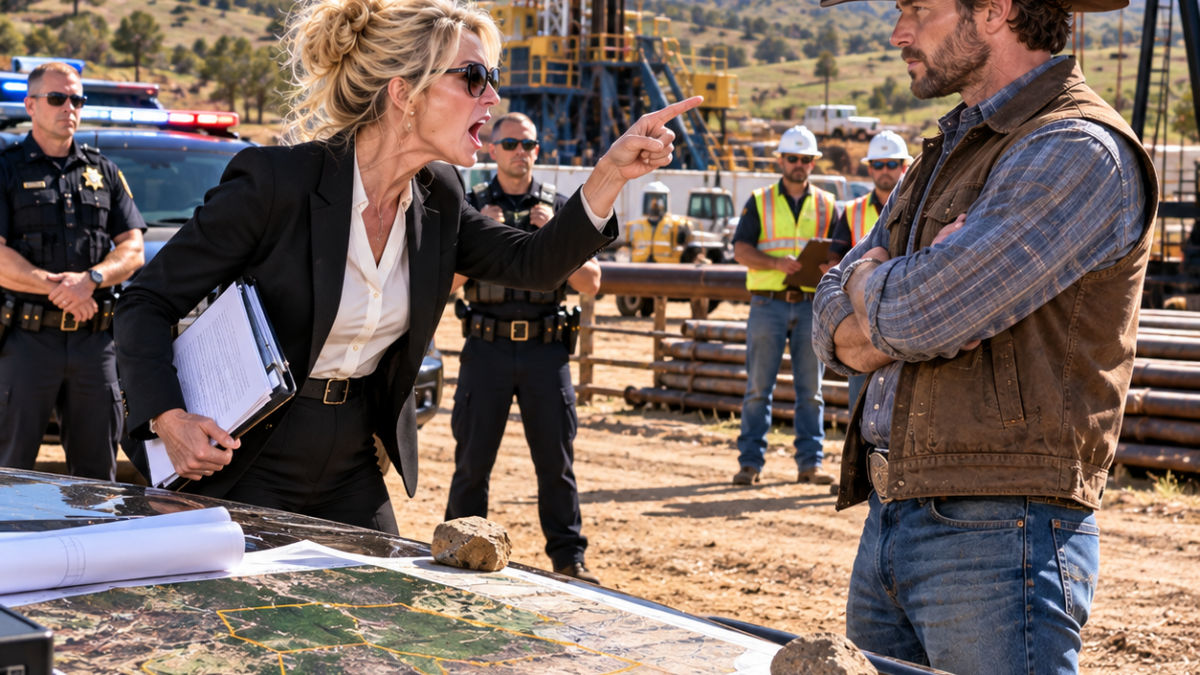
PART 2
I didn’t touch the contract.
Janice had slid it across the polished community-center table as though forty percent of my oil income were a neighborly compromise over a fence.
I left it exactly where it landed.
“Let me make sure I understand your proposal.”
Janice folded her hands.
“Of course.”
“You want forty percent of the revenue generated from minerals my family owns.”
“The association is proposing a community-impact participation structure.”
Richard Thornton shifted beside her.
I looked at him.
“That’s a lot of words for forty percent.”
Christine Morales, the board secretary, looked down quickly.
I saw the corner of her mouth move.
Janice did not appreciate the joke.
“The drilling operation creates effects extending beyond your property line.”
“Such as?”
“Noise.”
“The rig complies with county operating hours.”
“Traffic.”
“Meridian uses the county road.”
“Environmental risk.”
“Permitted and monitored by the state.”
“Visual impact.”
I leaned back.
“There it is.”
Janice’s eyes narrowed.
“What?”
“You don’t like looking at it.”
“That is not what I said.”
“No. You just worked very hard to say it without saying it.”
Richard stopped tapping his fingers.
Janice remained composed.
That was what made her dangerous.
Barbara’s smile at the gate had been obvious.
Richard’s wine-bottle visit had been transparent.
Janice was different.
She wore authority like tailored clothing.
Nothing excessive.
Nothing accidental.
Even the pauses felt rehearsed.
She leaned slightly forward.
“You are approaching this as though Pinewood Estates is attempting to confiscate something from you.”
“Aren’t you?”
“No.”
“You want forty percent.”
“In exchange for assuming community-monitoring responsibilities and resolving outstanding jurisdictional ambiguities.”
“There is no jurisdictional ambiguity.”
“Our founding plat says otherwise.”
“My grandfather never signed it.”
“That may be one interpretation of its legal effect.”
I reached into my folder.
Original deed.
Certified copy.
Property survey.
Agricultural classification.
I placed them side by side.
“My great-grandfather bought this property in 1952.”
No reaction.
“Grandpa inherited it.”
Nothing.
“Pinewood Estates didn’t exist.”
Janice nodded patiently.
“We know the history.”
That sentence bothered me.
Not:
We understand your position.
Not:
We have reviewed the documents.
We know the history.
“How well?”
She paused.
“Excuse me?”
I opened Grandpa’s correspondence file.
“Your association contacted him in 1987.”
Richard’s tapping stopped.
Janice did not move.
“You asked to discuss changing the community boundary.”
No response.
“He ignored you.”
“Your grandfather was notoriously difficult.”
That landed harder than I expected.
Maybe because he wasn’t there to hear it.
Maybe because nobody from Pinewood had cared enough to attend his funeral, yet suddenly they had opinions about his personality.
“He was seventy-nine when he died.”
Janice’s expression remained smooth.
“And stubborn until the end.”
Christine looked at Janice.
Not at me.
That mattered.
I continued.
“You contacted him in 1987. Then your original board prepared expansion plans in 1991 showing his property as future acquisition pending.”
I removed the map.
Richard spoke this time.
“Preliminary planning documents.”
“Yes.”
“Not legal commitments.”
“Exactly.”
He stopped.
I looked back at Janice.
“So why are you using preliminary planning documents to claim authority now?”
Silence.
Then Janice gave me that small, controlled smile.
“Because land-use frameworks develop over time.”
“No.”
I shook my head.
“Something changed.”
“The neighborhood grew.”
“Pinewood has existed for decades.”
“The needs of our residents evolved.”
“You ignored this ranch for thirty-three years.”
“That is an oversimplification.”
“Then simplify it correctly.”
Her eyes sharpened.
The polite conversation was ending.
I leaned forward.
“My grandfather died.”
Nobody moved.
“I inherited the ranch.”
Richard looked toward the papers.
“I started drilling.”
Christine stopped pretending to take notes.
“And suddenly your HOA discovered three decades of urgent boundary concerns.”
Janice said nothing.
I held her gaze.
“You didn’t care about forty acres of old ranch land.”
Her jaw tightened slightly.
“You care about what’s coming out from underneath it.”
“Megan—”
“No.”
It was the first time I used her first name.
She noticed.
“My grandfather wrote me three sentences before he died.”
I didn’t tell her what they were.
Not yet.
“He spent decades saving every letter this board sent him.”
Christine looked at me.
Something in her expression had changed.
Interest?
Fear?
Hope?
I couldn’t tell.
“You amended your covenant in 1988.”
Richard’s face stiffened.
“Article Seven, Section Three.”
Now Janice knew exactly how much homework I had done.
“Commercial activities on properties within or adjacent to community boundaries may require board approval if they materially affect community interests.”
“That is correct.”
“Convenient timing.”
“That amendment applied generally.”
“One year after your board tried to get my grandfather into boundary discussions.”
“Coincidence.”
“Then in 1991 you marked this ranch as future acquisition.”
“That was a proposed phase.”
“And now you want forty percent of my oil.”
“We want a cooperative arrangement.”
I stood.
Janice glanced at the unsigned proposal.
“You should think carefully before walking away.”
“I have.”
“We have substantial resources.”
That was the threat.
Soft.
Expensive.
Respectable.
“Our attorneys believe the original development records present legitimate legal questions.”
“My attorney believes you have no jurisdiction.”
“You have counsel?”
She didn’t expect that.
“Of course.”
I didn’t, not yet.
But I had already decided I would before morning.
Janice recovered.
“Then your attorney should understand the cost of litigating boundary questions.”
There it was.
Not:
We’re right.
Not:
The law supports us.
Cost.
That was their leverage.
I gathered Grandpa’s papers.
“My grandfather kept every letter.”
I looked at each board member.
“Every map.”
Richard.
“Every proposed boundary.”
Christine.
“Every amendment.”
Then Janice.
“You’ve been preparing for this dispute longer than I’ve been an adult.”
Janice’s composure slipped.
Only a fraction.
But I saw it.
“You are not your grandfather.”
“No.”
I picked up my folder.
“He had to fight you alone.”
I left their contract on the table.
“I don’t.”
The drive back to the ranch took fifteen minutes.
I cried for six of them.
Not because I was frightened.
Although I was.
Because I suddenly understood how tired Grandpa must have been.
For decades, I thought his refusal to sell was stubbornness.
That was the family story.
Walter won’t sell.
Walter hates developers.
Walter thinks every lawyer is trying to steal his boots.
We laughed.
What I had never understood was that he had lived with pressure long enough for resistance to become ordinary.
The ranch had not simply been land he loved.
It had been land other people kept trying to define for him.
Driving through the rusted gate, I imagined Grandpa sitting behind the wheel of his old Ford thirty years earlier, opening letters from Pinewood and dropping them into a file because he knew someday somebody might need them.
Me.
The realization hurt.
I walked into the study.
Placed the file on his desk.
Then said aloud:
“I wish you had told me.”
The house answered with silence.
I sat in his chair.
“You stubborn old man.”
Nothing.
I laughed through tears.
“You could’ve called.”
Then I remembered how often he had called.
And how often I had been busy.
Marketing meeting.
Product launch.
Client dinner.
Flight.
Deadline.
Later, Grandpa.
I’ll call Sunday.
Sometimes I did.
Sometimes I didn’t.
Grief has a cruel way of editing your past so every missed phone call looks like a moral failure.
I knew better.
Knowing did not help.
Two days later, a certified letter arrived.
Dallas law firm.
Big one.
More than three hundred attorneys listed across multiple offices.
The HOA had escalated exactly as Janice promised.
Formal complaint.
County administrative review.
Environmental buffer allegations.
Planned community transition zone.
The phrase appeared four times.
Transition zone.
I called the county.
My drilling permit was frozen.
Seventeen days.
I stared at the phone.
“We already have a valid permit.”
“Yes, ma’am.”
“This land isn’t part of Pinewood.”
“I understand.”
“Then why is my permit suspended?”
“Pending boundary classification review.”
“What boundary classification?”
“The claimant submitted historical development documents showing your parcel within a proposed phase-three expansion zone.”
“Proposed.”
“I understand.”
“Never executed.”
“I understand.”
“My grandfather never agreed.”
“I understand.”
“Then what exactly are you reviewing?”
The county employee sighed.
Not hostile.
Tired.
“The regulation requires temporary review when a good-faith boundary dispute is supported by recorded documents.”
“Good faith?”
“That’s the statutory terminology.”
I closed my eyes.
“How long?”
“Depends.”
“On?”
“Submissions from both sides.”
That afternoon Meridian stopped work.
The rig went silent.
The sudden absence of mechanical noise should have felt peaceful.
Instead, it felt like someone had reached across the fence and turned off my future.
Daniel Reeves came to the house.
He had been working with Meridian through the initial site evaluation.
He took off his hat on the porch.
“They froze you?”
“Seventeen days minimum.”
He looked toward Pinewood.
“Figures.”
“You’ve seen this before?”
“Not exactly.”
“Then what figures?”
He leaned against the rail.
“Oil brings relatives people didn’t know they had.”
I laughed despite myself.
“And neighbors.”
“And lawyers.”
“Already have those.”
“You need a better lawyer.”
He was right.
My friend in Austin gave me one name.
Roger Delgado.
“Don’t judge the office,” she warned.
“Why?”
“You’ll understand.”
His office sat above a barber shop forty miles from the ranch.
A narrow staircase led to a second floor that smelled faintly of shaving cream and old books.
Roger’s office looked like paper had exploded inside it.
Files on windowsills.
Files beneath chairs.
Legal pads stacked beside law books.
A coffee cup reading:
I BILL BY THE ARGUMENT.
Roger himself was maybe sixty.
Reading glasses.
Suspenders.
No interest in small talk.
I explained everything.
He read the Pinewood violation notices first.
Then dropped them into his trash can.
I stared.
“Those are evidence.”
He reached down, removed them, and placed them back on the desk.
“Sorry. Symbolic gesture.”
“So?”
“Toilet paper.”
“Roger.”
“You aren’t a Pinewood member.”
“I know.”
“You never signed a covenant.”
“I know.”
“Your property predates the association by decades.”
“Yes.”
“They can fine you zero dollars.”
“They’ve fined me over three thousand.”
“They can invoice you for the moon. Doesn’t make it collectible.”
I breathed.
“The permit freeze?”
He stopped joking.
“That’s real.”
“My permit is valid.”
“I know.”
“They know.”
“Probably.”
“Then how?”
“Procedure.”
That word again.
Roger leaned back.
“Bad actors love procedure because procedure can hurt you even when they’re going to lose eventually.”
“How?”
“They file something with just enough paper behind it to force administrative review.”
“The 1989 plat.”
“Yes.”
“It says phase three contingent.”
“Contingent is doing the work.”
“There was never owner approval.”
“That’s why they’ll lose.”
“Eventually.”
He nodded.
“Eventually costs money.”
“Janice said the same thing.”
“Of course she did.”
“What does she want?”
“Forty percent.”
Roger removed his glasses.
“That’s not an HOA request.”
“What is it?”
“An extraction tax invented by suburban royalty.”
I laughed.
He didn’t.
“Megan, they don’t think they’ll win the mineral rights.”
“What do they think?”
“That you’ll calculate the cost of fighting and pay for peace.”
I looked toward the floor.
“How long have you handled HOA cases?”
“Twenty years.”
“You seen this?”
“Variations.”
“Land acquisition?”
“Yes.”
“Fake boundary claims?”
“Yes.”
“Decades of planning?”
“That’s less common.”
I handed him the 1988 amendment.
He read.
Then the 2010 amendment.
He read more slowly.
“What?”
“Notification clause.”
“Explain.”
“The original covenant didn’t attempt to regulate adjacent properties this broadly.”
“I know.”
“Then in 1988 they added language.”
“Yes.”
“But 2010 is where they expanded ‘planned expansion zones.’”
“Right.”
“Changes like this require procedural compliance.”
“They voted.”
“That’s not all.”
He tapped a provision.
“If the board claims the amendment affects identifiable outside property interests, notice was supposed to go to affected owners under their own process.”
“Grandpa?”
“Exactly.”
“I found no notice.”
“Neither did they, probably.”
“What does that mean?”
“It means their favorite amendment may be useless against you.”
For the first time since Janice slid that contract across the table, I felt something other than pressure.
A direction.
Roger handed me a legal pad.
“County archives.”
“I’ve been there.”
“Go again.”
“What am I looking for?”
“Notification logs. Mailing certificates. Board minutes. Anything from 2008 through 2012.”
He smiled.
“And bring coffee.”
“I thought lawyers had staff.”
“My staff refuses to work here.”
I understood why.
The county archive became my second home.
Most records were digitized badly.
Others lived in boxes.
The clerk at the front desk was Denise.
Late twenties.
Sharp eyes.
Fast hands.
By my third visit, she began placing files on the counter before I finished requesting them.
“You found the 2010 mailing list?”
“No Murphy.”
“Could be separate notice.”
“Could.”
“Any certified mail record?”
“Not yet.”
She disappeared.
Returned with another box.
I noticed she glanced toward her supervisor.
“You’re helping me more than your job requires.”
Denise froze.
“I’m retrieving public records.”
“I’m not accusing you.”
She looked down.
“My parents had sixty acres off Route Twelve.”
Something in her voice made me stop.
“Had?”
“Pinewood wanted water rights.”
I said nothing.
“They challenged the boundary.”
She gave a humorless smile.
“Environmental complaints.”
“Permit problems?”
“Everything.”
“How long?”
“Almost two years.”
“What happened?”
“My parents sold.”
“To Pinewood?”
“Development company.”
“Price?”
“Half what the land was worth.”
“What’s there now?”
“Golf course.”
She pushed a folder toward me.
“My grandmother’s house used to sit near the seventh hole.”
I understood the tension in her shoulders.
“You think they’re doing the same thing to me.”
“I know they’ve done similar things before.”
“Why didn’t your family sue?”
“My dad did.”
“What happened?”
“Ran out of money.”
There it was again.
Cost.
Not law.
Cost.
Denise looked me directly in the eye.
“I just want to see somebody make them finish one of these fights.”
Inside the folder were 1987 board minutes.
I nearly missed the entry because it sounded harmless.
NEW BUSINESS — MURPHY PROPERTY STATUS.
Grandpa had attended.
That surprised me.
According to the minutes, Walter Murphy objected to proposed boundary revisions.
He referenced geological surveys suggesting subsurface resource potential.
The board voted to table acquisition discussions pending further assessment of the property’s long-term significance.
I read it twice.
Grandpa had told them.
Not everything.
Enough.
He had deliberately made the ranch look risky to acquire.
Underneath the minutes was his written statement.
Formal.
Measured.
Classic Walter.
No drama.
At the bottom, in handwriting:
Suspect they will wait.
Five words.
My grandfather had predicted the next thirty-three years.
I brought the file to Roger.
He read the minutes.
Then again.
“This is good.”
“Good?”
“Very.”
“How?”
“They knew the property might have unusual value before they amended the covenants.”
“So?”
“So your argument is no longer merely that they accidentally wrote broad provisions and opportunistically tried applying them later.”
He held up the minutes.
“You can argue they deliberately built future leverage around a property they already wanted.”
“Can we prove that?”
“Not yet.”
He smiled.
“But discovery exists for a reason.”
He filed a sixty-three-page motion seeking to lift the permit freeze.
Deed history.
Agricultural classification.
No signed covenant.
Failed notice.
1987 minutes.
1989 contingent plat.
2010 amendment.
He asked for expedited review.
Pinewood answered by demanding consolidation.
One hearing.
All issues.
Roger called.
“Good news.”
“They agreed?”
“They want one big hearing.”
“That sounds bad.”
“It’s arrogant.”
“And that helps?”
“Arrogant people bring too much.”
Subpoenas followed.
Internal communications concerning the Murphy property.
Financial records tied to legal expenses and adjacent-property disputes.
Board materials from 2008 through 2012.
Pinewood fought almost everything.
Privileged.
Confidential.
Overbroad.
Burden.
They produced official minutes.
Claimed informal notes had been destroyed under ordinary retention policy.
Roger spread the production across his desk.
“Sanitized.”
“You know that?”
“I know people.”
He held up three years of perfect board minutes.
“Real organizations are messier than this.”
“What are they hiding?”
“That’s the fun part.”
“This is fun to you?”
“Not your billing statements.”
He was right.
Then Denise connected me to the Henderson family.
Eighty acres west of Pinewood.
Cattle.
Family-owned for generations.
In 2008, environmental complaints began.
Runoff.
Water contamination.
Animal-waste concerns.
The Hendersons fought.
Their cattle operation spent fourteen months under restrictions and review.
They eventually sold at sixty percent of market.
The buyer?
A development company.
Silent partner?
Richard Thornton.
I stared at the company filing.
“Pinewood vice president Richard Thornton?”
Denise nodded.
The Garza case was worse.
Boundary dispute in 2015.
Then:
Tax reassessment.
Access-road fight.
Mailbox relocation.
Repeated administrative trouble.
They abandoned the property in 2017.
Not because somebody arrived with a gun.
Because life became unbearable one document at a time.
Identify.
Isolate.
Exhaust.
Acquire.
I wrote the words on Grandpa’s legal pad.
Then stared at them.
That was the system.
And our ranch was next.
The permit hearing happened three weeks later.
County hearing officer Margaret Chen presided.
Pinewood brought two Dallas attorneys.
Richard attended.
Janice did not.
Roger noticed before I did.
“She’s staying off transcript.”
“Why?”
“Maybe she’s cautious.”
“Or guilty?”
“Lawyers don’t use that word until courts do.”
The HOA presented its ghost boundary.
1989 plat.
Phase-three expansion.
Community-impact provisions.
Adjacent industrial activity.
Environmental concerns.
Roger responded with property history.
No covenant.
No acquisition.
No owner consent.
No proper notice.
1987 minutes proving longstanding strategic interest.
The hearing lasted nearly seven hours.
Margaret Chen asked precise questions.
“What document converted the proposed expansion line into an enforceable boundary?”
The HOA lawyer gave a long answer.
She interrupted.
“That wasn’t my question.”
I liked her.
“Do you have an executed owner agreement?”
“No.”
“Recorded annexation?”
“No.”
“Signed covenant?”
“No.”
“Then explain the source of jurisdiction.”
More lawyering.
Less answer.
The decision came the following Thursday.
I was in Grandpa’s kitchen when Roger called.
“You win.”
I stood.
“What?”
“Permit freeze lifted.”
I gripped the table.
“Say it again.”
“Drilling can resume.”
I closed my eyes.
“And the boundary?”
“Rejected.”
“What exactly?”
“Chen called the 1989 notation aspirational, not operative.”
I laughed.
“What about 2010?”
“Procedurally deficient as applied to Walter’s property.”
I covered my mouth.
Roger continued.
“And she noticed the document-retention issue.”
“What?”
“Selective preservation inconsistent with their stated policy.”
“Meaning?”
“Meaning she noticed the same thing we did.”
I walked onto the porch.
For a moment, all I could see was the ranch.
Grass.
Barn.
Rig.
Stock pond.
Grandpa’s road.
“Clean win?” I asked.
“Clean administrative win.”
“Why the qualifier?”
“Because Janice Thornton has not spent thirty years waiting for this ranch to quit after one hearing.”
Two days later, Pinewood Estates sued me in state district court.
Roger called again.
“Told you.”
The complaint sought a declaration that HOA covenants applied to my property.
Injunction against drilling.
Environmental relief.
Damages.
Attorney fees.
Every possible pressure point.
Roger estimated the first year could cost me seventy-five to one hundred thousand dollars.
“How much can Pinewood spend?”
“They have three hundred households.”
“So they can spread the pain.”
“Yes.”
“I pay mine alone.”
“Yes.”
I sat quietly.
“That’s the model, isn’t it?”
“What?”
“The Hendersons.”
Roger sighed.
“Yes.”
“The Garzas.”
“Yes.”
“Make resistance more expensive than land.”
“Yes.”
I looked at Grandpa’s old account statement.
First oil check.
$47,000.
Suddenly it seemed tiny.
“How do we change the math?”
“We need something they can’t explain as an ordinary legal dispute.”
Three nights later, an anonymous email arrived.
11:47 p.m.
No signature.
One paragraph.
I have information about your case. The board kept records it claims were destroyed. I cannot come forward openly. My job would disappear and my family depends on it. Files remain in the community center under “transition properties.” I’m sorry I can’t do more.
I read it five times.
Transition properties.
Only someone inside the board would know that phrase.
Christine Morales came immediately to mind.
I forwarded it to Roger.
He called.
“Do not break into the community center.”
“I wasn’t planning to.”
“You were thinking creatively.”
“I’m in marketing.”
“Exactly why I’m worried.”
“How do we get them?”
“Discovery.”
“They claim they don’t exist.”
“Then somebody has to authenticate copies or force preservation.”
“What if Christine sent this?”
“What if she didn’t?”
Good point.
Three weeks later, Pinewood gave us our opportunity.
SPECIAL COMMUNITY FORUM.
PROPERTY DEVELOPMENT AND RESOURCE MANAGEMENT.
Open to affected parties.
Roger laughed when he saw the notice.
“They want a public-relations show.”
“Then we should attend.”
“They will control the microphone.”
“For a while.”
Five days before the meeting, a manila envelope appeared in my mailbox.
No return address.
Inside:
Photocopies.
TRANSITION PROPERTY ASSESSMENT — MURPHY PARCEL.
Internal strategy memo.
Legacy landowners.
Acquisition opportunities.
Covenant expansion.
Jurisdictional framework.
One line made my hands shake.
Objective: position association to assert procedural control over high-value adjacent parcels upon ownership transition.
Upon ownership transition.
Death.
Inheritance.
Grandpa dies.
Granddaughter inherits.
Attack.
Another memo contained Walter Murphy’s name.
Murphy property represents significant long-term value and should be prioritized upon generational transfer.
Signed:
Janice Thornton.
I sat at Grandpa’s desk.
My hands went cold.
Thirty-three years.
They didn’t simply wait for land value to rise.
They waited for Grandpa to die.
There was a note in the envelope.
Christine’s name wasn’t signed.
But I knew.
I have worked for this board eleven years. I watched them do this to four families. I signed confidentiality agreements. I could lose my pension. My daughter asked me what I do for a living and I realized I was ashamed to answer. I’m sorry it took me this long.
I called Roger.
“Tell me this changes everything.”
“It changes a lot.”
“Can we use it?”
“Copies alone?”
“Problem?”
“Authentication.”
“She can authenticate.”
“If she comes forward.”
“She said she can’t.”
“Then we protect the source until a lawful process brings her in.”
“What about the public meeting?”
“We can use documents we already have.”
“And these?”
He paused.
“Carefully.”
The community center held more than one hundred people.
Pinewood residents filled folding chairs.
Most had never met me.
They knew the version Janice distributed.
Greedy heiress.
Industrial drilling.
Environmental threat.
Property-value risk.
Maybe some believed I had struck oil and decided neighbors no longer mattered.
I could almost understand it.
People defend what they think protects their homes.
That is why controlling information creates power.
Janice opened the forum.
Richard beside her.
Christine at the far end.
She looked calm.
Too calm.
Janice talked about community values.
Responsible development.
Protecting families.
The pending lawsuit.
She said:
“We are not attempting to take anyone’s property.”
I almost laughed.
Then she opened questions.
I raised my hand.
Her pen stopped clicking.
“Yes, Ms. Murphy?”
I stood.
“You’ve said the boundary issue is longstanding and ambiguous.”
“Yes.”
“Your own 1987 board minutes show something different.”
Murmurs.
Janice tilted her head.
“I’m not familiar with the specific record.”
I held up the certified copy.
“September 1987. Walter Murphy appeared before your board.”
More murmurs.
“He objected to your proposed boundary expansion.”
Janice looked toward Richard.
“He also disclosed geological information indicating the property could contain valuable subsurface resources.”
Someone whispered.
“Oil?”
I continued.
“The board voted to table acquisition efforts.”
Janice replied:
“Records from that period are incomplete.”
“These are certified county copies.”
A woman near the front raised her hand.
“How do we know the county copy is real?”
Fair question.
I handed it to Roger.
He explained certification.
Then I continued.
“Your association stopped approaching my grandfather afterward.”
Janice said:
“He refused productive dialogue.”
“Then you amended the covenants.”
“No connection.”
“Then you expanded them again in 2010.”
“Normal governance.”
“Normal?”
I removed one transition memo.
Janice saw the header.
Her face changed.
There.
Finally.
Fear.
I read:
“Position association to assert procedural control over high-value adjacent parcels upon ownership transition.”
The room went quiet.
Richard spoke.
“Those documents may be privileged.”
That was the wrong response.
Not fake.
Privileged.
Several residents reacted.
I looked at Janice.
“This memo names my grandfather.”
Silence.
“It says his property should be prioritized upon generational transfer.”
Janice’s pen clicked.
Once.
Twice.
“What exactly does that mean?”
She leaned into the microphone.
“Internal planning documents require context.”
“Then give us the context.”
“These materials were never intended for public distribution.”
The room changed.
Not a confession.
Better.
Authentication.
The woman who had questioned my documents turned slowly toward Janice.
“So they’re real?”
Janice froze.
Richard whispered something.
Too late.
An older man stood.
“Janice, have our dues been paying lawyers to target private land?”
“No.”
Roger looked at me.
We both heard the weakness.
Another resident:
“How much did this lawsuit cost?”
Janice tried to regain control.
“Everyone, please sit down.”
A retired woman near the aisle stood.
“I didn’t move here to finance land grabs.”
Applause.
Then a man in a golf shirt shouted:
“One holdout shouldn’t ruin everyone’s investment.”
The room split.
Some defended the board.
Others demanded records.
“How many properties?”
“What happened to the Hendersons?”
“Who owns the golf-course land?”
“Is Richard connected to the buyer?”
Richard stood.
“This meeting is becoming defamatory.”
Tom—someone I didn’t know then—called back:
“Then show us the books.”
Christine quietly gathered her things.
She stood.
Walked toward the exit.
As she passed my row, our eyes met.
One second.
No nod.
No smile.
Nothing anyone else would notice.
But I knew.
Thank you.
That was all I tried to say with my face.
Outside, Roger touched my elbow.
“We’re leaving.”
“Why?”
“Because the board has lost control. Nothing you say now improves our legal position.”
Behind us, voices rose.
Janice’s gavel struck.
Again.
Again.
Useless.
In the parking lot, I took my first full breath in an hour.
“We got them.”
Roger shook his head.
“No.”
“She admitted the documents.”
“She acknowledged internal documents.”
“That’s huge.”
“Yes.”
“So?”
“She’s cornered.”
“Good.”
“No.”
Roger looked toward the community center.
“People like Janice get most dangerous after the audience stops applauding.”
The next morning, a process server arrived at the ranch.
Emergency motion.
Temporary restraining order.
Pinewood claimed I had improperly obtained confidential materials.
Tortious interference.
Disruption of association governance.
Irreparable harm.
They wanted drilling halted again.
I read it on Grandpa’s porch.
Then laughed.
Not because I wasn’t afraid.
Because Pinewood’s argument had become:
She exposed what we did, therefore she is harming us.
Roger did not laugh.
“Hearing Monday.”
“Can they win?”
“They can always win.”
“Helpful.”
“You want certainty, buy a toaster.”
“What do we have?”
“Christine.”
I stopped.
“What?”
“She called me.”
“When?”
“Twenty minutes ago.”
My heart accelerated.
“What did she say?”
“She’s done.”
Monday morning, Judge Walsh’s courtroom was full.
Pinewood brought three attorneys.
Richard.
Two board members.
Janice absent again.
Roger and I sat at the other table.
Then Christine entered.
The Pinewood attorneys noticed.
Richard went pale.
Christine sat behind us.
Not beside the board.
The hearing began.
The HOA argued that confidential board documents had been misappropriated.
That disclosure damaged governance.
That drilling should halt while the litigation proceeded.
Judge Walsh listened.
Then asked:
“How does stopping the drilling remedy the disclosure?”
Their lawyer began discussing leverage and community impact.
Judge Walsh interrupted.
“Again. What is the legal connection?”
He tried again.
She didn’t look convinced.
Roger stood.
He presented:
1952 deed.
No covenant.
1987 board minutes.
1989 contingent plat.
Failed notice.
2010 transition memos.
Then:
“Your Honor, we have an authenticating witness.”
Every head turned.
Christine walked to the witness stand.
She looked terrified.
Swore the oath.
Roger approached carefully.
“Ms. Morales, how long did you serve as Pinewood Estates board secretary?”
“Eleven years.”
“Did your duties include maintaining internal board records?”
“Yes.”
“Do you recognize these documents?”
“Yes.”
“How?”
“I filed the originals.”
The room became perfectly still.
“Do you recognize handwriting on the routing notes?”
“Mine.”
“Did Pinewood maintain a category called transition properties?”
“Yes.”
“What did that category concern?”
The HOA attorneys objected.
Judge Walsh ruled.
Christine continued.
“Properties outside current boundaries that board leadership believed could eventually be acquired or influenced.”
“Including the Murphy ranch?”
“Yes.”
Richard stared at her.
Roger held up the 2010 memo.
“Was this authentic?”
“Yes.”
“Did Janice Thornton participate in preparing it?”
“Yes.”
Objection.
Overruled after foundation.
“Did the board discuss expanding covenant language to create leverage over adjacent parcels?”
Christine’s eyes filled.
“Yes.”
The word barely came out.
I watched her.
Not victory.
Respect.
Whatever happened to her pension, job, reputation—she knew.
And testified anyway.
Roger asked:
“Were Walter Murphy or Megan Murphy properly notified that the 2010 amendments were intended to affect their property?”
“No.”
“Why not?”
Christine hesitated.
“Because notice might cause them to challenge the amendment before the board needed it.”
A murmur swept through the courtroom.
Judge Walsh looked over her glasses.
“Counsel.”
The room quieted.
Roger finished.
The HOA attacked Christine on cross-examination.
Confidentiality agreements.
Personal disagreements.
Board politics.
Potential benefits.
Why wait eleven years?
That question hurt her.
She answered:
“Because I was afraid.”
“Of losing your job?”
“Yes.”
“Your pension?”
“Yes.”
“So you participated for eleven years?”
“Yes.”
“You signed minutes?”
“Yes.”
“You processed legal bills?”
“Yes.”
“You are not some innocent outsider, correct?”
Christine swallowed.
“No.”
“Then why should this court believe you now?”
She looked toward the gallery.
Then at the attorney.
“Because I’m finally saying what the documents already say.”
Roger didn’t need anything more.
Three hours later, Judge Walsh ruled.
The temporary restraining order was denied.
Then she went further.
Pinewood’s claims against my property were not simply weak.
They were built on covenant amendments that were procedurally defective as applied to our ranch.
The 1989 expansion line had no executed agreement behind it.
The Murphy property had never entered Pinewood jurisdiction.
And the litigation record demonstrated conduct consistent with using legal process to create financial pressure rather than resolve a legitimate boundary dispute.
The original lawsuit was dismissed with prejudice.
Attorney fees shifted.
The HOA could not simply refile the same claim under another theory.
I sat perfectly still.
Roger whispered:
“Breathe.”
I did.
Judge Walsh continued.
Bad-faith findings.
Abuse of process.
Sanctions.
The words blurred.
Then:
“Ms. Murphy.”
I looked up.
“The court recognizes that property disputes can be complex.”
“Yes, Your Honor.”
“But complexity is not a license to manufacture jurisdiction where no agreement exists.”
“No, Your Honor.”
“Your drilling operation remains subject to all legitimate state, county, and environmental requirements.”
“Of course.”
“But not Pinewood Estates.”
My eyes filled.
“Thank you.”
Outside the courthouse, reporters waited.
I hadn’t expected them.
Roger stepped in front.
“No detailed comment while related matters remain under review.”
A reporter shouted:
“Ms. Murphy, are you going to sue the HOA?”
Another:
“How much oil is on the property?”
Another:
“Will you shut down Pinewood?”
I stopped.
Roger muttered:
“Don’t.”
I turned anyway.
“I don’t want Pinewood shut down.”
He looked at me.
Reporters leaned closer.
“I want them to stay on their side of the fence.”
Then I left.
The aftermath was slower than people imagine.
Janice did not vanish the next day.
Residents did not unanimously apologize.
The neighborhood did not transform into a movie ending.
People argued.
Some thought I had exposed corruption.
Some thought I had humiliated their community.
Some still believed industrial drilling beside a subdivision was a legitimate concern.
They weren’t entirely wrong.
Noise is real.
Traffic is real.
Environmental risk deserves oversight.
But legitimate concern does not create ownership.
It does not create forty-percent entitlement.
It does not create jurisdiction.
The forensic-audit petition began with forty signatures.
Then sixty.
Then one hundred.
The numbers accelerated when financial records surfaced.
Nearly $200,000 in HOA legal expenses tied to the Murphy property and associated land strategy.
Two hundred thousand dollars.
Homeowner dues.
Retirees.
Young families.
People paying monthly assessments thinking the money maintained common areas.
Richard Thornton resigned first.
Family obligations.
That was his phrase.
Nobody believed it.
Two other board members followed.
Janice stayed.
For ten more days.
She released a statement accusing Judge Walsh of judicial overreach.
She said the board had always acted to protect homeowners.
Then the audit disclosed additional legal expenses and old acquisition files.
Support collapsed.
Janice resigned on Tuesday morning.
No press conference.
No dramatic speech.
An email.
Effective immediately.
Christine Morales was elected to the interim board.
Her first official letter came to me.
Dear Ms. Murphy,
The Pinewood Estates Homeowners Association acknowledges that the Murphy property has never been subject to Pinewood’s recorded covenants or mandatory association authority.
The letter continued.
Apology.
Commitment to reform.
Boundaries.
Transparency.
I kept it.
Not because I needed it.
The court order was stronger.
I kept it because Grandpa never received one.
Thirty-three years of:
Maybe.
Future acquisition.
Adjacent property.
Transition zone.
Community impact.
Finally:
Not ours.
The day after the ruling, my phone started ringing.
Energy companies.
Investors.
Land brokers.
One company offered fifteen million dollars for the mineral rights.
$15,000,000.
I read the number twice.
Then called Roger.
“You sitting?”
“What did Pinewood do now?”
“Nothing.”
“Miracles.”
“I got an offer.”
“How much?”
“Fifteen million.”
Silence.
Then:
“Dollars?”
“No, Roger. Potatoes.”
“I’m a lawyer. Specificity matters.”
“What do I do?”
“You hire a minerals lawyer.”
“You are a lawyer.”
“I’m an HOA lawyer.”
“Coward.”
“Correct.”
Daniel Reeves came to the ranch that evening.
I showed him the offer.
He whistled.
“Serious company.”
“You know them?”
“Know of them.”
“Good?”
“Competent.”
“Would Grandpa sell?”
Daniel looked toward the pump.
“That isn’t your question.”
“What is?”
“Do you want to?”
“I don’t know.”
“Then don’t sign.”
Grandpa again.
Sign nothing.
Not never.
Not don’t decide.
Don’t surrender the decision before understanding it.
I left the offer on the kitchen table.
One week.
Two.
Three.
Every morning, fifteen million dollars waited beside my coffee.
I ran numbers.
Investment returns.
Taxes.
Estate structure.
Possible conservation purchases.
Freedom.
I could move anywhere.
Buy anything reasonable.
Never work again.
I had already left my marketing job in Dallas.
At first temporarily.
Then indefinitely.
Fifteen million would make that permanent.
But there was a strange emptiness inside the number.
Freedom from what?
Work?
Bills?
Texas?
The ranch?
I walked more.
Grandpa’s land was only forty acres.
Small by Texas standards.
But childhood had made it enormous.
Stock pond.
Cottonwoods.
Old cemetery.
Barn.
Windmill.
Back field.
Fence.
Every piece held a version of me.
Seven-year-old Megan chasing grasshoppers.
Nine-year-old Megan learning to fish.
Fourteen-year-old Megan furious because Grandpa refused to install air-conditioning in the barn loft.
Twenty-year-old Megan telling him Dallas was more exciting than cattle country.
Thirty-something Megan returning alone for his funeral.
The ranch had stayed.
I had changed around it.
At the stock pond one morning, leaves covered the water.
A red-tailed hawk circled overhead.
I thought about the Hendersons.
Sold mineral rights.
Money.
Then land gone.
Grandpa used their story as warning.
Oil money poisons people.
I never fully agreed.
Money isn’t poison.
It amplifies appetite.
If you know what enough means, money can be useful.
If nothing is enough, fifteen million becomes only the beginning.
I returned to the house.
Called the buyer.
Declined.
Then called Meridian.
“I want a new agreement.”
“What kind?”
“Two wells maximum.”
“Ms. Murphy—”
“Two.”
“That leaves reserves undeveloped.”
“I know.”
“Environmental restoration language?”
“Strong.”
“We already comply.”
“Make it contractual.”
“Longer term?”
“Limited.”
“Why?”
I looked at Grandpa’s note.
“Because the oil is mine even when I leave some of it underground.”
The final contract produced less money.
A lot less.
Still more than enough.
Revenue gave me something I had not expected.
Not luxury.
Capacity.
I called Roger.
“I want to start something.”
He sighed.
“You bought a yacht.”
“No.”
“Good. I get seasick.”
“A legal fund.”
Silence.
“For what?”
“People like the Hendersons.”
His tone changed.
“Go on.”
“Family landowners facing HOA boundary tactics, covenant overreach, procedural exhaustion.”
“You have a name?”
“Walter Murphy Land Preservation Fund.”
“That’s terrible.”
“I like it.”
“Too long.”
“You billed me by six-minute increments. You don’t get branding advice.”
Fair.
We created it anyway.
First year was messy.
I assumed money solved access.
It didn’t.
People still waited too long to ask for help.
Records disappeared.
Families disagreed internally.
Clients wanted revenge instead of strategy.
Some cases had no clean legal argument.
One family settled before we finished building their defense.
I felt like we had failed.
Roger disagreed.
“They chose.”
“They sold.”
“They chose.”
“Under pressure.”
“Yes.”
“So we failed.”
“No.”
He leaned across the table.
“Our job isn’t to force clients to fight because fighting feels noble.”
I hated how often lawyers in this story were right.
“The goal is informed choice.”
That word.
Choice.
Always returning.
Within eighteen months, the fund helped seven families defeat improper claims without selling.
One elderly couple cried when Roger told them their boundary lien had been removed.
The husband said:
“I thought we were going to lose the place.”
Roger pointed toward me.
“Thank Walter Murphy.”
The man looked confused.
I smiled.
“Long story.”
Pinewood changed too.
Christine became president.
The irony would have made Grandpa suspicious.
I was suspicious.
But Christine did something Janice never did.
She came to the ranch.
Alone.
No contract.
No lawyer.
No board delegation.
She stood outside the gate until I walked down.
“I’m not crossing unless invited.”
Good start.
I opened it.
We sat on the porch.
She looked at the drilling operation.
“I hated that rig when it arrived.”
I smiled.
“Why?”
“Noise.”
“Fair.”
“And because Janice told us what it meant.”
“What?”
“That you were going to turn the whole eastern edge into an industrial field.”
“Two wells.”
“I know now.”
We sat silently.
Then Christine said:
“I signed things.”
“I know.”
“I processed their legal bills.”
“I know.”
“I watched the Henderson situation.”
I turned.
“You were there?”
“Junior administrator.”
“Garzas?”
“Yes.”
“Why didn’t you say anything?”
She looked toward her hands.
“Same reason everybody gives.”
“Fear.”
“Mortgage.”
“Pension.”
“Daughter.”
I nodded.
“I’m not asking you to forgive me.”
“Good.”
She almost laughed.
“What are you asking?”
“Advice.”
“Dangerous.”
“We’re rewriting governance rules.”
“Ask Roger.”
“We did.”
“Then why me?”
“Because rules written by boards sound different than rules experienced by targets.”
That was smart.
I told her:
“No secret legal funds.”
She wrote it down.
“Full disclosure of outside-land disputes.”
She wrote.
“No enforcement theory based on proposed boundaries.”
Write.
“Independent legal review before spending homeowner money on property-acquisition claims.”
Write.
“Notice to residents when legal expenses exceed a threshold.”
Write.
“Term limits.”
She looked up.
“Janice served too long.”
“Yes.”
“How long?”
“Two terms.”
“Ouch.”
“Power should have an expiration date.”
She wrote it.
Then:
“What about architectural rules?”
“Paint every house purple.”
She stared.
I smiled.
“Not my HOA.”
For the first time, she laughed.
Pinewood remained separate from me.
I preferred it that way.
I did not join.
Did not attend social events for a while.
Did not pretend a new board erased the old one.
Some residents resented me.
A letter to the neighborhood newsletter accused me of costing homeowners hundreds of thousands in legal fees.
Technically true in one sense.
Pinewood paid lawyers.
But I had not ordered them to sue.
Still, anger needs somewhere to go.
I let them be angry.
Other residents wrote letters thanking Christine.
Some apologized to me personally.
Barbara came once.
The woman who had photographed the rig.
She arrived holding a pie.
That felt dangerously suburban.
“I owe you an apology.”
“Yes.”
She blinked.
People expect you to say they don’t.
“You were photographing my property before introducing yourself.”
“Yes.”
“You knew the board was preparing action.”
“Yes.”
“You pretended to be friendly.”
She looked ashamed.
“Yes.”
I took the pie.
“What kind?”
“Pecan.”
“Good apology.”
She laughed nervously.
“I really thought the drilling would destroy values.”
“That concern isn’t evil.”
“I also believed Janice when she said your family had been blocking legitimate expansion.”
“That was false.”
“I know.”
I opened the gate.
“Coffee?”
She nodded.
That conversation mattered.
Barbara was not Janice.
Most people in bad systems are not architects.
They are participants.
Some enthusiastic.
Some passive.
Some afraid.
Some simply trusting.
If every person who believed Janice became my enemy forever, I would be living exactly the way Janice wanted—inside permanent conflict.
I had enough work.
Six months after the court ruling, I found Grandpa’s final letter.
Not in the lockbox.
That would have been too easy.
Inside a copy of Giants in the Earth on his bookshelf.
Old envelope.
Yellowed.
MEGAN.
His handwriting.
I sat on the edge of his bed before opening it.
Three years before his death.
Megan,
If you’re reading this, I’m gone and you’re probably standing in my house wondering what to do with forty acres of Texas dirt.
I laughed.
Then cried immediately.
Classic Grandpa.
The letter continued.
He knew the HOA would come eventually.
He didn’t know when.
He did not know whether oil would ever be drilled.
He didn’t know whether I would sell.
Then:
Whatever you decide is the right decision because the choice is yours to make.
I stopped.
Read it again.
That’s what I’ve protected all these years. Not the land itself. Your freedom to decide what happens to it.
My hands shook.
He explained that Pinewood had always wanted certainty.
Control.
A future claim.
Something they could use after he was gone.
He saved records because he knew I should not inherit their version of history.
Then:
I didn’t keep the ranch because selling is wrong. I kept it because nobody gets to make that decision for us by wearing us down.
There it was.
Everything.
I had turned Grandpa into a symbol of never selling.
He wasn’t.
He was a symbol of never surrendering the choice.
That was different.
I read the letter three times.
Then lay backward across the bed like I had as a child.
Ceiling fan turning.
Same cracked paint near the corner.
For months, I had been asking:
What would Grandpa do?
Sell mineral rights?
Expand Meridian?
Shut down drilling?
Preserve everything?
His answer:
Stop asking.
Your choice.
That was the gift.
I kept the limited Meridian contract.
Two wells.
Environmental restoration.
Independent monitoring.
Revenue sufficient to maintain the ranch and fund the legal program.
Enough.
I learned to love that word.
Enough oil.
Enough money.
Enough legal victory.
Enough anger.
The Walter Murphy Land Preservation Fund grew.
Roger pretended to hate the name until somebody printed it on decent letterhead.
We hired one young lawyer.
Then another.
Denise eventually joined our advisory group.
Her parents never recovered their sixty acres.
That remained painful.
But she helped other families avoid the same trap.
One case involved an eighty-year-old widow whose HOA claimed a private access easement entitled them to widen a road across her pasture.
It didn’t.
Another involved a ranch family facing escalating drainage complaints after rejecting a developer.
We forced records into daylight.
Complaint vanished.
Another case was harder.
The HOA actually had legitimate rights.
Our client hated hearing it.
“You’re supposed to defend me.”
“We are.”
“Then fight.”
Roger shook his head.
“Defending you includes telling you when the other side is right.”
The client eventually negotiated.
That case became important to me.
If our fund became a machine that assumed every HOA was corrupt, we would become another version of Pinewood’s old board—deciding the conclusion before reading the paper.
So we created standards.
Documents first.
Facts first.
No outrage before evidence.
Grandpa would approve.
Probably complain about overhead.
On the first anniversary of his death, I walked to the cemetery at the edge of the ranch.
His headstone was simple.
WALTER JAMES MURPHY.
Dates.
Then the line I had chosen from his letter.
THE CHOICE IS YOURS TO MAKE.
The Meridian rig was silent for scheduled maintenance.
No machinery.
No trucks.
Just wind.
Exactly the way Grandpa liked it.
I sat on the grass beside his grave.
“I drilled.”
Obviously no answer.
“Sorry.”
Then I shook my head.
“No.”
I smiled.
“I’m not sorry.”
That felt strange.
“I think you knew I might.”
Wind moved through the grass.
“You should’ve told me about Janice.”
Still nothing.
“You should’ve told me about everything.”
Then I remembered the box.
The records.
The note.
He had told me.
In Walter Murphy language.
Late.
Indirect.
Thoroughly documented.
I laughed.
“You impossible man.”
I stayed there until sunset.
The subdivision roofs caught the last orange light.
For most of the year, I had looked toward Pinewood and seen enemy territory.
Now I saw houses.
People.
Some had supported Janice.
Some opposed her.
Most probably wanted to pay their mortgage, grill on weekends, keep the neighborhood safe, and not think about forty acres beyond their fence.
That realization was freeing.
Institutions can do ugly things without every person inside them being ugly.
Pinewood had allowed Janice’s system.
That mattered.
But rebuilding required making distinctions.
Janice.
Richard.
The old board.
The residents.
Christine.
Barbara.
Not the same.
Two years later, Janice Thornton asked to meet me.
That surprised me.
She sent the request through Roger.
“Want to?”
“No.”
“Good.”
I looked at him.
“You think I shouldn’t?”
“I asked what you want.”
“I don’t.”
“Then don’t.”
“Why does she want to?”
“Does it matter?”
Unfortunately, yes.
Curiosity won.
We met in Roger’s office.
Neutral.
Janice looked smaller.
Not physically.
Without the board table, attorneys, and polished community-center room, she was simply a woman in her sixties wearing an expensive coat.
She sat across from me.
Roger remained.
“Thank you for agreeing.”
“I almost didn’t.”
“I understand.”
“What do you want?”
She inhaled.
“To explain.”
I waited.
“My father helped found Pinewood.”
I knew that.
“He believed the ranch would eventually become part of the development.”
“It didn’t.”
“I know.”
“He wanted eastern expansion.”
“Yes.”
“He thought Walter was selfish.”
There it was.
“You agree?”
“I did.”
Past tense.
“Why?”
“Your grandfather held forty acres while three hundred families lived beside land that could have been used for community amenities.”
“It was his.”
“I know that now.”
“You knew it then.”
Janice’s face tightened.
“Yes.”
That honesty mattered.
“We told ourselves the larger community interest mattered more.”
“More than ownership?”
“Yes.”
“That’s convenient when the property belongs to somebody else.”
“I know.”
I folded my arms.
“What changed when we hit oil?”
She looked down.
“Everything.”
“At least you’re honest.”
“The board saw revenue.”
“Forty percent.”
“Yes.”
“Where did that number come from?”
“Richard.”
Of course.
“Was there ever a legitimate legal opinion saying Pinewood owned rights to the minerals?”
“No.”
That surprised me.
“Ever?”
“No.”
“So the whole boundary case—”
“Was leverage.”
Roger stopped writing.
Janice continued.
“The attorneys told us our ultimate claim was weak.”
My anger returned instantly.
“But you filed.”
“Yes.”
“You froze the permit.”
“Yes.”
“You spent two hundred thousand dollars of residents’ money.”
“Yes.”
“Why?”
“Because Richard believed you would settle.”
I laughed once.
No humor.
“The Henderson method.”
Janice looked up sharply.
“You know about them.”
“I know everything I could find.”
Her face aged.
“That was Richard.”
“You were board leadership.”
“I know.”
“The Garzas?”
“I know.”
“Did you stop it?”
“No.”
Silence.
I thought I had wanted this conversation.
I had imagined satisfaction.
Instead, I felt tired.
“Why tell me now?”
“Christine asked the new board to cooperate with the land fund.”
That surprised me.
“They voted?”
“Yes.”
“What does that have to do with you?”
“Nothing.”
Janice looked toward the window.
“I suppose I wanted you to know that I understand why you fought.”
“That isn’t an apology.”
“No.”
“Are you apologizing?”
She thought for several seconds.
“Yes.”
“For what?”
Roger glanced at me.
He knew what I was doing.
Specificity.
Janice finally said:
“For treating your grandfather’s death as an opportunity.”
That was the sentence.
Not for the litigation.
Not for misunderstanding.
Not for community conflict.
For waiting.
For the thing Grandpa knew.
I felt tears come.
Hated that.
Janice continued.
“And for assuming grief would make you easier.”
I looked away.
Roger gave me time.
Finally:
“Thank you for saying it.”
“Do you forgive me?”
“No.”
She nodded.
“That’s fair.”
I looked back.
“Maybe someday.”
She stood.
Then left.
Roger waited until the door closed.
“You okay?”
“No.”
“Good.”
“Why does everybody say that?”
“Means the meeting mattered.”
I picked up my coat.
“Send her the bill.”
He laughed.
Pinewood eventually partnered with the Walter Murphy Fund on educational seminars about property covenants and land rights.
That would have been impossible to imagine three years earlier.
Christine insisted their contribution be public in the financial reports.
No quiet donations.
Transparency.
Residents asked questions.
Good ones.
“How do we know whether an HOA rule applies?”
“What do recorded covenants actually mean?”
“What happens when subdivision boundaries change?”
“When does environmental regulation become legitimate rather than harassment?”
Roger loved the seminars.
An audience.
Captive.
He spoke for ninety minutes the first time.
I told him:
“They’re homeowners, not law students.”
“They should be.”
“Stop.”
He did not.
The most important seminar came from Denise.
She showed property owners how to request county records.
How to preserve letters.
How to organize notices.
How to compare maps.
She never mentioned her parents until the end.
Then she showed an old photograph.
Her grandmother’s house.
Open field.
Cottonwoods.
Next slide.
Golf course.
Seventh hole.
The room went silent.
“Records matter before you think you need them,” she said.
I thought of Grandpa.
Keep everything.
That phrase had once sounded paranoid.
Now it sounded like love.
Years passed.
The oil production declined gradually.
As expected.
Meridian restored the first well site after output dropped below our agreed threshold.
New grass went in.
Soil work.
Monitoring.
Not perfect.
Industrial work always changes land.
I accepted that as part of the choice I had made.
Grandpa had been right that oil extraction changes a place.
But change is not automatically destruction.
The point was that I had chosen the scale.
Two wells.
Not ten.
Restoration.
Not abandonment.
Enough money.
Not maximum money.
I could live with that.
One autumn morning, Daniel Reeves and I stood near the first restored site.
“Looks decent.”
“High praise.”
“I’m an engineer.”
“Emotionally unavailable.”
“Yes.”
He looked toward the stock pond.
“You regret drilling?”
I thought.
“No.”
“Sure?”
“I regret parts of everything.”
“Different question.”
“No.”
He nodded.
“Walter might have disagreed.”
“Probably.”
“That bother you?”
“Not anymore.”
Daniel smiled.
“Good.”
The ranch changed me in ways Dallas never could.
Not because rural life is purer.
It isn’t.
Farm equipment breaks.
Water lines freeze.
Snakes exist.
Internet service becomes a personal enemy.
But land forced me to think in longer time.
Quarterly marketing goals became laughable next to fences built in 1963.
Grandpa’s decisions lasted decades.
Janice’s board planned across generations.
The fund’s cases could determine what someone’s grandchildren inherited.
Long time changes your definition of winning.
Winning was not making Janice suffer.
Winning was Pinewood never being able to do the same thing to another Walter Murphy.
Winning was a family keeping their ranch because they got legal help before selling under pressure.
Winning was Denise’s parents watching us stop tactics that had beaten them.
Winning was Christine publishing legal expenses before spending them.
Winning was leaving oil underground because I wanted to.
On the fifth anniversary of Grandpa’s death, the Walter Murphy Fund helped its twentieth family.
We held no gala.
Grandpa would haunt me if I spent money on centerpieces.
Instead, Roger brought cheap barbecue to the ranch.
Denise brought pie.
Christine came.
Barbara.
Daniel.
Two families we had helped.
Even Margaret Chen sent a short letter congratulating the program, carefully noting she was not endorsing any party in future disputes.
Classic hearing officer.
We ate on folding tables beside the barn.
At sunset, one of the children asked:
“Is there still oil under here?”
“Yes.”
“Why don’t you get all of it?”
Adults turned.
Children ask questions grown people spend decades avoiding.
“Because I don’t need all of it.”
He frowned.
“Wouldn’t more money be better?”
“Sometimes.”
“When isn’t it?”
I looked toward Grandpa’s house.
“When getting more makes you give up something you value more.”
The kid considered that.
Then:
“Can I have another brownie?”
“Yes.”
He understood enough.
That night, after everyone left, I walked into Grandpa’s study.
The metal lockbox still sat in the same place.
Inside:
Deed.
Will.
Old surveys.
Pinewood letters.
Geological report.
His three-line note.
Keep everything.
Sign nothing.
They will come back.
I had added things.
Judge Walsh’s order.
Margaret Chen’s administrative ruling.
Christine’s acknowledgment letter.
The first Walter Murphy Fund case victory.
I almost added Janice’s apology.
Didn’t.
That was not evidence I needed preserved.
Some things belong in memory.
I closed the box.
Then looked at Grandpa’s old handwritten geological report.
They don’t know what’s underneath.
At the time, he meant oil.
I thought so, anyway.
Now I wasn’t sure.
Maybe what mattered underneath the ranch was never petroleum.
Maybe it was history.
Choice.
Resistance.
The accumulated weight of people saying:
This is mine to decide.
A deed is only paper.
Ownership becomes real through systems agreeing to honor it.
That was what Pinewood had tried to manipulate.
Not take the ranch in one dramatic act.
Create enough ambiguity.
Enough fines.
Enough expense.
Enough delay.
Until ownership became too exhausting to exercise.
That is how some land gets stolen without anyone ever using the word steal.
One letter.
One permit hold.
One reassessment.
One legal invoice.
One owner finally saying:
Fine.
Take it.
Grandpa understood that.
He did not beat Pinewood with money.
He beat them with time.
He simply stayed.
Then documented.
Then left me the paper.
I finished what he started, but the truth was humbling.
I had resources he didn’t.
Oil revenue.
Roger.
Denise.
Christine.
A court eventually willing to sanction bad faith.
The Hendersons had not been weaker than me.
The Garzas had not lacked courage.
They ran out of runway.
That was why the fund mattered.
Nobody should need an oil well to afford property rights.
That became our motto internally.
Roger wanted it printed.
I refused.
Too dramatic.
He printed coffee mugs anyway.
YOU SHOULDN’T NEED AN OIL WELL TO AFFORD YOUR DEED.
I hate that I loved them.
Pinewood’s reformed board lasted.
Christine served two terms.
Then stepped down voluntarily.
That mattered.
At her last meeting, residents applauded.
She looked embarrassed.
Good.
Her replacement was a quiet accountant named Samuel Pierce who thought excitement was evidence of poor bookkeeping.
Perfect.
The HOA became boring.
Quarterly audits.
Predictable dues.
Transparent minutes.
Actual architectural appeals.
No acquisition committee.
No transition-property files.
That might have been the greatest victory.
Abusive institutions often look dramatic.
Healthy ones are mostly boring.
I never joined Pinewood.
They stopped asking.
Sometimes I attended their barbecue.
Mostly when Barbara brought pecan pie.
The rusted gate between us remained.
I repaired it.
Did not replace it.
Grandpa liked things with scars.
“So you remember which parts already failed,” he used to say.
The property around it changed.
New subdivision trees matured.
Children grew.
People moved.
Houses repainted.
Oil production slowed.
The ranch stayed stubbornly itself.
Not untouched.
Nothing survives untouched.
But still ours.
One winter evening, I found myself sitting where Grandpa always sat on the porch.
His chair had been repaired twice.
I held the fifteen-million-dollar offer.
I had kept it.
Not because I regretted saying no.
Because it marked the moment I learned the difference between wealth and control.
Fifteen million was wealth.
The ability to reject it was control.
Grandpa had protected the second.
That was worth more.
I burned the offer in the fireplace.
Not dramatically.
It was old paperwork.
No longer relevant.
Then I immediately heard Grandpa in my head:
Keep everything.
I laughed.
“Sorry.”
The fire crackled.
“Can’t win every argument, old man.”
On the tenth anniversary of his death, the oil wells were nearly done.
Meridian began final restoration plans.
The fund had helped more than fifty families.
Not all victories.
Some settlements.
Some losses.
A few cases where our client was legally wrong.
That was important too.
We had learned justice was not automatically siding with the landowner.
It meant ensuring no one could manufacture rights through money and exhaustion.
I walked to the cemetery.
Grandpa’s headstone weathered.
THE CHOICE IS YOURS TO MAKE.
I sat beside him.
“I stayed.”
Wind.
“I drilled.”
Grass.
“I left a lot underground.”
Nothing.
“I think you’d complain either way.”
A bird lifted from the fence.
I smiled.
“Roger still talks too much.”
That felt like the kind of update Grandpa would appreciate.
Then:
“I’m glad you waited.”
My voice broke.
Not waited for oil.
Waited for me.
He could have sold.
Could have spent the money.
Could have stopped fighting Pinewood decades earlier.
Instead, he carried the burden until someone else could carry it.
I wished he had not needed to.
I wished institutions had protected him without thirty-three years of vigilance.
I wished the Hendersons had found help.
I wished Denise’s grandmother’s house still stood.
Wishing does not rewrite history.
But it can guide what you build afterward.
That was enough.
The sun lowered.
Pinewood roofs caught orange light.
Grandpa’s ranch turned gold.
For a moment, I imagined the first morning after his funeral.
Me alone.
Black dress.
Empty house.
Metal box.
Three sentences.
I had thought I inherited forty acres.
Then I thought I inherited oil.
Then a fight.
Then money.
I was wrong every time.
What Walter Murphy left me was agency.
The right to say yes.
The right to say no.
The right to drill.
The right to stop.
The right to sell.
The right to stay.
Pinewood’s old leadership did not truly want the ranch.
They wanted the power to decide what happened to it.
That was what Grandpa refused to surrender.
That was what I fought for.
Years later, when the final Meridian truck left after restoration, I stood at the gate.
No drilling rig.
No lawyers.
No board notices.
Grass already beginning to reclaim the site.
Daniel Reeves stood beside me.
“Well?”
“Well what?”
“You’re officially almost out of the oil business.”
“Thank God.”
“You made money.”
“Enough.”
“Could’ve made more.”
“I know.”
He smiled.
“Walter would approve.”
“You said years ago he might disagree.”
“I changed my mind.”
“You’re allowed?”
“Engineer. Rarely.”
The truck disappeared down the county road.
Dust settled.
Quiet returned.
The same quiet Grandpa chose decades earlier.
Not exactly.
The land remembered disturbance.
So did I.
But quiet after a fight is different from quiet before one.
Before, you assume peace is natural.
Afterward, you understand peace sometimes has to be protected.
I walked back toward the farmhouse.
Porch still sagged slightly.
I had repaired it twice.
Texas weather won every round eventually.
Inside the study, the lockbox waited.
I opened it one last time.
Grandpa’s note sat on top.
Keep everything.
Sign nothing.
They will come back.
I turned it over.
On the back, years earlier, I had written my own three lines.
They came back.
I read everything.
The ranch stayed ours.
I smiled.
Then closed the lid.
Outside, Pinewood Estates carried on with ordinary life.
Mowers.
Children.
Dogs.
Dinner.
Nobody was plotting to take the ranch.
Nobody was demanding forty percent.
Nobody was sending violation notices across the fence.
The Walter Murphy Fund had an office now.
Roger claimed retirement every January and returned every February.
Denise ran records training.
Christine volunteered occasionally but refused leadership titles.
Barbara still made excellent pie.
Life had become wonderfully uneventful.
That was the ending I wanted.
Not Janice humiliated forever.
Not Pinewood destroyed.
Not an oil fortune large enough to turn me into somebody Grandpa wouldn’t recognize.
Just choice restored.
Land intact.
Enough money.
Useful work.
And one old farmhouse holding the memory of a man who had understood something decades before I did.
Money runs out.
Land can disappear too, despite what Grandpa told twelve-year-old me.
Courts can transfer it.
Contracts can sell it.
Debt can consume it.
Developers can pave it.
What lasts longer than either money or land is the principle beneath ownership.
No one gets to make the choice for you simply because they have more lawyers, more money, more time, or more confidence.
Pinewood ignored Walter Murphy’s ranch until oil made it valuable.
Then they came demanding control.
They had covenants.
Attorneys.
Old maps.
Three hundred homeowners paying their legal bills.
I had one metal lockbox.
One stubborn grandfather’s records.
A good lawyer.
A frightened clerk who decided to help.
A secretary who finally told the truth.
And enough evidence to force everyone into the same room with the documents they hoped nobody would ever read.
In the end, the oil wasn’t what made the ranch valuable.
It only exposed the people who had been waiting to take away our right to decide.
Grandpa knew that.
It took me longer.
But I learned.
And the forty acres are still here.


