PART 2: I Inherited My Grandfather’s 900-Acre Lake Ranch—Then I Found an 8,000-Square-Foot Mansion Built 247 Feet Inside My Land
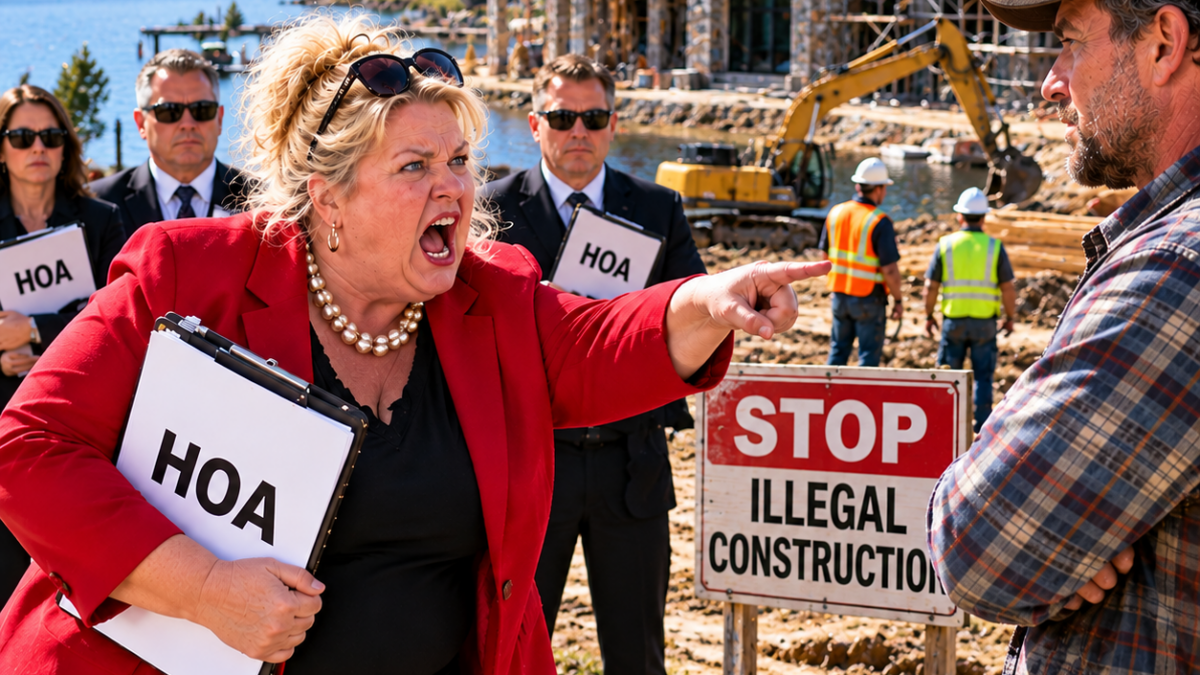
Three weeks after my grandfather died and left me his 900-acre Texas lake ranch, I drove seven hours from Austin expecting an empty farmhouse, a neglected barn, and the same quiet shoreline where he had taught me to fish as a kid—only to find a brand-new iron gate across his private road warning me that I would be prosecuted if I entered my own inheritance.
I climbed around the fence through an old cedar trail, followed the hill toward the water, and stopped cold when an 8,000-square-foot stone-and-glass mansion appeared above the lake, complete with a four-car garage, swimming pool, landscaped grounds, and private dock where nothing but grass had existed the last time I visited.
Then the woman living there walked outside, laughed when I showed her my deed, told me her family had connections all over the county, and threatened to call the sheriff if I didn’t leave—but the first old survey I found that night would show her mansion wasn’t sitting near some disputed line at all.
My name is José Phillips, and the seven-hour drive from Austin had already left me exhausted before I ever saw the gate.
Grandpa Harold had owned the ranch for more than fifty years.
Nine hundred acres of Texas Hill Country rolled down toward a private lake that had seemed endless when I was eight. Harold taught me to fish there. He taught me to repair fence posts there. He taught me that land wasn’t just something people owned.
“You take care of it long enough,” he once told me, “and eventually you realize you’re only borrowing it from whoever comes next.”
Three weeks earlier, he had died.
The will left the ranch to me.
Everything.
The farmhouse.
The barn.
The shoreline.
The mineral rights.
The old equipment.
Every acre.
Nobody mentioned a mansion.
I parked my truck beside the new iron gate and checked the GPS coordinates against the deed my grandfather’s estate lawyer had given me.
Same road.
Same parcel.
Same ranch.
Someone had simply locked me out.
The old trail through the cedar trees was still there, overgrown but passable, so I followed it until the trees opened.
That was when I saw the house.
Three stories.
Stone exterior.
Walls of glass facing the lake.
Infinity pool.
Four-car garage.
A dock extending into water where Grandpa used to anchor an aluminum fishing boat held together with more repair patches than original metal.
I stood there trying to understand what I was looking at.
Then the front door opened.
A woman in her mid-fifties walked toward me wearing white linen pants, a silk blouse, and the expression of someone who believed every question was an inconvenience.
“This is private property,” she called. “You need to leave.”
“I’m José Phillips.”
Nothing.
“Harold Phillips was my grandfather.”
That got a reaction.
Small.
But there.
“He passed three weeks ago.”
“I’m aware.”
“I inherited this ranch.”
She laughed.
Actually laughed.
“Harold sold this section years ago.”
“No, he didn’t.”
“I have paperwork.”
“So do I.”
I held up the deed.
“My name is Marie Hargrove,” she said. “Everyone in this county knows my family.”
“Congratulations.”
Her eyes narrowed.
“My ex-husband was county commissioner for twelve years.”
“That still doesn’t make this your land.”
She stepped closer.
“You’re obviously confused.”
“Then show me the deed.”
“No.”
“Construction permits?”
“None of your business.”
“You built a mansion on property my grandfather owned.”
“I built my home on land I purchased legally.”
“Then proving that should be easy.”
Marie pulled out her phone.
“You have about fifteen minutes before a deputy gets here.”
The deputy arrived almost exactly fifteen minutes later.
He glanced at my deed, listened to Marie, then told me property ownership was a civil matter.
“If she has paperwork and you have paperwork, a judge sorts it out.”
“Her house is on my ranch.”
“Sir, I’m asking you to leave until ownership is established.”
Marie stood behind him with her arms folded.
Smiling.
I left.
Not because she was right.
Because getting arrested on my own grandfather’s property would accomplish nothing.
That night, inside a small motel room, I opened Harold’s document box.
Tax records.
Old deeds.
Survey maps.
Then I found one from 1987.
Grandpa’s handwriting marked the boundary in blue ink.
I measured the mansion’s approximate coordinates against the survey.
Then measured again.
Marie’s house wasn’t touching my boundary.
It wasn’t ten feet over.
Or twenty.
According to Grandpa’s survey, the center of that mansion sat roughly **247 feet inside the ranch.**
And clipped behind the map was a shaky handwritten note from Harold dated six months before his death:
**Keep the land. Don’t trust them. They will come for it.**
That was the moment I stopped wondering whether Marie Hargrove had made a mistake.
I started wondering how many people had helped her make it look legal.
PART 2
I called Harold’s estate attorney at eight the next morning.
His name was Samuel Grant, and he had represented my grandfather for almost twenty years.
“José?”
“Did Grandpa sell lakefront acreage to Marie Hargrove?”
Silence.
Not hesitation.
Recognition.
That worried me more.
“Where are you?”
“A motel outside the county.”
“Why aren’t you at the ranch?”
“Because Marie Hargrove built a mansion on it.”
Another silence.
Longer this time.
“Sam.”
“There is no valid sale in Harold’s estate records.”
“Did he ever discuss one?”
“No.”
“Option agreement?”
“No.”
“Easement?”
“Not for residential development.”
“Anything?”
“No.”
I looked at Grandpa’s survey spread across the motel desk.
“She says she has a deed.”
Samuel breathed out slowly.
“José, there’s something I should have told you yesterday.”
“That’s usually not a sentence people enjoy hearing.”
“Three years ago someone tried to add a transfer document to Harold’s county property file.”
I sat down.
“What kind of transfer?”
“A deed.”
“To Marie?”
“I never saw the proposed grantee information.”
“Why not?”
“Because the recorder’s office rejected it.”
“Why?”
“The signature didn’t match prior documents.”
My stomach tightened.
“Who brought it?”
“I don’t know.”
“Who rejected it?”
“A clerk named Margaret Pearson.”
“What happened?”
“Someone pressured her to file it anyway.”
“And?”
“She refused.”
“Then?”
Samuel paused.
“Two months later, she was forced into early retirement.”
I stared at the wall.
“Budget restructuring, officially.”
“Where is she now?”
“I don’t know.”
“Did Grandpa know?”
“Yes.”
“What did he do?”
“He told me to make duplicates of everything.”
The sentence hit me harder than I expected.
Grandpa had known something was coming.
Maybe not the mansion.
Maybe not Marie specifically.
But enough to keep copies.
Enough to warn me.
“Sam, was he scared?”
“No.”
The answer came quickly.
“Angry?”
“Yes.”
“That sounds like him.”
Samuel softened.
“Your grandfather was stubborn.”
“I’ve heard.”
“He also believed county records meant something.”
“So do I.”
“Good.”
“Why?”
“Because you’re going to need records.”
I checked out of the motel and drove directly to the county recorder’s office.
The lobby smelled like toner, dust, and old carpet.
A woman behind the counter took Grandpa’s name.
Typed.
Frowned.
Typed again.
“I’m not finding the physical file.”
“Try parcel number 08-447-19.”
She entered it.
Same result.
“Older files get misfiled.”
“How long to retrieve it?”
“Formal archive request. Four to six weeks.”
“I’m the current owner.”
“I understand.”
“I have the probate order.”
“That doesn’t change archive processing.”
“Can I speak to a supervisor?”
“She’s out.”
“Until when?”
“Monday.”
It was Wednesday.
I was about to ask another question when the front door opened.
Marie walked in.
Gray suit beside her.
The clerk’s posture changed instantly.
“Mrs. Hargrove.”
“Morning, Linda.”
First name.
Friendly.
Marie ignored me.
“I need certified copies of the lake parcel records.”
“Of course.”
The clerk disappeared through a side door.
Four minutes later, she returned carrying a folder.
Four minutes.
Not four weeks.
Marie signed the request sheet.
Then finally looked at me.
“Still here?”
“I learn slowly.”
Her smile was small.
“You’ll learn.”
She left with the gray-suited man.
I looked at Linda.
“My grandfather’s file requires four to six weeks.”
She wouldn’t meet my eyes.
“Different indexing system.”
“That folder came from the same archive room.”
“I don’t control procedure.”
Apparently nobody in the county controlled procedure.
Procedure simply appeared whenever I needed something.
At the sheriff’s office, a deputy took my complaint.
Polite.
Calm.
Immovable.
I showed him the probate order.
The old survey.
Photographs.
He nodded.
“Property dispute.”
“There’s an 8,000-square-foot structure on my land.”
“Mrs. Hargrove has documentation.”
“You verified it?”
“That’s not our role.”
“Someone built a house where they didn’t own land.”
“If a judge declares your deed superior, we can address trespass.”
“What about construction permits?”
“Code enforcement.”
Code enforcement told me six to eight weeks.
I asked for expedited review.
I spent ten minutes on hold.
Then the call disconnected.
Three offices.
Three walls.
Same bricks.
I spent the afternoon calling attorneys within fifty miles.
Attorney number one:
“Conflict.”
“With whom?”
“I can’t discuss conflicts.”
Number two:
“Too busy.”
Number three listened until I said “Hargrove.”
Then:
“This isn’t really our area.”
“Your website says property litigation.”
“Yes, but not this type.”
“What type?”
He ended the call politely.
Attorney four referred me elsewhere.
Attorney five never called back.
By evening, I understood the real shape of the problem.
Marie’s ex-husband, Richard Dawson, had been county commissioner for twelve years.
Twelve years of appointments.
Campaign donors.
Contractors.
Planning officials.
Lawyers.
Sheriff’s fundraisers.
Church committees.
Business associations.
People liked to imagine corruption as envelopes of cash sliding across dark tables.
Sometimes it’s simpler.
Sometimes everyone knows everyone, everyone owes someone, and nobody wants to be the first person who says no.
At nine that night, something slid beneath my motel door.
An envelope.
Legal letterhead.
**DEREK HARGROVE, ATTORNEY AT LAW**
The letter demanded I cease “harassment, trespass, and defamatory allegations” against Marie.
It threatened litigation exceeding $500,000.
I read it twice.
Then searched Derek Hargrove.
Real estate agent.
Not attorney.
Not licensed by the Texas Bar.
Marie’s brother-in-law.
The letterhead was fake.
That should have made me feel better.
Instead, it told me something important.
They wanted fear more than legality.
If they could scare me into leaving, the paperwork might never be examined.
I photographed the letter.
Saved the envelope.
Logged the date.
Then slept badly.
At seven the next morning, somebody knocked.
Deputy.
Different one.
“Mr. Phillips?”
“Yes?”
“Welfare check.”
I stared.
“On me?”
“Anonymous concern.”
“For what?”
“Erratic behavior.”
I almost laughed.
He didn’t.
“Someone reported that you’ve been making increasingly aggressive statements about respected local residents.”
“Who?”
“Anonymous.”
“Of course.”
“Are you feeling okay?”
“I’m fine.”
“Any thoughts of harming yourself?”
“No.”
“Anyone else?”
“No.”
“Any weapons in the room?”
“No.”
He studied me.
Friendly voice.
Careful eyes.
“People get emotional after losing family.”
“Yes.”
“I’m just making sure you understand that escalating conflicts can have consequences.”
There it was.
Not quite a threat.
Just enough suggestion.
“I understand.”
He left.
I sat on the edge of the bed for a long time.
Now I understood the strategy.
Not just block records.
Build a story.
José Phillips.
Grieving.
Angry.
Outsider.
Making irrational claims.
If I shouted, they were right.
If I confronted Marie, I was unstable.
If I refused to leave, I was trespassing.
They didn’t need to disprove my deed immediately.
They needed to make everyone doubt me long enough for me to quit.
I went to a diner outside town.
Coffee.
Eggs I barely touched.
The waitress recognized my surname.
“You Harold’s grandson?”
“Yes.”
“Good man.”
“Thank you.”
“He sat at that counter every Thursday.”
She pointed.
I smiled.
“Sounds like him.”
An older woman at the counter turned.
Silver hair.
Reading glasses on a chain.
Sharp eyes.
“You’re José Phillips.”
Not a question.
“Yes.”
She carried her coffee over and sat across from me.
“Margaret Pearson.”
My fork stopped.
“You worked at the recorder’s office.”
Her eyes narrowed.
“Who told you?”
“My grandfather’s lawyer.”
Margaret looked toward the diner entrance.
Then lowered her voice.
“Your grandfather never sold Marie Hargrove anything.”
“I know.”
“No, you believe.”
“I have the deed.”
She shook her head.
“You need more than belief if you’re fighting that family.”
She reached into her purse.
Three photocopies.
A permit application.
“What is this?”
“Marie’s construction permit.”
I read it.
Approval time:
Seventy-two hours.
“That fast?”
“Normal lakefront construction took six to eight weeks.”
“Why?”
“Environmental review. Septic. Shoreline setback. Access.”
“Who approved this?”
“Diane Mercer.”
“Who is she?”
“Planning officer.”
Margaret tapped the permit number.
“Look at the prefix.”
I did.
“Every permit that year followed one numbering system.”
“This doesn’t.”
“No.”
“Why?”
“Because it wasn’t entered normally.”
I looked up.
Margaret’s hands trembled slightly.
“I rejected the deed amendment.”
“You were fired.”
“My position was ‘eliminated.’”
“What happened?”
“Transfer paperwork came in with Harold’s signature.”
“You knew it was wrong?”
“I had handled his records for decades.”
She looked at me.
“Harold signed slowly. Heavy downstroke. Strange loop on the H.”
She traced the air.
“The signature on that deed looked copied.”
“Who pressured you?”
“The commissioner’s office.”
“Richard Dawson?”
She didn’t answer.
She didn’t need to.
“Can you testify?”
Fear moved across her face.
“Not yet.”
I leaned back.
“I’m not asking you to risk anything today.”
She slid another sheet toward me.
“Start with this.”
“Permit?”
“Find who built the house.”
I looked.
**HARGROVE DEVELOPMENT LLC**
“Family?”
Margaret nodded.
“Craig Hargrove.”
“Derek?”
“Different brother-in-law.”
I almost smiled.
“How many Hargroves are involved?”
“Enough.”
She stood.
Then paused.
“They think their biggest strength is that everyone knows them.”
She looked at me.
“It’s also why they leave fingerprints everywhere.”
I drove back to Austin the next morning.
For three days, I did nothing they could see.
No calls to county offices.
No emails to Marie.
No angry posts.
No attorney letters.
I went to work.
I’m a software engineer.
Ordinary office.
Ordinary meetings.
Bug tickets.
Code reviews.
Nobody there knew I was spending nights at my kitchen table rebuilding my grandfather’s property history from fifty years of paper.
The first step was an independent survey.
Nobody local would touch it.
So I went two counties over.
Bradley Walker.
Retired civil engineer.
Private survey work.
I explained.
He didn’t hesitate.
“Send me the legal description.”
“That’s it?”
“I’ve seen county-insider boundary nonsense before.”
“You believe me?”
“I believe coordinates.”
I liked him immediately.
He started within a week.
While Bradley surveyed, I sent records requests everywhere.
County planning department.
Texas General Land Office.
State archives.
Historical deeds.
Permit files.
Inspection reports.
Communications.
Every request certified mail.
Every delivery tracked.
Every document scanned and backed up in two separate cloud locations.
Grandpa had taught me to keep paper.
My career taught me to keep versions.
Nine days later, Bradley called.
“You sitting?”
“Why does everyone ask me that?”
“Because people fall over.”
I sat.
“Mansion is 247 feet inside the recorded line.”
Exactly what Grandpa’s survey suggested.
“Not close?”
“Not remotely.”
“Markers?”
“Found two original monuments.”
“Where?”
“Drainage ditch.”
I stood.
“Someone removed them?”
“Looks that way.”
“Can you prove they were original?”
“Coordinates match the 1987 survey.”
“Condition?”
“Old. Weathered. Consistent.”
“New markers?”
“Also found.”
“Where?”
“Near the line used for the construction parcel.”
“How recent?”
“Much newer.”
My jaw tightened.
Bradley continued.
“José, this isn’t a fence six inches wrong.”
“I know.”
“Whoever laid this site out either ignored the recorded survey or intentionally used a different boundary.”
“Court-ready report?”
“Give me four days.”
I hired a forensic document examiner next.
Dr. Elaine Porter.
Thirty years handwriting analysis.
I sent certified known samples of Grandpa’s signatures.
Bank documents.
Older deeds.
Tax filings.
Will.
Medical consent forms.
Then the deed Marie claimed.
Meanwhile public records started arriving.
The permit number Margaret flagged was anomalous.
Every comparable permit carried a four-digit prefix linked to department and fiscal quarter.
Marie’s didn’t.
I searched Hargrove Development LLC.
Owner:
Craig Hargrove.
Address:
same office Derek used for his real estate company.
Then I searched Diane Mercer.
Planning officer appointed 2019.
Previous employer:
Hargrove Properties in Houston.
That made me sit back.
Could be coincidence.
Needed more.
The permit application required landowner information.
Grandpa’s Social Security number was entered.
The first digits matched.
The last two did not.
It looked like somebody copied the number from a partially obscured document and guessed.
Small mistake.
But fraud often survives because people look only at the big story.
Marie had a deed.
Marie had a house.
Marie had a permit.
Most people stop there.
I didn’t.
Then the estate medical file gave me something I hadn’t expected.
Marie claimed Grandpa sold the land in 2019.
The deed date:
March 15, 2019.
Harold spent almost eleven months of that year in and out of hospitals and rehabilitation.
On March 15, he was hospitalized following a cardiac episode.
Medication record.
Nursing notes.
Sedation.
Weakness.
Difficulty signing consent forms.
I stared at the date.
The deed supposedly showed him executing a significant lakefront land transfer on a day medical records placed him in a hospital bed with nurses assisting him to sign basic paperwork.
Possible?
Technically anything is possible.
Plausible?
Not remotely.
Two days later Elaine Porter called.
“The signature is false.”
No hesitation.
“You’re certain?”
“Yes.”
“How?”
“Multiple indicators.”
She explained.
Wrong pressure.
Hesitation marks.
Inconsistent stroke rhythm.
Copied proportions.
Then the most important detail.
“Graphite residue.”
“What?”
“Under magnification, there are microscopic traces beneath portions of the ink.”
“Pencil?”
“Most likely.”
“Somebody sketched the signature first?”
“That is my professional opinion.”
I leaned against the kitchen counter.
“So it was traced.”
“Strongly consistent with tracing.”
“Court?”
“I can testify.”
For the first time since seeing the mansion, I felt something close to relief.
Not victory.
Foundation.
Survey.
Forgery.
Medical timeline.
Permit anomaly.
Family contractor.
Planning officer connection.
Enough for a civil case.
Maybe more.
But I had learned one thing already:
Marie wasn’t relying on the strength of her paperwork.
She was relying on the strength of her network.
So I hired someone outside it.
Nathan Cross.
Real-estate litigator in Houston.
No county ties.
No Hargrove history.
We met at his office.
I brought three binders.
Nathan read for almost two hours.
Barely spoke.
Then leaned back.
“This is extraordinary.”
“Good extraordinary?”
“For me.”
“Not for me.”
“No.”
He tapped the forensic report.
“Forgery is strong.”
“Then file.”
“Not yet.”
I stared.
“Everybody loves making me wait.”
“Marie’s name isn’t on the forged instrument as preparer.”
“She lives in the house.”
“Benefit is not the same as authorship.”
“She hired family.”
“Still circumstantial.”
“The planning officer worked for Hargrove Properties.”
“Useful.”
“The permit is fake.”
“Potentially.”
“Potentially?”
“I don’t use ‘fraud’ until evidence puts someone’s hand on the act.”
I hated lawyers when they sounded like lawyers.
Which was ironic because I had hired one specifically for that reason.
“What do we need?”
“Marie.”
“What about her?”
“Direct participation.”
He looked at me.
“If we sue now, everyone around her has incentive to become confused.”
“Meaning?”
“Craig says he relied on a consultant.”
“Diane says she relied on documentation.”
“Exactly.”
“Richard says he knew nothing.”
“Exactly.”
“Derek claims his fake lawyer letter was a misunderstanding.”
Nathan smiled.
“Creative, but possible.”
“So we need communication.”
“Government email.”
“Public record.”
“Now you’re thinking correctly.”
We filed more requests.
Communications between planning staff and Hargrove entities.
Emails referencing Grandpa’s parcel.
County commission correspondence.
Permit comments.
Nathan also recommended regulatory complaints.
Not as revenge.
Paper trail.
Texas Real Estate Commission regarding Derek’s fake legal representation.
County ethics complaint.
State licensing review for planning irregularities where appropriate.
Preserve.
Document.
Let independent bodies decide.
Nathan’s rule:
“Never write ‘criminal conspiracy’ where ‘please investigate this documented inconsistency’ will do.”
Three weeks later, the records came.
Most boring.
Good.
Boring is where useful evidence hides.
Then one email chain.
Diane Mercer.
Personal email CC.
Marie Hargrove.
Two weeks before permit filing.
Marie wrote:
**Just push it through quickly. I’ll handle Richard if there are any questions.**
I stared.
Read it again.
Forwarded to Nathan.
He called within six minutes.
“That’s direct coordination.”
“Finally.”
“Don’t celebrate yet.”
“You’re exhausting.”
“We need chain of custody.”
“It came from the county.”
“Exactly. We preserve the original production package, metadata, cover letter, date received.”
“I already did.”
Silence.
“Did you just make a lawyer proud?”
“Don’t get used to it.”
I kept searching public meeting archives.
2018.
Planning commission minutes.
October meeting.
A resident asked about development near the Phillips property.
The commissioner response:
Harold Phillips’ land remained privately held and was unavailable for development.
Attendance sheet.
Marie Hargrove.
Present.
Six months before the forged deed date, Marie sat in a public meeting and heard the land belonged to Harold and wasn’t available.
That mattered.
She couldn’t later claim everyone told her the parcel was already hers.
Nathan agreed.
“We’re close.”
“Close?”
“I know.”
“I have a forged deed.”
“Yes.”
“Impossible signature date.”
“Yes.”
“Fake permit.”
“Anomalous permit.”
“Marie email.”
“Yes.”
“Meeting attendance.”
“Yes.”
“What else?”
Nathan looked at the calendar.
“County commission meeting in three weeks.”
I understood immediately.
“Land use review.”
“Exactly.”
“You want her to talk.”
“I want her to commit.”
“On video.”
“On public record.”
“If she lies?”
“We don’t call it a lie until evidence demonstrates it.”
“You’re ruining all the dramatic vocabulary.”
“I charge hourly for that.”
“Three weeks?”
“Can you wait?”
I thought about Grandpa’s note.
**Keep the land. Don’t trust them. They will come for it.**
Three weeks was nothing.
“I can wait.”
Nathan pointed at me.
“Then disappear.”
“What?”
“No calls to Marie.”
“Fine.”
“No county confrontation.”
“Fine.”
“No community Facebook arguments.”
“Absolutely.”
“No motel-door debates with fake attorneys.”
“He slid the letter under the door.”
“Still.”
“Fine.”
We went quiet.
For two weeks, Marie believed she had won.
Then she decided winning wasn’t enough.
She posted my photograph online.
Professional headshot from my company website.
Caption:
**BEWARE. THIS MAN HAS BEEN HARASSING LONGTIME RESIDENTS WITH FALSE PROPERTY CLAIMS.**
Then:
**OUTSIDER.**
**GREED.**
**REPORT CONTACT TO AUTHORITIES.**
Within hours strangers called me a scammer.
A predator.
A con artist.
Somebody claimed I had a history of lawsuits.
I didn’t.
Someone wrote I had been “casing lake homes.”
I hadn’t.
A neighbor of Grandpa sent me screenshots.
**Thought you should know.**
I sent everything to Nathan.
“Do nothing,” he said.
“She used my face.”
“I know.”
“She’s telling people to report me.”
“I know.”
“Defamation?”
“Potentially. Preserve.”
“You’re a broken machine.”
“An expensive broken machine.”
That weekend I returned to the county.
At the hardware store where Grandpa had shopped for decades, the owner saw me and vanished into the back.
I waited.
A young employee eventually approached.
“Mr. Phillips?”
“Yes.”
“Maybe shop somewhere else.”
“Why?”
She looked embarrassed.
“It’s not personal.”
“It usually is when someone says that.”
“Mrs. Hargrove knows everybody.”
“So?”
Her voice dropped.
“People know what happens when you cross her.”
I left without buying anything.
Outside, I stood beside my truck.
That hurt.
Not because of a hardware store.
Because Grandpa had belonged here.
Fifty years.
And in a few weeks, Marie had turned his grandson into a warning.
Monday, my phone rang in Austin.
Child Protective Services.
Anonymous complaint.
Neglect of children in my care.
I don’t have children.
The caseworker figured that out quickly.
“This looks retaliatory,” she said.
“I assumed.”
“Document the call.”
“I am.”
“We’ll close it.”
“Thank you.”
“Mr. Phillips?”
“Yes?”
“I’ve seen weaponized reporting before.”
That phrase stayed with me.
Weaponized reporting.
Take a system designed to protect people and point it at someone you want to frighten.
Two days later, somebody spray-painted **GO HOME** across my truck at the motel.
No dramatic threat.
No physical confrontation.
Just damage.
I filed a report.
Took photographs.
Saved the invoice.
Another brick.
Marie wanted reaction.
I gave her records.
Then she made the mistake Nathan had been waiting for.
Charity fundraiser at the mansion.
Photos online.
Video tour.
Marie walked viewers through the grand foyer.
Custom kitchen.
Pool.
Lake view.
She narrated everything with the pride of someone showing off a life she believed nobody could take from her.
At four minutes, the camera passed a wall of framed documents.
I paused.
Zoomed.
Construction permit.
Same anomalous number.
Then I read the description.
**ACCESSORY STRUCTURE — 400 SQ. FT.**
I stared.
The mansion was roughly 8,000 square feet.
Twenty times the permitted size.
She had framed the permit.
Displayed it inside the house.
Broadcast it publicly.
I called Nathan.
“Open the video.”
“I’m looking.”
“Four minutes.”
“Got it.”
“Read the permit.”
Silence.
Then:
“Well.”
“That’s your legal reaction?”
“This is unusually helpful.”
“There’s more.”
I scrolled comments.
Somebody asked:
**When did you first decide to build here?**
Marie replied:
**We dreamed of this for more than ten years. It just took time to make it happen.**
Ten years.
The forged deed was six years old.
Her own words placed the plan years before her alleged purchase.
Nathan was quiet.
“Intent.”
“Yes.”
“Premeditation.”
“Careful.”
“Fine. Evidence of planning.”
“Much better.”
“Commission meeting in five days.”
“Correct.”
“Do we file now?”
“No.”
“Still?”
“Especially now.”
“She’s handing us evidence.”
“Then let her keep talking.”
Five days.
The longest five days of the entire case.
Nathan and I built the presentation.
Not a courtroom argument.
Timeline.
Visual.
Simple.
Exhibit one:
Probate deed and original survey.
Exhibit two:
Bradley’s certified survey overlay.
Mansion 247 feet inside the ranch.
Exhibit three:
Permit.
400 square feet.
Actual structure approximately 8,000.
Exhibit four:
Forensic signature report.
Exhibit five:
Medical records from March 15, 2019.
Exhibit six:
Marie-Diane email.
**Push it through quickly.**
Exhibit seven:
2018 planning meeting minutes.
Exhibit eight:
Marie’s own video.
Exhibit nine:
Her public statement about planning the home for more than ten years.
No emotion.
No adjectives.
No “thief.”
No “criminal.”
Documents.
Sunday, the Lake County Herald ran a story:
**QUESTIONS RAISED OVER EXPEDITED LAKEFRONT PERMITS**
No Marie name.
But everyone understood.
The community page changed.
Half defended her.
Half began asking questions.
**Why won’t she release the deed?**
**Why was the permit approved in 72 hours?**
**Did Diane Mercer work for Hargrove Properties?**
Then one comment:
**If everything is legitimate, show the paperwork.**
For the first time, Marie didn’t answer.
Nathan called Monday.
“Richard Dawson is making calls.”
“About?”
“Who requested records. Who talked to reporters. Whether the meeting can be delayed.”
“Can it?”
“No.”
“Good.”
“He’s nervous.”
“So is Marie?”
“Likely.”
“What do we do?”
“Nothing.”
I laughed.
“Your favorite strategy.”
“People who control systems hate uncertainty.”
That Monday night, I stayed in a motel thirty miles outside the county.
Different motel.
My presentation sat untouched on the desk.
I knew every document.
Every date.
Every page number.
There was nothing left to prepare.
That was almost worse.
At midnight I opened Grandpa’s note again.
Three sentences.
**Keep the land.**
**Don’t trust them.**
**They will come for it.**
I wondered what he knew.
Had Marie approached him?
Richard?
Craig?
Had Grandpa been threatened?
Or had he simply lived long enough to recognize people circling property they wanted?
I wished I had asked.
So many things become obvious only after the person who knew the answer is gone.
The county commission chamber was standing room only Tuesday evening.
Regional news camera near the front.
Herald reporter.
County staff.
Residents.
Marie sat in the first row with an actual attorney this time.
Cream blazer.
Pearls.
Perfect posture.
Richard Dawson sat three rows behind her.
Calm face.
Hands folded.
Nathan sat beside me.
“You okay?”
“No.”
“Good.”
“Why good?”
“Means you understand the stakes.”
Routine business dragged forty minutes.
Budget amendment.
Road maintenance.
Procurement.
Nobody cared.
Then the chair announced:
“Land use review and public comment.”
Marie’s hand went up immediately.
Of course it did.
She walked to the podium like she had already won.
“Thank you, Commissioners.”
Warm voice.
Confident.
“I’m here tonight because my family has been subjected to a campaign of harassment by an outsider making false claims against property I purchased legally.”
She looked back at me.
“For five years, I have lived peacefully in my home.”
Five years.
Noted.
“I obtained proper permits.”
Noted.
“I have valid ownership documents.”
Noted.
“My family has served this county for decades.”
Richard shifted slightly.
Marie continued.
“This individual appeared after Harold Phillips died and began making outrageous claims motivated by greed.”
There it was.
I felt heat rise in my chest.
Nathan touched one finger to the table.
Stay calm.
Marie spoke for six more minutes.
Neighbors supporting her.
Fundraising history.
Community donations.
Ex-husband’s years of service.
Her reputation.
Then:
“I am asking this commission to protect longtime residents from outsiders who weaponize accusations to steal homes they did not build.”
She returned to her seat.
Satisfied.
The chair opened further comment.
I raised my hand.
Walking to the podium felt strangely quiet.
All the sound in the room disappeared inside my own head.
I looked at the commissioners.
“My name is José Phillips.”
My voice didn’t shake.
“Harold Phillips was my grandfather.”
I placed the first packet on the podium.
“He owned nine hundred acres on this lake for more than fifty years.”
Slide one.
Survey.
“He never sold the parcel where Mrs. Hargrove’s residence stands.”
Slide two.
Bradley’s overlay.
“The current structure sits approximately 247 feet inside the Phillips boundary.”
A commissioner leaned forward.
I continued.
“This is not a two-foot fence disagreement.”
Next slide.
Permit.
“County permit number.”
Then structure description.
“Four hundred square feet.”
Next photograph.
Mansion.
“Approximately eight thousand.”
Whispers.
Marie’s attorney wrote quickly.
Next.
Forensic report.
“A certified document examiner concluded the signature on the alleged deed is not authentic and is consistent with tracing.”
Next.
Medical records.
“The deed is dated March 15, 2019.”
I placed the hospital record beside it.
“On that date Harold Phillips was hospitalized following a cardiac event and was documented as sedated and physically impaired.”
No commentary.
Next.
Email.
Marie’s name.
Diane Mercer.
**PUSH IT THROUGH QUICKLY. I’LL HANDLE RICHARD IF THERE ARE ANY QUESTIONS.**
The room changed.
Richard’s posture stiffened.
Marie whispered something to her lawyer.
I continued.
“Released through official county public-record production.”
Next.
2018 planning commission minutes.
“Six months before the alleged deed, this commission’s public records described Harold’s land as privately owned and unavailable for development.”
Attendance list.
“Marie Hargrove was present.”
Then the video.
I pressed play.
Marie smiling.
Walking through the mansion.
The frame permit passing behind her.
Pause.
Zoom.
**400 SQ. FT.**
Nobody spoke.
Then her comment appeared.
**WE’VE BEEN PLANNING THIS DREAM HOME FOR OVER TEN YEARS.**
I looked at the commissioners.
“The alleged purchase occurred roughly six years ago.”
Pause.
“I am not asking this commission to accept my conclusions.”
I closed the folder.
“I’m asking you to examine the records.”
Then I stepped away.
For three seconds, absolute silence.
Marie shattered it.
“This is ridiculous.”
Her attorney grabbed her sleeve.
She stood anyway.
“That permit is legitimate.”
“Marie,” her attorney whispered.
She ignored him.
“Everyone knows how development works here.”
The commission chair said:
“Mrs. Hargrove, please remain seated.”
“No.”
She pointed toward me.
“He comes in here with paperwork and thinks he understands this county?”
Her attorney stood.
“Marie.”
“You have to know people to get things done.”
The room went still.
Her lawyer looked horrified.
Marie kept going.
“I have lived here thirty years.”
“Mrs. Hargrove—”
“I have raised money for this county. My family has built half the businesses around this lake.”
“Marie.”
“And Harold was supposed to sell me that land.”
Everything stopped.
She said it.
Not:
He sold me.
Not:
I bought it.
**He was supposed to sell me that land.**
Marie seemed to hear herself a second too late.
Her mouth closed.
Richard’s face lost color.
The commission chair leaned toward the microphone.
“Mrs. Hargrove, are you saying Mr. Phillips had not completed a sale before the construction planning began?”
Her lawyer stepped in.
“My client will make no further statement.”
The chair looked toward Marie.
“Are you stating the former county commissioner had involvement in the permit process?”
“No further statement,” the attorney repeated.
The chair looked at the documents.
Then at the camera.
“This commission will refer the submitted records and tonight’s statements to the county district attorney.”
He continued.
“We will request an independent audit of lakefront permits issued between 2018 and 2021.”
Then:
“Relevant permit irregularities will also be forwarded to state authorities for review.”
Nobody moved.
The chair looked at Marie.
“I strongly suggest you follow your attorney’s advice from this point forward.”
Meeting adjourned.
Chaos.
Reporters.
Residents.
Questions.
Richard slipped through a side door.
Marie’s attorney tried to move her toward an exit.
She stopped near me.
Three feet away.
Her face looked completely different without the smile.
“You think you’ve won?”
I said nothing.
“That land should have been mine.”
Nathan stood beside me.
Marie looked at him.
Then back at me.
“Your grandfather promised us.”
That was recorded too.
Nathan quietly said:
“Marie, your attorney is waiting.”
She left.
I didn’t smile.
I didn’t celebrate.
Because I knew we had crossed a line.
Everything was public now.
No quiet correction.
No pretending.
No turning back.
Wednesday morning, Nathan filed the civil complaint.
By Friday, investigators had contacted Margaret Pearson.
She agreed to testify.
Why?
“Because I watched the meeting,” she told me.
“Marie finally said it herself.”
Diane Mercer was placed on administrative leave.
Craig Hargrove’s construction company received record demands.
Derek’s fake legal letter became the subject of a licensing complaint.
Richard hired criminal-defense counsel.
The county announced an external audit.
Then something unexpected happened.
Other people came forward.
A ranch owner fifteen miles north.
Permit dispute.
Pressure from Richard’s office.
Another lake resident.
Boundary adjustment approved unusually fast after selling to a Dawson-connected buyer.
A retired couple.
Septic waiver.
Political donor.
None were identical.
But together, they revealed a culture.
Favors.
Shortcuts.
Pressure.
People who got normal process.
And people who got special process.
The Herald stopped calling me “Austin engineer José Phillips.”
Now articles used:
**COUNTY RECORDS UNDER REVIEW AFTER LAKE PROPERTY DISPUTE**
Marie’s community support fractured.
Some stayed loyal.
Of course they did.
Others began deleting old comments calling me a scammer.
The hardware-store owner called.
I almost didn’t answer.
“Mr. Phillips?”
“Yes.”
“This is Tom from Lake Supply.”
“I remember.”
Long pause.
“I owe you an apology.”
“Yes.”
He exhaled.
“I shouldn’t have asked you to leave.”
“No.”
“Marie had influence.”
“I know.”
“That isn’t an excuse.”
“No.”
Another silence.
“Your grandfather was a good customer.”
“He deserved better.”
“So did you.”
I didn’t forgive him dramatically.
I simply said:
“Thank you for calling.”
The CPS report was formally closed as unfounded.
The damage to my truck became part of my harassment claim.
Nobody proved Marie personally ordered it.
I never claimed she did.
That distinction mattered.
Nathan repeated it constantly.
“We prove what we can.”
“And leave the rest?”
“Yes.”
“I hate that.”
“Then you’re learning law.”
Criminal proceedings moved faster than I expected.
Marie eventually entered a no-contest plea to offenses involving false documents, fraud, and record-related conduct.
She avoided incarceration under the plea arrangement described at sentencing, but received years of probation, a substantial fine, community service, and a permanent felony record.
I attended.
Not in the front.
Not beside prosecutors.
Back row.
Marie wore navy.
No pearls.
The judge reviewed the plea.
Then asked if she understood.
“Yes.”
Her voice was quiet.
The same woman who once laughed at my deed.
The prosecutor outlined the evidence.
Forged transfer.
Irregular permit.
False ownership representations.
Public-record emails.
Statements at commission.
Marie’s attorney emphasized her community contributions.
Age.
No prior criminal record.
Charitable work.
The judge listened.
Then said:
“Good deeds do not purchase immunity from bad ones.”
Marie’s face didn’t change.
The sentence included five years of probation, a $50,000 fine, and two hundred hours of community service, consistent with the negotiated resolution.
Some people online said it wasn’t enough.
They wanted prison.
Public humiliation.
Total destruction.
I didn’t.
Not anymore.
I wanted the ranch.
I wanted the record corrected.
I wanted the house removed from land she never owned.
The civil case mattered more to me.
Richard Dawson’s troubles expanded separately.
State investigators reviewed communications from his years in office.
Emails surfaced showing political pressure applied in permit matters.
Other owners spoke up.
He resigned from several civic boards.
His attorney negotiated with investigators.
I learned only what became public.
That was enough.
Diane Mercer was terminated after internal review and referred to licensing authorities.
Other county employees lost positions.
New procedures required multiple approvals for certain lakefront permits.
Independent verification of ownership.
Conflict disclosures.
Digitized audit trails.
Nobody could make an eight-thousand-square-foot mansion appear under a four-hundred-square-foot permit without multiple people seeing it.
That change felt more important than any headline.
Then came the civil ruling.
Four months after the commission meeting.
Nathan and I sat at counsel table.
Marie across the room.
Real judge.
Real courtroom.
No community audience beyond a few reporters.
The ownership question took less time than I expected.
Survey.
Probate.
Forgery evidence.
Permit history.
The judge’s written ruling was direct.
The Phillips estate—and then me as heir—held title.
Marie’s structure encroached substantially onto my land.
Her claimed deed was invalid.
The court gave her two options.
Purchase the encroached portion at a court-determined fair market value with an additional penalty component reflecting the circumstances.
Or remove the structures within 180 days.
The purchase figure approached $1.2 million.
Marie couldn’t do it.
Legal fees had drained her.
Her finances were worse than the mansion suggested.
She chose demolition.
When Nathan told me, I sat in silence.
“You okay?”
“I think so.”
“You got the land.”
“Yes.”
“You got damages.”
“Yes.”
“You look miserable.”
“I’m not miserable.”
“What?”
“Tired.”
He nodded.
“That’s usually what victory feels like.”
The court also awarded $150,000 covering damages, legal expenses, property impact, and portions of the harassment claim.
Marie requested a payment plan.
Nathan expected me to fight it.
I didn’t.
“Grant it if the court thinks it’s reasonable.”
He stared.
“Really?”
“I don’t need to ruin her.”
“She tried to take your ranch.”
“I know.”
“She built a mansion on it.”
“I noticed.”
“José.”
“Grandpa wanted the land protected.”
I leaned back.
“He didn’t leave me instructions to destroy Marie’s life.”
Nathan smiled slightly.
“You’ve become inconveniently reasonable.”
“Don’t tell anyone.”
The demolition deadline ran the full 180 days.
I did not request acceleration.
I did not give interviews.
The Herald called.
My quote:
“I wanted the property my grandfather lawfully left me. The court resolved that.”
That was it.
No victory speech.
No revenge headline.
Late spring, demolition began.
I didn’t watch.
Couldn’t.
A neighbor sent photographs.
Stone façade removed.
Glass gone.
Garage dismantled.
Pool broken and filled.
Dock removed.
Foundation excavated where required.
Trucks carried debris away for three days.
For years, Marie had looked down at Grandpa’s lake from that house believing the view proved ownership.
Then the view remained.
The house didn’t.
By summer, native grass covered the slope.
The land looked scarred at first.
Then merely empty.
Then normal.
Plants have no interest in legal drama.
Grass simply grows.
That October, almost exactly one year after the commission meeting, I drove back alone.
No iron gate.
No security camera.
No **TRESPASSERS WILL BE PROSECUTED** sign.
The county road turned onto Grandpa’s gravel drive exactly as I remembered.
I parked near the hill.
Walked down.
Where the mansion had stood, thick green grass moved under the wind.
Wildflowers near the water.
Black-eyed Susans.
Indian paintbrush.
The lake was silver beneath a pale sky.
A heron stood in the shallows.
For a moment, I was eight again.
Grandpa beside me.
Fishing pole too big for my hands.
“Stop moving,” he had whispered.
“I’m not moving.”
“You’re breathing too loud.”
“That’s not a thing.”
“It is to fish.”
I smiled at the memory.
I had brought Bradley’s certified survey.
Framed.
And a new brass boundary marker.
We knew the coordinates.
The original monument Marie’s construction team had discarded had been preserved as evidence, but I wanted something permanent back in the ground.
I walked to the GPS point.
Set the marker.
Used a mallet.
Three strikes.
Four.
Five.
Solid.
The brass caught morning light.
Then I pulled out an envelope.
I had found it three weeks earlier.
Estate boxes from Grandpa’s farmhouse had finally arrived from storage.
Photographs.
Receipts.
Fishing licenses.
Old birthday cards.
Underneath them:
**JOSÉ**
His handwriting.
The letter was dated August 2015.
Years before he died.
I had saved it for this day.
I sat in the grass.
Opened it.
**José,**
**If you’re reading this, I’m gone.**
I stopped.
Breathed.
Then continued.
**They’ve been circling for years waiting for me to get weak. The Hargroves. The Dawsons. People who think old men stop owning things because they stop being useful to them.**
My throat tightened.
**I kept every survey. Every deed. Every tax record. Every letter.**
**The truth is in the paperwork.**
I laughed through tears.
Of course he wrote that.
**Don’t let them scare you.**
**More important, don’t let them make you angry enough to become foolish.**
That one hurt.
**Find the evidence and let it speak.**
**The ranch will be yours. Keep it safe.**
Then:
**I’m proud of you already.**
**Grandpa Harold**
I lowered the letter.
For months, I had imagined Grandpa watching what happened.
Sometimes approving.
Sometimes disappointed.
Sometimes asking why I waited.
Now I understood.
He didn’t want revenge.
He wanted continuity.
The ranch.
The lake.
The road.
The farmhouse.
The boundaries.
Things that existed before Marie’s mansion and would remain after it.
I put the letter back into the envelope.
Somewhere, Marie was completing probation requirements.
Richard was still answering investigators.
County officials were repairing systems that should never have been vulnerable to a family’s influence in the first place.
But standing there, none of that felt important.
The lake was quiet.
That was important.
The land was still ours.
That was important.
The brass marker stood where Grandpa’s marker belonged.
That was important.
I walked up toward the old farmhouse.
It was in terrible shape.
Roof leak.
Sagging porch.
Barn paint faded almost to bare wood.
One window cracked.
Fence down near the south pasture.
Grandpa had spent his last years fighting to protect nine hundred acres while the house around him quietly aged.
I stood on the porch.
The screen door squeaked.
Same sound I remembered.
Inside smelled like dust, cedar, and old coffee.
I opened the kitchen drawer.
Grandpa’s fishing knife was still there.
So was a roll of electrical tape he had probably owned since 1997.
I laughed.
For the first time since inheriting the ranch, I wasn’t thinking about evidence.
No forged deed.
No permit prefix.
No Marie.
No Richard.
Just work.
Ordinary work.
Roof.
Fence.
Barn.
Dock.
I called a contractor from Austin.
Not local.
At least not yet.
“Need a roof estimate.”
“How big?”
“Small farmhouse.”
“Where?”
I gave him the county.
He paused.
“That the Hargrove mansion case?”
I closed my eyes.
“Yes.”
“Wow.”
“Please don’t wow me.”
He laughed.
“Sorry.”
“I just need a roof.”
“I can do a roof.”
“Perfect.”
That became my life for the next year.
Not court.
Repair.
I spent weekends driving from Austin.
First roof.
Then porch.
Then barn.
Then fence.
I kept the farmhouse modest.
No luxury renovation.
Grandpa would have hated recessed mood lighting.
I restored the kitchen cabinets instead of replacing them.
Kept the old stone fireplace.
Repaired the porch swing.
The lake needed shoreline work after construction runoff had damaged part of the bank.
I hired an environmental consultant.
Native planting.
Erosion control.
No ornamental landscaping.
The slope where Marie’s infinity pool once sat became prairie grass again.
One weekend, Margaret Pearson visited.
She parked an old Buick near the barn.
I hadn’t seen her since the court case.
“You rebuilt the porch.”
“Mostly.”
“It still leans.”
“Historic character.”
She smiled.
We sat outside.
She looked toward the lake.
“I thought she’d win.”
The honesty surprised me.
“Marie?”
“Yes.”
“For years.”
“Why?”
Margaret folded her hands.
“Because everyone learned the same lesson.”
“What lesson?”
“Don’t be first.”
I waited.
“First person to say a permit looks wrong.”
“First person to refuse a favor.”
“First person to question Richard.”
“First person to tell a Hargrove no.”
She looked at me.
“I told them no.”
“And lost your job.”
“Yes.”
“That doesn’t mean you were wrong.”
“It felt like it for a while.”
I understood.
Margaret looked toward the hill where the mansion had been.
“You know what bothered me?”
“What?”
“She framed the permit.”
I laughed.
“I know.”
“Who frames a fraudulent permit?”
“Someone who thinks rules are decorations.”
Margaret smiled.
“You sound like Harold.”
“That keeps happening.”
“He’d like that.”
Another silence.
Then:
“I’m sorry I didn’t find you sooner.”
“You found me at the diner.”
“After they pushed me out, I disappeared.”
“You survived.”
“I hid.”
“Same thing sometimes.”
She looked at me.
That was the moment we both stopped needing to apologize.
The county invited me to a public meeting about the new permit process.
I almost declined.
Nathan encouraged me.
“Go.”
“Why?”
“Because institutional repair matters.”
“You’re becoming sentimental.”
“Billable sentiment.”
The room looked different without Marie owning it.
New planning director.
Independent auditor.
County counsel.
Residents.
One official presented a new lakefront permit workflow.
Ownership verification through independent title check.
Digital records.
Two-person signoff.
Conflict disclosure.
Automatic flag for structures exceeding original scope.
No permit could suddenly grow from four hundred square feet to eight thousand without multiple approvals.
A rancher raised his hand.
“Isn’t this overkill?”
The planning director answered:
“Maybe.”
He looked toward the audience.
“But we know what happens when nobody checks.”
Nobody argued.
Afterward, a woman approached me.
Maybe early forties.
“I owe you something.”
“What?”
“An apology.”
I didn’t recognize her.
“I commented online.”
“About me?”
“Yes.”
“What did you say?”
Her face reddened.
“That you were a con artist.”
I nodded.
“I don’t remember your name.”
“That somehow makes it worse.”
“No. It makes it the internet.”
She looked relieved.
Then guilty again.
“I believed Marie.”
“Lots of people did.”
“She donated to my son’s school.”
“That doesn’t mean she couldn’t lie about land.”
“I know that now.”
I smiled slightly.
“That’s something.”
“Can I ask you something?”
“Yes.”
“Why didn’t you fight back online?”
“Because I had the deed.”
She frowned.
“I don’t understand.”
“The truth didn’t need comments.”
That answer became something I carried with me.
Not every fight needs to be won where it starts.
Marie fought through reputation.
I fought through documents.
Eventually only one of those survived cross-examination.
The next summer, I began inviting family back to the ranch.
Cousins.
My mother.
My sister.
Children who had barely known Grandpa.
My niece Elena was eight.
Same age I had been when Grandpa taught me to fish.
I took her to the lake.
She immediately talked too loudly.
“Fish hear you.”
“No they don’t.”
“They absolutely do.”
“That’s not real.”
I smiled.
Family history repeats itself in stupid little ways.
We sat on the dock.
Not Marie’s dock.
That one was gone.
I rebuilt Grandpa’s small wooden dock near the original fishing spot.
Elena kicked her feet.
“Was there really a giant house here?”
“Yes.”
“Why?”
“Somebody thought this land belonged to them.”
“But it didn’t.”
“No.”
“How did they not know?”
That was a harder question than any lawyer asked.
“They knew what they wanted.”
“That’s not the same.”
“No.”
She looked across the lake.
“Did you hate her?”
I stared at the water.
“At first.”
“Do you now?”
“No.”
“Why?”
“Because I don’t want to spend that much time thinking about her.”
Elena considered that.
“That sounds boring.”
“It’s wonderful.”
A fish tugged her line.
She screamed.
Every fish in Texas heard us.
That night, I sat outside with my mother.
She had never liked the ranch.
Too remote.
Too much history with her father.
“You’re staying?”
“Weekends.”
“I mean long-term.”
“I don’t know.”
She looked toward the lake.
“Your grandfather wanted you here.”
“He never asked.”
“He didn’t ask anybody for anything.”
“That was part of the problem.”
She smiled sadly.
“You two were alike.”
“I’m getting tired of hearing that.”
“Then stop acting like him.”
We sat quietly.
After a while, she said:
“He was scared.”
I turned.
“Of Marie?”
“Of getting old.”
That surprised me.
“Grandpa?”
“He would never admit it.”
She looked toward the farmhouse.
“He knew people were waiting.”
“For the land?”
“For weakness.”
I thought about the letter.
**They’ve been circling for years waiting for me to get weak.**
“Why didn’t he tell me?”
“Because he wanted you to visit because you loved him.”
“Not because he needed help.”
“Exactly.”
That landed hard.
I had spent months feeling guilty because Grandpa fought alone.
Now I understood why he let me.
He didn’t want our relationship reduced to crisis.
He wanted to be Grandpa.
Not a problem.
That didn’t erase regret.
It changed it.
I could miss the years without turning them into punishment.
Two years after the civil case, I created a land trust for most of the undeveloped ranch.
Not because I feared another Marie.
Because Grandpa’s letter changed how I thought about ownership.
Nine hundred acres was too much land for one person to treat as a bank account.
I placed the lake shoreline and several hundred acres of native habitat under conservation restrictions while keeping the working ranch portions usable.
Nathan reviewed everything.
“You realize this reduces certain development options.”
“Yes.”
“Future value.”
“Yes.”
“You software engineers are weird.”
“Grandpa taught me.”
“What about heirs?”
“They get land.”
“With restrictions.”
“They get responsibility.”
Nathan nodded.
“That sounds like something he’d say.”
I kept a small buildable area near the farmhouse for future family use.
No eight-thousand-square-foot mansion.
Elena joked she wanted one.
“Rejected.”
“Why?”
“Permit says four hundred square feet.”
She didn’t understand the joke.
I laughed anyway.
Marie finished community service eventually.
I knew because it made a small newspaper brief.
No photograph.
Just a line.
I felt nothing.
That surprised me.
For so long, I had imagined consequences as the satisfying part.
Her losing the mansion.
Her felony record.
Her public fall.
But by the time those things happened, they felt like paperwork closing.
Necessary.
Not joyful.
The most satisfying moment came later.
A Saturday morning.
I was repairing fence near the west pasture.
Truck approached.
Hardware-store owner, Tom.
He got out carrying two boxes.
“What’s that?”
“Fence staples.”
“I didn’t order any.”
“Grandpa always bought them from me.”
“That doesn’t mean I get free staples.”
“They’re not free.”
He handed me an invoice.
“Full price.”
I laughed.
“Then why drive them out?”
He looked embarrassed.
“I wanted to.”
We unloaded.
Afterward, he stood beside the truck.
“I was afraid of Marie.”
“I know.”
“That still bothers me.”
“It probably should.”
He nodded.
“You’re not going to make me feel better?”
“No.”
He smiled.
“Harold wouldn’t either.”
“No.”
Tom looked toward the lake.
“Glad you kept it.”
“Me too.”
Then he left.
That interaction meant more to me than public apologies.
Because it wasn’t about me winning.
It was about ordinary people starting to act without fear.
The county changed slowly.
Richard Dawson’s name came down from plaques.
Some deserved removal.
Some were simply updated with broader lists of officials.
Investigations resolved in different ways.
Not every allegation became a charge.
Some employees were cleared.
Others disciplined.
A few retired.
That mattered too.
Accountability shouldn’t mean assuming everyone near wrongdoing is equally guilty.
I learned that from watching Marie’s network unravel.
It would have been easy to call the whole county corrupt.
It wasn’t.
Some people were compromised.
Some were afraid.
Some were lazy.
Some were loyal.
Some were simply wrong.
Margaret was brave.
The young hardware-store employee was afraid but honest.
The first deputy probably believed he was avoiding a civil dispute.
People are rarely as simple as the story we tell when we’re angry.
Three years after Grandpa died, the ranch felt like home again.
Not his home.
Mine.
That difference had taken time.
The farmhouse roof no longer leaked.
The porch still creaked.
I left that.
Barn repainted.
Fences repaired.
Native grass restored near the lake.
The new brass marker weathered slightly.
I visited it every few months.
Not because I feared somebody moving it.
Because touching it reminded me of the whole case.
How close I came to believing Marie’s confidence meant she must have something I didn’t know.
She had a mansion.
A gate.
A deputy.
A permit.
A deed.
A family name.
I had an old survey.
At first, that felt unequal.
It wasn’t.
One authentic document is stronger than ten impressive lies.
The anniversary of Grandpa’s death came in October.
I drove out before sunrise.
No family.
No contractors.
No lawyer.
Just me.
I carried his letter.
And his old fishing pole.
The lake was covered in morning mist.
I sat where we used to fish.
The same shoreline where Marie had built her pool.
No trace of it remained.
Not really.
If you knew where to look, the grass color changed slightly where the foundation had been.
That was all.
I cast the line badly.
Grandpa would have complained.
The bobber landed crooked.
I waited.
Read his letter again.
**Don’t let them scare you.**
I smiled.
They had.
That was the part nobody knew.
I had been terrified.
Not of physical harm.
Of losing.
Of finding out Marie really did own it.
Of learning Grandpa signed something while sick.
Of discovering my own family history was wrong.
Of fighting a connected woman and wrecking my career.
Of being publicly called a scammer.
Of sitting in court while someone explained that paperwork I trusted meant nothing.
Courage did not mean I never believed those outcomes were possible.
It meant I kept gathering facts anyway.
**Don’t let them make you angry.**
That one I only partly obeyed.
I had been furious.
At Marie.
At Richard.
At Derek.
At the clerk who gave her records in five minutes while telling me four weeks.
At lawyers who refused my calls.
At strangers online.
At myself for not visiting Grandpa enough.
But anger became dangerous only when it tried to decide strategy.
Nathan prevented that.
So did Grandpa.
Even dead, the old man was still telling me what to do.
A fish tugged.
I missed it.
“Great.”
I imagined Grandpa laughing.
Then I read the last line.
**I’m proud of you already.**
That word.
Already.
Before the mansion.
Before court.
Before evidence.
He didn’t need me to win.
He was proud before the fight started.
I had spent years believing love had to be earned through usefulness.
Career.
Success.
Solving things.
Grandpa apparently knew better.
That realization was the real inheritance.
Not nine hundred acres.
Not the lake.
Not damages.
Not a famous case.
Permission to stop proving myself to someone who had never asked.
By midmorning, the mist lifted.
Sunlight moved across the water.
I packed the fishing gear and walked uphill.
At the new boundary marker, I stopped.
The brass was warm.
I remembered Marie on the first day.
White linen pants.
Silk blouse.
Laughing.
**Everyone in this county knows who I am.**
She believed identity was evidence.
Grandpa believed paper was evidence.
Grandpa won.
Not because he was more powerful.
Because reality was patient.
The ranch belonged to him.
Then me.
It had remained true while Marie built stone walls, filed false paperwork, called deputies, posted lies, hosted fundraisers, and smiled at commissioners.
Truth did not become weaker because people ignored it.
It simply waited for someone willing to prove it.
I walked back toward the farmhouse.
The screen door creaked.
Coffee waited inside.
Fence work waited.
Emails from Austin waited.
Normal life.
That was the ending I wanted.
Not Marie losing everything.
Not Richard’s investigation.
Not a courtroom victory.
The right to wake up and have nothing to fight.
Years later, people still occasionally recognized my name from the case.
Someone at a conference once said:
“You’re the guy who made a woman tear down her mansion.”
I corrected him.
“No.”
He looked confused.
“The court did.”
“Because you sued.”
“Because she built it on land she didn’t own.”
He laughed.
“Same thing.”
It wasn’t.
That distinction mattered.
Revenge says:
I destroyed your mansion.
Justice says:
You chose to build where you had no right to build, and the consequences followed.
Grandpa understood that better than I did.
The land was never a weapon.
It was a responsibility.
I eventually had Grandpa’s original 1987 survey framed properly.
Not in my Austin apartment.
In the ranch office.
His handwritten boundary notes still visible in blue ink.
Beside it, I placed his letter.
Under glass.
No dramatic plaque.
No newspaper articles.
No photograph of Marie’s demolished house.
Just those two documents.
Survey.
Letter.
One showed where the land ended.
The other showed where fear should.
That was enough.
One evening, Elena—older now, almost twelve—stood in front of the frame.
“What does this line mean?”
She pointed to Grandpa’s boundary note.
“It means that’s where the ranch stops.”
“Why does it matter?”
“Because somebody once pretended it stopped somewhere else.”
“Why?”
“They wanted something.”
She looked at me.
“Didn’t they know they couldn’t just take it?”
I smiled.
“That’s a very good question.”
“What happened?”
“They found out.”
She laughed.
Then ran outside.
I watched through the window as she headed toward the lake.
The same trail I used at eight.
The same hill.
No mansion blocking the view.
No gate.
No security camera.
Just nine hundred acres stretching toward water.
Grandpa’s ranch.
My responsibility.
One day, maybe hers.
That night, wind moved through the live oaks.
The screen door rattled.
I sat on the porch with coffee.
For the first time, the property felt bigger than the story of what almost happened to it.
That was how I knew the fight was finally over.
Marie had once built an 8,000-square-foot monument to the belief that influence could turn somebody else’s land into hers.
The court removed the building.
Time removed the rest.
Grass covered the scars.
Wildflowers returned.
The lake stayed where it had always been.
And the little brass marker at the edge of the property continued doing the quiet job it had always done.
It didn’t threaten anyone.
It didn’t argue.
It didn’t need connections.
It simply marked the truth.
That was what Grandpa had been trying to teach me all along.
Power can shout.
Paper can be forged.
Officials can look away.
Neighbors can believe the wrong story.
But a fact patiently documented is a stubborn thing.
And sometimes the most satisfying revenge is not destroying the person who tried to take what belonged to you.
It is standing years later on the same ground, surrounded by everything they failed to take, and realizing their name no longer matters there at all.
[END OF STORY]




