PART 2: I Inherited a Bankrupt Farm — HOA Karen Sent Guards and Blocked the Entrance, Not Knowing I Was FBI
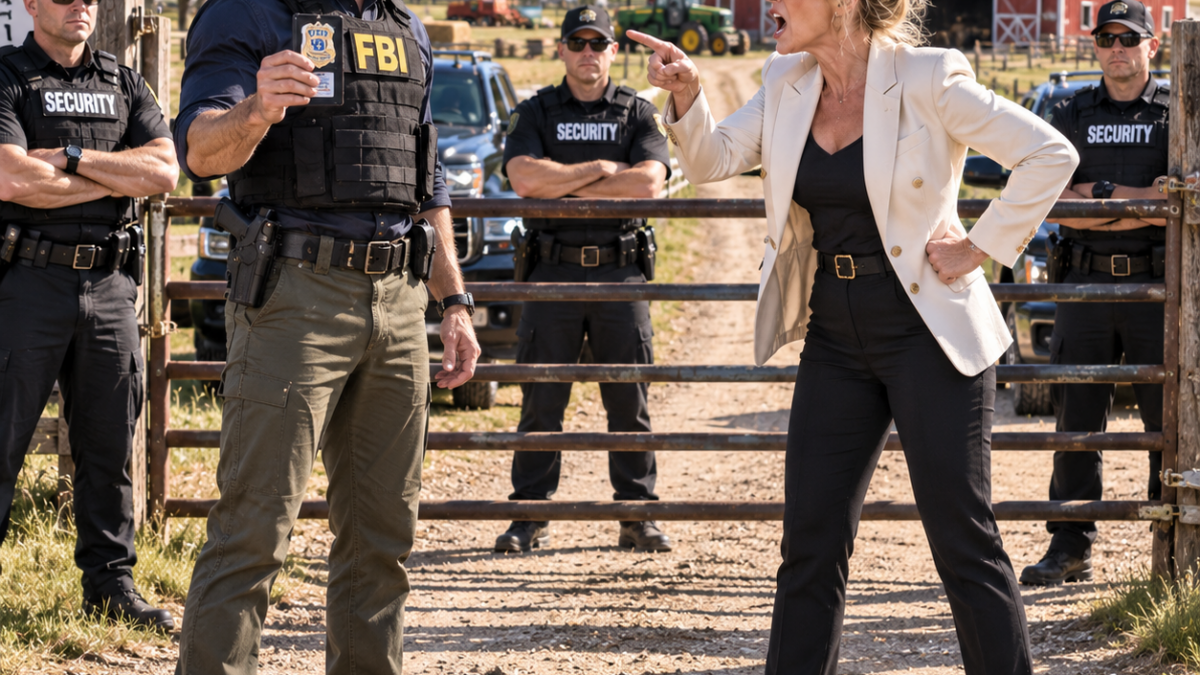
PART 2
I didn’t drive back to the farm.
That was what Brenda expected.
She expected anger to pull me toward the gate again, where her guards could photograph me arguing, document me “trespassing,” and build whatever version of events she needed.
Instead, I drove fifteen miles south and rented a room at the Cedar Motor Lodge.
The place had one vending machine, two burned-out parking lot lights, and carpet that probably remembered three presidents before the current one.
Perfect.
Nobody cared who I was.
I put my bag on the bed, opened my laptop, and laid out everything Brenda had allowed me to photograph.
The alleged HOA assessments.
The violation notices.
The management agreement.
Victor Shaw’s business card.
I enlarged Henry’s signature.
Then I opened a scanned letter from my personal files.
My grandfather had written it two months before he died.
Alexander,
Something isn’t right here.
They keep telling me I agreed to things I don’t remember agreeing to.
A woman from the HOA came again.
I told her to leave.
Now some company is paying bills on the farm.
They’re trying to take it.
I don’t know what to do anymore.
But you will.
You’re FBI.
You’ll know.
—Grandpa
I had received that letter while working a financial-fraud investigation in Virginia.
At the time, I called him.
He sounded confused.
Tired.
He mixed up two dates.
I told myself his memory problems were getting worse.
I promised I would look into it when the case ended.
Two weeks passed.
Then three.
By the time I arranged leave, Henry was hospitalized.
He died before I reached Nebraska.
That guilt had ridden beside me for six hours.
Now it sat on the motel bed.
I read his last line again.
You’ll know.
“Yeah,” I whispered.
“Eventually.”
I opened a new case folder on my personal encrypted drive.
Not an FBI case.
Not yet.
That distinction mattered.
I was an FBI special agent assigned to financial crimes in Washington.
But Henry was my grandfather.
His property was my inheritance.
If this became a federal criminal matter, I would have a conflict.
I could not run an official investigation into people I believed were stealing from my family.
I could gather documents as a private property owner.
I could preserve evidence.
I could report suspected crimes.
Then someone else would have to decide what happened.
That rule annoyed me.
It also protected the case.
People like Brenda counted on victims behaving emotionally.
I couldn’t afford that luxury.
I typed the first line of my timeline.
DAY ONE — ARRIVAL.
Locked gate installed without my consent.
Private guards identified only by Heartland Security patches.
Brenda Holloway claims Meadowbrook Estates HOA controls property.
Alleged debt: $47,322.17.
Purported management agreement signed fourteen months before Henry Bailey’s death.
Signature visually inconsistent with known handwriting during late-stage Parkinson’s.
I attached photographs.
Saved.
Backed up.
Then I called Helen Chavez.
Helen worked financial analysis at the Bureau and had been my partner on more complicated paper-trail cases than either of us wanted to remember.
She answered with, “You’re supposed to be on bereavement leave.”
“I am.”
“Then why are you calling me at nine twenty-three at night in your investigation voice?”
“I have an inheritance problem.”
“Those words should never be said by an FBI agent.”
“I need publicly available corporate information.”
“Personal matter?”
“For now.”
“Alexander.”
“I know.”
“You are not running an off-book federal case.”
“I know.”
“You say that the same way people say they only had two beers.”
“Helen.”
She sighed.
“What names?”
“Heartland Asset Management LLC. Meadowbrook Estates HOA. Brenda Holloway. Victor Shaw. Heartland Security.”
“State?”
“Nebraska.”
“What am I looking for?”
“Public corporate relationships only. Nothing restricted unless and until this goes official.”
She paused.
“That sentence saved me from yelling.”
“Good.”
“Send the spelling.”
I did.
Then I photographed Henry’s signature from the alleged agreement beside examples from his last year.
Not proof.
But enough to show the inconsistency.
The next morning, I reached the Madison County Recorder’s Office fifteen minutes before opening.
I was the first person through the door.
A woman named Elaine sat behind the counter.
She looked sixty, maybe older, with silver glasses hanging from a chain around her neck.
“What can I help you with?”
“Parcel records.”
I gave Henry’s property number.
“Everything recorded in the last three years.”
She typed.
I watched her face.
No reaction.
Good.
First thing I looked for was a lien.
If Henry truly owed more than forty-seven thousand dollars to an HOA, some form of recorded claim should exist if they intended to enforce it against the property.
Nothing.
No Meadowbrook lien.
No judgment.
No foreclosure notice.
No recorded management agreement.
I asked Elaine to search again under Henry’s name.
Then Meadowbrook.
Then Heartland Asset Management.
Still no management agreement tied to the farm.
“Can an HOA manage property without recording anything?”
Elaine shrugged.
“I can’t give legal advice.”
“Fair.”
I requested tax records.
That was where everything changed.
Henry had paid property taxes himself for decades.
But eighteen months earlier, the payer changed.
HEARTLAND ASSET MANAGEMENT LLC.
Every installment after that.
I leaned closer.
“Who authorized a third party to pay?”
“Anybody can pay property taxes.”
She was right.
Paying taxes does not make you the owner.
But criminals love creating paperwork that looks meaningful to people who don’t understand what it actually proves.
Heartland began paying taxes the same month Henry’s medical records showed a diagnosis of early cognitive decline.
Four months later, Brenda claimed he signed the management agreement.
The timing wasn’t random.
I printed certified copies.
Paid with my personal card.
No badge.
No Bureau account.
I left at 9:42.
At 10:15, I parked one hundred yards from Bailey Farm.
The guards were gone.
A flatbed truck sat near the barn.
Two men loaded Henry’s equipment onto it.
His old baler.
A portable generator.
Steel fencing.
Then the tractor.
That tractor.
My grandfather bought it used in 1992.
He taught me to operate the clutch by placing my foot on top of his.
I was eight.
I nearly drove us through the chicken enclosure.
Henry laughed about it for thirty years.
Now two strangers were chaining the tractor onto a trailer.
My fingers tightened around the steering wheel.
Call the sheriff.
Stop them.
Get your property back.
The emotional part of me screamed all three.
The investigator in me asked a different question.
What story will they tell?
They would say Heartland had management authority.
They would produce the forged agreement.
Local deputies would call it civil.
Brenda would know I was escalating.
Documents would disappear.
So I photographed everything.
Truck.
Plate.
Men.
Equipment.
Time.
Direction of travel.
Then I watched them leave.
It felt awful.
Evidence often does.
People imagine good investigations as constant action.
Most are waiting.
Watching.
Allowing someone to finish making the mistake you already understand.
Back at the motel, Helen called.
“You sitting?”
“Yes.”
“Heartland Asset Management was registered three years ago.”
“Owner?”
“Not public in the first filing. Registered agent is Victor Shaw.”
“Same man claiming to be HOA counsel.”
“Correct.”
“Address?”
“Post office box in Omaha.”
“Any related entities?”
“Working on it.”
“Brenda?”
“Her name doesn’t appear directly yet.”
“What about Heartland Security?”
“Owner Derek Nash.”
“Relationship?”
“Still digging.”
I opened my timeline.
Heartland created three years ago.
Henry’s mental decline documented eighteen months ago.
Heartland begins paying taxes.
Management agreement appears fourteen months ago.
Henry dies.
Brenda locks out heir.
Equipment removed.
“What does that look like to you?” I asked.
Helen hesitated.
“Like you should contact local counsel.”
“That’s not what I asked.”
“It looks structured.”
“Thank you.”
“Structured does not mean criminal.”
“I know.”
“And Alexander?”
“Yes?”
“Do not start thinking like an agent before you know whether you’re allowed to be one.”
I looked at Henry’s letter.
“Too late.”
“I’m serious.”
“So am I.”
She became quiet.
“I know.”
Tuesday morning, somebody slid an envelope beneath my motel-room door.
No postage.
Victor Shaw letterhead.
The letter demanded I stop “interfering with property under Heartland Asset Management’s lawful control.”
Seventy-two hours.
It threatened a restraining order.
Civil damages.
Attorney fees.
I studied the letterhead.
No bar number.
No law-firm name.
Just VICTOR SHAW — ATTORNEY AT LAW.
Interesting.
At 11:52, someone knocked.
Sheriff Raymond Alvarez stood outside.
Late fifties.
Weathered face.
Heavy winter coat.
“Mr. Bailey?”
“Yes.”
“Got a minute?”
“I have several.”
He remained in the hallway.
“I received a complaint.”
“From?”
“Brenda Holloway.”
“Of course.”
“She says you’ve been harassing HOA representatives and attempting to access property under management.”
“I’m the legal heir.”
“I’m not here to settle ownership.”
“Good.”
“She requested that I remind you not to create a confrontation.”
“Did she mention her guards blocking me?”
His expression barely moved.
“She mentioned security.”
“Did she mention people removing farm equipment?”
That got something.
“What?”
“Yesterday. Tractor. Baler. Generator.”
“You report it?”
“I’m reporting it now.”
He looked uncomfortable.
“You have proof?”
“Photographs.”
He stared at me for a second.
Then said, “Email them.”
“To?”
He handed me a card.
Madison County Sheriff’s Office.
“So this is an official report?”
“I’ll make an incident note.”
“Report number?”
His jaw tightened slightly.
“I’ll send you one.”
“Good.”
He started to leave.
“Sheriff?”
He turned.
“Did Brenda ask you to come personally?”
His face gave me the answer before his words.
“She’s well known around here.”
“I’m sure.”
“This is a small county, Mr. Bailey.”
“I grew up spending summers here.”
“Then you know.”
“What?”
“Everybody’s connected.”
There it was.
Not necessarily corruption.
Maybe only habit.
The assumption that Brenda’s version deserved immediate attention because she was Brenda.
He left.
By three that afternoon, my motel reservation was canceled.
The manager looked miserable.
“Corporate liability issue.”
“What liability?”
“Something about litigation.”
“Who called?”
“I don’t know.”
“You do.”
His eyes dropped.
“I’m sorry.”
I packed.
Three coordinated pressures in less than twelve hours.
Lawyer letter.
Sheriff visit.
Housing removed.
That wasn’t improvisation.
It was process.
I had seen loan-shark crews use the same rhythm.
Collections organizations.
Extortion schemes.
Fraud rings targeting elderly victims.
Create confusion.
Create authority.
Create exhaustion.
Then offer relief.
I found another motel thirty miles away.
Paid cash.
Used my middle name on the reservation.
Not to hide from law enforcement.
To stop Brenda from making another phone call.
That evening I drove to the neighboring farm owned by Martha Jennings.
County records showed she had lived beside Henry for forty-three years.
She opened the door cautiously.
Then I said my grandfather’s name.
Her expression softened.
“Henry’s boy?”
“Grandson.”
“I know what you are.”
That startled me.
“My grandfather told you?”
“No.”
She smiled.
“He bragged.”
“About me being FBI?”
“About you being stubborn.”
That sounded more accurate.
Martha poured coffee.
Before I could ask anything, she said, “They got to him.”
“Who?”
“Brenda.”
“Tell me.”
Her mouth tightened.
“Same way they got Earl Thompson.”
“Who is Earl?”
“Farm west of Mill Creek.”
She began listing names.
Three farms in five years.
All elderly owners.
All received unexpected HOA or management notices.
All dealt with Victor Shaw.
All eventually transferred to Heartland or affiliated entities.
“Did Meadowbrook actually have authority over their farms?”
“Not that I ever understood.”
“Did they pay dues?”
“Some paid road fees. That’s how it started.”
Martha walked into another room.
Returned with a shoebox.
Inside were letters.
Violation notices.
Threats.
A management agreement bearing her signature.
She tapped it.
“I never signed that.”
I compared it with Henry’s.
Same format.
Same paragraph spacing.
Same notary.
LINDA PRICE.
Martha pointed toward the signature.
“They tried me too.”
“What stopped it?”
“My son.”
“What did he do?”
“Came down from Omaha with a lawyer.”
“And?”
“They suddenly decided it had been a misunderstanding.”
I photographed every page with Martha’s permission.
“Who are the guards?”
“Derek Nash.”
“Heartland Security?”
She nodded.
“Brenda’s muscle.”
“Has he threatened anyone?”
“Depends what you call threaten.”
“Words. Contact. Blocking roads.”
Martha stared into her coffee.
“He parked outside Earl Thompson’s house every night for almost two weeks.”
“Why?”
“Earl was fighting the paperwork.”
“What happened?”
“He lost.”
I wrote the name.
Earl Thompson.
Another victim.
By the time I left Martha’s house, I had the shape.
Brenda Holloway identified vulnerable property owners.
Victor Shaw supplied legal-looking documents.
Derek Nash supplied intimidation.
Heartland Asset Management received property.
But I still lacked the money trail.
Without that, defense attorneys could split everything apart.
HOA dispute.
Property manager.
Separate security company.
Independent developer.
Coincidences.
Helen called Wednesday afternoon.
“I found Victor Shaw.”
“And?”
“He is not licensed to practice law in Nebraska.”
I sat up.
“Anywhere?”
“Admitted in Kansas twelve years ago.”
“Active?”
“No. Suspended eight years ago after client-fund misappropriation.”
I looked at his threat letter.
“So ‘Attorney at Law’ is doing a lot of work.”
“Yes.”
“What about Derek?”
“Heartland Security LLC is real.”
“Owner?”
“Derek Nash. Old aggravated-assault conviction.”
“Active license?”
“Company appears licensed.”
“So don’t overstate that.”
“I wasn’t planning to.”
“Good.”
“Heartland Asset?”
Helen paused.
“That’s where it gets interesting.”
I waited.
“Two related LLCs in South Dakota.”
“Common agent?”
“Different names, same registered-service network.”
“Transfers?”
“At least seven rural properties over four years.”
I stood.
“Seven?”
“All previously owned by elderly people or estates.”
“Across state lines?”
“Yes.”
There it was.
Federal nexus.
Potential interstate wires.
Multi-state shell structure.
Not enough for charges.
Enough to call my office.
I still didn’t.
Not yet.
First I wanted a victim who could establish money flow.
Helen gave me one.
Benjamin White.
Son of Earl Thompson.
Lincoln.
I drove there Thursday morning.
Benjamin opened the door looking like a man who hadn’t trusted strangers for years.
I explained who Henry was.
Not my badge.
Not yet.
Just the connection.
“I think the people who took your father’s farm are trying to take my grandfather’s.”
He stared.
Then stepped aside.
His kitchen table was already covered with documents.
“You’re late.”
“I know.”
“I’ve been waiting two years.”
His father’s case mirrored Henry’s.
Sudden debt.
Management agreement.
Heartland taxes.
Legal threats from Victor.
Then quitclaim paperwork.
Benjamin fought.
His savings vanished.
His attorney withdrew after unpaid bills.
The farm transferred.
Six months later, a developer bought it for $420,000.
“Where did the money go?” I asked.
Benjamin opened another folder.
“That’s the part nobody cared about.”
Bank statements.
Subpoenaed during the old lawsuit before his case collapsed.
Developer funds deposited into Heartland Asset Management.
Then wired to Prairie Holdings LLC in South Dakota.
Then back into Nebraska.
Final beneficiary:
HOLLOWAY FAMILY TRUST.
I looked up.
“Brenda?”
“Trustees are Brenda and her husband.”
There it was.
Money.
Crossing state lines.
From a farm acquired through questionable documents.
Into Brenda’s family trust.
One transaction is suspicious.
Seven properties become a pattern.
Benjamin watched me photograph the statements.
“What exactly do you do?”
I finally answered.
“FBI.”
His face changed.
“You’re serious.”
“Financial crimes.”
He leaned back.
For several seconds, he said nothing.
Then:
“Why haven’t you arrested them?”
“Because I’m not the agent who should.”
He frowned.
“My grandfather is involved. It’s my inheritance. I have a conflict.”
“So you can’t help?”
“No.”
I closed the folder.
“I can make sure the people who can help receive something they can actually prosecute.”
Benjamin stared at his father’s papers.
“My dad died thinking he screwed everything up.”
His voice broke.
“He thought he had signed something stupid.”
I didn’t interrupt.
“He kept saying, ‘I must’ve forgotten.’”
Benjamin looked at me.
“He blamed himself.”
“That wasn’t his fault.”
“You don’t know that yet.”
“No.”
I pointed toward the bank records.
“But I know enough to keep looking.”
Helen called as I crossed back into Madison County.
“Heartland filed something.”
“What?”
“Corrective deed application on Henry Bailey’s farm.”
My grip tightened on the steering wheel.
“When?”
“Three weeks ago.”
“Before I arrived.”
“Yes.”
“What’s the stated basis?”
“Management control plus tax payments.”
“That doesn’t transfer title.”
“I know.”
“Status?”
“Pending review.”
“How long?”
“Twelve days.”
I pulled onto the shoulder.
Twelve days.
If the filing entered the chain of title, it would not magically make Heartland owner.
But it could create enough confusion to bury the estate in litigation.
Brenda didn’t need perfect ownership.
She needed paper complicated enough to exhaust me.
I called Helen.
“Send everything to Patricia Reeves.”
Silence.
“You’re ready?”
“Yes.”
Patricia Reeves was the Special Agent in Charge of the Omaha office.
More importantly, she wasn’t family.
I called ten minutes later.
“Reeves.”
“Patricia, Alexander Bailey.”
“Washington?”
“Yes.”
“What happened?”
“I need to report a possible multi-state elder-property fraud network.”
She listened for almost fifteen minutes.
No interruptions.
Henry.
Brenda.
Heartland.
Victor.
Derek.
Martha.
Benjamin.
Seven properties.
South Dakota transfers.
Holloway Family Trust.
Corrective deed.
When I finished, she asked one question.
“How much of this did you collect using Bureau resources?”
“Public records, personal documents, voluntary witness records. Helen helped identify public corporate filings and alerted you through proper channels once interstate evidence emerged.”
“Good.”
“I want off the investigative side.”
“You were never on it.”
“Exactly.”
“I’ll assign agents.”
“The deed filing is pending.”
“How long?”
“Twelve days.”
“We’ll move fast.”
Then she said something I needed to hear.
“Alexander.”
“Yes?”
“Your grandfather’s farm is not the case.”
I closed my eyes.
“I know.”
“The network is the case.”
“I know.”
“Then act like a witness.”
That was harder than it sounded.
The next four days felt slower than the previous month.
Agents Morrison and Tan arrived quietly.
They interviewed Benjamin.
Martha.
Other victims.
They obtained bank records through legal process.
They verified the South Dakota transfers.
They confirmed Victor Shaw’s lack of active law license.
They began tracing Linda Price’s notary history.
I stayed out.
Mostly.
Brenda made that impossible when she called Friday.
“Mr. Bailey.”
“Brenda.”
“I’m told you’ve been asking people questions.”
“I inherited property.”
“That doesn’t explain why you’re harassing residents.”
“I’m not.”
“You spoke with Martha Jennings.”
“She invited me inside.”
“You contacted Benjamin White.”
“He isn’t a Meadowbrook resident.”
Silence.
That told me she knew more than she should.
Then her voice softened.
“Alexander, this doesn’t have to become ugly.”
“Forty-seven thousand dollars and armed-looking guards at my gate already felt ugly.”
“They’re private security.”
“I know.”
“We can resolve this.”
“How?”
“Come meet me Monday.”
“Where?”
“HOA community center.”
“Who will be there?”
“My counsel.”
“Victor Shaw?”
Another pause.
“Yes.”
“Anyone else?”
“Possibly Derek.”
I almost smiled.
The three primary nodes in one room.
“What’s the proposal?”
“You’ll see Monday.”
I told Reeves.
She didn’t sound excited.
She sounded suspicious.
“Could be bait.”
“Probably.”
“You are not running an undercover operation.”
“I know.”
“You’re a victim meeting people who contacted you.”
“Yes.”
“If we record, it happens under our control.”
“Agreed.”
“If you feel unsafe, you leave.”
“Agreed.”
“You do not provoke admissions.”
“Agreed.”
“You let them talk.”
“That part I’m good at.”
She ignored the joke.
The next day, a courier delivered Brenda’s settlement.
Twenty-two pages.
The offer:
Heartland would forgive every alleged debt.
I would receive $10,000.
I would sign a quitclaim deed transferring the farm to Heartland Asset Management.
A farm appraised near $300,000 even in its neglected condition.
Ten thousand dollars.
Page nineteen included the language that made the whole thing uglier.
I acknowledge this transfer is voluntary and without coercion.
I acknowledge I have been advised to obtain independent legal counsel.
That clause wasn’t automatically proof of fraud.
Legitimate contracts use similar language all the time.
But in context—with invented debt, blocked access, threats, motel interference, and questionable management documents—it mattered.
Reeves read the agreement.
“They’re trying to create consent.”
“Exactly.”
“Still need them tied to the fraudulent documents.”
“I know.”
“Linda Price?”
“What about her?”
“Her commission expired four years ago.”
I stared.
“What?”
“Morrison verified it this morning.”
“Henry’s management agreement is fourteen months old.”
“Yes.”
“Earl Thompson’s deed?”
“Same expired seal.”
I sat down.
A notary whose commission had lapsed years before.
Same stamp.
Multiple transactions.
Another crack.
Sunday night, I drove to Bailey Farm.
I parked outside the locked gate.
No guards.
No Lexus.
Just the chain.
I walked to it.
Put my hand against cold metal.
The farmhouse sat dark beyond the fields.
I remembered Henry standing behind me when I was twelve.
He held the deed in both shaking-free hands back then.
“Someday this is yours.”
“I’m going to sell it and buy a Ferrari.”
“You’ll crash it.”
“Then I’ll buy another.”
“With what money?”
“The farm money.”
He laughed.
“Boy, this place ain’t worth Ferrari money.”
He had been right.
Back then.
I pressed my forehead against the gate.
“I’m sorry.”
Wind moved through the grass.
“I should’ve come sooner.”
That was the sentence I had avoided since his funeral.
“I should’ve listened.”
Nothing answered.
I thought about the letter.
You’ll know.
I hadn’t known.
Not fast enough.
But grief does something dangerous to people who work investigations.
It convinces you that solving the crime can fix the loss.
It can’t.
Brenda could go to prison.
The farm could be restored.
Every victim could receive money.
Henry would still be dead.
The best I could do was protect what remained.
Monday morning, Morrison taped the transmitter beneath my shirt.
“You nervous?” he asked.
“Yes.”
“Good.”
“That’s what lawyers say too.”
“I’m not a lawyer.”
“Better.”
Tan sat in an unmarked vehicle outside the community center.
Morrison would monitor from another room with local federal support.
I was not the case agent.
I was not arresting anyone.
I was the victim in a consensually monitored meeting arranged at Brenda’s invitation.
That boundary mattered.
At 9:55, I walked inside.
Brenda sat at the head of a conference table.
Designer blazer.
Perfect hair.
Victor Shaw sat to her left.
Derek Nash stood near the wall.
He was bigger than I remembered.
Brenda smiled.
“Alexander.”
“Brenda.”
“Please.”
She gestured toward the chair.
I sat.
Victor opened the settlement folder.
“I think we can all agree this situation has become unnecessarily difficult.”
“Can we?”
He ignored that.
“The association and Heartland Asset Management are prepared to resolve all outstanding claims.”
Brenda continued.
“You walk away with ten thousand dollars.”
“And the forty-seven thousand?”
“Forgiven.”
“Debt I dispute.”
She smiled.
“Then think of this as avoiding the cost of proving that.”
Good line.
Honest, in its way.
I flipped pages slowly.
“You’re asking me to transfer the farm.”
“Heartland has been maintaining it.”
“By taking equipment?”
Derek shifted.
Brenda’s eyes hardened.
“That equipment was removed for safekeeping.”
“Where is it?”
“Storage.”
“Location?”
“That can be addressed after settlement.”
I nodded.
“Property taxes?”
Victor answered.
“Heartland advanced them.”
“Without a recorded agreement.”
“The management agreement authorizes expenditures.”
“The management agreement is unrecorded.”
“Recording is not always required for private agreements.”
True enough in general.
He knew just enough language to sound legitimate.
“So Henry voluntarily signed?”
“Yes.”
“In front of Linda Price?”
“Yes.”
Victor answered too fast.
“How do you know?”
He paused.
Brenda stepped in.
“We have the notarized document.”
“Linda Price’s commission expired four years ago.”
Nothing moved.
Not Brenda.
Not Victor.
Not Derek.
That was the moment.
Victor recovered first.
“That’s incorrect.”
“Is it?”
“She has served the county for years.”
“That wasn’t my question.”
Brenda leaned forward.
“Alexander, what exactly are you trying to do?”
“Understand why you want this farm so badly.”
“We don’t want it.”
I looked down at the quitclaim deed.
“This says differently.”
“We want resolution.”
“For ten thousand dollars?”
“The property has liabilities.”
“No tax delinquency.”
“Other liabilities.”
“No recorded lien.”
“Internal assessments.”
“No recorded management agreement.”
Victor’s voice hardened.
“You are not a property attorney.”
“No.”
“Then stop pretending you understand this.”
I looked at him.
“Are you?”
Silence.
Brenda’s head turned toward him.
Tiny.
Almost invisible.
I continued.
“What jurisdiction are you licensed in?”
Victor’s face changed.
“This meeting is not about me.”
“It becomes relevant when a man signing letters as ‘attorney at law’ advises me to surrender inherited property.”
Derek uncrossed his arms.
Brenda said, “Enough.”
I looked at her.
“Okay.”
That threw her.
“What?”
“I’m listening.”
Silence.
She had expected the fight.
Instead, I leaned back.
Brenda spoke first.
“You’re exhausted.”
Not a question.
“Your grandfather left you a disaster.”
I said nothing.
“Broken buildings. Deferred taxes. Equipment that barely works.”
Nothing.
“You live in Washington.”
Nothing.
“What are you going to do with a farm in Nebraska?”
Nothing.
“Spend two years fighting over paperwork?”
Still nothing.
She tapped the settlement.
“Sign it.”
“Why?”
“Because this is the smart decision.”
“For me?”
“For everyone.”
“Who is everyone?”
“Stop playing games.”
Her voice changed.
The polished HOA president began disappearing.
“You city people come back when there’s an inheritance and think history belongs to you because your name is on a deed.”
“My name isn’t on the deed yet.”
“You know what I mean.”
“I’m not sure I do.”
She leaned closer.
“Henry couldn’t maintain this place.”
“So you helped?”
“Yes.”
“By paying taxes?”
“Yes.”
“Removing equipment?”
“We protected assets.”
“Locking him out?”
“He wasn’t locked out.”
“Locking me out?”
“You were not authorized under the management structure.”
“And who created that structure?”
Brenda stopped.
Victor said, “This conversation is over.”
I looked at him.
“Why?”
“Because your questions suggest you are not here in good faith.”
I folded the settlement.
“Interesting.”
Derek moved toward the door.
Brenda held up a hand.
“No.”
He stopped.
She looked at me.
“What do you want?”
There it was.
Not what do you need?
What do you want?
“I want my grandfather’s farm.”
“You have no idea what you’re asking for.”
“It’s mine.”
“It is worthless.”
“Then why are you offering a twenty-two-page agreement to acquire it?”
Her jaw tightened.
I let silence stretch.
Finally she said, “Because properties like this create problems.”
“For whom?”
“The community.”
“The farm isn’t in your subdivision.”
“It affects access.”
“To what?”
Victor said, “Brenda.”
She ignored him.
“Future development.”
That mattered.
I leaned slightly forward.
“What development?”
Her eyes narrowed.
“I’m done.”
Then my phone vibrated once.
Signal from Morrison.
They had enough to move the conversation toward identification.
Not enough for dramatic confession.
Enough evidence existed elsewhere.
The meeting had served its purpose.
I stood.
Brenda looked relieved.
I reached into my jacket.
Victor tensed.
Derek shifted.
I removed my credentials.
Blue case.
Gold badge.
FBI.
I placed it on the table.
Nobody spoke.
Brenda stared at it.
Then at me.
Then back at the badge.
“What is that?”
“My identification.”
“I can see that.”
Her voice had gone thin.
“My name is Alexander Bailey. I’m a special agent with the Federal Bureau of Investigation.”
Victor stood so fast his chair hit the wall.
Derek moved toward the door.
It opened.
Agents Morrison and Tan stepped in.
“Stay where you are.”
Derek froze.
Brenda looked at me.
“You lied.”
“No.”
“You deliberately hid who you were.”
“I told you my name.”
“You let us believe—”
“That I was a homeowner?”
She stopped.
“I am.”
Morrison took over.
That was important.
Not me.
“Brenda Holloway?”
She looked at him.
“You are being detained pursuant to federal warrants related to an ongoing fraud investigation.”
Her face collapsed.
Not dramatically.
No screaming yet.
Just comprehension.
Victor backed toward the table.
“I want an attorney.”
Tan looked at him.
“That’s a good idea.”
The irony wasn’t lost on anyone.
Derek said nothing.
Handcuffs clicked.
Brenda finally found her voice.
“This is entrapment.”
Morrison answered.
“No, ma’am.”
“You recorded me.”
“Yes.”
“I demand to speak with—”
“You’ll have that opportunity.”
She looked at me.
“You did this because of your grandfather.”
I met her eyes.
“My involvement stopped being investigative the moment the Bureau opened the case.”
“That’s not true.”
“It is.”
“You targeted me.”
“No.”
I looked at the settlement documents.
“You targeted him.”
Morrison escorted her out.
By the time we reached the parking lot, neighbors had gathered.
Phones everywhere.
Martha stood near the sidewalk.
Tears on her face.
A man I didn’t recognize called out.
“Is it true?”
Nobody answered immediately.
Federal cases are not community theater.
Then another person shouted.
“My mother got those letters too.”
Tan turned toward him.
“Sir, speak with the agents at the vehicle. We’ll take your information.”
Then another.
“My uncle lost land.”
Another.
“They fined my father eighteen thousand.”
The tips started before Brenda’s SUV had even been searched.
That was how schemes collapse.
Not when the first suspect is cuffed.
When everyone watching realizes their private story might be part of the same public crime.
Search warrants were executed that afternoon.
Meadowbrook records.
Victor’s office.
Heartland Asset Management.
Heartland Security.
Brenda’s home.
The Holloway Family Trust.
Investigators seized computers, phones, contracts, paper files, external drives, and bank records.
I went back to my motel.
Sat on the bed.
And shook.
Not fear.
Release.
For eight days, I had behaved like a professional because that was the only useful thing I could do.
Now the professional part was finished.
I was Henry’s grandson again.
I cried.
Quietly.
Angrily.
For the letter I answered too late.
For the tractor.
For the locked gate.
For the possibility that Henry spent his last year believing nobody believed him.
Helen called.
“You okay?”
“No.”
“Good.”
I laughed through tears.
“What?”
“You’ve been talking like a report for a week.”
“I hate you.”
“No, you don’t.”
“No.”
I looked at Henry’s letter.
“I should’ve come.”
“I know.”
“You’re supposed to tell me I couldn’t have known.”
“You could’ve known more.”
That hurt.
Helen continued.
“But guilt is not accountability.”
I didn’t answer.
“You didn’t forge the documents.”
“I know.”
“You didn’t target elderly people.”
“I know.”
“You didn’t lock the gate.”
“I know.”
“You missed a warning.”
“Yes.”
“And now?”
“I’m listening.”
“Then keep doing that.”
The investigation lasted months.
Much longer than the dramatic morning in the community-center parking lot.
Linda Price cooperated.
Her expired notary seal had been used repeatedly.
Sometimes with her knowledge.
Sometimes, she claimed, after Brenda and Victor retained access to an old stamp.
Forensic examination sorted which documents she actually handled.
She admitted participating in several improper notarizations and provided testimony about Victor preparing documents before meetings with elderly owners.
Derek Nash talked next.
Not immediately.
His attorney waited until prosecutors showed the interstate transfers and multiple witness statements.
Then Derek understood Brenda was not going to save him.
He described “pressure visits.”
Park outside.
Block access.
Stand at gates.
Follow vehicles.
Never explicitly threaten violence.
Just create the feeling that resistance had consequences.
“How many?” Morrison asked during one interview.
Derek looked down.
“I don’t know.”
“Estimate.”
“More than ten.”
My stomach turned when I read that transcript later.
More than ten.
Seven properties had already transferred.
Others had been targeted and survived.
Like Martha.
The scope grew.
Nebraska.
South Dakota.
At least two attempted acquisitions in Iowa that had failed early.
The network’s strength was not legal sophistication.
It was fragmentation.
Each victim saw one fake HOA debt.
One threatening letter.
One private-security visit.
One tax payment.
One confusing deed.
Nobody saw the network.
Until the records crossed counties.
Then states.
Then bank accounts.
Victor Shaw became one of the government’s strongest pieces.
His lack of an active law license was only the beginning.
Investigators found templates.
Threat letters.
Management agreements.
Quitclaim forms.
Instructions for what he called “distressed succession.”
One internal note divided targets into categories.
No nearby family.
Cognitive decline.
Recent widowhood.
Financial delinquency.
Out-of-state heirs.
I read that list three times.
Human suffering converted into acquisition criteria.
Henry appeared in the files.
H. BAILEY.
Parkinson’s.
Grandson federal employee — DC.
Low local support.
Property condition poor.
Estimated resistance: LOW.
I laughed when I reached that line.
Not because it was funny.
Because Henry would have.
Low resistance.
They had misread both of us.
The Holloway Family Trust received proceeds connected to multiple acquisitions.
Some transactions were disguised as management fees.
Some as consulting payments.
Some traveled through Prairie Holdings before returning to Brenda-controlled accounts.
The government alleged wire fraud, bank fraud, conspiracy, money laundering, and financial exploitation of vulnerable adults under applicable laws.
The exact charging structure differed across defendants.
I stayed away from strategy meetings.
Stayed away from witness interviews unless prosecutors needed my own firsthand testimony.
Reeves enforced the boundary mercilessly.
“You’re a witness.”
“I know.”
“You’re also emotionally invested.”
“I know.”
“You hate Brenda.”
“I wouldn’t use the word hate.”
“What word?”
I thought.
“I hope every year in prison feels educational.”
Reeves stared.
“That is hate with a federal salary.”
Fair.
The corrective deed application was rejected three days after Brenda’s arrest.
The county recorder issued a written notice.
Insufficient supporting authority.
Invalid management documentation.
Potential fraud referral.
I drove to the farm with a locksmith.
The heavy chain Brenda had installed was removed.
I kept it.
Not as a trophy.
As evidence first.
Later, after the government released it, as a reminder.
The gate opened with a rusty groan.
I drove through.
For the first time since Henry’s funeral, nobody stood in my way.
The farmhouse smelled exactly as I remembered.
Dust.
Old wood.
Coffee that hadn’t been brewed in months but somehow still lived in the walls.
His jacket hung beside the kitchen door.
I touched the sleeve.
That broke me worse than the funeral.
Funerals are organized grief.
Flowers.
Chairs.
People telling you how good someone was.
An empty jacket has no ceremony.
I sat at the kitchen table.
The same table where Henry taught me cards.
The same one where he opened the family deed when I was twelve.
The same one where, according to Brenda’s paperwork, he had supposedly signed away his rights while barely able to control his hands.
I put my forehead against the wood.
“I’m here.”
Nobody answered.
“I’m late.”
Wind pressed against the window.
“But I’m here.”
Spring came before indictments became pleas.
Meadowbrook residents elected an interim board.
Then discovered something almost funny.
The HOA had far less legitimate authority over surrounding agricultural land than Brenda had claimed.
Road-maintenance agreements existed.
Shared drainage arrangements existed.
A few historical easements existed.
But Brenda had converted cooperative agreements into the appearance of broad jurisdiction.
That ended.
The new board commissioned an audit.
Every assessment against nonmember farm property was frozen.
Every contract with Heartland-linked entities was terminated.
Security guards disappeared.
The HOA office removed Brenda’s photograph from the wall.
Martha Jennings attended the first open meeting.
She sat in the front row.
When the new president asked for public comment, Martha stood.
“I’ve got forty years of comments.”
The meeting lasted four hours.
I wish Henry had seen it.
Benjamin White’s case reopened through civil counsel funded partly through victim-assistance resources.
The fraudulent transfer of his father Earl’s farm was challenged.
The process was ugly.
Third-party interests existed.
Later buyers claimed good faith.
Lenders had security interests.
Nothing magically returned because Brenda had been arrested.
That is the problem with stolen property.
Fraud spreads complexity outward.
Innocent people can end up owning something acquired through somebody else’s crime.
Courts had to untangle it.
Months.
Hearings.
Settlements.
Title insurance.
Restitution.
Eventually, Benjamin recovered legal value connected to the farm and, through a negotiated arrangement, reacquired the property itself.
The day he got the keys, he called me.
“Dad’s home.”
That was all he said.
I understood.
Six months after the arrests, I sat in federal court in Omaha for Brenda’s sentencing.
She wore gray.
No designer blazer.
No perfect smile.
She looked smaller.
Not physically.
The room was no longer arranged around her certainty.
Victims spoke.
Benjamin first.
He told the judge about Earl.
How an eighty-year-old man spent his last months believing he had made some terrible financial mistake.
How he apologized to his son.
How ashamed he was.
Then Martha.
She described the guards.
The letters.
The management agreement she never signed.
The fear of checking her own mailbox.
Then a woman from South Dakota.
Her mother had dementia.
Brenda’s network acquired forty acres three months before the woman died.
She had not known until probate.
The prosecutor read Henry’s letter with my permission.
They’re trying to take the farm.
Alexander, I don’t know what to do.
But you will.
You’re FBI.
You’ll know.
I kept my eyes on the floor.
The judge addressed Brenda.
“You did not merely steal property.”
Her voice was calm.
“You identified vulnerability and converted it into opportunity.”
Brenda stared straight ahead.
“You relied on age.”
Silence.
“Isolation.”
Silence.
“Cognitive decline.”
Silence.
“Grief.”
I looked up.
That one mattered.
“And you used institutions that exist to create trust—homeowners associations, legal documents, tax payments, security services—to manufacture the appearance of legitimacy.”
Brenda’s sentence was nine years in federal prison.
Supervised release afterward.
Restitution exceeding one million dollars.
Forfeiture of assets tied to the scheme.
Victor received six years.
He had spent years pretending to be the legal authority behind Brenda’s paperwork.
In court he finally needed a real attorney.
Derek received four years after cooperation reduced his exposure.
Linda Price avoided prison after pleading guilty, cooperating, surrendering her ability to serve as a notary, and receiving probation plus community service.
Not everyone thought the outcomes were harsh enough.
Martha certainly didn’t.
“Two years probation for Linda?”
“She cooperated.”
“She forged old people’s paperwork.”
“She also helped prove the larger case.”
Martha folded her arms.
“I can understand it and still dislike it.”
“That sounds healthy.”
She pointed a spoon at me.
“Don’t get smart.”
We were sitting in her kitchen.
Coffee again.
The first time I had been there, I was looking for evidence.
Now we were arguing about sentencing.
That felt like progress.
The Holloway Family Trust was dismantled through forfeiture proceedings.
Heartland Asset Management collapsed.
Some assets were sold for victim restitution.
Meadowbrook Estates rewrote its governance policies.
Term limits.
Independent audits.
Transparent vendor disclosures.
No enforcement beyond actual recorded authority.
No private security actions involving nonmember land without legitimate legal basis.
All property-management agreements required independent counsel and recordation where appropriate.
The new president was a retired nurse named Caroline Brooks.
Her first letter to surrounding farmers contained one sentence Martha framed.
WE WOULD RATHER ASK PERMISSION THAN INVENT AUTHORITY.
Henry would have liked that.
I repaired Bailey Farm slowly.
Not because I planned to become a full-time Nebraska farmer.
I didn’t.
My life was still in Washington.
But neglect felt disrespectful after everything.
I hired a local crew for the barn.
Replaced rotten roof sections.
Repaired the porch.
Repainted the farmhouse.
The tractor came back through the asset seizure process.
Same faded green paint.
Same cracked seat.
The first time it started, I laughed so loudly the mechanic thought something was wrong.
I drove it into the west field.
Very slowly.
At the place where Henry taught me the clutch, I stopped.
Shut off the engine.
For a few minutes, I was eight again.
His hand over mine.
“Easy, Alex.”
“I’m doing it.”
“You’re killing the clutch.”
“I know what I’m doing.”
“You’re eight.”
“I’m advanced.”
Then the tractor lurched and nearly flattened a fence post.
Henry laughed until he cried.
That memory had nothing to do with fraud.
That made it the most important one.
For months, Brenda’s crime had turned Henry into a victim in my mind.
A sick old man.
Targeted.
Confused.
Afraid.
But Henry was more than the worst thing someone did to him.
He was the man who let an eight-year-old almost destroy a tractor.
The man who burned pancakes every Sunday.
The man who carried peppermint candy in his coat.
The man who believed old coffee could be reheated indefinitely as long as you never admitted it tasted terrible.
I needed the farm repaired partly so I could remember that version of him again.
A year after sentencing, Benjamin came to visit.
He brought a small wooden sign.
BAILEY FARM.
Hand carved.
“You make this?”
“My daughter.”
“It’s beautiful.”
“She said your gate looked naked.”
We mounted it where Brenda’s chain had been.
Martha came over with lemonade.
Caroline from Meadowbrook arrived later.
So did several farmers who had avoided me during my first week.
One of them was a man from the diner.
His name was Russell.
He stood awkwardly near the fence.
“I owe you an apology.”
“For?”
“I said things.”
“What things?”
He looked embarrassed.
“That you abandoned Henry.”
The words still hurt.
Less.
But still.
“Why?”
“Brenda said it.”
“And you believed her.”
“Yes.”
I waited.
Russell removed his cap.
“Henry used to eat breakfast at Mae’s Kitchen.”
“I know.”
“He kept saying somebody was trying to take the farm.”
“What did you think?”
“That his mind was going.”
There it was.
Honesty.
“We all thought that.”
I looked toward the farmhouse.
“I did too.”
Russell blinked.
“You?”
“Not exactly. But I treated the warning like it could wait.”
He put his cap back on.
“Guess we both owe him.”
“Yeah.”
“How?”
I looked around.
“At least stop letting the next old man talk to himself.”
Russell nodded.
That answer spread farther than I expected.
Madison County created a volunteer legal-resource network for elderly agricultural owners.
Local attorneys held quarterly sessions on deed fraud, estate planning, property transfers, and power-of-attorney abuse.
The sheriff’s office created clearer policies for complaints involving private security and ownership disputes.
The county recorder started flagging corrective-deed applications involving incapacitated or recently deceased owners for enhanced review.
None of those systems could guarantee another Brenda would never appear.
Systems can reduce opportunity.
They cannot remove greed.
Still, fewer opportunities matter.
My Bureau office eventually used parts of the case in internal training, with names removed from certain materials.
Not because I had solved it.
I hadn’t.
Reeves reminded everybody of that.
“Agent Bailey was not the case agent.”
She looked directly at me while saying it.
“He was the complainant and witness whose personal documentation helped identify a pattern.”
Afterward I said, “You enjoyed that.”
“Very much.”
“You could’ve acknowledged my contribution.”
“I did.”
“Barely.”
“You’re alive. That’s enough praise for one quarter.”
Helen was worse.
She printed a fake certificate.
MOST SUCCESSFUL FEDERAL INVESTIGATION CONDUCTED WHILE TECHNICALLY NOT INVESTIGATING.
I framed it next to the deed.
Two years passed.
Bailey Farm stopped looking bankrupt.
Not perfect.
Working.
A local family leased most of the fields.
The barn held equipment again.
The farmhouse became somewhere I stayed whenever work brought me west or when I needed distance from Washington.
I kept Henry’s old chair.
Kept the scratches in the kitchen table.
Kept one bent horseshoe he swore brought luck despite all available evidence.
And I kept Brenda’s chain.
It hung in the barn.
Benjamin once asked why.
“Doesn’t it make you angry?”
“Sometimes.”
“Then why keep it?”
“Because it reminds me how official something can look while still being completely wrong.”
Black uniforms.
Padlock.
HOA folder.
Legal letter.
Security SUV.
Sheriff complaint.
Every part of Brenda’s operation depended on appearance.
She rarely needed force.
She needed people to assume somebody else had already verified her authority.
That is the weakness of bureaucratic intimidation.
Everyone sees the form and skips the question.
Who actually gave you the right to do this?
Henry asked that question.
Too many people dismissed him because his hands shook and his memory failed.
I nearly did too.
I never forgave myself completely.
Maybe I wasn’t supposed to.
Some guilt should not control you.
But it can teach you.
I call older relatives now.
Not because they need anything.
Because one day there will be no number to call.
I listen when people repeat themselves.
Sometimes repetition is confusion.
Sometimes it is somebody trying desperately to be believed.
There is a difference.
Three years after Henry’s death, I received a package from the Bureau’s evidence-release unit.
Inside were original documents no longer needed for litigation.
One was the forged management agreement.
Henry Bailey.
Perfect signature.
Steady line.
Fake.
I placed it beside a birthday card Henry sent when I turned thirty.
Alex—
You keep working too much.
Nobody on his deathbed wishes he had answered more emails.
Come home sometime.
—Grandpa
His signature wandered downward.
B trembled.
Last name barely legible.
Real.
I stared at the two signatures.
For all the forensic analysis.
Bank records.
Wires.
Federal warrants.
Court proceedings.
The first clue had always been visible.
Anybody who loved Henry would know.
That hurt too.
Because loving someone should have made me faster.
Then I turned the birthday card over.
Henry had added another line.
P.S. If you’re feeling guilty reading this, good. Means you’ll probably visit.
I laughed alone in the farmhouse kitchen.
“You manipulative old man.”
I did visit.
Just late.
That winter, Meadowbrook invited me to speak at its annual meeting.
I declined.
Caroline called.
“Why?”
“I’m not a resident.”
“You’re the reason the bylaws got rewritten.”
“That’s not a reason to make everyone listen to an FBI agent talk for forty minutes.”
“Twenty.”
“No.”
“Ten.”
“No.”
“What will you do?”
“Come eat afterward.”
She agreed.
At dinner, a young couple introduced themselves.
New residents.
They had never met Brenda.
Had only heard stories.
The husband asked, “Was she really that bad?”
Martha answered before I could.
“Yes.”
His wife said, “I thought maybe people exaggerated.”
Martha leaned across the table.
“She locked this man out of his grandfather’s farm.”
The woman looked at me.
“And you were FBI?”
“I still am.”
“And she didn’t know?”
“No.”
“Did you really show your badge right before she got arrested?”
“More or less.”
Her eyes widened.
“That must have felt amazing.”
Everyone around the table waited.
I thought about it.
The parking lot.
Brenda’s face.
The cuffs.
The crowd.
Henry’s letter.
“It felt good for about thirty seconds.”
They looked surprised.
“Then what?”
“Then I remembered why we were there.”
The woman nodded slowly.
People prefer revenge because it has a clean ending.
Bad person loses.
Good person wins.
Music rises.
Credits.
Real cases are not like that.
After Brenda went away, Benjamin still had to repair what happened to his father.
Martha still checked her mailbox too cautiously.
Families in South Dakota still had titles to untangle.
Henry was still dead.
Victory does not restore time.
What it can restore is choice.
Benjamin could choose what happened to his father’s farm.
Martha could choose whether to stay.
The other heirs could choose whether to sell, lease, farm, or walk away.
And I could choose what happened at Bailey Farm.
That was what Brenda had tried to steal before she ever touched the land.
Choice.
On the fifth anniversary of Henry’s death, I drove from Washington to Nebraska again.
Same highway.
Same winter fields.
Same endless sky.
When I reached the county road, nobody blocked the entrance.
The wooden sign had weathered beautifully.
BAILEY FARM.
I drove through.
Stopped near the house.
Snow sat along the fence line.
The porch light was on because the tenant family had checked the property earlier.
I carried a thermos to the barn.
Sat on an overturned bucket.
For a while, I listened to nothing.
No radios.
No agents.
No defendants.
No lawyers.
Just wind.
I thought about that first morning at the gate.
Brenda stepping from her Lexus.
“Your grandfather owed the HOA $47,322.17.”
So certain.
She thought the number itself created truth.
Detailed numbers do that.
Forty-seven thousand sounds more legitimate than “a lot.”
Three hundred twenty-two dollars and seventeen cents sounds calculated.
Official.
Verified.
Except someone had simply built a false number carefully enough to make it intimidating.
That lesson stayed with me.
Fraud is rarely persuasive because every lie is brilliant.
Fraud works because people are exhausted.
Busy.
Grieving.
Scared.
And authority sounds easier to obey than to investigate.
Henry was tired.
Sick.
Alone too often.
But he resisted long enough to leave a letter.
Martha resisted long enough for her son to arrive.
Benjamin resisted long enough to preserve bank records.
Seven families preserved pieces.
Then those pieces met.
That was Brenda’s actual defeat.
Not my badge.
Not the wire.
Not the arrests.
Connection.
The people she had isolated finally realized they were not isolated.
I took Henry’s last letter from my coat.
The paper was soft at the folds.
They’re trying to take the farm.
Alexander, I don’t know what to do.
But you will.
You’re FBI.
You’ll know.
I had hated that letter for years because it felt like accusation.
Now it felt different.
Henry wasn’t telling me I should know everything.
He was telling me he trusted what I would do once I understood.
There is mercy in that distinction.
I folded the letter again.
Put it away.
Then I walked to the gate.
The old post still had scratches from Brenda’s chain.
I never sanded them out.
Some damage deserves repair.
Some deserves memory.
A truck slowed on the county road.
Driver waved.
I waved back.
He continued.
Nothing dramatic happened.
That was the point.
A farm that had once become the center of a federal fraud case was just land again.
Soil.
Barn.
House.
Fence.
Family history.
No guards.
No fake authority.
No woman in a Lexus explaining why I needed permission to enter my own inheritance.
The following spring, Benjamin brought his daughter to the farm.
She was fourteen.
She wanted to learn to drive the tractor.
“Bad idea,” I said.
Benjamin smiled.
“Family tradition?”
“Apparently.”
I showed her the clutch.
She stalled three times.
On the fourth attempt, the tractor jerked forward.
Benjamin shouted.
I started laughing.
For one second, Henry stood beside me again.
Easy, Alex.
You’re killing the clutch.
I looked across the field.
Not at what Brenda had tried to steal.
At what remained.
That difference matters.
She tried to make Bailey Farm an asset.
A line in a shell-company ledger.
One more distressed property.
One more elderly owner.
One more out-of-state heir.
One more transfer.
But land means different things depending on who is looking.
Brenda saw leverage.
Heartland saw profit.
Victor saw paperwork.
Derek saw something to guard.
Henry saw a life.
Eventually, so did I.
I inherited a bankrupt farm.
Broken equipment.
Unpaid repairs.
Weeds.
A sagging porch.
And one frightened letter from a man who thought he was running out of time.
It turned out I had inherited something else.
A responsibility.
Not merely to keep the farm.
I could sell it tomorrow if I chose.
That would not betray Henry.
The responsibility was to make sure the choice remained mine.
That is what we won.
Brenda Holloway stood at my grandfather’s gate and told me the property was no longer under my control.
She had guards.
Documents.
An “attorney.”
A management company.
A trust.
And years of practice frightening people who seemed easier to break.
I had a badge she didn’t know about.
But the badge was never the strongest thing I carried.
The strongest thing was patience.
Then records.
Then witnesses.
Then people who finally realized the same thing had happened to all of them.
By the time Brenda learned who I was, the important work had already been done.
That is why I still keep one photograph from the first day.
The locked gate.
Two guards.
Brenda standing behind them.
The farmhouse in the distance.
Sometimes I look at it and remember how powerless I felt for the first few seconds.
My land.
My grandfather dead.
Strangers telling me no.
Then I remember what happened next.
I didn’t shout.
I didn’t force the gate.
I didn’t flash a badge.
I asked for the paperwork.
And that was the first mistake Brenda Holloway never realized she had made.
She handed it to me.


